
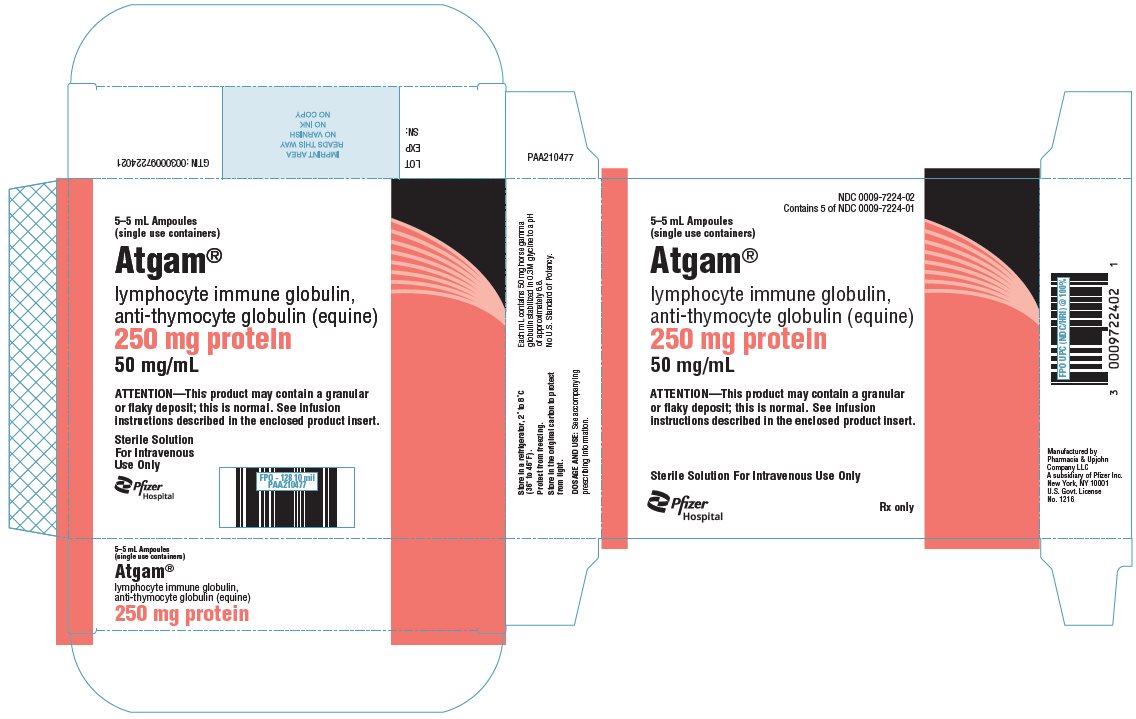
Atgam EQUINE THYMOCYTE IMMUNE GLOBULIN 50 mg/mL Injection, Solution — NDC 0009-7224-02 (Billing 00009-7224-02)
This is a package of Atgam EQUINE THYMOCYTE IMMUNE GLOBULIN 50 mg/mL Injection, Solution from Pharmacia & Upjohn Company LLC, marketed since Nov 1981 and currently FDA-listed. It is this product's only package size.
NDC database record
One package, one record: these facts belong to NDC 0009-7224-02 alone.
- Record
- FDA NDC Directory package listing · Plasma derivative
- Code segments
- 0009 labeler · 7224 product · 02 package
- Package marketed since
- Nov 17, 1981
- Sample package
- No — commercial package
- Listing certified through
- Dec 31, 2026
- Barcode (UPC-A, from the NDC)
- 3 0009722402 1
- FDA record last changed
- Oct 8, 2026
Identity & classification
Regulatory identifiers FDA, NLM and CMS codes for this package
Drug-database identifiers Medi-Span GPI and First Databank GCN / HICL / AHFS classification
- GSN (GCN sequence number): 034336
- GCN: 43749
- GPI-14 (Medi-Span): 99402540102030
- HICL (First Databank): 014404
- AHFS class code: 90:28.04.92
Where does this data come from?
- FDA openFDA NDC Directory · synced Oct 8, 2026
- FDA label on DailyMed · label index refreshed Oct 8, 2026
- RxNorm (NLM RxNav) · catalog refreshed Oct 8, 2026
- Medi-Span GPI (licensed)
- First Databank (licensed) · refreshed Oct 8, 2026
Clinical
Anti-thymocyte globulin is used to prevent or treat kidney transplant rejection (attack of the transplanted organ by the immune system of the person receiving the organ). It is also used to treat aplastic anemia (condition in which the body does not make enough new blood cells). Anti-thymocyte globulin is in a class of medications called Immunosuppressants. It works by decreasing the activity of the immune system.
Read the full MedlinePlus article ↗Patient education
Supplement & herbal interactions
Where does this data come from?
- MedlinePlus (NLM) · refreshed Oct 8, 2026
- FDA label on DailyMed · label index refreshed Oct 8, 2026
Ask a licensed pharmacist directly — free, answered by our team.
Pricing
A drug doesn't have one price. Each row is a different public payment system, and none is what you'd pay at the counter — that depends on your insurance. The ⓘ on each row explains what it measures.
| Price system | Per mL | Per package |
|---|---|---|
| Retail pharmacies payNADAC · weekly | Not in the retail survey — common for institutional, discontinued, or low-volume packs. | |
| Medicaid paysCMS SDUD · 12 mo | No recent Medicaid claims on file for this NDC — rare and low-volume NDCs are suppressed in the public data. | |
| Medicare drug plans payPart D · quarterly | No Part D plan price is available for this NDC in our data. | |
| Medicare Part B allowsASP · J7504 | $5,548.962 / J7504 unit | — |
Where does this data come from?
- CMS NADAC weekly file
- CMS ASP pricing files · refreshed Sep 20, 2026
- CMS Medicaid State Drug Utilization Data · refreshed Oct 9, 2026
- CMS Part D plan pricing files · refreshed Sep 24, 2026
- VA National Acquisition Center price file
Billing & reimbursement
Where does this data come from?
- CMS ASP NDC-HCPCS crosswalk · refreshed Sep 22, 2026
- DMEPDAC NDC-HCPCS crosswalk
- openFDA NSDE billing units · refreshed Oct 7, 2026
Packaging — all sizes for this product
| Package NDC | Description | Marketing start | Marketing end | Status |
|---|---|---|---|---|
| 00009-7224-02 You're viewing this Main listing | 5 AMPULE in 1 CARTON / 5 mL in 1 AMPULE | 1981-11-17 | — | Active |
Therapeutic equivalents
| Product | Labeler | Pack | NADAC/unit | TE | Status | Price vs. this |
|---|---|---|---|---|---|---|
| Atgam 50 mg/mLthis 00009-7224-02 | Pharmacia | 5 ampules | — | — | FDA listed | — |
Where does this data come from?
- FDA openFDA NDC Directory · synced Oct 8, 2026
- FDA Purple Book · refreshed Oct 5, 2026
- CMS NADAC weekly file
Availability & biosimilar status
Biologics have no small-molecule generics; biosimilar competition is tracked in the FDA Purple Book.
Where does this data come from?
- FDA Purple Book · refreshed Oct 5, 2026
Inactive Ingredients / Excipients
Inactive ingredients, also called excipients, are components of the drug product other than the active ingredient. They may include fillers, dyes, coatings, preservatives, flavors, or other formulation ingredients.
💡 Tap an ingredient (hover on desktop) to see what it is and why it’s used.
-
UNII TE7660XO1C
Glycine is an amino acid used in medicines as a buffer to help stabilize pH and improve taste. It may also serve as a filler or binder to give the product proper form and consistency.
1 inactive ingredient listed in the exact product block matched to this NDC.
Where does this data come from?
ingredient classCode="IACT" elements from the exact product block matched by this NDC. Label-section narrative from DailyMed / the openFDA label index is shown separately when available.- FDA label on DailyMed · label index refreshed Oct 8, 2026
- FDA openFDA NDC Directory · synced Oct 8, 2026
Inactive ingredient FAQ
Are inactive ingredients the same for every manufacturer?
Why might an inactive ingredient be missing?
Can inactive ingredients matter?
Manufacturer & labeler
More NDCs from Pharmacia & Upjohn Company LLC labeler code 00009
- Progesterone 1 kg/kg Powder NDC 0009-5620-01
- SOMAVERT pegvisomant Kit NDC 0009-7166-01
- SOMAVERT pegvisomant Kit NDC 0009-7168-01
- SOMAVERT pegvisomant Kit NDC 0009-7188-01
- SOMAVERT pegvisomant Kit NDC 0009-7199-01
- SOMAVERT pegvisomant Kit NDC 0009-7200-01
- Depo-Provera medroxyprogesterone acetate 150 mg/mL Injection, Suspension NDC 0009-7376-11
- Camptosar irinotecan hydrochloride 20 mg/mL Injection, Solution NDC 0009-7529-03
- Aromasin exemestane 25 mg Tablet NDC 0009-7663-04
- Cleocin clindamycin phosphate 100 mg Suppository NDC 0009-7667-01
- Caverject Alprostadil 41.1 ug/mL Injection, Powder, Lyophilized, For Solution NDC 0009-7686-04
- Zyvox linezolid 600 mg/300mL Injection, Solution NDC 0009-7807-02
Where does this data come from?
- FDA openFDA NDC Directory · synced Oct 8, 2026
- Drugs@FDA
Full FDA label FDA SPL
🚨 Boxed Warning ▾
WARNING: ANAPHYLAXIS Antithymocyte globulins can cause anaphylaxis when injected intravenously. Although ATGAM is processed to reduce the level of antibodies that will react to non-T cells, physicians should be prepared for the potential risk of anaphylaxis and monitor patients for signs and symptoms during infusion. WARNING: ANAPHYLAXIS See full prescribing information for complete boxed warning .
Antithymocyte globulins can cause anaphylaxis when injected intravenously. Although ATGAM is processed to reduce the level of antibodies that will react to non-T cells, physicians should be prepared for the potential risk of anaphylaxis and monitor patients for signs and symptoms during infusion.
🎯 Indications and Usage ▾
1 INDICATIONS AND USAGE ATGAM is an immunoglobulin G indicated for: Renal transplant rejection. ( 1.1 ) Aplastic anemia (moderate to severe) in patients unsuitable for bone marrow transplantation. ( 1.2 ) Limitations of Use: The usefulness of ATGAM has not been demonstrated in patients with aplastic anemia who are suitable candidates for bone marrow transplantation or in patients with aplastic anemia secondary to neoplastic disease, storage disease, myelofibrosis, Fanconi's syndrome, or in patients known to have been exposed to myelotoxic agents or radiation.
( 1.2 )
1.1Renal Allograft Rejection Renal transplant rejection : ATGAM is indicated for the management of allograft rejection in renal transplant patients; when administered with conventional therapy at the time of rejection ATGAM increases the frequency of resolution of the acute rejection episode [see Clinical Studies (14.1) ] .
1.2Aplastic Anemia ATGAM is indicated for the treatment of moderate to severe aplastic anemia in patients unsuitable for bone marrow transplantation [see Clinical Studies (14.2) ] . The usefulness of ATGAM has not been demonstrated in patients with aplastic anemia who are suitable candidates for bone marrow transplantation or in patients with aplastic anemia secondary to neoplastic disease, storage disease, myelofibrosis, Fanconi's syndrome, or in patients known to have been exposed to myelotoxic agents or radiation.
⏱️ Dosage and Administration ▾
2 DOSAGE AND ADMINISTRATION ATGAM is intended for intravenous use only. ATGAM is used with concomitant immunosuppressants. During repeat courses of ATGAM, observe patients for signs of allergic reactions [see Warnings and Precautions (5.1) ] .
Intravenous use only. Indication Dosage Renal transplant rejection 10 to 15 mg/kg daily intravenously for 14 days; additional alternate-day therapy up to a total of 21 doses may be given. ( 2.1 ) Aplastic anemia 10 to 20 mg/kg daily intravenously for 8 to 14 days; additional alternate-day therapy up to a total of 21 doses may be given.
( 2.1 )
2.1Dose Renal Allograft Recipients Renal transplant rejection: The recommended dose is 10 to 15 mg/kg daily intravenously for 14 days. Additional alternate-day therapy up to a total of 21 doses may be given. Aplastic Anemia (Moderate to Severe) The recommended dose is 10 to 20 mg/kg daily intravenously for 8 to 14 days.
Additional alternate-day therapy up to a total of 21 doses may be given. Because thrombocytopenia can be associated with the administration of ATGAM, patients receiving it for the treatment of aplastic anemia may need prophylactic platelet transfusions to maintain platelets at clinically acceptable levels. Geriatric population (≥65 years of age) Select the dose for an elderly patient with caution, starting at the low end of the dosage range [see Use in Specific Populations (8.5) ] .
2.2Preparation and Administration Preparation of Solution Visually inspect parenteral drug products for particulate matter and discoloration prior to administration, whenever solution and container permit. However, because ATGAM is a gamma globulin product, it can be transparent to slightly opalescent, colorless to faintly pink or brown, and may develop a slight granular or flaky deposit during storage. Do not shake ATGAM (diluted or undiluted) because excessive foaming and/or denaturation of the protein may occur.
Dilute ATGAM for intravenous infusion in an inverted bottle of sterile vehicle so the undiluted ATGAM does not contact the air inside. Add the total daily dose of ATGAM to the sterile vehicle (see Compatibility and Stability ) . Do not exceed a concentration of 4 mg of ATGAM per mL.
Gently rotate or swirl the diluted solution to effect thorough mixing. Administration Allow the diluted ATGAM to reach room temperature before infusion. ATGAM is appropriately administered into a vascular shunt, arterial venous fistula, or a high-flow central vein using an in-line filter with a pore size of 0.2 to 1.0 micron.
Use the in-line filter with all infusions of ATGAM to prevent the administration of any insoluble material that may develop in the product during storage. Use high-flow veins to minimize the occurrence of phlebitis and thrombosis. Do not infuse a dose of ATGAM in less than 4 hours.
Always keep appropriate resuscitation equipment at the patient's bedside while ATGAM is being administered. Observe the patient continuously for possible allergic reactions throughout the infusions [see Warnings and Precautions (5.1) and Adverse Reactions (6) ] . Compatibility and Stability Once diluted, ATGAM has been shown to be physically and chemically stable for up to 24 hours at concentrations of up to 4 mg per mL in the following diluents: 0.9% Sodium Chloride Injection, 5% Dextrose and 0.225% Sodium Chloride Injection, and 5% Dextrose and 0.45% Sodium Chloride Injection.
Do not dilute ATGAM in Dextrose Injection, USP, as low salt concentrations may cause precipitation. Do not use highly acidic infusion solutions since these solutions may contribute to physical instability over time. Store diluted ATGAM in a refrigerator if it is prepared prior to the time of infusion.
Even if it is stored in a refrigerator, do not exceed a total time in dilution of 24 hours (including infusion time).
💊 Dosage Forms and Strengths ▾
3 DOSAGE FORMS AND STRENGTHS ATGAM 50 mg/mL concentrate for solution for infusion ATGAM 50 mg/mL concentrate for solution for infusion. ( 3 )
⛔ Contraindications ▾
4 CONTRAINDICATIONS Do not administer ATGAM to a patient who has had a systemic reaction (e.g., anaphylactic reaction) during prior administration of ATGAM or any other equine gamma globulin preparation [see Warnings and Precautions (5.1) ]. Systemic reaction (e.g., anaphylactic reaction) during prior administration of ATGAM or any other equine gamma globulin preparation. ( 4 )
⚠️ Warnings and Cautions ▾
5 WARNINGS AND PRECAUTIONS Discontinue ATGAM if anaphylaxis occurs. ( 5.1 ) Serious immune-mediated reactions, including anaphylaxis, have been reported. To identify those at greatest risk, skin testing before treatment is strongly recommended.
( 5.1 ) Monitor patients for concurrent infection, including cytomegalovirus. ( 5.2 ) Do not administer live vaccines to patients about to receive, receiving, or after treatment with ATGAM due to a potential of uncontrolled viral replication in the immunosuppressed patient. ( 5.3 )
5.1Hypersensitivity Serious immune-mediated reactions have been reported with the use of ATGAM. Clinical signs associated with anaphylaxis, other infusion associated reactions, and serum sickness have been reported. Discontinue ATGAM if anaphylaxis occurs.
A systemic reaction such as a generalized rash, tachycardia, dyspnea, hypotension, or anaphylaxis precludes any additional administration of ATGAM. Skin Testing To identify those at greatest risk of systemic anaphylaxis, skin testing potential recipients is strongly recommended before commencing treatment. A conservative, conventional approach would first employ epicutaneous (prick) testing with undiluted ATGAM.
If the subject does not show a wheal ten minutes after pricking, proceed to intradermal testing with 0.02 mL of a 1:1000 v/v (volume/volume) saline dilution of ATGAM with a separate saline control injection of similar volume. Read the result at 10 minutes: a wheal at the ATGAM site 3 or more mm larger in diameter than that at the saline control site (or a positive prick test) suggests clinical sensitivity and an increased possibility of a systemic allergic reaction should the drug be dosed intravenously. The predictive value of this test has not been proven clinically.
Allergic reactions such as anaphylaxis have occurred in patients whose skin test is negative. Also, skin testing done as described above will not predict for later development of serum sickness. In the presence of a locally positive skin test to ATGAM, serious consideration to alternative forms of therapy should be given.
The risk to benefit ratio must be weighed. If therapy with ATGAM is deemed appropriate following a locally positive skin test, treatment should be administered in a setting where intensive life support facilities are immediately available and a physician familiar with the treatment of potentially life threatening allergic reactions is in attendance.
5.2Transmissible Infectious Agents Because ATGAM is made from equine and human blood components, it may carry a risk of transmitting infectious agents, e.g., viruses, and, theoretically, the Creutzfeldt-Jakob disease (CJD) agent. No cases of transmission of viral diseases or CJD have been associated with the use of ATGAM. All infections suspected by a physician possibly to have been transmitted by this product should be reported by the physician or other healthcare provider to Pfizer, Inc. at 1-800-438-1985.
Monitor patients for concurrent infection. Some studies have suggested an increase in the incidence of cytomegalovirus infection in patients receiving ATGAM.
5.3Immunizations Do not administer live vaccines to patients about to receive, receiving, or after treatment with ATGAM. Concomitant administration of ATGAM with live virus vaccines carries a potential of uncontrolled viral replication in the immunosuppressed patient. There is insufficient information to fully define the extent of the risk, or the period of time during which the risk exists.
If administered, live viruses may interfere with ATGAM treatment.
5.4Hepatic and Renal Function Tests In patients with aplastic anemia and other hematologic abnormalities who have received ATGAM, abnormal tests of liver function (SGOT, SGPT, alkaline phosphatase) and renal function (serum creatinine) have been observed.
🤒 Adverse Reactions ▾
6 ADVERSE REACTIONS The most clinically significant adverse reactions are anaphylaxis, infection, thrombocytopenia, leukopenia, arthralgia, edema, bradycardia, and abnormal renal and liver function tests. The most common (>10%) adverse reactions are pyrexia, chills, rash, thrombocytopenia, leukopenia and arthralgia. ( 6.1 ) To report SUSPECTED ADVERSE REACTIONS, contact Pfizer, Inc. at 1-800-438-1985 or FDA at 1-800-FDA-1088 or www.fda.gov/medwatch.
6.1Clinical Trials Experience Because clinical trials are conducted under widely varying conditions, adverse reaction rates observed in the clinical trials of a drug cannot be directly compared to rates in the clinical trials of another drug and may not reflect the rates observed in clinical practice. The safety of ATGAM has been evaluated in 367 patients with renal transplant and 109 patients with aplastic anemia. The renal transplantation and aplastic anemia patients received a similar dosing regimen, and these data were pooled to obtain the frequencies listed in Tables 1 and 2 below.
The most commonly reported adverse reactions (occurring in greater than 10% of patients) are pyrexia, chills, rash, thrombocytopenia, leukopenia and arthralgia. Table 1. Adverse Reactions Occurring in ≥1% of Patients who Received ATGAM Adverse Reaction Percentages are treatment-emergent all-causality events , Medical Dictionary for Regulatory Activities (MedDRA) Preferred Terms ATGAM Frequency (%) (N = 476) Pyrexia
39.5 Chills
26.5 Rash
25.6 Thrombocytopenia
21.6 Leukopenia
17.9 Arthralgia
17.2 Urticaria
9.2 Headache
5.3 Pruritus
4.6 Nausea
4.2 Infection
3.4 Vomiting
3.4 Thrombophlebitis
3.2 Hypertension
2.9 Hypotension
2.9 Diarrhea
2.9 Abdominal pain upper
2.7 Chest pain
2.7 Infusion site pain
2.1 Edema
2.1 Bradycardia
1.5 Back pain
1.5 Lymphadenopathy
1.3 Arteriovenous fistula thrombosis
1.3 Dizziness
1.1 Dyspnea
1.1 Tachycardia
1.1 Liver function test abnormal
1.0Table 2. Adverse Reactions Occurring in <1% of Patients who Received ATGAM Adverse Reaction Percentages are treatment-emergent all-causality events , Medical Dictionary for Regulatory Activities (MedDRA) Preferred Terms ATGAM Frequency (%) (N = 476) Convulsion
0.8 Pleural effusion
0.8 Night sweats
0.8 Serum sickness
0.6 Hyperglycemia
0.6 Stomatitis
0.6 Renal function test abnormal
0.6 Herpes simplex
0.4 Agitation
0.4 Hiccups
0.4 Proteinuria
0.4 Asthenia
0.4 Malaise
0.4 Wound dehiscence
0.4 Anaphylactic reaction
0.2 Encephalitis
0.2 Paresthesia
0.2 Renal artery thrombosis
0.2 Iliac vein occlusion
0.2 Laryngospasm
0.2 Pulmonary edema
0.2 Dermatitis allergic
0.2 Periorbital edema
0.2Toxic epidermal necrolysis 0.2
6.2Post-Marketing Experience The following adverse reactions have been identified during post approval use of ATGAM. Because reactions are reported voluntarily from a population of uncertain size, it is not always possible to reliably estimate their frequency or establish a causal relationship to drug exposure. Infections and infestations : Hepatitis viral, Localized infection, Systemic infection Blood and lymphatic system disorders : Anemia, Eosinophilia, Granulocytopenia, Hemolysis, Hemolytic anemia, Neutropenia, Pancytopenia Psychiatric disorders : Confusional state, Disorientation Nervous system disorders : Dyskinesia, Syncope, Tremor Cardiac disorders : Cardiac failure congestive Vascular disorders : Deep vein thrombosis, Vasculitis Respiratory, thoracic and mediastinal disorders : Apnea, Cough, Epistaxis, Oropharyngeal pain Gastrointestinal disorders : Abdominal pain, Gastrointestinal hemorrhage, Gastrointestinal perforation, Oral pain Skin and subcutaneous tissue disorders : Hyperhidrosis Musculoskeletal and connective tissue disorders : Flank pain, Muscle rigidity, Myalgia, Pain in extremity Renal and urinary disorders : Kidney enlargement, Kidney rupture, Renal failure acute Congenital, familial and genetic disorders : Aplasia General disorders and administration site conditions : Infusion site erythema, Infusion site… [Excerpted — this section continues on DailyMed.]
🔄 Drug Interactions ▾
7 DRUG INTERACTIONS Previously masked reactions to ATGAM may appear when the dose of corticosteroids and other immunosuppressants is being reduced. Previously masked reactions to ATGAM may appear following reduced doses of immunosuppressants. ( 7 )
👥 Use in Specific Populations ▾
8 USE IN SPECIFIC POPULATIONS Pregnancy: Use only if the potential benefit justifies the risk. ( 8.1 ) Nursing Mothers: Discontinue nursing when administering ATGAM. ( 8.3 ) Geriatric: Start dosing at the low end of the dosage range. ( 8.5 )
8.1Pregnancy ATGAM was not teratogenic in rats or monkeys at a dose up to 20 mg/kg. However, 20 mg/kg/day ATGAM for 16 days during organogenesis in cynomolgus monkeys was fetotoxic. No fetal or maternal toxicity was seen with 10 mg/kg/day ATGAM administered for 16 days during organogenesis [see Nonclinical Toxicology (13.1) ] .
There are no adequate and well-controlled studies in pregnant women. It is also not known whether ATGAM can cause fetal harm when administered to a pregnant woman or can affect reproduction capacity. ATGAM should be used during pregnancy only if the potential benefit justifies the potential risk to the fetus.
8.3Nursing Mothers In animal studies, a single dose of ATGAM up to 40 mg/kg was not detected at the limit of quantification in the milk of lactating cynomolgus monkeys. It is not known whether ATGAM is excreted in human milk. Because many drugs are excreted in human milk and because of the potential for serious adverse reactions in nursing neonates and infants from ATGAM, a decision should be made whether to discontinue nursing or to discontinue the drug taking into account the importance of the drug to the mother.
8.4Pediatric Use Experience with children has been limited. ATGAM has been administered safely to a small number of pediatric renal allograft recipients and pediatric aplastic anemia patients at dosage levels comparable to those in adults.
8.5Geriatric Use Clinical experience in a limited number of elderly patients (≥65 years of age) has not identified differences in responses between the elderly and younger patients. The dose for an elderly patient should be selected with caution, starting at the low end of the dosage range, reflecting the greater frequency of decreased hepatic, renal, or cardiac function, and of concomitant disease or other drug therapy in this age group.
🤰 Pregnancy ▾
8.1Pregnancy ATGAM was not teratogenic in rats or monkeys at a dose up to 20 mg/kg. However, 20 mg/kg/day ATGAM for 16 days during organogenesis in cynomolgus monkeys was fetotoxic. No fetal or maternal toxicity was seen with 10 mg/kg/day ATGAM administered for 16 days during organogenesis [see Nonclinical Toxicology (13.1) ] .
There are no adequate and well-controlled studies in pregnant women. It is also not known whether ATGAM can cause fetal harm when administered to a pregnant woman or can affect reproduction capacity. ATGAM should be used during pregnancy only if the potential benefit justifies the potential risk to the fetus.
🧒 Pediatric Use ▾
8.4Pediatric Use Experience with children has been limited. ATGAM has been administered safely to a small number of pediatric renal allograft recipients and pediatric aplastic anemia patients at dosage levels comparable to those in adults.
🧓 Geriatric Use ▾
8.5Geriatric Use Clinical experience in a limited number of elderly patients (≥65 years of age) has not identified differences in responses between the elderly and younger patients. The dose for an elderly patient should be selected with caution, starting at the low end of the dosage range, reflecting the greater frequency of decreased hepatic, renal, or cardiac function, and of concomitant disease or other drug therapy in this age group.
🆘 Overdosage ▾
10 OVERDOSAGE The maximum tolerated dose of ATGAM Sterile Solution would be expected to vary from patient to patient due to the biological nature of the product. The largest single daily dose known to be administered to a patient (renal transplant recipient) was 7,000 mg administered at a concentration of approximately 10 mg/mL Sodium Chloride Injection, USP, seven times the recommended total dose and infusion concentration. In this patient, the administration of ATGAM was not associated with any signs of acute intoxication or late sequelae.
A maximum therapeutic dose has not been established therefore the definition of overdose for ATGAM has not been clearly defined. Some renal transplant patients have received up to 50 doses in 4 months, and others have received 28-day courses of 21 doses followed by as many as 3 more courses for the treatment of acute rejection. The incidence of toxicologic manifestations did not increase with any of these regimens; however, close monitoring of the patient is recommended.
🧬 Clinical Pharmacology ▾
12 CLINICAL PHARMACOLOGY
12.1Mechanism of Action ATGAM is composed of antibodies that bind a wide variety of proteins on the surface of lymphocytes. In addition, ATGAM binds to granulocytes, platelets, bone marrow cells, and other cell types. The mechanism of ATGAM-induced immunosuppression has not been determined.
Published data indicate that the primary mechanism is the depletion of circulating lymphocytes, with greatest effect on T lymphocytes. Lymphocyte depletion may be caused by complement dependent lysis and/or activation-induced apoptosis. In addition, immunosuppression may be mediated by the binding of antibodies to lymphocytes which results in partial activation and induction of T lymphocyte anergy.
The mechanism of ATGAM therapy for aplastic anemia is attributed to its immunosuppressive actions. In addition, ATGAM directly stimulates the growth of hematopoietic stem cells and release of hematopoietic growth factors such as interleukin-3 and granulocyte/macrophage colony stimulating factor.
12.3Pharmacokinetics Distribution During infusion of 10 to 15 mg/kg/day, the mean peak value (n = 27 renal transplant patients) was found to be 727 ± 310 μg/mL. Metabolism and Elimination The half-life of equine immunoglobulin after ATGAM infusion was found to be 5.7 ± 3.0 days in one group of recipients. The range for half-life was 1.5 to 13 days.
🧬 Mechanism of Action ▾
12.1Mechanism of Action ATGAM is composed of antibodies that bind a wide variety of proteins on the surface of lymphocytes. In addition, ATGAM binds to granulocytes, platelets, bone marrow cells, and other cell types. The mechanism of ATGAM-induced immunosuppression has not been determined.
Published data indicate that the primary mechanism is the depletion of circulating lymphocytes, with greatest effect on T lymphocytes. Lymphocyte depletion may be caused by complement dependent lysis and/or activation-induced apoptosis. In addition, immunosuppression may be mediated by the binding of antibodies to lymphocytes which results in partial activation and induction of T lymphocyte anergy.
The mechanism of ATGAM therapy for aplastic anemia is attributed to its immunosuppressive actions. In addition, ATGAM directly stimulates the growth of hematopoietic stem cells and release of hematopoietic growth factors such as interleukin-3 and granulocyte/macrophage colony stimulating factor.
📦 How Supplied / Storage and Handling ▾
16 HOW SUPPLIED/STORAGE AND HANDLING ATGAM Sterile Solution, containing 50 mg/mL lymphocyte immune globulin, anti-thymocyte globulin [equine], is supplied as follows: 5 – 5 mL ampoules NDC 0009-7224-02 Store in a refrigerator at 2° to 8°C (36° to 46°F). DO NOT FREEZE. For storage conditions of diluted solution, see Dosage and Administration (2.2) .
📦 Storage and Handling ▾
Store in a refrigerator at 2° to 8°C (36° to 46°F). DO NOT FREEZE. For storage conditions of diluted solution, see Dosage and Administration (2.2) .
📋 Description ▾
11 DESCRIPTION ATGAM Sterile Solution contains lymphocyte immune globulin, anti-thymocyte globulin [equine]. It is the purified, concentrated, and sterile gamma globulin, primarily monomeric IgG, from hyperimmune serum of horses immunized with human thymus lymphocytes. ATGAM is a transparent to slightly opalescent aqueous protein solution.
It may appear colorless to faintly pink or brown and is nearly odorless. It may develop a slight granular or flaky deposit during storage [see Dosage and Administration (2.2) ] . Precise methods of determining the potency of ATGAM have not been established, thus activity may potentially vary from lot to lot.
Before release for clinical use, each lot of ATGAM is tested to assure its ability to inhibit rosette formation between human peripheral lymphocytes and sheep red blood cells in vitro . In each lot, antibody activity against human red blood cells and platelets is also measured and determined to be within acceptable limits. Only lots that meet the acceptance criteria for pyrogens and test negative for antihuman serum protein antibody and antiglomerular basement membrane antibody are released.
Each milliliter of ATGAM contains 50 mg of horse gamma globulin stabilized in 0.3 molar glycine to a pH of approximately 6.8.
💬 Information for Patients ▾
17 PATIENT COUNSELING INFORMATION Advise patients receiving ATGAM that they will be monitored in a facility equipped and staffed with adequate laboratory and supportive medical resources. Inform patients that ATGAM may cause serious allergic reactions, infection or abnormal liver or renal function. Serious Allergic Reactions Advise the patient to discontinue ATGAM and seek immediate medical attention if any signs/symptoms of an allergic or immune reaction occur [see Warnings and Precautions (5.1) ] .
Skin Testing Despite screening and testing, products manufactured using components of human blood such as ATGAM may carry a risk of transmitting infectious agents (e.g., viruses). Discuss the risks and benefits of therapy with patients before initiating treatment [see Warnings and Precautions (5.2) ] . Infections Advise the patient to discontinue ATGAM and report any sign/symptoms of leukopenia, thrombocytopenia, or infection (e.g., fever, sweating, chills, muscle aches, cough, shortness of breath, diarrhea or stomach pain) [see Warnings and Precautions (5.1) , (5.2) , (6) ] .
🍼 Nursing Mothers ▾
8.3Nursing Mothers In animal studies, a single dose of ATGAM up to 40 mg/kg was not detected at the limit of quantification in the milk of lactating cynomolgus monkeys. It is not known whether ATGAM is excreted in human milk. Because many drugs are excreted in human milk and because of the potential for serious adverse reactions in nursing neonates and infants from ATGAM, a decision should be made whether to discontinue nursing or to discontinue the drug taking into account the importance of the drug to the mother.
🧬 Pharmacokinetics ▾
12.3Pharmacokinetics Distribution During infusion of 10 to 15 mg/kg/day, the mean peak value (n = 27 renal transplant patients) was found to be 727 ± 310 μg/mL. Metabolism and Elimination The half-life of equine immunoglobulin after ATGAM infusion was found to be 5.7 ± 3.0 days in one group of recipients. The range for half-life was 1.5 to 13 days.
🔬 Clinical Studies ▾
14 CLINICAL STUDIES
14.1Renal Allograft Rejection Renal Transplant Rejection US Studies The effectiveness of ATGAM for treatment of acute allograft rejection was evaluated in three different treatment applications: as a substitute for standard therapy, in conjunction with standard therapy at the time of diagnosis of the first rejection episode, and in conjunction with standard therapy in steroid resistant rejection episodes. A randomized controlled trial of the use of ATGAM as a substitute for standard therapy for treatment of the first acute rejection episode was conducted at one transplant center in recipients of living related renal allografts.
A total of 22 patients were studied; 11 in each of the two treatment groups [ATGAM versus standard therapy (bolus doses of Solu-Medrol ® )]. Patients randomized to the ATGAM group received 14–21 doses of ATGAM therapy, starting on the day the rejection was diagnosed. ATGAM was administered daily according to a dose-by-rosette regimen which resulted in a mean daily dose of approximately 15 mg/kg.
Patients randomized to the control group received Solu-Medrol ® at a dosage of 15 mg/kg starting on the day the rejection was diagnosed, administered either daily or on alternate days for 3 to 7 doses to complete a maximum total dose of 5,000 mg for the course of the rejection episode. In this study, ATGAM was at least effective as standard therapy for treatment of acute allograft rejection. All 11 ATGAM treated patients achieved resolution of first rejection compared with 10/11 control patients.
At one year, the functional graft survival rate was 91% in the ATGAM group (10/11) and 64% in the control group (7/11). Patient survival was similar in the two treatment groups (11/11 ATGAM patients versus 10/11 control patients). The effect of ATGAM when administered in conjunction with standard therapy at the time of diagnosis of the first rejection episode was studied under two different protocols with cadaveric and living related renal transplant patients.
The results from these studies demonstrate the efficacy associated with the addition of ATGAM to standard therapy for treatment of the first rejection episode in renal allograft recipients. In Study 1, a randomized controlled, two center trial of ATGAM use for treatment of acute rejection in cadaveric renal transplant patients, the addition of ATGAM to standard rejection therapy (methylprednisolone sodium succinate) resulted in an increased frequency of resolution of the first acute rejection episode which was statistically significant (p <0.01).
ATGAM-treated patients achieved a rejection resolution rate of 80% (36/45) compared with 54% (25/46) in the control group. There was a statistically significant improvement in functional graft survival favoring the ATGAM group (p <0.01), and a statistically significant steroid sparing effect during the first rejection episode among patients in the ATGAM group. There was no difference in the patient survival rate between the two treatment groups.
Study 2 was a randomized controlled trial conducted at five different transplant centers. In this study, the addition of ATGAM to standard rejection therapy (bolus doses of Solu-Medrol ® ) for treatment of acute rejection in recipients of living related renal transplants resulted in an increased frequency of rejection resolution and improvement in functional graft survival. Due to the small sample size, the difference between the ATGAM group and the control group in functional graft survival rate did not achieve statistical significance.
Marginal statistical significance was demonstrated in rejection reversal rate and intravenous steroid sparing among ATGAM patients (p=0.10 and p=0.07). Patient survival rates were similar in the two treatment groups. Results from randomized controlled trials in patients with first acute renal allograft rejection episodes refractory to conventional steroid therapy have demonstrated that ATGAM, when administered in conjunction w… [Excerpted — this section continues on DailyMed.]
🧪 Nonclinical Toxicology ▾
13 NONCLINICAL TOXICOLOGY
13.1Carcinogenesis, Mutagenesis, Impairment of Fertility Mutagenicity and carcinogenicity studies have not been conducted on ATGAM. In fertility studies, ATGAM at doses 10, 20 and 40 mg/kg/day was administered to cynomolgus monkeys (Macaca fascicularis) for 14 days either before (male monkeys) or before and after (female monkeys) cohabitation with untreated mates. ATGAM treatment was not associated with male or female hormonal or copulation behavior changes.
A decrease in fertility index in female monkeys receiving ATGAM was seen. Female toxicity, including death, was observed with ATGAM doses of ≥20 mg/kg/day. While the etiology of this toxicity is uncertain, it may be attributed to hemolytic anemia due to cross-reactivity of ATGAM to a monkey red blood antigen.
In embryo-fetal toxicity studies, ATGAM was administered to rats and cynomolgus monkeys for 11 and 16 days, respectively during organogenesis. In rats, hypoplastic cervical vertebrae, a finding consistent with delayed skeletal development, were observed in fetuses whose dams received ATGAM at doses of 100 mg/kg/day during organogenesis. In monkey reproduction studies, maternal toxicity (vaginal bleeding, decreased body weight and loss of appetite) was observed with ATGAM doses ≥20 mg/kg/day after 16 days of dosing.
Fetal deaths occurred in dams treated with 20 mg/kg/day ATGAM earlier in organogenesis (days 20–35), but not when treatment was given at a later part of organogenesis (days 35–50). The maternal and fetal deaths were attributed to maternal anemia due to red blood cell antigen that humans do not share. Therefore, this toxicity is not considered relevant to human fetal development.
📄 Carcinogenesis, Mutagenesis, Impairment of Fertility ▾
13.1Carcinogenesis, Mutagenesis, Impairment of Fertility Mutagenicity and carcinogenicity studies have not been conducted on ATGAM. In fertility studies, ATGAM at doses 10, 20 and 40 mg/kg/day was administered to cynomolgus monkeys (Macaca fascicularis) for 14 days either before (male monkeys) or before and after (female monkeys) cohabitation with untreated mates. ATGAM treatment was not associated with male or female hormonal or copulation behavior changes.
A decrease in fertility index in female monkeys receiving ATGAM was seen. Female toxicity, including death, was observed with ATGAM doses of ≥20 mg/kg/day. While the etiology of this toxicity is uncertain, it may be attributed to hemolytic anemia due to cross-reactivity of ATGAM to a monkey red blood antigen.
In embryo-fetal toxicity studies, ATGAM was administered to rats and cynomolgus monkeys for 11 and 16 days, respectively during organogenesis. In rats, hypoplastic cervical vertebrae, a finding consistent with delayed skeletal development, were observed in fetuses whose dams received ATGAM at doses of 100 mg/kg/day during organogenesis. In monkey reproduction studies, maternal toxicity (vaginal bleeding, decreased body weight and loss of appetite) was observed with ATGAM doses ≥20 mg/kg/day after 16 days of dosing.
Fetal deaths occurred in dams treated with 20 mg/kg/day ATGAM earlier in organogenesis (days 20–35), but not when treatment was given at a later part of organogenesis (days 35–50). The maternal and fetal deaths were attributed to maternal anemia due to red blood cell antigen that humans do not share. Therefore, this toxicity is not considered relevant to human fetal development.
📚 References ▾
15 REFERENCES Hardy MA, Nowygrod R, Elberg A, Appel G. Use of ATG in treatment of steroid-resistant rejection. Transplantation 1980; 29(2):162–4.
Nowygrod R, Appel G, Hardy MA. Use of ATG for reversal of acute allograft rejection. Transplant Proc 1981; 13(1):469–72.
Filo RS, Smith EJ, Leapman SB. Reversal of acute renal allograft rejection with adjunctive ATG therapy. Transplant Proc 1981; 13(1):482–90.
Shield CF III, Cosimi AB, Tolkoff Rubin N, et al. Use of antithymocyte globulin for reversal of acute allograft rejection. Transplantation 1979; 28(6):461–4.
Rubin RH, Cosimi AB, Hirsch MS, Herrin JT. Effects of antithymocyte globulin on cytomegalovirus infection in renal transplant recipients. Transplantation 1981; 31(2):143–5.
Cosimi AB, Wortis HH, Delmonico FL, Russell PS. Randomized clinical trial of antithymocyte globulin in cadaver renal allograft recipients: importance of T cell monitoring. Surgery 1976; 80(2):155–63.
Wechter WJ, Brodie JA, Morrell RM, et al. Antithymocyte globulin (ATGAM) in renal allograft recipients: multicenter trials using a 14-dose regimen. Transplantation 1979; 28(4):294–302.
Butt KMH, Zielinski CM, Parsa I, et al. Trends in immunosuppression for kidney transplantation. Kidney Int 1978; 13(Suppl 8): S95–S8.
Ettenger RB, Rosenthal JT, Marik JL, et al. Improved cadaveric renal transplant outcome in children. Pediatric Nephrol 1991; 5:137–42.
📄 Recent Major Changes ▾
Contraindications ( 4 ) 5/2014 Warnings and Precautions, Hypersensitivity ( 5.1 ) 5/2014 Warnings and Precautions, Immunizations ( 5.3 ) 5/2014 Warnings and Precautions, Hepatic and Renal Function Tests ( 5.4 ) 5/2014
📄 Package Label / Principal Display Panel ▾
PRINCIPAL DISPLAY PANEL - 5 mL Ampule Label 5 mL NDC 0009-7224-01 Atgam ® lymphocyte immune globulin, anti-thymocyte globulin (equine) 250 mg protein 50 mg/mL For I.V. use only DOSAGE AND USE: See accompanying prescribing information. U.S. License No.
1216. ATTENTION—May contain particles; this is normal. Use 0.2µ to 1.0µ in-line filter.
See insert. Distributed by Pharmacia & Upjohn Co Division of Pfizer Inc, NY, NY 10017 Rx only PAA042882 LOT / EXP PRINCIPAL DISPLAY PANEL - 5 mL Ampule Label
PRINCIPAL DISPLAY PANEL - 5–5 mL Ampule Carton NDC 0009-7224-02 Contains 5 of NDC 0009-7224-01 5–5 mL Ampoules (single use containers) Atgam ® lymphocyte immune globulin, anti-thymocyte globulin (equine) 250 mg protein 50 mg/mL ATTENTION — This product may contain a granular or flaky deposit; this is normal. See infusion instructions described in the enclosed product insert. For I.V. use only Pfizer Injectables Rx only Principal Display Panel - 5–5 mL Ampule Carton
About this NDC listing & data coverage
What data is (and isn’t) available for this NDC — tap to expand
| NDC identity (package / product / labeler codes) | ✓ Available |
| Labeler | ✓ Available |
| Product & package description | ✓ Available |
| Marketing category & status | ✓ Available |
| Active ingredient / dosage form / route | ✓ Available |
| FDA label (SPL via DailyMed) | ✓ Available |
| Package photos | ✓ Available |
| Inactive ingredients (structured) | ✓ Available |
| NADAC pharmacy acquisition price (CMS) | — Not published for this NDC CMS publishes NADAC only for NDCs reported in its retail-pharmacy survey. |
| Orange Book / therapeutic-equivalence data | — Not published for this NDC Applies only to products approved under an NDA/ANDA; many listings are out of scope. |
| HCPCS J-code billing crosswalk | ✓ Available |
| Medicaid utilization (CMS SDUD) | — Not published for this NDC CMS reports utilization only for NDCs with Medicaid claims above its privacy threshold. |