
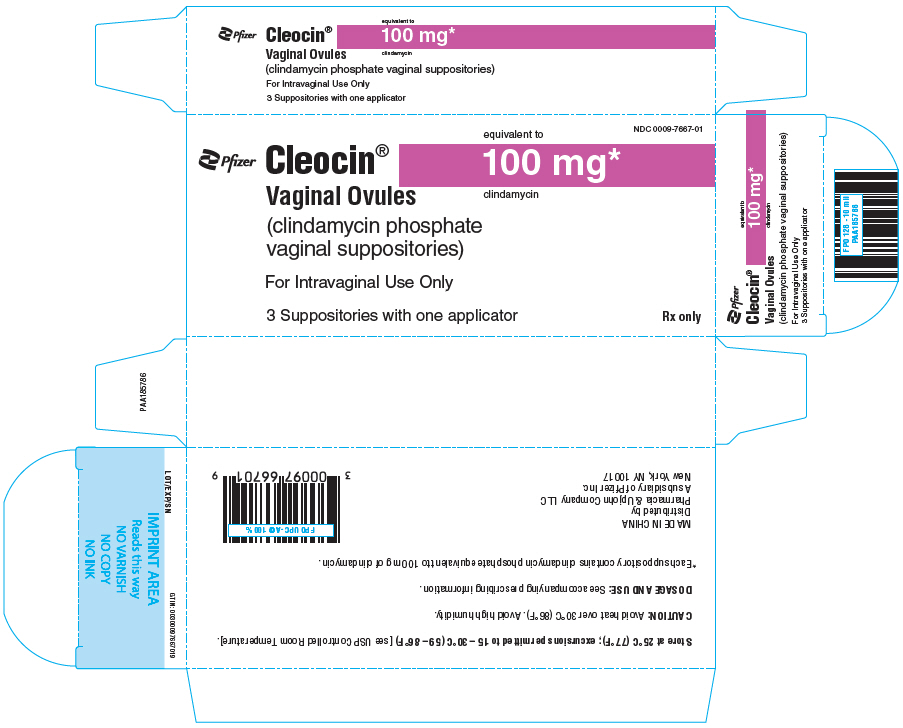
Cleocin clindamycin phosphate 100 mg Suppository, 3 suppositories — NDC 0009-7667-05 (Billing 00009-7667-05)
This is a package of 3 suppositories of Cleocin clindamycin phosphate 100 mg Suppository from Pharmacia & Upjohn Company LLC, marketed since Feb 2024 and currently FDA-listed; retail pharmacies pay about $60.18 per suppositorie (NADAC). It is the main listing for this product, which comes in 2 package sizes.
NDC database record
One package, one record: these facts belong to NDC 0009-7667-05 alone.
- Record
- FDA NDC Directory package listing · Human prescription drug
- Code segments
- 0009 labeler · 7667 product · 05 package
- Package marketed since
- Feb 3, 2024
- Sample package
- No — commercial package
- Listing certified through
- Dec 31, 2027
- Billing quantity
- 3 EA per package
- Barcode (UPC-A, from the NDC)
- 3 0009766705 7
- Medicaid fills, this package
- 3,597 prescriptions in the last four reported quarters
- FDA record last changed
- Jul 24, 2026
Other active recalls for Clindamycin Phosphate (different manufacturers) — 6 · tap to view
Identity & classification
Regulatory identifiers FDA, NLM and CMS codes for this package
Drug-database identifiers Medi-Span GPI and First Databank GCN / HICL / AHFS classification
- GSN (GCN sequence number): 044397
- GCN: 91969
- GPI-14 (Medi-Span): 55100018105220
- HICL (First Databank): 004045
- AHFS class code: 08:12.28.20
- RxCUI (RxNorm): 259233
Where does this data come from?
- FDA openFDA NDC Directory · synced Oct 8, 2026
- FDA label on DailyMed · label index refreshed Oct 8, 2026
- RxNorm (NLM RxNav) · catalog refreshed Oct 1, 2026
- Medi-Span GPI (licensed)
- First Databank (licensed) · refreshed Oct 8, 2026
RxNorm drug class
This medicine belongs to the Lincosamide Antibacterial class.
Where does this data come from?
- RxClass (NLM) · catalog refreshed Oct 1, 2026
Clinical
Vaginal clindamycin is used to treat bacterial vaginosis (an infection caused by harmful bacteria in the vagina). Clindamycin is in a class of medications called lincomycin antibiotics. It works by slowing or stopping the growth of bacteria. Vaginal clindamycin is not used to treat vaginal irritation caused by yeast infections or by sexually transmitted diseases such as chlamydia and trichomoniasis.
Read the full MedlinePlus article ↗- It treats serious bacterial infections, such as anaerobic infections, skin, lung, abdominal, gynecological, and bone and joint infections, depending on the product. It is often use...
- Swallow them with a full glass of water and stay upright for at least 30 minutes afterward. This helps prevent irritation of your throat. Take it as often as your prescriber says a...
- Rash, nausea, vomiting, stomach pain and itching are among the more commonly reported effects. Call your doctor right away if you get severe, watery or bloody diarrhea, even weeks...
- What side effects are normal, and when should I call you?
Patient education
Supplement & herbal interactions
Clindamycin may be associated with lower levels of 7 nutrients — worth a chat with your pharmacist, not a cause for alarm.
Where does this data come from?
- MedlinePlus (NLM) · refreshed Oct 8, 2026
- FDA label on DailyMed · label index refreshed Oct 8, 2026
Ask a licensed pharmacist directly — free, answered by our team.
Pricing
A drug doesn't have one price. Each row is a different public payment system, and none is what you'd pay at the counter — that depends on your insurance. The ⓘ on each row explains what it measures.
| Price system | Per ea | Per package |
|---|---|---|
| Retail pharmacies payNADAC · weekly | $60.179 | $180.54 / 3 suppositories |
| Medicaid paysCMS SDUD · 12 mo | $61.40 | $184.21 / 3 suppositories |
| Medicare drug plans payPart D · Q2 2026 | $60.04 | $180.12 / 3 suppositories |
Where does this data come from?
- CMS NADAC weekly file · file of Oct 7, 2026
- CMS ASP pricing files · refreshed Sep 20, 2026
- CMS Medicaid State Drug Utilization Data · through Q1 2026
- CMS Part D plan pricing files · refreshed Sep 24, 2026
- VA National Acquisition Center price file
Packaging — all sizes for this product
| Package NDC | Description | Per unit | Per pack | Marketing start | Marketing end | Status |
|---|---|---|---|---|---|---|
| 00009-7667-01 0009-7667-01 | 1 BLISTER PACK in 1 CARTON / 3 SUPPOSITORY in 1 BLISTER PACK | $58.94 / ea | $176.83 | 1999-08-13 | — | Active |
| 00009-7667-05 You're viewing this Main listing | 1 BLISTER PACK in 1 CARTON / 3 SUPPOSITORY in 1 BLISTER PACK | $60.18 / ea | $180.54 | 2022-11-18 | — | Active |
In Medicaid, this is the most-dispensed pack of this product — about 98% of fills over the last four reported quarters. See all packs ↓
Pack size FAQ
What quantity is in this package?
How does this package differ from NDC 00009-7667-01?
What NDC number is used to bill for this package of Cleocin clindamycin phosphate 100 mg Suppository?
Prices are the latest CMS NADAC pharmacy acquisition cost per NDC; per-pack figures are per-unit × pack quantity, shown only when the pack is denominated in the same measure NADAC prices.
Therapeutic equivalents
| Product | Labeler | Pack | NADAC/unit | TE | Status | Price vs. this |
|---|---|---|---|---|---|---|
| Cleocin 100 mgthis 00009-7667-05 | Pharmacia | 3 suppositories | $60.179 | — | Availability likely | — |
Where does this data come from?
- FDA openFDA NDC Directory · synced Oct 8, 2026
- FDA Orange Book · refreshed Oct 3, 2026
- CMS NADAC weekly file · file of Oct 7, 2026
Availability & generic status
We did not find an FDA-approved generic match for this exact strength, form and route.
Where does this data come from?
- FDA Orange Book · refreshed Oct 3, 2026
Inactive Ingredients / Excipients
Inactive ingredients, also called excipients, are components of the drug product other than the active ingredient. They may include fillers, dyes, coatings, preservatives, flavors, or other formulation ingredients.
🧪 Avoiding an ingredient? See Clindamycin inactive ingredients by manufacturer: every current product's list side by side, so you can ask your pharmacy for the version that does not list it.
Where does this data come from?
IACT rows and label-wide narrative are kept separate; availability and product-level specificity depend on the submitted label.- FDA label on DailyMed · label index refreshed Oct 8, 2026
- FDA openFDA NDC Directory · synced Oct 8, 2026
Inactive ingredient FAQ
Are inactive ingredients the same for every manufacturer?
Why might an inactive ingredient be missing?
Can inactive ingredients matter?
Manufacturer & labeler
More NDCs from Pharmacia & Upjohn Company LLC labeler code 00009
- SOMAVERT pegvisomant Kit NDC 0009-7199-01
- SOMAVERT pegvisomant Kit NDC 0009-7200-01
- Atgam EQUINE THYMOCYTE IMMUNE GLOBULIN 50 mg/mL Injection, Solution NDC 0009-7224-02
- Depo-Provera medroxyprogesterone acetate 150 mg/mL Injection, Suspension NDC 0009-7376-11
- Camptosar irinotecan hydrochloride 20 mg/mL Injection, Solution NDC 0009-7529-03
- Aromasin exemestane 25 mg Tablet NDC 0009-7663-04
- Caverject Alprostadil 41.1 ug/mL Injection, Powder, Lyophilized, For Solution NDC 0009-7686-04
- Zyvox linezolid 600 mg/300mL Injection, Solution NDC 0009-7807-02
Where does this data come from?
- FDA openFDA NDC Directory · synced Oct 8, 2026
- Drugs@FDA
Full prescribing information FDA SPL
🎯 Indications and Usage ▾
INDICATIONS AND USAGE CLEOCIN Vaginal Ovules are indicated for 3-day treatment of bacterial vaginosis in non-pregnant women. There are no adequate and well-controlled studies of CLEOCIN Vaginal Ovules in pregnant women. NOTE: For purposes of this indication, a clinical diagnosis of bacterial vaginosis is usually defined by the presence of a homogeneous vaginal discharge that (a) has a pH of greater than 4.5, (b) emits a "fishy" amine odor when mixed with a 10% KOH solution, and (c) contains clue cells on microscopic examination.
Gram's stain results consistent with a diagnosis of bacterial vaginosis include (a) markedly reduced or absent Lactobacillus morphology, (b) predominance of Gardnerella morphotype, and (c) absent or few white blood cells. Other pathogens commonly associated with vulvovaginitis, e.g., Trichomonas vaginalis , Chlamydia trachomatis , Neisseria gonorrhoeae , Candida albicans , and herpes simplex virus, should be ruled out.
⏱️ Dosage and Administration ▾
DOSAGE AND ADMINISTRATION The recommended dose is one CLEOCIN Vaginal Ovule (containing clindamycin phosphate equivalent to 100 mg clindamycin per 2.5 g suppository) intravaginally per day, preferably at bedtime, for 3 consecutive days.
⛔ Contraindications ▾
CONTRAINDICATIONS CLEOCIN Vaginal Ovules are contraindicated in individuals with a history of hypersensitivity to clindamycin, lincomycin, or any of the components of this vaginal suppository. CLEOCIN Vaginal Ovules are also contraindicated in individuals with a history of regional enteritis, ulcerative colitis, or a history of "antibiotic-associated" colitis.
⚠️ Warnings ▾
WARNINGS Pseudomembranous colitis has been reported with nearly all antibacterial agents, including clindamycin, and may range in severity from mild to life-threatening. Orally and parenterally administered clindamycin has been associated with severe colitis, which may end fatally. Diarrhea, bloody diarrhea, and colitis (including pseudomembranous colitis) have been reported with the use of orally and parenterally administered clindamycin, as well as with topical (dermal and vaginal) formulations of clindamycin.
Therefore, it is important to consider this diagnosis in patients who present with diarrhea subsequent to the administration of CLEOCIN Vaginal Ovules, because approximately 30% of the clindamycin dose is systemically absorbed from the vagina. Treatment with antibacterial agents alters the normal flora of the colon and may permit overgrowth of clostridia. Studies indicate that a toxin produced by Clostridioides difficile is a primary cause of "antibiotic-associated" colitis.
After the diagnosis of pseudomembranous colitis has been established, therapeutic measures should be initiated. Mild cases of pseudomembranous colitis usually respond to discontinuation of the drug alone. In moderate to severe cases, consideration should be given to management with fluids and electrolytes, protein supplementation, and treatment with an antibacterial drug clinically effective against Clostridioides difficile colitis.
Onset of pseudomembranous colitis symptoms may occur during or after antimicrobial treatment.
🤒 Adverse Reactions ▾
ADVERSE REACTIONS Clinical Trials In clinical trials, 3 (0.5%) of 589 nonpregnant women who received treatment with CLEOCIN Vaginal Ovules discontinued therapy due to drug-related adverse events. Adverse events judged to have a reasonable possibility of having been caused by clindamycin phosphate vaginal suppositories were reported for 10.5% of patients. Events reported by 1% or more of patients receiving CLEOCIN Vaginal Ovules were as follows: Urogenital system: Vulvovaginal disorder (3.4%), vaginal pain (1.9%), and vaginal moniliasis (1.5%).
Body as a whole: Fungal infection (1.0%). Other events reported by <1% of patients included: Urogenital system: Menstrual disorder, dysuria, pyelonephritis, vaginal discharge, and vaginitis/vaginal infection. Body as a whole: Abdominal cramps, localized abdominal pain, fever, flank pain, generalized pain, headache, localized edema, and moniliasis.
Digestive system: Diarrhea, nausea, and vomiting. Skin: Nonapplication-site pruritis, rash, application-site pain, and application-site pruritis. Other clindamycin formulations The overall systemic exposure to clindamycin from CLEOCIN Vaginal Ovules is substantially lower than the systemic exposure from therapeutic doses of oral clindamycin hydrochloride (two-fold to 20-fold lower) or parenteral clindamycin phosphate (40-fold to 50-fold lower).
(See CLINICAL PHARMACOLOGY .) Although these lower levels of exposure are less likely to produce the common reactions seen with oral or parenteral clindamycin, the possibility of these and other reactions cannot be excluded. The following adverse reactions and altered laboratory tests have been reported with the oral or parenteral use of clindamycin and may also occur following administration of CLEOCIN Vaginal Ovules: Infections and Infestations: Clostridioides difficile colitis Gastrointestinal: Abdominal pain, esophagitis, nausea, vomiting, diarrhea, and pseudomembranous colitis.
(See WARNINGS .) Hematopoietic: Transient neutropenia (leukopenia), eosinophilia, agranulocytosis, and thrombocytopenia have been reported. No direct etiologic relationship to concurrent clindamycin therapy could be made in any of these reports. Hypersensitivity Reactions: Maculopapular rash and urticaria have been observed during drug therapy.
Generalized mild to moderate morbilliform-like skin rashes are the most frequently reported of all adverse reactions. Cases of Acute Generalized Exanthematous Pustulosis (AGEP), erythema multiforme, some resembling Stevens-Johnson syndrome, have been associated with clindamycin. A few cases of anaphylactoid reactions have been reported.
If a hypersensitivity reaction occurs, the drug should be discontinued. Liver: Jaundice and abnormalities in liver function tests have been observed during clindamycin therapy. Musculoskeletal: Cases of polyarthritis have been reported.
Renal: Acute kidney injury Immune System: Drug reaction with eosinophilia and systemic symptoms (DRESS) cases have been reported. There have been reports of pseudomembranous colitis following the administration of clindamycin vaginal cream.
🔄 Drug Interactions ▾
Drug Interactions Systemic clindamycin has been shown to have neuromuscular blocking properties that may enhance the action of other neuromuscular blocking agents. Therefore, it should be used with caution in patients receiving such agents.
🤰 Pregnancy ▾
Pregnancy Teratogenic effects In clinical trials with pregnant women, the systemic administration of clindamycin during the second and third trimesters, has not been associated with an increased frequency of congenital abnormalities. Clindamycin vaginal ovules should be used during the first trimester of pregnancy only if clearly needed and the benefits outweigh the risks. There are no adequate and well-controlled studies of CLEOCIN Vaginal Ovules in pregnant women during the first trimester of pregnancy.
CLEOCIN Vaginal Cream, 2%, has been studied in pregnant women during the second trimester. In women treated for 7 days, abnormal labor was reported more frequently in patients who received CLEOCIN Vaginal Cream compared to those receiving placebo (1.1% vs. 0.5% of patients, respectively).
Reproduction studies have been performed in rats and mice using oral and parenteral doses of clindamycin up to 600 mg/kg/day (62 and 25 times, respectively, the maximum human dose based on body surface area) and have revealed no evidence of harm to the fetus due to clindamycin. Cleft palates were observed in fetuses from one mouse strain treated intraperitoneally with clindamycin at 200 mg/kg/day (about 10 times the recommended dose based on body surface area conversions). Since this effect was not observed in other mouse strains or in other species, the effect may be strain specific.
🧒 Pediatric Use ▾
Pediatric Use The safety and efficacy of CLEOCIN Vaginal Ovules in the treatment of bacterial vaginosis in post-menarchal females have been established on the extrapolation of clinical trial data from adult women. When a post-menarchal adolescent presents to a health professional with bacterial vaginosis symptoms, a careful evaluation for sexually transmitted diseases and other risk factors for bacterial vaginosis should be considered. The safety and efficacy of CLEOCIN Vaginal Ovules in pre-menarchal females have not been established.
🧓 Geriatric Use ▾
Geriatric Use Clinical studies of CLEOCIN Vaginal Ovules did not include sufficient numbers of subjects aged 65 and over to determine whether they respond differently from younger subjects.
🆘 Overdosage ▾
OVERDOSAGE Vaginally applied clindamycin phosphate contained in CLEOCIN Vaginal Ovules could be absorbed in sufficient amounts to produce systemic effects. (See WARNINGS and ADVERSE REACTIONS .)
🧬 Clinical Pharmacology ▾
CLINICAL PHARMACOLOGY Mechanism of Action Clindamycin is an antibacterial drug (See MICROBIOLOGY ). Pharmacokinetics Systemic absorption of clindamycin was estimated following a once-a-day intravaginal dose of one clindamycin phosphate vaginal suppository (equivalent to 100 mg clindamycin) administered to 11 healthy female volunteers for 3 days. Approximately 30% (range 6% to 70%) of the administered dose was absorbed systemically on day 3 of dosing based on area under the concentration-time curve (AUC).
Systemic absorption was estimated using a subtherapeutic 100 mg intravenous dose of clindamycin phosphate as a comparator in the same volunteers. The mean AUC following day 3 of dosing with the suppository was 3.2 µg hr/mL (range 0.42 to 11 µg hr/mL). The C max observed on day 3 of dosing with the suppository averaged 0.27 µg/mL (range 0.03 to 0.67 µg/mL) and was observed about 5 hours after dosing (range 1 to 10 hours).
In contrast, the AUC and C max after the single intravenous dose averaged 11 µg hr/mL (range 5.1 to 26 µg hr/mL) and 3.7 µg/mL (range 2.4 to 5.0 µg/mL), respectively. The mean apparent elimination half-life after dosing with the suppository was 11 hours (range 4 to 35 hours) and is considered to be limited by the absorption rate. The results from this study showed that systemic exposure to clindamycin (based on AUC) from the suppository was, on average, three-fold lower than that from a single subtherapeutic 100 mg intravenous dose of clindamycin.
In addition, the recommended daily and total doses of intravaginal clindamycin suppository are far lower than those typically administered in oral or parenteral clindamycin therapy (100 mg of clindamycin per day for 3 days equivalent to about 30 mg absorbed per day from the ovule relative to 600 to 2700 mg/day for up to 10 days or more, orally or parenterally). The overall systemic exposure to clindamycin from Cleocin Vaginal Ovules is substantially lower than the systemic exposure from therapeutic doses of oral clindamycin hydrochloride (two-fold to 20-fold lower) or parenteral clindamycin phosphate (40-fold to 50-fold lower).
📦 How Supplied / Storage and Handling ▾
HOW SUPPLIED CLEOCIN Vaginal Ovule is supplied as follows: Carton of three suppositories without the applicator NDC 0009-7667-05 Important Information: Store at 25°C (77°F); excursions permitted to 15 – 30°C (59 – 86°F) [see USP Controlled Room Temperature]. Caution: Avoid heat over 30°C (86°F). Avoid high humidity. See end of carton for the lot number and expiration date.
📦 Storage and Handling ▾
Important Information: Store at 25°C (77°F); excursions permitted to 15 – 30°C (59 – 86°F) [see USP Controlled Room Temperature]. Caution: Avoid heat over 30°C (86°F). Avoid high humidity. See end of carton for the lot number and expiration date.
📋 Description ▾
DESCRIPTION Clindamycin phosphate is a water-soluble ester of the semisynthetic antibiotic produced by a 7(S)-chloro-substitution of the 7(R)-hydroxyl group of the parent antibiotic lincomycin. The chemical name for clindamycin phosphate is methyl 7-chloro-6,7,8-trideoxy-6-(1-methyl- trans -4-propyl-L-2-pyrrolidinecarboxamido)-1-thio-L- threo -α-D- galacto -octopyranoside 2-(dihydrogen phosphate). The monohydrate form has a molecular weight of 522.98, and the molecular formula is C 18 H 34 ClN 2 O 8 PS•H 2 O.
The structural formula is represented below: CLEOCIN Vaginal Ovules are semisolid, white to off-white suppositories for intravaginal administration. Each 2.5 g suppository contains clindamycin phosphate equivalent to 100 mg clindamycin in a base consisting of a mixture of glycerides of saturated fatty acids. Chemical Structure
💬 Information for Patients ▾
Information for the Patient The patient should be instructed not to engage in vaginal intercourse or use other vaginal products (such as tampons or douches) during treatment with this product. The patient should also be advised that these suppositories use an oleaginous base that may weaken latex or rubber products such as condoms or vaginal contraceptive diaphragms. Therefore, the use of such products within 72 hours following treatment with CLEOCIN Vaginal Ovules is not recommended.
⚠️ Precautions ▾
PRECAUTIONS General The use of CLEOCIN Vaginal Ovules may result in the overgrowth of nonsusceptible organisms in the vagina. In clinical studies using CLEOCIN Vaginal Ovules, treatment-related moniliasis was reported in 2.7% and vaginitis in 3.6% of 589 nonpregnant women. Moniliasis, as reported here, includes the terms: vaginal or nonvaginal moniliasis and fungal infection.
Vaginitis includes the terms: vulvovaginal disorder, vaginal discharge, and vaginitis/vaginal infection. Information for the Patient The patient should be instructed not to engage in vaginal intercourse or use other vaginal products (such as tampons or douches) during treatment with this product. The patient should also be advised that these suppositories use an oleaginous base that may weaken latex or rubber products such as condoms or vaginal contraceptive diaphragms.
Therefore, the use of such products within 72 hours following treatment with CLEOCIN Vaginal Ovules is not recommended. Drug Interactions Systemic clindamycin has been shown to have neuromuscular blocking properties that may enhance the action of other neuromuscular blocking agents. Therefore, it should be used with caution in patients receiving such agents.
Carcinogenesis, Mutagenesis, Impairment of Fertility Long-term studies in animals have not been performed with clindamycin to evaluate carcinogenic potential. Genotoxicity tests performed included a rat micronucleus test and an Ames test. Both tests were negative.
Fertility studies in rats treated orally with up to 300 mg/kg/day (31 times the human exposure based on mg/m 2 ) revealed no effects on fertility or mating ability. Pregnancy Teratogenic effects In clinical trials with pregnant women, the systemic administration of clindamycin during the second and third trimesters, has not been associated with an increased frequency of congenital abnormalities. Clindamycin vaginal ovules should be used during the first trimester of pregnancy only if clearly needed and the benefits outweigh the risks.
There are no adequate and well-controlled studies of CLEOCIN Vaginal Ovules in pregnant women during the first trimester of pregnancy. CLEOCIN Vaginal Cream, 2%, has been studied in pregnant women during the second trimester. In women treated for 7 days, abnormal labor was reported more frequently in patients who received CLEOCIN Vaginal Cream compared to those receiving placebo (1.1% vs.
0.5% of patients, respectively). Reproduction studies have been performed in rats and mice using oral and parenteral doses of clindamycin up to 600 mg/kg/day (62 and 25 times, respectively, the maximum human dose based on body surface area) and have revealed no evidence of harm to the fetus due to clindamycin. Cleft palates were observed in fetuses from one mouse strain treated intraperitoneally with clindamycin at 200 mg/kg/day (about 10 times the recommended dose based on body surface area conversions).
Since this effect was not observed in other mouse strains or in other species, the effect may be strain specific. Nursing Mothers Limited published data based on breast milk sampling reports that clindamycin appears in human breast milk in the range of less than 0.5 to 3.8 mcg/mL at dosages of 150 mg orally to 600 mg intravenously. It is not known if clindamycin is excreted in human breast milk following the use of vaginally administered clindamycin phosphate.
Clindamycin has the potential to cause adverse effects on the breast-fed infant's gastrointestinal flora. If clindamycin is required by a nursing mother, it is not a reason to discontinue breastfeeding, but an alternate drug may be preferred. Monitor the breast-fed infant for possible adverse effects on the gastrointestinal flora, such as diarrhea, candidiasis (thrush, diaper rash) or rarely, blood in the stool indicating possible antibiotic-associated colitis.
The developmental and health benefits of breastfeeding should be considered along with the mother's clinical need for clindamycin and any potenti… [Excerpted — this section continues on DailyMed.]
🍼 Nursing Mothers ▾
Nursing Mothers Limited published data based on breast milk sampling reports that clindamycin appears in human breast milk in the range of less than 0.5 to 3.8 mcg/mL at dosages of 150 mg orally to 600 mg intravenously. It is not known if clindamycin is excreted in human breast milk following the use of vaginally administered clindamycin phosphate. Clindamycin has the potential to cause adverse effects on the breast-fed infant's gastrointestinal flora.
If clindamycin is required by a nursing mother, it is not a reason to discontinue breastfeeding, but an alternate drug may be preferred. Monitor the breast-fed infant for possible adverse effects on the gastrointestinal flora, such as diarrhea, candidiasis (thrush, diaper rash) or rarely, blood in the stool indicating possible antibiotic-associated colitis. The developmental and health benefits of breastfeeding should be considered along with the mother's clinical need for clindamycin and any potential adverse effects on the breast-fed child from clindamycin or from the underlying maternal condition.
🔬 Clinical Studies ▾
Clinical Trials In clinical trials, 3 (0.5%) of 589 nonpregnant women who received treatment with CLEOCIN Vaginal Ovules discontinued therapy due to drug-related adverse events. Adverse events judged to have a reasonable possibility of having been caused by clindamycin phosphate vaginal suppositories were reported for 10.5% of patients. Events reported by 1% or more of patients receiving CLEOCIN Vaginal Ovules were as follows: Urogenital system: Vulvovaginal disorder (3.4%), vaginal pain (1.9%), and vaginal moniliasis (1.5%).
Body as a whole: Fungal infection (1.0%). Other events reported by <1% of patients included: Urogenital system: Menstrual disorder, dysuria, pyelonephritis, vaginal discharge, and vaginitis/vaginal infection. Body as a whole: Abdominal cramps, localized abdominal pain, fever, flank pain, generalized pain, headache, localized edema, and moniliasis.
Digestive system: Diarrhea, nausea, and vomiting. Skin: Nonapplication-site pruritis, rash, application-site pain, and application-site pruritis.
📄 Carcinogenesis, Mutagenesis, Impairment of Fertility ▾
Carcinogenesis, Mutagenesis, Impairment of Fertility Long-term studies in animals have not been performed with clindamycin to evaluate carcinogenic potential. Genotoxicity tests performed included a rat micronucleus test and an Ames test. Both tests were negative. Fertility studies in rats treated orally with up to 300 mg/kg/day (31 times the human exposure based on mg/m 2 ) revealed no effects on fertility or mating ability.
📄 Patient Package Insert ▾
Cleocin ® Vaginal Ovules (clindamycin phosphate vaginal suppositories) DIRECTIONS FOR USE How do I use CLEOCIN Vaginal Ovules? For vaginal use only. Do not take by mouth.
Use one CLEOCIN Vaginal Ovule daily, preferably at bedtime, for 3 days in a row. Do not use this product if the foiled pouches containing vaginal ovules are torn, opened, or incompletely sealed. Read the full directions below before using.
Insertion without the applicator: 1. Remove the vaginal ovule from its packaging (See Figure 1). Figure 1 2.
Holding the ovule with your thumb and a finger, insert it into the vagina (See Figure 2). Figure 2 3. Using your finger, gently push the ovule into the vagina as far as it will comfortably go (See Figure 3).
Figure 3 4. Once inside the vagina, the ovule melts. Lie down as soon as possible.
This will keep leakage to a minimum. 5. Repeat steps 1 through 4, before bedtime, for the next 2 days.
STORAGE CONDITIONS: Store at 25°C (77°F); excursions permitted to 15 – 30°C (59 – 86°F) [see USP Controlled Room Temperature]. Caution: Avoid heat over 30°C (86°F). Avoid high humidity.
See end of carton for the lot number and expiration date. LAB-0649-4.0 Revised February 2026 Figure 1 Figure 2 Figure 3 Logo
📄 Package Label / Principal Display Panel ▾
PRINCIPAL DISPLAY PANEL - 100 mg Suppository Blister Pack Cleocin ® 100 mg (clindamycin phosphate vaginal suppositories) Dist. by Pharmacia & Upjohn Co. LLC A subsidiary of Pfizer Inc., NY, NY 10001 Lot Exp PRINCIPAL DISPLAY PANEL - 100 mg Suppository Blister Pack
PRINCIPAL DISPLAY PANEL - 100 mg Suppository Blister Pack Carton - NDC 0009-7667-05 NDC 0009-7667-05 Pfizer Cleocin ® Vaginal Ovules (clindamycin phosphate vaginal suppositories) equivalent to 100 mg* clindamycin For Intravaginal Use Only 3 Suppositories Rx only PRINCIPAL DISPLAY PANEL - 100 mg Suppository Blister Pack Carton - NDC 0009-7667-05