
Flagyl metronidazole 375 mg Capsule, 100-count — NDC 0025-1942-34 (Billing 00025-1942-34)
This is a package of 100 capsules of Flagyl metronidazole 375 mg Capsule from Pfizer Laboratories Div Pfizer Inc, marketed since May 1995 and currently FDA-listed. It is the main listing for this product, which comes in 2 package sizes.
NDC database record
One package, one record: these facts belong to NDC 0025-1942-34 alone.
- Record
- FDA NDC Directory package listing · Human prescription drug
- Code segments
- 0025 labeler · 1942 product · 34 package
- Package marketed since
- May 3, 1995
- Sample package
- No — commercial package
- Listing certified through
- Dec 31, 2027
- Barcode (UPC-A, from the NDC)
- 3 0025194234 1
- FDA record last changed
- Jul 24, 2026
Identity & classification
Regulatory identifiers FDA, NLM and CMS codes for this package
Drug-database identifiers Medi-Span GPI and First Databank GCN / HICL / AHFS classification
- GSN (GCN sequence number): 023616
- GCN: 43035
- GPI-14 (Medi-Span): 16000035000107
- HICL (First Databank): 004157
- AHFS class code: 08:30.04.00
- RxCUI (RxNorm): 199055
Where does this data come from?
- FDA openFDA NDC Directory · synced Oct 8, 2026
- FDA label on DailyMed · label index refreshed Oct 8, 2026
- RxNorm (NLM RxNav) · catalog refreshed Oct 8, 2026
- Medi-Span GPI (licensed)
- First Databank (licensed) · refreshed Oct 8, 2026
RxNorm drug class
This medicine belongs to the Nitroimidazole Antimicrobial class.
Where does this data come from?
- RxClass (NLM) · catalog refreshed Oct 8, 2026
Clinical
- It depends on the product. Oral forms treat trichomoniasis, and some also treat amebiasis and anaerobic infections. Vaginal gels treat bacterial vaginosis, and topical cream or lot...
- No. Alcohol with oral metronidazole can cause cramps, nausea, vomiting, headache and flushing. Avoid alcohol and products with propylene glycol during treatment and for at least th...
- The most common are nausea, headache, loss of appetite, vomiting, diarrhea and stomach cramps. A metallic taste is also common. Call your doctor if you notice numbness or tingling,...
- Yes. Metronidazole can interact with warfarin, lithium, busulfan, disulfiram and drugs that affect heart rhythm. Some of these combinations need blood tests or should be avoided, s...
Patient education
Supplement & herbal interactions
Some supplements/herbs that may interact with Metronidazole — tap one for details:
Metronidazole may be associated with lower levels of 7 nutrients — worth a chat with your pharmacist, not a cause for alarm.
Where does this data come from?
- MedlinePlus (NLM) · refreshed Oct 8, 2026
- FDA label on DailyMed · label index refreshed Oct 8, 2026
Ask a licensed pharmacist directly — free, answered by our team.
Pricing
A drug doesn't have one price. Each row is a different public payment system, and none is what you'd pay at the counter — that depends on your insurance. The ⓘ on each row explains what it measures.
| Price system | Per each | Per package |
|---|---|---|
| Retail pharmacies payNADAC · weekly | Not in the retail survey — common for institutional, discontinued, or low-volume packs. | |
| Medicaid paysCMS SDUD · 12 mo | No recent Medicaid claims on file for this NDC — rare and low-volume NDCs are suppressed in the public data. | |
| Medicare drug plans payPart D · quarterly | No Part D plan price is available for this NDC in our data. | |
Where does this data come from?
- CMS NADAC weekly file
- CMS ASP pricing files · refreshed Sep 20, 2026
- CMS Medicaid State Drug Utilization Data · refreshed Oct 9, 2026
- CMS Part D plan pricing files · refreshed Sep 24, 2026
- VA National Acquisition Center price file
Packaging — all sizes for this product
| Package NDC | Description | Marketing start | Marketing end | Status |
|---|---|---|---|---|
| 00025-1942-34 You're viewing this Main listing | 100 BLISTER PACK in 1 CARTON / 1 CAPSULE in 1 BLISTER PACK | 1995-05-03 | — | Active |
| 00025-1942-50 0025-1942-50 | 50 CAPSULE in 1 BOTTLE | 1995-05-03 | — | Active |
Pack size FAQ
What quantity is in this package?
How does this package differ from NDC 00025-1942-50?
What NDC number is used to bill for this package of Flagyl metronidazole 375 mg Capsule?
Therapeutic equivalents
| Product | Labeler | Pack | NADAC/unit | TE | Status | Price vs. this |
|---|---|---|---|---|---|---|
| Metronidazole 375 mg 62135-0836-50 | Chartwell | 50 capsules | $7.308 | AB | Availability likely | — |
| Metronidazole 375 mg 46708-0435-30 | Alembic | 30 capsules | — | AB | FDA listed | — |
| Metronidazole 375 mg 62332-0018-30 | Alembic | 30 capsules | — | AB | FDA listed | — |
| Flagyl 375 mgthis 00025-1942-34 | Pfizer | 100 capsules | — | AB | FDA listed | — |
Where does this data come from?
- FDA openFDA NDC Directory · synced Oct 8, 2026
- FDA Orange Book · refreshed Oct 9, 2026
- CMS NADAC weekly file
Availability & generic status
FDA-approved generic versions are listed, and recent pricing/market data suggests they may be available — see Therapeutic equivalents.
Where does this data come from?
- FDA Orange Book · refreshed Oct 9, 2026
What it looks like
Where does this data come from?
- FDA label on DailyMed · label index refreshed Oct 8, 2026
Inactive Ingredients / Excipients
Inactive ingredients, also called excipients, are components of the drug product other than the active ingredient. They may include fillers, dyes, coatings, preservatives, flavors, or other formulation ingredients.
🧪 Avoiding an ingredient? See Metronidazole inactive ingredients by manufacturer: every current product's list side by side, so you can ask your pharmacy for the version that does not list it.
💡 Tap an ingredient (hover on desktop) to see what it is and why it’s used.
-
UNII 35SW5USQ3G
A synthetic yellow dye used to color medicines. It helps make tablets, capsules, and liquids visually distinct so patients can easily identify their medication.
-
UNII 3P3ONR6O1S
A synthetic green dye approved by the FDA for use in medicines and foods. It serves as a colorant to make the pill or liquid visually distinctive and help with product identification.
-
UNII XM0M87F357
A dark iron oxide compound that gives medicines their black or dark color. It's used as a colorant in tablets and capsules to help identify the product and make it visually distinctive.
-
UNII 2G86QN327L
Gelatin is a protein derived from animal collagen, commonly used in medicines as a gelling agent and capsule material. It helps create soft or hard capsule shells that hold and release medication, and can also thicken liquid formulations.
-
UNII 70097M6I30
Magnesium stearate is a salt made from magnesium and stearic acid, a fatty substance. It's used in tablets and capsules as a lubricant and glidant to help ingredients flow smoothly during manufacturing and prevent sticking.
-
UNII O8232NY3SJ
A plant-based carbohydrate derived from corn kernels. It acts as a filler to add bulk, a binder to hold ingredients together, and a disintegrant to help the tablet break apart in your stomach for absorption.
-
UNII 15FIX9V2JP
Titanium dioxide is a bright white mineral powder commonly used as a colorant and opacifying agent. It makes pills and tablets white or lighter in color and helps make coatings non-transparent.
7 inactive ingredients listed in the exact product block matched to this NDC.
Where does this data come from?
ingredient classCode="IACT" elements from the exact product block matched by this NDC. Label-section narrative from DailyMed / the openFDA label index is shown separately when available.- FDA label on DailyMed · label index refreshed Oct 8, 2026
- FDA openFDA NDC Directory · synced Oct 8, 2026
Inactive ingredient FAQ
Are inactive ingredients the same for every manufacturer?
Why might an inactive ingredient be missing?
Can inactive ingredients matter?
Manufacturer & labeler
More NDCs from Pfizer Laboratories Div Pfizer Inc labeler code 00025
- Aldactone spironolactone 100 mg Tablet, Film Coated NDC 0025-1031-31
- Aldactone spironolactone 50 mg Tablet, Film Coated NDC 0025-1041-31
- Arthrotec diclofenac sodium and misoprostol 50 mg; 200 ug Tablet, Film Coated NDC 0025-1411-60
- Arthrotec diclofenac sodium and misoprostol 75 mg; 200 ug Tablet, Film Coated NDC 0025-1421-60
- Cytotec misoprostol 100 ug Tablet NDC 0025-1451-34
- Cytotec misoprostol 200 ug Tablet NDC 0025-1461-31
- Norpace CR disopyramide phosphate 100 mg Capsule, Extended Release NDC 0025-2732-31
- Norpace CR disopyramide phosphate 150 mg Capsule, Extended Release NDC 0025-2742-31
- Norpace disopyramide phosphate 100 mg Capsule, Gelatin Coated NDC 0025-2752-31
- Norpace disopyramide phosphate 150 mg Capsule, Gelatin Coated NDC 0025-2762-31
Where does this data come from?
- FDA openFDA NDC Directory · synced Oct 8, 2026
- Drugs@FDA
Full prescribing information FDA SPL
🚨 Boxed Warning ▾
WARNING Metronidazole has been shown to be carcinogenic in mice and rats (see PRECAUTIONS ). Unnecessary use of the drug should be avoided. Its use should be reserved for the conditions described in the INDICATIONS AND USAGE section below.
🎯 Indications and Usage ▾
INDICATIONS AND USAGE Symptomatic Trichomoniasis . FLAGYL 375 capsules are indicated for the treatment of T. vaginalis infection in females and males when the presence of the trichomonad has been confirmed by appropriate laboratory procedures (wet smears and/or cultures). Asymptomatic Trichomoniasis .
FLAGYL 375 capsules are indicated in the treatment of asymptomatic T. vaginalis infection in females when the organism is associated with endocervicitis, cervicitis, or cervical erosion. Since there is evidence that presence of the trichomonad can interfere with accurate assessment of abnormal cytological smears, additional smears should be performed after eradication of the parasite. Treatment of Asymptomatic Sexual Partners .
T. vaginalis infection is a venereal disease. Therefore, asymptomatic sexual partners of treated patients should be treated simultaneously if the organism has been found to be present, in order to prevent reinfection of the partner. The decision as to whether to treat an asymptomatic male partner who has a negative culture or one for whom no culture has been attempted is an individual one.
In making this decision, it should be noted that there is evidence that a woman may become reinfected if her sexual partner is not treated. Also, since there can be considerable difficulty in isolating the organism from the asymptomatic male carrier, negative smears and cultures cannot be relied upon in this regard. In any event, the sexual partner should be treated with metronidazole in cases of reinfection.
Amebiasis . FLAGYL 375 capsules are indicated in the treatment of acute intestinal amebiasis (amebic dysentery) and amebic liver abscess. In amebic liver abscess, FLAGYL 375 capsules therapy does not obviate the need for aspiration or drainage of pus.
Anaerobic Bacterial Infections . FLAGYL 375 capsules are indicated in the treatment of serious infections caused by susceptible anaerobic bacteria. Indicated surgical procedures should be performed in conjunction with FLAGYL therapy.
In a mixed aerobic and anaerobic infection, antimicrobials appropriate for the treatment of the aerobic infection should be used in addition to FLAGYL 375 capsules. INTRA-ABDOMINAL INFECTIONS, including peritonitis, intra-abdominal abscess, and liver abscess, caused by Bacteroides species including the B. fragilis group ( B. fragilis, B. distasonis, B. ovatus, B. thetaiotaomicron, B. vulgatus ), Clostridium species, Eubacterium species, Peptococcus species, or Peptostreptococcus species. SKIN AND SKIN STRUCTURE INFECTIONS caused by Bacteroides species including the B. fragilis group, Clostridium species, Peptococcus species, Peptostreptococcus species, or Fusobacterium species.
GYNECOLOGIC INFECTIONS, including endometritis, endomyometritis, tubo-ovarian abscess, and postsurgical vaginal cuff infection, caused by Bacteroides species including the B. fragilis group, Clostridium species, Peptococcus species , Peptostreptococcus species, or Fusobacterium species. BACTERIAL SEPTICEMIA caused by Bacteroides species including the B. fragilis group or Clostridium species. BONE AND JOINT INFECTIONS (as adjunctive therapy) caused by Bacteroides species including the B. fragilis group.
CENTRAL NERVOUS SYSTEM (CNS) INFECTIONS, including meningitis and brain abscess, caused by Bacteroides species including the B. fragilis group. LOWER RESPIRATORY TRACT INFECTIONS, including pneumonia, empyema, and lung abscess, caused by Bacteroides species including the B. fragilis group. ENDOCARDITIS caused by Bacteroides species including the B. fragilis group.
To reduce the development of drug-resistant bacteria and maintain the effectiveness of FLAGYL 375 capsules and other antibacterial drugs, FLAGYL 375 capsules should be used only to treat or prevent infections that are proven or strongly suspected to be caused by susceptible bacteria. When culture and susceptibility information are available, they should be considered in selecting or modifying antibacterial t… [Excerpted — this section continues on DailyMed.]
⏱️ Dosage and Administration ▾
DOSAGE AND ADMINISTRATION Trichomoniasis In the Female: Seven-day course of treatment (375 mg two times daily for seven consecutive days). A seven-day course of treatment may minimize reinfection by protecting the patient long enough for the sexual contacts to obtain treatment. Pregnant patients should not be treated during the first trimester (see CONTRAINDICATIONS and PRECAUTIONS ).
When repeat courses of the drug are required, it is recommended that an interval of four to six weeks elapse between courses and that the presence of the trichomonad be reconfirmed by appropriate laboratory measures. Total and differential leukocyte counts should be made before and after re-treatment. In the Male: Treatment should be individualized as it is for the female.
Amebiasis: Adults: For acute intestinal amebiasis (acute amebic dysentery): 750 mg orally three times daily for 5 to 10 days. For amebic liver abscess: 750 mg orally three times daily for 5 to 10 days. Pediatric patients: 35 to 50 mg/kg/24 hours, divided into three doses, orally for 10 days.
Anaerobic Bacterial Infections In the treatment of most serious anaerobic infections, intravenous metronidazole is usually administered initially. The usual adult oral dosage is 7.5 mg/kg every 6 hours (approximately 500 mg for a 70 kg adult). A maximum of 4 g should not be exceeded during a 24-hour period.
The usual duration of therapy is 7 to 10 days; however, infections of the bone and joint, lower respiratory tract, and endocardium may require longer treatment. Dosage Adjustments Patients with Severe Hepatic impairment For amebiasis patients with severe (Child-Pugh C) hepatic impairment, pharmacokinetic modeling and simulation indicate that the FLAGYL 375 capsules dose should be reduced by 50%. Therefore, the dosage regimen of FLAGYL 375 capsules in Child Pugh C patients with amebiasis is 375 mg q8h for 5 to 10 days (see CLINICAL PHARMACOLOGY and PRECAUTIONS ).
For trichomoniasis patients with severe (Child-Pugh C) hepatic impairment, pharmacokinetic modeling and simulation indicate that the frequency of metronidazole administration should be reduced from every 12 hours to every 24 hours. Therefore, the dosage regiment of FLAGYL 375 capsules in Child Pugh C patients with trichomoniasis is 375 mg q24h for 7 days (see CLINICAL PHARMACOLOGY and PRECAUTIONS ). Patients Undergoing Hemodialysis Hemodialysis removes significant amounts of metronidazole and its metabolites from systemic circulation.
The clearance of metronidazole will depend on the type of dialysis membrane used, the duration of the dialysis session, and other factors. If the administration of metronidazole cannot be separated from a hemodialysis session, supplementation of metronidazole dosage following the hemodialysis session should be considered, depending on the patient's clinical situation (see CLINICAL PHARMACOLOGY ).
⛔ Contraindications ▾
CONTRAINDICATIONS Hypersensitivity FLAGYL 375 capsules are contraindicated in patients with a prior history of hypersensitivity to metronidazole or other nitroimidazole derivatives. In patients with trichomoniasis, FLAGYL 375 capsules are contraindicated during the first trimester of pregnancy (see PRECAUTIONS ). Psychotic Reaction with Disulfiram Use of oral metronidazole is associated with psychotic reactions in alcoholic patients who were using disulfiram concurrently.
Do not administer metronidazole to patients who have taken disulfiram within the last two weeks (see PRECAUTIONS, Drug Interactions ). Interaction with Alcohol Use of oral metronidazole is associated with a disulfiram-like reaction to alcohol, including abdominal cramps, nausea, vomiting, headaches, and flushing. Discontinue consumption of alcohol or products containing propylene glycol during and for at least three days after therapy with metronidazole (see PRECAUTIONS, Drug Interactions ).
Cockayne Syndrome FLAGYL 375 capsules are contraindicated in patients with Cockayne syndrome. Severe irreversible hepatotoxicity/acute liver failure with fatal outcomes have been reported after initiation of metronidazole in patients with Cockayne syndrome (see ADVERSE REACTIONS ) .
⚠️ Warnings ▾
WARNINGS Hypersensitivity Reactions Hypersensitivity reactions including severe cutaneous adverse reactions (SCARs) can be serious and potentially life threatening (see ADVERSE REACTIONS ). Severe Cutaneous Adverse Reactions Severe cutaneous adverse reactions (SCARs) including toxic epidermal necrolysis (TEN), Stevens-Johnson syndrome (SJS), drug reaction with eosinophilia and systemic symptoms (DRESS), and acute generalized exanthematous pustulosis (AGEP) have been reported with the use of metronidazole. Symptoms can be serious and potentially life threatening.
If symptoms or signs of SCARs develop, discontinue FLAGYL capsules immediately and institute appropriate therapy. Central and Peripheral Nervous System Effects Encephalopathy and peripheral neuropathy: Cases of encephalopathy and peripheral neuropathy (including optic neuropathy) have been reported with metronidazole. Encephalopathy has been reported in association with cerebellar toxicity characterized by ataxia, dizziness, and dysarthria.
CNS lesions seen on MRI have been described in reports of encephalopathy. CNS symptoms are generally reversible within days to weeks upon discontinuation of metronidazole. CNS lesions seen on MRI have also been described as reversible.
Peripheral neuropathy, mainly of sensory type has been reported and is characterized by numbness or paresthesia of an extremity. Convulsive seizures have been reported in patients treated with metronidazole. Aseptic meningitis: Cases of aseptic meningitis have been reported with metronidazole.
Symptoms can occur within hours of dose administration and generally resolve after metronidazole therapy is discontinued. The appearance of abnormal neurologic signs and symptoms demands the prompt evaluation of the benefit/risk ratio of the continuation of therapy (see ADVERSE REACTIONS ).
🤒 Adverse Reactions ▾
ADVERSE REACTIONS The following reactions have been reported during treatment with metronidazole: Central Nervous System: The most serious adverse reactions reported in patients treated with metronidazole have been convulsive seizures, encephalopathy, aseptic meningitis, optic and peripheral neuropathy, the latter characterized mainly by numbness or paresthesia of an extremity. Since persistent peripheral neuropathy has been reported in some patients receiving prolonged administration of metronidazole, patients should be specifically warned about these reactions and should be told to stop the drug and report immediately to their physicians if any neurologic symptoms occur.
In addition, patients have reported headache, syncope, dizziness, vertigo, incoordination, ataxia, tinnitus, hearing impairment, hearing loss, confusion, dysarthria, irritability, depression, weakness, and insomnia (see WARNINGS ). Gastrointestinal: The most common adverse reactions reported have been referable to the gastrointestinal tract, particularly nausea, sometimes accompanied by headache, anorexia, and occasionally vomiting; diarrhea; epigastric distress; abdominal cramping; and constipation. Mouth: A sharp, unpleasant metallic taste is not unusual.
Furry tongue, glossitis, and stomatitis have occurred; these may be associated with a sudden overgrowth of Candida which may occur during therapy. Dermatologic: Dermatitis bullous, fixed drug eruption, erythematous rash and pruritus. Hematopoietic: Reversible neutropenia (leukopenia); rarely, reversible thrombocytopenia.
Cardiovascular: QT prolongation has been reported, particularly when metronidazole was administered with drugs with the potential for prolonging the QT interval. Flattening of the T-wave may be seen in electrocardiographic tracings. Hypersensitivity: Toxic epidermal necrolysis (TEN), Stevens-Johnson Syndrome (SJS), drug reaction with eosinophilia and systemic symptoms (DRESS), acute generalized exanthematous pustulosis (AGEP) (see WARNINGS ), urticaria, erythematous rash, flushing, nasal congestion, dryness of the mouth (or vagina or vulva), and fever.
Renal: Dysuria, cystitis, polyuria, incontinence, and a sense of pelvic pressure. Instances of darkened urine have been reported by approximately one patient in 100,000. Although the pigment which is probably responsible for this phenomenon has not been positively identified, it is almost certainly a metabolite of metronidazole and seems to have no clinical significance.
Hepatic: Cases of severe irreversible hepatotoxicity/acute liver failure, including cases with fatal outcomes with very rapid onset after initiation of systemic use of metronidazole, have been reported in patients with Cockayne syndrome (latency from drug start to signs of liver failure as short as 2 days) (see CONTRAINDICATIONS ). Other: Proliferation of Candida in the vagina, dyspareunia, decrease of libido, proctitis, and fleeting joint pains sometimes resembling "serum sickness." Rare cases of pancreatitis, which generally abated on withdrawal of the drug, have been reported.
Patients with Crohn's disease are known to have an increased incidence of gastrointestinal and certain extraintestinal cancers. There have been some reports in the medical literature of breast and colon cancer in Crohn's disease patients who have been treated with metronidazole at high doses for extended periods of time. A cause and effect relationship has not been established.
Crohn's disease is not an approved indication for FLAGYL 375 capsules.
🔄 Drug Interactions ▾
Drug interactions Disulfiram Psychotic reactions have been reported in alcoholic patients who are using metronidazole and disulfiram concurrently. Metronidazole should not be given to patients who have taken disulfiram within the last 2 weeks (see CONTRAINDICATIONS ). Alcoholic Beverages Abdominal cramps, nausea, vomiting, headaches, and flushing may occur if alcoholic beverages or products containing propylene glycol are consumed during or following metronidazole therapy (see CONTRAINDICATIONS ).
Warfarin and other Oral Anticoagulants Metronidazole has been reported to potentiate the anticoagulant effect of warfarin and other oral coumarin anticoagulants, resulting in a prolongation of prothrombin time. When FLAGYL 375 capsules is prescribed for patients on this type of anticoagulant therapy prothrombin time and INR should be carefully monitored. Lithium In patients stabilized on relatively high doses of lithium, short-term metronidazole therapy has been associated with elevation of serum lithium and, in a few cases, signs of lithium toxicity.
Serum lithium and serum creatinine levels should be obtained several days after beginning metronidazole to detect any increase that may precede clinical symptoms of lithium intoxication. Busulfan Metronidazole has been reported to increase plasma concentrations of busulfan, which can result in an increased risk for serious busulfan toxicity. Metronidazole should not be administered concomitantly with busulfan unless the benefit outweighs the risk.
If no therapeutic alternatives to metronidazole are available, and concomitant administration with busulfan is medically needed, frequent monitoring of busulfan plasma concentration should be performed and the busulfan dose should be adjusted accordingly. Drugs that Inhibit CYP450 Enzymes The simultaneous administration of drugs that decrease microsomal liver enzyme activity, such as cimetidine, may prolong the half-life and decrease plasma clearance of metronidazole. Drugs that Induce CYP450 Enzymes The simultaneous administration of drugs that induce microsomal liver enzymes, such as phenytoin or phenobarbital, may accelerate the elimination of metronidazole, resulting in reduced plasma levels; impaired clearance of phenytoin has also been reported.
Drugs that Prolong the QT interval QT prolongation has been reported, particularly when metronidazole was administered with drugs with the potential for prolonging the QT interval.
🔄 Drug / Laboratory Test Interactions ▾
Drug/Laboratory Test Interactions Metronidazole may interfere with certain types of determinations of serum chemistry values, such as aspartate aminotransferase (AST, SGOT), alanine aminotransferase (ALT, SGPT), lactate dehydrogenase (LDH), triglycerides, and glucose hexokinase. Values of zero may be observed. All of the assays in which interference has been reported involve enzymatic coupling of the assay to oxidation-reduction of nicotinamide adenine dinucleotide (NAD + ⇆ NADH).
Interference is due to the similarity in absorbance peaks of NADH (340 nm) and metronidazole (322 nm) at pH 7.
🤰 Pregnancy ▾
Pregnancy: Teratogenic effects: There are no adequate and well-controlled studies of FLAGYL 375 capsules in pregnant women. There are published data from case-control studies, cohort studies, and 2‑meta‑analyses that include more than 5000 pregnant women who used metronidazole during pregnancy. Many studies included first trimester exposures.
One study showed an increased risk of cleft lip, with or without cleft palate, in infants exposed to metronidazole in-utero ; however, these finding were not confirmed. In addition, more than ten randomized placebo-controlled clinical trials enrolled more than 5000 pregnant women to assess the use of antibiotic treatment (including metronidazole) for bacterial vaginosis on the incidence of preterm delivery. Most studies did not show an increased risk for congenital abnormalities or other adverse fetal outcomes following metronidazole exposure during pregnancy.
Three studies conducted to assess the risk of infant cancer following metronidazole exposure during pregnancy did not show an increased risk; however, the ability of these studies to detect such a signal was limited. Metronidazole crosses the placental barrier and its effects on the human fetal organogenesis are not known. Reproduction studies have been performed in rats, rabbits, and mice at doses similar to the maximum recommended human dose based on body surface area comparisons.
There was no evidence of harm to the fetus due to metronidazole.
🧒 Pediatric Use ▾
Pediatric use Safety and effectiveness in pediatric patients have not been established, except in the treatment of amebiasis.
🧓 Geriatric Use ▾
Geriatric use In geriatric patients, monitoring for metronidazole associated adverse events is recommended (see CLINICAL PHARMACOLOGY and PRECAUTIONS ). Decreased liver function in geriatric patients can result in increased concentrations of metronidazole that may necessitate adjustment of metronidazole dosage (see DOSAGE AND ADMINISTRATION ).
🆘 Overdosage ▾
OVERDOSAGE Single oral doses of metronidazole, up to 15 g, have been reported in suicide attempts and accidental overdoses. Symptoms reported include nausea, vomiting, and ataxia. Oral metronidazole has been studied as a radiation sensitizer in the treatment of malignant tumors.
Neurotoxic effects, including seizures and peripheral neuropathy, have been reported after 5 to 7 days of doses of 6 to 10.4 g every other day. Treatment of Overdosage: There is no specific antidote for metronidazole overdose; therefore, management of the patient should consist of symptomatic and supportive therapy.
🧬 Clinical Pharmacology ▾
CLINICAL PHARMACOLOGY Absorption Disposition of metronidazole in the body is similar for both oral and intravenous dosage forms. FLAGYL 375 capsules have been shown to have a rate and extent of absorption similar to metronidazole tablets (FLAGYL) and were bioequivalent at an equal single dose of 750 mg. In a study conducted with 23 adult, healthy, female volunteers, oral administration of two 375 mg FLAGYL capsules under fasted conditions produced a mean (±1 SD) peak plasma concentration (C max ) of 21.4 (±2.8) mcg/mL with a mean T max of 1.6 (± 0.7) hours and a mean area under the plasma concentration-time curve (AUC) of 223 (±44) mcg∙hr/mL.
In the same study, three 250 mg FLAGYL tablets produced a mean C max of 20.4 (± 3.8) mcg/mL with a mean T max of 1.4 (± 0.4) hours and a mean AUC of 218 (± 50) mcg∙hr/mL. Administration of FLAGYL 375 capsules with food does not affect the extent of absorption of metronidazole; however, the presence of food results in a lower C max and a delayed T max compared to fasted conditions. In a study of 14 healthy, adult, female volunteers, administration of FLAGYL 375 capsules under fasting conditions produced a mean C max of 10.9 (± 1.5) mcg/mL, a mean T max of 1.5 (± 1.4) hours, and a mean AUC of 110 (± 34) mcg∙hr/mL compared to a mean C max of 8.6 (± 1.6) mcg/mL, a mean T max of 4.2 (± 1.7) hours, and a mean AUC of 99 (± 14) mcg∙hr/mL under fed conditions.
Distribution Metronidazole is the major component appearing in the plasma, with lesser quantities of metabolites also being present. Less than 20% of the circulating metronidazole is bound to plasma proteins. Metronidazole appears in cerebrospinal fluid, saliva, and breast milk in concentrations similar to those found in plasma.
Bactericidal concentrations of metronidazole have also been detected in pus from hepatic abscesses. Metabolism/Excretion The major route of elimination of metronidazole and its metabolites is via the urine (60% to 80% of the dose), with fecal excretion accounting for 6% to 15% of the dose. The metabolites that appear in the urine result primarily from side-chain oxidation [1-(ß-hydroxyethyl)-2-hydroxymethyl-5-nitroimidazole and 2-methyl-5-nitroimidazole-1-yl-acetic acid] and glucuronide conjugation, with unchanged metronidazole accounting for approximately 20% of the total.
Both the parent compound and the hydroxyl metabolite possess in vitro antimicrobial activity against most strains of anaerobic bacteria and in vitro trichomonacidal activity. Renal clearance of metronidazole is approximately 10 mL/min/1.73 m 2 . The average elimination half-life of metronidazole in healthy subjects is eight hours.
Renal Impairment Decreased renal function does not alter the single-dose pharmacokinetics of metronidazole. Subjects with end-stage renal disease (ESRD; CL CR =8.1±9.1 mL/min) and who received a single intravenous infusion of metronidazole 500 mg had no significant change in metronidazole pharmacokinetics but had 2-fold higher Cmax of hydroxy-metronidazole and 5-fold higher Cmax of metronidazole acetate, compared to healthy subjects with normal renal function (CL CR =126±16 mL/min). Thus, on account of the potential accumulation of metronidazole metabolites in ESRD patients, monitoring for metronidazole associated adverse events is recommended (see PRECAUTIONS ).
Effect of Dialysis Following a single intravenous infusion or oral dose of metronidazole 500 mg, the clearance of metronidazole was investigated in ESRD subjects undergoing hemodialysis or continuous ambulatory peritoneal dialysis (CAPD). A hemodialysis session lasting for 4 to 8 hours removed 40% to 65% of the administered metronidazole dose, depending on the type of dialyzer membrane used and the duration of the dialysis session. If the administration of metronidazole cannot be separated from the dialysis session, supplementation of metronidazole dose following hemodialysis should be considered (see DOSAGE AND ADMINISTRATION ).
A peritoneal dialysis session la… [Excerpted — this section continues on DailyMed.]
📦 How Supplied / Storage and Handling ▾
HOW SUPPLIED FLAGYL 375 capsules have an iron gray opaque body imprinted with 375 mg and a light green opaque cap imprinted with FLAGYL, supplied as: NDC Number Size 0025-1942-34 Carton of 100 unit dose Storage and Stability: Store at controlled room temperature 15–25°C (59–77°F). Dispense in a well-closed container with a child-resistant closure.
📦 Storage and Handling ▾
Storage and Stability: Store at controlled room temperature 15–25°C (59–77°F). Dispense in a well-closed container with a child-resistant closure.
📋 Description ▾
DESCRIPTION FLAGYL (metronidazole) capsules, 375 mg is an oral formulation of the synthetic nitroimidazole antimicrobial agent, 2-methyl-5-nitro-1 H -imidazole-1-ethanol, which has the following structural formula: FLAGYL (metronidazole) capsules, 375 mg, (indicated below as FLAGYL 375 capsules) contain 375 mg of metronidazole USP. Inactive ingredients include corn starch, magnesium stearate, gelatin, black iron oxide, titanium dioxide, FD&C Green No. 3, and D&C Yellow No.
10. Chemical Structure
💬 Information for Patients ▾
Information for patients Interaction with Alcohol Discontinue consumption of alcoholic beverages or products containing propylene glycol while taking FLAGYL 375 capsules and for at least three days afterward because abdominal cramps, nausea, vomiting, headaches, and flushing may occur (see CONTRAINDICATIONS and PRECAUTIONS, Drug Interactions ). Treatment of Bacterial and Parasitic Infections Patients should be counseled that FLAGYL 375 should only be used to treat bacterial and parasitic infections. They do not treat viral infections (e.g., the common cold).
When FLAGYL 375 is prescribed to treat a bacterial infection, patients should be told that although it is common to feel better early in the course of therapy, the medication should be taken exactly as directed. Skipping doses or not completing the full course of therapy may (1) decrease the effectiveness of the immediate treatment and (2) increase the likelihood that bacteria will develop resistance and will not be treatable by FLAGYL 375 in the future. Severe Cutaneous Adverse Reactions Advise patients that FLAGYL capsules may increase the risk of serious and sometimes fatal dermatologic reactions, including TEN, SJS, and DRESS.
Instruct the patient to be alert for skin rash, blisters, fever or other signs and symptoms of these hypersensitivity reactions. Advise patients to stop FLAGYL capsules immediately if they develop any type of rash and seek medical attention.
⚠️ Precautions ▾
PRECAUTIONS General Hepatic Impairment Patients with hepatic impairment metabolize metronidazole slowly, with resultant accumulation of metronidazole in the plasma. The FLAGYL 375 capsules dosage or the frequency of administration should be reduced in patients with severe (Child-Pugh C) hepatic impairment. For patients with mild to moderate hepatic impairment, no dosage adjustment is needed.
Patients with hepatic impairment should be monitored for metronidazole associated adverse events (see CLINICAL PHARMACOLOGY and DOSAGE AND ADMINISTRATION ). Renal Impairment Patients with end-stage renal disease may excrete metronidazole and metabolites slowly in the urine, resulting in significant accumulation of metronidazole metabolites. Monitoring for metronidazole associated adverse events is recommended (see CLINICAL PHARMACOLOGY ).
Fungal Superinfections Known or previously unrecognized candidiasis may present more prominent symptoms during therapy with FLAGYL 375 capsules and requires treatment with a candidacidal agent. Use in Patients with Blood Dyscrasias Metronidazole is a nitroimidazole and should be used with caution in patients with evidence of or history of blood dyscrasia. A mild leucopenia has been observed during its administration; however, no persistent hematologic abnormalities attributable to metronidazole have been observed in clinical studies.
Total and differential leukocyte counts are recommended before and after therapy. Drug-Resistant Bacteria and Parasites Prescribing FLAGYL 375 capsules in the absence of a proven or strongly suspected bacterial or parasitic infection or a prophylactic indication is unlikely to provide benefit to the patient and increases the risk of the development of drug-resistant bacteria and parasites. Information for patients Interaction with Alcohol Discontinue consumption of alcoholic beverages or products containing propylene glycol while taking FLAGYL 375 capsules and for at least three days afterward because abdominal cramps, nausea, vomiting, headaches, and flushing may occur (see CONTRAINDICATIONS and PRECAUTIONS, Drug Interactions ).
Treatment of Bacterial and Parasitic Infections Patients should be counseled that FLAGYL 375 should only be used to treat bacterial and parasitic infections. They do not treat viral infections (e.g., the common cold). When FLAGYL 375 is prescribed to treat a bacterial infection, patients should be told that although it is common to feel better early in the course of therapy, the medication should be taken exactly as directed.
Skipping doses or not completing the full course of therapy may (1) decrease the effectiveness of the immediate treatment and (2) increase the likelihood that bacteria will develop resistance and will not be treatable by FLAGYL 375 in the future. Severe Cutaneous Adverse Reactions Advise patients that FLAGYL capsules may increase the risk of serious and sometimes fatal dermatologic reactions, including TEN, SJS, and DRESS. Instruct the patient to be alert for skin rash, blisters, fever or other signs and symptoms of these hypersensitivity reactions.
Advise patients to stop FLAGYL capsules immediately if they develop any type of rash and seek medical attention. Drug interactions Disulfiram Psychotic reactions have been reported in alcoholic patients who are using metronidazole and disulfiram concurrently. Metronidazole should not be given to patients who have taken disulfiram within the last 2 weeks (see CONTRAINDICATIONS ).
Alcoholic Beverages Abdominal cramps, nausea, vomiting, headaches, and flushing may occur if alcoholic beverages or products containing propylene glycol are consumed during or following metronidazole therapy (see CONTRAINDICATIONS ). Warfarin and other Oral Anticoagulants Metronidazole has been reported to potentiate the anticoagulant effect of warfarin and other oral coumarin anticoagulants, resulting in a prolongation of prothrombin time. When FLAGYL 375 capsules is prescribed for patients on this type of a… [Excerpted — this section continues on DailyMed.]
🍼 Nursing Mothers ▾
Nursing mothers Metronidazole is present in human milk at concentrations similar to maternal serum levels, and infant serum levels can be close to or comparable to infant therapeutic levels. There are no data on the effects of metronidazole on milk production. Animal studies have shown the potential for tumorigenicity after oral metronidazole was administered chronically to rats and mice (see PRECAUTIONS, Carcinogenesis, Mutagenesis, Impairment of Fertility ).
This drug is not intended to be administered chronically; therefore, the clinical relevance of the findings of the animal studies is unclear. The developmental and health benefits of breastfeeding should be considered along with the mother’s clinical need for FLAGYL and any potential adverse effects on the breastfed infant from FLAGYL or from the underlying maternal condition. Alternatively, a nursing mother may choose to pump and discard human milk for the duration of FLAGYL therapy, and for 48 hours after the last dose and feed her infant stored human milk or formula.
📄 Carcinogenesis, Mutagenesis, Impairment of Fertility ▾
Carcinogenesis, Mutagenesis, Impairment of Fertility Tumors affecting the liver, lung, mammary and lymphatic tissues have been detected in several studies of metronidazole in rats and mice, but not hamsters. Pulmonary tumors have been observed in all six reported studies in the mouse, including one study in which the animals were dosed on an intermittent schedule (administration during every fourth week only). Malignant liver tumors were increased in male mice treated at approximately 1500 mg/m 2 (similar to the maximum recommended daily dose, based on body surface area comparisons).
Malignant lymphomas and pulmonary neoplasms were also increased with lifetime feeding of the drug to mice. Mammary and hepatic tumors were increased among female rats administered oral metronidazole compared to concurrent controls. Two lifetime tumorigenicity studies in hamsters have been performed and reported to be negative.
Metronidazole has shown mutagenic activity in in vitro assay systems including the Ames test. Studies in mammals in vivo have failed to demonstrate a potential for genetic damage. Metronidazole failed to produce any adverse effects on fertility or testicular function in male rats at doses up to 400 mg/kg/day (similar to the maximum recommended clinical dose based on body surface area comparisons) for 28 days.
However, rats treated at the same dose for 6 weeks or longer were infertile and showed severe degeneration of the seminiferous epithelium in the testes as well as marked decreases in testicular spermatid counts and epididymal sperm counts. Fertility was restored in most rats after an eight week, drug-free recovery period.
📄 Package Label / Principal Display Panel ▾
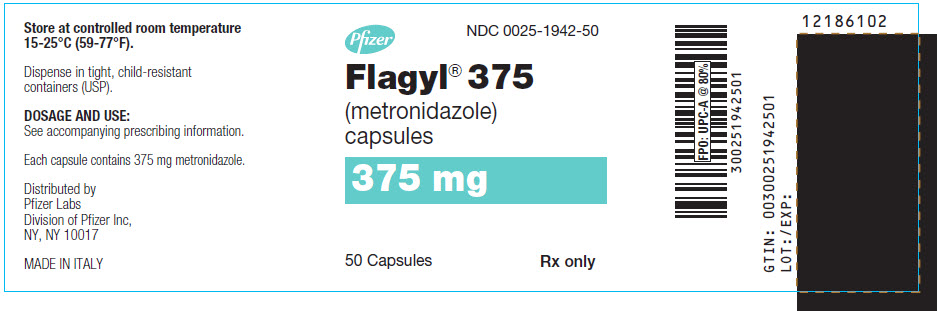
PRINCIPAL DISPLAY PANEL - 375 mg Capsule Bottle Label Pfizer NDC 0025-1942-50 Flagyl ® 375 (metronidazole) capsules 375 mg 50 Capsules Rx only Principle Display Panel - 375 mg Capsule Bottle Label
Medicare Part D spend CMS · PART D · 2026 (Q1)
Reported adverse events (FAERS)
Top reported reactions
Age at onset
Reporter sex
Serious outcomes
Where does this data come from?
About this NDC listing & data coverage
What data is (and isn’t) available for this NDC — tap to expand
| NDC identity (package / product / labeler codes) | ✓ Available |
| Labeler | ✓ Available |
| Product & package description | ✓ Available |
| Marketing category & status | ✓ Available |
| Active ingredient / dosage form / route | ✓ Available |
| FDA label (SPL via DailyMed) | ✓ Available |
| Package photos | ✓ Available |
| Inactive ingredients (structured) | ✓ Available |
| NADAC pharmacy acquisition price (CMS) | — Not published for this NDC CMS publishes NADAC only for NDCs reported in its retail-pharmacy survey. |
| Orange Book / therapeutic-equivalence data | ✓ Available |
| HCPCS J-code billing crosswalk | — Not published for this NDC Most self-administered / retail products have no J-code — that is normal. |
| Medicaid utilization (CMS SDUD) | — Not published for this NDC CMS reports utilization only for NDCs with Medicaid claims above its privacy threshold. |