
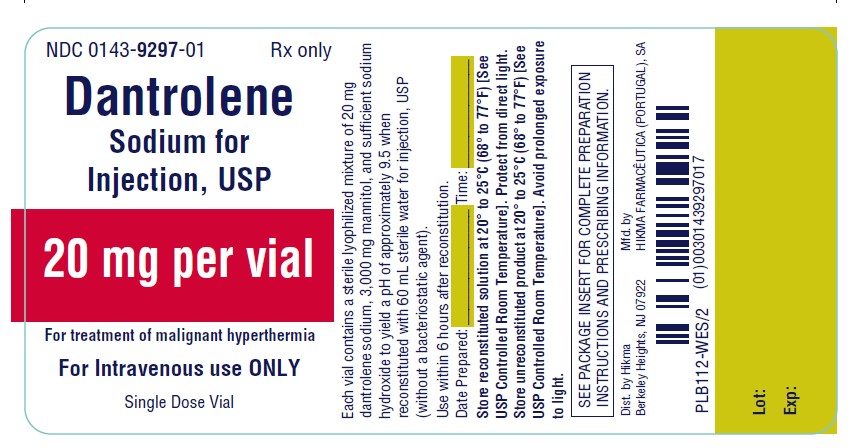
Dantrolene 20 mg Injection, Powder, For Solution, 1 injection — NDC 0143-9297-01 (Billing 00143-9297-01)
This is a package of 1 injection of Dantrolene 20 mg Injection, Powder, For Solution from Hikma Pharmaceuticals USA Inc., marketed since Jun 2017 and currently FDA-listed. It is this product's only package size.
NDC database record
One package, one record: these facts belong to NDC 0143-9297-01 alone.
- Record
- FDA NDC Directory package listing · Human prescription drug
- Code segments
- 0143 labeler · 9297 product · 01 package
- Package marketed since
- Jun 19, 2017
- Sample package
- No — commercial package
- Listing certified through
- Dec 31, 2026
- Billing quantity
- 1 EA per package
- Barcode (UPC-A, from the NDC)
- 3 0143929701 7
- FDA record last changed
- Jul 24, 2026
Identity & classification
Regulatory identifiers FDA, NLM and CMS codes for this package
Drug-database identifiers Medi-Span GPI and First Databank GCN / HICL / AHFS classification
- GSN (GCN sequence number): 004669
- GCN: 17950
- GPI-14 (Medi-Span): 75200010102105
- HICL (First Databank): 001947
- AHFS class code: 12:20.08.00
- RxCUI (RxNorm): 856696
Where does this data come from?
- FDA openFDA NDC Directory · synced Oct 8, 2026
- FDA label on DailyMed · label index refreshed Oct 6, 2026
- RxNorm (NLM RxNav) · catalog refreshed Oct 1, 2026
- Medi-Span GPI (licensed)
- First Databank (licensed) · refreshed Oct 8, 2026
RxNorm drug class
This medicine belongs to the Skeletal Muscle Relaxant class.
Where does this data come from?
- RxClass (NLM) · catalog refreshed Oct 1, 2026
Clinical
- Dantrolene is used for two main things. If you're taking the capsules (Dantrium or Dantrolene Sodium), it's most likely to help control muscle stiffness and spasms caused by condit...
- The most serious risk is liver damage. Watch for yellowing of your skin or the whites of your eyes, very dark urine, persistent nausea, or pain in the upper right side of your abdo...
- What are the most important side effects I should watch for?
- Dantrolene can cause liver damage — and this is the number one safety concern with long-term use. Regular blood tests (liver function tests) are the only way to catch a problem ear...
Patient education
Supplement & herbal interactions
Some supplements/herbs that may interact with Dantrolene — tap one for details:
Where does this data come from?
- MedlinePlus (NLM) · refreshed Oct 1, 2026
- FDA label on DailyMed · label index refreshed Oct 6, 2026
Ask a licensed pharmacist directly — free, answered by our team.
Pricing
A drug doesn't have one price. Each row is a different public payment system, and none is what you'd pay at the counter — that depends on your insurance. The ⓘ on each row explains what it measures.
| Price system | Per mL | Per package |
|---|---|---|
| Retail pharmacies payNADAC · weekly | Not in the retail survey — common for institutional, discontinued, or low-volume packs. | |
| Medicaid paysCMS SDUD · 12 mo | No recent Medicaid claims on file for this NDC — rare and low-volume NDCs are suppressed in the public data. | |
| Medicare drug plans payPart D · quarterly | No Part D plan price is available for this NDC in our data. | |
Where does this data come from?
- CMS NADAC weekly file
- CMS ASP pricing files · refreshed Sep 20, 2026
- CMS Medicaid State Drug Utilization Data · refreshed Oct 8, 2026
- CMS Part D plan pricing files · refreshed Sep 24, 2026
- VA National Acquisition Center price file
Packaging — all sizes for this product
| Package NDC | Description | Marketing start | Marketing end | Status |
|---|---|---|---|---|
| 00143-9297-01 You're viewing this Main listing | 1 INJECTION, POWDER, FOR SOLUTION in 1 VIAL | 2017-06-19 | — | Active |
Therapeutic equivalents
| Product | Labeler | Pack | NADAC/unit | TE | Status | Price vs. this |
|---|---|---|---|---|---|---|
| Dantrolene 20 mgthis 00143-9297-01 | Hikma | 1 injection | — | AP | FDA listed | — |
| Dantrium 20 mg/60mL 42023-0123-06 | Par | 6 vials | — | AP | FDA listed | — |
| Revonto 20 mg/60mL 78670-0003-67 | USWM, | 6 vials | — | AP | FDA listed | — |
| Revonto 20 mg/60mL 84549-0003-67 | ProPharma | 60 ml | — | AP | FDA listed | — |
Where does this data come from?
- FDA openFDA NDC Directory · synced Oct 8, 2026
- FDA Orange Book · refreshed Oct 3, 2026
- CMS NADAC weekly file
Availability & generic status
This product is an FDA-approved generic. Other versions of the same drug are listed under Therapeutic equivalents, least expensive first.
Where does this data come from?
- FDA Orange Book · refreshed Oct 3, 2026
Inactive Ingredients / Excipients
Inactive ingredients, also called excipients, are components of the drug product other than the active ingredient. They may include fillers, dyes, coatings, preservatives, flavors, or other formulation ingredients.
🧪 Avoiding an ingredient? See Dantrolene inactive ingredients by manufacturer: every current product's list side by side, so you can ask your pharmacy for the version that does not list it.
💡 Tap an ingredient (hover on desktop) to see what it is and why it’s used.
-
3000 mg
UNII 3OWL53L36A
A natural sugar alcohol derived from seaweed or synthesized in the lab. It's used as a filler to add bulk, a sweetener in sugar-free formulas, and a disintegrant to help tablets break apart in the stomach.
-
UNII 55X04QC32I
A strong alkaline chemical used to adjust and maintain the pH balance of liquid medicines. It helps keep the medicine stable and ensures it stays effective during storage.
2 inactive ingredients listed in the exact product block matched to this NDC.
Where does this data come from?
ingredient classCode="IACT" elements from the exact product block matched by this NDC. Label-section narrative from DailyMed / the openFDA label index is shown separately when available.- FDA label on DailyMed · label index refreshed Oct 6, 2026
- FDA openFDA NDC Directory · synced Oct 8, 2026
Inactive ingredient FAQ
Are inactive ingredients the same for every manufacturer?
Why might an inactive ingredient be missing?
Can inactive ingredients matter?
Manufacturer & labeler
More NDCs from Hikma Pharmaceuticals USA Inc. labeler code 00143
- Estradiol Valerate 10 mg/mL Injection NDC 0143-9289-01
- Estradiol Valerate 20 mg/mL Injection NDC 0143-9290-01
- Estradiol Valerate 40 mg/mL Injection NDC 0143-9291-01
- Thiotepa 100 mg Injection, Powder, Lyophilized, For Solution NDC 0143-9292-01
- Haloperidol Decanoate 100 mg/mL Injection NDC 0143-9295-01
- Haloperidol Decanoate 100 mg/mL Injection NDC 0143-9296-01
- Sodium Ferric Gluconate Complex in Sucrose 12.5 mg/mL Injection NDC 0143-9298-10
- Ganciclovir 50 mg/mL Injection, Powder, Lyophilized, For Solution NDC 0143-9299-10
- Pantoprazole Sodium 40 mg Injection, Powder, Lyophilized, For Solution NDC 0143-9300-10
- Idarubicin Hydrochloride 1 mg/mL Injection, Solution NDC 0143-9306-01
- Idarubicin Hydrochloride 1 mg/mL Injection, Solution NDC 0143-9307-01
- Idarubicin Hydrochloride 1 mg/mL Injection, Solution NDC 0143-9308-01
Where does this data come from?
- FDA openFDA NDC Directory · synced Oct 8, 2026
- Drugs@FDA
Full prescribing information FDA SPL
🎯 Indications and Usage ▾
INDICATIONS AND USAGE Dantrolene Sodium for Injection is indicated, along with appropriate supportive measures, for the management of the fulminant hypermetabolism of skeletal muscle characteristic of malignant hyperthermia crises in patients of all ages. Dantrolene Sodium for Injection should be administered by continuous rapid intravenous push as soon as the malignant hyperthermia reaction is recognized (i.e., tachycardia, tachypnea, central venous desaturation, hypercarbia, metabolic acidosis, skeletal muscle rigidity, increased utilization of anesthesia circuit carbon dioxide absorber, cyanosis and mottling of the skin, and, in many cases, fever).
Dantrolene Sodium for Injection is also indicated preoperatively, and sometimes postoperatively, to prevent or attenuate the development of clinical and laboratory signs of malignant hyperthermia in individuals judged to be malignant hyperthermia susceptible.
⏱️ Dosage and Administration ▾
DOSAGE AND ADMINISTRATION As soon as the malignant hyperthermia reaction is recognized, all anesthetic agents should be discontinued; the administration of 100% oxygen is recommended. Dantrolene Sodium for Injection should be administered by continuous rapid intravenous push beginning at a minimum dose of 1 mg/kg, and continuing until symptoms subside or the maximum cumulative dose of 10 mg/kg has been reached. If the physiologic and metabolic abnormalities reappear, the regimen may be repeated.
It is important to note that administration of Dantrolene Sodium for Injection should be continuous until symptoms subside. The effective dose to reverse the crisis is directly dependent upon the individual's degree of susceptibility to malignant hyperthermia, the amount and time of exposure to the triggering agent, and the time elapsed between onset of the crisis and initiation of treatment. Pediatric Dose Experience to date indicates that the dose of Dantrolene Sodium for Injection for pediatric patients is the same as for adults.
Preoperatively Dantrolene Sodium for Injection and/or Dantrolene Sodium Capsules may be administered preoperatively to patients judged malignant hyperthermia susceptible as part of the overall patient management to prevent or attenuate the development of clinical and laboratory signs of malignant hyperthermia. The recommended prophylactic dose of Dantrolene Sodium for Injection is 2.5 mg/kg, starting approximately 1-1/4 hours before anticipated anesthesia and infused over approximately 1 hour. This dose should prevent or attenuate the development of clinical and laboratory signs of malignant hyperthermia provided that the usual precautions, such as avoidance of established malignant hyperthermia triggering agents, are followed.
Additional Dantrolene Sodium for Injection may be indicated during anesthesia and surgery because of the appearance of early clinical and/or blood gas signs of malignant hyperthermia or because of prolonged surgery (see also CLINICAL PHARMACOLOGY , WARNINGS , and PRECAUTIONS ). Additional doses must be individualized. Oral Administration of Dantrolene Capsules: Administer 4 to 8 mg/kg/day of oral Dantrolene Sodium in three or four divided doses for 1 or 2 days prior to surgery, with the last dose being given with a minimum of water approximately 3 to 4 hours before scheduled surgery.
Adjustment can usually be made within the recommended dosage range to avoid incapacitation (weakness, drowsiness, etc.) or excessive gastrointestinal irritation (nausea and/or vomiting). See also the package insert for Dantrolene Sodium Capsules, USP. Post Crisis Follow-Up Dantrolene Sodium Capsules, 4 to 8 mg/kg/day, in four divided doses should be administered 1 to 3 days following a malignant hyperthermia crisis to prevent recurrence of the manifestations of malignant hyperthermia.
Intravenous dantrolene sodium may be used postoperatively to prevent or attenuate the recurrence of signs of malignant hyperthermia when oral dantrolene sodium administration is not practical. The intravenous dose of dantrolene sodium in the postoperative period must be individualized, starting with 1 mg/kg or more as the clinical situation dictates. Preparation Each vial of Dantrolene Sodium for Injection should be reconstituted by adding 60 mL of sterile water for injection USP (without a bacteriostatic agent), and the vial shaken until the solution is clear.
5% Dextrose Injection USP, 0.9% Sodium Chloride Injection USP, and other acidic solutions are not compatible with Dantrolene Sodium for Injection and should not be used. The contents of the vial must be protected from direct light and used within 6 hours after reconstitution. Store reconstituted solutions between 15°C to 30°C (59°F to 86°F).
Reconstituted Dantrolene Sodium for Injection should not be transferred to large glass bottles for prophylactic infusion due to precipitate formation observed with the use of some glass bottles as reservoirs. For prophylactic inf… [Excerpted — this section continues on DailyMed.]
⛔ Contraindications ▾
CONTRAINDICATIONS None.
⚠️ Warnings ▾
WARNINGS The use of Dantrolene Sodium for Injection in the management of malignant hyperthermia crisis is not a substitute for previously known supportive measures. These measures must be individualized, but it will usually be necessary to discontinue the suspect triggering agents, attend to increased oxygen requirements, manage the metabolic acidosis, institute cooling when necessary, monitor urinary output, and monitor for electrolyte imbalance. Since the effect of disease state and other drugs on dantrolene sodium related skeletal muscle weakness, including possible respiratory depression, cannot be predicted, patients who receive intravenous dantrolene sodium preoperatively should have vital signs monitored.
If patients judged malignant hyperthermia susceptible are administered intravenous or oral dantrolene sodium preoperatively, anesthetic preparation must still follow a standard malignant hyperthermia susceptible regimen, including the avoidance of known triggering agents. Monitoring for early clinical and metabolic signs of malignant hyperthermia is indicated because attenuation of malignant hyperthermia, rather than prevention, is possible. These signs usually call for the administration of additional intravenous dantrolene.
🤒 Adverse Reactions ▾
ADVERSE REACTIONS There have been occasional reports of death following malignant hyperthermia crisis even when treated with intravenous dantrolene; incidence figures are not available (the pre-dantrolene mortality of malignant hyperthermia crisis was approximately 50%). Most of these deaths can be accounted for by late recognition, delayed treatment, inadequate dosage, lack of supportive therapy, intercurrent disease and/or the development of delayed complications such as renal failure or disseminated intravascular coagulopathy.
In some cases there are insufficient data to completely rule out therapeutic failure of dantrolene. There are reports of fatality in malignant hyperthermia crisis, despite initial satisfactory response to intravenous dantrolene, which involve patients who could not be weaned from dantrolene after initial treatment. The administration of intravenous Dantrolene Sodium for Injection to human volunteers is associated with loss of grip strength and weakness in the legs, as well as drowsiness and dizziness.
The following adverse reactions are in approximate order of severity: There are rare reports of pulmonary edema developing during the treatment of malignant hyperthermia crisis in which the diluent volume and mannitol needed to deliver intravenous dantrolene possibly contributed. There have been reported cases of hepatotoxicity following the use of intravenous dantrolene products. Elevated liver enzymes have occurred hours to days following use of intravenous dantrolene, though many of these cases were observed in patients with comorbidities (e.g., critical illness).
There have been reports of thrombophlebitis following administration of intravenous dantrolene; actual incidence figures are not available. Tissue necrosis secondary to extravasation has been reported. There have been rare reports of urticaria and erythema possibly associated with the administration of intravenous dantrolene sodium.
There has been one case of anaphylaxis. Injection site reactions (pain, erythema, swelling), commonly due to extravasation, have been reported. The following events have been reported in patients receiving oral dantrolene: aplastic anemia, leukopenia, lymphocytic lymphoma, and heart failure.
(See package insert for dantrolene sodium capsules for a complete listing of adverse reactions.) The published literature has included some reports of dantrolene sodium use in patients with Neuroleptic Malignant Syndrome (NMS). Dantrolene Sodium for Injection is not indicated for the treatment of NMS and patients may expire despite treatment with Dantrolene Sodium for Injection. For medical advice about adverse reactions contact your medical professional.
To report SUSPECTED ADVERSE REACTIONS, contact Hikma Pharmaceuticals USA Inc. at 1-877-845-0689 or FDA at 1-800-FDA-1088 or www.fda.gov/medwatch .
🔄 Drug Interactions ▾
Drug Interactions Dantrolene sodium is metabolized by the liver, and it is theoretically possible that its metabolism may be enhanced by drugs known to induce hepatic microsomal enzymes. However, neither phenobarbital nor diazepam appears to affect dantrolene sodium metabolism. Binding to plasma protein is not significantly altered by diazepam, diphenylhydantoin, or phenylbutazone.
Binding to plasma proteins is reduced by warfarin and clofibrate and increased by tolbutamide. Cardiovascular collapse in association with marked hyperkalemia has been reported in patients receiving dantrolene in combination with calcium channel blockers. It is recommended that the combination of intravenous dantrolene sodium and calcium channel blockers, such as verapamil, not be used together during the management of malignant hyperthermia crisis.
Administration of dantrolene may potentiate vecuronium-induced neuromuscular block.
🤰 Pregnancy ▾
Pregnancy Pregnancy Category C Dantrolene sodium has been shown to be embryocidal in the rabbit and has been shown to decrease pup survival in the rat when given at doses seven times the human oral dose. There are no adequate and well-controlled studies in pregnant women. Dantrolene Sodium for Injection should be used during pregnancy only if the potential benefit justifies the potential risk to the fetus.
🆘 Overdosage ▾
OVERDOSAGE Because Dantrolene Sodium for Injection must be administered at a low concentration in a large volume of fluid, acute toxicity of dantrolene sodium could not be assessed in animals. In 14-day (subacute) studies, the intravenous formulation of dantrolene sodium was relatively non-toxic to rats at doses of 10 mg/kg/day and 20 mg/kg/day. While 10 mg/kg/day in dogs for 14 days evoked little toxicity, 20 mg/kg/day for 14 days caused hepatic changes of questionable biologic significance.
Symptoms which may occur in case of overdose include, but are not limited to, muscular weakness and alterations in the state of consciousness (e.g., lethargy, coma), vomiting, diarrhea, and crystalluria. For acute overdosage, general supportive measures should be employed. Intravenous fluids should be administered in fairly large quantities to avert the possibility of crystalluria.
An adequate airway should be maintained and artificial resuscitation equipment should be at hand. Electrocardiographic monitoring should be instituted, and the patient carefully observed. The value of dialysis in dantrolene sodium overdose is not known.
🧬 Clinical Pharmacology ▾
CLINICAL PHARMACOLOGY In isolated nerve-muscle preparation, dantrolene sodium has been shown to produce relaxation by affecting the contractile response of the muscle at a site beyond the myoneural junction. In skeletal muscle, dantrolene sodium dissociates the excitation-contraction coupling, probably by interfering with the release of Ca++ from the sarcoplasmic reticulum. The administration of intravenous dantrolene sodium to human volunteers is associated with loss of grip strength and weakness in the legs, as well as subjective CNS complaints (see also PRECAUTIONS , Information for Patients ).
Information concerning the passage of dantrolene sodium across the blood-brain barrier is not available. In the anesthetic-induced malignant hyperthermia syndrome, evidence points to an intrinsic abnormality of skeletal muscle tissue. In affected humans, it has been postulated that "triggering agents" (e.g., general anesthetics and depolarizing neuromuscular blocking agents) produce a change within the cell which results in an elevated myoplasmic calcium.
This elevated myoplasmic calcium activates acute cellular catabolic processes that cascade to the malignant hyperthermia crisis. It is hypothesized that addition of dantrolene sodium to the "triggered" malignant hyperthermic muscle cell reestablishes a normal level of ionized calcium in the myoplasm. Inhibition of calcium release from the sarcoplasmic reticulum by dantrolene sodium reestablishes the myoplasmic calcium equilibrium, increasing the percentage of bound calcium.
In this way, physiologic, metabolic, and biochemical changes associated with the malignant hyperthermia crisis may be reversed or attenuated. Experimental results in malignant hyperthermia susceptible swine show that prophylactic administration of intravenous or oral dantrolene prevents or attenuates the development of vital sign and blood gas changes characteristic of malignant hyperthermia in a dose related manner. The efficacy of intravenous dantrolene in the treatment of human and porcine malignant hyperthermia crisis, when considered along with prophylactic experiments in malignant hyperthermia susceptible swine, lends support to prophylactic use of oral or intravenous dantrolene in malignant hyperthermia susceptible humans.
When prophylactic intravenous dantrolene is administered as directed, whole blood concentrations remain at a near steady state level for 3 or more hours after the infusion is completed. Clinical experience has shown that early vital sign and/or blood gas changes characteristic of malignant hyperthermia may appear during or after anesthesia and surgery despite the prophylactic use of dantrolene and adherence to currently accepted patient management practices. These signs are compatible with attenuated malignant hyperthermia and respond to the administration of additional intravenous dantrolene (see DOSAGE AND ADMINISTRATION ).
The administration of the recommended prophylactic dose of intravenous dantrolene to healthy volunteers was not associated with clinically significant cardiorespiratory changes. Specific metabolic pathways for the degradation and elimination of dantrolene sodium in humans have been established. Dantrolene is found in measurable amounts in blood and urine.
Its major metabolites in body fluids are 5-hydroxy dantrolene and an acetylamino metabolite of dantrolene. Another metabolite with an unknown structure appears related to the latter. Dantrolene sodium may also undergo hydrolysis and subsequent oxidation forming nitrophenylfuroic acid.
The mean biologic half-life of dantrolene sodium after intravenous administration is variable, between 4 to 8 hours under most experimental conditions. Based on assays of whole blood and plasma, slightly greater amounts of dantrolene are associated with red blood cells than with the plasma fraction of blood. Significant amounts of dantrolene are bound to plasma proteins, mostly albumin, and this binding is readily reversible.
Cardiopu… [Excerpted — this section continues on DailyMed.]
📦 How Supplied / Storage and Handling ▾
HOW SUPPLIED Dantrolene Sodium for Injection, USP (NDC 0143-9297-01) is available in vials containing a sterile lyophilized mixture of 20 mg dantrolene sodium, 3,000 mg mannitol, and sufficient sodium hydroxide to yield a pH of approximately 9.5 when reconstituted with 60 mL sterile water for injection USP (without a bacteriostatic agent). Store reconstituted solution at 20° to 25°C (68º to 77°F) [See USP Controlled Room Temperature]. Protect from direct light.
Store unreconstituted product at 20° to 25°C (68º to 77°F) [See USP Controlled Room Temperature]. Avoid prolonged exposure to light.
📋 Description ▾
DESCRIPTION Dantrolene Sodium for Injection, USP is a sterile, non-pyrogenic, lyophilized formulation. Dantrolene Sodium for Injection, USP is supplied in 100 mL vials containing 20 mg dantrolene sodium, 3,000 mg mannitol, and sufficient sodium hydroxide to yield a pH of approximately 9.5 when reconstituted with 60 mL sterile water for injection USP (without a bacteriostatic agent). Dantrolene sodium is classified as a direct-acting skeletal muscle relaxant.
Chemically, dantrolene sodium is hydrated 1-[[[5-(4-nitrophenyl)-2furanyl]methylene]amino]-2,4-imidazolidinedione sodium salt. The structural formula for the hydrated salt is: The hydrated salt contains approximately 15% water (3.5 moles) and has a molecular weight of 399. The anhydrous salt (dantrolene) has a molecular weight of 336. structure
⚠️ Precautions ▾
PRECAUTIONS General Care must be taken to prevent extravasation of dantrolene sodium solution into the surrounding tissues due to the high pH of the intravenous formulation and potential for tissue necrosis. When mannitol is used for prevention or treatment of late renal complications of malignant hyperthermia, the 3 g of mannitol needed to dissolve each 20 mg vial of intravenous dantrolene sodium should be taken into consideration. Information for Patients Based upon data in human volunteers, perioperatively, it is appropriate to tell patients who receive Dantrolene Sodium for Injection that symptoms of muscle weakness should be expected postoperatively (i.e. decrease in grip strength and weakness of leg muscles, especially walking down stairs).
In addition, symptoms such as "lightheadedness" may be noted. Since some of these symptoms may persist for up to 48 hours, patients must not operate an automobile or engage in other hazardous activity during this time. Caution is also indicated at meals on the day of administration because difficulty swallowing and choking has been reported.
Caution should be exercised in the concomitant administration of tranquilizing agents. Drug Interactions Dantrolene sodium is metabolized by the liver, and it is theoretically possible that its metabolism may be enhanced by drugs known to induce hepatic microsomal enzymes. However, neither phenobarbital nor diazepam appears to affect dantrolene sodium metabolism.
Binding to plasma protein is not significantly altered by diazepam, diphenylhydantoin, or phenylbutazone. Binding to plasma proteins is reduced by warfarin and clofibrate and increased by tolbutamide. Cardiovascular collapse in association with marked hyperkalemia has been reported in patients receiving dantrolene in combination with calcium channel blockers.
It is recommended that the combination of intravenous dantrolene sodium and calcium channel blockers, such as verapamil, not be used together during the management of malignant hyperthermia crisis. Administration of dantrolene may potentiate vecuronium-induced neuromuscular block. Carcinogenesis, Mutagenesis, and Impairment of Fertility Sprague-Dawley female rats fed dantrolene sodium for 18 months at dosage levels of 15, 30, and 60 mg/kg/day showed an increased incidence of benign and malignant mammary tumors compared with concurrent controls.
At the highest dose level (approximately the same as the maximum recommended daily dose on a mg/m 2 basis), there was an increase in the incidence of benign hepatic lymphatic neoplasms. In a 30-month study in Sprague-Dawley rats fed dantrolene sodium, the highest dose level (approximately the same as the maximum recommended daily dose on a mg/m 2 basis) produced a decrease in the time of onset of mammary neoplasms. Female rats at the highest dose level showed an increased incidence of hepatic lymphangiomas and hepatic angiosarcomas.
The only drug-related effect seen in a 30-month study in Fischer-344 rats was a dose-related reduction in the time of onset of mammary and testicular tumors. A 24-month study in HaM/ICR mice revealed no evidence of carcinogenic activity. The significance of carcinogenicity data relative to use of dantrolene sodium in humans is unknown.
Dantrolene sodium has produced positive results in the Ames S. Typhimurium bacterial mutagenesis assay in the presence and absence of a liver activating system. Dantrolene sodium administered to male and female rats at dose levels up to 45 mg/kg/day (approximately 1.4 times the maximum recommended daily dose on a mg/m 2 basis) showed no adverse effects on fertility or general reproductive performance.
Pregnancy Pregnancy Category C Dantrolene sodium has been shown to be embryocidal in the rabbit and has been shown to decrease pup survival in the rat when given at doses seven times the human oral dose. There are no adequate and well-controlled studies in pregnant women. Dantrolene Sodium for Injection should be used during pregnancy o… [Excerpted — this section continues on DailyMed.]
🍼 Nursing Mothers ▾
Nursing Mothers Dantrolene has been detected in human milk at low concentrations (less than 2 micrograms per mL) during repeat intravenous administration over 3 days. Because of the potential for serious adverse reactions in nursing infants from dantrolene, a decision should be made whether to discontinue nursing or to discontinue the drug, taking into account the importance of the drug to the mother.
📄 Carcinogenesis, Mutagenesis, Impairment of Fertility ▾
Carcinogenesis, Mutagenesis, and Impairment of Fertility Sprague-Dawley female rats fed dantrolene sodium for 18 months at dosage levels of 15, 30, and 60 mg/kg/day showed an increased incidence of benign and malignant mammary tumors compared with concurrent controls. At the highest dose level (approximately the same as the maximum recommended daily dose on a mg/m 2 basis), there was an increase in the incidence of benign hepatic lymphatic neoplasms. In a 30-month study in Sprague-Dawley rats fed dantrolene sodium, the highest dose level (approximately the same as the maximum recommended daily dose on a mg/m 2 basis) produced a decrease in the time of onset of mammary neoplasms.
Female rats at the highest dose level showed an increased incidence of hepatic lymphangiomas and hepatic angiosarcomas. The only drug-related effect seen in a 30-month study in Fischer-344 rats was a dose-related reduction in the time of onset of mammary and testicular tumors. A 24-month study in HaM/ICR mice revealed no evidence of carcinogenic activity.
The significance of carcinogenicity data relative to use of dantrolene sodium in humans is unknown. Dantrolene sodium has produced positive results in the Ames S. Typhimurium bacterial mutagenesis assay in the presence and absence of a liver activating system.
Dantrolene sodium administered to male and female rats at dose levels up to 45 mg/kg/day (approximately 1.4 times the maximum recommended daily dose on a mg/m 2 basis) showed no adverse effects on fertility or general reproductive performance.
📄 Package Label / Principal Display Panel ▾
PRINCIPAL DISPLAY PANEL NDC 0143- 9297 -01 Rx only Dantrolene Sodium for Injection, USP 20 mg per vial For treatment of malignant hyperthermia For Intravenous use ONLY Single Dose Vial NDC 0143- 9297 -01 Rx only Dantrolene Sodium for Injection, USP 20 mg per vial For treatment of malignant hyperthermia For Intravenous use ONLY 1 Single Dose Vial, 20 mg in each vial Dantrolene 20mg vial Dantrolene 20mg carton
Reported adverse events (FAERS)
Top reported reactions
Age at onset
Reporter sex
Serious outcomes
Where does this data come from?
About this NDC listing & data coverage
What data is (and isn’t) available for this NDC — tap to expand
| NDC identity (package / product / labeler codes) | ✓ Available |
| Labeler | ✓ Available |
| Product & package description | ✓ Available |
| Marketing category & status | ✓ Available |
| Active ingredient / dosage form / route | ✓ Available |
| FDA label (SPL via DailyMed) | ✓ Available |
| Package photos | ✓ Available |
| Inactive ingredients (structured) | ✓ Available |
| NADAC pharmacy acquisition price (CMS) | — Not published for this NDC CMS publishes NADAC only for NDCs reported in its retail-pharmacy survey. |
| Orange Book / therapeutic-equivalence data | ✓ Available |
| HCPCS J-code billing crosswalk | — Not published for this NDC Most self-administered / retail products have no J-code — that is normal. |
| Medicaid utilization (CMS SDUD) | — Not published for this NDC CMS reports utilization only for NDCs with Medicaid claims above its privacy threshold. |