
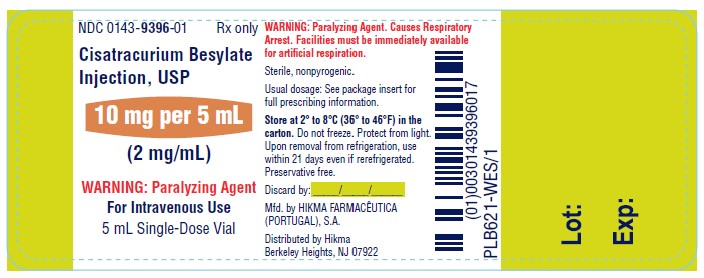
Cisatracurium Besylate 2 mg/mL Injection — NDC 0143-9396-01 (Billing 00143-9396-01)
This is a package of Cisatracurium Besylate 2 mg/mL Injection from Hikma Pharmaceuticals USA Inc., marketed since May 2023 and currently FDA-listed. It is this product's only package size.
NDC database record
One package, one record: these facts belong to NDC 0143-9396-01 alone.
- Record
- FDA NDC Directory package listing · Human prescription drug
- Code segments
- 0143 labeler · 9396 product · 01 package
- Package marketed since
- May 31, 2023
- Sample package
- No — commercial package
- Listing certified through
- Dec 31, 2026
- Barcode (UPC-A, from the NDC)
- 3 0143939601 7
- FDA record last changed
- Jul 24, 2026
Other active recalls for Cisatracurium Besylate (different manufacturers) — 3 · tap to view
Identity & classification
Regulatory identifiers FDA, NLM and CMS codes for this package
Drug-database identifiers Medi-Span GPI and First Databank GCN / HICL / AHFS classification
- GSN (GCN sequence number): 024614
- GCN: 32771
- HICL (First Databank): 010278
- AHFS class code: 12:20.20.00
- RxCUI (RxNorm): 199212
Where does this data come from?
- FDA openFDA NDC Directory · synced Oct 8, 2026
- FDA label on DailyMed · label index refreshed Oct 8, 2026
- RxNorm (NLM RxNav) · catalog refreshed Oct 1, 2026
- Medi-Span GPI (licensed)
- First Databank (licensed) · refreshed Oct 8, 2026
RxNorm drug class
This medicine belongs to the Nondepolarizing Neuromuscular Blocker class.
Where does this data come from?
- RxClass (NLM) · catalog refreshed Oct 1, 2026
Clinical
- It relaxes your muscles during anesthesia so a breathing tube can be placed and surgery can be done safely. It is also used in adults on a breathing machine in the ICU. You will al...
- It is given only through an IV by trained clinicians, either as an injection or a continuous drip. They adjust the amount to how you respond and check your muscles with a nerve sti...
- Side effects are uncommon. They can include a slow heart rate, low blood pressure, flushing, airway tightening or a rash. Your care team watches for these and can treat them quickl...
- Yes. Mention any allergic reactions to anesthesia medicines, muscle diseases like myasthenia gravis, and kidney or liver problems. Also tell them about medicines such as phenytoin,...
Patient education
Supplement & herbal interactions
Where does this data come from?
- MedlinePlus (NLM) · refreshed Oct 8, 2026
- FDA label on DailyMed · label index refreshed Oct 8, 2026
Ask a licensed pharmacist directly — free, answered by our team.
Pricing
A drug doesn't have one price. Each row is a different public payment system, and none is what you'd pay at the counter — that depends on your insurance. The ⓘ on each row explains what it measures.
| Price system | Per each | Per package |
|---|---|---|
| Retail pharmacies payNADAC · weekly | Not in the retail survey — common for institutional, discontinued, or low-volume packs. | |
| Medicaid paysCMS SDUD · 12 mo | No recent Medicaid claims on file for this NDC — rare and low-volume NDCs are suppressed in the public data. | |
| Medicare drug plans payPart D · quarterly | No Part D plan price is available for this NDC in our data. | |
Where does this data come from?
- CMS NADAC weekly file
- CMS ASP pricing files · refreshed Sep 20, 2026
- CMS Medicaid State Drug Utilization Data · refreshed Oct 8, 2026
- CMS Part D plan pricing files · refreshed Sep 24, 2026
- VA National Acquisition Center price file
Packaging — all sizes for this product
| Package NDC | Description | Marketing start | Marketing end | Status |
|---|---|---|---|---|
| 00143-9396-01 You're viewing this Main listing | 1 VIAL in 1 CARTON / 5 mL in 1 VIAL | 2023-05-31 | — | Active |
Therapeutic equivalents
| Product | Labeler | Pack | NADAC/unit | TE | Status | Price vs. this |
|---|---|---|---|---|---|---|
| Cisatracurium Besylate 2 mg/mLthis 00143-9396-01 | Hikma | 1 vial | — | AP | FDA listed | — |
| Cisatracurium Besylate 2 mg/mL 00409-1098-02 | Hospira, | 10 vials | — | AP | FDA listed | — |
| cisatracurium besylate 2 mg/mL 00781-3150-95 | Sandoz | 1 vial | — | AP | FDA listed | — |
| Cisatracurium Besylate 2 mg/mL 31722-0313-10 | Camber | 10 vials | — | AP | FDA listed | — |
| Cisatracurium Besylate 10 mg/5mL 55150-0284-10 | Eugia | 10 vials | — | — | FDA listed | — |
| Cisatracurium 2 mg/mL 63323-0416-05 | Fresenius | 10 vials | — | AP | FDA listed | — |
| Cisatracurium besylate 2 mg/mL 65145-0135-01 | Caplin | 1 vial | — | AP | FDA listed | — |
| Cisatracurium besylate 2 mg/mL 68083-0486-01 | Gland | 1 vial | — | AP | FDA listed | — |
| Cisatracurium Besylate 2 mg/mL 70069-0141-01 | Somerset | 1 vial | — | AP | FDA listed | — |
| Cisatracurium besylate 2 mg/mL 70436-0112-82 | Slate | 10 vials | — | AP | FDA listed | — |
| cisatracurium besylate 2 mg/mL 70710-1532-06 | Zydus | 10 vials | — | AP | FDA listed | — |
| Cisatracurium Besylate 10 mg/5mL 71288-0712-06 | Meitheal | 10 vials | — | AP | FDA listed | — |
| cisatracurium besylate 2 mg/mL 72785-0008-06 | Zydus | 10 vials | — | AP | FDA listed | — |
| Cisatracurium 2 mg/mL 63323-0417-10 | Fresenius | 10 vials | — | AP | FDA listed | — |
| cisatracurium besylate 2 mg/mL 00781-3152-95 | Sandoz | 10 vials | — | AP | FDA listed | — |
| Cisatracurium besylate 2 mg/mL 68083-0488-01 | Gland | 1 vial | — | AP | FDA listed | — |
| Cisatracurium Besylate 2 mg/mL 70069-0161-01 | Somerset | 1 vial | — | AP | FDA listed | — |
| Cisatracurium Besylate 2 mg/mL 00143-9397-10 | Hikma | 10 vials | — | AP | FDA listed | — |
| Cisatracurium besylate 2 mg/mL 70436-0113-82 | Slate | 10 vials | — | — | FDA listed | — |
| Cisatracurium Besylate 2 mg/mL 00409-1208-01 | Hospira, | 10 vials | — | AP | FDA listed | — |
| Cisatracurium besylate 2 mg/mL 65145-0136-01 | Caplin | 1 vial | — | AP | FDA listed | — |
| Cisatracurium Besylate 2 mg/mL 31722-0314-10 | Camber | 10 vials | — | AP | FDA listed | — |
Where does this data come from?
- FDA openFDA NDC Directory · synced Oct 8, 2026
- FDA Orange Book · refreshed Oct 3, 2026
- CMS NADAC weekly file
Availability & generic status
This product is an FDA-approved generic. Other versions of the same drug are listed under Therapeutic equivalents, least expensive first.
Where does this data come from?
- FDA Orange Book · refreshed Oct 3, 2026
Inactive Ingredients / Excipients
Inactive ingredients, also called excipients, are components of the drug product other than the active ingredient. They may include fillers, dyes, coatings, preservatives, flavors, or other formulation ingredients.
🧪 Avoiding an ingredient? See Cisatracurium inactive ingredients by manufacturer: every current product's list side by side, so you can ask your pharmacy for the version that does not list it.
💡 Tap an ingredient (hover on desktop) to see what it is and why it’s used.
-
UNII G9560D97PI
A chemical compound used as a reducing agent and stabilizer in pharmaceutical formulations. It helps prevent oxidation of active ingredients and maintain product stability during storage.
-
UNII 059QF0KO0R
Water is a liquid solvent that dissolves and mixes ingredients together in liquid medicines, syrups, and injections. It helps distribute the active drug evenly throughout the product.
2 inactive ingredients listed in the exact product block matched to this NDC.
Where does this data come from?
ingredient classCode="IACT" elements from the exact product block matched by this NDC. Label-section narrative from DailyMed / the openFDA label index is shown separately when available.- FDA label on DailyMed · label index refreshed Oct 8, 2026
- FDA openFDA NDC Directory · synced Oct 8, 2026
Inactive ingredient FAQ
Are inactive ingredients the same for every manufacturer?
Why might an inactive ingredient be missing?
Can inactive ingredients matter?
Manufacturer & labeler
More NDCs from Hikma Pharmaceuticals USA Inc. labeler code 00143
- decitabine 50 mg Injection, Powder, Lyophilized, For Solution NDC 0143-9385-01
- Acetaminophen 1000 mg/100mL Injection NDC 0143-9386-10
- Triamcinolone Acetonide 40 mg/mL Injection, Suspension NDC 0143-9387-25
- REMIFENTANIL HYDROCHLORIDE 1 mg/mL Injection, Powder, Lyophilized, For Solution NDC 0143-9391-10
- REMIFENTANIL HYDROCHLORIDE 2 mg/2mL Injection, Powder, Lyophilized, For Solution NDC 0143-9392-10
- REMIFENTANIL HYDROCHLORIDE 5 mg/5mL Injection, Powder, Lyophilized, For Solution NDC 0143-9393-10
- Cisatracurium Besylate 2 mg/mL Injection NDC 0143-9397-10
- ertapenem sodium 1 g Injection, Powder, Lyophilized, For Solution NDC 0143-9398-10
- FOSAPREPITANT DIMEGLUMINE 150 mg/5mL Injection, Powder, Lyophilized, For Solution NDC 0143-9428-01
- Ertapenem 1 g Injection, Powder, Lyophilized, For Solution NDC 0143-9429-10
- Meropenem 500 mg/20mL Injection NDC 0143-9430-10
- Meropenem 1 g/30mL Injection NDC 0143-9431-10
Where does this data come from?
- FDA openFDA NDC Directory · synced Oct 8, 2026
- Drugs@FDA
Full prescribing information FDA SPL
🎯 Indications and Usage ▾
1 INDICATIONS AND USAGE Cisatracurium besylate injection is indicated: as an adjunct to general anesthesia to facilitate tracheal intubation in adults and in pediatric patients 1 month to 12 years of age to provide skeletal muscle relaxation in adults during surgical procedures or during mechanical ventilation in the ICU to provide skeletal muscle relaxation during surgical procedures via infusion in pediatric patients 2 years and older Limitations of Use Cisatracurium besylate injection is not recommended for rapid sequence endotracheal intubation due to the time required for its onset of action.
Cisatracurium besylate injection is a nondepolarizing neuromuscular blocker indicated: as an adjunct to general anesthesia to facilitate tracheal intubation in adults and in pediatric patients 1 month to 12 years of age ( 1 ) to provide skeletal muscle relaxation during surgery in adults and in pediatric patients 2 to 12 years of age as a bolus or infusion maintenance ( 1 ) for mechanical ventilation in the ICU in adults ( 1 ) Limitations of Use: Cisatracurium besylate injection is not recommended for rapid sequence endotracheal intubation due to the time required for its onset action ( 1 )
⏱️ Dosage and Administration ▾
2 DOSAGE AND ADMINISTRATION Store cisatracurium besylate injection with the cap and ferrule intact and in a manner that minimizes the possibility of selecting the wrong product ( 2.1 ) Administer intravenously only by or under the supervision of experienced clinicians familiar with drug’s actions and possible complications ( 2.1 ) Use only if personnel and facilities for resuscitation and life support, and a cisatracurium besylate injection antagonist are immediately available ( 2.1 ) Use a peripheral nerve stimulator to determine adequacy of blockade (e.g., need for additional doses), minimize risk of overdosage or underdosage, assess extent of recovery from blockade, potentially limit exposure to toxic metabolites through dose titration, and facilitate more rapid reversal of cisatracurium besylate injection-induced paralysis ( 2.1 ) See the Full Prescribing Information for: Dosage and administration instructions in adults, pediatric patients, geriatric patients, patients with neuromuscular disease, burns, end-stage renal disease, and patients undergoing coronary artery bypass graft surgery with induced hypothermia ( 2.2 , 2.3 , 2.4 , 2.5 ) Continuous infusion rates ( 2.6 ) Preparation instructions ( 2.7 ) Drug compatibility ( 2.8 )
2.1Important Dosage and Administration Instructions Risk of Medication Errors Accidental administration of neuromuscular blocking agents may be fatal. Store cisatracurium besylate injection with the cap and ferrule intact and in a manner that minimizes the possibility of selecting the wrong product [see Warnings and Precautions (5.5) ]. Important Administration Instructions Cisatracurium besylate injection is for intravenous use only.
Administer cisatracurium besylate injection in carefully adjusted dosage by or under the supervision of experienced clinicians who are familiar with the drug’s actions and the possible complications. Use cisatracurium besylate injection only if the following are immediately available: personnel and facilities for resuscitation and life support (tracheal intubation, artificial ventilation, oxygen therapy); and an antagonist of cisatracurium besylate injection [see Overdosage (10) ] . The dosage information which follows is intended to serve as an initial guide for individual patients; base subsequent cisatracurium besylate injection dosage on the patients’ responses to the initial doses.
Use a peripheral nerve stimulator to: Determine the adequacy of neuromuscular blockade (e.g., need for additional cisatracurium besylate injection doses, reduction of the infusion rate). Minimize risk of overdosage or underdosage. Assess the extent of recovery from neuromuscular blockade (e.g., spontaneous recovery or recovery after administration of a reversal agent, e.g., neostigmine).
Appropriately titrate doses to potentially limit exposure to toxic metabolites. Facilitate more rapid reversal of the cisatracurium besylate injection-induced paralysis.
2.2Recommended Cisatracurium Besylate Injection Dose for Performing Tracheal Intubation Tracheal Intubation in Adults Prior to selecting the initial cisatracurium besylate injection bolus dose, consider the desired time to tracheal intubation and the anticipated length of surgery, factors affecting time to onset of complete neuromuscular block such as age and renal function, and factors that may influence intubation conditions such as the presence of co-induction agents (e.g., fentanyl and midazolam) and the depth of anesthesia.
In conjunction with a propofol/nitrous oxide/oxygen induction-intubation technique or a thiopental/nitrous oxide/oxygen induction-intubation technique, the recommended starting weight-based dose of cisatracurium besylate injection is between 0.15 mg/kg and 0.2 mg/kg administered by bolus intravenous injection. Doses up to 0.4 mg/kg have been safely administered by bolus intravenous injection to healthy patients and patients with serious cardiovascular disease [see Clinical Pharmacology (12.2) ] . Patients wi… [Excerpted — this section continues on DailyMed.]
💊 Dosage Forms and Strengths ▾
3 DOSAGE FORMS AND STRENGTHS Cisatracurium Besylate Injection, USP is available as a colorless to slightly yellow or greenish-yellow solution in the following strengths: 10 mg of cisatracurium per 5 mL (2 mg/mL) in single-dose vials (equivalent to 2.68 mg/mL cisatracurium besylate) 200 mg of cisatracurium per 20 mL (10 mg/mL) in single-dose vials. Injection: 10 mg/5 mL (2 mg/mL) in single-dose vials ( 3 ) 200 mg/20 mL (10 mg/mL) in single-dose vials ( 3 )
⛔ Contraindications ▾
4 CONTRAINDICATIONS Cisatracurium besylate injection is contraindicated in patients with known hypersensitivity to cisatracurium. Severe anaphylactic reactions to cisatracurium besylate injection have been reported [see Warnings and Precautions (5.4) ] . Known hypersensitivity to cisatracurium ( 4 )
⚠️ Warnings and Cautions ▾
5 WARNINGS AND PRECAUTIONS Residual Paralysis : Patients with neuromuscular diseases are at higher risk. Use a lower initial bolus dose and consider using a reversal agent in these patients. ( 2.2 , 5.1 ) Risk of Seizure : Monitor level of neuromuscular blockade during long-term administration to limit exposure to toxic metabolites ( 5.3 ) Hypersensitivity Reactions and Anaphylaxis : Severe hypersensitivity reactions including anaphylactic reactions have been reported.
Consider cross-reactivity among neuromuscular blocking agents, both depolarizing and non-depolarizing. ( 4 , 5.4 ) Risk of Death due to Medication Errors : Accidental administration can cause death. ( 5.5 ) Inadequate Anesthesia : Use cisatracurium besylate injection in the presence of appropriate sedation or general anesthesia and monitor patients to ensure level of anesthesia is adequate ( 5.6 )
5.1Residual Paralysis Cisatracurium besylate injection has been associated with residual paralysis. Patients with neuromuscular diseases (e.g., myasthenia gravis and myasthenic syndrome) and carcinomatosis may be at higher risk of residual paralysis; thus, a lower maximum initial bolus is recommended in these patients [see Dosage and Administration (2.2) and Use in Specific Populations (8.10) ] . To prevent complications resulting from cisatracurium besylate injection-associated residual paralysis, extubation is recommended only after the patient has recovered sufficiently from neuromuscular blockade.
Consider use of a reversal agent especially in cases where residual paralysis is more likely to occur [see Overdosage (10) ] .
5.3Risk of Seizure Laudanosine, an active metabolite of cisatracurium besylate injection, has been shown to cause seizures in animals. Cisatracurium besylate injection-treated patients with renal or hepatic impairment may have higher metabolite concentrations (including laudanosine) than patients with normal renal and hepatic function [see Clinical Pharmacology (12.3) ] . Therefore, patients with renal or hepatic impairment receiving extended administration of cisatracurium besylate injection may be at higher risk of seizures.
The level of neuromuscular blockade during long-term cisatracurium besylate injection administration should be monitored with a nerve stimulator to titrate cisatracurium besylate injection administration to the patients’ needs and limit exposure to toxic metabolites.
5.4Hypersensitivity Reactions Including Anaphylaxis Severe hypersensitivity reactions, including fatal and life-threatening anaphylactic reactions, have been reported [see Contraindications (4) ] . There have been reports of wheezing, laryngospasm, bronchospasm, rash and itching following cisatracurium besylate injection administration in pediatric patients. Due to the potential severity of these reactions, appropriate precautions such as the immediate availability of appropriate emergency treatment should be taken.
Precautions should also be taken in those patients who have had previous anaphylactic reactions to other neuromuscular blocking agents since cross-reactivity between neuromuscular blocking agents, both depolarizing and non-depolarizing, has been reported.
5.5Risk of Death Due to Medication Errors Administration of cisatracurium besylate injection results in paralysis, which may lead to respiratory arrest and death, a progression that may be more likely to occur in a patient for whom it is not intended. Confirm proper selection of intended product and avoid confusion with other injectable solutions that are present in critical care and other clinical settings. If another healthcare provider is administering the product, ensure that the intended dose is clearly labeled and communicated.
5.6Risks Due to Inadequate Anesthesia Neuromuscular blockade in the conscious patient can lead to distress. Use cisatracurium besylate injection in the presence of appropriate sedation or general anesthesia. Monitor patients to ensure that the level of anesthesia i… [Excerpted — this section continues on DailyMed.]
🤒 Adverse Reactions ▾
6 ADVERSE REACTIONS The most common adverse reactions (0.1% to 0.4%) were bradycardia, hypotension, flushing, bronchospasm, and rash. ( 6.1 ) To report SUSPECTED ADVERSE REACTIONS, contact Hikma Pharmaceuticals USA Inc. at 1-877-845-0689 or FDA at 1-800-FDA-1088 or www.fda.gov/medwatch.
6.1Clinical Studies Experience Because clinical studies are conducted under widely varying conditions, adverse reaction rates observed in the clinical studies of a drug cannot be directly compared to rates in the clinical studies of another drug and may not reflect the rates observed in practice. Adverse Reactions in Clinical Trials of Cisatracurium Besylate Injection in Surgical Patients The data presented below are based on studies involving 945 surgical patients who received cisatracurium besylate injection in conjunction with other drugs in US and European clinical studies in a variety of procedures [see Clinical Studies (14.1) ] .
Table 3 displays adverse reactions that occurred at a rate of less than 1%. Table 3. Adverse Reactions in Clinical Trials of Cisatracurium Besylate Injection in Surgical Patients Adverse Reaction Incidence Bradycardia 0.4% Hypotension 0.2% Flushing 0.2% Bronchospasm 0.2% Rash 0.1% Adverse Reactions in Clinical Trials of Cisatracurium Besylate Injection in Intensive Care Unit Patients The adverse reactions presented below were from studies involving 68 adult ICU patients who received cisatracurium besylate injection in conjunction with other drugs in US and European clinical studies [see Clinical Studies (14.3) ] .
One patient experienced bronchospasm. In one of the two ICU studies, a randomized and double-blind study of ICU patients using TOF neuromuscular monitoring, there were two reports of prolonged recovery (range: 167 and 270 minutes) among 28 patients administered cisatracurium besylate injection and 13 reports of prolonged recovery (range: 90 minutes to 33 hours) among 30 patients administered vecuronium.
6.2Postmarketing Experience The following events have been identified during post-approval use of cisatracurium besylate injection in conjunction with one or more anesthetic agents in clinical practice. Because they are reported voluntarily from a population of unknown size, estimates of frequency cannot be made. These events have been chosen for inclusion due to a combination of their seriousness, frequency of reporting, or potential causal connection to cisatracurium besylate injection: anaphylaxis, histamine release, prolonged neuromuscular block, muscle weakness, myopathy.
🔄 Drug Interactions ▾
7 DRUG INTERACTIONS Succinylcholine : May decrease time to onset of maximum neuromuscular blockade ( 7.1 ) Inhalational anesthetics, antibiotics, local anesthetics, magnesium salts , procainamide, lithium, quinidine : May potentiate or prolong neuromuscular blockade action of cisatracurium besylate injection. Use peripheral nerve stimulator and monitor clinical signs of neuromuscular blockade. ( 5.8 , 7.1 ) Phenytoin and Carbamazepine : May shorten duration of neuromuscular blockade.
Use peripheral nerve stimulator and monitor clinical signs of neuromuscular blockade. ( 5.9 , 7.1 )
7.1Clinically Significant Drug Interactions Table 4 displays clinically significant drug interactions with cisatracurium besylate injection. Table 4. Clinically Significant Drug Interactions with Cisatracurium Besylate Injection Drug or Drug Class Clinical Implications* Succinylcholine The use of succinylcholine prior to cisatracurium besylate injection administration may decrease the time to onset of maximum neuromuscular blockade but has no effect on the duration of neuromuscular blockade.
Inhalational Anesthetics Administration of inhalational anesthetics with nitrous oxide/oxygen for greater than 30 minutes to achieve
1.25Minimum Alveolar Concentration (MAC) may prolong the duration of action of initial and maintenance doses of cisatracurium besylate injection. This may potentiate the neuromuscular blockade. Antibiotics † Local anesthetics Magnesium salts Procainamide Lithium Quinidine May prolong the neuromuscular blockade action of cisatracurium besylate injection Phenytoin, Carbamazepine May increase resistance to the neuromuscular blockade action of cisatracurium besylate injection resulting in shorter durations of neuromuscular blockade and infusion rate requirements may be higher. * The use of peripheral nerve stimulator is strongly recommended to evaluate the level of neuromuscular blockade, to assess the need for additional doses of cisatracurium besylate injection, and to determine whether adjustments need to be made to the dose with subsequent administration. † Examples: aminoglycosides, tetracyclines, bacitracin, polymyxins, lincomycin, clindamycin, colistin, sodium colistimethate
7.2Drugs Without Clinically Significant Drug Interactions with Cisatracurium Besylate Injection In clinical studies, propofol had no effect on the duration of action or dosing requirements for cisatracurium besylate injection. Cisatracurium besylate injection is not compatible with propofol for Y-site administration.
7.1Clinically Significant Drug Interactions Table 4 displays clinically significant drug interactions with cisatracurium besylate injection. Table 4. Clinically Significant Drug Interactions with Cisatracurium Besylate Injection Drug or Drug Class Clinical Implications* Succinylcholine The use of succinylcholine prior to cisatracurium besylate injection administration may decrease the time to onset of maximum neuromuscular blockade but has no effect on the duration of neuromuscular blockade.
Inhalational Anesthetics Administration of inhalational anesthetics with nitrous oxide/oxygen for greater than 30 minutes to achieve
1.25Minimum Alveolar Concentration (MAC) may prolong the duration of action of initial and maintenance doses of cisatracurium besylate injection. This may potentiate the neuromuscular blockade. Antibiotics † Local anesthetics Magnesium salts Procainamide Lithium Quinidine May prolong the neuromuscular blockade action of cisatracurium besylate injection Phenytoin, Carbamazepine May increase resistance to the neuromuscular blockade action of cisatracurium besylate injection resulting in shorter durations of neuromuscular blockade and infusion rate requirements may be higher. * The use of peripheral nerve stimulator is strongly recommended to evaluate the level of neuromuscular blockade, to assess the need for additional doses of cisatracurium besylate injection, and to determine whether adjustments need to be made to the do… [Excerpted — this section continues on DailyMed.]
👥 Use in Specific Populations ▾
8 USE IN SPECIFIC POPULATIONS Patients with Hemiparesis or Paraparesis : Perform neuromuscular monitoring on non-paretic limb ( 8.9 )
8.1Pregnancy Risk Summary There are no available clinical trial data on cisatracurium use in pregnancy to evaluate a drug-associated risk of major birth defects, miscarriage, or adverse maternal or fetal outcomes. Animal studies conducted in rats administered cisatracurium besylate during organogenesis (Gestational Day 6 to 15) found no evidence of fetal harm at 0.8 times (ventilated rats) the exposure from a human starting IV bolus dose of 0.2 mg/kg (see Data). The estimated background risk for major birth defects and miscarriage in the indicated population is unknown.
All pregnancies have a background risk of birth defect, loss, or other adverse outcomes. In the U.S. general population, the estimated background risk of major birth defects and miscarriage in clinically recognized pregnancies is 2 to 4% and 15 to 20%, respectively. Clinical Considerations Labor or Delivery The action of neuromuscular blocking agents may be enhanced by magnesium salts administered for the management of preeclampsia or eclampsia of pregnancy.
Data Animal Data Two embryofetal developmental reproductive toxicity studies were conducted in rats. In a non- ventilated rat study, pregnant animals were treated with cisatracurium besylate subcutaneously twice per day from Gestational Day 6 to 15 using subparalyzing doses (2 and 4 mg/kg daily; equivalent to 6- and 12-times, respectively, the AUC exposure in humans following a bolus dose of 0.2 mg/kg IV). In the ventilated rat study, pregnant animals were treated with cisatracurium besylate intravenously once a day between Gestational Day 6 to 15 using paralyzing doses (0.5 and 1 mg/kg; equivalent to 0.4- and 0.8-times, respectively, the exposure in humans following a bolus dose of 0.2 mg/kg IV based on mg/m 2 comparison).
Neither of these studies revealed maternal or fetal toxicity or malformations.
8.2Lactation Risk Summary There are no data on the presence of cisatracurium besylate in human milk, the effects on the breastfed child, or the effects on milk production. The developmental and health benefits of breastfeeding should be considered along with the mother's clinical need for cisatracurium besylate injection and any potential adverse effects on the breastfed child from cisatracurium besylate injection or from the underlying maternal condition.
8.4Pediatric Use The safety and effectiveness of cisatracurium besylate injection as an adjunct to general anesthesia to facilitate tracheal intubation, and to provide skeletal muscle relaxation during surgery in pediatric patients 1 month through 12 years of age were established from three studies in pediatric patients [see Dosing and Administration (2.2 , 2.5 ) and Clinical Studies (14.2) ] . The three open-label studies are summarized below. The safety and effectiveness of cisatracurium besylate injection have not been established in pediatric patients less than 1 month of age.
Tracheal Intubation A study of 0.15 mg/kg cisatracurium besylate injection evaluated 230 pediatric patients (ages 1 month to 12 years). Excellent or good intubating conditions were produced 120 seconds following 0.15 mg/kg of cisatracurium besylate injection in 88 of 90 of patients induced with halothane and in 85 of 90 of patients induced with thiopentone and fentanyl. The study also evaluated 50 pediatric patients during opioid anesthesia, with maximum neuromuscular blockade achieved in an average of about 3 minutes and a clinically effective block for 36 minutes in patients ages 2 to 12 years, and maximum neuromuscular block in about 2 minutes and a clinically effective block for about 43 minutes in infants 1 to 23 months [see Clinical Studies (14.2) ] .
In a study of 0.1 mg/kg cisatracurium besylate injection administered in 16 pediatric patients (ages 2 to 12 years) during opioid/nitrous oxide/oxygen anesthesia, maximum neuromuscular blockade… [Excerpted — this section continues on DailyMed.]
🤰 Pregnancy ▾
8.1Pregnancy Risk Summary There are no available clinical trial data on cisatracurium use in pregnancy to evaluate a drug-associated risk of major birth defects, miscarriage, or adverse maternal or fetal outcomes. Animal studies conducted in rats administered cisatracurium besylate during organogenesis (Gestational Day 6 to 15) found no evidence of fetal harm at 0.8 times (ventilated rats) the exposure from a human starting IV bolus dose of 0.2 mg/kg (see Data). The estimated background risk for major birth defects and miscarriage in the indicated population is unknown.
All pregnancies have a background risk of birth defect, loss, or other adverse outcomes. In the U.S. general population, the estimated background risk of major birth defects and miscarriage in clinically recognized pregnancies is 2 to 4% and 15 to 20%, respectively. Clinical Considerations Labor or Delivery The action of neuromuscular blocking agents may be enhanced by magnesium salts administered for the management of preeclampsia or eclampsia of pregnancy.
Data Animal Data Two embryofetal developmental reproductive toxicity studies were conducted in rats. In a non- ventilated rat study, pregnant animals were treated with cisatracurium besylate subcutaneously twice per day from Gestational Day 6 to 15 using subparalyzing doses (2 and 4 mg/kg daily; equivalent to 6- and 12-times, respectively, the AUC exposure in humans following a bolus dose of 0.2 mg/kg IV). In the ventilated rat study, pregnant animals were treated with cisatracurium besylate intravenously once a day between Gestational Day 6 to 15 using paralyzing doses (0.5 and 1 mg/kg; equivalent to 0.4- and 0.8-times, respectively, the exposure in humans following a bolus dose of 0.2 mg/kg IV based on mg/m 2 comparison).
Neither of these studies revealed maternal or fetal toxicity or malformations.
🧒 Pediatric Use ▾
8.4Pediatric Use The safety and effectiveness of cisatracurium besylate injection as an adjunct to general anesthesia to facilitate tracheal intubation, and to provide skeletal muscle relaxation during surgery in pediatric patients 1 month through 12 years of age were established from three studies in pediatric patients [see Dosing and Administration (2.2 , 2.5 ) and Clinical Studies (14.2) ] . The three open-label studies are summarized below. The safety and effectiveness of cisatracurium besylate injection have not been established in pediatric patients less than 1 month of age.
Tracheal Intubation A study of 0.15 mg/kg cisatracurium besylate injection evaluated 230 pediatric patients (ages 1 month to 12 years). Excellent or good intubating conditions were produced 120 seconds following 0.15 mg/kg of cisatracurium besylate injection in 88 of 90 of patients induced with halothane and in 85 of 90 of patients induced with thiopentone and fentanyl. The study also evaluated 50 pediatric patients during opioid anesthesia, with maximum neuromuscular blockade achieved in an average of about 3 minutes and a clinically effective block for 36 minutes in patients ages 2 to 12 years, and maximum neuromuscular block in about 2 minutes and a clinically effective block for about 43 minutes in infants 1 to 23 months [see Clinical Studies (14.2) ] .
In a study of 0.1 mg/kg cisatracurium besylate injection administered in 16 pediatric patients (ages 2 to 12 years) during opioid/nitrous oxide/oxygen anesthesia, maximum neuromuscular blockade was achieved in an average of 2.8 minutes with a clinically effective block for 28 minutes [see Clinical Studies (14.2) ] . Skeletal Muscle Relaxation During Surgery In a study of cisatracurium besylate injection administered during halothane/nitrous oxide/oxygen anesthesia, 18 pediatric patients (ages 2 to 12 years) were scheduled for surgical procedures that required neuromuscular block for 60 minutes or longer.
The average duration of continuous infusion was 62.8 minutes (range: 17 to 145 minutes). The overall mean infusion rate for 9 patients whose infusion was 45 minutes or longer was 1.7 mcg/kg/minute (range: 1.19 to 2.14 mcg/kg/minute).
🧓 Geriatric Use ▾
8.5Geriatric Use Of the total number of subjects (135) in clinical studies of cisatracurium besylate injection, 57, 63, and 15 subjects were 65 to 70 years old, 70 to 80 years old, and greater than 80 years old, respectively. The geriatric population included a subset of patients with significant cardiovascular disease [see Clinical Pharmacology (12.3) ] . Because the time to maximum neuromuscular blockade is approximately 1 minute slower in geriatric patients compared to younger patients, consider extending the interval between administering cisatracurium besylate injection and attempting intubation by at least 1 minute to achieve adequate intubation conditions [see Dosage and Administration (2.2) and Clinical Pharmacology (12.2) ] .
The time to maximum neuromuscular blockade is approximately 1 minute slower in geriatric patients, a difference that should be taken into account when selecting a neuromuscular blocking agent (e.g., the need to rapidly secure the airway) and when initiating laryngoscopy [see Clinical Pharmacology (12.3) ] . Minor differences in the pharmacokinetics of cisatracurium between elderly and young adult patients were not associated with clinically significant differences in the recovery profile of cisatracurium besylate injection following a single 0.1 mg/kg dose.
Besides the differences noted above, no overall differences in safety or effectiveness were observed between geriatric and younger subjects, and other reported clinical experience has not identified differences in responses between geriatric and younger subjects, but greater sensitivity of some older individuals to cisatracurium besylate injection cannot be ruled out.
🆘 Overdosage ▾
10 OVERDOSAGE Overdosage with neuromuscular blocking agents may result in neuromuscular blockade beyond the time needed for surgery and anesthesia. The primary treatment is maintenance of a patent airway and controlled ventilation until recovery of normal neuromuscular function is assured. Once recovery from neuromuscular block begins, further recovery may be facilitated by administration of a cholinesterase inhibitor (e.g., neostigmine, edrophonium) in conjunction with an appropriate cholinergic inhibitor.
Cholinesterase inhibitors should not be administered when complete neuromuscular blockade is evident or suspected because the reversal of paralysis may not be sufficient to maintain a patent airway and support an appropriate level of spontaneous ventilation. Neostigmine : Administration of 0.04 to 0.07 mg/kg of neostigmine at approximately 10% recovery from neuromuscular blockade (range: 0 to 15%) produced 95% recovery of the muscle twitch response and a T 4 :T 1 ratio ≥ 70% in an average of 9 to 10 minutes. The times from 25% recovery of the muscle twitch response to a T 4 :T 1 ratio ≥ 70% following these doses of neostigmine averaged 7 minutes.
The mean 25% to 75% recovery index following reversal was 3 to 4 minutes. Edrophonium : Administration of 1 mg/kg of edrophonium at approximately 25% recovery from neuromuscular blockade (range: 16% to 30%) produced 95% recovery and a T 4 :T 1 ratio ≥ 70% in an average of 3 to 5 minutes. For providers treating patients treated with cholinesterase inhibitors: Use a peripheral nerve stimulator to evaluate recovery and antagonism of neuromuscular blockade.
Evaluate for evidence of adequate clinical recovery (e.g., 5-second head lift and grip strength). Support ventilation until adequate spontaneous ventilation has resumed. The onset of antagonism may be delayed in the presence of debilitation, cachexia, carcinomatosis, and the concomitant use of certain broad spectrum antibiotics, or anesthetic agents and other drugs which enhance neuromuscular block or separately cause respiratory depression [see Drug Interactions (7.1) ] .
Under such circumstances the management is the same as that of prolonged neuromuscular block.
🧬 Clinical Pharmacology ▾
12 CLINICAL PHARMACOLOGY
12.1Mechanism of Action Cisatracurium besylate injection binds competitively to cholinergic receptors on the motor end-plate to antagonize the action of acetylcholine, resulting in blockade of neuromuscular transmission. This action is antagonized by acetylcholinesterase inhibitors such as neostigmine.
12.2Pharmacodynamics The average ED 95 (dose required to produce 95% suppression of the adductor pollicis muscle twitch response to ulnar nerve stimulation) of cisatracurium is 0.05 mg/kg (range: 0.048 to 0.053) in adults receiving opioid/nitrous oxide/oxygen anesthesia. The pharmacodynamics of various cisatracurium besylate injection doses administered over 5 to 10 seconds during opioid/nitrous oxide/oxygen anesthesia are summarized in Table 5. When the cisatracurium besylate injection dose is doubled, the clinically effective duration of blockade increases by approximately 25 minutes.
Once recovery begins, the rate of recovery is independent of dose. Isoflurane or enflurane administered with nitrous oxide/oxygen to achieve
1.25MAC (Minimum Alveolar Concentration) prolonged the clinically effective duration of action of initial and maintenance cisatracurium besylate injection doses, and decreased the average infusion rate requirement of cisatracurium besylate injection. The magnitude of these effects depended on the duration of administration of the volatile agents: Fifteen to 30 minutes of exposure to
1.25MAC isoflurane or enflurane had minimal effects on the duration of action of initial doses of cisatracurium besylate injection. In surgical procedures during enflurane or isoflurane anesthesia greater than 30 minutes, less frequent maintenance dosing, lower maintenance doses, or reduced infusion rates of cisatracurium besylate injection were required. The average infusion rate requirement was decreased by as much as 30% to 40% [see Drug Interactions ( 7.1 )] .
The onset, duration of action, and recovery profiles of cisatracurium besylate injection during propofol/oxygen or propofol/nitrous oxide/oxygen anesthesia were similar to those during opioid/nitrous oxide/oxygen anesthesia (see Table 5). Repeated administration of maintenance cisatracurium besylate injection doses or a continuous cisatracurium besylate injection infusion for up to 3 hours was not associated with development of tachyphylaxis or cumulative neuromuscular blocking effects. The time needed to recover from successive maintenance doses did not change with the number of doses administered when partial recovery occurred between doses.
The rate of spontaneous recovery of neuromuscular function after cisatracurium besylate injection infusion was independent of the duration of infusion and comparable to the rate of recovery following initial doses (see Table 5). Pediatric patients including infants generally had a shorter time to maximum neuromuscular blockade and a faster recovery from neuromuscular blockade compared to adults treated with the same weight-based doses (see Table 5). Table 5.
Pharmacodynamic Dose Response* of Cisatracurium Besylate Injection During Opioid/Nitrous Oxide/Oxygen Anesthesia C isatracurium Dose Time to 90% Block in minutes Time to Maximum Block in minutes 5% Recovery in minutes 25% Recovery † in minutes 95% Recovery in minutes T 4 :T 1 Ratio ‡ ≥ 70% in minutes 25% to 75% Recovery Index in minutes Adults 0.1 mg/kg 3.3 5.0 33 42 64 64 13 (2 × ED 95 ) (n § = 98) (1 to 8.7) (1.2 to 17.2) (15 to 51) (22 to 63) (25 to 93) (32 to 91) (5 to 30) 0.15 || mg/kg 2.6 3.5 46 55 76 75 13 (3 × ED 95 ) (1.0 to 4.4) (1.6 to 6.8) (28 to 65) (44 to 74) (60 to 103) (63 to 98) (11 to 16) (n = 39) 0.2 mg/kg 2.4 2.9 59 65 81 85 12 (4 × ED 95 ) (1.5 to 4.5) (1.9 to 5.2) (31 to 103) (43 to 103) (53 to 114) (55 to 114) (2 to 30) (n = 30) 0.25 mg/kg 1.6 2.0 70 78 91 97 8 (5 × ED 95 ) (0.8 to 3.3) (1.2 to 3.7) (58 to 85) (66 to 86) (76 to 109) (82 to 113) (5 to 12) (n = 15) 0.4 mg/kg 1.5 1.9 83 91 121 126 14 (8 × ED 95 ) (1.3 to 1.8) (1… [Excerpted — this section continues on DailyMed.]
🧬 Mechanism of Action ▾
12.1Mechanism of Action Cisatracurium besylate injection binds competitively to cholinergic receptors on the motor end-plate to antagonize the action of acetylcholine, resulting in blockade of neuromuscular transmission. This action is antagonized by acetylcholinesterase inhibitors such as neostigmine.
📦 How Supplied / Storage and Handling ▾
16 HOW SUPPLIED/STORAGE AND HANDLING Cisatracurium Besylate Injection, USP is a clear solution supplied as follows: Strength (mg of cisatracurium) Containers Pack Size NDC# Preservative 10 mg/5 mL (2 mg/mL) Single-Dose vial 1 vial per carton 0143-9396-01 Does not contain benzyl alcohol 200 mg/20 mL (10 mg/mL) Single-Dose vials 10 vials per carton 0143-9160-10 Does not contain benzyl alcohol Discard unused portion of the 5 mL and 20 mL single-dose vials. Storage Refrigerate Cisatracurium Besylate Injection, USP at 2°C to 8°C (36°F to 46°F) in the carton to preserve potency.
Protect from light. DO NOT FREEZE. Upon removal of the unused vial from refrigeration to room temperature storage conditions (25°C/77°F), use Cisatracurium Besylate Injection, USP within 21 days, even if re-refrigerated.
📋 Description ▾
11 DESCRIPTION Cisatracurium Besylate Injection, USP is a nondepolarizing skeletal neuromuscular blocker for intravenous administration. Compared to other neuromuscular blockers, it is intermediate in its onset and duration of action. Cisatracurium Besylate Injection, USP contains cisatracurium besylate as the active pharmaceutical ingredient.
Cisatracurium besylate is one of 10 isomers of atracurium besylate and constitutes approximately 15% of that mixture. Cisatracurium besylate is [1 R -[1α,2α(1' R *,2' R *)]]-2,2'-[1,5-pentanediylbis[oxy(3-oxo-3,1-propanediyl)]]bis[1-[(3,4-dimethoxyphenyl)methyl]-1,2,3,4-tetrahydro-6,7-dimethoxy-2-methylisoquinolinium] dibenzenesulfonate. The molecular formula of the cisatracurium parent bis-cation is C 53 H 72 N 2 O 12 and the molecular weight is 929.2.
The molecular formula of cisatracurium as the besylate salt is C 65 H 82 N 2 O 18 S 2 and the molecular weight is 1243.49. The structural formula of cisatracurium besylate is: Cisatracurium Besylate structural formula The log of the partition coefficient of cisatracurium besylate is -2.12 in a 1-octanol/distilled water system at 25°C. Cisatracurium Besylate Injection, USP is a sterile, non-pyrogenic aqueous solution.
Each mL in the single-dose vials contains either 2 mg or 10 mg of cisatracurium (equivalent to 2.68 mg and 13.38 mg of cisatracurium besylate; respectively), and benzenesulfonic acid as pH adjuster in water for injection. The pH of Cisatracurium Besylate Injection, USP is between 3.0 and 3.8. Cisatracurium Besylate structural formula
💬 Information for Patients ▾
17 PATIENT COUNSELING INFORMATION Hypersensitivity Reactions Including Anaphylaxis Advise the caregiver and/or family that severe hypersensitivity reactions have occurred with cisatracurium besylate injection [see Warnings and Precautions (5.4) ] .
🧬 Pharmacokinetics ▾
12.3Pharmacokinetics The neuromuscular blocking activity of cisatracurium besylate injection is due to parent drug. Cisatracurium plasma concentration-time data following IV bolus administration are best described by a two-compartment open model (with elimination from both compartments) with an elimination half-life (t ½ β) of 22 minutes, a plasma clearance (CL) of 4.57 mL/min/kg, and a volume of distribution at steady state (V ss ) of 145 mL/kg. Results from population pharmacokinetic/pharmacodynamic (PK/PD) analyses from 241 healthy surgical patients are summarized in Table 6.
Table 6. Key Population PK/PD Parameter Estimates for Cisatracurium in Healthy Surgical Patients* Following 0.1 (2 x ED 95 ) to 0.4 mg/kg (8 x ED 95 ) of Cisatracurium Besylate Injection Parameter Estimate† Magnitude of Interpatient Variability (CV) ‡ CL (mL/min/kg) 4.57 16% V ss (mL/kg) § 145 27% k eo (min -1 ) ll 0.0575 61% EC 50 (ng/mL) ¶ 141 52% * Healthy male non-obese patients 19 to 64 years of age with creatinine clearance values greater than 70 mL/minute who received cisatracurium besylate injection during opioid anesthesia and had venous samples collected † The percent standard error of the mean (%SEM) ranged from 3% to 12% indicating good precision for the PK/PD estimates. ‡ Expressed as a coefficient of variation; the %SEM ranged from 20% to 35% indicating adequate precision for the estimates of interpatient variability. § V ss is the volume of distribution at steady state estimated using a two-compartment model with elimination from both compartments.
V ss is equal to the sum of the volume in the central compartment (V c ) and the volume in the peripheral compartment (V p ); interpatient variability could only be estimated for V c . ll Rate constant describing the equilibration between plasma concentrations and neuromuscular block ¶ Concentration required to produce 50% T 1 suppression; an index of patient sensitivity. The magnitude of interpatient variability in CL was low (16%), as expected based on the importance of Hofmann elimination. The magnitudes of interpatient variability in CL and volume of distribution were low in comparison to those for k eo and EC 50 .
This suggests that any alterations in the time course of cisatracurium besylate injection-induced neuromuscular blockade were more likely to be due to variability in the PD parameters than in the PK parameters. Parameter estimates from the population PK analyses were supported by noncompartmental PK analyses on data from healthy patients and from specific populations. Conventional PK analyses have shown that the PK of cisatracurium are proportional to dose between 0.1 (2 × ED 95 ) and 0.2 (4 × ED 95 ) mg/kg cisatracurium.
In addition, population PK analyses revealed no statistically significant effect of initial dose on CL for doses between 0.1 (2 × ED 95 ) and 0.4 (8 × ED 95 ) mg/kg cisatracurium. Distribution The volume of distribution of cisatracurium is limited by its large molecular weight and high polarity. The V ss was equal to 145 mL/kg (Table 6) in healthy 19- to 64-year-old surgical patients receiving opioid anesthesia.
The V ss was 21% larger in similar patients receiving inhalation anesthesia. The binding of cisatracurium to plasma proteins has not been successfully studied due to its rapid degradation at physiologic pH. Inhibition of degradation requires nonphysiological conditions of temperature and pH which are associated with changes in protein binding.
Elimination Organ-independent Hofmann elimination (a chemical process dependent on pH and temperature) is the predominant pathway for the elimination of cisatracurium. The liver and kidney play a minor role in the elimination of cisatracurium but are primary pathways for the elimination of metabolites. Therefore, the t ½ β values of metabolites (including laudanosine) are longer in patients with renal or hepatic impairment and metabolite concentrations may be higher after long-term administration [s… [Excerpted — this section continues on DailyMed.]
🧬 Pharmacodynamics ▾
12.2Pharmacodynamics The average ED 95 (dose required to produce 95% suppression of the adductor pollicis muscle twitch response to ulnar nerve stimulation) of cisatracurium is 0.05 mg/kg (range: 0.048 to 0.053) in adults receiving opioid/nitrous oxide/oxygen anesthesia. The pharmacodynamics of various cisatracurium besylate injection doses administered over 5 to 10 seconds during opioid/nitrous oxide/oxygen anesthesia are summarized in Table 5. When the cisatracurium besylate injection dose is doubled, the clinically effective duration of blockade increases by approximately 25 minutes.
Once recovery begins, the rate of recovery is independent of dose. Isoflurane or enflurane administered with nitrous oxide/oxygen to achieve
1.25MAC (Minimum Alveolar Concentration) prolonged the clinically effective duration of action of initial and maintenance cisatracurium besylate injection doses, and decreased the average infusion rate requirement of cisatracurium besylate injection. The magnitude of these effects depended on the duration of administration of the volatile agents: Fifteen to 30 minutes of exposure to
1.25MAC isoflurane or enflurane had minimal effects on the duration of action of initial doses of cisatracurium besylate injection. In surgical procedures during enflurane or isoflurane anesthesia greater than 30 minutes, less frequent maintenance dosing, lower maintenance doses, or reduced infusion rates of cisatracurium besylate injection were required. The average infusion rate requirement was decreased by as much as 30% to 40% [see Drug Interactions ( 7.1 )] .
The onset, duration of action, and recovery profiles of cisatracurium besylate injection during propofol/oxygen or propofol/nitrous oxide/oxygen anesthesia were similar to those during opioid/nitrous oxide/oxygen anesthesia (see Table 5). Repeated administration of maintenance cisatracurium besylate injection doses or a continuous cisatracurium besylate injection infusion for up to 3 hours was not associated with development of tachyphylaxis or cumulative neuromuscular blocking effects. The time needed to recover from successive maintenance doses did not change with the number of doses administered when partial recovery occurred between doses.
The rate of spontaneous recovery of neuromuscular function after cisatracurium besylate injection infusion was independent of the duration of infusion and comparable to the rate of recovery following initial doses (see Table 5). Pediatric patients including infants generally had a shorter time to maximum neuromuscular blockade and a faster recovery from neuromuscular blockade compared to adults treated with the same weight-based doses (see Table 5). Table 5.
Pharmacodynamic Dose Response* of Cisatracurium Besylate Injection During Opioid/Nitrous Oxide/Oxygen Anesthesia C isatracurium Dose Time to 90% Block in minutes Time to Maximum Block in minutes 5% Recovery in minutes 25% Recovery † in minutes 95% Recovery in minutes T 4 :T 1 Ratio ‡ ≥ 70% in minutes 25% to 75% Recovery Index in minutes Adults 0.1 mg/kg 3.3 5.0 33 42 64 64 13 (2 × ED 95 ) (n § = 98) (1 to 8.7) (1.2 to 17.2) (15 to 51) (22 to 63) (25 to 93) (32 to 91) (5 to 30) 0.15 || mg/kg 2.6 3.5 46 55 76 75 13 (3 × ED 95 ) (1.0 to 4.4) (1.6 to 6.8) (28 to 65) (44 to 74) (60 to 103) (63 to 98) (11 to 16) (n = 39) 0.2 mg/kg 2.4 2.9 59 65 81 85 12 (4 × ED 95 ) (1.5 to 4.5) (1.9 to 5.2) (31 to 103) (43 to 103) (53 to 114) (55 to 114) (2 to 30) (n = 30) 0.25 mg/kg 1.6 2.0 70 78 91 97 8 (5 × ED 95 ) (0.8 to 3.3) (1.2 to 3.7) (58 to 85) (66 to 86) (76 to 109) (82 to 113) (5 to 12) (n = 15) 0.4 mg/kg 1.5 1.9 83 91 121 126 14 (8 × ED 95 ) (1.3 to 1.8) (1.4 to 2.3) (37 to 103) (59 to 107) (110 to 134) (115 to 137) (10 to 18) (n = 15) Infants (1 to 23 months of age) 0.15 1.5 2.0 36 43 64 59 11.3 mg/kg** (0.7 to 3.2) (1.3 to 4.3) (28 to 50) (34 to 58) (54 to 84) (49 to 76) (7.3 to 18.3) (n = 18 to 26) Pediatric Patients 2 to 12 years 0.08 mg/kg ¶ 2.2 (1.2 to 6.8) 3.3 (1.7 to 9.7)… [Excerpted — this section continues on DailyMed.]
🔬 Clinical Studies ▾
14 CLINICAL STUDIES
14.1Skeletal Muscle Relaxation for Intubation of Adult Patients The efficacy of cisatracurium besylate injection to provide skeletal muscle relaxation to facilitate tracheal intubation during surgery was established in six studies in adult patients. In all these studies patients had general anesthesia and mechanical ventilation. Cisatracurium besylate injection doses between 0.15 and 0.2 mg/kg were evaluated in 240 adults.
Maximum neuromuscular blockade generally occurred in within 4 minutes for this dose range. When administered during induction using thiopental or propofol and co-induction agents (i.e., fentanyl and midazolam), excellent to good intubating conditions were generally achieved within 2 minutes (excellent intubation conditions most frequently achieved with the 0.2 mg/kg dose of cisatracurium besylate injection). Following the induction of general anesthesia with propofol, nitrous oxide/oxygen, and co-induction agents (e.g., fentanyl and midazolam), good or excellent conditions for tracheal intubation occurred in 96/102 (94%) patients in 1.5 to 2 minutes following cisatracurium besylate injection doses of 0.15 mg/kg and in 97/110 (88%) patients in 1.5 minutes following cisatracurium besylate injection doses of 0.2 mg/kg.
In Study 1, the clinically effective duration of action for 0.15 and 0.2 mg/kg cisatracurium besylate injection using propofol anesthesia was 55 minutes (range: 44 to 74 minutes) and 61 minutes (range: 41 to 81 minutes), respectively. In Studies 2 and 3, cisatracurium besylate injection doses of 0.25 and 0.4 mg/kg were evaluated in 30 patients under opioid/nitrous oxide/oxygen anesthesia and provided 78 (66 to 86) and 91 (59 to 107) minutes of clinical relaxation, respectively. In Study 4, two minutes after fentanyl and midazolam were administered, patients received thiopental anesthesia.
Intubating conditions were assessed at 120 seconds following administration of 0.15 mg/kg or 0.2 mg/kg of cisatracurium besylate injection in 51 patients (see Table 11). Table 11. Intubating Conditions at 120 Seconds after Cisatracurium Besylate Injection Administration with Thiopental Anesthesia in Adult Surgery Patients in Study 4 C isatracurium B esylate Injection 0.15 mg/kg (n = 26) C isatracurium B esylate Injection 0.20 mg/kg (n = 25) Excellent and Good 88% 96% 95% CI 76,100 88,100 Excellent 31% 60% Good 58% 36% * Excellent: Easy passage of tube without coughing.
Vocal cords relaxed and abducted. Good: Passage of tube with slight coughing and/or bucking. Vocal cords relaxed and abducted.
Excellent intubating conditions were more frequently achieved with the 0.2 mg/kg dose (60%) than the 0.15 mg/kg dose (31%) when intubation was attempted 120 seconds following cisatracurium besylate injection. Study 5 evaluated intubating conditions after 3 and 4 × ED 95 (0.15 mg/kg and 0.20 mg/kg) following induction with fentanyl and midazolam and either thiopental or propofol anesthesia. This study compared intubation conditions produced by these doses of cisatracurium besylate injection after 90 seconds.
Table 12 displays these results. Table 12. Intubating Conditions at 90 Seconds after Cisatracurium Besylate Injection Administration with Thiopental or Propofol Anesthesia in Study 5 Intubating Condition C isatracurium Besylate Injection 0.15 mg/kg with Propofol (n = 31) C isatracurium Besylate Injection 0.15 mg/kg with Thiopental (n= 31) C isatracurium Besylate Injection 0.20 mg/kg with Propofol (n= 30) C isatracurium Besylate Injection 0.20 mg/kg with Thiopental (n = 28) Excellent and Good 94% 90% 93% 96% 95% CI 85,100 80,100 84,100 90,100 Excellent 58% 55% 70% 57% Good 35% 35% 20% 39% * Excellent: Easy passage of tube without coughing.
Vocal cords relaxed and abducted. Good: Passage of tube with slight coughing and/or bucking. Vocal cords relaxed and abducted.
Excellent intubating conditions were more frequently observed with the 0.2 mg/kg dose when intubation was attempted 90 seconds following c… [Excerpted — this section continues on DailyMed.]
🧪 Nonclinical Toxicology ▾
13 NONCLINICAL TOXICOLOGY
13.1Carcinogenesis, Mutagenesis, Impairment of Fertility Carcinogenesis Long-term animal studies to evaluate the carcinogenic potential of cisatracurium besylate have not been performed. Mutagenesis Cisatracurium besylate was evaluated in a battery of four genotoxicity assays. Evaluation of cisatracurium besylate in the in vitro mouse lymphoma forward gene mutation assay resulted in mutations in the presence and absence of exogenous metabolic activation.
The in vitro bacterial reverse gene mutation (Ames) assay, in vitro human lymphocyte chromosomal aberration assay, and an in vivo rat bone marrow cytogenetic assay did not demonstrate evidence of mutagenicity or clastogenicity. Impairment of Fertility Studies to determine if cisatracurium besylate impacts fertility have not been completed.
📄 Carcinogenesis, Mutagenesis, Impairment of Fertility ▾
13.1Carcinogenesis, Mutagenesis, Impairment of Fertility Carcinogenesis Long-term animal studies to evaluate the carcinogenic potential of cisatracurium besylate have not been performed. Mutagenesis Cisatracurium besylate was evaluated in a battery of four genotoxicity assays. Evaluation of cisatracurium besylate in the in vitro mouse lymphoma forward gene mutation assay resulted in mutations in the presence and absence of exogenous metabolic activation.
The in vitro bacterial reverse gene mutation (Ames) assay, in vitro human lymphocyte chromosomal aberration assay, and an in vivo rat bone marrow cytogenetic assay did not demonstrate evidence of mutagenicity or clastogenicity. Impairment of Fertility Studies to determine if cisatracurium besylate impacts fertility have not been completed.
📄 Package Label / Principal Display Panel ▾
PRINCIPAL DISPLAY PANEL NDC 0143- 9396 -01 Rx only Cisatracurium Besylate Injection, USP 10 mg per 5 mL (2 mg/mL) WARNING: Paralyzing Agent For Intravenous Use 5 mL Single-Dose Vial vial label vial label Cisatracurium 5mL SDV Carton
PRINCIPAL DISPLAY PANEL NDC 0143- 9160 -01 Rx only Cisatracurium Besylate Injection, USP 200 mg per 20 mL* (10 mg/mL) WARNING: Paralyzing Agent For ICU use only. For Intravenous Injection Single-Dose Vial NDC 0143- 9160 -10 Rx only Cisatracurium Besylate Injection, USP 200 mg per 20 mL* (10 mg/mL) WARNING: Paralyzing Agent For Intravenous Injection Discard Unused Portion For ICU use only. 10 Single-Dose Vials vial label vial label Cisatracurium 20 mL SDV Carton
About this NDC listing & data coverage
What data is (and isn’t) available for this NDC — tap to expand
| NDC identity (package / product / labeler codes) | ✓ Available |
| Labeler | ✓ Available |
| Product & package description | ✓ Available |
| Marketing category & status | ✓ Available |
| Active ingredient / dosage form / route | ✓ Available |
| FDA label (SPL via DailyMed) | ✓ Available |
| Package photos | ✓ Available |
| Inactive ingredients (structured) | ✓ Available |
| NADAC pharmacy acquisition price (CMS) | — Not published for this NDC CMS publishes NADAC only for NDCs reported in its retail-pharmacy survey. |
| Orange Book / therapeutic-equivalence data | ✓ Available |
| HCPCS J-code billing crosswalk | — Not published for this NDC Most self-administered / retail products have no J-code — that is normal. |
| Medicaid utilization (CMS SDUD) | — Not published for this NDC CMS reports utilization only for NDCs with Medicaid claims above its privacy threshold. |