
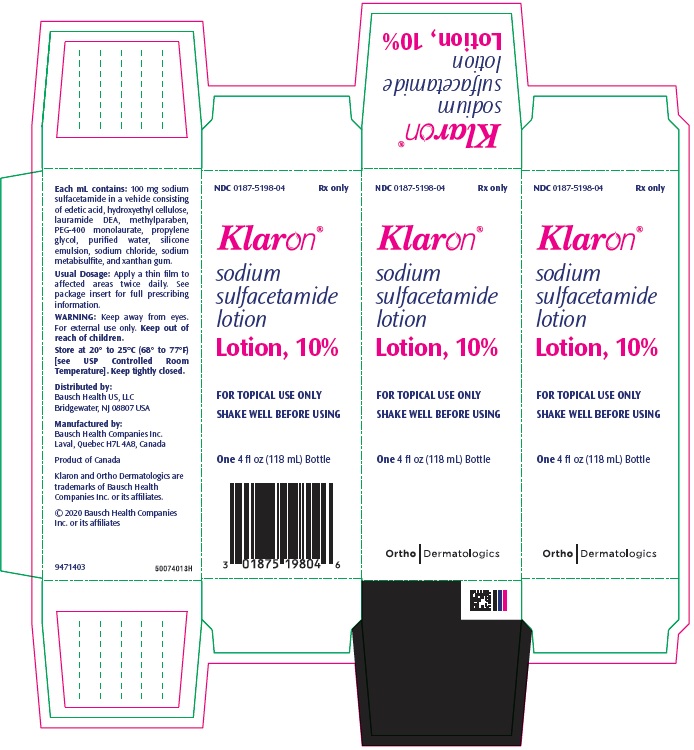
Klaron sulfacetamide sodium 100 mg/mL Lotion
🆔 Identity & classification
Where does this data come from?
🏷️ RxNorm drug class
This medicine belongs to the Sulfonamide Antibacterial class.
Where does this data come from?
🏭 Manufacturer & labeler
Where does this data come from?
🩺 Clinical
Patient education
Supplement & herbal interactions
Where does this data come from?
Ask a licensed pharmacist directly — free, answered by our team.
🧪 Inactive Ingredients / Excipients
Inactive ingredients, also called excipients, are components of the drug product other than the active ingredient. They may include fillers, dyes, coatings, preservatives, flavors, or other formulation ingredients.
💡 Tap an ingredient (hover on desktop) to see what it is and why it’s used.
-
UNII 9G34HU7RV0
EDTA is a chemical compound that binds to metals and other substances in medicines. It's used as a preservative and stabilizer to prevent discoloration and extend shelf life.
-
UNII S38J6RZN16
Hydroxyethyl cellulose is a plant-derived thickening agent made from cellulose. In medicines, it acts as a binder to hold ingredients together, a thickener to adjust product texture, and a film-former to create smooth coatings on tablets.
-
UNII I29I2VHG38
A foaming and thickening agent derived from lauric acid (a natural fatty acid). It helps create texture and stability in liquid or semi-solid formulations, often used in topical products.
-
UNII A2I8C7HI9T
Methylparaben is a preservative derived from benzoic acid that prevents growth of bacteria, fungi, and mold in medicines. It extends the product's shelf life and maintains safety during storage.
-
UNII 762O8IWA10
PEG-8 laurate is a synthetic compound made by combining polyethylene glycol with lauric acid. It acts as an emulsifier and solubilizer in medicines, helping to blend water and oil-based ingredients together and improve how well some drugs dissolve.
-
UNII 6DC9Q167V3
Propylene glycol is a clear liquid derived from petroleum or vegetable sources. It acts as a solvent, humectant, and preservative in medicines, helping dissolve active ingredients and maintain product stability.
-
UNII 451W47IQ8X
Sodium chloride is common table salt. It's used in medicines as a buffer to maintain proper pH, as a filler to add bulk, or to adjust the osmotic balance in liquid formulations.
-
UNII 4VON5FNS3C
Sodium metabisulfite is a preservative derived from sulfur compounds. It prevents microbial growth and oxidation in medicines, helping extend shelf life and maintain product stability.
-
UNII 059QF0KO0R
Water is a liquid solvent that dissolves and mixes ingredients together in liquid medicines, syrups, and injections. It helps distribute the active drug evenly throughout the product.
-
UNII TTV12P4NEE
Xanthan gum is a thickening and stabilizing ingredient made from fermented corn or other sugars. It's added to medicines to improve texture, prevent separation of liquids and solids, and help the product stay consistent.
10 inactive ingredients listed in the exact product block matched to this NDC.
Where does this data come from?
ingredient classCode="IACT" elements from the exact product block matched by this NDC. Label-section narrative from DailyMed / the openFDA label index is shown separately when available.Inactive ingredient FAQ
Are inactive ingredients the same for every manufacturer?
Why might an inactive ingredient be missing?
Can inactive ingredients matter?
💲 Pricing
A drug doesn't have one price. Each row is a different public payment system, and none is what you'd pay at the counter — that depends on your insurance. The ⓘ on each row explains what it measures.
| Price system | Per g | Per package |
|---|---|---|
| Retail pharmacies payNADAC · weekly | Not in the retail survey — common for institutional, discontinued, or low-volume packs. | |
| Medicaid paysCMS SDUD · 12 mo | No recent Medicaid claims on file for this NDC — rare and low-volume NDCs are suppressed in the public data. | |
| Medicare drug plans payPart D · Q2 2026 | $2.46 | — |
Where does this data come from?
🔁 Therapeutic equivalents
| Product | Labeler | Pack | NADAC/unit | TE | Status | Price vs. this |
|---|---|---|---|---|---|---|
| Sulfacetamide Sodium 100 mg/mL 45802-0896-26 | Padagis | 118 ml | $0.515 | AB | Availability likely | — |
| Sodium sulfacetamide 100 mg/mL 68682-0010-04 | Oceanside | 1 bottle | $0.586 | AB | FDA listed | — |
| Klaron 100 mg/mLthis 00187-5198-04 | Bausch | 1 bottle | — | AB | FDA listed | — |
| Sulfacetamide Sodium 100 mg/mL 24470-0935-12 | Cintex | 355 ml | — | — | FDA listed | — |
| OVACE Plus 100 mg/mL 00178-0485-04 | Mission | 10 tubes | — | — | FDA listed | — |
Where does this data come from?
⏳ Availability & generic status
FDA-approved generic versions are listed, and recent pricing/market data suggests they may be available — see Therapeutic equivalents.
Where does this data come from?
📊 Medicare Part D spend CMS · PART D · 2026 (Q1)
🔬 Reported adverse events (FAERS)
Top reported reactions
Age at onset
Reporter sex
Serious outcomes
Where does this data come from?
📦 Packaging — all sizes for this product
| Package NDC | Description | Marketing start | Status |
|---|---|---|---|
| 00187-5198-04 You're viewing this | 1 BOTTLE, PLASTIC in 1 CARTON (0187-5198-04) / 118 mL in 1 BOTTLE, PLASTIC | 1996-12-23 | Active |
🧭 About this NDC listing & data coverage
What data is (and isn’t) available for this NDC — tap to expand
| NDC identity (package / product / labeler codes) | ✓ Available |
| Labeler | ✓ Available |
| Product & package description | ✓ Available |
| Marketing category & status | ✓ Available |
| Active ingredient / dosage form / route | ✓ Available |
| FDA label (SPL via DailyMed) | ✓ Available |
| Package photos | ✓ Available |
| Inactive ingredients (structured) | ✓ Available |
| NADAC pharmacy acquisition price (CMS) | — Not published for this NDC CMS publishes NADAC only for NDCs reported in its retail-pharmacy survey. |
| Orange Book / therapeutic-equivalence data | ✓ Available |
| HCPCS J-code billing crosswalk | — Not published for this NDC Most self-administered / retail products have no J-code — that is normal. |
| Medicaid utilization (CMS SDUD) | — Not published for this NDC CMS reports utilization only for NDCs with Medicaid claims above its privacy threshold. |
Questions about this listing
Why is there no price listed?
Is the NDC printed on the package the same as the 11-digit billing NDC?
What do the three segments of this NDC mean?
Is this package still being marketed?
Who lists this product with the FDA?
Do I need a prescription for this product?
Where does this data come from?
📄 Full prescribing information FDA SPL
🎯 Indications and Usage ▾
INDICATIONS Klaron Lotion is indicated in the topical treatment of acne vulgaris .
⏱️ Dosage and Administration ▾
DOSAGE AND ADMINISTRATION Apply a thin film to affected areas twice daily.
⛔ Contraindications ▾
CONTRAINDICATIONS Klaron Lotion is contraindicated for use by patients having known hypersensitivity to sulfonamides or any other component of this preparation (see WARNINGS ).
⚠️ Warnings ▾
WARNINGS Fatalities have occurred, although rarely, due to severe reactions to sulfonamides including Stevens-Johnson syndrome, toxic epidermal necrolysis, fulminant hepatic necrosis, agranulocytosis, aplastic anemia, and other blood dyscrasias. Hypersensitivity reactions may occur when a sulfonamide is readministered, irrespective of the route of administration. Sensitivity reactions have been reported in individuals with no prior history of sulfonamide hypersensitivity.
At the first sign of hypersensitivity, skin rash, or other reactions, discontinue use of this preparation (see ADVERSE REACTIONS ). Klaron Lotion contains sodium metabisulfite, a sulfite that may cause allergic-type reactions including anaphylactic symptoms and life-threatening or less severe asthmatic episodes in certain susceptible people. The overall prevalence of sulfite sensitivity in the general population is unknown and probably low.
Sulfite sensitivity is seen more frequently in asthmatic than in non-asthmatic people (see CONTRAINDICATIONS ).
🤒 Adverse Reactions ▾
ADVERSE REACTIONS In controlled clinical trials for the management of acne vulgaris , the occurrence of adverse reactions associated with the use of Klaron Lotion was infrequent and restricted to local events. The total incidence of adverse reactions reported in these studies was less than 2%. Only one of 105 patients treated with Klaron Lotion had adverse reactions of erythema, itching, and edema.
It has been reported that sodium sulfacetamide may cause local irritation, stinging, and burning. While the irritation may be transient, occasionally the use of medication has to be discontinued. To report SUSPECTED ADVERSE REACTIONS, contact Bausch Health US, LLC at 1-800-321-4576 or FDA at 1-800-FDA-1088 or www.fda.gov/medwatch.
🧒 Pediatric Use ▾
Pediatric Use Safety and effectiveness in pediatric patients under the age of 12 have not been established.
🧬 Clinical Pharmacology ▾
CLINICAL PHARMACOLOGY The most widely accepted mechanism of action of sulfonamides is the Woods-Fildes theory, based on sulfonamides acting as a competitive inhibitor of para-aminobenzoic acid (PABA) utilization, an essential component for bacterial growth. While absorption through intact skin in humans has not been determined, in vitro studies with human cadaver skin indicated a percutaneous absorption of about 4%. Sodium sulfacetamide is readily absorbed from the gastrointestinal tract when taken orally and excreted in the urine largely unchanged.
The biological half-life has been reported to be between 7 to 13 hours. The pharmacokinetics of sulfacetamide and its major metabolite sulfaniliamide in Klaron Lotion was evaluated in adult subjects (N=14) with acne vulgaris . The subjects applied Klaron Lotion to their face, back, chest, and shoulders every 12 hours for 28 days.
The percentage of the applied dose of Klaron Lotion excreted in the urine as sulfacetamide plus sulfanilamide ranged from 0.08 to 0.33%.
📦 How Supplied / Storage and Handling ▾
HOW SUPPLIED 4 fl oz (118 mL) Bottles NDC 0187-5198-04 Store at 20° to 25°C (68° to 77°F) [see USP Controlled Room Temperature]. Shake well before using. Keep tightly closed.
📋 Description ▾
DESCRIPTION Each mL of Klaron ® (sodium sulfacetamide lotion) Lotion, 10% contains 100 mg of sodium sulfacetamide in a vehicle consisting of edetic acid, hydroxyethyl cellulose, lauramide DEA, methylparaben, PEG-400 monolaurate, propylene glycol, purified water, silicone emulsion, sodium chloride, sodium metabisulfite, and xanthan gum. Sodium sulfacetamide is a sulfonamide with antibacterial activity. Chemically, sodium sulfacetamide is N’ -[(4-amino phenyl) sulfonyl] - acetamide, monosodium salt, monohydrate.
The structural formula is: chemstructure.jpg