
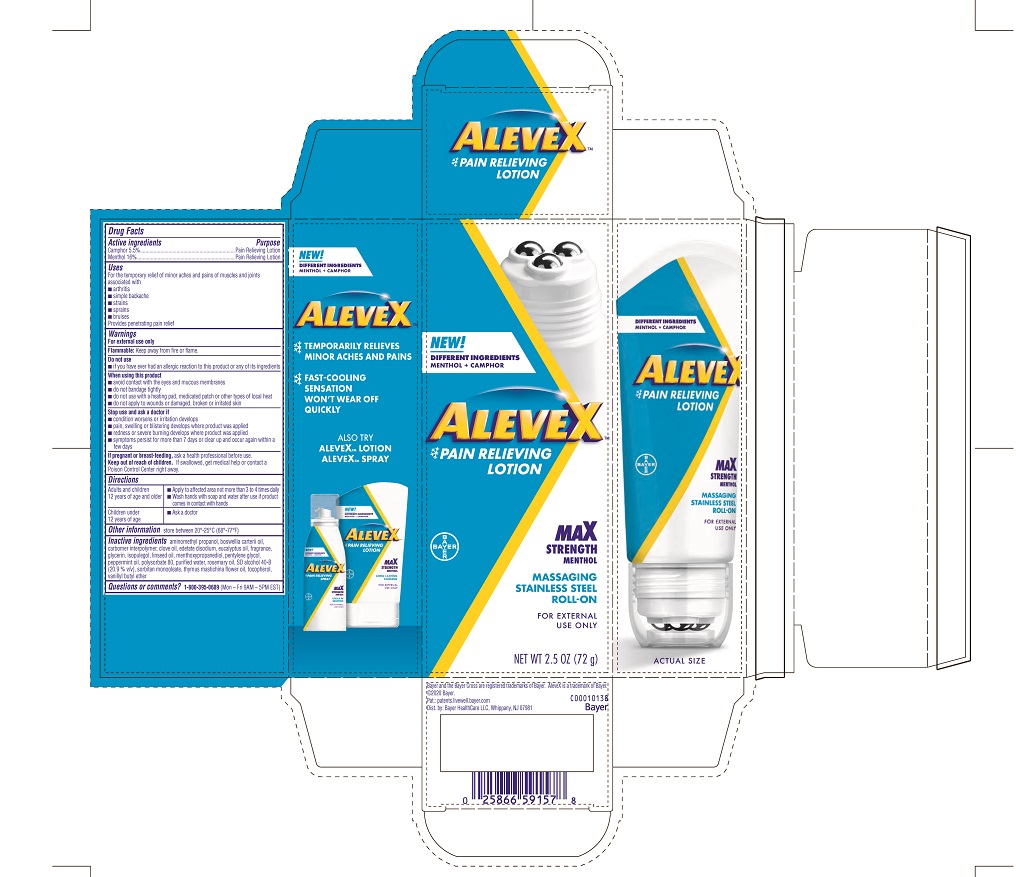
AleveX camphor and menthol 16 mg/g; 5.5 mg/g Lotion
🆔 Identity & classification
Where does this data come from?
🏭 Manufacturer & labeler
Where does this data come from?
🩺 Clinical
AleveX camphor and menthol lotion is a topical over-the-counter product marketed under FDA's monograph rules for topical pain-relief products. The lotion contains camphor and menthol as active ingredients, which are typically used to produce a cooling or warming sensation on the skin and are commonly found in products designed to temporarily soothe minor muscle aches and joint discomfort. This product is applied directly to the skin over the affected area.
Patient education
Supplement & herbal interactions
Where does this data come from?
Ask a licensed pharmacist directly — free, answered by our team.
🧪 Inactive Ingredients / Excipients
Inactive ingredients, also called excipients, are components of the drug product other than the active ingredient. They may include fillers, dyes, coatings, preservatives, flavors, or other formulation ingredients.
💡 Tap an ingredient (hover on desktop) to see what it is and why it’s used.
-
UNII KD6TZ2QICH
A synthetic humectant and skin-conditioning agent derived from menthol. It's used in topical formulations to help retain moisture, improve texture, and enhance the feel of the product on skin.
-
UNII 3K9958V90M
A liquid solvent derived from fermentation or chemical synthesis. In medicines, alcohol dissolves active ingredients, helps preserve the product, and improves how the body absorbs certain drugs.
-
UNII LU49E6626Q
A synthetic organic compound used as a pH buffer and neutralizing agent in medicines. It helps maintain the proper acidity level in liquid formulations to improve stability and comfort.
-
UNII 59TL3WG5CO
A synthetic polymer made by crosslinking acrylic acid with allyl sucrose. It thickens liquids, forms gels, and helps control how fast the medicine is released in your body.
-
UNII 578389D6D0
Clove oil is an essential oil derived from clove plant buds. It's used in medicines as a flavoring agent and for its mild preservative properties to help maintain product stability.
-
UNII 7FLD91C86K
Edetate disodium is a chemical compound that binds and removes certain metal ions. In medicines, it acts as a preservative and stabilizer by preventing metals like calcium from interfering with the product's shelf life and consistency.
-
UNII 2R04ONI662
Eucalyptus oil is a fragrant liquid extracted from eucalyptus tree leaves. It's used in medicines as a flavor, scent, or soothing agent in topical products and cough preparations.
-
UNII 67ZYA5T02K
Frankincense oil is a natural aromatic extract from tree resin. In medicines, it's used as a fragrance and flavoring agent to improve taste and smell, and may also help preserve the product.
-
UNII PDC6A3C0OX
Glycerin is a clear, thick liquid derived from plant oils or fats. It acts as a humectant to retain moisture, a sweetener, and a solvent in medications.
-
UNII 3TH92O3BXN
Isopulegol is a natural compound derived from peppermint and other plant oils. It functions as a flavoring agent and fragrance ingredient to improve the taste or smell of the medication.
-
UNII 84XB4DV00W
Linseed oil is a plant-based oil extracted from flax seeds. It's used in medicines as an emollient and lubricant to improve texture and help with ingredient mixing in formulations.
-
UNII 50C1307PZG
Pentylene glycol is a humectant and preservative helper derived from petroleum or plant sources. It draws moisture into the product and helps prevent bacterial growth, keeping medicines stable during storage.
-
UNII AV092KU4JH
A natural oil extracted from peppermint plants. It's used as a flavoring agent to mask bitter tastes and add a refreshing mint flavor to medicines, making them easier to take.
-
UNII 6OZP39ZG8H
Polysorbate 80 is a synthetic emulsifier derived from sorbitol and oleic acid. It helps mix oil and water-based ingredients together in medications and improves how the product disperses in the body.
-
UNII 8LGU7VM393
Rosemary leaf oil is a natural aromatic oil extracted from rosemary plants. It's used in medicines as a flavoring agent and preservative to help protect the product from spoilage.
-
UNII 06XEA2VD56
Sorbitan oleate is an emulsifier derived from sorbitol and oleic acid. It helps mix oil and water-based ingredients together and keeps them from separating in the medicine.
-
UNII 9NP0832457
A natural essential oil from the flowering parts of the mastich thyme plant. It serves as a fragrance and flavoring agent to improve the taste and smell of the medicine.
-
UNII R0ZB2556P8
Tocopherol is a form of vitamin E derived from plant oils. It acts as an antioxidant in medicines to prevent oils and fats from breaking down and spoiling during storage.
-
UNII S2ULN37C9R
A synthetic chemical compound derived from vanillin that acts as a flavoring agent and fragrance enhancer in medicines. It provides vanilla-like taste and aroma to improve the palatability of oral medications.
-
UNII 059QF0KO0R
Water is a liquid solvent that dissolves and mixes ingredients together in liquid medicines, syrups, and injections. It helps distribute the active drug evenly throughout the product.
20 inactive ingredients listed in the exact product block matched to this NDC.
Label-section wording can be broader than the structured product block and may mention additional formulation ingredients.
Where does this data come from?
ingredient classCode="IACT" elements from the exact product block matched by this NDC. Label-section narrative from DailyMed / the openFDA label index is shown separately when available.Inactive ingredient FAQ
Are inactive ingredients the same for every manufacturer?
Why might an inactive ingredient be missing?
Can inactive ingredients matter?
💲 Pricing
A drug doesn't have one price. Each row is a different public payment system, and none is what you'd pay at the counter — that depends on your insurance. The ⓘ on each row explains what it measures.
| Price system | Per g | Per package |
|---|---|---|
| Retail pharmacies payNADAC · weekly | Not in the retail survey — common for institutional, discontinued, or low-volume packs. | |
| Medicaid paysCMS SDUD · 12 mo | No recent Medicaid claims on file for this NDC — rare and low-volume NDCs are suppressed in the public data. | |
| Medicare drug plans payPart D · quarterly | No Part D plan price is available for this NDC in our data. | |
Where does this data come from?
🔁 Therapeutic equivalents
| Product | Labeler | Pack | NADAC/unit | TE | Status | Price vs. this |
|---|---|---|---|---|---|---|
| AleveX 16 mg/g; 5.5 mg/gthis 00280-0050-01 | Bayer | 1 bottle | — | — | FDA listed | — |
| AleveX 5.5 mg/g; 16 mg/g 00280-0063-01 | Bayer | 77 g | — | — | FDA listed | — |
| Meijer Pain Relieving analgesic 55 mg/g; 160 mg/g 79481-0051-01 | Meijer | 77 g | — | — | FDA listed | — |
Where does this data come from?
⏳ Availability & generic status
We did not find an FDA-approved generic match for this exact strength, form and route.
Where does this data come from?
🔬 Reported adverse events (FAERS)
Top reported reactions
Age at onset
Reporter sex
Serious outcomes
Where does this data come from?
📦 Packaging — all sizes for this product
| Package NDC | Description | Marketing start | Status |
|---|---|---|---|
| 00280-0050-01 You're viewing this | 1 BOTTLE, WITH APPLICATOR in 1 CARTON (0280-0050-01) / 72 g in 1 BOTTLE, WITH APPLICATOR | 2021-04-01 | Active |
🧭 About this NDC listing & data coverage
What data is (and isn’t) available for this NDC — tap to expand
| NDC identity (package / product / labeler codes) | ✓ Available |
| Labeler | ✓ Available |
| Product & package description | ✓ Available |
| Marketing category & status | ✓ Available |
| Active ingredient / dosage form / route | ✓ Available |
| FDA label (SPL via DailyMed) | ✓ Available |
| Package photos | ✓ Available |
| Inactive ingredients (structured) | ✓ Available |
| NADAC pharmacy acquisition price (CMS) | — Not published for this NDC CMS publishes NADAC only for NDCs reported in its retail-pharmacy survey. |
| Orange Book / therapeutic-equivalence data | — Not published for this NDC Applies only to products approved under an NDA/ANDA; many listings are out of scope. |
| HCPCS J-code billing crosswalk | — Not published for this NDC Most self-administered / retail products have no J-code — that is normal. |
| Medicaid utilization (CMS SDUD) | — Not published for this NDC CMS reports utilization only for NDCs with Medicaid claims above its privacy threshold. |
Questions about this listing
Is this NDC FDA-approved?
Why is there no price listed?
Is the NDC printed on the package the same as the 11-digit billing NDC?
What do the three segments of this NDC mean?
Is this package still being marketed?
Who lists this product with the FDA?
Do I need a prescription for this product?
Where does this data come from?
📄 FDA label — Drug Facts FDA SPL
🎯 Indications and Usage ▾
Uses For the temporary relief of minor aches and pains of muscles and joints associated with arthritis simple backache strains sprains bruises Provides penetrating pain relief
⏱️ Dosage and Administration ▾
Directions Adults and children 12 years of age and older Apply to affected area not more than 3 to 4 times daily Wash hands with soap and water after use if product comes in contact with hands Children under 12 years of age Ask a doctor
⚠️ Warnings ▾
Warnings For external use only Flammable: Keep away from fire or flame. Do not use if you have ever had an allergic reaction to this product or any of its ingredients When using this product avoid contact with the eyes and mucous membranes do not bandage tightly do not use with a heating pad, medicated patch or other types of local heat do not apply to wounds or damaged, broken or irritated skin Stop use condition worsens or irritation develops pain, swelling or blistering develops where product was applied redness or severe burning develops where product was applied symptoms persist for more than 7 days or clear up and occur again within a few days If pregnant or breast-feeding, ask a healthcare professional before use.
Keep out of reach of children If swallowed, get medical help or contact a Poison Control Center right away.
🧪 Active Ingredient ▾
Active ingredients Camphor 5.5% Menthol 16%
🧪 Inactive Ingredients ▾
Inactive ingredients aminomethyl propanol, boswellia carterii oil, carbomer interpolymer, clove oil, edetate disodium, eucalyptus oil, fragrance, glycerin, isopulegol, linseed oil, menthoxypropanediol, pentylene glycol, peppermint oil, polysorbate 80, purified water, rosemary oil, SD alcohol 40-B (20.9 % v/v), sorbitan monooleate, thymus mastichina flower, tocopherol, vanillyl butyl ether
🎯 Purpose ▾
Purpose Pain Relieving Lotion