
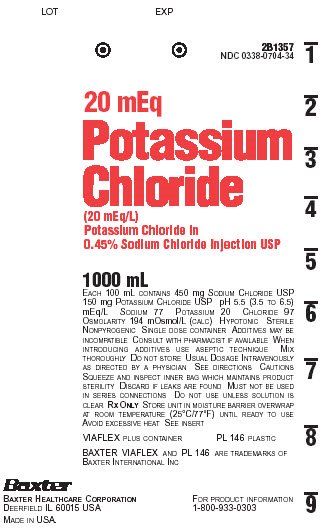
Potassium Chloride in Sodium 900 mg/100mL; 300 mg/100mL Injection, Solution
🆔 Identity & classification
Where does this data come from?
🏷️ RxNorm drug class
This medicine belongs to the Potassium class.
Where does this data come from?
🏭 Manufacturer & labeler
Where does this data come from?
🩺 Clinical
- This solution replaces electrolytes — mainly potassium, sodium, and chloride — and provides water when your body can't maintain those levels on its own. That might be because of il...
- What exactly is this IV solution being used for?
- Potassium is safe — and essential — when given at the right amount and rate under careful medical supervision. The risk comes from receiving it too quickly or in too large a dose,...
- Is it safe? I've heard potassium can be dangerous.
Patient education
Supplement & herbal interactions
Where does this data come from?
Ask a licensed pharmacist directly — free, answered by our team.
🧪 Inactive Ingredients / Excipients
Inactive ingredients, also called excipients, are components of the drug product other than the active ingredient. They may include fillers, dyes, coatings, preservatives, flavors, or other formulation ingredients.
💡 Tap an ingredient (hover on desktop) to see what it is and why it’s used.
-
UNII 059QF0KO0R
Water is a liquid solvent that dissolves and mixes ingredients together in liquid medicines, syrups, and injections. It helps distribute the active drug evenly throughout the product.
1 inactive ingredient listed in the exact product block matched to this NDC.
Where does this data come from?
ingredient classCode="IACT" elements from the exact product block matched by this NDC. Label-section narrative from DailyMed / the openFDA label index is shown separately when available.Inactive ingredient FAQ
Are inactive ingredients the same for every manufacturer?
Why might an inactive ingredient be missing?
Can inactive ingredients matter?
💲 Pricing
A drug doesn't have one price. Each row is a different public payment system, and none is what you'd pay at the counter — that depends on your insurance. The ⓘ on each row explains what it measures.
| Price system | Per mL | Per package |
|---|---|---|
| Retail pharmacies payNADAC · weekly | Not in the retail survey — common for institutional, discontinued, or low-volume packs. | |
| Medicaid paysCMS SDUD · 12 mo | $0.0708 | $991.20 / 14000 ml |
| Medicare drug plans payPart D · Q2 2026 | $0.0063 | $88.20 / 14000 ml |
| Medicare Part B allowsASP · J3480 | $0.136 / J3480 unit | — |
Where does this data come from?
🧾 Billing & reimbursement
Where does this data come from?
🔁 Therapeutic equivalents
| Product | Labeler | Pack | NADAC/unit | TE | Status | Price vs. this |
|---|---|---|---|---|---|---|
| Potassium Chloride in Sodium Chloride 900 mg/100mL; 300 mg/100mLthis 00338-0695-04 | Baxter | 1000 ml | — | AP | FDA listed | — |
| Potassium Chloride in Sodium Chloride 9 g/1000mL; 2.98 g/1000mL 00990-7116-09 | ICU | 12 pouches | — | AP | FDA listed | — |
| Potassium Chloride in Sodium Chloride 900 mg/100mL; 300 mg/100mL 63323-0688-10 | Fresenius | 1000 ml | — | AP | FDA listed | — |
Where does this data come from?
⏳ Availability & generic status
The FDA lists approved generic versions of this medicine, but that does not always mean a pharmacy can get one today. Patent rules, launch agreements, supply and pricing can affect when generics actually arrive.
Where does this data come from?
🗺️ Medicaid utilization & spend
📦 Packaging — all sizes for this product
| Package NDC | Description | Marketing start | Status |
|---|---|---|---|
| 00338-0695-04 You're viewing this | 14 BAG in 1 CARTON (0338-0695-04) / 1000 mL in 1 BAG | 1979-02-02 | Active |
🧭 About this NDC listing & data coverage
What data is (and isn’t) available for this NDC — tap to expand
| NDC identity (package / product / labeler codes) | ✓ Available |
| Labeler | ✓ Available |
| Product & package description | ✓ Available |
| Marketing category & status | ✓ Available |
| Active ingredient / dosage form / route | ✓ Available |
| FDA label (SPL via DailyMed) | ✓ Available |
| Package photos | ✓ Available |
| Inactive ingredients (structured) | ✓ Available |
| NADAC pharmacy acquisition price (CMS) | — Not published for this NDC CMS publishes NADAC only for NDCs reported in its retail-pharmacy survey. |
| Orange Book / therapeutic-equivalence data | ✓ Available |
| HCPCS J-code billing crosswalk | ✓ Available |
| Medicaid utilization (CMS SDUD) | ✓ Available |
Questions about this listing
Why is there no price listed?
Is the NDC printed on the package the same as the 11-digit billing NDC?
What do the three segments of this NDC mean?
Is this package still being marketed?
Who lists this product with the FDA?
Do I need a prescription for this product?
Does this product have a billing J-code?
Where does this data come from?
📄 Full prescribing information FDA SPL
🎯 Indications and Usage ▾
INDICATIONS AND USAGE Potassium Chloride in Sodium Chloride Injection, USP is indicated as a source of water and electrolytes.
⏱️ Dosage and Administration ▾
DOSAGE AND ADMINISTRATION Important Administration Instructions • Potassium Chloride in Sodium Chloride Injection, USP is intended for intravenous infusion using sterile equipment. • To avoid life threatening hyperkalemia, do not administer Potassium Chloride in Sodium Chloride Injection, USP as an intravenous push (i.e., intravenous injection manually with a syringe connected to the intravenous access) without a quantitative infusion device (see WARNINGS ). • Do not connect flexible plastic containers in series in order to avoid air embolism due to possible residual air contained in the primary container. • Set the vent to the closed position on a vented intravenous administration set to prevent air embolism. • Use a dedicated line without any connections to avoid air embolism. • Do not pressurize intravenous solutions contained in flexible plastic containers to increase flow rates in order to avoid air embolism due to incomplete evacuation of residual air in the container. • The choice of a central or peripheral venous route of infusion should depend on the osmolarity of the final infusate.
Solutions with osmolarity of greater than or equal to approximately 900 mOsm/L must be infused through a central catheter. • Prior to infusion, visually inspect the solution for particulate matter and discoloration. The solution should be clear and there should be no precipitates. Do not administer unless solution is clear and container is undamaged. • Use of final filter is recommended during administration of all parenteral solutions, where possible.
Dosing Information The choice of the specific potassium chloride and sodium chloride formulation, dosage, volume, rate and duration of administration is dependent upon the age, weight and clinical and metabolic condition of the patient and concomitant therapy, and administration should be determined by a physician experienced in intravenous fluid therapy. Additional electrolyte supplementation may be indicated according to the clinical needs of the patient. Additives can be introduced to the container; however, some additives may be incompatible.
Evaluate all additions to the plastic container for compatibility and stability of the resulting preparation. Consult with a pharmacist, if available. If, in the informed judgment of the physician, it is deemed advisable to introduce additives, use aseptic technique.
After addition, if there is a discoloration and/or the appearance of precipitates, insoluble complexes or crystals, do not use. Mix thoroughly when additives have been introduced. Do not store solutions containing additives.
Discard any unused portion. Rapid correction of hyponatremia and hypernatremia is potentially dangerous (risk of serious neurologic complications). To avoid complications such as osmotic demyelination syndrome (ODS) during administration, follow the important administration instructions, monitor serum sodium and chloride concentrations, fluid status, acid-base balance, and signs of neurologic complications.
⛔ Contraindications ▾
CONTRAINDICATIONS Potassium Chloride in Sodium Chloride Injection, USP is contraindicated in patients with: • Known hypersensitivity to potassium chloride and/or sodium chloride (see WARNINGS ). • Clinically significant hyperkalemia (see WARNINGS ).
⚠️ Warnings ▾
WARNINGS Hypersensitivity Hypersensitivity and infusion reactions, including anaphylaxis and chills, have been reported with products containing potassium chloride and sodium chloride. Stop the infusion immediately if signs or symptoms of a hypersensitivity or infusion reaction develops. Appropriate therapeutic countermeasures must be instituted as clinically indicated.
Electrolyte Imbalances Hyperkalemia Potassium-containing solutions, including Potassium Chloride in Sodium Chloride Injection, USP may increase the risk of hyperkalemia. Hyperkalemia can be asymptomatic and manifest only by increased serum potassium concentrations and/or characteristic electrocardiographic (ECG) changes. Cardiac conduction disorders (including complete heart block) and other cardiac arrhythmias, some fatal, can develop at any time during hyperkalemia.
Continuous electrocardiogram (ECG) monitoring may be necessary to aid in the detection of cardiac arrhythmias due to hyperkalemia (see ADVERSE REACTIONS ). To avoid life threatening hyperkalemia, do not administer Potassium Chloride in Sodium Chloride Injection, USP as an intravenous push (i.e., intravenous injection manually with a syringe connected to the intravenous access) without a quantitative infusion device. Patients at increased risk of developing hyperkalemia and cardiac arrhythmias include those: • with conditions predisposing to hyperkalemia and/or associated with increased sensitivity to potassium, such as patients with severe renal impairment, acute dehydration, extensive tissue injury or burns, certain cardiac disorders such as congestive heart failure or atrioventricular (AV) block (especially if they receive digoxin). • who are at risk of experiencing hyperosmolality, acidosis, or undergoing correction of alkalosis (conditions associated with a shift of potassium from intracellular to extracellular space). • treated concurrently or recently with agents or products that can cause or increase the risk of hyperkalemia (see DRUG INTERACTIONS ). • with cardiac arrhythmias.
Avoid use of Potassium Chloride in Sodium Chloride Injection, USP in patients with, or at risk for, hyperkalemia. If use cannot be avoided, use a product with a low amount of potassium chloride, infuse slowly and monitor serum potassium concentrations and ECGs. Hypernatremia and Hyperchloremia Electrolyte imbalances such as hypernatremia, hyperchloremia, and metabolic acidosis may occur with Potassium Chloride in Sodium Chloride Injection, USP.
Conditions that may increase the risk of hypernatremia, fluid overload and edema (central and peripheral), include patients with: primary hyperaldosteronism; secondary hyperaldosteronism associated with, for example, hypertension, congestive heart failure, liver disease (including cirrhosis), renal disease (including renal artery stenosis, nephrosclerosis); and pre-eclampsia. Certain medications, such as corticosteroids or corticotropin, may also increase risk of sodium and fluid retention, see DRUG INTERACTIONS . Avoid Potassium Chloride in Sodium Chloride Injection, USP in patients with, or at risk for, hypernatremia or hyperchloremia.
If use cannot be avoided, monitor serum sodium and chloride concentrations and acid-base balance. Rapid correction of hypernatremia is potentially dangerous with risk of serious neurologic complications. Excessively rapid correction of hypernatremia is also associated with a risk for serious neurologic complications such as osmotic demyelination syndrome (ODS) with risk of seizures and cerebral edema.
Hyponatremia Potassium Chloride in Sodium Chloride Injection, USP may cause hyponatremia. Hyponatremia can lead to acute hyponatremic encephalopathy characterized by headache, nausea, seizures, lethargy, and vomiting. Patients with brain edema are at particular risk of severe, irreversible and life-threatening brain injury.
The risk of hospital-acquired hyponatremia is increased in patients with cardiac or pulmonary failure, and in patients with…
🤒 Adverse Reactions ▾
ADVERSE REACTIONS The following adverse reactions associated with the use of Potassium Chloride in Sodium Chloride Injection, USP were identified in clinical trials or postmarketing reports. Because postmarketing reactions were reported voluntarily from a population of uncertain size, it is not always possible to estimate their frequency, reliably, or to establish a causal relationship to drug exposure. General disorders and administration site condition s: Chills, and infusion site pain.
Hypersensitivity reactions : generalized papules and erythema, rash, fever, vomiting, hypertension, tachycardia. Metabolism and nutrition disorders : Hyperkalemia, hyponatremia, hypernatremia, hyperchloremia acidosis, fluid overload. Cardiac disorders : Cardiac arrest as a manifestation of rapid intravenous administration and/or of hyperkalemia.
Nervous System Disorders : Hyponatremic encephalopathy. If an adverse reaction does occur, discontinue the infusion, evaluate the patient, institute appropriate therapeutic countermeasures and save the remainder of the fluid for examination if deemed necessary.
🔄 Drug Interactions ▾
Drug Interactions Lithium Renal sodium and lithium clearance may be increased during administration of Potassium Chloride in Sodium Chloride Injection, USP and result in decreased lithium concentrations. Monitor serum lithium concentrations during concomitant use. Other Products that Cause Hyperkalemia Administration of Potassium Chloride in Sodium Chloride Injection, USP in patients treated concurrently or recently with products that are associated with hyperkalemia increases the risk of severe and potentially fatal hyperkalemia, in particular in the presence of other risk factors for hyperkalemia.
Avoid use of Potassium Chloride in Sodium Chloride Injection, USP in patients receiving such products (e.g., potassium sparing diuretics, angiotensin-converting enzyme inhibitors, angiotensin receptor blockers, or the immunosuppressants cyclosporine and tacrolimus). If use cannot be avoided, monitor serum potassium concentrations. Other Products that Affect Fluid and/or Electrolyte Balance Administration of Potassium Chloride in Sodium Chloride Injection, USP in patients treated concomitantly with medications associated with sodium and fluid retention may increase the risk of hypernatremia and volume overload.
Avoid use of Potassium Chloride in Sodium Chloride Injection, USP in patients receiving such products, such as corticosteroids or corticotropin. If use cannot be avoided, monitor serum electrolytes, fluid balance, and acid-base balance. Other Drugs that Increase the Risk of Hyponatremia Administration of Potassium Chloride in Sodium Chloride Injection, USP in patients treated concomitantly with medications associated with hyponatremia may increase the risk of developing hyponatremia.
Avoid use of Potassium Chloride in Sodium Chloride Injection, USP in patients receiving products, such as diuretics, and certain antiepileptic and psychotropic medications. Drugs that increase the vasopressin effect reduce renal electrolyte free water excretion and may also increase the risk of hyponatremia following treatment with intravenous fluids. If use cannot be avoided, monitor serum sodium concentrations.
🤰 Pregnancy ▾
Pregnancy There are no adequate and well controlled studies from the use of Potassium Chloride in Sodium Chloride Injection, USP in pregnant or lactating women and animal reproduction studies have not been conducted with this drug. Therefore, it is also not known whether Potassium Chloride in Sodium Chloride Injection, USP can cause fetal harm when administered to a pregnant woman or can affect reproduction capacity. Potassium Chloride in Sodium Chloride Injection, USP should be given to a pregnant woman only if the potential benefit justifies the potential risk to the fetus.
🧒 Pediatric Use ▾
Pediatric Use The use of Potassium Chloride in Sodium Chloride Injection, USP in pediatric patients is based on clinical practice. (See DOSAGE AND ADMINISTRATION ). Safety and effectiveness of Potassium Chloride in Sodium Chloride Injection, USP in pediatric patients have not been established by adequate and well-controlled studies.
Pediatric patients are at increased risk of developing hyponatremia as well as for developing encephalopathy as a complication of hyponatremia (see WARNINGS ).
🧓 Geriatric Use ▾
Geriatric Use Geriatric patients are at increased risk of developing electrolyte imbalances. Potassium Chloride in Sodium Chloride Injection, USP is known to be substantially excreted by the kidney, and the risk of toxic reactions to this drug may be greater in patients with impaired renal function. Therefore, dose selection for an elderly patient should be cautious, usually starting at the low end of the dosing range, reflecting the greater frequency of decreased hepatic, renal, or cardiac function, and of concomitant disease or other drug therapy.
Consider monitoring renal function in elderly patients.
🆘 Overdosage ▾
OVERDOSAGE An increased infusion rate of Potassium Chloride in Sodium Chloride Injection, USP can cause: • hyperkalemia, manifestations may include disturbances in cardiac conduction and arrhythmias, including bradycardia, heart block, asystole, ventricular tachycardia, ventricular fibrillation. The presence of any ECG findings that are suspected to be caused by hyperkalemia should be considered a medical emergency. If hyperkalemia is present or suspected, discontinue the infusion immediately and institute close ECG, laboratory and other monitoring and, as necessary, corrective therapy to reduce serum potassium concentrations.
Muscle weakness (up to and including muscular and respiratory paralysis, paresthesia of extremities) may occur as a complication of hyperkalemia. • hyponatremia, manifestations may include seizures, coma, cerebral edema and death). • hypernatremia, especially in patients with severe renal impairment. • hypotension. • gastrointestinal symptoms (ileus, nausea, vomiting, abdominal pain). • fluid overload (which can lead to central and/or peripheral edema). See WARNINGS and ADVERSE REACTIONS . When assessing an overdose, any additives in the solution must also be considered.
The effects of an overdose may require immediate medical attention and treatment. Interventions include discontinuation of Potassium Chloride in Sodium Chloride Injection, USP administration, dose reduction, and other measures as indicated for the specific clinical constellation (e.g., monitoring of fluid balance, electrolyte concentrations and acid base balance).
🧬 Clinical Pharmacology ▾
CLINICAL PHARMACOLOGY Potassium Chloride in Sodium Chloride Injection, USP has value as a source of water and electrolytes. It is capable of inducing diuresis depending on the clinical condition of the patient.
📦 How Supplied / Storage and Handling ▾
HOW SUPPLIED Potassium Chloride in Sodium Chloride Injection, USP in VIAFLEX Plus Plastic Container is available as follows: Code Size (mL) NDC Product Name 2B1357 1000 0338-0704-34 20 mEq/L Potassium Chloride in 0.45% Sodium Chloride Injection, USP 2B1764 1000 0338-0691-04 20 mEq/L Potassium Chloride in 0.9% Sodium Chloride Injection, USP 2B1984 1000 0338-0695-04 40 mEq/L Potassium Chloride in 0.9% Sodium Chloride Injection, USP Exposure of pharmaceutical products to heat should be minimized. Avoid excessive heat. It is recommended the product be stored between 20ºC to 25°C (68º F to 77°F). [See USP controlled room temperature.]; brief exposure up to 40° C (104° F) does not adversely affect the product.
📋 Description ▾
DESCRIPTION Potassium Chloride in Sodium Chloride Injection, USP is a sterile, nonpyrogenic, solution for fluid and electrolyte replenishment in a single dose container for intravenous administration. It contains no antimicrobial agents. Composition, osmolarity, pH and ionic concentration are shown in Table 1.
Table 1 Size (mL) Composition (g/L) Normal physiologic osmolarity range is approximately 280 to 310 mOsmol/L. Administration of substantially hypertonic solutions (≥ 600 mOsmol/L) may cause vein damage. Osmolarity (mOsmol/L) (Calc.) pH Ionic Concentration (mEq/L) Sodium Chloride, USP (NaCl) Potassium Chloride, USP (KCl) Sodium Potassium Chloride 20 mEq/L Potassium Chloride in 0.45% Sodium Chloride Injection, USP 1000 4.5 1.5 194 5.5 (3.5 to 6.5) 77 20 97 20 mEq/L Potassium Chloride in 0.9% Sodium Chloride Injection, USP 1000 9 1.5 348 5.5 (3.5 to 6.5) 154 20 174 40 mEq/L Potassium Chloride in 0.9% Sodium Chloride Injection, USP 1000 9 3 388 5.5 (3.5 to 6.5) 154 40 194 The VIAFLEX Plus plastic container is fabricated from a specially formulated polyvinyl chloride (PL 146 Plastic).
VIAFLEX Plus on the container indicates the presence of a drug additive in a drug vehicle. The VIAFLEX Plus plastic container system utilizes the same container as the VIAFLEX plastic container system. The amount of water that can permeate from inside the container into the overwrap is insufficient to affect the solution significantly.
Solutions in contact with the plastic container can leach out certain of its chemical components in very small amounts within the expiration period, e.g., di-2-ethylhexyl phthalate (DEHP), up to 5 parts per million. However, the safety of the plastic has been confirmed in tests in animals according to USP biological tests for plastic containers as well as by tissue culture toxicity studies.