
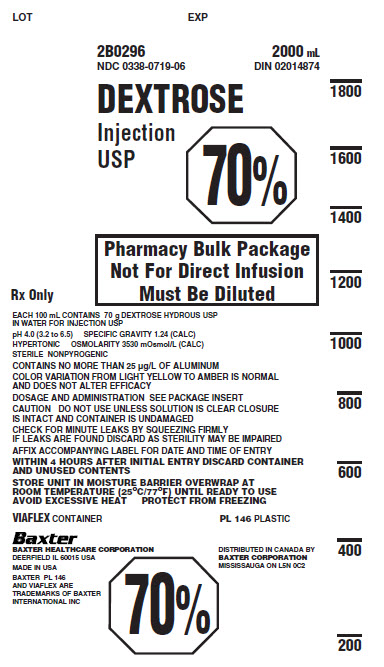
DEXTROSE 70 g/100mL Injection, Solution, 2000 mL
Other active recalls for Dextrose Monohydrate (different manufacturers) — 3 · tap to view
🆔 Identity & classification
Where does this data come from?
🏷️ RxNorm drug class
This medicine belongs to the Other irrigating solutions class.
Where does this data come from?
🏭 Manufacturer & labeler
Where does this data come from?
🩺 Clinical
- Dextrose is essentially glucose — sugar — given directly into a vein. In an emergency, it's used to quickly raise dangerously low blood sugar, which can happen with too much insuli...
- Specific formulations — Infant Dextrose (25%) and Dextrose (25% injection) — are FDA-approved to treat low blood sugar in newborns and infants up to 2 years old. That said, prematu...
- Is dextrose safe for my baby or newborn?
- The most common issues are high blood sugar, vein irritation or clotting at the IV site, low sodium in the blood, and infection. More serious — but less common — reactions include...
Patient education
Supplement & herbal interactions
Where does this data come from?
Ask a licensed pharmacist directly — free, answered by our team.
🧪 Inactive Ingredients / Excipients
Inactive ingredients, also called excipients, are components of the drug product other than the active ingredient. They may include fillers, dyes, coatings, preservatives, flavors, or other formulation ingredients.
💡 Tap an ingredient (hover on desktop) to see what it is and why it’s used.
-
UNII 059QF0KO0R
Water is a liquid solvent that dissolves and mixes ingredients together in liquid medicines, syrups, and injections. It helps distribute the active drug evenly throughout the product.
1 inactive ingredient listed in the exact product block matched to this NDC.
Where does this data come from?
ingredient classCode="IACT" elements from the exact product block matched by this NDC. Label-section narrative from DailyMed / the openFDA label index is shown separately when available.Inactive ingredient FAQ
Are inactive ingredients the same for every manufacturer?
Why might an inactive ingredient be missing?
Can inactive ingredients matter?
💲 Pricing
A drug doesn't have one price. Each row is a different public payment system, and none is what you'd pay at the counter — that depends on your insurance. The ⓘ on each row explains what it measures.
| Price system | Per mL | Per package |
|---|---|---|
| Retail pharmacies payNADAC · weekly | Not in the retail survey — common for institutional, discontinued, or low-volume packs. | |
| Medicaid paysCMS SDUD · 12 mo | $0.1790 | $358.00 / 2000 ml |
| Medicare drug plans payPart D · quarterly | No Part D plan price is available for this NDC in our data. | |
| Medicare Part B allowsASP · J7799 | No ASP payment limit on file for J7799 this quarter. | |
Where does this data come from?
🧾 Billing & reimbursement
Where does this data come from?
🔁 Therapeutic equivalents
| Product | Labeler | Pack | NADAC/unit | TE | Status | Price vs. this |
|---|---|---|---|---|---|---|
| Dextrose 70 g/100mL 00264-7387-50 | B. | 2000 ml | — | AP | FDA listed | — |
| Dextrose 70 g/100mLthis 00338-0719-06 | Baxter | 2000 ml | — | AP | FDA listed | — |
| Dextrose 70 g/100mL 00990-7120-07 | ICU | 6 pouches | — | AP | FDA listed | — |
| Dextrose 70 g/100mL 00990-7918-19 | ICU | 12 pouches | — | AP | FDA listed | — |
Where does this data come from?
⏳ Availability & generic status
The FDA lists approved generic versions of this medicine, but that does not always mean a pharmacy can get one today. Patent rules, launch agreements, supply and pricing can affect when generics actually arrive.
Where does this data come from?
🗺️ Medicaid utilization & spend
📦 Packaging — all sizes for this product
| Package NDC | Description | Marketing start | Status |
|---|---|---|---|
| 00338-0719-06 You're viewing this | 2000 mL in 1 BAG (0338-0719-06) | 1991-07-02 | Active |
🧭 About this NDC listing & data coverage
What data is (and isn’t) available for this NDC — tap to expand
| NDC identity (package / product / labeler codes) | ✓ Available |
| Labeler | ✓ Available |
| Product & package description | ✓ Available |
| Marketing category & status | ✓ Available |
| Active ingredient / dosage form / route | ✓ Available |
| FDA label (SPL via DailyMed) | ✓ Available |
| Package photos | ✓ Available |
| Inactive ingredients (structured) | ✓ Available |
| NADAC pharmacy acquisition price (CMS) | — Not published for this NDC CMS publishes NADAC only for NDCs reported in its retail-pharmacy survey. |
| Orange Book / therapeutic-equivalence data | ✓ Available |
| HCPCS J-code billing crosswalk | ✓ Available |
| Medicaid utilization (CMS SDUD) | ✓ Available |
Questions about this listing
Why is there no price listed?
Is the NDC printed on the package the same as the 11-digit billing NDC?
What do the three segments of this NDC mean?
Is this package still being marketed?
Who lists this product with the FDA?
Do I need a prescription for this product?
Does this product have a billing J-code?
Where does this data come from?
📄 Full prescribing information FDA SPL
🎯 Indications and Usage ▾
1 INDICATIONS AND USAGE Dextrose Injection is indicated as source of calories and fluid replenishment when mixed with amino acids or other compatible intravenous fluids for patients requiring parenteral nutrition (PN) when oral or enteral nutrition is not possible, insufficient or contraindicated. Dextrose Injection is indicated as a source of calories when mixed with amino acids or other compatible intravenous fluids for patients requiring parenteral nutrition when oral or enteral nutrition is not possible, insufficient or contraindicated.
( 1 )
⏱️ Dosage and Administration ▾
2 DOSAGE AND ADMINISTRATION • Pharmacy Bulk Package. Not for direct intravenous infusion. ( 2.1 ) • For slow intravenous infusion only into a: ( 2.2 ) o Central vein, if final dextrose concentration is greater than 5% or osmolality is greater than 900 mOsm/L approximately. o Peripheral vein, if final dextrose concentration 5% or less and osmolality is less than 900 mOsm/L approximately. • Individualize dosage based on the patient’s clinical condition, body weight, nutritional/fluid requirements, as well as additional energy given orally/enterally.
( 2.3 ) • Discontinue infusion of concentrated dextrose solutions slowly. ( 2.4 )
2.1Preparation Instructions Prior to Administration Dextrose Injection is supplied as a pharmacy bulk package for admixing only and is not for direct intravenous infusion. Dextrose Injection is intended for use in the preparation of sterile, intravenous admixtures. Prior to administration, Dextrose Injection must be transferred to a separate PN container , diluted with other compatible intravenous fluids and used as an admixture in PN solutions. • Do not remove from overpouch until ready to use. • Tear protective overwrap at slit and remove solution container.
Small amounts of moisture may be found on the solution container from water permeating from inside the container. The amount of permeated water is insufficient to affect the solution significantly. If larger amounts of water are found, the container should be checked for tears or leaks. • Inspect Dextrose Injection prior to use.
Opacity of the container may be observed due to moisture absorption during the sterilization process. This is normal and does not affect the solution quality or safety. The opacity will diminish gradually.
Evaluate the following: o If the outlet port protector is damaged, detached, or not present, discard container as solution path sterility may be impaired. o Check for minute leaks by squeezing the inner container firmly. If leaks are found, discard solution as sterility may be impaired. o Do not use unless solution is clear and container is intact. • Because additives may be incompatible, evaluate all additions for compatibility and stability of the resulting preparation. Consult with a pharmacist, if available.
If it is deemed advisable to introduce additives, use aseptic technique and mix thoroughly. • Calcium and phosphate ratios must be considered. Excess addition of calcium and phosphate, especially in the form of mineral salts, may result in the formation of calcium phosphate precipitates [see Warnings and Precautions (5.1)] . Preparation for Admixing 1.
The Pharmacy Bulk Package is to be used only in a suitable work area such as a laminar flow hood (or an equivalent clean air compounding area). 2. Suspend container from eyelet support.
3. Remove plastic protector from outlet port at bottom of container. 4.
Attach solution transfer set. Refer to complete directions accompanying set. Note: The closure shall be penetrated only one time with a suitable sterile transfer device or dispensing set which allows measured dispensing of the contents.
5. The VIAFLEX plastic container should not be written on directly since ink migration has not been investigated. Affix accompanying label for date and time of entry notation.
6. Once container closure has been penetrated, withdrawal of contents should be completed without delay. After initial entry, maintain contents at room temperature (25°C/77°F) and dispense within 4 hours.
2.2Important Administration Instructions • Dextrose Injection is for admixing use only and is not for direct intravenous infusion . Prior to administration, Dextrose Injection must be diluted with other compatible intravenous fluids and used as an admixture in PN solutions . • To prevent air embolism, use a non-vented infusion set or close the vent on a vented set, avoid multiple connections, do not connect flexible containers in series, fully evacuate residual gas in the container prior to administratio…
💊 Dosage Forms and Strengths ▾
3 DOSAGE FORMS AND STRENGTHS Dextrose Injection 70%, USP is a sterile, non-pyrogenic, hypertonic solution of 70 grams of dextrose hydrous per 100 mL (0.7 grams/mL) in a 2000 mL Pharmacy Bulk Package flexible container. • Injection: 70% (0.7 grams/mL), 70 grams of dextrose hydrous per 100 mL in a 2000 mL Pharmacy Bulk Package flexible container. ( 3 )
⛔ Contraindications ▾
4 CONTRAINDICATIONS The use of Dextrose Injection is contraindicated in patients: • Who are severely dehydrated as hypertonic dextrose solution can worsen the patient’s hyperosmolar state [see Warnings and Precautions (5.2)] . • Known hypersensitivity to dextrose [see Warnings and Precautions (5.3)] . Severe dehydration. ( 4 )
⚠️ Warnings and Cautions ▾
5 WARNINGS AND PRECAUTIONS • Pulmonary Embolism due to Pulmonary Vascular Precipitates : If signs of pulmonary distress occur, stop the infusion and initiate a medical evaluation. ( 5.1 ) • Hyperglycemia or Hyperosmolar Hyperglycemic State : Monitor blood glucose and administer insulin as needed. ( 5.2 ) • Hypersensitivity Reactions : Monitor for signs and symptoms and discontinue infusion if reactions occur.
( 5.3 ) • Vein Damage and Thrombosis : Administer solutions containing more than 5% dextrose as the final concentration or solutions with an osmolarity of approximately 900 mOsm/L or greater through a central vein. ( 2.2 , 5.4 ) • Hyponatremia: Monitor serum sodium to minimize the risk of hypo- or hyperosmotic hyponatremia. ( 5.5 ) • Risk of Infection : Monitor for signs and symptoms and laboratory parameters.
( 5.6 ) • Refeeding Syndrome : Monitory laboratory parameters. ( 5.7 ) • Hepatobiliary Disorders : Monitor liver function parameters and ammonia levels. ( 5.8 ) • Aluminum Toxicity : Dextrose Injection contains aluminum that may be toxic.
Adult patients with impaired renal function and preterm infants are at higher risk. Limit aluminum to less than 4 mcg/kg/day ( 5.9 , 8.4 ) • Parenteral Nutrition Associated Liver Disease : Increased risk in patients who receive parenteral nutrition for extended periods of time, especially preterm infants; monitor liver function tests, if abnormalities occur consider discontinuation or dosage reduction. ( 5.10 , 8.4 ) • Electrolyte Imbalance and Fluid Overload : Monitor daily fluid balance, blood electrolyte levels, correct as needed.
( 5.11 , 8.4 )
5.1Pulmonary Embolism due to Pulmonary Vascular Precipitates Pulmonary vascular precipitates causing pulmonary vascular emboli and pulmonary distress have been reported in patients receiving parenteral nutrition. In some cases, fatal outcomes due to pulmonary embolism have occurred. Patients, especially those with hypophosphatemia, may require the addition of phosphate.
To prevent hypocalcemia, calcium supplementation should always accompany phosphate administration. Excessive addition of calcium and phosphate increases the risk of the formation of calcium phosphate precipitates. Precipitates have been reported even in the absence of phosphate salt in the solution.
Precipitation following passage through an in-line filter and suspected in vivo precipitate formation has also been reported. If signs of pulmonary distress occur, stop the infusion and initiate a medical evaluation. In addition to inspection of the solution [see Dosage and Administration (2.1 , 2.2 )] , the infusion set and catheter should also periodically be checked for precipitates.
5.2Hyperglycemia and Hyperosmolar Hyperglycemic State The use of dextrose infusions in patients with impaired glucose tolerance may worsen hyperglycemia. Administration of dextrose at a rate exceeding the patient’s utilization rate may lead to hyperglycemia, coma, and death. Hyperglycemia is associated with an increase in serum osmolality, resulting in osmotic diuresis, dehydration and electrolyte losses [see Warnings and Precautions (5.11) ] .
Patients with underlying CNS disease and renal impairment who receive dextrose infusions, may be at greater risk of developing hyperosmolar hyperglycemic state. Monitor blood glucose levels and treat hyperglycemia to maintain levels within normal limits while administering Dextrose Injection. Insulin may be administered or adjusted to maintain optimal blood glucose levels during Dextrose Injection administration.
5.3Hypersensitivity Reactions Hypersensitivity and infusion reactions including anaphylaxis have been reported with dextrose injection [see Adverse Reactions (6) ] . Stop infusion immediately and treat patient accordingly if signs or symptoms of a hypersensitivity reaction develop. Signs or symptoms may include: pruritis, bronchospasm, cyanosis, angioedema, hypotension, pyrexia, chills, and rash.
5.4 Vein Damage and Thrombosis Dextrose Inject…
🤒 Adverse Reactions ▾
6 ADVERSE REACTIONS The following adverse reactions associated with the use of Dextrose Injection were identified in clinical trials or postmarketing reports. Because these reactions were reported voluntarily from a population of uncertain size, it is not always possible to estimate their frequency, reliably, or to establish a causal relationship to drug exposure. The following clinically significant adverse reactions are described elsewhere in the labeling: • Pulmonary embolism due to pulmonary vascular precipitates [see Warnings and Precautions (5.1) ] • Hyperglycemia and hyperosmolar hyperglycemic state [see Warnings and Precautions (5.2) ] • Hypersensitivity reactions [see Warnings and Precautions (5.3) ] • Vein damage and thrombosis [see Warnings and Precautions (5.4) ] • H yponatremia and hyponatremic encephalopathy [see Warnings and Precautions (5.5) ] • Risk of infections [see Warnings and Precautions (5.6) ] • Refeeding syndrome [see Warnings and Precautions (5.7) ] • Aluminum toxicity [see Warnings and Precautions (5.9) ] • Hepatobiliary disorders [see Warnings and Precautions (5.8) ] • Risk of parenteral nutrition associated liver disease [see Warnings and Precautions (5.10) ] • Electrolyte imbalance and fluid overload [see Warnings and Precautions (5.11) ] The most common adverse reactions are, hyperglycemia, hypersensitivity reactions, infection both systemic and at the injection site, and vein thrombosis or phlebitis.
( 6 ) To report SUSPECTED ADVERSE REACTIONS, contact Baxter Healthcare at 1-866-888-2472 or FDA at 1-800-FDA-1088 or www.fda.gov/medwatch.
🔄 Drug Interactions ▾
7 DRUG INTERACTIONS Other Products that Affect Glycemic Control, Vasopressin or Fluid and/or Electrolyte Balance : Monitor blood glucose concentrations, fluid balance serum electrolyte concentrations and acid-base balance. ( 7.1 )
7.1Other Products that Affect Glycemic Control or Fluid and/or Electrolyte Balance Dextrose Injection can affect glycemic control and fluid and/or electrolyte balance [see Warnings and Precautions (5.2 , 5.5 , 5.11 )] . Monitor blood glucose concentrations, fluid balance, serum electrolyte concentrations and acid-base balance when using Dextrose Injection in patients treated with other substances that affect glycemic control, or fluid and/or electrolyte balance (such as diuretics and anti-epileptics).
👥 Use in Specific Populations ▾
8 USE IN SPECIFIC POPULATIONS Pediatric Use : Increased risk of hypoglycemia/hyperglycemia; monitor serum glucose concentrations. ( 8.4 )
8.1Pregnancy Risk Summary Appropriate administration of Dextrose Injection during pregnancy is not expected to cause adverse developmental outcomes, including congenital malformations. However, maternal hyperglycemia secondary to infusion of glucose-containing products at the time of delivery has been associated with adverse neonatal outcomes such as neonatal hypoglycemia. Malnutrition in pregnant women is associated with adverse maternal and fetal outcomes (see Clinical Considerations).
Animal reproduction studies have not been conducted with injectable dextrose solutions. The estimated background risk of major birth defects and miscarriage for the indicated population is unknown. All pregnancies have a background risk of birth defect, loss, or other adverse outcomes.
In the U.S. general population, the estimated background risk of major birth defects and miscarriage in clinically recognized pregnancies is 2 to 4% and 15 to 20%, respectively. Clinical Considerations Disease-Associated Maternal and/or Embryo/Fetal Risk Severe malnutrition in pregnant women is associated with preterm delivery, low birth weight, intrauterine growth restriction, congenital malformations and perinatal mortality. Parenteral nutrition should be considered if a pregnant woman’s nutritional requirements cannot be fulfilled by oral or enteral intake.
8.2Lactation Risk Summary There are no data on the presence of dextrose in human milk, the effects on a breastfed infant, or the effects on milk production. The lack of clinical data during lactation precludes a clear determination of the risk of Dextrose Injection to an infant during lactation; therefore, the developmental and health benefits of breastfeeding should be considered along with the mother’s clinical need for Dextrose Injection and any potential adverse effects on the breastfed infant from Dextrose Injection or from the underlying maternal condition.
8.4Pediatric Use The safety profile of Dextrose Injection in pediatric patients is similar to adults. Neonates, especially premature infants with low birth weight, are at increased risk of developing hypo- or hyperglycemia and therefore need close monitoring during treatment with intravenous glucose infusions to ensure adequate glycemic control in order to avoid potential long-term adverse effects. Plasma electrolyte concentrations should be closely monitored in pediatric patients who may have impaired ability to regulate fluids and electrolytes.
In very low birth weight infants, excessive or rapid administration of Dextrose Injection may result in increased serum osmolality and risk of intracerebral hemorrhage. Because of immature renal function, preterm infants receiving prolonged treatment with dextrose injection, may be at risk of aluminum toxicity [see Warnings and Precautions (5.9) ]. Patients, including pediatric patients, may be at risk for Parenteral Nutrition Associated Liver Disease (PNALD) [see Warnings and Precautions (5.10) ] .
Children (including neonates and older children) are at increased risk of developing hyponatremia as well as for developing hyponatremic encephalopathy.
8.5Geriatric Use Clinical studies of Dextrose Injection did not include sufficient numbers of subjects aged 65 and over to determine whether they respond differently from younger subjects. Elderly patients are at increased risk of developing hyponatremia as well as for developing hyponatremic encephalopathy [see Warnings and Precautions (5.5)] . Other reported clinical experience has not identified differences in responses between the elderly and younger patients.
In general, dose selection for an elderly patient should be cautious, usually starting at the low end of the dosing range, reflecting the greater frequency of decreased hepatic, renal, or cardiac function, and of concomitant disease or other drug therapy. This…
🤰 Pregnancy ▾
8.1Pregnancy Risk Summary Appropriate administration of Dextrose Injection during pregnancy is not expected to cause adverse developmental outcomes, including congenital malformations. However, maternal hyperglycemia secondary to infusion of glucose-containing products at the time of delivery has been associated with adverse neonatal outcomes such as neonatal hypoglycemia. Malnutrition in pregnant women is associated with adverse maternal and fetal outcomes (see Clinical Considerations).
Animal reproduction studies have not been conducted with injectable dextrose solutions. The estimated background risk of major birth defects and miscarriage for the indicated population is unknown. All pregnancies have a background risk of birth defect, loss, or other adverse outcomes.
In the U.S. general population, the estimated background risk of major birth defects and miscarriage in clinically recognized pregnancies is 2 to 4% and 15 to 20%, respectively. Clinical Considerations Disease-Associated Maternal and/or Embryo/Fetal Risk Severe malnutrition in pregnant women is associated with preterm delivery, low birth weight, intrauterine growth restriction, congenital malformations and perinatal mortality. Parenteral nutrition should be considered if a pregnant woman’s nutritional requirements cannot be fulfilled by oral or enteral intake.
🧒 Pediatric Use ▾
8.4Pediatric Use The safety profile of Dextrose Injection in pediatric patients is similar to adults. Neonates, especially premature infants with low birth weight, are at increased risk of developing hypo- or hyperglycemia and therefore need close monitoring during treatment with intravenous glucose infusions to ensure adequate glycemic control in order to avoid potential long-term adverse effects. Plasma electrolyte concentrations should be closely monitored in pediatric patients who may have impaired ability to regulate fluids and electrolytes.
In very low birth weight infants, excessive or rapid administration of Dextrose Injection may result in increased serum osmolality and risk of intracerebral hemorrhage. Because of immature renal function, preterm infants receiving prolonged treatment with dextrose injection, may be at risk of aluminum toxicity [see Warnings and Precautions (5.9) ]. Patients, including pediatric patients, may be at risk for Parenteral Nutrition Associated Liver Disease (PNALD) [see Warnings and Precautions (5.10) ] .
Children (including neonates and older children) are at increased risk of developing hyponatremia as well as for developing hyponatremic encephalopathy.
🧓 Geriatric Use ▾
8.5Geriatric Use Clinical studies of Dextrose Injection did not include sufficient numbers of subjects aged 65 and over to determine whether they respond differently from younger subjects. Elderly patients are at increased risk of developing hyponatremia as well as for developing hyponatremic encephalopathy [see Warnings and Precautions (5.5)] . Other reported clinical experience has not identified differences in responses between the elderly and younger patients.
In general, dose selection for an elderly patient should be cautious, usually starting at the low end of the dosing range, reflecting the greater frequency of decreased hepatic, renal, or cardiac function, and of concomitant disease or other drug therapy. This drug is known to be substantially excreted by the kidney, and the risk of toxic reactions to this drug may be greater in patients with impaired renal function. Because elderly patients are more likely to have decreased renal function, care should be taken in dose selection, and it may be useful to monitor renal function.
🆘 Overdosage ▾
10 OVERDOSAGE An increased infusion rate of Dextrose Injection or administration of a concentrated dextrose solution can cause hyperglycemia, hyperosmolality, and adverse effects on water and electrolyte balance [see Warnings and Precautions (5.2 , 5.11) ] . Severe hyperglycemia and severe dilutional hyponatremia, and their complications, can be fatal. Discontinue infusion and institute appropriate corrective measures such as administration of exogenous insulin.
Discontinue infusion and institute appropriate corrective measures in the event of overhydration or solute overload during therapy, with particular attention to CNS, respiratory and cardiovascular systems. If over-exposure occurs, call your Poison Control Center at 1-800-222-1222 for current information on the management of poisoning or overdosage.
🧬 Clinical Pharmacology ▾
12 CLINICAL PHARMACOLOGY
12.1Mechanism of Action Dextrose Injection is used to supplement nutrition by providing glucose parenterally. Dextrose is oxidized to carbon dioxide and water, yielding energy.
🧬 Mechanism of Action ▾
12.1Mechanism of Action Dextrose Injection is used to supplement nutrition by providing glucose parenterally. Dextrose is oxidized to carbon dioxide and water, yielding energy.
📦 How Supplied / Storage and Handling ▾
16 HOW SUPPLIED/STORAGE AND HANDLING Dextrose Injection 70%, USP (0.7 grams/mL) is available in a Pharmacy Bulk Package flexible plastic container for intravenous administration after appropriate dilution [see Dosage and Administration (2.1) ] and is available in the following size in Table 2 below. Table 2 Product Description Code Volume NDC Dextrose Injection 70%, USP (0.7 grams/mL) 2B0296 2000 mL 0338-0719-06 Do not remove container from the overwrap until ready to use. Store at room temperature (25°C /77°F).
Do not freeze. Avoid excessive heat. For storage of admixed solution, see Dosage and Administration (2.1) .
📋 Description ▾
11 DESCRIPTION Dextrose Injection 70%, USP is a clear, sterile, nonpyrogenic, hypertonic solution of Dextrose, USP in Water for Injection in a flexible plastic container as a Pharmacy Bulk Package. A Pharmacy Bulk Package is a container of a sterile preparation for parenteral use that contains many single doses. The contents are intended for use in a pharmacy admixture program.
Dextrose Injection is not for direct intravenous infusion [see Dosage and Administration (2.1) ] . The Pharmacy Bulk Package is designed to facilitate admixture or dilution to provide dextrose in various concentrations and is available in a 2000 mL size. See Table 1 for the content and characteristics of this solution.
The solution contains no bacteriostatic, antimicrobial agent or added buffer and is intended only for use following admixture or dilution. The pH range is 4.0 (3.2 to 6.5). Water can permeate from inside the container into the overwrap but not in amounts sufficient to affect the solution significantly.
Table 1. Contents and Characteristics of Dextrose Injection 70%, USP Strength Fill Volume Amount of Dextrose Hydrous, USP per container kcal Caloric value calculated on the basis of 3.4 kcal/g of dextrose, hydrous per Container Osmolarity (mOsmol per liter) (calc.) Dextrose Injection 70%, USP (0.7 grams/mL) 2000 mL 1400 grams 4760 3530 Dextrose, USP is chemically designated D-glucose, monohydrate (C 6 H 12 O 6 • H 2 O), a hexose sugar freely soluble in water. The molecular weight of dextrose (D-glucose) monohydrate is 198.17.
It has the following structural formula: Water for Injection, USP is chemically designated H 2 O. Dextrose Injection 70%, USP contains no more than 25 mcg/L of aluminum. Dextrose is derived from corn.
Structural formula of Dextrose Hydrous, USP
💬 Information for Patients ▾
17 PATIENT COUNSELING INFORMATION Inform patients, caregivers, or home healthcare providers of the following risks of Dextrose Injection: • Pulmonary embolism due to pulmonary vascular precipitates [see Warnings and Precautions (5.1) ] • Hyperglycemia and hyperosmolar hyperglycemic state [see Warnings and Precautions (5.2) ] • Hypersensitivity reactions [see Warnings and Precautions (5.3) ] • Vein damage and thrombosis [see Warnings and Precautions (5.4) ] • Hyponatremia [see Warnings and Precautions (5.5) ] • Risk of infections [see Warnings and Precautions (5.6) ] • Refeeding syndrome [see Warnings and Precautions (5.7) ] • Hepatobiliary disorders [see Warnings and Precautions (5.8) ] • Aluminum toxicity [see Warnings and Precautions (5.9) ] • Risk of parenteral nutrition associated liver disease [see Warnings and Precautions (5.10) ] • Electrolyte imbalance and fluid overload [see Warnings and Precautions (5.11) ]