
Micafungin in Sodium Chloride 150 mg/150mL Injection — NDC 0338-9055-10 (Billing 00338-9055-10)
This is a package of Micafungin in Sodium Chloride 150 mg/150mL Injection from Baxter Healthcare Corporation, marketed since Sep 2023 and currently FDA-listed. It is this product's only package size.
Identity & classification
Regulatory identifiers FDA, NLM and CMS codes for this package
Drug-database identifiers Medi-Span GPI and First Databank GCN / HICL / AHFS classification
- GSN (GCN sequence number): 085371
- GCN: 54832
- HICL (First Databank): 049247
- AHFS class code: 08:14.16.00
- RxCUI (RxNorm): 2667650
Where does this data come from?
- FDA openFDA NDC Directory · synced Oct 1, 2026
- FDA label on DailyMed · label index refreshed Oct 1, 2026
- RxNorm (NLM RxNav) · catalog refreshed Oct 1, 2026
- Medi-Span GPI (licensed)
- First Databank (licensed) · refreshed Oct 1, 2026
RxNorm drug class
This medicine belongs to the Echinocandin Antifungal class.
Where does this data come from?
- RxClass (NLM) · catalog refreshed Oct 1, 2026
Clinical
Micafungin is used to treat certain fungal infections that have caused esophagitis ( infection of the throat), spread to the bloodstream, have caused abscesses (collection of pus in body tissue) or caused peritonitis (infection of the lining of the stomach) in adults and children. It is also used to prevent fungal infections in adults and children who have undergone a hematopoietic stem cell transplant (HSCT; procedure in which certain blood cells are removed from the body and then returned to the body). Micafungin is in a class of medications called echinocandins. It works by stopping the bui...
Read the full MedlinePlus article ↗- It treats serious Candida infections, such as those in the bloodstream or esophagus. It also helps prevent Candida infections in people having a stem cell transplant. It is not sho...
- It goes into a vein as an infusion over about an hour, once a day. A healthcare professional prepares and gives it. Your prescriber decides how long you need it.
- Diarrhea, nausea, vomiting, belly pain, fever and headache are the most common. Some people get low blood counts or vein irritation at the IV site. Tell your nurse if the site hurt...
- Get help right away for trouble breathing, facial swelling, or a severe rash, which can signal an allergic reaction. Also report dark or red urine, yellow skin or eyes, or changes...
Patient education
Supplement & herbal interactions
Where does this data come from?
- MedlinePlus (NLM) · refreshed Oct 1, 2026
- FDA label on DailyMed · label index refreshed Oct 1, 2026
Ask a licensed pharmacist directly — free, answered by our team.
Pricing
A drug doesn't have one price. Each row is a different public payment system, and none is what you'd pay at the counter — that depends on your insurance. The ⓘ on each row explains what it measures.
| Price system | Per each | Per package |
|---|---|---|
| Retail pharmacies payNADAC · weekly | Not in the retail survey — common for institutional, discontinued, or low-volume packs. | |
| Medicaid paysCMS SDUD · 12 mo | No recent Medicaid claims on file for this NDC — rare and low-volume NDCs are suppressed in the public data. | |
| Medicare drug plans payPart D · quarterly | No Part D plan price is available for this NDC in our data. | |
| Medicare Part B allowsASP · J2246 | $0.448 / J2246 unit | — |
Where does this data come from?
- CMS NADAC weekly file
- CMS ASP pricing files · refreshed Sep 20, 2026
- CMS Medicaid State Drug Utilization Data · refreshed Oct 3, 2026
- CMS Part D plan pricing files · refreshed Sep 24, 2026
- VA National Acquisition Center price file
Billing & reimbursement
Where does this data come from?
- CMS ASP NDC-HCPCS crosswalk · refreshed Sep 22, 2026
- DMEPDAC NDC-HCPCS crosswalk
- openFDA NSDE billing units · refreshed Sep 7, 2026
Packaging — all sizes for this product
| Package NDC | Description | Marketing start | Marketing end | Status |
|---|---|---|---|---|
| 00338-9055-10 You're viewing this Main listing | 10 CARTON in 1 CARTON / 1 BAG in 1 CARTON / 150 mL in 1 BAG | 2023-09-29 | — | Active |
Therapeutic equivalents
| Product | Labeler | Pack | NADAC/unit | TE | Status | Price vs. this |
|---|---|---|---|---|---|---|
| Micafungin in Sodium Chloride 150 mg/150mLthis 00338-9055-10 | Baxter | 150 ml | — | — | FDA listed | — |
Where does this data come from?
- FDA openFDA NDC Directory · synced Oct 1, 2026
- FDA Orange Book · refreshed Sep 3, 2026
- CMS NADAC weekly file
Availability & generic status
We did not find an FDA-approved generic match for this exact strength, form and route. Patent/protection dates below may affect future generic timing.
Why the date isn’t exact: Generic timing can change because patents may be challenged, settled, licensed, added, removed, or worked around with a narrower label — and FDA approval does not always mean a pharmacy can get the generic today.
🛈 What do these terms mean?
- Patent
- Legal protection listed in the Orange Book that may delay generic approval or launch. Issued by the U.S. Patent & Trademark Office.
- Substance patent
- Covers the active drug molecule itself — the hardest to design around. A generic generally can’t launch until it expires.
- Formulation (product) patent
- Covers a specific formulation or dosage form. A generic can sometimes work around it with a different formulation.
- Method-of-use patent
- A patent covering one specific approved use of the drug — not necessarily the whole molecule. A generic can sometimes launch with a “skinny label” that carves out the protected use and keeps the others.
- Skinny label
- A generic label that omits a still-patented use when the FDA allows it — letting a generic reach the market for the unprotected uses.
- Exclusivity
- FDA-granted marketing protection, separate from patents — e.g. 5-yr new chemical entity, 7-yr orphan drug, or a +6-month pediatric extension.
- Paragraph IV
- A generic applicant’s formal challenge to a listed patent. It can potentially lead to earlier generic entry, but often involves litigation or a settlement.
- RLD / RS
- Reference Listed Drug — the brand product the FDA uses as the reference for generic applications. Reference Standard — the product the FDA expects generics to compare against in bioequivalence testing.
- TE / AB rating
- FDA therapeutic-equivalence rating. An AB rating generally means the FDA considers a generic therapeutically equivalent to — and substitutable for — the brand.
- LOE (loss of exclusivity)
- The latest patent or exclusivity currently listed — the loss-of-exclusivity / latest-listed-protection date shown on this page. Paragraph-IV challenges and settlements can move the real date earlier; FDA approval and a manufacturer’s decision to market can move it later.
Built from the FDA Orange Book. The bars above are scaled to each protection’s expiry; the red LOE marker is the last one to lapse.
| Patent | Type | Use code | Expires |
|---|---|---|---|
| US 12403173 ↗ | Drug product | — | Dec 15, 2037 |
| US 12403173 ↗ | Drug product | — | Dec 15, 2037 |
| US 12403173 ↗ | Drug product | — | Dec 15, 2037 |
Is there a generic version of MICAFUNGIN 150 MG/150-0.9%NACL?
The FDA approved a generic — why can’t I get it at my pharmacy yet?
Why do different websites show different generic release dates?
What does “FDA listed” mean?
What does a patent or protection date mean here?
What does “current Orange Book estimate” mean?
Can a generic come out before the last patent expires?
Can a generic come out after the listed dates?
What is the difference between patents and exclusivity?
Why are there multiple patent dates?
Where does this data come from?
- FDA Orange Book · refreshed Sep 3, 2026
Inactive Ingredients / Excipients
Inactive ingredients, also called excipients, are components of the drug product other than the active ingredient. They may include fillers, dyes, coatings, preservatives, flavors, or other formulation ingredients.
💡 Tap an ingredient (hover on desktop) to see what it is and why it’s used.
-
108 mg / 150 mL
UNII XF417D3PSL
Anhydrous citric acid is a sour, crystalline powder derived from citric acid with water removed. In medicines, it acts as a buffer to control pH, adds tartness to improve taste, and helps tablets disintegrate.
-
1350 mg / 150 mL
UNII 451W47IQ8X
Sodium chloride is common table salt. It's used in medicines as a buffer to maintain proper pH, as a filler to add bulk, or to adjust the osmotic balance in liquid formulations.
-
276 mg / 150 mL
UNII B22547B95K
A salt derived from citric acid that helps maintain the proper acid-base balance in the medicine. It's used as a buffer to keep the product stable and at the right pH level.
-
UNII 059QF0KO0R
Water is a liquid solvent that dissolves and mixes ingredients together in liquid medicines, syrups, and injections. It helps distribute the active drug evenly throughout the product.
4 inactive ingredients listed in the exact product block matched to this NDC.
Where does this data come from?
ingredient classCode="IACT" elements from the exact product block matched by this NDC. Label-section narrative from DailyMed / the openFDA label index is shown separately when available.- FDA label on DailyMed · label index refreshed Oct 1, 2026
- FDA openFDA NDC Directory · synced Oct 1, 2026
Inactive ingredient FAQ
Are inactive ingredients the same for every manufacturer?
Why might an inactive ingredient be missing?
Can inactive ingredients matter?
Manufacturer & labeler
Where does this data come from?
- FDA openFDA NDC Directory · synced Oct 1, 2026
- Drugs@FDA
Full prescribing information FDA SPL
🎯 Indications and Usage ▾
1 INDICATIONS AND USAGE Micafungin in Sodium Chloride Injection is indicated for: • Treatment of Candidemia, Acute Disseminated Candidiasis, Candida Peritonitis and Abscesses in adult and pediatric patients 4 months of age and older for whom appropriate dosing with this formulation can be achieved [ see Clinical Studies (14.1) and Use in Specific Populations (8.4) ]. • Treatment of Candidemia, Acute Disseminated Candidiasis, Candida Peritonitis and Abscesses without meningoencephalitis and/or ocular dissemination in pediatric patients younger than 4 months of age for whom appropriate dosing with this formulation can be achieved [ see Use in Specific Populations (8.4) ]. • Treatment of Esophageal Candidiasis in adult and pediatric patients 4 months of age and older for whom appropriate dosing with this formulation can be achieved [ see Clinical Studies (14.2) ]. • Prophylaxis of Candida Infections in adult and pediatric patients 4 months of age and older undergoing hematopoietic stem cell transplantation for whom appropriate dosing with this formulation can be achieved [ see Clinical Studies (14.3) ].
Limitations of Use • The safety and effectiveness of Micafungin in Sodium Chloride Injection have not been established for the treatment of candidemia with meningoencephalitis and/or ocular dissemination in pediatric patients younger than 4 months of age as a higher dose may be needed [ see Use in Specific Populations (8.4) ]. • Micafungin in Sodium Chloride Injection has not been adequately studied in patients with endocarditis, osteomyelitis and meningoencephalitis due to Candida. • The efficacy of Micafungin in Sodium Chloride Injection against infections caused by fungi other than Candida has not been established.
Micafungin in Sodium Chloride Injection is an echinocandin indicated in adult and pediatric patients for ( 1 ): • Treatment of Candidemia, Acute Disseminated Candidiasis, Candida Peritonitis and Abscesses in adult and pediatric patients 4 months of age and older for whom appropriate dosing with this formulation can be achieved. • Treatment of Candidemia, Acute Disseminated Candidiasis, Candida Peritonitis and Abscesses without meningoencephalitis and/or ocular dissemination in pediatric patients younger than 4 months of age for whom appropriate dosing with this formulation can be achieved. • Treatment of Esophageal Candidiasis in adult and pediatric patients 4 months of age and older for whom appropriate dosing with this formulation can be achieved. • Prophylaxis of Candida Infections in adult and pediatric patients 4 months of age and older undergoing Hematopoietic Stem Cell Transplantation (HSCT) for whom appropriate dosing with this formulation can be achieved.
Limitations of Use • The safety and effectiveness of Micafungin in Sodium Chloride Injection have not been established for the treatment of candidemia with meningoencephalitis and/or ocular dissemination in pediatric patients younger than 4 months of age as a higher dose may be needed. ( 1 , 2.4 , 8.4 ) • Micafungin in Sodium Chloride Injection has not been adequately studied in patients with endocarditis, osteomyelitis or meningoencephalitis due to Candida. ( 1 ) • The efficacy of Micafungin in Sodium Chloride Injection against infections caused by fungi other than Candida has not been established.
( 1 )
⏱️ Dosage and Administration ▾
2 DOSAGE AND ADMINISTRATION • If a dose of Micafungin in Sodium Chloride Injection is required that does not equal 50 mg, 100 mg, or 150 mg, this product is not recommended for use and an alternative formulation of micafungin should be considered. Recommended Dosage Administered by Indication, Weight and Age ( 2.1 , 2.2 , 2.3 , 2.4 , 8.4 ) Adult Pediatric Patients 4 Months and Older 30 kg or less Pediatric Patients 4 Months and Older greater than 30 kg Pediatric Patients Younger than 4 Months of Age Treatment of Candidemia, Acute Disseminated Candidiasis, Candida Peritonitis and Abscesses 100 mg daily 2 mg/kg/day (maximum 100 mg daily) See below Treatment of Candidemia, Acute Disseminated Candidiasis, Candida Peritonitis and Abscesses without Meningoencephalitis and/or Ocular Dissemination See above See above 4 mg/kg/day Treatment of Esophageal Candidiasis 150 mg daily 3 mg/kg/day 2.5 mg/kg/day (maximum 150 mg daily) Not approved Prophylaxis of Candida Infections in HSCT Recipients 50 mg daily 1 mg/kg/day (maximum 50 mg daily) Not approved • Infuse over 1 hour.
( 2.6 ) • See Full Prescribing Information for intravenous (IV) directions for preparation for administration instructions. ( 2.5 , 2.6 )
2.1Important Administration Instructions If a dose of Micafungin in Sodium Chloride Injection is required that does not equal 50 mg, 100 mg, or 150 mg, this product is not recommended for use and an alternative formulation of micafungin should be considered.
2.2Recommended Dosage for Adults The recommended dosage for adult patients based on indications are shown in Table 1 . Table 1. Micafungin in Sodium Chloride Injection Dosage in Adult Patients Indication Recommended Dose Once Daily Treatment of Candidemia, Acute Disseminated Candidiasis, Candida Peritonitis and Abscesses In patients treated successfully for candidemia and other Candida infections, the mean duration of treatment was 15 days (range 10 to 47 days).
100 mg Treatment of Esophageal Candidiasis In patients treated successfully for esophageal candidiasis, the mean duration of treatment was 15 days (range 10 to 30 days). 150 mg Prophylaxis of Candida Infections in HSCT Recipients In hematopoietic stem cell transplant (HSCT) recipients who experienced success of prophylactic therapy, the mean duration of prophylaxis was 19 days (range 6 to 51 days). 50 mg
2.3Recommended Dosage for Pediatric Patients 4 Months and Older The recommended dosage for pediatric patients 4 months of age and older based on indication and weight are shown in Table 2 . Table 2. Micafungin in Sodium Chloride Injection Dosage in Pediatric Patients (4 Months of Age and Older) If a dose of Micafungin in Sodium Chloride Injection is required that does not equal 50 mg, 100 mg, or 150 mg, this product is not recommended for use and an alternative formulation of micafungin should be considered [ see Use in Specific Populations (8.4) ] .
Indication Dosage for Pediatric Patients 4 Months of Age and Older 30 kg or less Greater than 30 kg Treatment of Candidemia, Acute Disseminated Candidiasis, Candida Peritonitis and Abscesses 2 mg/kg once daily (maximum daily dose 100 mg) Treatment of Esophageal Candidiasis 3 mg/kg once daily 2.5 mg/kg once daily (maximum daily dose 150 mg) Prophylaxis of Candida Infections in HSCT Recipients 1 mg/kg once daily (maximum daily dose 50 mg)
2.4Recommended Dosage for Pediatric Patients Younger than 4 Months of Age Treatment of Candidemia, Acute Disseminated Candidiasis, Candida Peritonitis and Abscesses without meningoencephalitis and/or ocular dissemination The recommended dosage is 4 mg/kg once daily. If a dose of Micafungin in Sodium Chloride Injection is required that does not equal 50 mg, 100 mg, or 150 mg, this product is not recommended for use and an alternative formulation of micafungin should be considered. The safety and effectiveness of Micafungin in Sodium Chloride Injection have not been established for the treatment of candidemia with meningoencephalitis and/or o… [Excerpted — this section continues on DailyMed.]
💊 Dosage Forms and Strengths ▾
3 DOSAGE FORMS AND STRENGTHS Injection: Micafungin in Sodium Chloride Injection is available as a clear and colorless, sterile, refrigerated, premixed, iso-osmotic, nonpyrogenic solution in ready to use single-dose Galaxy containers as follows: • 50 mg/50 mL (1 mg/mL), each 50 mL contains 50 mg of micafungin (present as micafungin sodium) • 100 mg/100 mL (1 mg/mL), each 100 mL contains 100 mg of micafungin (present as micafungin sodium) • 150 mg/150 mL (1 mg/mL), each 150 mL contains 150 mg of micafungin (present as micafungin sodium) Micafungin in Sodium Chloride Injection: 50 mg/50 mL (1 mg/mL), 100 mg/100 mL (1 mg/mL), and 150 mg/150 mL (1 mg/mL) in single-dose Galaxy containers.
( 3 )
⛔ Contraindications ▾
4 CONTRAINDICATIONS Micafungin in Sodium Chloride Injection is contraindicated in persons with known hypersensitivity to micafungin, any component of Micafungin in Sodium Chloride Injection, or other echinocandins. Micafungin in Sodium Chloride Injection is contraindicated in persons with known hypersensitivity to micafungin sodium, any component of Micafungin in Sodium Chloride Injection, or other echinocandins. ( 4 )
⚠️ Warnings and Cautions ▾
5 WARNINGS AND PRECAUTIONS • Hypersensitivity Reactions: Anaphylaxis and anaphylactoid reactions (including shock) have been observed. Discontinue Micafungin in Sodium Chloride Injection and administer appropriate treatment. ( 5.1 ) • Hematological Effects: Isolated cases of acute intravascular hemolysis, hemolytic anemia and hemoglobinuria have been reported.
Monitor rate of hemolysis. Discontinue if severe. ( 5.2 ) • Hepatic Effects: Abnormalities in liver tests; isolated cases of hepatic impairment, hepatitis, and hepatic failure have been observed.
Monitor hepatic function. Discontinue if severe dysfunction occurs. ( 5.3 ) • Renal Effects: Elevations in BUN and creatinine; isolated cases of renal impairment or acute renal failure have been reported.
Monitor renal function. ( 5.4 ) • Infusion and Injection Site Reactions can occur including rash, pruritus, facial swelling, and vasodilatation. Monitor infusion closely, slow infusion rate if necessary.
( 2.5 , 5.5 ) • High Sodium Load: Each 50, 100, and 150 mL Galaxy container contains 200, 400, and 600 mg of sodium, respectively. Avoid use in patients with congestive heart failure, elderly patients, and patients requiring restricted sodium intake. ( 5.6 , 8.5 )
5.1Hypersensitivity Reactions Isolated cases of serious hypersensitivity (anaphylaxis and anaphylactoid) reactions (including shock) have been reported in patients receiving micafungin for injection. If these reactions occur, Micafungin in Sodium Chloride Injection infusion should be discontinued and appropriate treatment administered.
5.2Hematological Effects Acute intravascular hemolysis and hemoglobinuria was seen in a healthy volunteer during infusion of micafungin for injection (200 mg) and oral prednisolone (20 mg). Cases of significant hemolysis and hemolytic anemia have also been reported in patients treated with micafungin for injection. Patients who develop clinical or laboratory evidence of hemolysis or hemolytic anemia during Micafungin in Sodium Chloride Injection therapy should be monitored closely for evidence of worsening of these conditions and evaluated for the risk/benefit of continuing Micafungin in Sodium Chloride Injection therapy.
5.3Hepatic Effects Laboratory abnormalities in liver function tests have been seen in healthy volunteers and patients treated with micafungin. In some patients with serious underlying conditions who were receiving micafungin along with multiple concomitant medications, clinical hepatic abnormalities have occurred, and isolated cases of significant hepatic impairment, hepatitis, and hepatic failure have been reported. Patients who develop abnormal liver function tests during Micafungin in Sodium Chloride Injection therapy should be monitored for evidence of worsening hepatic function and evaluated for the risk/benefit of continuing Micafungin in Sodium Chloride Injection therapy.
5.4Renal Effects Elevations in BUN and creatinine, and isolated cases of significant renal impairment or acute renal failure have been reported in patients who received micafungin for injection. In fluconazole-controlled trials, the incidence of drug-related renal adverse reactions was 0.4% for micafungin for injection-treated patients and 0.5% for fluconazole-treated patients. Patients who develop abnormal renal function tests during Micafungin in Sodium Chloride Injection therapy should be monitored for evidence of worsening renal function.
5.5Infusion and Injection Site Reactions Possible histamine-mediated symptoms have been reported with micafungin for injection, including rash, pruritus, facial swelling, and vasodilatation. Slow the infusion rate if infusion reaction occurs [see Dosage and Administration (2.6) ]. Injection site reactions, including phlebitis and thrombophlebitis have been reported, at micafungin for injection doses of 50 to 150 mg/day.
These reactions tended to occur more often in patients receiving micafungin for injection via peripheral intravenous administration [… [Excerpted — this section continues on DailyMed.]
🤒 Adverse Reactions ▾
6 ADVERSE REACTIONS The following clinically significant adverse reactions are described elsewhere in the labeling: • Hypersensitivity Reactions [ see Warnings and Precautions (5.1) ] • Hematological Effects [ see Warnings and Precautions (5.2 )] • Hepatic Effects [ see Warnings and Precautions (5.3) ] • Renal Effects [ see Warnings and Precautions (5.4) ] • Infusion and Injection Site Reactions [ see Warnings and Precautions (5.5) ] • High Sodium Load [ see Warnings and Precautions (5.6) ] • Most common adverse reactions across adult and pediatric clinical trials for all indications include diarrhea, nausea, vomiting, abdominal pain, pyrexia, thrombocytopenia, neutropenia, and headache.
( 6.1 ) • In pediatric patients younger than 4 months of age, the following additional common adverse reactions were reported at an incidence rate of ≥15%: hypokalemia, acidosis, sepsis, anemia, and oxygen saturation decreased. ( 6.1 ) To report SUSPECTED ADVERSE REACTIONS, contact Baxter Healthcare Corporation at 1-866-888-2472 or FDA at 1-800-FDA-1088 or www.fda.gov/medwatch.
6.1Clinical Trials Experience Because clinical trials are conducted under widely varying conditions, adverse reaction rates observed in clinical trials of micafungin for injection cannot be directly compared to rates in clinical trials of another drug and may not reflect the rates observed in practice. The overall safety of micafungin for injection was assessed in 520 healthy volunteers and 3417 adult and pediatric patients who received single or multiple doses of micafungin for injection across 50 clinical trials, including the invasive candidiasis, esophageal candidiasis and prophylaxis trials.
The doses of micafungin for injection administered included doses above and below the recommended doses [ see Dosage and Administration (2.1 , 2.2 , 2.3 )] and ranged from 0.75 mg/kg to 15 mg/kg in pediatric patients and 12.5 mg to 150 mg/day or greater in adults. Clinical Trials Experience in Adults In clinical trials with micafungin for injection, 2497/2748 (91%) adult patients experienced at least one adverse reaction. Candidemia and Other Candida Infections In a randomized, double-blind trial for the treatment of candidemia and other Candida infections, adverse reactions occurred in 183/200 (92%) and 171/193 (89%) patients in the micafungin for injection 100 mg/day, and caspofungin (70 mg loading dose followed by 50 mg/day dose) treatment groups, respectively.
Selected adverse reactions occurring in 5% or more of the patients and more frequently in the micafungin for injection treatment group, are shown in Table 3 . Table 3. Selected During IV Treatment + 3 days.
Adverse Reactions in Adult Patients with Candidemia and Other Candida Infections Adverse Reactions by System Organ Class Within a system organ class, patients may experience more than 1 adverse reactions Micafungin for Injection 100 mg n (%) Caspofungin 70 mg loading dose on day 1 followed by 50 mg/day thereafter (caspofungin). n (%) Number of Patients 200 193 Gastrointestinal Disorders 81 (41) 76 (39) Diarrhea 15 (8) 14 (7) Vomiting 18 (9) 16 (8) Metabolism and Nutrition Disorders 77 (39) 73 (38) Hypoglycemia 12 (6) 9 (5) Hyperkalemia 10 (5) 5 (3) General Disorders/Administration Site Conditions 59 (30) 51 (26) Investigations 36 (18) 37 (19) Blood Alkaline Phosphatase Increased 11 (6) 8 (4) Cardiac Disorders 35 (18) 36 (19) Atrial Fibrillation 5 (3) 0 Patient base: all randomized patients who received at least 1 dose of trial drug.
In a second, supportive, randomized, double-blind trial for the treatment of candidemia and other Candida infections, adverse reactions occurred in 245/264 (93%) and 250/265 (94%) adult and pediatric patients in the micafungin for injection (100 mg/day) and amphotericin B liposome (3 mg/kg/day) treatment groups, respectively. In this trial, the following adverse reactions were reported in patients at least 16 years of age in the micafungin for injection and amphotericin B liposome trea… [Excerpted — this section continues on DailyMed.]
🔄 Drug Interactions ▾
7 DRUG INTERACTIONS Monitor for sirolimus, itraconazole or nifedipine toxicity, and dosage of sirolimus, itraconazole or nifedipine should be reduced, if necessary. ( 7 )
7.1Effect of Other Drugs on Micafungin in Sodium Chloride Injection CYP3A4, CYP2C9 and CYP2C19 Inhibitors Co-administration of Micafungin in Sodium Chloride Injection with cyclosporine, itraconazole, voriconazole and fluconazole did not alter the pharmacokinetics of micafungin. CYP2C19 and CYP3A4 Inducer Co-administration of Micafungin in Sodium Chloride Injection with rifampin and ritonavir did not alter the pharmacokinetics of micafungin. Co-administration of Micafungin in Sodium Chloride Injection with Other Drugs Co-administration of Micafungin in Sodium Chloride Injection with mycophenolate mofetil (MMF), amphotericin B, tacrolimus, prednisolone, sirolimus and nifedipine did not alter the pharmacokinetics of micafungin.
7.2Effect of Micafungin in Sodium Chloride Injection on Other Drugs CYP3A4 Substrates There was no effect of single or multiple doses of micafungin for injection on cyclosporine, tacrolimus, prednisolone, voriconazole and fluconazole pharmacokinetics. Sirolimus AUC was increased by 21% with no effect on C max in the presence of steady-state micafungin for injection compared with sirolimus alone. Nifedipine AUC and C max were increased by 18% and 42%, respectively, in the presence of steady-state micafungin for injection compared with nifedipine alone.
Itraconazole AUC and C max were increased by 22% and 11%, respectively. Patients receiving sirolimus, nifedipine, and itraconazole in combination with micafungin for injection should be monitored for sirolimus, nifedipine, and itraconazole toxicity and the sirolimus, nifedipine, and itraconazole dosage should be reduced if necessary. UDP-Glycosyltransferase Substrate Co-administration of mycophenolate mofetil (MMF) with micafungin for injection did not alter the pharmacokinetics of MMF.
👥 Use in Specific Populations ▾
8 USE IN SPECIFIC POPULATIONS Pregnancy: Based on animal data, Micafungin in Sodium Chloride Injection may cause fetal harm. Advise pregnant women of the risk to the fetus. ( 8.1 )
8.1Pregnancy Risk Summary Based on findings from animal studies, Micafungin for Injection may cause fetal harm when administered to a pregnant woman (see Data) . There is insufficient human data on the use of micafungin for injection in pregnant women to inform a drug-associated risk of adverse developmental outcomes. In animal reproduction studies, intravenous administration of micafungin sodium to pregnant rabbits during organogenesis at doses four times the maximum recommended human dose resulted in visceral abnormalities and increased abortion (see Data) .
Advise pregnant women of the risk to the fetus. The estimated background risk of major birth defects and miscarriage for the indicated populations is unknown. All pregnancies have a background risk of birth defect, loss, or other adverse outcomes.
In the U.S. general population, the estimated background risk of major birth defects and miscarriage in clinically recognized pregnancies is 2 to 4% and 15 to 20%, respectively. Data Animal Data In an embryo-fetal toxicity study in pregnant rabbits, intravenous administration of micafungin sodium during organogenesis (days 6 to 18 of gestation) resulted in fetal visceral abnormalities and abortion at 32 mg/kg, a dose equivalent to four times the recommended human dose based on body surface area comparisons. Visceral abnormalities included abnormal lobation of the lung, levocardia, retrocaval ureter, anomalous right subclavian artery, and dilatation of the ureter.
8.2Lactation Risk Summary There are no data on the presence of micafungin in human milk, the effects on the breast-fed infant or the effects on milk production . Micafungin was present in the milk of lactating rats following intravenous administration. When a drug is present in animal milk, it is likely that the drug will be present in human milk.
The developmental and health benefits of breastfeeding should be considered along with the mother’s clinical need for Micafungin in Sodium Chloride Injection, and any potential adverse effects on the breast-fed child from Micafungin in Sodium Chloride Injection, or from the underlying maternal condition.
8.4Pediatric Use Micafungin in Sodium Chloride Injection is indicated in pediatric patients for whom appropriate dosing with this formulation can be achieved. Because of the limitations of the available strengths and administration requirements (i.e., administration of fractional doses is not recommended) of Micafungin in Sodium Chloride Injection, and to avoid unintentional overdose, this product is not recommended for use if a dose of Micafungin in Sodium Chloride Injection that does not equal 50 mg, 100 mg, or 150 mg is required, and an alternative formulation of micafungin should be considered [ see Dosage and Administration (2.3 , 2.4 )].
Pediatric Patients 4 Months of Age and Older The safety and effectiveness of micafungin for injection for the treatment of esophageal candidiasis, candidemia, acute disseminated candidiasis, Candida peritonitis and abscesses, esophageal candidiasis, and for prophylaxis of Candida infections in patients undergoing HSCT have been established in pediatric patients 4 months of age and older. Use of micafungin for these indications and in this age group is supported by evidence from adequate and well-controlled studies in adult and pediatric patients with additional pharmacokinetic and safety data in pediatric patients 4 months of age and older [ see Indications and Usage (1) , Adverse Reactions (6.1) , Clinical Pharmacology (12.3) , and Clinical Studies (14) ] .
Pediatric Patients Younger than 4 Months of Age Treatment of Candidemia, Acute Disseminated Candidiasis, Candida Peritonitis and Abscesses Without Meningoencephalitis and/or Ocular Dissemination in Pediatric Patients Younger Than 4 Months of Age The sa… [Excerpted — this section continues on DailyMed.]
🤰 Pregnancy ▾
8.1Pregnancy Risk Summary Based on findings from animal studies, Micafungin for Injection may cause fetal harm when administered to a pregnant woman (see Data) . There is insufficient human data on the use of micafungin for injection in pregnant women to inform a drug-associated risk of adverse developmental outcomes. In animal reproduction studies, intravenous administration of micafungin sodium to pregnant rabbits during organogenesis at doses four times the maximum recommended human dose resulted in visceral abnormalities and increased abortion (see Data) .
Advise pregnant women of the risk to the fetus. The estimated background risk of major birth defects and miscarriage for the indicated populations is unknown. All pregnancies have a background risk of birth defect, loss, or other adverse outcomes.
In the U.S. general population, the estimated background risk of major birth defects and miscarriage in clinically recognized pregnancies is 2 to 4% and 15 to 20%, respectively. Data Animal Data In an embryo-fetal toxicity study in pregnant rabbits, intravenous administration of micafungin sodium during organogenesis (days 6 to 18 of gestation) resulted in fetal visceral abnormalities and abortion at 32 mg/kg, a dose equivalent to four times the recommended human dose based on body surface area comparisons. Visceral abnormalities included abnormal lobation of the lung, levocardia, retrocaval ureter, anomalous right subclavian artery, and dilatation of the ureter.
🧒 Pediatric Use ▾
8.4Pediatric Use Micafungin in Sodium Chloride Injection is indicated in pediatric patients for whom appropriate dosing with this formulation can be achieved. Because of the limitations of the available strengths and administration requirements (i.e., administration of fractional doses is not recommended) of Micafungin in Sodium Chloride Injection, and to avoid unintentional overdose, this product is not recommended for use if a dose of Micafungin in Sodium Chloride Injection that does not equal 50 mg, 100 mg, or 150 mg is required, and an alternative formulation of micafungin should be considered [ see Dosage and Administration (2.3 , 2.4 )].
Pediatric Patients 4 Months of Age and Older The safety and effectiveness of micafungin for injection for the treatment of esophageal candidiasis, candidemia, acute disseminated candidiasis, Candida peritonitis and abscesses, esophageal candidiasis, and for prophylaxis of Candida infections in patients undergoing HSCT have been established in pediatric patients 4 months of age and older. Use of micafungin for these indications and in this age group is supported by evidence from adequate and well-controlled studies in adult and pediatric patients with additional pharmacokinetic and safety data in pediatric patients 4 months of age and older [ see Indications and Usage (1) , Adverse Reactions (6.1) , Clinical Pharmacology (12.3) , and Clinical Studies (14) ] .
Pediatric Patients Younger than 4 Months of Age Treatment of Candidemia, Acute Disseminated Candidiasis, Candida Peritonitis and Abscesses Without Meningoencephalitis and/or Ocular Dissemination in Pediatric Patients Younger Than 4 Months of Age The safety and effectiveness of micafungin for injection for the treatment of candidemia, acute disseminated candidiasis, Candida peritonitis and abscesses without meningoencephalitis and/or ocular dissemination at a dosage of 4 mg/kg once daily have been established in pediatric patients younger than 4 months of age.
This use and dosage of micafungin for injection are supported by evidence from adequate and well-controlled studies in adult and pediatric patients 4 months of age and older with additional pharmacokinetic and safety data in pediatric patients younger than 4 months of age [ see Adverse Reactions (6.1) and Clinical Pharmacology (12.3) ] . Treatment of Candidemia, Acute Disseminated Candidiasis, Candida Peritonitis and Abscesses With Meningoencephalitis and/or Ocular Dissemination in Pediatric Patients Younger Than 4 Months of Age The safety and effectiveness of micafungin for injection have not been established for the treatment of candidemia with meningoencephalitis and/or ocular dissemination in pediatric patients younger than 4 months of age.
In a rabbit model of hematogenous Candida meningoencephalitis (HCME) with Candida albicans (minimum inhibitory concentration of 0.125 mcg/mL), a decrease in mean fungal burden in central nervous system (CNS) compartments assessed as the average of combined fungal burden in the cerebrum, cerebellum, and spinal cord relative to untreated controls, was observed with increasing micafungin dosages administered once daily for 7 days. Data from the rabbit model suggest that a micafungin dose regimen of 4 mg/kg once daily is inadequate to treat meningoencephalitis and that a dose regimen of approximately 10 to 25 mg/kg once daily may be necessary to lower fungal burden in the CNS in pediatric patients younger than 4 months of age [ see Microbiology (12.4) ] .
In this rabbit model, micafungin concentrations could not be reliably detected in cerebrospinal fluid (CSF). Due to limitations of the study design, the clinical significance of a decreased CNS fungal burden in the rabbit HCME model is uncertain. A randomized controlled trial evaluated a micafungin for injection dose regimen of 10 mg/kg once daily in pediatric patients younger than 4 months of age with suspected or proven Candida meningoencephalitis.
Fungal-free survival at 1 week after end… [Excerpted — this section continues on DailyMed.]
🧓 Geriatric Use ▾
8.5Geriatric Use A total of 418 subjects in clinical studies of micafungin for injection were 65 years of age and older, and 124 subjects were 75 years of age and older. No overall differences in safety and effectiveness were observed between these subjects and younger subjects. Other reported clinical experience has not identified differences in responses between the elderly and younger patients, but greater sensitivity of some older individuals cannot be ruled out.
The exposure and disposition of a 50 mg micafungin for injection dose administered as a single 1-hour infusion to 10 healthy subjects aged 66 to 78 years were not significantly different from those in 10 healthy subjects aged 20 to 24 years. No dose adjustment is necessary for the elderly. Each 50 mg/50 mL Galaxy container of Micafungin in Sodium Chloride Injection contains 200 mg of sodium, each 100 mg/100 mL Galaxy container of Micafungin in Sodium Chloride Injection contains 400 mg of sodium, and each 150 mg/150 mL Galaxy container of Micafungin in Sodium Chloride Injection contains 600 mg of sodium.
The geriatric population may respond with a blunted natriuresis to salt loading. This may be clinically important with regard to such diseases as congestive heart failure and other conditions requiring restricted sodium intake [ see Warnings and Precautions (5.6 )] .
🆘 Overdosage ▾
10 OVERDOSAGE Micafungin is highly protein bound and, therefore, is not dialyzable. No cases of micafungin for injection overdosage have been reported. Repeated daily doses up to 8 mg/kg (maximum total dose of 896 mg) in adult patients, up to 6 mg/kg in pediatric patients 4 months of age and older, and up to 15 mg/kg in pediatric patients younger than 4 months of age have been administered in clinical trials with no reported dose-limiting toxicity [ see Adverse Reactions (6.1) and Use in Specific Populations (8.4) ].
🧬 Clinical Pharmacology ▾
12 CLINICAL PHARMACOLOGY
12.1Mechanism of Action Micafungin is a member of the echinocandin class of antifungal agents [ see Microbiology (12.4) ].
12.2Pharmacodynamics The pharmacodynamics of micafungin related to hematogenous Candida meningoencephalitis are described in other sections of the prescribing information [ see Use in Specific Populations (8.4) and Microbiology (12.4) ].
12.3Pharmacokinetics The pharmacokinetics of micafungin were determined in healthy subjects, hematopoietic stem cell transplant recipients, and patients with esophageal candidiasis up to a maximum daily dose of 8 mg/kg body weight. The relationship of area under the concentration-time curve (AUC) to micafungin dose was linear over the daily dose range of 50 mg to 150 mg and 3 mg/kg to 8 mg/kg body weight. Typically, 85% of the steady-state concentration is achieved after three daily micafungin for injection doses.
Steady-state pharmacokinetic parameters in relevant patient populations after repeated daily administration are presented in Table 7 . Table 7. Pharmacokinetic Parameters of Micafungin in Adult Patients Population n Dose (mg) Pharmacokinetic Parameters (Mean ± Standard Deviation) C max (mcg/mL) AUC 0-24 AUC 0-infinity is presented for Day 1; AUC 0-24 is presented for steady-state.
(mcg h/mL) t 1/2 (h) Cl (mL/min/kg) Patients with IC candidemia or other Candida infections. [Day 1] 20 100 5.7 ± 2.2 83 ± 51 14.5 ± 7.0 0.359 ± 0.179 [Steady-State] 20 100 10.1 ± 4.4 97 ± 29 13.4 ± 2.0 0.298 ± 0.115 HIV human immunodeficiency virus. – Positive Patients with EC esophageal candidiasis. [Day 1] 20 20 14 50 100 150 4.1 ± 1.4 8.0 ± 2.4 11.6 ± 3.1 36 ± 9 108 ± 31 151 ± 45 14.9 ± 4.3 13.8 ± 3.0 14.1 ± 2.6 0.321 ± 0.098 0.327 ± 0.093 0.340 ± 0.092 [Day 14 or 21] 20 20 14 50 100 150 5.1 ± 1.0 10.1 ± 2.6 16.4 ± 6.5 54 ± 13 115 ± 25 167 ± 40 15.6 ± 2.8 16.9 ± 4.4 15.2 ± 2.2 0.300 ± 0.063 0.301 ± 0.086 0.297 ± 0.081 HSCT hematopoietic stem cell transplant.
Recipients [Day 7] 8 10 8 8 per kg 3 4 6 8 21.1 ± 2.84 29.2 ± 6.2 38.4 ± 6.9 60.8 ± 26.9 234 ± 34 339 ± 72 479 ± 157 663 ± 212 14.0 ± 1.4 14.2 ± 3.2 14.9 ± 2.6 17.2 ± 2.3 0.214 ± 0.031 0.204 ± 0.036 0.224 ± 0.064 0.223 ± 0.081 Distribution The mean ± standard deviation volume of distribution of micafungin at terminal phase was 0.39 ±
0.11L/kg body weight when determined in adult patients with esophageal candidiasis at the dose range of 50 mg to 150 mg. Micafungin is highly (greater than 99%) protein bound in vitro , independent of plasma concentrations over the range of 10 to 100 mcg/mL. The primary binding protein is albumin; however, micafungin, at therapeutically relevant concentrations, does not competitively displace bilirubin binding to albumin.
Micafungin also binds to a lesser extent to α1-acid-glycoprotein. Micafungin is neither a substrate nor an inhibitor of P-glycoprotein. Elimination Metabolism Micafungin is metabolized to M-1 (catechol form) by arylsulfatase, with further metabolism to M-2 (methoxy form) by catechol- O- methyltransferase.
M-5 is formed by hydroxylation at the side chain (ω-1 position) of micafungin catalyzed by cytochrome P450 (CYP) isozymes. Even though micafungin is a substrate for and a weak inhibitor of CYP3A in vitro , hydroxylation by CYP3A is not a major pathway for micafungin metabolism in vivo . Micafungin is neither a P-glycoprotein substrate nor inhibitor in vitro .
In four healthy volunteer studies, the ratio of metabolite to parent exposure (AUC) at a dose of 150 mg/day was 6% for M-1, 1% for M-2, and 6% for M-5. In patients with esophageal candidiasis, the ratio of metabolite to parent exposure (AUC) at a dose of 150 mg/day was 11% for M-1, 2% for M-2, and 12% for M-5. Excretion The excretion of radioactivity following a single intravenous dose of 14 C-micafungin sodium for injection (25 mg) was evaluated in healthy volunteers.
At 28 days after administration, mean urinary and fecal recovery of total radioactivity accounted for 82.5% (76.4% to 87.9%) of th… [Excerpted — this section continues on DailyMed.]
🧬 Mechanism of Action ▾
12.1Mechanism of Action Micafungin is a member of the echinocandin class of antifungal agents [ see Microbiology (12.4) ].
📦 How Supplied / Storage and Handling ▾
16 HOW SUPPLIED/STORAGE AND HANDLING How Supplied Micafungin in Sodium Chloride Injection is supplied as a clear and colorless refrigerated, premixed, iso-osmotic, sterile, nonpyrogenic solution for intravenous infusion, and is available in the following packaging configurations: Code NDC Multiple Cartons NDC Individual Carton Size Number of Containers/Carton 2G3434 NDC 0338-9051-12 NDC 0338-9051-01 50 mL 12 individually packaged 50 mg/50 mL (1 mg/mL) single-dose Galaxy containers 2G3435 NDC 0338-9053-12 NDC 0338-9053-01 100 mL 12 individually packaged 100 mg/100 mL (1 mg/mL) single-dose Galaxy containers 2G3433 NDC 0338-9055-10 NDC 0338-9055-01 150 mL 10 individually packaged 150 mg/150 mL (1 mg/mL) single-dose Galaxy containers Storage and Handling Store Micafungin in Sodium Chloride Injection in the refrigerator at 2°C to 8°C (36°F to 46°F) in the original carton to protect from light.
Do not use after the expiration date printed on the carton and container label. If needed, Micafungin in Sodium Chloride Injection may be stored at room temperature 20°C to 25°C (68°F to 77°F) for up to 30 days in the original carton to protect from light. Once stored at room temperature, do not place back in the refrigerator.
Discard Micafungin in Sodium Chloride Injection after 30 days if stored at room temperature. Do not freeze and do not use Micafungin in Sodium Chloride Injection if it has been frozen.
📋 Description ▾
11 DESCRIPTION Micafungin in Sodium Chloride Injection is a premixed, iso-osmotic, sterile, nonpyrogenic solution for intravenous (IV) infusion that contains micafungin sodium. Micafungin sodium is a semisynthetic lipopeptide (echinocandin). Micafungin in Sodium Chloride Injection is supplied as a refrigerated 50 mL, 100 mL, or 150 mL single-dose GALAXY container in the following presentations: 50 mg/50 mL (1 mg/mL): containing 50 mg of micafungin (equivalent to 50.87 mg of micafungin sodium); 36 mg citric acid, anhydrous; 450 mg sodium chloride; 92 mg sodium citrate dihydrate; 100 mg/100 mL (1 mg/mL): containing 100 mg of micafungin (equivalent to 101.73 mg of micafungin sodium); 72 mg citric acid, anhydrous; 900 mg sodium chloride; 184 mg sodium citrate dihydrate; 150 mg/150 mL (1 mg/mL): containing 150 mg of micafungin (equivalent to 152.60 mg of micafungin sodium); 108 mg citric acid, anhydrous; 1350 mg sodium chloride; 276 mg sodium citrate dihydrate. • Each 50 mg/50 mL Galaxy container of Micafungin in Sodium Chloride Injection contains 200 mg of sodium. • Each 100 mg/100 mL Galaxy container of Micafungin in Sodium Chloride Injection contains 400 mg of sodium. • Each 150 mg/150 mL Galaxy container of Micafungin in Sodium Chloride Injection contains 600 mg of sodium.
The premixed solution is clear and colorless, with a pH range of 4.5 to 5.1. Micafungin sodium is chemically designated as: Pneumocandin A0,1-[(4 R ,5 R )-4,5-dihydroxy- N 2 -[4-[5-[4-(pentyloxy) phenyl]-3-isoxazolyl]benzoyl]-L-ornithine]-4-[(4 S )-4-hydroxy-4-[4-hydroxy-3-(sulfooxy)phenyl]-L-threonine]-, monosodium salt. The chemical structure of micafungin sodium is: The empirical/molecular formula is C 56 H 70 N 9 NaO 23 S and the formula weight is 1292.26.
Micafungin sodium is a light-sensitive, hygroscopic white powder that is freely soluble in water, isotonic sodium chloride solution, N,N-dimethylformamide and dimethylsulfoxide, slightly soluble in methyl alcohol, and practically insoluble in acetonitrile, ethyl alcohol (95%), acetone, diethyl ether and n-hexane. Micafungin Structural Formula
💬 Information for Patients ▾
17 PATIENT COUNSELING INFORMATION Hypersensitivity Inform patients about the serious adverse effects of Micafungin in Sodium Chloride Injection including hypersensitivity reactions, e.g., anaphylaxis and anaphylactoid reactions including shock. Hepatic Inform patients about the serious adverse effects of Micafungin in Sodium Chloride Injection including hepatic effects, e.g., abnormal liver tests, hepatic impairment, hepatitis or worsening hepatic failure. Hematologic Inform patients about the serious adverse effects of Micafungin in Sodium Chloride Injection including hematological effects, e.g., acute intravascular hemolysis, hemolytic anemia and hemoglobinuria.
Renal Inform patients about the serious adverse effects of Micafungin in Sodium Chloride Injection including renal effects, e.g., elevations in BUN and creatinine, renal impairment or acute renal failure. Embryo-Fetal Toxicity Advise pregnant women and females of reproductive potential of the potential risk of Micafungin in Sodium Chloride Injection to a fetus. Advise females to inform their healthcare provider of a known or suspected pregnancy.
Concomitant Medications Instruct patients to inform their healthcare provider of any other medications they are currently taking with Micafungin in Sodium Chloride Injection, including over-the-counter medications. High Sodium Load Advise patients to inform their healthcare provider if they are on a salt-restricted diet or have congestive heart failure as increased blood sodium can occur in people who receive Micafungin in Sodium Chloride Injection [ see Warnings and Precautions (5.6) ] . Baxter Logo Manufactured by: Baxter Healthcare Corporation Deerfield, IL 60015 USA Product of USA Baxter and Galaxy are registered trademarks of Baxter International Inc.
07-19-06-083
🧬 Pharmacokinetics ▾
12.3Pharmacokinetics The pharmacokinetics of micafungin were determined in healthy subjects, hematopoietic stem cell transplant recipients, and patients with esophageal candidiasis up to a maximum daily dose of 8 mg/kg body weight. The relationship of area under the concentration-time curve (AUC) to micafungin dose was linear over the daily dose range of 50 mg to 150 mg and 3 mg/kg to 8 mg/kg body weight. Typically, 85% of the steady-state concentration is achieved after three daily micafungin for injection doses.
Steady-state pharmacokinetic parameters in relevant patient populations after repeated daily administration are presented in Table 7 . Table 7. Pharmacokinetic Parameters of Micafungin in Adult Patients Population n Dose (mg) Pharmacokinetic Parameters (Mean ± Standard Deviation) C max (mcg/mL) AUC 0-24 AUC 0-infinity is presented for Day 1; AUC 0-24 is presented for steady-state.
(mcg h/mL) t 1/2 (h) Cl (mL/min/kg) Patients with IC candidemia or other Candida infections. [Day 1] 20 100 5.7 ± 2.2 83 ± 51 14.5 ± 7.0 0.359 ± 0.179 [Steady-State] 20 100 10.1 ± 4.4 97 ± 29 13.4 ± 2.0 0.298 ± 0.115 HIV human immunodeficiency virus. – Positive Patients with EC esophageal candidiasis. [Day 1] 20 20 14 50 100 150 4.1 ± 1.4 8.0 ± 2.4 11.6 ± 3.1 36 ± 9 108 ± 31 151 ± 45 14.9 ± 4.3 13.8 ± 3.0 14.1 ± 2.6 0.321 ± 0.098 0.327 ± 0.093 0.340 ± 0.092 [Day 14 or 21] 20 20 14 50 100 150 5.1 ± 1.0 10.1 ± 2.6 16.4 ± 6.5 54 ± 13 115 ± 25 167 ± 40 15.6 ± 2.8 16.9 ± 4.4 15.2 ± 2.2 0.300 ± 0.063 0.301 ± 0.086 0.297 ± 0.081 HSCT hematopoietic stem cell transplant.
Recipients [Day 7] 8 10 8 8 per kg 3 4 6 8 21.1 ± 2.84 29.2 ± 6.2 38.4 ± 6.9 60.8 ± 26.9 234 ± 34 339 ± 72 479 ± 157 663 ± 212 14.0 ± 1.4 14.2 ± 3.2 14.9 ± 2.6 17.2 ± 2.3 0.214 ± 0.031 0.204 ± 0.036 0.224 ± 0.064 0.223 ± 0.081 Distribution The mean ± standard deviation volume of distribution of micafungin at terminal phase was 0.39 ±
0.11L/kg body weight when determined in adult patients with esophageal candidiasis at the dose range of 50 mg to 150 mg. Micafungin is highly (greater than 99%) protein bound in vitro , independent of plasma concentrations over the range of 10 to 100 mcg/mL. The primary binding protein is albumin; however, micafungin, at therapeutically relevant concentrations, does not competitively displace bilirubin binding to albumin.
Micafungin also binds to a lesser extent to α1-acid-glycoprotein. Micafungin is neither a substrate nor an inhibitor of P-glycoprotein. Elimination Metabolism Micafungin is metabolized to M-1 (catechol form) by arylsulfatase, with further metabolism to M-2 (methoxy form) by catechol- O- methyltransferase.
M-5 is formed by hydroxylation at the side chain (ω-1 position) of micafungin catalyzed by cytochrome P450 (CYP) isozymes. Even though micafungin is a substrate for and a weak inhibitor of CYP3A in vitro , hydroxylation by CYP3A is not a major pathway for micafungin metabolism in vivo . Micafungin is neither a P-glycoprotein substrate nor inhibitor in vitro .
In four healthy volunteer studies, the ratio of metabolite to parent exposure (AUC) at a dose of 150 mg/day was 6% for M-1, 1% for M-2, and 6% for M-5. In patients with esophageal candidiasis, the ratio of metabolite to parent exposure (AUC) at a dose of 150 mg/day was 11% for M-1, 2% for M-2, and 12% for M-5. Excretion The excretion of radioactivity following a single intravenous dose of 14 C-micafungin sodium for injection (25 mg) was evaluated in healthy volunteers.
At 28 days after administration, mean urinary and fecal recovery of total radioactivity accounted for 82.5% (76.4% to 87.9%) of the administered dose. Fecal excretion is the major route of elimination (total radioactivity at 28 days was 71% of the administered dose). Specific Populations Pediatric Patients Pediatric Patients 4 Months of Age and Older Micafungin pharmacokinetics in 229 pediatric patients 4 months through 16 years of age were characterized using population pharmacokinetics.
Micafungin exposure was… [Excerpted — this section continues on DailyMed.]
🧬 Pharmacodynamics ▾
12.2Pharmacodynamics The pharmacodynamics of micafungin related to hematogenous Candida meningoencephalitis are described in other sections of the prescribing information [ see Use in Specific Populations (8.4) and Microbiology (12.4) ].
🔬 Clinical Studies ▾
14 CLINICAL STUDIES
14.1Treatment of Candidemia and Other Candida Infections in Adult and Pediatric Patients 4 Months of Age and Older Two dose levels of micafungin for injection were evaluated in a randomized, double-blind study to determine the efficacy and safety versus caspofungin in patients with invasive candidiasis and candidemia. Patients were randomized to receive once daily intravenous infusions (IV) of micafungin for injection, either 100 mg/day or 150 mg/day or caspofungin (70 mg loading dose followed by 50 mg maintenance dose).
Patients in both study arms were permitted to switch to oral fluconazole after at least 10 days of intravenous therapy, provided they were non-neutropenic, had improvement or resolution of clinical signs and symptoms, had a Candida isolate which was susceptible to fluconazole, and had documentation of 2 negative cultures drawn at least 24 hours apart. Patients were stratified by APACHE II score (20 or less or greater than 20) and by geographic region. Patients with Candida endocarditis were excluded from this analysis.
Outcome was assessed by overall treatment success based on clinical (complete resolution or improvement in attributable signs and symptoms and radiographic abnormalities of the Candida infection and no additional antifungal therapy) and mycological (eradication or presumed eradication) response at the end of IV therapy. Deaths that occurred during IV study drug therapy were treated as failures. In this study, 111/578 (19.2%) of the patients had baseline APACHE II scores of greater than 20, and 50/578 (8.7%) were neutropenic at baseline (absolute neutrophil count less than 500 cells/mm 3 ).
Outcome, relapse and mortality data are shown for the recommended dose of micafungin for injection (100 mg/day) and caspofungin in Table 9 . Table 9. Efficacy Analysis: Treatment Success in Patients in Study 03-0-192 with Candidemia and Other Candida Infections Micafungin for Injection 100 mg/day n (%) % treatment difference (95% CI) Caspofungin 70 mg loading dose on day 1 followed by 50 mg/day thereafter (caspofungin).
70/50 mg/day n (%) Treatment Success at End of IV Therapy 135/191 (70.7) 7.4 (-2.0, 16.3) 119/188 (63.3) Success in Patients with Neutropenia at Baseline 14/22 (63.6) 5/11 (45.5) Success by Site of Infection Candidemia 116/163 (71.2) 103/161 (64) Abscess 4/5 (80) 5/9 (55.6) Acute Disseminated A patient may have had greater than 1 organ of dissemination. 6/13 (46.2) 5/9 (55.6) Endophthalmitis 1/3 1/1 Chorioretinitis 0/3 0 Skin 1/1 0 Kidney 2/2 1/1 Pancreas 1/1 0 Peritoneum 1/1 0 Lung/Skin 0/1 0 Lung/Spleen 0/1 0 Liver 0 0/2 Intraabdominal abscess 0 3/5 Chronic Disseminated 0/1 0 Peritonitis 4/6 (66.7) 2/5 (40) Success by Organism A patient may have had greater than 1 baseline infection species.
C . albicans 57/81 (70.4) 45/73 (61.6) C. glabrata 16/23 (69.6) 19/31 (61.3) C. tropicalis 17/27 (63) 22/29 (75.9) C. parapsilosis 21/28 (75) 22/39 (56.4) C. krusei 5/8 (62.5) 2/3 (66.7) C. guilliermondii 1/2 0/1 C. lusitaniae 2/3 (66.7) 2/2 Relapse through 6 Weeks All patients who had a culture-confirmed relapse or required systemic antifungal therapy in the post-treatment period for a suspected or proven Candida infection. Also includes patients who died or were not assessed in follow-up. Overall 49/135 (36.3) 44/119 (37) Culture-confirmed relapse 5 4 Required systemic antifungal therapy 11 5 Died during follow-up 17 16 Not assessed 16 19 Overall study mortality 58/200 (29) 51/193 (26.4) Mortality during IV therapy 28/200 (14) 27/193 (14) In two cases of ophthalmic involvement assessed as failures in the above table due to missing evaluation at the end of IV treatment with micafungin for injection, therapeutic success was documented during protocol-defined oral fluconazole therapy.
14.2Treatment of Esophageal Candidiasis in Adult and Pediatric Patients 4 Months of Age and Older In two controlled trials involving 763 patients with esophageal candidiasis, 445 adults with endoscopical… [Excerpted — this section continues on DailyMed.]
🔒 Drug Abuse and Dependence ▾
9 DRUG ABUSE AND DEPENDENCE There has been no evidence of either psychological or physical dependence or withdrawal or rebound effects with micafungin for injection.
🧪 Nonclinical Toxicology ▾
13 NONCLINICAL TOXICOLOGY
13.1Carcinogenesis, Mutagenesis, Impairment of Fertility Hepatic carcinomas and adenomas were observed in a 6-month intravenous toxicology study with an 18-month recovery period of micafungin sodium in rats designed to assess the reversibility of hepatocellular lesions. Rats administered micafungin sodium for 3 months at 32 mg/kg/day (corresponding to 8 times the highest recommended human dose [150 mg/day], based on AUC comparisons), exhibited colored patches/zones, multinucleated hepatocytes and altered hepatocellular foci after 1 or 3-month recovery periods, and adenomas were observed after a 21-month recovery period.
Rats administered micafungin sodium at the same dose for 6 months exhibited adenomas after a 12-month recovery period; after an 18-month recovery period, an increased incidence of adenomas was observed and, additionally, carcinomas were detected. A lower dose of micafungin sodium (equivalent to 5 times the human AUC) in the 6-month rat study resulted in a lower incidence of adenomas and carcinomas following 18 months recovery. The duration of micafungin dosing in these rat studies (3 or 6 months) exceeds the usual duration of Micafungin in Sodium Chloride Injection dosing in patients, which is typically less than 1 month for treatment of esophageal candidiasis, but dosing may exceed 1 month for Candida prophylaxis.
Although the increase in carcinomas in the 6-month rat study did not reach statistical significance, the persistence of altered hepatocellular foci subsequent to micafungin for injection dosing, and the presence of adenomas and carcinomas in the recovery periods suggest a causal relationship between micafungin sodium, altered hepatocellular foci, and hepatic neoplasms. Whole-life carcinogenicity studies of micafungin for injection in animals have not been conducted, and it is not known whether the hepatic neoplasms observed in treated rats also occur in other species, or if there is a dose threshold for this effect.
Micafungin sodium was not mutagenic or clastogenic when evaluated in a standard battery of in vitro and in vivo tests (i.e., bacterial reversion - S. typhimurium, E. coli ; chromosomal aberration; intravenous mouse micronucleus). Male rats treated intravenously with micafungin sodium for 9 weeks showed vacuolation of the epididymal ductal epithelial cells at or above 10 mg/kg (about 0.6 times the recommended clinical dose for esophageal candidiasis, based on body surface area comparisons). Higher doses (about twice the recommended clinical dose, based on body surface area comparisons) resulted in higher epididymis weights and reduced numbers of sperm cells.
In a 39-week intravenous study in dogs, seminiferous tubular atrophy and decreased sperm in the epididymis were observed at 10 and 32 mg/kg, doses equal to about 2 and 7 times the recommended clinical dose, based on body surface area comparisons. There was no impairment of fertility in animal studies with micafungin sodium.
13.2Animal Toxicology and/or Pharmacology High doses of micafungin sodium (5 to 8 times the highest recommended human dose, based on AUC comparisons) have been associated with irreversible changes to the liver when administered for 3 or 6 months, and these changes may be indicative of pre-malignant processes [ see Nonclinical Toxicology (13.1 )].
📄 Carcinogenesis, Mutagenesis, Impairment of Fertility ▾
13.1Carcinogenesis, Mutagenesis, Impairment of Fertility Hepatic carcinomas and adenomas were observed in a 6-month intravenous toxicology study with an 18-month recovery period of micafungin sodium in rats designed to assess the reversibility of hepatocellular lesions. Rats administered micafungin sodium for 3 months at 32 mg/kg/day (corresponding to 8 times the highest recommended human dose [150 mg/day], based on AUC comparisons), exhibited colored patches/zones, multinucleated hepatocytes and altered hepatocellular foci after 1 or 3-month recovery periods, and adenomas were observed after a 21-month recovery period.
Rats administered micafungin sodium at the same dose for 6 months exhibited adenomas after a 12-month recovery period; after an 18-month recovery period, an increased incidence of adenomas was observed and, additionally, carcinomas were detected. A lower dose of micafungin sodium (equivalent to 5 times the human AUC) in the 6-month rat study resulted in a lower incidence of adenomas and carcinomas following 18 months recovery. The duration of micafungin dosing in these rat studies (3 or 6 months) exceeds the usual duration of Micafungin in Sodium Chloride Injection dosing in patients, which is typically less than 1 month for treatment of esophageal candidiasis, but dosing may exceed 1 month for Candida prophylaxis.
Although the increase in carcinomas in the 6-month rat study did not reach statistical significance, the persistence of altered hepatocellular foci subsequent to micafungin for injection dosing, and the presence of adenomas and carcinomas in the recovery periods suggest a causal relationship between micafungin sodium, altered hepatocellular foci, and hepatic neoplasms. Whole-life carcinogenicity studies of micafungin for injection in animals have not been conducted, and it is not known whether the hepatic neoplasms observed in treated rats also occur in other species, or if there is a dose threshold for this effect.
Micafungin sodium was not mutagenic or clastogenic when evaluated in a standard battery of in vitro and in vivo tests (i.e., bacterial reversion - S. typhimurium, E. coli ; chromosomal aberration; intravenous mouse micronucleus). Male rats treated intravenously with micafungin sodium for 9 weeks showed vacuolation of the epididymal ductal epithelial cells at or above 10 mg/kg (about 0.6 times the recommended clinical dose for esophageal candidiasis, based on body surface area comparisons). Higher doses (about twice the recommended clinical dose, based on body surface area comparisons) resulted in higher epididymis weights and reduced numbers of sperm cells.
In a 39-week intravenous study in dogs, seminiferous tubular atrophy and decreased sperm in the epididymis were observed at 10 and 32 mg/kg, doses equal to about 2 and 7 times the recommended clinical dose, based on body surface area comparisons. There was no impairment of fertility in animal studies with micafungin sodium.
📄 Package Label / Principal Display Panel ▾
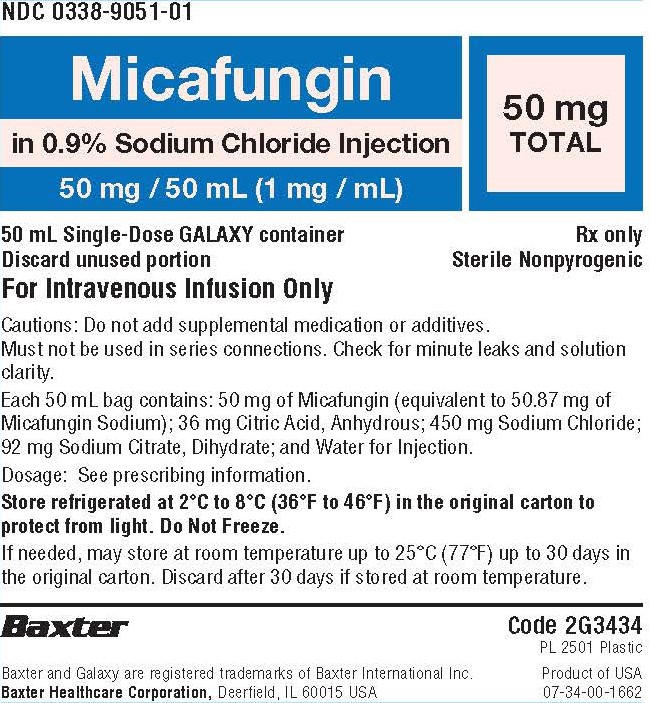
PACKAGE/LABEL PRINCIPAL DISPLAY PANEL Container Label NDC 0338-9051-01 Micafungin in 0.9% Sodium Chloride Injection 50 mg / 50 mL (1 mg / mL) 50 mg TOTAL 50 mL Single-Dose GALAXY container Discard unused portion For Intravenous Infusion Only Rx only Sterile Nonpyrogenic Cautions: Do not add supplemental medication or additives. Must not be used in series connections. Check for minute leaks and solution clarity.
Each 50 mL bag contains: 50 mg of Micafungin Sodium (equivalent to 50.87 mg of Micafungin Sodium); 36 mg Citric Acid, Anhydrous; 450 mg Sodium Chloride, 92 mg Sodium Citrate, Dihydrate; and Water for Injection. Dosage: See prescribing information. Store refrigerated at 2°C to 8°C (36°F to 46°F) in the original carton to protect from light.
Do Not Freeze. If needed, may store at room temperature up to 25 ° C (77 ° F) up to 30 days in the original carton. Discard after 30 days if stored at room temperature.
Baxter Logo Baxter and Galaxy are registered trademarks of Baxter International Inc. Baxter Healthcare Corporation , Deerfield, IL 60015 USA Code 2G3434 PL 2501 Plastic Product of USA 07-34-00-1662 BAR CODE POSITION ONLY UPCA-A XXXXXXXXXXXX Container Label NDC 0338-9053-01 Micafungin in 0.9% Sodium Chloride Injection 100 mg / 100 mL (1 mg / mL) 100 mg TOTAL 100 mL Single-Dose GALAXY container Discard unused portion For Intravenous Infusion Only Rx only Sterile Nonpyrogenic Cautions: Do not add supplemental medication or additives.
Must not be used in series connections. Check for minute leaks and solution clarity. Each mL contains: 100 mg of Micafungin (equivalent to 101.73 mg of Micafungin Sodium); 72 mg Citric Acid, Anhydrous; 900 mg Sodium Chloride; 184 mg Sodium Citrate, Dihydrate; and Water for Injection.
Dosage: See prescribing information. Store refrigerated at 2°C to 8°C (36°F to 46°F) in the original carton to protect from light. Do Not Freeze.
If needed, may store at room temperature up to 25 ° C (77 ° F) up to 30 days in the original carton. Discard after 30 days if stored at room temperature. Baxter Logo Baxter and Galaxy are registered trademarks of Baxter International Inc.
Baxter Healthcare Corporation, Deerfield, IL 60015 USA Code 2G3435 PL 2501 Plastic Product of USA 07-34-00-1663 BAR CODE POSITION ONLY UPCA-A XXXXXXXXXXXX Container Label NDC 0338-9055-01 Micafungin in 0.9% Sodium Chloride Injection 150 mg / 150 mL (1 mg / mL) 150 mg TOTAL 150 mL Single-Dose GALAXY container Discard unused portion For Intravenous Infusion Only Rx only Sterile Nonpyrogenic Cautions: Do not add supplemental medication or additives. Must not be used in series connections. Check for minute leaks and solution clarity.
Each mL contains: 150 mg of Micafungin (equivalent to 152.60 mg of Micafungin Sodium); 108 mg Citric Acid, Anhydrous; 1350 mg Sodium Chloride; 276 mg Sodium Citrate, Dihydrate; and Water for Injection. Dosage: See prescribing information. Store refrigerated at 2°C to 8°C (36°F to 46°F) in the original carton to protect from light.
Do Not Freeze. If needed, may store at room temperature up to 25°F (77°F) up to 30 days in the original carton. Discard after 30 days if stored at room temperature.
Baxter Logo Baxter and Galaxy are registered trademarks of Baxter International Inc. Baxter Healthcare Corporation, Deerfield, IL 60015 USA Code 2G3433 PL 2501 Plastic Product of USA 07-34-00-1664 BAR CODE POSITION ONLY UPCA-A XXXXXXXXXXXX Carton Label For Intravenous Only Micafungin in 0.9% Sodium Chloride Injection 50 mg per 50 mL (1 mg / mL) For Intravenous Only Micafungin in 0.9% Sodium Chloride Injection 50 mg per 50 mL (1 mg / mL) NDC 0338-9051-01 Sterile, Nonpyrogenic Micafungin in 0.9% Sodium Chloride Injection 50 mg / 50 mL (1 mg / mL) 50 mg TOTAL UNVARNISHED AREA FOR ON-LINE PRINTING OF LOT & EXP FPO UPC-A Barcode 085412XXXXXX Each 50 mL bag contains: 50 mg of Micafungin (equivalent to 50.87 mg of Micafungin Sodium); 36 mg Citric Acid, Anhydrous; 450 mg Sodium Chloride; 92 mg Sodium Citrate, Dihydrate; and Water… [Excerpted — this section continues on DailyMed.]
About this NDC listing & data coverage
What data is (and isn’t) available for this NDC — tap to expand
| NDC identity (package / product / labeler codes) | ✓ Available |
| Labeler | ✓ Available |
| Product & package description | ✓ Available |
| Marketing category & status | ✓ Available |
| Active ingredient / dosage form / route | ✓ Available |
| FDA label (SPL via DailyMed) | ✓ Available |
| Package photos | ✓ Available |
| Inactive ingredients (structured) | ✓ Available |
| NADAC pharmacy acquisition price (CMS) | — Not published for this NDC CMS publishes NADAC only for NDCs reported in its retail-pharmacy survey. |
| Orange Book / therapeutic-equivalence data | ✓ Available |
| HCPCS J-code billing crosswalk | ✓ Available |
| Medicaid utilization (CMS SDUD) | — Not published for this NDC CMS reports utilization only for NDCs with Medicaid claims above its privacy threshold. |