
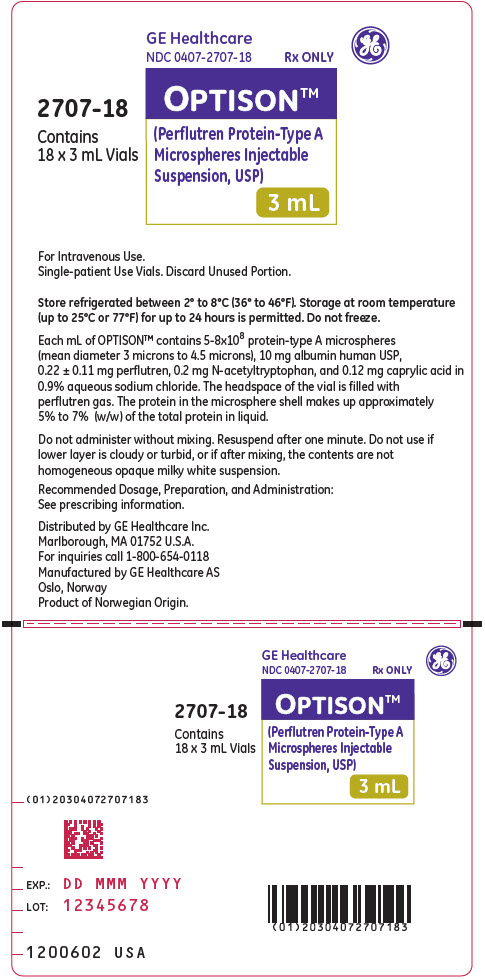
Optison Perflutren Protein-Type A Microspheres Human Albumin Microspheres and 10 mg/mL; .22 mg/mL Injection, Solution — NDC 0407-2707-18 (Billing 00407-2707-18)
This is a package of Optison Perflutren Protein-Type A Microspheres Human Albumin Microspheres and 10 mg/mL; .22 mg/mL Injection, Solution from GE Healthcare Inc., marketed since Jan 2002 and currently FDA-listed.
NDC database record
One package, one record: these facts belong to NDC 0407-2707-18 alone.
- Record
- FDA NDC Directory package listing · Human prescription drug
- Code segments
- 0407 labeler · 2707 product · 18 package
- Package marketed since
- Jan 2, 2002
- Sample package
- No — commercial package
- Listing certified through
- Dec 31, 2026
- Barcode (UPC-A, from the NDC)
- 3 0407270718 9
- Medicaid fills, this package
- 2,701 prescriptions in the last four reported quarters
- FDA record last changed
- Jul 24, 2026
Identity & classification
Regulatory identifiers FDA, NLM and CMS codes for this package
Drug-database identifiers Medi-Span GPI and First Databank GCN / HICL / AHFS classification
- GSN (GCN sequence number): 064507
- GCN: 14454
- GPI-14 (Medi-Span): 94500075401820
- HICL (First Databank): 021754
- AHFS class code: 36:00.00.00
Where does this data come from?
- FDA openFDA NDC Directory · synced Oct 8, 2026
- FDA label on DailyMed · label index refreshed Oct 6, 2026
- RxNorm (NLM RxNav) · catalog refreshed Oct 1, 2026
- Medi-Span GPI (licensed)
- First Databank (licensed) · refreshed Oct 8, 2026
Clinical
Patient education
Supplement & herbal interactions
Where does this data come from?
- MedlinePlus (NLM) · refreshed Oct 1, 2026
- FDA label on DailyMed · label index refreshed Oct 6, 2026
Ask a licensed pharmacist directly — free, answered by our team.
Pricing
A drug doesn't have one price. Each row is a different public payment system, and none is what you'd pay at the counter — that depends on your insurance. The ⓘ on each row explains what it measures.
| Price system | Per mL | Per package |
|---|---|---|
| Retail pharmacies payNADAC · weekly | Not in the retail survey — common for institutional, discontinued, or low-volume packs. | |
| Medicaid paysCMS SDUD · 12 mo | $53.35 | $2,881.00 / 54 ml |
| Medicare drug plans payPart D · quarterly | No Part D plan price is available for this NDC in our data. | |
| Medicare Part B allowsASP · Q9956 | $40.854 / Q9956 unit | — |
Where does this data come from?
- CMS NADAC weekly file
- CMS ASP pricing files · refreshed Sep 20, 2026
- CMS Medicaid State Drug Utilization Data · through Q1 2026
- CMS Part D plan pricing files · refreshed Sep 24, 2026
- VA National Acquisition Center price file
Billing & reimbursement
Where does this data come from?
- CMS ASP NDC-HCPCS crosswalk · refreshed Sep 22, 2026
- DMEPDAC NDC-HCPCS crosswalk
- openFDA NSDE billing units · refreshed Oct 7, 2026
Packaging — all sizes for this product
| Package NDC | Description | Marketing start | Marketing end | Status |
|---|---|---|---|---|
| 00407-2707-03 0407-2707-03 Main listing | 5 VIAL, SINGLE-USE in 1 CARTON / 3 mL in 1 VIAL, SINGLE-USE | 2002-01-02 | — | Active |
| 00407-2707-18 You're viewing this | 18 VIAL, SINGLE-USE in 1 CARTON / 3 mL in 1 VIAL, SINGLE-USE | 2002-01-02 | — | Active |
This pack accounts for about 45% of this product's recent Medicaid fills; most go to a different pack size. See all packs ↓
Pack size FAQ
What quantity is in this package?
What NDC number is used to bill for this package of Optison Perflutren Protein-Type A Microspheres Human Albumin Microspheres and 10 mg/mL; .22 mg/mL Injection, Solution?
Therapeutic equivalents
| Product | Labeler | Pack | NADAC/unit | TE | Status | Price vs. this |
|---|---|---|---|---|---|---|
| Optison Perflutren Protein-Type A Microspheres 10 mg/mL; .22 mg/mLthis 00407-2707-18 | GE | 18 vials | — | — | FDA listed | — |
Where does this data come from?
- FDA openFDA NDC Directory · synced Oct 8, 2026
- FDA Orange Book · refreshed Oct 3, 2026
- CMS NADAC weekly file
Availability & generic status
We did not find an FDA-approved generic match for this exact strength, form and route. Patent/protection dates below may affect future generic timing.
Why the date isn’t exact: Generic timing can change because patents may be challenged, settled, licensed, added, removed, or worked around with a narrower label — and FDA approval does not always mean a pharmacy can get the generic today.
🛈 What do these terms mean?
- Patent
- Legal protection listed in the Orange Book that may delay generic approval or launch. Issued by the U.S. Patent & Trademark Office.
- Substance patent
- Covers the active drug molecule itself — the hardest to design around. A generic generally can’t launch until it expires.
- Formulation (product) patent
- Covers a specific formulation or dosage form. A generic can sometimes work around it with a different formulation.
- Method-of-use patent
- A patent covering one specific approved use of the drug — not necessarily the whole molecule. A generic can sometimes launch with a “skinny label” that carves out the protected use and keeps the others.
- Skinny label
- A generic label that omits a still-patented use when the FDA allows it — letting a generic reach the market for the unprotected uses.
- Exclusivity
- FDA-granted marketing protection, separate from patents — e.g. 5-yr new chemical entity, 7-yr orphan drug, or a +6-month pediatric extension.
- Paragraph IV
- A generic applicant’s formal challenge to a listed patent. It can potentially lead to earlier generic entry, but often involves litigation or a settlement.
- RLD / RS
- Reference Listed Drug — the brand product the FDA uses as the reference for generic applications. Reference Standard — the product the FDA expects generics to compare against in bioequivalence testing.
- TE / AB rating
- FDA therapeutic-equivalence rating. An AB rating generally means the FDA considers a generic therapeutically equivalent to — and substitutable for — the brand.
- LOE (loss of exclusivity)
- The latest patent or exclusivity currently listed — the loss-of-exclusivity / latest-listed-protection date shown on this page. Paragraph-IV challenges and settlements can move the real date earlier; FDA approval and a manufacturer’s decision to market can move it later.
Built from the FDA Orange Book. The bars above are scaled to each protection’s expiry; the red LOE marker is the last one to lapse.
| Code | What it grants | Expires |
|---|---|---|
| NPP | New Patient Population | May 9, 2028 |
Is there a generic version of OPTISON VIAL?
The FDA approved a generic — why can’t I get it at my pharmacy yet?
Why do different websites show different generic release dates?
What does “FDA listed” mean?
What does a patent or protection date mean here?
What does “current Orange Book estimate” mean?
Can a generic come out before the last patent expires?
Can a generic come out after the listed dates?
What is the difference between patents and exclusivity?
Why are there multiple patent dates?
Where does this data come from?
- FDA Orange Book · refreshed Oct 3, 2026
Inactive Ingredients / Excipients
Inactive ingredients, also called excipients, are components of the drug product other than the active ingredient. They may include fillers, dyes, coatings, preservatives, flavors, or other formulation ingredients.
💡 Tap an ingredient (hover on desktop) to see what it is and why it’s used.
-
0.12 mg / 1 mL
UNII OBL58JN025
Octanoic acid is a fatty acid used as a solvent and surfactant in medicines. It helps dissolve active ingredients and improve how the body absorbs them.
-
0.2 mg / 1 mL
UNII 4460NBV53F
N-acetyl-DL-tryptophan is a modified form of the amino acid tryptophan. In medications, it typically serves as a buffering agent or pH regulator to maintain the product's chemical stability and effectiveness.
-
UNII 451W47IQ8X
Sodium chloride is common table salt. It's used in medicines as a buffer to maintain proper pH, as a filler to add bulk, or to adjust the osmotic balance in liquid formulations.
3 inactive ingredients listed in the exact product block matched to this NDC.
Where does this data come from?
ingredient classCode="IACT" elements from the exact product block matched by this NDC. Label-section narrative from DailyMed / the openFDA label index is shown separately when available.- FDA label on DailyMed · label index refreshed Oct 6, 2026
- FDA openFDA NDC Directory · synced Oct 8, 2026
Inactive ingredient FAQ
Are inactive ingredients the same for every manufacturer?
Why might an inactive ingredient be missing?
Can inactive ingredients matter?
Manufacturer & labeler
More NDCs from GE Healthcare Inc. labeler code 00407
- OMNIPAQUE Iohexol 300 mg/mL Injection, Solution NDC 0407-1413-10
- Omnipaque Iohexol 350 mg/mL Injection, Solution NDC 0407-1414-48
- OMNIPAQUE Iohexol 9 mg/mL Solution NDC 0407-1415-09
- OMNIPAQUE Iohexol 12 mg/mL Solution NDC 0407-1416-12
- Visipaque Iodixanol 270 mg/mL Injection, Solution NDC 0407-2222-16
- Visipaque Iodixanol 320 mg/mL Injection, Solution NDC 0407-2223-16
- CLARISCAN gadoterate meglumine 376.9 mg/mL Injection, Solution NDC 0407-2943-01
- Flyrcado FLURPIRIDAZ F-18 55 mCi/mL Injection NDC 0407-8787-01
Where does this data come from?
- FDA openFDA NDC Directory · synced Oct 8, 2026
- Drugs@FDA
Full prescribing information FDA SPL
🚨 Boxed Warning ▾
WARNING: SERIOUS CARDIOPULMONARY REACTIONS Serious cardiopulmonary reactions, including fatalities, have occurred uncommonly during or following perflutren-containing microsphere administration. Most serious reactions occur within 30 minutes of administration [see Warnings and Precautions (5.1) ]. Assess all patients for the presence of any condition that precludes OPTISON administration [see Contraindications (4) ].
Always have resuscitation equipment and trained personnel readily available [see Warnings and Precautions (5.1) ] . WARNING: SERIOUS CARDIOPULMONARY REACTIONS See full prescribing information for complete boxed warning. Serious cardiopulmonary reactions, including fatalities, have occurred uncommonly during or following perflutren-containing microsphere administration.
Most serious reactions occur within 30 minutes of administration ( 5.1 ). Assess all patients for the presence of any condition that precludes OPTISON administration ( 4 ). Always have resuscitation equipment and trained personnel readily available ( 5.1 ).
🎯 Indications and Usage ▾
1 INDICATIONS AND USAGE OPTISON is indicated for use in adult and pediatric patients with suboptimal echocardiograms to opacify the left ventricle and to improve the delineation of the left ventricular endocardial borders. OPTISON is an ultrasound contrast agent indicated for use in adult and pediatric patients with suboptimal echocardiograms to opacify the left ventricle and to improve the delineation of the left ventricular endocardial borders ( 1 ).
⏱️ Dosage and Administration ▾
2 DOSAGE AND ADMINISTRATION Adults 0.5 mL intravenously at a rate not exceeding 1 mL/s. If contrast enhancement is inadequate after the dose of 0.5 mL, additional doses of 0.5 mL may be repeated up to a total of 5 mL in a 10-minute period with a maximum total dose of 8.7 mL in any one patient study ( 2.1 ). Pediatric Patients 28 kg or less: 0.2 mL diluted with 0.2 mL of 0.9% Sodium Chloride Injection.
29 kg to 40 kg: 0.3 mL diluted with 0.3 mL of 0.9% Sodium Chloride Injection. 41 kg or more: 0.4 mL diluted with 0.4 mL of 0.9% Sodium Chloride Injection. Administer intravenously at a rate not exceeding 0.05 mL/s.
If contrast enhancement is inadequate after the initial dose, up to four additional doses of the same diluted volume may be repeated for further contrast enhancement as needed ( 2.1 ). Follow the OPTISON injection with a flush of 0.9% Sodium Chloride Injection or 5% Dextrose Injection ( 2.3 ). See full prescribing information for preparation instructions ( 2.2 ).
2.1Recommended Dosage Adults The recommended dose in adults is 0.5 mL administered intravenously at a rate not exceeding 1 mL/s [see Dosage and Administration (2.3) ] . If the contrast enhancement is inadequate after the dose of 0.5 mL, additional doses of 0.5 mL may be repeated for further contrast enhancement as needed. The maximum total dose is 5 mL in any 10-minute period.
The maximum total dose is 8.7 mL in any one patient study. Pediatric Patients The recommended dose by body weight in pediatric patients is shown in Table 1. Administer by intravenous injection at a rate not exceeding 0.05 mL/s [see Dosage and Administration (2.3) ] .
If the contrast enhancement is inadequate after the initial dose, up to four additional doses of the same diluted volume may be repeated for further contrast enhancement as needed. OPTISON must be diluted with 0.9% Sodium Chloride Injection to form a 1:1 dilution for pediatric administration [see Dosage and Administration (2.2) ]. Table 1.
Recommended Dose of OPTISON by Body Weight in Pediatric Patients Body Weight Dose 28 kg or less 0.2 mL of OPTISON diluted with 0.2 mL of 0.9% Sodium Chloride Injection 29 kg to 40 kg 0.3 mL of OPTISON diluted with 0.3 mL of 0.9% Sodium Chloride Injection 41 kg or more 0.4 mL of OPTISON diluted with 0.4 mL of 0.9% Sodium Chloride Injection
2.2Preparation Instructions General Visually inspect the OPTISON vial. Do not use if the container has been damaged, the protective seal and/or rubber cap have been entered, or the upper white layer is absent (may indicate the microspheres have been damaged and may result in poor or no echo contrast). Invert the vial and gently rotate to resuspend the microspheres.
This process will allow the product to come to room temperature (20°C to 25°C or 68°F to 77°F) before use. Inspect the vial for complete resuspension. Do not use if the suspension appears to be clear rather than opaque and milky-white.
Vent the OPTISON vial with a sterile vent spike or with a sterile 18-gauge needle before withdrawing the OPTISON suspension into the injection syringe. Do not inject air into the vial. Use the product within one minute of suspension.
If one minute is exceeded, resuspend by inverting and gently rotating the syringe for no less than 10 seconds. Failure to adequately resuspend OPTISON may cause inadequate delivery of the microspheres and may result in inadequate contrast. Dilution for Pediatric Administration Invert the OPTISON vial and gently rotate to resuspend the microspheres.
Draw equal volumes of OPTISON and 0.9% Sodium Chloride Injection into the same syringe to form a 1:1 dilution. Mix gently by holding the syringe horizontally between the palms and rolling it gently back and forth for at least 10 seconds. If not used within 10 minutes after dilution, discard the diluted product.
2.3Administration Instructions OPTISON is for intravenous use only and must not be administered by intra-arterial injection [see Warnings and Precautions (5.3) ] . Inspect visual… [Excerpted — this section continues on DailyMed.]
💊 Dosage Forms and Strengths ▾
3 DOSAGE FORMS AND STRENGTHS Injectable suspension: 5-8×10 8 /mL protein-type A microspheres, 10 mg/mL albumin human, and 0.22 ± 0.11 mg/mL perflutren as a clear liquid lower layer, a white liquid upper layer, and a headspace filled with perflutren gas in 3 mL single-patient use vial; after resuspension, OPTISON is a sterile, homogeneous, opaque, and milky-white injectable suspension. Injectable suspension: 5-8 ×10 8 /mL protein-type A microspheres, 10 mg/mL albumin human, and 0.22 ± 0.11 mg/mL perflutren in 3 mL single-patient use vials ( 3 )
⛔ Contraindications ▾
4 CONTRAINDICATIONS OPTISON is contraindicated in patients with known or suspected hypersensitivity to perflutren or albumin [see Warnings and Precautions (5.2) ] . Known or suspected hypersensitivity to perflutren or albumin ( 4 )
⚠️ Warnings and Cautions ▾
5 WARNINGS AND PRECAUTIONS Hypersensitivity Reactions: Serious anaphylactic reactions have been observed. Always have cardiopulmonary resuscitation personnel and equipment readily available prior to OPTISON administration and monitor all patients for hypersensitivity reactions ( 5.2 ).
5.1Serious Cardiopulmonary Reactions Serious cardiopulmonary reactions including fatalities have occurred uncommonly during or shortly following perflutren-containing microsphere administration, typically within 30 minutes of administration. The risk for these reactions may be increased among patients with unstable cardiopulmonary conditions (acute myocardial infarction, acute coronary artery syndromes, worsening or unstable congestive heart failure, or serious ventricular arrhythmias). The reported reactions to perflutren-containing microspheres include: fatal cardiac or respiratory arrest, shock, syncope, symptomatic arrhythmias (atrial fibrillation, tachycardia, bradycardia, supraventricular tachycardia, ventricular fibrillation, ventricular tachycardia), hypertension, hypotension, dyspnea, hypoxia, chest pain, respiratory distress, stridor, wheezing, loss of consciousness and convulsions [see Adverse Reactions (6.2) ] .
Always have cardiopulmonary resuscitation personnel and equipment readily available prior to OPTISON administration and monitor all patients for acute reactions.
5.2Hypersensitivity Reactions Serious anaphylactic reactions have been observed during or shortly following perflutren-containing microsphere administration including: shock, hypersensitivity, bronchospasm, throat tightness, angioedema, edema (pharyngeal, palatal, mouth, peripheral, localized), swelling (face, eye, lip, tongue upper airway), facial hypoesthesia, rash, urticaria, pruritus, flushing, and erythema have occurred in patients with no prior exposure to perflutren-containing microsphere products. Always have cardiopulmonary resuscitation personnel and equipment readily available prior to OPTISON administration and monitor all patients for hypersensitivity reactions [see Adverse Reactions (6.2) ] .
5.3Systemic Embolization When administering OPTISON to patients with a cardiac shunt, microspheres can bypass filtering of the lung and enter the arterial circulation. Assess patients with shunts for embolic phenomena following OPTISON administration. OPTISON is only for intravenous administration; do not administer OPTISON by intra-arterial injection.
5.4Ventricular Arrhythmia Related to High Mechanical Index High ultrasound mechanical index values may cause microsphere rupture and lead to ventricular arrhythmias. Additionally, end-systolic triggering with high mechanical indices has been reported to cause ventricular arrhythmias. OPTISON is not recommended for use at mechanical indices greater than 0.8.
🤒 Adverse Reactions ▾
6 ADVERSE REACTIONS The following serious adverse reactions are described elsewhere in the labeling: Serious Cardiopulmonary Reactions [see Warnings and Precautions (5.1) ] Hypersensitivity Reactions [see Warnings and Precautions (5.2) ] Common adverse reactions (incidence ≥ 0.5%) were: headache, nausea and/or vomiting, warm sensation or flushing, dizziness, dysgeusia, chills or fever, flu-like symptoms, malaise/weakness/fatigue, chest pain, dyspnea, injection site discomfort, and erythema ( 6.1 ). To report SUSPECTED ADVERSE REACTIONS, contact GE HealthCare at 1-800-654-0118 or FDA at 1-800-FDA-1088 or www.fda.gov/medwatch.
6.1Clinical Trials Experience Because clinical trials are conducted under widely varying conditions, adverse reaction rates observed in the clinical trials of a drug cannot be directly compared to rates in the clinical trials of another drug and may not reflect the rates observed in practice. Adverse Reactions in Adults The safety of OPTISON was evaluated in 279 adult patients in clinical studies. These patients were 69% male, 31% female, 71% White, 19% Black or African American, 9% Hispanic or Latino, and 1% other racial or ethnic groups.
Adverse reactions reported in ≥ 0.5% of patients who received OPTISON by intravenous injection are given in Table 2. Table 2. Adverse Reactions Reported in ≥ 0.5% of the Adult Patients who Received OPTISON in Controlled Clinical Studies Adverse Reaction OPTISON n=279 % Body as a Whole Headache
5.4 Warm Sensation/Flushing
3.6 Chills/fever
1.4 Flu-like Symptoms
1.1 Malaise/Weakness/Fatigue
1.1 Cardiovascular System Dizziness
2.5 Chest Pain
1.1 Digestive System Nausea and/or Vomiting
4.3 Respiratory System Dyspnea
1.1 Skin & Appendages Injection Site Discomfort
1.1 Erythema
0.7 Special Senses Dysgeusia
1.8Adverse reactions reported in < 0.5% of patients who received OPTISON included: Body as a Whole: induration, discoloration at the injection site Cardiovascular system : premature ventricular contractions, palpitations Digestive system : dry mouth Immune system disorders : hypersensitivity Musculoskeletal and connective tissue disorders : back pain, arthralgia, body or muscle aches Nervous system : tremor, paresthesia, irritableness Respiratory system : oxygen saturation decline due to coughing, wheezing Skin and appendages : urticaria, rash, pruritus Special Senses : tinnitus, visual blurring, photophobia, burning sensation in the eyes Adverse Reactions in Pediatric Patients Overall, the safety profile observed in pediatric patients from the clinical study was consistent with the safety profile in adult patients [see Clinical Studies (14.2) ].
6.2Postmarketing Experience Adverse Reactions from Observational Studies In a prospective, post-marketing safety surveillance study of OPTISON used in routine clinical practice, a total of 1,039 patients received OPTISON. These patients had an average age of 59.9 years (min, max: 20, 97) and were 62% male, 38% female, 83% White, 14% Black or African American, 2% Asian, and 1.5% other racial or ethnic groups. Overall, 17% of patients reported at least one adverse event.
No deaths or serious adverse reactions were reported in this study. Adverse Reactions from Postmarking Spontaneous Reports The following adverse reactions have been identified during the postmarketing use of OPTISON or other perflutren-containing microspheres. Because these reactions are reported voluntarily from a population of uncertain size, it is not always possible to reliably estimate their frequency or establish a causal relationship to drug exposure.
Cardiopulmonary Fatal cardiac or respiratory arrest, shock, syncope, symptomatic arrhythmias (atrial fibrillation, tachycardia, bradycardia, supraventricular tachycardia, ventricular fibrillation, ventricular tachycardia), hypertension, hypotension, dyspnea, hypoxia, chest pain, respiratory distress or decreased oxygenation, stridor, wheezing. Immune System Anaphylaxis with manifestations that may include death,… [Excerpted — this section continues on DailyMed.]
👥 Use in Specific Populations ▾
8 USE IN SPECIFIC POPULATIONS
8.1Pregnancy Risk Summary There are no data with OPTISON use in pregnant women to inform any drug-associated risks. No adverse developmental outcomes were observed in animal reproduction studies with intravenous administration of OPTISON to pregnant rats and rabbits during organogenesis at doses up to at least 5 and 10 times the recommended human dose based on body surface area ( see Data ). In the U.S. general population, the estimated background risk of major birth defects and miscarriage in clinically recognized pregnancies is 2% to 4% and 15% to 20%, respectively.
Data Animal Data OPTISON was administered intravenously to rats at doses of 0.25, 5 and 10 mL/kg/day (approximately 0.2, 5, and 10 times the recommended maximum human dose of 8.7 mL, respectively, based on body surface area) and to rabbits at 0.25, 2.5, and 5 mL/kg/day (approximately 0.5, 5, and 10 times the recommended maximum human dose, respectively, based on body surface area) during organogenesis. No significant findings attributable solely to a direct effect on the fetus were detected in the studies.
8.2Lactation There are no data on the presence of perflutren protein-type A microspheres in human milk, the effects on the breastfed infant, or the effects on milk production. The developmental and health benefits of breastfeeding should be considered along with the mother's clinical need for OPTISON and any potential adverse effects on the breastfed infant from OPTISON or from the underlying maternal condition.
8.4Pediatric Use The safety and effectiveness of OPTISON to opacify the left ventricle and improve the delineation of the left ventricular endocardial borders have been established in pediatric patients with suboptimal echocardiograms. Use of OPTISON in pediatric patients is supported by evidence from adequate and well-controlled studies in adults and additional efficacy and safety data from a clinical study in 37 pediatric patients aged 9 to 17 years old [see Adverse Reactions (6.1) and Clinical Studies (14.1 , 14.2) ].
8.5Geriatric Use Of the total number of subjects in a clinical study of OPTISON, 35% were 65 and over, while 14% were 75 and over. No overall differences in safety or effectiveness were observed between these subjects and younger subjects, and other reported clinical experience has not identified differences in responses between the elderly and younger patients, but greater sensitivity of some older individuals cannot be ruled out.
🤰 Pregnancy ▾
8.1Pregnancy Risk Summary There are no data with OPTISON use in pregnant women to inform any drug-associated risks. No adverse developmental outcomes were observed in animal reproduction studies with intravenous administration of OPTISON to pregnant rats and rabbits during organogenesis at doses up to at least 5 and 10 times the recommended human dose based on body surface area ( see Data ). In the U.S. general population, the estimated background risk of major birth defects and miscarriage in clinically recognized pregnancies is 2% to 4% and 15% to 20%, respectively.
Data Animal Data OPTISON was administered intravenously to rats at doses of 0.25, 5 and 10 mL/kg/day (approximately 0.2, 5, and 10 times the recommended maximum human dose of 8.7 mL, respectively, based on body surface area) and to rabbits at 0.25, 2.5, and 5 mL/kg/day (approximately 0.5, 5, and 10 times the recommended maximum human dose, respectively, based on body surface area) during organogenesis. No significant findings attributable solely to a direct effect on the fetus were detected in the studies.
🧒 Pediatric Use ▾
8.4Pediatric Use The safety and effectiveness of OPTISON to opacify the left ventricle and improve the delineation of the left ventricular endocardial borders have been established in pediatric patients with suboptimal echocardiograms. Use of OPTISON in pediatric patients is supported by evidence from adequate and well-controlled studies in adults and additional efficacy and safety data from a clinical study in 37 pediatric patients aged 9 to 17 years old [see Adverse Reactions (6.1) and Clinical Studies (14.1 , 14.2) ].
🧓 Geriatric Use ▾
8.5Geriatric Use Of the total number of subjects in a clinical study of OPTISON, 35% were 65 and over, while 14% were 75 and over. No overall differences in safety or effectiveness were observed between these subjects and younger subjects, and other reported clinical experience has not identified differences in responses between the elderly and younger patients, but greater sensitivity of some older individuals cannot be ruled out.
🧬 Clinical Pharmacology ▾
12 CLINICAL PHARMACOLOGY
12.1Mechanism of Action The OPTISON microspheres create an echogenic contrast effect in the blood. The acoustic impedance of the OPTISON microspheres is much lower than that of the blood. Therefore, impinging ultrasound waves are scattered and reflected at the microsphere-blood interface and ultimately may be visualized in the ultrasound image.
At the frequencies used in adult echocardiography (2 MHz to 5 MHz), the microspheres resonate which further increases the extent of ultrasound scattering and reflection.
12.2Pharmacodynamics Contrast Enhancement Duration in Adults The median duration of OPTISON contrast enhancement for each of the four doses of OPTISON, 0.2 (40% of recommended dose), 0.5, 3, and 5 mL, were approximately one, two, four, and five minutes, respectively [see Clinical Studies (14.1) ]. Pulmonary Hemodynamic Effects The effect of OPTISON on pulmonary hemodynamics was studied in a prospective, open-label study of 30 patients scheduled for pulmonary artery catheterization, including 19 with an elevated baseline pulmonary arterial systolic pressure (PASP) (>35 mmHg) and 11 with a normal PASP (≤35 mmHg).
Systemic hemodynamic parameters and ECGs were also evaluated. No clinically important pulmonary hemodynamic, systemic hemodynamic, or ECG changes were observed.
12.3Pharmacokinetics After injection of OPTISON, diffusion of the perflutren gas out of the microspheres is limited by the low partition coefficient of the gas in blood that contributes to the persistence of the microspheres. The pharmacokinetics of the intact microspheres of OPTISON in humans are unknown. Distribution The binding of perflutren to plasma proteins and its partitioning into blood cells are unknown.
However, perflutren protein binding is expected to be minimal due to the low partition coefficient of the gas in blood. Elimination Following intravenous injection, perflutren is cleared with a pulmonary elimination half-life of 1.3 ± 0.69 minutes (mean ± SD). Metabolism Perflutren is a stable gas that is not metabolized.
The human albumin component of the microsphere is expected to be handled by the normal metabolic routes. Excretion Perflutren is eliminated through the lungs within 10 minutes. The mean ± SD recovery was 96% ± 23%.
The perflutren concentration in expired air peaked approximately 30 to 40 seconds after administration.
🧬 Mechanism of Action ▾
12.1Mechanism of Action The OPTISON microspheres create an echogenic contrast effect in the blood. The acoustic impedance of the OPTISON microspheres is much lower than that of the blood. Therefore, impinging ultrasound waves are scattered and reflected at the microsphere-blood interface and ultimately may be visualized in the ultrasound image.
At the frequencies used in adult echocardiography (2 MHz to 5 MHz), the microspheres resonate which further increases the extent of ultrasound scattering and reflection.
📦 How Supplied / Storage and Handling ▾
16 HOW SUPPLIED/STORAGE AND HANDLING How Supplied OPTISON (perflutren protein-type A microspheres) injectable suspension is supplied at concentrations of 5-8×10 8 /mL protein-type A microspheres, 10 mg/mL albumin human, and 0.22 ± 0.11 mg/mL perflutren as a clear liquid lower layer, a white liquid upper layer, and a headspace filled with perflutren gas in 3 mL single-patient use vials. After resuspension, OPTISON is a sterile, homogeneous, opaque, and milky-white injectable suspension. Five (5) – 3 mL vials per carton Eighteen (18) – 3 mL vials per carton NDC 0407-2707-03 NDC 0407-2707-18 Storage and Handling Upon receipt, store OPTISON refrigerated between 2°C to 8°C (36°F to 46°F).
Storage at room temperature (up to 25°C or 77°F) for up to 24 hours is permitted. Do not freeze.
📦 Storage and Handling ▾
Storage and Handling Upon receipt, store OPTISON refrigerated between 2°C to 8°C (36°F to 46°F). Storage at room temperature (up to 25°C or 77°F) for up to 24 hours is permitted. Do not freeze.
📋 Description ▾
11 DESCRIPTION OPTISON (perflutren protein-type A microspheres) injectable suspension is an ultrasound contrast agent for intravenous use. Perflutren is chemically characterized as 1,1,1,2,2,3,3,3-perflutren with a molecular weight of 188, an empirical formula of C 3 F 8 , and the following structural formula: Each mL contains 5-8×10 8 protein-type A microspheres, 10 mg albumin human, 0.22 ± 0.11 mg perflutren, and the following inactive ingredients: 0.2 mg N-acetyltryptophan and 0.12 mg caprylic acid in 0.9% aqueous sodium chloride.
The headspace of the vial is filled with perflutren gas. The pH is adjusted to 6.4 to 7.4. The protein in the microsphere shell makes up approximately 5% to 7% (w/w) of the total protein in the suspension.
The microsphere particle size parameters are listed in Table 3. OPTISON is supplied as a clear liquid lower layer, a white liquid upper layer, and a headspace filled with perflutren gas, and after resuspension, OPTISION is a sterile, homogeneous, opaque, and milky-white suspension. Table 3.
Microsphere Size Distribution Parameter Mean diameter (range) 3 to 4.5 µm Percent less than 10 µm 95% Maximum diameter 32 µm Chemical Structure
💬 Information for Patients ▾
17 PATIENT COUNSELING INFORMATION Hypersensitivity Reactions Advise patients to inform their healthcare provider if they develop any symptoms of hypersensitivity after OPTISON administration including rash, wheezing, or shortness of breath [see Warnings and Precautions (5.2) ] .
🧬 Pharmacokinetics ▾
12.3Pharmacokinetics After injection of OPTISON, diffusion of the perflutren gas out of the microspheres is limited by the low partition coefficient of the gas in blood that contributes to the persistence of the microspheres. The pharmacokinetics of the intact microspheres of OPTISON in humans are unknown. Distribution The binding of perflutren to plasma proteins and its partitioning into blood cells are unknown.
However, perflutren protein binding is expected to be minimal due to the low partition coefficient of the gas in blood. Elimination Following intravenous injection, perflutren is cleared with a pulmonary elimination half-life of 1.3 ± 0.69 minutes (mean ± SD). Metabolism Perflutren is a stable gas that is not metabolized.
The human albumin component of the microsphere is expected to be handled by the normal metabolic routes. Excretion Perflutren is eliminated through the lungs within 10 minutes. The mean ± SD recovery was 96% ± 23%.
The perflutren concentration in expired air peaked approximately 30 to 40 seconds after administration.
🧬 Pharmacodynamics ▾
12.2Pharmacodynamics Contrast Enhancement Duration in Adults The median duration of OPTISON contrast enhancement for each of the four doses of OPTISON, 0.2 (40% of recommended dose), 0.5, 3, and 5 mL, were approximately one, two, four, and five minutes, respectively [see Clinical Studies (14.1) ]. Pulmonary Hemodynamic Effects The effect of OPTISON on pulmonary hemodynamics was studied in a prospective, open-label study of 30 patients scheduled for pulmonary artery catheterization, including 19 with an elevated baseline pulmonary arterial systolic pressure (PASP) (>35 mmHg) and 11 with a normal PASP (≤35 mmHg).
Systemic hemodynamic parameters and ECGs were also evaluated. No clinically important pulmonary hemodynamic, systemic hemodynamic, or ECG changes were observed.
🔬 Clinical Studies ▾
14 CLINICAL STUDIES
14.1Echocardiography in Adults The effectiveness of OPTISON was evaluated in two identical multicenter, controlled, dose escalation studies in 203 adult patients (Study A: n=101, Study B: n=102) with sub-optimal non-contrast echocardiography defined as having at least two out of six segments of the left ventricular endocardial border inadequately delineated in the apical 4-chamber view. These patients were 79% male, 21% female, 64% White, 25% Black or African American, 10% Hispanic or Latino, and 1% other race or ethnic group.
The patients had a mean age of 61 years (range: 21 years to 83 years), a mean weight of 196 lbs. (range: 117 lbs. to 342 lbs.), a mean height of 68 inches (range: 47 inches to 78 inches), and a mean body surface area of 2 m 2 (range: 1.4 m 2 to 2.6 m 2 ). Approximately 23% of the patients had chronic pulmonary disease, and 17% had congestive and dilated cardiomyopathy with left ventricular ejection fractions (LVEFs) between 20% and 40% (by previous echocardiography).
Patients with a LVEF of less than 20% or with New York Heart Association Class IV heart failure were not included in the studies. After non-contrast imaging, OPTISON was administered in increasing increments as four doses (0.2, 0.5, 3, and 5 mL) with at least 10 minutes between each dose. Ultrasound settings were optimized for the baseline (non-contrast) apical 4-chamber view and remained unchanged for the contrast imaging.
Static echocardiographic images and video-tape segments were interpreted by a reader who was blinded to the patient's clinical history and to the dose of OPTISON. Left ventricular endocardial border delineation and left ventricular opacification were assessed before and after OPTISON administration by the measurement of visualized endocardial border length and ventricular opacification. In comparison to non-contrast ultrasound, OPTISON significantly increased the length of endocardial border that could be visualized both at end-systole and end-diastole (see Table 4 ).
In these patients there was a trend towards less visualization in women. OPTISON increased left ventricular opacification (peak intensity) in the mid-chamber and apical views (see Table 5 ). The imaging effects of OPTISON on endocardial border delineation and left ventricular opacification were similar at doses between 0.5 mL and 5 mL and were also similar among patients with or without pulmonary disease and dilated cardiomyopathy.
Table 4. Left Ventricular Endocardial Border Length Visualized Before and After OPTISON in Adults The differences in the number of enrolled patients and evaluated patients at each dose reflect exclusions based on withdrawal from the trial, or those with technically inadequate or missing images. , An intent-to-treat analysis, with non-favorable values imputed for missing patients, provided qualitatively similar results. Study OPTISON dose Length at End-Systole (cm) Length at End-Diastole (cm) n mean ± S.D. n mean ± S.D.
Study A (n=101) 0 mL (baseline) 87 7.7 ± 3.0 86 9.3 ± 3.4 0.5 mL 86 12.0 ± 4.9 91 15.8 ±
5.1Study B (n=102) 0 mL (baseline) 89 8.1 ± 3.4 89 9.6 ± 3.7 0.5 mL 95 12.4 ± 4.9 97 16.4 ±
4.6Table 5. Intensity of Left Ventricular Opacification Intensity measured by videodensitometry in arbitrary gray scale units (0-255). Before and After OPTISON in Adults The differences in the number of enrolled patients and evaluated patients at each dose reflect exclusions based on withdrawal from the trial, or those with technically inadequate or missing images. , An intent-to-treat analysis, with non-favorable values imputed for missing patients, provided qualitatively similar results.
Study OPTISON dose Mid-Chamber Apex Intensity at End-Diastole Intensity at End-Systole Intensity at End-Diastole Intensity at End-Systole n mean ± S.D. n mean ± S.D. n mean ± S.D. n mean ± S.D. Study A (n=101) 0 mL (baseline) 91 39.5 ± 16.9 91 40.0 ± 18.1 91 46.7 ± 19.7 91 46.9 ± 20.1 0.5 mL 91 57.3 ± 26.8 90 57.4 ± 26.7 91 67.0 ±… [Excerpted — this section continues on DailyMed.]
🧪 Nonclinical Toxicology ▾
13 NONCLINICAL TOXICOLOGY
13.1Carcinogenesis, Mutagenesis, Impairment of Fertility Carcinogenesis Animal studies were not carried out to determine the carcinogenic potential of OPTISON. Mutagenesis The result of the following genotoxicity studies with OPTISON were negative: 1) Salmonella/Escherichia coli reverse mutation assay, 2) in vitro mammalian chromosome aberration assay using Chinese hamster ovary cells (CHO) with and without metabolic activation, 3) CHO/HGPRT forward mutation assay, and 4) in vivo mammalian micronucleus assay.
📄 Carcinogenesis, Mutagenesis, Impairment of Fertility ▾
13.1Carcinogenesis, Mutagenesis, Impairment of Fertility Carcinogenesis Animal studies were not carried out to determine the carcinogenic potential of OPTISON. Mutagenesis The result of the following genotoxicity studies with OPTISON were negative: 1) Salmonella/Escherichia coli reverse mutation assay, 2) in vitro mammalian chromosome aberration assay using Chinese hamster ovary cells (CHO) with and without metabolic activation, 3) CHO/HGPRT forward mutation assay, and 4) in vivo mammalian micronucleus assay.
📄 Recent Major Changes ▾
Indications and Usage ( 1 ) 5/2025 Dosage and Administration, Recommended Dosage ( 2.1 ) 5/2025 Dosage and Administration, Preparation Instructions ( 2.2 ) 5/2025 Dosage and Administration, Administration Instructions ( 2.3 ) 5/2025 Warnings and Precautions, Transmissible Infectious Agents (5.5) - Removed 5/2025
📄 Package Label / Principal Display Panel ▾
PRINCIPAL DISPLAY PANEL - 3 mL Vial Carton Label NDC 0407-2707-18 Rx ONLY OPTISON™ (perflutren protein-type A microspheres) injectable suspension 3 mL 2707-18 Contains 18 x 3 mL Vials (01)20304072707183 EXP.: DD MMM YYYY LOT: 12345678 1208632 USA GE HealthCare PRINCIPAL DISPLAY PANEL - 3 mL Vial Carton Label
Medicaid utilization & spend
Medicaid utilization by pack size
About this NDC listing & data coverage
What data is (and isn’t) available for this NDC — tap to expand
| NDC identity (package / product / labeler codes) | ✓ Available |
| Labeler | ✓ Available |
| Product & package description | ✓ Available |
| Marketing category & status | ✓ Available |
| Active ingredient / dosage form / route | ✓ Available |
| FDA label (SPL via DailyMed) | ✓ Available |
| Package photos | ✓ Available |
| Inactive ingredients (structured) | ✓ Available |
| NADAC pharmacy acquisition price (CMS) | — Not published for this NDC CMS publishes NADAC only for NDCs reported in its retail-pharmacy survey. |
| Orange Book / therapeutic-equivalence data | ✓ Available |
| HCPCS J-code billing crosswalk | ✓ Available |
| Medicaid utilization (CMS SDUD) | ✓ Available |