
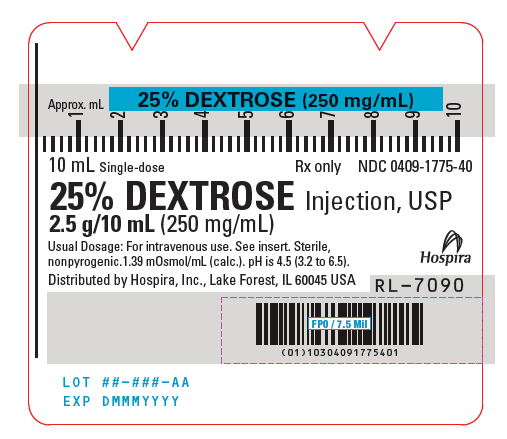
Dextrose 250 mg/mL Injection, Solution
Other active recalls for Dextrose Monohydrate (different manufacturers) — 3 · tap to view
🆔 Identity & classification
Where does this data come from?
🏷️ RxNorm drug class
This medicine belongs to the Other irrigating solutions class.
Where does this data come from?
🏭 Manufacturer & labeler
Where does this data come from?
🩺 Clinical
- Dextrose is essentially glucose — sugar — given directly into a vein. In an emergency, it's used to quickly raise dangerously low blood sugar, which can happen with too much insuli...
- Specific formulations — Infant Dextrose (25%) and Dextrose (25% injection) — are FDA-approved to treat low blood sugar in newborns and infants up to 2 years old. That said, prematu...
- Is dextrose safe for my baby or newborn?
- The most common issues are high blood sugar, vein irritation or clotting at the IV site, low sodium in the blood, and infection. More serious — but less common — reactions include...
Patient education
Supplement & herbal interactions
Where does this data come from?
Ask a licensed pharmacist directly — free, answered by our team.
🧪 Inactive Ingredients / Excipients
Inactive ingredients, also called excipients, are components of the drug product other than the active ingredient. They may include fillers, dyes, coatings, preservatives, flavors, or other formulation ingredients.
💡 Tap an ingredient (hover on desktop) to see what it is and why it’s used.
-
UNII QTT17582CB
A strong acid used to adjust and maintain the proper pH level in liquid medicines, ensuring stability and preventing breakdown of active ingredients.
-
UNII 55X04QC32I
A strong alkaline chemical used to adjust and maintain the pH balance of liquid medicines. It helps keep the medicine stable and ensures it stays effective during storage.
-
UNII 059QF0KO0R
Water is a liquid solvent that dissolves and mixes ingredients together in liquid medicines, syrups, and injections. It helps distribute the active drug evenly throughout the product.
3 inactive ingredients listed in the exact product block matched to this NDC.
Where does this data come from?
ingredient classCode="IACT" elements from the exact product block matched by this NDC. Label-section narrative from DailyMed / the openFDA label index is shown separately when available.Inactive ingredient FAQ
Are inactive ingredients the same for every manufacturer?
Why might an inactive ingredient be missing?
Can inactive ingredients matter?
💲 Pricing
A drug doesn't have one price. Each row is a different public payment system, and none is what you'd pay at the counter — that depends on your insurance. The ⓘ on each row explains what it measures.
| Price system | Per mL | Per package |
|---|---|---|
| Retail pharmacies payNADAC · weekly | Not in the retail survey — common for institutional, discontinued, or low-volume packs. | |
| Medicaid paysCMS SDUD · 12 mo | No recent Medicaid claims on file for this NDC — rare and low-volume NDCs are suppressed in the public data. | |
| Medicare drug plans payPart D · quarterly | No Part D plan price is available for this NDC in our data. | |
| Medicare Part B allowsASP · J7799 | No ASP payment limit on file for J7799 this quarter. | |
Where does this data come from?
🧾 Billing & reimbursement
Where does this data come from?
🔁 Therapeutic equivalents
| Product | Labeler | Pack | NADAC/unit | TE | Status | Price vs. this |
|---|---|---|---|---|---|---|
| Infant Dextrose 250 mg/mL 00404-9844-10 | Henry | 1 syringe | — | — | FDA listed | — |
| Dextrose 250 mg/mLthis 00409-1775-10 | Hospira, | 1 syringe | — | — | FDA listed | — |
| 25% Dextrose Infant 250 mg/mL 51662-1213-01 | HF | 1 syringe | — | — | FDA listed | — |
| Dextrose 250 mg/mL 70518-4452-00 | REMEDYREPACK | 1 syringe | — | — | FDA listed | — |
| Dextrose 250 mg/mL 71872-7214-01 | Medical | 1 syringe | — | — | FDA listed | — |
Where does this data come from?
⏳ Availability & generic status
The FDA lists approved generic versions of this medicine, but that does not always mean a pharmacy can get one today. Patent rules, launch agreements, supply and pricing can affect when generics actually arrive.
Where does this data come from?
📦 Packaging — all sizes for this product
| Package NDC | Description | Marketing start | Status |
|---|---|---|---|
| 00409-1775-10 You're viewing this | 10 CARTON in 1 PACKAGE (0409-1775-10) / 1 SYRINGE, PLASTIC in 1 CARTON / 10 mL in 1 SYRINGE, PLASTIC (0409-1775-40) | 2006-02-22 | Active |
🧭 About this NDC listing & data coverage
What data is (and isn’t) available for this NDC — tap to expand
| NDC identity (package / product / labeler codes) | ✓ Available |
| Labeler | ✓ Available |
| Product & package description | ✓ Available |
| Marketing category & status | ✓ Available |
| Active ingredient / dosage form / route | ✓ Available |
| FDA label (SPL via DailyMed) | ✓ Available |
| Package photos | ✓ Available |
| Inactive ingredients (structured) | ✓ Available |
| NADAC pharmacy acquisition price (CMS) | — Not published for this NDC CMS publishes NADAC only for NDCs reported in its retail-pharmacy survey. |
| Orange Book / therapeutic-equivalence data | — Not published for this NDC Applies only to products approved under an NDA/ANDA; many listings are out of scope. |
| HCPCS J-code billing crosswalk | ✓ Available |
| Medicaid utilization (CMS SDUD) | — Not published for this NDC CMS reports utilization only for NDCs with Medicaid claims above its privacy threshold. |
Questions about this listing
Why is there no price listed?
Is the NDC printed on the package the same as the 11-digit billing NDC?
What do the three segments of this NDC mean?
Is this package still being marketed?
Who lists this product with the FDA?
Do I need a prescription for this product?
Does this product have a billing J-code?
Where does this data come from?
📄 Full prescribing information FDA SPL
🎯 Indications and Usage ▾
1 INDICATIONS AND USAGE Dextrose Injection (25%) is indicated for the treatment of acute symptomatic episodes of hypoglycemia in pediatric patients from birth up to 2 years of age. Dextrose Injection (25%) is indicated for the treatment of acute symptomatic episodes of hypoglycemia in pediatric patients younger than 2 years old. ( 1 )
⏱️ Dosage and Administration ▾
2 DOSAGE AND ADMINISTRATION • Only for intravenous infusion. Do not administer subcutaneously or intramuscularly. ( 2.1 ) • The recommended initial dose is 250 mg/kg to 500 mg/kg (1 mL/kg to 2 mL/kg).
If clinically indicated, additional single doses of 250 mg/kg to 500 mg/kg (1 mL/kg to 2 mL/kg) may be administered. ( 2.2 ) • Infusion rate depends on the age, weight, and clinical and metabolic conditions of the patient and concomitant therapy. ( 2.2 ) • See full prescribing information for more information on preparation, administration instructions, and dosing considerations.
( 2.1 , 2.2 )
2.1Important Preparation and Administration Instructions • Parenteral drug products should be inspected visually for particulate matter or discoloration prior to administration. Do not use Dextrose Injection (25%) if the solution is cloudy or the seal has been broken. • Obtain blood glucose level prior to administering Dextrose Injection (25%). However, in cases of emergency, administer Dextrose Injection (25%) promptly without awaiting blood glucose test results. • Administer Dextrose Injection (25%) via slow intravenous injection into a central vein to reduce the risk of developing hyperglycemia and to minimize venous irritation [see Warnings and Precautions (5.1 , 5.3 ) ] . • Do not administer Dextrose Injection (25%) simultaneously with blood through the same infusion set because pseudoagglutination of red blood cells may occur. • Administer Dextrose Injection (25%) intravenously.
Do not administer Dextrose Injection (25%) subcutaneously or intramuscularly. • Discard the unused portion.
2.2Recommended Dosage The recommended initial dose of Dextrose Injection (25%) is 250 mg/kg to 500 mg/kg (1 mL/kg to 2 mL/kg). If clinically indicated, additional single doses of Dextrose Injection (25%) 250 mg/kg to 500 mg/kg (1 mL/kg to 2 mL/kg) may be administered. Select the appropriate infusion rate based on the age, weight, and clinical and metabolic conditions of the patient.
💊 Dosage Forms and Strengths ▾
3 DOSAGE FORMS AND STRENGTHS Injection: • 25% (2.5 g/10 mL) (250 mg/mL) of dextrose hydrous, in a clear, colorless solution in a single-dose Ansyr™ Plastic Syringe Injection: 25% (2.5 g/10 mL) (250 mg/mL) of dextrose hydrous in a clear, colorless solution in a single-dose Ansyr™ Plastic Syringe. ( 3 )
⛔ Contraindications ▾
4 CONTRAINDICATIONS Dextrose Injection (25%) is contraindicated in patients with: • Intracranial or intraspinal hemorrhage because Dextrose Injection (25%) can worsen cerebral edema by causing a fluid shift across the blood-brain barrier. • Severe dehydration because of the potential to worsen the patient’s hyperosmolar state. • Known hypersensitivity to dextrose [see Warnings and Precautions (5.2) ]. • Intracranial or intraspinal hemorrhage. ( 4 ) • Severe dehydration. ( 4 ) • Hypersensitivity to dextrose.
( 4 )
⚠️ Warnings and Cautions ▾
5 WARNINGS AND PRECAUTIONS • Hyperglycemia or Hyperosmolar Hyperglycemic State : Monitor blood glucose levels before and after treatment. Use caution when selecting the dosage and injection rate due to the increased risk of hyperglycemia in neonates and low birth weight infants. ( 5.1 ) • Hypersensitivity Reactions : Monitor for signs and symptoms and discontinue infusion immediately if reaction occurs.
( 5.2 ) • Phlebitis and Thrombosis : Remove catheter as soon as possible if thrombophlebitis develops. ( 2.1 , 5.3 ) • Electrolyte Imbalance and Fluid Overload : Monitor changes in fluid balance, electrolyte concentrations, and acid-base balance during administration. ( 5.4 ) • Hyponatremia : Monitor serum sodium and chloride concentrations, fluid status, acid-base balance, and neurologic status.
( 5.5 ) • Neonatal Adverse Reactions from Unapproved Maternal Use at Time of Delivery : Maternal hyperglycemia at the time of delivery has been associated with adverse outcomes such as neonatal hypoglycemia.
5.1Hyperglycemia and Hyperosmolar Hyperglycemic State Significant hyperglycemia and hyperosmolar hyperglycemic state may result from too rapid administration of Dextrose Injection (25%). Symptoms of hyperosmolar hyperglycemic state include mental confusion and loss of consciousness. To minimize these risks, slowly inject Dextrose Injection (25%) and monitor blood glucose levels before and after treatment with Dextrose Injection (25%).
Due to the increased risk of hyperglycemia in neonates and low birth weight infants, use caution when selecting the dosage and injection rate of Dextrose Injection (25%).
5.2Hypersensitivity Reactions Hypersensitivity reactions, including anaphylaxis, have been reported with Dextrose Injection (25%) administration [see Adverse Reactions (6) ] . Stop administration of Dextrose Injection (25%) immediately if signs or symptoms of a hypersensitivity reaction develop. Initiate appropriate treatment as clinically indicated.
5.3Phlebitis and Thrombosis Dextrose Injection (25%) is hypertonic (has an osmolarity greater than 900 mOsm/L) and may cause phlebitis and thrombosis at the site of injection. If thrombophlebitis occurs, remove the catheter as soon as possible. Administer Dextrose Injection (25%) via slow intravenous injection into a central vein to reduce the risk of phlebitis and thrombosis.
Ensure that the needle is well within the lumen of the vein and that extravasation does not occur. If thrombosis occurs, stop administration of Dextrose Injection (25%) and initiate corrective measures. If central venous access cannot be obtained in these pediatric patients, consider using an alternative commercially available dextrose product with a lower concentration.
Do not administer Dextrose Injection (25%) subcutaneously or intramuscularly.
5.4Electrolyte Imbalance and Fluid Overload Electrolyte deficits, particularly serum potassium and phosphate, may occur during prolonged use of Dextrose Injection (25%). Depending on the administered volume and the infusion rate, administration of Dextrose Injection (25%) can cause fluid overload, including pulmonary edema. Avoid Dextrose Injection (25%) in patients at risk for fluid and/or solute overload.
If use cannot be avoided in these patients, monitor fluid balance, electrolyte concentrations, and acid base balance, especially during prolonged use. Additional monitoring is recommended for patients with water and electrolyte disturbances that could be aggravated by increased glucose, insulin administration, and/or free water load.
5.5Hyponatremia Dextrose Injection (25%) may cause hyponatremia. Hyponatremia can lead to acute hyponatremic encephalopathy characterized by headache, nausea, seizures, lethargy, and vomiting. The risk of hospital-acquired hyponatremia is increased in younger pediatric patients, and patients treated with diuretics, and patients with cardiac or pulmonary failure or with the syndrome of inappropriate antidiuretic hormone (SIADH) (e.g.,…
🤒 Adverse Reactions ▾
6 ADVERSE REACTIONS The following clinically significant adverse reactions are also described elsewhere in the labeling: • Hyperglycemia and Hyperosmolar Hyperglycemic State [see Warnings and Precautions (5.1) ] . • Hypersensitivity Reactions [see Warnings and Precautions (5.2) ] . • Phlebitis and Thrombosis [see Warnings and Precautions (5.3) ] • Electrolyte Imbalance and Fluid Overload [see Warnings and Precautions (5.4) ] • Hyponatremia [see Warnings and Precautions (5.5) ] The following adverse reactions associated with the use of Dextrose Injection were identified in clinical trials or postmarketing reports.
Because some of these reactions were reported voluntarily from a population of uncertain size, it is not always possible to reliably estimate their frequency or establish a causal relationship to drug exposure. • Administration site conditions: blister, extravasation, phlebitis, erythema, pain, vein damage, thrombosis • Immune system disorders: anaphylaxis, angioedema, bronchospasm, chills, hypotension, pruritis, pyrexia, rash • Cardiovascular disorders: cyanosis, volume overload The most common adverse reactions are hyperglycemia, hypersensitivity reactions, hyponatremia, infection (both systemic and at the injection site), vein thrombosis, phlebitis, and electrolyte imbalance.
( 6 ) To report SUSPECTED ADVERSE REACTIONS, contact Pfizer, Inc. at 1-800-438-1985 or FDA at 1-800-FDA-1088 or www.fda.gov/medwatch.
🔄 Drug Interactions ▾
7 DRUG INTERACTIONS
7.1Drugs with Effects on Glycemic Control and Electrolyte Balance Dextrose Injection (25%) can affect glycemic control, vasopressin, and fluid and/or electrolyte balance [see Warnings and Precautions (5.1 , 5.4 , 5.5 ) ] . Monitor patients’ blood glucose concentrations, fluid balance, serum electrolyte concentrations, and acid-base balance. Concomitant administration of Dextrose Injection (25%) with drugs associated with hyponatremia may increase the risk of developing hyponatremia.
Drugs associated with hyponatremia include diuretics and those that cause SIADH (e.g., selective serotonin reuptake inhibitors (SSRIs), serotonin and norepinephrine reuptake inhibitors (SNRIs), arginine vasopressin analogs, certain antiepileptic, psychotropic, and cytotoxic drugs). Avoid use of Dextrose Injection (25%) in patients receiving drugs associated with hyponatremia. If use cannot be avoided, closely monitor serum sodium concentrations during concomitant use [see Warnings and Precautions (5.5) ] .
👥 Use in Specific Populations ▾
8 USE IN SPECIFIC POPULATIONS
8.4Pediatric Use Dextrose Injection (25%) is indicated for the treatment of acute symptomatic episodes of hypoglycemia in pediatric patients from birth up to 2 years of age. Dextrose Injection (25%) can increase the risk of developing hypo- or hyperglycemia in neonates, especially preterm neonates with low birth weight. Excessive or rapid administration of Dextrose Injection (25%) may also result in increased serum osmolality and increase the risk of intracerebral hemorrhage in very low birth weight neonates [see Warnings and Precautions (5.1) ] .
Monitor plasma electrolyte concentrations closely in pediatric patients who may have impaired ability to regulate fluids and electrolytes. Pediatric patients treated with Dextrose Injection (25%) are at increased risk of developing hyponatremia and hyponatremic encephalopathy [see Warnings and Precautions (5.4 , 5.5) ] . Dextrose Injection (25%) is not indicated in pediatric patients 2 years of age and older.
🧒 Pediatric Use ▾
8.4Pediatric Use Dextrose Injection (25%) is indicated for the treatment of acute symptomatic episodes of hypoglycemia in pediatric patients from birth up to 2 years of age. Dextrose Injection (25%) can increase the risk of developing hypo- or hyperglycemia in neonates, especially preterm neonates with low birth weight. Excessive or rapid administration of Dextrose Injection (25%) may also result in increased serum osmolality and increase the risk of intracerebral hemorrhage in very low birth weight neonates [see Warnings and Precautions (5.1) ] .
Monitor plasma electrolyte concentrations closely in pediatric patients who may have impaired ability to regulate fluids and electrolytes. Pediatric patients treated with Dextrose Injection (25%) are at increased risk of developing hyponatremia and hyponatremic encephalopathy [see Warnings and Precautions (5.4 , 5.5) ] . Dextrose Injection (25%) is not indicated in pediatric patients 2 years of age and older.
🆘 Overdosage ▾
10 OVERDOSAGE A medication error resulting in a high infusion rate of Dextrose Injection (25%) can cause hyperglycemia, hyperosmolality, and adverse effects on fluid and electrolyte balance [see Warnings and Precautions (5.1 , 5.4 )] . Severe hyperglycemia and severe dilutional hyponatremia, and their complications, can be fatal. In the event of overdosage (overhydration or solute overload) during Dextrose Injection (25%) treatment, discontinue the infusion.
Institute corrective measures such as administration of exogenous insulin, and treat adverse effects on the CNS, respiratory, and cardiovascular systems [see Warnings and Precautions (5.1 , 5.4 )] .
🧬 Clinical Pharmacology ▾
12 CLINICAL PHARMACOLOGY
12.1Mechanism of Action Dextrose restores blood glucose levels and provides a source of carbohydrate calories.
12.2Pharmacodynamics The exposure-response relationship and time course of pharmacodynamic response for the safety and effectiveness of dextrose have not been fully characterized.
12.3Pharmacokinetics Dextrose is oxidized to carbon dioxide and water.
🧬 Mechanism of Action ▾
12.1Mechanism of Action Dextrose restores blood glucose levels and provides a source of carbohydrate calories.
📦 How Supplied / Storage and Handling ▾
16 HOW SUPPLIED/STORAGE AND HANDLING How Supplied Dextrose Injection, USP (25%) is supplied as a clear, colorless solution in single-dose syringe as follows: Unit of Sale Concentration NDC 0409-1775-10 Bundle of 10 Ansyr™ Plastic Syringes 25% (2.5 g/10 mL) (250 mg/mL) Storage and Handling Store at 20°C to 25°C (68°F to 77°F) [See USP Controlled Room Temperature.] To contact Pfizer’s Medical Information Department, please visit www.pfizermedinfo.com or call 1-800-438-1985. Distributed by Hospira, Inc., Lake Forest, IL 60045 USA LAB-1057-5.0 Logo
📋 Description ▾
11 DESCRIPTION Dextrose, USP is chemically designated D-glucose monohydrate, (C 6 H 12 O 6 • H 2 O), a hexose sugar freely soluble in water, with the following structural formula: Water for Injection, USP is chemically designated H 2 O. The molecular weight of dextrose (D-glucose) monohydrate is 198.17. Dextrose Injection, USP (25%) is a sterile, nonpyrogenic, hypertonic solution of dextrose in water for intravenous injection.
Each milliliter (mL) of fluid contains 0.25 grams of dextrose, hydrous, which delivers 3.4 kcal/gram (0.85 kcal/mL). The solution has an osmolarity of 1.39 mOsmol/mL (calculation) and the pH range is 3.2 to 6.5. May contain hydrochloric acid and sodium hydroxide for pH adjustment.
The solution contains no bacteriostatic, antimicrobial agent or added buffer (except for pH adjustment) and is supplied in a single-dose Ansyr™ Plastic Syringe. Dextrose is derived from corn. structural formula dextrose, usp