
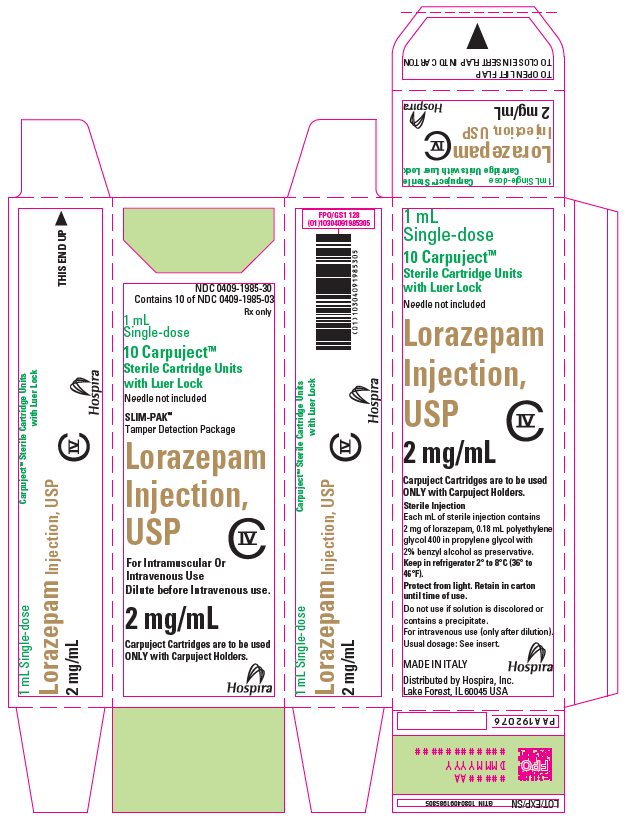
Lorazepam 2 mg/mL Injection, Solution, 10 cartridges
Other active recalls for Lorazepam (different manufacturers) — 1 · tap to view
🆔 Identity & classification
Where does this data come from?
🏷️ RxNorm drug class
This medicine belongs to the Benzodiazepine class.
Where does this data come from?
🏭 Manufacturer & labeler
Where does this data come from?
🩺 Clinical
- Lorazepam is mainly prescribed for anxiety disorders — it can calm anxious feelings and physical tension, especially for short periods. In tablet or liquid form, it's used for ongo...
- Yes, drowsiness is one of the most common effects — and for many people that's actually part of how it helps with anxiety. You may also notice some unsteadiness, dizziness, or mild...
- Will lorazepam make me feel really drowsy?
- No — please avoid alcohol completely while you're on lorazepam. Both alcohol and lorazepam slow down your central nervous system, and together they can make that effect dangerously...
Patient education
Supplement & herbal interactions
Some supplements/herbs that may interact with Lorazepam — tap one for details:
Lorazepam may be associated with lower levels of 1 nutrient — worth a chat with your pharmacist, not a cause for alarm.
Where does this data come from?
Ask a licensed pharmacist directly — free, answered by our team.
🧪 Inactive Ingredients / Excipients
Inactive ingredients, also called excipients, are components of the drug product other than the active ingredient. They may include fillers, dyes, coatings, preservatives, flavors, or other formulation ingredients.
💡 Tap an ingredient (hover on desktop) to see what it is and why it’s used.
-
UNII LKG8494WBH
Benzyl alcohol is a clear liquid used as a preservative and solvent in medicines. It helps prevent bacterial and fungal growth and dissolves other ingredients to create uniform liquid formulations.
-
UNII B697894SGQ
Polyethylene glycol 400 is a clear, thick liquid made from petroleum-derived polymers. It acts as a solvent and humectant in medicines, helping dissolve active ingredients and retain moisture in the formulation.
-
UNII 6DC9Q167V3
Propylene glycol is a clear liquid derived from petroleum or vegetable sources. It acts as a solvent, humectant, and preservative in medicines, helping dissolve active ingredients and maintain product stability.
3 inactive ingredients listed in the exact product block matched to this NDC.
Where does this data come from?
ingredient classCode="IACT" elements from the exact product block matched by this NDC. Label-section narrative from DailyMed / the openFDA label index is shown separately when available.Inactive ingredient FAQ
Are inactive ingredients the same for every manufacturer?
Why might an inactive ingredient be missing?
Can inactive ingredients matter?
💲 Pricing
A drug doesn't have one price. Each row is a different public payment system, and none is what you'd pay at the counter — that depends on your insurance. The ⓘ on each row explains what it measures.
| Price system | Per mL | Per package |
|---|---|---|
| Retail pharmacies payNADAC · weekly | Not in the retail survey — common for institutional, discontinued, or low-volume packs. | |
| Medicaid paysCMS SDUD · 12 mo | $30.38 | $303.80 / 10 ml |
| Medicare drug plans payPart D · quarterly | No Part D plan price is available for this NDC in our data. | |
| Medicare Part B allowsASP · J2060 | $2.302 / J2060 unit | — |
Where does this data come from?
🧾 Billing & reimbursement
Where does this data come from?
🔁 Therapeutic equivalents
| Product | Labeler | Pack | NADAC/unit | TE | Status | Price vs. this |
|---|---|---|---|---|---|---|
| Lorazepam 2 mg/mL 00641-6207-25 | Hikma | 25 vials | $2.117 | AP | Availability likely | — |
| Lorazepam 2 mg/mL 72572-0380-25 | Civica, | 25 vials | $2.117 | AP | Availability likely | — |
| Lorazepam 2 mg/mL 00641-6048-25 | Hikma | 25 vials | $2.117 | AP | Availability likely | — |
| Lorazepam 2 mg/mL 00641-6044-25 | Hikma | 25 vials | $2.117 | AP | Availability likely | — |
| Lorazepam 2 mg/mLthis 00409-1985-30 | Hospira, | 10 cartridges | — | AP | FDA listed | — |
| Lorazepam 2 mg/mL 70518-3766-00 | REMEDYREPACK | 10 cartridges | — | AP | FDA listed | — |
| Ativan 2 mg/mL 00641-6000-10 | Hikma | 10 vials | — | AP | FDA listed | — |
| Ativan 2 mg/mL 00641-6001-25 | Hikma | 25 vials | — | AP | FDA listed | — |
| Lorazepam 2 mg/mL 76329-8261-01 | International | 10 vials | — | AP | FDA listed | — |
| Lorazepam 2 mg/mL 65219-0368-24 | Fresenius | 25 vials | — | AP | FDA listed | — |
| Lorazepam 2 mg/mL 00641-6046-10 | Hikma | 10 vials | — | AP | FDA listed | — |
| Lorazepam 2 mg/mL 00641-6050-10 | Hikma | 10 vials | — | AP | FDA listed | — |
Where does this data come from?
⏳ Availability & generic status
This product is an FDA-approved generic. Other versions of the same drug are listed under Therapeutic equivalents, least expensive first.
Where does this data come from?
🗺️ Medicaid utilization & spend
📊 Medicare Part D spend CMS · PART D · 2026 (Q1)
🔬 Reported adverse events (FAERS)
Top reported reactions
Age at onset
Reporter sex
Serious outcomes
Where does this data come from?
📦 Packaging — all sizes for this product
| Package NDC | Description | Marketing start | Status |
|---|---|---|---|
| 00409-1985-30 You're viewing this | 10 CARTRIDGE in 1 CARTON (0409-1985-30) / 1 mL in 1 CARTRIDGE (0409-1985-03) | 2005-06-06 | Active |
🧭 About this NDC listing & data coverage
What data is (and isn’t) available for this NDC — tap to expand
| NDC identity (package / product / labeler codes) | ✓ Available |
| Labeler | ✓ Available |
| Product & package description | ✓ Available |
| Marketing category & status | ✓ Available |
| Active ingredient / dosage form / route | ✓ Available |
| FDA label (SPL via DailyMed) | ✓ Available |
| Package photos | ✓ Available |
| Inactive ingredients (structured) | ✓ Available |
| NADAC pharmacy acquisition price (CMS) | — Not published for this NDC CMS publishes NADAC only for NDCs reported in its retail-pharmacy survey. |
| Orange Book / therapeutic-equivalence data | ✓ Available |
| HCPCS J-code billing crosswalk | ✓ Available |
| Medicaid utilization (CMS SDUD) | ✓ Available |
Questions about this listing
Why is there no price listed?
Is the NDC printed on the package the same as the 11-digit billing NDC?
What do the three segments of this NDC mean?
Is this package still being marketed?
Who lists this product with the FDA?
Do I need a prescription for this product?
Does this product have a billing J-code?
Where does this data come from?
📄 Full prescribing information FDA SPL
🚨 Boxed Warning ▾
WARNING: RISKS FROM CONCOMITANT USE WITH OPIOIDS; ABUSE, MISUSE, AND ADDICTION; and DEPENDENCE AND WITHDRAWAL REACTIONS • Concomitant use of benzodiazepines and opioids may result in profound sedation, respiratory depression, coma, and death. Reserve concomitant prescribing of these drugs in patients for whom alternative treatment options are inadequate. Limit dosages and durations to the minimum required.
Follow patients for signs and symptoms of respiratory depression and sedation (see WARNINGS and PRECAUTIONS ). • The use of benzodiazepines, including Lorazepam injection, exposes users to risks of abuse, misuse, and addiction, which can lead to overdose or death. Abuse and misuse of benzodiazepines commonly involve concomitant use of other medications, alcohol, and/or illicit substances, which is associated with an increased frequency of serious adverse outcomes. Before prescribing Lorazepam injection and throughout treatment, assess each patient's risk for abuse, misuse, and addiction (see WARNINGS ) . • The continued use of benzodiazepines for several days to weeks may lead to clinically significant physical dependence.
The risks of dependence and withdrawal increase with longer treatment duration and higher daily dose. Although Lorazepam injection is indicated only for intermittent use (see INDICATIONS AND USAGE and DOSAGE AND ADMINISTRATION ), if used more frequently than recommended, abrupt discontinuation or rapid dosage reduction of Lorazepam injection may precipitate acute withdrawal reactions, which can be life-threatening. For patients using Lorazepam injection more frequently than recommended, to reduce the risk of withdrawal reactions, use a gradual taper to discontinue Lorazepam injection (see WARNINGS ) .
🎯 Indications and Usage ▾
INDICATIONS AND USAGE Status Epilepticus Lorazepam injection is indicated for the treatment of status epilepticus. Preanesthetic Lorazepam injection is indicated in adult patients for preanesthetic medication, producing sedation (sleepiness or drowsiness), relief of anxiety, and a decreased ability to recall events related to the day of surgery. It is most useful in those patients who are anxious about their surgical procedure and who would prefer to have diminished recall of the events of the day of surgery (see PRECAUTIONS, Information for Patients ).
⏱️ Dosage and Administration ▾
DOSAGE AND ADMINISTRATION NOTE: CONTAINS BENZYL ALCOHOL (see WARNINGS and PRECAUTIONS, Pediatric Use ). Lorazepam must never be used without individualization of dosage particularly when used with other medications capable of producing central-nervous-system depression. EQUIPMENT NECESSARY TO MAINTAIN A PATENT AIRWAY SHOULD BE IMMEDIATELY AVAILABLE PRIOR TO INTRAVENOUS ADMINISTRATION OF LORAZEPAM (see WARNINGS ).
Status Epilepticus General Advice Status epilepticus is a potentially life-threatening condition associated with a high risk of permanent neurological impairment, if inadequately treated. The treatment of status, however, requires far more than the administration of an anticonvulsant agent. It involves observation and management of all parameters critical to maintaining vital function and the capacity to provide support of those functions as required.
Ventilatory support must be readily available. The use of benzodiazepines, like Lorazepam injection, is ordinarily only an initial step of a complex and sustained intervention which may require additional interventions, (e.g., concomitant intravenous administration of phenytoin). Because status epilepticus may result from a correctable acute cause such as hypoglycemia, hyponatremia, or other metabolic or toxic derangement, such an abnormality must be immediately sought and corrected.
Furthermore, patients who are susceptible to further seizure episodes should receive adequate maintenance antiepileptic therapy. Any healthcare professional who intends to treat a patient with status epilepticus should be familiar with this package insert and the pertinent medical literature concerning current concepts for the treatment of status epilepticus. A comprehensive review of the considerations critical to the informed and prudent management of status epilepticus cannot be provided in drug product labeling.
The archival medical literature contains many informative references on the management of status epilepticus, among them the report of the working group on status epilepticus of the Epilepsy Foundation of America "Treatment of Convulsive Status Epilepticus" (JAMA 1993; 270:854–859). As noted in the report just cited, it may be useful to consult with a neurologist if a patient fails to respond (e.g., fails to regain consciousness). Intravenous Injection For the treatment of status epilepticus, the usual recommended dose of lorazepam injection is 4 mg given slowly (2 mg/min) for patients 18 years and older.
If seizures cease, no additional lorazepam injection is required. If seizures continue or recur after a 10- to 15-minute observation period, an additional 4 mg intravenous dose may be slowly administered. Experience with further doses of lorazepam is very limited.
The usual precautions in treating status epilepticus should be employed. An intravenous infusion should be started, vital signs should be monitored, an unobstructed airway should be maintained, and artificial ventilation equipment should be available. Intramuscular Injection Intramuscular lorazepam is not preferred in the treatment of status epilepticus because therapeutic lorazepam levels may not be reached as quickly as with intravenous administration.
However, when an intravenous port is not available, the intramuscular route may prove useful (see CLINICAL PHARMACOLOGY, Pharmacokinetics and Metabolism ). Pediatric The safety of lorazepam in pediatric patients has not been established. Preanesthetic Intramuscular Injection For the designated indications as a premedicant, the usual recommended dose of lorazepam for intramuscular injection is 0.05 mg/kg up to a maximum of 4 mg.
As with all premedicant drugs, the dose should be individualized (see CLINICAL PHARMACOLOGY , WARNINGS , PRECAUTIONS , and ADVERSE REACTIONS ). Doses of other central-nervous-system-depressant drugs ordinarily should be reduced (see PRECAUTIONS ). For optimum effect, measured as lack of recall, intramuscular lorazepam should be administered at l…
⛔ Contraindications ▾
CONTRAINDICATIONS Lorazepam injection is contraindicated in patients with a known sensitivity to benzodiazepines or its vehicle (polyethylene glycol, propylene glycol, and benzyl alcohol), in patients with acute narrow-angle glaucoma, or in patients with sleep apnea syndrome. It is also contraindicated in patients with severe respiratory insufficiency, except in those patients requiring relief of anxiety and/or diminished recall of events while being mechanically ventilated. The use of lorazepam injection intra-arterially is contraindicated because, as with other injectable benzodiazepines, inadvertent intra-arterial injection may produce arteriospasm resulting in gangrene which may require amputation (see WARNINGS ).
Lorazepam injection is contraindicated for use in premature infants because the formulation contains benzyl alcohol (see WARNINGS and PRECAUTIONS, Pediatric Use ).
⚠️ Warnings ▾
WARNINGS Risks from Concomitant Use with Opioids Concomitant use of benzodiazepines, including Lorazepam injection, and opioids may result in profound sedation, respiratory depression, coma, and death. If a decision is made to use Lorazepam injection concomitantly with opioids, monitor patients closely for respiratory depression and sedation (see PRECAUTIONS, Drug Interactions ). Abuse, Misuse, and Addiction The use of benzodiazepines, including Lorazepam injection, exposes users to the risks of abuse, misuse, and addiction, which can lead to overdose or death.
Abuse and misuse of benzodiazepines often (but not always) involve the use of doses greater than the maximum recommended dosage and commonly involve concomitant use of other medications, alcohol, and/or illicit substances, which is associated with an increased frequency of serious adverse outcomes, including respiratory depression, overdose, or death (see DRUG ABUSE AND DEPENDENCE, Abuse ). Before prescribing Lorazepam injection and throughout treatment, assess each patient's risk for abuse, misuse, and addiction. Use of Lorazepam injection, particularly in patients at elevated risk, necessitates counseling about the risks and proper use of Lorazepam injection along with monitoring for signs and symptoms of abuse, misuse, and addiction.
Do not exceed the recommended dosing frequency; avoid or minimize concomitant use of CNS depressants and other substances associated with abuse, misuse, and addiction (e.g., opioid analgesics, stimulants); and advise patients on the proper disposal of unused drug. If a substance use disorder is suspected, evaluate the patient and institute (or refer them for) early treatment, as appropriate. Dependence and Withdrawal Reactions After Use of Lorazepam Injection More Frequently Than Recommended For patients using Lorazepam injection more frequently than recommended, to reduce the risk of withdrawal reactions, use a gradual taper to discontinue Lorazepam injection (a patient-specific plan should be used to taper the dose).
Patients at an increased risk of withdrawal adverse reactions after benzodiazepine discontinuation or rapid dosage reduction include those who take higher dosages, and those who have had longer durations of use. Acute Withdrawal Reactions The continued use of benzodiazepines may lead to clinically significant physical dependence. Although Lorazepam injection is indicated only for intermittent use (see INDICATIONS AND USAGE and DOSAGE AND ADMINISTRATION ), if used more frequently than recommended, abrupt discontinuation or rapid dosage reduction of Lorazepam injection, or administration of flumazenil (a benzodiazepine antagonist) may precipitate acute withdrawal reactions, which can be life-threatening (e.g., seizures) (see DRUG ABUSE AND DEPENDENCE, Dependence ) .
Protracted Withdrawal Syndrome In some cases, benzodiazepine users have developed a protracted withdrawal syndrome with withdrawal symptoms lasting weeks to more than 12 months (see DRUG ABUSE AND DEPENDENCE, Dependence ). Use in Status Epilepticus Management of Status Epilepticus Status epilepticus is a potentially life-threatening condition associated with a high risk of permanent neurological impairment, if inadequately treated. The treatment of status, however, requires far more than the administration of an anticonvulsant agent.
It involves observation and management of all parameters critical to maintaining vital function and the capacity to provide support of those functions as required. Ventilatory support must be readily available. The use of benzodiazepines, like Lorazepam injection, is ordinarily only one step of a complex and sustained intervention which may require additional interventions (e.g., concomitant intravenous administration of phenytoin).
Because status epilepticus may result from a correctable acute cause such as hypoglycemia, hyponatremia, or other metabolic or toxic derangement, such an abnormality must be immediately sought and correct…
🤒 Adverse Reactions ▾
ADVERSE REACTIONS Status Epilepticus The most important adverse clinical event caused by the use of Lorazepam injection is respiratory depression (see WARNINGS ). The adverse clinical events most commonly observed with the use of Lorazepam injection in clinical trials evaluating its use in status epilepticus were hypotension, somnolence, and respiratory failure. Incidence in Controlled Clinical Trials All adverse events were recorded during the trials by the clinical investigators using terminology of their own choosing.
Similar types of events were grouped into standardized categories using modified COSTART dictionary terminology. These categories are used in the table and listings below with the frequencies representing the proportion of individuals exposed to Lorazepam injection or to comparative therapy. The prescriber should be aware that these figures cannot be used to predict the frequency of adverse events in the course of usual medical practice where patient characteristics and other factors may differ from those prevailing during clinical studies.
Similarly, the cited frequencies cannot be directly compared with figures obtained from other clinical investigators involving different treatment, uses, or investigators. An inspection of these frequencies, however, does provide the prescribing physician with one basis to estimate the relative contribution of drug and nondrug factors to the adverse event incidences in the population studied. Commonly Observed Adverse Events in a Controlled Dose-Comparison Clinical Trial Table 1 lists the treatment-emergent adverse events that occurred in the patients treated with Lorazepam injection in a dose-comparison trial of lorazepam 1 mg, 2 mg, and 4 mg.
TABLE 1. NUMBER (%) OF STUDY EVENTS IN A DOSE COMPARISON CLINICAL TRIAL Body System Event Lorazepam Injection (n=130) : One hundred and thirty (130) patients received Lorazepam injection. Any Study Event (1 or more) : Totals are not necessarily the sum of the individual study events because a patient may report two or more different study events in the same body system.
16 (12.3%) Body as a whole Infection 1 (<1%) Cardiovascular system Hypotension 2 (1.5%) Digestive system Liver function tests abnormal 1 (<1%) Nausea 1 (<1%) Vomiting 1 (<1%) Metabolic and Nutritional Acidosis 1 (<1%) Nervous system Brain edema 1 (<1%) Coma 1 (<1%) Convulsion 1 (<1%) Somnolence 2 (1.5%) Thinking abnormal 1 (<1%) Respiratory system Hyperventilation 1 (<1%) Hypoventilation 1 (<1%) Respiratory failure 2 (1.5%) Terms not classifiable Injection site reaction 1 (<1%) Urogenital system Cystitis 1 (<1%) Commonly Observed Adverse Events in Active-Controlled Clinical Trials In two studies, patients who completed the course of treatment for status epilepticus were permitted to be reenrolled and to receive treatment for a second status episode, given that there was a sufficient interval between the two episodes.
Safety was determined from all treatment episodes for all intent-to-treat patients, i.e., from all "patient-episodes." Table 2 lists the treatment-emergent adverse events that occurred in at least 1% of the patient-episodes in which Lorazepam injection or diazepam was given. The table represents the pooling of results from the two controlled trials. TABLE 2.
NUMBER (%) OF STUDY EVENTS IN ACTIVE CONTROLLED CLINICAL TRIAL Body System Event Lorazepam Injection (n=85) : The number indicates the number of "patient-episodes." Patient-episodes were used rather than "patients" because a total of 7 patients were reenrolled for the treatment of a second episode of status: 5 patients received Lorazepam injection on two occasions that were far enough apart to establish the diagnosis of status epilepticus for each episode, and using the same time criterion, 2 patients received diazepam on two occasions.
Diazepam (n=80) Any Study Event (1 or more) : Totals are not necessarily the sum of the individual study events because a patient may report two or more different stud…
🔄 Drug Interactions ▾
Drug Interactions
🔄 Drug / Laboratory Test Interactions ▾
Drug/Laboratory Test Interactions No laboratory test abnormalities were identified when lorazepam was given alone or concomitantly with another drug, such as narcotic analgesics, inhalation anesthetics, scopolamine, atropine, and a variety of tranquilizing agents.
🤰 Pregnancy ▾
Pregnancy Advise pregnant females who are administered Lorazepam injection late in pregnancy that Lorazepam injection can result in sedation (respiratory depression, lethargy, hypotonia) and/or withdrawal symptoms (hyperreflexia, irritability, restlessness, tremors, inconsolable crying, and feeding difficulties) in newborns (see WARNINGS, Neonatal Sedation and Withdrawal Syndrome and PRECAUTIONS, Pregnancy ). Instruct patients to inform their healthcare provider if they are pregnant. Advise patients that there is a pregnancy exposure registry that monitors pregnancy outcomes in women exposed to Lorazepam injection during pregnancy (see PRECAUTIONS, Pregnancy ).
Pregnancy Pregnancy Exposure Registry There is a pregnancy registry that monitors pregnancy outcomes in women exposed to psychiatric medications including Lorazepam Injection during pregnancy. Healthcare providers are encouraged to register patients by calling the National Pregnancy Registry for Psychiatric Medication’s at 1-866-961-2388 or visiting online at https://womensmentalhealth.org/pregnancyregistry/ . Risk Summary Neonates born to mothers using benzodiazepines late in pregnancy have been reported to experience symptoms of sedation and/or neonatal withdrawal (see WARNINGS, Neonatal Sedation and Withdrawal Syndrome and Clinical Considerations ).
Available data from published observational studies of pregnant women exposed to benzodiazepines do not report a clear association with benzodiazepines and major birth defects (see Data ) . The background risk of major birth defects and miscarriage for the indicated population is unknown. All pregnancies have a background risk of birth defect, loss or other adverse outcomes.
In the U.S. general population, the estimated risk of major birth defects and of miscarriage in clinically recognizable pregnancies is 2% to 4% and 15% to 20%, respectively. Clinical Considerations Fetal/Neonatal Adverse Reactions Benzodiazepines cross the placenta and may produce respiratory depression, hypotonia and sedation in neonates. Monitor neonates exposed to Lorazepam injection during pregnancy or labor for signs of sedation, respiratory depression, hypotonia, and feeding problems.
Monitor neonates exposed to Lorazepam injection during pregnancy for signs of withdrawal. Manage these neonates accordingly (see WARNINGS, Neonatal Sedation and Withdrawal Syndrome ).
🧒 Pediatric Use ▾
Pediatric Use Status Epilepticus The safety and effectiveness of lorazepam for status epilepticus have not been established in pediatric patients. A randomized, double-blind, superiority-design clinical trial of lorazepam versus intravenous diazepam in 273 pediatric patients ages 3 months to 17 years failed to establish the efficacy of lorazepam for the treatment of status epilepticus. In that trial, assisted ventilation was required in 18% of patients treated with lorazepam versus 16% of patients treated with diazepam.
Patients treated with lorazepam were also more likely to be reported as sedated (67% for lorazepam vs. 50% for diazepam), and the time for return to baseline mental status was, on average, 2 hours longer for lorazepam than for diazepam. Open-label studies described in the medical literature included 273 pediatric patients; the age range was from a few hours old to 18 years of age.
Paradoxical excitation was observed in 10% to 30% of the pediatric patients under 8 years of age and was characterized by tremors, agitation, euphoria, logorrhea, and brief episodes of visual hallucinations. Paradoxical excitation in pediatric patients also has been reported with other benzodiazepines when used for status epilepticus, as an anesthesia, or for pre-chemotherapy treatment. Pediatric patients (as well as adults) with atypical petit mal status epilepticus have developed brief tonic-clonic seizures shortly after lorazepam was given.
This "paradoxical" effect was also reported for diazepam and clonazepam. Nevertheless, the development of seizures after treatment with benzodiazepines is probably rare, based on the incidence in the uncontrolled treatment series reported (i.e., seizures were not observed for 112 pediatric patients and 18 adults or during approximately 400 doses). Lorazepam injection contains benzyl alcohol as a preservative.
Benzyl alcohol, a component of this product, has been associated with serious adverse events and death, particularly in pediatric patients. The "gasping syndrome", (characterized by central nervous system depression, metabolic acidosis, gasping respirations, and high levels of benzyl alcohol and its metabolites found in the blood and urine) has been associated with benzyl alcohol dosages greater than 99 mg/kg/day in neonates and low-birth-weight neonates. Additional symptoms may include gradual neurological deterioration, seizures, intracranial hemorrhage, hematologic abnormalities, skin breakdown, hepatic and renal failure, hypotension, bradycardia, and cardiovascular collapse.
Although normal therapeutic doses of this product deliver amounts of benzyl alcohol that are substantially lower than those reported in association with the "gasping syndrome", the minimum amount of benzyl alcohol at which toxicity may occur is not known. Premature and low-birth-weight infants, as well as patients receiving high dosages, may be more likely to develop toxicity. Practitioners administering this and other medications containing benzyl alcohol should consider the combined daily metabolic load of benzyl alcohol from all sources.
Preanesthetic There are insufficient data to support the efficacy of injectable lorazepam as a preanesthetic agent in patients less than 18 years of age. General Seizure activity and myoclonus have been reported to occur following administration of Lorazepam injection, especially in very low birth weight neonates. Pediatric patients may exhibit a sensitivity to benzyl alcohol, polyethylene glycol and propylene glycol, components of Lorazepam injection (see CONTRAINDICATIONS ).
The "gasping syndrome", characterized by central nervous system depression, metabolic acidosis, gasping respirations, and high levels of benzyl alcohol and its metabolites found in the blood and urine, has been associated with the administration of intravenous solutions containing the preservative benzyl alcohol in neonates. Additional symptoms may include gradual neurological deterioration, seizures, intra…
🧓 Geriatric Use ▾
Geriatric Use Clinical studies of lorazepam generally were not adequate to determine whether subjects aged 65 and over respond differently than younger subjects; however, age over 65 may be associated with a greater incidence of central nervous system depression and more respiratory depression (see WARNINGS, Preanesthetic Use , PRECAUTIONS, General and ADVERSE REACTIONS, Preanesthetic ). Age does not appear to have a clinically significant effect on lorazepam kinetics (see CLINICAL PHARMACOLOGY ). Clinical circumstances, some of which may be more common in the elderly, such as hepatic or renal impairment, should be considered.
Greater sensitivity (e.g., sedation) of some older individuals cannot be ruled out. In general, dose selection for an elderly patient should be cautious, usually starting at the low end of the dosing range (see DOSAGE AND ADMINISTRATION ).
🆘 Overdosage ▾
OVERDOSAGE Overdosage of benzodiazepines is characterized by central nervous system depression ranging from drowsiness to coma. In mild to moderate cases, symptoms can include drowsiness, confusion, dysarthria, lethargy, hypnotic state, diminished reflexes, ataxia, and hypotonia. Rarely, paradoxical or disinhibitory reactions (including agitation, irritability, impulsivity, violent behavior, confusion, restlessness, excitement, and talkativeness) may occur.
In severe overdosage cases, patients may develop respiratory depression and coma. Overdosage of benzodiazepines in combination with other CNS depressants (including alcohol and opioids) may be fatal (see WARNINGS, Abuse, Misuse, and Addiction ). Markedly abnormal (lowered or elevated) blood pressure, heart rate, or respiratory rate raise the concern that additional drugs and/or alcohol are involved in the overdosage.
In managing benzodiazepine overdosage, employ general supportive measures, including intravenous fluids and airway management. Flumazenil, a specific benzodiazepine receptor antagonist indicated for the complete or partial reversal of the sedative effects of benzodiazepines in the management of benzodiazepine overdosage, can lead to withdrawal and adverse reactions, including seizures, particularly in the context of mixed overdosage with drugs that increase seizure risk (e.g., tricyclic and tetracyclic antidepressants) and in patients with long-term benzodiazepine use and physical dependency.
The risk of withdrawal seizures with flumazenil use may be increased in patients with epilepsy. Flumazenil is contraindicated in patients who have received a benzodiazepine for control of a potentially life-threatening condition (e.g., status epilepticus). If the decision is made to use flumazenil, it should be used as an adjunct to, not as a substitute for, supportive management of benzodiazepine overdosage.
See the flumazenil Injection Prescribing Information. Consider contacting the Poison Help line (1-800-222-1222) or a medical toxicologist for additional overdosage management recommendations.
🧬 Clinical Pharmacology ▾
CLINICAL PHARMACOLOGY Lorazepam interacts with the γ-aminobutyric acid (GABA)-benzodiazepine receptor complex, which is widespread in the brain of humans as well as other species. This interaction is presumed to be responsible for lorazepam's mechanism of action. Lorazepam exhibits relatively high and specific affinity for its recognition site but does not displace GABA.
Attachment to the specific binding site enhances the affinity of GABA for its receptor site on the same receptor complex. The pharmacodynamic consequences of benzodiazepine agonist actions include antianxiety effects, sedation, and reduction of seizure activity. The intensity of action is directly related to the degree of benzodiazepine receptor occupancy.
Effects in Pre-Operative Patients Intravenous or intramuscular administration of the recommended dose of 2 mg to 4 mg of lorazepam injection to adult patients is followed by dose-related effects of sedation (sleepiness or drowsiness), relief of preoperative anxiety, and lack of recall of events related to the day of surgery in the majority of patients. The clinical sedation (sleepiness or drowsiness) thus noted is such that the majority of patients are able to respond to simple instructions whether they give the appearance of being awake or asleep.
The lack of recall is relative rather than absolute, as determined under conditions of careful patient questioning and testing, using props designed to enhance recall. The majority of patients under these reinforced conditions had difficulty recalling perioperative events or recognizing props from before surgery. The lack of recall and recognition was optimum within 2 hours following intramuscular administration and 15 to 20 minutes after intravenous injection.
The intended effects of the recommended adult dose of lorazepam injection usually last 6 to 8 hours. In rare instances, and where patients received greater than the recommended dose, excessive sleepiness and prolonged lack of recall were noted. As with other benzodiazepines, unsteadiness, enhanced sensitivity to CNS-depressant effects of ethyl alcohol and other drugs were noted in isolated and rare cases for greater than 24 hours.
Physiologic Effects in Healthy Adults Studies in healthy adult volunteers reveal that intravenous lorazepam in doses up to 3.5 mg/70 kg does not alter sensitivity to the respiratory stimulating effect of carbon dioxide and does not enhance the respiratory-depressant effects of doses of meperidine up to 100 mg/70 kg (also determined by carbon dioxide challenge) as long as patients remain sufficiently awake to undergo testing. Upper airway obstruction has been observed in rare instances where the patient received greater than the recommended dose and was excessively sleepy and difficult to arouse (see WARNINGS and ADVERSE REACTIONS ).
Clinically employed doses of lorazepam injection do not greatly affect the circulatory system in the supine position or employing a 70-degree tilt test. Doses of 8 mg to 10 mg of intravenous lorazepam (2 to 2-1/2 times the maximum recommended dosage) will produce loss of lid reflexes within 15 minutes. Studies in 6 healthy young adults who received lorazepam injection and no other drugs revealed that visual tracking (the ability to keep a moving line centered) was impaired for a mean of 8 hours following administration of 4 mg of intramuscular lorazepam and 4 hours following administration of 2 mg intramuscularly with considerable subject variation.
Similar findings were noted with pentobarbital, 150 and 75 mg. Although this study showed that both lorazepam and pentobarbital interfered with eye-hand coordination, the data are insufficient to predict when it would be safe to operate a motor vehicle or engage in a hazardous occupation or sport. Pharmacokinetics and Metabolism Absorption Intravenous A 4-mg dose provides an initial concentration of approximately 70 ng/mL.
Intramuscular Following intramuscular administration, lorazepam is completely and rap…
📦 How Supplied / Storage and Handling ▾
HOW SUPPLIED Lorazepam injection, USP is available as: Concentration NDC 0409-1539-31 Carton containing 10 1 mL fill Single-dose cartridge with Luer Lock for the Carpuject™ Syringe System 4 mg/mL NDC 0409-1985-30 Carton containing 10 1 mL fill Single-dose cartridge with Luer Lock for the Carpuject™ Syringe System 2 mg/mL Instructions for Use of the Syringe Systems Instructions for using the Carpuject Syringe are available with the reusable Carpuject Holder, List 2049-02. Directions for Dilution for intravenous use. 1.
Carpuject™: Extrude the entire amount of air in the partially-filled cartridge. 2. Slowly aspirate the desired volume of diluent.
Do not exceed the volume of the drug. 3. Do not add additional medication to the syringe.
4. Pull back slightly on the plunger to provide additional mixing space. 5.
Immediately mix contents thoroughly by gently inverting syringe or cartridge repeatedly until a homogenous solution results. Do not shake vigorously, as this will result in air entrapment. For intramuscular use.
For intravenous route, see directions . To prevent needle-stick injuries, needles should not be recapped, purposely bent, or broken by hand. Protect from light.
Use carton to protect contents from light. Keep in a refrigerator 2° to 8°C (36° to 46°F).
📦 Storage and Handling ▾
To prevent needle-stick injuries, needles should not be recapped, purposely bent, or broken by hand. Protect from light. Use carton to protect contents from light. Keep in a refrigerator 2° to 8°C (36° to 46°F).
📋 Description ▾
DESCRIPTION Lorazepam, a benzodiazepine with antianxiety, sedative, and anticonvulsant effects, is intended for the intramuscular or intravenous routes of administration. It has the chemical formula: 7-chloro-5-(2-chlorophenyl)-1,3-dihydro-3-hydroxy-2 H -1,4-benzodiazepin-2-one. The molecular weight is 321.16, and the C.A.S.
No. is [846-49-1]. The structural formula is: Lorazepam is a nearly white powder almost insoluble in water. Each mL of sterile injection contains either 2 or 4 mg of lorazepam, 0.18 mL polyethylene glycol 400 in propylene glycol with 2% benzyl alcohol as preservative.
Chemical Structure
💬 Information for Patients ▾
Information for Patients Risks From Concomitant Use With Opioids Concomitant use of benzodiazepines, including Lorazepam injection, and opioids may result in profound sedation, respiratory depression, coma, and death (see WARNINGS and PRECAUTIONS, Drug Interactions ) . Abuse, Misuse, and Addiction Inform patients that the use of Lorazepam injection more frequently than recommended, even at recommended dosages, exposes users to risks of abuse, misuse, and addiction, which can lead to overdose and death, especially when used in combination with other medications (e.g., opioid analgesics), alcohol, and/or illicit substances.
Inform patients about the signs and symptoms of benzodiazepine abuse, misuse, and addiction; to seek medical help if they develop these signs and/or symptoms; and on the proper disposal of unused drug (see WARNINGS and DRUG ABUSE AND DEPENDENCE ) . Withdrawal Reactions Inform patients that use of Lorazepam injection more frequently than recommended may lead to clinically significant physical dependence and that abrupt discontinuation or rapid dosage reduction of Lorazepam injection may precipitate acute withdrawal reactions, which can be life-threatening.
Inform patients that in some cases, patients taking benzodiazepines have developed a protracted withdrawal syndrome with withdrawal symptoms lasting weeks to more than 12 months (see WARNINGS and DRUG ABUSE AND DEPENDENCE ) . Excessive Sedation Patients should be informed of the pharmacological effects of the drug, including sedation, relief of anxiety, and lack of recall, the duration of these effects (about 8 hours), and be apprised of the risks as well as the benefits of therapy. Patients who receive lorazepam injection as a premedicant should be cautioned that driving a motor vehicle, operating machinery, or engaging in hazardous or other activities requiring attention and coordination, should be delayed for 24 to 48 hours following the injection or until the effects of the drug, such as drowsiness, have subsided, whichever is longer.
Sedatives, tranquilizers and narcotic analgesics may produce a more prolonged and profound effect when administered along with injectable lorazepam. This effect may take the form of excessive sleepiness or drowsiness and on rare occasions, interfere with recall and recognition of events of the day of surgery and the day after. Patients should be advised that getting out of bed unassisted may result in falling and injury if undertaken within 8 hours of receiving lorazepam injection.
Since tolerance for CNS depressants will be diminished in the presence of lorazepam injection, these substances should either be avoided or taken in reduced dosage. Alcoholic beverages should not be consumed for at least 24 to 48 hours after receiving lorazepam injectable due to the additive effects on central-nervous-system depression seen with benzodiazepines in general. Elderly patients should be told that lorazepam injection may make them very sleepy for a period longer than 6 to 8 hours following surgery.