
QUELICIN Succinylcholine Chloride 20 mg/mL Injection, Solution — NDC 0409-6629-02 (Billing 00409-6629-02)
This is a package of QUELICIN Succinylcholine Chloride 20 mg/mL Injection, Solution from Hospira, Inc., marketed since Apr 2005 and currently FDA-listed. It is this product's only package size.
NDC database record
One package, one record: these facts belong to NDC 0409-6629-02 alone.
- Record
- FDA NDC Directory package listing · Human prescription drug
- Code segments
- 0409 labeler · 6629 product · 02 package
- Package marketed since
- Apr 30, 2005
- Sample package
- No — commercial package
- Listing certified through
- Dec 31, 2027
- Barcode (UPC-A, from the NDC)
- 3 0409662902 3
- Medicaid fills, this package
- 10,859 prescriptions in the last four reported quarters
- FDA record last changed
- Sep 10, 2026
Other active recalls for Succinylcholine Chloride (different manufacturers) — 1 · tap to view
Identity & classification
Regulatory identifiers FDA, NLM and CMS codes for this package
Drug-database identifiers Medi-Span GPI and First Databank GCN / HICL / AHFS classification
- GSN (GCN sequence number): 004676
- GCN: 17992
- HICL (First Databank): 001948
- AHFS class code: 12:20.20.00
- RxCUI (RxNorm): 1594589
Where does this data come from?
- FDA openFDA NDC Directory · synced Oct 8, 2026
- FDA label on DailyMed · label index refreshed Oct 6, 2026
- RxNorm (NLM RxNav) · catalog refreshed Oct 1, 2026
- Medi-Span GPI (licensed)
- First Databank (licensed) · refreshed Oct 8, 2026
RxNorm drug class
This medicine belongs to the Depolarizing Neuromuscular Blocker class.
Where does this data come from?
- RxClass (NLM) · catalog refreshed Oct 1, 2026
Clinical
- It's a fast-acting muscle relaxer used with general anesthesia. It helps your team place a breathing tube and keeps your muscles relaxed during surgery or while you're on a ventila...
- It's given by injection into a vein or muscle by trained clinicians, so you won't manage it yourself. It works within about a minute by vein and lasts only minutes after a single d...
- How is it given, and will I feel it working?
- Muscle soreness, jaw stiffness, extra saliva and temporary changes in heart rate or blood pressure can happen. Brief twitching occurs right as it starts. Your team watches you clos...
Patient education
Supplement & herbal interactions
Where does this data come from?
- MedlinePlus (NLM) · refreshed Oct 1, 2026
- FDA label on DailyMed · label index refreshed Oct 6, 2026
Ask a licensed pharmacist directly — free, answered by our team.
Pricing
A drug doesn't have one price. Each row is a different public payment system, and none is what you'd pay at the counter — that depends on your insurance. The ⓘ on each row explains what it measures.
| Price system | Per mL | Per package |
|---|---|---|
| Retail pharmacies payNADAC · weekly | Not in the retail survey — common for institutional, discontinued, or low-volume packs. | |
| Medicaid paysCMS SDUD · 12 mo | $19.44 | $4,860.33 / 250 ml |
| Medicare drug plans payPart D · quarterly | No Part D plan price is available for this NDC in our data. | |
| Medicare Part B allowsASP · J0330 | No ASP payment limit on file for J0330 this quarter. | |
Where does this data come from?
- CMS NADAC weekly file
- CMS ASP pricing files · refreshed Sep 20, 2026
- CMS Medicaid State Drug Utilization Data · through Q1 2026
- CMS Part D plan pricing files · refreshed Sep 24, 2026
- VA National Acquisition Center price file
Billing & reimbursement
Where does this data come from?
- CMS ASP NDC-HCPCS crosswalk · refreshed Sep 22, 2026
- DMEPDAC NDC-HCPCS crosswalk
- openFDA NSDE billing units · refreshed Oct 7, 2026
Packaging — all sizes for this product
| Package NDC | Description | Marketing start | Marketing end | Status |
|---|---|---|---|---|
| 00409-6629-02 You're viewing this Main listing | 25 VIAL, MULTI-DOSE in 1 TRAY / 10 mL in 1 VIAL, MULTI-DOSE | 2005-04-30 | — | Active |
Therapeutic equivalents
| Product | Labeler | Pack | NADAC/unit | TE | Status | Price vs. this |
|---|---|---|---|---|---|---|
| Succinylcholine Chloride 20 mg/mL 00143-9338-25 | Hikma | 25 vials | — | AP | FDA listed | — |
| Succinylcholine Chloride 20 mg/mL 00404-9983-20 | Henry | 1 vial | — | AP | FDA listed | — |
| Quelicin 20 mg/mLthis 00409-6629-02 | Hospira, | 25 vials | — | AP | FDA listed | — |
| Anectine 20 mg/mL 00781-3411-95 | Sandoz | 10 vials | — | AP | FDA listed | — |
| Anectine 20 mg/mL 00781-9053-95 | Sandoz | 10 vials | — | AP | FDA listed | — |
| Succinylcholine Chloride 20 mg/mL 14445-0407-25 | Indoco | 25 vials | — | AP | FDA listed | — |
| Succinylcholine Chloride 20 mg/mL 31722-0981-31 | Camber | 25 vials | — | AP | FDA listed | — |
| Succinylcholine Chloride 200 mg/10mL 42571-0371-87 | Micro | 25 vials | — | AP | FDA listed | — |
| Succinylcholine 20 mg/mL 43598-0666-25 | Dr.Reddy's | 25 vials | — | AP | FDA listed | — |
| Succinylcholine Chloride 20 mg/mL 51662-1525-01 | HF | 10 ml | — | AP | FDA listed | — |
| Succinylcholine Chloride 20 mg/mL 55150-0315-25 | Eugia | 25 vials | — | — | FDA listed | — |
| Succinylcholine Chloride 20 mg/mL 63323-0943-10 | Fresenius | 25 vials | — | AP | FDA listed | — |
| Succinylcholine Chloride 20 mg/mL 66794-0232-42 | Piramal | 25 vials | — | AP | FDA listed | — |
| Succinylcholine Chloride 20 mg/mL 68083-0450-25 | Gland | 25 vials | — | AP | FDA listed | — |
| Succinylcholine Chloride 20 mg/mL 69918-0700-11 | Nordic | 10 vials | — | AP | Discontinued | — |
| Succinylcholine Chloride 20 mg/mL 70069-0301-25 | Somerset | 25 vials | — | AP | FDA listed | — |
| Succinylcholine Chloride 20 mg/mL 70069-0783-10 | Somerset | 10 vials | — | AP | FDA listed | — |
| Succinylcholine Chloride 20 mg/mL 70121-1581-05 | Amneal | 25 vials | — | — | Discontinued | — |
| Succinylcholine Chloride 20 mg/mL 70518-4409-00 | REMEDYREPACK | 10 vials | — | AP | FDA listed | — |
| Succinylcholine Chloride 20 mg/mL 70710-1377-02 | Zydus | 25 vials | — | AP | FDA listed | — |
| Succinylcholine Chloride 20 mg/mL 70756-0613-10 | Lifestar | 10 vials | — | — | FDA listed | — |
| Succinylcholine Chloride 20 mg/mL 70771-1352-07 | Zydus | 25 vials | — | AP | FDA listed | — |
| Succinylcholine Chloride 20 mg/mL 71288-0719-11 | Meitheal | 25 vials | — | AP | FDA listed | — |
| Succinylcholine Chloride 20 mg/mL 71839-0121-25 | BE | 25 vials | — | AP | FDA listed | — |
| Succinylcholine Chloride 20 mg/mL 71872-7166-01 | Medical | 1 vial | — | — | FDA listed | — |
| Succinylcholine Chloride 20 mg/mL 71872-7167-01 | Medical | 1 vial | — | AP | FDA listed | — |
| Succinylcholine Chloride 20 mg/mL 71872-7221-01 | Medical | 1 vial | — | AP | FDA listed | — |
| Succinylcholine 20 mg/mL 71872-7241-01 | Medical | 1 vial | — | AP | FDA listed | — |
| Succinylcholine Chloride 20 mg/mL 71872-7272-01 | Medical | 1 vial | — | AP | FDA listed | — |
| Succinylcholine Chloride 20 mg/mL 71872-7275-01 | Medical | 1 vial | — | AP | FDA listed | — |
| Succinylcholine Chloride 20 mg/mL 71872-7279-01 | Medical | 1 vial | — | AP | FDA listed | — |
| Anectine 20 mg/mL 72572-0750-10 | Civica, | 10 vials | — | AP | FDA listed | — |
| Succinylcholine Chloride 20 mg/mL 73043-0021-01 | Devatis, | 25 vials | — | AP | FDA listed | — |
| Succinylcholine Chloride 20 mg/mL 84549-0301-25 | ProPharma | 10 ml | — | AP | FDA listed | — |
| Succinylcholine Chloride 20 mg/mL 82449-0232-02 | STERISCIENCE | 10 syringes | — | AP | FDA listed | — |
Where does this data come from?
- FDA openFDA NDC Directory · synced Oct 8, 2026
- FDA Orange Book · refreshed Oct 3, 2026
- CMS NADAC weekly file
Availability & generic status
The FDA lists approved generic versions of this medicine, but that does not always mean a pharmacy can get one today. Patent rules, launch agreements, supply and pricing can affect when generics actually arrive.
Where does this data come from?
- FDA Orange Book · refreshed Oct 3, 2026
Inactive Ingredients / Excipients
Inactive ingredients, also called excipients, are components of the drug product other than the active ingredient. They may include fillers, dyes, coatings, preservatives, flavors, or other formulation ingredients.
🧪 Avoiding an ingredient? See Succinylcholine inactive ingredients by manufacturer: every current product's list side by side, so you can ask your pharmacy for the version that does not list it.
💡 Tap an ingredient (hover on desktop) to see what it is and why it’s used.
-
UNII QTT17582CB
A strong acid used to adjust and maintain the proper pH level in liquid medicines, ensuring stability and preventing breakdown of active ingredients.
-
1.8 mg / 1 mL
UNII A2I8C7HI9T
Methylparaben is a preservative derived from benzoic acid that prevents growth of bacteria, fungi, and mold in medicines. It extends the product's shelf life and maintains safety during storage.
-
0.2 mg / 1 mL
UNII Z8IX2SC1OH
Propylparaben is a chemical preservative used to prevent bacterial and fungal growth in medicines and personal care products. It helps extend shelf life and maintain product safety during storage.
-
UNII 451W47IQ8X
Sodium chloride is common table salt. It's used in medicines as a buffer to maintain proper pH, as a filler to add bulk, or to adjust the osmotic balance in liquid formulations.
-
UNII 55X04QC32I
A strong alkaline chemical used to adjust and maintain the pH balance of liquid medicines. It helps keep the medicine stable and ensures it stays effective during storage.
5 inactive ingredients listed in the exact product block matched to this NDC.
Where does this data come from?
ingredient classCode="IACT" elements from the exact product block matched by this NDC. Label-section narrative from DailyMed / the openFDA label index is shown separately when available.- FDA label on DailyMed · label index refreshed Oct 6, 2026
- FDA openFDA NDC Directory · synced Oct 8, 2026
Inactive ingredient FAQ
Are inactive ingredients the same for every manufacturer?
Why might an inactive ingredient be missing?
Can inactive ingredients matter?
Manufacturer & labeler
More NDCs from Hospira, Inc. labeler code 00409
- Vancomycin Hydrochloride 750 mg Injection, Powder, Lyophilized, For Solution NDC 0409-6531-01
- Vancomycin Hydrochloride 1 g Injection, Powder, Lyophilized, For Solution NDC 0409-6533-21
- Testosterone Cypionate 100 mg/mL Injection, Solution NDC 0409-6557-01
- Testosterone Cypionate 200 mg/mL Injection, Solution NDC 0409-6562-01
- Marcaine with Epinephrine BUPIVACAINE HYDROCHLORIDE AND 5 mg/mL; .0091 mg/mL Injection, Solution NDC 0409-6581-01
- Sodium Bicarbonate 84 mg/mL Injection, Solution NDC 0409-6625-14
- POTASSIUM CHLORIDE 149 mg/mL Injection, Solution, Concentrate NDC 0409-6635-01
- Sodium Bicarbonate 84 mg/mL Injection, Solution NDC 0409-6637-14
- Dextrose 25 g/50mL Injection, Solution NDC 0409-6648-02
- POTASSIUM CHLORIDE 149 mg/mL Injection, Solution, Concentrate NDC 0409-6651-06
- POTASSIUM CHLORIDE 149 mg/mL Injection, Solution, Concentrate NDC 0409-6653-05
- Sodium Chloride 5.84 g/40mL Injection, Solution, Concentrate NDC 0409-6660-75
Where does this data come from?
- FDA openFDA NDC Directory · synced Oct 8, 2026
- Drugs@FDA
Full prescribing information FDA SPL
🚨 Boxed Warning ▾
WARNING: VENTRICULAR DYSRHYTHMIAS, CARDIAC ARREST, AND DEATH FROM HYPERKALEMIC RHABDOMYOLYSIS IN PEDIATRIC PATIENTS • Acute rhabdomyolysis with hyperkalemia followed by ventricular dysrhythmias, cardiac arrest, and death has occurred after the administration of succinylcholine to apparently healthy pediatric patients who were subsequently found to have undiagnosed skeletal muscle myopathy, most frequently Duchenne muscular dystrophy [see Warnings and Precautions (5.1) ] . • When a healthy appearing pediatric patient develops cardiac arrest within minutes after administration of QUELICIN, not felt to be due to inadequate ventilation, oxygenation or anesthetic overdose, immediate treatment for hyperkalemia should be instituted.
In the presence of signs of malignant hyperthermia, appropriate treatment should be instituted concurrently [see Warnings and Precautions (5.1) ] . • Reserve the use of QUELICIN in pediatric patients for emergency intubation or instances where immediate securing of the airway is necessary, e.g., laryngospasm, difficult airway, full stomach, or for intramuscular use when a suitable vein is inaccessible [see Warnings and Precautions (5.1) ] . WARNING: VENTRICULAR DYSRHYTHMIAS, CARDIAC ARREST, AND DEATH FROM HYPERKALEMIC RHABDOMYOLYSIS IN PEDIATRIC PATIENTS See full prescribing information for complete boxed warning . • Acute rhabdomyolysis with hyperkalemia followed by ventricular dysrhythmias, cardiac arrest, and death has occurred after use in apparently healthy pediatric patients who were subsequently found to have undiagnosed skeletal muscle myopathy.
( 5.1 ) • When a healthy-appearing pediatric patient develops cardiac arrest soon after administration of QUELICIN, not felt to be due to other causes, immediate treatment for hyperkalemia should be instituted. In the presence of signs of malignant hyperthermia, appropriate treatment should be instituted concurrently. ( 5.1 ) • Reserve use of QUELICIN in pediatric patients for emergency intubation or instances where immediate securing of the airway is necessary, or for intramuscular use when a suitable vein is inaccessible.
( 5.1 )
🎯 Indications and Usage ▾
1 INDICATIONS AND USAGE QUELICIN is indicated in adults and pediatric patients: • as an adjunct to general anesthesia • to facilitate tracheal intubation • to provide skeletal muscle relaxation during surgery or mechanical ventilation. QUELICIN is a depolarizing neuromuscular blocker indicated in adults and pediatric patients: • as an adjunct to general anesthesia ( 1 ) • to facilitate tracheal intubation ( 1 ) • to provide skeletal muscle relaxation during surgery or mechanical ventilation. ( 1 )
⏱️ Dosage and Administration ▾
2 DOSAGE AND ADMINISTRATION • For intravenous or intramuscular use only. ( 2.1 ) • Individualize dosage after careful assessment of the patient. ( 2.1 ) • Accidental administration of neuromuscular blocking agents may be fatal.
Store QUELICIN with the cap and ferrule intact and in a manner that minimizes the possibility of selecting the wrong product. ( 2.1 ) • See full prescribing information for QUELICIN dosage recommendations, preparation instructions, and administration information. ( 2.2 , 2.3 , 2.4 , 2.5 , 2.6 )
2.1Important Dosage and Administration Information • QUELICIN is for intravenous or intramuscular use only. • QUELICIN must be titrated to effect by or under supervision of experienced clinicians who are familiar with its actions and with appropriate neuromuscular monitoring techniques. • QUELICIN should be administered only by those skilled in the management of artificial respiration and only when facilities are instantly available for tracheal intubation and for providing adequate ventilation of the patient, including the administration of oxygen under positive pressure and the elimination of CO 2 .
The clinician must be prepared to assist or control respiration. • The dosage of QUELICIN should be individualized and should always be determined by the clinician after careful assessment of the patient. • To avoid distress to the patient, do not administer QUELICIN before unconsciousness has been induced [see Warnings and Precautions (5.14) ] . • The occurrence of bradyarrhythmias with administration of QUELICIN may be reduced by pretreatment with anticholinergics (e.g., atropine) [see Warnings and Precautions (5.6) ] . • Monitor neuromuscular function with a peripheral nerve stimulator when using QUELICIN by infusion [see Dosage and Administration (2.2) , Warnings and Precautions (5.8) ] . • Visually inspect QUELICIN for particulate matter and discoloration prior to administration, whenever solution and container permit.
Do not administer solutions that are not clear and colorless. • QUELICIN supplied in multiple-dose vials does not require dilution before use [see Dosage and Administration (2.5) ] . Risk of Medication Errors Accidental administration of neuromuscular blocking agents may be fatal. Store QUELICIN with the cap and ferrule intact and in a manner that minimizes the possibility of selecting the wrong product [see Warnings and Precautions (5.3) ] .
2.2Dosage Recommendations for Intravenous Use in Adults For Short Surgical Procedures The average dose required to produce neuromuscular blockade and to facilitate tracheal intubation is 0.6 mg/kg QUELICIN given intravenously. The optimum intravenous dose of QUELICIN will vary among patients and may be from 0.3 mg/kg to 1.1 mg/kg for adults. Following intravenous administration of doses in this range, neuromuscular blockade develops in about 1 minute; maximum blockade may persist for about 2 minutes, after which recovery takes place within 4 to 6 minutes.
A 5 to 10 mg intravenous test dose of QUELICIN may be used to determine the sensitivity of the patient and the individual recovery time [see Warnings and Precautions (5.9) ] . For Long Surgical Procedures Continuous Intravenous Infusion The dosage of QUELICIN administered by continuous intravenous infusion depends upon the duration of the surgical procedure and the need for muscle relaxation. Diluted QUELICIN solutions containing from 1 mg/mL to 2 mg/mL succinylcholine have commonly been used for continuous intravenous infusion [see Dosage and Administration (2.5) ] .
The more dilute solution (1 mg/mL) is probably preferable from the standpoint of ease of control of the rate of administration of QUELICIN and, hence, of relaxation. This diluted QUELICIN solution containing 1 mg/mL succinylcholine may be administered intravenously at a rate of 0.5 mg (0.5 mL) per minute to 10 mg (10 mL) per minute to obtain the required amount of relaxation. The amount required per minute will depend upon the individual res… [Excerpted — this section continues on DailyMed.]
💊 Dosage Forms and Strengths ▾
3 DOSAGE FORMS AND STRENGTHS QUELICIN™ (Succinylcholine Chloride Injection, USP) is supplied as a clear, colorless solution in 200 mg/10 mL (20 mg/mL) multiple-dose fliptop vials containing 20 mg of succinylcholine anhydrous (equivalent to 22.65 mg of Succinylcholine Chloride, USP). Injection : 200 mg/10 mL (20 mg/mL) in multiple-dose fliptop vials ( 3 )
⛔ Contraindications ▾
4 CONTRAINDICATIONS QUELICIN is contraindicated: • in patients with skeletal muscle myopathies [see Warnings and Precautions (5.1) ] • in patients with known hypersensitivity to succinylcholine. Severe anaphylactic reactions to succinylcholine have been reported [see Warnings and Precautions (5.2) ] • after the acute phase of injury following major burns, multiple trauma, extensive denervation of skeletal muscle, or upper motor neuron injury, which may result in severe hyperkalemia and cardiac arrest [see Warnings and Precautions (5.4) ] • in patients with known or suspected genetic susceptibility to malignant hyperthermia [see Warnings and Precautions (5.5) , Clinical Pharmacology (12.5) ] • Skeletal muscle myopathies ( 4 ) • Known hypersensitivity to succinylcholine ( 4 ) • After the acute phase of injury following major burns, multiple trauma, extensive denervation of skeletal muscle, or upper motor neuron injury ( 4 ) • Known or suspected genetic susceptibility to malignant hyperthermia ( 4 )
⚠️ Warnings and Cautions ▾
5 WARNINGS AND PRECAUTIONS • Anaphylaxis : Severe anaphylactic reactions to neuromuscular blocking agents, including succinylcholine, have been reported. Some cases have been life-threatening and fatal. Take necessary precautions, such as the immediate availability of appropriate emergency treatment.
( 5.2 ) • Risk of Death due to Medication Errors : Unintended administration of QUELICIN may result in paralysis, respiratory arrest and death. Confirm proper selection of intended product and avoid confusion with other injectable solutions that are present in critical care and other clinical settings. ( 5.3 ) • Hyperkalemia : QUELICIN may induce serious cardiac arrhythmias or cardiac arrest due to hyperkalemia.
( 5.4 ) • Malignant Hyperthermia : Malignant hyperthermia may occur, especially in individuals with known or suspected susceptibility based on genetic factors or family history. Discontinue triggering agents, administer intravenous dantrolene sodium, and apply supportive therapies. ( 5.5 ) • Bradycardia : Intravenous bolus administration may result in profound bradycardia or, rarely, asystole.
The incidence is higher following a second dose of succinylcholine. Pretreatment with anticholinergic agents (e.g., atropine) may reduce the occurrence of bradyarrhythmias. ( 5.6 )
5.1Ventricular Dysrhythmias, Cardiac Arrest, and Death From Hyperkalemic Rhabdomyolysis in Pediatric Patients There have been reports of ventricular dysrhythmias, cardiac arrest, and death secondary to acute rhabdomyolysis with hyperkalemia in apparently healthy pediatric patients who received succinylcholine. Many of these pediatric patients were subsequently found to have a skeletal muscle myopathy such as Duchenne muscular dystrophy whose clinical signs were not obvious. The syndrome often presented as sudden cardiac arrest within minutes after the administration of succinylcholine.
These pediatric patients were usually, but not exclusively, males, and most frequently 8 years of age or younger. There have also been reports in adolescents. There may be no signs or symptoms to alert the practitioner to which patients are at risk.
A careful history and physical may identify developmental delays suggestive of a myopathy. A preoperative creatine kinase could identify some but not all patients at risk. When a healthy-appearing pediatric patient develops cardiac arrest within minutes after administration of QUELICIN, not felt to be due to inadequate ventilation, oxygenation or anesthetic overdose, immediate treatment for hyperkalemia should be instituted.
Due to the abrupt onset of this syndrome, routine resuscitative measures are likely to be unsuccessful. Careful monitoring of the electrocardiogram may alert the practitioner to peaked T-waves (an early sign). Administration of intravenous calcium, bicarbonate, and glucose with insulin, with hyperventilation have resulted in successful resuscitation in some of the reported cases.
Extraordinary and prolonged resuscitative efforts have been effective in some cases. In addition, in the presence of signs of malignant hyperthermia, appropriate treatment should be initiated concurrently [see Warnings and Precautions (5.5) ]. Because it is difficult to identify which patients are at risk, reserve the use of QUELICIN in pediatric patients for emergency intubation or instances where immediate securing of the airway is necessary, e.g., laryngospasm, difficult airway, full stomach, or for intramuscular use when a suitable vein is inaccessible.
5.2Anaphylaxis Severe anaphylactic reactions to neuromuscular blocking agents, including succinylcholine, have been reported. These reactions have, in some cases, been life-threatening and fatal. Due to the potential severity of these reactions, the necessary precautions, such as the immediate availability of appropriate emergency treatment, should be taken.
Allergic cross-reactivity between neuromuscular blocking agents, both depolarizing and non-depolarizing, has been reported… [Excerpted — this section continues on DailyMed.]
🤒 Adverse Reactions ▾
6 ADVERSE REACTIONS The following clinically significant adverse reactions are discussed in greater detail in other sections of the labeling: • Ventricular Dysrhythmias, Cardiac Arrest, and Death from Hyperkalemic Rhabdomyolysis in Pediatric Patients [see Warnings and Precautions (5.1) ] • Anaphylaxis [see Warnings and Precautions (5.2) ] • Hyperkalemia [see Warnings and Precautions (5.4) ] • Malignant Hyperthermia [see Warnings and Precautions (5.5) ] • Bradycardia [see Warnings and Precautions (5.6) ] • Increase in Intraocular Pressure [see Warnings and Precautions (5.7) ] • Prolonged Neuromuscular Block due to Phase II Block and Tachyphylaxis [see Warnings and Precautions (5.8) ] The following adverse reactions associated with the use of succinylcholine were identified in clinical studies or postmarketing reports.
Because some of these reactions were reported voluntarily from a population of uncertain size, it is not always possible to reliably estimate their frequency or establish a causal relationship to drug exposure: Cardiovascular disorders: Cardiac arrest, arrhythmias, bradycardia, tachycardia, hypertension, hypotension Electrolyte disorders: Hyperkalemia Eye disorders: Increased intraocular pressure Gastrointestinal disorders: Excessive salivation Immune system disorders: Hypersensitivity reactions including anaphylaxis (in some cases life-threatening and fatal) Musculoskeletal disorders: Malignant hyperthermia, rhabdomyolysis with possible myoglobinuric acute renal failure, muscle fasciculation, jaw rigidity, postoperative muscle pain Respiratory disorders: Prolonged respiratory depression or apnea Skin disorders: Rash Adverse reactions reported with succinylcholine are cardiac arrest, malignant hyperthermia, arrhythmias, bradycardia, tachycardia, hypertension, hypotension, hyperkalemia, prolonged respiratory depression or apnea.
( 6 ) To report SUSPECTED ADVERSE REACTIONS, contact Pfizer, Inc. at 1-800-438-1985 or FDA at 1-800-FDA-1088 or www.fda.gov/medwatch .
🔄 Drug Interactions ▾
7 DRUG INTERACTIONS Drugs that May Enhance the Neuromuscular Blocking Action of Succinylcholine : promazine, oxytocin, aprotinin, certain non-penicillin antibiotics, quinidine, β-adrenergic blockers, procainamide, lidocaine, trimethaphan, lithium carbonate, magnesium salts, quinine, chloroquine, isoflurane, desflurane, metoclopramide, terbutaline, and drugs that reduce plasma cholinesterase activity. ( 7.1 )
7.1Drugs that May Affect the Neuromuscular Blocking Action of QUELICIN Drugs that may enhance the neuromuscular blocking action of succinylcholine include: promazine, oxytocin, aprotinin, certain non-penicillin antibiotics, quinidine, β-adrenergic blockers, procainamide, lidocaine, trimethaphan, lithium carbonate, magnesium salts, quinine, chloroquine, isoflurane, desflurane, metoclopramide, and terbutaline. The neuromuscular blocking effect of succinylcholine may be enhanced by drugs that reduce plasma cholinesterase activity (e.g., chronically administered oral contraceptives, glucocorticoids, or certain monoamine oxidase inhibitors) or by drugs that irreversibly inhibit plasma cholinesterase [see Warnings and Precautions (5.9) ].
If other neuromuscular blocking agents are to be used during the same procedure, consider the possibility of a synergistic or antagonistic effect.
👥 Use in Specific Populations ▾
8 USE IN SPECIFIC POPULATIONS
8.1Pregnancy Risk Summary Available data from published literature from case reports and case series over decades of use with succinylcholine during pregnancy have not identified a drug-associated risk of major birth defects, miscarriage, or adverse maternal or fetal outcomes. Succinylcholine is used commonly during delivery by caesarean section to provide muscle relaxation. If succinylcholine is used during labor and delivery, there is a risk for prolonged apnea in some pregnant women (see Clinical Considerations ).
Animal reproduction studies have not been conducted with succinylcholine chloride. The estimated background risk of major birth defects and miscarriage for the indicated population is unknown. All pregnancies have a background risk of birth defect, loss, or other adverse outcomes.
In the U.S. general population, the estimated background risk of major birth defects and miscarriage in clinically recognized pregnancies is 2-4% and 15-20%, respectively. Clinical Considerations Maternal Adverse Reactions Plasma cholinesterase levels are decreased by approximately 24% during pregnancy and for several days postpartum which can prolong the effect of succinylcholine. Therefore, some pregnant patients may experience prolonged apnea.
Fetal/Neonatal Adverse Reactions Apnea and flaccidity may occur in the newborn after repeated high doses to, or in the presence of atypical plasma cholinesterase in, the mother. Labor or Delivery Succinylcholine is commonly used to provide muscle relaxation during delivery by caesarean section. Succinylcholine is known to cross the placental barrier in an amount that is dependent on the concentration gradient between the maternal and fetal circulation.
8.2Lactation Risk Summary There are no data on the presence of succinylcholine or its metabolite in either human or animal milk, the effects on the breastfed infant, or the effects on milk production. The developmental and health benefits of breastfeeding should be considered along with the mother's clinical need for QUELICIN and any potential adverse effects on the breastfed infant from QUELICIN or from the underlying maternal condition.
8.4Pediatric Use Safety and effectiveness of succinylcholine chloride have been established in pediatric patient age groups, neonate to adolescent. Because of a risk of ventricular dysrhythmias, cardiac arrest, and death from hyperkalemic rhabdomyolysis in pediatric patients, reserve the use of QUELICIN in pediatric patients for emergency intubation or instances where immediate securing of the airway is necessary, e.g., laryngospasm, difficult airway, full stomach, or for intramuscular use when a suitable vein is inaccessible [see Warnings and Precautions (5.1) ] .
Intravenous bolus administration of QUELICIN in pediatric patients (including infants) may result in profound bradycardia or, rarely, asystole. The incidence and severity of bradycardia is higher in pediatric patients than adults [see Warnings and Precautions (5.6) ] . The effective dose of QUELICIN in pediatric patients may be higher than that predicted by body weight dosing alone [see Dosage and Administration (2.3) ] .
8.5Geriatric Use Clinical studies of QUELICIN did not include sufficient numbers of subjects aged 65 years and over to determine whether they respond differently from younger subjects. Other reported clinical experience has not identified differences in responses between the elderly and younger patients. In general, dose selection for an elderly patient should be cautious, usually starting at the low end of the dosing range, reflecting the greater frequency of decreased hepatic, renal, or cardiac function, and of concomitant disease or other drug therapy.
🤰 Pregnancy ▾
8.1Pregnancy Risk Summary Available data from published literature from case reports and case series over decades of use with succinylcholine during pregnancy have not identified a drug-associated risk of major birth defects, miscarriage, or adverse maternal or fetal outcomes. Succinylcholine is used commonly during delivery by caesarean section to provide muscle relaxation. If succinylcholine is used during labor and delivery, there is a risk for prolonged apnea in some pregnant women (see Clinical Considerations ).
Animal reproduction studies have not been conducted with succinylcholine chloride. The estimated background risk of major birth defects and miscarriage for the indicated population is unknown. All pregnancies have a background risk of birth defect, loss, or other adverse outcomes.
In the U.S. general population, the estimated background risk of major birth defects and miscarriage in clinically recognized pregnancies is 2-4% and 15-20%, respectively. Clinical Considerations Maternal Adverse Reactions Plasma cholinesterase levels are decreased by approximately 24% during pregnancy and for several days postpartum which can prolong the effect of succinylcholine. Therefore, some pregnant patients may experience prolonged apnea.
Fetal/Neonatal Adverse Reactions Apnea and flaccidity may occur in the newborn after repeated high doses to, or in the presence of atypical plasma cholinesterase in, the mother. Labor or Delivery Succinylcholine is commonly used to provide muscle relaxation during delivery by caesarean section. Succinylcholine is known to cross the placental barrier in an amount that is dependent on the concentration gradient between the maternal and fetal circulation.
🧒 Pediatric Use ▾
8.4Pediatric Use Safety and effectiveness of succinylcholine chloride have been established in pediatric patient age groups, neonate to adolescent. Because of a risk of ventricular dysrhythmias, cardiac arrest, and death from hyperkalemic rhabdomyolysis in pediatric patients, reserve the use of QUELICIN in pediatric patients for emergency intubation or instances where immediate securing of the airway is necessary, e.g., laryngospasm, difficult airway, full stomach, or for intramuscular use when a suitable vein is inaccessible [see Warnings and Precautions (5.1) ] .
Intravenous bolus administration of QUELICIN in pediatric patients (including infants) may result in profound bradycardia or, rarely, asystole. The incidence and severity of bradycardia is higher in pediatric patients than adults [see Warnings and Precautions (5.6) ] . The effective dose of QUELICIN in pediatric patients may be higher than that predicted by body weight dosing alone [see Dosage and Administration (2.3) ] .
🧓 Geriatric Use ▾
8.5Geriatric Use Clinical studies of QUELICIN did not include sufficient numbers of subjects aged 65 years and over to determine whether they respond differently from younger subjects. Other reported clinical experience has not identified differences in responses between the elderly and younger patients. In general, dose selection for an elderly patient should be cautious, usually starting at the low end of the dosing range, reflecting the greater frequency of decreased hepatic, renal, or cardiac function, and of concomitant disease or other drug therapy.
🆘 Overdosage ▾
10 OVERDOSAGE Overdosage with QUELICIN may result in neuromuscular block beyond the time needed for surgery and anesthesia. This may be manifested by skeletal muscle weakness, decreased respiratory reserve, low tidal volume, or apnea. The primary treatment is maintenance of a patent airway and respiratory support until recovery of normal respiration is assured.
Depending on the dose and duration of QUELICIN administration, the characteristic depolarizing neuromuscular block (Phase I) may change to a block with characteristics superficially resembling a non-depolarizing block (Phase II) [see Warnings and Precautions (5.8) ] .
🧬 Clinical Pharmacology ▾
12 CLINICAL PHARMACOLOGY
12.1Mechanism of Action Succinylcholine is a depolarizing neuromuscular blocker. As does acetylcholine, it combines with the cholinergic receptors of the motor end plate to produce depolarization. This depolarization may be observed as fasciculations.
Subsequent neuromuscular transmission is inhibited so long as adequate concentration of succinylcholine remains at the receptor site. Onset of flaccid paralysis is rapid (less than one minute after intravenous administration), and with single administration lasts approximately 4 to 6 minutes. The paralysis following administration of succinylcholine is progressive, with differing sensitivities of different muscles.
This initially involves consecutively the levator muscles of the face, muscles of the glottis and finally the intercostals and the diaphragm and all other skeletal muscles.
12.2Pharmacodynamics Depending on the dose and duration of succinylcholine administration, the characteristic depolarizing neuromuscular block (Phase I block) may change to a block with characteristics superficially resembling a non-depolarizing block (Phase II block). This may be associated with prolonged respiratory muscle paralysis or weakness in patients who manifest the transition to Phase II block. Tachyphylaxis occurs with repeated administration [see Warnings and Precautions (5.8) ] .
The transition from Phase I to Phase II block has been reported in 7 of 7 patients studied under halothane anesthesia after an accumulated dose of 2 to 4 mg/kg succinylcholine (administered in repeated, divided doses). The onset of Phase II block coincided with the onset of tachyphylaxis and prolongation of spontaneous recovery. In another study, using balanced anesthesia (N 2 O/O 2 /narcotic-thiopental) and succinylcholine infusion, the transition was less abrupt, with great individual variability in the dose of succinylcholine required to produce Phase II block.
Of 32 patients studied, 24 developed Phase II block. Tachyphylaxis was not associated with the transition to Phase II block, and 50% of the patients who developed Phase II block experienced prolonged recovery [see Warnings and Precautions (5.8) ] . Succinylcholine has no direct effect on the myocardium.
Succinylcholine stimulates both autonomic ganglia and muscarinic receptors which may cause changes in cardiac rhythm, including cardiac arrest. Changes in rhythm, including cardiac arrest, may also result from vagal stimulation, which may occur during surgical procedures, or from hyperkalemia, particularly in pediatric patients [see Warnings and Precautions (5.1 , 5.4 , 5.6) , Use in Specific Populations (8.4) ] . These effects are enhanced by halogenated anesthetics.
Succinylcholine causes an increase in intraocular pressure immediately after its injection and during the fasciculation phase, and increases which may persist after onset of complete paralysis [see Warnings and Precautions (5.7) ] . Succinylcholine may cause increases in intracranial pressure immediately after its injection and during the fasciculation phase [see Warnings and Precautions (5.11) ] . As with other neuromuscular blocking agents, the potential for releasing histamine is present following succinylcholine administration.
Signs and symptoms of histamine-mediated release such as flushing, hypotension and bronchoconstriction are, however, uncommon with normal clinical usage. Succinylcholine has no effect on consciousness, pain threshold or cerebration [see Warnings and Precautions (5.14) ] . Succinylcholine has no direct action on the uterus or other smooth muscle structures.
12.3Pharmacokinetics Elimination Succinylcholine levels were reported to be below the detection limit of 2 µg/mL after 2.5 minutes of an intravenous bolus dose of 1 or 2 mg/kg in 14 anesthetized patients. Metabolism Succinylcholine is rapidly hydrolyzed by plasma cholinesterase to succinylmonocholine (which possesses clinically insignificant depolarizing muscle relaxant properties)… [Excerpted — this section continues on DailyMed.]
🧬 Mechanism of Action ▾
12.1Mechanism of Action Succinylcholine is a depolarizing neuromuscular blocker. As does acetylcholine, it combines with the cholinergic receptors of the motor end plate to produce depolarization. This depolarization may be observed as fasciculations.
Subsequent neuromuscular transmission is inhibited so long as adequate concentration of succinylcholine remains at the receptor site. Onset of flaccid paralysis is rapid (less than one minute after intravenous administration), and with single administration lasts approximately 4 to 6 minutes. The paralysis following administration of succinylcholine is progressive, with differing sensitivities of different muscles.
This initially involves consecutively the levator muscles of the face, muscles of the glottis and finally the intercostals and the diaphragm and all other skeletal muscles.
📦 How Supplied / Storage and Handling ▾
16 HOW SUPPLIED/STORAGE AND HANDLING QUELICIN™ (Succinylcholine Chloride Injection, USP) is supplied as a clear, colorless solution in the following concentration and package: Unit of Sale Concentration NDC 0409-6629-02 Tray containing 25 Multiple-dose Fliptop Vials 200 mg/10 mL (20 mg/mL) Refrigeration of undiluted QUELICIN will assure full potency until expiration date. Store in refrigerator 2°C to 8°C (36°F to 46°F). The multiple-dose vials are stable for up to 14 days at room temperature without significant loss of potency.
📦 Storage and Handling ▾
Store in refrigerator 2°C to 8°C (36°F to 46°F). The multiple-dose vials are stable for up to 14 days at room temperature without significant loss of potency.
📋 Description ▾
11 DESCRIPTION QUELICIN (Succinylcholine Chloride Injection, USP) is a sterile, nonpyrogenic solution to be used as a short-acting, depolarizing neuromuscular blocker for intravenous or intramuscular use. QUELICIN contains succinylcholine chloride as the active pharmaceutical ingredient. Succinylcholine Chloride, USP is chemically designated C 14 H 30 Cl 2 N 2 O 4 and its molecular weight is 361.31.
The chemical name of succinylcholine chloride is ethanaminium, 2,2'-[(1,4-dioxo-1,4 butanediyl)bis(oxy)]bis[N,N,N-trimethyl-], dichloride. Succinylcholine chloride is a diquaternary base consisting of the dichloride salt of the dicholine ester of succinic acid. It is a white, odorless, slightly bitter powder, very soluble in water.
It has the following structural formula: QUELICIN 200 mg/10 mL (20 mg/mL) is intended for multiple-dose administration and contains preservative. Each 1 mL of QUELICIN 200 mg/10 mL (20 mg/mL) multiple-dose fliptop vials contains: 20 mg of succinylcholine anhydrous (equivalent to 22.65 mg of Succinylcholine Chloride, USP), 1.8 mg of methylparaben and 0.2 mg of propylparaben as preservatives, 4.65 mg of sodium chloride as iso-osmotic agent, and sodium hydroxide and hydrochloric acid as pH adjusters in water for injection.
The pH of the solution is between 3.0 and 4.5, with an osmolarity of 0.338 mOsm/mL (calc.). Chemical Structure
🧬 Pharmacokinetics ▾
12.3Pharmacokinetics Elimination Succinylcholine levels were reported to be below the detection limit of 2 µg/mL after 2.5 minutes of an intravenous bolus dose of 1 or 2 mg/kg in 14 anesthetized patients. Metabolism Succinylcholine is rapidly hydrolyzed by plasma cholinesterase to succinylmonocholine (which possesses clinically insignificant depolarizing muscle relaxant properties) and then more slowly to succinic acid and choline . Excretion About 10% of the drug is excreted unchanged in the urine.
Specific Populations Pediatric Patients Due to the relatively large volume of distribution in the pediatric patient versus the adult patient, the effective dose of QUELICIN in pediatric patients may be higher than that predicted by body weight dosing alone [see Dosage and Administration (2.3) ] .
🧬 Pharmacodynamics ▾
12.2Pharmacodynamics Depending on the dose and duration of succinylcholine administration, the characteristic depolarizing neuromuscular block (Phase I block) may change to a block with characteristics superficially resembling a non-depolarizing block (Phase II block). This may be associated with prolonged respiratory muscle paralysis or weakness in patients who manifest the transition to Phase II block. Tachyphylaxis occurs with repeated administration [see Warnings and Precautions (5.8) ] .
The transition from Phase I to Phase II block has been reported in 7 of 7 patients studied under halothane anesthesia after an accumulated dose of 2 to 4 mg/kg succinylcholine (administered in repeated, divided doses). The onset of Phase II block coincided with the onset of tachyphylaxis and prolongation of spontaneous recovery. In another study, using balanced anesthesia (N 2 O/O 2 /narcotic-thiopental) and succinylcholine infusion, the transition was less abrupt, with great individual variability in the dose of succinylcholine required to produce Phase II block.
Of 32 patients studied, 24 developed Phase II block. Tachyphylaxis was not associated with the transition to Phase II block, and 50% of the patients who developed Phase II block experienced prolonged recovery [see Warnings and Precautions (5.8) ] . Succinylcholine has no direct effect on the myocardium.
Succinylcholine stimulates both autonomic ganglia and muscarinic receptors which may cause changes in cardiac rhythm, including cardiac arrest. Changes in rhythm, including cardiac arrest, may also result from vagal stimulation, which may occur during surgical procedures, or from hyperkalemia, particularly in pediatric patients [see Warnings and Precautions (5.1 , 5.4 , 5.6) , Use in Specific Populations (8.4) ] . These effects are enhanced by halogenated anesthetics.
Succinylcholine causes an increase in intraocular pressure immediately after its injection and during the fasciculation phase, and increases which may persist after onset of complete paralysis [see Warnings and Precautions (5.7) ] . Succinylcholine may cause increases in intracranial pressure immediately after its injection and during the fasciculation phase [see Warnings and Precautions (5.11) ] . As with other neuromuscular blocking agents, the potential for releasing histamine is present following succinylcholine administration.
Signs and symptoms of histamine-mediated release such as flushing, hypotension and bronchoconstriction are, however, uncommon with normal clinical usage. Succinylcholine has no effect on consciousness, pain threshold or cerebration [see Warnings and Precautions (5.14) ] . Succinylcholine has no direct action on the uterus or other smooth muscle structures.
🧪 Nonclinical Toxicology ▾
13 NONCLINICAL TOXICOLOGY
13.1Carcinogenesis, Mutagenesis, Impairment of Fertility Carcinogenesis There have been no long-term studies performed in animals to evaluate carcinogenic potential of succinylcholine. Mutagenesis Adequate studies have not been completed to evaluate the genotoxic potential of succinylcholine. Impairment of Fertility There are no studies to evaluate the potential impact of succinylcholine on fertility.
📄 Carcinogenesis, Mutagenesis, Impairment of Fertility ▾
13.1Carcinogenesis, Mutagenesis, Impairment of Fertility Carcinogenesis There have been no long-term studies performed in animals to evaluate carcinogenic potential of succinylcholine. Mutagenesis Adequate studies have not been completed to evaluate the genotoxic potential of succinylcholine. Impairment of Fertility There are no studies to evaluate the potential impact of succinylcholine on fertility.
📄 Package Label / Principal Display Panel ▾
PRINCIPAL DISPLAY PANEL - 20 mg/mL Vial Label 10 mL NDC 0409-6629-12 SUCCINYLCHOLINE CHLORIDE INJECTION, USP 200 mg/10 mL (20 mg/mL) WARNING: Paralyzing Agent QUELICIN™ WARNING: Paralyzing Agent. Causes Respiratory Arrest. Facilities must be immediately available for artificial respiration PRINCIPAL DISPLAY PANEL - 20 mg/mL Vial Label
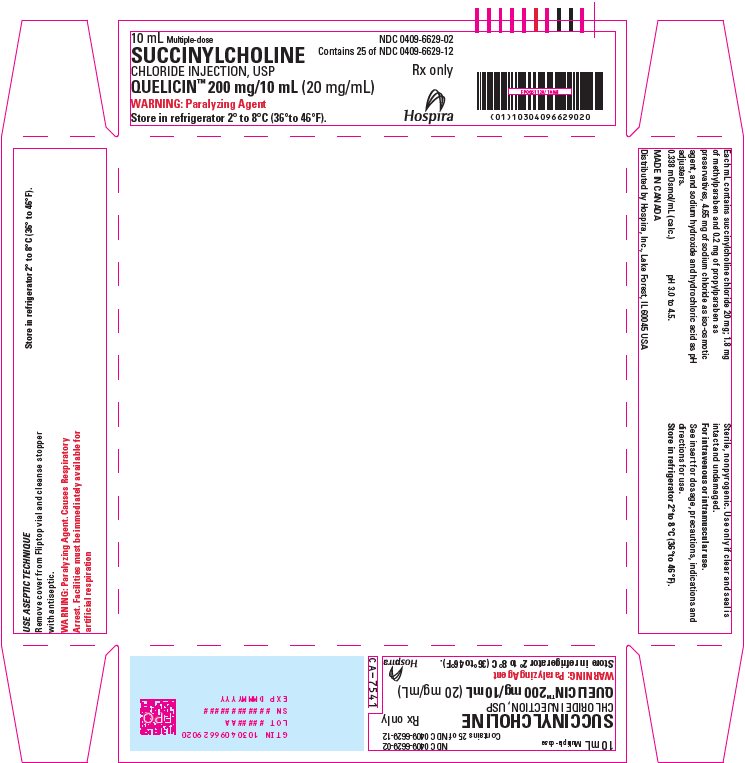
PRINCIPAL DISPLAY PANEL - 20 mg/mL Vial Tray 10 mL Multiple-dose NDC 0409-6629-02 Contains 25 of NDC 0409-6629-12 SUCCINYLCHOLINE CHLORIDE INJECTION, USP Rx only QUELICIN™ 200 mg/10 mL (20 mg/mL) WARNING: Paralyzing Agent Store in refrigerator 2° to 8°C (36° to 46°F). Hospira PRINCIPAL DISPLAY PANEL - 20 mg/mL Vial Tray
Medicaid utilization & spend
Reported adverse events (FAERS)
Top reported reactions
Age at onset
Reporter sex
Serious outcomes
Where does this data come from?
About this NDC listing & data coverage
What data is (and isn’t) available for this NDC — tap to expand
| NDC identity (package / product / labeler codes) | ✓ Available |
| Labeler | ✓ Available |
| Product & package description | ✓ Available |
| Marketing category & status | ✓ Available |
| Active ingredient / dosage form / route | ✓ Available |
| FDA label (SPL via DailyMed) | ✓ Available |
| Package photos | ✓ Available |
| Inactive ingredients (structured) | ✓ Available |
| NADAC pharmacy acquisition price (CMS) | — Not published for this NDC CMS publishes NADAC only for NDCs reported in its retail-pharmacy survey. |
| Orange Book / therapeutic-equivalence data | ✓ Available |
| HCPCS J-code billing crosswalk | ✓ Available |
| Medicaid utilization (CMS SDUD) | ✓ Available |