
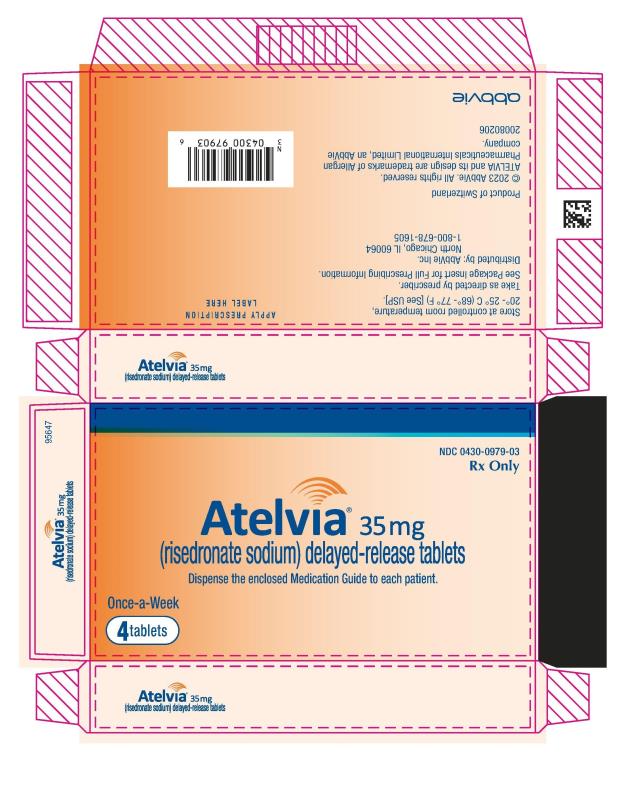
Atelvia risedronate sodium 30.1 mg; 4.9 mg Tablet, Delayed Release, 4-count — NDC 0430-0979-03 (Billing 00430-0979-03)
This is a package of 4 tablets of Atelvia risedronate sodium 30.1 mg; 4.9 mg Tablet, Delayed Release from Allergan, Inc., marketed since Dec 2010 and currently FDA-listed; retail pharmacies pay about $63.81 per tablet (NADAC). It is this product's only package size.
NDC database record
One package, one record: these facts belong to NDC 0430-0979-03 alone.
- Record
- FDA NDC Directory package listing · Human prescription drug
- Code segments
- 0430 labeler · 0979 product · 03 package
- Package marketed since
- Dec 1, 2010
- Sample package
- No — commercial package
- Listing certified through
- Dec 31, 2027
- Billing quantity
- 4 EA per package
- Barcode (UPC-A, from the NDC)
- 3 0430097903 6
- FDA record last changed
- Jul 24, 2026
Identity & classification
Regulatory identifiers FDA, NLM and CMS codes for this package
Drug-database identifiers Medi-Span GPI and First Databank GCN / HICL / AHFS classification
- GSN (GCN sequence number): 066815
- GCN: 29223
- GPI-14 (Medi-Span): 30042065100635
- HICL (First Databank): 018565
- AHFS class code: 92:24.00.00
- RxCUI (RxNorm): 1020064
Where does this data come from?
- FDA openFDA NDC Directory · synced Oct 8, 2026
- FDA label on DailyMed · label index refreshed Oct 8, 2026
- RxNorm (NLM RxNav) · catalog refreshed Oct 1, 2026
- Medi-Span GPI (licensed)
- First Databank (licensed) · refreshed Oct 8, 2026
Clinical
Risedronate is used to prevent and treat osteoporosis (a condition in which the bones become thin and weak and break easily) and Paget's disease of bone (a condition in which the bones are soft and weak and may be deformed, painful, or easily broken). Risedronate is in a class of medications called bisphosphonates. It works by preventing bone breakdown and increasing bone density (thickness).
Read the full MedlinePlus article ↗- It helps strengthen bones. Depending on the product, it treats or prevents osteoporosis in postmenopausal women, treats osteoporosis in men, treats or prevents steroid-related oste...
- Regular tablets go down whole with a full glass of plain water at least 30 minutes before food, drink or other medicines. Delayed-release tablets are taken right after breakfast wi...
- Back pain, joint pain, belly pain and indigestion are the most common. Call your doctor if you have painful swallowing, chest pain, new heartburn, severe bone or muscle pain, or ne...
- Not at the same time. Calcium, antacids, magnesium products and iron can block absorption, so take them at a different time of day. Do get enough calcium and vitamin D, as your doc...
Patient education
Supplement & herbal interactions
Some supplements/herbs that may interact with Risedronate Sodium — tap one for details:
Where does this data come from?
- MedlinePlus (NLM) · refreshed Oct 8, 2026
- FDA label on DailyMed · label index refreshed Oct 8, 2026
Ask a licensed pharmacist directly — free, answered by our team.
Pricing
A drug doesn't have one price. Each row is a different public payment system, and none is what you'd pay at the counter — that depends on your insurance. The ⓘ on each row explains what it measures.
| Price system | Per ea | Per package |
|---|---|---|
| Retail pharmacies payNADAC · weekly | $63.808 | $255.23 / 4 tablets |
| Medicaid paysCMS SDUD · 12 mo | No recent Medicaid claims on file for this NDC — rare and low-volume NDCs are suppressed in the public data. | |
| Medicare drug plans payPart D · Q2 2026 | $65.21 | $260.84 / 4 tablets |
Where does this data come from?
- CMS NADAC weekly file · file of Oct 7, 2026
- CMS ASP pricing files · refreshed Sep 20, 2026
- CMS Medicaid State Drug Utilization Data · refreshed Oct 8, 2026
- CMS Part D plan pricing files · refreshed Sep 24, 2026
- VA National Acquisition Center price file
Packaging — all sizes for this product
| Package NDC | Description | Marketing start | Marketing end | Status |
|---|---|---|---|---|
| 00430-0979-03 You're viewing this Main listing | 4 TABLET, DELAYED RELEASE in 1 DOSE PACK | 2010-12-01 | — | Active |
Therapeutic equivalents
| Product | Labeler | Pack | NADAC/unit | TE | Status | Price vs. this |
|---|---|---|---|---|---|---|
| Risedronate Sodium 30.1 mg/1; 4.9 mg 59762-0407-04 | Mylan | 4 tablets | $30.677 | AB | Availability likely | save 52% |
| Atelvia 30.1 mg/1; 4.9 mgthis 00430-0979-03 | Allergan, | 4 tablets | $63.808 | AB | Availability likely | — |
Where does this data come from?
- FDA openFDA NDC Directory · synced Oct 8, 2026
- FDA Orange Book · refreshed Oct 3, 2026
- CMS NADAC weekly file · file of Oct 7, 2026
Availability & generic status
The FDA lists approved generic versions of this medicine, but that does not always mean a pharmacy can get one today. Patent rules, launch agreements, supply and pricing can affect when generics actually arrive.
Why the date isn’t exact: Generic timing can change because patents may be challenged, settled, licensed, added, removed, or worked around with a narrower label — and FDA approval does not always mean a pharmacy can get the generic today.
🛈 What do these terms mean?
- Patent
- Legal protection listed in the Orange Book that may delay generic approval or launch. Issued by the U.S. Patent & Trademark Office.
- Substance patent
- Covers the active drug molecule itself — the hardest to design around. A generic generally can’t launch until it expires.
- Formulation (product) patent
- Covers a specific formulation or dosage form. A generic can sometimes work around it with a different formulation.
- Method-of-use patent
- A patent covering one specific approved use of the drug — not necessarily the whole molecule. A generic can sometimes launch with a “skinny label” that carves out the protected use and keeps the others.
- Skinny label
- A generic label that omits a still-patented use when the FDA allows it — letting a generic reach the market for the unprotected uses.
- Exclusivity
- FDA-granted marketing protection, separate from patents — e.g. 5-yr new chemical entity, 7-yr orphan drug, or a +6-month pediatric extension.
- Paragraph IV
- A generic applicant’s formal challenge to a listed patent. It can potentially lead to earlier generic entry, but often involves litigation or a settlement.
- RLD / RS
- Reference Listed Drug — the brand product the FDA uses as the reference for generic applications. Reference Standard — the product the FDA expects generics to compare against in bioequivalence testing.
- TE / AB rating
- FDA therapeutic-equivalence rating. An AB rating generally means the FDA considers a generic therapeutically equivalent to — and substitutable for — the brand.
- LOE (loss of exclusivity)
- The latest patent or exclusivity currently listed — the loss-of-exclusivity / latest-listed-protection date shown on this page. Paragraph-IV challenges and settlements can move the real date earlier; FDA approval and a manufacturer’s decision to market can move it later.
Built from the FDA Orange Book. The bars above are scaled to each protection’s expiry; the red LOE marker is the last one to lapse.
| Patent | Type | Use code | Expires |
|---|---|---|---|
| US 7645460 ↗ | Method of use | U-662 | Jan 9, 2028 |
| US 7645459 ↗ | Method of use | U-662 | Jan 9, 2028 |
| US 8246989 ↗ | Drug product | — | Jan 16, 2026 |
Is there a generic version of ATELVIA DR 35 MG TABLET?
The FDA approved a generic — why can’t I get it at my pharmacy yet?
Why do different websites show different generic release dates?
What does “FDA listed” mean?
What does a patent or protection date mean here?
What does “current Orange Book estimate” mean?
Can a generic come out before the last patent expires?
Can a generic come out after the listed dates?
What is the difference between patents and exclusivity?
Why are there multiple patent dates?
Where does this data come from?
- FDA Orange Book · refreshed Oct 3, 2026
What it looks like
Where does this data come from?
- FDA label on DailyMed · label index refreshed Oct 8, 2026
Inactive Ingredients / Excipients
Inactive ingredients, also called excipients, are components of the drug product other than the active ingredient. They may include fillers, dyes, coatings, preservatives, flavors, or other formulation ingredients.
🧪 Avoiding an ingredient? See Risedronate inactive ingredients by manufacturer: every current product's list side by side, so you can ask your pharmacy for the version that does not list it.
💡 Tap an ingredient (hover on desktop) to see what it is and why it’s used.
-
UNII OP1R32D61U
Microcrystalline cellulose is a purified form of cellulose, a natural fiber from plant sources. It acts as a binder and filler in tablets and capsules, helping hold ingredients together and give the medicine its shape and size.
-
UNII 7FLD91C86K
Edetate disodium is a chemical compound that binds and removes certain metal ions. In medicines, it acts as a preservative and stabilizer by preventing metals like calcium from interfering with the product's shelf life and consistency.
-
UNII EX438O2MRT
Ferric oxide yellow is a naturally occurring iron compound used as a colorant in medications. It gives tablets, capsules, and other forms a yellow or golden hue for identification and appearance.
-
UNII 70097M6I30
Magnesium stearate is a salt made from magnesium and stearic acid, a fatty substance. It's used in tablets and capsules as a lubricant and glidant to help ingredients flow smoothly during manufacturing and prevent sticking.
-
UNII NX76LV5T8J
A synthetic plastic polymer made from methacrylic acid and ethyl acrylate. It's used as a coating or binder to control how and where the medicine dissolves in your digestive system.
-
UNII 6OZP39ZG8H
Polysorbate 80 is a synthetic emulsifier derived from sorbitol and oleic acid. It helps mix oil and water-based ingredients together in medications and improves how the product disperses in the body.
-
UNII ETJ7Z6XBU4
Silicon dioxide is a naturally occurring mineral used as a glidant and anti-caking agent. It helps powder ingredients flow smoothly and prevents clumping during manufacturing and storage.
-
UNII H8AV0SQX4D
A modified starch derived from potato or corn starch. It absorbs water quickly and helps tablets or capsules break apart and dissolve in the stomach, acting as a disintegrant to ensure the medicine releases its active ingredients properly.
-
UNII 4ELV7Z65AP
Stearic acid is a fatty acid derived from plant or animal sources. It acts as a binder and lubricant in tablets and capsules, helping them hold together and flow smoothly during manufacturing.
-
UNII 7SEV7J4R1U
A powder made from a naturally occurring mineral. In medicines, talc works as a glidant and anti-caking agent, helping tablets and capsules flow smoothly during manufacturing and preventing clumping.
-
UNII 8Z96QXD6UM
Triethyl citrate is a clear liquid derived from citric acid. It acts as a plasticizer and solvent in tablet coatings and film formulations, helping the coating remain flexible and adhere properly to the medicine.
11 inactive ingredients listed in the exact product block matched to this NDC.
Where does this data come from?
ingredient classCode="IACT" elements from the exact product block matched by this NDC. Label-section narrative from DailyMed / the openFDA label index is shown separately when available.- FDA label on DailyMed · label index refreshed Oct 8, 2026
- FDA openFDA NDC Directory · synced Oct 8, 2026
Inactive ingredient FAQ
Are inactive ingredients the same for every manufacturer?
Why might an inactive ingredient be missing?
Can inactive ingredients matter?
Manufacturer & labeler
More NDCs from Allergan, Inc. labeler code 00430
- Lo Loestrin Fe norethindrone acetate and ethinyl estradiol, ethinyl estradiol and ferrous fumarate Kit NDC 0430-0420-14
- Actonel Risedronate Sodium 30.1 mg; 4.9 mg Tablet, Film Coated NDC 0430-0472-03
- Risedronate Sodium 30.1 mg; 4.9 mg Tablet, Film Coated NDC 0430-0473-00
- Actonel Risedronate Sodium 129 mg; 21 mg Tablet, Film Coated NDC 0430-0478-01
- Risedronate Sodium 129 mg; 21 mg Tablet, Film Coated NDC 0430-0487-00
- risedronate sodium 30.1 mg; 4.9 mg Tablet, Delayed Release NDC 0430-0970-00
- Estrace estradiol .1 mg/g Cream NDC 0430-3754-14
Where does this data come from?
- FDA openFDA NDC Directory · synced Oct 8, 2026
- Drugs@FDA
Full prescribing information FDA SPL
🎯 Indications and Usage ▾
1 INDICATIONS AND USAGE Atelvia is a bisphosphonate in a delayed-release formulation and is indicated for treatment of postmenopausal osteoporosis ( 1.1 ) Limitations of Use Optimal duration of use has not been determined. For patients at low-risk for fracture, consider drug discontinuation after 3 to 5 years of use ( 1.2 )
1.1Postmenopausal Osteoporosis Atelvia is indicated for the treatment of osteoporosis in postmenopausal women. In postmenopausal women, risedronate sodium has been shown to reduce the incidence of vertebral fractures and a composite endpoint of nonvertebral osteoporosis-related fractures [ see Clinical Studies (14.1) ] .
1.2Important Limitations of Use The optimal duration of use has not been determined. The safety and effectiveness of Atelvia for the treatment of osteoporosis are based on clinical data of one year duration. All patients on bisphosphonate therapy should have the need for continued therapy re-evaluated on a periodic basis.
Patients at low-risk for fracture should be considered for drug discontinuation after 3 to 5 years of use. Patients who discontinue therapy should have their risk for fracture re-evaluated periodically.
⏱️ Dosage and Administration ▾
2 DOSAGE AND ADMINISTRATION One 35 mg delayed-release tablet once-a-week ( 2.1 ) Instruct patients to: Take Atelvia in the morning immediately following breakfast with at least 4 ounces of plain water ( 2.2 ) Avoid lying down for 30 minutes after taking Atelvia ( 2.2 ) Take supplemental calcium and vitamin D if dietary intake is inadequate ( 2.3 )
2.1Treatment of Postmenopausal Osteoporosis [ see Indications and Usage (1.1) ] The recommended regimen is: one 35 mg delayed-release tablet orally, taken once-a-week 2. 2 Important Administration Instructions Instruct patients to do the following: Take Atelvia in the morning immediately following breakfast. Atelvia should be taken immediately following breakfast and not under fasting conditions because of a higher risk of abdominal pain if taken before breakfast when fasting.
Swallow Atelvia whole while in an upright position and with at least 4 ounces of plain water to facilitate delivery to the stomach. Avoid lying down for 30 minutes after taking the medication [ see Warnings and Precautions (5.2) ] . Do not chew, cut, or crush Atelvia tablets.
2.3Recommendations for Calcium and Vitamin D Supplementation Instruct patients to take supplemental calcium and vitamin D if dietary intake is inadequate [ see Warnings and Precautions (5.3) ] and to take calcium supplements, antacids, magnesium-based supplements or laxatives, and iron preparations at a different time of the day as they interfere with the absorption of Atelvia.
2.4Administration Instructions for Missed Doses If the once-weekly dose is missed, instruct patients to take one tablet on the morning after they remember and return to taking one tablet once-a-week, as originally scheduled on their chosen day. Patients should not take two tablets on the same day.
💊 Dosage Forms and Strengths ▾
3 DOSAGE FORMS AND STRENGTHS Delayed-release tablets: 35 mg, yellow, oval-shaped, and engraved with EC 35 on one side. Delayed-release tablets: 35 mg ( 3 )
⛔ Contraindications ▾
4 CONTRAINDICATIONS Atelvia is contraindicated in patients with the following conditions: Abnormalities of the esophagus which delay esophageal emptying such as stricture or achalasia [ see Warnings and Precautions (5.2) ] Inability to stand or sit upright for at least 30 minutes [ see Dosage and Administration (2) , Warnings and Precautions (5.2) ] Hypocalcemia [ see Warnings and Precautions (5.3) ] Known hypersensitivity to any component of this product. Angioedema, generalized rash, bullous skin reactions, Stevens-Johnson syndrome and toxic epidermal necrolysis have been reported [see Adverse Reactions (6.2) ] Abnormalities of the esophagus which delay esophageal emptying such as stricture or achalasia ( 4 , 5.2 ) Inability to stand or sit upright for at least 30 minutes ( 4 , 5.2 ) Hypocalcemia ( 4 , 5.3 ) Known hypersensitivity to any component of this product ( 4 , 6.2 )
⚠️ Warnings and Cautions ▾
5 WARNINGS AND PRECAUTIONS Products Containing Same Active Ingredient : Patients receiving Actonel should not be treated with Atelvia ( 5.1 ) Upper Gastrointestinal Adverse Reactions can occur. Instruct patients to follow dosing instructions. Discontinue use if new or worsening symptoms occur ( 5.2 ) Hypocalcemia may worsen and must be corrected prior to use ( 5.3 ) Osteonecrosis of the J aw has been reported ( 5.4 ) Severe B one, J oint, M uscle P ain may occur.
Discontinue use if severe symptoms develop ( 5.5 , 6.2 ) Atypical Fractures Including F em oral F ractures have been reported. Patients with new thigh or groin pain should be evaluated to rule out a femoral fracture. Risk/benefit of continuing bisphosphonate therapy should be re-evaluated in these patients and interruption of bisphosphonate therapy should be considered ( 5.6 )
5.1Drug Products with the Same Active Ingredient Atelvia contains the same active ingredient found in Actonel ® . A patient being treated with Actonel should not receive Atelvia. 5.
2 Upper Gastrointestinal Adverse Reactions Atelvia, like other bisphosphonates administered orally, may cause local irritation of the upper gastrointestinal mucosa. Because of these possible irritant effects and a potential for worsening of the underlying disease, caution should be used when Atelvia is given to patients with active upper gastrointestinal problems (such as known Barrett’s esophagus, dysphagia, other esophageal diseases, gastritis, duodenitis or ulcers) [ see Contraindications (4) , Adverse Reactions (6.1) , Information for Patients (17) ] .
Esophageal adverse experiences, such as esophagitis, esophageal ulcers and esophageal erosions, occasionally with bleeding and rarely followed by esophageal stricture or perforation, have been reported in patients receiving treatment with oral bisphosphonates. In some cases, these have been severe and required hospitalization. Physicians should therefore be alert to any signs or symptoms signaling a possible esophageal reaction and patients should be instructed to discontinue Atelvia and seek medical attention if they develop dysphagia, odynophagia, retrosternal pain or new or worsening heartburn.
The risk of severe esophageal adverse experiences appears to be greater in patients who lie down after taking oral bisphosphonates and/or who fail to swallow it with the recommended 4 ounces of water, and/or who continue to take oral bisphosphonates after developing symptoms suggestive of esophageal irritation. Therefore, it is very important that the full dosing instructions are provided to, and understood by, the patient [ see Dosage and Administration (2) ] . In patients who cannot comply with dosing instructions due to mental disability, therapy with Atelvia should be used under appropriate supervision.
There have been post-marketing reports of gastric and duodenal ulcers with oral bisphosphonate use, some severe and with complications, although no increased risk was observed in controlled clinical trials. 5. 3 Mineral Metabolism Hypocalcemia has been reported in patients taking Atelvia.
Treat hypocalcemia and other disturbances of bone and mineral metabolism should be effectively treated before starting Atelvia therapy. Instruct patients to take supplemental calcium and vitamin D if their dietary intake is inadequate. Adequate intake of calcium and vitamin D is important in all patients [ see Contraindications (4) , Adverse Reactions (6.1) , Information for Patients (17) ] .
5. 4 J aw Osteonecrosis Osteonecrosis of the jaw (ONJ), which can occur spontaneously, is generally associated with tooth extraction and/or local infection with delayed healing, and has been reported in patients taking bisphosphonates, including risedronate. Known risk factors for osteonecrosis of the jaw include invasive dental procedures (for example, tooth extraction, dental implants, boney surgery), diagnosis of cancer, concomitant therapies (for example, chemotherapy, corticosteroids, angio… [Excerpted — this section continues on DailyMed.]
🤒 Adverse Reactions ▾
6 ADVERSE REACTIONS The following clinically significant adverse drug reactions are described elsewhere in the labeling: Drug Products with the Same Active Ingredient [see Warnings and Precautions (5.1) ] Upper Gastrointestinal Adverse Reactions [see Warnings and Precautions (5.2) ] Mineral Metabolism [see Warnings and Precautions (5.3) ] Jaw Osteonecrosis [ see Warnings and Precautions (5.4) ] Musculoskeletal Pain [see Warnings and Precautions (5.5) ] Atypical Fractures Including Femoral Fractures [see Warnings and Precautions (5.6) ] Renal Impairment [see Warnings and Precautions (5.7) ] Laboratory Test Interactions [see Warnings and Precautions (5.8) ] Most common adverse reactions (greater than 5%) include: diarrhea, influenza, arthralgia, back pain, and abdominal pain ( 6.1 ) Hypersensitivity reactions (angioedema, generalized rash, bullous skin reactions, Stevens-Johnson syndrome, and toxic epidermal necrolysis), and eye inflammation (iritis, uveitis) have been reported rarely ( 6.2 ) To report SUSPECTED ADVERSE REACTIONS, contact AbbVie Inc at 1-800-633-9110 or FDA at 1-800-FDA-1088 or www.fda.gov/medwatch.
6.1Clinical Studies Experience Because clinical trials are conducted under widely varying conditions, adverse reaction rates observed in the clinical trials of a drug cannot be directly compared to rates in the clinical trials of another drug and may not reflect the rates observed in practice. Treatment of Postmenopausal Osteoporosis Once-a-Week Dosing with Atelvia ( risedronate sodium) delayed-release tablets The safety of Atelvia 35 mg once-a-week in the treatment of postmenopausal osteoporosis was assessed in a 1-year, double-blind, multicenter study comparing Atelvia 35 mg once-a-week to risedronate sodium immediate-release 5 mg daily in postmenopausal women 50 years of age or older.
Atelvia was administered either at least 30 minutes before (N = 308) or immediately following (N = 307) breakfast, and risedronate sodium immediate-release 5 mg daily (N = 307) was administered at least 30 minutes before breakfast. Patients with pre-existing gastrointestinal disease and concomitant use of non-steroidal anti-inflammatory drugs, proton pump inhibitors, and H 2 antagonists were included in this clinical trial. All women received daily supplementation with 1000 mg of elemental calcium plus 800 to 1000 international units vitamin D.
As treatment with Atelvia resulted in a significantly higher incidence of abdominal pain when administered before breakfast under fasting conditions, safety results that follow refer only to Atelvia 35 mg once-a-week immediately following breakfast and risedronate sodium immediate-release 5 mg daily. The incidence of all-cause mortality was 0.0% in the Atelvia 35 mg once-a-week group and 0.3% in the risedronate sodium immediate-release 5 mg daily group. The incidence of serious adverse reactions was 6.5% in the Atelvia 35 mg once-a-week group and 7.2% in the risedronate sodium immediate-release 5 mg daily group.
The percentage of patients who withdrew from the study due to adverse reactions was 9.1% in the Atelvia 35 mg once-a-week group and 8.1% in the risedronate sodium immediate-release 5 mg daily group. The overall safety and tolerability profiles of the two dosing regimens were similar. Table 1 lists adverse reactions reported in greater than or equal to 2% of patients.
Adverse reactions are shown without attribution of causality. Table 1 Adverse Reactions Occurring at a Frequency of greater than or equal to 2% in Either Treatment Group 35 mg Atelvia 5 mg Risedronate sodium I mmediate - release Weekly Daily System Organ Class N = 307 N = 307 Preferred Term % % Gastrointestinal disorders Diarrhea 8.8
4.9Abdominal pain 5.2
2.9Constipation 4.9
2.9Vomiting 4.9
1.6Dyspepsia 3.9
3.9Nausea 3.6
3.9Abdominal pain upper 2.9
2.3Infections and infestations Influenza 7.2
6.2Bronchitis 3.9
4.2Upper respiratory tract infection 3.6
2.6Musculoskeletal and connective tissue disorders Arthralgia… [Excerpted — this section continues on DailyMed.]
🔄 Drug Interactions ▾
7 DRUG INTERACTIONS Risedronate is not metabolized and does not induce or inhibit hepatic microsomal drug-metabolizing enzymes (for example, Cytochrome P450). Calcium supplements, antacids, proton pump inhibitors (PPIs), H 2 blockers, magnesium-based supplements or laxatives, and iron preparations interfere with the absorption of Atelvia ( 7.1 , 7.2 )
7.1Calcium Supplements/Antacids When Atelvia was administered following breakfast, the co-administration of a tablet containing 600 mg of elemental calcium and 400 international units vitamin D reduced risedronate bioavailability by approximately 38% [ see Clinical Pharmacology (12.3) ] . Calcium supplements, antacids, magnesium-based supplements or laxatives, and iron preparations interfere with the absorption of Atelvia and should not be taken together.
7.2Histamine 2 (H 2 ) Blockers and Proton Pump Inhibitors (PPIs) Drugs that raise stomach pH (for example, PPIs or H 2 blockers) may cause faster drug release from enteric coated (delayed-release) drug products such as Atelvia. Co-administration of Atelvia with the PPI, esomeprazole, increased risedronate bioavailability. The maximum plasma concentration (C max ) and the area under the plasma concentration (AUC) were increased by 60 percent and 22 percent, respectively.
Concomitant administration of Atelvia and H 2 blockers or PPIs is not recommended. 7. 3 Hormone Therapy Concomitant use of Atelvia with estrogens and estrogen agonist/antagonists has not been studied.
7. 4 Aspirin/Nonsteroidal Anti-Inflammatory Drugs In the Phase 3 study comparing Atelvia 35 mg once-a-week immediately following breakfast and risedronate sodium 5 mg daily, 18% of NSAID users (any use) in both groups developed upper gastrointestinal adverse reactions. Among non-users, 13% of patients taking Atelvia 35 mg once-a-week immediately following breakfast developed upper gastrointestinal adverse reactions, compared to 12% taking risedronate sodium 5 mg daily.
👥 Use in Specific Populations ▾
8 USE IN SPECIFIC POPULATIONS Pregnancy: Discontinue when pregnancy is recognized ( 8.1 ) Atelvia is not recommended for use in patients with severe renal impairment (creatinine clearance less than 30 mL/min) ( 5.7 , 8.6 , 12.3 ) Atelvia is not indicated for use in pediatric patients ( 8.4 )
8.1Pregnancy Risk Summary Available data on use of Atelvia in pregnant women are insufficient to inform drug-associated risk of adverse maternal or fetal outcomes. Discontinue Atelvia when pregnancy is recognized. In animal reproduction studies, daily oral administration of risedronate to pregnant rats during organogenesis decreased neonatal survival and body weight at doses approximately 5 and 26 times, respectively, the highest recommended human daily dose of 30 mg (based on body surface area, mg/m 2 ), the dose indicated for treatment of Paget’s disease.
A low incidence of cleft palate was observed in fetuses of dams treated at doses approximately equal to the 30 mg human daily dose. Delayed skeletal ossification was observed in fetuses of dams treated at approximately 2.5 to 5 times the 30 mg human daily dose. Periparturient mortality due to maternal hypocalcemia occurred in dams and neonates upon daily oral administration of risedronate to pregnant rats during mating and/or gestation starting at doses equivalent to the 30 mg daily human dose.
Bisphosphonates are incorporated into the bone matrix, from which they are gradually released over a period of weeks to years. The amount of bisphosphonate incorporated into adult bone available for release into the systemic circulation is directly related to the dose and duration of bisphosphonate use. Consequently, based on mechanism of action of bisphosphonates, there is a potential risk of fetal harm, predominantly skeletal, if a woman becomes pregnant after completing a course of bisphosphonate therapy.
The impact of variables such as time between cessation of bisphosphonate therapy to conception, the particular bisphosphonate used, and the route of administration (intravenous versus oral) on this risk has not been studied. The estimated background risk of major birth defects and miscarriage for the indicated populations is unknown. All pregnancies have a background risk of birth defects, loss, or other adverse outcomes.
In the U.S. general population, the estimated background risks of major birth defects and miscarriage in clinically recognized pregnancies is 2-4% and 15-20%, respectively. Data Animal data In animal studies, pregnant rats received risedronate sodium during organogenesis at doses 1 to 26 times the human Paget’s disease dose of 30 mg/day (based on body surface area, mg/m 2 ). Survival of neonates was decreased in rats treated during gestation with oral doses approximately 5 times the human dose and body weight was decreased in neonates from dams treated with approximately 26 times the human dose.
A low incidence of cleft palate was observed in fetuses from female rats treated with oral doses approximately equal to the human dose. The number of fetuses exhibiting incomplete ossification of sternebrae or skull of dams treated with approximately 2.5 times the human dose was significantly increased compared to controls. Both incomplete ossification and unossified sternebrae were increased in fetuses of dams treated with oral doses approximately 5 times the human dose.
No significant ossification effects were seen in fetuses of rabbits treated with oral doses approximately 7 times the human dose (the highest dose tested). However, 1 of 14 litters were aborted and 1 of 14 litters were delivered prematurely. Periparturient mortality due to maternal hypocalcemia occurred in dams and neonates when pregnant rats were treated daily during mating and/or gestation with oral doses equivalent to the human dose or higher.
8.2Lactation Risk Summary There are no data to assess the presence of risedronate in human milk, the effects on the breastfed infant, or the effects on milk production. A… [Excerpted — this section continues on DailyMed.]
🤰 Pregnancy ▾
8.1Pregnancy Risk Summary Available data on use of Atelvia in pregnant women are insufficient to inform drug-associated risk of adverse maternal or fetal outcomes. Discontinue Atelvia when pregnancy is recognized. In animal reproduction studies, daily oral administration of risedronate to pregnant rats during organogenesis decreased neonatal survival and body weight at doses approximately 5 and 26 times, respectively, the highest recommended human daily dose of 30 mg (based on body surface area, mg/m 2 ), the dose indicated for treatment of Paget’s disease.
A low incidence of cleft palate was observed in fetuses of dams treated at doses approximately equal to the 30 mg human daily dose. Delayed skeletal ossification was observed in fetuses of dams treated at approximately 2.5 to 5 times the 30 mg human daily dose. Periparturient mortality due to maternal hypocalcemia occurred in dams and neonates upon daily oral administration of risedronate to pregnant rats during mating and/or gestation starting at doses equivalent to the 30 mg daily human dose.
Bisphosphonates are incorporated into the bone matrix, from which they are gradually released over a period of weeks to years. The amount of bisphosphonate incorporated into adult bone available for release into the systemic circulation is directly related to the dose and duration of bisphosphonate use. Consequently, based on mechanism of action of bisphosphonates, there is a potential risk of fetal harm, predominantly skeletal, if a woman becomes pregnant after completing a course of bisphosphonate therapy.
The impact of variables such as time between cessation of bisphosphonate therapy to conception, the particular bisphosphonate used, and the route of administration (intravenous versus oral) on this risk has not been studied. The estimated background risk of major birth defects and miscarriage for the indicated populations is unknown. All pregnancies have a background risk of birth defects, loss, or other adverse outcomes.
In the U.S. general population, the estimated background risks of major birth defects and miscarriage in clinically recognized pregnancies is 2-4% and 15-20%, respectively. Data Animal data In animal studies, pregnant rats received risedronate sodium during organogenesis at doses 1 to 26 times the human Paget’s disease dose of 30 mg/day (based on body surface area, mg/m 2 ). Survival of neonates was decreased in rats treated during gestation with oral doses approximately 5 times the human dose and body weight was decreased in neonates from dams treated with approximately 26 times the human dose.
A low incidence of cleft palate was observed in fetuses from female rats treated with oral doses approximately equal to the human dose. The number of fetuses exhibiting incomplete ossification of sternebrae or skull of dams treated with approximately 2.5 times the human dose was significantly increased compared to controls. Both incomplete ossification and unossified sternebrae were increased in fetuses of dams treated with oral doses approximately 5 times the human dose.
No significant ossification effects were seen in fetuses of rabbits treated with oral doses approximately 7 times the human dose (the highest dose tested). However, 1 of 14 litters were aborted and 1 of 14 litters were delivered prematurely. Periparturient mortality due to maternal hypocalcemia occurred in dams and neonates when pregnant rats were treated daily during mating and/or gestation with oral doses equivalent to the human dose or higher.
🧒 Pediatric Use ▾
8.4Pediatric Use Atelvia is not indicated for use in pediatric patients. The safety and effectiveness of risedronate sodium immediate-release was assessed in a one-year, randomized, double-blind, placebo-controlled study of 143 pediatric patients (94 received risedronate) with osteogenesis imperfecta (OI). The enrolled population was predominantly patients with mild OI (85% Type-I), aged 4 to less than 16 years, 50% male and 82% Caucasian, with a mean lumbar spine BMD Z-score of -2.08 (2.08 standard deviations below the mean for age-matched controls).
Patients received either a 2.5 mg (less than or equal to 30 kg body weight) or 5 mg (greater than 30 kg body weight) daily oral dose. After one year, an increase in lumbar spine BMD in the risedronate sodium immediate-release group compared to the placebo group was observed. However, treatment with risedronate sodium immediate-release did not result in a reduction in the risk of fracture in pediatric patients with OI.
In risedronate sodium immediate-release treated subjects, no mineralization defects were noted in paired bone biopsy specimens obtained at baseline and month 12. The overall safety profile of risedronate in OI patients treated for up to 12 months was generally similar to that of adults with osteoporosis. However, there was an increased incidence of vomiting compared to placebo.
In this study, vomiting was observed in 15% of children treated with risedronate sodium immediate-release and 6% of patients treated with placebo. Other adverse reactions reported in greater than or equal to 10% of patients treated with risedronate sodium immediate-release and with a higher frequency than placebo were: pain in the extremity (21% with risedronate sodium immediate-release versus 16% with placebo), headache (20% versus 8%), back pain (17% versus 10%), pain (15% versus 10%), upper abdominal pain (11% versus 8%), and bone pain (10% versus 4%).
🧓 Geriatric Use ▾
8.5Geriatric Use Of the patients receiving Atelvia in postmenopausal osteoporosis studies, 59% were 65 and over, while 13% were 75 and over. No overall differences in safety or effectiveness were observed between these patients and younger patients, and other reported clinical experience has not identified differences in responses between the elderly and younger patients, but greater sensitivity of some older individuals cannot be ruled out.
🆘 Overdosage ▾
10 OVERDOSAGE Decreases in serum calcium and phosphorus following substantial overdose may be expected in some patients. Signs and symptoms of hypocalcemia may also occur in some of these patients. While milk or antacids containing calcium may be given to bind risedronate sodium immediate- release and reduce absorption of the drug, the impact of this intervention for Atelvia delayed-release tablets has not been evaluated.
In cases of substantial overdose, gastric lavage may be considered to remove unabsorbed drug. Standard procedures that are effective for treating hypocalcemia, including the administration of calcium intravenously, would be expected to restore physiologic amounts of ionized calcium and to relieve signs and symptoms of hypocalcemia. Lethality after single oral doses of risedronate was seen in female rats at 903 mg/kg and male rats at 1703 mg/kg.
The minimum lethal dose in mice and rabbits was 4000 mg/kg and 1000 mg/kg, respectively. These values represent 320 to 620 times the human Paget’s disease dose of 30 mg/day based on surface area (mg/m 2 ).
🧬 Clinical Pharmacology ▾
12 CLINICAL PHARMACOLOGY
12.1Mechanism of Action Risedronate has an affinity for hydroxyapatite crystals in bone and acts as an antiresorptive agent. At the cellular level, risedronate inhibits osteoclasts. The osteoclasts adhere normally to the bone surface, but show evidence of reduced active resorption (for example, lack of ruffled border).
Histomorphometry in rats, dogs, and minipigs showed that risedronate treatment reduces bone turnover (activation frequency, that is, the rate at which bone remodeling sites are activated) and bone resorption at remodeling sites.
12.2Pharmacodynamics Risedronate treatment decreases the elevated rate of bone turnover that is typically seen in postmenopausal osteoporosis. In clinical trials, administration of risedronate sodium immediate- release to postmenopausal women resulted in decreases in biochemical markers of bone turnover, including urinary deoxypyridinoline/creatinine and urinary collagen cross-linked N-telopeptide (markers of bone resorption) and serum bone-specific alkaline phosphatase (a marker of bone formation). At the 5 mg daily dose, decreases in deoxypyridinoline/creatinine were evident within 14 days of treatment.
Changes in bone formation markers were observed later than changes in resorption markers, as expected, due to the coupled nature of bone resorption and bone formation; decreases in bone-specific alkaline phosphatase of about 20% were evident within 3 months of treatment. Bone turnover markers reached a nadir of about 40% below baseline values by the sixth month of treatment and remained stable with continued treatment for up to 3 years. Bone turnover is decreased as early as 14 days and maximally within about 6 months of treatment, with achievement of a new steady-state that more nearly approximates the rate of bone turnover seen in premenopausal women.
In a 1-year study comparing Atelvia 35 mg weekly taken immediately after breakfast versus risedronate sodium immediate-release 5 mg daily oral dosing regimens in postmenopausal women, mean decreases from baseline at 1 year in urinary collagen cross-linked N-telopeptide were 47% in the Atelvia 35 mg once-a-week following breakfast group and 42% in the risedronate sodium immediate-release 5 mg daily group. In addition, serum bone-specific alkaline phosphatase at 1 year was reduced by 33% in the Atelvia 35 mg once-a-week following breakfast group and 32% in the risedronate sodium immediate-release 5 mg daily group.
12.3Pharmacokinetics Absorption The mean absolute oral bioavailability of the 30 mg risedronate sodium immediate-release tablet taken 4 hours prior to a meal is 0.63% (90% confidence interval [CI]: 0.54% to 0.75%) and is similar to an oral solution. The time to peak concentration (T max ) for Atelvia tablet is approximately 3 hours when administered in the morning 4 hours prior to a meal. Food Effect In a crossover pharmacokinetic study, the bioavailability of Atelvia 35 mg delayed-release tablets decreased by approximately 30% when administered immediately after a high-fat breakfast compared to administration in the morning 4 hours before a meal.
The bioavailability of the 35 mg Atelvia tablet administered after a high-fat breakfast was similar to risedronate sodium 35 mg immediate-release tablet dosed 4 hours before a meal in one study and was approximately 2- to 4-fold greater than the immediate-release 35 mg tablet administered 30 minutes prior to a high-fat breakfast. In a separate study, Atelvia administered after dinner exhibited approximately 87% increase in risedronate exposure compared to administration following a breakfast. The safety and efficacy of dosing Atelvia after dinner has not been evaluated [ see Dosage and Administration (2) ] .
Distribution The mean steady-state volume of distribution for risedronate is
13.8L/kg in humans. Human plasma protein binding of drug is about 24%. Preclinical studies in rats and dogs dosed intravenously with single doses of [ 14 C] risedronate indicate… [Excerpted — this section continues on DailyMed.]
🧬 Mechanism of Action ▾
12.1Mechanism of Action Risedronate has an affinity for hydroxyapatite crystals in bone and acts as an antiresorptive agent. At the cellular level, risedronate inhibits osteoclasts. The osteoclasts adhere normally to the bone surface, but show evidence of reduced active resorption (for example, lack of ruffled border).
Histomorphometry in rats, dogs, and minipigs showed that risedronate treatment reduces bone turnover (activation frequency, that is, the rate at which bone remodeling sites are activated) and bone resorption at remodeling sites.
📦 How Supplied / Storage and Handling ▾
16 HOW SUPPLIED/STORAGE AND HANDLING Atelvia ® (risedronate sodium) delayed-release tablets are: 35 mg, yellow, oval-shaped, and engraved with EC 35 on one side. NDC 0430-0979-03 Dosepak of 4 tablets Store at controlled room temperature 20° to 25° C (68° to 77° F) [see USP].
📋 Description ▾
11 DESCRIPTION Atelvia (risedronate sodium) delayed-release tablets contain a pH-sensitive enteric coating and a chelating agent (EDTA). Risedronate is a pyridinyl bisphosphonate that inhibits osteoclast-mediated bone resorption and modulates bone metabolism. Each Atelvia tablet for oral administration contains the equivalent of 35 mg of anhydrous risedronate sodium in the form of the hemi-pentahydrate with small amounts of monohydrate.
The empirical formula for risedronate sodium hemi-pentahydrate is C 7 H 10 NO 7 P 2 Na •2.5 H 2 O. The chemical name of risedronate sodium is [1-hydroxy-2-(3-pyridinyl)ethylidene]bis[phosphonic acid] monosodium salt. The chemical structure of risedronate sodium hemi-pentahydrate is the following: Molecular Weight: Anhydrous: 305.10 Hemi-pentahydrate: 350.13 Risedronate sodium is a fine, white to off-white, odorless, crystalline powder.
It is soluble in water and in aqueous solutions, and essentially insoluble in common organic solvents. Inactive Ingredients Edetate disodium, ferric oxide yellow, magnesium stearate, methacrylic acid copolymer, polysorbate 80, silicified microcrystalline cellulose (ProSolv SMCC90), simethicone, sodium starch glycolate, stearic acid, talc, and triethyl citrate. The chemical structure for Risedronate is a pyridinyl bisphosphonate that inhibits osteoclast-mediated bone resorption and modulates bone metabolism.
Each Atelvia tablet for oral administration contains the equivalent of 35 mg of anhydrous risedronate sodium in the form of the hemi-pentahydrate with small amounts of monohydrate. The empirical formula for risedronate sodium hemi-pentahydrate is C7H10NO7P2Na •2.5 H2O. The chemical name of risedronate sodium is [1-hydroxy-2-(3-pyridinyl)ethylidene]bis[phosphonic acid] monosodium salt.
💬 Information for Patients ▾
17 PATIENT COUNSELING INFORMATION See FDA-approved patient labeling ( Medication Guide ) Instruct patients to read the Medication Guide before starting therapy with Atelvia and to re-read it each time the prescription is renewed. Instruct patients that Atelvia and Actonel contain the same active ingredient and if they are taking Actonel, they should not take Atelvia [ see Warnings and Precautions (5.1) ] . Instruct patients to pay particular attention to the dosing instructions as clinical benefits may be compromised by failure to take the drug according to instructions.
Instruct patients to take Atelvia in the morning, while in an upright position (sitting or standing) with at least 4 ounces of plain water immediately following breakfast. Atelvia should not be taken before breakfast. Instruct patients to swallow Atelvia tablets whole.
Patients should not chew, cut, or crush the tablet because of a potential for oropharyngeal irritation, and because the tablet coating is an important part of the delayed-release formulation. Patients should not lie down for 30 minutes after taking the medication. Instruct patients that if they develop symptoms of esophageal disease (such as difficulty or pain upon swallowing, retrosternal pain or severe persistent or worsening heartburn) they should consult their physician before continuing Atelvia [ see Warnings and Precautions (5.2) ] .
If a dose of Atelvia 35 mg once-a-week is missed, instruct the patient to take one tablet on the morning after they remember and return to taking one tablet once-a-week, as originally scheduled on their chosen day. Patients should not take 2 tablets on the same day. Instruct patients to take supplemental calcium and vitamin D if dietary intake is inadequate [ see Warnings and Precautions (5.3) ] .
Instruct patients to take calcium supplements, antacids, magnesium-based supplements or laxatives, and iron preparations at a different time of the day because they interfere with the absorption of Atelvia. Remind patients to give all of their healthcare providers an accurate medication history. Instruct patients to tell all of their healthcare providers that they are taking Atelvia.
Patients should be instructed that any time they have a medical problem they think may be from Atelvia they should talk to their doctor. Distributed by: AbbVie Inc. North Chicago, IL 60064 For all medical inquiries contact: AbbVie Medical Communications 1-800-633-9110 © 2026 AbbVie.
All rights reserved. ATELVIA and its design are trademarks of Allergan Pharmaceuticals International Limited, an AbbVie company. Content Updated: February 2026 133189 R2
💬 Medication Guide ▾
Medication Guide Atelvia ® (uh-TEL-v-uh) (risedronate sodium) d elayed - release tablets Read this Medication Guide that comes with Atelvia ® before you start taking it and each time you get a refill. There may be new information. This Medication Guide does not take the place of talking with your doctor about your medical condition or your treatment.
Talk to your doctor if you have any questions about Atelvia, there may be new information about it. What is the most important information I should know about Atelvia ? Atelvia can cause serious side effects including : Esophagus problems Low calcium levels in your blood (hypocalcemia) Severe jaw bone problems (osteonecrosis) Bone, joint, or muscle pain Unusual breaks in thigh and other bones 1.
Esophagus problems. Some people who take Atelvia may develop problems in the esophagus (the tube that connects the mouth and the stomach). These problems include irritation, inflammation, or ulcers of the esophagus which may sometimes bleed.
It is important that you take Atelvia exactly as prescribed to help lower your chance of getting esophagus problems. (See the section “How should I take Atelvia ?”) Stop taking Atelvia and call your doctor right away if you get chest pain, new or worsening heartburn, or have trouble or pain when you swallow. 2.
Low calcium levels in your blood (hypocalcemia). Atelvia may lower the calcium levels in your blood. If you have low blood calcium before you start taking Atelvia, it may get worse during treatment.
Your low blood calcium must be treated before you take Atelvia. Most people with low blood calcium levels do not have symptoms, but some people may have symptoms. Call your doctor right away if you have symptoms of low blood calcium such as: Spasms, twitches, or cramps in your muscles Numbness or tingling in your fingers, toes, or around your mouth Your doctor may prescribe calcium and vitamin D to help prevent low calcium levels in your blood, while you are taking Atelvia.
Take calcium and vitamin D as your doctor tells you to. 3. Severe jaw bone problems (osteonecrosis).
Severe jaw bone problems may happen when you take Atelvia. Your doctor should examine your mouth before you start Atelvia. Your doctor may tell you to see your dentist before you start Atelvia.
It is important for you to practice good mouth care during treatment with Atelvia. 4. Bone, joint, or muscle pain.
Some people who take Atelvia develop severe bone, joint, or muscle pain. 5. Unusual breaks in thigh and other bones .
Some people have had unusual bone breaks, including the thigh bone, when taking Atelvia. A break in the thigh bone can feel like a new pain in your hip, groin, or thigh. People taking Atelvia can also have breaks in other bones.
Call your doctor right away if you have any of these side effects. What is Atelvia ? Atelvia is a prescription medicine used to treat osteoporosis in women after menopause.
It is not known how long Atelvia works for the treatment and prevention of osteoporosis. You should see your doctor regularly to determine if Atelvia is still right for you. Atelvia is not for use in children.
Who should not take Atelvia ? Do not take Atelvia if you : Have certain problems with your esophagus, the tube that connects your mouth and stomach Cannot sit or stand up for at least 30 minutes Have low blood calcium (hypocalcemia) Are allergic to any of the other ingredients in Atelvia. See the end of this leaflet for a complete list of ingredients in Atelvia.
What should I tell my healthcare provider before taking Atelvia ? Before you take Atelvia , t ell your healthcare provider if you : Have problems swallowing Have stomach or digestive problems Have low blood calcium Plan to have dental surgery or teeth removed Have kidney problems Have been told you have trouble absorbing mineral in your stomach or intestines (malabsorption syndrome) Are pregnant, plan to become pregnant, or suspect that you are pregnant. If you become pregnant while taking Atelvia, stop t… [Excerpted — this section continues on DailyMed.]
🧬 Pharmacokinetics ▾
12.3Pharmacokinetics Absorption The mean absolute oral bioavailability of the 30 mg risedronate sodium immediate-release tablet taken 4 hours prior to a meal is 0.63% (90% confidence interval [CI]: 0.54% to 0.75%) and is similar to an oral solution. The time to peak concentration (T max ) for Atelvia tablet is approximately 3 hours when administered in the morning 4 hours prior to a meal. Food Effect In a crossover pharmacokinetic study, the bioavailability of Atelvia 35 mg delayed-release tablets decreased by approximately 30% when administered immediately after a high-fat breakfast compared to administration in the morning 4 hours before a meal.
The bioavailability of the 35 mg Atelvia tablet administered after a high-fat breakfast was similar to risedronate sodium 35 mg immediate-release tablet dosed 4 hours before a meal in one study and was approximately 2- to 4-fold greater than the immediate-release 35 mg tablet administered 30 minutes prior to a high-fat breakfast. In a separate study, Atelvia administered after dinner exhibited approximately 87% increase in risedronate exposure compared to administration following a breakfast. The safety and efficacy of dosing Atelvia after dinner has not been evaluated [ see Dosage and Administration (2) ] .
Distribution The mean steady-state volume of distribution for risedronate is
13.8L/kg in humans. Human plasma protein binding of drug is about 24%. Preclinical studies in rats and dogs dosed intravenously with single doses of [ 14 C] risedronate indicate that approximately 60% of the dose is distributed to bone.
The remainder of the dose is excreted in the urine. After multiple oral dosing in rats, the uptake of risedronate in soft tissues was in the range of 0.001% to 0.01%. Metabolism There is no evidence of systemic metabolism of risedronate.
Excretion In young healthy subjects, approximately half of the absorbed dose of risedronate was excreted in urine within 24 hours, and 85% of an intravenous dose was recovered in the urine over 28 days. Based on simultaneous modeling of serum and urine data for the risedronate sodium immediate-release tablets, mean renal clearance was 105 mL/min (CV = 34%) and mean total clearance was 122 mL/min (CV = 19%), with the difference primarily reflecting nonrenal clearance or clearance due to adsorption to bone. The renal clearance is not concentration dependent, and there is a linear relationship between renal clearance and creatinine clearance.
Unabsorbed drug is eliminated unchanged in feces. In osteopenic postmenopausal women, the terminal exponential half-life was 561 hours, mean renal clearance was 52 mL/min (CV = 25%), and mean total clearance was 73 mL/min (CV = 15%). Specific Populations Pediatric: Atelvia is not indicated for use in pediatric patients [ see Pediatric Use (8.4) ] .
Geriatric: Effect of age on bioavailability of Atelvia has not been evaluated. Based on data from risedronate immediate-release tablet, bioavailability and disposition of risedronate are similar in elderly (greater than 60 years of age) and younger subjects. No dosage adjustment is necessary.
Race: Pharmacokinetic differences due to race have not been studied. The clinical trial of Atelvia was conducted mostly in Caucasians. Renal Impairment : Risedronate is excreted unchanged primarily via the kidney.
As compared to persons with normal renal function, the renal clearance of risedronate was decreased by about 70% in patients with creatinine clearance of approximately 30 mL/min. Atelvia is not recommended for use in patients with severe renal impairment (creatinine clearance less than 30 mL/min). No dosage adjustment is necessary in patients with a creatinine clearance greater than or equal to 30 mL/min.
Hepatic Impairment : No studies have been performed to assess risedronate’s safety or efficacy in patients with hepatic impairment. Risedronate is not metabolized in rat, dog, and human liver preparations. Insignificant amounts (less than 0.1% of intravenous… [Excerpted — this section continues on DailyMed.]
🧬 Pharmacodynamics ▾
12.2Pharmacodynamics Risedronate treatment decreases the elevated rate of bone turnover that is typically seen in postmenopausal osteoporosis. In clinical trials, administration of risedronate sodium immediate- release to postmenopausal women resulted in decreases in biochemical markers of bone turnover, including urinary deoxypyridinoline/creatinine and urinary collagen cross-linked N-telopeptide (markers of bone resorption) and serum bone-specific alkaline phosphatase (a marker of bone formation). At the 5 mg daily dose, decreases in deoxypyridinoline/creatinine were evident within 14 days of treatment.
Changes in bone formation markers were observed later than changes in resorption markers, as expected, due to the coupled nature of bone resorption and bone formation; decreases in bone-specific alkaline phosphatase of about 20% were evident within 3 months of treatment. Bone turnover markers reached a nadir of about 40% below baseline values by the sixth month of treatment and remained stable with continued treatment for up to 3 years. Bone turnover is decreased as early as 14 days and maximally within about 6 months of treatment, with achievement of a new steady-state that more nearly approximates the rate of bone turnover seen in premenopausal women.
In a 1-year study comparing Atelvia 35 mg weekly taken immediately after breakfast versus risedronate sodium immediate-release 5 mg daily oral dosing regimens in postmenopausal women, mean decreases from baseline at 1 year in urinary collagen cross-linked N-telopeptide were 47% in the Atelvia 35 mg once-a-week following breakfast group and 42% in the risedronate sodium immediate-release 5 mg daily group. In addition, serum bone-specific alkaline phosphatase at 1 year was reduced by 33% in the Atelvia 35 mg once-a-week following breakfast group and 32% in the risedronate sodium immediate-release 5 mg daily group.
🔬 Clinical Studies ▾
6.1Clinical Studies Experience Because clinical trials are conducted under widely varying conditions, adverse reaction rates observed in the clinical trials of a drug cannot be directly compared to rates in the clinical trials of another drug and may not reflect the rates observed in practice. Treatment of Postmenopausal Osteoporosis Once-a-Week Dosing with Atelvia ( risedronate sodium) delayed-release tablets The safety of Atelvia 35 mg once-a-week in the treatment of postmenopausal osteoporosis was assessed in a 1-year, double-blind, multicenter study comparing Atelvia 35 mg once-a-week to risedronate sodium immediate-release 5 mg daily in postmenopausal women 50 years of age or older.
Atelvia was administered either at least 30 minutes before (N = 308) or immediately following (N = 307) breakfast, and risedronate sodium immediate-release 5 mg daily (N = 307) was administered at least 30 minutes before breakfast. Patients with pre-existing gastrointestinal disease and concomitant use of non-steroidal anti-inflammatory drugs, proton pump inhibitors, and H 2 antagonists were included in this clinical trial. All women received daily supplementation with 1000 mg of elemental calcium plus 800 to 1000 international units vitamin D.
As treatment with Atelvia resulted in a significantly higher incidence of abdominal pain when administered before breakfast under fasting conditions, safety results that follow refer only to Atelvia 35 mg once-a-week immediately following breakfast and risedronate sodium immediate-release 5 mg daily. The incidence of all-cause mortality was 0.0% in the Atelvia 35 mg once-a-week group and 0.3% in the risedronate sodium immediate-release 5 mg daily group. The incidence of serious adverse reactions was 6.5% in the Atelvia 35 mg once-a-week group and 7.2% in the risedronate sodium immediate-release 5 mg daily group.
The percentage of patients who withdrew from the study due to adverse reactions was 9.1% in the Atelvia 35 mg once-a-week group and 8.1% in the risedronate sodium immediate-release 5 mg daily group. The overall safety and tolerability profiles of the two dosing regimens were similar. Table 1 lists adverse reactions reported in greater than or equal to 2% of patients.
Adverse reactions are shown without attribution of causality. Table 1 Adverse Reactions Occurring at a Frequency of greater than or equal to 2% in Either Treatment Group 35 mg Atelvia 5 mg Risedronate sodium I mmediate - release Weekly Daily System Organ Class N = 307 N = 307 Preferred Term % % Gastrointestinal disorders Diarrhea 8.8
4.9Abdominal pain 5.2
2.9Constipation 4.9
2.9Vomiting 4.9
1.6Dyspepsia 3.9
3.9Nausea 3.6
3.9Abdominal pain upper 2.9
2.3Infections and infestations Influenza 7.2
6.2Bronchitis 3.9
4.2Upper respiratory tract infection 3.6
2.6Musculoskeletal and connective tissue disorders Arthralgia 6.8
7.8Back pain 6.8
5.9Pain in extremity 3.9
2.3Musculoskeletal pain 2.0
1.6Muscle spasms 1.0
2.3Nervous system disorders Dizziness 2.6
3.3Headache 2.6
4.9Acute Phase Reactions: Symptoms consistent with acute phase reaction have been reported with bisphosphonate use. The overall incidence of acute phase reaction was 2.3% in the Atelvia 35 mg once-a-week group and 1.3% in the risedronate sodium immediate-release 5 mg daily group. These incidence rates are based on reporting of one or more pre-specified acute phase reaction-like symptoms within 3 days of the first dose and for a duration of 7 days or less.
Gastrointestinal Adverse Reactions : Adverse reactions related to the upper gastrointestinal tract occurred in 16% of subjects treated with Atelvia 35 mg once-a-week and 15% of subjects treated with risedronate sodium immediate-release 5 mg daily. The incidence of upper gastrointestinal tract adverse reactions in the Atelvia 35 mg once-a-week and risedronate sodium immediate-release 5 mg daily groups were: abdominal pain (5.2% versus 2.9%), dyspepsia (3.9% versus 3.9%), upper abdominal pain (2.9% versus 2.3… [Excerpted — this section continues on DailyMed.]
🧪 Nonclinical Toxicology ▾
13 NONCLINICAL TOXICOLOGY
13.1Carcinogenesis, Mutagenesis, Impairment of Fertility Carcinogenesis In a 104-week carcinogenicity study, rats were administered daily oral doses up to approximately 8 times the human Paget’s disease dose of 30 mg/day. There were no significant drug-induced tumor findings in male or female rats. The high dose male group was terminated early in the study (Week 93) due to excessive toxicity, and data from this group were not included in the statistical evaluation of the study results.
In an 80-week carcinogenicity study, mice were administered daily oral doses approximately 6.5 times the human dose. There were no significant drug-induced tumor findings in male or female mice. Mutagenesis Risedronate did not exhibit genetic toxicity in the following assays: In vitro bacterial mutagenesis in Salmonella and E. coli (Ames assay), mammalian cell mutagenesis in CHO/HGPRT assay, unscheduled DNA synthesis in rat hepatocytes and an assessment of chromosomal aberrations in vivo in rat bone marrow.
Risedronate was positive in a chromosomal aberration assay in CHO cells at highly cytotoxic concentrations (greater than 675 mcg/mL, survival of 6% to 7%). When the assay was repeated at doses exhibiting appropriate cell survival (29%), there was no evidence of chromosomal damage. Impairment of Fertility In female rats, ovulation was inhibited at an oral dose approximately 5 times the human dose.
Decreased implantation was noted in female rats treated with doses approximately 2.5 times the human dose. In male rats, testicular and epididymal atrophy and inflammation were noted at approximately 13 times the human dose. Testicular atrophy was also noted in male rats after 13 weeks of treatment at oral doses approximately 5 times the human dose.
There was moderate-to-severe spermatid maturation block after 13 weeks in male dogs at an oral dose approximately 8 times the human dose. These findings tended to increase in severity with increased dose and exposure time. Dosing multiples provided above are based on the recommended human Paget’s disease dose of 30 mg/day and normalized using body surface area (mg/m 2 ).
Actual doses were 24 mg/kg/day in rats, 32 mg/kg/day in mice, and 8, 16 and 40 mg/kg/day in dogs.
13.2Animal Toxicology and/or Pharmacology Risedronate demonstrated potent anti-osteoclast, antiresorptive activity in ovariectomized rats and minipigs. Bone mass and biomechanical strength were increased dose-dependently at daily oral doses up to 4 and 25 times the recommended human dose of 5 mg/day for rats and minipigs, respectively. Risedronate treatment maintained the positive correlation between BMD and bone strength and did not have a negative effect on bone structure or mineralization.
In intact dogs, risedronate induced positive bone balance at the level of the bone remodeling unit at oral doses ranging from 0.5 to 1.5 times the human dose of 5 mg/day. In dogs treated with an oral dose approximately 5 times the human dose of 5 mg/day, risedronate caused a delay in fracture healing of the radius. The observed delay in fracture healing is similar to other bisphosphonates.
This effect did not occur at a dose approximately 0.5 times the human daily dose. The Schenk rat assay, based on histologic examination of the epiphyses of growing rats after drug treatment, demonstrated that risedronate did not interfere with bone mineralization even at the highest dose tested, which was approximately 3500 times the lowest antiresorptive dose in this model (1.5 mcg/kg/day) and approximately 800 times the human dose of 5 mg/day. This indicates that Atelvia administered at the therapeutic dose is unlikely to induce osteomalacia.
Dosing multiples provided above are based on the recommended human osteoporosis dose of 5 mg/day and normalized using body surface area (mg/m 2 ).
📄 Carcinogenesis, Mutagenesis, Impairment of Fertility ▾
13.1Carcinogenesis, Mutagenesis, Impairment of Fertility Carcinogenesis In a 104-week carcinogenicity study, rats were administered daily oral doses up to approximately 8 times the human Paget’s disease dose of 30 mg/day. There were no significant drug-induced tumor findings in male or female rats. The high dose male group was terminated early in the study (Week 93) due to excessive toxicity, and data from this group were not included in the statistical evaluation of the study results.
In an 80-week carcinogenicity study, mice were administered daily oral doses approximately 6.5 times the human dose. There were no significant drug-induced tumor findings in male or female mice. Mutagenesis Risedronate did not exhibit genetic toxicity in the following assays: In vitro bacterial mutagenesis in Salmonella and E. coli (Ames assay), mammalian cell mutagenesis in CHO/HGPRT assay, unscheduled DNA synthesis in rat hepatocytes and an assessment of chromosomal aberrations in vivo in rat bone marrow.
Risedronate was positive in a chromosomal aberration assay in CHO cells at highly cytotoxic concentrations (greater than 675 mcg/mL, survival of 6% to 7%). When the assay was repeated at doses exhibiting appropriate cell survival (29%), there was no evidence of chromosomal damage. Impairment of Fertility In female rats, ovulation was inhibited at an oral dose approximately 5 times the human dose.
Decreased implantation was noted in female rats treated with doses approximately 2.5 times the human dose. In male rats, testicular and epididymal atrophy and inflammation were noted at approximately 13 times the human dose. Testicular atrophy was also noted in male rats after 13 weeks of treatment at oral doses approximately 5 times the human dose.
There was moderate-to-severe spermatid maturation block after 13 weeks in male dogs at an oral dose approximately 8 times the human dose. These findings tended to increase in severity with increased dose and exposure time. Dosing multiples provided above are based on the recommended human Paget’s disease dose of 30 mg/day and normalized using body surface area (mg/m 2 ).
Actual doses were 24 mg/kg/day in rats, 32 mg/kg/day in mice, and 8, 16 and 40 mg/kg/day in dogs.
📄 Recent Major Changes ▾
Warnings and Precautions, Atypical Fractures Including Femoral Fractures ( 5.6 ) ………………...………..…….…........................................... 02/2026
📄 Package Label / Principal Display Panel ▾
PRINCIPAL DISPLAY PANEL NDC 0430-0979-03 Rx Only Atelvia ® 35 mg (risedronate sodium) delayed-release tablets Dispense the enclosed Medication Guide to each patient Once-a-Week 4 tablets PRINCIPAL DISPLAY PANEL NDC 0430-0979-03 Rx Only Atelvia® 35 mg (risedronate sodium) delayed-release tablets Dispense the enclosed Medication Guide to each patient Once-a-Week 4 tablets