
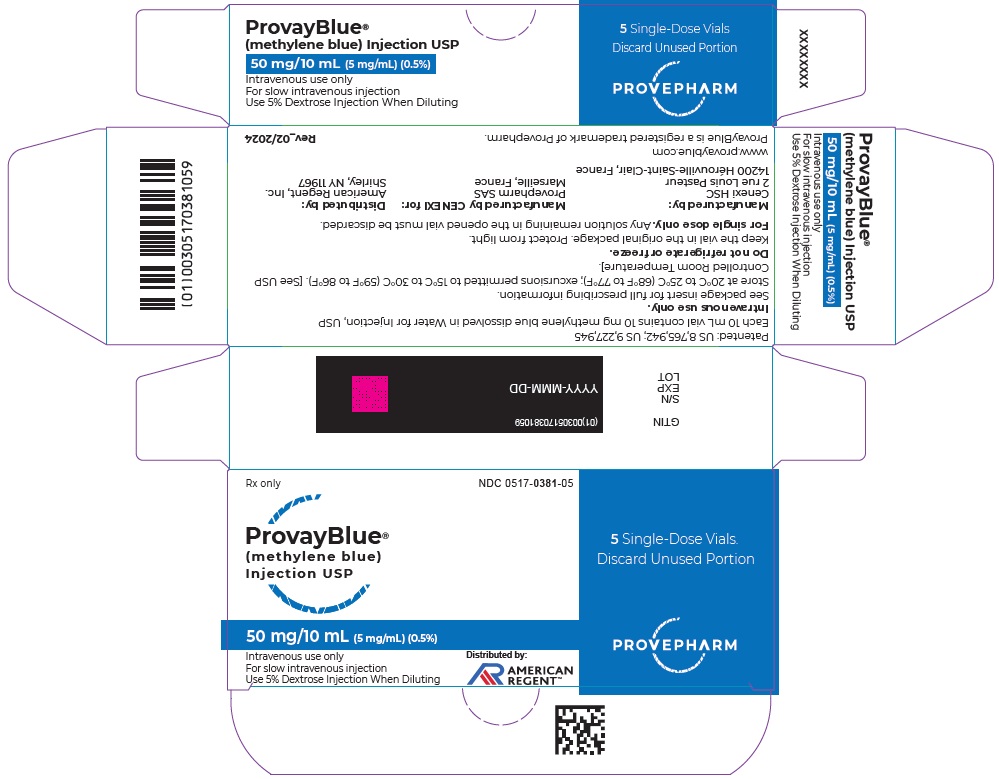
PROVAYBLUE methylene blue 5 mg/mL Injection
🆔 Identity & classification
Where does this data come from?
🏷️ RxNorm drug class
This medicine belongs to the Oxidation-Reduction Agent class.
Where does this data come from?
🏭 Manufacturer & labeler
Where does this data come from?
🩺 Clinical
- Methylene blue injection is used to treat a condition called acquired methemoglobinemia — that's when something (like certain chemicals, medications, or toxins) causes a form of he...
- What exactly is methylene blue used for?
- Yes, very likely. Methylene blue is a dye, and about 40% of it passes out of your body through the urine unchanged. Blue or blue-green urine after treatment is expected and not a c...
- Will my urine turn blue after getting this?
Patient education
Supplement & herbal interactions
Some supplements/herbs that may interact with Methylene Blue — tap one for details:
Where does this data come from?
Ask a licensed pharmacist directly — free, answered by our team.
🧪 Inactive Ingredients / Excipients
Inactive ingredients, also called excipients, are components of the drug product other than the active ingredient. They may include fillers, dyes, coatings, preservatives, flavors, or other formulation ingredients.
Where does this data come from?
IACT rows and label-wide narrative are kept separate; availability and product-level specificity depend on the submitted label.Inactive ingredient FAQ
Are inactive ingredients the same for every manufacturer?
Why might an inactive ingredient be missing?
Can inactive ingredients matter?
💲 Pricing
A drug doesn't have one price. Each row is a different public payment system, and none is what you'd pay at the counter — that depends on your insurance. The ⓘ on each row explains what it measures.
| Price system | Per each | Per package |
|---|---|---|
| Retail pharmacies payNADAC · weekly | Not in the retail survey — common for institutional, discontinued, or low-volume packs. | |
| Medicaid paysCMS SDUD · 12 mo | No recent Medicaid claims on file for this NDC — rare and low-volume NDCs are suppressed in the public data. | |
| Medicare drug plans payPart D · quarterly | No Part D plan price is available for this NDC in our data. | |
Where does this data come from?
🔁 Therapeutic equivalents
| Product | Labeler | Pack | NADAC/unit | TE | Status | Price vs. this |
|---|---|---|---|---|---|---|
| Methylene blue 5 mg/mL 00143-9094-05 | Hikma | 5 vials | — | AP | FDA listed | — |
| Provayblue 5 mg/mL 00517-0374-05 | American | 5 ampules | — | AP | FDA listed | — |
| Provayblue 5 mg/mLthis 00517-0381-05 | American | 5 vials | — | AP | FDA listed | — |
| Methylene Blue 5 mg/mL 14789-0119-05 | Nexus | 5 vials | — | AP | FDA listed | — |
| Methylene Blue 5 mg/mL 15243-0344-05 | OLIC | 5 vials | — | AP | FDA listed | — |
| Methylene Blue 50 mg/10mL 68462-0698-15 | GLENMARK | 5 vials | — | AP | FDA listed | — |
| Methylene blue 5 mg/mL 70121-2715-02 | Amneal | 10 ampules | — | AP | FDA listed | — |
| Methylene Blue 50 mg/10mL 70700-0328-24 | XIROMED, | 5 vials | — | AP | FDA listed | — |
| Methylene blue 5 mg/mL 70710-1838-05 | Zydus | 5 vials | — | — | FDA listed | — |
| Methylene blue 5 mg/mL 70771-1768-05 | Zydus | 5 vials | — | — | FDA listed | — |
| Methylene Blue 5 mg/mL 71288-0811-11 | Meitheal | 5 vials | — | AP | FDA listed | — |
| Methylene Blue 50 mg/10mL 82432-0104-02 | Chengdu | 5 vials | — | AP | FDA listed | — |
| Methylene blue 50 mg/10mL 82449-0002-06 | Steriscience | 5 ampules | — | AP | FDA listed | — |
| Methylene blue 5 mg/mL 70121-2716-02 | Amneal | 5 syringes | — | AP | FDA listed | — |
| Provayblue 5 mg/mL 00517-0125-05 | American | 5 ampules | — | AP | FDA listed | — |
| Methylene blue 5 mg/mL 70771-1767-05 | Zydus | 5 vials | — | — | FDA listed | — |
| Provayblue 5 mg/mL 00517-0371-05 | American | 5 vials | — | AP | FDA listed | — |
| Methylene blue 5 mg/mL 70710-1837-05 | Zydus | 5 vials | — | — | FDA listed | — |
Where does this data come from?
⏳ Availability & generic status
The FDA lists approved generic versions of this medicine, but that does not always mean a pharmacy can get one today. Patent rules, launch agreements, supply and pricing can affect when generics actually arrive.
Why the date isn’t exact: Generic timing can change because patents may be challenged, settled, licensed, added, removed, or worked around with a narrower label — and FDA approval does not always mean a pharmacy can get the generic today.
🛈 What do these terms mean?
- Patent
- Legal protection listed in the Orange Book that may delay generic approval or launch. Issued by the U.S. Patent & Trademark Office.
- Substance patent
- Covers the active drug molecule itself — the hardest to design around. A generic generally can’t launch until it expires.
- Formulation (product) patent
- Covers a specific formulation or dosage form. A generic can sometimes work around it with a different formulation.
- Method-of-use patent
- A patent covering one specific approved use of the drug — not necessarily the whole molecule. A generic can sometimes launch with a “skinny label” that carves out the protected use and keeps the others.
- Skinny label
- A generic label that omits a still-patented use when the FDA allows it — letting a generic reach the market for the unprotected uses.
- Exclusivity
- FDA-granted marketing protection, separate from patents — e.g. 5-yr new chemical entity, 7-yr orphan drug, or a +6-month pediatric extension.
- Paragraph IV
- A generic applicant’s formal challenge to a listed patent. It can potentially lead to earlier generic entry, but often involves litigation or a settlement.
- RLD / RS
- Reference Listed Drug — the brand product the FDA uses as the reference for generic applications. Reference Standard — the product the FDA expects generics to compare against in bioequivalence testing.
- TE / AB rating
- FDA therapeutic-equivalence rating. An AB rating generally means the FDA considers a generic therapeutically equivalent to — and substitutable for — the brand.
- LOE (loss of exclusivity)
- The latest patent or exclusivity currently listed — the loss-of-exclusivity / latest-listed-protection date shown on this page. Paragraph-IV challenges and settlements can move the real date earlier; FDA approval and a manufacturer’s decision to market can move it later.
Built from the FDA Orange Book. The bars above are scaled to each protection’s expiry; the red LOE marker is the last one to lapse.
| Code | What it grants | Expires |
|---|---|---|
| M-303 | New indication / labeling change (3-year) | Jan 8, 2027 |
| M-303 | New indication / labeling change (3-year) | Jan 8, 2027 |
Is there a generic version of PROVAYBLUE 50 MG/10 ML VIAL?
The FDA approved a generic — why can’t I get it at my pharmacy yet?
Why do different websites show different generic release dates?
What does “FDA listed” mean?
What does a patent or protection date mean here?
What does “current Orange Book estimate” mean?
Can a generic come out before the last patent expires?
Can a generic come out after the listed dates?
What is the difference between patents and exclusivity?
Why are there multiple patent dates?
Where does this data come from?
🔬 Reported adverse events (FAERS)
Top reported reactions
Age at onset
Reporter sex
Serious outcomes
Where does this data come from?
📦 Packaging — all sizes for this product
| Package NDC | Description | Marketing start | Status |
|---|---|---|---|
| 00517-0381-05 You're viewing this | 5 VIAL, SINGLE-DOSE in 1 CARTON (0517-0381-05) / 10 mL in 1 VIAL, SINGLE-DOSE (0517-0381-01) | 2021-12-31 | Active |
🧭 About this NDC listing & data coverage
What data is (and isn’t) available for this NDC — tap to expand
| NDC identity (package / product / labeler codes) | ✓ Available |
| Labeler | ✓ Available |
| Product & package description | ✓ Available |
| Marketing category & status | ✓ Available |
| Active ingredient / dosage form / route | ✓ Available |
| FDA label (SPL via DailyMed) | ✓ Available |
| Package photos | ✓ Available |
| Inactive ingredients (structured) | — Not published for this NDC The labeler did not submit a structured excipient list, or no SPL is available. |
| NADAC pharmacy acquisition price (CMS) | — Not published for this NDC CMS publishes NADAC only for NDCs reported in its retail-pharmacy survey. |
| Orange Book / therapeutic-equivalence data | ✓ Available |
| HCPCS J-code billing crosswalk | — Not published for this NDC Most self-administered / retail products have no J-code — that is normal. |
| Medicaid utilization (CMS SDUD) | — Not published for this NDC CMS reports utilization only for NDCs with Medicaid claims above its privacy threshold. |
Questions about this listing
Why is there no price listed?
Is the NDC printed on the package the same as the 11-digit billing NDC?
What do the three segments of this NDC mean?
Is this package still being marketed?
Who lists this product with the FDA?
Do I need a prescription for this product?
Where does this data come from?
📄 Full prescribing information FDA SPL
🚨 Boxed Warning ▾
WARNING: SEROTONIN SYNDROME WITH CONCOMITANT USE OF SEROTONERGIC DRUGS AND OPIOIDS PROVAYBLUE may cause serious or fatal serotonergic syndrome when used in combination with serotonergic drugs and opioids. Avoid concomitant use of PROVAYBLUE with selective serotonin reuptake inhibitors (SSRIs), serotonin norepinephrine reuptake inhibitors (SNRIs), monoamine oxidase inhibitors (MAOIs) and opioids. [see Warnings and Precautions ( 5.1 ) and Drug Interactions ( 7.1 )]. WARNING: SEROTONIN SYNDROME WITH CONCOMITANT USE OF SEROTONERGIC DRUGS AND OPIOIDS See full prescribing information for complete boxed warning.
PROVAYBLUE may cause serious or fatal serotonergic syndrome when used in combination with serotonergic drugs and opioids. Avoid concomitant use of PROVAYBLUE with selective serotonin reuptake inhibitors (SSRIs), serotonin norepinephrine reuptake inhibitors (SNRIs), monoamine oxidase inhibitors (MAOIs) and opioids. ( 5.1 , 7.1 )
🎯 Indications and Usage ▾
1 INDICATIONS AND USAGE PROVAYBLUE is indicated for the treatment of pediatric and adult patients with acquired methemoglobinemia. PROVAYBLUE (methylene blue) is an oxidation-reduction agent indicated for the treatment of pediatric and adult patients with acquired methemoglobinemia.
⏱️ Dosage and Administration ▾
2 DOSAGE AND ADMINISTRATION Administer 1 mg/kg intravenously over 5-30 minutes. ( 2.1 ) If methemoglobin level remains above 30% or if clinical symptoms persist, give a repeat dose of up to 1 mg/kg one hour after the first dose. ( 2.1 ) Administer a single dose of 1 mg/kg in patients with moderate or severe renal impairment. ( 2.2 )
2.1Dosage and Administration Ensure patent venous access prior to administration of PROVAYBLUE. Do not administer PROVAYBLUE subcutaneously. Administer PROVAYBLUE 1 mg/kg intravenously over 5-30 minutes.
If the methemoglobin level remains greater than 30% or if clinical signs and symptoms persist, a repeat dose of PROVAYBLUE 1 mg/kg may be given one hour after the first dose. If methemoglobinemia does not resolve after 2 doses of PROVAYBLUE, consider initiating alternative interventions for treatment of methemoglobinemia.
2.2Recommended Dosage for Renal Impairment The recommended dosage of PROVAYBLUE in patients with moderate or severe renal impairment (eGFR 15-59 mL/min/1.73 m 2 ) is a single dose of 1 mg/kg. If the methemoglobin level remains greater than 30% or if the clinical symptoms persist 1 hour after dosing, consider initiating alternative interventions for the treatment of methemoglobinemia.
2.3Preparation PROVAYBLUE is hypotonic and may be diluted before use in a solution of 50 mL 5% Dextrose Injection in order to avoid local pain, particularly in the pediatric population. Use the diluted solution immediately after preparation. Avoid diluting with sodium chloride solutions, because it has been demonstrated that chloride reduces the solubility of methylene blue.
Parenteral drug products should be inspected visually for particulate matter and discoloration prior to administration, whenever solution and container permit. Discard unused portion.
💊 Dosage Forms and Strengths ▾
3 DOSAGE FORMS AND STRENGTHS PROVAYBLUE (methylene blue) injection, USP : 50 mg/10 mL (5 mg/mL) or 10 mg/2 mL (5 mg/mL) clear dark blue solution in single-dose ampules or single-dose vials. 50 mg/10 mL (5 mg/mL) single-dose ampule. ( 3 ) 10 mg/2 mL (5 mg/mL) single-dose ampule. ( 3 ) 50 mg/10 mL (5 mg/mL) single-dose vial. ( 3 ) 10 mg/2 mL (5 mg/mL) single-dose vial. ( 3 )
⛔ Contraindications ▾
4 CONTRAINDICATIONS PROVAYBLUE is contraindicated in the following conditions: Severe hypersensitivity reactions to methylene blue or any other thiazine dye [see Warnings and Precautions ( 5.2 )] . Patients with glucose-6-phosphate dehydrogenase deficiency (G6PD) due to the risk of hemolytic anemia [see Warnings and Precautions ( 5.3 , 5.4 )]. PROVAYBLUE is contraindicated in the following conditions ( 4 ): Severe hypersensitivity to methylene blue Patients with glucose-6-phosphate dehydrogenase deficiency (G6PD) due to the risk of hemolytic anemia
⚠️ Warnings and Cautions ▾
5 WARNINGS AND PRECAUTIONS Hypersensitivity: If severe or life threatening allergic reaction occurs, discontinue PROVAYBLUE, treat the allergic reaction, and monitor until signs and symptoms resolve ( 5.2 ) Lack of Effectiveness: Consider alternative treatments if there is no resolution of methemoglobinemia after 2 doses ( 2.1 , 5.3 ) Hemolytic Anemia: Discontinue PROVAYBLUE and transfuse ( 5.4 ) Interference with In-Vivo Monitoring Devices: Use methods other than pulse oximetry to assess oxygen saturation ( 5.5 ) Effects on Ability to Drive and Operate Machinery: Advise patients to refrain from these activities until neurologic and visual symptoms have resolved ( 5.6 )
5.1Serotonin Syndrome with Concomitant Use of Serotonergic Drugs and Opioids The development of serotonin syndrome has been reported with the use of methylene blue class products. Most reports have been associated with concomitant use of serotonergic drugs (e.g., selective serotonin reuptake inhibitors (SSRIs), serotonin and norepinephrine reuptake inhibitors (SNRIs), monoamine oxidase inhibitors (MAOIs). Opioids and dextromethorphan may increase the risk of developing serotonin syndrome.
Some of the reported cases were fatal. Symptoms associated with serotonin syndrome may include the following combination of signs and symptoms: mental status changes (e.g., agitation, hallucinations, delirium, and coma), autonomic instability (e.g., tachycardia, labile blood pressure, dizziness, diaphoresis, flushing, and hyperthermia), neuromuscular symptoms (e.g., tremor, rigidity, myoclonus, hyperreflexia, and incoordination), seizures, and/or gastrointestinal symptoms (e.g., nausea, vomiting, diarrhea). Avoid concomitant use of PROVAYBLUE with serotonergic drugs and opioids.
Patients treated with PROVAYBLUE should be monitored for the emergence of serotonin syndrome. If symptoms of serotonin syndrome occur, discontinue use of PROVAYBLUE, and initiate supportive treatment. Inform patients of the increased risk of serotonin syndrome and advise them to not to take serotonergic drugs within 72 hours after the last dose of PROVAYBLUE [see Drug Interactions ( 7 ), Patient Counseling Information ( 17 )] .
5.2Hypersensitivity Anaphylactic reactions to methylene blue class products have been reported. Patients treated with PROVAYBLUE should be monitored for anaphylaxis. If anaphylaxis or other severe hypersensitivity reactions (e.g., angioedema, urticaria, bronchospasm) should occur, discontinue use of PROVAYBLUE and initiate supportive treatment.
PROVAYBLUE is contraindicated in patients who have experienced anaphylaxis or other severe hypersensitivity reactions to a methylene blue class product in the past.
5.3Lack of Effectiveness Methemoglobinemia may not resolve or may rebound after response to treatment with PROVAYBLUE in patients with methemoglobinemia due to aryl amines such as aniline or sulfa drugs such as dapsone. Monitor response to therapy with PROVAYBLUE through resolution of methemoglobinemia. If methemoglobinemia does not respond to 2 doses of PROVAYBLUE or if methemoglobinemia rebounds after a response, consider additional treatment options [see Dosage and Administration ( 2.2 )] .
Patients with glucose-6-phosphate dehydrogenase deficiency may not reduce PROVAYBLUE to its active form in vivo . PROVAYBLUE may not be effective in patients with glucose-6-phosphate dehydrogenase (G6PD) deficiency.
5.4Hemolytic Anemia Hemolysis can occur during treatment of methemoglobinemia with PROVAYBLUE. Laboratory testing may show Heinz bodies, elevated indirect bilirubin and low haptoglobin, but the Coombs test is negative. The onset of anemia may be delayed 1 or more days after treatment with PROVAYBLUE.
The anemia may require red blood cell transfusions [see Adverse Reactions ( 6.1 )]. Use the lowest effective number of doses of PROVAYBLUE to treat methemoglobinemia. Discontinue PROVAYBLUE and consider alternative treatments of methemoglobinemia if severe hemolysis occurs.
T…
🤒 Adverse Reactions ▾
6 ADVERSE REACTIONS The following adverse reactions are discussed in greater detail in other sections of the labeling: Serotonin Syndrome with Concomitant Use of Serotonergic Drugs [see Warnings and Precautions ( 5.1 )] Anaphylaxis [see Warnings and Precautions ( 5.2 )] Lack of Effectiveness [see Warnings and Precautions ( 5.3 )] Hemolytic Anemia [see Warnings and Precautions ( 5.4 )] Interference with In-Vivo Monitoring Devices [see Warnings and Precautions ( 5.5 )] Effects on Ability to Drive and Operate Machinery [see Warnings and Precautions ( 5.6 )] Interference with Laboratory Tests [see Warnings and Precautions ( 5.7 )] The most commonly reported adverse reactions (>2%) included headache, hypokalemia, diarrhea, hypomagnesemia, myoclonus, nausea, and seizure-like phenomena.
( 6.1 ) To report SUSPECTED ADVERSE REACTIONS, contact American Regent at 1-800-734-9236, FDA at 1-800-FDA-1088 or www.fda.gov/medwatch .
6.1Clinical Trials Experience Because clinical trials are conducted under widely varying conditions, adverse reaction rates observed in the clinical trials of a drug cannot be directly compared to rates in the clinical trials of another drug and may not reflect the rates observed in practice. The safety of PROVAYBLUE in adults with acquired methemoglobinemia was assessed in 31 patients who received at least 1 dose of PROVAYBLUE [see Clinical Studies ( 14 )] . Most doses administered were 1 mg/kg (82.9%), but doses from 0.78 mg/kg to 2 mg/kg were administered.
All patients received at least one dose of PROVAYBLUE; two received two doses, and one received three doses. Serious adverse reactions occurred in 3.2% of patients who received PROVAYBLUE. A serious adverse reaction of seizure-like phenomenon was reported in one patient.
Adverse reactions (≥2%) included headache, hypokalemia, diarrhea, hypomagnesemia, myoclonus, nausea, and seizure-like phenomena. The safety of PROVAYBLUE in pediatric patients with acquired methemoglobinemia was assessed in two retrospective case series that included two pediatric patients treated with PROVAYBLUE and 12 treated with another methylene blue product. The case series included patients in the following age groups: 3 neonates (<1 month), 4 infants (1 month to <2 years), 4 children (2 years to <12 years), and 3 adolescents (12 years to <17 years).
The safety profile in pediatric patients was similar to that in adult patients. Other adverse reactions reported to occur following the administration of methylene blue class products include the following: Blood and lymphatic system disorders : hemolytic anemia, hemolysis, hyperbilirubinemia Cardiac disorders : palpitations, tachycardia Eye disorders : eye pruritus, ocular hyperemia, vision blurred Gastrointestinal disorders : abdominal pain lower, dry mouth, flatulence, glossodynia, tongue eruption General disorders and administration site conditions : death, infusion site extravasation, infusion site induration, infusion site pruritus, infusion site swelling, infusion site urticaria, peripheral swelling, thirst Investigations : elevated liver enzymes Musculoskeletal and connective tissue disorders : myalgia Renal and urinary disorders : dysuria Respiratory, thoracic and mediastinal disorders : nasal congestion, oropharyngeal pain, rhinorrhea, sneezing Skin and subcutaneous tissue disorders : necrotic ulcer, papule, phototoxicity Vascular disorders : hypertension
🔄 Drug Interactions ▾
7 DRUG INTERACTIONS Clinically significant drug interactions with PROVAYBLUE are described below: The concomitant use of PROVAYBLUE with other drugs that affect the serotonergic neurotransmitter system has resulted in serotonin syndrome. Although the mechanism is not clearly understood, literature reports suggest PROVAYBLUE is a potent reversible inhibitor of monoamine oxidase. Avoid concomitant use of PROVAYBLUE with medicinal products that enhance serotonergic transmission including antidepressants like SSRIs (selective serotonin reuptake inhibitors), SNRIs (serotonin and norepinephrine reuptake inhibitors), MAOIs (monoamine oxidase inhibitors), bupropion, buspirone, clomipramine, mirtazapine, linezolid, opioids, and dextromethorphan because of the potential for serious CNS reactions, including potentially fatal serotonin syndrome.
If the intravenous use of PROVAYBLUE cannot be avoided in patients treated with serotonergic medicinal products, choose the lowest possible dose and observe the patient closely for CNS effects for up to 4 hours after administration [see Warning and Precautions ( 5.1 ) and Clinical Pharmacology ( 12.3 )].
👥 Use in Specific Populations ▾
8 USE IN SPECIFIC POPULATIONS Pregnancy: Only use during pregnancy if the potential benefit justifies the potential risk to the fetus. ( 8.1 ) Lactation: Discontinue breast-feeding for up to 8 days after treatment. ( 8.2 ) Hepatic Impairment: Monitor patients longer for toxicity and drug interactions due to delayed clearance. ( 8.7 )
8.1Pregnancy Risk Summary PROVAYBLUE may cause fetal harm when administered to a pregnant woman. Intra-amniotic injection of pregnant women with a methylene blue class product during the second trimester was associated with neonatal intestinal atresia and fetal death. Methylene blue produced adverse developmental outcomes in rats and rabbits when administered orally during organogenesis at doses at least 32 and 16 times, respectively, the clinical dose of 1 mg/kg (see Data ) .
Advise pregnant women of the potential risk to a fetus. In the U.S. general population, the estimated background risks of major birth defects and miscarriage in clinically recognized pregnancies are 2-4% and 15-20%, respectively. Clinical Considerations Fetal/neonatal adverse reactions Intra-amniotic injection of a methylene blue class product hours to days prior to birth can result hyperbilirubinemia, hemolytic anemia, skin staining, methemoglobinemia, respiratory distress and photosensitivity in the newborn.
Following administration of PROVAYBLUE to a pregnant woman at term, observe the newborn for these adverse reactions and institute supportive care. Data Animal Data Methylene blue was administered orally to pregnant rats at doses of 50 to 350 mg/kg/day, during the period of organogenesis. Maternal and embryofetal toxicities were observed at all doses of methylene blue and were most evident at the 200 and 350 mg/kg/day doses.
Maternal toxicity consisted of increased spleen weight. Embryo-fetal toxicities included reduced fetal weight, post-implantation loss, edema, and malformations including enlarged lateral ventricles. The dose of 200 mg/kg (1200 mg/m 2 ) in rats is approximately 32 times a clinical dose of 1 mg/kg based on body surface area.
Methylene blue was administered orally to pregnant rabbits at doses of 50, 100, or 150 mg/kg/day, during the period of organogenesis. Maternal death was observed at the methylene blue dose of 100 mg/kg. Embryofetal toxicities included spontaneous abortion at all dose levels and a malformation (umbilical hernia) at the 100 and 150 mg/kg/day doses.
The dose of 50 mg/kg (600 mg/m 2 ) in rabbits is approximately 16 times a clinical dose of 1 mg/kg based on body surface area.
8.2Lactation Risk Summary There is no information regarding the presence of methylene blue in human milk, the effects on the breastfed infant, or the effects on milk production. Because of the potential for serious adverse reactions including genotoxicity, discontinue breast-feeding during and for up to 8 days after treatment with PROVAYBLUE [see Clinical Pharmacology ( 12.3 )] .
8.4Pediatric Use The safety and effectiveness of PROVAYBLUE for the treatment of acquired methemoglobinemia have been established in pediatric patients. Use of PROVAYBLUE is supported by two retrospective case series that included 2 pediatric patients treated with PROVAYBLUE and 12 treated with another methylene blue class product. The case series included pediatric patients in the following age groups: 3 neonates (less than 1 month), 4 infants (1 month up to less than 2 years), 4 children (2 years up to less than 12 years), and 3 adolescents (12 years to less than 17 years).
The efficacy outcomes were consistent across pediatric and adult patients in both case series [see Clinical Studies ( 14 )].
8.5Geriatric Use Clinical studies of PROVAYBLUE did not include sufficient numbers of subjects aged 65 and over to determine whether they respond differently from younger subjects. Other reported clinical experience has not identified differences in responses between the elderly and younger patients. PROVAYBLUE is known to be substantially…
🤰 Pregnancy ▾
8.1Pregnancy Risk Summary PROVAYBLUE may cause fetal harm when administered to a pregnant woman. Intra-amniotic injection of pregnant women with a methylene blue class product during the second trimester was associated with neonatal intestinal atresia and fetal death. Methylene blue produced adverse developmental outcomes in rats and rabbits when administered orally during organogenesis at doses at least 32 and 16 times, respectively, the clinical dose of 1 mg/kg (see Data ) .
Advise pregnant women of the potential risk to a fetus. In the U.S. general population, the estimated background risks of major birth defects and miscarriage in clinically recognized pregnancies are 2-4% and 15-20%, respectively. Clinical Considerations Fetal/neonatal adverse reactions Intra-amniotic injection of a methylene blue class product hours to days prior to birth can result hyperbilirubinemia, hemolytic anemia, skin staining, methemoglobinemia, respiratory distress and photosensitivity in the newborn.
Following administration of PROVAYBLUE to a pregnant woman at term, observe the newborn for these adverse reactions and institute supportive care. Data Animal Data Methylene blue was administered orally to pregnant rats at doses of 50 to 350 mg/kg/day, during the period of organogenesis. Maternal and embryofetal toxicities were observed at all doses of methylene blue and were most evident at the 200 and 350 mg/kg/day doses.
Maternal toxicity consisted of increased spleen weight. Embryo-fetal toxicities included reduced fetal weight, post-implantation loss, edema, and malformations including enlarged lateral ventricles. The dose of 200 mg/kg (1200 mg/m 2 ) in rats is approximately 32 times a clinical dose of 1 mg/kg based on body surface area.
Methylene blue was administered orally to pregnant rabbits at doses of 50, 100, or 150 mg/kg/day, during the period of organogenesis. Maternal death was observed at the methylene blue dose of 100 mg/kg. Embryofetal toxicities included spontaneous abortion at all dose levels and a malformation (umbilical hernia) at the 100 and 150 mg/kg/day doses.
The dose of 50 mg/kg (600 mg/m 2 ) in rabbits is approximately 16 times a clinical dose of 1 mg/kg based on body surface area.
🧒 Pediatric Use ▾
8.4Pediatric Use The safety and effectiveness of PROVAYBLUE for the treatment of acquired methemoglobinemia have been established in pediatric patients. Use of PROVAYBLUE is supported by two retrospective case series that included 2 pediatric patients treated with PROVAYBLUE and 12 treated with another methylene blue class product. The case series included pediatric patients in the following age groups: 3 neonates (less than 1 month), 4 infants (1 month up to less than 2 years), 4 children (2 years up to less than 12 years), and 3 adolescents (12 years to less than 17 years).
The efficacy outcomes were consistent across pediatric and adult patients in both case series [see Clinical Studies ( 14 )].
🧓 Geriatric Use ▾
8.5Geriatric Use Clinical studies of PROVAYBLUE did not include sufficient numbers of subjects aged 65 and over to determine whether they respond differently from younger subjects. Other reported clinical experience has not identified differences in responses between the elderly and younger patients. PROVAYBLUE is known to be substantially excreted by the kidney, so the risk of adverse reactions to this drug may be greater in patients with impaired renal function.
Because elderly patients are more likely to have decreased renal function, treatment of methemoglobinemia in these patients should use the lowest number of doses needed to achieve a response [see Dosage and Administration ( 2 )] .
🆘 Overdosage ▾
10 OVERDOSAGE Hypotension, wheezing and reduced oxygenation have been reported in patients who received methylene blue class products in single doses of 3 mg/kg or more. Administration of large intravenous doses (cumulative dose ≥ 7 mg/kg ) of a methylene blue class product caused nausea, vomiting, precordial pain, dyspnea, tachypnea, chest tightness, tachycardia, apprehension, tremor, mydriasis, blue staining of the urine, the skin and mucous membranes, abdominal pain, dizziness, paresthesia, headache, confusion, mild methemoglobinemia (up to 7%) and electrocardiogram changes (T-wave flattening or inversion).
These effects lasted 2-12 hours following administration. A severe overdosage (single dose of 20 mg/kg or more) of a methylene blue class product caused severe intravascular hemolysis, hyperbilirubinemia and death. In case of overdose of PROVAYBLUE, maintain the patient under observation until signs and symptoms have resolved, monitor for cardiopulmonary, hematologic and neurologic toxicities, and institute supportive measures as necessary.
🧬 Clinical Pharmacology ▾
12 CLINICAL PHARMACOLOGY
12.1Mechanism of Action Methylene blue is a water soluble thiazine dye that promotes a non-enyzmatic redox conversion of metHb to hemoglobin. In situ, methylene blue is first converted to leucomethylene blue (LMB) via NADPH reductase. It is the LMB molecule which then reduces the ferric iron of metHb to the ferrous state of normal hemoglobin.
12.2Pharmacodynamics Low concentrations of methylene blue speeds up the in vivo conversion of methemoglobin to hemoglobin. Methylene blue has been observed to stain tissues selectively. The exposure-response or –safety relationship for methylene is unknown. Cardiac Electrophysiology The results of a thorough QT study demonstrated PROVAYBLUE at an intravenous dose of 2 mg/kg as a 5-minute intravenous infusion had no effect on the QT, PR or QRS intervals.
12.3Pharmacokinetics The mean (CV%) Cmax and AUC of methylene blue 2,917 ng/mL (39%) and 13977 ng.hr/mL (21%) following a 2 mg/kg dose administered as a 5-minute intravenous infusion. Distribution The mean± standard deviation steady state volume of distribution of a 2 mg/kg dose of PROVAYBLUE was 255 L ± 58. The mean plasma protein binding of methylene blue is approximately 94% in vitro.
Methylene blue exhibits concentration-dependent partitioning into blood cells in vitro. The blood-to-plasma ratio was 5.1±2.8 at 5 minutes from the start of a 2 mg/kg dose administered as a 5-minute intravenous infusion and reached a plateau of 0.6 at 4 hours in a clinical study. Methylene Blue is a substrate for the P-glycoprotein (P-gp, ABCB1) transporter, but not for BCRP or OCT2 in vitro.
Elimination Methylene blue has a half-life of approximately 24 hours in humans. Metabolism Methylene blue is metabolized by CYPs 1A2, 2C19 and 2D6 in vitro; however, the predominant in vitro pathway appears to be UGT-mediated conjugation by multiple UGT enzymes, including UGT1A4 and UGT1A9. Azure B, which is a minor impurity in methylene blue, is also formed in humans as a metabolite of methylene blue, with an overall drug/metabolite AUC ratio of greater than 6:1.
Azure B has 8-fold lower potency than methylene blue. Excretion Approximately 40% of methylene blue is excreted into the urine unchanged. Specific Populations Renal Impairment After a single 1 mg/kg dose of PROVAYBLUE, AUC 0-96h increased by 52%, 116%, and 192% in subjects with mild (estimated glomerular filtration rate (eGFR) 60 – 89 mL/min/1.73 m 2 ), moderate (eGFR 30-59 mL/min/1.73m 2 ), and severe (eGFR 15-29 mL/min/1.732m 2 ) renal impairment, respectively.
Cmax increased by 42%, 34%, and 15% in subjects with mild, moderate, and severe renal impairment respectively [see Dosage and Administration ( 2.2 ) and Use in Specific Populations ( 8.6 )] . The half-life was unchanged in patients with mild to moderate renal impairment. The AUC 0-96h of Azure B after a single 1 mg/kg dose increased by 29%, 94%, and 339% in subjects with mild (estimated glomerular filtration rate (eGFR) 60 – 89 mL/min/1.73 m 2 ), moderate (eGFR 30-59 mL/min/1.73m 2 ), and severe (eGFR 15-29 mL/min/1.732m 2 ) renal impairment, respectively.
C max increased by 23%, 13%, and 65% in subjects with mild, moderate, and severe renal impairment, respectively [see Dosage and Administration ( 2.2 ) and Use in Specific Populations ( 8.6 )] Drug Interactions Studies Clinical Studies: The coadministration of 2 mg/kg dose of PROVAYBLUE with midazolam (a CYP3A4 substrate), caffeine (a CYP1A2 substrate), warfarin (a CYP2C9 substrate), and dextromethorphan (a CYP2D6 substrate) in a cocktail study did not affect the exposure of these substrates compared to their exposure without PROVAYBLUE administration.
In Vitro Studies: Cytochrome P450 (CYP450) Enzymes : Methylene blue inhibits CYP isozymes 1A2, 2B6, 2C8, 2C9, 2C19, 2D6 and 3A4/5. Possible time-dependent inhibition of CYP2C9, CYP2D6 and CYP3A4/5 (testosterone as substrate) was also observed. Methylene blue induces CYP1A2 but does not induce CYP2B6 or CYP3A4.
UDP-Glucuron…
🧬 Mechanism of Action ▾
12.1Mechanism of Action Methylene blue is a water soluble thiazine dye that promotes a non-enyzmatic redox conversion of metHb to hemoglobin. In situ, methylene blue is first converted to leucomethylene blue (LMB) via NADPH reductase. It is the LMB molecule which then reduces the ferric iron of metHb to the ferrous state of normal hemoglobin.
📦 How Supplied / Storage and Handling ▾
16 HOW SUPPLIED/STORAGE AND HANDLING PROVAYBLUE (methylene blue) injection, USP : is supplied in 10 mL and 2 mL single-dose ampules or single-dose vials. Each 10 mL ampule and vial contains 50 mg of methylene blue as a clear dark blue solution. Each 2 mL ampule and vial contains 10 mg of methylene blue as a clear dark blue solution.
A box contains five ampules or vials. Box of 5 ampules of 50 mg/10 mL: NDC 0517-0374-05 Box of 5 ampules of 10 mg/2 mL: NDC 0517-0125-05 Box of 5 vials of 50 mg/10 mL: NDC 0517-0381-05 Box of 5 vials of 10 mg/2 mL: NDC 0517-0371-05 Storage: Store at 20°C to 25°C (68°F to 77°F); excursions permitted to 15°C to 30°C (59°F to 86°F). [See USP Controlled Room Temperature] Any unused product or waste material should be disposed of in accordance with local practice. Do not refrigerate or freeze .
Keep the ampule or the vial in the original package to protect from light.
📋 Description ▾
11 DESCRIPTION Methylene blue is an oxidation-reduction agent. Its chemical name is 3,7-bis(dimethylamino)phenothiazin-5-ium, chloride hydrate. The molecular formula of methylene blue is C 16 H 18 ClN 3 S.xH 2 O and its molecular weight of 319.86 g/mol for the anhydrous form.
The structural formula of methylene blue is: PROVAYBLUE (methylene blue) injection USP is a sterile solution intended for intravenous administration. Each mL of solution contains 5 mg methylene blue and water for injection. PROVAYBLUE (methylene blue) injection, USP: is a clear dark blue solution with a pH value between 3.0 and 4.5.
The osmolality is between 10 and 15 mOsm/kg. PROVAYBLUE (methylene blue) injection strength is expressed in terms of trihydrate. Figure
💬 Information for Patients ▾
17 PATIENT COUNSELING INFORMATION Serotonin Syndrome Advise patients of the possibility of serotonin syndrome, especially with concomitant use of serotonergic agents such as medications to treat depression and migraines. Advise patients to seek immediate medical attention if the following symptoms occur after treatment with PROVAYBLUE: changes in mental status, autonomic instability, or neuromuscular symptoms with or without gastrointestinal symptoms [see Warnings and Precautions ( 5.1 )]. Pregnancy Advise pregnant women of the potential risk to the fetus with the use of PROVAYBLUE during pregnancy [see Use in Specific populations ( 8.1 )].
Breastfeeding Advise patients to discontinue breast-feeding for up to 8 days after treatment with PROVAYBLUE [see Use in Specific populations ( 8.2 )] . Driving and Using Machines Advise patients to avoid driving and use of machines during treatment with PROVAYBLUE. Driving can be affected as a result of a confusional state, dizziness and possible eye disturbances [see Warnings and Precautions ( 5.6 )] .
Phototoxicity Advise patients to take protective measures against exposure to light, because phototoxicity may occur after administration of methylene blue [see Adverse Reactions ( 6.1 )] . Skin and Body Fluid Blue Discoloration Advise patients that PROVAYBLUE may cause a blue discoloration of the skin and body fluids [see Adverse Reactions ( 6.1 )]. Manufactured for: PROVEPHARM SAS 22 rue Marc Donadille 13013 Marseille, France Ampules manufactured by: CENEXI 52 rue Marcel et Jacques Gaucher 94120 Fontenay sous Bois, France Vials manufactured by: CENEXI HSC 2 rue Louis Pasteur 14200 Hérouville-Saint-Clair, France Distributed by: American Regent, Inc.
Shirley, NY 11967 Questions? : 1-800-734-9236