
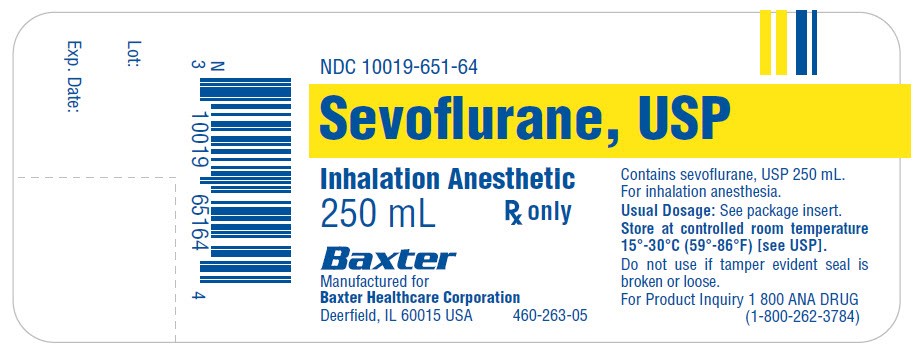
Sevoflurane 250 mL/250mL Liquid — NDC 10019-651-64 (Billing 10019-0651-64)
This is a package of Sevoflurane 250 mL/250mL Liquid from Baxter Healthcare Company, marketed since Jul 2002 and currently FDA-listed. It is this product's only package size.
Identity & classification
Regulatory identifiers FDA, NLM and CMS codes for this package
Drug-database identifiers Medi-Span GPI and First Databank GCN / HICL / AHFS classification
- GSN (GCN sequence number): 023743
- GCN: 12640
- GPI-14 (Medi-Span): 70200070002000
- HICL (First Databank): 010027
- AHFS class code: 28:04.16.00
- RxCUI (RxNorm): 200243
Where does this data come from?
- FDA openFDA NDC Directory · synced Oct 1, 2026
- FDA label on DailyMed · label index refreshed Oct 1, 2026
- RxNorm (NLM RxNav) · catalog refreshed Oct 1, 2026
- Medi-Span GPI (licensed)
- First Databank (licensed) · refreshed Oct 1, 2026
RxNorm drug class
This medicine belongs to the General Anesthetic class.
Where does this data come from?
- RxClass (NLM) · catalog refreshed Oct 1, 2026
Clinical
- It is a gas used to put you under general anesthesia and keep you there during surgery. It is approved for adults and children, for hospital and outpatient procedures.
- You breathe it in, often through a mask, while a trained anesthesia professional controls the amount. The dose is adjusted to how you respond. You won't be managing anything yourse...
- Nausea and vomiting are the most common, and some people feel sleepy, agitated, shivery or have a cough. Most are mild and short-lived. Tell your team if they seem severe.
- What side effects might I notice afterward?
Patient education
Supplement & herbal interactions
Some supplements/herbs that may interact with Sevoflurane — tap one for details:
Where does this data come from?
- MedlinePlus (NLM) · refreshed Oct 1, 2026
- FDA label on DailyMed · label index refreshed Oct 1, 2026
Ask a licensed pharmacist directly — free, answered by our team.
Pricing
A drug doesn't have one price. Each row is a different public payment system, and none is what you'd pay at the counter — that depends on your insurance. The ⓘ on each row explains what it measures.
| Price system | Per mL | Per package |
|---|---|---|
| Retail pharmacies payNADAC · weekly | Not in the retail survey — common for institutional, discontinued, or low-volume packs. | |
| Medicaid paysCMS SDUD · 12 mo | $7.65 | $11,478.30 / 1500 ml |
| Medicare drug plans payPart D · quarterly | No Part D plan price is available for this NDC in our data. | |
Where does this data come from?
- CMS NADAC weekly file
- CMS ASP pricing files · refreshed Sep 20, 2026
- CMS Medicaid State Drug Utilization Data · through Q1 2026
- CMS Part D plan pricing files · refreshed Sep 24, 2026
- VA National Acquisition Center price file
Packaging — all sizes for this product
| Package NDC | Description | Marketing start | Marketing end | Status |
|---|---|---|---|---|
| 10019-0651-64 You're viewing this Main listing | 6 BOTTLE in 1 CARTON / 250 mL in 1 BOTTLE | 2002-07-02 | — | Active |
Therapeutic equivalents
| Product | Labeler | Pack | NADAC/unit | TE | Status | Price vs. this |
|---|---|---|---|---|---|---|
| Ultane 250 mL/250mL 00074-4456-04 | AbbVie | 250 ml | — | AN | FDA listed | — |
| Sevoflurane 250 mL/250mL 00527-6123-74 | Lannett | 1 bottle | — | AN | FDA listed | — |
| Sevoflurane 250 mL/250mL 00781-6160-86 | Sandoz | 6 bottles | — | AN | FDA listed | — |
| Sevoflurane 250 mL/250mLthis 10019-0651-64 | Baxter | 6 bottles | — | AN | FDA listed | — |
| Sevoflurane 250 mL/250mL 10019-0653-64 | Baxter | 6 bottles | — | AN | FDA listed | — |
| Sevoflurane 250 mL/250mL 10019-0655-06 | Baxter | 6 bottles | — | AN | FDA listed | — |
| Sevoflurane 250 mL/250mL 10019-0657-06 | Baxter | 6 bottles | — | AN | FDA listed | — |
| Sevoflurane 1 mL/mL 12164-0005-25 | Halocarbon | 250 ml | — | AN | FDA listed | — |
| Sevoflurane 250 mL/250mL 42677-0308-01 | Shandong | 1 bottle | — | AN | FDA listed | — |
| Sojourn 1 mL/mL 66794-0012-10 | Piramal | 100 ml | — | AN | FDA listed | — |
| Sevoflurane 1 mL/mL 66794-0015-10 | Piramal | 100 ml | — | — | FDA listed | — |
| Sevoflurane 1 mL/mL 66794-0022-25 | Piramal | 250 ml | — | AN | FDA listed | — |
| Sevoflurane 1 mL/mL 72162-2245-02 | Bryant | 250 ml | — | AN | FDA listed | — |
| Sevoflurane, (Volatile for Inhalation) 250 mL/250mL 83301-0070-01 | Mullan | 1 bottle | — | AN | FDA listed | — |
Where does this data come from?
- FDA openFDA NDC Directory · synced Oct 1, 2026
- FDA Orange Book · refreshed Sep 3, 2026
- CMS NADAC weekly file
Availability & generic status
This product is an FDA-approved generic. Other versions of the same drug are listed under Therapeutic equivalents, least expensive first.
Where does this data come from?
- FDA Orange Book · refreshed Sep 3, 2026
Inactive Ingredients / Excipients
Inactive ingredients, also called excipients, are components of the drug product other than the active ingredient. They may include fillers, dyes, coatings, preservatives, flavors, or other formulation ingredients.
Where does this data come from?
IACT rows and label-wide narrative are kept separate; availability and product-level specificity depend on the submitted label.- FDA label on DailyMed · label index refreshed Oct 1, 2026
- FDA openFDA NDC Directory · synced Oct 1, 2026
Inactive ingredient FAQ
Are inactive ingredients the same for every manufacturer?
Why might an inactive ingredient be missing?
Can inactive ingredients matter?
Manufacturer & labeler
Where does this data come from?
- FDA openFDA NDC Directory · synced Oct 1, 2026
- Drugs@FDA
Full prescribing information FDA SPL
🎯 Indications and Usage ▾
INDICATIONS AND USAGE Sevoflurane is indicated for induction and maintenance of general anesthesia in adult and pediatric patients for inpatient and outpatient surgery. Sevoflurane should be administered only by persons trained in the administration of general anesthesia. Facilities for maintenance of a patent airway, artificial ventilation, oxygen enrichment, and circulatory resuscitation must be immediately available.
Since level of anesthesia may be altered rapidly, only vaporizers producing predictable concentrations of sevoflurane should be used.
⏱️ Dosage and Administration ▾
DOSAGE AND ADMINISTRATION The concentration of sevoflurane being delivered from a vaporizer should be known. This may be accomplished by using a vaporizer calibrated specifically for sevoflurane. The administration of general anesthesia must be individualized based on the patient’s response.
Replacement of Desiccated CO 2 Absorbents When a clinician suspects that the CO 2 absorbent may be desiccated, it should be replaced. The exothermic reaction that occurs with sevoflurane and CO 2 absorbents is increased when the CO 2 absorbent becomes desiccated, such as after an extended period of dry gas flow through the CO 2 absorbent canisters (see PRECAUTIONS ). Pre-anesthetic Medication No specific premedication is either indicated or contraindicated with sevoflurane.
The decision as to whether or not to premedicate and the choice of premedication is left to the discretion of the anesthesiologist. Induction Sevoflurane has a nonpungent odor and does not cause respiratory irritability; it is suitable for mask induction in pediatrics and adults. Maintenance Surgical levels of anesthesia can usually be achieved with concentrations of 0.5 - 3% sevoflurane with or without the concomitant use of nitrous oxide.
Sevoflurane can be administered with any type of anesthesia circuit. Table 9. MAC Values for Adults and Pediatric Patients According to Age Age of Patient (years) Sevoflurane in Oxygen Sevoflurane in 65% N 2 O/35% O 2 0 - 1 months Neonates are full term gestational age.
MAC in premature infants has not been determined. 3.3% 1 - < 6 months 3.0% 6 months - < 3 years 2.8% 2.0% In 1 - <3 year old pediatric patients, 60% N 2 O/40% O 2 was used. 3 - 12 2.5% 25 2.6% 1.4% 40 2.1% 1.1% 60 1.7% 0.9% 80 1.4% 0.7% Directions for Filling Vaporizers Filling occurs directly from the bottle via an integrated valve or, in case of a bottle without an integrated valve, with the use of an appropriate adaptor designed specifically to fit the sevoflurane vaporizer.
⛔ Contraindications ▾
CONTRAINDICATIONS • Known or suspected genetic susceptibility to malignant hyperthermia (see WARNINGS - Malignant Hyperthermia , CLINICAL PHARMACOLOGY – Pharmacogenomics ). • Known or suspected sensitivity to sevoflurane or to other halogenated inhalational anesthetics .
⚠️ Warnings ▾
WARNINGS Risk of Renal Injury Although data from controlled clinical studies at low flow rates are limited, findings taken from patient and animal studies suggest that there is a potential for renal injury which is presumed due to Compound A. Animal and human studies demonstrate that sevoflurane administered for more than 2 MAC‧hours and at fresh gas flow rates of < 2 L/min may be associated with proteinuria and glycosuria. While a level of Compound A exposure at which clinical nephrotoxicity might be expected to occur has not been established, it is prudent to consider all of the factors leading to Compound A exposure in humans, especially duration of exposure, fresh gas flow rate, and concentration of sevoflurane.
During sevoflurane anesthesia the clinician should adjust inspired concentration and fresh gas flow rate to minimize exposure to Compound A. To minimize exposure to Compound A, sevoflurane exposure should not exceed 2 MAC‧hours at flow rates of 1 to < 2 L/min. Fresh gas flow rates < 1 L/min are not recommended.
Because clinical experience in administering sevoflurane to patients with renal insufficiency (creatinine > 1.5 mg/dL) is limited, its safety in these patients has not been established. Sevoflurane may be associated with glycosuria and proteinuria when used for long procedures at low flow rates. The safety of low flow sevoflurane on renal function was evaluated in patients with normal preoperative renal function.
One study compared sevoflurane (N = 98) to an active control (N = 90) administered for ≥ 2 hours at a fresh gas flow rate of ≤ 1 Liter/minute. Per study defined criteria, one patient in the sevoflurane group developed elevations of creatinine, in addition to glycosuria and proteinuria. This patient received sevoflurane at fresh gas flow rates of ≤ 800 mL/minute.
Using these same criteria, there were no patients in the active control group who developed treatment emergent elevations in serum creatinine. Sevoflurane may present an increased risk in patients with known sensitivity to volatile halogenated anesthetic agents. KOH containing CO 2 absorbents are not recommended for use with sevoflurane.
Risk of Respiratory Depression Sevoflurane may cause respiratory depression, which may be augmented by opioid premedication or other agents causing respiratory depression. Monitor respiration and, if necessary, assist with ventilation (see PRECAUTIONS ). Risk of QT Prolongation Reports of QT prolongation, associated with torsade de pointes (in exceptional cases, fatal), have been received.
Caution should be exercised when administering sevoflurane to susceptible patients (e.g., patients with congenital Long QT Syndrome or patients taking drugs that can prolong the QT interval). Malignant Hyperthermia In susceptible individuals, volatile anesthetic agents, including sevoflurane, may trigger malignant hyperthermia, a skeletal muscle hypermetabolic state leading to high oxygen demand. Fatal outcomes of malignant hyperthermia have been reported.
In clinical studies of sevoflurane, 1 case of malignant hyperthermia was reported. The risk of developing malignant hyperthermia increases with the concomitant administration of succinylcholine and volatile anesthetic agents. Sevoflurane can induce malignant hyperthermia in patients with known or suspected susceptibility based on genetic factors or family history, including those with certain inherited ryanodine receptor ( RYR1 ) or dihydropyridine receptor ( CACNA1S ) variants (see CONTRAINDICATIONS , CLINICAL PHARMACOLOGY – Pharmacogenomics ).
Signs consistent with malignant hyperthermia may include hyperthermia, hypoxia, hypercapnia, muscle rigidity (e.g., jaw muscle spasm), tachycardia (e.g., particularly that unresponsive to deepening anesthesia or analgesic medication administration), tachypnea, cyanosis, arrhythmias, hypovolemia, and hemodynamic instability. Skin mottling, coagulopathies, and renal failure may occur later in the course of the hypermetabolic proces… [Excerpted — this section continues on DailyMed.]
🤒 Adverse Reactions ▾
ADVERSE REACTIONS Clinical Trials Experience Adverse events are derived from controlled clinical studies conducted in the United States, Canada, and Europe. The reference drugs were isoflurane, enflurane, and propofol in adults and halothane in pediatric patients. The studies were conducted using a variety of premedications, other anesthetics, and surgical procedures of varying length.
Most adverse events reported were mild and transient, and may reflect the surgical procedures, patient characteristics (including disease) and/or medications administered. Of the 5182 patients enrolled in the clinical studies, 2906 were exposed to sevoflurane, including 118 adults and 507 pediatric patients who underwent mask induction. Each patient was counted once for each type of adverse event.
Adverse events reported in patients in clinical studies and considered to be possibly or probably related to sevoflurane are presented within each body system in order of decreasing frequency in the following listings. One case of malignant hyperthermia was reported in pre-registration clinical studies. Adverse Events During the Induction Period (from Onset of Anesthesia by Mask Induction to Surgical Incision) Incidence > 1% Adult Patients (N = 118) Cardiovascular: Bradycardia 5%, Hypotension 4%, Tachycardia 2% Nervous System: Agitation 7% Respiratory System: Laryngospasm 8%, Airway obstruction 8%, Breathholding 5%, Cough Increased 5% Pediatric Patients (N = 507) Cardiovascular: Tachycardia 6%, Hypotension 4% Nervous System: Agitation 15% Respiratory System: Breathholding 5%, Cough Increased 5%, Laryngospasm 3%, Apnea 2% Digestive System: Increased salivation 2% Adverse Events During Maintenance and Emergence Periods, Incidence > 1% (N = 2906) Body as a whole: Fever 1%, Shivering 6%, Hypothermia 1%, Movement 1%, Headache 1% Cardiovascular: Hypotension 11%, Hypertension 2%, Bradycardia 5%, Tachycardia 2% Nervous System: Somnolence 9%, Agitation 9%, Dizziness 4%, Increased salivation 4% Digestive System: Nausea 25%, Vomiting 18% Respiratory System: Cough increased 11%, Breathholding 2%, Laryngospasm 2% Adverse Events, All Patients in Clinical Studies (N = 2906), All Anesthetic Periods, Incidence < 1% (Reported in 3 or more Patients) Body as a whole: Asthenia, Pain Cardiovascular: Arrhythmia, Ventricular Extrasystoles, Supraventricular Extrasystoles, Complete AV Block, Bigeminy, Hemorrhage, Inverted T Wave, Atrial Fibrillation, Atrial Arrhythmia, Second Degree AV Block, Syncope, S-T Depressed Nervous System: Crying, Nervousness, Confusion, Hypertonia, Dry Mouth, Insomnia Respiratory System: Sputum Increased, Apnea, Hypoxia, Wheezing, Bronchospasm, Hyperventilation, Pharyngitis, Hiccup, Hypoventilation, Dyspnea, Stridor Metabolism and Nutrition: Increases in LDH, AST, ALT, BUN, Alkaline Phosphatase, Creatinine, Bilirubinemia, Glycosuria, Fluorosis, Albuminuria, Hypophosphatemia, Acidosis, Hyperglycemia Hemic and Lymphatic System: Leucocytosis, Thrombocytopenia Skin and Special Senses: Amblyopia, Pruritus, Taste Perversion, Rash, Conjunctivitis Urogenital: Urination Impaired, Urine Abnormality, Urinary Retention, Oliguria See WARNINGS for information regarding malignant hyperthermia.
Postmarketing Experience The following adverse events have been identified during post-approval use of sevoflurane. Due to the spontaneous nature of these reports, the actual incidence and relationship of sevoflurane to these events cannot be established with certainty. Central Nervous System • Seizures: Postmarketing reports indicate that sevoflurane use has been associated with seizures.
The majority of cases were in children and young adults, most of whom had no medical history of seizures. Several cases reported no concomitant medications, and at least one case was confirmed by EEG. Although many cases were single seizures that resolved spontaneously or after treatment, cases of multiple seizures have also been reported.
Seizures have occurred during, or soon after sevoflur… [Excerpted — this section continues on DailyMed.]
🔄 Drug Interactions ▾
Drug Interactions In clinical studies, no significant adverse reactions occurred with other drugs commonly used in the perioperative period, including central nervous system depressants, autonomic drugs, skeletal muscle relaxants, anti-infective agents, hormones and synthetic substitutes, blood derivatives, and cardiovascular drugs. Epinephrine Epinephrine administered with sevoflurane may increase the risk of ventricular arrhythmias. Monitor the electrocardiogram and blood pressure and ensure emergency medications to treat ventricular arrhythmias are readily available.
Calcium antagonists Sevoflurane may lead to marked hypotension in patients treated with calcium antagonists. Blood pressure should be closely monitored and emergency medications to treat hypotension should be readily available when calcium antagonists are used concomitantly with sevoflurane. In animals, impairment of atrioventricular conduction has been observed when verapamil and sevoflurane are administered concomitantly.
Succinylcholine See WARNINGS - Perioperative Hyperkalemia . Non-selective MAO-inhibitors Concomitant use of MAO inhibitors and inhalational anesthetics may increase the risk of hemodynamic instability during surgery or medical procedures. Intravenous Anesthetics Sevoflurane administration is compatible with barbiturates, propofol, and other commonly used intravenous anesthetics.
Benzodiazepines and Opioids Benzodiazepines and opioids would be expected to decrease the MAC of sevoflurane in the same manner as with other inhalational anesthetics. Sevoflurane administration is compatible with benzodiazepines and opioids as commonly used in surgical practice. Nitrous Oxide As with other halogenated volatile anesthetics, the anesthetic requirement for sevoflurane is decreased when administered in combination with nitrous oxide.
Using 50% N 2 O, the MAC equivalent dose requirement is reduced approximately 50% in adults, and approximately 25% in pediatric patients (see DOSAGE AND ADMINISTRATION ). Neuromuscular Blocking Agents As is the case with other volatile anesthetics, sevoflurane increases both the intensity and duration of neuromuscular blockade induced by nondepolarizing muscle relaxants. When used to supplement alfentanil-N 2 O anesthesia, sevoflurane and isoflurane equally potentiate neuromuscular block induced with pancuronium, vecuronium or atracurium.
Therefore, during sevoflurane anesthesia, the dosage adjustments for these muscle relaxants are similar to those required with isoflurane. Potentiation of neuromuscular blocking agents requires equilibration of muscle with delivered partial pressure of sevoflurane. Reduced doses of neuromuscular blocking agents during induction of anesthesia may result in delayed onset of conditions suitable for endotracheal intubation or inadequate muscle relaxation.
Among available nondepolarizing agents, only vecuronium, pancuronium and atracurium interactions have been studied during sevoflurane anesthesia. In the absence of specific guidelines: 1. For endotracheal intubation, do not reduce the dose of nondepolarizing muscle relaxants.
2. During maintenance of anesthesia, the required dose of nondepolarizing muscle relaxants is likely to be reduced compared to that during N 2 O/opioid anesthesia. Administration of supplemental doses of muscle relaxants should be guided by the response to nerve stimulation.
The effect of sevoflurane on the duration of depolarizing neuromuscular blockade induced by succinylcholine has not been studied.
🤰 Pregnancy ▾
Pregnancy Risk Summary There are no adequate and well-controlled studies in pregnant women. In animal reproduction studies, reduced fetal weights were noted following exposure to 1 MAC sevoflurane for three hours a day during organogenesis. Developmental and reproductive toxicity studies of sevoflurane in animals in the presence of strong alkalies (i.e., degradation of sevoflurane and production of Compound A) have not been conducted.
Published studies in pregnant primates demonstrate that the administration of anesthetic and sedation drugs that block NMDA receptors and/or potentiate GABA activity during the period of peak brain development increases neuronal apoptosis in the developing brain of the offspring when used for longer than 3 hours. There are no data on pregnancy exposures in primates corresponding to periods prior to the third trimester in humans. The estimated background risk of major birth defects and miscarriage for the indicated population is unknown.
All pregnancies have a background risk of birth defect, loss, or other adverse outcomes. In the U.S. general population, the estimated background risk of major birth defects and miscarriage in clinically recognized pregnancies is 2-4% and 15-20%, respectively. Data Animal Data Pregnant rats were treated with sevoflurane (0.22%, 0.66%, or 2.2% equals 0.1, 0.3, or
1.0MAC) without CO 2 absorbent for three hours per day during organogenesis (from Gestation Day 7 to 17). Fetuses obtained by Cesarean section were examined on Gestation Day 20 while some animals were maintained for littering and pups were examined for adverse effects. There were no adverse effects on fetuses at
0.3MAC. Reduced fetal body weights and increased skeletal variations such as delayed ossifications in the presence of maternal toxicity (reduced food and water intake and body weight of the dams) were noted at 1 MAC. In dams allowed to litter, reduced pup bodyweight gain and evidence of developmental delays (slight delay in eyelid opening and increased incidence of nonreactive animals in the visual placing reflex test) were noted in the
1.0MAC treatment group. Pregnant rabbits were treated with sevoflurane (0.1, 0.3, or
1.0MAC) without CO 2 absorbent for three hours per day during organogenesis (from Gestation Day 6 to 18). There were no adverse effects on the fetus at any dose; the mid- and high-dose produced a 5% and 6% decrease in maternal body weight, respectively. In another study, pregnant rats were administered sevoflurane (0.1, 0.3, or
1.0MAC) from Gestation Day 17 to Postnatal Day 21. Pup body weights were reduced in the
1.0MAC treatment group in the absence of maternal toxicity. There was no effect of sevoflurane on sensory function (visual, auditory, nociception, righting reflexes), motor (roto-rod), open field test, or learning tasks (shuttle box avoidance and water T-maze). In a published study in primates, administration of an anesthetic dose of ketamine for 24 hours on Gestation Day 122 increased neuronal apoptosis in the developing brain of the fetus.
In other published studies, administration of either isoflurane or propofol for 5 hours on Gestation Day 120 resulted in increased neuronal and oligodendrocyte apoptosis in the developing brain of the offspring. With respect to brain development, this time period corresponds to the third trimester of gestation in the human. The clinical significance of these findings is not clear; however, studies in juvenile animals suggest neuroapoptosis correlates with long-term cognitive deficits (see WARNINGS - Pediatric Neurotoxicity , PRECAUTIONS - Pediatric Use , ANIMAL TOXICOLOGY AND/OR PHARMACOLOGY ).
🧒 Pediatric Use ▾
Pediatric Use Induction and maintenance of general anesthesia with sevoflurane have been established in controlled clinical studies in pediatric patients aged 1 to 18 years (see CLINICAL STUDIES , ADVERSE REACTIONS ). Sevoflurane has a nonpungent odor and is suitable for mask induction in pediatric patients. The concentration of sevoflurane required for maintenance of general anesthesia is age dependent.
When used in combination with nitrous oxide, the MAC equivalent dose of sevoflurane should be reduced in pediatric patients. MAC in premature infants has not been determined (see PRECAUTIONS - Drug Interactions , DOSAGE AND ADMINISTRATION for recommendations in pediatric patients 1 day of age and older). The use of sevoflurane has been associated with seizures (see PRECAUTIONS , ADVERSE REACTIONS ).
The majority of these have occurred in children and young adults starting from 2 months of age, most of whom had no predisposing risk factors. Clinical judgement should be exercised when using sevoflurane in patients who may be at risk for seizures. Cases of life-threatening ventricular arrhythmias have been reported in pediatric patients with Pompe disease (also commonly known as glycogen storage disease type II or acid maltase deficiency).
In a published case series about a clinical trial of patients with infantile-onset Pompe disease, six percent of patients (9 of 139, with 6 of 9 having received sevoflurane) experienced arrhythmias after induction of anesthesia. Reported arrhythmias included severe bradycardia, torsade de pointes, and fatal ventricular fibrillation, which usually resolved after treatment with pharmacologic agents and defibrillation. Avoid induction and maintenance of anesthesia using sole agents, such as sevoflurane, that decrease systemic vascular resistance or diastolic blood pressure.
Published juvenile animal studies demonstrate that the administration of anesthetic and sedation drugs, such as sevoflurane, that either block NMDA receptors or potentiate the activity of GABA during the period of rapid brain growth or synaptogenesis, results in widespread neuronal and oligodendrocyte cell loss in the developing brain and alterations in synaptic morphology and neurogenesis. Based on comparisons across species, the window of vulnerability to these changes is believed to correlate with exposures in the third trimester of gestation through the first several months of life, but may extend out to approximately 3 years of age in humans.
In primates, exposure to 3 hours of ketamine that produced a light surgical plane of anesthesia did not increase neuronal cell loss; however, treatment regimens of 5 hours or longer of isoflurane increased neuronal cell loss. Data from isoflurane-treated rodents and ketamine-treated primates suggest that the neuronal and oligodendrocyte cell losses are associated with prolonged cognitive deficits in learning and memory. The clinical significance of these nonclinical findings is not known, and healthcare providers should balance the benefits of appropriate anesthesia in pregnant women, neonates, and young children who require procedures with the potential risks suggested by the nonclinical data (see WARNINGS - Pediatric Neurotoxicity , PRECAUTIONS - Pregnancy , ANIMAL TOXICOLOGY AND/OR PHARMACOLOGY ).
Use in Pediatric Patients with Down Syndrome See WARNINGS - Bradycardia in Down Syndrome .
🧓 Geriatric Use ▾
Geriatric Use MAC decreases with increasing age. The average concentration of sevoflurane to achieve MAC in an 80 year old is approximately 50% of that required in a 20 year old.
🆘 Overdosage ▾
OVERDOSAGE In the event of overdosage, or what may appear to be overdosage, the following action should be taken: discontinue administration of sevoflurane, maintain a patent airway, initiate assisted or controlled ventilation with oxygen, and maintain adequate cardiovascular function.
🧬 Clinical Pharmacology ▾
CLINICAL PHARMACOLOGY Sevoflurane is an inhalational anesthetic agent for use in induction and maintenance of general anesthesia. Minimum alveolar concentration (MAC) of sevoflurane in oxygen for a 40-year-old adult is 2.1%. The MAC of sevoflurane decreases with age (see DOSAGE AND ADMINISTRATION for details).
Pharmacokinetics Uptake and Distribution Solubility Because of the low solubility of sevoflurane in blood (blood/gas partition coefficient @ 37°C = 0.63-0.69), a minimal amount of sevoflurane is required to be dissolved in the blood before the alveolar partial pressure is in equilibrium with the arterial partial pressure. Therefore, there is a rapid rate of increase in the alveolar (end-tidal) concentration (F A ) toward the inspired concentration (F I ) during induction. Induction of Anesthesia In a study in which seven healthy male volunteers were administered 70% N 2 O/30%O 2 for 30 minutes followed by 1.0% sevoflurane and 0.6% isoflurane for another 30 minutes the F A /F I ratio was greater for sevoflurane than isoflurane at all time points.
The time for the concentration in the alveoli to reach 50% of the inspired concentration was 4-8 minutes for isoflurane and approximately 1 minute for sevoflurane. F A /F I data from this study were compared with F A /F I data of other halogenated anesthetic agents from another study. When all data were normalized to isoflurane, the uptake and distribution of sevoflurane was shown to be faster than isoflurane and halothane, but slower than desflurane.
The results are depicted in Figure 3. Recovery from Anesthesia The low solubility of sevoflurane facilitates rapid elimination via the lungs. The rate of elimination is quantified as the rate of change of the alveolar (end-tidal) concentration following termination of anesthesia (F A ), relative to the last alveolar concentration (F ao ) measured immediately before discontinuance of the anesthetic.
In the healthy volunteer study described above, rate of elimination of sevoflurane was similar compared with desflurane, but faster compared with either halothane or isoflurane. These results are depicted in Figure 4. Figure 3.
Ratio of Concentration of Anesthetic in Alveolar Gas to Inspired Gas Figure 4 - Concentration of Anesthetic in Alveolar Gas Following Termination of Anesthesia Protein Binding The effects of sevoflurane on the displacement of drugs from serum and tissue proteins have not been investigated. Other fluorinated volatile anesthetics have been shown to displace drugs from serum and tissue proteins in vitro . The clinical significance of this is unknown.
Clinical studies have shown no untoward effects when sevoflurane is administered to patients taking drugs that are highly bound and have a small volume of distribution (e.g., phenytoin). Metabolism Sevoflurane is metabolized by cytochrome P450 2E1, to hexafluoroisopropanol (HFIP) with release of inorganic fluoride and CO 2 . Once formed HFIP is rapidly conjugated with glucuronic acid and eliminated as a urinary metabolite.
No other metabolic pathways for sevoflurane have been identified. In vivo metabolism studies suggest that approximately 5% of the sevoflurane dose may be metabolized. Cytochrome P450 2E1 is the principal isoform identified for sevoflurane metabolism and this may be induced by chronic exposure to isoniazid and ethanol.
This is similar to the metabolism of isoflurane and enflurane and is distinct from that of methoxyflurane which is metabolized via a variety of cytochrome P450 isoforms. The metabolism of sevoflurane is not inducible by barbiturates. As shown in Figure 5, inorganic fluoride concentrations peak within 2 hours of the end of sevoflurane anesthesia and return to baseline concentrations within 48 hours post-anesthesia in the majority of cases (67%).
The rapid and extensive pulmonary elimination of sevoflurane minimizes the amount of anesthetic available for metabolism. Legend: Pre-Anesth. = Pre-anesthesia Figure 5 - Serum Inorganic Fluoride Con… [Excerpted — this section continues on DailyMed.]
📦 How Supplied / Storage and Handling ▾
HOW SUPPLIED Sevoflurane, USP, Volatile Liquid for Inhalation, is available as: NDC 10019-651-64 - Aluminum bottle with plastic screw-on cap containing 250 mL sevoflurane, USP. NDC 10019-655-06 - Aluminum bottle with an integrated crimped-on valve closure containing 250 mL sevoflurane, USP. SAFETY AND HANDLING Occupational Caution There is no specific work exposure limit established for sevoflurane.
However, the National Institute for Occupational Safety and Health has recommended an 8 hour time-weighted average limit of 2 ppm for halogenated anesthetic agents in general (0.5 ppm when coupled with exposure to N 2 O) (see ADVERSE REACTIONS ). Storage Store at controlled room temperature, 15°- 30°C (59°- 86°F). See USP.
The bottle cap should be replaced securely after each use of sevoflurane, USP.
📦 Storage and Handling ▾
Storage Store at controlled room temperature, 15°- 30°C (59°- 86°F). See USP. The bottle cap should be replaced securely after each use of sevoflurane, USP.
📋 Description ▾
DESCRIPTION Sevoflurane, USP, volatile liquid for inhalation, a nonflammable and nonexplosive liquid administered by vaporization, is a halogenated general inhalation anesthetic drug. Sevoflurane, USP is fluoromethyl 2,2,2,-trifluoro-1-(trifluoromethyl) ethyl ether and its structural formula is: Sevoflurane, USP, Physical Constants are: Molecular weight 200.05 Boiling point at 760 mm Hg 58.6°C Specific gravity at 20°C 1.520 - 1.525 Vapor pressure in mm Hg 157 mm Hg at 20°C 197 mm Hg at 25°C 317 mm Hg at 36°C Distribution Partition Coefficients at 37°C: Blood/Gas 0.63 -
0.69 Water/Gas
0.36 Olive Oil/Gas 47 - 54 Brain/Gas
1.15Mean Component/Gas Partition Coefficients at 25°C for Polymers Used Commonly in Medical Applications: Conductive rubber
14.0 Butyl rubber
7.7 Polyvinylchloride
17.4 Polyethylene
1.3Sevoflurane, USP is nonflammable and nonexplosive as defined by the requirements of International Electrotechnical Commission 601-2-13. Sevoflurane, USP is a clear, colorless, liquid containing no additives. Sevoflurane, USP is not corrosive to stainless steel, brass, aluminum, nickel-plated brass, chrome-plated brass or copper beryllium.
Sevoflurane, USP is nonpungent. It is miscible with ethanol, ether, chloroform, and benzene, and it is slightly soluble in water. Sevoflurane, USP is stable when stored under normal room lighting conditions according to instructions.
No discernible degradation of sevoflurane, USP occurs in the presence of strong acids or heat. When in contact with alkaline CO 2 absorbents (e.g., Baralyme ® and to a lesser extent soda lime) within the anesthesia machine, Sevoflurane, USP can undergo degradation under certain conditions. Degradation of sevoflurane, USP is minimal, and degradants are either undetectable or present in non-toxic amounts when used as directed with fresh absorbents.
Sevoflurane, USP degradation and subsequent degradant formation are enhanced by increasing absorbent temperature increased sevoflurane, USP concentration, decreased fresh gas flow and desiccated CO 2 absorbents (especially with potassium hydroxide containing absorbents e.g., Baralyme). Sevoflurane, USP alkaline degradation occurs by two pathways. The first results from the loss of hydrogen fluoride with the formation of pentafluoroisopropenyl fluoromethyl ether, (PIFE, C 4 H 2 F 6 O), also known as Compound A, and trace amounts of pentafluoromethoxy isopropyl fluoromethyl ether, (PMFE, C 5 H 6 F 6 O), also known as Compound B.
The second pathway for degradation of sevoflurane, USP, which occurs primarily in the presence of desiccated CO 2 absorbents, is discussed later. In the first pathway, the defluorination pathway, the production of degradants in the anesthesia circuit results from the extraction of the acidic proton in the presence of a strong base (KOH and/or NaOH) forming an alkene (Compound A) from sevoflurane, USP similar to formation of 2-bromo-2-chloro-1,1-difluoro ethylene (BCDFE) from halothane. Laboratory simulations have shown that the concentration of these degradants is inversely correlated with the fresh gas flow rate (See Figure 1).
Since the reaction of carbon dioxide with absorbents is exothermic, the temperature increase will be determined by quantities of CO 2 absorbed, which in turn will depend on fresh gas flow in the anesthesia circle system, metabolic status of the patient, and ventilation. The relationship of temperature produced by varying levels of CO 2 and Compound A production is illustrated in the following in vitro simulation where CO 2 was added to a circle absorber system. Compound A concentration in a circle absorber system increases as a function of increasing CO 2 absorbent temperature and composition (Baralyme producing higher levels than soda lime), increased body temperature, and increased minute ventilation, and decreasing fresh gas flow rates.
It has been reported that the concentration of Compound A increases significantly with prolonged dehydration of Baralyme. Compound A expo… [Excerpted — this section continues on DailyMed.]
💬 Information for Patients ▾
Information for Patients Risk of Driving and Operating Machinery Advise patients that performance of activities requiring mental alertness, such as driving or operating machinery, may be impaired after sevoflurane anesthesia (see WARNINGS ). Effect of anesthetic and sedation drugs on early brain development Studies conducted in young animals and children suggest repeated or prolonged use of general anesthetic or sedation drugs in children younger than 3 years may have negative effects on their developing brains. Discuss with parents and caregivers the benefits, risks, and timing and duration of surgery or procedures requiring anesthetic and sedation drugs (see WARNINGS - Pediatric Neurotoxicity ).
⚠️ Precautions ▾
PRECAUTIONS During the maintenance of anesthesia, increasing the concentration of sevoflurane produces dose-dependent decreases in blood pressure. Due to sevoflurane insolubility in blood, these hemodynamic changes may occur more rapidly than with other volatile anesthetics. Excessive decreases in blood pressure or respiratory depression may be related to depth of anesthesia and may be corrected by decreasing the inspired concentration of sevoflurane.
Rare cases of seizures have been reported in association with sevoflurane use (see PRECAUTIONS - Pediatric Use , ADVERSE REACTIONS ). The recovery from general anesthesia should be assessed carefully before a patient is discharged from the post-anesthesia care unit. Information for Patients Risk of Driving and Operating Machinery Advise patients that performance of activities requiring mental alertness, such as driving or operating machinery, may be impaired after sevoflurane anesthesia (see WARNINGS ).
Effect of anesthetic and sedation drugs on early brain development Studies conducted in young animals and children suggest repeated or prolonged use of general anesthetic or sedation drugs in children younger than 3 years may have negative effects on their developing brains. Discuss with parents and caregivers the benefits, risks, and timing and duration of surgery or procedures requiring anesthetic and sedation drugs (see WARNINGS - Pediatric Neurotoxicity ). Drug Interactions In clinical studies, no significant adverse reactions occurred with other drugs commonly used in the perioperative period, including central nervous system depressants, autonomic drugs, skeletal muscle relaxants, anti-infective agents, hormones and synthetic substitutes, blood derivatives, and cardiovascular drugs.
Epinephrine Epinephrine administered with sevoflurane may increase the risk of ventricular arrhythmias. Monitor the electrocardiogram and blood pressure and ensure emergency medications to treat ventricular arrhythmias are readily available. Calcium antagonists Sevoflurane may lead to marked hypotension in patients treated with calcium antagonists.
Blood pressure should be closely monitored and emergency medications to treat hypotension should be readily available when calcium antagonists are used concomitantly with sevoflurane. In animals, impairment of atrioventricular conduction has been observed when verapamil and sevoflurane are administered concomitantly. Succinylcholine See WARNINGS - Perioperative Hyperkalemia .
Non-selective MAO-inhibitors Concomitant use of MAO inhibitors and inhalational anesthetics may increase the risk of hemodynamic instability during surgery or medical procedures. Intravenous Anesthetics Sevoflurane administration is compatible with barbiturates, propofol, and other commonly used intravenous anesthetics. Benzodiazepines and Opioids Benzodiazepines and opioids would be expected to decrease the MAC of sevoflurane in the same manner as with other inhalational anesthetics.
Sevoflurane administration is compatible with benzodiazepines and opioids as commonly used in surgical practice. Nitrous Oxide As with other halogenated volatile anesthetics, the anesthetic requirement for sevoflurane is decreased when administered in combination with nitrous oxide. Using 50% N 2 O, the MAC equivalent dose requirement is reduced approximately 50% in adults, and approximately 25% in pediatric patients (see DOSAGE AND ADMINISTRATION ).
Neuromuscular Blocking Agents As is the case with other volatile anesthetics, sevoflurane increases both the intensity and duration of neuromuscular blockade induced by nondepolarizing muscle relaxants. When used to supplement alfentanil-N 2 O anesthesia, sevoflurane and isoflurane equally potentiate neuromuscular block induced with pancuronium, vecuronium or atracurium. Therefore, during sevoflurane anesthesia, the dosage adjustments for these muscle relaxants are similar to those required with isoflurane.
Potentiation of neuromuscular blocking agents r… [Excerpted — this section continues on DailyMed.]
🍼 Nursing Mothers ▾
Nursing Mothers It is not known whether sevoflurane or its metabolites are present in human milk. To minimize infant exposure to sevoflurane or its metabolites, a nursing mother may temporarily pump, and discard breast milk produced during the first 24 hours after administration of sevoflurane. Exercise caution when administering sevoflurane to a nursing mother.
🧬 Pharmacokinetics ▾
Pharmacokinetics Uptake and Distribution Solubility Because of the low solubility of sevoflurane in blood (blood/gas partition coefficient @ 37°C = 0.63-0.69), a minimal amount of sevoflurane is required to be dissolved in the blood before the alveolar partial pressure is in equilibrium with the arterial partial pressure. Therefore, there is a rapid rate of increase in the alveolar (end-tidal) concentration (F A ) toward the inspired concentration (F I ) during induction. Induction of Anesthesia In a study in which seven healthy male volunteers were administered 70% N 2 O/30%O 2 for 30 minutes followed by 1.0% sevoflurane and 0.6% isoflurane for another 30 minutes the F A /F I ratio was greater for sevoflurane than isoflurane at all time points.
The time for the concentration in the alveoli to reach 50% of the inspired concentration was 4-8 minutes for isoflurane and approximately 1 minute for sevoflurane. F A /F I data from this study were compared with F A /F I data of other halogenated anesthetic agents from another study. When all data were normalized to isoflurane, the uptake and distribution of sevoflurane was shown to be faster than isoflurane and halothane, but slower than desflurane.
The results are depicted in Figure 3. Recovery from Anesthesia The low solubility of sevoflurane facilitates rapid elimination via the lungs. The rate of elimination is quantified as the rate of change of the alveolar (end-tidal) concentration following termination of anesthesia (F A ), relative to the last alveolar concentration (F ao ) measured immediately before discontinuance of the anesthetic.
In the healthy volunteer study described above, rate of elimination of sevoflurane was similar compared with desflurane, but faster compared with either halothane or isoflurane. These results are depicted in Figure 4. Figure 3.
Ratio of Concentration of Anesthetic in Alveolar Gas to Inspired Gas Figure 4 - Concentration of Anesthetic in Alveolar Gas Following Termination of Anesthesia Protein Binding The effects of sevoflurane on the displacement of drugs from serum and tissue proteins have not been investigated. Other fluorinated volatile anesthetics have been shown to displace drugs from serum and tissue proteins in vitro . The clinical significance of this is unknown.
Clinical studies have shown no untoward effects when sevoflurane is administered to patients taking drugs that are highly bound and have a small volume of distribution (e.g., phenytoin). Metabolism Sevoflurane is metabolized by cytochrome P450 2E1, to hexafluoroisopropanol (HFIP) with release of inorganic fluoride and CO 2 . Once formed HFIP is rapidly conjugated with glucuronic acid and eliminated as a urinary metabolite.
No other metabolic pathways for sevoflurane have been identified. In vivo metabolism studies suggest that approximately 5% of the sevoflurane dose may be metabolized. Cytochrome P450 2E1 is the principal isoform identified for sevoflurane metabolism and this may be induced by chronic exposure to isoniazid and ethanol.
This is similar to the metabolism of isoflurane and enflurane and is distinct from that of methoxyflurane which is metabolized via a variety of cytochrome P450 isoforms. The metabolism of sevoflurane is not inducible by barbiturates. As shown in Figure 5, inorganic fluoride concentrations peak within 2 hours of the end of sevoflurane anesthesia and return to baseline concentrations within 48 hours post-anesthesia in the majority of cases (67%).
The rapid and extensive pulmonary elimination of sevoflurane minimizes the amount of anesthetic available for metabolism. Legend: Pre-Anesth. = Pre-anesthesia Figure 5 - Serum Inorganic Fluoride Concentration for Sevoflurane and Other Volatile Anesthetics Elimination Up to 3.5% of the sevoflurane dose appears in the urine as inorganic fluoride. Studies on fluoride indicate that up to 50% of fluoride clearance is nonrenal (via fluoride being taken up into bone).
Pharmacokinetics of Fluoride Ion Fluoride io… [Excerpted — this section continues on DailyMed.]
🧬 Pharmacodynamics ▾
Pharmacodynamics Changes in the depth of sevoflurane anesthesia rapidly follow changes in the inspired concentration. In the sevoflurane clinical program, the following recovery variables were evaluated: 1. Time to events measured from the end of study drug: • Time to removal of the endotracheal tube (extubation time) • Time required for the patient to open his/her eyes on verbal command (emergence time) • Time to respond to simple command (e.g., squeeze my hand) or demonstrates purposeful movement (response to command time, orientation time) 2.
Recovery of cognitive function and motor coordination was evaluated based on: • psychomotor performance tests (Digit Symbol Substitution Test [DSST], Trieger Dot Test) • the results of subjective (Visual Analog Scale [VAS]) and objective (objective pain-discomfort scale [OPDS]) measurements • time to administration of the first post-anesthesia analgesic medication • assessments of post-anesthesia patient status 3. Other recovery times were: • time to achieve an Aldrete Score of ≥ 8 • time required for the patient to be eligible for discharge from the recovery area, per standard criteria at site • time when the patient was eligible for discharge from the hospital • time when the patient was able to sit up or stand without dizziness Some of these variables are summarized as follows: Table 2.
Induction and Recovery Variables for Evaluable Pediatric Patients in Two Comparative Studies: Sevoflurane versus Halothane Time to End-Point (min) Sevoflurane Mean ± SEM Halothane Mean ± SEM Induction 2.0 ± 0.2 (n = 294) 2.7 ± 0.2 (n = 252) Emergence 11.3 ± 0.7 (n = 293) 15.8 ± 0.8 (n = 252) Response to command 13.7 ± 1.0 (n = 271) 19.3 ± 1.1 (n = 230) First analgesia 52.2 ± 8.5 (n = 216) 67.6 ± 10.6 (n = 150) Eligible for recovery discharge 76.5 ± 2.0 (n = 292) 81.1 ± 1.9 (n = 246) n = number of patients with recording of events.
Table 3. Recovery Variables for Evaluable Adult Patients in Two Comparative Studies: Sevoflurane versus Isoflurane Time to Parameter: (min) Sevoflurane Mean ± SEM Isoflurane Mean ± SEM Emergence 7.7 ± 0.3 (n = 395) 9.1 ± 0.3 (n = 348) Response to command 8.1 ± 0.3 (n = 395) 9.7 ± 0.3 (n = 345) First analgesia 42.7 ± 3.0 (n = 269) 52.9 ± 4.2 (n = 228) Eligible for recovery discharge 87.6 ± 5.3 (n = 244) 79.1 ± 5.2 (n = 252) n = number of patients with recording of recovery events. Table 4.
Meta-Analyses for Induction and Emergence Variables for Evaluable Adult Patients in Comparative Studies: Sevoflurane versus Propofol Parameter No. of Studies Sevoflurane Mean ± SEM Propofol Mean ± SEM Mean maintenance anesthesia exposure 3
1.0MAC‧hr. ± 0.8 (n = 259) 7.2 mg/kg/hr ± 2.6 (n = 258) Time to induction: (min) 1 3.1 ±
0.18Propofol induction of one sevoflurane group = mean of 178.8 mg ±
72.5SD (n = 165) (n = 93) 2.2 ±
0.18Propofol induction of all propofol groups = mean of 170.2 mg ±
60.6SD (n = 245) (n = 93) Time to emergence: (min) 3 8.6 ± 0.57 (n = 255) 11.0 ± 0.57 (n = 260) Time to respond to command: (min) 3 9.9 ± 0.60 (n = 257) 12.1 ± 0.60 (n = 260) Time to first analgesia: (min) 3 43.8 ± 3.79 (n = 177) 57.9 ± 3.68 (n = 179) Time to eligibility for recovery discharge: (min) 3 116.0 ± 4.15 (n = 257) 115.6 ± 3.98 (n = 261) n = number of patients with recording of events. Cardiovascular Effects Sevoflurane was studied in 14 healthy volunteers (18-35 years old) comparing sevoflurane-O 2 (Sevo/O 2 ) to sevoflurane-N 2 O/O 2 (Sevo/N 2 O/O 2 ) during 7 hours of anesthesia.
During controlled ventilation, hemodynamic parameters measured are shown in Figures 7-10: Sevoflurane is a dose-related cardiac depressant. Sevoflurane does not produce increases in heart rate at doses less than 2 MAC. A study investigating the epinephrine induced arrhythmogenic effect of sevoflurane versus isoflurane in adult patients undergoing transsphenoidal hypophysectomy demonstrated that the threshold dose of epinephrine (i.e., the dose at which the first sign of arrhythmia was observed) producing mult… [Excerpted — this section continues on DailyMed.]
🔬 Clinical Studies ▾
CLINICAL STUDIES Sevoflurane was administered to a total of 3185 patients. The types of patients are summarized as follows: Table 5. Patients Receiving Sevoflurane in Clinical Studies Type of Patients Number Studied ADULT 2223 Cesarean Delivery 29 Cardiovascular and patients at risk of myocardial ischemia 246 Neurosurgical 22 Hepatic impairment 8 Renal impairment 35 PEDIATRIC 962 Clinical experience with these patients is described below.
Adult Anesthesia The efficacy of sevoflurane in comparison to isoflurane, enflurane, and propofol was investigated in 3 outpatient and 25 inpatient studies involving 3591 adult patients. Sevoflurane was found to be comparable to isoflurane, enflurane, and propofol for the maintenance of anesthesia in adult patients. Patients administered sevoflurane showed shorter times (statistically significant) to some recovery events (extubation, response to command, and orientation) than patients who received isoflurane or propofol.
Mask Induction Sevoflurane has a nonpungent odor and does not cause respiratory irritability. Sevoflurane is suitable for mask induction in adults. In 196 patients, mask induction was smooth and rapid, with complications occurring with the following frequencies: cough, 6%; breathholding, 6%; agitation, 6%; laryngospasm, 5%.
Ambulatory Surgery Sevoflurane was compared to isoflurane and propofol for maintenance of anesthesia supplemented with N 2 O in two studies involving 786 adult (18-84 years of age) ASA Class I, II, or III patients. Shorter times to emergence and response to commands (statistically significant) were observed with sevoflurane compared to isoflurane and propofol. Table 6.
Recovery Parameters in Two Outpatient Surgery Studies: Least Squares Mean ± SEM Sevoflurane/N 2 O Isoflurane/N 2 O Sevoflurane/N 2 O Propofol/N 2 O Mean Maintenance Anesthesia Exposure ± SD 0.64 ±
0.03MAC‧hr. (n = 245) 0.66 ±
0.03MAC‧hr. (n = 249) 0.8 ±
0.5MAC‧hr. (n = 166) 7.3 ± 2.3 mg/kg/hr (n = 166) Time to Emergence (min) 8.2 ± 0.4 (n = 246) 9.3 ± 0.3 (n = 251) 8.3 ± 0.7 (n = 137) 10.4 ± 0.7 (n = 142) Time to Respond to Commands (min) 8.5 ± 0.4 (n = 246) 9.8 ± 0.4 (n = 248) 9.1 ± 0.7 (n = 139) 11.5 ± 0.7 (n = 143) Time to First Analgesia (min) 45.9 ± 4.7 (n = 160) 59.1 ± 6.0 (n = 252) 46.1 ± 5.4 (n = 83) 60.0 ± 4.7 (n = 88) Time to Eligibility for Discharge from Recovery Area (min) 87.6 ± 5.3 (n = 244) 79.1 ± 5.2 (n = 252) 103.1 ± 3.8 (n = 139) 105.1 ± 3.7 (n = 143) n = number of patients with recording of recovery events.
Inpatient Surgery Sevoflurane was compared to isoflurane and propofol for maintenance of anesthesia supplemented with N 2 O in two multicenter studies involving 741 adult ASA Class I, II or III (18-92 years of age) patients. Shorter times to emergence, command response, and first post-anesthesia analgesia (statistically significant) were observed with sevoflurane compared to isoflurane and propofol. Table 7.
Recovery Parameters in Two Inpatient Surgery Studies: Least Squares Mean ± SEM Sevoflurane/N 2 O Isoflurane/N 2 O Sevoflurane/N 2 O Propofol/N 2 O Mean Maintenance Anesthesia Exposure ± SD
1.27MAC‧hr. ± 0.05 (n = 271)
1.58MAC‧hr. ± 0.06 (n = 282)
1.43MAC‧hr. ± 0.94 (n = 93) 7.0 mg/kg/hr. ± 2.9 (n = 92) Time to Emergence (min) 11.0 ± 0.6 (n = 270) 16.4 ± 0.6 (n = 281) 8.8 ± 1.2 (n = 92) 13.2 ± 1.2 (n = 92) Time to Respond to Commands (min) 12.8 ± 0.7 (n = 270) 18.4 ± 0.7 (n = 281) 11.0 ± 1.20 (n = 92) 14.4 ± 1.21 (n = 91) Time to First Analgesia (min) 46.1 ± 3.0 (n = 233) 55.4 ± 3.2 (n = 242) 37.8 ± 3.3 (n = 82) 49.2 ± 3.3 (n = 79) Time to Eligibility for Discharge from Recovery Area (min) 139.2 ± 15.6 (n = 268) 165.9 ± 16.3 (n = 282) 148.4 ± 8.9 (n = 92) 141.4 ± 8.9 (n = 92) n = number of patients with recording of recovery events.
Pediatric Anesthesia The concentration of sevoflurane required for maintenance of general anesthesia is age-dependent (see DOSAGE AND ADMINISTRATION ). Sevoflurane or halothane was used to anesthetize 1620 pediatric patients aged 1… [Excerpted — this section continues on DailyMed.]
📄 Carcinogenesis, Mutagenesis, Impairment of Fertility ▾
Carcinogenesis, Mutagenesis, Impairment of Fertility Carcinogenesis Studies on carcinogenesis have not been performed for either sevoflurane or Compound A. Mutagenesis No mutagenic effect of sevoflurane was noted in the Ames test, mouse micronucleus test, mouse lymphoma mutagenicity assay, human lymphocyte culture assay, mammalian cell transformation assay, 32 P DNA adduct assay, and no chromosomal aberrations were induced in cultured mammalian cells. Similarly, no mutagenic effect of Compound A was noted in the Ames test, the Chinese hamster chromosomal aberration assay and the in vivo mouse micronucleus assay.
However, positive responses were observed in the human lymphocyte chromosome aberration assay. These responses were seen only at high concentrations and in the absence of metabolic activation (human S-9). Impairment of Fertility In a study in which male rats were treated with sevoflurane (0.22%, 0.66%, 1.1%, or 2.2% equals 0.1, 0.3, 0.5, or
1.0MAC) three hours per day every other day starting 64 days prior to mating and female rats were treated with the same dosing regimen 14 days prior to mating until Gestation Day 7, there was no clear impact on male or female fertility.
📄 Package Label / Principal Display Panel ▾
PACKAGE LABEL - PRINCIPAL DISPLAY PANEL Container Label NDC 10019-651-64 Sevoflurane, USP Inhalation Anesthetic 250 mL Rx Only Baxter Logo Manufactured for Baxter Healthcare Corporation Deerfield, IL 60015 USA 460-263-05 Contains sevoflurane, USP 250 mL. For inhalation anesthesia. Usual Dosage: See package insert.
Store at controlled room temperature 15°-30°C (59°-86°F) [see USP]. Do not use if tamper evident seal is broken or loose. For Product Inquiry 1 800 ANA DRUG (1-800-262-3784) 3 N 10019 65164 4 Lot: Exp.
Date: Container Label The label is not currently available for NDC 10019-655-06 Sevoflurane, USP representative container label Baxter Sevoflurane Representative Container Label NDC 10019-655-06.jpg
Medicaid utilization & spend
Reported adverse events (FAERS)
Top reported reactions
Age at onset
Reporter sex
Serious outcomes
Where does this data come from?
About this NDC listing & data coverage
What data is (and isn’t) available for this NDC — tap to expand
| NDC identity (package / product / labeler codes) | ✓ Available |
| Labeler | ✓ Available |
| Product & package description | ✓ Available |
| Marketing category & status | ✓ Available |
| Active ingredient / dosage form / route | ✓ Available |
| FDA label (SPL via DailyMed) | ✓ Available |
| Package photos | ✓ Available |
| Inactive ingredients (structured) | — Not published for this NDC The labeler did not submit a structured excipient list, or no SPL is available. |
| NADAC pharmacy acquisition price (CMS) | — Not published for this NDC CMS publishes NADAC only for NDCs reported in its retail-pharmacy survey. |
| Orange Book / therapeutic-equivalence data | ✓ Available |
| HCPCS J-code billing crosswalk | — Not published for this NDC Most self-administered / retail products have no J-code — that is normal. |
| Medicaid utilization (CMS SDUD) | ✓ Available |