
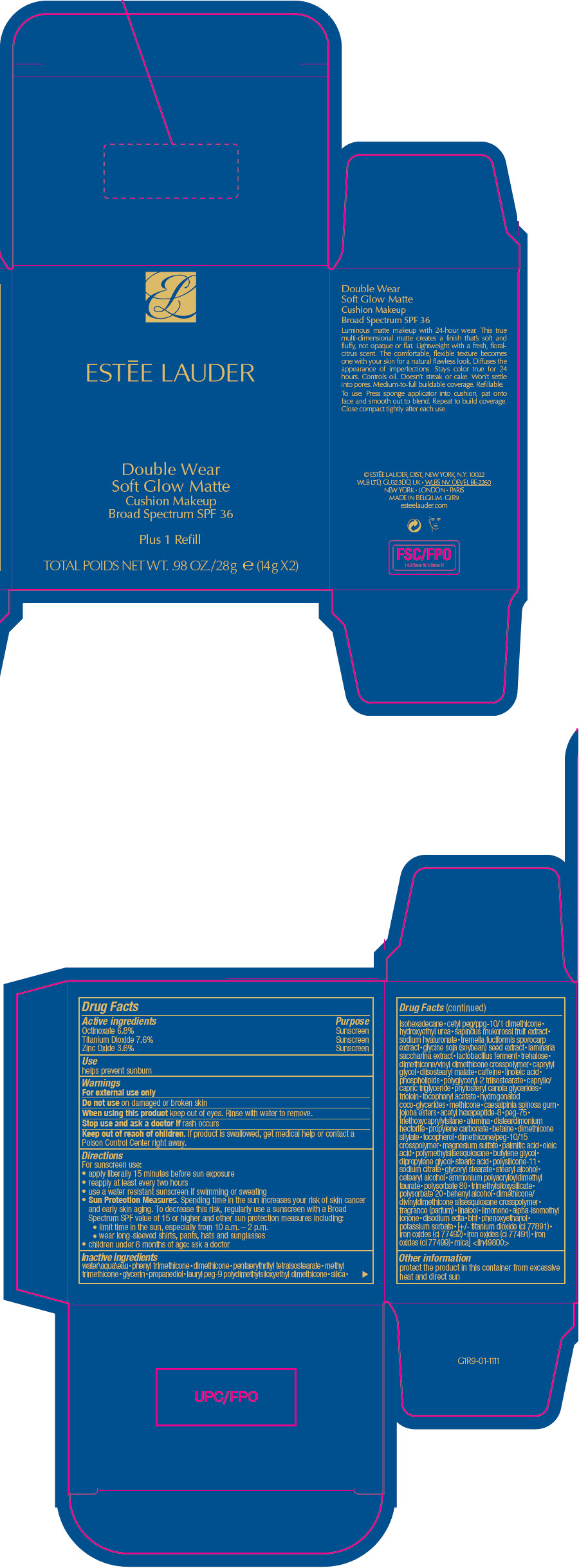
ESTEE LAUDER DOUBLE WEAR SOFT GLOW MATTE CUSHION MAKEUP BROAD SPECTRUM SPF 36 OCTINOXATE, TITANIUM DIOXIDE AND ZINC OXIDE 68 mg/g; 76 mg/g; 36 mg/g Gel
🆔 Identity & classification
Where does this data come from?
🏭 Manufacturer & labeler
Where does this data come from?
🩺 Clinical
This is a topical gel makeup product marketed as an over-the-counter sunscreen under FDA's OTC monograph rules. It contains three active sunscreen ingredients: octinoxate, titanium dioxide, and zinc oxide, which are commonly used as UV filters to help protect skin from sun damage. The product is formulated as a cushion makeup foundation with a matte finish and carries a broad spectrum SPF 36 rating. These sunscreen ingredients function by either absorbing or reflecting ultraviolet light away from the skin.
Patient education
Supplement & herbal interactions
Where does this data come from?
Ask a licensed pharmacist directly — free, answered by our team.
🧪 Inactive Ingredients / Excipients
Inactive ingredients, also called excipients, are components of the drug product other than the active ingredient. They may include fillers, dyes, coatings, preservatives, flavors, or other formulation ingredients.
💡 Tap an ingredient (hover on desktop) to see what it is and why it’s used.
-
UNII 9E8X80D2L0
A synthetic form of vitamin E used as an antioxidant and preservative in medications. It helps prevent the active ingredients from degrading when exposed to oxygen or light.
-
UNII L4EL31FWIL
A synthetic peptide (short chain of amino acids) used as a conditioning or texture-enhancing agent in topical formulations. It helps improve product feel and skin compatibility in creams and lotions.
-
UNII LMI26O6933
Alumina is a white powder form of aluminum oxide. It's used as a filler to add bulk to tablets and capsules, and sometimes as a thickening or anti-caking agent in powdered formulations.
-
UNII F01RIY4371
A synthetic polymer made from acrylic compounds and taurate, this substance acts as a thickener and stabilizer. It helps give liquid medicines a smooth texture and keeps ingredients from separating.
-
UNII 3SCV180C9W
Betaine is a naturally occurring organic compound found in plants and animals. In medicines, it acts as an osmoprotectant and stabilizer, helping maintain the product's moisture balance and preserve its chemical stability during storage.
-
UNII 1P9D0Z171K
BHT is a synthetic antioxidant that prevents fats and oils in medicines from breaking down and becoming rancid. It helps keep the product stable and effective during storage.
-
UNII 3XUS85K0RA
Butylene glycol is a clear liquid derived from petroleum or plants that acts as a humectant, solvent, and preservative booster in medicines. It helps keep formulations stable, dissolve active ingredients, and maintain moisture in topical products.
-
UNII WL3883U2PO
A natural resin derived from the caesalpinia spinosa plant, used as a binder and film-forming agent to help hold tablet ingredients together and create a protective coating on the medicine's surface.
-
UNII 3G6A5W338E
Caffeine is a natural stimulant compound commonly extracted from coffee beans and tea leaves. In medicines, it serves as an active booster in pain relievers and cold products to enhance alertness and improve the effectiveness of other ingredients.
-
UNII 331KBJ17RK
Canola oil is a plant-based oil derived from rapeseed. It's used in medicines as a solvent and carrier to help dissolve or suspend active ingredients, and may improve how the body absorbs certain medications.
-
UNII 00YIU5438U
Caprylyl glycol is a clear liquid derived from coconut oil. In medicines, it acts as a humectant to retain moisture, a preservative booster to prevent microbial growth, and a solvent to help dissolve or mix other ingredients.
-
UNII 2DMT128M1S
A waxy solid derived from plant or animal sources. It acts as an emulsifier to blend oil and water components, and also thickens the medicine to give it the right texture and consistency.
-
UNII V2W71V8T0X
A silicone-based compound that mixes oil and water together. Used in formulations as an emulsifier to help blend ingredients and improve texture and stability of creams, lotions, and other topical products.
-
UNII QBS8A3XZGQ
A synthetic oil made from diisostearyl alcohol and malic acid. It serves as an emollient and solvent in formulations, helping to dissolve and deliver active ingredients while improving texture and spreadability.
-
UNII 92RU3N3Y1O
Dimethicone is a silicone-based oil that acts as an anti-foaming agent and lubricant in medicines. It reduces gas bubbles in liquid formulations and helps coat and protect the stomach lining when ingested.
-
UNII T3064TZ75A
A silicone-based polymer mixture used as an anti-foaming agent and skin protectant in topical formulations. It helps reduce surface bubbles during manufacturing and creates a smooth, water-resistant barrier on the skin.
-
UNII 21AS8B1BSS
A silicone-based ingredient that combines dimethicone (silicone oil) with polyethylene glycol. It works as a skin-conditioning agent and texture enhancer, helping smooth the product's feel and improve how it spreads on skin.
-
UNII H895X08VNQ
A silicone-based polymer that forms small, hard particles. It acts as a glidant and anti-caking agent to improve powder flow and prevent clumping in tablets and capsules.
-
UNII 9E4CO0W6C5
A silicone-based polymer that forms soft, spongy particles. Used as a texture modifier and suspending agent to improve how the product feels and flows, and to help keep ingredients evenly distributed throughout the formulation.
-
UNII E107L85C40
Dipropylene glycol is a clear liquid made from propylene glycol. It acts as a solvent and humectant in medicines, helping dissolve active ingredients and retain moisture in the formulation.
-
UNII 6V475AX06U
A chelating agent derived from ethylenediaminetetraacetic acid (EDTA) combined with copper. It binds metals in formulations to prevent discoloration and degradation, helping preserve the medicine's stability and appearance.
-
UNII X687XDK09L
A clay mineral processed to carry positive charges, used as a thickener and suspending agent in liquid medicines. It helps keep solid particles evenly distributed throughout the product.
-
UNII 9G1OE216XY
Docosanol is a waxy, fatty alcohol derived from plant sources. It acts as an emollient and thickener in topical medicines, helping to soften the skin and improve product texture and stability.
-
UNII 1K09F3G675
Ferric oxide red is an inorganic iron compound used as a colorant in medicines. It gives tablets, capsules, or other dosage forms a red or reddish tint for identification and appearance.
-
UNII EX438O2MRT
Ferric oxide yellow is a naturally occurring iron compound used as a colorant in medications. It gives tablets, capsules, and other forms a yellow or golden hue for identification and appearance.
-
UNII XM0M87F357
A dark iron oxide compound that gives medicines their black or dark color. It's used as a colorant in tablets and capsules to help identify the product and make it visually distinctive.
-
UNII 329LCV5BTF
A blend of fragrance compounds used to add pleasant smell to the medicine. Fragrances mask bitter or unpleasant tastes and odors, making the medication easier to take.
-
UNII PDC6A3C0OX
Glycerin is a clear, thick liquid derived from plant oils or fats. It acts as a humectant to retain moisture, a sweetener, and a solvent in medications.
-
UNII FCZ5MH785I
A waxy substance made from glycerin and stearic acid. It works as an emulsifier to help mix oil and water ingredients together, and as a thickener to give the medicine its proper texture and consistency.
-
UNII O05EC62663
A natural oil derived from glycerin and oleic acid. It acts as a lubricant and emollient in medicines, helping ingredients mix smoothly and improving how the product flows during manufacturing and application.
-
UNII YSE9PPT4TH
Hyaluronate sodium is a natural carbohydrate that holds moisture. It's used in medicines as a lubricant, thickener, and moisture-retaining agent to improve texture and delivery of the active ingredient.
-
UNII XDD37N2GPR
A fat derived from coconut oil that has been chemically treated to make it more stable. It works as a binder and lubricant to help hold the medicine together and improve how it flows during manufacturing.
-
UNII MBQ7DDQ7AR
Hydroxyethyl urea is a synthetic organic compound used in medicines as a humectant and conditioning agent. It helps retain moisture in formulations and may improve texture or stability in topical products.
-
UNII 918X1OUF1E
Isohexadecane is a synthetic hydrocarbon oil used as an emollient and solvent in topical medicines. It helps dissolve active ingredients and improves spreadability and absorption through the skin.
-
UNII 9XP4LC555B
A fragrance compound derived from natural plant sources or made synthetically. It's added to medicines as a flavoring agent to mask bitter tastes and improve how the medicine smells and tastes.
-
UNII 25G622K2RA
A silicone-based surfactant that helps blend oil and water in cosmetic or topical formulations. It reduces surface tension to improve product spreadability and texture.
-
UNII GFD7C86Q1W
A natural oil extracted from citrus peels, (+)-limonene is used as a flavoring agent and solvent in medicines. It helps dissolve active ingredients and provides a lemon or orange taste.
-
UNII 9913I24QEE
A live beneficial bacterium added to some medicines and supplements. It serves as a probiotic ingredient intended to support gut health and digestion.
-
UNII F4VNO44C09
Linalool is a natural fragrant compound found in flowers and plants. It's added to medicines as a flavor and scent agent to improve taste and aroma.
-
UNII 9KJL21T0QJ
Linoleic acid is an omega-6 fatty acid derived from plant oils. It serves as an emulsifier and skin conditioning agent in topical formulations, helping ingredients mix smoothly and improving product texture.
-
UNII DE08037SAB
Magnesium sulfate is a mineral salt that acts as an osmotic agent in medications. It draws water into the intestines to soften stool or is used as a filler and processing aid in some solid dosage forms.
-
UNII C9H2L21V7U
A fat derived from coconut or palm oil containing shorter fatty acid chains. It serves as a solvent and carrier to help dissolve or suspend active ingredients, improving absorption and stability in liquid formulations.
-
UNII 6777U11MKT
A silicone-based lubricant and anti-foaming agent used to reduce surface tension and prevent foam formation during manufacturing and storage of the medication.
-
UNII S73ZQI0GXM
Methyl trimethicone is a silicone-based lubricant and glidant used in tablets and capsules. It reduces friction between particles and equipment during manufacturing, helping the medicine flow smoothly and compress evenly.
-
UNII V8A1AW0880
Mica is a naturally occurring mineral that's ground into fine powder. It's used in medicines as a colorant and anti-caking agent to improve appearance and prevent clumping in tablets or powders.
-
UNII 2UMI9U37CP
Oleic acid is a naturally occurring fatty acid derived from plant or animal oils. It functions as an emulsifier and solvent in medicines, helping blend water and oil-based ingredients together and dissolving other components.
-
UNII 2V16EO95H1
Palmitic acid is a saturated fatty acid derived from plant and animal sources. It serves as an emulsifier and lubricant in medicines, helping ingredients mix smoothly and preventing sticking during manufacturing.
-
UNII K881554QIN
A synthetic compound made from polyethylene glycol and lauric acid. It works as an emulsifier and surfactant to help mix oil and water-based ingredients, and improves how the medicine spreads or dissolves in the body.
-
UNII 9D7IK5483F
A synthetic oil derived from pentaerythritol and isostearic acid. It acts as an emollient and texture enhancer in topical formulations, helping create a smooth, spreadable consistency and improve skin feel.
-
UNII HIE492ZZ3T
Phenoxyethanol is a synthetic preservative and antimicrobial agent used to prevent bacterial and fungal growth in medicines and cosmetic products, extending shelf life and maintaining product safety.
-
UNII DR0K5NOJ4R
Phenyl trimethicone is a silicone-based lubricant and glidant. It helps powder particles flow smoothly and reduces friction during tablet or capsule manufacturing and filling.
-
UNII IP029363WQ
A naturally occurring enzyme that breaks down phospholipids, fatty compounds in cell membranes. It may be included in medicines to help control stability or modify how the drug is released in the body.
-
UNII 68DUY2D39A
A waxy emulsifier derived from glycerin and isostearic acid. It helps blend oil and water-based ingredients together and provides texture and consistency in topical formulations.
-
UNII Z570VEV8XK
A synthetic silicone polymer used as a glidant and anti-caking agent. It reduces friction between particles so the medicine flows smoothly during manufacturing and remains free-flowing in the bottle.
-
UNII 7T1F30V5YH
A synthetic emulsifier derived from sorbitol and oleic acid. It helps mix oil and water-based ingredients together and keeps them from separating in liquid formulations.
-
UNII 6OZP39ZG8H
Polysorbate 80 is a synthetic emulsifier derived from sorbitol and oleic acid. It helps mix oil and water-based ingredients together in medications and improves how the product disperses in the body.
-
UNII CH428W5O62
A plant-derived emulsifier made from jojoba oil that has been chemically broken down and converted to potassium salts. It helps mix oil and water-based ingredients together in the formulation and improves product texture and stability.
-
UNII 1VPU26JZZ4
Potassium sorbate is a salt derived from sorbic acid, a naturally occurring preservative. It prevents growth of mold, yeast, and some bacteria, extending the medicine's shelf life.
-
UNII 5965N8W85T
Propanediol is a clear liquid organic compound derived from vegetable sources or synthesized chemically. It acts as a humectant to retain moisture, a solvent to dissolve active ingredients, and a preservative booster in liquid medications and supplements.
-
UNII 8D08K3S51E
Propylene carbonate is a clear liquid solvent derived from propylene. It helps dissolve or suspend active ingredients in liquid medicines and can improve how well the product flows and mixes.
-
UNII 68CMP2MB55
A brown seaweed extract used as a thickener and stabilizer in liquid medicines and suspensions. It helps maintain consistent texture and prevents ingredients from separating.
-
UNII 66H9NW427Y
A natural extract from the soapberry fruit used as a cleansing agent and surfactant in topical formulations. It helps distribute active ingredients evenly and may serve as a natural preservative or emulsifier in the product.
-
UNII EU2PSP0G0W
Silica dimethyl silylate is a silicon-based powder that acts as a glidant and anti-caking agent. It reduces friction between particles and helps powders flow smoothly during manufacturing and tablet compression.
-
UNII VU10KU4B9S
A finely powdered mineral form of silicon dioxide with a chemical coating that reduces moisture absorption. Used as a glidant and anti-caking agent to improve powder flow and prevent clumping in solid medications.
-
UNII 1Q73Q2JULR
Sodium citrate is a salt derived from citric acid. It works as a buffer to maintain the medicine's pH level and may also help improve taste or act as a preservative in the formulation.
-
UNII L7HT8F1ZOD
A plant-based oil extracted from soybeans. It's used as an emulsifier and lubricant to help mix ingredients evenly and prevent sticking during tablet or capsule manufacturing.
-
UNII 4ELV7Z65AP
Stearic acid is a fatty acid derived from plant or animal sources. It acts as a binder and lubricant in tablets and capsules, helping them hold together and flow smoothly during manufacturing.
-
UNII 2KR89I4H1Y
Stearyl alcohol is a waxy, fatty substance derived from natural oils or made synthetically. It acts as an emulsifier and thickener in medicines, helping mix ingredients together and give the product the right texture.
-
UNII R0ZB2556P8
Tocopherol is a form of vitamin E derived from plant oils. It acts as an antioxidant in medicines to prevent oils and fats from breaking down and spoiling during storage.
-
UNII B8WCK70T7I
Trehalose is a natural sugar made from two glucose molecules linked together. It's used in medicines as a filler to add bulk, a sweetener for taste, and a stabilizer to help keep active ingredients effective during storage.
-
UNII GG8N28393G
Tremella fuciformis, also called snow fungus, is a white jelly-like mushroom. In medications, it acts as a thickener and stabilizer to give the product a smooth texture and help keep ingredients evenly mixed.
-
UNII LDC331P08E
A silicone-based compound that acts as a glidant and flow agent in solid medications. It reduces friction between powder particles, helping the medicine flow smoothly during manufacturing and tablet compression.
-
UNII 5041RX63GN
A synthetic silicon-based polymer used as a glidant and anti-caking agent. It helps powder particles flow smoothly and prevents clumping during manufacturing and storage.
-
UNII 059QF0KO0R
Water is a liquid solvent that dissolves and mixes ingredients together in liquid medicines, syrups, and injections. It helps distribute the active drug evenly throughout the product.
74 inactive ingredients listed in the exact product block matched to this NDC.
Label-section wording can be broader than the structured product block and may mention additional formulation ingredients.
Where does this data come from?
ingredient classCode="IACT" elements from the exact product block matched by this NDC. Label-section narrative from DailyMed / the openFDA label index is shown separately when available.Inactive ingredient FAQ
Are inactive ingredients the same for every manufacturer?
Why might an inactive ingredient be missing?
Can inactive ingredients matter?
💲 Pricing
A drug doesn't have one price. Each row is a different public payment system, and none is what you'd pay at the counter — that depends on your insurance. The ⓘ on each row explains what it measures.
| Price system | Per g | Per package |
|---|---|---|
| Retail pharmacies payNADAC · weekly | Not in the retail survey — common for institutional, discontinued, or low-volume packs. | |
| Medicaid paysCMS SDUD · 12 mo | No recent Medicaid claims on file for this NDC — rare and low-volume NDCs are suppressed in the public data. | |
| Medicare drug plans payPart D · quarterly | No Part D plan price is available for this NDC in our data. | |
Where does this data come from?
🔁 Therapeutic equivalents
| Product | Labeler | Pack | NADAC/unit | TE | Status | Price vs. this |
|---|---|---|---|---|---|---|
| Estee Lauder Double Wear Soft Glow Matte Cushion Makeup Broad Spectrum Spf 36 68 mg/g; 76 mg/g; 36 mg/gthis 11559-0062-01 | ESTEE | 1 cartridge | — | — | Discontinued | — |
Where does this data come from?
⏳ Availability & generic status
We did not find an FDA-approved generic match for this exact strength, form and route.
Where does this data come from?
🔬 Reported adverse events (FAERS)
Top reported reactions
Reporter sex
Where does this data come from?
📦 Packaging — all sizes for this product
| Package NDC | Description | Marketing start | Status |
|---|---|---|---|
| 11559-0062-01 You're viewing this | 1 CARTRIDGE in 1 CARTON (11559-062-01) / 28 g in 1 CARTRIDGE | 2021-07-07 | Discontinued by firm |
| 11559-0062-02 | 1 CARTRIDGE in 1 CARTON (11559-062-02) / 24 g in 1 CARTRIDGE | 2023-12-21 | Active |
Pack size FAQ
What quantity is in NDC 11559-0062-01?
What NDC number is used to bill for this package of ESTEE LAUDER DOUBLE WEAR SOFT GLOW MATTE CUSHION MAKEUP BROAD SPECTRUM SPF 36 OCTINOXATE, TITANIUM DIOXIDE AND ZINC OXIDE 68 mg/g; 76 mg/g; 36 mg/g Gel?
🧭 About this NDC listing & data coverage
What data is (and isn’t) available for this NDC — tap to expand
| NDC identity (package / product / labeler codes) | ✓ Available |
| Labeler | ✓ Available |
| Product & package description | ✓ Available |
| Marketing category & status | ✓ Available |
| Active ingredient / dosage form / route | ✓ Available |
| FDA label (SPL via DailyMed) | ✓ Available |
| Package photos | ✓ Available |
| Inactive ingredients (structured) | ✓ Available |
| NADAC pharmacy acquisition price (CMS) | — Not published for this NDC CMS publishes NADAC only for NDCs reported in its retail-pharmacy survey. |
| Orange Book / therapeutic-equivalence data | — Not published for this NDC Applies only to products approved under an NDA/ANDA; many listings are out of scope. |
| HCPCS J-code billing crosswalk | — Not published for this NDC Most self-administered / retail products have no J-code — that is normal. |
| Medicaid utilization (CMS SDUD) | — Not published for this NDC CMS reports utilization only for NDCs with Medicaid claims above its privacy threshold. |
Questions about this listing
Is this NDC FDA-approved?
Why is there no price listed?
What does the discontinued status mean for this NDC?
Is the NDC printed on the package the same as the 11-digit billing NDC?
What do the three segments of this NDC mean?
Does this product come in other package sizes?
Who lists this product with the FDA?
Do I need a prescription for this product?
Where does this data come from?
📄 FDA label — Drug Facts FDA SPL
🎯 Indications and Usage ▾
Use helps prevent sunburn
⏱️ Dosage and Administration ▾
Directions For sunscreen use: apply liberally 15 minutes before sun exposure reapply at least every two hours use a water resistant sunscreen if swimming or sweating Sun Protection Measures. Spending time in the sun increases your risk of skin cancer and early skin aging. To decrease this risk, regularly use a sunscreen with a Broad Spectrum SPF value of 15 or higher and other sun protection measures including: limit time in the sun, especially from 10 a.m. – 2 p.m. wear long-sleeved shirts, pants, hats and sunglasses children under 6 months of age: ask a doctor
⚠️ Warnings ▾
Warnings For external use only Do not use on damaged or broken skin When using this product keep out of eyes. Rinse with water to remove. Stop use and ask a doctor if rash occurs Keep out of reach of children. If product is swallowed, get medical help or contact a Poison Control Center right away.
📦 Storage and Handling ▾
Other information protect the product in this container from excessive heat and direct sun
🧪 Active Ingredient ▾
Active ingredients Purpose Octinoxate 6.8% Sunscreen Titanium Dioxide 7.6% Sunscreen Zinc Oxide 3.6% Sunscreen
🧪 Inactive Ingredients ▾
Inactive ingredients water\aqua\eau∙phenyl trimethicone∙dimethicone∙pentaerythrityl tetraisostearate∙methyl trimethicone∙glycerin∙propanediol∙lauryl peg-9 polydimethylsiloxyethyl dimethicone∙silica∙isohexadecane∙cetyl peg/ppg-10/1 dimethicone∙hydroxyethyl urea∙sapindus mukorossi fruit extract∙sodium hyaluronate∙tremella fuciformis sporocarp extract∙glycine soja (soybean) seed extract∙laminaria saccharina extract∙lactobacillus ferment∙trehalose∙dimethicone/vinyl dimethicone crosspolymer∙caprylyl glycol∙diisostearyl malate∙caffeine∙linoleic acid∙phospholipids∙polyglyceryl-2 triisostearate∙caprylic/capric triglyceride∙phytosteryl canola glycerides∙triolein∙tocopheryl acetate∙hydrogenated coco-glycerides∙methicone∙caesalpinia spinosa gum∙jojoba esters∙acetyl hexapeptide-8∙peg-75∙triethoxycaprylylsilane∙alumina∙disteardimonium hectorite∙propylene carbonate∙betaine∙dimethicone silylate∙tocopherol∙dimethicone/peg-10/15 crosspolymer∙magnesium sulfate∙palmitic acid∙oleic acid∙polymethylsilsesquioxane∙butylene glycol∙dipropylene glycol∙stearic acid∙polysilicone-11∙sodium citrate∙glyceryl stearate∙stearyl alcohol∙cetearyl alcohol∙ammonium polyacryloyldimethyl taurate∙polysorbate 80∙trimethylsiloxysilicate∙polysorbate 20∙behenyl alcohol∙dimethicone/divinyldimethicone silsesquioxane crosspolymer∙fragrance (parfum)∙linalool∙limonene∙alpha-isomethyl ionone∙disodium edta∙bht∙phenoxyethanol∙potassium sorbate∙[+/- titanium dioxide (ci 77891)∙iron oxides (ci 77492)∙iron oxides (ci 77491)∙iron oxides (ci 77499)∙mica] <iln49800>
🎯 Purpose ▾
Active ingredients Purpose Octinoxate 6.8% Sunscreen Titanium Dioxide 7.6% Sunscreen Zinc Oxide 3.6% Sunscreen