
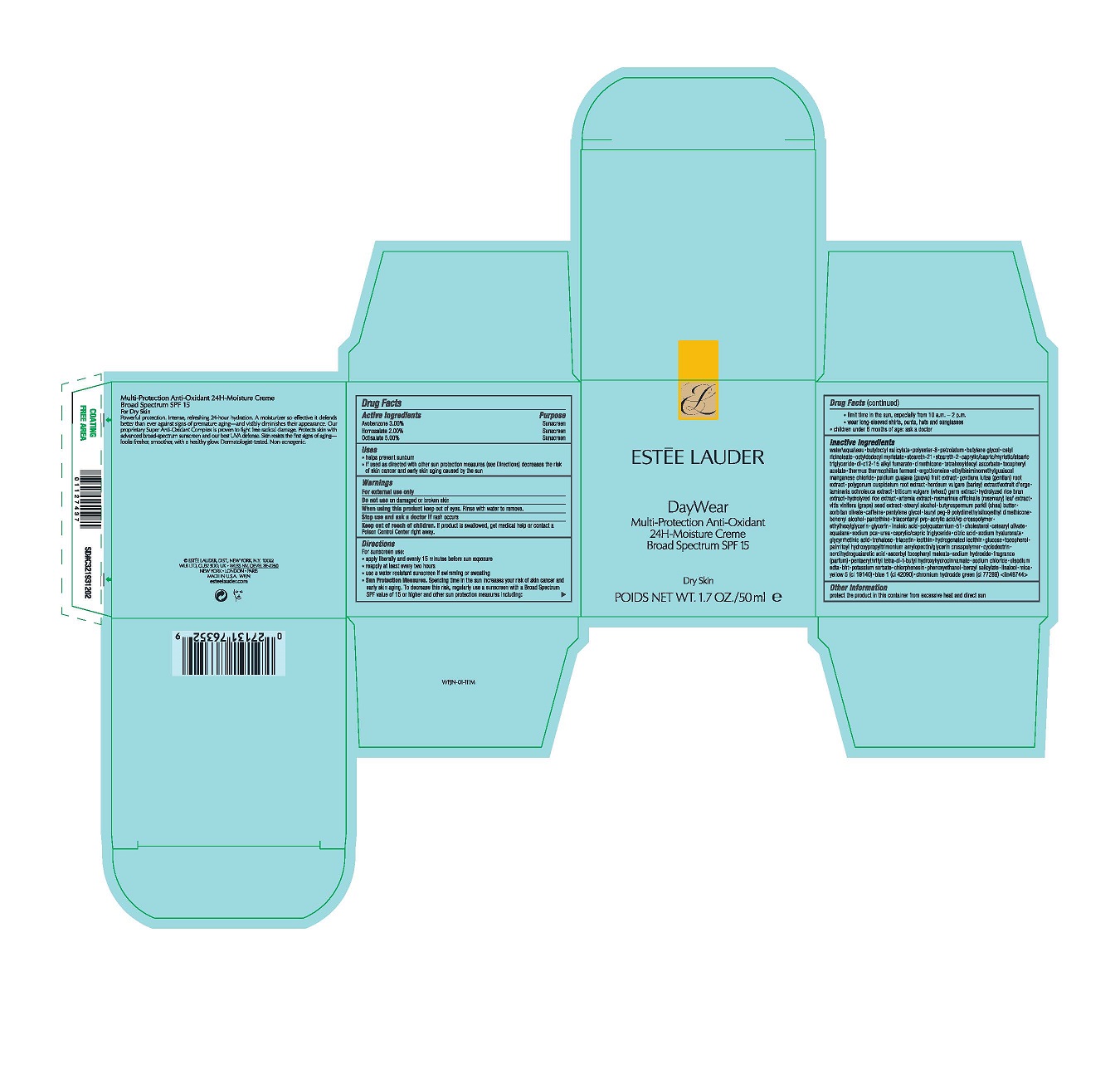
DAYWEAR ADVANCED MULTI-PROTECTION ANTI-OXIDANT 24H-MOISTURE CREME BROAD SPECTRUM SPF15 AVOBENZONE, HOMOSALATE, OCTISALATE 30 mg/mL; 20 mg/mL; 50 mg/mL Cream
🆔 Identity & classification
Where does this data come from?
🏭 Manufacturer & labeler
Where does this data come from?
🩺 Clinical
This is a topical moisturizing cream labeled for daytime use that contains three active ingredients functioning as ultraviolet (UV) filters in a sunscreen product. Avobenzone, homosalate, and octisalate are chemical sunscreen agents typically used together to absorb and block UV radiation from reaching the skin. The product is formulated as an over-the-counter monograph drug, meaning it is marketed under FDA's established rules for sunscreen ingredients rather than through an individual product application. It is applied to the skin to provide broad-spectrum sun protection rated at SPF 15.
Patient education
Supplement & herbal interactions
Where does this data come from?
Ask a licensed pharmacist directly — free, answered by our team.
🧪 Inactive Ingredients / Excipients
Inactive ingredients, also called excipients, are components of the drug product other than the active ingredient. They may include fillers, dyes, coatings, preservatives, flavors, or other formulation ingredients.
💡 Tap an ingredient (hover on desktop) to see what it is and why it’s used.
-
UNII 9E8X80D2L0
A synthetic form of vitamin E used as an antioxidant and preservative in medications. It helps prevent the active ingredients from degrading when exposed to oxygen or light.
-
UNII 5SL0G7R0OK
A simple sugar made from corn or other plants, used in medicines as a filler and sweetener. It helps create the right texture and taste in tablets, powders, and liquid formulations.
-
UNII D2G6259XR5
A synthetic antioxidant compound made from vitamin E and vitamin C derivatives. It prevents oils and fats in the medication from breaking down and becoming rancid, helping preserve the product's stability and shelf life.
-
UNII WAO5MNK9TU
Benzyl salicylate is a fragrant chemical compound used as a flavor and scent ingredient in medicines. It helps mask unpleasant tastes or odors in liquid or oral formulations.
-
UNII 1P9D0Z171K
BHT is a synthetic antioxidant that prevents fats and oils in medicines from breaking down and becoming rancid. It helps keep the product stable and effective during storage.
-
UNII 3XUS85K0RA
Butylene glycol is a clear liquid derived from petroleum or plants that acts as a humectant, solvent, and preservative booster in medicines. It helps keep formulations stable, dissolve active ingredients, and maintain moisture in topical products.
-
UNII 2EH13UN8D3
A synthetic compound used as a solvent and penetration enhancer in topical formulations. It helps dissolve active ingredients and allows them to penetrate the skin more effectively.
-
UNII 3G6A5W338E
Caffeine is a natural stimulant compound commonly extracted from coffee beans and tea leaves. In medicines, it serves as an active booster in pain relievers and cold products to enhance alertness and improve the effectiveness of other ingredients.
-
UNII WHF5JJR62Y
A blend of plant-derived fatty acids that form a smooth, oily base. This ingredient acts as a solvent and carrier to help dissolve or suspend active ingredients, improving how the medicine is absorbed by the body.
-
UNII 58B69Q84JO
A plant-derived emulsifier made from olive oil and fatty alcohols. It helps blend oil and water ingredients together and stabilizes the product's texture in creams, lotions, and similar formulations.
-
UNII 1P677500YD
Cetyl ricinoleate is a waxy substance derived from castor oil. It works as an emollient and thickener in medications, helping to soften the product and improve its texture and stability.
-
UNII I670DAL4SZ
A preservative that fights bacteria and fungi. It keeps medicines and topical products stable and safe from microbial contamination during storage and use.
-
UNII 97C5T2UQ7J
Cholesterol is a fatty substance found naturally in animal tissues. In medications, it's used as an ingredient in liposomal formulations and lipid-based drug delivery systems to help encapsulate and stabilize active drugs for better absorption.
-
UNII RV8FT8XF5R
Chromium hydroxide green is a synthetic mineral colorant that gives medicines their green color. It's used in tablets, capsules, and coatings to help identify the drug and make it visually distinct.
-
UNII 2968PHW8QP
A weak organic acid derived from citrus fruits or made through fermentation. It works as a buffer to control pH, a preservative to extend shelf life, and a flavoring agent in medications.
-
UNII 7E6SK9QDT8
Cyclodextrins are ring-shaped sugar molecules derived from starch. They're used in medicines as solubilizers to help poorly dissolving drugs dissolve better, and sometimes as binders or stabilizers.
-
UNII A1CB3Z898P
A synthetic oily compound made from plant-derived fatty acids and fumaric acid. It acts as a solubilizer and emulsifier to help dissolve and stabilize active ingredients in the medicine.
-
UNII 92RU3N3Y1O
Dimethicone is a silicone-based oil that acts as an anti-foaming agent and lubricant in medicines. It reduces gas bubbles in liquid formulations and helps coat and protect the stomach lining when ingested.
-
UNII 9G1OE216XY
Docosanol is a waxy, fatty alcohol derived from plant sources. It acts as an emollient and thickener in topical medicines, helping to soften the skin and improve product texture and stability.
-
UNII 8NLQ36F6MM
Edetate disodium anhydrous is a chemical compound that binds to metal ions in a medicine. It's used as a stabilizer to prevent unwanted chemical reactions and help keep the drug product effective during storage.
-
UNII P540XA09DR
Enoxolone is a naturally derived compound from licorice root that acts as a skin-soothing and anti-inflammatory agent. In medicines, it helps reduce irritation and supports the healing of mucous membranes or damaged skin.
-
UNII BDZ3DQM98W
Ergothioneine is a naturally occurring compound found in mushrooms and some bacteria. It's used in medicines as an antioxidant to help protect the product from degradation during storage.
-
UNII SM5YJ88LTU
A manganese-based compound that acts as an antioxidant in medications. It helps prevent ingredient breakdown and degradation during storage, keeping the medicine stable and effective over time.
-
UNII 147D247K3P
Ethylhexylglycerin is a synthetic preservative used to prevent bacteria and mold from growing in medicines and personal care products. It helps keep the product safe and stable throughout its shelf life.
-
UNII H3R47K3TBD
FD&C Blue No. 1 is a synthetic blue dye approved for use in foods and medicines. It serves as a colorant to give the medication its distinctive appearance and help with product identification.
-
UNII I753WB2F1M
FD&C Yellow No. 5 is a synthetic yellow colorant approved by the FDA. It is added to medicines to make pills, tablets, or liquids visually distinct and easier to identify.
-
UNII S72O3284MS
A plant extract from the gentian root used as a flavoring agent and bitter taste component in some medicines. It helps mask unpleasant tastes and may support digestive formulations.
-
UNII PDC6A3C0OX
Glycerin is a clear, thick liquid derived from plant oils or fats. It acts as a humectant to retain moisture, a sweetener, and a solvent in medications.
-
UNII 74O70D6VG0
Guava is a tropical fruit used as a flavoring agent and natural coloring source in medications. It adds fruity taste and may provide a mild sweetening effect to make medicines more palatable.
-
UNII 8JBE478M5Q
A plant-derived ingredient made from whole barley grain. It's used as a filler to add bulk and texture to the medicine form.
-
UNII YSE9PPT4TH
Hyaluronate sodium is a natural carbohydrate that holds moisture. It's used in medicines as a lubricant, thickener, and moisture-retaining agent to improve texture and delivery of the active ingredient.
-
UNII H1109Z9J4N
A natural emulsifier derived from soybean oil. It helps mix oil and water-based ingredients together, ensuring even distribution of active ingredients throughout the medicine.
-
UNII 4R2124HE76
A brown seaweed extract used as a thickener and stabilizer in liquid formulations. It helps maintain consistent texture and prevents separation of ingredients in medicines.
-
UNII 25G622K2RA
A silicone-based surfactant that helps blend oil and water in cosmetic or topical formulations. It reduces surface tension to improve product spreadability and texture.
-
UNII 1DI56QDM62
A natural fatty substance from soybeans that helps mix oil and water-based ingredients together. It acts as an emulsifier and lubricant in medicines to improve texture and help the product break down properly in your body.
-
UNII D81QY6I88E
Linalool is a natural fragrant oil found in plants like lavender and citrus. It's used in medicines as a flavoring agent and to mask unpleasant tastes or smells.
-
UNII 9KJL21T0QJ
Linoleic acid is an omega-6 fatty acid derived from plant oils. It serves as an emulsifier and skin conditioning agent in topical formulations, helping ingredients mix smoothly and improving product texture.
-
UNII 7BO8G1BYQU
A synthetic compound used as an antioxidant and preservative in medications. It helps prevent degradation of active ingredients and extend shelf life by protecting the product from oxidative damage during storage.
-
UNII C9H2L21V7U
A fat derived from coconut or palm oil containing shorter fatty acid chains. It serves as a solvent and carrier to help dissolve or suspend active ingredients, improving absorption and stability in liquid formulations.
-
UNII V8A1AW0880
Mica is a naturally occurring mineral that's ground into fine powder. It's used in medicines as a colorant and anti-caking agent to improve appearance and prevent clumping in tablets or powders.
-
UNII S013N99GR8
Octyldodecyl myristate is a synthetic oil derived from myristic acid. It serves as an emollient and skin-conditioning agent in topical medicines, helping the product spread smoothly and keeping the skin soft.
-
UNII 7F9WLW26M2
A synthetic polymer made from modified starch and glycerin, used as a conditioning agent and thickener. It helps improve texture, spreadability, and feel in topical products like creams and lotions.
-
UNII 7K81IL792L
A vitamin B-derived compound that serves as a moisture-binding agent and conditioning ingredient in formulations. It helps maintain product stability and texture while supporting the delivery of the active ingredient.
-
UNII 255PIF62MS
A synthetic antioxidant compound used to prevent oils and fats in medications from breaking down or becoming rancid during storage. It helps maintain the medicine's stability and shelf life.
-
UNII 50C1307PZG
Pentylene glycol is a humectant and preservative helper derived from petroleum or plant sources. It draws moisture into the product and helps prevent bacterial growth, keeping medicines stable during storage.
-
UNII 4T6H12BN9U
Petrolatum is a purified mineral oil-based jelly derived from petroleum. In medicines, it acts as an emollient, lubricant, and moisture barrier to soften skin, reduce friction, and help prevent water loss from formulations.
-
UNII HIE492ZZ3T
Phenoxyethanol is a synthetic preservative and antimicrobial agent used to prevent bacterial and fungal growth in medicines and cosmetic products, extending shelf life and maintaining product safety.
-
UNII T9296U138P
A synthetic polymer derived from polyester chemistry, modified with a cyanodiphenylpropenoyl cap. It serves as a film-former and binder in pharmaceutical formulations, helping create protective coatings on tablets or improving product consistency.
-
UNII 7TRV45YZF7
A plant extract from Japanese knotweed root used as a natural ingredient. It functions as an antioxidant and preservative to help maintain product stability and shelf life.
-
UNII EL9825H96J
Polyquaternium-51 is a synthetic polymer used in topical medicines and cosmetics. It acts as a film-former and conditioning agent, helping the product coat and adhere to skin or mucous membranes.
-
UNII 1VPU26JZZ4
Potassium sorbate is a salt derived from sorbic acid, a naturally occurring preservative. It prevents growth of mold, yeast, and some bacteria, extending the medicine's shelf life.
-
UNII IJ67X351P9
A natural plant extract from rosemary leaves used as a preservative to help prevent oils and fats in the medicine from spoiling or becoming rancid during storage.
-
UNII K49155WL9Y
Shea butter is a fat extracted from shea tree nuts. It's used in medicines as an emollient and lubricant to soften the product, improve texture, and help ingredients blend smoothly together.
-
UNII 451W47IQ8X
Sodium chloride is common table salt. It's used in medicines as a buffer to maintain proper pH, as a filler to add bulk, or to adjust the osmotic balance in liquid formulations.
-
UNII 55X04QC32I
A strong alkaline chemical used to adjust and maintain the pH balance of liquid medicines. It helps keep the medicine stable and ensures it stays effective during storage.
-
UNII 469OTG57A2
Sodium pyrrolidone carboxylate is a synthetic polymer derived from pyrrolidone chemistry. It functions as a solubilizer and binder in medications, helping dissolve poorly water-soluble drugs and hold tablet ingredients together.
-
UNII MDL271E3GR
Sorbitan olivate is an emulsifier derived from sorbitol and olive oil. It helps blend water and oil ingredients together to maintain consistent texture and appearance throughout the medicine.
-
UNII GW89575KF9
Squalane is a lightweight oil derived from plant sources or synthesized. It acts as an emollient and lubricant in formulations, helping ingredients blend smoothly and improving product texture and spreadability.
-
UNII V56DFE46J5
Steareth-2 is a synthetic emulsifier made from stearic acid and ethylene oxide. It helps mix oil and water-based ingredients together in the formulation and may improve how the medicine spreads or dissolves.
-
UNII 53J3F32P58
A synthetic detergent derived from stearic acid, a fatty substance. It helps dissolve or distribute oil-based ingredients evenly throughout the medicine, acting as an emulsifier and solubilizer in tablets and capsules.
-
UNII 2KR89I4H1Y
Stearyl alcohol is a waxy, fatty substance derived from natural oils or made synthetically. It acts as an emulsifier and thickener in medicines, helping mix ingredients together and give the product the right texture.
-
UNII 9LBV3F07AZ
A synthetic, oil-soluble form of vitamin C used as an antioxidant to prevent degradation of the medicine and maintain its stability during storage.
-
UNII 775R692494
A liquid extract from heat-loving bacteria that helps support the immune system's natural defenses. It acts as an active ingredient enhancer in topical formulations, helping the product work more effectively on skin.
-
UNII R0ZB2556P8
Tocopherol is a form of vitamin E derived from plant oils. It acts as an antioxidant in medicines to prevent oils and fats from breaking down and spoiling during storage.
-
UNII B8WCK70T7I
Trehalose is a natural sugar made from two glucose molecules linked together. It's used in medicines as a filler to add bulk, a sweetener for taste, and a stabilizer to help keep active ingredients effective during storage.
-
UNII XHX3C3X673
Triacetin is a clear, oily liquid made from glycerin and acetic acid. It works as a plasticizer and solvent in medicines, helping soften coatings and improve how liquids mix together in formulations.
-
UNII N0SS3Q238D
A synthetic polymer made by combining povidone with long-chain fatty compounds. It acts as a binder and film-former to help hold tablet ingredients together and create smooth coatings on medicine surfaces.
-
UNII 8W8T17847W
A nitrogen-containing chemical compound used in pharmaceuticals as a humectant to retain moisture, and sometimes as a keratolytic agent in topical formulations to help soften and remove dead skin cells.
-
UNII C34U15ICXA
A plant extract from grape seeds that acts as an antioxidant and preservative in medications. It helps protect the active ingredients from degrading and extends the product's shelf life.
-
UNII 059QF0KO0R
Water is a liquid solvent that dissolves and mixes ingredients together in liquid medicines, syrups, and injections. It helps distribute the active drug evenly throughout the product.
-
UNII YR3G369F5A
Wheat germ is the nutrient-rich central part of the wheat kernel. It's used in medications as a natural filler and source of vitamins and oils that can help bind and preserve the product.
71 inactive ingredients listed in the exact product block matched to this NDC.
Label-section wording can be broader than the structured product block and may mention additional formulation ingredients.
Where does this data come from?
ingredient classCode="IACT" elements from the exact product block matched by this NDC. Label-section narrative from DailyMed / the openFDA label index is shown separately when available.Inactive ingredient FAQ
Are inactive ingredients the same for every manufacturer?
Why might an inactive ingredient be missing?
Can inactive ingredients matter?
💲 Pricing
A drug doesn't have one price. Each row is a different public payment system, and none is what you'd pay at the counter — that depends on your insurance. The ⓘ on each row explains what it measures.
| Price system | Per g | Per package |
|---|---|---|
| Retail pharmacies payNADAC · weekly | Not in the retail survey — common for institutional, discontinued, or low-volume packs. | |
| Medicaid paysCMS SDUD · 12 mo | No recent Medicaid claims on file for this NDC — rare and low-volume NDCs are suppressed in the public data. | |
| Medicare drug plans payPart D · quarterly | No Part D plan price is available for this NDC in our data. | |
Where does this data come from?
🔁 Therapeutic equivalents
| Product | Labeler | Pack | NADAC/unit | TE | Status | Price vs. this |
|---|---|---|---|---|---|---|
| Daywear Advanced Multi-Protection Anti-Oxidant 24H-Moisture Creme Broad Spectrum Spf15 30 mg/mL; 20 mg/mL; 50 mg/mLthis 11559-0064-01 | ESTEE | 1 jar | — | — | FDA listed | — |
Where does this data come from?
⏳ Availability & generic status
We did not find an FDA-approved generic match for this exact strength, form and route.
Where does this data come from?
📦 Packaging — all sizes for this product
| Package NDC | Description | Marketing start | Status |
|---|---|---|---|
| 11559-0064-01 You're viewing this | 1 JAR in 1 CARTON (11559-064-01) / 50 mL in 1 JAR | 2023-11-13 | Active |
🧭 About this NDC listing & data coverage
What data is (and isn’t) available for this NDC — tap to expand
| NDC identity (package / product / labeler codes) | ✓ Available |
| Labeler | ✓ Available |
| Product & package description | ✓ Available |
| Marketing category & status | ✓ Available |
| Active ingredient / dosage form / route | ✓ Available |
| FDA label (SPL via DailyMed) | ✓ Available |
| Package photos | ✓ Available |
| Inactive ingredients (structured) | ✓ Available |
| NADAC pharmacy acquisition price (CMS) | — Not published for this NDC CMS publishes NADAC only for NDCs reported in its retail-pharmacy survey. |
| Orange Book / therapeutic-equivalence data | — Not published for this NDC Applies only to products approved under an NDA/ANDA; many listings are out of scope. |
| HCPCS J-code billing crosswalk | — Not published for this NDC Most self-administered / retail products have no J-code — that is normal. |
| Medicaid utilization (CMS SDUD) | — Not published for this NDC CMS reports utilization only for NDCs with Medicaid claims above its privacy threshold. |
Questions about this listing
Is this NDC FDA-approved?
Why is there no price listed?
Is the NDC printed on the package the same as the 11-digit billing NDC?
What do the three segments of this NDC mean?
Is this package still being marketed?
Who lists this product with the FDA?
Do I need a prescription for this product?
Where does this data come from?
📄 FDA label — Drug Facts FDA SPL
🎯 Indications and Usage ▾
Uses -helps precent sunburn -if used as directed with other sun protection measures (see Directions) decreases the risk of skin cancer and early skin aging cause by the seun
⏱️ Dosage and Administration ▾
Directions For sunscreen use: apply liberally 15 minutes before sun exposure reapply at least every two hours use a water resistant sunscreen if swimming or sweating Sun Protection Measures. Spending time in the sun increases your risk of skin cancer and early skin aging. To decrease this risk, regularly use a sunscreen with a Broad Spectrum SPF value of 15 or higher and other sun protection measures including: limit time in the sun, especially from 10 a.m.–2 p.m. wear long-sleeved shirts, pants, hats and sunglasses children under 6 months of age: ask a doctor
⚠️ Warnings ▾
Warnings For external use only Do not use on damaged or broken skin When using this product keep out of eye. Rinse with water to remove Stop use and ask a doctor if rash occurs Keep out of reach of children. If product is swallowed, get medical help or contact a Poison Control Center right away.
📦 Storage and Handling ▾
Other information protect the product in this container from excessive heat and direct sun
🧪 Active Ingredient ▾
Active Ingredients AVOBENZONE 3.0% HOMOSALATE 2.0% OCTISALATE 5.0%
🧪 Inactive Ingredients ▾
Inactive Ingredients WATER\AQUA\EAU,BUTYLOCTYL SALICYLATE,POLYESTER-8,PETROLATUM,BUTYLENE GLYCOL,CETYL RICINOLEATE,OCTYLDODECYL MYRISTATE,STEARETH-21,STEARETH-2,CAPRYLIC/CAPRIC/MYRISTIC/STEARIC TRIGLYCERIDE,DI-C12-15 ALKYL FUMARATE,DIMETHICONE,TETRAHEXYLDECYL ASCORBATE,TOCOPHERYL ACETATE,THERMUS THERMOPHILLUS FERMENT,ERGOTHIONEINE,ETHYLBISIMINOMETHYLGUAIACOL MANGANESE CHLORIDE,PSIDIUM GUAJAVA (GUAVA) FRUIT EXTRACT,GENTIANA LUTEA (GENTIAN) ROOT EXTRACT,POLYGONUM CUSPIDATUM ROOT EXTRACT,HORDEUM VULGARE (BARLEY) EXTRACT\EXTRAIT D'ORGE,LAMINARIA OCHROLEUCA EXTRACT,TRITICUM VULGARE (WHEAT) GERM EXTRACT,HYDROLYZED RICE BRAN EXTRACT,HYDROLYZED RICE EXTRACT,ARTEMIA EXTRACT,ROSMARINUS OFFICINALIS (ROSEMARY) LEAF EXTRACT,VITIS VINIFERA (GRAPE) SEED EXTRACT,STEARYL ALCOHOL,BUTYROSPERMUM PARKII (SHEA) BUTTER,SORBITAN OLIVATE,CAFFEINE,PENTYLENE GLYCOL,LAURYL PEG-9 POLYDIMETHYLSILOXYETHYL DIMETHICONE,BEHENYL ALCOHOL,PANTETHINE,TRIACONTANYL PVP,ACRYLIC ACID/VP CROSSPOLYMER,ETHYLHEXYLGLYCERIN,GLYCERIN,LINOLEIC ACID,POLYQUATERNIUM-51,CHOLESTEROL,CETEARYL OLIVATE,SQUALANE,SODIUM PCA,UREA,CAPRYLIC/CAPRIC TRIGLYCERIDE,CITRIC ACID,SODIUM HYALURONATE,GLYCYRRHETINIC ACID,TREHALOSE,TRIACETIN,LECITHIN,HYDROGENATED LECITHIN,GLUCOSE,TOCOPHEROL,PALMITOYL HYDROXYPROPYLTRIMONIUM AMYLOPECTIN/GLYCERIN CROSSPOLYMER,CYCLODEXTRIN,NORDIHYDROGUAIARETIC ACID,ASCORBYL TOCOPHERYL MALEATE,SODIUM HYDROXIDE,FRAGRANCE (PARFUM),PENTAERYTHRITYL TETRA-DI-T-BUTYL HYDROXYHYDROCINNAMATE,SODIUM CHLORIDE,DISODIUM EDTA,BHT,POTASSIUM SORBATE,CHLORPHENESIN,PHENOXYETHANOL,BENZYL SALICYLATE,LINALOOL,MICA,YELLOW 5 (CI 19140),BLUE 1 (CI 42090),CHROMIUM HYDROXIDE GREEN (CI 77289) <ILN48744>
🎯 Purpose ▾
Purpose Sunscreen