
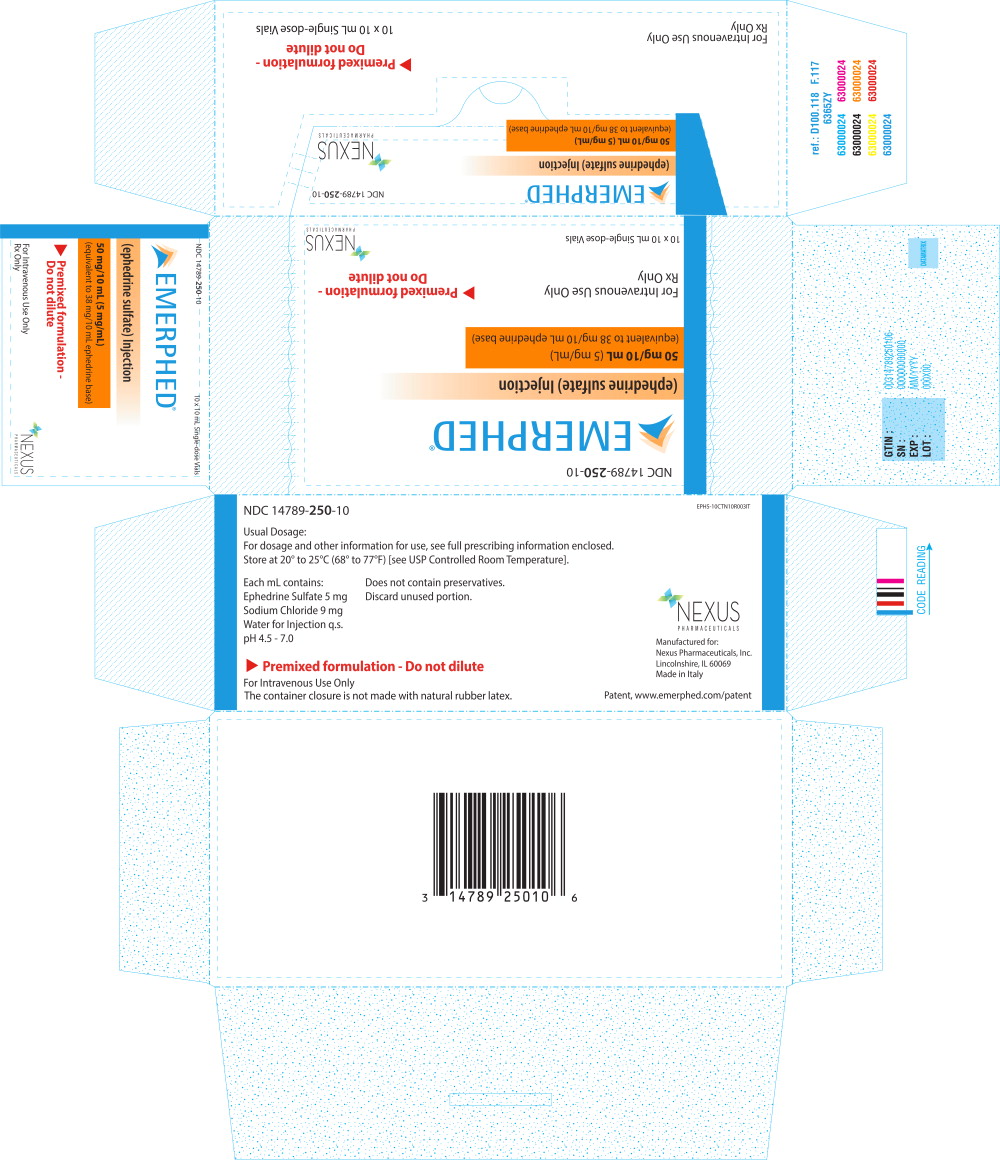
Emerphed Ephedrine Sulfate 5 mg/mL Injection
🆔 Identity & classification
Where does this data come from?
🏷️ RxNorm drug class
This medicine belongs to the alpha-Adrenergic Agonist class.
Where does this data come from?
🏭 Manufacturer & labeler
Where does this data come from?
🩺 Clinical
- Some ephedrine-containing asthma tablets, like Bronkaid and Primatene, are available over the counter, but there's an important catch: you should only use them if a doctor has alre...
- I have asthma — can I just pick up ephedrine tablets at the pharmacy without a prescription?
- The biggest things to watch for are a rapid heartbeat, tremors, severe nervousness, trouble sleeping, or difficulty breathing that isn't improving. Because ephedrine raises your bl...
- What should I watch out for when taking the asthma tablets?
Patient education
Supplement & herbal interactions
Some supplements/herbs that may interact with Ephedrine Sulfate — tap one for details:
Where does this data come from?
Ask a licensed pharmacist directly — free, answered by our team.
🧪 Inactive Ingredients / Excipients
Inactive ingredients, also called excipients, are components of the drug product other than the active ingredient. They may include fillers, dyes, coatings, preservatives, flavors, or other formulation ingredients.
Where does this data come from?
IACT rows and label-wide narrative are kept separate; availability and product-level specificity depend on the submitted label.Inactive ingredient FAQ
Are inactive ingredients the same for every manufacturer?
Why might an inactive ingredient be missing?
Can inactive ingredients matter?
💲 Pricing
A drug doesn't have one price. Each row is a different public payment system, and none is what you'd pay at the counter — that depends on your insurance. The ⓘ on each row explains what it measures.
| Price system | Per each | Per package |
|---|---|---|
| Retail pharmacies payNADAC · weekly | Not in the retail survey — common for institutional, discontinued, or low-volume packs. | |
| Medicaid paysCMS SDUD · 12 mo | $12.43 | $124.30 / 10 vials |
| Medicare drug plans payPart D · quarterly | No Part D plan price is available for this NDC in our data. | |
Where does this data come from?
🔁 Therapeutic equivalents
| Product | Labeler | Pack | NADAC/unit | TE | Status | Price vs. this |
|---|---|---|---|---|---|---|
| Emerphed 5 mg/mLthis 14789-0250-10 | Nexus | 10 vials | — | — | FDA listed | — |
| Ephedrine Sulfate 5 mg/mL 42023-0243-01 | Par | 10 ml | — | AP2 | FDA listed | — |
| Ephedrine Sulfate 5 mg/mL 68083-0610-10 | Gland | 10 vials | — | AP1 | FDA listed | — |
| Akovaz 5 mg/mL 51754-4250-03 | Exela | 10 syringes | — | AP3 | FDA listed | — |
| Emerphed PFS 5 mg/mL 14789-0251-10 | Nexus | 10 syringes | — | — | FDA listed | — |
| ephedrine sulfate 5 mg/mL 65219-0548-10 | Fresenius | 10 syringes | — | AP2 | FDA listed | — |
| Emerphed PFS 5 mg/mL 14789-0252-10 | Nexus | 10 syringes | — | — | FDA listed | — |
| Ephedrine Sulfate 5 mg/mL 00641-6236-10 | Hikma | 10 syringes | — | AP3 | FDA listed | — |
| ephedrine sulfate 5 mg/mL 65219-0546-05 | Fresenius | 10 syringes | — | AP2 | FDA listed | — |
Where does this data come from?
⏳ Availability & generic status
The FDA lists approved generic versions of this medicine, but that does not always mean a pharmacy can get one today. Patent rules, launch agreements, supply and pricing can affect when generics actually arrive.
Why the date isn’t exact: Generic timing can change because patents may be challenged, settled, licensed, added, removed, or worked around with a narrower label — and FDA approval does not always mean a pharmacy can get the generic today.
🛈 What do these terms mean?
- Patent
- Legal protection listed in the Orange Book that may delay generic approval or launch. Issued by the U.S. Patent & Trademark Office.
- Substance patent
- Covers the active drug molecule itself — the hardest to design around. A generic generally can’t launch until it expires.
- Formulation (product) patent
- Covers a specific formulation or dosage form. A generic can sometimes work around it with a different formulation.
- Method-of-use patent
- A patent covering one specific approved use of the drug — not necessarily the whole molecule. A generic can sometimes launch with a “skinny label” that carves out the protected use and keeps the others.
- Skinny label
- A generic label that omits a still-patented use when the FDA allows it — letting a generic reach the market for the unprotected uses.
- Exclusivity
- FDA-granted marketing protection, separate from patents — e.g. 5-yr new chemical entity, 7-yr orphan drug, or a +6-month pediatric extension.
- Paragraph IV
- A generic applicant’s formal challenge to a listed patent. It can potentially lead to earlier generic entry, but often involves litigation or a settlement.
- RLD / RS
- Reference Listed Drug — the brand product the FDA uses as the reference for generic applications. Reference Standard — the product the FDA expects generics to compare against in bioequivalence testing.
- TE / AB rating
- FDA therapeutic-equivalence rating. An AB rating generally means the FDA considers a generic therapeutically equivalent to — and substitutable for — the brand.
- LOE (loss of exclusivity)
- The latest patent or exclusivity currently listed — the loss-of-exclusivity / latest-listed-protection date shown on this page. Paragraph-IV challenges and settlements can move the real date earlier; FDA approval and a manufacturer’s decision to market can move it later.
Built from the FDA Orange Book. The bars above are scaled to each protection’s expiry; the red LOE marker is the last one to lapse.
| Patent | Type | Use code | Expires |
|---|---|---|---|
| US 11478436 ↗ | Method of use | U-3183 | May 16, 2040 |
| US 11090278 ↗ | Method of use | U-3183 | May 16, 2040 |
| US 11571398 ↗ | Method of use | U-3183 | May 16, 2040 |
| US 11571398 ↗ | Method of use | U-3183 | May 16, 2040 |
| US 11241400 ↗ | Method of use | U-3183 | May 16, 2040 |
| US 11464752 ↗ | Drug product | — | May 16, 2040 |
| US 11464752 ↗ | Drug product | — | May 16, 2040 |
Is there a generic version of EMERPHED 50 MG/10 ML VIAL?
The FDA approved a generic — why can’t I get it at my pharmacy yet?
Why do different websites show different generic release dates?
What does “FDA listed” mean?
What does a patent or protection date mean here?
What does “current Orange Book estimate” mean?
Can a generic come out before the last patent expires?
Can a generic come out after the listed dates?
What is the difference between patents and exclusivity?
Why are there multiple patent dates?
Where does this data come from?
🗺️ Medicaid utilization & spend
🔬 Reported adverse events (FAERS)
Top reported reactions
Age at onset
Reporter sex
Serious outcomes
Where does this data come from?
📦 Packaging — all sizes for this product
| Package NDC | Description | Marketing start | Status |
|---|---|---|---|
| 14789-0250-10 You're viewing this | 10 VIAL in 1 CARTON (14789-250-10) / 10 mL in 1 VIAL (14789-250-07) | 2020-06-02 | Active |
🧭 About this NDC listing & data coverage
What data is (and isn’t) available for this NDC — tap to expand
| NDC identity (package / product / labeler codes) | ✓ Available |
| Labeler | ✓ Available |
| Product & package description | ✓ Available |
| Marketing category & status | ✓ Available |
| Active ingredient / dosage form / route | ✓ Available |
| FDA label (SPL via DailyMed) | ✓ Available |
| Package photos | ✓ Available |
| Inactive ingredients (structured) | — Not published for this NDC The labeler did not submit a structured excipient list, or no SPL is available. |
| NADAC pharmacy acquisition price (CMS) | — Not published for this NDC CMS publishes NADAC only for NDCs reported in its retail-pharmacy survey. |
| Orange Book / therapeutic-equivalence data | ✓ Available |
| HCPCS J-code billing crosswalk | — Not published for this NDC Most self-administered / retail products have no J-code — that is normal. |
| Medicaid utilization (CMS SDUD) | ✓ Available |
Questions about this listing
Why is there no price listed?
Is the NDC printed on the package the same as the 11-digit billing NDC?
What do the three segments of this NDC mean?
Is this package still being marketed?
Who lists this product with the FDA?
Do I need a prescription for this product?
Where does this data come from?
📄 Full prescribing information FDA SPL
🎯 Indications and Usage ▾
1. INDICATIONS AND USAGE EMERPHED is indicated for the treatment of clinically important hypotension occurring in the setting of anesthesia. EMERPHED is an alpha- and beta- adrenergic agonist and a norepinephrine-releasing agent that is indicated for the treatment of clinically important hypotension occurring in the setting of anesthesia. ( 1 )
⏱️ Dosage and Administration ▾
2. DOSAGE AND ADMINISTRATION This is a pre-mixed formulation. Do not dilute before administration. ( 2 ) 5 mg to 10 mg administered by intravenous bolus. Additional boluses as needed, not to exceed a total dose of 50 mg. ( 2 )
2.1General Dosage and Administration Instructions This is a premixed formulation. Do not dilute prior to use. Discard any unused portion of EMERPHED. Inspect parenteral drug products visually for particulate matter and discoloration prior to administration, whenever solution and container permit. EMERPHED is a clear, colorless solution. Do not use if the solution is not clear or if particulate matter is present.
2.2Dosing for the Treatment of Clinically Important Hypotension in the Setting of Anesthesia The recommended dosages for the treatment of clinically important hypotension in the setting of anesthesia is an initial dose of 5 mg to 10 mg administered by intravenous bolus. Administer additional boluses as needed, not to exceed a total dosage of 50 mg. Adjust dosage according to the blood pressure goal (i.e., titrate to effect).
💊 Dosage Forms and Strengths ▾
3. DOSAGE FORMS AND STRENGTHS EMERPHED (ephedrine sulfate) injection is a clear, colorless solution available as a single-dose vial that contains 50 mg/10 mL ephedrine sulfate, equivalent to 38 mg/10 mL ephedrine base (5 mg/mL ephedrine sulfate, equivalent to 3.8 mg/mL ephedrine base). Injection: 50 mg/10 mL ephedrine sulfate, equivalent to 38 mg/10 mL ephedrine base in a single-dose vial (5 mg/mL ephedrine sulfate, equivalent to 3.8 mg/mL ephedrine base).
( 3 )
⛔ Contraindications ▾
4. CONTRAINDICATIONS None None ( 4 )
⚠️ Warnings and Cautions ▾
5. WARNINGS AND PRECAUTIONS Pressor Effects with Concomitant Use with Oxytocic Drugs: Pressor effect of sympathomimetic pressor amines is potentiated ( 5.1 ) Tachyphylaxis and Tolerance: Repeated administration of EMERPHED may cause tachyphylaxis ( 5.2 )
5.1Pressor Effect with Concomitant Oxytocic Drugs Serious postpartum hypertension has been described in patients who received both a vasopressor (i.e., methoxamine, phenylephrine, ephedrine) and an oxytocic (i.e., methylergonovine, ergonovine) [ see Drug Interactions ( 7 ) ]. Some of these patients experienced a stroke. Carefully monitor the blood pressure of individuals who have received both EMERPHED and an oxytocic.
5.2Tolerance and Tachyphylaxis Data indicate that repeated administration of ephedrine can result in tachyphylaxis. Be aware of this possibility when treating anesthesia-induced hypotension with EMERPHED and be prepared with an alternative pressor to mitigate unacceptable responsiveness.
5.3Risk of Hypertension When Used Prophylactically When used to prevent hypotension, ephedrine has been associated with an increased incidence of hypertension compared with when ephedrine is used to treat hypotension.
🤒 Adverse Reactions ▾
6. ADVERSE REACTIONS The following adverse reactions associated with the use of ephedrine sulfate were identified in the literature. Because these reactions are reported voluntarily from a population of uncertain size, it is not always possible to estimate their frequency reliably or to establish a causal relationship to drug exposure.
Gastrointestinal disorders: Nausea, vomiting Cardiac disorders: Tachycardia, palpitations (thumping heart), reactive hypertension, bradycardia, ventricular ectopics, R-R variability Nervous system disorders: Dizziness Psychiatric disorders: Restlessness Most common adverse reactions during treatment: nausea, vomiting, and tachycardia. ( 6 ) To report SUSPECTED ADVERSE REACTIONS, contact Nexus Pharmaceuticals at (855) 642-2594 or FDA at 1-800-FDA-1088 or www.fda.gov/medwatch .
🔄 Drug Interactions ▾
7. DRUG INTERACTIONS Interactions that Augment the Press or Effect Oxytocin and oxytocic drugs Clinical Impact: Serious postpartum hypertension has been described in patients who received both a vasopressor (i.e., methoxamine, phenylephrine, ephedrine) and an oxytocic (i.e., methylergonovine, ergonovine). Some of these patients experienced a stroke.
Intervention: Carefully monitor the blood pressure of individuals who have received both EMERPHED and an oxytocic. Clonidine, propofol, monoamine oxidase inhibitors (MAOIs ), atropine Clinical Impact: These drugs augment the pressor effect of ephedrine. Intervention: Carefully monitor the blood pressure of individuals who have received both EMERPHED and any of these drugs.
Interactions that Antagonize the Pressor Effect Clinical Impact: These drugs antagonize the pressor effect of ephedrine. Intervention: Carefully monitor the blood pressure of individuals who have received both EMERPHED and any of these drugs. Examples: α-adrenergic antagonists, β-adrenergic receptor antagonists, reserpine, quinidine, mephentermine Other Drug Interactions Guanethidine Clinical Impact: EMERPHED may inhibit the neuron blockage produced by guanethidine, resulting in loss of antihypertensive effectiveness.
Intervention: Clinician should monitor patient for blood pressor response and adjust the dosage or choice of pressor accordingly. Rocuronium Clinical Impact: EMERPHED may reduce the onset time of neuromuscular blockade when used for intubation with rocuronium if administered simultaneously with anesthetic induction. Intervention: Be aware of this potential interaction.
No treatment or other interventions are needed. Epidural anesthesia Clinical Impact: EMERPHED may decrease the efficacy of epidural blockade by hastening the regression of sensory analgesia. Intervention: Monitor and treat the patient according to clinical practice.
Theophylline Clinical Impact: Concomitant use of EMERPHED may increase the frequency of nausea, nervousness, and insomnia. Intervention: Monitor patient for worsening symptoms and manage symptoms according to clinical practice. Cardiac glycosides Clinical Impact: Giving EMERPHED with a cardiac glycoside, such as digitalis, may increase the possibility of arrhythmias.
Intervention: Carefully monitor patients on cardiac glycosides who are also administered ephedrine. Interactions that Augment Pressor Effect: clonidine, oxytocin and oxytocic drugs, propofol, monoamine oxidase inhibitors (MAOIs), and atropine. Monitor blood pressure.
( 7 ) Interactions that Antagonize the Pressor Effect: Antagonistic effects with α-adrenergic antagonists, β-adrenergic antagonists, reserpine, quinidine, mephentermine. Monitor blood pressure. ( 7 ) Guanethidine: EMERPHED may inhibit the neuron blockage produced by guanethidine, resulting in loss of antihypertensive effectiveness.
Monitor blood pressure and adjust the dosage of pressor accordingly. Rocuronium: EMERPHED may reduce the onset time of neuromuscular blockade when used for intubation with rocuronium if administered simultaneously with anesthetic induction. Be aware of this potential interaction.
No treatment or other interventions are needed. Epidural anesthesia: EMERPHED may decrease the efficacy of epidural blockade by hastening the regression of sensory analgesia. Monitor and treat the patient according to clinical practice.
Theophylline: Concomitant use of EMERPHED may increase the frequency of nausea, nervousness, and insomnia. Monitor patient for worsening symptoms and manage symptoms according to clinical practice. Cardiac glycosides: Giving EMERPHED with a cardiac glycoside, such as digitalis, may increase the possibility of arrhythmias.
Carefully monitor patients on cardiac glycosides who are also administered EMERPHED.
👥 Use in Specific Populations ▾
8. USE IN SPECIFIC POPULATIONS
8.1Pregnancy Risk Summary Available data from randomized studies, case series, and reports of ephedrine sulfate use in pregnant women have not identified a drug-associated risk of major birth defects, miscarriage, or adverse maternal or fetal outcomes. However, there are clinical considerations [ see Clinical Considerations ]. In animal reproduction studies, decreased fetal survival and fetal body weights were observed in the presence of maternal toxicity after normotensive pregnant rats were administered 60 mg/kg intravenous ephedrine sulfate (12 times the maximum recommended human dose (MRHD) of 50 mg/day).
No malformations or embryofetal adverse effects were observed when pregnant rats or rabbits were treated with intravenous bolus doses of ephedrine sulfate during organogenesis at doses 1.9 and 7.7 times the MRHD, respectively [ See data ]. The estimated background risk of major birth defects and miscarriage for the indicated population is unknown. All pregnancies have a background risk of birth defect, loss, or other adverse outcomes.
In the U.S. general population, the estimated background risk of major birth defects and miscarriage in clinically recognized pregnancies is 2 to 4% and 15 to 20%, respectively. Clinical Considerations Fetal/Neonatal Adverse Reactions Cases of potential metabolic acidosis in newborns at delivery with maternal ephedrine exposure have been reported in the literature. These reports describe umbilical artery pH of ≤7.2 at the time of delivery [see Clinical Pharmacology 12.3 ] .
Monitoring of the newborn for signs and symptoms of metabolic acidosis may be required. Monitoring of infant's acid-base status is warranted to ensure that an episode of acidosis is acute and reversible. Data Animal Data Decreased fetal body weights were observed when pregnant rats were administered intravenous bolus doses of 60 mg/kg ephedrine sulfate (12 times the maximum recommended human dose (MRHD) of 50 mg based on body surface area) from Gestation Day 6-17.
This dose was associated with evidence of maternal toxicity (decreased body weight of dams and abnormal head movements). No malformations or fetal deaths were noted at this dose. No effects on fetal body weight were noted at 10 mg/kg (1.9 times the MRHD of 50 mg).
No evidence of malformations or embryo-fetal toxicity were noted in pregnant rabbits administered intravenous bolus doses up to 20 mg/kg ephedrine sulfate (7.7 times the maximum recommended human dose (MRHD) of 50 mg based on body surface area) from Gestation Day 6-20. This dose was associated with expected pharmacological maternal effects (increased respiration rate, dilated pupils, piloerection). Decreased fetal survival and body weights in the presence of maternal toxicity (increased mortality) were noted when pregnant dams were administered intravenous bolus doses of 60 mg/ kg epinephrine sulfate (approximately 12 times the MRHD based on body surface area) from GD 6 through Lactation Day 20.
No adverse effects were noted at 10 mg/kg (1.9 times the MRHD).
8.2Lactation Risk Summary A single published case report indicates that ephedrine is present in human milk. However, no information is available on the effects of the drug on the breastfed infant or the effects of the drug on milk production. The developmental and health benefits of breastfeeding should be considered along with the mother's clinical need for EMERPHED and any potential adverse effects on the breastfed child from EMERPHED or from the underlying maternal condition.
8.4Pediatric Use Safety and effectiveness of EMERPHED in pediatric patients have not been established. Animal Toxicity Data In a study in which juvenile rats were administered intravenous bolus doses of 2, 10, or 60 mg/kg ephedrine sulfate daily from Postnatal Day 35 to 56, an increased incidence of mortality was noted at the high dose of 60 mg/kg. The no-adverse-effect level was 10 mg/kg (approximately 1.9 times a maximum daily dose of 50…
🤰 Pregnancy ▾
8.1Pregnancy Risk Summary Available data from randomized studies, case series, and reports of ephedrine sulfate use in pregnant women have not identified a drug-associated risk of major birth defects, miscarriage, or adverse maternal or fetal outcomes. However, there are clinical considerations [ see Clinical Considerations ]. In animal reproduction studies, decreased fetal survival and fetal body weights were observed in the presence of maternal toxicity after normotensive pregnant rats were administered 60 mg/kg intravenous ephedrine sulfate (12 times the maximum recommended human dose (MRHD) of 50 mg/day).
No malformations or embryofetal adverse effects were observed when pregnant rats or rabbits were treated with intravenous bolus doses of ephedrine sulfate during organogenesis at doses 1.9 and 7.7 times the MRHD, respectively [ See data ]. The estimated background risk of major birth defects and miscarriage for the indicated population is unknown. All pregnancies have a background risk of birth defect, loss, or other adverse outcomes.
In the U.S. general population, the estimated background risk of major birth defects and miscarriage in clinically recognized pregnancies is 2 to 4% and 15 to 20%, respectively. Clinical Considerations Fetal/Neonatal Adverse Reactions Cases of potential metabolic acidosis in newborns at delivery with maternal ephedrine exposure have been reported in the literature. These reports describe umbilical artery pH of ≤7.2 at the time of delivery [see Clinical Pharmacology 12.3 ] .
Monitoring of the newborn for signs and symptoms of metabolic acidosis may be required. Monitoring of infant's acid-base status is warranted to ensure that an episode of acidosis is acute and reversible. Data Animal Data Decreased fetal body weights were observed when pregnant rats were administered intravenous bolus doses of 60 mg/kg ephedrine sulfate (12 times the maximum recommended human dose (MRHD) of 50 mg based on body surface area) from Gestation Day 6-17.
This dose was associated with evidence of maternal toxicity (decreased body weight of dams and abnormal head movements). No malformations or fetal deaths were noted at this dose. No effects on fetal body weight were noted at 10 mg/kg (1.9 times the MRHD of 50 mg).
No evidence of malformations or embryo-fetal toxicity were noted in pregnant rabbits administered intravenous bolus doses up to 20 mg/kg ephedrine sulfate (7.7 times the maximum recommended human dose (MRHD) of 50 mg based on body surface area) from Gestation Day 6-20. This dose was associated with expected pharmacological maternal effects (increased respiration rate, dilated pupils, piloerection). Decreased fetal survival and body weights in the presence of maternal toxicity (increased mortality) were noted when pregnant dams were administered intravenous bolus doses of 60 mg/ kg epinephrine sulfate (approximately 12 times the MRHD based on body surface area) from GD 6 through Lactation Day 20.
No adverse effects were noted at 10 mg/kg (1.9 times the MRHD).
🧒 Pediatric Use ▾
8.4Pediatric Use Safety and effectiveness of EMERPHED in pediatric patients have not been established. Animal Toxicity Data In a study in which juvenile rats were administered intravenous bolus doses of 2, 10, or 60 mg/kg ephedrine sulfate daily from Postnatal Day 35 to 56, an increased incidence of mortality was noted at the high dose of 60 mg/kg. The no-adverse-effect level was 10 mg/kg (approximately 1.9 times a maximum daily dose of 50 mg in a 60 kg person based on body surface area)
🧓 Geriatric Use ▾
8.5Geriatric Use Clinical studies of ephedrine did not include sufficient numbers of subjects aged 65 and over to determine whether they respond differently from younger subjects. Other reported clinical experience has not identified differences in responses between the elderly and younger patients. In general, dose selection for an elderly patient should be cautious, usually starting at the low end of the dosing range, reflecting the greater frequency of decreased hepatic, renal, or cardiac function, and of concomitant disease or other drug therapy.
This drug is known to be substantially excreted by the kidney, and the risk of adverse reactions to this drug may be greater in patients with impaired renal function. Because elderly patients are more likely to have decreased renal function, care should be taken in dose selection, and it may be useful to monitor renal function.
🆘 Overdosage ▾
10. OVERDOSAGE Overdose of EMERPHED can cause a rapid rise in blood pressure. In the case of an overdose, careful monitoring of blood pressure is recommended. If blood pressure continues to rise to an unacceptable level, parenteral antihypertensive agents can be administered at the discretion of the clinician.
🧬 Clinical Pharmacology ▾
12. CLINICAL PHARMACOLOGY
12.1Mechanism of Action Ephedrine sulfate is a sympathomimetic amine that directly acts as an agonist at α- and β-adrenergic receptors and indirectly causes the release of norepinephrine from sympathetic neurons. Pressor effects by direct alpha- and beta-adrenergic receptor activation are mediated by increases in arterial pressures, cardiac output, and peripheral resistance. Indirect adrenergic stimulation is caused by norepinephrine release from sympathetic nerves.
12.2Pharmacodynamics Ephedrine stimulates heart rate and cardiac output and variably increases peripheral resistance; as a result, ephedrine usually increases blood pressure. Stimulation of the α-adrenergic receptors of smooth muscle cells in the bladder base may increase the resistance to the outflow of urine. Activation of β- adrenergic receptors in the lungs promotes bronchodilation.
The overall cardiovascular effect from ephedrine is the result of a balance among α-1 adrenoceptor- mediated vasoconstriction, β-2 adrenoceptor- mediated vasoconstriction, and β-2 adrenoceptor-mediated vasodilatation. Stimulation of the β-1 adrenoceptors results in positive inotrope and chronotrope action. Tachyphylaxis to the pressor effects of ephedrine may occur with repeated administration [ see Warnings and Precautions 5.2 ].
12.3Pharmacokinetics Publications studying pharmacokinetics of oral administration of (-)-ephedrine support that (-)-ephedrine is metabolized into norephedrine. However, the metabolism pathway is unknown. Both the parent drug and the metabolite are excreted in urine.
Limited data after IV administration of ephedrine support similar observations of urinary excretion of drug and metabolite. The plasma elimination half-life of ephedrine following oral administration was about 6 hours. Ephedrine crosses the placental barrier [see Use in Specific Populations 8.1 ] .
🧬 Mechanism of Action ▾
12.1Mechanism of Action Ephedrine sulfate is a sympathomimetic amine that directly acts as an agonist at α- and β-adrenergic receptors and indirectly causes the release of norepinephrine from sympathetic neurons. Pressor effects by direct alpha- and beta-adrenergic receptor activation are mediated by increases in arterial pressures, cardiac output, and peripheral resistance. Indirect adrenergic stimulation is caused by norepinephrine release from sympathetic nerves.
📦 How Supplied / Storage and Handling ▾
16. HOW SUPPLIED/STORAGE AND HANDLING EMERPHED (ephedrine sulfate) injection is a clear, colorless solution available as a single-dose vial that contains 50 mg/10 mL ephedrine sulfate, equivalent to 38 mg/10 mL ephedrine base (5 mg/mL ephedrine sulfate, equivalent to 3.8 mg/mL ephedrine base) and is supplied as follows: NDC Presentation 14789-250-07 10 mL clear glass, single- dose vial; strength 5 mg/mL 14789-250-10 10 mL vials packaged in a carton of 10 EMERPHED (ephedrine sulfate) injection 50 mg/10 mL (5 mg/mL) is not made with natural rubber latex.
Store at 25°C (77°F); excursions permitted to 15°C to 30°C (59°F to 86°F) [see USP Controlled Room Temperature]. Store in carton until time of use. For single dose only.
Discard unused portion. Patent, www.emerphed.com/patent Manufactured in Italy for: Nexus Pharmaceuticals, Inc. 400 Knightsbridge Parkway Lincolnshire, IL 60069 USA EPHPIR003 Nexus Pharmaceuticals Logo
📋 Description ▾
11. DESCRIPTION EMERPHED (ephedrine sulfate) injection is a clear, colorless, sterile solution for intravenous injection. The chemical name of ephedrine sulfate is benzenemethanol, α-[1-(methylamino)ethyl]-, [ R- ( R*,S* )]-, sulfate (2:1) (salt), and the molecular weight is 428.5 g/mol.
Its structural formula is depicted below: Ephedrine sulfate is freely soluble in water and ethanol, very slightly soluble in chloroform, and practically insoluble in ether. Each mL contains ephedrine sulfate, USP 5 mg (equivalent to 3.8 mg ephedrine base), 0.9% sodium chloride, USP in water for injection. The pH range is 4.5 to 7.0.
Structural Formula