
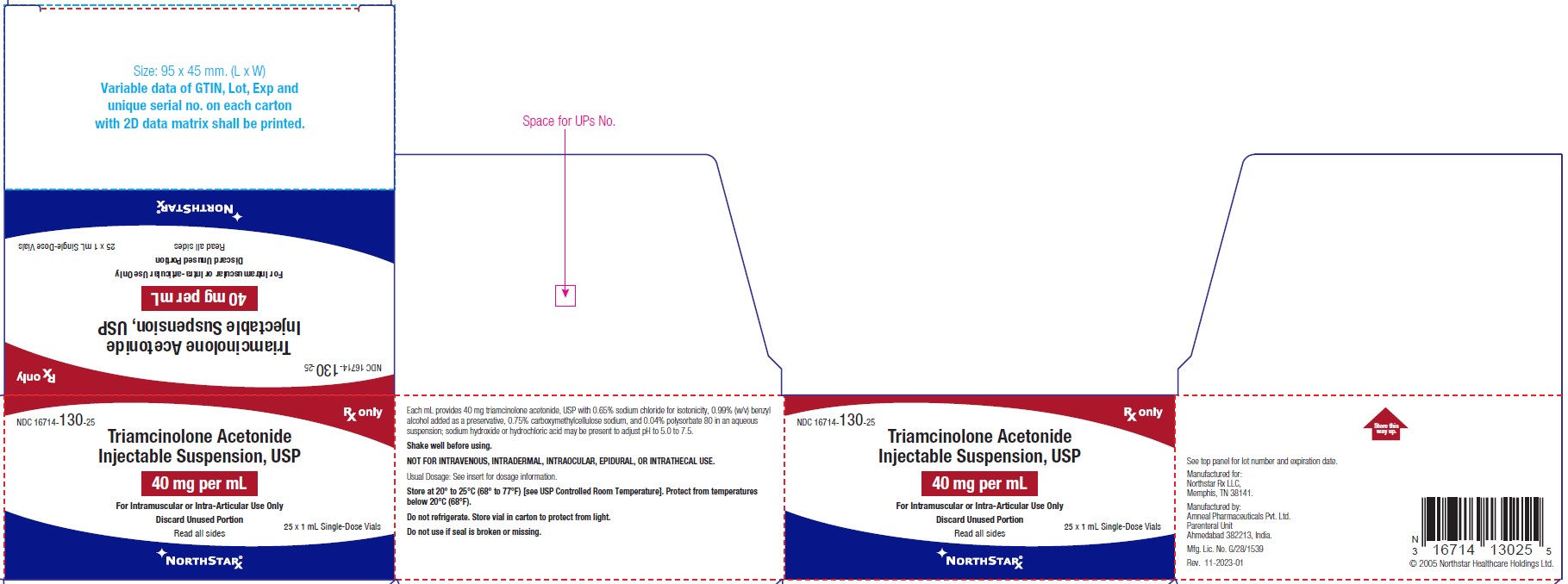
Triamcinolone Acetonide 40 mg/mL Injection, Suspension, 25 vials — NDC 16714-130-25 (Billing 16714-0130-25)
This is a package of 25 vials of Triamcinolone Acetonide 40 mg/mL Injection, Suspension from NorthStar Rx LLC, marketed since Nov 2019 and currently FDA-listed; retail pharmacies pay about $4.83 per mL (NADAC).
NDC database record
One package, one record: these facts belong to NDC 16714-130-25 alone.
- Record
- FDA NDC Directory package listing · Human prescription drug
- Code segments
- 16714 labeler · 130 product · 25 package
- Package marketed since
- Nov 19, 2019
- Sample package
- No — commercial package
- Listing certified through
- Dec 31, 2027
- Barcode (UPC)
- 0316714140018
- Medicaid fills, this package
- 19,135 prescriptions in the last four reported quarters
- FDA record last changed
- Jul 24, 2026
Other active recalls for Triamcinolone Acetonide (different manufacturers) — 1 · tap to view
Identity & classification
Regulatory identifiers FDA, NLM and CMS codes for this package
Drug-database identifiers Medi-Span GPI and First Databank GCN / HICL / AHFS classification
- GSN (GCN sequence number): 006795
- GCN: 27452
- GPI-14 (Medi-Span): 22100050101810
- HICL (First Databank): 002891
- AHFS class code: 48:10.08.00
- RxCUI (RxNorm): 1085754
Where does this data come from?
- FDA openFDA NDC Directory · synced Oct 8, 2026
- FDA label on DailyMed · label index refreshed Oct 6, 2026
- RxNorm (NLM RxNav) · catalog refreshed Oct 1, 2026
- Medi-Span GPI (licensed)
- First Databank (licensed) · refreshed Oct 8, 2026
RxNorm drug class
This medicine belongs to the Corticosteroid class.
Where does this data come from?
- RxClass (NLM) · catalog refreshed Oct 1, 2026
Clinical
Triamcinolone, a corticosteroid, is similar to a natural hormone produced by your adrenal glands. It often is used to replace this chemical when your body does not make enough of it. It relieves inflammation (swelling, heat, redness, and pain) and is used to treat certain forms of arthritis; skin, blood, kidney, eye, thyroid, and intestinal disorders (e.g., colitis); severe allergies; and asthma. Triamcinolone is also used to treat certain types of cancer. This medication is sometimes prescribed for other uses; ask your doctor or pharmacist for more information.
Read the full MedlinePlus article ↗- It depends on the product. Injections treat severe allergic conditions, joint inflammation, certain skin problems and eye inflammation. Creams and ointments calm itchy, inflamed sk...
- Injections are given by a healthcare professional. Ointment is applied as a thin film to the affected area two to three times daily. Nasal spray bottles need priming before first u...
- Possible effects include injection site pain, joint swelling, headache, muscle spasms, cough, sinusitis and bruising. People with diabetes may see higher blood sugar. Tell your doc...
- Call right away for signs of an allergic reaction, fever or infection, a very painful and swollen joint, vision changes, or mood changes. Also report black stools, severe stomach p...
Patient education
Supplement & herbal interactions
Some supplements/herbs that may interact with Triamcinolone Acetonide — tap one for details:
Triamcinolone Acetonide may be associated with lower levels of 8 nutrients — worth a chat with your pharmacist, not a cause for alarm.
Where does this data come from?
- MedlinePlus (NLM) · refreshed Oct 1, 2026
- FDA label on DailyMed · label index refreshed Oct 6, 2026
Ask a licensed pharmacist directly — free, answered by our team.
Pricing
A drug doesn't have one price. Each row is a different public payment system, and none is what you'd pay at the counter — that depends on your insurance. The ⓘ on each row explains what it measures.
| Price system | Per mL | Per package |
|---|---|---|
| Retail pharmacies payNADAC · weekly | $4.830 | $120.76 / 25 ml |
| Medicaid paysCMS SDUD · 12 mo | $9.73 | $243.28 / 25 ml |
| Medicare drug plans payPart D · quarterly | No Part D plan price is available for this NDC in our data. | |
| Medicare Part B allowsASP · J3301 | $0.996 / J3301 unit | — |
Where does this data come from?
- CMS NADAC weekly file · file of Oct 7, 2026
- CMS ASP pricing files · refreshed Sep 20, 2026
- CMS Medicaid State Drug Utilization Data · through Q1 2026
- CMS Part D plan pricing files · refreshed Sep 24, 2026
- VA National Acquisition Center price file
Billing & reimbursement
Where does this data come from?
- CMS ASP NDC-HCPCS crosswalk · refreshed Sep 22, 2026
- DMEPDAC NDC-HCPCS crosswalk
- openFDA NSDE billing units · refreshed Oct 7, 2026
Packaging — all sizes for this product
| Package NDC | Description | Per unit | Per pack | Marketing start | Marketing end | Status |
|---|---|---|---|---|---|---|
| 16714-0130-01 16714-130-01 Main listing | 1 VIAL in 1 CARTON / 1 mL in 1 VIAL | $7.39 / mL | $7.39 | 2019-11-19 | — | Active |
| 16714-0130-25 You're viewing this | 25 VIAL in 1 CARTON / 1 mL in 1 VIAL | $4.83 / mL | $120.76 | 2019-11-19 | — | Active |
This pack has the lowest per-mL cost of the 2 priced pack sizes ($4.83 NADAC).
This pack accounts for about 33% of this product's recent Medicaid fills; most go to a different pack size. See all packs ↓
Pack size FAQ
What quantity is in this package?
How does this package differ from NDC 16714-0130-01?
What NDC number is used to bill for this package of Triamcinolone Acetonide 40 mg/mL Injection, Suspension?
Prices are the latest CMS NADAC pharmacy acquisition cost per NDC; per-pack figures are per-unit × pack quantity, shown only when the pack is denominated in the same measure NADAC prices.
Therapeutic equivalents
| Product | Labeler | Pack | NADAC/unit | TE | Status | Price vs. this |
|---|---|---|---|---|---|---|
| Triamcinolone Acetonide 40 mg/mL 00703-0245-01 | Teva | 1 vial | $4.782 | AB | Availability likely | save 1% |
| Triamcinolone Acetonide 40 mg/mL 00143-9387-25 | Hikma | 25 vials | $4.830 | AB | Availability likely | — |
| Triamcinolone Acetonide 40 mg/mLthis 16714-0130-25 | NorthStar | 25 vials | $4.830 | AB | Availability likely | — |
| Triamcinolone Acetonide 40 mg/mL 25021-0054-01 | Sagent | 25 vials | $4.830 | AB | Availability likely | — |
| Triamcinolone Acetonide 40 mg/mL 81298-5781-05 | Long | 25 vials | $4.830 | AB | Availability likely | — |
| Triamcinolone Acetonide 40 mg/mL 00703-0243-01 | Teva | 1 vial | $6.383 | AB | Availability likely | +32% |
| Triamcinolone Acetonide 40 mg/mL 00703-0241-01 | Teva | 1 vial | $7.391 | AB | Availability likely | +53% |
| Triamcinolone Acetonide 40 mg/mL 67457-0621-02 | Mylan | 1 vial | $7.391 | AB | Discontinued | +53% |
| Triamcinolone Acetonide 40 mg/mL 70121-1049-02 | Amneal | 1 vial | $7.391 | AB | Availability likely | +53% |
| Triamcinolone Acetonide 40 mg/mL 70121-1651-01 | Amneal | 1 vial | $7.391 | AB | Availability likely | +53% |
| Triamcinolone Acetonide 40 mg/mL 70121-1657-01 | Amneal | 1 vial | $7.391 | AB | Availability likely | +53% |
| Kenalog-40 40 mg/mL 00003-0293-05 | E.R. | 1 vial | $9.002 | AB | Availability likely | +86% |
| Triesence 40 mg/mL 00078-0897-78 | Novartis | 1 vial | — | — | FDA listed | — |
| Triamcinolone Acetonide 40 mg/mL 43598-0677-11 | Dr. | 1 vial | — | AB | FDA listed | — |
| Triamcinolone Acetonide 40 mg/mL 46708-0812-01 | Alembic | 1 vial | — | AB | FDA listed | — |
| Kenalog-40 40 mg/mL 50090-2360-00 | A-S | 1 vial | — | AB | FDA listed | — |
| Triamcinolone Acetonide 40 mg/mL 62332-0812-01 | Alembic | 1 vial | — | AB | FDA listed | — |
| Triamcinolone Acetonide 40 mg/mL 71205-0451-01 | Proficient | 1 vial | — | AB | FDA listed | — |
| Triesence 40 mg/mL 82667-0800-01 | Harrow | 1 vial | — | — | FDA listed | — |
| Triamcinolone Acetonide 40 mg/mL 84549-0781-05 | ProPharma | 1 ml | — | AB | FDA listed | — |
| Kenalog-40 40 mg/mL 76420-0085-01 | Asclemed | 1 ml | — | AB | FDA listed | — |
| Triloan SUIK 40 mg/mL 76420-0220-01 | Asclemed | 1 vial | — | — | FDA listed | — |
| Kenalog-40 40 mg/mL 50090-0256-00 | A-S | 1 vial | — | AB | FDA listed | — |
| Kenalog-40 40 mg/mL 63187-0661-01 | Proficient | 1 vial | — | AB | FDA listed | — |
| Triloan II SUIK 40 mg/mL 76420-0222-01 | Asclemed | 2 vials | — | — | FDA listed | — |
| Triamcinolone acetonide 40 mg/mL 80425-0262-01 | Advanced | 1 vial | — | AB | FDA listed | — |
| Kenalog-40 40 mg/mL 50090-0819-00 | A-S | 1 vial | — | AB | FDA listed | — |
Where does this data come from?
- FDA openFDA NDC Directory · synced Oct 8, 2026
- FDA Orange Book · refreshed Oct 3, 2026
- CMS NADAC weekly file · file of Oct 7, 2026
Availability & generic status
This product is an FDA-approved generic. Other versions of the same drug are listed under Therapeutic equivalents, least expensive first.
Where does this data come from?
- FDA Orange Book · refreshed Oct 3, 2026
What it looks like
Where does this data come from?
- FDA label on DailyMed · label index refreshed Oct 6, 2026
Inactive Ingredients / Excipients
Inactive ingredients, also called excipients, are components of the drug product other than the active ingredient. They may include fillers, dyes, coatings, preservatives, flavors, or other formulation ingredients.
🧪 Avoiding an ingredient? See Triamcinolone inactive ingredients by manufacturer: every current product's list side by side, so you can ask your pharmacy for the version that does not list it.
💡 Tap an ingredient (hover on desktop) to see what it is and why it’s used.
-
UNII LKG8494WBH
Benzyl alcohol is a clear liquid used as a preservative and solvent in medicines. It helps prevent bacterial and fungal growth and dissolves other ingredients to create uniform liquid formulations.
-
UNII K679OBS311
Carboxymethylcellulose sodium is a plant-derived thickening agent made from cellulose. In medicines, it acts as a binder to hold ingredients together, a disintegrant to help the tablet break apart, or a thickener in liquids.
-
UNII QTT17582CB
A strong acid used to adjust and maintain the proper pH level in liquid medicines, ensuring stability and preventing breakdown of active ingredients.
-
UNII 6OZP39ZG8H
Polysorbate 80 is a synthetic emulsifier derived from sorbitol and oleic acid. It helps mix oil and water-based ingredients together in medications and improves how the product disperses in the body.
-
UNII 451W47IQ8X
Sodium chloride is common table salt. It's used in medicines as a buffer to maintain proper pH, as a filler to add bulk, or to adjust the osmotic balance in liquid formulations.
-
UNII 55X04QC32I
A strong alkaline chemical used to adjust and maintain the pH balance of liquid medicines. It helps keep the medicine stable and ensures it stays effective during storage.
6 inactive ingredients listed in the exact product block matched to this NDC.
Where does this data come from?
ingredient classCode="IACT" elements from the exact product block matched by this NDC. Label-section narrative from DailyMed / the openFDA label index is shown separately when available.- FDA label on DailyMed · label index refreshed Oct 6, 2026
- FDA openFDA NDC Directory · synced Oct 8, 2026
Inactive ingredient FAQ
Are inactive ingredients the same for every manufacturer?
Why might an inactive ingredient be missing?
Can inactive ingredients matter?
Manufacturer & labeler
More NDCs from NorthStar Rx LLC labeler code 16714
- Rivastigmine 9.5 mg/24h Patch, Extended Release NDC 16714-116-02
- Rivastigmine 13.3 mg/24h Patch, Extended Release NDC 16714-117-02
- Tobramycin Inhalation Solution 300 mg/5mL Inhalant NDC 16714-119-03
- Omeprazole 40 mg Capsule, Delayed Release NDC 16714-123-01
- Chlorthalidone 25 mg Tablet NDC 16714-128-01
- Chlorthalidone 50 mg Tablet NDC 16714-129-01
- Irinotecan hydrochloride 20 mg/mL Injection NDC 16714-131-01
- Paclitaxel 6 mg/mL Injection, Solution NDC 16714-137-01
- Triamcinolone Acetonide 200 mg/5mL Injection, Suspension NDC 16714-140-01
- Aripiprazole 2 mg Tablet NDC 16714-141-01
- Aripiprazole 5 mg Tablet NDC 16714-142-01
- Aripiprazole 10 mg Tablet NDC 16714-143-01
Where does this data come from?
- FDA openFDA NDC Directory · synced Oct 8, 2026
- Drugs@FDA
Full prescribing information FDA SPL
🎯 Indications and Usage ▾
INDICATIONS AND USAGE Intramuscular Where oral therapy is not feasible, injectable corticosteroid therapy, including triamcinolone acetonide injectable suspension is indicated for intramuscular use as follows: Allergic states: Control of severe or incapacitating allergic conditions intractable to adequate trials of conventional treatment in asthma, atopic dermatitis, contact dermatitis, drug hypersensitivity reactions, perennial or seasonal allergic rhinitis, serum sickness, transfusion reactions. Dermatologic diseases: Bullous dermatitis herpetiformis, exfoliative erythroderma, mycosis fungoides, pemphigus, severe erythema multiforme (Stevens-Johnson syndrome).
Endocrine disorders: Primary or secondary adrenocortical insufficiency (hydrocortisone or cortisone is the drug of choice; synthetic analogs may be used in conjunction with mineralocorticoids where applicable; in infancy, mineralocorticoid supplementation is of particular importance), congenital adrenal hyperplasia, hypercalcemia associated with cancer, nonsuppurative thyroiditis. Gastrointestinal diseases: To tide the patient over a critical period of the disease in regional enteritis and ulcerative colitis. Hematologic disorders: Acquired (autoimmune) hemolytic anemia, Diamond-Blackfan anemia, pure red cell aplasia, selected cases of secondary thrombocytopenia.
Miscellaneous: Trichinosis with neurologic or myocardial involvement, tuberculous meningitis with subarachnoid block or impending block when used with appropriate antituberculous chemotherapy. Neoplastic diseases: For the palliative management of leukemias and lymphomas. Nervous system: Acute exacerbations of multiple sclerosis; cerebral edema associated with primary or metastatic brain tumor or craniotomy.
Ophthalmic diseases: Sympathetic ophthalmia, temporal arteritis, uveitis, and ocular inflammatory conditions unresponsive to topical corticosteroids. Renal diseases: To induce diuresis or remission of proteinuria in idiopathic nephrotic syndrome or that due to lupus erythematosus. Respiratory diseases: Berylliosis, fulminating or disseminated pulmonary tuberculosis when used concurrently with appropriate antituberculous chemotherapy, idiopathic eosinophilic pneumonias, symptomatic sarcoidosis.
Rheumatic disorders: As adjunctive therapy for short-term administration (to tide the patient over an acute episode or exacerbation) in acute gouty arthritis; acute rheumatic carditis; ankylosing spondylitis; psoriatic arthritis; rheumatoid arthritis, including juvenile rheumatoid arthritis (selected cases may require low-dose maintenance therapy). For the treatment of dermatomyositis, polymyositis, and systemic lupus erythematosus. Intra-Articular The intra-articular or soft tissue administration of triamcinolone acetonide injectable suspension is indicated as adjunctive therapy for short-term administration (to tide the patient over an acute episode or exacerbation) in acute gouty arthritis, acute and subacute bursitis, acute nonspecific tenosynovitis, epicondylitis, rheumatoid arthritis, synovitis of osteoarthritis.
⏱️ Dosage and Administration ▾
DOSAGE AND ADMINISTRATION General NOTE: CONTAINS BENZYL ALCOHOL (see PRECAUTIONS ). The initial dose of triamcinolone acetonide injectable suspension may vary from 2.5 mg to 100 mg per day depending on the specific disease entity being treated (see Dosage section below). However, in certain overwhelming, acute, life-threatening situations, administration in dosages exceeding the usual dosages may be justified and may be in multiples of the oral dosages.
IT SHOULD BE EMPHASIZED THAT DOSAGE REQUIREMENTS ARE VARIABLE AND MUST BE INDIVIDUALIZED ON THE BASIS OF THE DISEASE UNDER TREATMENT AND THE RESPONSE OF THE PATIENT. After a favorable response is noted, the proper maintenance dosage should be determined by decreasing the initial drug dosage in small decrements at appropriate time intervals until the lowest dosage which will maintain an adequate clinical response is reached. Situations which may make dosage adjustments necessary are changes in clinical status secondary to remissions or exacerbations in the disease process, the patient’s individual drug responsiveness, and the effect of patient exposure to stressful situations not directly related to the disease entity under treatment.
In this latter situation it may be necessary to increase the dosage of the corticosteroid for a period of time consistent with the patient’s condition. If after long-term therapy the drug is to be stopped, it is recommended that it be withdrawn gradually rather than abruptly. Dosage SYSTEMIC The suggested initial dose is 60 mg, injected deeply into the gluteal muscle .
Atrophy of subcutaneous fat may occur if the injection is not properly given. Dosage is usually adjusted within the range of 40 mg to 80 mg, depending upon patient response and duration of relief. However, some patients may be well controlled on doses as low as 20 mg or less.
Hay fever or pollen asthma: Patients with hay fever or pollen asthma who are not responding to pollen administration and other conventional therapy may obtain a remission of symptoms lasting throughout the pollen season after a single injection of 40 mg to 100 mg. In the treatment of acute exacerbations of multiple sclerosis, daily doses of 160 mg of triamcinolone for a week followed by 64 mg every other day for one month are recommended (see PRECAUTIONS: Neuro-Psychiatric ). In pediatric patients, the initial dose of triamcinolone may vary depending on the specific disease entity being treated.
The range of initial doses is 0.11 mg/kg/day to 1.6 mg/kg/day in 3 or 4 divided doses (3.2 mg/m 2 bsa/day to 48 mg/m 2 bsa/day). For the purpose of comparison, the following is the equivalent milligram dosage of the various glucocorticoids: Cortisone, 25 Triamcinolone, 4 Hydrocortisone, 20 Paramethasone, 2 Prednisolone, 5 Betamethasone,
0.75 Prednisone, 5 Dexamethasone,
0.75Methylprednisolone, 4 These dose relationships apply only to oral or intravenous administration of these compounds. When these substances or their derivatives are injected intramuscularly or into joint spaces, their relative properties may be greatly altered. LOCAL Intra-articular administration: A single local injection of triamcinolone acetonide is frequently sufficient, but several injections may be needed for adequate relief of symptoms.
Initial dose: 2.5 mg to 5 mg for smaller joints and from 5 mg to 15 mg for larger joints, depending on the specific disease entity being treated. For adults, doses up to 10 mg for smaller areas and up to 40 mg for larger areas have usually been sufficient. Single injections into several joints, up to a total of 80 mg, have been given.
Administration GENERAL STRICT ASEPTIC TECHNIQUE IS MANDATORY. The vial should be shaken before use to ensure a uniform suspension. Prior to withdrawal, the suspension should be inspected for clumping or granular appearance (agglomeration).
Agglomeration occurs when the drug substance separates from the solution and appears as a white precipitate in the vial. An agglomerated product… [Excerpted — this section continues on DailyMed.]
⛔ Contraindications ▾
CONTRAINDICATIONS Triamcinolone acetonide injectable suspension is contraindicated in patients who are hypersensitive to any components of this product (see WARNINGS: General ). Intramuscular corticosteroid preparations are contraindicated for idiopathic thrombocytopenic purpura.
⚠️ Warnings ▾
WARNINGS Serious Neurologic Adverse Reactions with Epidural Administration Serious neurologic events, some resulting in death, have been reported with epidural injection of corticosteroids (see WARNINGS: Neurologic ). Specific events reported include, but are not limited to, spinal cord infarction, paraplegia, quadriplegia, cortical blindness, and stroke. These serious neurologic events have been reported with and without use of fluoroscopy.
The safety and effectiveness of epidural administration of corticosteroids have not been established, and corticosteroids are not approved for this use. General Exposure to excessive amounts of benzyl alcohol has been associated with toxicity (hypotension, metabolic acidosis), particularly in neonates, and an increased incidence of kernicterus, particularly in small preterm infants. There have been rare reports of deaths, primarily in preterm infants, associated with exposure to excessive amounts of benzyl alcohol.
The amount of benzyl alcohol from medications is usually considered negligible compared to that received in flush solutions containing benzyl alcohol. Administration of high dosages of medications containing this preservative must take into account the total amount of benzyl alcohol administered. The amount of benzyl alcohol at which toxicity may occur is not known.
If the patient requires more than the recommended dosages or other medications containing this preservative, the practitioner must consider the daily metabolic load of benzyl alcohol from these combined sources (see PRECAUTIONS: Pediatric Use ). Rare instances of anaphylaxis have occurred in patients receiving corticosteroid therapy (see ADVERSE REACTIONS ). Cases of serious anaphylaxis, including death, have been reported in individuals receiving triamcinolone acetonide injection, regardless of the route of administration.
Because triamcinolone acetonide injectable suspension is a suspension, it should not be administered intravenously. Unless a deep intramuscular injection is given, local atrophy is likely to occur (For recommendations on injection techniques, see DOSAGE AND ADMINISTRATION ). Due to the significantly higher incidence of local atrophy when the material is injected into the deltoid area, this injection site should be avoided in favor of the gluteal area.
Increased dosage of rapidly acting corticosteroids is indicated in patients on corticosteroid therapy subjected to any unusual stress before, during, and after the stressful situation. Triamcinolone acetonide injectable suspension is a long-acting preparation, and is not suitable for use in acute stress situations. To avoid drug-induced adrenal insufficiency, supportive dosage may be required in times of stress (such as trauma, surgery, or severe illness) both during treatment with triamcinolone acetonide injectable suspension and for a year afterwards.
Results from one multicenter, randomized, placebo-controlled study with methylprednisolone hemisuccinate, an intravenous corticosteroid, showed an increase in early (at 2 weeks) and late (at 6 months) mortality in patients with cranial trauma who were determined not to have other clear indications for corticosteroid treatment. High doses of systemic corticosteroids, including triamcinolone acetonide injectable suspension should not be used for the treatment of traumatic brain injury. Cardio-Renal Average and large doses of corticosteroids can cause elevation of blood pressure, salt and water retention, and increased excretion of potassium.
These effects are less likely to occur with the synthetic derivatives except when they are used in large doses. Dietary salt restriction and potassium supplementation may be necessary (see PRECAUTIONS ). All corticosteroids increase calcium excretion.
Literature reports suggest an apparent association between use of corticosteroids and left ventricular free wall rupture after a recent myocardial infarction; therefore, therapy with corticosteroids should be used with… [Excerpted — this section continues on DailyMed.]
🤒 Adverse Reactions ▾
ADVERSE REACTIONS (listed alphabetically under each subsection) The following adverse reactions may be associated with corticosteroid therapy: Allergic reactions: Anaphylaxis including death, and angioedema. Cardiovascular: Bradycardia, cardiac arrest, cardiac arrhythmias, cardiac enlargement, circulatory collapse, congestive heart failure, fat embolism, hypertension, hypertrophic cardiomyopathy in premature infants, myocardial rupture following recent myocardial infarction (see WARNINGS ), pulmonary edema, syncope, tachycardia, thromboembolism, thrombophlebitis, vasculitis.
Dermatologic: Acne, allergic dermatitis, cutaneous and subcutaneous atrophy, dry scaly skin, ecchymoses and petechiae, edema, erythema, hyperpigmentation, hypopigmentation, impaired wound healing, increased sweating, lupus erythematosus-like lesions, purpura, rash, sterile abscess, striae, suppressed reactions to skin tests, thin fragile skin, thinning scalp hair, urticaria. Endocrine: Decreased carbohydrate and glucose tolerance, development of cushingoid state, glycosuria, hirsutism, hypertrichosis, increased requirements for insulin or oral hypoglycemic agents in diabetes, manifestations of latent diabetes mellitus, menstrual irregularities, postmenopausal vaginal hemorrhage, secondary adrenocortical and pituitary unresponsiveness (particularly in times of stress, as in trauma, surgery, or illness), suppression of growth in pediatric patients.
Fluid and electrolyte disturbances: Congestive heart failure in susceptible patients, fluid retention, hypokalemic alkalosis, potassium loss, sodium retention. Gastrointestinal: Abdominal distention, bowel/bladder dysfunction (after intrathecal administration [see WARNINGS: Neurologic ]), elevation in serum liver enzyme levels (usually reversible upon discontinuation), hepatomegaly, increased appetite, nausea, pancreatitis, peptic ulcer with possible perforation and hemorrhage, perforation of the small and large intestine (particularly in patients with inflammatory bowel disease), ulcerative esophagitis.
Metabolic: Negative nitrogen balance due to protein catabolism. Musculoskeletal: Aseptic necrosis of femoral and humeral heads, calcinosis (following intra-articular or intralesional use), Charcot-like arthropathy, loss of muscle mass, muscle weakness, osteoporosis, pathologic fracture of long bones, post injection flare (following intra-articular use), steroid myopathy, tendon rupture, vertebral compression fractures. Neurologic/Psychiatric: Convulsions, depression, emotional instability, euphoria, headache, increased intracranial pressure with papilledema (pseudotumor cerebri) usually following discontinuation of treatment, insomnia, mood swings, neuritis, neuropathy, paresthesia, personality changes, psychiatric disorders, vertigo.
Arachnoiditis, meningitis, paraparesis/paraplegia, and sensory disturbances have occurred after intrathecal administration. Spinal cord infarction, paraplegia, quadriplegia, cortical blindness, and stroke (including brainstem) have been reported after epidural administration of corticosteroids (see WARNINGS: Serious Neurologic Adverse Reactions with Epidural Administration and WARNINGS: Neurologic ). Ophthalmic: Exophthalmos, glaucoma, increased intraocular pressure, posterior subcapsular cataracts, rare instances of blindness associated with periocular injections.
Other: Abnormal fat deposits, decreased resistance to infection, hiccups, increased or decreased motility and number of spermatozoa, malaise, moon face, weight gain. To report SUSPECTED ADVERSE REACTIONS, contact NorthStar Rx LLC at 1-800-206-7821 or FDA at 1-800-FDA-1088 or www.fda.gov/medwatch.
🆘 Overdosage ▾
OVERDOSAGE Treatment of acute overdosage is by supportive and symptomatic therapy. For chronic overdosage in the face of severe disease requiring continuous steroid therapy, the dosage of the corticosteroid may be reduced only temporarily, or alternate day treatment may be introduced.
🧬 Clinical Pharmacology ▾
CLINICAL PHARMACOLOGY Glucocorticoids, naturally occurring and synthetic, are adrenocortical steroids that are readily absorbed from the gastrointestinal tract. Naturally occurring glucocorticoids (hydrocortisone and cortisone), which also have salt-retaining properties, are used as replacement therapy in adrenocortical deficiency states. Synthetic analogs such as triamcinolone are primarily used for their anti-inflammatory effects in disorders of many organ systems.
Triamcinolone acetonide injectable suspension has an extended duration of effect which may be sustained over a period of several weeks. Studies indicate that following a single intramuscular dose of 60 mg to 100 mg of triamcinolone acetonide, adrenal suppression occurs within 24 to 48 hours and then gradually returns to normal, usually in 30 to 40 days. This finding correlates closely with the extended duration of therapeutic action achieved with the drug.
📦 How Supplied / Storage and Handling ▾
HOW SUPPLIED Triamcinolone acetonide injectable suspension, USP is supplied in vials providing 40 mg triamcinolone acetonide per mL. 40 mg/mL, 1 mL 1 single-dose vial in 1 carton: NDC 16714-130-01 25 single-dose vials in 1 carton: NDC 16714-130-25 40 mg/mL, 5 mL 5 mL multiple-dose vial (200 mg per 5 mL) in 1 carton: NDC 16714-140-01 40 mg/mL, 10 mL 10 mL multiple-dose vial (400 mg per 10 mL) in 1 carton: NDC 16714-150-01 Storage Store at 20° to 25°C (68° to 77°F) [see USP Controlled Room Temperature]. Protect from temperatures below 20°C (68°F).
Excursions are permitted between 15° to 30°C (59° to 86°F). Store vial in carton to protect from light. Do not refrigerate.
Store vial upright. Once in use: Chemical and physical in-use stability has been demonstrated for 28 days below 25° (77°F). From a microbiological point of view, once opened, the product may be stored for a maximum of 28 days at 15° to 25°C (59° to 77°F).
Other in-use storage times and conditions are the responsibility of the user. Discard unused portions of single-dose vials. Manufactured for: Northstar Rx LLC Memphis, TN 38141.
Manufactured by: Amneal Pharmaceuticals Pvt. Ltd. Ahmedabad 382213, INDIA Rev.
03-2026-03
📋 Description ▾
DESCRIPTION Triamcinolone acetonide injectable suspension, USP is a synthetic glucocorticoid corticosteroid with anti-inflammatory action. THIS FORMULATION IS SUITABLE FOR INTRAMUSCULAR AND INTRA-ARTICULAR USE ONLY. THIS FORMULATION IS NOT FOR INTRADERMAL INJECTION.
Each mL of the sterile aqueous suspension provides 40 mg triamcinolone acetonide, USP, with 0.65% sodium chloride for isotonicity, 0.99% (w/v) benzyl alcohol as a preservative, 0.75% carboxymethylcellulose sodium, and 0.04% polysorbate 80 in an aqueous suspension. Sodium hydroxide or hydrochloric acid may be present to adjust pH to 5.0 to 7.5. At the time of manufacture, the air in the container is replaced by nitrogen.
The chemical name for triamcinolone acetonide is 9-Fluoro-11β,16α,17,21-tetrahydroxypregna-1,4-diene-3,20-dione cyclic 16,17-acetal with acetone. Its structural formula is: Triamcinolone acetonide, USP occurs as a white to cream-colored, crystalline powder having not more than a slight odor and is practically insoluble in water and very soluble in alcohol. 1
⚠️ Precautions ▾
PRECAUTIONS General This product, like many other steroid formulations, is sensitive to heat. Therefore, it should not be autoclaved when it is desirable to sterilize the exterior of the vial. The lowest possible dose of corticosteroid should be used to control the condition under treatment.
When reduction in dosage is possible, the reduction should be gradual. Since complications of treatment with glucocorticoids are dependent on the size of the dose and the duration of treatment, a risk/benefit decision must be made in each individual case as to dose and duration of treatment and as to whether daily or intermittent therapy should be used. Cardio-Renal As sodium retention with resultant edema and potassium loss may occur in patients receiving corticosteroids, these agents should be used with caution in patients with congestive heart failure, hypertension, or renal insufficiency.
Endocrine Drug-induced secondary adrenocortical insufficiency may be minimized by gradual reduction of dosage. This type of relative insufficiency may persist for months after discontinuation of therapy; therefore, in any situation of stress occurring during that period, hormone therapy should be reinstituted. Since mineralocorticoid secretion may be impaired, salt and/or a mineralocorticoid should be administered concurrently.
Gastrointestinal Steroids should be used with caution in active or latent peptic ulcers, diverticulitis, fresh intestinal anastomoses, and nonspecific ulcerative colitis, since they may increase the risk of a perforation. Signs of peritoneal irritation following gastrointestinal perforation in patients receiving corticosteroids may be minimal or absent. There is an enhanced effect of corticosteroids in patients with cirrhosis.
Intra-Articular and Soft Tissue Administration Intra-articularly injected corticosteroids may be systemically absorbed. Appropriate examination of any joint fluid present is necessary to exclude a septic process. A marked increase in pain accompanied by local swelling, further restriction of joint motion, fever, and malaise are suggestive of septic arthritis.
If this complication occurs and the diagnosis of sepsis is confirmed, appropriate antimicrobial therapy should be instituted. Injection of a steroid into an infected site is to be avoided. Local injection of a steroid into a previously infected joint is not usually recommended.
Corticosteroid injection into unstable joints is generally not recommended. Intra-articular injection may result in damage to joint tissues (see ADVERSE REACTIONS : Musculoskeletal ). Musculoskeletal Corticosteroids decrease bone formation and increase bone resorption both through their effect on calcium regulation ( i.e., decreasing absorption and increasing excretion) and inhibition of osteoblast function.
This, together with a decrease in the protein matrix of the bone secondary to an increase in protein catabolism, and reduced sex hormone production, may lead to inhibition of bone growth in pediatric patients and the development of osteoporosis at any age. Special consideration should be given to patients at increased risk of osteoporosis ( i.e., postmenopausal women) before initiating corticosteroid therapy. Neuro-Psychiatric Although controlled clinical trials have shown corticosteroids to be effective in speeding the resolution of acute exacerbations of multiple sclerosis, they do not show that they affect the ultimate outcome or natural history of the disease.
The studies do show that relatively high doses of corticosteroids are necessary to demonstrate a significant effect (see DOSAGE AND ADMINISTRATION ). An acute myopathy has been observed with the use of high doses of corticosteroids, most often occurring in patients with disorders of neuromuscular transmission ( e.g., myasthenia gravis), or in patients receiving concomitant therapy with neuromuscular blocking drugs ( e.g., pancuronium). This acute myopathy is generalized, may involve ocular and respiratory muscles… [Excerpted — this section continues on DailyMed.]
📄 Package Label / Principal Display Panel ▾
PRINCIPAL DISPLAY PANEL NDC:16714-130-01 Triamcinolone acetonide injectable suspension USP, 40 mg per mL Rx Only Northstar Rx LLC Container Label 1
PRINCIPAL DISPLAY PANEL NDC:16714-130-25 Triamcinolone acetonide injectable suspension USP, 40 mg per mL Rx Only Northstar Rx LLC 25 x 1 mL Carton Label w
PRINCIPAL DISPLAY PANEL NDC:16714-140-01 Triamcinolone acetonide injectable suspension USP, 40 mg per 5 mL Rx Only Northstar Rx LLC Container Label q
PRINCIPAL DISPLAY PANEL NDC:16714-140-01 Triamcinolone acetonide injectable suspension USP, 40 mg per 5 mL Rx Only Northstar Rx LLC Carton Label 1
PRINCIPAL DISPLAY PANEL NDC:16714-150-01 Triamcinolone acetonide injectable suspension USP, 40 mg per 10 mL Rx Only Northstar Rx LLC Container Label 1
PRINCIPAL DISPLAY PANEL NDC:16714-150-01 Triamcinolone acetonide injectable suspension USP, 40 mg per 10 mL Rx Only Northstar Rx LLC Carton Label 1