
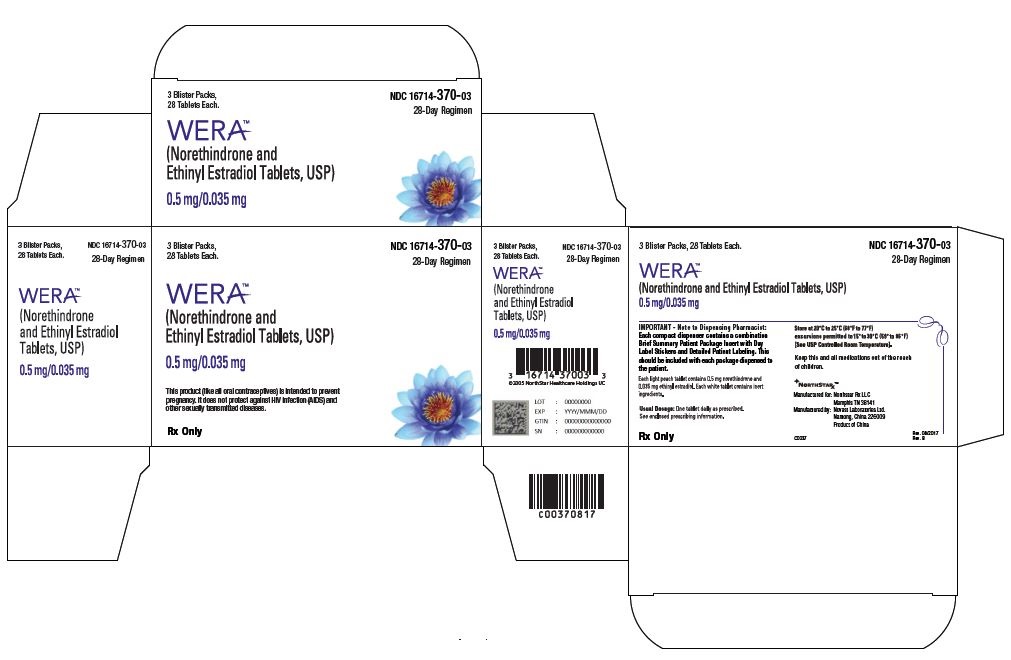
Wera norethindrone and ethinyl estradiol Kit — NDC 16714-370-04 (Billing 16714-0370-04)
This is a package of Wera norethindrone and ethinyl estradiol Kit from Northstar Rx LLC, marketed since Mar 2012 and currently FDA-listed.
NDC database record
One package, one record: these facts belong to NDC 16714-370-04 alone.
- Record
- FDA NDC Directory package listing · Human prescription drug
- Code segments
- 16714 labeler · 370 product · 04 package
- Package marketed since
- Mar 27, 2012
- Sample package
- No — commercial package
- Listing certified through
- Dec 31, 2027
- Barcode (UPC-A, from the NDC)
- 3 1671437004 0
- FDA record last changed
- Jul 24, 2026
Other active recalls for Norethindrone And Ethinyl Estradiol (different manufacturers) — 3 · tap to view
Identity & classification
Regulatory identifiers FDA, NLM and CMS codes for this package
Drug-database identifiers Medi-Span GPI and First Databank GCN / HICL / AHFS classification
- GSN (GCN sequence number): 003294
- GCN: 11471
- GPI-14 (Medi-Span): 25990002500310
- HICL (First Databank): 001453
- AHFS class code: 68:12.00.00
- RxCUI (RxNorm): 310463
Where does this data come from?
- FDA openFDA NDC Directory · synced Oct 1, 2026
- FDA label on DailyMed · label index refreshed Oct 5, 2026
- RxNorm (NLM RxNav) · catalog refreshed Oct 1, 2026
- Medi-Span GPI (licensed)
- First Databank (licensed) · refreshed Oct 1, 2026
RxNorm drug class
This medicine belongs to the Estrogen class.
Where does this data come from?
- RxClass (NLM) · catalog refreshed Oct 1, 2026
Clinical
Oral contraceptives (birth-control pills) containing ethinyl estradiol (an estrogen) and norethindrone (a progestin) are used to prevent pregnancy. Estrogen and progestin are two female sex hormones. Combinations of estrogen and progestin work mainly by preventing ovulation (the release of eggs from the ovaries). Oral contraceptives are an effective method of birth control, but they do not prevent the spread of human immunodeficiency virus (HIV, the virus that causes acquired immunodeficiency syndrome [AIDS]) and other sexually transmitted diseases.
Read the full MedlinePlus article ↗Patient education
Supplement & herbal interactions
Where does this data come from?
- MedlinePlus (NLM) · refreshed Oct 1, 2026
- FDA label on DailyMed · label index refreshed Oct 5, 2026
Ask a licensed pharmacist directly — free, answered by our team.
Pricing
A drug doesn't have one price. Each row is a different public payment system, and none is what you'd pay at the counter — that depends on your insurance. The ⓘ on each row explains what it measures.
| Price system | Per each | Per package |
|---|---|---|
| Retail pharmacies payNADAC · weekly | Not in the retail survey — common for institutional, discontinued, or low-volume packs. | |
| Medicaid paysCMS SDUD · 12 mo | No recent Medicaid claims on file for this NDC — rare and low-volume NDCs are suppressed in the public data. | |
| Medicare drug plans payPart D · quarterly | No Part D plan price is available for this NDC in our data. | |
Where does this data come from?
- CMS NADAC weekly file
- CMS ASP pricing files · refreshed Sep 20, 2026
- CMS Medicaid State Drug Utilization Data · refreshed Oct 5, 2026
- CMS Part D plan pricing files · refreshed Sep 24, 2026
- VA National Acquisition Center price file
Packaging — all sizes for this product
| Package NDC | Description | Per unit | Per pack | Marketing start | Marketing end | Status |
|---|---|---|---|---|---|---|
| 16714-0370-01 16714-370-01 | 1 BLISTER PACK in 1 PACKET / 1 KIT in 1 BLISTER PACK | $0.4875 / ea | $0.49 | 2012-03-27 | — | Active |
| 16714-0370-02 16714-370-02 | 1 BLISTER PACK in 1 CARTON / 1 KIT in 1 BLISTER PACK | — | — | 2012-03-27 | — | Active |
| 16714-0370-03 16714-370-03 Main listing | 3 BLISTER PACK in 1 CARTON / 1 KIT in 1 BLISTER PACK | $0.4875 / ea | $1.46 | 2012-03-27 | — | Active |
| 16714-0370-04 You're viewing this | 6 BLISTER PACK in 1 CARTON / 1 KIT in 1 BLISTER PACK | — | — | 2012-03-27 | — | Active |
This pack shows little to no recent Medicaid volume — a different pack size carries most fills. See all packs ↓
Pack size FAQ
What quantity is in this package?
What NDC number is used to bill for this package of Wera norethindrone and ethinyl estradiol Kit?
Prices are the latest CMS NADAC pharmacy acquisition cost per NDC; per-pack figures are per-unit × pack quantity, shown only when the pack is denominated in the same measure NADAC prices.
Therapeutic equivalents
| Product | Labeler | Pack | NADAC/unit | TE | Status | Price vs. this |
|---|---|---|---|---|---|---|
| Dasetta 1/35 16714-0348-01 | Northstar | 1 packet | $0.203 | AB | Availability likely | — |
| Dasetta 7/7/7 16714-0346-01 | Northstar | 1 packet | $0.216 | AB | Availability likely | — |
| Necon 75907-0085-28 | Dr. | 1 packet | $0.487 | AB | Availability likely | — |
| Necon 51862-0892-01 | Mayne | 1 packet | $0.617 | AB | FDA listed | — |
| Zenchent FE 69238-1581-03 | Amneal | 1 kit | — | AB | FDA listed | — |
| Werathis 16714-0370-04 | Northstar | 1 kit | — | AB | FDA listed | — |
Where does this data come from?
- FDA openFDA NDC Directory · synced Oct 1, 2026
- FDA Orange Book · refreshed Oct 3, 2026
- CMS NADAC weekly file
Availability & generic status
This product is an FDA-approved generic. Other versions of the same drug are listed under Therapeutic equivalents, least expensive first.
Where does this data come from?
- FDA Orange Book · refreshed Oct 3, 2026
What it looks like
Where does this data come from?
- FDA label on DailyMed · label index refreshed Oct 5, 2026
Inactive Ingredients / Excipients
Inactive ingredients, also called excipients, are components of the drug product other than the active ingredient. They may include fillers, dyes, coatings, preservatives, flavors, or other formulation ingredients.
Where does this data come from?
IACT rows and label-wide narrative are kept separate; availability and product-level specificity depend on the submitted label.- FDA label on DailyMed · label index refreshed Oct 5, 2026
- FDA openFDA NDC Directory · synced Oct 1, 2026
Inactive ingredient FAQ
Are inactive ingredients the same for every manufacturer?
Why might an inactive ingredient be missing?
Can inactive ingredients matter?
Manufacturer & labeler
More NDCs from Northstar Rx LLC labeler code 16714
- Levetiracetam 100 mg/mL Solution NDC 16714-358-01
- Falmina levonorgestrel and ethinyl estradiol Kit NDC 16714-359-01
- Mono-Linyah norgestimate and ethinyl estradiol Kit NDC 16714-360-01
- Tri-Linyah Norgestimate and Ethinyl Estradiol Kit NDC 16714-363-01
- Elinest Norgestrel and Ethinyl Estradiol Kit NDC 16714-365-01
- SETLAKIN Levonorgestrel and Ethinyl Estradiol Kit NDC 16714-366-03
- Quetiapine Fumarate 25 mg Tablet, Film Coated NDC 16714-375-01
- Quetiapine Fumarate 50 mg Tablet, Film Coated NDC 16714-376-01
- Quetiapine Fumarate 100 mg Tablet, Film Coated NDC 16714-377-01
- Quetiapine Fumarate 200 mg Tablet, Film Coated NDC 16714-378-01
- Quetiapine Fumarate 300 mg Tablet, Film Coated NDC 16714-379-01
- Quetiapine Fumarate 400 mg Tablet, Film Coated NDC 16714-380-01
Where does this data come from?
- FDA openFDA NDC Directory · synced Oct 1, 2026
- Drugs@FDA
Full prescribing information FDA SPL
🚨 Boxed Warning ▾
WARNING: CARDIOVASCULAR RISK ASSOCIATED WITH SMOKING Cigarette smoking increases the risk of serious cardiovascular events from combination oral contraceptive use. This risk increases with age, particularly in women over 35 years of age, and with the number of cigarettes smoked. For this reason, combination oral contraceptives, including WERA TM , should not be used by women who are over 35 years of age and smoke.
🎯 Indications and Usage ▾
INDICATIONS AND USAGE WERA™ Tablets are indicated for the prevention of pregnancy in women who elect to use this product as a method of contraception. Oral contraceptives are highly effective. Table 1 lists the typical accidental pregnancy rates for users of combined oral contraceptives and other methods of contraception.
The efficacy of these contraceptive methods, except sterilization, the IUD, and the NORPLANT ® System depends upon the reliability with which they are used. Correct and consistent use of methods can result in lower failure rates. Emergency Contraceptive Pills: Treatment initiated within 72 hours after unprotected intercourse reduces the risk of pregnancy by at least 75%.
9 Lactational Amenorrhea Method: LAM is highly effective, temporary method of contraception. 10 Source: Trussell J, Contraceptive efficacy. In Hatcher RA, Trussell J, Stewart F, Cates W, Stewart GK, Kowal D, Guest F, Contraceptive Technology: Seventeenth Revised Edition.
New York NY: Irvington Publishers, 1998. 1 Among typical couples who initiate use of a method (not necessarily for the first time), the percentage who experience an accidental pregnancy during the first year if they do not stop use for any other reason. 2 Among couples who initiate use of a method (not necessarily for the first time) and who use it perfectly (both consistently and correctly), the percentage who experience an accidental pregnancy during the first year if they do not stop use for any other reason.
3 Among couples attempting to avoid pregnancy, the percentage who continue to use a method for one year. 4 The percents becoming pregnant in columns (2) and (3) are based on data from populations where contraception is not used and from women who cease using contraception in order to become pregnant. Among such populations, about 89% become pregnant within one year.
This estimate was lowered slightly (to 85%) to represent the percent who would become pregnant within one year among women now relying on reversible methods of contraception if they abandoned contraception altogether. 5 Foams, creams, gels, vaginal suppositories, and vaginal film. 6 Cervical mucus (ovulation) method supplemented by calendar in the pre-ovulatory and basal body temperature in the post-ovulatory phases.
7 With spermicidal cream or jelly. 8 Without spermicides. 9 The treatment schedule is one dose within 72 hours after unprotected intercourse, and a second dose 12 hours after the first dose.
The Food and Drug Administration has declared the following brands of oral contraceptives to be safe and effective for emergency contraception: Ovral ® (1 dose is 2 white pills), Alesse ® (1 dose is 5 pink pills), Nordette ® or Levlen ® (1 dose is 2 light-orange pills), Lo/Ovral ® (1 dose is 4 white pills), Triphasil ® or Tri-Levlen ® (1 dose is 4 yellow pills). 10 However, to maintain effective protection against pregnancy, another method of contraception must be used as soon as menstruation resumes, the frequency or duration of breastfeeds is reduced, bottle feeds are introduced, or the baby reaches six months of age.
WERA TM has not been studied for and is not indicated for use in emergency contraception. Table 1
⏱️ Dosage and Administration ▾
DOSAGE AND ADMINISTRATION To achieve maximum contraceptive effectiveness, WERA TM Tablets must be taken exactly as directed and at intervals not exceeding 24 hours. WERA TM Tablets are available in a compact blister card which is preset for a Sunday Start. Day 1 Start stickers are also provided.
Sunday Start When taking WERA TM , the first "active" tablet should be taken on the first Sunday after menstruation begins. If the period begins on Sunday, the first "active" tablet should be taken that day. Take one active tablet daily for 21 days followed by one white "reminder" tablet daily for 7 days.
After 28 tablets have been taken, a new course is started the next day (Sunday). For the first cycle of a Sunday Start regimen, another method of contraception, such as a condom or spermicide, should be used until after the first 7 consecutive days of administration. If the patient misses one (1) "active" tablet in Weeks 1, 2, or 3, the tablet should be taken as soon as she remembers.
If the patient misses two (2) "active" tablets in Week 1 or Week 2, the patient should take two (2) tablets the day she remembers and two (2) tablets the next day; and then continue taking one (1) tablet a day until she finishes the pack. The patient should be instructed to use a back-up method of birth control, such as a condom or spermicide, if she has sex in the seven (7) days after missing pills. If the patient misses two (2) "active" tablets in the third week or misses three (3) or more "active" tablets in a row, the patient should continue taking one tablet every day until Sunday.
On Sunday the patient should throw out the rest of the pack and start a new pack that same day. The patient should be instructed to use a back-up method of birth control if she has sex in the seven (7) days after missing pills. Complete instructions to facilitate patient counseling on proper pill usage may be found in the Detailed Patient Labeling (" How to Take the Pill " section).
Day 1 Start The dosage of WERA TM , for the initial cycle of therapy, is one "active" tablet administered daily from the 1st through the 21st day of the menstrual cycle, counting the first day of menstrual flow as "Day 1" followed by one white "reminder" tablet daily for 7 days. Tablets are taken without interruption for 28 days. After 28 tablets have been taken, a new course is started the next day.
If the patient misses one (1) "active" tablet in Weeks 1, 2, or 3, the tablet should be taken as soon as she remembers. If the patient misses two (2) "active" tablets in Week 1 or Week 2, the patient should take two (2) tablets the day she remembers and two (2) tablets the next day; and then continue taking one (1) tablet a day until she finishes the pack. The patient should be instructed to use a back-up method of birth control, such as a condom or spermicide, if she has sex in the seven (7) days after missing pills.
If the patient misses two (2) "active" tablets in the third week or misses three (3) or more "active" tablets in a row, the patient should throw out the rest of the pack and start a new pack that same day. The patient should be instructed to use a back-up method of birth control if she has sex in the seven (7) days after missing pills. Complete instructions to facilitate patient counseling on proper pill usage may be found in the Detailed Patient Labeling (" How to Take the Pill " section).
The use of WERA TM for contraception may be initiated 4 weeks postpartum in women who elect not to breastfeed. When the tablets are administered during the postpartum period, the increased risk of thromboembolic disease associated with the postpartum period must be considered. (See CONTRAINDICATIONS and WARNINGS concerning thromboembolic disease.
See also PRECAUTIONS : Nursing Mothers .) The possibility of ovulation and conception prior to initiation of medication should be considered. (See Discussion of Dose-Related Risk of Vascular Disease from Oral Contraceptives .) ADDITIONAL INSTRUCTIONS Brea… [Excerpted — this section continues on DailyMed.]
⛔ Contraindications ▾
CONTRAINDICATIONS Oral contraceptives should not be used in women who currently have the following conditions: ● Thrombophlebitis or thromboembolic disorders ● A past history of deep vein thrombophlebitis or thromboembolic disorders ● Known thrombophilic conditions ● Cerebral vascular or coronary artery disease (current or history) ● Valvular heart disease with complications ● Persistent blood pressure values of ≥160 mm Hg systolic or ≥100 mg Hg diastolic 96 ● Diabetes with vascular involvement ● Headaches with focal neurological symptoms ● Major surgery with prolonged immobilization ● Current diagnosis of, or history of, breast cancer, which may be hormone sensitive ● Carcinoma of the endometrium or other known or suspected estrogen-dependent neoplasia ● Undiagnosed abnormal genital bleeding ● Cholestatic jaundice of pregnancy or jaundice with prior pill use ● Acute or chronic hepatocellular disease with abnormal liver function ● Hepatic adenomas or carcinomas ● Known or suspected pregnancy ● Hypersensitivity to any component of this product ● Are receiving Hepatitis C drug combinations containing ombitasvir/paritaprevir/ritonavir, with or without dasabuvir, due to the potential for ALT elevations (see WARNINGS , Risk of Liver Enzyme Elevations with Concomitant Hepatitis C Treatment ).
⚠️ Warnings ▾
WARNINGS Cigarette smoking increases the risk of serious cardiovascular events from combination oral contraceptive use. This risk increases with age, particularly in women over 35 years of age, and with the number of cigarettes smoked. For this reason, combination oral contraceptives, including WERA TM , should not be used by women who are over 35 years of age and smoke.
The use of oral contraceptives is associated with increased risks of several serious conditions including myocardial infarction, thromboembolism, stroke, hepatic neoplasia, and gallbladder disease, although the risk of serious morbidity or mortality is very small in healthy women without underlying risk factors. The risk of morbidity and mortality increases significantly in the presence of other underlying risk factors such as hypertension, hyperlipidemias, obesity and diabetes. Practitioners prescribing oral contraceptives should be familiar with the following information relating to these risks.
The information contained in this package insert is principally based on studies carried out in patients who used oral contraceptives with higher formulations of estrogens and progestogens than those in common use today. The effect of long-term use of the oral contraceptives with lower formulations of both estrogens and progestogens remains to be determined. Throughout this labeling, epidemiological studies reported are of two types: retrospective or case control studies and prospective or cohort studies.
Case control studies provide a measure of the relative risk of a disease, namely, a ratio of the incidence of a disease among oral contraceptive users to that among nonusers. The relative risk does not provide information on the actual clinical occurrence of a disease. Cohort studies provide a measure of attributable risk, which is the difference in the incidence of disease between oral contraceptive users and nonusers.
The attributable risk does provide information about the actual occurrence of a disease in the population (adapted from refs. 2 and 3 with the author's permission). For further information, the reader is referred to a text on epidemiological methods.
1. Thromboembolic Disorders and Other Vascular Problems a. Myocardial Infarction An increased risk of myocardial infarction has been attributed to oral contraceptive use.
This risk is primarily in smokers or women with other underlying risk factors for coronary artery disease such as hypertension, hypercholesterolemia, morbid obesity, and diabetes. The relative risk of heart attack for current oral contraceptive users has been estimated to be two to six. 4–10 The risk is very low under the age of 30.
Smoking in combination with oral contraceptive use has been shown to contribute substantially to the incidence of myocardial infarctions in women in their mid-thirties or older with smoking accounting for the majority of excess cases. 11 Mortality rates associated with circulatory disease have been shown to increase substantially in smokers, especially in those 35 years of age and older, and in nonsmokers over the age of 40 among women who use oral contraceptives. (See Figure 1).
Oral contraceptives may compound the effects of well-known risk factors, such as hypertension, diabetes, hyperlipidemias, age and obesity. 13 In particular, some progestogens are known to decrease HDL cholesterol and cause glucose intolerance, while estrogens may create a state of hyperinsulinism. 14–18 Oral contraceptives have been shown to increase blood pressure among users (see Section 10 in WARNINGS ).
Similar effects on risk factors have been associated with an increased risk of heart disease. Oral contraceptives must be used with caution in women with cardiovascular disease risk factors. Figure 1 b.
Thromboembolism An increased risk of thromboembolic and thrombotic disease associated with the use of oral contraceptives is well established. Case control studies have found the relative risk of users compared to nonusers to be 3… [Excerpted — this section continues on DailyMed.]
🤒 Adverse Reactions ▾
ADVERSE REACTIONS Post Marketing Experience: Five studies that compared breast cancer risk between ever-users (current or past use) of COCs and never-users of COCs reported no association between ever use of COCs and breast cancer risk, with effect estimates ranging from 0.90 - 1.12 (Figure 2). Three studies compared breast cancer risk between current or recent COC users (<6 months since last use) and never users of COCs (Figure 2). One of these studies reported no association between breast cancer risk and COC use.
The other two studies found an increased relative risk of 1.19 - 1.33 with current or recent use. Both of these studies found an increased risk of breast cancer with current use of longer duration, with relative risks ranging from 1.03 with less than one year of COC use to approximately 1.4 with more than 8-10 years of COC use. Figure 2.
Risk of Breast Cancer with Combined Oral Contraceptive Use RR = relative risk; OR = odds ratio; HR = hazard ratio. “ever COC” are females with current or past COC use; “never COC use” are females that never used COCs. An increased risk of the following serious adverse reactions has been associated with the use of oral contraceptives (See WARNINGS ). ● Thrombophlebitis and venous thrombosis with or without embolism ● Arterial thromboembolism ● Pulmonary embolism ● Myocardial infarction ● Cerebral hemorrhage ● Cerebral thrombosis ● Hypertension ● Gallbladder disease ● Hepatic adenomas or benign liver tumors There is evidence of an association between the following conditions and the use of oral contraceptives: ● Mesenteric thrombosis ● Retinal thrombosis The following adverse reactions have been reported in patients receiving oral contraceptives and are believed to be drug-related: ● Nausea ● Vomiting ● Gastrointestinal symptoms (such as abdominal cramps and bloating) ● Breakthrough bleeding ● Spotting ● Change in menstrual flow ● Amenorrhea ● Temporary infertility after discontinuation of treatment ● Edema ● Melasma which may persist ● Breast changes: tenderness, enlargement, secretion ● Change in weight (increase or decrease) ● Change in cervical erosion and secretion ● Diminution in lactation when given immediately postpartum ● Cholestatic jaundice ● Migraine ● Allergic reaction, including rash, urticaria, angioedema ● Mental depression ● Reduced tolerance to carbohydrates ● Vaginal candidiasis ● Change in corneal curvature (steepening) ● Intolerance to contact lenses The following adverse reactions have been reported in users of oral contraceptives and a causal association has been neither confirmed nor refuted: ● Pre-menstrual syndrome ● Cataracts ● Changes in appetite ● Cystitis-like syndrome ● Headache ● Nervousness ● Dizziness ● Hirsutism ● Loss of scalp hair ● Erythema multiforme ● Erythema nodosum ● Hemorrhagic eruption ● Vaginitis ● Porphyria ● Impaired renal function ● Hemolytic uremic syndrome ● Acne ● Changes in libido ● Colitis ● Budd-Chiari Syndrome The following adverse reactions were also reported in clinical trials or during post-marketing experience: Gastrointestinal Disorders: diarrhea, pancreatitis; Musculoskeletal and Connective Tissue Disorders: muscle spasms, back pain; Reproductive System and Breast Disorders vulvovaginal pruritus, pelvic pain, dysmenorrhea, vulvovaginal dryness; Psychiatric Disorders: anxiety, mood swings, mood altered; Skin and Subcutaneous Tissue Disorders: pruritus, photosensitivity reaction; General Disorders and Administration Site Conditions: edema peripheral, fatigue, irritability, asthenia, malaise; Neoplasms Benign, Malignant, and Unspecified (Including Cysts and Polyps): breast cancer, breast mass, breast neoplasm, cervix carcinoma; Immune System Disorders: anaphylactic/anaphylactoid reaction; Hepatobiliary Disorders: hepatitis, cholelithiasis.
Figure-2
🆘 Overdosage ▾
OVERDOSAGE Serious ill effects have not been reported following acute ingestion of large doses of oral contraceptives by young children. Overdosage may cause nausea, and withdrawal bleeding may occur in females. NON-CONTRACEPTIVE HEALTH BENEFITS The following non-contraceptive health benefits related to the use of combined oral contraceptives are supported by epidemiological studies which largely utilized oral contraceptive formulations containing estrogen doses exceeding 0.035 mg of ethinyl estradiol or 0.05 mg mestranol.
73–78 Effects on menses: ● increased menstrual cycle regularity ● decreased blood loss and decreased incidence of iron deficiency anemia ● decreased incidence of dysmenorrhea Effects related to inhibition of ovulation: ● decreased incidence of functional ovarian cysts ● decreased incidence of ectopic pregnancies Other effects: ● decreased incidence of fibroadenomas and fibrocystic disease of the breast ● decreased incidence of acute pelvic inflammatory disease ● decreased incidence of endometrial cancer ● decreased incidence of ovarian cancer
🧬 Clinical Pharmacology ▾
CLINICAL PHARMACOLOGY Combined Oral Contraceptives Combined oral contraceptives act by suppression of gonadotropins. Although the primary mechanism of this action is inhibition of ovulation, other alterations include changes in the cervical mucus (which increase the difficulty of sperm entry into the uterus) and the endometrium (which reduce the likelihood of implantation).
📦 How Supplied / Storage and Handling ▾
HOW SUPPLIED WERA TM Tablets are available in a compact blister card (NDC 16714-370-01) containing 28 tablets, as follows: 21 light peach, biconvex round tablets with "D1" debossed on one side (0.5 mg norethindrone and 0.035 mg ethinyl estradiol) and 7 white, biconvex round tablets with "P" debossed on one side and the " N " on the other side containing inert ingredients. WERA TM Tablets are available in the following package configurations: Carton of 1 NDC 16714-370-02 Carton of 3 NDC 16714-370-03 Carton of 6 NDC 16714-370-04 Store at 20° to 25℃ (68° to 77°F); excursions permitted to 15° to 30℃ (59° to 86°F) [See USP Controlled Room Temperature].
Rx Only
💬 Information for Patients ▾
INFORMATION FOR PATIENT See Patient Labeling printed below.
⚠️ Precautions ▾
PRECAUTIONS 1. General Patients should be counseled that this product does not protect against HIV infection (AIDS) and other sexually transmitted diseases. 2.
Physical Examination and Follow-Up It is good medical practice for all women to have annual history and physical examinations, including women using oral contraceptives. The physical examination, however, may be deferred until after initiation of oral contraceptives if requested by the woman and judged appropriate by the clinician. The physical examination should include special reference to blood pressure, breasts, abdomen and pelvic organs, including cervical cytology, and relevant laboratory tests.
In case of undiagnosed, persistent or recurrent abnormal vaginal bleeding, appropriate measures should be conducted to rule out malignancy. Women with a strong family history of breast cancer or who have breast nodules should be monitored with particular care. 3.
Lipid Disorders Women who are being treated for hyperlipidemias should be followed closely if they elect to use oral contraceptives. Some progestogens may elevate LDL levels and may render the control of hyperlipidemias more difficult. 4.
Liver Function If jaundice develops in any woman receiving such drugs, the medication should be discontinued. Steroid hormones may be poorly metabolized in patients with impaired liver function. 5.
Fluid Retention Oral contraceptives may cause some degree of fluid retention. They should be prescribed with caution, and only with careful monitoring, in patients with conditions which might be aggravated by fluid retention. 6.
Emotional Disorders Women with a history of depression should be carefully observed and the drug discontinued if depression recurs to a serious degree. 7. Contact Lenses Contact lens wearers who develop visual changes or changes in lens tolerance should be assessed by an ophthalmologist.
8. Drug Interactions Consult the labeling of concurrently-used drugs to obtain further information about interactions with hormonal contraceptives or the potential for enzyme alterations. Effects of Other Drugs on Combined Hormonal Contraceptives Substances decreasing the plasma concentrations of COCs and potentially diminishing the efficacy of COCs: Drugs or herbal products that induce certain enzymes, including cytochrome P450 3A4 (CYP3A4), may decrease the plasma concentrations of COCs and potentially diminish the effectiveness of CHCs or increase breakthrough bleeding.
Some drugs or herbal products that may decrease the effectiveness of hormonal contraceptives include phenytoin, barbiturates, carbamazepine, bosentan, felbamate, griseofulvin, oxcarbazepine, rifampicin, topiramate, rifabutin, rufinamide, aprepitant, and products containing St. John's wort. Interactions between hormonal contraceptives and other drugs may lead to breakthrough bleeding and/or contraceptive failure.
Counsel women to use an alternative method of contraception or a back-up method when enzyme inducers are used with CHCs, and to continue back-up contraception for 28 days after discontinuing the enzyme inducer to ensure contraceptive reliability. Substances increasing the plasma concentrations of COCs: Co-administration of atorvastatin or rosuvastatin and certain COCs containing EE increase AUC values for EE by approximately 20-25%. Ascorbic acid and acetaminophen may increase plasma EE concentrations, possibly by inhibition of conjugation.
CYP3A4 inhibitors such as itraconazole, voriconazole, fluconazole, grapefruit juice, or ketoconazole may increase plasma hormone concentrations. Human immunodeficiency virus (HIV)/ Hepatitis C virus (HCV) protease inhibitors and non-nucleoside reverse transcriptase inhibitors: Significant changes (increase or decrease) in the plasma concentrations of estrogen and/or progestin have been noted in some cases of co-administration with HIV protease inhibitors (decrease [e.g., nelfinavir, ritonavir, darunavir/ritonavir, (fos)amprenavir/ritonavir, lopinavir/ritonavir, and… [Excerpted — this section continues on DailyMed.]
📚 References ▾
REFERENCES 1. Trussel J. Contraceptive efficacy.
In Hatcher RA, Trussel J, Stewart F, Cates W, Stewart GK, Kowal D, Guest F, Contraceptive Technology: Seventeenth Revised Edition. New York NY: Irvington Publishers, 1998. 2.
Stadel BV, Oral contraceptives and cardiovascular disease. (Pt. 1).
N Engl J Med 1981; 305:612-618. 3. Stadel BV, Oral contraceptives and cardiovascular disease.
(Pt. 2). N Engl J Med 1981; 305:672-677.
4. Adam SA, Thorogood M. Oral contraception and myocardial infarction revisited: the effects of new preparations and prescribing patterns.
Br J Obstet Gynaecol 1981; 88:838-845. 5. Mann JI, Inman WH.
Oral contraceptives and death from myocardial infarction. Br Med J 1975; 2(5965):245-248. 6.
Mann JI, Vessey MP, Thorogood M, Doll R. Myocardial infarction in young women with special reference to oral contraceptive practice. Br Med J 1975; 2(5956):241-¬245.
7. Royal College of General Practitioners' Oral Contraception Study: further analyses of mortality in oral contraceptive users. Lancet 1981; 1:541-546.
8. Slone D, Shapiro S, Kaufman DW, Rosenberg L, Miettinen OS, Stolley PD. Risk of myocardial infarction in relation to current and discontinued use of oral contraceptives.
N Engl J Med 1981; 305:420-424. 9. Vessey MP.
Female hormones and vascular disease – an epidemiological overview. Br J Fam Plann 1980; 6 (Supplement): 1-12. 10.
Russell-Briefel RG, Ezzati TM, Fulwood R, Perlman JA, Murphy RS. Cardiovascular risk status and oral contraceptive use, United States, 1976-80. Prevent Med 1986; 15:352-362.
11. Goldbaum GM, Kendrick JS, Hogelin GC, Gentry EM. The relative impact of smoking and oral contraceptive use on women in the United States.
JAMA 1987; 258:1339-1342. 12. Layde PM, Beral V.
Further analyses of mortality in oral contraceptive users; Royal College of General Practitioners' Oral Contraception Study. (Table 5) Lancet 1981; 1:541-546. 13.
Knopp RH. Arteriosclerosis risk: the roles of oral contraceptives and postmenopausal estrogens. J Reprod Med 1986; 31(9) (Supplement): 913-921.
14. Krauss RM, Roy S, Mishell DR, Casagrande J, Pike MC. Effects of two low-dose oral contraceptives on serum lipids and lipoproteins: Differential changes in high-density lipoproteins subclasses.
Am J Obstet 1983; 145:446-452. 15. Wahl P, Walden C, Knopp R, Hoover J, Wallace R, Heiss G, Rifkind B.
Effect of estrogen/progestin potency on lipid/lipoprotein cholesterol. N Engl J Med 1983; 308:862-867. 16.
Wynn V, Niththyananthan R. The effect of progestin in combined oral contraceptives on serum lipids with special reference to high density lipoproteins. Am J Obstet Gynecol 1982; 142:766-771.
17. Wynn V, Godsland I. Effects of oral contraceptives on carbohydrate metabolism.
J Reprod Med 1986; 31(9)(Supplement):892-897. 18. LaRosa JC.
Atherosclerotic risk factors in cardiovascular disease. J Reprod Med 1986; 31(9)(Supplement):906-912. 19.
Inman WH, Vessey MP. Investigation of death from pulmonary, coronary, and cerebral thrombosis and embolism in women of child-bearing age. Br Med J 1968; 2(5599):193-199.
20. Maguire MG, Tonascia J, Sartwell PE, Stolley PD, Tockman MS. Increased risk of thrombosis due to oral contraceptives: a further report.
Am J Epidemiol 1979; 110(2):188-195. 21. Petitti DB, Wingerd J, Pellegrin F, Ramacharan S.
Risk of vascular disease in women: smoking, oral contraceptives, noncontraceptive estrogens, and other factors. JAMA 1979; 242:1150-1154. 22.
Vessey MP, Doll R. Investigation of relation between use of oral contraceptives and thromboembolic disease. Br Med J 1968; 2(5599):199-205.
23. Vessey MP, Doll R. Investigation of relation between use of oral contraceptives and thromboembolic disease.
A further report. Br Med J 1969; 2(5658):651-657. 24.
Porter JB, Hunter JR, Danielson DA, Jick H, Stergachis A. Oral contraceptives and non-fatal vascular disease – recent experience. Obstet Gynecol 1982; 59(3):299-302.
25. Vessey M, Doll R, Peto R, Johnson B, Wiggins P. A long-term follow-up study of women using… [Excerpted — this section continues on DailyMed.]
📄 Patient Package Insert ▾
BRIEF SUMMARY PATIENT PACKAGE INSERT Oral contraceptives, also known as "birth control pills" or "the pill," are taken to prevent pregnancy and when taken correctly without missing any pills, have a failure rate of approximately 1% per year. The typical failure rate is approximately 5% per year when women who miss pills are included. For most women oral contraceptives are also free of serious or unpleasant side effects.
However, forgetting to take pills considerably increases the chances of pregnancy. For the majority of women, oral contraceptives can be taken safely. But there are some women who are at high risk of developing certain serious diseases that can be fatal or may cause temporary or permanent disability.
The risks associated with taking oral contraceptives increase significantly if you: ● smoke ● have high blood pressure, diabetes, high cholesterol ● have or have had clotting disorders, heart attack, stroke, angina pectoris, cancer of the breast or sex organs, jaundice or malignant or benign liver tumors. Although cardiovascular disease risks may be increased with oral contraceptive use after age 40 in healthy, non-smoking women (even with the newer low-dose formulations), there are also greater potential health risks associated with pregnancy in older women.
You should not take the pill if you suspect you are pregnant or have unexplained vaginal bleeding. Do not use Wera TM tablets if you smoke cigarettes and are over 35 years old. Smoking increases your risk of serious cardiovascular side effects (heart and blood vessel problems) from combination oral contraceptives, including death from heart attack, blood clots or stroke.
This risk increases with age and the number of cigarettes you smoke. Most side effects of the pill are not serious. The most common such effects are nausea, vomiting, bleeding between menstrual periods, weight gain, breast tenderness, and difficulty wearing contact lenses.
These side effects, especially nausea and vomiting, may subside within the first three months of use. The serious side effects of the pill occur very infrequently, especially if you are in good health and are young. However, you should know that the following medical conditions have been associated with or made worse by the pill: 1.
Blood clots in the legs (thrombophlebitis), lungs (pulmonary embolism), stoppage or rupture of a blood vessel in the brain (stroke), blockage of blood vessels in the heart (heart attack or angina pectoris) or other organs of the body. As mentioned above, smoking increases the risk of heart attacks and strokes and subsequent serious medical consequences. 2.
In rare cases, oral contraceptives can cause benign but dangerous liver tumors. These benign liver tumors can rupture and cause fatal internal bleeding. In addition, some studies report an increased risk of developing liver cancer.
However, liver cancers are rare. 3. High blood pressure, although blood pressure usually returns to normal when the pill is stopped.
The symptoms associated with these serious side effects are discussed in the detailed leaflet given to you with your supply of pills. Notify your healthcare professional if you notice any unusual physical disturbances while taking the pill. In addition, drugs such as rifampin, bosentan, as well as some seizure medicines and herbal preparations containing St.
John's wort ( Hypericum perforatum ) may decrease oral contraceptive effectiveness. Oral contraceptives may interact with lamotrigine (LAMICTAL ® ), a seizure medicine used for epilepsy. This may increase the risk of seizures so your healthcare professional may need to adjust the dose of lamotrigine.
There may be slight increases in the risk of breast cancer among current users of hormonal birth control pills with longer duration of use of 8 years or more. Some studies have found an increase in the incidence of cancer of the cervix in women who use oral contraceptives. However, this finding may be related to factors other than the u… [Excerpted — this section continues on DailyMed.]
📄 Package Label / Principal Display Panel ▾
PACKAGE LABEL.PRINCIPAL DISPLAY PANEL Carton
Medicaid utilization by pack size
Medicare Part D spend CMS · PART D · 2026 (Q1)
About this NDC listing & data coverage
Kit / multi-component package
This NDC identifies a kit — a package containing more than one component. Structured data (pricing, ingredients, equivalents) is often reported per component rather than for the kit NDC itself, which can make this page look thinner than the components' own pages.
What data is (and isn’t) available for this NDC — tap to expand
| NDC identity (package / product / labeler codes) | ✓ Available |
| Labeler | ✓ Available |
| Product & package description | ✓ Available |
| Marketing category & status | ✓ Available |
| Active ingredient / dosage form / route | ✓ Available |
| FDA label (SPL via DailyMed) | ✓ Available |
| Package photos | ✓ Available |
| Inactive ingredients (structured) | — Not published for this NDC The labeler did not submit a structured excipient list, or no SPL is available. |
| NADAC pharmacy acquisition price (CMS) | — Not published for this NDC CMS publishes NADAC only for NDCs reported in its retail-pharmacy survey. |
| Orange Book / therapeutic-equivalence data | ✓ Available |
| HCPCS J-code billing crosswalk | — Not published for this NDC Most self-administered / retail products have no J-code — that is normal. |
| Medicaid utilization (CMS SDUD) | — Not published for this NDC CMS reports utilization only for NDCs with Medicaid claims above its privacy threshold. |