
AGGRASTAT TIROFIBAN 5 mg/100mL Injection, Solution — NDC 25208-002-03 (Billing 25208-0002-03)
This is a package of AGGRASTAT TIROFIBAN 5 mg/100mL Injection, Solution from Medicure International Inc, no longer marketed (first marketed May 1998), no longer in the FDA NDC Directory.
Other active recalls for Tirofiban (different manufacturers) — 2 · tap to view
Identity & classification
Regulatory identifiers FDA, NLM and CMS codes for this package
Drug-database identifiers Medi-Span GPI and First Databank GCN / HICL / AHFS classification
- GSN (GCN sequence number): 043237
- GCN: 50331
- GPI-14 (Medi-Span): 85153060112010
- HICL (First Databank): 018384
- AHFS class code: 20:12.18.00
- RxCUI (RxNorm): 1737466
Where does this data come from?
- FDA openFDA NDC Directory · synced Oct 1, 2026
- FDA label on DailyMed · label index refreshed Oct 1, 2026
- RxNorm (NLM RxNav) · catalog refreshed Oct 1, 2026
- Medi-Span GPI (licensed)
- First Databank (licensed) · refreshed Oct 1, 2026
RxNorm drug class
This medicine belongs to the Platelet Aggregation Inhibitor class.
Where does this data come from?
- RxClass (NLM) · catalog refreshed Oct 1, 2026
Clinical
- It lowers the chance of death, heart attack, or repeat heart problems in people with non-ST elevation acute coronary syndrome. It does this by keeping platelets from clumping into...
- Only through an IV in a hospital setting. You get a quick starting dose and then a steady infusion for up to 18 hours. If your kidneys work less well, your team uses a lower rate.
- Bleeding, often at the site where the catheter went in. Some people also have swelling, dizziness, leg or pelvic pain, sweating, or a slow heartbeat. Tell your nurse about anything...
- Bleeding that won't stop, blood in urine or vomit, unusual bruising, or signs of a serious allergy like trouble breathing or swelling. Your team also checks your platelet counts wi...
Patient education
Supplement & herbal interactions
Some supplements/herbs that may interact with Tirofiban — tap one for details:
Where does this data come from?
- MedlinePlus (NLM) · refreshed Oct 1, 2026
- FDA label on DailyMed · label index refreshed Oct 1, 2026
Ask a licensed pharmacist directly — free, answered by our team.
Pricing
A drug doesn't have one price. Each row is a different public payment system, and none is what you'd pay at the counter — that depends on your insurance. The ⓘ on each row explains what it measures.
| Price system | Per mL | Per package |
|---|---|---|
| Retail pharmacies payNADAC · weekly | Not in the retail survey — common for institutional, discontinued, or low-volume packs. | |
| Medicaid paysCMS SDUD · 12 mo | No recent Medicaid claims on file for this NDC — rare and low-volume NDCs are suppressed in the public data. | |
| Medicare drug plans payPart D · quarterly | No Part D plan price is available for this NDC in our data. | |
| Medicare Part B allowsASP · J3246 | $2.917 / J3246 unit | — |
Where does this data come from?
- CMS NADAC weekly file
- CMS ASP pricing files · refreshed Sep 20, 2026
- CMS Medicaid State Drug Utilization Data · refreshed Oct 3, 2026
- CMS Part D plan pricing files · refreshed Sep 24, 2026
- VA National Acquisition Center price file
Billing & reimbursement
Where does this data come from?
- CMS ASP NDC-HCPCS crosswalk · refreshed Sep 22, 2026
- DMEPDAC NDC-HCPCS crosswalk
- openFDA NSDE billing units · refreshed Sep 7, 2026
Packaging — all sizes for this product
| Package NDC | Description | Marketing start | Marketing end | Status |
|---|---|---|---|---|
| 25208-0002-01 25208-002-01 Main listing | 1 BAG in 1 CARTON / 100 mL in 1 BAG | 2020-12-24 | — | Active |
| 25208-0002-02 25208-002-02 | 1 CONTAINER in 1 CARTON / 250 mL in 1 CONTAINER | 1998-05-14 | — | Active |
| 25208-0002-03 You're viewing this | 1 VIAL, GLASS in 1 CARTON / 100 mL in 1 VIAL, GLASS | 2016-10-15 | — | Discontinued by firm |
Pack size FAQ
What quantity is in this package?
What NDC number is used to bill for this package of AGGRASTAT TIROFIBAN 5 mg/100mL Injection, Solution?
Therapeutic equivalents
| Product | Labeler | Pack | NADAC/unit | TE | Status | Price vs. this |
|---|---|---|---|---|---|---|
| Tirofiban 5 mg/100mL 55150-0429-01 | Eugia | 1 pouch | — | AP | FDA listed | — |
| Aggrastat 5 mg/100mL 25208-0902-01 | Medicure | 100 ml | — | AP | FDA listed | — |
| Aggrastat 5 mg/100mLthis 25208-0002-03 | Medicure | 1 vial | — | AP | Discontinued | — |
Where does this data come from?
- FDA openFDA NDC Directory · synced Oct 1, 2026
- FDA Orange Book · refreshed Sep 3, 2026
- CMS NADAC weekly file
Availability & generic status
The FDA lists approved generic versions of this medicine, but that does not always mean a pharmacy can get one today. Patent rules, launch agreements, supply and pricing can affect when generics actually arrive.
Where does this data come from?
- FDA Orange Book · refreshed Sep 3, 2026
Inactive Ingredients / Excipients
Inactive ingredients, also called excipients, are components of the drug product other than the active ingredient. They may include fillers, dyes, coatings, preservatives, flavors, or other formulation ingredients.
💡 Tap an ingredient (hover on desktop) to see what it is and why it’s used.
-
3.2 mg / 100 mL
UNII XF417D3PSL
Anhydrous citric acid is a sour, crystalline powder derived from citric acid with water removed. In medicines, it acts as a buffer to control pH, adds tartness to improve taste, and helps tablets disintegrate.
-
900 mg / 100 mL
UNII 451W47IQ8X
Sodium chloride is common table salt. It's used in medicines as a buffer to maintain proper pH, as a filler to add bulk, or to adjust the osmotic balance in liquid formulations.
-
54 mg / 100 mL
UNII B22547B95K
A salt derived from citric acid that helps maintain the proper acid-base balance in the medicine. It's used as a buffer to keep the product stable and at the right pH level.
-
UNII 059QF0KO0R
Water is a liquid solvent that dissolves and mixes ingredients together in liquid medicines, syrups, and injections. It helps distribute the active drug evenly throughout the product.
4 inactive ingredients listed in the exact product block matched to this NDC.
Where does this data come from?
ingredient classCode="IACT" elements from the exact product block matched by this NDC. Label-section narrative from DailyMed / the openFDA label index is shown separately when available.- FDA label on DailyMed · label index refreshed Oct 1, 2026
- FDA openFDA NDC Directory · synced Oct 1, 2026
Inactive ingredient FAQ
Are inactive ingredients the same for every manufacturer?
Why might an inactive ingredient be missing?
Can inactive ingredients matter?
Manufacturer & labeler
Where does this data come from?
- FDA openFDA NDC Directory · synced Oct 1, 2026
- Drugs@FDA
Full prescribing information FDA SPL
🎯 Indications and Usage ▾
1 INDICATIONS AND USAGE AGGRASTAT® is indicated to reduce the rate of thrombotic cardiovascular events (combined endpoint of death, myocardial infarction, or refractory ischemia/repeat cardiac procedure) in patients with non-ST elevation acute coronary syndrome (NSTE-ACS). AGGRASTAT is a platelet aggregation inhibitor indicated to reduce the rate of thrombotic cardiovascular events (combined endpoint of death, myocardial infarction, or refractory ischemia/repeat cardiac procedure) in patients with non-ST elevation acute coronary syndrome (NSTE-ACS).
⏱️ Dosage and Administration ▾
2 DOSAGE AND ADMINISTRATION Administer intravenously 25 mcg/kg within 5 minutes and then 0.15 mcg/kg/min for up to 18 hours. In patients with creatinine clearance ≤60 mL/min, give 25 mcg/kg within 5 minutes and then 0.075 mcg/kg/min. ( 2 )
2.1Recommended Dosage The recommended dosage is 25 mcg/kg administered intravenously within 5 minutes and then 0.15 mcg/kg/min for up to 18 hours.
2.2Administration For intravenous use only. Parenteral drug products should be inspected visually for particulate matter and discoloration prior to administration whenever solution and container permit. To open the 100 mL or 250 mL premixed bag, first tear off its foil overpouch.
The plastic may be somewhat opaque because of moisture absorption during sterilization; the opacity will diminish gradually. Check for leaks by squeezing the inner bag firmly; if any leaks are found or sterility is suspect then the solution should be discarded. Do not use unless the solution is clear and the seal is intact.
Administration Instructions Withdraw the bolus dose of AGGRASTAT from the 15 mL premixed bolus vial into a syringe. Alternatively, the bolus dose of AGGRASTAT may be administered from the 100 mL or 250 mL premixed bag. Do not dilute.
Administer the bolus dose within 5 minutes via a syringe or IV pump. For patients ≥ 167 kg, it is recommended that the bolus dose be administered via syringe from the 15 mL premixed bolus vial, to ensure that delivery time does not exceed 5 minutes. Immediately following the bolus dose administration, administer the maintenance infusion from the 100 mL premixed bag or the 250 mL premixed bag via an IV pump.
Discard any unused portion left in the vial or bag. The recommended bolus volume using the 15 mL premixed bolus vial can be calculated using the following equation: The recommended bolus volume using the 100 mL premixed bag or 250 mL premixed bag can be calculated using the following equation: The recommended infusion rate for patients with CrCl (Creatinine Clearance) >60 mL/min using the 100 mL premixed bag or 250 mL premixed bag can be calculated using the following equation: Example calculation of infusion rate for 60 kg patient with CrCl >60 mL/min using the 100 mL premixed bag or 250 mL premixed bag: Drug Compatibilities AGGRASTAT can be administered in the same intravenous line as heparin, atropine sulfate, dobutamine, dopamine, epinephrine hydrochloride (HCl), famotidine injection, furosemide, lidocaine, midazolam HCl, morphine sulfate, nitroglycerin, potassium chloride, and propranolol HCl.
Do not administer AGGRASTAT through the same IV line as diazepam. Do not add other drugs or remove solution directly from the bag with a syringe. equation-1 equation-2 equation-3 equation-4
2.3Dose Adjustment for Renal Impairment The recommended dosage in patients with CrCl ≤60 mL/min (calculated using the Cockcroft-Gault equation with actual body weight) is 25 mcg/kg intravenously within 5 minutes and then 0.075 mcg/kg/min, for up to 18 hours. The recommended infusion rate for patients with CrCl ≤ 60 mL/min using 100 mL premixed bag or 250 mL premixed bag can be calculated using the following equation: equation-5
💊 Dosage Forms and Strengths ▾
3 DOSAGE FORMS AND STRENGTHS AGGRASTAT is a clear, non-preserved, colorless, isosmotic, sterile premixed injection with sodium chloride for tonicity adjustment available in the following presentations: Table 1 AGGRASTAT Strength and Packaging Strength Volume - Packaging 50 mcg/mL 250 mL - bag 50 mcg/mL 100 mL - bag 250 mcg/mL 15 mL - bolus vial Injection: 12.5 mg/250mL (50 mcg/mL) in 250 mL bag ( 3 ) Injection: 5 mg/100mL (50 mcg/mL) in 100 mL bag. ( 3 ) Injection: 3.75 mg/15mL (250 mcg/mL) in 15 mL bolus vial ( 3 )
⛔ Contraindications ▾
4 CONTRAINDICATIONS AGGRASTAT is contraindicated in patients with: Severe hypersensitivity reaction to AGGRASTAT (i.e., anaphylactic reactions) [see Adverse Reactions ( 6.2 )] . A history of thrombocytopenia following prior exposure to AGGRASTAT [see Adverse Reactions ( 6.1 )] . Active internal bleeding or a history of bleeding diathesis, major surgical procedure or severe physical trauma within the previous month [see Adverse Reactions ( 6.1 ) ].
Known hypersensitivity to any component of AGGRASTAT. ( 4 ) History of thrombocytopenia with prior exposure to AGGRASTAT. ( 4 ) Active internal bleeding, or history of bleeding diathesis, major surgical procedure or severe physical trauma within the previous month.
( 4 )
⚠️ Warnings and Cautions ▾
5 WARNINGS AND PRECAUTIONS AGGRASTAT can cause serious bleeding. If bleeding cannot be controlled discontinue AGGRASTAT. ( 5.1 ) Thrombocytopenia: Discontinue AGGRASTAT and heparin. ( 5.2 )
5.1General Risk of Bleeding Bleeding is the most common complication encountered during therapy with AGGRASTAT. Most bleeding associated with AGGRASTAT occurs at the arterial access site for cardiac catheterization. Minimize the use of traumatic or potentially traumatic procedures such as arterial and venous punctures, intramuscular injections, nasotracheal intubation, etc.
Concomitant use of fibrinolytics, anticoagulants and antiplatelet drugs increases the risk of bleeding.
5.2Thrombocytopenia Profound thrombocytopenia has been reported with AGGRASTAT. Monitor platelet counts beginning about 6 hours after treatment initiation and daily thereafter. If the platelet count decreases to <90,000/mm 3 , monitor platelet counts to exclude pseudothrombocytopenia.
If thrombocytopenia is confirmed, discontinue AGGRASTAT and heparin. Previous exposure to a glycoprotein (GP) IIb/IIIa receptor antagonist may increase the risk of developing thrombocytopenia [see Adverse Reactions ( 6.1 )] .
🤒 Adverse Reactions ▾
6 ADVERSE REACTIONS Bleeding is the most commonly reported adverse reaction. ( 6.1 ) To report SUSPECTED ADVERSE REACTIONS, contact Medicure at 1-800-509-0544 or FDA at 1-800-FDA-1088 or www.fda.gov/medwatch .
6.1Clinical Trial Experience Because clinical trials are conducted under widely varying conditions, adverse reaction rates observed in the clinical trials of a drug cannot be directly compared to rates in the clinical trials of another drug and may not reflect the rates observed in clinical practice. In the PRISM (Platelet Receptor Inhibition for Ischemic Syndrome Management), PRISM-PLUS (Platelet Receptor Inhibition for Ischemic Syndrome Management — Patients Limited by Unstable Signs and Symptoms) and RESTORE (Randomized Efficacy Study of Tirofiban for Outcomes and Restenosis) trials, 1946 patients received AGGRASTAT in combination with heparin and 2002 patients received AGGRASTAT alone for about 3 days.
Forty-three percent of the population was >65 years of age and approximately 30% of patients were female. In clinical studies with the recommended regimen (25 mcg/kg bolus followed by a 0.15 mcg/kg/min maintenance infusion), AGGRASTAT was administered in combination with aspirin, clopidogrel and heparin or bivalirudin to over 8000 patients for typically ≤24 hours. Approximately 30% of the population was >65 years of age and approximately 25% were female.
Bleeding PRISM-PLUS Regimen The incidences of major and minor bleeding using the TIMI criteria in the PRISM-PLUS study are shown below. Table 2 TIMI Major and Minor Bleeding in PRISM-PLUS PRISM-PLUS (NSTE-ACS) Bleeding (TIMI Criteria) Major = Hemoglobin drop of >5.0 g/dL with or without an identified site, intracranial hemorrhage, or cardiac tamponade. Minor = Hemoglobin drop of >3.0 g/dL with bleeding from a known site, spontaneous gross hematuria, hematemesis or hemoptysis.
AGGRASTAT 0.4 mcg/kg/min initial infusion; 0.10 mcg/kg/min maintenance infusion. + Heparin (n=773) Heparin alone (n=797) Major Bleeding 1.4% 0.8% Minor Bleeding 10.5% 8.0% Transfusions 4.0% 2.8% The incidence rates of TIMI major bleeding in patients undergoing percutaneous procedures in PRISM-PLUS are shown below. Table 3 TIMI Major Bleeding Associated with Percutaneous Procedures in PRISM-PLUS AGGRASTAT + Heparin Heparin alone N % N % Prior to Procedures 773 0.3 797
0.1Following Angiography 697 1.3 708
0.7Following PTCA 239 2.5 236
2.2The incidence rates of TIMI major bleeding in patients undergoing coronary artery bypass graft surgery (CABG) in PRISM-PLUS within one day of discontinuation of AGGRASTAT were 17% on AGGRASTAT plus heparin (N=29) and 35% on heparin alone (N=31). Recommended (“High-Dose Bolus”) Regimen Rates of major bleeds (including any intracranial, intraocular or retroperitoneal hemorrhage, clinically overt signs of hemorrhage associated with a drop in hemoglobin of >3 g/dL or any drop in hemoglobin by 4 g/dL, bleeding requiring transfusion of ≥ 2 U blood products, bleeding directly resulting in death within 7 days or hemodynamic compromise requiring intervention) were consistent with the rates observed in subjects administered the PRISM-PLUS regimen of AGGRASTAT.
There was a trend toward greater bleeding in ST segment elevation myocardial infarction (STEMI) patients treated with fibrinolytics prior to administration of AGGRASTAT using the recommended regimen during rescue PCI. Non-Bleeding The incidences of non-bleeding adverse events that occurred at an incidence of >1% and numerically higher than control, regardless of drug relationship, are shown below: Table 4 Non-bleeding Adverse Reactions in PRISM-PLUS AGGRASTAT + Heparin (N=1953) % Heparin alone (N=1887) % Body as a Whole Edema/swelling 2 1 Pain, pelvic 6 5 Reaction, vasovagal 2 1 Cardiovascular System Bradycardia 4 3 Dissection, coronary artery 5 4 Musculoskeletal System Pain, leg 3 2 Nervous System/Psychiatric Dizziness 3 2 Skin and Skin Appendage Sweating 2 1 Thrombocytopenia Patients treated with AGGRASTAT plus he… [Excerpted — this section continues on DailyMed.]
🔄 Drug Interactions ▾
7 DRUG INTERACTIONS Concomitant use of fibrinolytics, anticoagulants and antiplatelet drugs increases the risk of bleeding. Coadministration of fibrinolytics, anticoagulants and antiplatelet agents, increases the risk of bleeding. ( 7 )
👥 Use in Specific Populations ▾
8 USE IN SPECIFIC POPULATIONS Renal Insufficiency: Reduce the dose in patients with severe renal insufficiency. ( 8.6 )
8.1Pregnancy Risk Summary While published data cannot definitively establish the absence of risk, available published case reports have not established an association with tirofiban use during pregnancy and major birth defects, miscarriage, or adverse maternal or fetal outcomes. Untreated myocardial infarction can be fatal to the pregnant woman and fetus (see Clinical Considerations). Studies with tirofiban HCl at intravenous doses up to 5 mg/kg/day (about 5 and 13 times the maximum recommended daily human dose for rat and rabbit, respectively, when compared on a body surface area basis) have revealed no harm to the fetus.
The estimated background risk of major birth defects and miscarriage for the indicated population is unknown. All pregnancies have a background risk of birth defect, loss, or other adverse outcomes. In the U.S. general population, the estimated background risk of major birth defects and miscarriage in clinically recognized pregnancies is 2–4% and 15–20%, respectively.
Clinical Considerations Disease-associated maternal and/or embryo/fetal risk Myocardial infarction is a medical emergency in pregnancy which can be fatal to the pregnant woman and fetus if left untreated. Data Animal Data There was no evidence of maternal or developmental toxicity in any of the studies in Table 5. Table 5 Developmental Toxicity Studies Type of Study Species Dose/Exposure 5 mg/kg/day is ~5 and 13 times the maximum recommended daily human dose for rat and rabbit, respectively, when compared on a body surface area basis.
Duration/Timing Exposure (1) Range-finding Rat (N=30) 1, 2, 5 mg/kg/day IV (N=10 per group) Once daily from GD 6 through LD 20 (2) Developmental Toxicity Rat (N=66) 1, 2, 5 mg/kg/day IV (N=22 per group) Once daily from GD 6 through GD 20 (3) Developmental Toxicity with Postweaning Evaluation Rat (N=66) 1, 2, 5 mg/kg/day IV (N=22 per group) Once daily from GD 6 through LD 20 (4) Range-finding (non-pregnant) Rabbit (N=21) 1, 2, 5 mg/kg/day IV (N=7 per group) Once daily for 14 days (5) Range-finding (pregnant) Rabbit (N=30) 1, 2, 5 mg/kg/day IV (N=10 per group) Once daily from GD 7 through GD 20 (6) Developmental Toxicity Rabbit (N=60) 1, 2, 5 mg/kg/day (N=20 per group) IV Once daily from GD 7 through GD 20
8.2Lactation Risk Summary There is no data on the presence of tirofiban in human milk, the effects of the drug on the breastfed infant, or the effects of the drug on human milk production. However, tirofiban is present in rat milk. The developmental and health benefits of breastfeeding should be considered along with the mother’s clinical need for AGGRASTAT and any potential adverse effects on the breastfed child from AGGRASTAT or from the underlying maternal condition.
8.4Pediatric Use Safety and effectiveness in pediatric patients have not been established.
8.5Geriatric Use Of the total number of patients in controlled clinical studies of AGGRASTAT, 43% were 65 years and over, while 12% were 75 years and over. With respect to efficacy, the effect of AGGRASTAT in the elderly (≥65 years) appeared similar to that seen in younger patients (<65 years). Elderly patients receiving AGGRASTAT with heparin or heparin alone had a higher incidence of bleeding complications than did younger patients, but the incremental risk of bleeding in patients treated with AGGRASTAT in combination with heparin compared to the risk in patients treated with heparin alone was similar regardless of age.
No dose adjustment is recommended for the elderly population [see Dosage and Administration ( 2 )] .
8.6Renal Insufficiency Patients with moderate to severe renal insufficiency have decreased plasma clearance of AGGRASTAT. Reduce the dosage of AGGRASTAT in patients with severe renal insufficiency [see Dosage and Administration ( 2.3 ) and Clinical Pharmacology ( 12.3 )]. Safety and efficacy of AGGRASTAT has not been es… [Excerpted — this section continues on DailyMed.]
🤰 Pregnancy ▾
8.1Pregnancy Risk Summary While published data cannot definitively establish the absence of risk, available published case reports have not established an association with tirofiban use during pregnancy and major birth defects, miscarriage, or adverse maternal or fetal outcomes. Untreated myocardial infarction can be fatal to the pregnant woman and fetus (see Clinical Considerations). Studies with tirofiban HCl at intravenous doses up to 5 mg/kg/day (about 5 and 13 times the maximum recommended daily human dose for rat and rabbit, respectively, when compared on a body surface area basis) have revealed no harm to the fetus.
The estimated background risk of major birth defects and miscarriage for the indicated population is unknown. All pregnancies have a background risk of birth defect, loss, or other adverse outcomes. In the U.S. general population, the estimated background risk of major birth defects and miscarriage in clinically recognized pregnancies is 2–4% and 15–20%, respectively.
Clinical Considerations Disease-associated maternal and/or embryo/fetal risk Myocardial infarction is a medical emergency in pregnancy which can be fatal to the pregnant woman and fetus if left untreated. Data Animal Data There was no evidence of maternal or developmental toxicity in any of the studies in Table 5. Table 5 Developmental Toxicity Studies Type of Study Species Dose/Exposure 5 mg/kg/day is ~5 and 13 times the maximum recommended daily human dose for rat and rabbit, respectively, when compared on a body surface area basis.
Duration/Timing Exposure (1) Range-finding Rat (N=30) 1, 2, 5 mg/kg/day IV (N=10 per group) Once daily from GD 6 through LD 20 (2) Developmental Toxicity Rat (N=66) 1, 2, 5 mg/kg/day IV (N=22 per group) Once daily from GD 6 through GD 20 (3) Developmental Toxicity with Postweaning Evaluation Rat (N=66) 1, 2, 5 mg/kg/day IV (N=22 per group) Once daily from GD 6 through LD 20 (4) Range-finding (non-pregnant) Rabbit (N=21) 1, 2, 5 mg/kg/day IV (N=7 per group) Once daily for 14 days (5) Range-finding (pregnant) Rabbit (N=30) 1, 2, 5 mg/kg/day IV (N=10 per group) Once daily from GD 7 through GD 20 (6) Developmental Toxicity Rabbit (N=60) 1, 2, 5 mg/kg/day (N=20 per group) IV Once daily from GD 7 through GD 20
🧒 Pediatric Use ▾
8.4Pediatric Use Safety and effectiveness in pediatric patients have not been established.
🧓 Geriatric Use ▾
8.5Geriatric Use Of the total number of patients in controlled clinical studies of AGGRASTAT, 43% were 65 years and over, while 12% were 75 years and over. With respect to efficacy, the effect of AGGRASTAT in the elderly (≥65 years) appeared similar to that seen in younger patients (<65 years). Elderly patients receiving AGGRASTAT with heparin or heparin alone had a higher incidence of bleeding complications than did younger patients, but the incremental risk of bleeding in patients treated with AGGRASTAT in combination with heparin compared to the risk in patients treated with heparin alone was similar regardless of age.
No dose adjustment is recommended for the elderly population [see Dosage and Administration ( 2 )] .
🆘 Overdosage ▾
10 OVERDOSAGE In clinical trials, inadvertent overdosage with AGGRASTAT occurred in doses up to 2 times the recommended dose for initial infusion doses. Inadvertent overdosage occurred in doses up to 9.8 times the 0.15 mcg/kg/min maintenance infusion rate. The most frequently reported manifestation of overdosage was bleeding, primarily minor mucocutaneous bleeding events and minor bleeding at the sites of cardiac catheterization [see Warnings and Precautions ( 5.1 )].
Overdosage of AGGRASTAT should be treated by assessment of the patient’s clinical condition and cessation or adjustment of the drug infusion as appropriate. AGGRASTAT can be removed by hemodialysis.
🧬 Clinical Pharmacology ▾
12 CLINICAL PHARMACOLOGY
12.1Mechanism of Action AGGRASTAT is a reversible antagonist of fibrinogen binding to the GP IIb/IIIa receptor, the major platelet surface receptor involved in platelet aggregation. When administered intravenously, AGGRASTAT inhibits ex vivo platelet aggregation in a dose- and concentration-dependent manner. When given according to the PRISM-PLUS regimen of 0.4 mcg/kg/min over 30 minutes followed by a 0.1 mcg/kg/min maintenance infusion, >90% inhibition of platelet aggregation is attained by the end of the 30-minute infusion.
When given according to the recommended regimen of 25 mcg/kg followed by a 0.15 mcg/kg/min maintenance infusion, >90% inhibition of platelet aggregation is attained within 10 minutes. Platelet aggregation inhibition is reversible following cessation of the infusion of AGGRASTAT.
12.2Pharmacodynamics AGGRASTAT inhibits platelet function, as demonstrated by its ability to inhibit ex vivo adenosine phosphate (ADP)-induced platelet aggregation and prolong bleeding time in healthy subjects and patients with coronary artery disease. The time course of inhibition parallels the plasma concentration profile of the drug. Following discontinuation of an infusion of AGGRASTAT 0.10 mcg/kg/min, ex vivo platelet aggregation returns to near baseline in 4 to 8 hours in approximately 90% of patients with coronary artery disease.
The addition of heparin to this regimen does not significantly alter the percentage of subjects with >70% inhibition of platelet aggregation (IPA), but does increase the average bleeding time, as well as the number of patients with bleeding times prolonged to >30 minutes. Similar platelet aggregation recovery rates are observed following discontinuation of a 0.15 mcg/kg/min infusion.
12.3Pharmacokinetics Tirofiban has a half-life of approximately 2 hours. It is cleared from the plasma largely by renal excretion, with about 65% of an administered dose appearing in urine and about 25% in feces, both largely as unchanged tirofiban. Metabolism appears to be limited.
Tirofiban is not highly bound to plasma proteins and protein binding is concentration independent over the range of 0.01 to 25 mcg/mL. The unbound fraction in human plasma is 35%. The steady state volume of distribution of tirofiban ranges from 22 to 42 liters.
In healthy subjects, the plasma clearance of tirofiban ranges from 213 to 314 mL/min. Renal clearance accounts for 39 to 69% of plasma clearance. Specific Populations There is no effect on clearance of tirofiban by sex, race, age, or hepatic impairment.
Renal Insufficiency Plasma clearance of tirofiban is decreased about 40% in subjects with creatinine clearance <60 mL/min and >50% in patients with creatinine clearance <30 mL/min, including patients requiring hemodialysis [see Dosage and Administration ( 2.3 )] . Tirofiban is removed by hemodialysis.
🧬 Mechanism of Action ▾
12.1Mechanism of Action AGGRASTAT is a reversible antagonist of fibrinogen binding to the GP IIb/IIIa receptor, the major platelet surface receptor involved in platelet aggregation. When administered intravenously, AGGRASTAT inhibits ex vivo platelet aggregation in a dose- and concentration-dependent manner. When given according to the PRISM-PLUS regimen of 0.4 mcg/kg/min over 30 minutes followed by a 0.1 mcg/kg/min maintenance infusion, >90% inhibition of platelet aggregation is attained by the end of the 30-minute infusion.
When given according to the recommended regimen of 25 mcg/kg followed by a 0.15 mcg/kg/min maintenance infusion, >90% inhibition of platelet aggregation is attained within 10 minutes. Platelet aggregation inhibition is reversible following cessation of the infusion of AGGRASTAT.
📦 How Supplied / Storage and Handling ▾
16 HOW SUPPLIED/STORAGE AND HANDLING AGGRASTAT is supplied as a clear, non-preserved, colorless, isosmotic, sterile premixed solution with sodium chloride for tonicity adjustment. Table 8 AGGRASTAT Product Details Strength Total Amount Packaging NDC # 50 mcg/mL 12.5 mg/250 mL bag 25208-002-02 50 mcg/mL 5 mg/100 mL bag 25208-002-01 250 mcg/mL 3.75 mg/15 mL bolus vial 25208-001-04 FOR INTRAVENOUS USE ONLY Store AGGRASTAT at controlled room temperature, 25°C (77°F) with excursions permitted between 15-30°C (59-86°F) [see USP Controlled Room Temperature].
Do not freeze. Protect from light during storage.
📋 Description ▾
11 DESCRIPTION AGGRASTAT contains tirofiban hydrochloride, a non-peptide antagonist of the platelet GP IIb/IIIa receptor, which inhibits platelet aggregation. Tirofiban hydrochloride monohydrate is chemically described as N- (butylsulfonyl)- O -[4-(4-piperidinyl)butyl]-L-tyrosine monohydrochloride monohydrate. Its molecular formula is C 22 H 36 N 2 O 5 S•HCl•H 2 O and its structural formula is: Tirofiban hydrochloride monohydrate is a white to off-white, non-hygroscopic, free-flowing powder, with a molecular weight of 495.08.
It is very slightly soluble in water. AGGRASTAT Injection Premixed is supplied as a sterile solution in water for injection, for intravenous use. The pH of the solution ranges from 5.5 to 6.5 adjusted with hydrochloric acid and/or sodium hydroxide.
Each 100 mL of the premixed, isosmotic intravenous injection contains 5.618 mg tirofiban hydrochloride monohydrate equivalent to 5 mg tirofiban (50 mcg/mL) and the following inactive ingredients: 0.9 g sodium chloride, 54 mg sodium citrate dihydrate, and 3.2 mg citric acid anhydrous. Each 250 mL of the premixed, isosmotic intravenous injection contains 14.045 mg tirofiban hydrochloride monohydrate equivalent to 12.5 mg tirofiban (50 mcg/mL) and the following inactive ingredients: 2.25 g sodium chloride, 135 mg sodium citrate dihydrate, and 8 mg citric acid anhydrous.
AGGRASTAT Injection Premixed Bolus Vial is supplied as a sterile, isosmotic, concentrated solution for intravenous bolus injection, in 15 mL vials. No dilution is required. Each 15 mL of the premixed, isosmotic intravenous injection bolus vial contains 4.215 mg of tirofiban hydrochloride monohydrate equivalent to 3.75 mg of tirofiban and the following inactive ingredients: 120 mg sodium chloride, 40.5 mg sodium citrate dihydrate, and 2.4 mg citric acid anhydrous and water for injection. structure
💬 Information for Patients ▾
17 PATIENT COUNSELING INFORMATION Advise patients to watch closely for any signs of bleeding or bruising and to report these to their health care provider when they occur. Advise patients to discuss with their health care provider their use of any other medications, including over-the-counter or herbal products prior to AGGRASTAT use. Patent: www.medicure.com/aggrastat/patents AGGRASTAT is manufactured for: MEDICURE INTERNATIONAL, INC. by: EMERGENT BIOSOLUTIONS Baltimore, Maryland 21230 USA And LABORATORIOS GRIFOLS S.A 08150 Parets del Vallès (Barcelona), Spain Distributed by: MEDICURE PHARMA, INC.
Princeton, NJ 08540 USA 1-800-509-0544 PIM-11 * Registered trademark of Medicure International, Inc. © 2024 Copyright used under license. All rights reserved.
🍼 Nursing Mothers ▾
8.2Lactation Risk Summary There is no data on the presence of tirofiban in human milk, the effects of the drug on the breastfed infant, or the effects of the drug on human milk production. However, tirofiban is present in rat milk. The developmental and health benefits of breastfeeding should be considered along with the mother’s clinical need for AGGRASTAT and any potential adverse effects on the breastfed child from AGGRASTAT or from the underlying maternal condition.
🧬 Pharmacokinetics ▾
12.3Pharmacokinetics Tirofiban has a half-life of approximately 2 hours. It is cleared from the plasma largely by renal excretion, with about 65% of an administered dose appearing in urine and about 25% in feces, both largely as unchanged tirofiban. Metabolism appears to be limited.
Tirofiban is not highly bound to plasma proteins and protein binding is concentration independent over the range of 0.01 to 25 mcg/mL. The unbound fraction in human plasma is 35%. The steady state volume of distribution of tirofiban ranges from 22 to 42 liters.
In healthy subjects, the plasma clearance of tirofiban ranges from 213 to 314 mL/min. Renal clearance accounts for 39 to 69% of plasma clearance. Specific Populations There is no effect on clearance of tirofiban by sex, race, age, or hepatic impairment.
Renal Insufficiency Plasma clearance of tirofiban is decreased about 40% in subjects with creatinine clearance <60 mL/min and >50% in patients with creatinine clearance <30 mL/min, including patients requiring hemodialysis [see Dosage and Administration ( 2.3 )] . Tirofiban is removed by hemodialysis.
🧬 Pharmacodynamics ▾
12.2Pharmacodynamics AGGRASTAT inhibits platelet function, as demonstrated by its ability to inhibit ex vivo adenosine phosphate (ADP)-induced platelet aggregation and prolong bleeding time in healthy subjects and patients with coronary artery disease. The time course of inhibition parallels the plasma concentration profile of the drug. Following discontinuation of an infusion of AGGRASTAT 0.10 mcg/kg/min, ex vivo platelet aggregation returns to near baseline in 4 to 8 hours in approximately 90% of patients with coronary artery disease.
The addition of heparin to this regimen does not significantly alter the percentage of subjects with >70% inhibition of platelet aggregation (IPA), but does increase the average bleeding time, as well as the number of patients with bleeding times prolonged to >30 minutes. Similar platelet aggregation recovery rates are observed following discontinuation of a 0.15 mcg/kg/min infusion.
🔬 Clinical Studies ▾
14 CLINICAL STUDIES Two large-scale clinical studies established the efficacy of AGGRASTAT in the treatment of patients with NSTE-ACS (unstable angina/non-ST elevation MI). The two studies examined AGGRASTAT alone and added to heparin, prior to and after percutaneous coronary revascularization (if indicated) (PRISM-PLUS) and in comparison to heparin in a similar population (PRISM). These trials are discussed in detail below.
PRISM-PLUS (Platelet Receptor Inhibition for Ischemic Syndrome Management — Patients Limited by Unstable Signs and Symptoms) In the double-blind PRISM-PLUS trial, 1570 patients with documented NSTE-ACS within 12 hours of entry into the study were randomized to AGGRASTAT (30 minute initial infusion of 0.4 mcg/kg/min followed by a maintenance infusion of 0.10 mcg/kg/min) in combination with heparin (bolus of 5,000 U followed by an infusion of 1,000 U/h titrated to maintain an activated partial thromboplastin time (APTT) of approximately 2 times control) or to heparin alone.
All patients received concomitant aspirin unless contraindicated. Patients who were medically managed or who underwent revascularization procedures were studied. Patients underwent 48 hours of medical stabilization on study drug therapy, and they were to undergo angiography before 96 hours (and, if indicated, angioplasty/atherectomy, while continuing on AGGRASTAT and heparin for 12-24 hours after the procedure).
AGGRASTAT and heparin could be continued for up to 108 hours. Exclusions included contraindications to anticoagulation, decompensated heart failure, platelet count <150,000/mm 3 , and serum creatinine >2.5 mg/dL. The mean age of the population was 63 years; 32% of patients were female and approximately half of the population presented with non-ST elevation myocardial infarction.
On average, patients received AGGRASTAT for 71 hours. A third group of patients was initially randomized to AGGRASTAT alone (no heparin). This arm was stopped when the group was found, at an interim look, to have greater mortality than the other two groups.
The primary endpoint of the study was a composite of refractory ischemia, new MI and death within 7 days. There was a 32% risk reduction in the overall composite primary endpoint. The components of the composite were examined separately and the results are shown in Table 6.
Note that the sum of the individual components may be greater than the composite (if a patient experiences multiple component events only one event counts towards the composite). Table 6 Primary Outcomes at 7 days in PRISM-PLUS Endpoint AGGRASTAT+ Heparin (n=773) Heparin (n=797) Risk Reduction p-value Death, new MI, and refractory ischemia at 7 days 12.9% 17.9% 32% 0.004 Death 1.9% 1.9% --- --- MI 3.9% 7.0% 47% 0.006 Refractory Ischemia 9.3% 12.7% 30% 0.023 The benefit seen at 7 days was maintained over time. The risk reduction in the composite endpoint at 30 days and 6 months is shown in the Kaplan-Meier curve below.
Figure 1. Time to first event of death, new MI, or refractory ischemia in PRISM-PLUS An analysis of the results by sex suggests that women who are medically managed or who undergo subsequent percutaneous transluminal coronary angioplasty (PTCA)/atherectomy may receive less benefit from AGGRASTAT (95% confidence limits for relative risk of 0.61-1.74) than do men (0.43-0.89) (p=0.11). This difference may be a true treatment difference, the effect of other differences in these subgroups, or a chance occurrence.
Approximately 90% of patients in the PRISM-PLUS study underwent coronary angiography and 30% underwent angioplasty/atherectomy during the first 30 days of the study. The majority of these patients continued on study drug throughout these procedures. AGGRASTAT was continued for 12-24 hours (average 15 hours) after angioplasty/atherectomy.
The effects of AGGRASTAT at Day 30 did not appear to differ among sub-populations that did or did not receive PTCA or CABG, both prior to and after the procedure. PRISM (Platelet Re… [Excerpted — this section continues on DailyMed.]
🧪 Nonclinical Toxicology ▾
13 NONCLINICAL TOXICOLOGY
13.1Carcinogenesis, Mutagenesis, Impairment of Fertility The carcinogenic potential of AGGRASTAT has not been evaluated. Tirofiban HCl was negative in the in vitro microbial mutagenesis and V-79 mammalian cell mutagenesis assays. In addition, there was no evidence of direct genotoxicity in the in vitro alkaline elution and in vitro chromosomal aberration assays.
There was no induction of chromosomal aberrations in bone marrow cells of male mice after the administration of intravenous doses up to 5 mg tirofiban/kg (about 3 times the maximum recommended daily human dose when compared on a body surface area basis). Fertility and reproductive performance were not affected in studies with male and female rats given intravenous doses of tirofiban up to 5 mg/kg/day (about 5 times the maximum recommended daily human dose when compared on a body surface area basis).
📄 Carcinogenesis, Mutagenesis, Impairment of Fertility ▾
13.1Carcinogenesis, Mutagenesis, Impairment of Fertility The carcinogenic potential of AGGRASTAT has not been evaluated. Tirofiban HCl was negative in the in vitro microbial mutagenesis and V-79 mammalian cell mutagenesis assays. In addition, there was no evidence of direct genotoxicity in the in vitro alkaline elution and in vitro chromosomal aberration assays.
There was no induction of chromosomal aberrations in bone marrow cells of male mice after the administration of intravenous doses up to 5 mg tirofiban/kg (about 3 times the maximum recommended daily human dose when compared on a body surface area basis). Fertility and reproductive performance were not affected in studies with male and female rats given intravenous doses of tirofiban up to 5 mg/kg/day (about 5 times the maximum recommended daily human dose when compared on a body surface area basis).
📄 Package Label / Principal Display Panel ▾
Label 12.5 mg/250 mL - Bag Insert
Container 12.5 mg/250 mL - Bag Container
Carton Carton
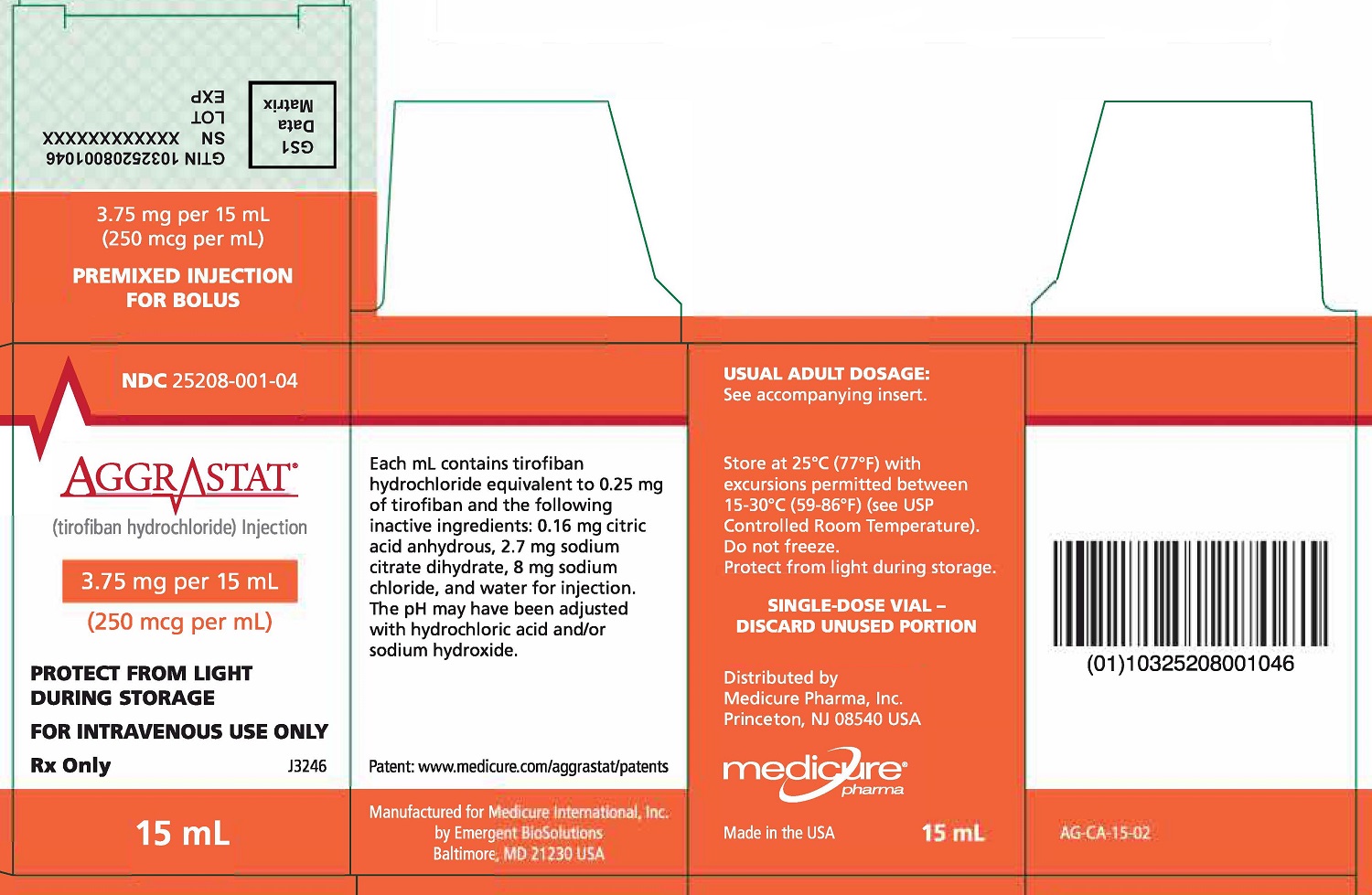
Carton 3.75 mg/15 mL - Bolus vial small-carton
Label 3.75 mg/15 mL - Bolus vial 15mL-label
Carton 5 mg/100 mL - Bag carton5mg-100ml-bag
Pouch 5 mg/100 mL - Bag pouch-5-mg-100-ml-bag
Label 5 mg/100 mL - Bag label-5-mg-100-ml-bag
Reported adverse events (FAERS)
Top reported reactions
Reporter sex
Serious outcomes
Where does this data come from?
About this NDC listing & data coverage
What data is (and isn’t) available for this NDC — tap to expand
| NDC identity (package / product / labeler codes) | ✓ Available |
| Labeler | ✓ Available |
| Product & package description | ✓ Available |
| Marketing category & status | ✓ Available |
| Active ingredient / dosage form / route | ✓ Available |
| FDA label (SPL via DailyMed) | ✓ Available |
| Package photos | ✓ Available |
| Inactive ingredients (structured) | ✓ Available |
| NADAC pharmacy acquisition price (CMS) | — Not published for this NDC CMS publishes NADAC only for NDCs reported in its retail-pharmacy survey. |
| Orange Book / therapeutic-equivalence data | ✓ Available |
| HCPCS J-code billing crosswalk | ✓ Available |
| Medicaid utilization (CMS SDUD) | — Not published for this NDC CMS reports utilization only for NDCs with Medicaid claims above its privacy threshold. |