
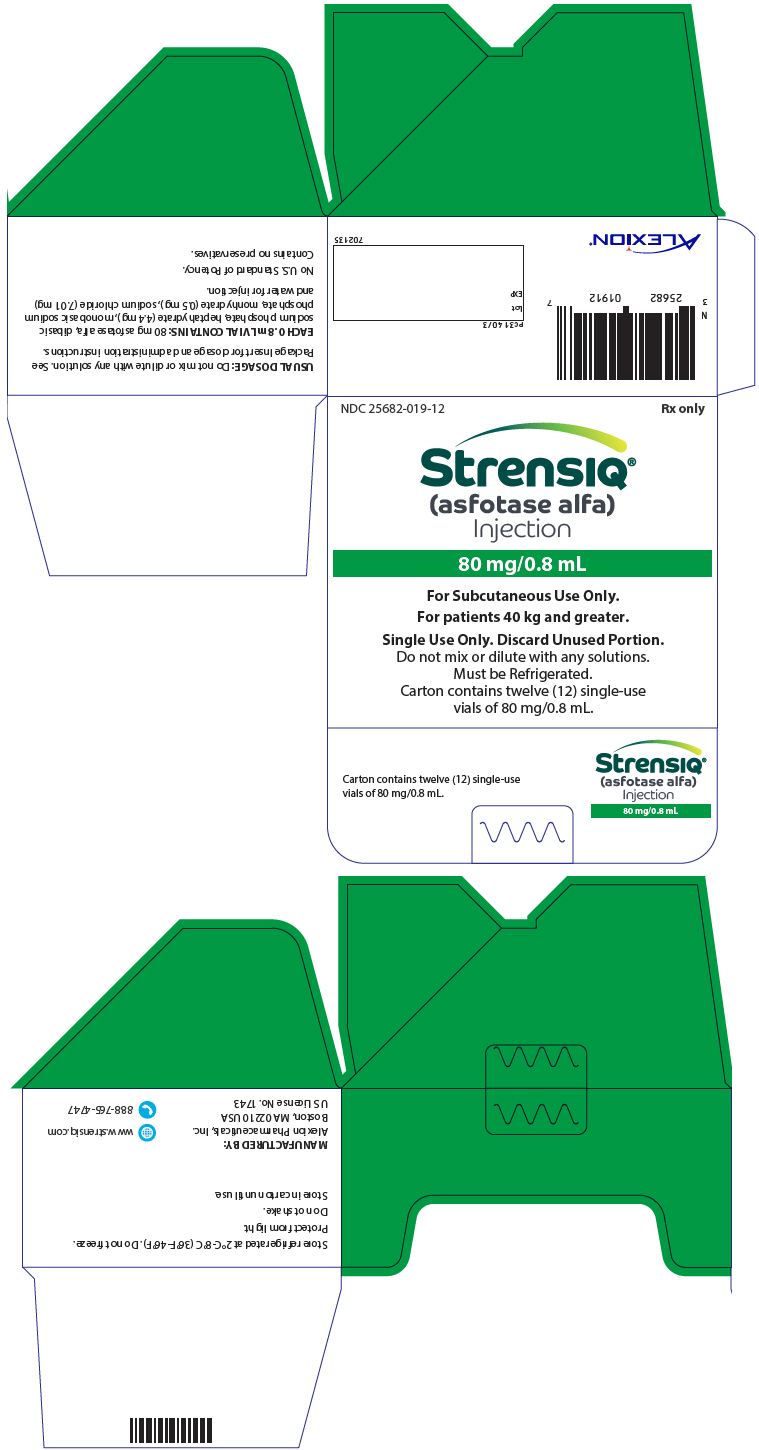
STRENSIQ ASFOTASE ALFA 80 mg/.8mL Solution, 12 vials — NDC 25682-019-12 (Billing 25682-0019-12)
This is a package of 12 vials of STRENSIQ ASFOTASE ALFA 80 mg/.8mL Solution from Alexion Pharmaceuticals, Inc., marketed since Oct 2015 and currently FDA-listed. It is this product's only package size.
NDC database record
One package, one record: these facts belong to NDC 25682-019-12 alone.
- Record
- FDA NDC Directory package listing · Human prescription drug
- Code segments
- 25682 labeler · 019 product · 12 package
- Package marketed since
- Oct 23, 2015
- Sample package
- No — commercial package
- Listing certified through
- Dec 31, 2026
- Barcode (UPC-A, from the NDC)
- 3 2568201912 7
- Medicaid fills, this package
- 1,025 prescriptions in the last four reported quarters
- FDA record last changed
- Jul 24, 2026
Identity & classification
Regulatory identifiers FDA, NLM and CMS codes for this package
Drug-database identifiers Medi-Span GPI and First Databank GCN / HICL / AHFS classification
- GSN (GCN sequence number): 074973
- GCN: 39858
- GPI-14 (Medi-Span): 30905610002050
- HICL (First Databank): 042649
- AHFS class code: 44:00.00.00
- RxCUI (RxNorm): 1720263
Where does this data come from?
- FDA openFDA NDC Directory · synced Oct 8, 2026
- FDA label on DailyMed · label index refreshed Oct 6, 2026
- RxNorm (NLM RxNav) · catalog refreshed Oct 1, 2026
- Medi-Span GPI (licensed)
- First Databank (licensed) · refreshed Oct 8, 2026
RxNorm drug class
This medicine belongs to the Tissue-nonspecific Alkaline Phosphatase class.
Where does this data come from?
- RxClass (NLM) · catalog refreshed Oct 1, 2026
Clinical
- Strensiq treats hypophosphatasia (HPP) that starts in the perinatal/infantile period or in childhood (juvenile-onset). In HPP, bones don't harden properly. The medicine replaces th...
- It is an injection under the skin, given three or six times a week as prescribed. Let the vial sit out 15 to 30 minutes first, and don't shake it. Rotate your injection sites and a...
- Injection site reactions like redness, pain and itching are very common, and most clear up within a week. Some people get skin and fat changes at injection sites. Rotating sites an...
- Watch for trouble breathing, a choking feeling, nausea, swelling around the eyes or dizziness. These can start within minutes of an injection. Get emergency help right away if they...
Patient education
Supplement & herbal interactions
Where does this data come from?
- MedlinePlus (NLM) · refreshed Oct 1, 2026
- FDA label on DailyMed · label index refreshed Oct 6, 2026
Ask a licensed pharmacist directly — free, answered by our team.
Pricing
A drug doesn't have one price. Each row is a different public payment system, and none is what you'd pay at the counter — that depends on your insurance. The ⓘ on each row explains what it measures.
| Price system | Per mL | Per package |
|---|---|---|
| Retail pharmacies payNADAC · weekly | Not in the retail survey — common for institutional, discontinued, or low-volume packs. | |
| Medicaid paysCMS SDUD · 12 mo | $7,177.22 | $68,901.29 / 9.6 ml |
| Medicare drug plans payPart D · quarterly | No Part D plan price is available for this NDC in our data. | |
Where does this data come from?
- CMS NADAC weekly file
- CMS ASP pricing files · refreshed Sep 20, 2026
- CMS Medicaid State Drug Utilization Data · through Q1 2026
- CMS Part D plan pricing files · refreshed Sep 24, 2026
- VA National Acquisition Center price file
Packaging — all sizes for this product
| Package NDC | Description | Marketing start | Marketing end | Status |
|---|---|---|---|---|
| 25682-0019-12 You're viewing this Main listing | 12 VIAL in 1 CARTON / .8 mL in 1 VIAL | 2015-10-23 | — | Active |
Therapeutic equivalents
| Product | Labeler | Pack | NADAC/unit | TE | Status | Price vs. this |
|---|---|---|---|---|---|---|
| Strensiq 80 mg/.8mLthis 25682-0019-12 | Alexion | 12 vials | — | — | FDA listed | — |
Where does this data come from?
- FDA openFDA NDC Directory · synced Oct 8, 2026
- FDA Purple Book · refreshed Oct 5, 2026
- CMS NADAC weekly file
Availability & biosimilar status
Biologics have no small-molecule generics; biosimilar competition is tracked in the FDA Purple Book.
Why the date isn’t exact: Biosimilar timing can change because patents may be challenged, settled, licensed, added or removed, and litigation can move the real date earlier or later.
🛈 What do these terms mean?
- Biologic patent
- A patent the reference product’s maker has publicly listed. A biosimilar generally can’t launch until these expire — unless they’re invalidated or resolved in a settlement.
- Reference-product exclusivity
- A flat 12 years of FDA market protection from the biologic’s first licensure (the BPCIA). No biosimilar can be licensed before it ends, regardless of patents.
- Interchangeable exclusivity
- The first interchangeable biosimilar can earn a period as the only interchangeable version (pharmacists can substitute it without the prescriber).
- Earliest biosimilar (LOE)
- The latest of all the dates above — the soonest a biosimilar can realistically reach the market. Litigation and settlements can move it earlier.
Biologics have no small-molecule “generics” — competition comes from FDA-licensed biosimilars, tracked in the FDA Purple Book.
| Code | What it grants | Expires |
|---|---|---|
| RefProduct | Reference-product exclusivity (12-year, BPCIA) — no biosimilar can be licensed before this date | Oct 23, 2027 |
Is there a biosimilar for STRENSIQ 80 MG/0.8 ML VIAL?
Why do different websites show different biosimilar dates?
Can a biosimilar launch before the last patent expires?
What does “current Purple Book estimate” mean?
What does “FDA listed” mean?
What does a patent or protection date mean here?
Where does this data come from?
- FDA Purple Book · refreshed Oct 5, 2026
Inactive Ingredients / Excipients
Inactive ingredients, also called excipients, are components of the drug product other than the active ingredient. They may include fillers, dyes, coatings, preservatives, flavors, or other formulation ingredients.
🧪 Avoiding an ingredient? See Asfotase Alfa inactive ingredients by manufacturer: every current product's list side by side, so you can ask your pharmacy for the version that does not list it.
💡 Tap an ingredient (hover on desktop) to see what it is and why it’s used.
-
7.01 mg / 0.8 mL
UNII 451W47IQ8X
Sodium chloride is common table salt. It's used in medicines as a buffer to maintain proper pH, as a filler to add bulk, or to adjust the osmotic balance in liquid formulations.
-
4.4 mg / 0.8 mL
UNII 70WT22SF4B
A mineral salt that acts as a buffer to maintain the pH balance of the medication. It helps stabilize the drug's potency and prevents unwanted chemical changes during storage.
-
0.5 mg / 0.8 mL
UNII 593YOG76RN
A salt made from sodium and phosphate that helps regulate acidity and maintain proper pH balance in the medicine. It also acts as a buffer to keep the product stable.
3 inactive ingredients listed in the exact product block matched to this NDC.
Where does this data come from?
ingredient classCode="IACT" elements from the exact product block matched by this NDC. Label-section narrative from DailyMed / the openFDA label index is shown separately when available.- FDA label on DailyMed · label index refreshed Oct 6, 2026
- FDA openFDA NDC Directory · synced Oct 8, 2026
Inactive ingredient FAQ
Are inactive ingredients the same for every manufacturer?
Why might an inactive ingredient be missing?
Can inactive ingredients matter?
Manufacturer & labeler
More NDCs from Alexion Pharmaceuticals, Inc. labeler code 25682
- SOLIRIS ECULIZUMAB 300 mg/30mL Injection, Solution, Concentrate NDC 25682-001-01
- KANUMA Sebelipase alfa 2 mg/mL Injection, Solution, Concentrate NDC 25682-007-01
- STRENSIQ ASFOTASE ALFA 18 mg/.45mL Solution NDC 25682-010-12
- STRENSIQ ASFOTASE ALFA 28 mg/.7mL Solution NDC 25682-013-12
- STRENSIQ ASFOTASE ALFA 40 mg/mL Solution NDC 25682-016-12
- Ultomiris ravulizumab 300 mg/30mL Solution, Concentrate NDC 25682-022-01
- Ultomiris ravulizumab 300 mg/3mL Solution, Concentrate NDC 25682-025-01
- Ultomiris ravulizumab 1100 mg/11mL Solution, Concentrate NDC 25682-028-01
- Voydeya Danicopan 100 mg Tablet, Film Coated NDC 25682-043-92
- Voydeya Danicopan Kit NDC 25682-046-92
Where does this data come from?
- FDA openFDA NDC Directory · synced Oct 8, 2026
- Drugs@FDA
Full prescribing information FDA SPL
🚨 Boxed Warning ▾
WARNING: HYPERSENSITIVITY REACTIONS INCLUDING ANAPHYLAXIS Patients treated with enzyme replacement therapies have experienced life-threatening hypersensitivity reactions, including anaphylaxis. Anaphylaxis has occurred during the early course of enzyme replacement therapy and after extended duration of therapy. Initiate STRENSIQ under the supervision of a healthcare provider with appropriate medical monitoring and support measures.
If a severe hypersensitivity reaction (e.g., anaphylaxis) occurs, discontinue STRENSIQ and immediately initiate appropriate medical treatment, including use of epinephrine. Inform patients of the symptoms of life-threatening hypersensitivity reactions, including anaphylaxis and to seek immediate medical care should symptoms occur [see Warnings and Precautions (5.1) ] . WARNING: HYPERSENSITIVITY REACTIONS INCLUDING ANAPHYLAXIS See full prescribing information for complete boxed warning.
Anaphylaxis has occurred during the early course of enzyme replacement therapy and after extended duration of therapy. ( 5.1 ) Initiate STRENSIQ under the supervision of a healthcare provider with appropriate medical monitoring and support measures. ( 5.1 ) If a severe hypersensitivity reaction (e.g., anaphylaxis) occurs, discontinue STRENSIQ and immediately initiate appropriate medical treatment, including use of epinephrine.
( 5.1 )
🎯 Indications and Usage ▾
1 INDICATIONS AND USAGE STRENSIQ ® is indicated for the treatment of patients with perinatal/infantile- and juvenile-onset hypophosphatasia (HPP). STRENSIQ is a tissue nonspecific alkaline phosphatase indicated for the treatment of patients with perinatal/infantile- and juvenile-onset hypophosphatasia (HPP). ( 1 )
⏱️ Dosage and Administration ▾
2 DOSAGE AND ADMINISTRATION Perinatal/Infantile-Onset HPP ( 2.2 ) Recommended dosage regimen is 2 mg/kg administered subcutaneously three times per week, or 1 mg/kg administered six times per week. Injection site reactions may limit the tolerability of the six times per week regimen. The dose may be increased to 3 mg/kg three times per week for insufficient efficacy.
Juvenile-Onset HPP ( 2.3 ) Recommended dosage regimen is 2 mg/kg administered subcutaneously three times per week, or 1 mg/kg administered six times per week. Injection site reactions may limit the tolerability of the six times per week regimen. Preparation and Weight-Based Dosing ( 2.4 ): Caution: Do not use the 80 mg/0.8 mL vial in pediatric patients weighing less than 40 kg because the systemic asfotase alfa exposure achieved with the 80 mg/0.8 mL vial (higher concentration) is lower than that achieved with the other strength vials (lower concentration).
A lower exposure may not be adequate for this subgroup of patients. See full prescribing information for tables of weight-based dosing by treatment regimen. Administration ( 2.5 ): For subcutaneous injection only.
Rotate injection sites. Do not administer to areas that are reddened, inflamed or swollen.
2.1Recommendations Prior to STRENSIQ Treatment Initiate STRENSIQ under the supervision of a healthcare provider with appropriate medical monitoring and support measures [see Warnings and Precautions (5.1) ].
2.2Dosage for Perinatal/Infantile-Onset HPP The recommended dosage regimen of STRENSIQ for the treatment of perinatal/infantile-onset HPP is 6 mg/kg per week administered subcutaneously as either: 2 mg/kg three times per week, or 1 mg/kg six times per week. Injection site reactions may limit the tolerability of the six times per week regimen [see Adverse Reactions (6.1) ]. The dose of STRENSIQ may be increased for lack of efficacy (e.g., no improvement in respiratory status, growth, or radiographic findings) up to 9 mg/kg per week administered subcutaneously as 3 mg/kg three times per week.
2.3Dosage for Juvenile-Onset HPP The recommended dosage regimen of STRENSIQ for the treatment of juvenile-onset HPP is 6 mg/kg per week administered subcutaneously as either: 2 mg/kg three times per week, or 1 mg/kg six times per week. Injection site reactions may limit the tolerability of the six times per week regimen [see Adverse Reactions (6.1) ].
2.4Preparation and Weight-Based Dosing Tables Caution: Do not use the 80 mg/0.8 mL vial of STRENSIQ in pediatric patients weighing less than 40 kg because the systemic exposure of asfotase alfa achieved with the 80 mg/0.8 mL vial (higher concentration) is lower than that achieved with the other strength vials (lower concentration). A lower exposure may not be adequate for this subgroup of patients [see Dosage Forms and Strengths (3) , Clinical Pharmacology (12.3) ] . 1.
Determine the total weekly volume needed for the prescribed dosage based on the patient's weight and recommended dosage. Follow these steps to determine the patient dose. Total weekly dose (mg) = patient's weight (kg) × prescribed dose (mg/kg/week) Total injection volume (mL) per week = Total dose (mg/week) divided by the STRENSIQ concentration (40 mg/mL or 100 mg/mL).
Note product concentrations are: 40 mg/mL (vial strengths 18 mg/0.45 mL, 28 mg/0.7 mL, 40 mg/mL) or 100 mg/mL (vial strength 80 mg/0.8 mL). Round total injection volume to the nearest hundredth of a mL Total number of vials per week = Total injection volume divided by vial volume (mL) 2. Determine the number of injection days per week (three or six per week).
3. Determine dose per injection day. Patient weights should be rounded to the nearest kilogram when determining dose.
Use the following tables for guidance, for patients administering 2 mg/kg three times per week (Table 1), 1 mg/kg six times per week (Table 2) and for dose escalations to 3 mg/kg three times per week, recommended only for patients with perinatal/infantile-onset HPP [see… [Excerpted — this section continues on DailyMed.]
💊 Dosage Forms and Strengths ▾
3 DOSAGE FORMS AND STRENGTHS STRENSIQ is a clear, slightly opalescent or opalescent, colorless to slightly yellow aqueous solution; few small translucent or white particles may be present. The product is available as: Injection: 18 mg/0.45 mL, 28 mg/0.7 mL, 40 mg/mL, or 80 mg/0.8 mL solution in single-dose vials Injection: 18 mg/0.45 mL, 28 mg/0.7 mL, 40 mg/mL, or 80 mg/0.8 mL solution in single-dose vials. ( 3 )
⛔ Contraindications ▾
4 CONTRAINDICATIONS None. None. ( 4 )
⚠️ Warnings and Cautions ▾
5 WARNINGS AND PRECAUTIONS Lipodystrophy: Localized reactions were reported after several months of treatment; follow proper injection technique and rotate injection sites. ( 5.2 ) Ectopic Calcifications (eye and kidneys): Monitor using ophthalmologic examinations and renal ultrasounds at baseline and periodically during treatment. ( 5.3 ) Possible Immune-Mediated Clinical Effects: Evaluate patients for antibody formation if clinically indicated. ( 5.4 )
5.1Hypersensitivity Reactions Including Anaphylaxis Life-threatening hypersensitivity reactions, including anaphylaxis, have been reported in patients treated with enzyme replacement therapies, including STRENSIQ. Signs and symptoms consistent with anaphylaxis included difficulty breathing, choking sensation, nausea, periorbital edema, and dizziness. These reactions have occurred within minutes after subcutaneous administration of STRENSIQ and have been observed more than 1 year after treatment initiation.
Other hypersensitivity reactions have also been reported in STRENSIQ-treated patients, including vomiting, fever, headache, flushing, irritability, chills, erythema, rash, pruritus and oral hypoesthesia [see Adverse Reactions (6.1) ] . Anaphylaxis has occurred during the early course of enzyme replacement therapy and after extended duration of therapy. Initiate STRENSIQ under the supervision of a healthcare provider with appropriate medical monitoring and support measures.
If a severe hypersensitivity reaction (e.g., anaphylaxis) occurs, discontinue STRENSIQ and immediately initiate appropriate medical treatment, including use of epinephrine. Consider the risks and benefits of re-administering STRENSIQ to individual patients following a severe reaction. If the decision is made to re-administer the product, monitor patients for a reoccurrence of signs and symptoms of a severe hypersensitivity reaction.
Inform patients of the symptoms of life-threatening hypersensitivity reactions, including anaphylaxis and to seek immediate medical care should symptoms occur.
5.2Lipodystrophy Localized lipodystrophy, including lipoatrophy and lipohypertrophy, has been reported at injection sites after several months in patients treated with STRENSIQ in clinical trials [see Adverse Reactions (6.1) ] . Advise patients to follow proper injection technique and to rotate injection sites [see Dosage and Administration (2.5) ] .
5.3Ectopic Calcifications Patients with HPP are at increased risk for developing ectopic calcifications. Events of ectopic calcification, including ophthalmic (conjunctival and corneal) and renal (nephrocalcinosis, nephrolithiasis), have been reported in the clinical trial experience with STRENSIQ. There was insufficient information to determine whether or not the reported events were consistent with the disease or due to STRENSIQ.
No visual changes or changes in renal function were reported resulting from the occurrence of ectopic calcifications. Ophthalmology examinations and renal ultrasounds are recommended at baseline and periodically during treatment with STRENSIQ to monitor for signs and symptoms of ophthalmic and renal ectopic calcifications and for changes in vision or renal function.
5.4Possible Immune-Mediated Clinical Effects In clinical trials, most STRENSIQ-treated patients developed anti-asfotase alfa antibodies and neutralizing antibodies which resulted in reduced systemic exposure of asfotase alfa [see Immunogenicity (6.2) ]. In postmarketing reports, some STRENSIQ-treated patients with initial therapeutic response subsequently developed recurrence and worsening in disease-associated laboratory and radiographic biomarkers (some in association with neutralizing antibodies) suggesting possible immune-mediated effects on STRENSIQ's pharmacologic action resulting in disease progression [see Adverse Reactions (6.3) ] .
The effect of anti-asfotase alfa antibody formation on the long-term efficacy of STRENSIQ is unknown. There are no marketed anti-asfotase alfa… [Excerpted — this section continues on DailyMed.]
🤒 Adverse Reactions ▾
6 ADVERSE REACTIONS The following adverse reactions are described below and elsewhere in the labeling: Hypersensitivity Reactions [see Warnings and Precautions (5.1) ] Lipodystrophy [see Warnings and Precautions (5.2) ] Ectopic Calcifications [see Warnings and Precautions (5.3) ] Possible Immune-Mediated Clinical Effects [see Warnings and Precautions (5.4) ] Most common adverse reactions (≥ 10%) are injection site reactions, lipodystrophy, ectopic calcifications and hypersensitivity reactions. ( 6.1 ) To report SUSPECTED ADVERSE REACTIONS, contact Alexion Pharmaceuticals, Inc. at 1-844-259-6783 or FDA at 1-800-FDA-1088 or www.fda.gov/medwatch.
6.1Clinical Trials Experience Because clinical trials are conducted under widely varying conditions, adverse reaction rates observed in the clinical trials of a drug cannot be directly compared to rates in the clinical trials of another drug and may not reflect the rates observed in practice. The data described below reflect exposure to STRENSIQ in 99 patients with perinatal/infantile- or juvenile onset HPP (age 1 day to 58 years) treated with STRENSIQ, most for more than 2 years (range 1 day to 312 weeks [78 months]): 51 patients received at least 96 weeks (24 months) of treatment and 39 patients received 168 weeks (42 months) or more of treatment [see Clinical Studies (14) ] .
Common Adverse Reactions Overall, the most common adverse reactions reported were injection site reactions (63%) . Other common adverse reactions included lipodystrophy (28%), ectopic calcifications (14%), and hypersensitivity reactions (12%). Table 4 summarizes the adverse reactions that occurred at a rate of at least 10% in clinical trials following subcutaneous injection of STRENSIQ by patient population and STRENSIQ dosage regimen.
The frequency of injection site reactions, lipodystrophy and ectopic calcification were higher in patients with juvenile-onset HPP as compared to perinatal/infantile-onset HPP patients. The majority of injection site reactions resolved within a week. Two patients experienced injection site reactions that led to reductions of their STRENSIQ dose.
One patient switched from six times per week dosing to 3 times per week dosing as a result of injection site reactions. One other patient experienced a severe injection site reaction of injection site discoloration and withdrew from the trial. Table 4: Adverse Reactions Reported in at Least 10% of Patients with Perinatal/Infantile- or Juvenile-onset HPP Enrolled in STRENSIQ Clinical Trials Perinatal/Infantile-onset HPP Juvenile-onset HPP Adverse Reaction Category or Term STRENSIQ less than or equal to 6 mg/kg per week (N=66) n (%) STRENSIQ more than 6 mg/kg/week Adverse reactions are from the combined period of 6 mg/kg and above (i.e. total drug exposure regardless of starting dose and intermediary doses as long as the patient reached doses > 6 mg/kg) (N=13) n (%) Total (N=79) n (%) STRENSIQ (N=20) n (%) Injection site reactions 38 (58) 6 (46) 44 (56) 18 (90) Erythema 29 (44) 3 (23) 32 (41) 15 (75) Discoloration/ Hypopigmentation 11 (17) 1 (8) 12 (15) 8 (40) Pain/ Tenderness 10 (15) 1 (8) 11 (14) 8 (40) Pruritus/ Itching 10 (15) 0 (0) 10 (13) 7 (35) Swelling 8 (12) 0 (0) 8 (10) 6 (30) Induration 9 (14) 1 (8) 10 (13) 3 (15) Macule 4 (6) 0 (0) 4 (5) 7 (35) Reaction, not otherwise specified 6 (9) 1 (8) 7 (9) 4 (20) Bruising 6 (9) 0 (0) 6 (8) 4 (20) Nodule 2 (3) 0 (0) 2 (3) 2 (10) Other injection site reactions Other injection site reactions include injection site rash, inflammation, papule, hemorrhage, hematoma, urticaria, warmth, calcification, mass, scar and cellulitis.
10 (15) 3 (23) 13 (17) 4 (20) Ectopic calcifications 3 (5) 0 (0) 3 (4) 11 (55) Lipodystrophy 12 (18) 2 (15) 14 (18) 14 (70) Injection site atrophy 4 (6) 2 (15) 6 (8) 8 (40) Injection site hypertrophy 5 (8) 0 (0) 5 (6) 6 (30) Other lipodystrophy Other lipodystrophy includes lipohypertrophy. 4 (6) 0 (0) 4 (5) 1 (5) Hypersensitivity reactions 7 (11) 3 (23) 10 (13) 2 (10) Vomiti… [Excerpted — this section continues on DailyMed.]
🔄 Drug Interactions ▾
7 DRUG INTERACTIONS Drug Interference with Laboratory Tests: Alkaline Phosphatase (ALP) is used as a detection reagent in many laboratory tests and the presence of asfotase alfa in clinical laboratory samples could result in erroneous test results. Inform laboratory personnel and discuss use of an alternative testing platform for patients on treatment. ( 7.1 ) Serum Alkaline Phosphatase : Serum ALP measurements are expected to be elevated during treatment and may be unreliable for clinical decision making.
( 7.1 )
7.1Drug Interference with Laboratory Tests Laboratory Tests Utilizing Alkaline Phosphatase as a Detection Reagent Studies have shown that there is analytical interference between asfotase alfa and laboratory tests that utilize an alkaline phosphatase (ALP)-conjugated test system, rendering erroneous test results in patients treated with STRENSIQ. ALP-conjugated test systems are utilized to measure substances such as hormones, bacterial antigens and antibodies. Therefore, it is recommended that laboratory assays which do not have ALP-conjugate technology be used when testing samples from patients who are receiving STRENSIQ.
To avoid erroneous test results for patients treated with STRENSIQ, inform laboratory personnel that the patient is being treated with STRENSIQ and discuss the use of a testing platform which does not utilize an ALP-conjugated test system. Serum Alkaline Phosphatase High serum ALP measurements detected through clinical laboratory testing are expected in patients receiving STRENSIQ and reflect circulating concentrations of asfotase alfa . Do not rely on serum ALP measurements for clinical decision making in patients treated with STRENSIQ.
👥 Use in Specific Populations ▾
8 USE IN SPECIFIC POPULATIONS
8.1Pregnancy Risk Summary There are no available data on STRENSIQ use in pregnant women to inform a drug associated risk. In animal reproduction studies, asfotase alfa administered intravenously to pregnant rats and rabbits during the period of organogenesis showed no evidence of fetotoxicity, embryolethality or teratogenicity at doses causing plasma exposures up to 21 and 24 times, respectively, the exposure at the recommended human dose (see Data ) . In the U.S. general population, the estimated background risk of major birth defects and miscarriage in clinically recognized pregnancies is 2 to 4% and 15 to 20%, respectively.
Data Animal Data Asfotase alfa administered during the period of organogenesis to rats (from gestation Day 6 to Day 19 post-partum) and rabbits (on gestation days 7 to 19) at intravenous doses up to 50 mg/kg/day, approximately 21 and 24 times the human AUC of 65486 ng.h/mL at 2 mg/kg dose administered three times weekly for a 50 kg individual, respectively did not cause any adverse effects on embryofetal development. A pre- and post-natal development study in pregnant rats showed no evidence of adverse effects on pre- and post-natal development at intravenous doses (from Day 6 of gestation to Day 19 postpartum) of asfotase alfa up to 50 mg/kg/day approximately 21 times the human AUC of 65486 ng.h/mL at 2 mg/kg dose administered three times weekly for a 50 kg individual.
8.2Lactation Risk Summary There are no data on the presence of asfotase alfa in human milk, the effects on the breastfed infant, or the effects on milk production. The developmental and health benefits of breastfeeding should be considered along with the mother's clinical need for STRENSIQ and any potential adverse effects on the breastfed infant from asfotase alfa or from the underlying maternal condition.
8.4Pediatric Use The safety and effectiveness of STRENSIQ for the treatment of perinatal/infantile- and juvenile-onset HPP have been established in pediatric patients. Use of STRENSIQ for this indication is based on 4 prospective, open-label clinical trials conducted in 89 pediatric patients with perinatal/infantile-onset or juvenile-onset HPP [see Clinical Studies (14) ].
8.5Geriatric Use No patients with perinatal/infantile- or juvenile-onset HPP aged 65 years were enrolled in clinical trials of STRENSIQ. Therefore, there is no information available to determine whether patients aged 65 years and over respond differently from younger patients.
🤰 Pregnancy ▾
8.1Pregnancy Risk Summary There are no available data on STRENSIQ use in pregnant women to inform a drug associated risk. In animal reproduction studies, asfotase alfa administered intravenously to pregnant rats and rabbits during the period of organogenesis showed no evidence of fetotoxicity, embryolethality or teratogenicity at doses causing plasma exposures up to 21 and 24 times, respectively, the exposure at the recommended human dose (see Data ) . In the U.S. general population, the estimated background risk of major birth defects and miscarriage in clinically recognized pregnancies is 2 to 4% and 15 to 20%, respectively.
Data Animal Data Asfotase alfa administered during the period of organogenesis to rats (from gestation Day 6 to Day 19 post-partum) and rabbits (on gestation days 7 to 19) at intravenous doses up to 50 mg/kg/day, approximately 21 and 24 times the human AUC of 65486 ng.h/mL at 2 mg/kg dose administered three times weekly for a 50 kg individual, respectively did not cause any adverse effects on embryofetal development. A pre- and post-natal development study in pregnant rats showed no evidence of adverse effects on pre- and post-natal development at intravenous doses (from Day 6 of gestation to Day 19 postpartum) of asfotase alfa up to 50 mg/kg/day approximately 21 times the human AUC of 65486 ng.h/mL at 2 mg/kg dose administered three times weekly for a 50 kg individual.
🧒 Pediatric Use ▾
8.4Pediatric Use The safety and effectiveness of STRENSIQ for the treatment of perinatal/infantile- and juvenile-onset HPP have been established in pediatric patients. Use of STRENSIQ for this indication is based on 4 prospective, open-label clinical trials conducted in 89 pediatric patients with perinatal/infantile-onset or juvenile-onset HPP [see Clinical Studies (14) ].
🧓 Geriatric Use ▾
8.5Geriatric Use No patients with perinatal/infantile- or juvenile-onset HPP aged 65 years were enrolled in clinical trials of STRENSIQ. Therefore, there is no information available to determine whether patients aged 65 years and over respond differently from younger patients.
🧬 Clinical Pharmacology ▾
12 CLINICAL PHARMACOLOGY
12.1Mechanism of Action HPP is caused by a deficiency in TNSALP enzyme activity, which leads to elevations in several TNSALP substrates, including inorganic pyrophosphate (PPi). TNSALP is a metallo-enzyme that catalyzes the hydrolysis of phosphomonoesters with release of inorganic phosphate and alcohol. Elevated extracellular levels of PPi block hydroxyapatite crystal growth which inhibits bone mineralization and causes an accumulation of unmineralized bone matrix which manifests as rickets and bone deformation in infants and children and as osteomalacia (softening of bones) once growth plates close, along with muscle weakness.
Replacement of the TNSALP enzyme upon STRENSIQ treatment reduces the enzyme substrate levels.
12.2Pharmacodynamics Perinatal/infantile- and juvenile-onset HPP patients treated with STRENSIQ had reductions in plasma TNSALP substrates, PPi and pyridoxal 5'-phosphate (PLP) within 6 to 12 weeks of treatment. Reductions in plasma PPi and PLP levels did not correlate with clinical outcomes. Bone biopsy data from perinatal/infantile-onset and juvenile-onset HPP patients treated with STRENSIQ demonstrated decreases in osteoid volume and thickness indicating improved bone mineralization.
12.3Pharmacokinetics Based on data in 38 HPP patients, the pharmacokinetics of asfotase alfa exhibit dose proportionality across the dose range of 0.3 mg/kg to 3 mg/kg once every other day (three times a week) and appear to be time-independent. Steady state exposure was achieved as early as three weeks after the administration of the first dose. The elimination half-life following subcutaneous administration was approximately 5 days.
Table 6 summarizes the pharmacokinetic parameters following multiple doses in 20 HPP patients after subcutaneous administration of STRENSIQ at 2 mg/kg three times per week in Study 2 (age of less than or equal to 5 years) and Study 3 (age of greater than 5 to 12 years), indicating the pharmacokinetics were similar between patients in the two age groups. Table 6: Summary of Pharmacokinetic Parameters Following Multiple Subcutaneous Administration of STRENSIQ 2 mg/kg Three Times per Week Study 2 Study 3 Data are presented as mean ± standard deviation (range).
Study 3 includes patients with perinatal/infantile- or juvenile-onset of disease. t last , time of last concentration; t max , time of maximal concentration; C max , maximal concentration; AUC t , area under the concentration-time curves over a dosing interval of 48 hours N 14 6 Age (year) 3.4 ± 2.1 (0.2, 6.2) 8.6 ± 2.2 (6.1, 12.6) Weight at baseline (kg) 11.2 ± 5.0 (2.9, 17.1) 21.2 ± 7.9 (11.4, 35.4) t last (h) 48.1 ± 0.1 (47.9, 48.3) 48.0 ± 0.1 (48.0, 48.1) t max (h) 14.9 ± 10.4 (0, 32.2) 20.8 ± 10.0 (11.9, 32.2) C max (ng/mL) 1794 ± 690 (856, 3510) 2108 ± 788 (905, 3390) AUC t (h*ng/mL) 66042 ± 25758 (27770, 119122) 89877 ± 33248 (37364, 142265) Accumulation Ratio Ratio values reflect the fold increase of AUC t from Week 1 based on mean AUC t, values.
1.5
3.9Population PK analysis of asfotase alfa concentrations supports weight-based dosing because body weight is a major covariate of asfotase alfa clearance. The formulation concentration had an impact on the systemic exposure of asfotase alfa in HPP patients. The higher concentration formulation (80 mg/0.8 mL vial) achieved an approximately 25% lower systemic asfotase alfa exposure (i.e., concentrations and AUC) compared to the lower concentration formulations (18 mg/0.45 mL, 28 mg/0.7 mL or 40 mg/mL vials) at the same dose of STRENSIQ [see Dosage and Administration (2.2) ] .
Anti-Drug Antibody Effects on Pharmacokinetics Formation of anti-drug antibodies resulted in reduced systemic exposure of asfotase alfa.
🧬 Mechanism of Action ▾
12.1Mechanism of Action HPP is caused by a deficiency in TNSALP enzyme activity, which leads to elevations in several TNSALP substrates, including inorganic pyrophosphate (PPi). TNSALP is a metallo-enzyme that catalyzes the hydrolysis of phosphomonoesters with release of inorganic phosphate and alcohol. Elevated extracellular levels of PPi block hydroxyapatite crystal growth which inhibits bone mineralization and causes an accumulation of unmineralized bone matrix which manifests as rickets and bone deformation in infants and children and as osteomalacia (softening of bones) once growth plates close, along with muscle weakness.
Replacement of the TNSALP enzyme upon STRENSIQ treatment reduces the enzyme substrate levels.
📦 How Supplied / Storage and Handling ▾
16 HOW SUPPLIED/STORAGE AND HANDLING STRENSIQ is supplied as a sterile, nonpyrogenic, preservative-free, clear, slightly opalescent or opalescent, colorless to slightly yellow aqueous solution; a few small translucent or white particles may be present. The product is available as single-dose vials in a carton of one (1) or twelve (12) vials at the following strengths: Table 10: STRENSIQ Vial Presentations Strength National Drug Code (NDC) Quantity of Vials in Carton 18 mg/0.45 mL NDC 25682-010-01 1 NDC 25682-010-12 12 28 mg/0.7 mL NDC 25682-013-01 1 NDC 25682-013-12 12 40 mg/mL NDC-25682-016-01 1 NDC-25682-016-12 12 For pediatric patients 40 kg and greater 80 mg/0.8 mL NDC 25682-019-01 1 NDC 25682-019-12 12 STRENSIQ vials must be stored in the original carton until the time of use under refrigerated conditions at 2°C to 8°C (36°F to 46°F) and protected from light.
Once removed from refrigeration, STRENSIQ should be administered within 3 hours. Do not use beyond the expiration date stamped on the carton. DO NOT FREEZE OR SHAKE.
Vials are for one time use only. Discard any unused product.
📦 Storage and Handling ▾
STRENSIQ vials must be stored in the original carton until the time of use under refrigerated conditions at 2°C to 8°C (36°F to 46°F) and protected from light. Once removed from refrigeration, STRENSIQ should be administered within 3 hours. Do not use beyond the expiration date stamped on the carton. DO NOT FREEZE OR SHAKE. Vials are for one time use only. Discard any unused product.
📋 Description ▾
11 DESCRIPTION Asfotase alfa is a tissue nonspecific alkaline phosphatase (TNSALP) produced by recombinant DNA technology in a Chinese hamster ovary cell line. Asfotase alfa is a soluble glycoprotein composed of two identical polypeptide chains. Each chain contains 726 amino acids with a theoretical mass of 161 kDa.
Each chain consists of the catalytic domain of human TNSALP, the human immunoglobulin G 1 Fc domain and a deca-aspartate peptide used as a bone targeting domain. The two polypeptide chains are covalently linked by two disulfide bonds. STRENSIQ (asfotase alfa) injection is a sterile, preservative-free, nonpyrogenic, clear, slightly opalescent or opalescent, colorless to slightly yellow, with few small translucent or white particles, aqueous solution for subcutaneous administration.
STRENSIQ is supplied in glass single-dose vials containing asfotase alfa; dibasic sodium phosphate, heptahydrate; monobasic sodium phosphate, monohydrate; and sodium chloride at a pH between 7.2 and 7.6. Table 5 describes the content of STRENSIQ vial presentations. Table 5: Content of STRENSIQ Vial Presentations Ingredient Quantity per Vial Asfotase Alfa 18 mg/0.45 mL 28 mg/0.7 mL 40 mg/mL 80 mg/0.8 mL Dibasic sodium phosphate, heptahydrate 2.48 mg 3.85 mg 5.5 mg 4.4 mg Monobasic sodium phosphate, monohydrate 0.28 mg 0.43 mg 0.62 mg 0.5 mg Sodium chloride 3.94 mg 6.13 mg 8.76 mg 7.01 mg
💬 Information for Patients ▾
17 PATIENT COUNSELING INFORMATION Advise the patient or caregiver to read the FDA-approved patient labeling (Patient Information and Instructions for Use). Advise patients or caregivers of the following: Preparation When preparing a volume for injection greater than 1 mL, split the volume equally between two syringes, and administer two injections. When administering the two injections, use two separate injection sites.
Take the unopened STRENSIQ vial(s) out of the refrigerator 15 to 30 minutes before injecting to allow the liquid to reach room temperature. Inspect the solution in the vial(s) for particulate matter and discoloration. Assemble injection supplies.
Administer STRENSIQ using sterile disposable syringes and injection needles. The syringes should be of small enough volume that the prescribed dose can be withdrawn from the vial with reasonable accuracy. Always use a new syringe and needle.
Remove vial cap, aseptically prepare the vial and insert the syringe into the vial to withdraw the prescribed dose for administration. Remove any air bubbles in the syringe and verify the correct dose. STRENSIQ vials are for one time use only.
Discard any unused product [see Dosage and Administration (2.4) ] . Administration Administer STRENSIQ within 3 hours upon removal of the vial(s) from refrigeration. Rotate the injection site to reduce the risk of lipohypertrophy and injection site atrophy.
Do NOT administer injections in areas that are reddened, inflamed, or swollen. Inject STRENSIQ subcutaneously into the determined site and properly dispose of the syringe and needle [see Dosage and Administration (2.5) ] . Hypersensitivity Reactions Including Anaphylaxis Life-threatening hypersensitivity reactions, including anaphylaxis may occur with STRENSIQ treatment.
Anaphylaxis has occurred during the early course of enzyme replacement therapy and after extended duration of therapy. Symptoms of life-threatening hypersensitivity reactions, including anaphylaxis and to seek immediate medical care should symptoms occur [see Warnings and Precautions (5.1) ] . Lipodystrophy Lipohypertrophy (enlargement or thickening of tissue) and localized atrophy (depression in the skin) have been reported at injection sites after several months.
Follow proper injection technique and rotate injection sites [see Warnings and Precautions (5.2) ] . Possible Immune-Mediated Clinical Effects Anti-drug antibodies may develop during treatment which may interfere with STRENSIQ's pharmacologic action. Inform patients or their caregivers to contact their healthcare provider if they experience worsening symptoms of HPP (e.g., increased respiratory support, increased difficulty walking, new fractures) [see Warnings and Precautions (5.4) ] .
Hypophosphatasia (HPP) Registry A registry has been established in order to better understand HPP in the population, and to monitor and evaluate long-term treatment effects of STRENSIQ. Patients and their caregivers should be encouraged to participate and advised that their participation is voluntary and may involve long-term follow-up. For more information, visit www.hppregistry.com
🧬 Pharmacokinetics ▾
12.3Pharmacokinetics Based on data in 38 HPP patients, the pharmacokinetics of asfotase alfa exhibit dose proportionality across the dose range of 0.3 mg/kg to 3 mg/kg once every other day (three times a week) and appear to be time-independent. Steady state exposure was achieved as early as three weeks after the administration of the first dose. The elimination half-life following subcutaneous administration was approximately 5 days.
Table 6 summarizes the pharmacokinetic parameters following multiple doses in 20 HPP patients after subcutaneous administration of STRENSIQ at 2 mg/kg three times per week in Study 2 (age of less than or equal to 5 years) and Study 3 (age of greater than 5 to 12 years), indicating the pharmacokinetics were similar between patients in the two age groups. Table 6: Summary of Pharmacokinetic Parameters Following Multiple Subcutaneous Administration of STRENSIQ 2 mg/kg Three Times per Week Study 2 Study 3 Data are presented as mean ± standard deviation (range).
Study 3 includes patients with perinatal/infantile- or juvenile-onset of disease. t last , time of last concentration; t max , time of maximal concentration; C max , maximal concentration; AUC t , area under the concentration-time curves over a dosing interval of 48 hours N 14 6 Age (year) 3.4 ± 2.1 (0.2, 6.2) 8.6 ± 2.2 (6.1, 12.6) Weight at baseline (kg) 11.2 ± 5.0 (2.9, 17.1) 21.2 ± 7.9 (11.4, 35.4) t last (h) 48.1 ± 0.1 (47.9, 48.3) 48.0 ± 0.1 (48.0, 48.1) t max (h) 14.9 ± 10.4 (0, 32.2) 20.8 ± 10.0 (11.9, 32.2) C max (ng/mL) 1794 ± 690 (856, 3510) 2108 ± 788 (905, 3390) AUC t (h*ng/mL) 66042 ± 25758 (27770, 119122) 89877 ± 33248 (37364, 142265) Accumulation Ratio Ratio values reflect the fold increase of AUC t from Week 1 based on mean AUC t, values.
1.5
3.9Population PK analysis of asfotase alfa concentrations supports weight-based dosing because body weight is a major covariate of asfotase alfa clearance. The formulation concentration had an impact on the systemic exposure of asfotase alfa in HPP patients. The higher concentration formulation (80 mg/0.8 mL vial) achieved an approximately 25% lower systemic asfotase alfa exposure (i.e., concentrations and AUC) compared to the lower concentration formulations (18 mg/0.45 mL, 28 mg/0.7 mL or 40 mg/mL vials) at the same dose of STRENSIQ [see Dosage and Administration (2.2) ] .
Anti-Drug Antibody Effects on Pharmacokinetics Formation of anti-drug antibodies resulted in reduced systemic exposure of asfotase alfa.
🧬 Pharmacodynamics ▾
12.2Pharmacodynamics Perinatal/infantile- and juvenile-onset HPP patients treated with STRENSIQ had reductions in plasma TNSALP substrates, PPi and pyridoxal 5'-phosphate (PLP) within 6 to 12 weeks of treatment. Reductions in plasma PPi and PLP levels did not correlate with clinical outcomes. Bone biopsy data from perinatal/infantile-onset and juvenile-onset HPP patients treated with STRENSIQ demonstrated decreases in osteoid volume and thickness indicating improved bone mineralization.
🔬 Clinical Studies ▾
14 CLINICAL STUDIES
14.1Perinatal/Infantile-Onset HPP Study 1 was a 24-week prospective single-arm trial in 11 patients with severe perinatal/infantile-onset HPP. In this study, 7/11 (64%) were female and 10/11 (91%) patients were white, and age ranged from 3 weeks to 39.5 months. Severe perinatal/infantile-onset HPP was defined as biochemical, medical history and radiographic evidence of HPP as well as the presence of any of the following: rachitic chest deformity, vitamin B6-dependent seizures, or failure to thrive.
Ten of 11 patients completed the 24-week trial and continued treatment in the extension phase. Nine patients have been treated for at least 216 weeks (54 months) and 4 patients have been treated for over 240 weeks (60 months). Patients received subcutaneous STRENSIQ 3 mg/kg per week for the first month; subsequently, dose increases up to 9 mg/kg per week were allowed for changes in weight and/or for lack of efficacy.
All 10 patients required dose increases up to 6 mg/kg per week or higher; 9 patients increased between 4 and 24 weeks after starting treatment and 1 patient increased after 70 weeks due to suboptimal clinical response. One patient's dose was decreased from 9 mg/kg per week to 6 mg/kg per week based on PK data. Study 2 was a prospective open-label study in 59 patients with perinatal/infantile-onset HPP.
In this study, 32/59 (54%) were female, 46/59 (78%) were white, and age ranged from 1 day to 78 months. Patients received subcutaneous STRENSIQ at 6 mg/kg per week for the first 4 weeks. Ten patients received dose increases higher than 6 mg/kg per week due to suboptimal clinical response, with dose increases occurring between 8 and 24 weeks after starting treatment.
The recommended dosage regimen of STRENSIQ for the treatment of perinatal/infantile-onset HPP is up to 9 mg/kg per week administered subcutaneously as 3 mg/kg three times per week [see Dosage and Administration (2.2) ]. Forty-one patients were treated for at least 24 weeks (6 months) and 15 patients were treated for at least 96 weeks (24 months). Survival and Ventilation-Free Survival in Perinatal/Infantile-Onset HPP Survival and invasive ventilation-free survival were compared in STRENSIQ-treated patients (Studies 1 and 2) with a historical cohort of untreated patients with similar clinical characteristics (Table 7 and Figure 1).
Table 7: Survival and Invasive Ventilation-Free Survival in STRENSIQ-Treated versus Historical Control Patients with Perinatal/ Infantile-Onset HPP (Pooled Studies 1 and 2) STRENSIQ-Treated Historical Controls Survival n = 68 n = 48 Alive at Point of Last Contact (%) 91 27 Hazard Ratio (STRENSIQ/Historical Control), 95% Confidence Interval Adjusted for year of diagnosis. 0.14 (0.05, 0.39) Kaplan-Meier Estimate and Alive at Age 1 Year (Week 48) (%) 97 42 Invasive Ventilation-Free Survival Alive and not initiating invasive ventilation after start of STRENSIQ treatment.
STRENSIQ-treated patients on invasive ventilation at baseline were excluded from this analysis. n = 54 n = 48 Alive and Not on Ventilation at Point of Last Contact (%) 85 25 Hazard Ratio (STRENSIQ/Historical Control), 95% Confidence Interval 0.21 (0.09, 0.51) Kaplan-Meier Estimate of Alive and Not on Ventilation at Age 1 Year (Week 48) (%) 96 31 In patients who required any form of respiratory support, 21 of 26 (81%) of the treated patients survived through their last assessment (median age at last assessment was 3.2 years of age), versus 1 of 20 (5%) of historical controls.
Figure 1: Overall Survival in STRENSIQ-Treated versus Historical Control Patients with Perinatal/ Infantile-Onset HPP (Pooled Studies 1 and 2) Figure 1 Skeletal Manifestations in Perinatal/Infantile-Onset HPP Radiographs from 68 STRENSIQ-treated perinatal/infantile-onset HPP patients, including 64 patients in Studies 1 and 2, and 4 patients in Study 3 [see Clinical Studies (14.2) ] , were examined to assess HPP-related rickets using the 7-point Radiographic Global Impression of C… [Excerpted — this section continues on DailyMed.]
🧪 Nonclinical Toxicology ▾
13 NONCLINICAL TOXICOLOGY
13.1Carcinogenesis, Mutagenesis, Impairment of Fertility Long-term studies in animals to evaluate carcinogenic potential or studies to evaluate mutagenic potential have not been performed with asfotase alfa. Asfotase alfa at intravenous doses up to 50 mg/kg/day administered daily in pregnant rats (approximately 21 times the human AUC of 65486 ng.h/mL at 2 mg/kg dose administered three times weekly for a 50 kg individual) was found to have no adverse effect on fertility and reproductive performance of male and female rats.
📄 Carcinogenesis, Mutagenesis, Impairment of Fertility ▾
13.1Carcinogenesis, Mutagenesis, Impairment of Fertility Long-term studies in animals to evaluate carcinogenic potential or studies to evaluate mutagenic potential have not been performed with asfotase alfa. Asfotase alfa at intravenous doses up to 50 mg/kg/day administered daily in pregnant rats (approximately 21 times the human AUC of 65486 ng.h/mL at 2 mg/kg dose administered three times weekly for a 50 kg individual) was found to have no adverse effect on fertility and reproductive performance of male and female rats.
📄 Patient Package Insert ▾
This Patient Information has been approved by the U.S. Food and Drug Administration. Revised: 7/2024 PATIENT INFORMATION STRENSIQ ® [stren sik] (asfotase alfa) injection, for subcutaneous use What is the most important information I should know about STRENSIQ?
STRENSIQ may cause serious side effects, including: severe allergic (hypersensitivity) reactions. Allergic reactions are common with STRENSIQ treatment and can be severe and life-threatening. Severe allergic reactions have happened in some people within minutes after receiving STRENSIQ and more than 1 year after starting treatment with STRENSIQ.
Stop using STRENSIQ and go to the nearest hospital emergency room right away if you get any of the following signs and symptoms of a serious allergic reaction: difficulty breathing choking sensation swelling of your eyes, lips, or tongue dizziness nausea or vomiting fever headache sweating feeling irritable chills skin redness skin rash or hives itching or numbness of the tongue, lips, cheeks, or gums What is STRENSIQ? STRENSIQ is a prescription medicine used to treat people with perinatal, infantile, and juvenile onset hypophosphatasia (HPP).
Before using STRENSIQ, tell your healthcare provider about all of your medical conditions, including if you: have had an allergic reaction to STRENSIQ. are pregnant or plan to become pregnant. It is not known if STRENSIQ will harm your unborn baby. are breastfeeding or plan to breastfeed. It is not known if STRENSIQ passes into your breast milk.
Talk to your healthcare provider about the best way to feed your baby if you use STRENSIQ. Tell your healthcare provider about all the medicines you take, including prescription and over-the-counter medicines, vitamins, and herbal supplements. There is a registry for people who use STRENSIQ.
The purpose of this registry is to collect information about HPP and about what happens when you use STRENSIQ for a long time. For more information about this registry, talk with your healthcare provider or go to www.hppregistry.com. How should I use STRENSIQ?
Use STRENSIQ exactly as your healthcare provider tells you to. You will begin receiving STRENSIQ under the supervision of a healthcare provider. See the " Instructions for Use " at the end of the Patient Information for instructions about: How to prepare and inject STRENSIQ How to properly throw away (dispose of) any unused STRENSIQ How to dispose of used syringes and needles.
Your healthcare provider will tell you how much STRENSIQ to use and when to use it. Your healthcare provider may change your dose, if needed. What are the possible side effects of STRENSIQ?
STRENSIQ may cause serious side effects, including: severe allergic (hypersensitivity) reactions. See " What is the most important information I should know about STRENSIQ? " skin thickening or pits at the injection site (lipodystrophy). Lipodystrophy is common and has happened after several months in people treated with STRENSIQ. calcium build-up in your eyes and kidneys.
People with HPP are at increased risk for developing calcium build-up in the body. Calcium build-up in the eyes and kidneys has happened and is a common side effect of STRENSIQ. Calcium build-up in the eyes and kidneys may also happen in people with HPP who are not treated with STRENSIQ.
Your healthcare provider should check your eyes and kidneys before and during treatment with STRENSIQ. immune-related effects. You may develop antibodies during treatment that may decrease how well STRENSIQ works. Tell your healthcare provider right away if you get worsening symptoms of HPP including: difficulty breathing difficulty walking feeling tired bone pain stiff joints loss of appetite The most common side effects of STRENSIQ include local skin injection site reactions such as skin redness, bruising, color change, pain, itching, hardening of the skin (induration), swelling, and bumps.
These are not all of the possible side effects of STRENSIQ. For more information, ask your healthcare pr… [Excerpted — this section continues on DailyMed.]
📖 Instructions for Use ▾
INSTRUCTIONS FOR USE STRENSIQ ® [stren' sik] (asfotase alfa) injection, for subcutaneous use vial Read this "Instructions for Use" before you start using STRENSIQ and each time you get a refill. There may be new information. This information does not take the place of talking to your healthcare provider about your medical condition or your treatment.
Do not share your syringes or needles with anyone else. You may give an infection to them or get an infection from them. Supplies needed to give your STRENSIQ injection (See Figure A ): 1 or 2 STRENSIQ vial(s).
1 or 2 sterile disposable 1 mL syringes for injection with 25 to 29 gauge (G), ½ inch needles. The use of two different gauge needles is recommended, a larger bore needle (e.g. 25 gauge) for withdrawal of the medication, and a smaller bore needle (e.g.
29 gauge) for the injection. Always use a new syringe and needle for each injection. 2 alcohol wipes 1 gauze or cotton ball a clean flat surface, like a table 1 sharps container for throwing away used needles and syringes.
See " Disposing of used needles and syringes " at the end of these instructions. Figure A Storing your STRENSIQ dose: Store STRENSIQ in the original carton in the refrigerator between 36°F to 46°F (2°C to 8°C) until you are ready to use it. Do not freeze your STRENSIQ vials.
Do not use STRENSIQ if it has been frozen. Do not shake your STRENSIQ vials. Protect STRENSIQ from light until you are ready to use it.
Do not use STRENSIQ after the expiration date printed on the carton. STRENSIQ vials are for 1 time use only. Throw away any unused STRENSIQ left in the vial.
Preparing your STRENSIQ dose and giving your STRENSIQ injection: Prepare a clean flat surface, like a table or counter top. Remove the unopened STRENSIQ vial(s) out of the refrigerator and allow it to sit at room temperature for at least 15 to 30 minutes. Injecting STRENSIQ when cold can make the injection feel uncomfortable.
Do not warm STRENSIQ in any way other than letting it sit at room temperature (for example, do not warm it in a microwave or in hot water). Gather all the supplies you will need to give your STRENSIQ injection. Wash your hands with soap and water.
Utilize STRENSIQ within 3 hours after removing it from the refrigerator. Inject STRENSIQ exactly as your healthcare provider has shown you. Step 1: Check the liquid in the STRENSIQ vial.
STRENSIQ liquid should look clear or slightly yellow and may have a few small white particles in it. Do not use it if the liquid is discolored or contains any lumps or large particles in it. Throw it away and get a new vial.
Step 2: Using your thumb, flip the plastic cap off the STRENSIQ vial. Step 3: Remove the larger bore needle (e.g., 25 G) from the package. Pick up the syringe and place the needle on the tip of the syringe.
Push down and twist the needle onto the syringe until it is tight. Step 4: Hold the syringe with the needle pointing up and pull back the plunger until the top of the plunger reaches the line for your prescribed dose. Step 5: Pull the cap straight off of the needle.
Do not touch the needle or let the needle touch any surface. Step 6: Hold the STRENSIQ vial firmly on a flat surface, then push the needle through the rubber stopper of the STRENSIQ vial. Step 7: Keeping the needle in the STRENSIQ vial, lift the vial and turn it upside down with the needle pointing toward the ceiling.
Slowly push the plunger all the way in. Step 8: With the needle tip still in the liquid, slowly pull back the plunger until the top of the plunger reaches the line slightly past the line for your prescribed dose. Do not pull the needle out of the STRENSIQ vial.
Slowly push the plunger up until the top of the plunger reaches the line for your prescribed dose. Check the syringe to make sure that you have the right dose. Step 9: Turn the STRENSIQ vial upright and pull the syringe straight out of the vial's rubber stopper.
Do not touch the needle or allow the needle to touch any surface. Carefully remove… [Excerpted — this section continues on DailyMed.]
📄 Recent Major Changes ▾
Boxed Warning 7/2024 Dosage and Administration ( 2.1 ) 7/2024 Warnings and Precautions ( 5.1 ) 7/2024
📄 Package Label / Principal Display Panel ▾
PRINCIPAL DISPLAY PANEL - 18 mg/0.45 mL Vial Carton NDC 25682-010-12 Rx only STRENSIQ ® (asfotase alfa) Injection 18 mg/0.45 mL For Subcutaneous Use Only. Single Use Only. Discard Unused Portion. Do not mix or dilute with any solutions. Must be Refrigerated. Carton contains twelve (12) single-use vials of 18 mg/0.45 mL. PRINCIPAL DISPLAY PANEL - 18 mg/0.45 mL Vial Carton
PRINCIPAL DISPLAY PANEL - 28 mg/0.7 mL Vial Carton NDC 25682-013-12 Rx only STRENSIQ ® (asfotase alfa) Injection 28 mg/0.7 mL For Subcutaneous Use Only. Single Use Only. Discard Unused Portion. Do not mix or dilute with any solutions. Must be Refrigerated. Carton contains twelve (12) single-use vials of 28 mg/0.7 mL. PRINCIPAL DISPLAY PANEL - 28 mg/0.7 mL Vial Carton
PRINCIPAL DISPLAY PANEL - 40 mg/mL Vial Carton NDC 25682-016-12 Rx only STRENSIQ ® (asfotase alfa) Injection 40 mg/mL For Subcutaneous Use Only. Single Use Only. Discard Unused Portion. Do not mix or dilute with any solutions. Must be Refrigerated. Carton contains twelve (12) single-use vials of 40 mg/mL. PRINCIPAL DISPLAY PANEL - 40 mg/mL Vial Carton
PRINCIPAL DISPLAY PANEL - 80 mg/0.8 mL Vial Carton NDC 25682-019-12 Rx only STRENSIQ ® (asfotase alfa) Injection 80 mg/0.8 mL For Subcutaneous Use Only. For patients 40 kg and greater. Single Use Only. Discard Unused Portion. Do not mix or dilute with any solutions. Must be Refrigerated. Carton contains twelve (12) single-use vials of 80 mg/0.8 mL. PRINCIPAL DISPLAY PANEL - 80 mg/0.8 mL Vial Carton
Medicaid utilization & spend
Medicare Part D spend CMS · PART D · 2026 (Q1)
About this NDC listing & data coverage
What data is (and isn’t) available for this NDC — tap to expand
| NDC identity (package / product / labeler codes) | ✓ Available |
| Labeler | ✓ Available |
| Product & package description | ✓ Available |
| Marketing category & status | ✓ Available |
| Active ingredient / dosage form / route | ✓ Available |
| FDA label (SPL via DailyMed) | ✓ Available |
| Package photos | ✓ Available |
| Inactive ingredients (structured) | ✓ Available |
| NADAC pharmacy acquisition price (CMS) | — Not published for this NDC CMS publishes NADAC only for NDCs reported in its retail-pharmacy survey. |
| Orange Book / therapeutic-equivalence data | ✓ Available |
| HCPCS J-code billing crosswalk | — Not published for this NDC Most self-administered / retail products have no J-code — that is normal. |
| Medicaid utilization (CMS SDUD) | ✓ Available |