
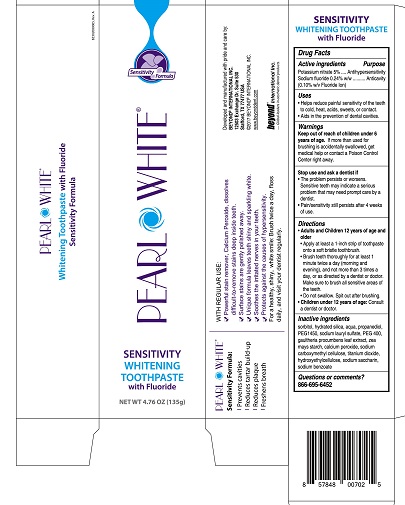
Pearl White Potassium nitrate, Sodium fluoride 50 mg/g; 1 mg/g Paste, Dentifrice
🆔 Identity & classification
Where does this data come from?
🏭 Manufacturer & labeler
Where does this data come from?
🩺 Clinical
Pearl White is a toothpaste containing potassium nitrate and sodium fluoride. This is an over-the-counter product marketed under FDA's monograph rules for dentifrices. Sodium fluoride is commonly included in toothpaste to help strengthen tooth enamel and reduce cavity formation. Potassium nitrate is typically used in dental products to help reduce tooth sensitivity.
Patient education
Supplement & herbal interactions
Where does this data come from?
Ask a licensed pharmacist directly — free, answered by our team.
🧪 Inactive Ingredients / Excipients
Inactive ingredients, also called excipients, are components of the drug product other than the active ingredient. They may include fillers, dyes, coatings, preservatives, flavors, or other formulation ingredients.
💡 Tap an ingredient (hover on desktop) to see what it is and why it’s used.
-
UNII 7FRO2ENO91
Calcium peroxide is an inorganic compound that releases oxygen when exposed to moisture. In medicines, it acts as an oxidizing agent and disinfectant to help preserve the product and maintain its stability.
-
UNII K679OBS311
Carboxymethylcellulose sodium is a plant-derived thickening agent made from cellulose. In medicines, it acts as a binder to hold ingredients together, a disintegrant to help the tablet break apart, or a thickener in liquids.
-
UNII 2125M16OWN
A natural plant extract from wintergreen leaves, used as a flavoring agent to add taste to medications and improve how they feel in the mouth.
-
UNII Y6O7T4G8P9
Hydrated silica is a fine powder form of silicon dioxide with absorbed water. It works as an anti-caking agent and absorbent in medicines, helping powders stay free-flowing and preventing clumping.
-
UNII X70SE62ZAR
Hydroxyethyl cellulose is a plant-derived thickener made from cellulose. It's used in medicines as a binder to hold ingredients together, a thickener for gels or liquids, and sometimes as a coating agent.
-
UNII OJ4Z5Z32L4
A synthetic polymer made by linking ethylene glycol units together. It serves as a solvent, humectant to retain moisture, and film-forming agent in tablets and coatings to improve texture and drug delivery.
-
UNII B697894SGQ
Polyethylene glycol 400 is a clear, thick liquid made from petroleum-derived polymers. It acts as a solvent and humectant in medicines, helping dissolve active ingredients and retain moisture in the formulation.
-
UNII 5965N8W85T
Propanediol is a clear liquid organic compound derived from vegetable sources or synthesized chemically. It acts as a humectant to retain moisture, a solvent to dissolve active ingredients, and a preservative booster in liquid medications and supplements.
-
UNII SB8ZUX40TY
Saccharin sodium is an artificial sweetener made from saccharin salt. It's added to medicines to improve taste, especially in liquid formulations for children or bitter drugs.
-
UNII OJ245FE5EU
Sodium benzoate is a salt derived from benzoic acid, a preservative. It's added to medicines to prevent growth of bacteria, fungi, and other microorganisms that could spoil the product.
-
UNII 368GB5141J
A detergent and foaming agent derived from coconut or palm oil. In medications, it helps break down and mix oil and water-based ingredients, aids in tablet disintegration, and improves how the drug dissolves and spreads in the mouth or digestive system.
-
UNII 506T60A25R
Sorbitol is a natural sugar alcohol derived from glucose. It serves as a sweetener, humectant, and bulking agent in medications to improve taste and help maintain moisture in the product.
-
UNII O8232NY3SJ
A plant-based carbohydrate derived from corn kernels. It acts as a filler to add bulk, a binder to hold ingredients together, and a disintegrant to help the tablet break apart in your stomach for absorption.
-
UNII 15FIX9V2JP
Titanium dioxide is a bright white mineral powder commonly used as a colorant and opacifying agent. It makes pills and tablets white or lighter in color and helps make coatings non-transparent.
-
UNII 059QF0KO0R
Water is a liquid solvent that dissolves and mixes ingredients together in liquid medicines, syrups, and injections. It helps distribute the active drug evenly throughout the product.
15 inactive ingredients listed in the exact product block matched to this NDC.
Label-section wording can be broader than the structured product block and may mention additional formulation ingredients.
Where does this data come from?
ingredient classCode="IACT" elements from the exact product block matched by this NDC. Label-section narrative from DailyMed / the openFDA label index is shown separately when available.Inactive ingredient FAQ
Are inactive ingredients the same for every manufacturer?
Why might an inactive ingredient be missing?
Can inactive ingredients matter?
💲 Pricing
A drug doesn't have one price. Each row is a different public payment system, and none is what you'd pay at the counter — that depends on your insurance. The ⓘ on each row explains what it measures.
| Price system | Per g | Per package |
|---|---|---|
| Retail pharmacies payNADAC · weekly | Not in the retail survey — common for institutional, discontinued, or low-volume packs. | |
| Medicaid paysCMS SDUD · 12 mo | No recent Medicaid claims on file for this NDC — rare and low-volume NDCs are suppressed in the public data. | |
| Medicare drug plans payPart D · quarterly | No Part D plan price is available for this NDC in our data. | |
Where does this data come from?
🔁 Therapeutic equivalents
| Product | Labeler | Pack | NADAC/unit | TE | Status | Price vs. this |
|---|---|---|---|---|---|---|
| Pearl White 50 mg/g; 1 mg/gthis 42199-0006-05 | Beyond | 1 tube | — | — | FDA listed | — |
Where does this data come from?
⏳ Availability & generic status
We did not find an FDA-approved generic match for this exact strength, form and route.
Where does this data come from?
📦 Packaging — all sizes for this product
| Package NDC | Description | Marketing start | Status |
|---|---|---|---|
| 42199-0006-05 You're viewing this | 1 TUBE in 1 CARTON (42199-006-05) / 120 g in 1 TUBE | 2017-06-12 | Active |
| 42199-0006-06 | 1 TUBE in 1 CARTON (42199-006-06) / 40 g in 1 TUBE | 2017-06-12 | Active |
Pack size FAQ
What quantity is in NDC 42199-0006-05?
What NDC number is used to bill for this package of Pearl White Potassium nitrate, Sodium fluoride 50 mg/g; 1 mg/g Paste, Dentifrice?
🧭 About this NDC listing & data coverage
What data is (and isn’t) available for this NDC — tap to expand
| NDC identity (package / product / labeler codes) | ✓ Available |
| Labeler | ✓ Available |
| Product & package description | ✓ Available |
| Marketing category & status | ✓ Available |
| Active ingredient / dosage form / route | ✓ Available |
| FDA label (SPL via DailyMed) | ✓ Available |
| Package photos | ✓ Available |
| Inactive ingredients (structured) | ✓ Available |
| NADAC pharmacy acquisition price (CMS) | — Not published for this NDC CMS publishes NADAC only for NDCs reported in its retail-pharmacy survey. |
| Orange Book / therapeutic-equivalence data | — Not published for this NDC Applies only to products approved under an NDA/ANDA; many listings are out of scope. |
| HCPCS J-code billing crosswalk | — Not published for this NDC Most self-administered / retail products have no J-code — that is normal. |
| Medicaid utilization (CMS SDUD) | — Not published for this NDC CMS reports utilization only for NDCs with Medicaid claims above its privacy threshold. |
Questions about this listing
Is this NDC FDA-approved?
Why is there no price listed?
Is the NDC printed on the package the same as the 11-digit billing NDC?
What do the three segments of this NDC mean?
Is this package still being marketed?
Does this product come in other package sizes?
Who lists this product with the FDA?
Do I need a prescription for this product?
Where does this data come from?
📄 FDA label — Drug Facts FDA SPL
🎯 Indications and Usage ▾
Uses Helps reduce painful sensitivity of the teeth to cold, heat, acids, sweets or contact. Aids in the prevention of dental cavities.
⏱️ Dosage and Administration ▾
Directions Adults and Children 12 years of age and older Apply at least a 1-inch strip of toothpaste onto a soft bristle toothbrush. Brush teeth thoroughly for at least 1 minute twice a day (morning and evening), and not more than 3 times a day, or as directed by a dentist or doctor. Do not swallow. Spit out after brushing. Children under 12 years of age: Consult a dentist or doctor.
⚠️ Warnings ▾
Warnings
🧪 Active Ingredient ▾
Active ingredients Potassium nitrate 5% Sodium fluoride 0.24% (0.10% w/v Fluoride Ion)
🧪 Inactive Ingredients ▾
Inactive ingrediets sorbitol, hydrated silica, aqua, propanediol, PEG1450, sodium lauryl sulfate, PEG 400, gaultheria procumbens leaf extract, zea mays starch, calcium peroxide, sodium carboxymethyl cellulose, titanium dioxide, hydroxyethylcellulose, sodium saccharin, sodium benzoate.
🎯 Purpose ▾
Purpose Antihypersensitivity Anticavity