
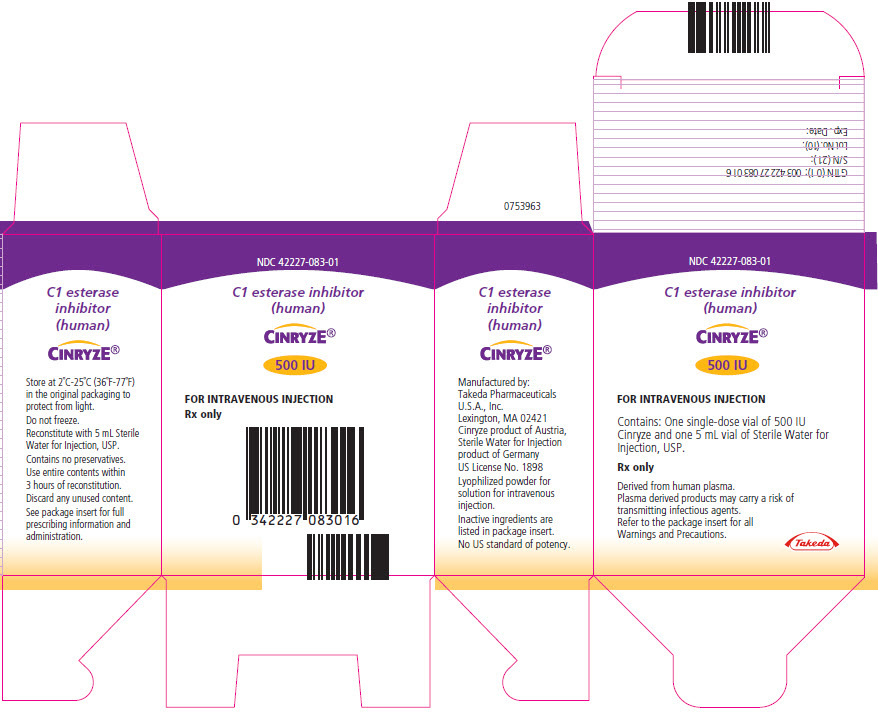
Cinryze HUMAN C1-ESTERASE INHIBITOR Kit — NDC 42227-083-01 (Billing 42227-0083-01)
This is a package of Cinryze HUMAN C1-ESTERASE INHIBITOR Kit from Takeda Pharmaceuticals America, Inc., marketed since Jan 2021 and currently FDA-listed. It is this product's only package size.
NDC database record
One package, one record: these facts belong to NDC 42227-083-01 alone.
- Record
- FDA NDC Directory package listing · Plasma derivative
- Code segments
- 42227 labeler · 083 product · 01 package
- Package marketed since
- Jan 15, 2021
- Sample package
- No — commercial package
- Listing certified through
- Dec 31, 2026
- Barcode (UPC-A, from the NDC)
- 3 4222708301 6
- Medicaid fills, this package
- 38 prescriptions in the last four reported quarters
- FDA record last changed
- Oct 8, 2026
Identity & classification
Regulatory identifiers FDA, NLM and CMS codes for this package
Drug-database identifiers Medi-Span GPI and First Databank GCN / HICL / AHFS classification
- GSN (GCN sequence number): 040429
- GCN: 10495
- GPI-14 (Medi-Span): 85802022002120
- HICL (First Databank): 018568
- AHFS class code: 92:32.00.00
Where does this data come from?
- FDA openFDA NDC Directory · synced Oct 8, 2026
- FDA label on DailyMed · label index refreshed Oct 8, 2026
- RxNorm (NLM RxNav) · catalog refreshed Oct 1, 2026
- Medi-Span GPI (licensed)
- First Databank (licensed) · refreshed Oct 8, 2026
Clinical
Patient education
Supplement & herbal interactions
Where does this data come from?
- MedlinePlus (NLM) · refreshed Oct 8, 2026
- FDA label on DailyMed · label index refreshed Oct 8, 2026
Ask a licensed pharmacist directly — free, answered by our team.
Pricing
A drug doesn't have one price. Each row is a different public payment system, and none is what you'd pay at the counter — that depends on your insurance. The ⓘ on each row explains what it measures.
| Price system | Per each | Per package |
|---|---|---|
| Retail pharmacies payNADAC · weekly | Not in the retail survey — common for institutional, discontinued, or low-volume packs. | |
| Medicaid paysCMS SDUD · 12 mo | $3,178.63 | — |
| Medicare drug plans payPart D · Q2 2026 | $3,261.98 | — |
| Medicare Part B allowsASP · J0598 | $66.753 / J0598 unit | — |
Where does this data come from?
- CMS NADAC weekly file
- CMS ASP pricing files · refreshed Sep 20, 2026
- CMS Medicaid State Drug Utilization Data · through Q1 2026
- CMS Part D plan pricing files · refreshed Sep 24, 2026
- VA National Acquisition Center price file
Billing & reimbursement
Where does this data come from?
- CMS ASP NDC-HCPCS crosswalk · refreshed Sep 22, 2026
- DMEPDAC NDC-HCPCS crosswalk
- openFDA NSDE billing units · refreshed Oct 7, 2026
Packaging — all sizes for this product
| Package NDC | Description | Marketing start | Marketing end | Status |
|---|---|---|---|---|
| 42227-0083-01 You're viewing this Main listing | 1 KIT in 1 CARTON * 5 mL in 1 VIAL, SINGLE-USE * 5 mL in 1 VIAL, GLASS | 2021-01-15 | — | Active |
Therapeutic equivalents
| Product | Labeler | Pack | NADAC/unit | TE | Status | Price vs. this |
|---|---|---|---|---|---|---|
| Berinert 63833-0825-02 | CSL | 1 kit | — | — | FDA listed | — |
| HAEGARDA C1 Esterase Inhibitor Subcutaneous (Human) 63833-0828-02 | CSL | 1 kit | — | — | FDA listed | — |
| HAEGARDA C1 Esterase Inhibitor Subcutaneous (Human) 63833-0829-02 | CSL | 1 kit | — | — | FDA listed | — |
| Cinryzethis 42227-0083-01 | Takeda | 1 kit | — | — | FDA listed | — |
Where does this data come from?
- FDA openFDA NDC Directory · synced Oct 8, 2026
- FDA Purple Book · refreshed Oct 5, 2026
- CMS NADAC weekly file
Availability & biosimilar status
Biologics have no small-molecule generics; biosimilar competition is tracked in the FDA Purple Book.
Where does this data come from?
- FDA Purple Book · refreshed Oct 5, 2026
Inactive Ingredients / Excipients
Inactive ingredients, also called excipients, are components of the drug product other than the active ingredient. They may include fillers, dyes, coatings, preservatives, flavors, or other formulation ingredients.
Where does this data come from?
IACT rows and label-wide narrative are kept separate; availability and product-level specificity depend on the submitted label.- FDA label on DailyMed · label index refreshed Oct 8, 2026
- FDA openFDA NDC Directory · synced Oct 8, 2026
Inactive ingredient FAQ
Are inactive ingredients the same for every manufacturer?
Why might an inactive ingredient be missing?
Can inactive ingredients matter?
Manufacturer & labeler
More NDCs from Takeda Pharmaceuticals America, Inc. labeler code 42227
Where does this data come from?
- FDA openFDA NDC Directory · synced Oct 8, 2026
- Drugs@FDA
Full FDA label FDA SPL
🎯 Indications and Usage ▾
1 INDICATIONS AND USAGE CINRYZE is a C1 esterase inhibitor indicated for routine prophylaxis against angioedema attacks in adolescent and adult patients with Hereditary Angioedema (HAE). CINRYZE is a C1 esterase inhibitor indicated for routine prophylaxis against angioedema attacks in adolescent and adult patients with Hereditary Angioedema (HAE).
⏱️ Dosage and Administration ▾
2 DOSAGE AND ADMINISTRATION For Intravenous Use, Freeze-Dried powder for Reconstitution. Intravenous Use Only Prior to reconstitution, protect from light. Store at 2 °C - 25 °C (36 °F - 77 °F).
Do not freeze. To obtain the required dose, reconstitute 2 CINRYZE vials with 2 vials Sterile Water for Injection, USP (5 mL each) using aseptic sterile technique. Administer at room temperature within 3 hours of reconstitution.
Routine Prophylaxis Dosing Indication Dose Initial Infusion rate Maintenance infusion rate (if tolerated) Routine prophylaxis against HAE attacks 1,000 Units Intravenous every 3 or 4 days 1 mL/min (10 min) 1 mL/min (10 min)
2.1Routine prophylaxis against HAE Attacks A dose of 1,000 Units CINRYZE can be administered every 3 or 4 days for routine prophylaxis against angioedema attacks in HAE patients. CINRYZE is administered at an injection rate of 1 mL per minute. Table 1 Routine Prophylaxis Dosing Indication Dose Initial Infusion rate Maintenance infusion rate (if tolerated) Routine prophylaxis against HAE attacks 1,000 Units Intravenous every 3 or 4 days 1 mL/min (10 min) 1 mL/min (10 min)
2.2Instructions for Use The procedures below are provided as general guidelines for the reconstitution and administration of CINRYZE. Use either the Mix2Vial ® transfer device or a commercially available double-ended needle. CINRYZE IS A LYOPHILIZED POWDER THAT IS SUPPLIED IN A VACUUM-SEALED VIAL.
Always work on a clean surface and wash your hands before performing the following procedures. Reconstitution, product administration, and handling of the administration set and needles must be done with caution. Percutaneous puncture with a needle contaminated with blood can transmit infectious viruses including HIV (AIDS) and hepatitis.
Obtain immediate medical attention if injury occurs. Place needles in a sharps container after single use. Discard all equipment, including any reconstituted CINRYZE in an appropriate container.
2.3Preparation and Handling Prior to reconstitution, CINRYZE should be protected from light. CINRYZE should be inspected visually for particulate matter and discoloration prior to administration, whenever solution and container permit. The reconstituted solution should be colorless to slightly blue, and free from visible particles.
Do not use if turbid or discolored. The CINRYZE vial is for single use only. CINRYZE contains no preservative.
Any vial that has been entered should be used promptly. Partially used vials should be discarded in accordance with biohazard procedures. Do not mix CINRYZE with other materials.
Do not use if frozen. Do not use after expiration date. Reconstitution: Two vials of reconstituted CINRYZE are combined for a single dose.
Sterile Water for Injection, USP, is required and not supplied with CINRYZE. Aseptic technique should be used during the reconstitution procedure. Bring the CINRYZE (powder) and Sterile Water for Injection, USP (diluent) (not supplied) to room temperature if refrigerated.
Remove caps from the CINRYZE and diluent vials. Cleanse stoppers with an alcohol wipe or swab, and allow them to dry prior to use. Remove protective covering from the top of the Mix2Vial transfer device package.
Do not remove the device from the package. Note: Diluent vial must be accessed prior to CINRYZE vial to prevent loss of vacuum. Place diluent on a flat surface and insert the blue end of the device into the diluent vial, pushing down until the spike penetrates through the center of the diluent vial stopper and the device snaps in place ( Figure 1 ).
The Mix2Vial transfer device must be positioned completely vertical prior to penetrating the stopper closure. Remove the plastic package and discard it ( Figure 2 ). Take care not to touch the exposed end of the device.
Place vial of CINRYZE on a flat surface. Invert diluent vial containing 5 mL Sterile Water for Injection, USP, and insert the clear end into the CINRYZE vial, pushing down until the spike penetrates the rubber stopper a… [Excerpted — this section continues on DailyMed.]
💊 Dosage Forms and Strengths ▾
3. DOSAGE FORMS AND STRENGTHS CINRYZE is a lyophilized preparation available in a single-use vial that contains 500 Units (U) human C1 esterase inhibitor. Each vial must be reconstituted with 5 mL Sterile Water for Injection, USP (diluent) (not supplied). Two reconstituted vials must be used to make a single, 1,000 Units, dose. Approximately 500 Units (lyophilized) in an 8 mL vial.
⛔ Contraindications ▾
4 CONTRAINDICATIONS CINRYZE is contraindicated in patients who have manifested life-threatening immediate hypersensitivity reactions, including anaphylaxis to the product. Patients who have manifested life-threatening immediate hypersensitivity reactions, including anaphylaxis, to the product ( 4 ).
⚠️ Warnings and Cautions ▾
5 WARNINGS AND PRECAUTIONS Hypersensitivity reactions may occur. Epinephrine should be immediately available to treat any acute severe hypersensitivity reactions ( 5.1 ). Thrombotic events have been reported in patients receiving Cinryze for routine prophylaxis.
Thrombotic events also have been reported in patients receiving off-label high dose C1 esterase inhibitor therapy ( 5.2 ). Monitor patients with known risk factors for thrombotic events. CINRYZE is made from human plasma and may contain infectious agents e.g. viruses and, theoretically, the Creutzfeldt-Jakob disease agent.
( 5.3 )
5.1Sensitivity Severe hypersensitivity reactions may occur. The signs and symptoms of hypersensitivity reactions may include the appearance of hives, urticaria, tightness of the chest, wheezing, hypotension and/or anaphylaxis experienced during or after injection of CINRYZE. Because hypersensitivity reactions may have symptoms similar to HAE attacks, treatment methods should be carefully considered.
In case of hypersensitivity, CINRYZE infusion should be discontinued and appropriate treatment instituted. Epinephrine should be immediately available for treatment of acute severe hypersensitivity reaction. (See Patient Counseling Information [ 17 ])
5.2Thrombotic Events Thrombotic events have been reported in association with C1 esterase inhibitor products when used off-label at high doses. 2 Animal studies have supported a concern about the risk of thrombosis from intravenous administration of C1 esterase inhibitor products. 3 (see Sections 10 OVERDOSAGE and
13.2Animal Toxicology and/or Pharmacology ) In an open label trial further investigating the use of CINRYZE for prevention (n=146) of HAE attacks, 5 serious thrombotic events (including myocardial infarction, deep vein thrombosis, pulmonary embolism and 2 events of cerebrovascular accident) occurred. Subjects had underlying risk factors for thrombotic events. Patients with known risk factors for thrombotic events should be monitored closely while taking CINRYZE.
5.3Transmissible Infectious Agents Because CINRYZE is made from human blood, it may carry a risk of transmitting infectious agents, e.g. viruses, and, theoretically, the Creutzfeldt-Jakob (CJD) agent [ 11 ]. ALL infections thought by a physician possibly to have been transmitted by CINRYZE should be reported by the physician or other healthcare provider to ViroPharma Biologics, Inc. [(877) 945-1000]. The physician should discuss the risks and benefits of this product with the patient, before prescribing or administering it to the patient.
(See Patient Counseling Information [ 17 ])
🤒 Adverse Reactions ▾
6 ADVERSE REACTIONS The most serious adverse events observed in clinical studies of CINRYZE have been death due to non-catheter related foreign body embolus, pre-eclampsia resulting in emergency C-section, stroke, and exacerbation of HAE attacks, none of which have been considered drug related. The most common drug related adverse reactions observed at a rate ≥ 5% were upper respiratory tract infection, sinusitis, rash, and headache. In the clinical trial, the most common adverse reactions observed by ≥ 5% of subjects after receiving CINRYZE were upper respiratory tract infection, sinusitis, rash, and headache.
( 5.1 , 6.1 ) To report SUSPECTED ADVERSE REACTIONS, contact ViroPharma Biologics, Inc. at (877) 945-1000 or FDA at 1-800-FDA-1088 or www.fda.gov/medwatch .
6.1Clinical Trials Experience Because clinical studies are conducted under widely varying conditions, adverse reaction rates observed in the clinical trials of a drug cannot be directly compared to rates in the clinical trials of another drug and may not reflect the rates observed in practice. Routine Prophylaxis Twenty-four subjects were evaluated in study LEVP2005-1/B for routine prophylaxis. There were no treatment-emergent serious adverse reactions in study LEVP2005-1/B.
Adverse reactions in trial LEVP2005-1/B that occurred in at least two subjects during CINRYZE prophylaxis, irrespective of the causality assessment, are given in the following table: Table 2 Adverse Reactions in Routine Prophylaxis Study LEVP2005-1/B Irrespective of Causality Adverse Reaction Number of Adverse Events Number of Subjects (N = 24) Sinusitis 8 5 Rash 7 5 Headache 4 4 Upper respiratory tract infection 3 3 Viral upper respiratory tract infection 5 3 Bronchitis 2 2 Limb injury 2 2 Back pain 2 2 Pain in extremity 2 2 Pruritus 2 2 More than 9000 doses of CINRYZE have been administered to over 180 patients in all controlled and open label clinical studies.
All patients were evaluated and found negative for seroconversion to parvovirus B19, Hepatitis B, Hepatitis C and HIV. No clinically relevant antibody formation was seen in clinical trials of prophylaxis.
6.2Postmarketing Experience Because postmarketing reporting of adverse reactions is voluntary and from a population of uncertain size, it is not always possible to reliably estimate the frequency of these reactions or establish a causal relationship to product exposure. Postmarketing adverse reactions include local infusion site reactions (including pain, rash, erythema, inflammation or hematoma at the infusion site). Postmarketing thrombotic events have been reported, including catheter-related and deep venous thromboses, transient ischemic attack, and stroke.
Patients with known risk factors for thrombotic events should be monitored closely. (See Section
5.2 Thrombotic events in WARNINGS AND PRECAUTIONS)
🔄 Drug Interactions ▾
7 DRUG INTERACTIONS No drug interaction studies have been conducted. No drug interaction studies have been conducted.
👥 Use in Specific Populations ▾
8 USE IN SPECIFIC POPULATIONS Pregnancy: No human or animal data. Use only if clearly needed. ( 8.1 )
8.1Pregnancy Pregnancy Category C. No animal data are available. No adequate and well-controlled studies were conducted in pregnant women. It is not known whether CINRYZE can cause fetal harm when administered to a pregnant woman or can affect reproduction capacity. CINRYZE should be given to a pregnant woman only if clearly needed.
8.2Labor and Delivery The safety and effectiveness of CINRYZE administration prior to or during labor and delivery have not been established. Use only if clearly needed.
8.3Nursing Mothers It is not known whether CINRYZE is excreted in human milk. Because many drugs are excreted in human milk, caution should be exercised when CINRYZE is administered to a nursing woman.
8.4Pediatric Use The safety and effectiveness of CINRYZE have not been established in neonates, infants, or children. Three of the 24 subjects in Study LEVP2005-1/B were under the age of 18 years (9, 14, and 16 years of age).
8.5Geriatric Use The clinical study LEVP2005-1/B did not include sufficient numbers of subjects 65 years of age and older to determine whether they respond differently from younger subjects.
🤰 Pregnancy ▾
8.1Pregnancy Pregnancy Category C. No animal data are available. No adequate and well-controlled studies were conducted in pregnant women. It is not known whether CINRYZE can cause fetal harm when administered to a pregnant woman or can affect reproduction capacity. CINRYZE should be given to a pregnant woman only if clearly needed.
🧒 Pediatric Use ▾
8.4Pediatric Use The safety and effectiveness of CINRYZE have not been established in neonates, infants, or children. Three of the 24 subjects in Study LEVP2005-1/B were under the age of 18 years (9, 14, and 16 years of age).
🧓 Geriatric Use ▾
8.5Geriatric Use The clinical study LEVP2005-1/B did not include sufficient numbers of subjects 65 years of age and older to determine whether they respond differently from younger subjects.
🆘 Overdosage ▾
10 OVERDOSAGE The maximum dose administered in clinical studies was 4000 Units given over approximately 5 hours (an average dose of 57 Units/kg) and 9000 Units given over a 7 day period. There have been no overdosages of CINRYZE reported during clinical studies. In vitro and in vivo animal thrombogenicity studies with CINRYZE showed a potential for clot formation when CINRYZE was administered at doses 14 times the recommended clinical dose (greater than 200U/kg).
Thrombotic events have been reported in association with C1 esterase inhibitor products when used off-label at high doses. 2 Animal studies have supported a concern about the risk of thrombosis from intravenous administration of C1 esterase inhibitor products. 3 (see Section
13.2 Animal Toxicology and/or Pharmacology and Section
5.2Thrombotic events in WARNINGS AND PRECAUTIONS) .
🧬 Clinical Pharmacology ▾
12 CLINICAL PHARMACOLOGY
12.1Mechanism of Action C1 inhibitor is a normal constituent of human blood and is one of the serine proteinase inhibitors (serpins). The primary function of C1 inhibitor is to regulate the activation of the complement and intrinsic coagulation (contact system) pathway. C1 inhibitor also regulates the fibrinolytic system.
Regulation of these systems is performed through the formation of complexes between the proteinases and the inhibitor, resulting in inactivation of both and consumption of the C1 inhibitor. HAE patients have low levels of endogenous or functional C1 inhibitor. Although the events that induce attacks of angioedema in HAE patients are not well defined, it is thought by some that increased vascular permeability and the clinical manifestation of HAE attacks are primarily mediated through contact system activation.
Suppression of contact system activation by C1 inhibitor through the inactivation of plasma kallikrein and factor XIIa is thought to modulate this vascular permeability by preventing the generation of bradykinin 1 . Administration of CINRYZE increases plasma levels of C1 inhibitor activity.
12.2Pharmacodynamics In clinical studies, the intravenous administration of CINRYZE demonstrated an increase in plasma levels of C1 inhibitor within approximately one hour or less of administration. Biological activity of CINRYZE was shown in 35 subjects by the subsequent increase in plasma C4 levels from an average of C4 8.1 mg/mL at baseline to C4 8.6 mg/mL 12 hours after infusion of CINRYZE.
12.3Pharmacokinetics A randomized, parallel group, open label pharmacokinetics (PK) study of CINRYZE was performed in patients with non-symptomatic hereditary angioedema (HAE). The patients received either a single dose of 1,000 Units or 1,000 Units followed by a second 1,000 Units 60 minutes later. The PK results for functional C1 inhibitor are presented the following table: Table 4 Mean pharmacokinetic parameters of Functional C1 Inhibitor Numbers in parenthesis are number of subjects evaluated Single dose = 1,000 Units Double dose = 1,000 Units followed by a second 1,000 Units 60 minutes later * One Unit is equal to the mean C1 inhibitor concentration of 1 mL of normal human plasma Parameters Single Dose Double Dose C baseline (units/mL) 0.31 ± 0.20 (n = 12) 0.33 ± 0.20 (n = 12) C max (units/mL) 0.68 ± 0.08 (n = 12) 0.85 ± 0.12 (n = 13) T max (hrs) 3.9 ± 7.3 (n = 12) 2.7 ± 1.9 (n = 13) AUC (0-t) (units*hr/mL) 74.5 ± 30.3 (n = 12) 95.9 ± 19.6 (n = 13) CL (mL/min) 0.85 ± 1.07 (n = 7) 1.17 ± 0.78 (n = 9) Half-life (hours) 56 ± 36 (n = 7) 62 ± 38 (n = 9) The maximum plasma concentrations (C max ) and area under the plasma concentration-time curve (AUC) increased from the single to double dose, although the increase was not dose proportional.
The mean half-lives of CINRYZE were 56 hours (range 11 to 108 hours) for a single dose and 62 hours (range 16 to 152 hours) for the double dose. Studies have not been conducted to evaluate the PK of CINRYZE in special patient populations identified by gender, race, age (pediatric or geriatric), or the presence of renal or hepatic impairment.
🧬 Mechanism of Action ▾
12.1Mechanism of Action C1 inhibitor is a normal constituent of human blood and is one of the serine proteinase inhibitors (serpins). The primary function of C1 inhibitor is to regulate the activation of the complement and intrinsic coagulation (contact system) pathway. C1 inhibitor also regulates the fibrinolytic system.
Regulation of these systems is performed through the formation of complexes between the proteinases and the inhibitor, resulting in inactivation of both and consumption of the C1 inhibitor. HAE patients have low levels of endogenous or functional C1 inhibitor. Although the events that induce attacks of angioedema in HAE patients are not well defined, it is thought by some that increased vascular permeability and the clinical manifestation of HAE attacks are primarily mediated through contact system activation.
Suppression of contact system activation by C1 inhibitor through the inactivation of plasma kallikrein and factor XIIa is thought to modulate this vascular permeability by preventing the generation of bradykinin 1 . Administration of CINRYZE increases plasma levels of C1 inhibitor activity.
📦 How Supplied / Storage and Handling ▾
16 HOW SUPPLIED/STORAGE AND HANDLING CINRYZE is available in single-use vials that contain 500 Units per vial. CINRYZE is supplied as a single glass vial of CINRYZE powder to be reconstituted with 5 mL Sterile Water for Injection, USP (Not supplied). CINRYZE, packaged for sale, is stable for 24 months when stored at 2°C–25°C (36°F-77°F).
Do not freeze. Store the vial in the original carton to protect it from light. The reconstituted solution must be used within 3 hours of reconstitution.
Do not use beyond the expiration date on the CINRYZE vial.
📋 Description ▾
11 DESCRIPTION CINRYZE (C1 esterase inhibitor [human]) is a sterile, stable, lyophilized preparation of C1 esterase inhibitor derived from human plasma. CINRYZE is manufactured from human plasma purified by a combination of filtration and chromatographic procedures. The specific activity of CINRYZE is 4.0 – 9.0 units/mg protein.
The purity is ≥ 90% human C1 esterase inhibitor. Following reconstitution with 5 mL of Sterile Water for Injection, USP, each vial contains approximately 500 units of functionally active C1 esterase inhibitor, pH 6.6 - 7.4, and an osmolality between 200 – 400 mosmol/kg. One Unit (U) of CINRYZE corresponds to the mean quantity of C1 esterase inhibitor present in 1 mL of normal fresh plasma.
CINRYZE, when reconstituted with 5 mL of Sterile Water for Injection, USP contains the following excipients: 4.1 mg/mL sodium chloride, 21 mg/mL sucrose, 2.6 mg/mL trisodium citrate, 2.0 mg/mL L-Valine, 1.2 mg/mL L-Alanine, and 4.5 mg/mL L-Threonine. The following manufacturing steps are designed to reduce the risk of viral transmission: Screening donors at U.S. licensed blood collection centers to rule out infection with Human Immunodeficiency Virus (HIV-1/HIV-2), Hepatitis B Virus, or Hepatitis C Virus. Testing plasma pools by in-process NAT for parvovirus B19 via minipool testing and the limit of B19 in the manufacturing pool is set not to exceed 10 4 IU of B19 DNA per mL.
Use of two independent viral reduction steps in the manufacture of CINRYZE: pasteurization (heat treatment at 60°C for 10 hours in solution with stabilizers) and nanofiltration through two sequential 15 nm filters. These viral reduction steps, along with a step in the manufacturing process, PEG precipitation, have been validated in a series of in vitro experiments for their capacity to inactivate/remove a wide range of viruses of diverse physicochemical characteristics including: Human Immunodeficiency Virus (HIV), Hepatitis A Virus (HAV), and the following model viruses: Bovine Viral Diarrhea Virus (BVDV) as a model virus for HCV, Canine Parvovirus (CPV) as a model virus for Parvovirus B19, Pseudorabies Virus (PRV) as a model virus for large enveloped DNA viruses (e.g. herpes virus).
Total mean log 10 reductions are shown in Table 3 . Table 3 Log 10 Virus Reduction Factor for Selected Viruses Process step Log 10 Virus Reduction Enveloped viruses Non-enveloped viruses HIV BVDV PRV HAV CPV PEG precipitation 5.1 ± 0.2 4.5 ± 0.3 6.0 ± 0.3 2.8 ± 0.2 4.2 ±
0.2Pasteurization > 6.1 ± 0.2 > 6.7 ± 0.3 > 6.7 ± 0.2 2.8 ± 0.3 0.1 ±
0.3Nanofiltration > 5.6 ± 0.2 > 5.5 ± 0.2 > 6.4 ± 0.3 > 4.9 ± 0.2 > 4.5 ±
0.3Total reduction > 16.8 > 16.7 > 19.1 > 10.5 > 8.7
💬 Information for Patients ▾
17 PATIENT COUNSELING INFORMATION
17.1Allergic-type Hypersensitivity Reactions Allergic-type hypersensitivity reactions are possible [ 5.1 ]. Inform patients of the early signs of hypersensitivity reactions [including hives (itchy white elevated patches), tightness of the chest, wheezing, hypotension] and anaphylaxis. Advise patients to discontinue use of CINRYZE and contact their physicians if these symptoms occur.
17.2Pregnancy Advise female patients to notify their physician if they become pregnant or intend to become pregnant during their routine prevention with CINRYZE.
17.3Nursing Advise patients to notify their physician if they are breastfeeding or plan to breastfeed.
17.4Usage While Traveling Based on their current regimen, advise patients to bring an adequate supply of CINRYZE for routine prevention when traveling. Advise patients to consult with their healthcare professional prior to travel.
17.5Transmissible Infectious Agents Advise patient that, because CINRYZE is made from human blood, it may carry a risk of transmitting infectious agents, e.g. viruses, and, theoretically, the Creutzfeldt-Jakob (CJD) agent [ 5.3 , 11 ]. The risk of transmitting disease has been reduced, but not eliminated, by carefully selecting blood donors, testing donors for infections, and inactivating or removing most viruses during the manufacturing process. Inform patients of the risks and benefits of CINRYZE before prescribing or administering to the patient.
💬 Medication Guide ▾
FDA-Approved Patient Labeling Information for the Patient CINRYZE™ (SIN- rise ) (C1 Esterase Inhibitor [Human]) This leaflet summarizes important information about CINRYZE. Please read it carefully before using CINRYZE and each time you get a refill. There may be new information.
This information does not take the place of talking with your healthcare provider, and it does not include all of the important information about CINRYZE. If you have any questions after reading this, ask your healthcare provider. Do not attempt to self-administer unless you have been taught how by your healthcare provider.
What is CINRYZE? CINRYZE is an injectable medicine that is used to help prevent swelling and/or painful attacks in teenagers and adults with Hereditary Angioedema (HAE). HAE is caused by the decreased functioning of a protein called C1 esterase inhibitor, that is present in your blood and helps control inflammation (swelling) and parts of the immune system.
CINRYZE contains C1 esterase inhibitor. Before you can inject CINRYZE into your vein (intravenous injection), you must dissolve the CINRYZE powder using Sterile Water for Injection, USP. You can get supplies, including Sterile Water for Injection, USP from your pharmacist.
Who should not use CINRYZE? You should not use CINRYZE if you have had life-threatening immediate hypersensitivity reactions, including anaphylaxis to the product. What should I tell my healthcare provider before using CINRYZE?
Tell your healthcare provider about all of your medical conditions, including if you are pregnant or planning to become pregnant. It is not known if CINRYZE can harm your unborn baby. are breastfeeding or plan to breastfeed. It is not known if CINRYZE passes into your milk and if it can harm your baby. have a history of blood clotting problems.
Very high doses of C1 esterase inhibitor could increase the risk of blood clots. Tell your healthcare provider and pharmacist about all of the medicines you take, including all prescription and non-prescription medicines such as over-the-counter medicines, supplements, or herbal remedies. What are the possible side effects of CINRYZE?
Allergic reactions may occur with CINRYZE. Call your healthcare provider or get emergency support services right away if you have any of the following symptoms: wheezing difficulty breathing chest tightness turning blue (look at lips and gums) fast heartbeat swelling of the face faintness rash hives In clinical studies, the most common side effects seen with CINRYZE were upper respiratory tract infection, sinusitis, rash, and headache. These are not all the possible side effects of CINRYZE.
Tell your healthcare provider about any side effect that bothers you or that does not go away. You can also report side effects to the FDA at 1-800-FDA-1088. You can ask your healthcare provider for information that is written for healthcare providers.
How should I store CINRYZE? Do not freeze CINRYZE. Store CINRYZE in a refrigerator or at room temperature between 36° to 77°F (2° to 25°C).
Keep CINRYZE in the original carton to protect it from light. Do not use CINRYZE after the expiration date on the vial. After preparing CINRYZE, you can store it at room temperature for up to 3 hours.
If you have not used it within 3 hours, throw it away. Only use the dissolved CINRYZE if it is colorless to slightly blue, clear and free from visible particles. What else should I know about CINRYZE?
Medicines are sometimes prescribed for purposes other than those listed here. Do not use CINRYZE for a condition for which it is not prescribed. Do not share CINRYZE with other people, even if they have the same symptoms that you have.
Because CINRYZE is made from human blood, it may carry a risk of transmitting infectious agents, e.g. viruses, and, theoretically, the Creutzfeldt-Jakob (CJD) agent. This leaflet summarizes the most important information about CINRYZE. If you would like more information, talk to your healthcare provider.
You can ask yo… [Excerpted — this section continues on DailyMed.]
🍼 Nursing Mothers ▾
8.3Nursing Mothers It is not known whether CINRYZE is excreted in human milk. Because many drugs are excreted in human milk, caution should be exercised when CINRYZE is administered to a nursing woman.
🧬 Pharmacokinetics ▾
12.3Pharmacokinetics A randomized, parallel group, open label pharmacokinetics (PK) study of CINRYZE was performed in patients with non-symptomatic hereditary angioedema (HAE). The patients received either a single dose of 1,000 Units or 1,000 Units followed by a second 1,000 Units 60 minutes later. The PK results for functional C1 inhibitor are presented the following table: Table 4 Mean pharmacokinetic parameters of Functional C1 Inhibitor Numbers in parenthesis are number of subjects evaluated Single dose = 1,000 Units Double dose = 1,000 Units followed by a second 1,000 Units 60 minutes later * One Unit is equal to the mean C1 inhibitor concentration of 1 mL of normal human plasma Parameters Single Dose Double Dose C baseline (units/mL) 0.31 ± 0.20 (n = 12) 0.33 ± 0.20 (n = 12) C max (units/mL) 0.68 ± 0.08 (n = 12) 0.85 ± 0.12 (n = 13) T max (hrs) 3.9 ± 7.3 (n = 12) 2.7 ± 1.9 (n = 13) AUC (0-t) (units*hr/mL) 74.5 ± 30.3 (n = 12) 95.9 ± 19.6 (n = 13) CL (mL/min) 0.85 ± 1.07 (n = 7) 1.17 ± 0.78 (n = 9) Half-life (hours) 56 ± 36 (n = 7) 62 ± 38 (n = 9) The maximum plasma concentrations (C max ) and area under the plasma concentration-time curve (AUC) increased from the single to double dose, although the increase was not dose proportional.
The mean half-lives of CINRYZE were 56 hours (range 11 to 108 hours) for a single dose and 62 hours (range 16 to 152 hours) for the double dose. Studies have not been conducted to evaluate the PK of CINRYZE in special patient populations identified by gender, race, age (pediatric or geriatric), or the presence of renal or hepatic impairment.
🧬 Pharmacodynamics ▾
12.2Pharmacodynamics In clinical studies, the intravenous administration of CINRYZE demonstrated an increase in plasma levels of C1 inhibitor within approximately one hour or less of administration. Biological activity of CINRYZE was shown in 35 subjects by the subsequent increase in plasma C4 levels from an average of C4 8.1 mg/mL at baseline to C4 8.6 mg/mL 12 hours after infusion of CINRYZE.
🔬 Clinical Studies ▾
14 CLINICAL STUDIES
14.1Routine Prophylaxis Trial LEVP2005-1/B The safety and efficacy of CINRYZE prophylaxis therapy to reduce the incidence, severity, and duration of HAE attacks was demonstrated in a single randomized, double blind, placebo controlled multi-center cross-over study of 24 patients. Patients were screened to confirm a diagnosis of HAE and a history of at least two HAE attacks per month. 24 patients (mean age 38.1 years with a range of 9 to 73 years) were randomized to one of two treatment groups: either CINRYZE prophylaxis for 12 weeks followed by 12 weeks of placebo prophylaxis; or randomized to placebo prophylaxis for 12 weeks followed by 12 weeks of CINRYZE prophylaxis.
Two subjects dropped out (one in each arm); 22 patients crossed over into period 2 and were included in the efficacy analysis. Patients were given blinded injections (CINRYZE or placebo) every 3 to 4 days, approximately 2 times per week. Patients recorded all angioedema symptoms daily.
An attack was defined as the subject-reported indication of swelling at any location following a report of no swelling on the previous day. The efficacy determination was based on the number of attacks during the 12 week period while receiving CINRYZE as compared to the number of attacks during the placebo treatment period. The effectiveness of C1 esterase inhibitor prophylaxis in reducing the number of HAE attacks was variable among the subjects as shown in table 5 : Table 5 LEVP2005-1/B Prevention of HAE Attacks Clinical Trial Results by Subject Subject Percent Reduction in Attack Frequency 1 100% 2 100% 3 100% 4 100% 5 90% 6 88% 7 84% 8 83% 9 78% 10 76% 11 60% 12 47% 13 43% 14 43% 15 32% 16 31% 17 25% 18 21% 19 10% 20 1% 21 -8% 22 -85% Table 6 Summary Statistics on Number of HAE Attacks in LEVP2005-1/B Statistic CINRYZE N=22 Placebo N=22 Number of Attacks Mean 6.1
12.7SD 5.4
4.8 Median 6
13.5Min 0 6 Max 17 22 GEE Analysis Results Effect Assessed p-value Treatment Effect <0.0001 Sequence Effect 0.3347 Period Effect 0.3494 Patients treated with CINRYZE had a 66% reduction in days of swelling (p<0.0001), and decreases in the average severity of attacks (p=0.0006) and the average duration of attacks (p=0.0023), as shown in table 7 . Table 7 LEVP2005-1/B Clinical Trial Secondary Efficacy Outcomes CINRYZE N=22 Placebo N=22 Treatment Effect p-value Mean Severity of HAE Attacks (Score from 1 to 3) (SD) 1.3 (0.85) 1.9 (0.36) 0.0006 Mean Duration of HAE Attacks (Days) (SD) 2.1 (1.13) 3.4 (1.4) 0.0023 Days of Swelling (SD) 10.1 (10.73) 29.6 (16.9) <0.0001
🧪 Nonclinical Toxicology ▾
13 NONCLINICAL TOXICOLOGY
13.1Carcinogenesis, Mutagenesis, Impairment of Fertility No animal studies have been completed to evaluate the effects of CINRYZE on carcinogenesis, mutagenesis, and impairment of fertility.
13.2Animal Toxicology and/or Pharmacology Acute toxicity of CINRYZE was studied in a combined acute toxicity and 7-day repeat dose/ dose range finding (DRF) study in Sprague Dawley rats. Repeat dose toxicity was studied in a 7-day repeat dose follow up to the acute dose study. The acute and repeated dose toxicity studies were performed with intravenous administration of CINRYZE at dose levels of 1, 7 and 28 times normal dose.
No signs of toxicity were observed in the single dose study. In the repeated dose study, no signs of toxicity were observed in the two lower doses. Repeat dosing in the rat resulted in a robust neutralizing antibody response between days 1 and 14.
Therefore, toxicity in animals dosed repeatedly is difficult to interpret. In vitro and in vivo thrombogenicity studies showed a potential for clot formation when CINRYZE was administered at doses 14 times the recommended clinical dose (greater than 200U/kg).
📄 Carcinogenesis, Mutagenesis, Impairment of Fertility ▾
13.1Carcinogenesis, Mutagenesis, Impairment of Fertility No animal studies have been completed to evaluate the effects of CINRYZE on carcinogenesis, mutagenesis, and impairment of fertility.
📚 References ▾
15 REFERENCES Davis AE, The pathophysiology of hereditary angioedema. Clin Immunol. 2005; 114:3-9. Arzneimittelkommission der Deutschen Aertzteschaft. Schwerwiegende Thrombenbildung nach Berinert HS. Dtsch Aerztebl. 2000; 97:B-864 Horstick, G et al, 2001. Circulation 104:3125-3131
📄 Recent Major Changes ▾
Warnings and Precautions, Thrombotic Events ( 5.2 ) 11/2010 Adverse Reactions, Postmarketing Experience ( 6.2 ) 11/2010
📄 Package Label / Principal Display Panel ▾
Vial Label FOR INTRAVENOUS INJECTION 49-226 C1 esterase inhibitor (human) ClNRYZE TM 500 u NDC 42227-081-05 Reconstitute with 5 mL Sterile Water for Injection, USP. Use entire contents within 3 hours of reconstitution. Single-use vial • Rx only • US License No. 1833 Manufactured by Sanquin Blood Supply Foundation, Amsterdam, Netherlands 1006 AD, for ViroPharma Biologics, Inc. , Exton, PA 19341 Vial Label
Carton Label FOR INTRAVENOUS INJECTION C1 esterase inhibitor (human) ClNRYZE TM 500 U Contains 1 single-use vial. Recommended dose is 1000 U (2 vials). Rx only NDC 42227-081-05 See package insert for full prescribing information and administration. ViroPharma Biologics, Inc. Carton Label
Medicaid utilization & spend
Medicare Part D spend CMS · PART D · 2026 (Q1)
About this NDC listing & data coverage
Kit / multi-component package
This NDC identifies a kit — a package containing more than one component. Structured data (pricing, ingredients, equivalents) is often reported per component rather than for the kit NDC itself, which can make this page look thinner than the components' own pages.
What data is (and isn’t) available for this NDC — tap to expand
| NDC identity (package / product / labeler codes) | ✓ Available |
| Labeler | ✓ Available |
| Product & package description | ✓ Available |
| Marketing category & status | ✓ Available |
| Active ingredient / dosage form / route | ✓ Available |
| FDA label (SPL via DailyMed) | ✓ Available |
| Package photos | ✓ Available |
| Inactive ingredients (structured) | — Not published for this NDC The labeler did not submit a structured excipient list, or no SPL is available. |
| NADAC pharmacy acquisition price (CMS) | — Not published for this NDC CMS publishes NADAC only for NDCs reported in its retail-pharmacy survey. |
| Orange Book / therapeutic-equivalence data | — Not published for this NDC Applies only to products approved under an NDA/ANDA; many listings are out of scope. |
| HCPCS J-code billing crosswalk | ✓ Available |
| Medicaid utilization (CMS SDUD) | ✓ Available |