
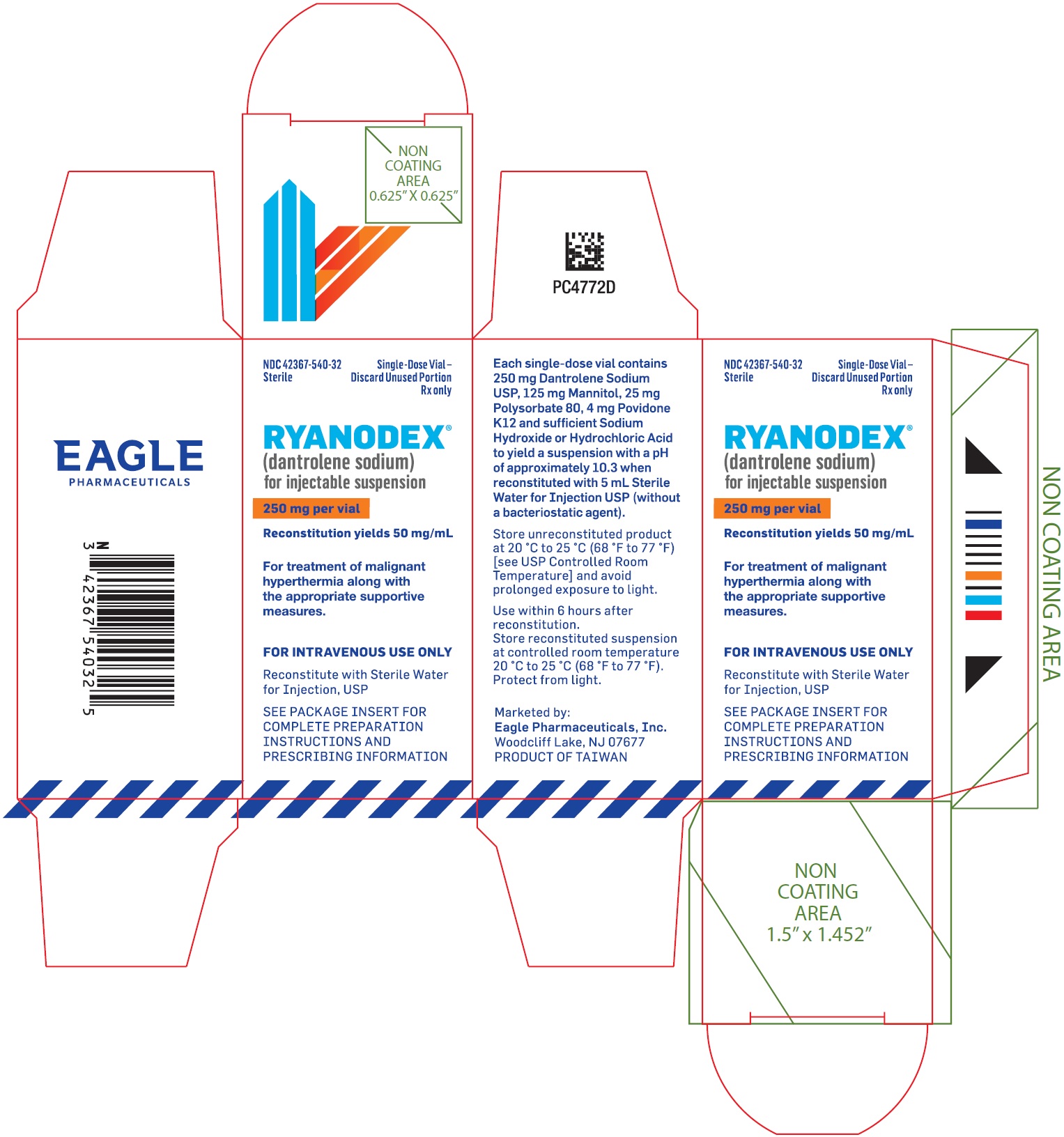
RYANODEX dantrolene sodium 250 mg/5mL Injection, Suspension — NDC 42367-540-32 (Billing 42367-0540-32)
This is a package of RYANODEX dantrolene sodium 250 mg/5mL Injection, Suspension from Eagle Pharmaceuticals, Inc., marketed since Jul 2014 and currently FDA-listed. It is this product's only package size.
Identity & classification
Regulatory identifiers FDA, NLM and CMS codes for this package
Drug-database identifiers Medi-Span GPI and First Databank GCN / HICL / AHFS classification
- GSN (GCN sequence number): 072636
- GCN: 36908
- GPI-14 (Medi-Span): 75200010101920
- HICL (First Databank): 001947
- AHFS class code: 12:20.08.00
- RxCUI (RxNorm): 1544753
Where does this data come from?
- FDA openFDA NDC Directory · synced Oct 1, 2026
- FDA label on DailyMed · label index refreshed Oct 1, 2026
- RxNorm (NLM RxNav) · catalog refreshed Oct 1, 2026
- Medi-Span GPI (licensed)
- First Databank (licensed) · refreshed Oct 1, 2026
RxNorm drug class
This medicine belongs to the Skeletal Muscle Relaxant class.
Where does this data come from?
- RxClass (NLM) · catalog refreshed Oct 1, 2026
Clinical
- Dantrolene is used for two main things. If you're taking the capsules (Dantrium or Dantrolene Sodium), it's most likely to help control muscle stiffness and spasms caused by condit...
- The most serious risk is liver damage. Watch for yellowing of your skin or the whites of your eyes, very dark urine, persistent nausea, or pain in the upper right side of your abdo...
- What are the most important side effects I should watch for?
- Dantrolene can cause liver damage — and this is the number one safety concern with long-term use. Regular blood tests (liver function tests) are the only way to catch a problem ear...
Patient education
Supplement & herbal interactions
Some supplements/herbs that may interact with Dantrolene Sodium — tap one for details:
Where does this data come from?
- MedlinePlus (NLM) · refreshed Oct 1, 2026
- FDA label on DailyMed · label index refreshed Oct 1, 2026
Ask a licensed pharmacist directly — free, answered by our team.
Pricing
A drug doesn't have one price. Each row is a different public payment system, and none is what you'd pay at the counter — that depends on your insurance. The ⓘ on each row explains what it measures.
| Price system | Per mL | Per package |
|---|---|---|
| Retail pharmacies payNADAC · weekly | Not in the retail survey — common for institutional, discontinued, or low-volume packs. | |
| Medicaid paysCMS SDUD · 12 mo | No recent Medicaid claims on file for this NDC — rare and low-volume NDCs are suppressed in the public data. | |
| Medicare drug plans payPart D · quarterly | No Part D plan price is available for this NDC in our data. | |
Where does this data come from?
- CMS NADAC weekly file
- CMS ASP pricing files · refreshed Sep 20, 2026
- CMS Medicaid State Drug Utilization Data · refreshed Oct 3, 2026
- CMS Part D plan pricing files · refreshed Sep 24, 2026
- VA National Acquisition Center price file
Packaging — all sizes for this product
| Package NDC | Description | Marketing start | Marketing end | Status |
|---|---|---|---|---|
| 42367-0540-32 You're viewing this Main listing | 1 VIAL in 1 CARTON / 20 mL in 1 VIAL | 2014-07-23 | — | Active |
Therapeutic equivalents
| Product | Labeler | Pack | NADAC/unit | TE | Status | Price vs. this |
|---|---|---|---|---|---|---|
| RYANODEX dantrolene sodium 250 mg/5mLthis 42367-0540-32 | Eagle | 1 vial | — | — | FDA listed | — |
Where does this data come from?
- FDA openFDA NDC Directory · synced Oct 1, 2026
- FDA Orange Book · refreshed Oct 3, 2026
- CMS NADAC weekly file
Availability & generic status
The FDA lists approved generic versions of this medicine, but that does not always mean a pharmacy can get one today. Patent rules, launch agreements, supply and pricing can affect when generics actually arrive.
Where does this data come from?
- FDA Orange Book · refreshed Oct 3, 2026
Inactive Ingredients / Excipients
Inactive ingredients, also called excipients, are components of the drug product other than the active ingredient. They may include fillers, dyes, coatings, preservatives, flavors, or other formulation ingredients.
💡 Tap an ingredient (hover on desktop) to see what it is and why it’s used.
-
UNII QTT17582CB
A strong acid used to adjust and maintain the proper pH level in liquid medicines, ensuring stability and preventing breakdown of active ingredients.
-
UNII 3OWL53L36A
A natural sugar alcohol derived from seaweed or synthesized in the lab. It's used as a filler to add bulk, a sweetener in sugar-free formulas, and a disintegrant to help tablets break apart in the stomach.
-
UNII N762921K75
A colorless, odorless gas that makes up most of the air we breathe. In medicines, it's used as a packaging gas or propellant to protect products from oxidation and maintain freshness.
-
UNII 6OZP39ZG8H
Polysorbate 80 is a synthetic emulsifier derived from sorbitol and oleic acid. It helps mix oil and water-based ingredients together in medications and improves how the product disperses in the body.
-
UNII 333AG72FWJ
Povidone K12 is a synthetic polymer derived from petroleum. It acts as a binder and disintegrant in tablets and capsules, helping hold ingredients together and allowing the tablet to break apart for absorption.
-
UNII 55X04QC32I
A strong alkaline chemical used to adjust and maintain the pH balance of liquid medicines. It helps keep the medicine stable and ensures it stays effective during storage.
-
UNII 059QF0KO0R
Water is a liquid solvent that dissolves and mixes ingredients together in liquid medicines, syrups, and injections. It helps distribute the active drug evenly throughout the product.
7 inactive ingredients listed in the exact product block matched to this NDC.
Where does this data come from?
ingredient classCode="IACT" elements from the exact product block matched by this NDC. Label-section narrative from DailyMed / the openFDA label index is shown separately when available.- FDA label on DailyMed · label index refreshed Oct 1, 2026
- FDA openFDA NDC Directory · synced Oct 1, 2026
Inactive ingredient FAQ
Are inactive ingredients the same for every manufacturer?
Why might an inactive ingredient be missing?
Can inactive ingredients matter?
Manufacturer & labeler
Where does this data come from?
- FDA openFDA NDC Directory · synced Oct 1, 2026
- Drugs@FDA
Full prescribing information FDA SPL
🎯 Indications and Usage ▾
1 INDICATIONS AND USAGE RYANODEX ® is indicated for the: Treatment of malignant hyperthermia in conjunction with appropriate supportive measures [see Dosage and Administration ( 2.1 )] Prevention of malignant hyperthermia in patients at high risk. RYANODEX is a skeletal muscle relaxant drug indicated for: Treatment of malignant hyperthermia in conjunction with appropriate supportive measures. ( 1 ) Prevention of malignant hyperthermia in patients at high risk.
( 1 )
⏱️ Dosage and Administration ▾
2 DOSAGE AND ADMINISTRATION Treatment of Malignant Hyperthermia (MH) ( 2.1 ) Administer by intravenous push at a minimum of 1 mg/kg. If signs continue, administer additional intravenous boluses up to maximum cumulative dosage of 10 mg/kg. Institute supportive measures (e.g., discontinue MH-triggering agents, manage metabolic acidosis, cooling if necessary, administer diuretics) Prevention of MH in Patients at High Risk ( 2.2 ) Administer 2.5 mg/kg intravenously over a period of at least 1 minute, starting approximately 75 minutes prior to surgery.
Avoid agents that trigger MH. Administer additional individualized doses during anesthesia and surgery if surgery is prolonged. Pediatric Patients : recommended weight-based dose is the same as for adults ( 2.3 ) Reconstitution : With 5 mL of sterile water for injection (without a bacteriostatic agent) prior to administration ( 2.4 )
2.1Dosage for Treatment of Malignant Hyperthermia In addition to RYANODEX treatment, institute the following supportive measures: Discontinue use of malignant hyperthermia (MH)-triggering anesthetic agents (i.e., volatile anesthetic gases and succinylcholine). Manage the metabolic acidosis Institute cooling when necessary Administer diuretics to prevent late kidney injury due to myoglobinuria (the amount of mannitol in RYANODEX is insufficient to maintain diuresis) [see Description ( 11 )] Administer RYANODEX by intravenous push at a minimum dose of 1 mg/kg.
If the physiologic and metabolic abnormalities of MH continue, administer additional intravenous boluses up to the maximum cumulative dosage of 10 mg/kg. If the physiologic and metabolic abnormalities reappear, repeat RYANODEX dosing by intravenous push starting with 1 mg/kg.
2.2Dosage for Prevention of Malignant Hyperthermia The recommended prophylactic dose of RYANODEX is 2.5 mg/kg administered intravenously over a period of at least 1 minute, starting approximately 75 minutes prior to surgery. Avoid agents that trigger MH. If surgery is prolonged, administer additional individualized RYANODEX doses during anesthesia and surgery [see Clinical Pharmacology ( 12.3 )].
2.3Dosage for Pediatric Patients The recommended weight-based dose of RYANODEX for pediatric patients in the treatment and prevention of MH is the same as for adults for these indications [see Dosage and Administration ( 2.1 , 2.2 )].
2.4Reconstitution and Administration Instructions The supplied lyophilized powder must be reconstituted prior to administration: (a) Reconstitute each vial of RYANODEX lyophilized powder by adding 5 mL of sterile water for injection (without a bacteriostatic agent). Do not reconstitute with any other solution (e.g., 5% dextrose injection, 0.9% sodium chloride injection). (b) Shake the vial to ensure an orange-colored uniform suspension.
Visually inspect the vial for particulate matter and discoloration prior to administration. (c) Must use the contents of the vial within 6 hours after reconstitution. Store reconstituted suspensions at controlled room temperature (68°F to 77°F or 20°C to 25°C).
Do not dilute or transfer the reconstituted RYANODEX suspension to another container to infuse the product. Administer the reconstituted RYANODEX suspension either: Into the intravenous catheter while an intravenous infusion of 0.9% sodium chloride injection, or 5% dextrose injection is freely running; or Into the indwelling catheter - after assuring its patency - without a freely running infusion. Flush the line to assure that there is no residual RYANODEX remaining in the catheter [see Warnings and Precautions ( 5.3 )].
💊 Dosage Forms and Strengths ▾
3 DOSAGE FORMS AND STRENGTHS For injectable suspension: RYANODEX is a sterile, lyophilized powder containing 250 mg of dantrolene sodium for reconstitution, in single-dose vials For injectable suspension: 250 mg of lyophilized powder in a single-dose vial for reconstitution ( 3 )
⛔ Contraindications ▾
4 CONTRAINDICATIONS None None ( 4 )
⚠️ Warnings and Cautions ▾
5 WARNINGS AND PRECAUTIONS Skeletal Muscle Weakness : Ambulate patients with assistance until they have normal strength and balance ( 5.1 ) Dyspnea, Respiratory Muscle Weakness, and Decreased Inspiratory Capacity : Monitor patients for the adequacy of ventilation ( 5.1 ) Dysphagia : Assess patients for difficulty swallowing and choking ( 5.1 ) Somnolence and Dizziness : Can occur following RYANODEX administration; may persist up to 48 hours post-dose. Ambulate patients with assistance until they have normal strength and balance ( 5.2 ) Tissue Necrosis with Extravasation : Due to high pH of reconstituted RYANODEX for injectable suspension, care must be taken to prevent extravasation into surrounding tissues ( 5.3 )
5.1Muscle Weakness RYANODEX is associated with skeletal muscle weakness. The administration of RYANODEX in human volunteers has been associated with loss of grip strength and weakness in the legs. Patients should not be permitted to ambulate without assistance until they have normal strength and balance.
RYANODEX has been associated with dyspnea, respiratory muscle weakness, and decreased inspiratory capacity. Monitor patients for the adequacy of ventilation. RYANODEX has been associated with dysphagia.
Assess patients for difficulty swallowing and choking.
5.2Somnolence and Dizziness Somnolence and dizziness can occur following administration of RYANODEX and may persist up to 48 hours post-dose. Patients should not be permitted to ambulate without assistance until they have normal strength and balance. Patients must not operate an automobile or engage in other hazardous activities for 48 hours post-dose. The concomitant use of sedative agents with RYANODEX may increase the risk of somnolence and dizziness.
5.3Potential for Tissue Necrosis with Extravasation Care must be taken to prevent extravasation of RYANODEX into the surrounding tissues due to the high pH of the reconstituted RYANODEX suspension and potential for tissue necrosis.
🤒 Adverse Reactions ▾
6 ADVERSE REACTIONS Administration to conscious subjects is associated with loss of grip strength and weakness in the legs, drowsiness and dizziness. Other common adverse reactions are: nausea, thrombophlebitis, tissue necrosis secondary to extravasation, urticaria and erythema, and injection site reactions (pain, erythema, swelling) ( 6.1 ) To report SUSPECTED ADVERSE REACTIONS, contact Eagle at 1-855-318-2170 or FDA at 1-800-FDA-1088 or www.fda.gov/medwatch.
6.1Clinical Trials Experience Because clinical trials are conducted under widely varying conditions, adverse reaction rates observed in the clinical trials of a drug cannot be directly compared to rates in the clinical trials of another drug and may not reflect the rates observed in practice. In a study designed to evaluate the safety and tolerability of RYANODEX, healthy volunteers were randomly assigned to receive treatment with RYANODEX or an active comparator at doses ranging from 1 mg/kg to 2.5 mg/kg. The RYANODEX dose was infused over the course of 1 minute for each of the doses evaluated.
The active comparator was an injectable formulation of dantrolene sodium that differed from RYANODEX in that it contained dantrolene sodium and mannitol at concentrations of 0.33 mg/mL and 50 mg/mL, respectively, when reconstituted according to the product's prescribing information. The active comparator was infused at a rate that administered 20 mg of dantrolene per minute for each of the doses evaluated. Table 1 displays the most common adverse events in this study.
These data are not an adequate basis for comparison of the types or frequencies of adverse event types between RYANODEX and the dantrolene sodium comparator. Adverse events increased in frequency with increasing doses in the trial, but did not differ in frequency between the two treatment groups. RYANODEX-treated subjects were more likely to report immediate adverse events of flushing, dystonia, and dysphagia than those receiving the active comparator.
In all dose groups, hand grip strength declined after dosing. In general, the decline in hand grip strength was more pronounced and occurred more rapidly in the RYANODEX-treated subjects in the 1.0, 1.75, 2.0 and 2.25 mg/kg treatment groups. In the 2.5 mg/kg treatment group, the decline in hand grip strength both in amount and duration was similar between the two treatment groups.
Table 1: Adverse Events in Healthy Volunteers Number of subjects (%) RYANODEX [N=30] n (%) Dantrolene Sodium Comparator [N=31] n (%) Flushing 8 (27) 1 (3) Somnolence 5 (17) 4 (13) Dysphonia 4 (13) 1 (3) Dysphagia 3 (10) 4 (13) Nausea 3 (10) 3 (10) Feeling abnormal 3 (10) 3 (10) Headache 1 (3) 4 (13) Vomiting 1 (3) 2 (6) Vision blurred 1 (3) 1 (3) Pain in extremity 1 (3) 1 (3) Muscular weakness/Asthenia 1 (3) 1 (3) Atrioventricular block 1 (3) 0 Tachycardia 1 (3) 0 Infusion site pain 1 (3) 0 Dizziness 1 (3) 0
6.2Postmarketing Experience The following adverse reactions have been identified during postapproval use of another formulation of dantrolene sodium for injection. Because these reactions are reported voluntarily from a population of uncertain size, it is not always possible to reliably estimate their frequency or establish a causal relationship to drug exposure. Pulmonary Edema There have been reports of pulmonary edema developing during the treatment of malignant hyperthermia crises with another dantrolene sodium dosage form.
The contributory effect of the diluent volume and mannitol in these cases is not known. Thrombophlebitis and Tissue Necrosis There have been reports of thrombophlebitis following administration of intravenous dantrolene. Tissue necrosis secondary to extravasation has been reported [see Warnings and Precautions ( 5.3 )].
Hypersensitivity/Anaphylactic Reactions There have been reports of urticaria and erythema possibly associated with the administration of dantrolene sodium for injection. Anaphylaxis has been reported. Injection Site Reactions Injection site react… [Excerpted — this section continues on DailyMed.]
🔄 Drug Interactions ▾
7 DRUG INTERACTIONS Calcium Channel Blockers : Concomitant use can cause cardiovascular collapse in association with marked hyperkalemia ( 7.1 ) Muscle Relaxants : Concomitant use with muscle relaxants may potentiate their effects ( 7.2 ) Sedatives : Concomitant use with sedative agents may potentiate their effects ( 7.3 )
7.1Calcium Channel Blockers Cardiovascular collapse in association with marked hyperkalemia has been reported in patients receiving dantrolene in combination with calcium channel blockers. The concomitant use of RYANODEX and calcium channel blockers is not recommended during the treatment of malignant hyperthermia.
7.2Muscle Relaxants The concomitant administration of RYANODEX with muscle relaxants may potentiate the neuromuscular block.
7.3Antipsychotics and Antianxiety Agents The concomitant administration of RYANODEX with antipsychotic and antianxiety agents may potentiate their effects on the central nervous system [see Warnings and Precautions ( 5.2 )] .
👥 Use in Specific Populations ▾
8 USE IN SPECIFIC POPULATIONS Pregnancy : Based on animal data, may cause fetal harm); however, RYANODEX administration for malignant hyperthermia may be lifesaving for the pregnant woman and fetus. Treatment should not be withheld due to pregnancy ( 8.1 ) Lactation : Breastfeeding is not recommended during treatment with RYANODEX and for 3 days after the final dose. ( 8.2 )
8.1Pregnancy Risk Summary Available data from published case reports with RYANODEX use in pregnant women are insufficient to evaluate for a drug-associated risk of major birth defects, miscarriage, or adverse maternal or fetal outcomes. Dantrolene readily crosses the placenta; however, no serious adverse events have been reported in the neonate following maternal administration of dantrolene prior to delivery. There are risks to the pregnant woman and fetus associated with untreated malignant hyperthermia ( see Clinical Considerations ).
In animal reproduction studies, dantrolene sodium administered to rats and rabbits produced embryolethality (rabbits) and decreased pup survival (rats) at doses seven times the human oral dose ( see Data ) . The estimated background risk of major birth defects and miscarriage for the indicated population is unknown. All pregnancies have a background risk of birth defect, loss, or other adverse outcomes.
In the U.S. general population, the estimated background risk of major birth defects and miscarriage in clinically recognized pregnancies is 2 to 4% and 15 to 20%, respectively. Clinical Considerations Disease-associated maternal and embryo/fetal risk Malignant hyperthermia is a medical emergency which can be fatal for the pregnant woman and fetus if left untreated. Life-sustaining therapy should not be withheld due to pregnancy.
Labor or Delivery In one uncontrolled study, 100 mg per day of prophylactic oral dantrolene sodium was administered to term pregnant patients awaiting labor and delivery. Dantrolene readily crossed the placenta, with maternal and fetal whole blood levels approximately equal at delivery; neonatal levels then fell approximately 50% per day for 2 days before declining sharply. No neonatal respiratory and neuromuscular side effects were observed in this study.
Data Animal Data Animal reproduction studies have been conducted with dantrolene sodium. In these studies, dantrolene sodium administered to rats and rabbits produced embryolethality (rabbits) and decreased pup survival (rats) at doses seven times the human oral dose.
8.2Lactation Risk Summary Dantrolene is reported to be present in human milk following intravenous administration over 3 days. There are no data on the effects on the breastfed infant or the effects on milk production. Because of the potential for serious adverse reactions in the breastfed infant, including respiratory depression and muscle weakness, advise patients that breastfeeding is not recommended during treatment with RYANODEX, and for 3 days after the last dose.
Clinical Considerations A lactating woman should interrupt breastfeeding and pump and discard breast milk during treatment and for 3 days after RYANODEX administration.
8.4Pediatric Use The safety and efficacy of RYANODEX in the treatment and prevention of malignant hyperthermia in pediatric patients is based on clinical experience with other intravenous dantrolene sodium products, which suggests adult weight-based doses are appropriate for pediatric patients.
8.5Geriatric Use Clinical studies of RYANODEX did not include sufficient numbers of subjects aged 65 and over to determine whether they respond differently from younger subjects. Other reported clinical experience has not identified differences in responses between the elderly and younger patients. In general, dose selection for an elderly patient should be cautious reflecting the greater frequency of decreased hepatic, renal, or cardiac function, and of concomitant disease or other drug therapy.
🤰 Pregnancy ▾
8.1Pregnancy Risk Summary Available data from published case reports with RYANODEX use in pregnant women are insufficient to evaluate for a drug-associated risk of major birth defects, miscarriage, or adverse maternal or fetal outcomes. Dantrolene readily crosses the placenta; however, no serious adverse events have been reported in the neonate following maternal administration of dantrolene prior to delivery. There are risks to the pregnant woman and fetus associated with untreated malignant hyperthermia ( see Clinical Considerations ).
In animal reproduction studies, dantrolene sodium administered to rats and rabbits produced embryolethality (rabbits) and decreased pup survival (rats) at doses seven times the human oral dose ( see Data ) . The estimated background risk of major birth defects and miscarriage for the indicated population is unknown. All pregnancies have a background risk of birth defect, loss, or other adverse outcomes.
In the U.S. general population, the estimated background risk of major birth defects and miscarriage in clinically recognized pregnancies is 2 to 4% and 15 to 20%, respectively. Clinical Considerations Disease-associated maternal and embryo/fetal risk Malignant hyperthermia is a medical emergency which can be fatal for the pregnant woman and fetus if left untreated. Life-sustaining therapy should not be withheld due to pregnancy.
Labor or Delivery In one uncontrolled study, 100 mg per day of prophylactic oral dantrolene sodium was administered to term pregnant patients awaiting labor and delivery. Dantrolene readily crossed the placenta, with maternal and fetal whole blood levels approximately equal at delivery; neonatal levels then fell approximately 50% per day for 2 days before declining sharply. No neonatal respiratory and neuromuscular side effects were observed in this study.
Data Animal Data Animal reproduction studies have been conducted with dantrolene sodium. In these studies, dantrolene sodium administered to rats and rabbits produced embryolethality (rabbits) and decreased pup survival (rats) at doses seven times the human oral dose.
🧒 Pediatric Use ▾
8.4Pediatric Use The safety and efficacy of RYANODEX in the treatment and prevention of malignant hyperthermia in pediatric patients is based on clinical experience with other intravenous dantrolene sodium products, which suggests adult weight-based doses are appropriate for pediatric patients.
🧓 Geriatric Use ▾
8.5Geriatric Use Clinical studies of RYANODEX did not include sufficient numbers of subjects aged 65 and over to determine whether they respond differently from younger subjects. Other reported clinical experience has not identified differences in responses between the elderly and younger patients. In general, dose selection for an elderly patient should be cautious reflecting the greater frequency of decreased hepatic, renal, or cardiac function, and of concomitant disease or other drug therapy.
🆘 Overdosage ▾
10 OVERDOSAGE
10.1Overdosage Symptoms Overdosage symptoms include, but are not limited to, muscular weakness and alterations in the state of consciousness (e.g., lethargy, coma), vomiting, diarrhea, and crystalluria.
10.2Management of Overdosage Employ general supportive measures for acute overdosage of RYANODEX. Administer intravenous fluids in fairly large quantities to avert the possibility of crystalluria. Maintain an adequate airway and keep artificial resuscitation equipment available. Institute electrocardiographic monitoring and carefully observe the patient. The value of dialysis in RYANODEX overdosage is not known.
🧬 Clinical Pharmacology ▾
12 CLINICAL PHARMACOLOGY
12.1Mechanism of Action In isolated nerve-muscle preparation, dantrolene has been shown to produce relaxation by affecting the contractile response of the muscle at a site beyond the myoneural junction. In skeletal muscle, dantrolene dissociates the excitation-contraction coupling, probably by interfering with the release of Ca ++ from the sarcoplasmic reticulum. In the anesthetic-induced malignant hyperthermia syndrome, evidence points to an intrinsic abnormality of skeletal muscle tissue.
In affected humans, it has been postulated that “triggering agents” (e.g., general anesthetics and depolarizing neuromuscular blocking agents) produce a change within the cell which results in an elevated myoplasmic calcium. This elevated myoplasmic calcium activates acute cellular catabolic processes that cascade to the malignant hyperthermia crisis. The addition of dantrolene to the “triggered” malignant hyperthermic muscle cell may reestablish a normal level of ionized calcium in the myoplasm.
Inhibition of calcium release from the sarcoplasmic reticulum by dantrolene reestablishes the myoplasmic calcium equilibrium, increasing the percentage of bound calcium. In this way, physiologic, metabolic, and biochemical changes associated with the malignant hyperthermia crisis may be reversed or attenuated.
12.2Pharmacodynamics The administration of intravenous dantrolene to human volunteers was associated with loss of grip strength and weakness in the legs, as well as subjective CNS complaints [see Warnings and Precautions ( 5.1 )] .
12.3Pharmacokinetics The pharmacokinetics of RYANODEX was investigated in healthy volunteers following single-dose administration as an intravenous push over 60 seconds (dose range of 1 to 2.5 mg/kg), via a peripheral catheter. There was a dose-proportional increase in plasma exposure of dantrolene and its metabolite, 5-hydroxydantrolene. Table 2 presents pharmacokinetic parameters of dantrolene after administration of a single RYANODEX dose of 2.5 mg/kg.
Time to peak dantrolene concentration was observed at the first time point collected (i.e., median T max is 1 minute post-dose). The mean half-life (t 1/2 ) for dantrolene was independent of the RYANODEX dose administered and ranged from 8.5 hours to 11.4 hours over the 1 to 2.5 mg/kg dose range. Table 2: Pharmacokinetic Parameters for Dantrolene in Healthy Volunteers (Mean ± Standard Deviation) 1 n=15; single-dose RYANODEX dose 1 C max (μg/mL) AUC 0-inf (μg*h/mL) Half-life (hrs) Clearance (L/hr) Volume of distribution (L) 2.5 mg/kg 9.0 ± 4.6 77.7 ± 23.2 10.8 ± 2.2 2.5 ± 1.0 36.4 ±
11.7When prophylactic intravenous dantrolene infusion was administered, whole blood dantrolene concentrations remained at a near steady state level for 3 or more hours after the infusion was completed. Distribution Based on assays of whole blood and plasma, slightly greater amounts of dantrolene are associated with red blood cells than with the plasma fraction of blood. Significant amounts of dantrolene are bound to plasma proteins, mostly albumin, and this binding is readily reversible.
Binding to plasma protein is not significantly altered by diazepam, diphenylhydantoin, or phenylbutazone. Binding to plasma proteins is reduced by warfarin and clofibrate and increased by tolbutamide. Information concerning the passage of dantrolene across the blood-brain barrier is not available.
Metabolism Dantrolene is found in measurable amounts in blood and urine. Its major metabolites in body fluids are 5-hydroxy dantrolene and an acetylamino metabolite of dantrolene. Another metabolite with an unknown structure appears related to the latter.
Dantrolene may also undergo hydrolysis and subsequent oxidation forming nitrophenylfuroic acid. Following RYANODEX 2.5 mg/kg dose administration in healthy volunteers, mean peak plasma concentration for the primary metabolite, 5-hydroxydantrolene, was 640 ng/mL, and was achieved by approximately 24 hours post-dose, with an average… [Excerpted — this section continues on DailyMed.]
🧬 Mechanism of Action ▾
12.1Mechanism of Action In isolated nerve-muscle preparation, dantrolene has been shown to produce relaxation by affecting the contractile response of the muscle at a site beyond the myoneural junction. In skeletal muscle, dantrolene dissociates the excitation-contraction coupling, probably by interfering with the release of Ca ++ from the sarcoplasmic reticulum. In the anesthetic-induced malignant hyperthermia syndrome, evidence points to an intrinsic abnormality of skeletal muscle tissue.
In affected humans, it has been postulated that “triggering agents” (e.g., general anesthetics and depolarizing neuromuscular blocking agents) produce a change within the cell which results in an elevated myoplasmic calcium. This elevated myoplasmic calcium activates acute cellular catabolic processes that cascade to the malignant hyperthermia crisis. The addition of dantrolene to the “triggered” malignant hyperthermic muscle cell may reestablish a normal level of ionized calcium in the myoplasm.
Inhibition of calcium release from the sarcoplasmic reticulum by dantrolene reestablishes the myoplasmic calcium equilibrium, increasing the percentage of bound calcium. In this way, physiologic, metabolic, and biochemical changes associated with the malignant hyperthermia crisis may be reversed or attenuated.
📦 How Supplied / Storage and Handling ▾
16 HOW SUPPLIED/STORAGE AND HANDLING RYANODEX ® (NDC 42367-540-32) is available in 20 mL vials containing a sterile lyophilized mixture of 250 mg dantrolene sodium for reconstitution with 5 mL sterile water for injection USP (without a bacteriostatic agent) to yield an orange colored injectable suspension. Store unreconstituted product at 20 °C to 25 °C (68 ºF to 77 ºF) [see USP Controlled Room Temperature], with excursions permitted to 15 ºC to 30 ºC (59 ºF to 86 ºF) and avoid prolonged exposure to light.
📋 Description ▾
11 DESCRIPTION RYANODEX ® (dantrolene sodium) for injectable suspension is a sterile lyophilized powder. RYANODEX is supplied in 20 mL vials containing 250 mg dantrolene sodium and the following inactive ingredients: 125 mg mannitol, 25 mg polysorbate 80, 4 mg povidone K12 and sufficient sodium hydroxide or hydrochloric acid for pH adjustment. When reconstituted with 5 mL sterile water for injection USP (without a bacteriostatic agent), this yields a suspension with a pH of approximately 10.3.
RYANODEX is a skeletal muscle relaxant. Chemically, RYANODEX is a hydrate of 1-[[[5-(4-nitrophenyl)-2-furanyl]methylene]amino]-2,4-imidazolidinedione sodium salt. The structural formula for the hydrated salt is: The hydrated salt contains approximately 15% water (3-1/2 moles) and has a molecular weight of 399.
The anhydrous salt (dantrolene) has a molecular weight of 336. Structural Formula
💬 Information for Patients ▾
17 PATIENT COUNSELING INFORMATION Inform patients, their families, or their caregivers of the following: Muscle Weakness Muscle weakness (i.e., decrease in grip strength and weakness of leg muscles, especially walking down stairs) is likely to occur with the use of RYANODEX. Patients should be provided assistance with standing and walking until their strength has returned to normal [see Warnings and Precautions ( 5.1 )]. Difficulty Swallowing Caution is indicated at meals on the day of administration because difficulty swallowing and choking have occurred with the use of dantrolene sodium products in general; dysphagia has been reported with the use of RYANODEX [see Warnings and Precautions ( 5.1 )].
Dizziness and Somnolence The use of RYANODEX has been associated with dizziness and somnolence. [see Warnings and Precautions ( 5.2 )]. Driving or Operating Machinery Symptoms such as “lightheadedness” may occur. Since some of these symptoms may persist for up to 48 hours, patients must not operate an automobile or engage in other hazardous activity during this time [see Warnings and Precautions ( 5.2 )] .
Lactation Advise females not to breastfeed during treatment with RYANODEX and for 3 days after the final dose [see Use in Specific Populations ( 8.2 )]. Marketed by: Eagle Pharmaceuticals, Inc. Woodcliff Lake, NJ 07677
🧬 Pharmacokinetics ▾
12.3Pharmacokinetics The pharmacokinetics of RYANODEX was investigated in healthy volunteers following single-dose administration as an intravenous push over 60 seconds (dose range of 1 to 2.5 mg/kg), via a peripheral catheter. There was a dose-proportional increase in plasma exposure of dantrolene and its metabolite, 5-hydroxydantrolene. Table 2 presents pharmacokinetic parameters of dantrolene after administration of a single RYANODEX dose of 2.5 mg/kg.
Time to peak dantrolene concentration was observed at the first time point collected (i.e., median T max is 1 minute post-dose). The mean half-life (t 1/2 ) for dantrolene was independent of the RYANODEX dose administered and ranged from 8.5 hours to 11.4 hours over the 1 to 2.5 mg/kg dose range. Table 2: Pharmacokinetic Parameters for Dantrolene in Healthy Volunteers (Mean ± Standard Deviation) 1 n=15; single-dose RYANODEX dose 1 C max (μg/mL) AUC 0-inf (μg*h/mL) Half-life (hrs) Clearance (L/hr) Volume of distribution (L) 2.5 mg/kg 9.0 ± 4.6 77.7 ± 23.2 10.8 ± 2.2 2.5 ± 1.0 36.4 ±
11.7When prophylactic intravenous dantrolene infusion was administered, whole blood dantrolene concentrations remained at a near steady state level for 3 or more hours after the infusion was completed. Distribution Based on assays of whole blood and plasma, slightly greater amounts of dantrolene are associated with red blood cells than with the plasma fraction of blood. Significant amounts of dantrolene are bound to plasma proteins, mostly albumin, and this binding is readily reversible.
Binding to plasma protein is not significantly altered by diazepam, diphenylhydantoin, or phenylbutazone. Binding to plasma proteins is reduced by warfarin and clofibrate and increased by tolbutamide. Information concerning the passage of dantrolene across the blood-brain barrier is not available.
Metabolism Dantrolene is found in measurable amounts in blood and urine. Its major metabolites in body fluids are 5-hydroxy dantrolene and an acetylamino metabolite of dantrolene. Another metabolite with an unknown structure appears related to the latter.
Dantrolene may also undergo hydrolysis and subsequent oxidation forming nitrophenylfuroic acid. Following RYANODEX 2.5 mg/kg dose administration in healthy volunteers, mean peak plasma concentration for the primary metabolite, 5-hydroxydantrolene, was 640 ng/mL, and was achieved by approximately 24 hours post-dose, with an average metabolite-to-parent exposure ratio of 0.27 (AUC 0-inf = 21.2 μg*h/mL). Median t 1/2 for 5-hydroxydantrolene was 10 hours, the clearance was estimated to be
8.9L/hr and the terminal phase volume of distribution was 144 L. Dantrolene is metabolized by the liver, and it is possible that its metabolism may be enhanced by drugs known to induce hepatic microsomal enzymes. However, neither phenobarbital nor diazepam appears to affect dantrolene metabolism.
🧬 Pharmacodynamics ▾
12.2Pharmacodynamics The administration of intravenous dantrolene to human volunteers was associated with loss of grip strength and weakness in the legs, as well as subjective CNS complaints [see Warnings and Precautions ( 5.1 )] .
🧪 Nonclinical Toxicology ▾
13 NONCLINICAL TOXICOLOGY
13.1Carcinogenesis, Mutagenesis, Impairment of Fertility Carcinogenesis Sprague-Dawley female rats fed dantrolene sodium for 18 months at dosage levels of 15, 30, and 60 mg/kg/day showed an increased incidence of benign and malignant mammary tumors compared with concurrent controls. At the highest dose level (approximately the same as the maximum recommended daily human dose on a mg/m 2 basis), there was an increase in the incidence of benign hepatic lymphatic neoplasms. In a 30-month study in Sprague-Dawley rats fed dantrolene sodium, the highest dose level (approximately the same as the maximum recommended daily human dose on a mg/m 2 basis) produced a decrease in the time of onset of mammary neoplasms.
Female rats at the highest dose level showed an increased incidence of hepatic lymphangiomas and hepatic angiosarcomas. The only drug-related effect seen in a 30-month study in Fischer-344 rats was a dose-related reduction in the time of onset of mammary and testicular tumors. A 24-month study in HaM/ICR mice revealed no evidence of carcinogenic activity.
The significance of carcinogenicity data relative to use of RYANODEX in humans is unknown. Mutagenesis Dantrolene sodium has produced positive results in the Ames S. Typhimurium bacterial mutagenesis assay in the presence and absence of a liver activating system.
Impairment of Fertility Dantrolene sodium administered to male and female rats at dose levels up to 45 mg/kg/day (approximately 1.4 times the maximum recommended daily human dose on a mg/m 2 basis) showed no adverse effects on fertility or general reproductive performance.
📄 Carcinogenesis, Mutagenesis, Impairment of Fertility ▾
13.1Carcinogenesis, Mutagenesis, Impairment of Fertility Carcinogenesis Sprague-Dawley female rats fed dantrolene sodium for 18 months at dosage levels of 15, 30, and 60 mg/kg/day showed an increased incidence of benign and malignant mammary tumors compared with concurrent controls. At the highest dose level (approximately the same as the maximum recommended daily human dose on a mg/m 2 basis), there was an increase in the incidence of benign hepatic lymphatic neoplasms. In a 30-month study in Sprague-Dawley rats fed dantrolene sodium, the highest dose level (approximately the same as the maximum recommended daily human dose on a mg/m 2 basis) produced a decrease in the time of onset of mammary neoplasms.
Female rats at the highest dose level showed an increased incidence of hepatic lymphangiomas and hepatic angiosarcomas. The only drug-related effect seen in a 30-month study in Fischer-344 rats was a dose-related reduction in the time of onset of mammary and testicular tumors. A 24-month study in HaM/ICR mice revealed no evidence of carcinogenic activity.
The significance of carcinogenicity data relative to use of RYANODEX in humans is unknown. Mutagenesis Dantrolene sodium has produced positive results in the Ames S. Typhimurium bacterial mutagenesis assay in the presence and absence of a liver activating system.
Impairment of Fertility Dantrolene sodium administered to male and female rats at dose levels up to 45 mg/kg/day (approximately 1.4 times the maximum recommended daily human dose on a mg/m 2 basis) showed no adverse effects on fertility or general reproductive performance.
📄 Package Label / Principal Display Panel ▾
PRINCIPAL DISPLAY PANEL - NDC: 42367-540-32 - Carton Label NDC 42367-540-32 Sterile Single Use Only - Discard Unused Portion Rx only Ryanodex ® (dantrolene sodium) for injectable suspension 250 mg per vial Reconstitution yields 50 mg/mL For treatment of malignant hyperthermia, along with the appropriate supportive measures. For intravenous use only Reconstitute with Sterile Water for Injection, USP SEE PACKAGE INSERT FOR COMPLETE PREPARATION INSTRUCTIONS AND PRESCRIBING INFORMATION. Carton Label
PRINCIPAL DISPLAY PANEL - NDC: 42367-540-32 - Vial Label NDC 42367-540-32 Sterile Single Use Only - Discard Unused Portion Rx only Ryanodex ® (dantrolene sodium) for injectable suspension 250 mg per vial Reconstitution yields 50 mg/mL For treatment of malignant hyperthermia, along with the appropriate supportive measures. For Intravenous Use Only Reconstitute with Sterile Water for Injection, USP Vial Label
Medicare Part D spend CMS · PART D · 2026 (Q1)
Reported adverse events (FAERS)
Top reported reactions
Age at onset
Reporter sex
Serious outcomes
Where does this data come from?
About this NDC listing & data coverage
What data is (and isn’t) available for this NDC — tap to expand
| NDC identity (package / product / labeler codes) | ✓ Available |
| Labeler | ✓ Available |
| Product & package description | ✓ Available |
| Marketing category & status | ✓ Available |
| Active ingredient / dosage form / route | ✓ Available |
| FDA label (SPL via DailyMed) | ✓ Available |
| Package photos | ✓ Available |
| Inactive ingredients (structured) | ✓ Available |
| NADAC pharmacy acquisition price (CMS) | — Not published for this NDC CMS publishes NADAC only for NDCs reported in its retail-pharmacy survey. |
| Orange Book / therapeutic-equivalence data | — Not published for this NDC Applies only to products approved under an NDA/ANDA; many listings are out of scope. |
| HCPCS J-code billing crosswalk | — Not published for this NDC Most self-administered / retail products have no J-code — that is normal. |
| Medicaid utilization (CMS SDUD) | — Not published for this NDC CMS reports utilization only for NDCs with Medicaid claims above its privacy threshold. |