
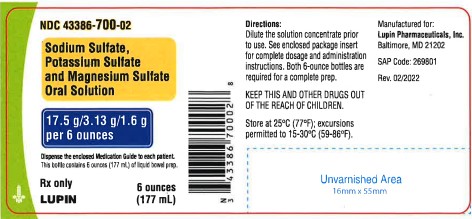
SODIUM SULFATE, POTASSIUM SULFATE, MAGNESIUM SULFATE 17.5 g/177mL; 3.13 g/177mL; 1.6 g/177mL Solution
🆔 Identity & classification
Where does this data come from?
🏭 Manufacturer & labeler
Where does this data come from?
🩺 Clinical
Magnesium sulfate, potassium sulfate, and sodium sulfate is used to empty the colon (large intestine, bowel) before a colonoscopy (examination of the inside of the colon to check for colon cancer and other abnormalities) in adults and children 12 years of age and older so that the doctor will have a clear view of the walls of the colon. Magnesium sulfate, potassium sulfate, and sodium sulfate is in a class of medications called osmotic laxatives. It works by causing watery diarrhea so that the stool can be emptied from the colon.
Read the full MedlinePlus article ↗- This solution works by drawing water into your intestines so your bowel is thoroughly flushed out before your colonoscopy — your doctor needs a clear, clean view of the colon wall....
- What exactly does this prep do, and why do I have to drink so much water with it?
- Yes, but timing matters. Take all your regular oral medications at least one hour before you start each dose of the prep, since the solution can reduce how well your body absorbs o...
- Can I take my regular medications while I'm doing the prep?
Patient education
Supplement & herbal interactions
Where does this data come from?
Ask a licensed pharmacist directly — free, answered by our team.
💊 What it looks like
Where does this data come from?
🧪 Inactive Ingredients / Excipients
Inactive ingredients, also called excipients, are components of the drug product other than the active ingredient. They may include fillers, dyes, coatings, preservatives, flavors, or other formulation ingredients.
💡 Tap an ingredient (hover on desktop) to see what it is and why it’s used.
-
UNII XF417D3PSL
Anhydrous citric acid is a sour, crystalline powder derived from citric acid with water removed. In medicines, it acts as a buffer to control pH, adds tartness to improve taste, and helps tablets disintegrate.
-
UNII 817L1N4CKP
Malic acid is a naturally occurring organic acid found in fruits. It works as a buffer and flavor agent to maintain the medicine's pH balance and add tartness to the product.
-
UNII OJ245FE5EU
Sodium benzoate is a salt derived from benzoic acid, a preservative. It's added to medicines to prevent growth of bacteria, fungi, and other microorganisms that could spoil the product.
-
UNII 96K6UQ3ZD4
Sucralose is a synthetic sweetener made from sugar. It's added to medicines to improve taste without adding calories, helping make bitter or unpleasant-tasting drugs easier to take.
-
UNII 059QF0KO0R
Water is a liquid solvent that dissolves and mixes ingredients together in liquid medicines, syrups, and injections. It helps distribute the active drug evenly throughout the product.
5 inactive ingredients listed in the exact product block matched to this NDC.
Where does this data come from?
ingredient classCode="IACT" elements from the exact product block matched by this NDC. Label-section narrative from DailyMed / the openFDA label index is shown separately when available.Inactive ingredient FAQ
Are inactive ingredients the same for every manufacturer?
Why might an inactive ingredient be missing?
Can inactive ingredients matter?
💲 Pricing
A drug doesn't have one price. Each row is a different public payment system, and none is what you'd pay at the counter — that depends on your insurance. The ⓘ on each row explains what it measures.
| Price system | Per mL | Per package |
|---|---|---|
| Retail pharmacies payNADAC · weekly | $0.093 | $32.89 / 354 ml |
| Medicaid paysCMS SDUD · 12 mo | $0.1843 | $65.24 / 354 ml |
| Medicare drug plans payPart D · quarterly | No Part D plan price is available for this NDC in our data. | |
Where does this data come from?
🔁 Therapeutic equivalents
| Product | Labeler | Pack | NADAC/unit | TE | Status | Price vs. this |
|---|---|---|---|---|---|---|
| Sodium sulfate, potassium sulfate and magnesium sulfate 17.5 g/177mL; 3.13 g/177mL; 1.6 g/177mL 31722-0098-31 | Camber | 2 bottles | $0.093 | AA | Availability likely | — |
| Sodium Sulfate, Potassium Sulfate and Magnesium Sulfate Oral 17.5 g/177mL; 3.13 g/177mL; 1.6 g/177mL 64380-0116-01 | Strides | 2 bottles | $0.093 | AA | Availability likely | — |
| Sodium Sulfate, Potassium Sulfate and Magnesium Sulfate 17.5 g/177mL; 3.13 g/177mL; 1.6 g/177mL 67877-0725-92 | Ascend | 2 bottles | $0.093 | AA | Availability likely | — |
| Sodium sulfate, potassium sulfate and magnesium sulfate 17.5 g/177mL; 3.13 g/177mL; 1.6 g/177mL 72603-0278-02 | NorthStar | 2 bottles | $0.093 | AA | Availability likely | — |
| Sodium Sulfate, Potassium Sulfate, Magnesium Sulfate 17.5 g/177mL; 3.13 g/177mL; 1.6 g/177mLthis 43386-0700-83 | Lupin | 2 bottles | $0.093 | AA | Availability likely | — |
| Sodium Sulfate, Potassium Sulfate, Magnesium Sulfate 17.5 g/177mL; 3.13 g/177mL; 1.6 g/177mL 40032-0700-83 | Novel | 2 bottles | — | AA | FDA listed | — |
Where does this data come from?
⏳ Availability & generic status
This product is an FDA-approved generic. Other versions of the same drug are listed under Therapeutic equivalents, least expensive first.
Where does this data come from?
🗺️ Medicaid utilization & spend
💊 Medicaid utilization by pack size
🔬 Reported adverse events (FAERS)
Top reported reactions
Age at onset
Reporter sex
Serious outcomes
Where does this data come from?
📦 Packaging — all sizes for this product
| Package NDC | Description | Per unit | Per pack | Marketing start | Status |
|---|---|---|---|---|---|
| 43386-0700-83 You're viewing this | 2 BOTTLE in 1 CARTON (43386-700-83) / 177 mL in 1 BOTTLE | $0.0929 / mL | $32.89 | 2022-12-30 | Active |
| 43386-0700-02 | 1 BOTTLE in 1 CONTAINER (43386-700-02) / 177 mL in 1 BOTTLE | — | — | 2022-12-30 | Active |
In Medicaid, this is the most-dispensed pack of this product — about 100% of fills over the last four reported quarters. See all packs ↓
Pack size FAQ
What quantity is in NDC 43386-0700-83?
What NDC number is used to bill for this package of SODIUM SULFATE, POTASSIUM SULFATE, MAGNESIUM SULFATE 17.5 g/177mL; 3.13 g/177mL; 1.6 g/177mL Solution?
Prices are the latest CMS NADAC pharmacy acquisition cost per NDC; per-pack figures are per-unit × pack quantity, shown only when the pack is denominated in the same measure NADAC prices.
📄 Full prescribing information FDA SPL
🎯 Indications and Usage ▾
1 INDICATIONS & USAGE Sodium Sulfate, Potassium Sulfate and Magnesium Sulfate Oral Solution is indicated for cleansing of the colon as a preparation for colonoscopy in adults. Sodium Sulfate, Potassium Sulfate and Magnesium Sulfate Oral Solution is an osmotic laxative indicated for cleansing of the colon in preparation for colonoscopy in adults ( 1 )
⏱️ Dosage and Administration ▾
2 DOSAGE & ADMINISTRATION Sodium Sulfate, Potassium Sulfate and Magnesium Sulfate Oral Solution should be taken as a split-dose oral regimen. The dose for colon cleansing requires administration of two bottles of Sodium Sulfate, Potassium Sulfate and Magnesium Sulfate Oral Solution. Each bottle is administered as 16 ounces of diluted Sodium Sulfate, Potassium Sulfate and Magnesium Sulfate Oral Solution with an additional 1 quart of water taken orally.
The total volume of liquid required for colon cleansing (using two bottles) is 3 quarts (approximately
2.8L) taken orally prior to the colonoscopy in the following way: Split-Dose (Two-Day) Regimen Day prior to colonoscopy: A light breakfast may be consumed, or have only clear liquids on the day before colonoscopy. Avoid red and purple liquids, milk, and alcoholic beverages. Early in the evening prior to colonoscopy: pour the contents of one bottle of Sodium Sulfate, Potassium Sulfate and Magnesium Sulfate Oral Solution into the mixing container provided.
Fill the container with water to the 16 ounce fill line, and drink the entire amount. Drink two additional containers filled to the 16 ounce line with water over the next hour. Day of colonoscopy: Have only clear liquids until after the colonoscopy.
Avoid red and purple liquids, milk, and alcoholic beverages. The morning of colonoscopy (10 to 12 hours after the evening dose): pour the contents of the second bottle of Sodium Sulfate, Potassium Sulfate and Magnesium Sulfate Oral Solution into the mixing container provided. Fill the container with water to the 16 ounce fill line, and drink the entire amount.
Drink two additional containers filled to the 16 ounce line with water over the next hour. Complete all Sodium Sulfate, Potassium Sulfate and Magnesium Sulfate Oral Solution and required water at least two hours prior to colonoscopy or as directed by physician. Dilute the solution prior to use.
See FULL PRESCRIBING INFORMATION for complete dosing and administration instructions ( 2 ) Split Dose (2-Day) Regimen Evening before colonoscopy: dilute one bottle with water to a total volume of 16 ounces (up to the fill line) and drink the entire amount. Drink 32 ounces of water over the next hour. Next morning: repeat both steps using the second bottle.
Complete preparation at least 2 hours before colonoscopy or as directed by physician.
💊 Dosage Forms and Strengths ▾
3 DOSAGE FORMS & STRENGTHS Two 6 ounce bottles of oral solution. Each 6 ounce bottle contains: sodium sulfate 17.5 grams, potassium sulfate 3.13 grams, magnesium sulfate 1.6 grams. Two 6 ounce bottles of oral solution, each containing sodium sulfate 17.5 grams, potassium sulfate 3.13 grams, and magnesium sulfate 1.6 grams. ( 3 )
⛔ Contraindications ▾
4 CONTRAINDICATIONS Gastrointestinal obstruction Bowel perforation Gastric retention Ileus Toxic colitis or toxic megacolon Known allergies to components of the kit [see Description (11) ] Gastrointestinal obstruction ( 4 , 5.6 ) Bowel perforation ( 4 , 5.6 ) Gastric retention ( 4 ) Ileus ( 4 ) Toxic colitis or toxic megacolon ( 4 ) Known allergies to components of the kit ( 4 , 11 )
⚠️ Warnings and Cautions ▾
5 WARNINGS AND PRECAUTIONS Risk of fluid and electrolyte abnormalities, arrhythmias, seizures and renal impairment– assess concurrent medications and consider testing in some patients ( 5.1 , 5.2 , 5.3 ) Patients with renal insufficiency– use caution, ensure adequate hydration and consider testing ( 5.4 ) Suspected GI obstruction or perforation – rule out the diagnosis before administration ( 4 , 5.6 ) Patients at risk for aspiration – observe during administration ( 5.7 ) Not for direct ingestion – dilute and take with additional water ( 5.8 )
5.1Serious Fluid and Serum Chemistry Abnormalities Advise all patients to hydrate adequately before, during, and after the use of Sodium Sulfate, Potassium Sulfate and Magnesium Sulfate Oral Solution. If a patient develops significant vomiting or signs of dehydration after taking Sodium Sulfate, Potassium Sulfate and Magnesium Sulfate Oral Solution, consider performing post-colonoscopy lab tests (electrolytes, creatinine, and BUN). Fluid and electrolyte disturbances can lead to serious adverse events including cardiac arrhythmias, seizures and renal impairment.
Patients with electrolyte abnormalities should have them corrected before treatment with Sodium Sulfate, Potassium Sulfate and Magnesium Sulfate Oral Solution. In addition, use caution when prescribing Sodium Sulfate, Potassium Sulfate and Magnesium Sulfate Oral Solution for patients with conditions, or who are using medications, that increase the risk for fluid and electrolyte disturbances or may increase the risk of adverse events of seizure, arrhythmias, and renal impairment. [See Drug Interactions (7.1)] Sodium Sulfate, Potassium Sulfate and Magnesium Sulfate Oral Solution can cause temporary elevations in uric acid. [See Adverse Reactions (6.1) ].
Uric acid fluctuations in patients with gout may precipitate an acute flare. The potential for uric acid elevation should be considered before administering Sodium Sulfate, Potassium Sulfate and Magnesium Sulfate Oral Solution to patients with gout or other disorders of uric acid metabolism.
5.2Cardiac Arrhythmias There have been rare reports of serious arrhythmias associated with the use of ionic osmotic laxative products for bowel preparation. Use caution when prescribing Sodium Sulfate, Potassium Sulfate and Magnesium Sulfate Oral Solution for patients at increased risk of arrhythmias (e.g., patients with a history of prolonged QT, uncontrolled arrhythmias, recent myocardial infarction, unstable angina, congestive heart failure, or cardiomyopathy). Pre-dose and post-colonoscopy ECGs should be considered in patients at increased risk of serious cardiac arrhythmias.
5.3Seizures There have been reports of generalized tonic-clonic seizures and/or loss of consciousness associated with use of bowel preparation products in patients with no prior history of seizures. The seizure cases were associated with electrolyte abnormalities (e.g., hyponatremia, hypokalemia, hypocalcemia, and hypomagnesemia) and low serum osmolality. The neurologic abnormalities resolved with correction of fluid and electrolyte abnormalities.
Use caution when prescribing Sodium Sulfate, Potassium Sulfate and Magnesium Sulfate Oral Solution for patients with a history of seizures and in patients at increased risk of seizure, such as patients taking medications that lower the seizure threshold (e.g., tricyclic antidepressants), patients withdrawing from alcohol or benzodiazepines, or patients with known or suspected hyponatremia.
5.4Renal Impairment Use caution when prescribing Sodium Sulfate, Potassium Sulfate and Magnesium Sulfate Oral Solution for patients with impaired renal function or patients taking concomitant medications that may affect renal function (such as diuretics, angiotensin converting enzyme inhibitors, angiotensin receptor blockers, or non-steroidal anti-inflammatory drugs). Advise these patients of the importance of adequate hydration, and consider performing baseline and post-colonoscopy lab…
🤒 Adverse Reactions ▾
6 ADVERSE REACTIONS Most common adverse reactions (≥3%) are: overall discomfort, abdominal fullness, nausea, abdominal cramping, and vomiting ( 6 ) To report SUSPECTED ADVERSE REACTIONS, contact Lupin Pharmaceuticals, Inc. at 1-866-403-7592 or FDA at 1-800-FDA-1088 or www.fda.gov/medwatch .
6.1Clinical Studies Experience Because clinical studies are conducted under widely varying conditions, adverse reaction rates observed in the clinical studies of a drug cannot be directly compared to rates in clinical studies of another drug and may not reflect the rates observed in practice. In a multicenter, controlled clinical trial comparing Sodium Sulfate, Potassium Sulfate and Magnesium Sulfate Oral Solution with a bowel prep containing polyethylene glycol and electrolytes (PEG + E) that were administered in a split-dose (2-day) regimen, the most common adverse reactions after administration of Sodium Sulfate, Potassium Sulfate and Magnesium Sulfate Oral Solution were overall discomfort, abdominal distention, abdominal pain, nausea, vomiting, and headache; see Table 1, below.
Less common Adverse Reactions occurring were AV Block (1 case) and CK increase. In this study, patients receiving Sodium Sulfate, Potassium Sulfate and Magnesium Sulfate Oral Solution were limited to a light breakfast followed by clear liquids; patients receiving the PEG + E bowel prep were allowed to have a normal breakfast and a light lunch, followed by clear liquids. Table 1: Treatment-Emergent Adverse Reactions Observed in at Least 2% of Patients on the Split-Dose (2-Day) Regimen Symptom Split-Dose (2-Day) Regimen Sodium Sulfate, Potassium Sulfate and MagnesiumSulfate Oral SolutionN=190 PEG + EProductN=189 Overall Discomfort 54% 67% Abdominal Distension 40% 52% Abdominal Pain 36% 43% Nausea 36% 33% Vomiting 8% 4% Headache 1.1% 0.5% Table 2 shows the percentages of patients who developed new abnormalities of important electrolytes and uric acid after completing the bowel preparation with either Sodium Sulfate, Potassium Sulfate and Magnesium Sulfate Oral Solution or PEG+E administered as a split-dose (2-day) regimen.
Table 2: Patients with Normal Baseline Serum Chemistry with A Shift to an Abnormal Value While on the Split-Dose (2-Day) Regimen Day of Colonoscopy n (%)* Day 30 n (%)* Anion gap (high) † Sodium Sulfate, Potassium Sulfate and Magnesium Sulfate Oral Solution 14 (8.9) 3 (1.9) PEG + Electrolytes 12 (7.6) 2 (1.4) Bicarbonate (low) Sodium Sulfate, Potassium Sulfate and Magnesium Sulfate Oral Solution 20 (12.7) 7 (4.4) PEG + Electrolytes 24 (15.2) 4 (2.7) Bilirubin, total (high) Sodium Sulfate, Potassium Sulfate and Magnesium Sulfate Oral Solution 14 (8.5) 0 (0) PEG + Electrolytes 20 (11.7) 3 (1.9) BUN (high) Sodium Sulfate, Potassium Sulfate and Magnesium Sulfate Oral Solution 2 (1.6) 14 (11.2) PEG + Electrolytes 4 (2.9) 19 (14.5) Calcium (high) Sodium Sulfate, Potassium Sulfate and Magnesium Sulfate Oral Solution 16 (10.4) 8 (5.2) PEG + Electrolytes 6 (3.7) 6 (3.9) Chloride (high) Sodium Sulfate, Potassium Sulfate and Magnesium Sulfate Oral Solution 4 (2.4) 6 (3.7) PEG + Electrolytes 20 (12.2) 6 (3.8) Creatinine (high) Sodium Sulfate, Potassium Sulfate and Magnesium Sulfate Oral Solution 3 (1.9) 5 (3.2) PEG + Electrolytes 2 (1.2) 8 (5.2) Osmolality (high) Sodium Sulfate, Potassium Sulfate and Magnesium Sulfate Oral Solution 8 (5.8) NA PEG + Electrolytes 19 (12.9) NA Osmolality (low) Sodium Sulfate, Potassium Sulfate and Magnesium Sulfate Oral Solution 3 (2.2) NA PEG + Electrolytes 2 (1.4) NA Potassium (high) Sodium Sulfate, Potassium Sulfate and Magnesium Sulfate Oral Solution 3 (1.8) 6 (3.7) PEG + Electrolytes 5 (2.9) 8 (4.9) Sodium (low) Sodium Sulfate, Potassium Sulfate and Magnesium Sulfate Oral Solution 5 (3.1) 1 (0.6) PEG + Electrolytes 4 (2.3) 2 (1.2) Uric acid (high) Sodium Sulfate, Potassium Sulfate and Magnesium Sulfate Oral Solution 27 (23.5) 13 (11.5) PEG + Electrolytes 12 (9.5) 20 (16.7) *Percent (n/N) of patients where N=number of patie…
🔄 Drug Interactions ▾
7 DRUG INTERACTIONS Some drugs increase risks due to fluid and electrolyte changes ( 7.1 ) Oral medication taken within 1 hour of start of each dose might not be absorbed properly ( 7.2 )
7.1Drugs That May Increase Risks Due to Fluid and Electrolyte Abnormalities Use caution when prescribing Sodium Sulfate, Potassium Sulfate and Magnesium Sulfate Oral Solution for patients with conditions, or who are using medications, that increase the risk for fluid and electrolyte disturbances or may increase the risk of adverse events of seizure, arrhythmias, and prolonged QT in the setting of fluid and electrolyte abnormalities. Consider additional patient evaluations as appropriate [see Warnings (5) ] in patients taking these concomitant medications.
7.2Potential for Altered Drug Absorption Oral medication administered within one hour of the start of each Sodium Sulfate, Potassium Sulfate and Magnesium Sulfate Oral Solution dose may be flushed from the gastrointestinal tract, and the medication may not be absorbed properly.
👥 Use in Specific Populations ▾
8 USE IN SPECIFIC POPULATIONS
8.1Pregnancy Teratogenic effects: Pregnancy Category C. Animal reproduction studies have not been conducted with Sodium Sulfate, Potassium Sulfate and Magnesium Sulfate Oral Solution. It is also not known whether Sodium Sulfate, Potassium Sulfate and Magnesium Sulfate Oral Solution can cause fetal harm when administered to a pregnant woman or can affect reproduction capacity.
Sodium Sulfate, Potassium Sulfate and Magnesium Sulfate Oral Solution should be given to a pregnant woman only if clearly needed.
8.3Nursing Mothers It is not known whether this drug is excreted in human milk. Because many drugs are excreted in human milk, caution should be exercised when Sodium Sulfate, Potassium Sulfate and Magnesium Sulfate Oral Solution is administered to a nursing woman.
8.4Pediatric Use Safety and effectiveness in pediatric patients have not been established.
8.5Geriatric Use Of the 375 patients who received Sodium Sulfate, Potassium Sulfate and Magnesium Sulfate Oral Solution in clinical trials, 94 (25%) were 65 years of age or older, and 25 (7%) were 75 years of age or older. No overall differences in safety or effectiveness of Sodium Sulfate, Potassium Sulfate and Magnesium Sulfate Oral Solution administered as a split-dose (2-day) regimen were observed between geriatric patients and younger patients. Geriatric patients reported more vomiting when Sodium Sulfate, Potassium Sulfate and Magnesium Sulfate Oral Solution was given as a one-day preparation.
🧬 Clinical Pharmacology ▾
12 CLINICAL PHARMACOLOGY
12.1Mechanism of Action Sulfate salts provide sulfate anions, which are poorly absorbed. The osmotic effect of unabsorbed sulfate anions and the associated cations causes water to be retained within the gastrointestinal tract.
12.2Pharmacodynamics The osmotic effect of the unabsorbed ions, when ingested with a large volume of water, produces a copious watery diarrhea.
12.3Pharmacokinetics Fecal excretion was the primary route of sulfate elimination. After administration of Sodium Sulfate, Potassium Sulfate and Magnesium Sulfate Oral Solution in six healthy volunteers, the time at which serum sulfate reached its highest point (Tmax) was approximately 17 hours after the first half dose or approximately 5 hours after the second dose, and then declined with a half-life of 8.5 hours. The disposition of sulfate after Sodium Sulfate, Potassium Sulfate and Magnesium Sulfate Oral Solution was also studied in patients (N=6) with mild-moderate hepatic impairment (Child-Pugh grades A and B) and in patients (N=6) with moderate renal impairment (creatinine clearance of 30 to 49 mL/min).
The renal impairment group had the highest serum sulfate AUC and C max , followed by the hepatic impairment group, and then by healthy subjects. Systemic exposure of serum sulfate (AUC and C max ) was similar between healthy subjects and hepatic impairment patients. Renal impairment resulted in 54% higher mean AUC and 44% higher mean C max than healthy subjects.
The mean sulfate levels of all three groups returned to their respective baseline levels by Day 6 after dose initiation. Urinary excretion of sulfate over 30 hours, starting after the first half dose, was similar between hepatic patients and normal volunteers, but was approximately 16% lower in moderate renal impairment patients than in healthy volunteers.
📦 How Supplied / Storage and Handling ▾
16 HOW SUPPLIED/STORAGE AND HANDLING Each Sodium Sulfate, Potassium Sulfate and Magnesium Sulfate Oral Solution contains: • Two (2) 6 ounce bottles of oral solution. • One (1) 19 ounce mixing container with a 16 ounce fill line. Storage: Store at 20º to 25°C (68º to 77°F). Excursions permitted between 15º to 30°C (59º to 86°F).
See USP controlled room temperature. Keep out of reach of children. Sodium Sulfate, Potassium Sulfate and Magnesium Sulfate Oral Solution Package NDC 43386-700-83
📋 Description ▾
11 DESCRIPTION Each Sodium Sulfate, Potassium Sulfate and Magnesium Sulfate Oral Solution contains two 6 ounce bottles of solution. Each 6 ounce bottle contains: sodium sulfate 17.5 grams, potassium sulfate 3.13 grams, magnesium sulfate 1.6 grams. Inactive ingredients include: sodium benzoate, sucralose, malic acid, citric acid, lemon flavor, purified water.
The solution is a clear to slightly hazy liquid. The solution is clear and colorless when diluted to a final volume of 16 ounces with water. Sodium Sulfate, USP The chemical name is Na 2 SO 4 .
The average Molecular Weight is 142.04. The structural formula is: Potassium Sulfate, FCC, Granular The chemical name is K 2 SO 4 . The average Molecular Weight is 174.26.
The structural formula is: Magnesium Sulfate, USP The chemical name is MgSO 4 . The average Molecular Weight: 120.37. The structural formula is: Each Sodium Sulfate, Potassium Sulfate and Magnesium Sulfate Oral Solution package also contains a polypropylene mixing container. figure-01 figure-02 figure-03
💬 Information for Patients ▾
17 PATIENT COUNSELING INFORMATION See Medication Guide and FDA -Approved Patient Labeling
17.1Patient Counseling • Ask patients to let you know if they have trouble swallowing or are prone to regurgitation or aspiration. • Instruct patients that each bottle needs to be diluted in water before ingestion and that they need to drink additional water according to the instructions. Direct ingestion of the undiluted solution may increase the risk of nausea, vomiting, and dehydration. • Inform patients that oral medications may not be absorbed properly if they are taken within one hour of starting each dose of Sodium Sulfate, Potassium Sulfate and Magnesium Sulfate Oral Solution. • Tell patients not to take other laxatives while they are taking Sodium Sulfate, Potassium Sulfate and Magnesium Sulfate Oral Solution.
LUPIN and the are registered trademarks of Lupin Pharmaceuticals, Inc. Lupin Pharmaceuticals, Inc. Naple, FL 34018 SAP Code: 276530 Revised 10/2024
💬 Medication Guide ▾
Medication Guide Sodium Sulfate (soe' dee um sul' fate), Potassium Sulfate (poe tas' ee um sul' fate) and Magnesium Sulfate ( mag nee' zee um sul' fate) Oral Solution Read this Medication Guide before you start taking Sodium Sulfate, Potassium Sulfate and Magnesium Sulfate oral solution. This information does not take the place of talking with your healthcare provider about your medical condition or your treatment. What is the most important information I should know about Sodium Sulfate, Potassium Sulfate and Magnesium Sulfate Oral Solution?
Sodium Sulfate, Potassium Sulfate and Magnesium Sulfate Oral Solution and other osmotic bowel preparations can cause serious side effects, including: Serious loss of body fluid (dehydration) and changes in blood salts (electrolytes) in your blood. These changes can cause: • abnormal heartbeats that can cause death • seizures. This can happen even if you have never had a seizure. • kidney problems Your chance of having fluid loss and changes in body salts with Sodium Sulfate, Potassium Sulfate and Magnesium Sulfate Oral Solution is higher if you: have heart problems have kidney problems take water pills or non-steroidal anti-inflammatory drugs (NSAIDS) Tell your healthcare provider right away if you have any of these symptoms of a loss of too much body fluid (dehydration) while taking Sodium Sulfate, Potassium Sulfate and Magnesium Sulfate Oral Solution: vomiting that prevents you from keeping down the additional prescribed amount of water listed in the Instructions for Use in the Patient Instructions for Use Booklet dizziness urinating less often than normal headache See Section “What are the possible side effects of Sodium Sulfate, Potassium Sulfate and Magnesium Sulfate Oral Solution?” for more information about side effects.
What is Sodium Sulfate, Potassium Sulfate and Magnesium Sulfate Oral Solution? Sodium Sulfate, Potassium Sulfate and Magnesium Sulfate Oral Solution is a prescription medicine used by adults to clean the colon before a colonoscopy. Sodium Sulfate, Potassium Sulfate and Magnesium Sulfate Oral Solution cleans your colon by causing you to have diarrhea.
Cleaning your colon helps your healthcare provider see the inside of your colon more clearly during your colonoscopy. It is not known if Sodium Sulfate, Potassium Sulfate and Magnesium Sulfate Oral Solution is safe and effective in children Who should not take Sodium Sulfate, Potassium Sulfate and Magnesium Sulfate Oral Solution? Do not take Sodium Sulfate, Potassium Sulfate and Magnesium Sulfate Oral Solution if your healthcare provider has told you that you have: a blockage in your bowel (obstruction) an opening in the wall of your stomach or intestine (bowel perforation) problems with food and fluid emptying from your stomach (gastric retention) a very dilated intestine (bowel) an allergy to any of the ingredients in Sodium Sulfate, Potassium Sulfate and Magnesium Sulfate Oral Solution.
See the end of this leaflet for a complete list of ingredients in Sodium Sulfate, Potassium Sulfate and Magnesium Sulfate Oral Solution. What should I tell my healthcare provider before taking Sodium Sulfate, Potassium Sulfate and Magnesium Sulfate Oral Solution? Before you take Sodium Sulfate, Potassium Sulfate and Magnesium Sulfate Oral Solution, tell your healthcare provider if you: have heart problems have stomach or bowel problems have ulcerative colitis have problems with swallowing or gastric reflux have gout have a history of seizures are withdrawing from drinking alcohol have a low blood salt (sodium) level have kidney problems any other medical conditions are pregnant.
It is not known if Sodium Sulfate, Potassium Sulfate and Magnesium Sulfate Oral Solution will harm your unborn baby. Talk to your doctor if you are pregnant or plan to become pregnant. are breastfeeding or plan to breastfeed. It is not known if Sodium Sulfate, Potassium Sulfate and Magnesium Sulfate Oral Solution passes into your breast milk.
You and your hea…