
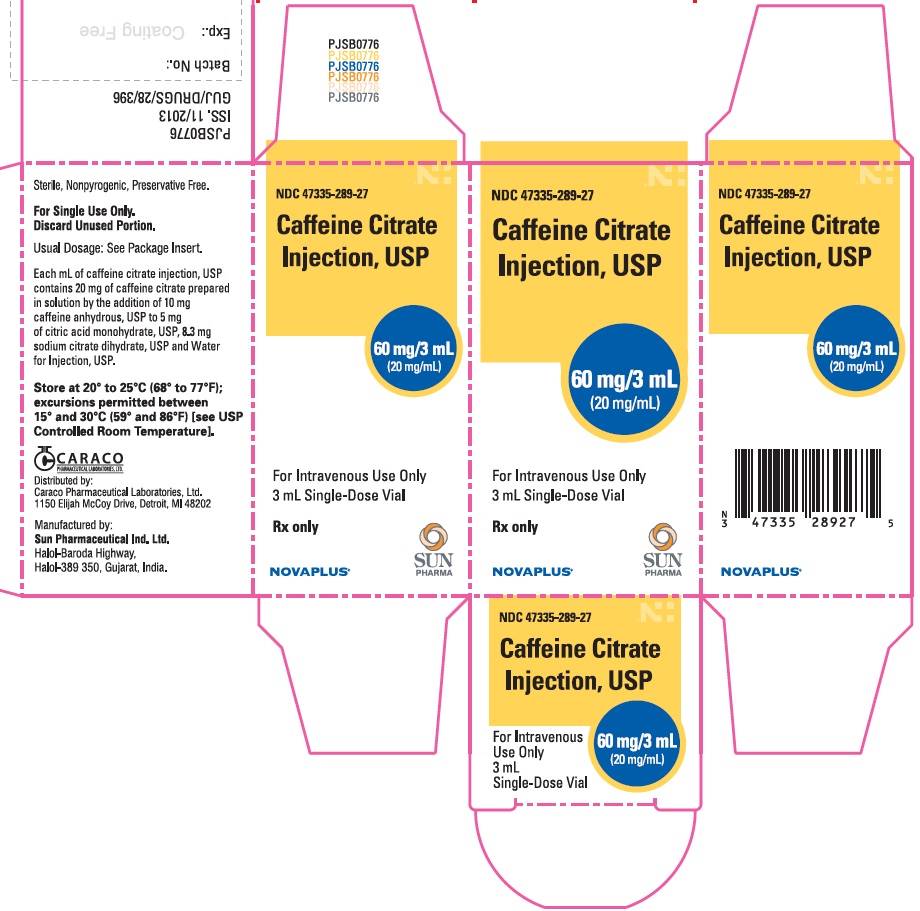
Caffeine Citrate 20 mg/mL Injection — NDC 47335-289-27 (Billing 47335-0289-27)
This is a package of Caffeine Citrate 20 mg/mL Injection from Sun Pharmaceutical Industries, Inc., marketed since Jun 2014 and currently FDA-listed. It is this product's only package size.
NDC database record
One package, one record: these facts belong to NDC 47335-289-27 alone.
- Record
- FDA NDC Directory package listing · Human prescription drug
- Code segments
- 47335 labeler · 289 product · 27 package
- Package marketed since
- Jun 5, 2014
- Sample package
- No — commercial package
- Listing certified through
- Dec 31, 2026
- Barcode (UPC)
- 0347335290448
- FDA record last changed
- Jul 24, 2026
Identity & classification
Regulatory identifiers FDA, NLM and CMS codes for this package
Drug-database identifiers Medi-Span GPI and First Databank GCN / HICL / AHFS classification
- GSN (GCN sequence number): 043901
- GCN: 50748
- GPI-14 (Medi-Span): 61300010102020
- HICL (First Databank): 000011
- AHFS class code: 28:20.32.00
- RxCUI (RxNorm): 849928
Where does this data come from?
- FDA openFDA NDC Directory · synced Oct 1, 2026
- FDA label on DailyMed · label index refreshed Oct 6, 2026
- RxNorm (NLM RxNav) · catalog refreshed Oct 1, 2026
- Medi-Span GPI (licensed)
- First Databank (licensed) · refreshed Oct 1, 2026
RxNorm drug class
This medicine belongs to the Central Nervous System Stimulant class.
Where does this data come from?
- RxClass (NLM) · catalog refreshed Oct 1, 2026
Clinical
- It is used short term to treat apnea of prematurity, which means pauses in breathing in premature infants. It is given as an injection or an oral solution by the healthcare team.
- The baby usually gets a one-time loading dose into a vein, then a smaller maintenance dose about every 24 hours. The maintenance dose can be given into a vein or by mouth. The dose...
- Babies may be jittery or irritable, have a fast heart rate, have feeding problems, or have a rash. Blood sugar and urine output can also change. Tell the care team if you notice an...
- Yes. Necrotizing enterocolitis, a serious intestinal problem in premature infants, was seen in trials. A cause was not proven, and the team watches closely for it. Too much caffein...
Patient education
Supplement & herbal interactions
Caffeine (OTC drug) may be associated with lower levels of 1 nutrient — worth a chat with your pharmacist, not a cause for alarm.
Where does this data come from?
- MedlinePlus (NLM) · refreshed Oct 1, 2026
- FDA label on DailyMed · label index refreshed Oct 6, 2026
Ask a licensed pharmacist directly — free, answered by our team.
Pricing
A drug doesn't have one price. Each row is a different public payment system, and none is what you'd pay at the counter — that depends on your insurance. The ⓘ on each row explains what it measures.
| Price system | Per each | Per package |
|---|---|---|
| Retail pharmacies payNADAC · weekly | Not in the retail survey — common for institutional, discontinued, or low-volume packs. | |
| Medicaid paysCMS SDUD · 12 mo | No recent Medicaid claims on file for this NDC — rare and low-volume NDCs are suppressed in the public data. | |
| Medicare drug plans payPart D · quarterly | No Part D plan price is available for this NDC in our data. | |
Where does this data come from?
- CMS NADAC weekly file
- CMS ASP pricing files · refreshed Sep 20, 2026
- CMS Medicaid State Drug Utilization Data · refreshed Oct 6, 2026
- CMS Part D plan pricing files · refreshed Sep 24, 2026
- VA National Acquisition Center price file
Packaging — all sizes for this product
| Package NDC | Description | Marketing start | Marketing end | Status |
|---|---|---|---|---|
| 47335-0289-27 You're viewing this Main listing | 1 VIAL, SINGLE-DOSE in 1 CARTON / 3 mL in 1 VIAL, SINGLE-DOSE | 2014-06-05 | — | Active |
Therapeutic equivalents
| Product | Labeler | Pack | NADAC/unit | TE | Status | Price vs. this |
|---|---|---|---|---|---|---|
| Caffeine Citrate 20 mg/mL 00641-6267-10 | Hikma | 10 vials | — | AP | FDA listed | — |
| caffeine citrate 20 mg/mL 25021-0601-03 | Sagent | 1 vial | — | AP | FDA listed | — |
| Caffeine Citrate 60 mg/3mL 42571-0244-98 | Micro | 1 vial | — | AP | FDA listed | — |
| Caffeine Citrate 20 mg/mLthis 47335-0289-27 | Sun | 1 vial | — | — | FDA listed | — |
| caffeine citrate 20 mg/mL 51754-0500-01 | Exela | 1 vial | — | AP | FDA listed | — |
| Caffeine Citrate 20 mg/mL 55150-0187-03 | Eugia | 1 vial | — | — | FDA listed | — |
| Caffeine Citrate 20 mg/mL 63323-0407-03 | Fresenius | 1 vial | — | AP | FDA listed | — |
| Caffeine Citrate 60 mg/3mL 72485-0104-01 | Armas | 1 vial | — | AP | FDA listed | — |
Where does this data come from?
- FDA openFDA NDC Directory · synced Oct 1, 2026
- FDA Orange Book · refreshed Oct 3, 2026
- CMS NADAC weekly file
Availability & generic status
This product is an FDA-approved generic. Other versions of the same drug are listed under Therapeutic equivalents, least expensive first.
Where does this data come from?
- FDA Orange Book · refreshed Oct 3, 2026
Inactive Ingredients / Excipients
Inactive ingredients, also called excipients, are components of the drug product other than the active ingredient. They may include fillers, dyes, coatings, preservatives, flavors, or other formulation ingredients.
🧪 Avoiding an ingredient? See Caffeine inactive ingredients by manufacturer: every current product's list side by side, so you can ask your pharmacy for the version that does not list it.
💡 Tap an ingredient (hover on desktop) to see what it is and why it’s used.
-
UNII 2968PHW8QP
A weak organic acid derived from citrus fruits or made through fermentation. It works as a buffer to control pH, a preservative to extend shelf life, and a flavoring agent in medications.
-
UNII B22547B95K
A salt derived from citric acid that helps maintain the proper acid-base balance in the medicine. It's used as a buffer to keep the product stable and at the right pH level.
-
UNII 059QF0KO0R
Water is a liquid solvent that dissolves and mixes ingredients together in liquid medicines, syrups, and injections. It helps distribute the active drug evenly throughout the product.
3 inactive ingredients listed in the exact product block matched to this NDC.
Where does this data come from?
ingredient classCode="IACT" elements from the exact product block matched by this NDC. Label-section narrative from DailyMed / the openFDA label index is shown separately when available.- FDA label on DailyMed · label index refreshed Oct 6, 2026
- FDA openFDA NDC Directory · synced Oct 1, 2026
Inactive ingredient FAQ
Are inactive ingredients the same for every manufacturer?
Why might an inactive ingredient be missing?
Can inactive ingredients matter?
Manufacturer & labeler
More NDCs from Sun Pharmaceutical Industries, Inc. labeler code 47335
- Ketorolac Tromethamine 5 mg/mL Solution/ Drops NDC 47335-221-90
- Methotrexate 2.5 mg Tablet NDC 47335-235-83
- ambrisentan 5 mg Tablet, Film Coated NDC 47335-236-64
- ambrisentan 10 mg Tablet, Film Coated NDC 47335-237-64
- Sumatriptan Succinate 6 mg/.5mL Injection NDC 47335-276-40
- Tetrabenazine 12.5 mg Tablet NDC 47335-277-23
- Caffeine Citrate 20 mg/mL Solution NDC 47335-290-44
- Odomzo sonidegib 200 mg Capsule NDC 47335-303-15
- Metformin Hydrochloride 500 mg Tablet, Film Coated, Extended Release NDC 47335-305-18
- Metformin Hydrochloride 1000 mg Tablet, Film Coated, Extended Release NDC 47335-306-18
- Zolpidem Tartrate 6.25 mg Tablet, Film Coated, Extended Release NDC 47335-307-13
- Zolpidem Tartrate 12.5 mg Tablet, Film Coated, Extended Release NDC 47335-308-13
Where does this data come from?
- FDA openFDA NDC Directory · synced Oct 1, 2026
- Drugs@FDA
Full prescribing information FDA SPL
🎯 Indications and Usage ▾
INDICATIONS AND USAGE Caffeine citrate injection and caffeine citrate oral solution are indicated for the short term treatment of apnea of prematurity in infants between 28 and <33 weeks gestational age.
⏱️ Dosage and Administration ▾
DOSAGE AND ADMINISTRATION Prior to initiation of caffeine citrate, baseline serum levels of caffeine should be measured in infants previously treated with theophylline, since preterm infants metabolize theophylline to caffeine. Likewise, baseline serum levels of caffeine should be measured in infants born to mothers who con‑sumed caffeine prior to delivery, since caffeine readily crosses the placenta. The recommended loading dose and maintenance doses of caffeine citrate follow.
Dose of Caffeine Citrate Dose of Caffeine Citrate Route Frequency Volume mg/kg Loading Dose 1 mL/kg 20 mg/kg Intravenous using a syringe infusion pump One Time (over 30 minutes) Maintenance 0.25 mL/kg 5 mg/kg Intravenous Every Dose (over 10 24 hours beginning 24 hours after the loading dose minutes) or Orally NOTE THAT THE DOSE OF CAFFEINE BASE IS ONE-HALF THE DOSE WHEN EXPRESSED AS CAFFEINE CITRATE (e.g., 20 mg of caffeine citrate is equiva‑lent to 10 mg of caffeine base). Serum concentrations of caffeine may need to be monitored periodically throughout treatment to avoid toxicity.
Serious toxicity has been associated with serum levels greater than 50 mg/L. Caffeine citrate injection and caffeine citrate oral solution should be inspected visually for particulate matter and discoloration prior to administration. Vials containing discolored solution or visible particulate matter should be discarded.
Drug Compatibility To test for drug compatibility with common intravenous solutions or medica‑tions, 20 mL of caffeine citrate injection were combined with 20 mL of a solution or medication, with the exception of an Intralipid ® admixture, which was combined as 80 mL/80 mL. The physical appearance of the com‑bined solutions was evaluated for precipitation. The admixtures were mixed for 10 minutes and then assayed for caffeine.
The admixtures were then continu‑ally mixed for 24 hours, with further sampling for caffeine assays at 2, 4, 8, and 24 hours. Based on this testing, caffeine citrate injection, 60 mg/3 mL is chemically stable for 24 hours at room temperature when combined with the following test products. • Dextrose Injection, USP 5% • 50% Dextrose Injection USP • Intralipid ® 20% IV Fat Emulsion • Aminosyn ® 8.5% Crystalline Amino Acid Solution • Dopamine HCI Injection, USP 40 mg/mL diluted to 0.6 mg/mL with Dextrose Injection, USP 5% • Calcium Gluconate Injection, USP 10% (0.465 mEq/Ca +2 /mL) • Heparin Sodium Injection, USP 1000 units/mL diluted to 1 unit/mL with Dextrose Injection, USP 5% • Fentanyl Citrate Injection, USP 50 µg/mL diluted to 10 µg/mL with Dextrose Injection, USP 5%
⛔ Contraindications ▾
CONTRAINDICATIONS Caffeine citrate injection and caffeine citrate oral solution are contraindicated in patients who have demonstrated hypersensitivity to any of its components.
⚠️ Warnings ▾
WARNINGS During the double-blind, placebo-controlled clinical trial, 6 cases of necro‑tizing enterocolitis developed among the 85 infants studied (caffeine=46, placebo=39), with 3 cases resulting in death. Five of the six patients with necrotizing enterocolitis were randomized to or had been exposed to caffeine citrate. Reports in the published literature have raised a question regarding the possi‑ble association between the use of methylxanthines and development of necro‑tizing enterocolitis, although a causal relationship between methylxanthine use and necrotizing enterocolitis has not been established.
Therefore, as with all preterm infants, patients being treated with caffeine citrate should be carefully moni‑tored for the development of necrotizing enterocolitis.
🤒 Adverse Reactions ▾
ADVERSE REACTIONS Overall, the reported number of adverse events in the double-blind period of the controlled trial was similar for the caffeine citrate and placebo groups. The following table shows adverse events that occurred in the double-blind period of the controlled trial and that were more frequent in caffeine citrate treated patients than placebo. ADVERSE EVENTS THAT OCCURRED MORE FREQUENTLY IN CAFFEINE CITRATE TREATED PATIENTS THAN PLACEBO DURING DOUBLE-BLIND THERAPY Adverse Event (AE) Caffeine Citrate N=46 Placebo N=39 n (%) n (%) BODY AS A WHOLE Accidental Injury 1 (2.2) 0 (0.0) Feeding Intolerance 4 (8.7) 2 (5.1) Sepsis 2 (4.3) 0 (0.0) CARDIOVASCULAR SYSTEM Hemorrhage 1 (2.2) 0 (0.0) DIGESTIVE SYSTEM Necrotizing Enterocolitis 2 (4.3) 1 (2.6) Gastritis 1 (2.2) 0 (0.0) Gastrointestinal Hemorrhage 1 (2.2) 0 (0.0) HEMIC AND LYMPHATIC SYSTEM Disseminated Intravascular 1 (2.2) 0 (0.0) Coagulation METABOLIC AND NUTRITIVE DISORDERS Acidosis 1 (2.2) 0 (0.0) Healing Abnormal 1 (2.2) 0 (0.0) NERVOUS SYSTEM Cerebral Hemorrhage 1 (2.2) 0 (0.0) RESPIRATORY SYSTEM Dyspnea 1 (2.2) 0 (0.0) Lung Edema 1 (2.2) 0 (0.0) SKIN AND APPENDAGES Dry Skin 1 (2.2) 0 (0.0) Rash 4 (8.7) 3 (7.7) Skin Breakdown 1 (2.2) 0 (0.0) SPECIAL SENSES Retinopathy of Prematurity 1 (2.2) 0 (0.0) UROGENITAL SYSTEM Kidney Failure 1 (2.2) 0 (0.0) In addition to the cases above, three cases of necrotizing enterocolitis were diagnosed in patients receiving caffeine citrate during the open-label phase of the study.
Three of the infants who developed necrotizing enterocolitis during the trial died. All had been exposed to caffeine. Two were randomized to caffeine, and one placebo patient was “rescued” with open-label caffeine for uncontrolled apnea.
Adverse events described in the published literature include: central nervous system stimulation (i.e., irritability, restlessness, jitteriness), cardiovascular effects (i.e., tachycardia, increased left ventricular output, and increased stroke volume), gastrointestinal effects (i.e., increased gastric aspirate, gastrointesti‑nal intolerance), alterations in serum glucose (hypoglycemia and hyper‑glycemia) and renal effects (increased urine flow rate, increased creatinine clearance, and increased sodium and calcium excretion).
Published long-term follow-up studies have not shown caffeine to adversely affect neurological development or growth parameters.
🔄 Drug Interactions ▾
Drug Interactions Cytochrome P450 1A2 (CYP1A2) is known to be the major enzyme involved in the metabolism of caffeine. Therefore, caffeine has the potential to interact with drugs that are substrates for CYP1A2, inhibit CYP1A2, or induce CYP1A2. Few data exist on drug interactions with caffeine in preterm neonates.
Based on adult data, lower doses of caffeine may be needed following coadministra‑tion of drugs which are reported to decrease caffeine elimination (e.g., cimeti‑dine and ketoconazole) and higher caffeine doses may be needed following coadministration of drugs that increase caffeine elimination (e.g., phenobarbi‑tal and phenytoin). Caffeine administered concurrently with ketoprofen reduced the urine volume in four healthy volunteers. The clinical significance of this interaction in preterm neonates is not known.
Interconversion between caffeine and theophylline has been reported in preterm neonates. The concurrent use of these drugs is not recommended.
🤰 Pregnancy ▾
Pregnancy: Pregnancy Category C Concern for the teratogenicity of caffeine is not relevant when administered to infants. In studies performed in adult animals, caffeine (as caffeine base) administered to pregnant mice as sustained release pellets at 50 mg/kg (less than the maximum recommended intravenous loading dose for infants on a mg/m 2 basis), during the period of organogenesis, caused a low incidence of cleft palate and exencephaly in the fetuses. There are no adequate and well-controlled studies in pregnant women.
🆘 Overdosage ▾
OVERDOSAGE Following overdose, serum caffeine levels have ranged from approximately 24 mg/L (a post marketing spontaneous case report in which an infant exhibited irritability, poor feeding and insomnia) to 350 mg/L. Serious toxicity has been associated with serum levels greater than 50 mg/L (see PRECAUTIONS-Laboratory Tests and DOSAGE AND ADMINISTRATION ). Signs and symptoms reported in the literature after caffeine overdose in preterm infants include fever, tachypnea, jitteriness, insomnia, fine tremor of the extremities, hypertonia, opisthotonos, tonic-clonic movements, nonpurposeful jaw and lip movements, vomiting, hyperglycemia, elevated blood urea nitrogen, and ele‑vated total leukocyte concentration.
Seizures have also been reported in cases of overdose. One case of caffeine overdose complicated by development of intraventricular hemorrhage and long-term neurological sequelae has been reported. Another case of caffeine citrate overdose (from New Zealand) of an estimated 600 mg caffeine citrate (approximately 322 mg/kg) administered over 40 minutes was complicated by tachycardia, ST depression, respiratory distress, heart failure, gastric distention, acidosis and a severe extravasation burn with tissue necrosis at the peripheral intravenous injection site.
No deaths associated with caffeine overdose have been reported in preterm infants. Treatment of caffeine overdose is primarily symptomatic and supportive. Caffeine levels have been shown to decrease after exchange transfusions.
Convulsions may be treated with intravenous administration of diazepam or a barbiturate such as pentobarbital sodium.
🧬 Clinical Pharmacology ▾
CLINICAL PHARMACOLOGY Mechanism of Action Caffeine is structurally related to other methylxanthines, theophylline, and theo‑bromine. It is a bronchial smooth muscle relaxant, a CNS stimulant, a cardiac muscle stimulant, and a diuretic. Although the mechanism of action of caffeine in apnea of prematurity is not known, several mechanisms have been hypothesized.
These include: (1) stimu‑lation of the respiratory center, (2) increased minute ventilation, (3) decreased threshold to hypercapnia, (4) increased response to hypercapnia, (5) increased skeletal muscle tone, (6) decreased diaphragmatic fatigue, (7) increased meta‑bolic rate, and (8) increased oxygen consumption. Most of these effects have been attributed to antagonism of adenosine recep‑tors, both A 1 and A 2 subtypes, by caffeine, which has been demonstrated in receptor binding assays and observed at concentrations approximating those achieved therapeutically.
Pharmacokinetics Absorption: After oral administration of 10 mg caffeine base/kg to preterm neonates, the peak plasma level (C max ) for caffeine ranged from 6-10 mg/L and the mean time to reach peak concentration (T max ) ranged from 30 minutes to 2 hours. The T max was not affected by formula feeding. The absolute bioavail‑ability, however, was not fully examined in preterm neonates.
Distribution: Caffeine is rapidly distributed into the brain. Caffeine levels in the cerebrospinal fluid of preterm neonates approximate their plasma levels. The mean volume of distribution of caffeine in infants (0.8-0.9 L/kg) is slightly high‑er than that in adults (0.6 L/kg).
Plasma protein binding data are not available for neonates or infants. In adults, the mean plasma protein binding in vitro is reported to be approximately 36%. Metabolism: Hepatic cytochrome P450 1A2 (CYP1A2) is involved in caffeine biotransformation.
Caffeine metabolism in preterm neonates is limited due to their immature hepatic enzyme systems. Interconversion between caffeine and theophylline has been reported in preterm neonates; caffeine levels are approximately 25% of theophylline levels after theophylline administration and approximately 3-8% of caffeine adminis‑tered would be expected to convert to theophylline. Elimination: In young infants, the elimination of caffeine is much slower than that in adults due to immature hepatic and/or renal function.
Mean half-life (T 1/2 ) and fraction excreted unchanged in urine (A e ) of caffeine in infants have been shown to be inversely related to gestational/postconceptual age. In neonates, the T 1/2 is approximately 3-4 days and the A e is approximately 86% (within 6 days). By 9 months of age, the metabolism of caffeine approximates that seen in adults (T 1/2 = 5 hours and A e = 1%).
Special Populations: Studies examining the pharmacokinetics of caffeine in neonates with hepatic or renal insufficiency have not been conducted. Caffeine citrate should be administered with caution in preterm neonates with impaired renal or hepatic function. Serum concentrations of caffeine should be monitored and dose administration of caffeine citrate should be adjusted to avoid toxicity in this population.
Clinical Studies One multicenter, randomized, double-blind trial compared caffeine citrate to placebo in eighty-five (85) preterm infants (gestational age 28 to <33 weeks) with apnea of prematurity. Apnea of prematurity was defined as having at least 6 apnea episodes of greater than 20 seconds duration in a 24-hour period with no other identifiable cause of apnea. A 1 mL/kg (20 mg/kg caffeine citrate providing 10 mg/kg as caffeine base) loading dose of caffeine citrate was administered intravenously, followed by a 0.25 mL/kg (5 mg/kg caffeine citrate providing 2.5 mg/kg of caffeine base) daily maintenance dose administered either intravenously or orally (generally through a feeding tube).
The duration of treatment in this study was limited to 10 to 12 days. The protocol allowed infants to be “rescued” with open-label caffeine… [Excerpted — this section continues on DailyMed.]
📦 How Supplied / Storage and Handling ▾
HOW SUPPLIED Both caffeine citrate injection and caffeine citrate oral solution are available as clear, color‑less, sterile, non-pyrogenic, preservative-free, aqueous solutions in 5 mL colorless glass vials. The vials of caffeine citrate injection are sealed with gray rubber stopper and white flip off aluminum seal printed with “FOR INTRAVENOUS USE ONLY” in red. The vials of caffeine citrate oral solution are sealed with gray rubber stopper and a dark blue matte finish, flip off tear off aluminum seal printed with “FOR ORAL USE ONLY – FLIP UP & TEAR” in white.
Both the injection and oral solution vials contain 3 mL solution at a concentra‑tion of 20 mg/mL caffeine citrate (60 mg/vial) equivalent to 10 mg/mL caffeine base (30 mg/vial). Caffeine citrate injection, USP NDC 47335-289-27: 3 mL vial, individually packaged in a carton. Caffeine citrate oral solution, USP NDC 47335-290-27: 3 mL vial (NOT CHILD-RESISTANT), 10 vials per white polypropylene child-resistant container.
Store at 20° to 25°C (68° to 77°F); excursions permitted between 15° and 30°C (59° and 86°F) [see USP Controlled Room Temperature]. Preservative free. For single use only.
Discard unused portion. ATTENTION PHARMACIST: Detach “Instructions for Use” from the package insert and dispense with caffeine citrate oral solution prescription. Distributed by: Caraco Pharmaceutical Laboratories, Ltd.
1150 Elijah McCoy Drive, Detroit, MI 48202 Manufactured by: Sun Pharmaceutical Ind. Ltd. Halol-Baroda Highway, Halol-389 350, Gujarat, India.
NOVAPLUS® NOVAPLUS is a registered trademark of Novation, LLC. ISS. 12/2013 PJPI0464
📋 Description ▾
DESCRIPTION Both caffeine citrate injection for intravenous administration and caffeine citrate oral solution are clear, colorless, sterile, non-pyrogenic, preservative-free, aqueous solutions adjusted to pH 4.7. Each mL contains 20 mg caffeine citrate (equivalent to 10 mg of caffeine base) prepared in solution by the addition of 10 mg caffeine anhydrous, USP to 5 mg citric acid monohydrate, USP, 8.3 mg sodium citrate dihydrate, USP and Water for Injection, USP. Caffeine, a central nervous system stimulant, is an odorless white crystalline powder or granule, with a bitter taste.
It is sparingly soluble in water and ethanol at room temperature. The chemical name of caffeine is 3,7-dihydro-1,3,7-trimethyl-1 H -purine-2,6-dione. In the presence of citric acid it forms caffeine citrate salt in solution.
The structural formula and molecular weight of caffeine citrate follows. caffeine-citrate-str
💬 Information for Patients ▾
Information for Patients Parents/caregivers of patients receiving caffeine citrate oral solution should receive the following instructions: 1. Caffeine citrate oral solution does not contain any preservatives and each vial is for single use only. Any unused portion of the medication should be discarded.
2. It is important that the dose of caffeine citrate oral solution be measured accurately, i.e., with a 1cc or other appropriate syringe. 3.
Consult your physician if the baby continues to have apnea events; do not increase the dose of caffeine citrate oral solution without medical consultation. 4. Consult your physician if the baby begins to demonstrate signs of gastroin‑testinal intolerance, such as abdominal distention, vomiting, or bloody stools, or seems lethargic.
5. Caffeine citrate oral solution should be inspected visually for particulate matter and discoloration prior to its administration. Vials containing discolored solution or visible particulate matter should be discarded.
⚠️ Precautions ▾
PRECAUTIONS General Apnea of prematurity is a diagnosis of exclusion. Other causes of apnea (e.g., central nervous system disorders, primary lung disease, anemia, sepsis, metabolic disturbances, cardiovascular abnormalities, or obstructive apnea) should be ruled out or properly treated prior to initiation of caffeine citrate. Caffeine is a central nervous system stimulant and in cases of caffeine over‑dose, seizures have been reported.
Caffeine citrate should be used with caution in infants with seizure disorders. The duration of treatment of apnea of prematurity in the placebo-controlled trial was limited to 10 to 12 days. The safety and efficacy of caffeine citrate for longer periods of treatment have not been established.
Safety and efficacy of caffeine citrate for use in the prophylactic treatment of sudden infant death syndrome (SIDS) or prior to extubation in mechanically ventilated infants have also not been established. Cardiovascular Although no cases of cardiac toxicity were reported in the placebo-controlled trial, caffeine has been shown to increase heart rate, left ventricular output, and stroke volume in published studies. Therefore, caffeine citrate should be used with caution in infants with cardiovascular disease.
Renal and Hepatic Systems Caffeine citrate should be administered with caution in infants with impaired renal or hepatic function. Serum concentrations of caffeine should be monitored and dose administration of caffeine citrate should be adjusted to avoid toxicity in this pop‑ulation. (See CLINICAL PHARMACOLOGY , Elimination, Special Populations.) Information for Patients Parents/caregivers of patients receiving caffeine citrate oral solution should receive the following instructions: 1.
Caffeine citrate oral solution does not contain any preservatives and each vial is for single use only. Any unused portion of the medication should be discarded. 2.
It is important that the dose of caffeine citrate oral solution be measured accurately, i.e., with a 1cc or other appropriate syringe. 3. Consult your physician if the baby continues to have apnea events; do not increase the dose of caffeine citrate oral solution without medical consultation.
4. Consult your physician if the baby begins to demonstrate signs of gastroin‑testinal intolerance, such as abdominal distention, vomiting, or bloody stools, or seems lethargic. 5.
Caffeine citrate oral solution should be inspected visually for particulate matter and discoloration prior to its administration. Vials containing discolored solution or visible particulate matter should be discarded. Laboratory Tests Prior to initiation of caffeine citrate, baseline serum levels of caffeine should be meas‑ured in infants previously treated with theophylline, since preterm infants metabolize theophylline to caffeine.
Likewise, baseline serum levels of caffeine should be measured in infants born to mothers who consumed caffeine prior to delivery, since caffeine readily crosses the placenta. In the placebo-controlled clinical trial, caffeine levels ranged from 8 to 40 mg/L. A therapeutic plasma concentration range of caffeine could not be determined from the placebo-controlled clinical trial.
Serious toxicity has been reported in the literature when serum caffeine levels exceed 50 mg/L. Serum concentra‑tions of caffeine may need to be monitored periodically throughout treatment to avoid toxicity. In clinical studies reported in the literature, cases of hypoglycemia and hyper‑glycemia have been observed.
Therefore, serum glucose may need to be peri‑odically monitored in infants receiving caffeine citrate. Drug Interactions Cytochrome P450 1A2 (CYP1A2) is known to be the major enzyme involved in the metabolism of caffeine. Therefore, caffeine has the potential to interact with drugs that are substrates for CYP1A2, inhibit CYP1A2, or induce CYP1A2.
Few data exist on drug interactions with caffeine in preterm neonates. Based on adult data, lower doses of caffeine may be needed f… [Excerpted — this section continues on DailyMed.]
📄 Carcinogenesis, Mutagenesis, Impairment of Fertility ▾
Carcinogenesis, Mutagenesis, Impairment of Fertility In a 2-year study in Sprague-Dawley rats, caffeine (as caffeine base) adminis‑tered in drinking water was not carcinogenic in male rats at doses up to 102 mg/kg or in female rats at doses up to 170 mg/kg (approximately 2 and 4 times, respectively, the maximum recommended intravenous loading dose for infants on a mg/m 2 basis). In an 18-month study in C57BL/6 mice, no evidence of tumorigenicity was seen at dietary doses up to 55 mg/kg (less than the max‑imum recommended intravenous loading dose for infants on a mg/m 2 basis).
Caffeine (as caffeine base) increased the sister chromatid exchange (SCE) SCE/cell metaphase (exposure time dependent) in an in vivo mouse metaphase analysis. Caffeine also potentiated the genotoxicity of known mutagens and enhanced the micronuclei formation (5-fold) in folate-deficient mice. However, caffeine did not increase chromosomal aberrations in in vitro Chinese hamster ovary cell (CHO) and human lymphocyte assays and was not mutagenic in an in vitro CHO/hypoxanthine guanine phosphoribosyltransferase (HGPRT) gene mutation assay, except at cytotoxic concentrations.
In addition, caffeine was not clastogenic in an in vivo mouse micronucleus assay. Caffeine (as caffeine base) administered to male rats at 50 mg/kg/day subcu‑taneously (approximately equal to the maximum recommended intravenous loading dose for infants on a mg/m 2 basis) for 4 days prior to mating with untreated females, caused decreased male reproductive performance in addi‑tion to causing embryotoxicity. In addition, long-term exposure to high oral doses of caffeine (3 g over 7 weeks) was toxic to rat testes as manifested by spermatogenic cell degeneration.
📄 Patient Package Insert ▾
SPL PATIENT PACKAGE INSERT Caffeine Citrate Oral Solution, USP Each bottle (vial) of caffeine citrate oral solution contains a total of 60 mg of caffeine citrate in 3 mL (20 mg/mL). Information and Instructions for Use This leaflet tells you about caffeine citrate oral solution and how to give it to your baby. Read the following information before giving this medicine to your baby.
Completely discuss caffeine citrate oral solution with your baby’s doctor. Continue to discuss any questions you have about this medicine at your baby’s checkups. After you remove your baby’s dose, throw away the open bottle (vial) and all medicine left in it.
Use each vial of caffeine citrate oral solution for only one dose. There will be extra medicine left in the vial after one dose is removed. Leftover medicine should not be used because caffeine citrate oral solution does not contain preservatives.
Once the vial is open, any medicine that is not used right away must be discarded. What is caffeine citrate oral solution? The main ingredient of caffeine citrate oral solution is caffeine citrate.
Caffeine citrate oral solution is a clear, colorless, medicine to treat apnea of prematurity-short periods when premature babies stop breathing. Apnea of prematurity is due to the baby’s breathing centers not being fully developed. How do I give caffeine citrate oral solution to my baby?
Give caffeine citrate oral solution to your baby once a day, at about the same time each day. Your baby’s doctor will prescribe the right amount of caffeine citrate oral solution based on your baby’s weight and age. Carefully follow the doctor’s dosing instructions.
Measure the dose of caffeine citrate oral solution carefully. Your baby’s doctor, nurse, or pharma‑cist will give you a suitable syringe or supply of syringes to measure small but accurate doses of caffeine citrate oral solution. Never change (increase or decrease) your baby’s dose without speaking to your baby’s doctor.
If your baby continues to have periods of apnea, call your baby’s doctor right away. Caffeine citrate oral solution can be swallowed by mouth or given through a feeding tube. Based on your baby’s own situation, your baby’s doctor or other healthcare professional should teach you how to give caffeine citrate oral solution correctly.
Caffeine citrate oral solution should be clear and colorless. Before giving caffeine citrate oral solution, look for small particles, cloudiness, or discoloration in the medicine. Do not use vials that contain cloudy or discolored medicine, or any visible particles.
Caffeine citrate oral solution does NOT contain any preservatives. Do not open the vial until it is time for your baby to receive the dose of medicine. Use each vial only once.
After you remove your baby’s dose, throw away the vial and all medicine left in the opened vial. Ten (10) vials of caffeine citrate oral solution are packaged in a child-resistant container. Caffeine citrate oral solution vials are NOT CHILD-RESISTANT .
Always store vials of caffeine citrate oral solution in the child-resistant container. Follow the instructions below to open the child-resistant container, to open a vial of caffeine citrate oral solution, and to remove a dose of medicine from the vial. To open the child-resistant container that holds the vials of caffeine citrate oral solution: (Instructions with pictures are also printed on the top of the container) 1.
Hold the bottom half of the child-resistant container with one hand and push the lower semicircular section on the front of the container with your thumb. 2. With your other hand, pull the cover up until you hear it click.
3. While holding the ends of the bottom half of the container with both hands, place both index fingers on the two semicircular locking tabs on the sides of the container. 4.
Press the two tabs and raise the cover up. To open a vial of caffeine citrate oral solution: 1. Hold the blue plastic top between the thumb and index finger.
Use your thumb t… [Excerpted — this section continues on DailyMed.]
📄 Package Label / Principal Display Panel ▾
PACKAGE LABEL.PRINCIPAL DISPLAY PANEL - Injection 3 mL vial label NDC 47335-289-26 Caffeine Citrate Injection, USP 60 mg/3 mL (20 mg/mL) For Intravenous Use Only 3 mL Vial Rx only NOVAPLUS caffeine-citrate-inj-lbl
PACKAGE LABEL.PRINCIPAL DISPLAY PANEL - Injection- 1 vial carton - 3 ml single dose vial NDC 47335-289-27 Caffeine Citrate Injection, USP 60 mg/3 mL (20 mg/mL) For Intravenous Use Only 3 mL Single-Dose Vial Rx only NOVAPLUS SUN PHARMA caffeine-citrate-inj-box
PACKAGE LABEL.PRINCIPAL DISPLAY PANEL - Solution Vial Label NDC 47335-290-26 Caffeine Citrate Oral Solution, USP 60 mg/3 mL (20 mg/mL) For Oral Use Only 3 mL Vial Rx only NOVAPLUS caffeine-citrate-solution-1
PACKAGE LABEL.PRINCIPAL DISPLAY PANEL - Solution- 10 Vial Container NDC 47335-290-27 Caffeine Citrate Oral Solution, USP 60 mg/3 mL (20 mg/mL) For Oral Use Only Rx only 10 x 3 mL Single-Dose Vials PHARMACIST: Dispense the drug product with the patient information leaflet caffeine-citrate-solution-2
About this NDC listing & data coverage
What data is (and isn’t) available for this NDC — tap to expand
| NDC identity (package / product / labeler codes) | ✓ Available |
| Labeler | ✓ Available |
| Product & package description | ✓ Available |
| Marketing category & status | ✓ Available |
| Active ingredient / dosage form / route | ✓ Available |
| FDA label (SPL via DailyMed) | ✓ Available |
| Package photos | ✓ Available |
| Inactive ingredients (structured) | ✓ Available |
| NADAC pharmacy acquisition price (CMS) | — Not published for this NDC CMS publishes NADAC only for NDCs reported in its retail-pharmacy survey. |
| Orange Book / therapeutic-equivalence data | — Not published for this NDC Applies only to products approved under an NDA/ANDA; many listings are out of scope. |
| HCPCS J-code billing crosswalk | — Not published for this NDC Most self-administered / retail products have no J-code — that is normal. |
| Medicaid utilization (CMS SDUD) | — Not published for this NDC CMS reports utilization only for NDCs with Medicaid claims above its privacy threshold. |