
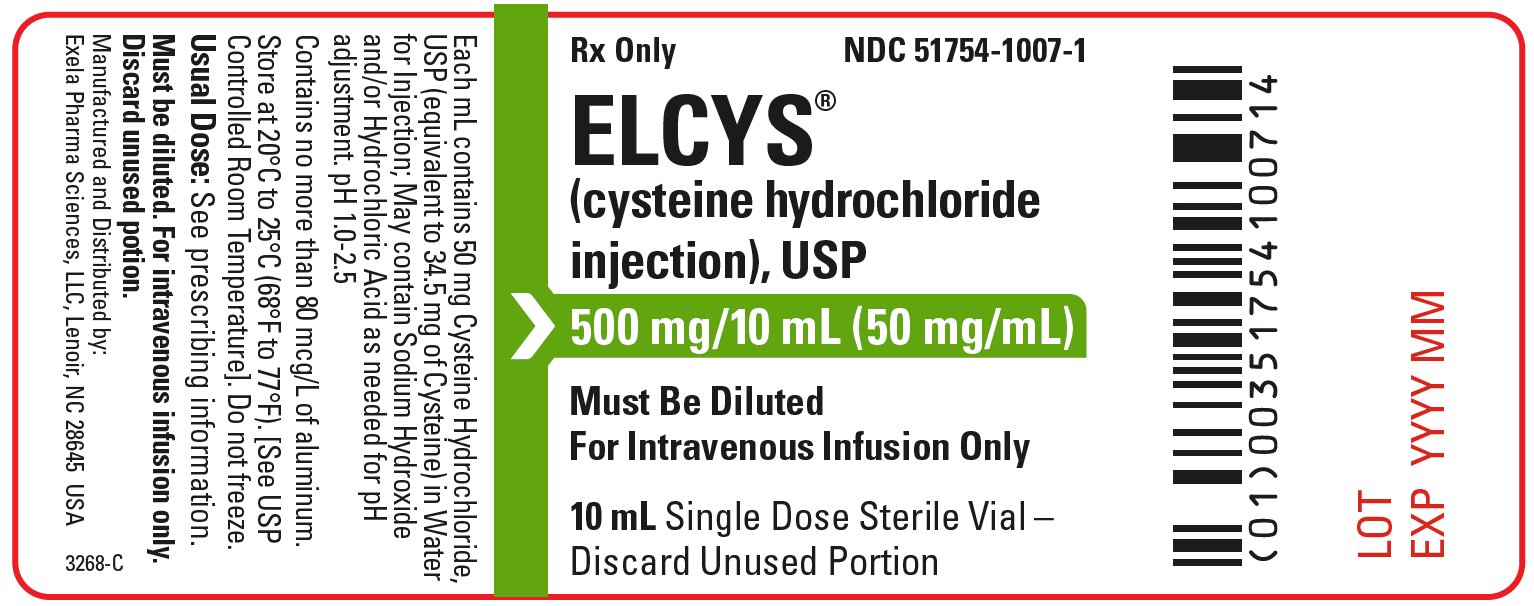
ELCYS Cysteine Hydrochloride 10 mg/mL Injection, Solution, 10 mL
🆔 Identity & classification
Where does this data come from?
🏭 Manufacturer & labeler
Where does this data come from?
🩺 Clinical
Patient education
Supplement & herbal interactions
Where does this data come from?
Ask a licensed pharmacist directly — free, answered by our team.
🧪 Inactive Ingredients / Excipients
Inactive ingredients, also called excipients, are components of the drug product other than the active ingredient. They may include fillers, dyes, coatings, preservatives, flavors, or other formulation ingredients.
Where does this data come from?
IACT rows and label-wide narrative are kept separate; availability and product-level specificity depend on the submitted label.Inactive ingredient FAQ
Are inactive ingredients the same for every manufacturer?
Why might an inactive ingredient be missing?
Can inactive ingredients matter?
💲 Pricing
A drug doesn't have one price. Each row is a different public payment system, and none is what you'd pay at the counter — that depends on your insurance. The ⓘ on each row explains what it measures.
| Price system | Per mL | Per package |
|---|---|---|
| Retail pharmacies payNADAC · weekly | Not in the retail survey — common for institutional, discontinued, or low-volume packs. | |
| Medicaid paysCMS SDUD · 12 mo | $11.29 | $112.89 / 10 ml |
| Medicare drug plans payPart D · quarterly | No Part D plan price is available for this NDC in our data. | |
Where does this data come from?
🔁 Therapeutic equivalents
| Product | Labeler | Pack | NADAC/unit | TE | Status | Price vs. this |
|---|---|---|---|---|---|---|
| Cysteine Hydrochloride 34.5 mg/mL 00338-9645-01 | Baxter | 5 vials | — | — | FDA listed | — |
| Elcys 10 mg/mLthis 51754-1007-01 | Exela | 10 ml | — | — | FDA listed | — |
Where does this data come from?
⏳ Availability & generic status
We did not find an FDA-approved generic match for this exact strength, form and route. Patent/protection dates below may affect future generic timing.
Why the date isn’t exact: Generic timing can change because patents may be challenged, settled, licensed, added, removed, or worked around with a narrower label — and FDA approval does not always mean a pharmacy can get the generic today.
🛈 What do these terms mean?
- Patent
- Legal protection listed in the Orange Book that may delay generic approval or launch. Issued by the U.S. Patent & Trademark Office.
- Substance patent
- Covers the active drug molecule itself — the hardest to design around. A generic generally can’t launch until it expires.
- Formulation (product) patent
- Covers a specific formulation or dosage form. A generic can sometimes work around it with a different formulation.
- Method-of-use patent
- A patent covering one specific approved use of the drug — not necessarily the whole molecule. A generic can sometimes launch with a “skinny label” that carves out the protected use and keeps the others.
- Skinny label
- A generic label that omits a still-patented use when the FDA allows it — letting a generic reach the market for the unprotected uses.
- Exclusivity
- FDA-granted marketing protection, separate from patents — e.g. 5-yr new chemical entity, 7-yr orphan drug, or a +6-month pediatric extension.
- Paragraph IV
- A generic applicant’s formal challenge to a listed patent. It can potentially lead to earlier generic entry, but often involves litigation or a settlement.
- RLD / RS
- Reference Listed Drug — the brand product the FDA uses as the reference for generic applications. Reference Standard — the product the FDA expects generics to compare against in bioequivalence testing.
- TE / AB rating
- FDA therapeutic-equivalence rating. An AB rating generally means the FDA considers a generic therapeutically equivalent to — and substitutable for — the brand.
- LOE (loss of exclusivity)
- The latest patent or exclusivity currently listed — the loss-of-exclusivity / latest-listed-protection date shown on this page. Paragraph-IV challenges and settlements can move the real date earlier; FDA approval and a manufacturer’s decision to market can move it later.
Built from the FDA Orange Book. The bars above are scaled to each protection’s expiry; the red LOE marker is the last one to lapse.
| Patent | Type | Use code | Expires |
|---|---|---|---|
| US 11510942 ↗ | Method of use | U-2752 | Jan 15, 2039 |
| US 11969439 ↗ | Method of use | U-2752 | Jan 15, 2039 |
| US 10478453 ↗ | Method of use | U-2752 | Jan 15, 2039 |
| US 10583155 ↗ | Method of use | U-2752 | Jan 15, 2039 |
| US 10653719 ↗ | Drug product | — | Jan 15, 2039 |
| US 10918662 ↗ | Drug product | — | Jan 15, 2039 |
| US 10905713 ↗ | Drug product | — | Jan 15, 2039 |
| US 10905714 ↗ | Drug product | — | Jan 15, 2039 |
| US 11684636 ↗ | Drug product | — | Jan 15, 2039 |
| US 10933089 ↗ | Drug product | — | Jan 15, 2039 |
| US 11826383 ↗ | Drug product | — | Jan 15, 2039 |
| US 11679125 ↗ | Drug product | — | Jan 15, 2039 |
| US 11648262 ↗ | Drug product | — | Jan 15, 2039 |
| US 10912795 ↗ | Drug product | — | Jan 15, 2039 |
| US 11642370 ↗ | Drug product | — | Jan 15, 2039 |
| US 11510941 ↗ | Drug product | — | Jan 15, 2039 |
Is there a generic version of ELCYS 500 MG/10 ML VIAL?
The FDA approved a generic — why can’t I get it at my pharmacy yet?
Why do different websites show different generic release dates?
What does “FDA listed” mean?
What does a patent or protection date mean here?
What does “current Orange Book estimate” mean?
Can a generic come out before the last patent expires?
Can a generic come out after the listed dates?
What is the difference between patents and exclusivity?
Why are there multiple patent dates?
Where does this data come from?
🗺️ Medicaid utilization & spend
💊 Medicaid utilization by pack size
🔬 Reported adverse events (FAERS)
Top reported reactions
Age at onset
Reporter sex
Serious outcomes
Where does this data come from?
📦 Packaging — all sizes for this product
| Package NDC | Description | Marketing start | Status |
|---|---|---|---|
| 51754-1007-01 You're viewing this | 10 mL in 1 VIAL (51754-1007-1) | 2019-05-28 | Active |
| 51754-1007-03 | 100 mL in 1 CARTON (51754-1007-3) | 2019-05-28 | Active |
You're viewing the smallest of 2 pack sizes for this product.
This pack accounts for about 26% of this product's recent Medicaid fills; most go to the 1 ml pack. See all packs ↓
Pack size FAQ
What quantity is in NDC 51754-1007-01?
What is the difference between NDC 51754-1007-01 and NDC 51754-1007-03?
What NDC number is used to bill for this package of ELCYS Cysteine Hydrochloride 10 mg/mL Injection, Solution?
🧭 About this NDC listing & data coverage
What data is (and isn’t) available for this NDC — tap to expand
| NDC identity (package / product / labeler codes) | ✓ Available |
| Labeler | ✓ Available |
| Product & package description | ✓ Available |
| Marketing category & status | ✓ Available |
| Active ingredient / dosage form / route | ✓ Available |
| FDA label (SPL via DailyMed) | ✓ Available |
| Package photos | ✓ Available |
| Inactive ingredients (structured) | — Not published for this NDC The labeler did not submit a structured excipient list, or no SPL is available. |
| NADAC pharmacy acquisition price (CMS) | — Not published for this NDC CMS publishes NADAC only for NDCs reported in its retail-pharmacy survey. |
| Orange Book / therapeutic-equivalence data | ✓ Available |
| HCPCS J-code billing crosswalk | — Not published for this NDC Most self-administered / retail products have no J-code — that is normal. |
| Medicaid utilization (CMS SDUD) | ✓ Available |
Questions about this listing
Why is there no price listed?
Is the NDC printed on the package the same as the 11-digit billing NDC?
What do the three segments of this NDC mean?
Is this package still being marketed?
Does this product come in other package sizes?
Who lists this product with the FDA?
Do I need a prescription for this product?
Where does this data come from?
📄 Full prescribing information FDA SPL
🎯 Indications and Usage ▾
1 INDICATIONS AND USAGE ELCYS is indicated for use as an additive to amino acid solutions to meet the nutritional requirements of newborn infants requiring total parenteral nutrition (TPN) and of adult and pediatric patients with severe liver disease who may have impaired enzymatic processes and require TPN. It can also be added to amino acid solutions to provide a more complete profile of amino acids for protein synthesis. ELCYS is a sulfur-containing amino acid indicated to meet the nutritional requirements of newborn infants requiring total parenteral nutrition (TPN); and of adult and pediatric patients with severe liver disease who may have impaired enzymatic processes and require TPN.
It can also be added to amino acid solutions to provide a more complete profile of amino acids for protein synthesis. ( 1 )
⏱️ Dosage and Administration ▾
2 DOSAGE AND ADMINISTRATION • ELCYS is for admixing use only. Not for direct intravenous infusion . ( 2.1 ) • See full prescribing information for information on preparation, administration, instructions for use, dosing considerations, including the recommended dosage in pediatric patients and adults. ( 2.1 , 2.2 , 2.3 , 2.4 , 2.5 )
2.1Important Administration Information ELCYS is for admixing use only. It is not for direct intravenous infusion . Prior to administration, ELCYS must be diluted and used as an admixture in parenteral nutrition (PN) solutions.
The resulting solution is for intravenous infusion into a central or peripheral vein. The choice of a central or peripheral venous route should depend on the osmolarity of the final infusate. Solutions with osmolarity of 900 mOsm/L or greater must be infused through a central catheter [see Warnings and Precautions ( 5.2 )] .
2.2Preparation and Administration Instructions • ELCYS is not for direct intravenous infusion . Prior to administration, ELCYS must be diluted and used as anadmixture in PN solutions. • ELCYS is to be prepared only in a suitable work area such as a laminar flow hood (or an equivalent clean air compounding area). The key factor in the preparation is careful aseptic technique to avoid inadvertent touch contamination during mixing of solutions and addition of other nutrients. • ELCYS is for addition to amino acid solutions prior to further admixing with dextrose injection using a PN container. • Use a dedicated line for PN solutions. • Intravenous lipid emulsions can be infused concurrently into the same vein as ELCYS containing amino acid and dextrose solutions by a Y-connector located near the infusion site; flow rates of each solution should be controlled separately by infusion pumps. • For administration without lipid emulsion, use a 0.22 micron in-line filter. • To prevent air embolism, use a non-vented infusion set or close the vent on a vented set, avoid multiple connections, do not connect flexible containers in series, fully evacuate residual gas in the container prior to administration, do not pressurize the flexible container to increase flow rates, and if administration is controlled by a pumping device, turn off pump before the container runs dry. • If infused with lipid emulsion, do not use administration sets and lines that contain di-2-ethylhexyl phthalate (DEHP).
Administration sets that contain polyvinyl chloride (PVC) components have DEHP as a plasticizer. • Visually inspect the diluted PN solution containing ELCYS for particulate matter before admixing, after admixing, and prior to administration. The solution should be clear and there should be no precipitates. A slight yellow color does not alter the quality and efficacy of this product.
2.3Preparation Instructions for Admixing Using a Parenteral Nutrition (PN) Container • Remove ELCYS vial from the carton and inspect for particulate matter. • Transfer the required amount of ELCYS to an amino acid solution using strict aseptic techniques to avoid microbial contamination. • The amino acid solution containing ELCYS can then be used to prepare admixtures in the PN container using strict aseptic techniques. • Amino acids solution containing ELCYS may be mixed with dextrose injection. The following proper mixing sequence must be followed to minimize pH related problems: • Transfer dextrose injection to the parental nutrition pooling container • Transfer phosphate salt • Transfer ELCYS-containing amino acid solution • Transfer electrolytes • Transfer trace elements • Use gentle agitation during admixing to minimize localized concentration effects; shake containers gently after each addition. • For automated compounding, refer to Instructions for Use of the applicable compounder. • Because additives may be incompatible, evaluate all additions to the PN container for compatibility and stability of the resulting preparation.
Consult with pharmacist, if available. Questions about compatibilit…
💊 Dosage Forms and Strengths ▾
3 DOSAGE FORMS AND STRENGTHS Injection: 500 mg/10 mL (50 mg/mL) cysteine hydrochloride, USP as a clear, colorless, sterile solution in a 10 mL single-dose vial. Injection: 500 mg/10 mL (50 mg/mL) cysteine hydrochloride, USP in a 10 mL single-dose vial. ( 3 )
⛔ Contraindications ▾
4 CONTRAINDICATIONS ELCYS is contraindicated in: • Patients with known hypersensitivity to one or more amino acids. • Patients with inborn errors of amino acid metabolism due to risk of severe metabolic or neurologic complications. • Patients with pulmonary edema or acidosis due to low cardiac output. • Hypersensitivity to one or more amino acids ( 4 ) • Inborn errors of amino acid metabolism ( 4 ) • Pulmonary edema or acidosis due to low cardiac output ( 4 )
⚠️ Warnings and Cautions ▾
5 WARNINGS AND PRECAUTIONS • Pulmonary Embolism due to Pulmonary Vascular Precipitates: If signs of pulmonary distress occur, stop the infusion and initiate a medical evaluation. ( 5.1 ) • Vein Damage and Thrombosis: Solutions with osmolarity of 900 mOsm/L or more must be infused through a central catheter. ( 2.1 , 5.2 ) • Increased blood urea nitrogen (BUN): Monitor laboratory parameters and discontinue if exceeds normal postprandial limits and continues to increase.
( 5.3 ) • Acid-Base Imbalance: Monitor laboratory parameters and supplement with electrolytes as needed. ( 5.4 ) • Hepatobiliary Disorders: Monitor liver function parameters and ammonia levels. ( 5.5 ) • Hyperammonemia: Neurocognitive delay possible in infants; monitor blood ammonia levels.
( 5.6 , 8.4 ) • Aluminium Toxicity: Increased risk in patients with renal impairment, including preterm infants. ( 5.7 , 8.4 ) • Monitoring and Laboratory Tests: Monitor fluid and electrolytes, serum osmolarity, blood glucose, kidney and liver function, blood count and coagulation parameters throughout treatment. ( 5.8 )
5.1Pulmonary Embolism due to Pulmonary Vascular Precipitates Pulmonary vascular precipitates causing pulmonary vascular emboli and pulmonary distress have been reported in patients receiving PN. In some fatal cases, pulmonary embolism occurred as a result of calcium phosphate precipitates. Precipitation following passage through an in-line filter and suspected in vivo precipitate formation has also been reported.
If signs of pulmonary distress occur, stop the PN infusion and initiate a medical evaluation. In addition to inspection of the solution [see Dosage and Administration ( 2.1 , 2.2 )] , the infusion set and catheter should also periodically be checked for precipitates.
5.2Vein Damage and Thrombosis ELCYS must be diluted and used as an admixture in PN solutions. It is not for direct intravenous infusion. Solutions with an osmolarity of 900 mOsm/L or greater must be infused through a central catheter [see Dosage and Administration ( 2.1 )] .
The infusion of hypertonic nutrient injections into a peripheral vein may result in vein irritation, vein damage, and/or thrombosis. The primary complication of peripheral access is venous thrombophlebitis, which manifests as pain, erythema, tenderness or a palpable cord. Remove the catheter as soon as possible, if thrombophlebitis develops.
5.3Increased Blood Urea Nitrogen (BUN) Intravenous infusion of amino acids may induce a rise in blood urea nitrogen (BUN), especially in patients with impaired hepatic or renal function. Appropriate laboratory tests should be performed periodically and infusion discontinued if BUN levels exceed normal postprandial limits and continue to rise. It should be noted that a modest rise in BUN normally occurs as a result of increased protein intake.
Administration of amino acid solutions in the presence of impaired renal function may augment an increasing BUN, as does any protein dietary component.
5.4Acid-Base Imbalance Administration of ELCYS may result in metabolic acidosis in preterm infants. Administration of amino acid solutions to a patient with hepatic impairment may result in serum amino acid imbalances, metabolic alkalosis, prerenal azotemia, hyperammonemia, stupor and coma. Frequent clinical evaluation and laboratory determinations are necessary for proper monitoring of acid-base balance during parenteral nutrition therapy.
Significant deviations from normal concentrations may require the use of additional electrolyte supplements.
5.5Hepatobiliary Disorders Hepatobiliary disorders are known to develop in some patients without preexisting liver disease who receive PN, including cholecystitis, cholelithiasis, cholestasis, hepatic steatosis, fibrosis and cirrhosis, possibly leading to hepatic failure. The etiology of these disorders is thought to be multifactorial and may differ between patients. Monitor liver function parameters and ammonia levels. Patients developing signs…
🤒 Adverse Reactions ▾
6 ADVERSE REACTIONS The following serious adverse reactions are discussed in greater detail in other sections of the prescribing information: • Pulmonary embolism due to pulmonary vascular precipitates [see Warnings and Precautions ( 5.1 )] • Vein damage and thrombosis [see Warnings and Precautions ( 5.2 )] • Increased BUN [see Warnings and Precautions ( 5.3 )] • Acid-base imbalance [see Warnings and Precautions ( 5.4 )] • Hepatobiliary disorders [see Warnings and Precautions ( 5.5 )] • Hyperammonemia [see Warnings and Precautions ( 5.6 )] • Aluminum toxicity [see Warnings and Precautions ( 5.7 )] Adverse reactions with the use of cysteine hydrochloride injection were identified in clinical studies or postmarketing reports.
Because some of these reactions were reported voluntarily from a population of uncertain size, it is not always possible to reliably estimate their frequency or establish a causal relationship to drug exposure. • Local infusion site reactions, including a warm sensation, erythema, phlebitis and thrombosis at the infusion site • Generalized flushing, fever and nausea Most common adverse reactions are local reactions (warm sensation, erythema, phlebitis and thrombosis at the infusion site), generalized flushing, fever and nausea ( 6 ).
To report SUSPECTED ADVERSE REACTIONS, contact Exela Pharma Sciences, LLC or FDA at 1-800-FDA-1088 or www.fda.gov/medwatch.
👥 Use in Specific Populations ▾
8 USE IN SPECIFIC POPULATIONS
8.1Pregnancy Risk Summary Appropriate administration of ELCYS is not expected to cause major birth defects, miscarriage or adverse maternal or fetal outcomes. Animal reproduction studies have not been conducted with cysteine hydrochloride. The estimated background risk for major birth defects and miscarriage for the indicated populations is unknown.
All pregnancies have a background risk of birth defect, loss or other adverse outcomes. In the U.S. general population, the estimated background risk of major birth defect and miscarriage in the clinically recognized pregnancies is 2 to 4% and 15 to 20%, respectively.
8.2Lactation Risk Summary Data available on the effects of cysteine hydrochloride on infants, either directly or through breastmilk, do not suggest a significant risk of adverse events from exposure. Although there are no data on the presence of cysteine hydrochloride in human or animal milk or the effects on milk production, appropriate administration of ELCYS is not expected to cause harm to a breastfed infant. The development and health benefits of breastfeeding should be considered along with the mother’s clinical need for ELCYS and any potential adverse effects on the breastfed infant from ELCYS or from the underlying maternal condition.
8.4Pediatric Use ELCYS is approved for use in pediatric patients, from birth to 17 years of age, for use as an additive to amino acid solutions to meet the nutritional requirements of newborn infants, including preterm infants, requiring total parenteral nutrition (TPN) and pediatric patients with severe liver disease who may have impaired enzymatic processes and require TPN . The safety profile for ELCYS use in pediatric patients includes risks of acid-base imbalance and hyperammonemia. Acid-base imbalance, including metabolic acidosis, may occur with ELCYS administration in preterm infants.
Frequent clinical and laboratory assessments are necessary to monitor and manage fluid balance, electrolyte concentrations, and acid-base balance during parenteral nutrition therapy [see Warnings and Precautions ( 5.4 )] . Hyperammonemia is of special significance in infants (birth to two years of age). This reaction appears to be related to a deficiency of the urea cycle amino acids of genetic or product origin.
It is essential that blood ammonia be measured frequently in infants [see Warnings and Precautions ( 5.6 )]. Because of immature renal function, preterm infants receiving prolonged PN treatment with ELCYS may be at higher risk of aluminum toxicity [see Warnings and Precautions ( 5.7 )].
8.5Geriatric Use Clinical studies with ELCYS have not been performed to determine whether patients aged 65 and over respond differently from younger patients.
8.6Renal Impairment Monitor patients with impaired renal function receiving PN solutions containing the recommended dosage of ELCYS with frequent clinical evaluation and laboratory tests to assess renal function, including serum electrolytes and fluid balance [see Dosage and Administration (2.4), Warnings and Precautions ( 5.8 )].
8.7Hepatic Impairment Monitor patients with impaired liver function receiving PN solutions containing the recommended dosage of ELCYS with frequent clinical evaluation and laboratory tests to assess liver function, such as bilirubin and liver function parameters [see Dosage and Administration ( 2.4 ), Warnings and Precautions ( 5.8 )].
🤰 Pregnancy ▾
8.1Pregnancy Risk Summary Appropriate administration of ELCYS is not expected to cause major birth defects, miscarriage or adverse maternal or fetal outcomes. Animal reproduction studies have not been conducted with cysteine hydrochloride. The estimated background risk for major birth defects and miscarriage for the indicated populations is unknown.
All pregnancies have a background risk of birth defect, loss or other adverse outcomes. In the U.S. general population, the estimated background risk of major birth defect and miscarriage in the clinically recognized pregnancies is 2 to 4% and 15 to 20%, respectively.
🧒 Pediatric Use ▾
8.4Pediatric Use ELCYS is approved for use in pediatric patients, from birth to 17 years of age, for use as an additive to amino acid solutions to meet the nutritional requirements of newborn infants, including preterm infants, requiring total parenteral nutrition (TPN) and pediatric patients with severe liver disease who may have impaired enzymatic processes and require TPN . The safety profile for ELCYS use in pediatric patients includes risks of acid-base imbalance and hyperammonemia. Acid-base imbalance, including metabolic acidosis, may occur with ELCYS administration in preterm infants.
Frequent clinical and laboratory assessments are necessary to monitor and manage fluid balance, electrolyte concentrations, and acid-base balance during parenteral nutrition therapy [see Warnings and Precautions ( 5.4 )] . Hyperammonemia is of special significance in infants (birth to two years of age). This reaction appears to be related to a deficiency of the urea cycle amino acids of genetic or product origin.
It is essential that blood ammonia be measured frequently in infants [see Warnings and Precautions ( 5.6 )]. Because of immature renal function, preterm infants receiving prolonged PN treatment with ELCYS may be at higher risk of aluminum toxicity [see Warnings and Precautions ( 5.7 )].
🧓 Geriatric Use ▾
8.5Geriatric Use Clinical studies with ELCYS have not been performed to determine whether patients aged 65 and over respond differently from younger patients.
🆘 Overdosage ▾
10 OVERDOSAGE In the event of over hydration or solute overload, re-evaluate the patient and institute appropriate corrective measures [see Warnings and Precautions ( 5.3 , 5.4 , 5.5 , 5.7 , 5.8 )] .
🧬 Clinical Pharmacology ▾
12 CLINICAL PHARMACOLOGY
12.1Mechanism of Action Endogenous cysteine is synthesized from methionine by the enzyme, cystathionase, via the trans-sulfuration pathway, and serves as a precursor substrate for both glutathione and taurine. ELCYS provides cysteine to the systemic circulation of patients who require PN and cannot synthesize adequate quantities of cysteine due to insufficient or deficient cystathionase activity.
🧬 Mechanism of Action ▾
12.1Mechanism of Action Endogenous cysteine is synthesized from methionine by the enzyme, cystathionase, via the trans-sulfuration pathway, and serves as a precursor substrate for both glutathione and taurine. ELCYS provides cysteine to the systemic circulation of patients who require PN and cannot synthesize adequate quantities of cysteine due to insufficient or deficient cystathionase activity.
📦 How Supplied / Storage and Handling ▾
16 HOW SUPPLIED/STORAGE AND HANDLING ELCYS is supplied as follows: 500 mg/10 mL (50 mg/mL) of cysteine hydrochloride, USP is a clear, colorless, sterile and nonpyrogenic solution in 10 mL single-dose vials (51754-1007-1), packaged as 10 per carton (NDC 51754-1007-3) Store at 20°C to 25°C (68°F to 77°F). [See USP Controlled Room Temperature]. Avoid excessive heat. Protect from freezing.
If accidentally frozen, discard the vial. For storage of admixed solution see Dosage and Administration ( 2.3 ).
📋 Description ▾
11 DESCRIPTION ELCYS (cysteine hydrochloride injection) is a sterile, nonpyrogenic solution for intravenous use. Each 10 mL of ELCYS contains 500 mg of cysteine hydrochloride, USP (equivalent to 345 mg of cysteine) in water for injection. Sodium hydroxide and/or hydrochloric acid are used as needed to adjust the pH.
The pH range is 1.0 to 2.5. The active ingredient is cysteine hydrochloride. Cysteine is a sulfur-containing amino acid.
The chemical name of cysteine hydrochloride is L-cysteine hydrochloride monohydrate and is chemically designated as C3H7NO2S • HCI • H2O having a molecular weight of 175.63. Cysteine hydrochloride is a white crystalline powder soluble in water. Cysteine aqueous solution is prone to oxidation when exposed to air, and when mixed with amino acids solutions, cysteine may convert to insoluble cystine which leads to precipitation over time.
It has the following structural formula: ELCYS contains no more than 80 mcg/L of aluminum. Structure
💬 Information for Patients ▾
17 PATIENT COUNSELING INFORMATION Inform patients, caregivers, or home healthcare providers of the following risks of ELCYS: • Pulmonary embolism due to pulmonary vascular precipitates [see Warnings and Precautions ( 5.1 )] • Vein damage and thrombosis [see Warnings and Precautions ( 5.2 )] • Increased BUN [see Warnings and Precautions ( 5.3 )] • Acid base imbalance [see Warnings and Precautions ( 5.4 )] • Hepatobiliary disorders [see Warnings and Precautions ( 5.5 )] • Hyperammonemia [see Warnings and Precautions ( 5.6 )] • Aluminum toxicity [see Warnings and Precautions ( 5.7 )] • Monitoring and laboratory tests [see Warnings and Precautions ( 5.8 )] Manufactured and Distributed by: Exela Pharma Sciences, LLC Lenoir, NC 28645 Logo