
Nextstellis drospirenone and estetrol Kit — NDC 51862-258-00 (Billing 51862-0258-00)
This is a package of Nextstellis drospirenone and estetrol Kit from Mayne Pharma, marketed since Apr 2021 and currently FDA-listed.
NDC database record
One package, one record: these facts belong to NDC 51862-258-00 alone.
- Record
- FDA NDC Directory package listing · Human prescription drug
- Code segments
- 51862 labeler · 258 product · 00 package
- Package marketed since
- Apr 16, 2021
- Sample package
- Yes — professional sample, not for sale
- Listing certified through
- Dec 31, 2026
- Barcode (UPC-A, from the NDC)
- 3 5186225800 0
- FDA record last changed
- Jul 24, 2026
Identity & classification
Regulatory identifiers FDA, NLM and CMS codes for this package
Drug-database identifiers Medi-Span GPI and First Databank GCN / HICL / AHFS classification
- GSN (GCN sequence number): 082186
- GCN: 49528
- GPI-14 (Medi-Span): 25990002140320
- HICL (First Databank): 047298
- AHFS class code: 68:12.00.00
- RxCUI (RxNorm): 748797
Where does this data come from?
- FDA openFDA NDC Directory · synced Oct 8, 2026
- FDA label on DailyMed · label index refreshed Oct 8, 2026
- RxNorm (NLM RxNav) · catalog refreshed Oct 1, 2026
- Medi-Span GPI (licensed)
- First Databank (licensed) · refreshed Oct 8, 2026
Clinical
Oral contraceptives (birth-control pills) containing estetrol (an estrogen) and drospirenone (a progestin) are used to prevent pregnancy. Estrogen and progestin are two female sex hormones. Combinations of estrogen and progestin work by preventing ovulation (the release of eggs from the ovaries). Oral contraceptives are an effective method of birth control, but they do not prevent the spread of human immunodeficiency virus (HIV, the virus that causes acquired immunodeficiency syndrome [AIDS]) and other sexually transmitted diseases.
Read the full MedlinePlus article ↗Patient education
Supplement & herbal interactions
Where does this data come from?
- MedlinePlus (NLM) · refreshed Oct 8, 2026
- FDA label on DailyMed · label index refreshed Oct 8, 2026
Ask a licensed pharmacist directly — free, answered by our team.
Pricing
A drug doesn't have one price. Each row is a different public payment system, and none is what you'd pay at the counter — that depends on your insurance. The ⓘ on each row explains what it measures.
| Price system | Per each | Per package |
|---|---|---|
| Retail pharmacies payNADAC · weekly | Not in the retail survey — common for institutional, discontinued, or low-volume packs. | |
| Medicaid paysCMS SDUD · 12 mo | No recent Medicaid claims on file for this NDC — rare and low-volume NDCs are suppressed in the public data. | |
| Medicare drug plans payPart D · Q2 2026 | $7.76 | — |
Where does this data come from?
- CMS NADAC weekly file
- CMS ASP pricing files · refreshed Sep 20, 2026
- CMS Medicaid State Drug Utilization Data · refreshed Oct 8, 2026
- CMS Part D plan pricing files · refreshed Sep 24, 2026
- VA National Acquisition Center price file
Packaging — all sizes for this product
| Package NDC | Description | Per unit | Per pack | Marketing start | Marketing end | Status |
|---|---|---|---|---|---|---|
| 51862-0258-00 You're viewing this | 1 BLISTER PACK in 1 CARTON / 1 KIT in 1 BLISTER PACK * 24 TABLET, FILM COATED in 1 BLISTER PACK * 4 TABLET, FILM COATED in 1 BLISTER PACK Sample | — | — | 2021-04-16 | — | Active |
| 51862-0258-01 51862-258-01 Main listing | 1 BLISTER PACK in 1 CARTON / 1 KIT in 1 BLISTER PACK * 24 TABLET, FILM COATED in 1 BLISTER PACK * 4 TABLET, FILM COATED in 1 BLISTER PACK | $7.67 / ea | — | 2021-04-16 | — | Active |
This pack shows little to no recent Medicaid volume — a different pack size carries most fills. See all packs ↓
Pack size FAQ
What quantity is in this package?
What NDC number is used to bill for this package of Nextstellis drospirenone and estetrol Kit?
Prices are the latest CMS NADAC pharmacy acquisition cost per NDC; per-pack figures are per-unit × pack quantity, shown only when the pack is denominated in the same measure NADAC prices.
Therapeutic equivalents
| Product | Labeler | Pack | NADAC/unit | TE | Status | Price vs. this |
|---|---|---|---|---|---|---|
| Nextstellisthis 51862-0258-00 | Mayne | 24 tablets | — | — | FDA listed | — |
Where does this data come from?
- FDA openFDA NDC Directory · synced Oct 8, 2026
- FDA Orange Book · refreshed Oct 3, 2026
- CMS NADAC weekly file
Availability & generic status
We did not find an FDA-approved generic match for this exact strength, form and route. Patent/protection dates below may affect future generic timing.
Why the date isn’t exact: Generic timing can change because patents may be challenged, settled, licensed, added, removed, or worked around with a narrower label — and FDA approval does not always mean a pharmacy can get the generic today.
🛈 What do these terms mean?
- Patent
- Legal protection listed in the Orange Book that may delay generic approval or launch. Issued by the U.S. Patent & Trademark Office.
- Substance patent
- Covers the active drug molecule itself — the hardest to design around. A generic generally can’t launch until it expires.
- Formulation (product) patent
- Covers a specific formulation or dosage form. A generic can sometimes work around it with a different formulation.
- Method-of-use patent
- A patent covering one specific approved use of the drug — not necessarily the whole molecule. A generic can sometimes launch with a “skinny label” that carves out the protected use and keeps the others.
- Skinny label
- A generic label that omits a still-patented use when the FDA allows it — letting a generic reach the market for the unprotected uses.
- Exclusivity
- FDA-granted marketing protection, separate from patents — e.g. 5-yr new chemical entity, 7-yr orphan drug, or a +6-month pediatric extension.
- Paragraph IV
- A generic applicant’s formal challenge to a listed patent. It can potentially lead to earlier generic entry, but often involves litigation or a settlement.
- RLD / RS
- Reference Listed Drug — the brand product the FDA uses as the reference for generic applications. Reference Standard — the product the FDA expects generics to compare against in bioequivalence testing.
- TE / AB rating
- FDA therapeutic-equivalence rating. An AB rating generally means the FDA considers a generic therapeutically equivalent to — and substitutable for — the brand.
- LOE (loss of exclusivity)
- The latest patent or exclusivity currently listed — the loss-of-exclusivity / latest-listed-protection date shown on this page. Paragraph-IV challenges and settlements can move the real date earlier; FDA approval and a manufacturer’s decision to market can move it later.
Built from the FDA Orange Book. The bars above are scaled to each protection’s expiry; the red LOE marker is the last one to lapse.
| Patent | Type | Use code | Expires |
|---|---|---|---|
| US 12458649 ↗ | Method of use | U-3152 | Oct 1, 2043 |
| US 12233074 ↗ | Method of use | U-3152 | Feb 9, 2043 |
| US 12427114 ↗ | Method of use | U-3152 | Jun 17, 2036 |
| US 7732430 ↗ | Method of use | U-3152 | Jan 15, 2028 |
| US 11957694 ↗ | Drug product | — | Jun 17, 2036 |
| US 11793760 ↗ | Drug product | — | Jun 17, 2036 |
| US 11964055 ↗ | Drug product | — | Jun 17, 2036 |
| Code | What it grants | Expires |
|---|---|---|
| NCE | New Chemical Entity (5-year) | Apr 15, 2026 |
Is there a generic version of NEXTSTELLIS 3-14.2 MG TABLET?
The FDA approved a generic — why can’t I get it at my pharmacy yet?
Why do different websites show different generic release dates?
What does “FDA listed” mean?
What does a patent or protection date mean here?
What does “current Orange Book estimate” mean?
Can a generic come out before the last patent expires?
Can a generic come out after the listed dates?
What is the difference between patents and exclusivity?
Why are there multiple patent dates?
Where does this data come from?
- FDA Orange Book · refreshed Oct 3, 2026
What it looks like
Where does this data come from?
- FDA label on DailyMed · label index refreshed Oct 8, 2026
Inactive Ingredients / Excipients
Inactive ingredients, also called excipients, are components of the drug product other than the active ingredient. They may include fillers, dyes, coatings, preservatives, flavors, or other formulation ingredients.
Where does this data come from?
IACT rows and label-wide narrative are kept separate; availability and product-level specificity depend on the submitted label.- FDA label on DailyMed · label index refreshed Oct 8, 2026
- FDA openFDA NDC Directory · synced Oct 8, 2026
Inactive ingredient FAQ
Are inactive ingredients the same for every manufacturer?
Why might an inactive ingredient be missing?
Can inactive ingredients matter?
Manufacturer & labeler
More NDCs from Mayne Pharma labeler code 51862
- Lutera levonorgestrel and ethinyl estradiol Kit NDC 51862-028-06
- Amethia ETHINYL ESTRADIOL and LEVONORGESTREL Kit NDC 51862-047-91
- Disopyramide Phosphate 100 mg Capsule NDC 51862-095-01
- Levora levonorgestrel and ethinyl estradiol Kit NDC 51862-097-06
- Dapsone 50 mg/g Gel NDC 51862-123-60
- butalbital, acetaminophen and caffeine 50 mg; 325 mg; 40 mg Capsule NDC 51862-179-01
- Fabior tazarotene 1 mg/g Aerosol, Foam NDC 51862-295-10
- Chlorzoxazone 500 mg Tablet NDC 51862-339-01
- Fluorouracil 50 mg/g Cream NDC 51862-362-40
- Sorilux calcipotriene 50 ug/g Aerosol, Foam NDC 51862-376-12
- Clonidine .3 mg/24h Patch, Extended Release NDC 51862-455-04
- Tolsura Itraconazole 65 mg Capsule, Gelatin Coated NDC 51862-462-08
Where does this data come from?
- FDA openFDA NDC Directory · synced Oct 8, 2026
- Drugs@FDA
Full prescribing information FDA SPL
🚨 Boxed Warning ▾
WARNING: CIGARETTE SMOKING AND SERIOUS CARDIOVASCULAR EVENTS Cigarette smoking increases the risk of serious cardiovascular events from combined hormonal contraceptive (CHC) use. This risk increases with age, particularly in females over 35 years of age, and with the number of cigarettes smoked. For this reason, CHCs, including NEXTSTELLIS, are contraindicated in females who are over 35 years of age and smoke. [See Contraindications (4) and Warnings and Precautions (5.1) ] WARNING: CIGARETTE SMOKING AND SERIOUS CARDIOVASCULAR EVENTS See full prescribing information for complete boxed warning .
Females over 35 years old who smoke should not use NEXTSTELLIS ( 4 ) Cigarette smoking increases the risk of serious cardiovascular events from combination oral contraceptive (COC) use. ( 4 )
🎯 Indications and Usage ▾
1 INDICATIONS AND USAGE NEXTSTELLIS is indicated for use by females of reproductive potential to prevent pregnancy. NEXTSTELLIS is a combination of drospirenone, a progestin, and estetrol, an estrogen, indicated for use by females of reproductive potential to prevent pregnancy. ( 1 ) Limitations of Use NEXTSTELLIS may be less effective in females with a BMI ≥ 30 kg/m 2 .
In females with BMI ≥ 30 kg/m 2 , decreasing effectiveness may be associated with increasing BMI ( 14 ). Limitations of Use NEXTSTELLIS may be less effective in females with a BMI ≥ 30 kg/m 2 . In females with BMI ≥ 30 kg/m 2 , decreasing effectiveness may be associated with increasing BMI [see Clinical Studies (14) ].
⏱️ Dosage and Administration ▾
2 DOSAGE AND ADMINISTRATION Take one tablet by mouth at the same time every day. ( 2.1 ) Take tablets in the order directed on the blister pack. ( 2.1 )
2.1Recommended Dosage and Administration Start NEXTSTELLIS using a Day 1 start. Take one tablet by mouth at the same time every day with or without food.
2.2Additional Administration Information To achieve maximum contraceptive effectiveness, take one tablet every day at about the same time each day. The recommended dosage of NEXTSTELLIS is one tablet daily for 28 consecutive days: one pink active tablet daily during the first 24 days followed by one white inactive tablet daily during the 4 following days (see Table 1 ). Table 1 NEXTSTELLIS Administration Instructions Starting NEXTSTELLIS in females with no current use of hormonal contraception Important: In females with irregular menstrual cycles, pregnancy testing may be necessary prior to initiation of this product.
Day 1 Start : Take the first pink active tablet on the first day of menses. Take subsequent pink active tablets once daily at the same time each day for a total of 24 days. Take one white inert tablet daily for 4 days and at the same time of day that active tablets were taken.
Begin each subsequent 28-day pack on the same day of the week as the first cycle pack (i.e., on the day after taking the last tablet) If not starting on the first day of menses, use a non-hormonal contraceptive (e.g. condoms and/or spermicide) as back-up until one active tablet has been taken daily for 7 days in a row. Switching to NEXTSTELLIS from another contraceptive method Start NEXTSTELLIS on the day: Combined Oral Contraceptive (COC) When the new pack of the previous COC would have started. Transdermal System When the next application would have been scheduled.
Vaginal Insert When the next insertion would have been scheduled. Injection When the next injection would have been scheduled. Intrauterine System (IUS) After removal.
Implant After removal. Progestin-only pill After the last tablet was taken. Starting NEXTSTELLIS after delivery (>20 weeks gestation) Must not start earlier than 4 weeks after delivery (due to the increased risk of thromboembolism [see Contraindications (4) and Warnings and Precautions (5.1) ] If menstrual cycles have returned, follow instructions for "Starting NEXTSTELLIS in females with no current use of hormonal contraception".
If menstrual cycles have not resumed, consider the possibility of ovulation and pregnancy. If not pregnant, use additional nonhormonal contraception for the first 7 days of NEXTSTELLIS use. Starting NEXTSTELLIS after Abortion or Miscarriage ≤14 weeks gestation Within the first 7 days of complete first trimester abortion or miscarriage, use additional nonhormonal contraception for the next 7 days.
After the first 7 days, follow instructions for "Starting NEXTSTELLIS in females with no current use of hormonal contraception". > 14 weeks but ≤ 20 weeks gestation After 4 weeks following second trimester abortion or miscarriage. Consider duration of pregnancy and increased risk of thromboembolism [see Warnings and Precautions (5.1) ] If menstrual cycles have returned, follow instructions for "Starting NEXTSTELLIS in females with no current use of hormonal contraception." If menstrual cycles have not resumed, consider the possibility of ovulation and pregnancy.
If not pregnant, use additional nonhormonal contraception for the first 7 days of NEXTSTELLIS use.
2.3Missed Doses Table 2 Instructions for Missed NEXTSTELLLIS Tablets in a Monthly Dosing Regimen If one pink active tablet is missed Take the missed tablet as soon as possible and take the next tablet at the scheduled time, even if two active tablets are taken in one day. Continue taking one tablet a day until the pack is finished. If two or more pink active tablets are missed in Week 1 or Week 2 Take one missed tablet as soon as possible and take the tablet for the current day (that means taking two tablets in one day) and discard the… [Excerpted — this section continues on DailyMed.]
💊 Dosage Forms and Strengths ▾
3 DOSAGE FORMS AND STRENGTHS NEXTSTELLIS (drospirenone and estetrol tablets) is available in a blister card, with 28 6-mm round, bi-convex film-coated tablets in the following order: 24 pink active tablets containing 3 mg drospirenone and 14.2 mg estetrol embossed with a drop-shaped logo on one side. 4 white inert tablets embossed with a drop-shaped logo on one side. NEXTSTELLIS consists of 28 tablets in the following order ( 3 ): 24 pink active tablets each containing drospirenone 3 mg and estetrol 14.2 mg 4 white inert tablets
⛔ Contraindications ▾
4 CONTRAINDICATIONS NEXTSTELLIS is contraindicated in females who are known to have or develop the following conditions: A history of, increased risk for, or current arterial or venous thrombotic/thromboembolic diseases. Examples include females who are known to: - Smoke, if 35 years of age and older [see Boxed Warning and Warnings and Precautions (5.1) ] - Have current or history of deep vein thrombosis or pulmonary embolism [see Warnings and Precautions (5.1) ] - Have cerebrovascular disease [see Warnings and Precautions (5.1) ] - Have coronary artery disease [see Warnings and Precautions (5.1) ] - Have thrombogenic valvular or thrombogenic rhythm diseases of the heart (for example, subacute bacterial endocarditis with valvular disease, or atrial fibrillation) [see Warnings and Precautions (5.1) ] - Have inherited or acquired hypercoagulopathies [see Warnings and Precautions (5.1) ] - Have uncontrolled hypertension or hypertension with vascular disease [see Warnings and Precautions (5.1) ] - Have diabetes mellitus with hypertension or end-organ damage; or diabetes mellitus of > 20 years duration [see Warnings and Precautions (5.9) ] - Have migraine headaches with aura [see Warnings and Precautions (5.4) ] Current diagnosis of, or history of, breast cancer, which may be hormone-sensitive [see Warnings and Precautions (5.5) ] Hepatic adenoma, hepatocellular carcinoma, acute hepatitis, or severe (decompensated) cirrhosis [see Warnings and Precautions (5.6) ] Use of hepatitis C drug combinations containing ombitasvir/paritaprevir/ritonavir, with or without dasabuvir, due to the potential for ALT elevations [see Warnings and Precautions (5.7) ] Abnormal uterine bleeding that has an undiagnosed etiology [see Warnings and Precautions (5.5) ] Renal Impairment [see Warnings and Precautions (5.2) ] Adrenal insufficiency [see Warnings and Precautions (5.2) ] A high risk of arterial or venous thrombotic diseases ( 4 ) Breast cancer or history of breast cancer ( 4 ) Hepatic adenoma, hepatocellular carcinoma, acute hepatitis or decompensated cirrhosis ( 4 ) Co-administration with hepatitis C drug combinations containing ombitasvir/paritaprevir/ritonavir, with or without dasabuvir ( 4 , 7.1 ) Abnormal uterine bleeding that has an undiagnosed etiology ( 4 ) Renal impairment ( 4 ) Adrenal insufficiency ( 4 )
⚠️ Warnings and Cautions ▾
5 WARNINGS AND PRECAUTIONS Thromboembolic Disorders and Other Vascular Problems : Stop NEXTSTELLIS if a thrombotic or thromboembolic event occurs. Start no earlier than 4 weeks after delivery. Consider all cardiovascular risk factors before initiating in any female, particularly in the presence of multiple risk factors.
( 5.1 ) Hyperkalemia : Check serum potassium concentration during the first NEXTSTELLIS treatment cycle in females on long-term treatment with medications that may increase serum potassium concentration. ( 5.2 , 7.2 ) Hypertension : Monitor blood pressure periodically and stop use if blood pressure rises significantly. ( 5.3 ) Migraine : Discontinue if new, recurrent, persistent, or severe migraines occur.
( 5.4 ) Hormonally-Sensitive Malignancy: Discontinue NEXTSTELLIS if a hormonally-sensitive malignancy is diagnosed. ( 5.5 ) Liver Disease : Withhold or permanently discontinue for persistent or significant elevation of liver enzymes. ( 5.6 ) Glucose Tolerance and Hypertriglyceridemia : Monitor glucose in females with prediabetes or diabetes.
Consider an alternate contraceptive method for females with hypertriglyceridemia. ( 5.8 ) Gallbladder Disease and Cholestasis : Consider discontinuing NEXTSTELLIS in females with symptomatic gallbladder or cholestatic disease. ( 5.9 ) Bleeding Irregularities and Amenorrhea : May cause irregular bleeding or amenorrhea.
Evaluate for other causes if symptoms persist. ( 5.11 )
5.1Thromboembolic Disorders and Other Vascular Problems Stop NEXTSTELLIS if an arterial or venous thrombotic/thromboembolic event occurs. Stop NEXTSTELLIS if there is unexplained loss of vision, proptosis, diplopia, papilledema, or retinal vascular lesions and evaluate for retinal vein thrombosis immediately. Discontinue NEXTSTELLIS during prolonged immobilization.
Start NEXTSTELLIS no earlier than four weeks after delivery in females who are not breast feeding. The risk of postpartum thromboembolism decreases after the third postpartum week, whereas the likelihood of ovulation increases after the third postpartum week. Before starting NEXTSTELLIS, evaluate any past medical history or family history of thrombotic or thromboembolic disorders and consider whether the history suggests an inherited or acquired hypercoagulopathy.
NEXTSTELLIS is contraindicated in females with a high risk of arterial or venous thrombotic/thromboembolic diseases [see Contraindications (4) ] . Cardiovascular and Cerebrovascular Events Use of CHCs increases the risk of cardiovascular events and cerebrovascular events, such as myocardial infarction and stroke. The risk is greater among females over age 40, smokers, and females with hypertension, dyslipidemia, diabetes, or obesity.
The risk increases with age, particularly in females 35 years of age and older, and with the number of cigarettes smoked. In addition to cigarettes, use of other nicotine-containing products – including cigars, smokeless tobacco, hookah tobacco, e-cigarettes, and nicotine replacement therapy – may also increase the risk of serious cardiovascular events from CHC use. Venous Thromboembolism Use of CHCs also increases the risk of venous thromboembolic events (VTEs), such as deep vein thrombosis and pulmonary embolism.
The rate of VTE in females using COCs has been estimated to be 3 to 9 cases per 10,000 woman-years and should be considered in the context of other female of reproductive potential subpopulations who are not taking CHCs [see Adverse Reactions (6.1) ]. Risk factors for VTEs include smoking, obesity, family history of VTE, and prolonged immobilization in addition to other factors that contraindicate use of CHCs [see Contraindications (4) ] . The presence of multiple risk factors for VTE may increase the risk synergistically.
The risk of VTE is highest during the first year of CHC use and when restarting hormonal contraception after a break of four weeks or longer. The risk of VTE returns to baseline approximately 3 months after CHC use is disc… [Excerpted — this section continues on DailyMed.]
🤒 Adverse Reactions ▾
6 ADVERSE REACTIONS The following clinically significant adverse reactions with the use of COCs are discussed elsewhere in labeling: Serious cardiovascular events including venous and arterial thromboembolism [see Boxed Warning and Warnings and Precautions (5.1) ] Hyperkalemia [see Warnings and Precautions (5.2) ] Liver disease [see Warnings and Precautions (5.5) ] Most common adverse reactions (≥2%): bleeding irregularities, mood disturbance, headache, breast symptoms, dysmenorrhea, acne, weight increased, and libido decreased ( 6 ) To report SUSPECTED ADVERSE REACTIONS, contact Mayne Pharma at 1-844-825-8500 or FDA at 1-800-FDA-1088 or www.fda.gov/medwatch
6.1Clinical Trials Experience Because clinical trials are conducted under widely varying conditions, adverse reaction rates observed in the clinical trials of one drug cannot be directly compared to rates in the clinical trials of another drug and may not reflect the rates observed in practice. The data provided reflect the experience with the use of NEXTSTELLIS in two large prospective studies, one in Europe/Russia (C301) and one in North America (C302) (N = 3,632) of NEXTSTELLIS for the prevention of pregnancy in females 16-50 years of age.
The mean duration of NEXTSTELLIS exposure was 317 and 257 days for the respective studies. The study population was 27 years of age on average, with a mean BMI of 25 kg/m 2 . The racial distribution was 83% White; 11% Black; 3% Asian; and 3% Other.
Table 4 Adverse Reactions Occurring in ≥ 2% of Females Receiving NEXTSTELLIS in Studies C301 and C302 Preferred Term (PT) Participants with Adverse Reaction – US/Canada Phase 3 trial (n [%]) (N = 2073) Represents the safety population of C302 only (US/Canada). Participants with Adverse Reaction – Two Phase 3 trials (n [%]) (N=3632) Represents the safety population of C301/C302 for DRSP/E4. Any adverse reaction Any adverse reaction equals any adverse event ≥ 2%.
1205 (58.1) 2126 (58.5) Mood disturbance Includes PTs: adjustment disorder, affective disorder, agitation, anger, anxiety, depressed mood, depression, depressive symptom, disorientation, emotional disorder, emotional distress, euphoric mood, generalized anxiety disorder, insomnia, irritability, mood altered, mood swings, nervousness, panic attack, panic disorder, performance fear, restlessness, sleep disorder, stress, suicidal ideation, tearfulness. 226 (10.9) 329 (9.1) Bleeding irregularities Includes PTs: abnormal withdrawal bleeding, amenorrhea, cervix hemorrhage uterine, coital bleeding, dysfunctional uterine bleeding, menometrorrhagia, menorrhagia, menstrual disorder, menstruation irregular, metrorrhagia, oligomenorrhea, polymenorrhea, uterine hemorrhage, vaginal hemorrhage.
201 (9.7) 393 (10.8) Breast symptoms Includes PTs: anisomastia, breast cyst, breast discoloration, breast discomfort, breast disorder, breast engorgement, breast enlargement, breast mass, breast edema, breast pain, breast swelling, breast tenderness, fibrocystic breast disease, galactorrhea, gynecomastia, mastoptosis, nipple disorder, nipple pain. 110 (5.3) 197 (5.4) Headache Includes PTs: headache, premenstrual headache, and tension headache. 100 (4.8) 227 (6.3) Dysmenorrhea Includes PTs: adnexa uteri pain, dysmenorrhea, premenstrual cramps, pelvic discomfort, pelvic pain, uterine spasm.
84 (4.1) 133 (3.7) Weight increased Includes PTs: weight increased, weight fluctuation, body mass index increased, weight loss poor, and obesity. 68 (3.3) 108 (3.0) Acne Includes PTs: acne and cystic acne. 66 (3.2) 136 (3.7) Libido decreased/lost Includes PTs: libido decreased and loss of libido.
27 (1.3) 72 (2.0) Adverse Reactions Leading to Study Discontinuation (> 1%) Of 3,632 females in two clinical studies for prevention of pregnancy in females 16-50 years of age, 9.6% discontinued due to an adverse reaction; the most frequent adverse reaction leading to discontinuation was bleeding irregularity (2.8%). Six subjects (0.17%) discontinued study participation due to new… [Excerpted — this section continues on DailyMed.]
🔄 Drug Interactions ▾
7 DRUG INTERACTIONS CYP3A Inducers: May lead to contraceptive failure and/or increase breakthrough bleeding. Avoid concomitant use. If concomitant use is unavoidable, use an alternative or back-up contraceptive method during co-administration and up to 28 days after discontinuation of the CYP3A inducer. ( 7.1 ) See Full Prescribing Information for additional clinically significant drug interactions ( 7 ).
7.1Effects of Other Drugs on Hormonal Contraceptives Clinically significant drug interactions with other drugs that affect NEXTSTELLIS are presented in Table 5. Table 5. Clinically Significant Drug Interactions With Other Drugs that Affect NEXTSTELLIS CYP3A Inducers Clinical Effect DRSP is a CYP3A4 substrate.
Concomitant use with strong CYP3A inducers or certain moderate or weak CYP3A inducers may decrease DRSP exposure [see Clinical Pharmacology (12.3) ] , which may lead to contraceptive failure. Prevention or Management Strong CYP3A Inducers Avoid concomitant use. If concomitant use is unavoidable, use an alternative contraceptive method (e.g., intrauterine system) or backup non-hormonal contraceptive method during coadministration and up to 28 days after discontinuation of the strong CYP3A inducer.
Moderate and Weak CYP3A Inducers Use an alternative or backup contraceptive method during coadministration and up to 28 days after discontinuation of the CYP3A inducer, unless the Prescribing Information of the specific moderate or weak CYP3A inducer indicates there is no clinically significant interaction with NEXTSTELLIS. Strong CYP3A Inhibitors Clinical Effect DRSP is a CYP3A4 substrate. Concomitant use with a strong CYP3A inhibitor may increase DRSP exposure [see Clinical Pharmacology (12.3) ] , which may increase the risk of adverse reactions of NEXTSTELLIS, including hyperkalemia [see Warnings and Precautions (5.2) ] .
Prevention or Management Consider monitoring serum potassium concentration in patients who take a strong CYP3A4 inhibitor long-term and concomitantly with NEXTSTELLIS. Drugs that May Reduce the Absorption of NEXTSTELLIS Clinical Effect Concomitant use with drugs such as bile acid sequestrants may decrease the E4 and DRSP exposure, which may lead to contraceptive failure and/or an increase in breakthrough bleeding. Prevention or Management Separate time of administration of NEXTSTELLIS and the concomitant drug.
Refer to the concomitant drug's Prescribing Information for additional information.
7.2Effects of NEXTSTELLIS on Other Drugs Table 6 includes clinically significant drug interactions with NEXTSTELLIS that affect other drugs. Table 6. Clinically Significant Drug Interactions of NEXTSTELLIS on Other Drugs Anti-Diabetic Drugs Clinical Effect Concomitant use of NEXTSTELLIS may reduce the blood glucose lowering effect of anti-diabetic drugs [see Warnings and Precautions (5.8) and Clinical Pharmacology (12.2) .
Prevention or Management Increase frequency of glucose monitoring and increase anti-diabetic drug dosage, as needed, based on glucose levels. Drugs that may increase serum potassium concentration Clinical Effect There is a potential for an increase in serum potassium concentration in females taking NEXTSTELLIS with other drugs that may increase serum potassium concentration [see Warnings and Precautions (5.2) and Clinical Pharmacology (12.2) ]. Prevention or Management Monitor serum potassium concentration in females at increased risk for hyperkalemia.
Lamotrigine Clinical Effect Concomitant use of NEXTSTELLIS may decrease lamotrigine exposure [see Clinical Pharmacology (12.3) ] , which may reduce efficacy of lamotrigine. Prevention or Management Adjust lamotrigine dosage as recommended in its Prescribing Information based on NEXTSTELLIS initiation or discontinuation. Systemic Corticosteroids Clinical Effect Concomitant use of NEXTSTELLIS may increase the exposure of certain systemic corticosteroids, which may increase the risk of corticosteroid-related adverse reactions [ see Clinical Pharmacology… [Excerpted — this section continues on DailyMed.]
👥 Use in Specific Populations ▾
8 USE IN SPECIFIC POPULATIONS Pregnancy : Discontinue if pregnancy occurs. (8.1) Lactation : Advise postpartum females that NEXTSTELLIS can decrease milk production. ( 8.2 )
8.1Pregnancy Risk Summary Discontinue NEXTSTELLIS if pregnancy occurs, because there is no reason to use hormonal contraceptives during pregnancy [see Contraindications (4) ] . Epidemiologic studies and meta-analyses have not found an increased risk of genital or nongenital birth defects (including cardiac anomalies and limb-reduction defects) following exposure to COCs before conception or during early pregnancy. Reproductive toxicity studies performed with E4 alone have shown expected pharmacologic effects in animals, which are considered consistent with estrogen exposure.
In the U.S. general population, the estimated background risk of major birth defects and miscarriage in clinically recognized pregnancies is 2 to 4 percent and 15 to 20 percent, respectively.
8.2Lactation Risk Summary Contraceptive hormones and/or metabolites are present in human milk. COCs can reduce milk production in breast-feeding females. This reduction can occur at any time but is less likely to occur once breast-feeding is well established.
When possible, advise the nursing woman to use other methods of contraception until she discontinues breast-feeding [see also Dosage and Administration (2.1) ] . The developmental and health benefits of breast-feeding should be considered along with the mother's clinical need for NEXTSTELLIS and any potential adverse effects on the breast-fed child from NEXTSTELLIS or from the underlying maternal condition. After oral administration of DRSP 3 mg/EE 30 µg, about 0.02% of the DRSP dose was excreted into the breast milk of postpartum females within 24 hours.
This results in a potential maximal daily dose of less than 1 µg DRSP in an infant.
8.4Pediatric Use Safety and efficacy of NEXTSTELLIS have been established in females of reproductive potential. The study population of C302 [see Clinical Studies (14) ] was in females of reproduction age 16-50 years of age. Use of NEXTSTELLIS before menarche is not indicated.
8.5Geriatric Use NEXTSTELLIS has not been studied in postmenopausal females and is not indicated in this population.
8.6Hepatic Impairment NEXTSTELLIS is contraindicated in females with hepatic impairment [see Contraindications (4) , Warnings and Precautions (5.1 , 5.3) ] . The mean exposure to drospirenone (DRSP) in females with moderate liver impairment is approximately three times higher than the exposure in females with normal liver function. NEXTSTELLIS has not been studied in females with severe hepatic impairment [see Clinical Pharmacology (12.3) ].
8.7Renal Impairment NEXTSTELLIS is contraindicated in females with renal impairment [see Contraindications (4) , Warnings and Precautions (5.1) ]. In subjects with creatinine clearance (CLcr) of 50–79 mL/min, serum DRSP levels were comparable to those in a control group with CLcr ≥ 80 mL/min. In subjects with CLcr of 30–49 mL/min, serum DRSP concentrations were on average 37% higher than those in the control group.
In addition, there is a potential to develop hyperkalemia in subjects with renal impairment whose serum potassium is in the upper reference range, and who are concomitantly using potassium sparing drugs [see Warnings and Precautions (5.2) , Drug Interactions (7.2) and Clinical Pharmacology (12.3) ] .
8.8Race/Ethnicity No clinically significant difference was observed between the pharmacokinetics of E4 or DRSP depending on race [see Clinical Pharmacology (12.3) ] .
8.9Body Mass Index (BMI)/Body Weight The safety and efficacy of NEXTSTELLIS in females with a BMI ≥ 35 kg/m 2 have not been adequately evaluated.
🤰 Pregnancy ▾
8.1Pregnancy Risk Summary Discontinue NEXTSTELLIS if pregnancy occurs, because there is no reason to use hormonal contraceptives during pregnancy [see Contraindications (4) ] . Epidemiologic studies and meta-analyses have not found an increased risk of genital or nongenital birth defects (including cardiac anomalies and limb-reduction defects) following exposure to COCs before conception or during early pregnancy. Reproductive toxicity studies performed with E4 alone have shown expected pharmacologic effects in animals, which are considered consistent with estrogen exposure.
In the U.S. general population, the estimated background risk of major birth defects and miscarriage in clinically recognized pregnancies is 2 to 4 percent and 15 to 20 percent, respectively.
🧒 Pediatric Use ▾
8.4Pediatric Use Safety and efficacy of NEXTSTELLIS have been established in females of reproductive potential. The study population of C302 [see Clinical Studies (14) ] was in females of reproduction age 16-50 years of age. Use of NEXTSTELLIS before menarche is not indicated.
🧓 Geriatric Use ▾
8.5Geriatric Use NEXTSTELLIS has not been studied in postmenopausal females and is not indicated in this population.
🆘 Overdosage ▾
10 OVERDOSAGE Overdosage of CHCs may cause nausea, vomiting, and severe headaches. Individual reports of thromboembolic complications and vaginal bleeding have occurred from overdosage. Pediatric patients with unintended CHC ingestion have reported nausea and vomiting and some developed irritability and drowsiness; rare reports described vaginal bleeding.
Overdosage Management Recommendations Consider short-term prophylactic anticoagulation therapy for patients with high risk of VTE. Monitor serum potassium and sodium levels, and for evidence of metabolic acidosis.
🧬 Clinical Pharmacology ▾
12 CLINICAL PHARMACOLOGY
12.1Mechanism of Action CHCs prevent pregnancy primarily by suppressing ovulation.
12.2Pharmacodynamics Drospirenone is a spironolactone analogue with anti-mineralocorticoid and antiandrogenic activity. The estrogen in NEXTSTELLIS is estetrol, a synthetic analogue of a native estrogen present during pregnancy, that is selective for nuclear estrogen receptor-α (ER-α) and ER-β. Effect of NEXTSTELLIS on ovarian function A clinical study evaluated the effect of NEXTSTELLIS on the suppression of ovarian activity as assessed by measurement of follicle size via transvaginal ultrasound and serum hormone (progesterone and estradiol) analyses in two of the three treatment cycles (24-day active tablet period plus 4-day pill-free period).
No ovulations were observed during the study. Cardiac Electrophysiology At a dose 5 times the maximum recommended dose (i.e., supra-therapeutic dose of 15 mg DRSP /71 mg E4), NEXTSTELLIS does not prolong the QT interval to any clinically relevant extent. Drugs That Have the Potential to Increase Serum Potassium Concentration There is a potential for an increase in serum potassium concentration in females taking NEXTSTELLIS with other drugs that may increase serum potassium concentration [see Warnings and Precautions (5.2) ].
A drug-drug interaction study of DRSP 3 mg /E2 1 mg versus placebo was performed in 24 mildly hypertensive postmenopausal females taking enalapril maleate 10 mg twice daily. Potassium concentrations were obtained every other day for a total of 2 weeks in all subjects. Mean serum potassium concentrations in DRSP/E2 treatment group relative to baseline were 0.22 mEq/L higher than those in the placebo group.
Serum potassium concentrations also were measured at multiple time points over 24 hours at baseline and on Day 14. On Day 14, the ratios for serum potassium C max and AUC in the DRSP/E2 group to those in the placebo group were 0.955 (90% CI: 0.914, 0.999) and 1.010 (90% CI: 0.944, 1.08), respectively. No patient in either treatment group developed hyperkalemia (serum potassium concentrations > 5.5 mEq/L).
Other PD effects of NEXTSTELLIS Table 7 displays pharmacodynamic effects of CHCs on hemostatic, metabolic, and endocrine parameters. Table 7: Pharmacodynamics Effects of CHCs on Hemostatic, Metabolic, and Endocrine Parameters Category Direction of Change Increase Decrease No change Coagulation Factors ↑ Platelet count; factors II, VII antigen, VIII coagulant activity, IX, X, XII, VII-X complex, and beta-thromboglobulin; fibrinogen and fibrinogen activity; plasminogen antigen and activity ↓(Accelerated) Prothrombin time, partial thromboplastin time, and platelet aggregation time ↓ Anti-factor Xa and antithrombin III, antithrombin III activity Corticosteroids ↑ Corticosteroid-binding globulin (CBG), total circulating corticosteroids - - Glucose - ↓ Glucose tolerance - Lipids ↑ ↓ Low-density lipoprotein concentration Plasma high-density lipoprotein (HDL) and HDL2 cholesterol subfraction concentration, triglyceride levels Mineralocorticoids ↑ Aldosterone Plasma proteins ↑ Concentrations of angiotensinogen/renin substrate, alpha-1 antitrypsin, ceruloplasmin - - Sex hormones ↑ Sex hormone-binding globulin (SHBG) ↓ Possible decreased free testosterone concentrations ↓ Androstenedione, progesterone, free testosterone, estradiol DHEA-S, FSH, LH,Dihydrotestosterone Thyroid hormones ↑ Thyroxin-binding globulin (TBG), total thyroid hormone levels, total T4 and T3 levels ↓ T3 resin uptake ↔ TSH, Free T4 and free T3 concentrations in females with normal thyroid function
12.3Pharmacokinetics Absorption, Distribution, Metabolism, and Excretion The pharmacokinetic properties of E4 and DRSP following administration of NEXTSTELLIS are provided in TABLE 8. Table 8. Pharmacokinetics of E4 and DRSP E4 DRSP C max = Maximum plasma concentration; AUC 0-t = Area under the plasma concentration-time curve integrated from time of administration (0) to time of last quantifiable obser… [Excerpted — this section continues on DailyMed.]
🧬 Mechanism of Action ▾
12.1Mechanism of Action CHCs prevent pregnancy primarily by suppressing ovulation.
📦 How Supplied / Storage and Handling ▾
16 HOW SUPPLIED/STORAGE AND HANDLING
16.1How Supplied NEXTSTELLIS ® (drospirenone and estetrol tablets) is available in a blister card, with 28 6-mm round, bi-convex film-coated tablets in the following order: 24 pink active film-coated tablets containing 3 mg drospirenone and 14.2 mg estetrol embossed with a drop-shaped logo on one side. 4 white inert film-coated tablets embossed with a drop-shaped logo on one side. NEXTSTELLIS ® is supplied in cartons containing 1 blister card of 28 tablets: NDC 51862-258-01.
16.2Storage Store at 20°C to 25°C (68°F to 77°F), excursions permitted to 15°C to 30°C (59°F to 86°F) [see USP Controlled Room Temperature].
16.3Disposal Dispose unused medication via a take-back option if available. Otherwise, follow FDA instructions for disposing medication in the household trash, www.fda.gov/drugdisposal. Do NOT flush down the toilet.
📦 Storage and Handling ▾
16.2Storage Store at 20°C to 25°C (68°F to 77°F), excursions permitted to 15°C to 30°C (59°F to 86°F) [see USP Controlled Room Temperature].
📋 Description ▾
11 DESCRIPTION NEXTSTELLIS ® (drospirenone and estetrol tablets) is an oral contraceptive. It is supplied in a transparent PVC/aluminum blister card containing 28 tablets: 24 pink active tablets contain 3 mg drospirenone and 14.2 mg of estetrol on the anhydrous basis. Drospirenone is a synthetic progestin and estetrol is a synthetic estrogen.
4 white inert tablets. The chemical name for estetrol is estra-1,3,5(10)-triene-3,15α,16α,17α-tetrol monohydrate. It has a molecular formula of C 18 H 24 O 4 ∙H 2 O and a molecular weight of 322.4 g/mol, equivalent to 304.4 g/mol (anhydrous).
Estetrol has the following chemical structure: Estetrol (monohydrate) is a white to off-white crystalline solid that is poorly soluble in water and aqueous solutions. It is soluble in methanol, ethanol, sparingly soluble in acetone, and slightly soluble in ethyl acetate and acetonitrile. Drospirenone is chemically described as (6R,7R,8R,9S,10R,13S,14S,15S,16S,17S)-1,3',4',6,6a,7,8,9,10,11,12,13,14,15,15a,16-hexadecahydro10,13-dimethylspiro-[17H-dicyclopropa-[6,7:15,16]cyclopenta[a]phenanthrene-17,2'(5H)-furan]-3,5'(2H)-dione).
It has a molecular weight of 366.5 g/mol, a molecular formula of C 24 H 30 O 3 , and the structural formula below: Drospirenone is a white to almost white or slightly yellow crystalline powder. It is a neutral molecule with slight solubility in water. The active tablet is a 6 mm, round pink film-coated tablet which contains 3 mg of drospirenone and 15 mg of estetrol as the monohydrate, equivalent to 14.2 mg of estetrol on the anhydrous basis, and the following inactive ingredients: corn starch, lactose monohydrate, magnesium stearate, povidone, and sodium starch glycolate.
Each tablet is embossed on one side with a drop-shaped logo. The pink film-coating has the following inactive ingredients: hydrogenated cottonseed oil, hydroxypropyl cellulose, hypromellose, iron oxide red, talc, and titanium dioxide. The inert tablet is a 6 mm, round white film-coated tablet which contains the inactive ingredients corn starch, lactose monohydrate, and magnesium stearate.
Each tablet is embossed on one side with a drop-shaped logo. The film-coating has the following inactive ingredients: hydrogenated cottonseed oil, hydroxypropyl cellulose, hypromellose, talc, and titanium dioxide. Chemical Structure Chemical Structure
💬 Information for Patients ▾
17 PATIENT COUNSELING INFORMATION Advise the patient to read the FDA-Approved patient labeling (Patient Information and Instructions of Use). Sexually Transmitted Infections Advise females that NEXTSTELLIS does not protect against HIV infection or other sexually transmitted infections. Important Administration Instructions and Instructions for Missed Doses Instruct females to take one tablet daily by mouth at the same time every day.
Advise patients about what to do in the event that pills are missed [see Dosage and Administration (2.3) ] . Advise females starting NEXTSTELLIS to use additional nonhormonal contraception for 7 days after the first dose unless NEXTSTELLIS is started on the first day (Day 1) of menses [see Dosage and Administration (2.1) ] Advise females who miss more than two consecutive days of NEXTSTELLIS or experience vomiting or diarrhea for > 48 hours consecutively to use additional nonhormonal contraception for 7 days [see Dosage and Administration (2.3 , 2.4) ] Thromboembolic Disorders and Other Vascular Problems [see Warnings and Precautions (5.1) ] .
Advise females that there is an increased risk of arterial and/or venous thrombotic/thromboembolic events with NEXTSTELLIS and the risk of arterial and/or venous thrombotic/thromboembolism is greater in smokers and females with preexisting medical conditions including hypertension, dyslipidemia, diabetes, and obesity. Advise patients of the pertinent factors that further increase their risk and ways to diminish the risk, e.g., to stop smoking (if applicable). Advise patients to contact their healthcare professional for any signs or symptoms of arterial and/or VTE Advise patients to contact their healthcare professional if they will be immobilized for a prolonged period of time.
Hyperkalemia Advise females to contact their healthcare professional if signs or symptoms of hyperkalemia develop [see Warnings and Precautions (5.2) ]. Hypertension Advise females that NEXTSTELLIS can cause an increase in blood pressure over time. Instruct patients to contact their healthcare professional if blood pressure increases [see Warnings and Precautions (5.3) ].
Liver Disease Advise females that use of NEXTSTELLIS can cause elevated liver enzymes and can increase the risk of liver tumors. Instruct females to contact their healthcare professional for any signs or symptoms of liver disease [see Warnings and Precautions (5.5) ]. Glucose Tolerance Advise females that NEXTSTELLIS may decrease glucose tolerance.
Instruct females with diabetes and prediabetes to contact their healthcare professional for any signs or symptoms of hyperglycemia [see Warnings and Precautions (5.7) and Clinical Pharmacology (12.2) ]. Gallbladder Disease and Cholestasis Advise females that use of NEXTSTELLIS is associated with an increased risk of developing and/or worsening gallbladder disease. Instruct patients to contact their healthcare professional for any signs or symptoms of gallbladder disease [see Warnings and Precautions (5.8) ].
Bleeding Irregularities, Amenorrhea, and Pregnancy Advise females that NEXTSTELLIS can cause unscheduled bleeding and spotting, as well as amenorrhea and oligomenorrhea. Advise females to contact their health care professional if amenorrhea occurs in two or more consecutive cycles or symptoms of pregnancy occur, e.g., morning sickness or unusual breast tenderness. Instruct females to stop NEXTSTELLIS if pregnancy is confirmed during use [see Warnings and Precautions (5.11) and Use in Specific Populations (8.1) ] .
Chloasma Advise females that NEXTSTELLIS can cause chloasma and the risk is highest in females with a history of chloasma, especially chloasma gravidarum. Instruct females to take precautions to limit UVA and UVB exposure while using NEXTSTELLIS [see Warnings and Precautions (5.14) ] . Lactation Advise postpartum females that NEXTSTELLIS may reduce breast milk production.
Advise females that this reduction is less likely to occur if breast-feeding is well est… [Excerpted — this section continues on DailyMed.]
🧬 Pharmacokinetics ▾
12.3Pharmacokinetics Absorption, Distribution, Metabolism, and Excretion The pharmacokinetic properties of E4 and DRSP following administration of NEXTSTELLIS are provided in TABLE 8. Table 8. Pharmacokinetics of E4 and DRSP E4 DRSP C max = Maximum plasma concentration; AUC 0-t = Area under the plasma concentration-time curve integrated from time of administration (0) to time of last quantifiable observation (t); AUC 0-INF = Area under the plasma concentration-time curve from time of administration extrapolated to infinity from AUC 0-t ; CI= Confidence interval; T max = Time to maximum concentration Multiple-dose pharmacokinetics parameters Mean (CV%) C max , ng/mL 17.9 (68.1) 48.7 (24.6) Mean (CV%) AUC 0-24h , ng*hr/mL 59.1 (24.3) 519.0 (27.7) Dose Proportionality 15 mg to 75 mg 1-10 mg Time to Steady State, days 4 10 Accumulation Ratio 1.6
2.3Absorption Median (range) T max , hours 0.5 (0.5 to 2) 1.0 (1.0 to 3.0) Effect of high-fat meal (relative to fasting) Geometric Mean (90% CI) C max, Ratio 0.51 (0.37, 0.70) 0.75 (0.66, 0.84) Geometric Mean (90% CI) AUC 0-INF, Ratio 1.01 (0.86, 1.19) 1.08 (1.02, 1.14) Distribution Plasma Protein Binding 46% to 50% 95% to 97% Bound primarily to albumin Elimination Elimination Half-life, hours 27 Undergoes enterohepatic recycling 34 Metabolism Primary Pathways Phase 2 metabolism to form glucuronide and sulphate conjugates which have negligible in-vitro estrogenic activity.
In vitro studies show that UGT2B7 is the dominant UGT isoform that catalyzes the formation of E4-16-glucuronide CYP3A4; two main metabolites: acid form of DRSP generated by opening of lactone ring and the 4,5-dihydrodrospirenone formed by reduction followed by sulfation. Both metabolites are not pharmacologically active. Excretion Primary Pathways % Dose in Urine 69% (0% unchanged) 38% % Dose in Feces 22% (100% unchanged) 44% Specific Populations No clinically significant differences in the pharmacokinetics of E4 or DRSP in females were observed based on race/ethnicity (Japanese and Caucasian).
Patients with Hepatic Impairment The effect of hepatic impairment on the pharmacokinetics of E4 is unknown. The mean exposure to DRSP is approximately three times higher in females with moderate liver impairment than the exposure in females with normal liver function. The effect of severe hepatic impairment on the pharmacokinetics of DRSP is unknown .
Patients with Renal Impairment The effect of renal impairment on the pharmacokinetics of E4 is unknown. The mean serum DRSP concentrations increased by 37% in subjects with CLcr of 30 to 49 mL/min on a low potassium diet using potassium-sparing drugs. No clinically significant differences in the pharmacokinetics of DRSP were observed based on CLcr of 50 to 79 mL/min.
DRSP treatment did not show any clinically significant effect on serum potassium concentration. Although hyperkalemia was not observed in the study, in five of the seven subjects who continued use of potassium-sparing drugs during the study, mean serum potassium concentrations increased by up to 0.33 mEq/L. Drug Interaction Studies Clinical Studies Strong CYP3A4 Inhibitor: Concomitant use of a COC containing DRSP 3 mg/EE 20 µg with ketoconazole (strong CYP3A4 inhibitor) increased the AUC 0-24h and C max of DRSP by 2.68-fold (90% CI: 2.44, 2.95) and 1.97-fold (90% CI: 1.79, 2.17), respectively.
CYP3A4 Inducer: Concomitant use of a COC containing DRSP 3 mg/EE 20 µg with high dose (strong CYP3A induction) and low dose of rifampin (weak CYP3A4 induction) decreased the AUC 0-24h of DRSP by 86% (90% CI: 85%, 87%) and 30% (90% CI: 25%, 34%), respectively. UGT2B7 Inhibitor: No clinically significant differences in the pharmacokinetics of NEXTSTELLIS were observed when used concomitantly with valproic acid (UGT2B7 inhibitor). CYP3A Substrate: Pharmacokinetics of CYP3A substrates midazolam and simvastatin were not influenced by steady state DRSP concentrations achieved after administration of 3 mg DRSP/day.
CYP2C19 Substrate: Da… [Excerpted — this section continues on DailyMed.]
🧬 Pharmacodynamics ▾
12.2Pharmacodynamics Drospirenone is a spironolactone analogue with anti-mineralocorticoid and antiandrogenic activity. The estrogen in NEXTSTELLIS is estetrol, a synthetic analogue of a native estrogen present during pregnancy, that is selective for nuclear estrogen receptor-α (ER-α) and ER-β. Effect of NEXTSTELLIS on ovarian function A clinical study evaluated the effect of NEXTSTELLIS on the suppression of ovarian activity as assessed by measurement of follicle size via transvaginal ultrasound and serum hormone (progesterone and estradiol) analyses in two of the three treatment cycles (24-day active tablet period plus 4-day pill-free period).
No ovulations were observed during the study. Cardiac Electrophysiology At a dose 5 times the maximum recommended dose (i.e., supra-therapeutic dose of 15 mg DRSP /71 mg E4), NEXTSTELLIS does not prolong the QT interval to any clinically relevant extent. Drugs That Have the Potential to Increase Serum Potassium Concentration There is a potential for an increase in serum potassium concentration in females taking NEXTSTELLIS with other drugs that may increase serum potassium concentration [see Warnings and Precautions (5.2) ].
A drug-drug interaction study of DRSP 3 mg /E2 1 mg versus placebo was performed in 24 mildly hypertensive postmenopausal females taking enalapril maleate 10 mg twice daily. Potassium concentrations were obtained every other day for a total of 2 weeks in all subjects. Mean serum potassium concentrations in DRSP/E2 treatment group relative to baseline were 0.22 mEq/L higher than those in the placebo group.
Serum potassium concentrations also were measured at multiple time points over 24 hours at baseline and on Day 14. On Day 14, the ratios for serum potassium C max and AUC in the DRSP/E2 group to those in the placebo group were 0.955 (90% CI: 0.914, 0.999) and 1.010 (90% CI: 0.944, 1.08), respectively. No patient in either treatment group developed hyperkalemia (serum potassium concentrations > 5.5 mEq/L).
Other PD effects of NEXTSTELLIS Table 7 displays pharmacodynamic effects of CHCs on hemostatic, metabolic, and endocrine parameters. Table 7: Pharmacodynamics Effects of CHCs on Hemostatic, Metabolic, and Endocrine Parameters Category Direction of Change Increase Decrease No change Coagulation Factors ↑ Platelet count; factors II, VII antigen, VIII coagulant activity, IX, X, XII, VII-X complex, and beta-thromboglobulin; fibrinogen and fibrinogen activity; plasminogen antigen and activity ↓(Accelerated) Prothrombin time, partial thromboplastin time, and platelet aggregation time ↓ Anti-factor Xa and antithrombin III, antithrombin III activity Corticosteroids ↑ Corticosteroid-binding globulin (CBG), total circulating corticosteroids - - Glucose - ↓ Glucose tolerance - Lipids ↑ ↓ Low-density lipoprotein concentration Plasma high-density lipoprotein (HDL) and HDL2 cholesterol subfraction concentration, triglyceride levels Mineralocorticoids ↑ Aldosterone Plasma proteins ↑ Concentrations of angiotensinogen/renin substrate, alpha-1 antitrypsin, ceruloplasmin - - Sex hormones ↑ Sex hormone-binding globulin (SHBG) ↓ Possible decreased free testosterone concentrations ↓ Androstenedione, progesterone, free testosterone, estradiol DHEA-S, FSH, LH,Dihydrotestosterone Thyroid hormones ↑ Thyroxin-binding globulin (TBG), total thyroid hormone levels, total T4 and T3 levels ↓ T3 resin uptake ↔ TSH, Free T4 and free T3 concentrations in females with normal thyroid function
🔬 Clinical Studies ▾
14 CLINICAL STUDIES Pregnancy Prevention The efficacy of NEXTSTELLIS was evaluated in a prospective, multicenter, open-label, single-arm study in North America (NCT02817841; C302) of one-year duration that enrolled 1,674 females 16 to 35 years of age. The mean age was 25.8 years and mean BMI was 25.8 kg/m 2 . Females with a BMI between 30 and 35 kg/m 2 accounted for 22.3% of the study population.
Females with a BMI greater than 35 kg/m 2 were not enrolled in the study. The racial distribution was 70.1% Caucasian, 19.5% Black or African American, 4.8% Asian, 0.9% American Indian or Alaska native, 0.4% Native Hawaiian or other Pacific Islander and 4.2% other. A total of 26 on-treatment pregnancies occurred in 1,524 females contributing 12,763 at-risk cycles.
The overall Pearl Index was 2.65 (95% CI: 1.73-3.88) per 100 woman-years of use. Table 9 lists the Pearl Index by BMI subgroup. A trend of decreasing effectiveness with increasing BMI was observed in the study.
Table 9 Pearl Index Based on At-Risk Cycles and Reported Pregnancies in Females ≤ 35 Years of Age in Study C302 Subgroup N N = all females aged 16-35 with at least 1 at-risk cycle. On-treatment pregnancies At-risk cycles Pearl Index (95% CI) Study C302 1524 26 12,763 2.65 (1.73, 3.88) BMI (kg/m 2 ) < 30 1,187 20 10,113 2.57 (1.57, 3.97) ≥ 30 to < 35 One female with a BMI of 48 kg/m 2 was enrolled and included in the efficacy analysis. 337 6 2,650 2.94 (1.08, 6.41)
🧪 Nonclinical Toxicology ▾
13 NONCLINICAL TOXICOLOGY
13.1Carcinogenesis, Mutagenesis, Impairment of Fertility In a 24-month oral carcinogenicity study in mice with doses up to 10 mg/kg/day DRSP, equating to 2 times the maximum clinical exposure (based on AUC), there was an increase in carcinomas of the harderian gland in the high dose DRSP group. In a similar study in rats given doses up to 10 mg/kg/day DRSP, 10 times the maximum clinical exposure (based on AUC), there was an increased incidence of benign and total (benign and malignant) adrenal gland pheochromocytomas in the high dose DRSP group.
Mutagenesis studies for DRSP were conducted in vivo and in vitro and no evidence of mutagenic activity was observed. E4 is not considered to be genotoxic based on weight of evidence from in vivo and in vitro mutagenesis studies.
📄 Carcinogenesis, Mutagenesis, Impairment of Fertility ▾
13.1Carcinogenesis, Mutagenesis, Impairment of Fertility In a 24-month oral carcinogenicity study in mice with doses up to 10 mg/kg/day DRSP, equating to 2 times the maximum clinical exposure (based on AUC), there was an increase in carcinomas of the harderian gland in the high dose DRSP group. In a similar study in rats given doses up to 10 mg/kg/day DRSP, 10 times the maximum clinical exposure (based on AUC), there was an increased incidence of benign and total (benign and malignant) adrenal gland pheochromocytomas in the high dose DRSP group.
Mutagenesis studies for DRSP were conducted in vivo and in vitro and no evidence of mutagenic activity was observed. E4 is not considered to be genotoxic based on weight of evidence from in vivo and in vitro mutagenesis studies.
📄 Patient Package Insert ▾
PATIENT INFORMATION NEXTSTELLIS ® (NEXT ste LIS) (drospirenone and estetrol tablets) for oral use What is the most important information I should know about NEXTSTELLIS? Do not use NEXTSTELLIS if you smoke cigarettes and are over 35 years old. Smoking increases your risk of serious cardiovascular side effects (heart and blood vessel problems) from birth control pills, including death from heart attack, blood clots or stroke.
The risk increases with age and the number of cigarettes you smoke. What is NEXTSTELLIS? NEXTSTELLIS is a birth control pill (oral contraceptive) used by females to prevent pregnancy.
NEXTSTELLIS does not protect against HIV infections (AIDS) and other sexually transmitted infections. NEXTSTELLIS may be less effective if you have a body mass index (BMI) of 30 or higher. In females with a BMI of 30 or higher, NEXTSTELLIS may become less effective as your BMI increases.
It is not known if NEXTSTELLIS is safe and effective in females with a BMI of 35 or higher. How does NEXTSTELLIS work for contraception? Your chance of getting pregnant depends on how well you follow the directions for taking your birth control pills.
The better you follow the directions, the less chance you have of getting pregnant. Based on the results of one clinical study of a regimen of drospirenone 3 mg and estetrol 14.2 mg tablets, about 2 out of 100 females may get pregnant within the first year they use NEXTSTELLIS. The following chart shows the chance of getting pregnant for females who use different methods of birth control.
Each box on the chart contains a list of birth control methods that are similar in effectiveness. The most effective methods are at the top of the chart. The box on the bottom of the chart shows the chance of getting pregnant for females who do not use birth control and are trying to get pregnant.
Do not take NEXTSTELLIS if you: smoke and are 35 years of age and older. have or have had blood clots in your arms, legs, lungs, or eyes. have a problem with your blood that makes it clot more than normal. have certain heart valve problems or an irregular heart beat that increases your risk of having blood clots. had a stroke. had a heart attack. have high blood pressure that cannot be controlled by medicine or have high blood pressure with blood vessel problems. have diabetes: with high blood pressure or kidney, eye, nerve, or blood vessel damage, or for more than 20 years. have certain kinds of severe migraine headaches with aura. have liver problems, including liver tumors. have any unexplained vaginal bleeding. have or have had breast cancer or any cancer that is sensitive to female hormones. have kidney disease or kidney failure. have reduced adrenal gland function (adrenal insufficiency). take any Hepatitis C drug combination containing ombitasvir/paritaprevir/ritonavir, with or without dasabuvir.
This may increase levels of the liver enzyme "alanine aminotransferase" (ALT) in the blood. If any of these conditions happen while you are taking NEXTSTELLIS, stop taking NEXTSTELLIS right away and talk to your healthcare provider. Use non-hormonal contraception when you stop taking NEXTSTELLIS.
Before taking NEXTSTELLIS, tell your healthcare provider about all of your medical conditions, including if you: are scheduled for surgery. NEXTSTELLIS may increase your risk of blood clots after surgery. Talk to your healthcare provider about taking NEXTSTELLIS before and after your surgery or if you are going to be unable to walk for an extended period of time (immobilized). are depressed now or have been depressed in the past. had yellowing of your skin or eyes (jaundice) caused by pregnancy (cholestasis of pregnancy). are pregnant or think you may be pregnant. are breastfeeding or plan to breastfeed.
NEXTSTELLIS may decrease the amount of breast milk you make. NEXTSTELLIS may pass into your breast milk. Talk to your healthcare provider about the best birth control method for you while breastfeeding.
Tell your healthcare pr… [Excerpted — this section continues on DailyMed.]
📖 Instructions for Use ▾
INSTRUCTIONS FOR USE NEXTSTELLIS ® (NEXT ste LIS) (drospirenone and estetrol tablets) for oral use Important Information about taking NEXTSTELLIS Take 1 pill every day at the same time. Take the pills in the order directed on your blister pack. Swallow both the pink pills and white pills whole.
You may take NEXTSTELLIS with or without food. Do not skip your pills, even if you do not have sex often. If you miss pills (including starting the pack late) you could get pregnant .
The more pills you miss, the more likely you are to get pregnant. If you have trouble remembering to take NEXTSTELLIS, talk to your healthcare provider. When you first start taking NEXTSTELLIS, spotting or light bleeding in between your periods may occur.
Contact your healthcare provider if this does not go away after a few months. Some females miss periods on hormonal birth control, even when they are not pregnant. However, if you miss a period and have not taken NEXTSTELLIS according to the directions, or miss 2 periods in a row, or feel like you may be pregnant, call your healthcare provider.
If you have a positive pregnancy test, you should stop taking NEXTSTELLIS. If you have vomiting or diarrhea (within 3 to 4 hours after you take a pink active pill), take a new pink active pill that was scheduled for the next day as soon as possible. If possible, take the new pink active pill within 12 hours of the time you usually take it.
If you miss more than 2 pink active pills, follow the instructions for "What Should I do if I miss any NEXTSTELLIS pills?" If you have vomiting or diarrhea for more than 2 days (48 hours) in a row, or if you take certain medicines, including some antibiotics and some herbal products such as St. John's Wort, your pills may not work as well. Use an additional non-hormonal birth control method, such as condoms or spermicide, until you talk to your healthcare provider.
Talk to your healthcare provider before you have major surgery. Be sure to use another form of non-hormonal birth control (such as condoms or spermicide) if your healthcare provider tells you to stop NEXTSTELLIS before your surgery. Before you start taking NEXTSTELLIS Decide what time of day you want to take your pill.
It is important to take it at the same time every day and in the order as directed on your blister pack. Have backup non-hormonal birth control (such as condoms or spermicide) available and an extra full pack of pills if possible. When should I start taking NEXTSTELLIS?
If you start taking NEXTSTELLIS and you have not used a hormonal birth control method before: Start on the first day (Day 1) of your natural menstrual period (Day 1 Start). You do not need a back-up non-hormonal birth control method. If you start taking NEXTSTELLIS on any day other than the first day of your natural menstrual period, use a back-up non-hormonal birth control method (such as condoms or spermicide) until you have taken one (1) active (pink) pill every day for seven (7) days.
If you start taking NEXTSTELLIS and you are switching from another birth control pill: Start your new NEXTSTELLIS pack on the same day that you would start the next pack of your previous birth control method. Do not continue taking the pills from your previous birth control pack. If you start taking NEXTSTELLIS and previously used a vaginal ring or transdermal patch: Start using NEXTSTELLIS on the day you would have reapplied the patch or inserted the vaginal ring.
If you start taking NEXTSTELLIS and you are switching from a progestin-only method such as an implant or injection: Start taking NEXTSTELLIS on the day of removal of your implant or on the day when you would have had your next injection. If you start taking NEXTSTELLIS and you are switching from an intrauterine device or system (IUD or IUS): Start taking NEXTSTELLIS on the day of removal of your IUD or IUS. You do not need a non-hormonal back-up birth control method if your IUD or IUS is removed on the first day (Day 1) of your period.
If your… [Excerpted — this section continues on DailyMed.]
📄 Recent Major Changes ▾
Warnings and Precautions ( 5.5 ) 04/2022
📄 Package Label / Principal Display Panel ▾
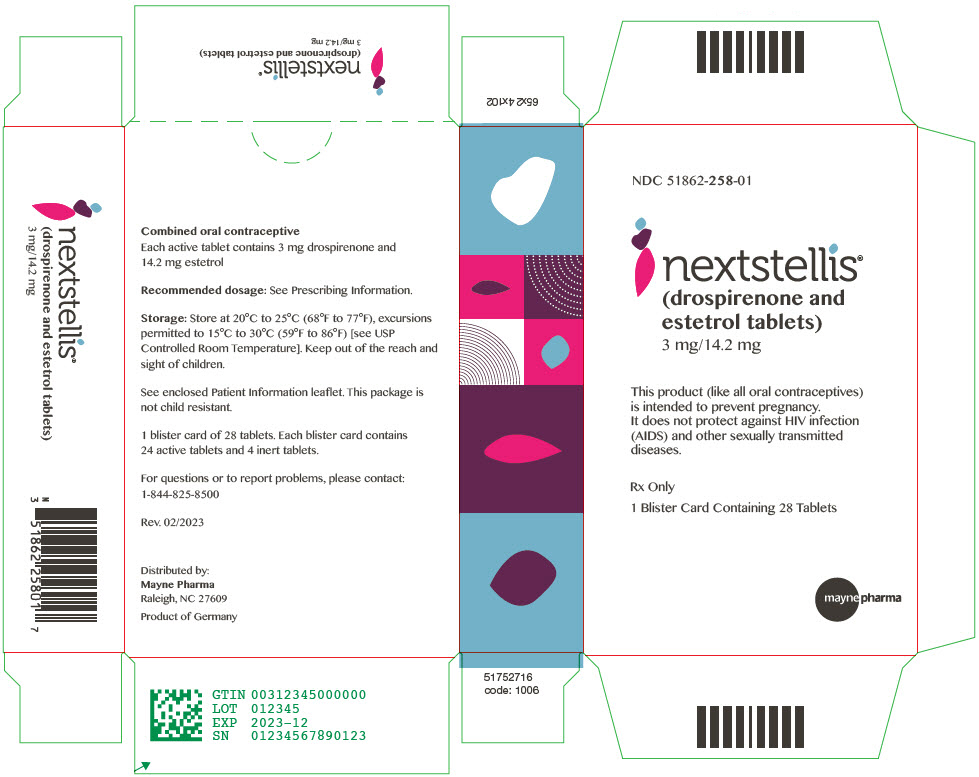
PRINCIPAL DISPLAY PANEL - Kit Carton NDC 51862-258-01 nextstellis ® (drospirenone and estetrol tablets) 3 mg/14.2 mg This product (like all oral contraceptives) is intended to prevent pregnancy. It does not protect against HIV infection (AIDS) and other sexually transmitted diseases. Rx Only 1 Blister Card Containing 28 Tablets mayne pharma PRINCIPAL DISPLAY PANEL - Kit Carton
Medicaid utilization by pack size
Medicare Part D spend CMS · PART D · 2026 (Q1)
About this NDC listing & data coverage
Kit / multi-component package
This NDC identifies a kit — a package containing more than one component. Structured data (pricing, ingredients, equivalents) is often reported per component rather than for the kit NDC itself, which can make this page look thinner than the components' own pages.
What data is (and isn’t) available for this NDC — tap to expand
| NDC identity (package / product / labeler codes) | ✓ Available |
| Labeler | ✓ Available |
| Product & package description | ✓ Available |
| Marketing category & status | ✓ Available |
| Active ingredient / dosage form / route | ✓ Available |
| FDA label (SPL via DailyMed) | ✓ Available |
| Package photos | ✓ Available |
| Inactive ingredients (structured) | — Not published for this NDC The labeler did not submit a structured excipient list, or no SPL is available. |
| NADAC pharmacy acquisition price (CMS) | — Not published for this NDC CMS publishes NADAC only for NDCs reported in its retail-pharmacy survey. |
| Orange Book / therapeutic-equivalence data | ✓ Available |
| HCPCS J-code billing crosswalk | — Not published for this NDC Most self-administered / retail products have no J-code — that is normal. |
| Medicaid utilization (CMS SDUD) | — Not published for this NDC CMS reports utilization only for NDCs with Medicaid claims above its privacy threshold. |