
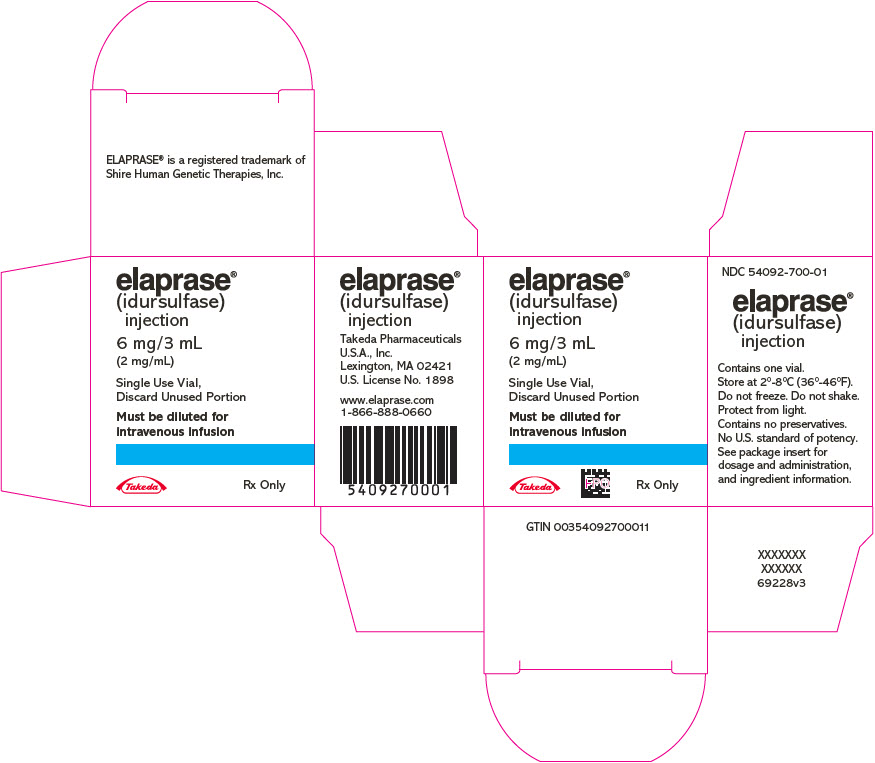
ELAPRASE idursulfase 6 mg/3mL Solution, Concentrate — NDC 54092-700-01 (Billing 54092-0700-01)
This is a package of ELAPRASE idursulfase 6 mg/3mL Solution, Concentrate from Takeda Pharmaceuticals America, Inc., marketed since Jul 2006 and currently FDA-listed. It is this product's only package size.
NDC database record
One package, one record: these facts belong to NDC 54092-700-01 alone.
- Record
- FDA NDC Directory package listing · Human prescription drug
- Code segments
- 54092 labeler · 700 product · 01 package
- Package marketed since
- Jul 24, 2006
- Sample package
- No — commercial package
- Listing certified through
- Dec 31, 2026
- Barcode (UPC-A, from the NDC)
- 3 5409270001 1
- Medicaid fills, this package
- 2,203 prescriptions in the last four reported quarters
- FDA record last changed
- Jul 24, 2026
Identity & classification
Regulatory identifiers FDA, NLM and CMS codes for this package
Drug-database identifiers Medi-Span GPI and First Databank GCN / HICL / AHFS classification
- GSN (GCN sequence number): 061253
- GCN: 97047
- GPI-14 (Medi-Span): 30906850002020
- HICL (First Databank): 033930
- AHFS class code: 44:00.00.00
- RxCUI (RxNorm): 644104
Where does this data come from?
- FDA openFDA NDC Directory · synced Oct 8, 2026
- FDA label on DailyMed · label index refreshed Oct 6, 2026
- RxNorm (NLM RxNav) · catalog refreshed Oct 1, 2026
- Medi-Span GPI (licensed)
- First Databank (licensed) · refreshed Oct 8, 2026
RxNorm drug class
This medicine belongs to the Hydrolytic Lysosomal Glycosaminoglycan-specific Enzyme class.
Where does this data come from?
- RxClass (NLM) · catalog refreshed Oct 1, 2026
Clinical
Idursulfase injection is used to improve walking ability in people with Hunter Syndrome ((mucopolysaccharidosis type II [MPS II)]; an inherited condition in which the body doesn't break down certain sugar substances in the body called glycosaminoglycans (GAG)). Idursulfase injection is in a class of medications called enzymes. It works by helping to reduce the levels of glycosaminoglycans in the body.
Read the full MedlinePlus article ↗Patient education
Supplement & herbal interactions
Where does this data come from?
- MedlinePlus (NLM) · refreshed Oct 1, 2026
- FDA label on DailyMed · label index refreshed Oct 6, 2026
Ask a licensed pharmacist directly — free, answered by our team.
Pricing
A drug doesn't have one price. Each row is a different public payment system, and none is what you'd pay at the counter — that depends on your insurance. The ⓘ on each row explains what it measures.
| Price system | Per mL | Per package |
|---|---|---|
| Retail pharmacies payNADAC · weekly | Not in the retail survey — common for institutional, discontinued, or low-volume packs. | |
| Medicaid paysCMS SDUD · 12 mo | $1,100.05 | $3,300.14 / 3 ml |
| Medicare drug plans payPart D · quarterly | No Part D plan price is available for this NDC in our data. | |
| Medicare Part B allowsASP · J1743 | $570.043 / J1743 unit | — |
Where does this data come from?
- CMS NADAC weekly file
- CMS ASP pricing files · refreshed Sep 20, 2026
- CMS Medicaid State Drug Utilization Data · through Q1 2026
- CMS Part D plan pricing files · refreshed Sep 24, 2026
- VA National Acquisition Center price file
Billing & reimbursement
Where does this data come from?
- CMS ASP NDC-HCPCS crosswalk · refreshed Sep 22, 2026
- DMEPDAC NDC-HCPCS crosswalk
- openFDA NSDE billing units · refreshed Oct 7, 2026
Packaging — all sizes for this product
| Package NDC | Description | Marketing start | Marketing end | Status |
|---|---|---|---|---|
| 54092-0700-01 You're viewing this Main listing | 1 VIAL, GLASS in 1 BOX / 3 mL in 1 VIAL, GLASS | 2006-07-24 | — | Active |
Therapeutic equivalents
| Product | Labeler | Pack | NADAC/unit | TE | Status | Price vs. this |
|---|---|---|---|---|---|---|
| Elaprase 6 mg/3mLthis 54092-0700-01 | Takeda | 1 vial | — | — | FDA listed | — |
Where does this data come from?
- FDA openFDA NDC Directory · synced Oct 8, 2026
- FDA Purple Book · refreshed Oct 5, 2026
- CMS NADAC weekly file
Availability & biosimilar status
Biologics have no small-molecule generics; biosimilar competition is tracked in the FDA Purple Book.
Where does this data come from?
- FDA Purple Book · refreshed Oct 5, 2026
Inactive Ingredients / Excipients
Inactive ingredients, also called excipients, are components of the drug product other than the active ingredient. They may include fillers, dyes, coatings, preservatives, flavors, or other formulation ingredients.
💡 Tap an ingredient (hover on desktop) to see what it is and why it’s used.
-
0.66 mg / 3 mL
UNII 7T1F30V5YH
A synthetic emulsifier derived from sorbitol and oleic acid. It helps mix oil and water-based ingredients together and keeps them from separating in liquid formulations.
-
24 mg / 3 mL
UNII 451W47IQ8X
Sodium chloride is common table salt. It's used in medicines as a buffer to maintain proper pH, as a filler to add bulk, or to adjust the osmotic balance in liquid formulations.
-
2.97 mg / 3 mL
UNII 70WT22SF4B
A mineral salt that acts as a buffer to maintain the pH balance of the medication. It helps stabilize the drug's potency and prevents unwanted chemical changes during storage.
-
6.75 mg / 3 mL
UNII 593YOG76RN
A salt made from sodium and phosphate that helps regulate acidity and maintain proper pH balance in the medicine. It also acts as a buffer to keep the product stable.
4 inactive ingredients listed in the exact product block matched to this NDC.
Where does this data come from?
ingredient classCode="IACT" elements from the exact product block matched by this NDC. Label-section narrative from DailyMed / the openFDA label index is shown separately when available.- FDA label on DailyMed · label index refreshed Oct 6, 2026
- FDA openFDA NDC Directory · synced Oct 8, 2026
Inactive ingredient FAQ
Are inactive ingredients the same for every manufacturer?
Why might an inactive ingredient be missing?
Can inactive ingredients matter?
Manufacturer & labeler
More NDCs from Takeda Pharmaceuticals America, Inc. labeler code 54092
- Intuniv guanfacine 1 mg Tablet, Extended Release NDC 54092-513-02
- Intuniv guanfacine 2 mg Tablet, Extended Release NDC 54092-515-02
- Intuniv guanfacine 3 mg Tablet, Extended Release NDC 54092-517-02
- Intuniv guanfacine 4 mg Tablet, Extended Release NDC 54092-519-02
- Motegrity Prucalopride 1 mg Tablet, Film Coated NDC 54092-546-01
- Motegrity Prucalopride 2 mg Tablet, Film Coated NDC 54092-547-01
- VPRIV velaglucerase alfa 2.5 mg/mL Injection, Powder, Lyophilized, For Solution NDC 54092-701-04
- Firazyr icatibant acetate 30 mg/3mL Injection, Solution NDC 54092-702-01
Where does this data come from?
- FDA openFDA NDC Directory · synced Oct 8, 2026
- Drugs@FDA
Full prescribing information FDA SPL
🚨 Boxed Warning ▾
WARNING: RISK OF ANAPHYLAXIS Life-threatening anaphylactic reactions have occurred in some patients during and up to 24 hours after ELAPRASE infusions. Anaphylaxis, presenting as respiratory distress, hypoxia, hypotension, urticaria and/or angioedema of throat or tongue have been reported to occur during and after ELAPRASE infusions, regardless of duration of the course of treatment. Closely observe patients during and after ELAPRASE administration and be prepared to manage anaphylaxis.
Inform patients of the signs and symptoms of anaphylaxis and have them seek immediate medical care should symptoms occur. Patients with compromised respiratory function or acute respiratory disease may be at risk of serious acute exacerbation of their respiratory compromise due to hypersensitivity reactions and require additional monitoring [see Warnings and Precautions (5.1 , 5.3) and Adverse Reactions (6) ] . WARNING: RISK OF ANAPHYLAXIS See full prescribing information for complete boxed warning.
Life-threatening anaphylactic reactions, presenting as respiratory distress, hypoxia, hypotension, urticaria and/or angioedema of throat or tongue have occurred in some patients during and up to 24 hours after ELAPRASE infusions. Closely observe patients during and after ELAPRASE administration and be prepared to manage anaphylaxis. Inform patients of the signs and symptoms of anaphylaxis and have them seek immediate medical care should symptoms occur.
Patients with compromised respiratory function or acute respiratory disease may be at risk of serious acute exacerbation of their respiratory compromise due to hypersensitivity reactions and require additional monitoring. ( 5.1 , 5.3 , 6 )
🎯 Indications and Usage ▾
1 INDICATIONS AND USAGE ELAPRASE is indicated for patients with Hunter syndrome (Mucopolysaccharidosis II, MPS II). ELAPRASE has been shown to improve walking capacity in patients 5 years and older. In patients 16 months to 5 years of age, no data are available to demonstrate improvement in disease-related symptoms or long term clinical outcome; however, treatment with ELAPRASE has reduced spleen volume similarly to that of adults and children 5 years of age and older.
The safety and efficacy of ELAPRASE have not been established in pediatric patients less than 16 months of age [see Use in Specific Populations (8.4) ]. ELAPRASE is a hydrolytic lysosomal glycosaminoglycan (GAG)-specific enzyme indicated for patients with Hunter syndrome (Mucopolysaccharidosis II, MPS II). ELAPRASE has been shown to improve walking capacity in patients 5 years and older.
In patients 16 months to 5 years of age, no data are available to demonstrate improvement in disease-related symptoms or long term clinical outcome; however, treatment with ELAPRASE has reduced spleen volume similarly to that of adults and children 5 years of age and older. The safety and efficacy of ELAPRASE have not been established in pediatric patients less than 16 months of age ( 1 ).
⏱️ Dosage and Administration ▾
2 DOSAGE AND ADMINISTRATION The recommended dosage is 0.5 mg per kg of body weight administered once every week as an intravenous infusion ( 2 ).
2.1Recommended Dose The recommended dosage regimen of ELAPRASE is 0.5 mg per kg of body weight administered once weekly as an intravenous infusion. Parenteral drug products should be inspected visually for particulate matter and discoloration prior to administration, whenever solution and container permit.
2.2Preparation Instructions Prepare and use ELAPRASE according to the following steps using aseptic technique: Determine the total volume of ELAPRASE to be administered and the number of vials needed based on the patient's weight and the recommended dose of 0.5 mg/kg. Patient's weight (kg) × 0.5 mg per kg of ELAPRASE ÷ 2 mg per mL = Total mL of ELAPRASE Total mL of ELAPRASE ÷ 3 mL per vial = Total number of vials Round up to the next whole vial to determine the total number of vials needed. Remove the required number of vials from the refrigerator to allow them to reach room temperature.
Before withdrawing the ELAPRASE solution from the vial, visually inspect each vial for particulate matter and discoloration. The ELAPRASE solution should be clear to slightly opalescent and colorless. Do not use if the solution is discolored or if there is particulate matter in the solution.
Do not shake the ELAPRASE solution. Withdraw the calculated volume of ELAPRASE from the appropriate number of vials. Add the calculated volume of ELAPRASE solution to a 100 mL bag of 0.9% Sodium Chloride Injection, USP for intravenous infusion.
Mix gently. Do not shake the solution.
2.3Administration Instructions Administer the diluted ELAPRASE solution to patients using a low-protein-binding infusion set equipped with a low-protein-binding 0.2 micrometer (µm) in-line filter. The total volume of infusion should be administered over a period of 3 hours, which may be gradually reduced to 1 hour if no hypersensitivity reactions are observed. Patients may require longer infusion times if hypersensitivity reactions occur; however, infusion times should not exceed 8 hours.
The initial infusion rate should be 8 mL per hour for the first 15 minutes. If the infusion is well tolerated, the rate of infusion may be increased by 8 mL per hour increments every 15 minutes. The infusion rate should not exceed 100 mL per hour.
The infusion rate may be slowed, temporarily stopped, or discontinued for that visit in the event of hypersensitivity reactions [see Warnings and Precautions (5.1) ] . ELAPRASE should not be infused with other products in the infusion tubing.
2.4Storage and Stability ELAPRASE does not contain preservatives; therefore, after dilution with saline, the infusion bags should be used immediately. If immediate use is not possible, the diluted solution should be stored refrigerated at 2°C to 8°C (36°F to 46 °F) for up to 24 hours. Other than during infusion, do not store the diluted ELAPRASE solution at room temperature.
Any unused product or waste material should be discarded and disposed of in accordance with local requirements.
💊 Dosage Forms and Strengths ▾
3 DOSAGE FORMS AND STRENGTHS Injection: 6 mg/3 mL (2 mg/mL) in single-use vials Injection: 6 mg/3 mL (2 mg/mL) in single-use vial ( 3 )
⛔ Contraindications ▾
4 CONTRAINDICATIONS None. None. ( 4 )
⚠️ Warnings and Cautions ▾
5 WARNINGS AND PRECAUTIONS Hypersensitivity Reactions Including Anaphylaxis : Ensure that personnel administering product are adequately trained in cardio-pulmonary resuscitative measures and have ready access to emergency medical services (EMS) ( 5.1 ). Risk of Hypersensitivity, Serious Adverse Reactions, and Antibody Development in Hunter Syndrome Patients with Severe Genetic Mutations : Hunter syndrome patients aged 7 years and younger with complete gene deletion, large gene rearrangement, nonsense, frameshift, or splice site mutations experienced a higher incidence of hypersensitivity reactions, serious adverse reactions, and anti-idursulfase antibody development ( 5.2 ).
Risk of Acute Respiratory Complications : Patients with compromised respiratory function or acute febrile or respiratory illness may be at higher risk of life-threatening complications from hypersensitivity reactions. Careful consideration should be given to the patient's clinical status prior to administration of ELAPRASE and consider delaying the ELAPRASE infusion ( 5.3 ).
5.1Hypersensitivity Reactions Including Anaphylaxis Serious hypersensitivity reactions, including anaphylaxis, have occurred during and up to 24 hours after infusion. Some of these reactions were life-threatening and included respiratory distress, hypoxia, hypotension, urticaria, and angioedema of the throat or tongue, regardless of duration of the course of treatment. If anaphylactic or other acute reactions occur, immediately discontinue the infusion of ELAPRASE and initiate appropriate medical treatment.
When severe reactions have occurred during clinical trials, subsequent infusions were managed with antihistamine and/or corticosteroids prior to or during infusions, a slower rate of ELAPRASE infusion, and/or early discontinuation of the ELAPRASE infusion [see Adverse Reactions (6) ] . In clinical trials with ELAPRASE, 16 of 108 (15%) patients experienced hypersensitivity reactions during 26 of 8,274 infusions (0.3%) that involved adverse events in at least two of the following three body systems: cutaneous, respiratory, or cardiovascular.
Of these 16 patients, 11 experienced anaphylactic reactions during 19 of 8,274 infusions (0.2%) with symptoms of bronchospasm, cyanosis, dyspnea, erythema, edema (facial and peripheral), flushing, rash, respiratory distress, urticaria, vomiting, and wheezing. In postmarketing reports, patients receiving ELAPRASE experienced anaphylactic reactions up to several years after initiating treatment. Some patients were reported to have repeated anaphylactic events over a two- to four-month time period.
Medical management included treatment with antihistamines, inhaled beta-adrenergic agonists, corticosteroids, oxygen, and vasopressors. Treatment was discontinued for some patients, while others continued treatment with premedication and a slower infusion rate. Due to the potential for severe reactions, appropriate medical support should be readily available when ELAPRASE is administered.
Observe patients closely for an appropriate period of time after administration of ELAPRASE, taking into account the time to onset of anaphylaxis seen in premarketing clinical trials and postmarketing reports. Inform patients of the signs and symptoms of anaphylaxis and instruct them to seek immediate medical care should signs and symptoms occur.
5.2Risk of Hypersensitivity, Serious Adverse Reactions, and Antibody Development in Hunter Syndrome Patients with Severe Genetic Mutations In the clinical trial of Hunter syndrome patients aged 7 years and younger, patients with complete gene deletion, large gene rearrangement, nonsense, frameshift, or splice site mutations experienced a higher incidence of hypersensitivity reactions, serious adverse reactions, and anti-idursulfase antibody development than Hunter syndrome patients with missense mutations. Eleven of 15 (73%) patients with complete gene deletion, large gene rearrangement, nonsense, frameshift, or splice site mu… [Excerpted — this section continues on DailyMed.]
🤒 Adverse Reactions ▾
6 ADVERSE REACTIONS The most common adverse reactions occurring in at least three patients (≥9%) aged five years and older were headache, pruritus, musculoskeletal pain, urticaria, diarrhea, and cough. The most common adverse reactions occurring in at least three patients (≥10%) aged seven years and younger were pyrexia, rash, vomiting, and urticaria. In all clinical trials, the most common adverse reactions requiring medical intervention were hypersensitivity reactions, and included rash, urticaria, pruritus, flushing, pyrexia, and headache ( 6.1 ).
To report SUSPECTED ADVERSE REACTIONS, contact Takeda Pharmaceuticals U.S.A., Inc. at 1-877-TAKEDA-7 (1-877-825-3327) or FDA at 1-800-FDA-1088 or www.fda.gov/medwatch.
6.1Clinical Trials Experience Because clinical trials are conducted under widely varying conditions, adverse reaction rates observed in the clinical trials of a drug cannot be directly compared to rates in the clinical trials of another drug and may not reflect the rates observed in practice. The following serious adverse reactions are described below and elsewhere in the labeling: Hypersensitivity Reactions Including Anaphylaxis [see Warnings and Precautions (5.1) ] In clinical trials, the most common adverse reactions (>10%) following ELAPRASE treatment were hypersensitivity reactions, and included rash, urticaria, pruritus, flushing, pyrexia, and headache.
Most hypersensitivity reactions requiring intervention were ameliorated with slowing of the infusion rate, temporarily stopping the infusion, with or without administering additional treatments including antihistamines, corticosteroids, or both prior to or during infusions. In clinical trials, the most frequent serious adverse reactions following ELAPRASE treatment were hypoxic episodes. Other notable serious adverse reactions that occurred in the ELAPRASE-treated patients but not in the placebo-treated patients included one case each of: cardiac arrhythmia, pulmonary embolism, cyanosis, respiratory failure, infection, and arthralgia.
Clinical Trials in Patients 5 Years and Older A 53-week, double-blind, placebo-controlled clinical trial of ELAPRASE was conducted in 96 male patients with Hunter syndrome, ages 5-31 years old. Of the 96 patients, 83% were White, non-Hispanic. Patients were randomized to three treatment groups, each with 32 patients: ELAPRASE 0.5 mg/kg once weekly, ELAPRASE 0.5 mg/kg every other week, or placebo.
Hypersensitivity reactions were reported in 69% (22 of 32) of patients who received once-weekly treatment of ELAPRASE. Table 1 summarizes the adverse reactions that occurred in at least 9% of patients (≥3 patients) in the ELAPRASE 0.5 mg/kg once weekly group and with a higher incidence than in the placebo group. Table 1.
Adverse Reactions that Occurred in the Placebo-Controlled Trial in At Least 9% of Patients in the ELAPRASE 0.5 mg/kg Once Weekly Group and with a Higher Incidence than in the Placebo Group (5 Years and Older) System Organ Class Adverse Reaction ELAPRASE (0.5 mg/kg weekly) N=32 n (%) Placebo N=32 n (%) Gastrointestinal disorder Diarrhea 3 (9%) 1 (3%) Musculoskeletal and Connective Tissue Disorders Musculoskeletal Pain 4 (13%) 1 (3%) Nervous system disorders Headache 9 (28%) 8 (25%) Respiratory, thoracic and mediastinal disorders Cough 3 (9%) 1 (3%) Skin and subcutaneous tissue disorders Pruritus 8 (25%) 3 (9%) Urticaria 5 (16%) 0 (0%) Additional adverse reactions that occurred in at least 9% of patients (≥3 patients) in the ELAPRASE 0.5 mg/kg every other week group and with a higher incidence than in the placebo group included: rash (19%), flushing (16%), fatigue (13%), tachycardia (9%), and chills (9%).
Extension Trial An open-label extension trial was conducted in patients who completed the placebo-controlled trial. Ninety-four of the 96 patients who were enrolled in the placebo-controlled trial consented to participate in the extension trial. All 94 patients received ELAPRASE 0.5 mg/kg once weekly for 24 months.
No new… [Excerpted — this section continues on DailyMed.]
👥 Use in Specific Populations ▾
8 USE IN SPECIFIC POPULATIONS
8.1Pregnancy Risk Summary There are no adequate and well-controlled studies with ELAPRASE use in pregnant women. Available data from a small number of postmarketing cases with ELAPRASE use in pregnancy are insufficient to inform drug-associated risks for major birth defects, miscarriage, or adverse maternal or fetal outcomes. In an animal reproduction study, no evidence of adverse effects on pre- and post-natal development was observed with twice weekly intravenous administration of idursulfase to pregnant rats from gestation day 6 through lactation day 19 at about 4 times the recommended human weekly dose of 0.5 mg/kg based on body surface area ( see Data ).
The estimated background risk of major birth defects and miscarriage for the indicated population is unknown. All pregnancies have a background risk of birth defect, loss, or other adverse outcomes. In the U.S. general population, the estimated background risk of major birth defects and miscarriage in clinically recognized pregnancies is 2% to 4% and 15% to 20%, respectively.
Data Animal Data In a pre- and post-natal development study, idursulfase was administered to pregnant rats twice weekly, intravenously, from gestation day 6 through lactation day 19. No significant adverse effects on pre- and post-natal development of the offspring were observed at twice weekly intravenous doses up to 12.5 mg/kg (about 4 times the recommended human weekly dose of 0.5 mg/kg based on body surface area).
8.2Lactation Risk Summary There are no data on the presence of idursulfase in human milk, the effects on the breastfed infant, or the effects on milk production. Idursulfase was excreted in breast milk of lactating rats ( see Data ). When a drug is present in animal milk, it is likely that the drug will be present in human milk.
The developmental and health benefits of breastfeeding should be considered along with the mother's clinical need for ELAPRASE and any potential adverse effects on the breastfed child from ELAPRASE or from the underlying maternal condition. Data Idursulfase was excreted in breast milk of lactating rats at a concentration higher (4- to 5-fold) than the maximum blood concentration, when administered as a single intravenous dose up to 2.5 mg/kg. The concentration of drug in animal milk does not necessarily predict the concentration of drug in human milk.
8.4Pediatric Use Clinical trials with ELAPRASE were conducted in 96 patients with Hunter syndrome, ages 5 to 31 years old, with the majority of the patients in the pediatric age group (median age 15 years old). In addition, an open-label, uncontrolled clinical trial was conducted in 28 patients with Hunter syndrome, ages 16 months to 7.5 years old. Patients 16 months to 5 years of age demonstrated reduction in spleen volume that was similar to that of adults and children 5 years and older.
However, there are no data to support improvement in disease-related symptoms or long term clinical outcome in patients 16 months to 5 years of age [see Clinical Studies (14) ] . The safety and effectiveness of ELAPRASE have not been established in pediatric patients less than 16 months of age.
8.5Geriatric Use Clinical studies of ELAPRASE did not include patients older than 31 years of age. It is not known whether older patients respond differently from younger patients.
🤰 Pregnancy ▾
8.1Pregnancy Risk Summary There are no adequate and well-controlled studies with ELAPRASE use in pregnant women. Available data from a small number of postmarketing cases with ELAPRASE use in pregnancy are insufficient to inform drug-associated risks for major birth defects, miscarriage, or adverse maternal or fetal outcomes. In an animal reproduction study, no evidence of adverse effects on pre- and post-natal development was observed with twice weekly intravenous administration of idursulfase to pregnant rats from gestation day 6 through lactation day 19 at about 4 times the recommended human weekly dose of 0.5 mg/kg based on body surface area ( see Data ).
The estimated background risk of major birth defects and miscarriage for the indicated population is unknown. All pregnancies have a background risk of birth defect, loss, or other adverse outcomes. In the U.S. general population, the estimated background risk of major birth defects and miscarriage in clinically recognized pregnancies is 2% to 4% and 15% to 20%, respectively.
Data Animal Data In a pre- and post-natal development study, idursulfase was administered to pregnant rats twice weekly, intravenously, from gestation day 6 through lactation day 19. No significant adverse effects on pre- and post-natal development of the offspring were observed at twice weekly intravenous doses up to 12.5 mg/kg (about 4 times the recommended human weekly dose of 0.5 mg/kg based on body surface area).
🧒 Pediatric Use ▾
8.4Pediatric Use Clinical trials with ELAPRASE were conducted in 96 patients with Hunter syndrome, ages 5 to 31 years old, with the majority of the patients in the pediatric age group (median age 15 years old). In addition, an open-label, uncontrolled clinical trial was conducted in 28 patients with Hunter syndrome, ages 16 months to 7.5 years old. Patients 16 months to 5 years of age demonstrated reduction in spleen volume that was similar to that of adults and children 5 years and older.
However, there are no data to support improvement in disease-related symptoms or long term clinical outcome in patients 16 months to 5 years of age [see Clinical Studies (14) ] . The safety and effectiveness of ELAPRASE have not been established in pediatric patients less than 16 months of age.
🧓 Geriatric Use ▾
8.5Geriatric Use Clinical studies of ELAPRASE did not include patients older than 31 years of age. It is not known whether older patients respond differently from younger patients.
🆘 Overdosage ▾
10 OVERDOSAGE One patient with Hunter syndrome, who received ELAPRASE at twice the recommended dosage for one and a half years, experienced two anaphylactic reactions over a 3-month period 4.5 years after initiating ELAPRASE treatment.
🧬 Clinical Pharmacology ▾
12 CLINICAL PHARMACOLOGY
12.1Mechanism of Action Hunter syndrome (Mucopolysaccharidosis II, MPS II) is an X-linked recessive disease caused by insufficient levels of the lysosomal enzyme iduronate-2-sulfatase. This enzyme cleaves the terminal 2- O -sulfate moieties from the glycosaminoglycans (GAG) dermatan sulfate and heparan sulfate. Due to the missing or defective iduronate-2-sulfatase enzyme in patients with Hunter syndrome, GAG progressively accumulate in the lysosomes of a variety of cells, leading to cellular engorgement, organomegaly, tissue destruction, and organ system dysfunction.
ELAPRASE is intended to provide exogenous enzyme for uptake into cellular lysosomes. Mannose-6-phosphate (M6P) residues on the oligosaccharide chains allow binding of the enzyme to the M6P receptors on the cell surface, leading to cellular internalization of the enzyme, targeting to intracellular lysosomes and subsequent catabolism of accumulated GAG.
12.2Pharmacodynamics Decreases in urinary GAG levels were observed following treatment with ELAPRASE. The responsiveness of urinary GAG to dosage alterations of ELAPRASE is unknown, and the relationship of urinary GAG to other measures of clinical response has not been established. Patients who tested positive for anti-idursulfase antibodies (Ab) experienced a less pronounced decrease in urinary GAG levels [see Adverse Reactions (6.2) and Clinical Studies (14.1 , 14.2) ] .
12.3Pharmacokinetics Clinical Trials in Patients 5 Years and Older The pharmacokinetic characteristics of idursulfase were evaluated in 59 patients with Hunter syndrome. The serum concentration of idursulfase was quantified using an antigen-specific ELISA assay. The area under the concentration-time curve (AUC) increased in a greater than dose proportional manner as the dose increased from 0.15 mg/kg to 1.5 mg/kg following a single 1-hour infusion of ELAPRASE.
The pharmacokinetic parameters at the recommended dose regimen (0.5 mg/kg ELAPRASE administered weekly as a 3-hour infusion) were determined at Week 1 and Week 27 in 10 patients 7.7 to 27 years of age (Table 3). There were no apparent differences in PK parameter values between Week 1 and Week 27 regardless of the antibody status in these patients. Table 3.
Pharmacokinetic Parameters in Patients 7.7 to 27 Years of Age Pharmacokinetic Parameter Week 1 Mean (SD) Week 27 Mean (SD) C max (mcg/mL) 1.5 (0.6) 1.1 (0.3) AUC (min•mcg/mL) 206 (87) 169 (55) t 1/2 (min) 44 (19) 48 (21) CL (mL/min/kg) 3.0 (1.2) 3.4 (1.0) V ss (mL/kg) 213 (82) 254 (87) Clinical Trial in Patients 7 Years and Younger Idursulfase pharmacokinetics was evaluated in 27 patients with Hunter syndrome 16 months to 7.5 years of age who received ELAPRASE 0.5 mg/kg once weekly as a 3-hour infusion. The presence of anti-idursulfase antibody (Ab) was associated with a reduced systemic exposure of idursulfase.
Eight of the 18 Ab-positive patients had no measurable idursulfase concentrations. An additional 9 Ab-positive patients had decreased C max , AUC, and t 1/2 at Week 27 compared to Week 1 (Table 4). Idursulfase pharmacokinetics was similar between Week 1 and Week 27 in Ab-negative patients (Table 4).
Table 4. Pharmacokinetic Parameters in Patients 16 months to
7.5Years of Age Week 1 Week 27 Pharmacokinetic Parameter (N=27) All Patients Mean (SD) Anti-idursulfase Antibodies (Ab) Positive anti-idursulfase antibody (Ab) is defined as having at least one serum specimen with measurable antibody during study duration. (n=9) Negative Ab Mean (SD) (n=10 Eight of 18 patients with positive Ab had no measurable concentrations at Week 27. ) Positive Ab Mean (SD) C max (mcg/mL) 1.33 (0.817) 1.40 (0.389) 0.706 (0.558) AUC (min•mcg/mL) 224 (76.9) N=26 281 (81.8) 122 (92.1) N=9 t 1/2 (min) 160 (69) 134 (19) 84 (46) CL (mL/min/kg) 2.4 (0.7) 2.0 (0.
8) 7.4 (6.0) V ss (mL/kg) 394 (423) 272 (112) 829 (636) All patients with the complete gene deletion or large gene rearrangement genotype (n=8) developed Ab at Week 27. Five of… [Excerpted — this section continues on DailyMed.]
🧬 Mechanism of Action ▾
12.1Mechanism of Action Hunter syndrome (Mucopolysaccharidosis II, MPS II) is an X-linked recessive disease caused by insufficient levels of the lysosomal enzyme iduronate-2-sulfatase. This enzyme cleaves the terminal 2- O -sulfate moieties from the glycosaminoglycans (GAG) dermatan sulfate and heparan sulfate. Due to the missing or defective iduronate-2-sulfatase enzyme in patients with Hunter syndrome, GAG progressively accumulate in the lysosomes of a variety of cells, leading to cellular engorgement, organomegaly, tissue destruction, and organ system dysfunction.
ELAPRASE is intended to provide exogenous enzyme for uptake into cellular lysosomes. Mannose-6-phosphate (M6P) residues on the oligosaccharide chains allow binding of the enzyme to the M6P receptors on the cell surface, leading to cellular internalization of the enzyme, targeting to intracellular lysosomes and subsequent catabolism of accumulated GAG.
📦 How Supplied / Storage and Handling ▾
16 HOW SUPPLIED/STORAGE AND HANDLING ELAPRASE is supplied as a sterile injection in a 5 mL Type I glass vial. The vials are closed with a butyl rubber stopper with fluororesin coating and an aluminum overseal with a blue flip-off plastic cap. Each carton contains a single vial NDC 54092-700-01 Store ELAPRASE vials in the carton at 2°C to 8°C (36°F to 46°F) to protect from light.
Do not freeze or shake. Do not use ELAPRASE after the expiration date on the vial.
📦 Storage and Handling ▾
Store ELAPRASE vials in the carton at 2°C to 8°C (36°F to 46°F) to protect from light. Do not freeze or shake. Do not use ELAPRASE after the expiration date on the vial.
📋 Description ▾
11 DESCRIPTION ELAPRASE is a formulation of idursulfase, a purified form of human iduronate-2-sulfatase, a lysosomal enzyme. Idursulfase is produced by recombinant DNA technology in a human cell line. Idursulfase is an enzyme that hydrolyzes the 2-sulfate esters of terminal iduronate sulfate residues from the glycosaminoglycans dermatan sulfate and heparan sulfate in the lysosomes of various cell types.
Idursulfase is a 525-amino acid glycoprotein with a molecular weight of approximately 76 kilodaltons. The enzyme contains eight asparagine-linked glycosylation sites occupied by complex oligosaccharide structures. The enzyme activity of idursulfase is dependent on the post-translational modification of a specific cysteine to formylglycine.
Idursulfase has a specific activity ranging from 46 to 74 units/mg of protein (one unit is defined as the amount of enzyme required to hydrolyze 1 micromole of heparin disaccharide substrate per hour under the specified assay conditions). ELAPRASE is administered as an intravenous infusion and supplied as a sterile, nonpyrogenic clear to slightly opalescent, colorless solution that must be diluted prior to administration in 0.9% Sodium Chloride Injection, USP. Each vial contains an extractable volume of 3 mL with an idursulfase concentration of 2 mg/mL at a pH of approximately 6.
Each vial contains 6 mg idursulfase, sodium chloride (24 mg), sodium phosphate monobasic monohydrate (6.75 mg), sodium phosphate dibasic heptahydrate (2.97 mg), and polysorbate 20 (0.66 mg). ELAPRASE does not contain preservatives. Each vial is for single use only.
💬 Information for Patients ▾
17 PATIENT COUNSELING INFORMATION Information for Patients Patients should be advised that life-threatening anaphylactic reactions have occurred in some patients during and up to 24 hours after ELAPRASE therapy. Patients who have experienced anaphylactic reactions may require prolonged observation. Patients with compromised respiratory function or acute respiratory disease may be at risk of serious acute exacerbation of their respiratory compromise due to hypersensitivity reactions.
A Hunter Outcome Survey has been established in order to understand better the variability and progression of Hunter syndrome (MPS II) in the population as a whole, and to monitor and evaluate long-term treatment effects of ELAPRASE. Patients and their physicians are encouraged to participate in this program. For more information, call Takeda Pharmaceuticals at 1-877-825-3327.
🧬 Pharmacokinetics ▾
12.3Pharmacokinetics Clinical Trials in Patients 5 Years and Older The pharmacokinetic characteristics of idursulfase were evaluated in 59 patients with Hunter syndrome. The serum concentration of idursulfase was quantified using an antigen-specific ELISA assay. The area under the concentration-time curve (AUC) increased in a greater than dose proportional manner as the dose increased from 0.15 mg/kg to 1.5 mg/kg following a single 1-hour infusion of ELAPRASE.
The pharmacokinetic parameters at the recommended dose regimen (0.5 mg/kg ELAPRASE administered weekly as a 3-hour infusion) were determined at Week 1 and Week 27 in 10 patients 7.7 to 27 years of age (Table 3). There were no apparent differences in PK parameter values between Week 1 and Week 27 regardless of the antibody status in these patients. Table 3.
Pharmacokinetic Parameters in Patients 7.7 to 27 Years of Age Pharmacokinetic Parameter Week 1 Mean (SD) Week 27 Mean (SD) C max (mcg/mL) 1.5 (0.6) 1.1 (0.3) AUC (min•mcg/mL) 206 (87) 169 (55) t 1/2 (min) 44 (19) 48 (21) CL (mL/min/kg) 3.0 (1.2) 3.4 (1.0) V ss (mL/kg) 213 (82) 254 (87) Clinical Trial in Patients 7 Years and Younger Idursulfase pharmacokinetics was evaluated in 27 patients with Hunter syndrome 16 months to 7.5 years of age who received ELAPRASE 0.5 mg/kg once weekly as a 3-hour infusion. The presence of anti-idursulfase antibody (Ab) was associated with a reduced systemic exposure of idursulfase.
Eight of the 18 Ab-positive patients had no measurable idursulfase concentrations. An additional 9 Ab-positive patients had decreased C max , AUC, and t 1/2 at Week 27 compared to Week 1 (Table 4). Idursulfase pharmacokinetics was similar between Week 1 and Week 27 in Ab-negative patients (Table 4).
Table 4. Pharmacokinetic Parameters in Patients 16 months to
7.5Years of Age Week 1 Week 27 Pharmacokinetic Parameter (N=27) All Patients Mean (SD) Anti-idursulfase Antibodies (Ab) Positive anti-idursulfase antibody (Ab) is defined as having at least one serum specimen with measurable antibody during study duration. (n=9) Negative Ab Mean (SD) (n=10 Eight of 18 patients with positive Ab had no measurable concentrations at Week 27. ) Positive Ab Mean (SD) C max (mcg/mL) 1.33 (0.817) 1.40 (0.389) 0.706 (0.558) AUC (min•mcg/mL) 224 (76.9) N=26 281 (81.8) 122 (92.1) N=9 t 1/2 (min) 160 (69) 134 (19) 84 (46) CL (mL/min/kg) 2.4 (0.7) 2.0 (0.
8) 7.4 (6.0) V ss (mL/kg) 394 (423) 272 (112) 829 (636) All patients with the complete gene deletion or large gene rearrangement genotype (n=8) developed Ab at Week 27. Five of these eight patients had no measurable idursulfase concentrations at Week 27, and three had a lower systemic exposure at Week 27 compared to Week 1.
🧬 Pharmacodynamics ▾
12.2Pharmacodynamics Decreases in urinary GAG levels were observed following treatment with ELAPRASE. The responsiveness of urinary GAG to dosage alterations of ELAPRASE is unknown, and the relationship of urinary GAG to other measures of clinical response has not been established. Patients who tested positive for anti-idursulfase antibodies (Ab) experienced a less pronounced decrease in urinary GAG levels [see Adverse Reactions (6.2) and Clinical Studies (14.1 , 14.2) ] .
🔬 Clinical Studies ▾
14 CLINICAL STUDIES
14.1Clinical Trials in Patients 5 Years and Older The safety and efficacy of ELAPRASE were evaluated in a 53-week, randomized, double-blind, placebo-controlled clinical trial of 96 patients with Hunter syndrome. The trial included patients with deficiency in iduronate-2-sulfatase enzyme activity and a percent predicted forced vital capacity (%-predicted FVC) less than 80%. The age of patients ranged from 5 to 31 years.
Patients received ELAPRASE 0.5 mg/kg once per week (n=32), ELAPRASE 0.5 mg/kg once every other week (n=32), or placebo (n=32). The primary efficacy outcome assessment was a two-component composite score based on the sum of the ranks of the change from baseline to Week 53 in distance walked in six minutes (6-minute walk test) and the ranks of the change in %-predicted FVC. This two-component composite primary endpoint differed statistically significantly between the three groups, and the difference was greatest between the placebo group and the once weekly treatment group (once weekly ELAPRASE vs. placebo, p=0.0049).
Examination of the individual components of the composite score showed that, in the adjusted analysis, the weekly ELAPRASE-treated group experienced a 35 meter greater mean increase in the distance walked in six minutes compared to placebo. The changes in %-predicted FVC were not statistically significant (Table 5). Table 5.
Clinical Trial Results ELAPRASE Weekly n=32 One patient in the placebo group and one patient in the ELAPRASE group died before Week 53; imputation was by last observation carried forward in the intent-to-treat analysis. Placebo n=32 ELAPRASE Once Weekly – Placebo Baseline Week 53 Change Change, calculated as Week 53 minus Baseline Baseline Week 53 Change Difference in Change Results from the 6-Minute Walk Test (Meters) Mean ± SD 392 ± 108 436 ± 138 44 ± 70 393 ± 106 400 ± 106 7 ± 54 37 ± 16 Observed mean ± SE 35 ± 14 ANCOVA model based mean ± SE, adjusted for baseline disease severity, region, and age.
(p=0.01) Median 397 429 31 403 412 -4 Percentiles (25 th , 75 th ) 316, 488 365, 536 0, 94 341, 469 361, 460 -30, 31 Results from the Forced Vital Capacity Test (% of Predicted) Mean ± SD 55.3 ± 15.9 58.7 ± 19.3 3.4 ± 10.0 55.6 ± 12.3 56.3 ± 15.7 0.8 ± 9.6 2.7 ± 2.5 4.3 ± 2.3 (p=0.07) Median 54.9 59.2 2.1 57.4 54.6 -2.5 Percentiles (25 th , 75 th ) 43.6, 69.3 44.4, 70.7 -0.8, 9.5 46.9, 64.4 43.8, 67.5 -5.4,
5.0Pharmacodynamic assessments included urinary GAG levels and changes in liver and spleen size. Urinary GAG levels were elevated in all patients at baseline. Following 53 weeks of treatment, mean urinary GAG levels were reduced in the ELAPRASE once weekly group, although GAG levels still remained above the upper limit of normal in half of the ELAPRASE-treated patients.
Urinary GAG levels remained elevated and essentially unchanged in the placebo group. Sustained reductions in both liver and spleen volumes were observed in the ELAPRASE once weekly group through Week 53 compared to placebo. There were essentially no changes in liver and spleen volumes in the placebo group.
Extension Trial Patients who participated in the placebo-controlled trial were eligible to continue treatment in an open-label extension trial. During the extension trial, all patients received ELAPRASE 0.5mg/kg once weekly for 24 months. Patients who were treated with ELAPRASE once weekly and every other week in the placebo-controlled trial demonstrated improvement in distance walked in the 6-minute walk test for an additional 8 months of treatment in the extension trial.
There was no change in mean %-predicted FVC in all Hunter syndrome patients after 6 months of treatment in the extension trial; however, a slight decrease in mean %-predicted FVC was demonstrated through to month 24 of the extension trial. The long-term effect of ELAPRASE on pulmonary function in Hunter syndrome patients is unclear. There were no further reductions in mean urinary GAG levels in patients initially treated… [Excerpted — this section continues on DailyMed.]
🧪 Nonclinical Toxicology ▾
13 NONCLINICAL TOXICOLOGY
13.1Carcinogenesis, Mutagenesis, Impairment of Fertility Long-term studies in animals to evaluate carcinogenic potential or studies to evaluate mutagenic potential have not been performed with ELAPRASE. ELAPRASE at intravenous doses up to 5 mg/kg administered twice weekly (about 1.6 times the recommended human weekly dose based on body surface area) had no effect on fertility and reproductive performance in male rats.
📄 Carcinogenesis, Mutagenesis, Impairment of Fertility ▾
13.1Carcinogenesis, Mutagenesis, Impairment of Fertility Long-term studies in animals to evaluate carcinogenic potential or studies to evaluate mutagenic potential have not been performed with ELAPRASE. ELAPRASE at intravenous doses up to 5 mg/kg administered twice weekly (about 1.6 times the recommended human weekly dose based on body surface area) had no effect on fertility and reproductive performance in male rats.
📄 Package Label / Principal Display Panel ▾
PRINCIPAL DISPLAY PANEL - 6 mg/3 mL Vial Carton elaprase ® (idursulfase) injection 6 mg/3 mL (2 mg/mL) Single Use Vial, Discard Unused Portion Must be diluted for intravenous infusion Rx Only Takeda PRINCIPAL DISPLAY PANEL - 6 mg/3 mL Vial Carton
Medicaid utilization & spend
Medicare Part D spend CMS · PART D · 2026 (Q1)
About this NDC listing & data coverage
What data is (and isn’t) available for this NDC — tap to expand
| NDC identity (package / product / labeler codes) | ✓ Available |
| Labeler | ✓ Available |
| Product & package description | ✓ Available |
| Marketing category & status | ✓ Available |
| Active ingredient / dosage form / route | ✓ Available |
| FDA label (SPL via DailyMed) | ✓ Available |
| Package photos | ✓ Available |
| Inactive ingredients (structured) | ✓ Available |
| NADAC pharmacy acquisition price (CMS) | — Not published for this NDC CMS publishes NADAC only for NDCs reported in its retail-pharmacy survey. |
| Orange Book / therapeutic-equivalence data | — Not published for this NDC Applies only to products approved under an NDA/ANDA; many listings are out of scope. |
| HCPCS J-code billing crosswalk | ✓ Available |
| Medicaid utilization (CMS SDUD) | ✓ Available |