
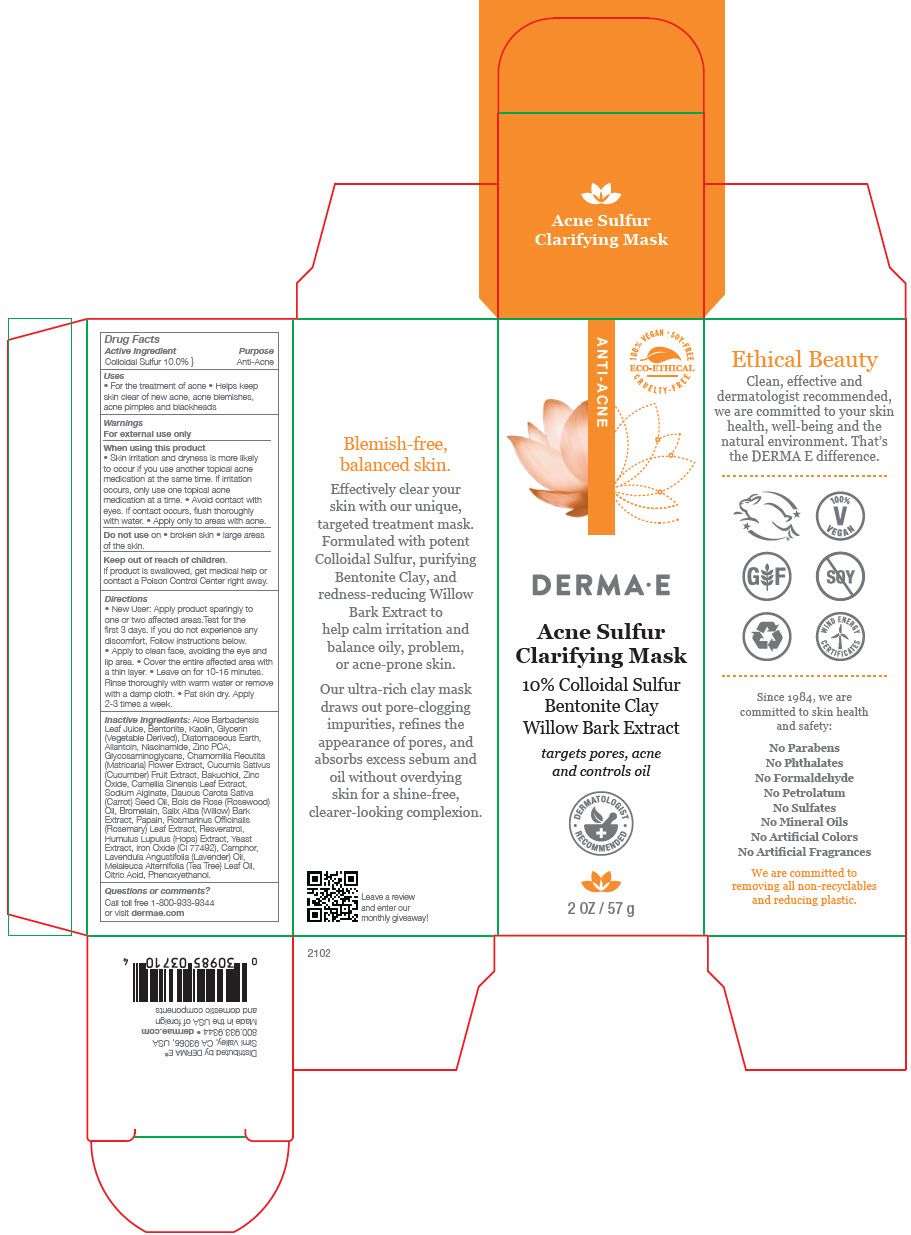
Derma E Acne Clarifying Mask Sulfur 100 mg/g Cream — NDC 54108-3710-5 (Billing 54108-3710-05)
This is a package of Derma E Acne Clarifying Mask Sulfur 100 mg/g Cream from derma e, marketed since Dec 2022 and currently FDA-listed. It is this product's only package size.
NDC database record
One package, one record: these facts belong to NDC 54108-3710-5 alone.
- Record
- FDA NDC Directory package listing · Human OTC drug
- Code segments
- 54108 labeler · 3710 product · 5 package
- Package marketed since
- Dec 14, 2022
- Sample package
- No — commercial package
- Listing certified through
- Dec 31, 2026
- Barcode (UPC-A, from the NDC)
- 3 5410837105 1
- FDA record last changed
- Jul 24, 2026
Identity & classification
Regulatory identifiers FDA, NLM and CMS codes for this package
- RxCUI (RxNorm): 315220
Where does this data come from?
- FDA openFDA NDC Directory · synced Oct 8, 2026
- FDA label on DailyMed · label index refreshed Oct 8, 2026
- RxNorm (NLM RxNav) · catalog refreshed Oct 8, 2026
- Medi-Span GPI (licensed)
- First Databank (licensed) · refreshed Oct 8, 2026
RxNorm drug class
This medicine belongs to the Preparations containing sulfur class.
Where does this data come from?
- RxClass (NLM) · catalog refreshed Oct 8, 2026
Clinical
Derma E Acne Clarifying Mask is an over-the-counter topical cream containing sulfur. Sulfur is commonly used in acne-care products for its keratolytic and antimicrobial properties. This product is marketed under FDA's over-the-counter monograph rules for acne treatments and is applied to the skin as directed on the package label. It is not an individually reviewed new drug application.
Patient education
Supplement & herbal interactions
Where does this data come from?
- MedlinePlus (NLM) · refreshed Oct 8, 2026
- FDA label on DailyMed · label index refreshed Oct 8, 2026
Ask a licensed pharmacist directly — free, answered by our team.
Pricing
A drug doesn't have one price. Each row is a different public payment system, and none is what you'd pay at the counter — that depends on your insurance. The ⓘ on each row explains what it measures.
| Price system | Per g | Per package |
|---|---|---|
| Retail pharmacies payNADAC · weekly | Not in the retail survey — common for institutional, discontinued, or low-volume packs. | |
| Medicaid paysCMS SDUD · 12 mo | No recent Medicaid claims on file for this NDC — rare and low-volume NDCs are suppressed in the public data. | |
| Medicare drug plans payPart D · quarterly | No Part D plan price is available for this NDC in our data. | |
Where does this data come from?
- CMS NADAC weekly file
- CMS ASP pricing files · refreshed Sep 20, 2026
- CMS Medicaid State Drug Utilization Data · refreshed Oct 9, 2026
- CMS Part D plan pricing files · refreshed Sep 24, 2026
- VA National Acquisition Center price file
Packaging — all sizes for this product
| Package NDC | Description | Marketing start | Marketing end | Status |
|---|---|---|---|---|
| 54108-3710-05 You're viewing this Main listing | 1 TUBE in 1 BOX / 57 g in 1 TUBE | 2022-12-14 | — | Active |
Therapeutic equivalents
| Product | Labeler | Pack | NADAC/unit | TE | Status | Price vs. this |
|---|---|---|---|---|---|---|
| Derma E Acne Clarifying Mask 100 mg/gthis 54108-3710-05 | derma | 1 tube | — | — | FDA listed | — |
| Anna Guanche MD Miracle Cream The Pimple Cream 100 mg/mL 80841-0100-01 | Bella | 29.5 ml | — | — | FDA listed | — |
| Sulfur Spot Treatment 10 g/100mL 85439-0102-01 | Banuskin, | 15 ml | — | — | FDA listed | — |
| Clinicians Complex 100 mg/g 72622-0001-01 | SkinSx.com, | 31 g | — | — | FDA listed | — |
| Clinicians Complex 100 mg/g 61352-0001-01 | Cosmed | 31 g | — | — | FDA listed | — |
Where does this data come from?
- FDA openFDA NDC Directory · synced Oct 8, 2026
- FDA Orange Book · refreshed Oct 3, 2026
- CMS NADAC weekly file
Availability & generic status
We did not find an FDA-approved generic match for this exact strength, form and route.
Where does this data come from?
- FDA Orange Book · refreshed Oct 3, 2026
What it looks like
Where does this data come from?
- FDA label on DailyMed · label index refreshed Oct 8, 2026
Inactive Ingredients / Excipients
Inactive ingredients, also called excipients, are components of the drug product other than the active ingredient. They may include fillers, dyes, coatings, preservatives, flavors, or other formulation ingredients.
💡 Tap an ingredient (hover on desktop) to see what it is and why it’s used.
-
UNII 344S277G0Z
Allantoin is a naturally derived compound that helps soften and soothe skin. In medicines, it works as a skin-conditioning agent and may help support wound healing and reduce irritation in topical formulations.
-
UNII ZY81Z83H0X
Aloe vera leaf is a plant extract derived from the aloe plant. It is used in medicines as a natural moisturizer and skin-soothing agent in topical formulations.
-
UNII OT12HJU3AR
A plant-derived compound used as a skin-conditioning agent and antioxidant in topical formulations. It helps stabilize the product and may improve skin feel and texture in creams or lotions.
-
UNII A3N5ZCN45C
Bentonite is a naturally occurring clay mineral used in medicines as a binder and absorbent. It helps hold tablet ingredients together and can absorb moisture or unwanted substances in the formulation.
-
UNII U182GP2CF3
Bromelain is an enzyme derived from pineapple plants that breaks down proteins. In medications, it acts as a disintegrant, helping tablets or capsules break apart and release their active ingredients more quickly in the digestive system.
-
UNII 5TJD82A1ET
A cooling crystalline substance made synthetically that is added to medicines as a fragrance, flavoring agent, and mild local irritant to produce a cooling or warming sensation on the skin or mucous membranes.
-
UNII 595AO13F11
Carrot seed oil is a plant-based oil extracted from carrot seeds. It's used in medicines as a flavor and fragrance component, and may help distribute active ingredients evenly throughout the formulation.
-
UNII 09FUA47KNA
Cetearyl glucoside is a plant-derived surfactant made from vegetable oils and glucose. It helps oils and water mix together in creams and lotions, and can also soften and smooth the skin feel of the product.
-
UNII 2DMT128M1S
A waxy solid derived from plant or animal sources. It acts as an emulsifier to blend oil and water components, and also thickens the medicine to give it the right texture and consistency.
-
UNII FGL3685T2X
Chamomile is a plant extract used in medications as a flavoring agent and for its mild soothing properties in formulations. It helps improve taste and aroma of the medicine.
-
UNII 2968PHW8QP
A weak organic acid derived from citrus fruits or made through fermentation. It works as a buffer to control pH, a preservative to extend shelf life, and a flavoring agent in medications.
-
UNII YY7C30VXJT
A natural plant extract from cucumber that adds flavor and freshness to medicines. It may also serve as a moisturizing agent or mild preservative in topical or oral formulations.
-
UNII 2RF6EJ0M85
Diatomaceous earth is a fine powder made from fossilized remains of diatoms, tiny aquatic organisms. It acts as a glidant and anti-caking agent, helping medicine flow smoothly during manufacturing and preventing clumping in the final product.
-
UNII G7036X8B5H
A dark iron compound that gives medicine its color. Used as a colorant in tablets and capsules to help identify the medication and make it visually distinctive.
-
UNII PDC6A3C0OX
Glycerin is a clear, thick liquid derived from plant oils or fats. It acts as a humectant to retain moisture, a sweetener, and a solvent in medications.
-
UNII W2ZU1RY8B0
A plant extract from green tea leaves. It's used as an antioxidant ingredient to help preserve the medicine and maintain its stability during storage.
-
UNII 01G73H6H83
A plant extract from hop flowers, commonly used in brewing. In medicines, hops may serve as a flavoring agent or natural preservative to help maintain product stability.
-
UNII 24H4NWX5CO
Kaolin is a naturally occurring clay mineral. It's used in tablets and capsules as a filler and absorbent to add bulk, improve texture, and help bind ingredients together.
-
UNII ZBP1YXW0H8
A fragrant oil extracted from lavender plants, used as a flavoring and scent agent in medicines to improve taste and aroma.
-
UNII 25X51I8RD4
Niacinamide is a form of vitamin B3, a water-soluble nutrient. In medicines, it may be added as a nutritional supplement or to support skin health, though its primary role here is as an active ingredient rather than a traditional inactive filler.
-
UNII A236A06Y32
Papain is an enzyme derived from papaya fruit. In medicines, it works as a proteolytic agent to help break down proteins and improve the dissolving or absorption of active ingredients in the formulation.
-
UNII HIE492ZZ3T
Phenoxyethanol is a synthetic preservative and antimicrobial agent used to prevent bacterial and fungal growth in medicines and cosmetic products, extending shelf life and maintaining product safety.
-
UNII Q369O8926L
Resveratrol is a plant-derived compound sometimes added to supplements and fortified products. It may serve as an active nutritional ingredient rather than a traditional inactive filler, though its exact formulation role varies by product.
-
UNII IJ67X351P9
A natural plant extract from rosemary leaves used as a preservative to help prevent oils and fats in the medicine from spoiling or becoming rancid during storage.
-
UNII F2522O5L7B
Rosewood oil is a fragrant plant extract used as a flavoring agent and fragrance component in medicines. It helps mask unpleasant tastes or odors in the medication.
-
UNII 205MXS71H7
A plant extract from white willow bark. It's used as a natural flavoring agent and may help preserve the medicine by providing mild antioxidant properties in the formulation.
-
UNII ETJ7Z6XBU4
Silicon dioxide is a naturally occurring mineral used as a glidant and anti-caking agent. It helps powder ingredients flow smoothly and prevents clumping during manufacturing and storage.
-
UNII C269C4G2ZQ
Sodium alginate is a natural thickener and gelling agent derived from seaweed. In medicines, it acts as a binder to hold ingredients together, a thickener to adjust texture, and a disintegrant to help the tablet or capsule break apart for absorption.
-
UNII VIF565UC2G
Tea tree oil is an essential oil extracted from the leaves of the Australian tea tree plant. In medicines, it typically serves as a flavoring agent, fragrance, or antimicrobial component in topical formulations.
-
UNII TTV12P4NEE
Xanthan gum is a thickening and stabilizing ingredient made from fermented corn or other sugars. It's added to medicines to improve texture, prevent separation of liquids and solids, and help the product stay consistent.
-
UNII 3NY3SM6B8U
A microorganism used as a natural source of B vitamins and proteins. In medications, yeast serves as a nutrient supplement and may help with tablet binding or act as a filler to give the product proper form and stability.
-
UNII SOI2LOH54Z
Zinc oxide is a white mineral powder used in medicines as a protective barrier agent and color additive. It helps shield skin in topical products and may also serve as a filler or opacifying ingredient.
-
UNII C32PQ86DH4
Zinc PCA is a zinc salt of pyroglutamic acid, a naturally occurring amino acid derivative. It's used in medications as a skin-conditioning agent and to help maintain product stability and texture in topical formulations.
33 inactive ingredients listed in the exact product block matched to this NDC.
Label-section wording can be broader than the structured product block and may mention additional formulation ingredients.
Where does this data come from?
ingredient classCode="IACT" elements from the exact product block matched by this NDC. Label-section narrative from DailyMed / the openFDA label index is shown separately when available.- FDA label on DailyMed · label index refreshed Oct 8, 2026
- FDA openFDA NDC Directory · synced Oct 8, 2026
Inactive ingredient FAQ
Are inactive ingredients the same for every manufacturer?
Why might an inactive ingredient be missing?
Can inactive ingredients matter?
Manufacturer & labeler
More NDCs from derma e labeler code 54108
- Derma E Sun Defense Face SPF 30 Zinc Oxide Titanium Dioxide 195 mg/g; 26.4 mg/g Lotion NDC 54108-0419-1
- Sun Defense Mineral Sunscreen SPF 30 Face Zinc Oxide 200 mg/g Cream NDC 54108-0420-1
- Derma E Sun Protection Mineral SPF 30 Zinc oxide 241 mg/g Powder NDC 54108-1486-1
- Sun Protection Mineral SPF 30 Zinc Oxide 245 mg/g Powder NDC 54108-1487-1
- Derma E Sun Drops SPF 30 Zinc Oxide 22 mg/mL Lotion NDC 54108-1488-1
- Acne Deep Pore Cleansing Wash SALICYLIC ACID 20 mg/mL Gel NDC 54108-3700-1
- Derma E Acne Cleansing Pads Salicylic Acid 190 mg/mL Cloth NDC 54108-3725-1
- Derma E Acne Blemish Control Treatment Serum Salicylic Acid 190 mg/mL Liquid NDC 54108-3851-1
- Derma E Acne Matte Moisturizer SALICYLIC ACID 5.3 mg/g Lotion NDC 54108-3900-1
- Scar Gel SPF 35 Zinc Oxide 117 mg/g Cream NDC 54108-8111-1
- Derma E Eczema Relief Oatmeal 10 mg/mL Lotion NDC 54108-8712-1
Where does this data come from?
- FDA openFDA NDC Directory · synced Oct 8, 2026
- Drugs@FDA
FDA label — Drug Facts FDA SPL
🎯 Indications and Usage ▾
Uses For the treatment of acne Helps keep skin clear of new acne, acne blemishes, acne pimples and blackheads
⏱️ Dosage and Administration ▾
Directions New User: Apply product sparingly to one or two affected areas.Test for the first 3 days. If you do not experience any discomfort, Follow instructions below. Apply to clean face, avoiding the eye and lip area. Cover the entire affected area with a thin layer. Leave on for 10-15 minutes. Rinse thoroughly with warm water or remove with a damp cloth. Pat skin dry. Apply 2-3 times a week.
⚠️ Warnings ▾
Warnings For external use only When using this product Skin irritation and dryness is more likely to occur if you use another topical acne medication at the same time. If irritation occurs, only use one topical acne medication at a time. Avoid contact with eyes.
If contact occurs, flush thoroughly with water. Apply only to areas with acne. Do not use on broken skin large areas of the skin.
Keep out of reach of children . If product is swallowed, get medical help or contact a Poison Control Center right away.
🧪 Active Ingredient ▾
Active Ingredient Colloidal Sulfur 10.0%
🧪 Inactive Ingredients ▾
Inactive Ingredients Aloe Barbadensis Leaf Juice, Bentonite, Kaolin, Glycerin (Vegetable Derived), Diatomaceous Earth, Allantoin, Niacinamide, Zinc PCA, Glycosaminoglycans, Chamomilla Recutita (Matricaria) Flower Extract, Cucumis Sativus (Cucumber) Fruit Extract, Bakuchiol, Zinc Oxide, Camellia Sinensis Leaf Extract, Sodium Alginate, Daucus Carota Sativa (Carrot) Seed Oil, Bois de Rose (Rosewood) Oil, Bromelain, Salix Alba (Willow) Bark Extract, Papain, Rosmarinus Officinalis (Rosemary) Leaf Extract, Resveratrol, Humulus Lupulus (Hops) Extract, Yeast Extract, Iron Oxide (CI 77492), Camphor, Lavendula Angustifolia (Lavender) Oil, Melaleuca Alternifolia (Tea Tree) Leaf Oil, Citric Acid, Phenoxyethanol.
🎯 Purpose ▾
Purpose Anti-Acne
📄 Do Not Use ▾
Do not use on broken skin large areas of the skin.
📄 When Using This Product ▾
When using this product Skin irritation and dryness is more likely to occur if you use another topical acne medication at the same time. If irritation occurs, only use one topical acne medication at a time. Avoid contact with eyes. If contact occurs, flush thoroughly with water. Apply only to areas with acne.
📄 Keep Out of Reach of Children ▾
Keep out of reach of children . If product is swallowed, get medical help or contact a Poison Control Center right away.
📄 Questions or Comments ▾
Questions or comments? Call toll free 1-800-933-9344 or visit dermae.com
📄 Package Label / Principal Display Panel ▾
PRINCIPAL DISPLAY PANEL - 57 g Tube Box ANTI-ACNE 100% VEGAN • SOY-FREE CRUELTY-FREE ECO-ETHICAL DERMA • E Acne Sulfur Clarifying Mask 10% Colloidal Sulfur Bentonite Clay Willow Bark Extract targets pores, acne and controls oil • DERMATOLOGIST RECOMMENDED • 2 OZ / 57 g PRINCIPAL DISPLAY PANEL - 57 g Tube Box
Reported adverse events (FAERS)
Top reported reactions
Age at onset
Reporter sex
Serious outcomes
Where does this data come from?
About this NDC listing & data coverage
What data is (and isn’t) available for this NDC — tap to expand
| NDC identity (package / product / labeler codes) | ✓ Available |
| Labeler | ✓ Available |
| Product & package description | ✓ Available |
| Marketing category & status | ✓ Available |
| Active ingredient / dosage form / route | ✓ Available |
| FDA label (SPL via DailyMed) | ✓ Available |
| Package photos | ✓ Available |
| Inactive ingredients (structured) | ✓ Available |
| NADAC pharmacy acquisition price (CMS) | — Not published for this NDC CMS publishes NADAC only for NDCs reported in its retail-pharmacy survey. |
| Orange Book / therapeutic-equivalence data | — Not published for this NDC Applies only to products approved under an NDA/ANDA; many listings are out of scope. |
| HCPCS J-code billing crosswalk | — Not published for this NDC Most self-administered / retail products have no J-code — that is normal. |
| Medicaid utilization (CMS SDUD) | — Not published for this NDC CMS reports utilization only for NDCs with Medicaid claims above its privacy threshold. |