
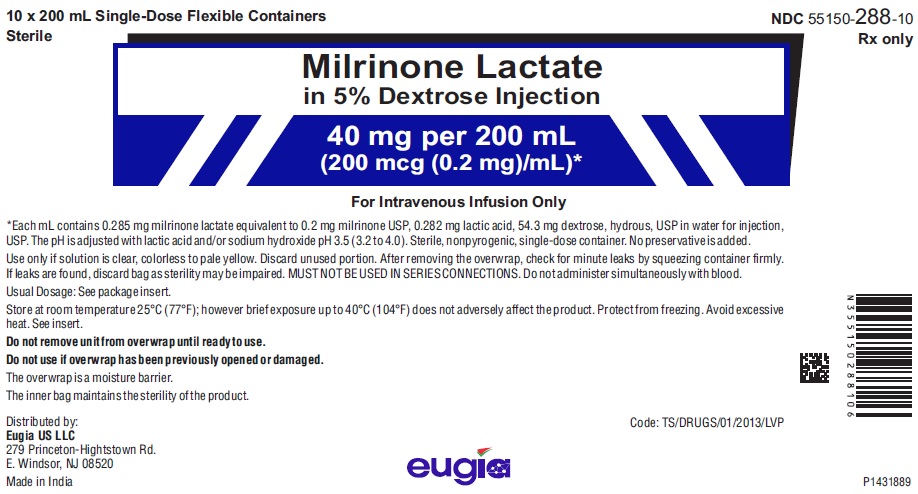
Milrinone Lactate .2 mg/mL Injection, Solution — NDC 55150-288-10 (Billing 55150-0288-10)
This is a package of Milrinone Lactate .2 mg/mL Injection, Solution from Eugia US LLC, marketed since Sep 2020 and currently FDA-listed. It is this product's only package size.
Identity & classification
Regulatory identifiers FDA, NLM and CMS codes for this package
Drug-database identifiers Medi-Span GPI and First Databank GCN / HICL / AHFS classification
- GSN (GCN sequence number): 064160
- GCN: 99866
- GPI-14 (Medi-Span): 31350050112060
- HICL (First Databank): 009744
- AHFS class code: 24:04.08.00
- RxCUI (RxNorm): 1791840
Where does this data come from?
- FDA openFDA NDC Directory · synced Oct 1, 2026
- FDA label on DailyMed · label index refreshed Oct 1, 2026
- RxNorm (NLM RxNav) · catalog refreshed Oct 1, 2026
- Medi-Span GPI (licensed)
- First Databank (licensed) · refreshed Oct 1, 2026
RxNorm drug class
This medicine belongs to the Phosphodiesterase 3 Inhibitor class.
Where does this data come from?
- RxClass (NLM) · catalog refreshed Oct 1, 2026
Clinical
- It is used for a short time to treat acute decompensated heart failure, which is heart failure that has suddenly worsened. It helps the heart pump better and relaxes blood vessels....
- A nurse or doctor gives it through an IV, often starting with a slow loading dose followed by a steady infusion. Your team adjusts the rate to how you respond. Treatment is meant t...
- Some people get headaches, low blood pressure, chest pain or abnormal heart rhythms. That is why you will be watched on a heart monitor. Tell your nurse right away if you feel a ra...
- Milrinone was used with many heart drugs, diuretics, blood thinners and insulin without problems in limited experience. One exception is furosemide, which should not go through the...
Patient education
Supplement & herbal interactions
Where does this data come from?
- MedlinePlus (NLM) · refreshed Oct 1, 2026
- FDA label on DailyMed · label index refreshed Oct 1, 2026
Ask a licensed pharmacist directly — free, answered by our team.
Pricing
A drug doesn't have one price. Each row is a different public payment system, and none is what you'd pay at the counter — that depends on your insurance. The ⓘ on each row explains what it measures.
| Price system | Per mL | Per package |
|---|---|---|
| Retail pharmacies payNADAC · weekly | Not in the retail survey — common for institutional, discontinued, or low-volume packs. | |
| Medicaid paysCMS SDUD · 12 mo | $0.1024 | $204.80 / 2000 ml |
| Medicare drug plans payPart D · quarterly | No Part D plan price is available for this NDC in our data. | |
| Medicare Part B allowsASP · J2260 | $1.098 / J2260 unit | — |
Where does this data come from?
- CMS NADAC weekly file
- CMS ASP pricing files · refreshed Sep 20, 2026
- CMS Medicaid State Drug Utilization Data · through Q1 2026
- CMS Part D plan pricing files · refreshed Sep 24, 2026
- VA National Acquisition Center price file
Billing & reimbursement
Where does this data come from?
- CMS ASP NDC-HCPCS crosswalk · refreshed Sep 22, 2026
- DMEPDAC NDC-HCPCS crosswalk
- openFDA NSDE billing units · refreshed Sep 7, 2026
Packaging — all sizes for this product
| Package NDC | Description | Marketing start | Marketing end | Status |
|---|---|---|---|---|
| 55150-0288-10 You're viewing this Main listing | 10 POUCH in 1 CARTON / 1 BAG in 1 POUCH / 200 mL in 1 BAG | 2020-09-03 | — | Active |
Therapeutic equivalents
| Product | Labeler | Pack | NADAC/unit | TE | Status | Price vs. this |
|---|---|---|---|---|---|---|
| Milrinone Lactate in Dextrose 200 ug/mL 00143-9718-10 | Hikma | 200 ml | — | AP | FDA listed | — |
| Milrinone Lactate in Dextrose .2 mg/mL 00338-6011-37 | Baxter | 200 ml | — | AP | FDA listed | — |
| Milrinone Lactate in Dextrose .2 mg/mL 00409-1983-10 | Hospira, | 10 pouches | — | AP | FDA listed | — |
| Milrinone Lactate in Dextrose .2 mg/mL 25021-0313-82 | Sagent | 100 ml | — | AP | FDA listed | — |
| Milrinone Lactate .2 mg/mLthis 55150-0288-10 | Eugia | 10 pouches | — | AP | FDA listed | — |
| Milrinone Lactate in 5% Dextrose .2 mg/mL 65145-0177-01 | Caplin | 1 pouch | — | AP | FDA listed | — |
| Milrinone Lactate in Dextrose .2 mg/mL 68083-0411-10 | Gland | 200 ml | — | AP | FDA listed | — |
| Milrinone Lactate in 5% Dextrose .2 mg/mL 70069-0873-10 | Somerset | 10 pouches | — | AP | FDA listed | — |
| Milrinone Lactate .2 mg/mL 55150-0287-10 | Eugia | 10 pouches | — | AP | FDA listed | — |
| Milrinone Lactate in 5% Dextrose .2 mg/mL 70069-0872-10 | Somerset | 10 pouches | — | AP | FDA listed | — |
| Milrinone Lactate in 5% Dextrose .2 mg/mL 65145-0176-01 | Caplin | 1 pouch | — | AP | FDA listed | — |
Where does this data come from?
- FDA openFDA NDC Directory · synced Oct 1, 2026
- FDA Orange Book · refreshed Sep 3, 2026
- CMS NADAC weekly file
Availability & generic status
This product is an FDA-approved generic. Other versions of the same drug are listed under Therapeutic equivalents, least expensive first.
Where does this data come from?
- FDA Orange Book · refreshed Sep 3, 2026
Inactive Ingredients / Excipients
Inactive ingredients, also called excipients, are components of the drug product other than the active ingredient. They may include fillers, dyes, coatings, preservatives, flavors, or other formulation ingredients.
Where does this data come from?
IACT rows and label-wide narrative are kept separate; availability and product-level specificity depend on the submitted label.- FDA label on DailyMed · label index refreshed Oct 1, 2026
- FDA openFDA NDC Directory · synced Oct 1, 2026
Inactive ingredient FAQ
Are inactive ingredients the same for every manufacturer?
Why might an inactive ingredient be missing?
Can inactive ingredients matter?
Manufacturer & labeler
Where does this data come from?
- FDA openFDA NDC Directory · synced Oct 1, 2026
- Drugs@FDA
Full prescribing information FDA SPL
🎯 Indications and Usage ▾
INDICATIONS AND USAGE Milrinone Lactate in 5% Dextrose Injection is indicated for the short-term intravenous treatment of patients with acute decompensated heart failure. Patients receiving milrinone should be observed closely with appropriate electrocardiographic equipment. The facility for immediate treatment of potential cardiac events, which may include life-threatening ventricular arrhythmias, must be available.
The majority of experience with intravenous milrinone has been in patients receiving digoxin and diuretics. There is no experience in controlled trials with infusions of milrinone for periods exceeding 48 hours.
⏱️ Dosage and Administration ▾
DOSAGE AND ADMINISTRATION Milrinone Lactate in 5% Dextrose Injection should be administered with a loading dose followed by a continuous infusion (maintenance dose) according to the following guidelines: Loading Dose 50 mcg/kg: Administer slowly over 10 minutes Note: Milrinone Lactate in 5% Dextrose Injection (200 mcg/mL) in Flexible Plastic Container is for intravenous infusion only. Dosage recommendations using a 1 mg/mL concentration of milrinone are included for informational purposes only. The table below shows the loading dose in milliliters (mL) of milrinone (1 mg/mL) by patient body weight (kg).
Loading Dose (mL) Using 1 mg/mL Concentration Patient Body Weight (kg) kg 30 40 50 60 70 80 90 100 110 120 mL 1.5 2.0 2.5 3.0 3.5 4.0 4.5 5.0 5.5
6.0The loading dose may be given undiluted, but diluting to a rounded total volume of 10 or 20 mL (see appropriate package insert for diluents) may simplify the visualization of the injection rate. Maintenance Dose Infusion Rate Total Daily Dose (24 Hours) Minimum 0.375 mcg/kg/min 0.59 mg/kg Administer as a continuous intravenous infusion Standard 0.5 mcg/kg/min 0.77 mg/kg Maximum 0.75 mcg/kg/min 1.13 mg/kg The infusion rate should be adjusted according to hemodynamic and clinical response. Patients should be closely monitored.
In controlled clinical studies, most patients showed an improvement in hemodynamic status as evidenced by increases in cardiac output and reductions in pulmonary capillary wedge pressure. Note: See " Dosage Adjustment in Renally Impaired Patients." Dosage may be titrated to the maximum hemodynamic effect and should not exceed 1.13 mg/kg/day. Duration of therapy should depend upon patient responsiveness.
The maintenance dose in mL/hr by patient body weight (kg) may be determined by reference to the following table. Milrinone Infusion Rate (mL/hr) Using 200 mcg/mL Concentration Maintenance Dose (mcg/kg/min) Patient Body Weight (kg) 30 40 50 60 70 80 90 100 110 120 0.375 3.4 4.5 5.6 6.8 7.9 9.0 10.1 11.3 12.4 13.5 0.4 3.6 4.8 6.0 7.2 8.4 9.6 10.8 12.0 13.2 14.4 0.5 4.5 6.0 7.5 9.0 10.5 12.0 13.5 15.0 16.5 18.0 0.6 5.4 7.2 9.0 10.8 12.6 14.4 16.2 18.0 19.8 21.6 0.7 6.3 8.4 10.5 12.6 14.7 16.8 18.9 21.0 23.1 25.2 0.75 6.8 9.0 11.3 13.5 15.8 18.0 20.3 22.5 24.8
27.0Dosage Adjustment in Renally Impaired Patients Data obtained from patients with severe renal impairment (creatinine clearance = 0 to 30 mL/min) but without congestive heart failure have demonstrated that the presence of renal impairment significantly increases the terminal elimination half-life of milrinone. Reductions in infusion rate may be necessary in patients with renal impairment. For patients with clinical evidence of renal impairment, the recommended infusion rate can be obtained from the following table: Creatinine Clearance (mL/min/1.73 m 2 ) Infusion Rate (mcg/kg/min) 5 0.2 10 0.23 20 0.28 30 0.33 40 0.38 50
0.43Parenteral drug products should be inspected visually for particulate matter and discoloration prior to administration, whenever solution and container permit. Milrinone Lactate in 5% Dextrose Injection is a clear, colorless to pale yellow solution.
⛔ Contraindications ▾
CONTRAINDICATIONS Milrinone is contraindicated in patients who are hypersensitive to it. Solutions containing dextrose may be contraindicated in patients with known allergy to corn or corn products.
⚠️ Warnings ▾
WARNINGS Whether given orally or by continuous or intermittent intravenous infusion, milrinone has not been shown to be safe or effective in the longer (greater than 48 hours) treatment of patients with heart failure. In a multicenter trial of 1088 patients with Class III and IV heart failure, long-term oral treatment with milrinone was associated with no improvement in symptoms and an increased risk of hospitalization and death. In this study, patients with Class IV symptoms appeared to be at particular risk of life-threatening cardiovascular reactions.
There is no evidence that milrinone given by long-term continuous or intermittent infusion does not carry a similar risk. The use of milrinone both intravenously and orally has been associated with increased frequency of ventricular arrhythmias, including nonsustained ventricular tachycardia. Long-term oral use has been associated with an increased risk of sudden death.
Hence, patients receiving milrinone should be observed closely with the use of continuous electrocardiographic monitoring to allow the prompt detection and management of ventricular arrhythmias.
🤒 Adverse Reactions ▾
ADVERSE REACTIONS Cardiovascular Effects In patients receiving milrinone in Phase II and III clinical trials, ventricular arrhythmias were reported in 12.1%: Ventricular ectopic activity, 8.5%; nonsustained ventricular tachycardia, 2.8%; sustained ventricular tachycardia, 1% and ventricular fibrillation, 0.2% (2 patients experienced more than one type of arrhythmia). Holter recordings demonstrated that in some patients injection of milrinone increased ventricular ectopy, including nonsustained ventricular tachycardia.
Life-threatening arrhythmias were infrequent and when present have been associated with certain underlying factors such as preexisting arrhythmias, metabolic abnormalities (e.g. hypokalemia), abnormal digoxin levels and catheter insertion. Milrinone was not shown to be arrhythmogenic in an electrophysiology study. Supraventricular arrhythmias were reported in 3.8% of the patients receiving milrinone.
The incidence of both supraventricular and ventricular arrhythmias has not been related to the dose or plasma milrinone concentration. Other cardiovascular adverse reactions include hypotension, 2.9% and angina/chest pain, 1.2%. In the post-marketing experience, there have been rare cases of “torsades de pointes” reported.
CNS Effects Headaches, usually mild to moderate in severity, have been reported in 2.9% of patients receiving milrinone. Other Effects Other adverse reactions reported, but not definitely related to the administration of milrinone include hypokalemia, 0.6%; tremor, 0.4%; and thrombocytopenia, 0.4%. Post-Marketing Adverse Event Reports In addition to adverse events reported from clinical trials, the following events have been reported from worldwide post-marketing experience with Milrinone: Isolated spontaneous reports of bronchospasm and anaphylactic shock.
Liver function test abnormalities and skin reactions such as rash. Administration site conditions: Infusion site reaction.
🔄 Drug Interactions ▾
Drug Interactions No untoward clinical manifestations have been observed in limited experience with patients in whom milrinone was used concurrently with the following drugs: digitalis glycosides; lidocaine, quinidine; hydralazine, prazosin; isosorbide dinitrate, nitroglycerin; chlorthalidone, furosemide, hydrochlorothiazide, spironolactone; captopril; heparin, warfarin, diazepam, insulin; and potassium supplements.
🤰 Pregnancy ▾
Pregnancy Category C Oral administration of milrinone to pregnant rats and rabbits during organogenesis produced no evidence of teratogenicity at dose levels up to 40 mg/kg/day and 12 mg/kg/day, respectively. Milrinone did not appear to be teratogenic when administered intravenously to pregnant rats at doses up to 3 mg/kg/day (about 2.5 times the maximum recommended clinical intravenous dose) or pregnant rabbits at doses up to 12 mg/kg/day, although an increased resorption rate was apparent at both 8 mg/kg/day and 12 mg/kg/day (intravenous) in the latter species.
There are no adequate and well-controlled studies in pregnant women. Milrinone should be used during pregnancy only if the potential benefit justifies the potential risk to the fetus.
🧒 Pediatric Use ▾
Pediatric Use Safety and effectiveness in pediatric patients have not been established.
🧓 Geriatric Use ▾
Use in Elderly Patients There are no special dosage recommendations for the elderly patient. Ninety percent of all patients administered milrinone in clinical studies were within the age range of 45 to 70 years, with a mean age of 61 years. Patients in all age groups demonstrated clinically and statistically significant responses.
No age-related effects on the incidence of adverse reactions have been observed. Controlled pharmacokinetic studies have not disclosed any age-related effects on the distribution and elimination of milrinone.
🆘 Overdosage ▾
OVERDOSAGE Doses of milrinone may produce hypotension because of its vasodilator effect. If this occurs, administration of milrinone should be reduced or temporarily discontinued until the patient’s condition stabilizes. No specific antidote is known, but general measures for circulatory support should be taken.
🧬 Clinical Pharmacology ▾
CLINICAL PHARMACOLOGY Milrinone is a positive inotrope and vasodilator, with little chronotropic activity different in structure and mode of action from either the digitalis glycosides or catecholamines. Milrinone, at relevant inotropic and vasorelaxant concentrations, is a selective inhibitor of peak III cAMP phosphodiesterase isozyme in cardiac and vascular muscle. This inhibitory action is consistent with cAMP mediated increases in intracellular ionized calcium and contractile force in cardiac muscle, as well as with cAMP dependent contractile protein phosphorylation and relaxation in vascular muscle.
Additional experimental evidence also indicates that milrinone is not a beta-adrenergic agonist nor does it inhibit sodium-potassium adenosine triphosphatase activity as do the digitalis glycosides. Clinical studies in patients with congestive heart failure have shown that milrinone produces dose-related and plasma drug concentration-related increases in the maximum rate of increase of left ventricular pressure. Studies in normal subjects have shown that milrinone produces increases in the slope of the left ventricular pressure-dimension relationship, indicating a direct inotropic effect of the drug.
Milrinone also produces dose-related and plasma concentration-related increases in forearm blood flow in patients with congestive heart failure, indicating a direct arterial vasodilator activity of the drug. Both the inotropic and vasodilatory effects have been observed over the therapeutic range of plasma milrinone concentrations of 100 ng/mL to 300 ng/mL. In addition to increasing myocardial contractility, milrinone improves diastolic function as evidenced by improvements in left ventricular diastolic relaxation.
The acute administration of intravenous milrinone has also been evaluated in clinical trials in excess of 1600 patients, with chronic heart failure, heart failure associated with cardiac surgery, and heart failure associated with myocardial infarction. The total number of deaths, either on therapy or shortly thereafter (24 hours) was 15, less than 0.9%, few of which were thought to be drug-related. PHARMACOKINETICS Following intravenous injections of 12.5 mcg/kg to 125 mcg/kg to congestive heart failure patients, milrinone had a volume of distribution of 0.38 liters/kg, a mean terminal elimination half-life of 2.3 hours, and a clearance of 0.13 liters/kg/hr.
Following intravenous infusions of 0.20 mcg/kg/min to 0.70 mcg/kg/min to congestive heart failure patients, the drug had a volume of distribution of about 0.45 liters/kg, a mean terminal elimination half-life of 2.4 hours, and a clearance of 0.14 liters/kg/hr. These pharmacokinetic parameters were not dose-dependent, and the area under the plasma concentration versus time curve following injections was significantly dose-dependent. Milrinone has been shown (by equilibrium dialysis) to be approximately 70% bound to human plasma protein.
The primary route of excretion of milrinone in man is via the urine. The major urinary excretions of orally administered milrinone in man are milrinone (83%) and its O-glucuronide metabolite (12%). Elimination in normal subjects via the urine is rapid, with approximately 60% recovered within the first two hours following dosing and approximately 90% recovered within the first eight hours following dosing.
The mean renal clearance of milrinone is approximately 0.3 liters/min, indicative of active secretion. PHARMACODYNAMICS In patients with heart failure due to depressed myocardial function, milrinone produced a prompt dose and plasma concentration related increase in cardiac output and decreases in pulmonary capillary wedge pressure and vascular resistance, which were accompanied by mild-to-moderate increases in heart rate. Additionally, there is no increased effect on myocardial oxygen consumption.
In uncontrolled studies, hemodynamic improvement during intravenous therapy with milrinone was accompanied by clinical symptomatic improv… [Excerpted — this section continues on DailyMed.]
📦 How Supplied / Storage and Handling ▾
HOW SUPPLIED Milrinone Lactate in 5% Dextrose Injection is a clear, colorless to pale yellow solution and is supplied in Flexible Plastic Containers as follows: 20 mg per 100 mL (200 mcg (0.2 mg)/mL) 100 mL Single-Dose Flexible Containers packaged in a Carton of 10 NDC 55150-287-10 40 mg per 200 mL (200 mcg (0.2 mg)/mL) 200 mL Single-Dose Flexible Containers packaged in a Carton of 10 NDC 55150-288-10 Exposure of pharmaceutical products to heat should be minimized. Avoid excessive heat. Protect from freezing.
It is recommended that the product be stored at room temperature, 25°C (77°F); however, brief exposure up to 40°C (104°F) does not adversely affect the product. Discard unused portion. The container closure is not made with natural rubber latex.
Distributed by: Eugia US LLC 279 Princeton-Hightstown Rd. E. Windsor, NJ 08520 Manufactured by: Eugia Pharma Specialities Limited Hyderabad - 500032 India Revised: February 2023
📋 Description ▾
DESCRIPTION Milrinone lactate is a member of a new class of bipyridine inotropic/vasodilator agents with phosphodiesterase inhibitor activity, distinct from digitalis glycosides or catecholamines. Milrinone lactate is designated chemically as 1,6-dihydro-2-methyl-6-oxo-[3,4’-bipyridine]-5-carbonitrile lactate and has the following structure: Milrinone, USP is a white to tan crystalline powder with a molecular weight of 211.2 and a molecular formula of C 12 H 9 N 3 O. It is slightly soluble in methanol, and very slightly soluble in chloroform and in water.
As the lactate salt, it is stable and clear, colorless to pale yellow solution. Milrinone is available as sterile aqueous solutions of the lactate salt of milrinone for infusion intravenously. The flexible containers provide two ready-to-use dilutions of milrinone in volumes of 100 mL and 200 mL of 5% Dextrose Injection.
Each mL contains 285 mcg milrinone lactate equivalent to 200 mcg milrinone USP. The nominal concentration of lactic acid is 0.282 mg/mL. Each mL also contains 54.3 mg Dextrose Hydrous, USP.
The pH is adjusted with lactic acid and/or sodium hydroxide pH 3.5 (3.2 to 4.0). The flexible plastic container is made up of multilayer polypropylene with a foil overwrap. Solutions in contact with the plastic container leach out certain chemical components from the plastic in very small amounts; however, biological testing was supportive of the safety of the plastic container materials.
The flexible container has a foil overwrap. Water can permeate the plastic into the overwrap, but the amount is insufficient to significantly affect the premixed solution. Milrinone Lactate Chemical Structure
💬 Information for Patients ▾
Use in Acute Myocardial Infarction No clinical studies have been conducted in patients in the acute phase of post myocardial infarction. Until further clinical experience with this class of drugs is gained, milrinone is not recommended in these patients.
⚠️ Precautions ▾
PRECAUTIONS General Milrinone should not be used in patients with severe obstructive aortic or pulmonic valvular disease in lieu of surgical relief of the obstruction. Like other inotropic agents, it may aggravate outflow tract obstruction in hypertrophic subaortic stenosis. Supraventricular and ventricular arrhythmias have been observed in the high-risk population treated.
In some patients, injections of milrinone and oral milrinone have been shown to increase ventricular ectopy, including nonsustained ventricular tachycardia. The potential for arrhythmia, present in congestive heart failure itself, may be increased by many drugs or combinations of drugs. Patients receiving milrinone should be closely monitored during infusion.
Milrinone produces a slight shortening of AV node conduction time, indicating a potential for an increased ventricular response rate in patients with atrial flutter/fibrillation which is not controlled with digitalis therapy. During therapy with milrinone, blood pressure and heart rate should be monitored and the rate of infusion slowed or stopped in patients showing excessive decreases in blood pressure. If prior vigorous diuretic therapy is suspected to have caused significant decreases in cardiac filling pressure, milrinone should be cautiously administered with monitoring of blood pressure, heart rate, and clinical symptomatology.
There is no experience in controlled trials with infusions of milrinone for periods exceeding 48 hours. Cases of infusion site reaction have been reported with intravenous milrinone therapy (see ADVERSE REACTIONS ). Consequently, careful monitoring of the infusion site should be maintained to avoid possible extravasation.
Use in Acute Myocardial Infarction No clinical studies have been conducted in patients in the acute phase of post myocardial infarction. Until further clinical experience with this class of drugs is gained, milrinone is not recommended in these patients. Laboratory Tests Fluid and electrolytes: Fluid and electrolyte changes and renal function should be carefully monitored during therapy with milrinone.
Improvement in cardiac output with resultant diuresis may necessitate a reduction in the dose of diuretic. Potassium loss due to excessive diuresis may predispose digitalized patients to arrhythmias. Therefore, hypokalemia should be corrected by potassium supplementation in advance of or during use of milrinone.
Drug Interactions No untoward clinical manifestations have been observed in limited experience with patients in whom milrinone was used concurrently with the following drugs: digitalis glycosides; lidocaine, quinidine; hydralazine, prazosin; isosorbide dinitrate, nitroglycerin; chlorthalidone, furosemide, hydrochlorothiazide, spironolactone; captopril; heparin, warfarin, diazepam, insulin; and potassium supplements. Chemical Interactions There is an immediate chemical interaction which is evidenced by the formation of a precipitate when furosemide is injected into an intravenous line of an infusion of milrinone.
Therefore, furosemide should not be administered in intravenous lines containing milrinone. Carcinogenesis, Mutagenesis, Impairment of Fertility Twenty-four months of oral administration of milrinone to mice at doses up to 40 mg/kg/day (about 50 times the human oral therapeutic dose in a 50 kg patient) was unassociated with evidence of carcinogenic potential. Neither was there evidence of carcinogenic potential when milrinone was orally administered to rats at doses up to 5 mg/kg/day (about 6 times the human oral therapeutic dose) for twenty-four months or at 25 mg/kg/day (about 30 times the human oral therapeutic dose) for up to 18 months in males and 20 months in females.
Whereas the Chinese Hamster Ovary Chromosome Aberration Assay was positive in the presence of a metabolic activation system, results from the Ames Test, the Mouse Lymphoma Assay, the Micronucleus Test, and the in vivo Rat Bone Marrow Metaphase Analysis indicated an absen… [Excerpted — this section continues on DailyMed.]
🍼 Nursing Mothers ▾
Nursing Mothers Caution should be exercised when milrinone is administered to nursing women, since it is not known whether it is excreted in human milk.
📄 Carcinogenesis, Mutagenesis, Impairment of Fertility ▾
Carcinogenesis, Mutagenesis, Impairment of Fertility Twenty-four months of oral administration of milrinone to mice at doses up to 40 mg/kg/day (about 50 times the human oral therapeutic dose in a 50 kg patient) was unassociated with evidence of carcinogenic potential. Neither was there evidence of carcinogenic potential when milrinone was orally administered to rats at doses up to 5 mg/kg/day (about 6 times the human oral therapeutic dose) for twenty-four months or at 25 mg/kg/day (about 30 times the human oral therapeutic dose) for up to 18 months in males and 20 months in females.
Whereas the Chinese Hamster Ovary Chromosome Aberration Assay was positive in the presence of a metabolic activation system, results from the Ames Test, the Mouse Lymphoma Assay, the Micronucleus Test, and the in vivo Rat Bone Marrow Metaphase Analysis indicated an absence of mutagenic potential. In reproductive performance studies in rats, milrinone had no effect on male or female fertility at oral doses up to 32 mg/kg/day.
📄 Package Label / Principal Display Panel ▾
PACKAGE LABEL-PRINCIPAL DISPLAY PANEL - 20 mg per 100 mL (200 mcg (0.2 mg) / mL) - Infusion Bag Label 100 mL Single Dose Flexible Container NDC 55150-287-01 Sterile Rx only Milrinone Lactate in 5% Dextrose Injection 20 mg per 100 mL (200 mcg (0.2 mg) / mL)* For Intravenous Infusion Only *Each mL contains 0.285 mg milrinone lactate equivalent to 0.2 mg milrinone USP, 0.282 mg lactic acid, 54.3 mg dextrose, hydrous, USP in water for injection, USP. The pH is adjusted with lactic acid and/or sodium hydroxide pH 3.5 (3.2 to 4.0).
No preservative is added. Sterile, nonpyrogenic, single dose. Usual Dosage: Intravenously as directed by a physician.
See package insert. Cautions: Check for minute leaks by squeezing bag firmly. If leaks are found, discard bag as sterility may be impaired.
MUST NOT BE USED IN SERIES CONNECTIONS. Do not administer simultaneously with blood. Use only if solution is clear, colorless to pale yellow.
Recommended storage: Store at room temperature 25°C (77°F); however brief exposure up to 40°C (104°F) does not adversely affect the product. Protect from freezing. Avoid excessive heat.
Distributed by: Eugia US LLC Made in India E. Windsor, NJ 08520 Code: TS/DRUGS/01/2013/LVP P1431886 PACKAGE LABEL-PRINCIPAL DISPLAY PANEL - 20 mg per 100 mL (200 mcg (0.2 mg) / mL) - Infusion Bag Label
PACKAGE LABEL-PRINCIPAL DISPLAY PANEL - 20 mg per 100 mL (200 mcg (0.2 mg) / mL) - Pouch (Overwrap) Label TO OPEN - TEAR AT NOTCH 100 mL Single Dose Flexible Container NDC 55150-287-01 Sterile Rx only Milrinone Lactate in 5% Dextrose Injection 20 mg per 100 mL (200 mcg (0.2 mg) / mL)* For Intravenous Infusion Only *Each mL contains 0.285 mg milrinone lactate equivalent to 0.2 mg milrinone USP, 0.282 mg lactic acid, 54.3 mg dextrose, hydrous, USP in water for injection, USP. The pH is adjusted with lactic acid and/or sodium hydroxide pH 3.5 (3.2 to 4.0).
Sterile, nonpyrogenic, single dose container. No preservative is added. Use only if solution is clear, colorless to pale yellow.
Discard unused portion. After removing the overwrap, check for minute leaks by squeezing container firmly. If leaks are found, discard bag as sterility may be impaired.
MUST NOT BE USED IN SERIES CONNECTIONS. Do not administer simultaneously with blood. Usual Dosage: See package insert.
Store at room temperature 25°C (77°F); however brief exposure up to 40°C (104°F) does not adversely affect the product. Protect from freezing. Avoid excessive heat.
See insert. Do not remove unit from overwrap until ready to use. Do not use if overwrap has been previously opened or damaged.
The overwrap is a moisture barrier. The inner bag maintains the sterility of the product. Distributed by: Code: TS/DRUGS/01/2013/LVP Eugia US LLC 279 Princeton-Hightstown Rd.
E. Windsor, NJ 08520 P4000380 Made in India eugia PACKAGE LABEL-PRINCIPAL DISPLAY PANEL - 20 mg per 100 mL (200 mcg (0.2 mg) / mL) - Pouch (Overwrap) Label
PACKAGE LABEL-PRINCIPAL DISPLAY PANEL - 20 mg per 100 mL (200 mcg (0.2 mg) / mL) - Carton Label 10 x 100 mL Single Dose Flexible Containers NDC 55150-287-10 Sterile Rx only Milrinone Lactate in 5% Dextrose Injection 20 mg per 100 mL (200 mcg (0.2 mg) / mL)* For Intravenous Infusion Only *Each mL contains 0.285 mg milrinone lactate equivalent to 0.2 mg milrinone USP, 0.282 mg lactic acid, 54.3 mg dextrose, hydrous, USP in water for injection, USP. The pH is adjusted with lactic acid and/or sodium hydroxide pH 3.5 (3.2 to 4.0).
Sterile, nonpyrogenic, single dose container. No preservative is added. Use only if solution is clear, colorless to pale yellow.
Discard unused portion. After removing the overwrap, check for minute leaks by squeezing container firmly. If leaks are found, discard bag as sterility may be impaired.
MUST NOT BE USED IN SERIES CONNECTIONS. Do not administer simultaneously with blood. Usual Dosage: See package insert.
Store at room temperature 25°C (77°F); however brief exposure up to 40°C (104°F) does not adversely affect the product. Protect f… [Excerpted — this section continues on DailyMed.]
Medicaid utilization & spend
Medicare Part D spend CMS · PART D · 2026 (Q1)
About this NDC listing & data coverage
What data is (and isn’t) available for this NDC — tap to expand
| NDC identity (package / product / labeler codes) | ✓ Available |
| Labeler | ✓ Available |
| Product & package description | ✓ Available |
| Marketing category & status | ✓ Available |
| Active ingredient / dosage form / route | ✓ Available |
| FDA label (SPL via DailyMed) | ✓ Available |
| Package photos | ✓ Available |
| Inactive ingredients (structured) | — Not published for this NDC The labeler did not submit a structured excipient list, or no SPL is available. |
| NADAC pharmacy acquisition price (CMS) | — Not published for this NDC CMS publishes NADAC only for NDCs reported in its retail-pharmacy survey. |
| Orange Book / therapeutic-equivalence data | ✓ Available |
| HCPCS J-code billing crosswalk | ✓ Available |
| Medicaid utilization (CMS SDUD) | ✓ Available |