
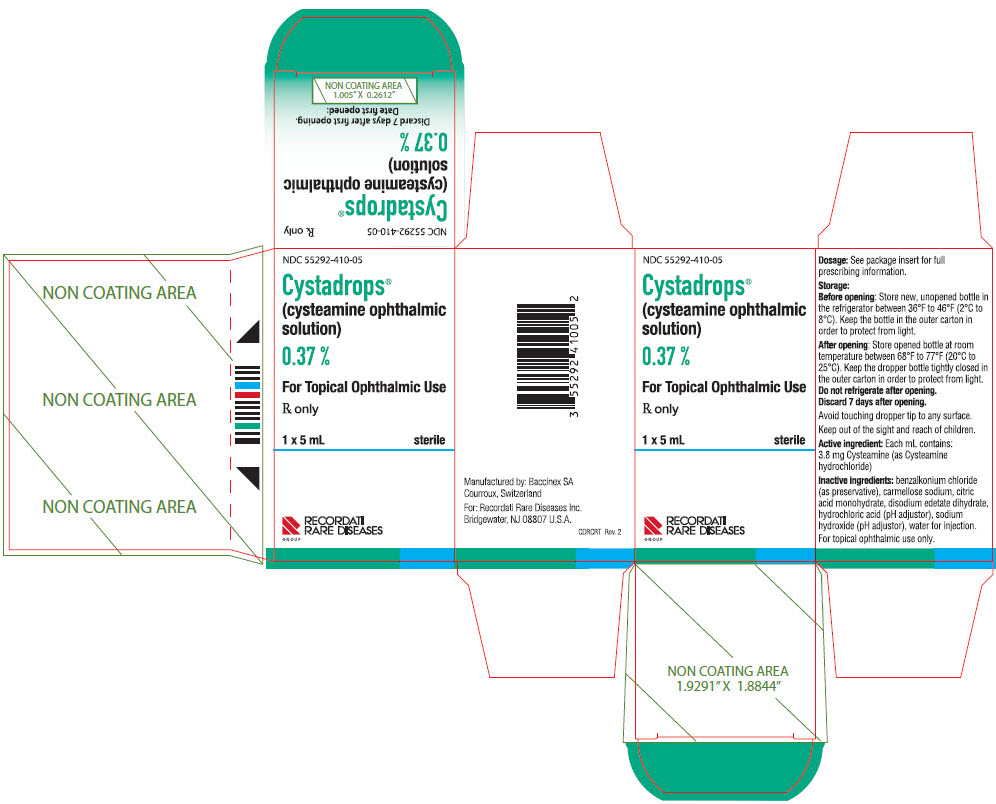
CYSTADROPS cysteamine hydrochloride 3.5 mg/mL Solution
🆔 Identity & classification
Where does this data come from?
🏭 Manufacturer & labeler
Where does this data come from?
🩺 Clinical
- Cystinosis is a rare inherited condition where your body can't properly move a substance called cystine out of the recycling compartments inside your cells. Over time, cystine buil...
- What exactly is cystinosis, and why do I need this medication for life?
- Your doctor will measure cystine levels in your white blood cells regularly — usually about 5 to 6 hours after a dose. These levels tell your doctor whether the dose is in the righ...
- How do I know if the medication is working?
Patient education
Supplement & herbal interactions
Some supplements/herbs that may interact with Cysteamine Hydrochloride — tap one for details:
Where does this data come from?
Ask a licensed pharmacist directly — free, answered by our team.
🧪 Inactive Ingredients / Excipients
Inactive ingredients, also called excipients, are components of the drug product other than the active ingredient. They may include fillers, dyes, coatings, preservatives, flavors, or other formulation ingredients.
💡 Tap an ingredient (hover on desktop) to see what it is and why it’s used.
-
UNII F5UM2KM3W7
Benzalkonium chloride is a chemical compound that works as a preservative and antimicrobial agent in medications. It prevents bacterial and fungal growth in liquid formulations to keep the product safe during storage and use.
-
UNII K679OBS311
Carboxymethylcellulose sodium is a plant-derived thickening agent made from cellulose. In medicines, it acts as a binder to hold ingredients together, a disintegrant to help the tablet break apart, or a thickener in liquids.
-
UNII 2968PHW8QP
A weak organic acid derived from citrus fruits or made through fermentation. It works as a buffer to control pH, a preservative to extend shelf life, and a flavoring agent in medications.
-
UNII 7FLD91C86K
Edetate disodium is a chemical compound that binds and removes certain metal ions. In medicines, it acts as a preservative and stabilizer by preventing metals like calcium from interfering with the product's shelf life and consistency.
-
UNII QTT17582CB
A strong acid used to adjust and maintain the proper pH level in liquid medicines, ensuring stability and preventing breakdown of active ingredients.
-
UNII 55X04QC32I
A strong alkaline chemical used to adjust and maintain the pH balance of liquid medicines. It helps keep the medicine stable and ensures it stays effective during storage.
-
UNII 059QF0KO0R
Water is a liquid solvent that dissolves and mixes ingredients together in liquid medicines, syrups, and injections. It helps distribute the active drug evenly throughout the product.
7 inactive ingredients listed in the exact product block matched to this NDC.
Where does this data come from?
ingredient classCode="IACT" elements from the exact product block matched by this NDC. Label-section narrative from DailyMed / the openFDA label index is shown separately when available.Inactive ingredient FAQ
Are inactive ingredients the same for every manufacturer?
Why might an inactive ingredient be missing?
Can inactive ingredients matter?
💲 Pricing
A drug doesn't have one price. Each row is a different public payment system, and none is what you'd pay at the counter — that depends on your insurance. The ⓘ on each row explains what it measures.
| Price system | Per mL | Per package |
|---|---|---|
| Retail pharmacies payNADAC · weekly | Not in the retail survey — common for institutional, discontinued, or low-volume packs. | |
| Medicaid paysCMS SDUD · 12 mo | $496.40 | $2,481.99 / 5 ml |
| Medicare drug plans payPart D · Q2 2026 | $538.10 | $2,690.49 / 5 ml |
Where does this data come from?
🔁 Therapeutic equivalents
| Product | Labeler | Pack | NADAC/unit | TE | Status | Price vs. this |
|---|---|---|---|---|---|---|
| Cystadrops 3.5 mg/mLthis 55292-0410-05 | RECORDATI | 1 bottle | — | — | FDA listed | — |
Where does this data come from?
⏳ Availability & generic status
We did not find an FDA-approved generic match for this exact strength, form and route.
Where does this data come from?
🗺️ Medicaid utilization & spend
📊 Medicare Part D spend CMS · PART D · 2026 (Q1)
🔬 Reported adverse events (FAERS)
Top reported reactions
Age at onset
Reporter sex
Serious outcomes
Where does this data come from?
📦 Packaging — all sizes for this product
| Package NDC | Description | Marketing start | Status |
|---|---|---|---|
| 55292-0410-05 You're viewing this | 1 BOTTLE, GLASS in 1 BOX (55292-410-05) / 5 mL in 1 BOTTLE, GLASS | 2020-08-19 | Active |
🧭 About this NDC listing & data coverage
What data is (and isn’t) available for this NDC — tap to expand
| NDC identity (package / product / labeler codes) | ✓ Available |
| Labeler | ✓ Available |
| Product & package description | ✓ Available |
| Marketing category & status | ✓ Available |
| Active ingredient / dosage form / route | ✓ Available |
| FDA label (SPL via DailyMed) | ✓ Available |
| Package photos | ✓ Available |
| Inactive ingredients (structured) | ✓ Available |
| NADAC pharmacy acquisition price (CMS) | — Not published for this NDC CMS publishes NADAC only for NDCs reported in its retail-pharmacy survey. |
| Orange Book / therapeutic-equivalence data | — Not published for this NDC Applies only to products approved under an NDA/ANDA; many listings are out of scope. |
| HCPCS J-code billing crosswalk | — Not published for this NDC Most self-administered / retail products have no J-code — that is normal. |
| Medicaid utilization (CMS SDUD) | ✓ Available |
Questions about this listing
Why is there no price listed?
Is the NDC printed on the package the same as the 11-digit billing NDC?
What do the three segments of this NDC mean?
Is this package still being marketed?
Who lists this product with the FDA?
Do I need a prescription for this product?
Where does this data come from?
📄 Full prescribing information FDA SPL
🎯 Indications and Usage ▾
1 INDICATIONS AND USAGE CYSTADROPS is a cystine-depleting agent indicated for the treatment of corneal cystine crystal deposits in adults and children with cystinosis. CYSTADROPS is a cystine-depleting agent indicated for the treatment of corneal cystine crystal deposits in adults and children with cystinosis. ( 1 )
⏱️ Dosage and Administration ▾
2 DOSAGE AND ADMINISTRATION Instill one drop of CYSTADROPS in each eye, 4 times a day during waking hours. ( 2.1 )
2.1Dosage Information Instill one drop of CYSTADROPS in each eye, 4 times a day during waking hours. Do not touch dropper tip to the eyelids, surrounding areas, or any surface, as this may contaminate the solution. In case of concomitant therapy with other topical ocular products, an interval of 10 minutes should be allowed between successive applications.
Eye ointments should be administered last. If the patient misses an instillation, the patient should be told to administer a dose as soon as feasible and then continue the treatment with the next scheduled instillation. Discard bottle 7 days after first opening.
2.2Preparation for Administration Patients should be advised to store new unopened CYSTADROPS bottles in the refrigerator in the original carton between 36°F to 46°F (2°C to 8°C). Each week, one new bottle should be removed from the refrigerator. Patients are to write the date the bottle was opened in the space on the carton.
After first opening, store opened CYSTADROPS at room temperature between 68°F to 77°F (20°C to 25°C). Do not refrigerate after opening. Patients are to wash their hands carefully in order to avoid microbiological contamination of the content in the bottle.
Remove the green protective cap (see Figure A ). Remove the metal seal (see Figure B ). Remove the gray stopper (see Figure C ) from the bottle.
Do not touch the opening of the bottle after removing the gray stopper. Take the dropper out of its packaging, without touching the end intended to be attached to the bottle, attach it (see Figure D ) to the bottle and do not remove it. Patients should be advised not to lose the small white cap that comes on the top of the dropper (see Figure E ).
Keep the small white cap tightly closed when not in use. Instill one drop of CYSTADROPS in each eye, 4 times a day during waking hours. At the end of 7 days, patients should discard the bottle.
There may be medication left in the bottle; however, the bottle must be discarded by the patient because the medication is only stable for 7 days after first opening.
💊 Dosage Forms and Strengths ▾
3 DOSAGE FORMS AND STRENGTHS Ophthalmic solution containing 3.8 mg/mL of cysteamine (0.37%). Ophthalmic solution containing 3.8 mg/mL of cysteamine (0.37%). ( 3 )
⛔ Contraindications ▾
4 CONTRAINDICATIONS None. None. ( 4 )
⚠️ Warnings and Cautions ▾
5 WARNINGS AND PRECAUTIONS To minimize the risk of contamination, do not touch the dropper tip to any surface. Keep bottle tightly closed when not in use. ( 5.1 )
5.1Contamination of Tip and Solution To minimize contaminating the dropper tip and solution, care should be taken not to touch the eyelids or surrounding areas with the dropper tip of the bottle. Keep bottle tightly closed when not in use.
5.2Benign Intracranial Hypertension There have been reports of benign intracranial hypertension (or pseudotumor cerebri) associated with oral cysteamine treatment that has resolved with the addition of diuretic therapy. There have also been reports associated with ophthalmic use of cysteamine; however, all of these patients were on concurrent oral cysteamine.
5.3Contact Lens Use CYSTADROPS contains benzalkonium chloride, which may be absorbed by soft contact lenses. Contact with soft contact lenses should be avoided. Contact lenses should be removed prior to application of solution and may be reinserted 15 minutes following its administration [see Patient Counseling Information ( 17 )] .
🤒 Adverse Reactions ▾
6 ADVERSE REACTIONS The most common adverse reactions (≥ 10%) are eye pain, vision blurred, eye irritation, ocular hyperaemia, instillation site discomfort, eye pruritus, lacrimation increased, and ocular deposits. ( 6 ) To report SUSPECTED ADVERSE REACTIONS, contact Recordati Rare Diseases Inc. at 1-888-575-8344, or FDA at 1-800-FDA-1088 or www.fda.gov/medwatch.
6.1Clinical Trials Experience Because clinical trials are conducted under widely varying conditions, adverse reaction rates observed in clinical trials of a drug cannot be directly compared to rates in the clinical trials of another drug and may not reflect the rates observed in practice. The most common adverse reactions (≥ 10%) reported during clinical trials were eye pain, vision blurred, eye irritation, ocular hyperaemia, instillation site discomfort, eye pruritus, lacrimation increased, and ocular deposits.
👥 Use in Specific Populations ▾
8 USE IN SPECIFIC POPULATIONS
8.1Pregnancy Risk Summary There are no adequate and well-controlled studies of ophthalmic cysteamine in pregnant women to inform any drug associated risks. Oral administration of cysteamine to pregnant rats throughout the period of organogenesis was teratogenic at doses 240 to 960 times the recommended human ophthalmic dose (based on body surface area) [ see Data ] . CYSTADROPS should be used during pregnancy only if the potential benefit justifies the potential risk to the fetus.
The estimated background risk of major birth defects and miscarriage for the indicated population is unknown. All pregnancies have a background risk of birth defect, loss, or other adverse outcomes In the U.S. general population, the estimated background risk of major birth defects and miscarriage in clinically recognized pregnancies is 2% to 4% and 15% to 20%, respectively. Data Animal data Teratology studies have been performed in rats at oral doses in the range of 37.5 mg/kg/day to 150 mg/kg/day (240 to 960 times the recommended human ophthalmic dose based on body surface area) and have shown cysteamine bitartrate to be teratogenic.
Observed teratogenic findings were intrauterine death, cleft palate, kyphosis, heart ventricular septal defects, microcephaly, exencephaly, and growth deficits.
8.2Lactation Risk Summary There is no information regarding the presence of cysteamine in human milk, the effects on the breastfed infants, or the effects on milk production. Cysteamine administered orally is present in milk of lactating rats. It is not known whether measurable levels of cysteamine would be present in maternal milk following topical ocular administration of CYSTADROPS.
The developmental and health benefits of breastfeeding should be considered along with the mother's clinical need for CYSTADROPS and any potential adverse effects on the breastfed child from CYSTADROPS or from the underlying maternal conditions.
8.4Pediatric Use The safety and effectiveness of CYSTADROPS has been established in pediatric patients. Use of CYSTADROPS is supported by adequate and well controlled trials in pediatric patients and additional experience supporting the safety of CYSTADROPS.
8.5Geriatric Use Clinical studies of CYSTADROPS did not include sufficient numbers of subjects aged 65 and over to determine whether they respond differently from younger subjects. Other reported clinical experience has not identified differences in responses between the elderly and younger patients.
8.6Renal Impairment The effect of renal impairment on the pharmacokinetics of cysteamine following ophthalmic administration of cysteamine ophthalmic solution has not been evaluated. Clearance of cysteamine from the conjunctival sac of the eye is not dependent on renal function and the total systemic dose is negligible, so impaired renal function is unlikely to affect total body clearance. The total daily ophthalmic dose is less than 4% of the recommended oral daily dose of cysteamine; thus, the systemic exposure following ophthalmic administration is expected to be negligible compared to oral administration.
🤰 Pregnancy ▾
8.1Pregnancy Risk Summary There are no adequate and well-controlled studies of ophthalmic cysteamine in pregnant women to inform any drug associated risks. Oral administration of cysteamine to pregnant rats throughout the period of organogenesis was teratogenic at doses 240 to 960 times the recommended human ophthalmic dose (based on body surface area) [ see Data ] . CYSTADROPS should be used during pregnancy only if the potential benefit justifies the potential risk to the fetus.
The estimated background risk of major birth defects and miscarriage for the indicated population is unknown. All pregnancies have a background risk of birth defect, loss, or other adverse outcomes In the U.S. general population, the estimated background risk of major birth defects and miscarriage in clinically recognized pregnancies is 2% to 4% and 15% to 20%, respectively. Data Animal data Teratology studies have been performed in rats at oral doses in the range of 37.5 mg/kg/day to 150 mg/kg/day (240 to 960 times the recommended human ophthalmic dose based on body surface area) and have shown cysteamine bitartrate to be teratogenic.
Observed teratogenic findings were intrauterine death, cleft palate, kyphosis, heart ventricular septal defects, microcephaly, exencephaly, and growth deficits.
🧒 Pediatric Use ▾
8.4Pediatric Use The safety and effectiveness of CYSTADROPS has been established in pediatric patients. Use of CYSTADROPS is supported by adequate and well controlled trials in pediatric patients and additional experience supporting the safety of CYSTADROPS.
🧓 Geriatric Use ▾
8.5Geriatric Use Clinical studies of CYSTADROPS did not include sufficient numbers of subjects aged 65 and over to determine whether they respond differently from younger subjects. Other reported clinical experience has not identified differences in responses between the elderly and younger patients.
🧬 Clinical Pharmacology ▾
12 CLINICAL PHARMACOLOGY
12.1Mechanism of Action Cysteamine acts as a cystine-depleting agent by converting cystine to cysteine and cysteine-cysteamine mixed disulfides and reduces corneal cystine crystal accumulation.
12.3Pharmacokinetics The peak plasma concentration of cysteamine following ocular administration of cysteamine ophthalmic solution in humans is unknown, because all patients concomitantly received oral cysteamine and the total daily ophthalmic dose is less than 4% of the recommended oral daily dose of cysteamine.
🧬 Mechanism of Action ▾
12.1Mechanism of Action Cysteamine acts as a cystine-depleting agent by converting cystine to cysteine and cysteine-cysteamine mixed disulfides and reduces corneal cystine crystal accumulation.
📦 How Supplied / Storage and Handling ▾
16 HOW SUPPLIED/STORAGE AND HANDLING CYSTADROPS (cysteamine ophthalmic solution) 0.37% is supplied as a 5 mL sterile viscous solution in a 10 mL amber glass bottle closed by a bromobutyl stopper and sealed with an aluminum tear-off cap. A PVC dropper applicator with HDPE closure is packed separately and included in each carton box. Each carton box (NDC 55292-410-05) contains 1 bottle (NDC 55292-410-05) and 1 dropper applicator individually wrapped.
Before First Opening : Before opening, store new, unopened CYSTADROPS in the refrigerator between 36°F to 46°F (2°C to 8°C). Keep the bottle in the outer carton in order to protect from light. After First Opening : After opening, store opened CYSTADROPS at room temperature between 68°F to 77°F (20°C to 25°C).
Do not refrigerate after opening. Keep the dropper bottle tightly closed in the outer carton in order to protect from light. Discard 7 days after first opening.
📋 Description ▾
11 DESCRIPTION CYSTADROPS is a sterile, viscous, ophthalmic solution containing 3.8 mg/mL of cysteamine (0.37%) equivalent to 5.6 mg/mL of cysteamine hydrochloride (0.55%). Cysteamine is a cystine- depleting agent which lowers the cystine content of cells in patients with cystinosis. Molecular Formula: C 2 H 7 NS HCl Molecular Weight: 113.61 Each milliliter of CYSTADROPS contains: Active: cysteamine 3.8 mg (equivalent to cysteamine hydrochloride 5.6 mg); Preservative: benzalkonium chloride 0.1 mg; Inactive Ingredients: carmellose sodium, citric acid monohydrate, disodium edetate dihydrate, hydrochloric acid and sodium hydroxide (to adjust pH to 4.6-5.4), and water for injection.
💬 Information for Patients ▾
17 PATIENT COUNSELING INFORMATION Advise the patient to read the FDA-approved patient labeling (Instructions for Use). Preparation for Administration and Storage of Bottles Advise patients to store new unopened bottles in the refrigerator in the original carton. Each week, one new bottle should be removed from the refrigerator.
Advise patients to write the date the bottle was opened in the space on the carton. After first opening, keep the bottle tightly closed and store at room temperature in the original carton. Patients are to wash their hands carefully in order to avoid microbiological contamination of the content in the bottle.
Remove the green protective cap (see Figure A). Remove the metal seal (see Figure B). Remove the gray stopper (see Figure C) from the bottle.
Do not touch the opening of the bottle after removing the gray stopper. Take the dropper out of its packaging, without touching the end intended to be attached to the bottle, attach it (see Figure D) to the bottle and do not remove it. Patients should be advised not to lose the small white cap (see Figure E) that comes on the top of the dropper.
Keep the small white cap tightly closed when not in use. Instill one drop of CYSTADROPS in each eye, 4 times a day during waking hours. Instruct patients to discard the bottle at the end of 7 days.
There may be medication left in the bottle; however, the bottle must be discarded by the patient because the medication is only stable for 7 days after first opening. Risk of Contamination Advise patients not to touch the eyelid or surrounding areas with the dropper tip of the bottle. The cap should remain on the bottle when not in use.
Contact Lens Use Advise patients that contact lenses should be removed prior to application of CYSTADROPS. Contact lenses may be reinserted 15 minutes following CYSTADROPS administration [see Warnings and Precautions ( 5.3 )] . Topical Ophthalmic Use Advise patients that CYSTADROPS is for topical ophthalmic use.
Missed Dose If the patient misses an instillation, instruct the patient to administer a dose as soon as feasible and then to continue the treatment with the next scheduled instillation. Manufactured by: Baccinex SA, 2822 Courroux, Switzerland Manufactured for: Recordati Rare Diseases Inc., Bridgewater, NJ 08807, U.S.A. This product label may have been updated.
For the most recent prescribing information, please visit www.recordatirarediseases.com/us.