
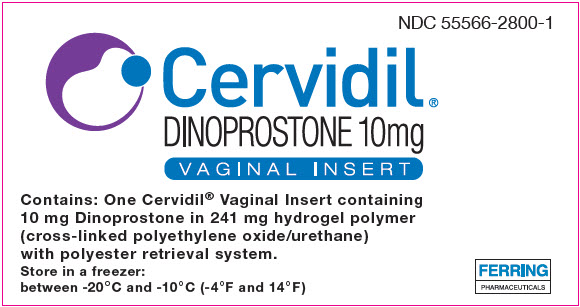
Cervidil Dinoprostone 10 mg/241mg Insert — NDC 55566-2800-1 (Billing 55566-2800-01)
This is a package of Cervidil Dinoprostone 10 mg/241mg Insert from Ferring Pharmaceuticals Inc., marketed since Mar 1995 and currently FDA-listed. It is this product's only package size.
NDC database record
One package, one record: these facts belong to NDC 55566-2800-1 alone.
- Record
- FDA NDC Directory package listing · Human prescription drug
- Code segments
- 55566 labeler · 2800 product · 1 package
- Package marketed since
- Mar 30, 1995
- Sample package
- No — commercial package
- Listing certified through
- Dec 31, 2026
- Barcode (UPC-A, from the NDC)
- 3 5556628001 5
- FDA record last changed
- Jul 24, 2026
Identity & classification
Regulatory identifiers FDA, NLM and CMS codes for this package
Drug-database identifiers Medi-Span GPI and First Databank GCN / HICL / AHFS classification
- GSN (GCN sequence number): 044750
- GCN: 42414
- GPI-14 (Medi-Span): 29201030009910
- HICL (First Databank): 002988
- AHFS class code: 76:00.00.00
- RxCUI (RxNorm): 597957
Where does this data come from?
- FDA openFDA NDC Directory · synced Oct 1, 2026
- FDA label on DailyMed · label index refreshed Oct 5, 2026
- RxNorm (NLM RxNav) · catalog refreshed Oct 1, 2026
- Medi-Span GPI (licensed)
- First Databank (licensed) · refreshed Oct 1, 2026
RxNorm drug class
This medicine belongs to the Prostaglandin Analog class.
Where does this data come from?
- RxClass (NLM) · catalog refreshed Oct 1, 2026
Clinical
- Dinoprostone is a medication that mimics a natural hormone your body makes during late pregnancy to help prepare your cervix for labor. Your cervix needs to soften, thin out, and b...
- What exactly is dinoprostone, and why do I need it?
- Yes, you'll be awake throughout. Dinoprostone is placed in your vagina or cervix by your care team, and you'll be monitored closely the whole time. Some women feel mild cramping or...
- Will I be awake and aware during the process? What will it feel like?
Patient education
Supplement & herbal interactions
Some supplements/herbs that may interact with Dinoprostone — tap one for details:
Where does this data come from?
- MedlinePlus (NLM) · refreshed Oct 1, 2026
- FDA label on DailyMed · label index refreshed Oct 5, 2026
Ask a licensed pharmacist directly — free, answered by our team.
Pricing
A drug doesn't have one price. Each row is a different public payment system, and none is what you'd pay at the counter — that depends on your insurance. The ⓘ on each row explains what it measures.
| Price system | Per each | Per package |
|---|---|---|
| Retail pharmacies payNADAC · weekly | Not in the retail survey — common for institutional, discontinued, or low-volume packs. | |
| Medicaid paysCMS SDUD · 12 mo | No recent Medicaid claims on file for this NDC — rare and low-volume NDCs are suppressed in the public data. | |
| Medicare drug plans payPart D · quarterly | No Part D plan price is available for this NDC in our data. | |
Where does this data come from?
- CMS NADAC weekly file
- CMS ASP pricing files · refreshed Sep 20, 2026
- CMS Medicaid State Drug Utilization Data · refreshed Oct 5, 2026
- CMS Part D plan pricing files · refreshed Sep 24, 2026
- VA National Acquisition Center price file
Packaging — all sizes for this product
| Package NDC | Description | Marketing start | Marketing end | Status |
|---|---|---|---|---|
| 55566-2800-01 You're viewing this Main listing | 1 POUCH in 1 CARTON / 10 mg in 1 POUCH | 1995-03-30 | — | Active |
Therapeutic equivalents
| Product | Labeler | Pack | NADAC/unit | TE | Status | Price vs. this |
|---|---|---|---|---|---|---|
| Cervidil 10 mg/241mgthis 55566-2800-01 | Ferring | 1 pouch | — | — | FDA listed | — |
Where does this data come from?
- FDA openFDA NDC Directory · synced Oct 1, 2026
- FDA Orange Book · refreshed Oct 3, 2026
- CMS NADAC weekly file
Availability & generic status
We did not find an FDA-approved generic match for this exact strength, form and route.
Where does this data come from?
- FDA Orange Book · refreshed Oct 3, 2026
Inactive Ingredients / Excipients
Inactive ingredients, also called excipients, are components of the drug product other than the active ingredient. They may include fillers, dyes, coatings, preservatives, flavors, or other formulation ingredients.
💡 Tap an ingredient (hover on desktop) to see what it is and why it’s used.
-
UNII 3WJQ0SDW1A
Polyethylene glycol is a synthetic liquid or solid polymer used in medicines as a solvent, lubricant, and humectant. It helps dissolve active ingredients, reduces friction during manufacturing, and retains moisture in the final product.
1 inactive ingredient listed in the exact product block matched to this NDC.
Where does this data come from?
ingredient classCode="IACT" elements from the exact product block matched by this NDC. Label-section narrative from DailyMed / the openFDA label index is shown separately when available.- FDA label on DailyMed · label index refreshed Oct 5, 2026
- FDA openFDA NDC Directory · synced Oct 1, 2026
Inactive ingredient FAQ
Are inactive ingredients the same for every manufacturer?
Why might an inactive ingredient be missing?
Can inactive ingredients matter?
Manufacturer & labeler
More NDCs from Ferring Pharmaceuticals Inc. labeler code 55566
- ZOMACTON somatropin Kit NDC 55566-1801-1
- ZOMACTON somatropin Kit NDC 55566-1901-1
- DDAVP Desmopressin Acetate 4 ug/mL Injection NDC 55566-2200-0
- DDAVP Desmopressin Acetate 4 ug/mL Injection NDC 55566-2300-0
- DDAVP Desmopressin Acetate .1 mg Tablet NDC 55566-2600-0
- DDAVP Desmopressin Acetate .2 mg Tablet NDC 55566-2700-0
- Stimate desmopressin acetate 1.5 mg/mL Spray NDC 55566-3000-0
- ENDOMETRIN Progesterone 100 mg Insert NDC 55566-6500-3
- CLENPIQ SODIUM PICOSULFATE, MAGNESIUM OXIDE, and ANHYDROUS CITRIC ACID 10 mg/175mL; 3.5 g/175mL; 12 g/175mL Liquid NDC 55566-6800-1
- Menopur menotropins Kit NDC 55566-7501-2
- FIRMAGON Degarelix Kit NDC 55566-8303-1
- FIRMAGON Degarelix Kit NDC 55566-8403-1
Where does this data come from?
- FDA openFDA NDC Directory · synced Oct 1, 2026
- Drugs@FDA
Full prescribing information FDA SPL
🎯 Indications and Usage ▾
1 INDICATIONS AND USAGE CERVIDIL is indicated for the initiation and/or continuation of cervical ripening in pregnant women at or near term in whom there is a medical or obstetrical indication for the induction of labor. CERVIDIL is a prostaglandin analog indicated for the initiation and/or continuation of cervical ripening in pregnant women at or near term in whom there is a medical or obstetrical indication for the induction of labor. ( 1 )
⏱️ Dosage and Administration ▾
2 DOSAGE AND ADMINISTRATION Administer a single vaginal insert (10 mg) for up to 12 hours of use (approximately 0.3 mg of dinoprostone is released per hour) ( 2.1 ) Remove upon onset of active labor or 12 hours after insertion. ( 2.1 ) Carefully monitor for uterine activity, fetal status and the progression of cervical dilatation and effacement. ( 2.1 ) CERVIDIL should be administered only by trained obstetrical personnel in a hospital setting with appropriate obstetrical care facilities ( 2.2 ).
See full prescribing information for complete preparation, administration, and removal instructions. ( 2.2 , 2.3 )
2.1Dosage Instructions Administer one CERVIDIL insert (10 mg) intravaginally for use up to 12 hours (approximately 0.3 mg of dinoprostone is released per hour) [see Dosage and Administration (2.2) ]. Monitor uterine activity, fetal status, and the progression of cervical dilatation and effacement with the use of CERVIDIL. Remove CERVIDIL 12 hours after insertion with the onset of active labor, prior to an amniotomy, occurrence of uterine tachysystole, uterine hypersystole/hypertonicity, or fetal distress [see Warnings and Precautions (5.4) ] .
Remove CERVIDIL at least 30 minutes prior to administering an oxytocic agent [see Warnings and Precautions (5.4) and Drug Interactions (7) ] .
2.2Preparation and Administration Instructions CERVIDIL should be administered only by trained obstetrical personnel in a hospital setting with appropriate obstetrical care facilities. Preparation and Administration Instructions Keep CERVIDIL frozen until ready for use. Do not warm CERVIDIL prior to vaginal insertion.
Tear open the individually-wrapped foil package containing CERVIDIL along the tear mark. Never open the package using scissors or other sharp objects because this may damage the knitted polyester retrieval system. Do not cut the retrieval system and do not use CERVIDIL unless its retrieval system is intact.
Immediately after opening the package, insert CERVIDIL transversely, in the posterior fornix of the vagina (see Figure 1 ). If necessary, use a minimal amount of water-miscible lubricant to assist vaginal insertion. Do not permit excess contact or coating with the lubricant, as this could prevent release of dinoprostone from the vaginal insert.
Insertion does not require sterile conditions. Figure 1: Placement of CERVIDIL in the Posterior Vaginal Fornix Tuck some of the excess retrieval system into the vagina to avoid movement of CERVIDIL away from the proper position; however, leave a small amount of the retrieval system outside the vagina to aid in retrieval. Instruct women to remain in a recumbent position during insertion of CERVIDIL and for 2 hours afterward.
Women may be ambulatory 2 hours after insertion; however, ensure that the insert remains in place. Figure 1
2.3Removal Instructions To retrieve, locate the retrieval system and pull it gently until CERVIDIL is fully removed. Upon removal of CERVIDIL, it is essential to perform a visual inspection to ensure that the slab has been removed, as it will continue delivering the active ingredient.
💊 Dosage Forms and Strengths ▾
3 DOSAGE FORMS AND STRENGTHS Vaginal Insert: 10 mg of dinoprostone (release rate approximately 0.3 mg/hour up to 12 hours) in a hydrogel polymer. The insert is beige-colored, semi-opaque, thin, flat, and rectangular in shape with rounded corners, measuring 29 mm by 9.5 mm by 0.8 mm, contained within an off-white knitted polyester pouch retrieval system (see Figure 2 ). Figure 2: CERVIDIL Components Vaginal Insert: 10 mg of dinoprostone contained within a knitted polyester pouch retrieval system.
( 3 ) Figure 2
⛔ Contraindications ▾
4 CONTRAINDICATIONS CERVIDIL is contraindicated in patients with: Known hypersensitivity to prostaglandins [see Adverse Reactions (6.2) ] Evidence or clinical suspicion of fetal distress where delivery is not imminent Unexplained vaginal bleeding in the current pregnancy Evidence or clinical suspicion of marked cephalopelvic disproportion Conditions for which induction of labor is contraindicated Conditions for which oxytocic drugs are contraindicated Previous cesarean section or other uterine surgery expected to affect uterine integrity (such as myomectomy) Conditions under which prolonged contraction of the uterus may be detrimental to fetal safety Concurrent use with intravenous oxytocic agents [see Warnings and Precautions (5.4) and Drug Interactions (7) ] Six or more previous term pregnancies CERVIDIL is contraindicated for: Known hypersensitivity to prostaglandins ( 4 ) Evidence or clinical suspicion of fetal distress, where delivery is not imminent ( 4 ) Unexplained vaginal bleeding in the current pregnancy ( 4 ) Evidence or clinical suspicion of marked cephalopelvic disproportion ( 4 ) Contraindication to induction of labor ( 4 ) Concurrent use with intravenous oxytocic agents ( 4 ) History of previous cesarean section or other uterine surgery (such as myomectomy) ( 4 ) Conditions under which prolonged contraction of the uterus may be detrimental to fetal safety.
( 4 ) Six or more previous term pregnancies ( 4 )
⚠️ Warnings and Cautions ▾
5 WARNINGS AND PRECAUTIONS Disseminated Intravascular Coagulation : Assess for evolving fibrinolysis in the immediate post-partum period. ( 5.2 ) Amniotic Fluid Embolism Syndrome : Carefully monitor patients for clinical signs of hypotension, hypoxemia and respiratory failure, DIC, coma or seizures. Provide supportive care.
( 5.3 ) Uterine Tachysystole and Uterine Hypersystole/Hypertonicity : Monitor uterine activity; remove vaginal insert. ( 5.4 ) History of Glaucoma : Consider non-prostaglandin cervical ripening procedures. ( 5.5 )
5.1For Hospital Use Only CERVIDIL should be administered in a hospital setting with an obstetrical care facility.
5.2Disseminated Intravascular Coagulation CERVIDIL should be used with caution in women at high risk of postpartum disseminated intravascular coagulation (DIC). Physiologic or pharmacologic induction of labor, including the use of CERVIDIL, is associated with an increased risk of DIC during the postpartum period. Women aged 30 years or older, those with complications during pregnancy and those with a gestational age over 40 weeks have an increased risk of DIC during the postpartum period.
As soon as possible, assess for an evolving fibrinolysis in the immediate post-partum period. Therapy consisting of prompt removal of the source of procoagulant material, replacement of depleted clotting factors and, in some cases, anti-coagulation with heparin should be instituted promptly.
5.3Amniotic Fluid Embolism Syndrome The use of dinoprostone-containing products, including CERVIDIL, can result in inadvertent disruption and subsequent embolization of antigenic tissue causing the development of Amniotic Fluid Embolism Syndrome, a rare and often fatal obstetric condition. Carefully monitor patients for clinical signs of Amniotic Fluid Embolism Syndrome including hypotension, hypoxemia and respiratory failure, DIC, coma or seizures and provide supportive care as needed.
5.4Uterine Tachysystole and Uterine Hypersystole/Hypertonicity The use of CERVIDIL may cause uterine tachysystole with or without fetal heart rate changes (see Table 1 ). While using CERVIDIL, carefully monitor uterine activity, fetal status and the progression of cervical dilatation and effacement. Remove CERVIDIL with any evidence of uterine tachysystole, uterine hypersystole/hypertonicity, fetal distress, or if labor commences.
CERVIDIL is contraindicated when prolonged contraction of the uterus is detrimental to fetal safety or uterine integrity, such as previous cesarean section or major uterine surgery, because of the risk of uterine rupture and obstetrical complications (e.g., need for hysterectomy and the occurrence of fetal or neonatal death). Prostaglandins, including CERVIDIL, may potentiate the effect of oxytocin [see Drug Interactions (7) ] . Remove CERVIDIL at least 30 minutes before administration of an oxytocic agent is initiated and continue to carefully monitor uterine activity.
Remove CERVIDIL prior to amniotomy or following rupture of membranes because the higher vaginal pH that occurs with rupture of membranes may result in higher release rate of dinoprostone.
5.5Glaucoma Prostaglandins, including CERVIDIL, can lead to raised intraocular pressure and constriction of pupils. Consider non-prostaglandin cervical ripening procedures in patients with Glaucoma.
🤒 Adverse Reactions ▾
6 ADVERSE REACTIONS The following adverse reactions are described, or described in greater detail, in other sections: Disseminated Intravascular Coagulation [see Warnings and Precautions (5.2) ] Amniotic Fluid Embolism [see Warnings and Precautions (5.3) ] Uterine Tachysytole and Uterine Hypersystole/Hypertonicity [see Warnings and Precautions (5.4) ] The most common adverse reactions (≥ 2 %) are uterine tachysystole without fetal distress, uterine tachysystole with fetal distress, and fetal distress without uterine tachysystole.
( 6.1 ) To report SUSPECTED ADVERSE REACTIONS, contact FERRING PHARMACEUTICALS, INC. at 1 888-FERRING (1-888-337-7464) or FDA at 1-800-FDA-1088 or www.fda.gov/medwatch.
6.1Clinical Trials Experience Because clinical trials are conducted under widely varying conditions, adverse reaction rates observed in the clinical trials of a drug cannot be directly compared to rates in the clinical trials of another drug and may not reflect the rates observed in practice. In placebo-controlled trials of 658 pregnant women (320 CERVIDIL-treated women and 338 placebo-treated women), the following treatment related adverse reactions (see Table 1 ) occurred at an incidence greater than 2% (and greater than that reported in the placebo group) in the CERVIDIL group [see Clinical Studies (14) ].
Table 1. Common Adverse Reactions (≥ 2%) in Pregnant Patients Near Term Gestation in Trial 1 Trial 1 (101-103) and Trial 2 (101-003) evaluated the dinoprostone insert only, without the use of a retrieval system , Trial 2 , and Trial 3 Trial 3 (101-801) evaluated the dinoprostone insert with the retrieval system. Trials 1 and 2 CERVIDIL (N=320) Placebo (N=338) Uterine tachysystole with fetal distress 2.8% 0.3% Uterine tachysystole without fetal distress 4.7% 0% Fetal distress without uterine tachysystole - 3.8% 1.2% Trial 3 CERVIDIL (N=102) Placebo (N=104) Uterine tachysystole with fetal distress 2.9% 0% Uterine tachysystole -without fetal distress 2% 0% Fetal distress without uterine tachysystole 2.9% 1% Drug related fever, nausea, vomiting, diarrhea, and abdominal pain occurred in less than 1% of CERVIDIL-treated patients.
In Trial 3 (with the retrieval system) cases of tachysystole uterine hyperstimulation reversed within 2 to 13 minutes of removal of CERVIDIL. Tocolytics were required in one of the five cases.
6.2Postmarketing Experience The following adverse reactions have been identified during postapproval use of CERVIDIL or other dinoprostone products. Because these reactions are reported voluntarily from a population of uncertain size, it is not always possible to reliably estimate their frequency or establish a causal relationship to drug exposure. Blood and lymphatic system disorders: Disseminated Intravascular Coagulation Cardiovascular disorders: Myocardial Infarction in women with a history of myocardial infarction Immune system disorders: Hypersensitivity Nervous system disorders: Headache Pregnancy, puerperium and perinatal conditions: Amniotic fluid embolism Reproductive system: reports of uterine rupture have been reported in association with use of CERVIDIL.
Some required a hysterectomy and others resulted in subsequent fetal or neonatal death. Uterine hypertonus Vascular disorders: Hypotension
🔄 Drug Interactions ▾
7 DRUG INTERACTIONS Oxytocic Agents : May augment the activity of oxytocic agents; concomitant use of intravenous oxytocic agents is contraindicated ( 4 , 7.1 ). Remove vaginal insert at least 30 minutes before administering an oxytocic agent. ( 7.1 )
7.1Oxytocic Agents CERVIDIL is contraindicated in patients receiving intravenous oxytocic agents because CERVIDIL may augment the activity of oxytocic agents. A dosing interval of at least 30 minutes is recommended for the sequential use of an oxytocic agent following the removal of CERVIDIL.
👥 Use in Specific Populations ▾
8 USE IN SPECIFIC POPULATIONS
8.1Pregnancy Risk Summary CERVIDIL is indicated for the initiation and/or continuation of cervical ripening in pregnant women at or near term in whom there is a medical or obstetrical indication for the induction of labor. Fetal, neonatal, and maternal risks are discussed throughout the labeling. Limited available data with CERVIDIL use in pregnant women do not show a clear association with adverse developmental outcomes.
Relevant animal reproduction data with dinoprostone is not available. Data Human Data In a report of a 3-year pediatric follow-up study, there were no deleterious effects noted on physical examination or psychomotor evaluation of 51 infants born following maternal treatment with CERVIDIL. Clinical Considerations Fetal/Neonatal Adverse Reactions When CERVIDIL was removed for fetal distress, there was a return to normal rhythm and there were no neonatal sequelae.
Remove CERVIDIL in the event of persistent tachysystole with or without fetal heart rate changes, and follow established institutional protocols in management of patients.
8.2Lactation Risk Summary Concomitant administration of CERVIDIL is not indicated in breastfeeding women. There is no information on the effects of maternal CERVIDIL administration on the breastfed child. Insufficient information is available on the effects of maternal CERVIDIL administration on milk production.
8.4Pediatric Use The safety and effectiveness of CERVIDIL have not been established in pregnant girls.
🤰 Pregnancy ▾
8.1Pregnancy Risk Summary CERVIDIL is indicated for the initiation and/or continuation of cervical ripening in pregnant women at or near term in whom there is a medical or obstetrical indication for the induction of labor. Fetal, neonatal, and maternal risks are discussed throughout the labeling. Limited available data with CERVIDIL use in pregnant women do not show a clear association with adverse developmental outcomes.
Relevant animal reproduction data with dinoprostone is not available. Data Human Data In a report of a 3-year pediatric follow-up study, there were no deleterious effects noted on physical examination or psychomotor evaluation of 51 infants born following maternal treatment with CERVIDIL. Clinical Considerations Fetal/Neonatal Adverse Reactions When CERVIDIL was removed for fetal distress, there was a return to normal rhythm and there were no neonatal sequelae.
Remove CERVIDIL in the event of persistent tachysystole with or without fetal heart rate changes, and follow established institutional protocols in management of patients.
🧒 Pediatric Use ▾
8.4Pediatric Use The safety and effectiveness of CERVIDIL have not been established in pregnant girls.
🧬 Clinical Pharmacology ▾
12 CLINICAL PHARMACOLOGY
12.1Mechanism of Action Dinoprostone is found in low concentrations in most tissues of the body and functions as a local hormone. In pregnancy, dinoprostone is secreted continuously by the fetal membranes and placenta and plays an important role in the final events leading to the initiation of labor including cervical ripening. Dinoprostone stimulates the production of prostaglandin F 2α ( PGF 2α), which sensitizes the myometrium to endogenous or exogenously administered oxytocin.
Available evidence indicates that dinoprostone, in the concentrations found during the early part of labor, plays an important role in cervical ripening without affecting uterine contractions. In most patients, local effects of CERVIDIL on the cervix include changes in the tissue consistency, dilatation and effacement. Some women experience systemic effects, including uterine tachysystole, and uterine hypersystole/hypertonicity, as a result dinoprostone or PGF 2α mediated sensitization of the myometrium to oxytocin [see Warnings and Precautions (5.4) ] .
12.2Pharmacodynamics No specific pharmacodynamic studies were conducted with CERVIDIL.
12.3Pharmacokinetics The delivery rate of dinoprostone from CERVIDIL in vivo is approximately 0.3 mg/per hour over a period of 12 hours. Dinoprostone is metabolized in the tissues of synthesis with the half-life estimated to be 2.5 to 5 minutes. The rate limiting step for inactivation is regulated by the enzyme 15-hydroxyprostaglandin dehydrogenase (PGDH).
Any dinoprostone that escapes local inactivation is cleared to the extent of 95% on the first pass through the pulmonary circulation. No correlation could be established between the release of dinoprostone from CERVIDIL and plasma concentrations of metabolite of dinoprostone (PGE m ). The relative contributions of endogenously and exogenously released dinoprostone to the plasma levels of the metabolite PGE m is not known.
🧬 Mechanism of Action ▾
12.1Mechanism of Action Dinoprostone is found in low concentrations in most tissues of the body and functions as a local hormone. In pregnancy, dinoprostone is secreted continuously by the fetal membranes and placenta and plays an important role in the final events leading to the initiation of labor including cervical ripening. Dinoprostone stimulates the production of prostaglandin F 2α ( PGF 2α), which sensitizes the myometrium to endogenous or exogenously administered oxytocin.
Available evidence indicates that dinoprostone, in the concentrations found during the early part of labor, plays an important role in cervical ripening without affecting uterine contractions. In most patients, local effects of CERVIDIL on the cervix include changes in the tissue consistency, dilatation and effacement. Some women experience systemic effects, including uterine tachysystole, and uterine hypersystole/hypertonicity, as a result dinoprostone or PGF 2α mediated sensitization of the myometrium to oxytocin [see Warnings and Precautions (5.4) ] .
📦 How Supplied / Storage and Handling ▾
16 HOW SUPPLIED/STORAGE AND HANDLING How Supplied CERVIDIL vaginal insert contains 10 mg dinoprostone in a hydrogel polymer (NDC 55566-2800-1). The vaginal insert is beige-colored, semi-opaque, thin, flat, and rectangular in shape with rounded corners, measuring 29 mm by 9.5 mm by 0.8 mm, and is contained within an off-white knitted polyester pouch retrieval system. CERVIDIL is enclosed in an aluminum/polyethylene pack.
Storage and Handling Store in a freezer between -20°C and -10°C (-4°F and 14°F). CERVIDIL, enclosed in its aluminum/polyethylene pack, is stable when stored in a freezer for a period of three years. Vaginal inserts exposed to high humidity will absorb moisture from the air and thereby alter the release characteristics of dinoprostone.
📦 Storage and Handling ▾
Storage and Handling Store in a freezer between -20°C and -10°C (-4°F and 14°F). CERVIDIL, enclosed in its aluminum/polyethylene pack, is stable when stored in a freezer for a period of three years. Vaginal inserts exposed to high humidity will absorb moisture from the air and thereby alter the release characteristics of dinoprostone.
📋 Description ▾
11 DESCRIPTION CERVIDIL (dinoprostone) vaginal insert contains dinoprostone, a prostaglandin analog. Each vaginal insert contains 10 mg of dinoprostone in 241 mg of a cross-linked polyethylene oxide/urethane polymer (hydrogel polymer) that is semi-opaque, beige colored, flat, rectangular in shape with rounded corners and measuring 29 mm by 9.5 mm by 0.8 mm. The vaginal insert is contained within a pouch of an off-white knitted polyester yarn retrieval system.
When placed in a moist environment, the yarn absorbs water, swells, and releases the enclosed dinoprostone. The knitted polyester retrieval system has a long tape-like end that is designed to aid retrieval of CERVIDIL at the end of the dosing interval or earlier if clinically indicated. The finished product is a controlled-release formulation that has been found to release dinoprostone in vivo at a rate of approximately 0.3 mg per hour.
The chemical name for dinoprostone (known as prostaglandin E 2 or PGE 2 ) is 11α,15S-dihydroxy-9-oxo-prosta-5Z,13E-dien-1-oic acid and the structural formula is represented below: The molecular formula is C 20 H 32 O 5 and its molecular weight is 352.47. Dinoprostone occurs as a white to off-white crystalline powder. It has a melting point within the range of 65° to 69°C.
Dinoprostone is soluble in ethanol and in 25% ethanol in water. Chemical Structure
💬 Information for Patients ▾
17 PATIENT COUNSELING INFORMATION Administration Advise the woman to remain in the recumbent position for 2 hours following CERVIDIL insertion and to inform her health care provider immediately if CERVIDIL does not remain in place [see Dosage and Administration (2.2) ] . Disseminated Intravascular Coagulation Inform women that the use of CERVIDIL is associated with an increased risk of disseminated intravascular coagulation (DIC) during the postpartum period [see Warnings and Precautions (5.2) ]. Amniotic Fluid Embolism Syndrome Inform women that the use of CERVIDIL can result in inadvertent disruption and subsequent embolization of antigenic tissue causing the development of Amniotic Fluid Embolism Syndrome, a rare and often fatal obstetric condition [see Warnings and Precautions (5.3) ].
Frequent or Prolonged Uterine Contractions Inform women that the use of CERVIDIL may cause frequent or prolonged contractions [see Warnings and Precautions (5.4) ]. This might result in disruption of blood flow through the placenta and to the fetus. Glaucoma Inform women that CERVIDIL can lead to raised intraocular pressure and constriction of pupils [see Warnings and Precautions (5.5) ].
🧬 Pharmacokinetics ▾
12.3Pharmacokinetics The delivery rate of dinoprostone from CERVIDIL in vivo is approximately 0.3 mg/per hour over a period of 12 hours. Dinoprostone is metabolized in the tissues of synthesis with the half-life estimated to be 2.5 to 5 minutes. The rate limiting step for inactivation is regulated by the enzyme 15-hydroxyprostaglandin dehydrogenase (PGDH).
Any dinoprostone that escapes local inactivation is cleared to the extent of 95% on the first pass through the pulmonary circulation. No correlation could be established between the release of dinoprostone from CERVIDIL and plasma concentrations of metabolite of dinoprostone (PGE m ). The relative contributions of endogenously and exogenously released dinoprostone to the plasma levels of the metabolite PGE m is not known.
🧬 Pharmacodynamics ▾
12.2Pharmacodynamics No specific pharmacodynamic studies were conducted with CERVIDIL.
🔬 Clinical Studies ▾
14 CLINICAL STUDIES The effectiveness and safety of CERVIDIL for the induction of cervical ripening was evaluated in 658 pregnant women (320 CERVIDIL-treated women and 338 placebo-treated women) at or near term in three randomized, double-blind, placebo-controlled trials (Trials 1, 2, and 3). Efficacy outcomes included percentage with treatment success (defined as vaginal delivery within 12 hours, Bishop Score ≥ 6 in the 12-hour observation period, or ≥ 3 increase in the Bishop score in the 12-hour observation period), time to delivery, and time to onset of labor.
Table 2 presents efficacy outcomes from Trials 1, 2, and 3. Table 2: Efficacy Outcomes in Pregnant Women in Trials 1 Trial 1 and Trial 2 evaluated the dinoprostone insert only, without the use of a retrieval system. , 2, and 3 Trial 3 evaluated the dinoprostone insert with the retrieval system for CERVIDIL Ripening, Intent-to-Treat Population Primipara/Nullipara Multipara Study # CERVIDIL Placebo CERVIDIL Placebo P-Value Treatment Success Treatment success was defined as vaginal delivery within 12 hours, Bishop score ≥ 6 in the 12-hour observation period, or ≥ 3 increase in the Bishop score in the 12-hour observation period.
Trial 1 (N=81) 65% (n=26) 28% (n=32) 87% (n=16) 29% (n=7) <0.001 Trial 2 (N=371) 68% (n=111) 24% (n=123) 77% (n=65) 24% (n=72) <0.001 Trial 3 (N=206) 72% (n=60) 48% (n=63) 55% (n=42) 41% (n=41) 0.003 Median Time to Delivery (hours) Trial 1 (N=81) 25.7 (n=26) 34.5 (n=32) 12.3 (n=16) 24.6 (n=7) 0.001 Trial 3 (N=206) 25.5 (n=60) 37.2 (n=63) 20.8 (n=42) 27.4 (n=41) <0.001 Median Time to Onset of Labor (hours) Trial 1 (N=81) 12 (n=26) 19.2 (n=32) 6.9 (n=16) 18.3 (n=7) <0.001
🧪 Nonclinical Toxicology ▾
13 NONCLINICAL TOXICOLOGY
13.1Carcinogenesis, Mutagenesis, Impairment of Fertility Long-term carcinogenicity and fertility studies have not been conducted with dinoprostone. No evidence of mutagenicity has been observed with dinoprostone in the Unscheduled DNA Synthesis Assay, the Micronucleus Test, or the bacteria reverse mutation (Ames) test.
📄 Carcinogenesis, Mutagenesis, Impairment of Fertility ▾
13.1Carcinogenesis, Mutagenesis, Impairment of Fertility Long-term carcinogenicity and fertility studies have not been conducted with dinoprostone. No evidence of mutagenicity has been observed with dinoprostone in the Unscheduled DNA Synthesis Assay, the Micronucleus Test, or the bacteria reverse mutation (Ames) test.
📄 Package Label / Principal Display Panel ▾
PRINCIPAL DISPLAY PANEL - 10 mg Pouch Carton NDC 55566-2800-1 Cervidil ® DINOPROSTONE 10mg VAGINAL INSERT Contains: One Cervidil ® Vaginal Insert containing 10 mg Dinoprostone in 241 mg hydrogel polymer (cross-linked polyethylene oxide/urethane) with polyester retrieval system. Store in a freezer: between -20°C and -10°C (-4°F and 14°F) FERRING PHARMACEUTICALS PRINCIPAL DISPLAY PANEL - 10 mg Pouch Carton
Reported adverse events (FAERS)
Top reported reactions
Age at onset
Reporter sex
Serious outcomes
Where does this data come from?
About this NDC listing & data coverage
What data is (and isn’t) available for this NDC — tap to expand
| NDC identity (package / product / labeler codes) | ✓ Available |
| Labeler | ✓ Available |
| Product & package description | ✓ Available |
| Marketing category & status | ✓ Available |
| Active ingredient / dosage form / route | ✓ Available |
| FDA label (SPL via DailyMed) | ✓ Available |
| Package photos | ✓ Available |
| Inactive ingredients (structured) | ✓ Available |
| NADAC pharmacy acquisition price (CMS) | — Not published for this NDC CMS publishes NADAC only for NDCs reported in its retail-pharmacy survey. |
| Orange Book / therapeutic-equivalence data | — Not published for this NDC Applies only to products approved under an NDA/ANDA; many listings are out of scope. |
| HCPCS J-code billing crosswalk | — Not published for this NDC Most self-administered / retail products have no J-code — that is normal. |
| Medicaid utilization (CMS SDUD) | — Not published for this NDC CMS reports utilization only for NDCs with Medicaid claims above its privacy threshold. |