
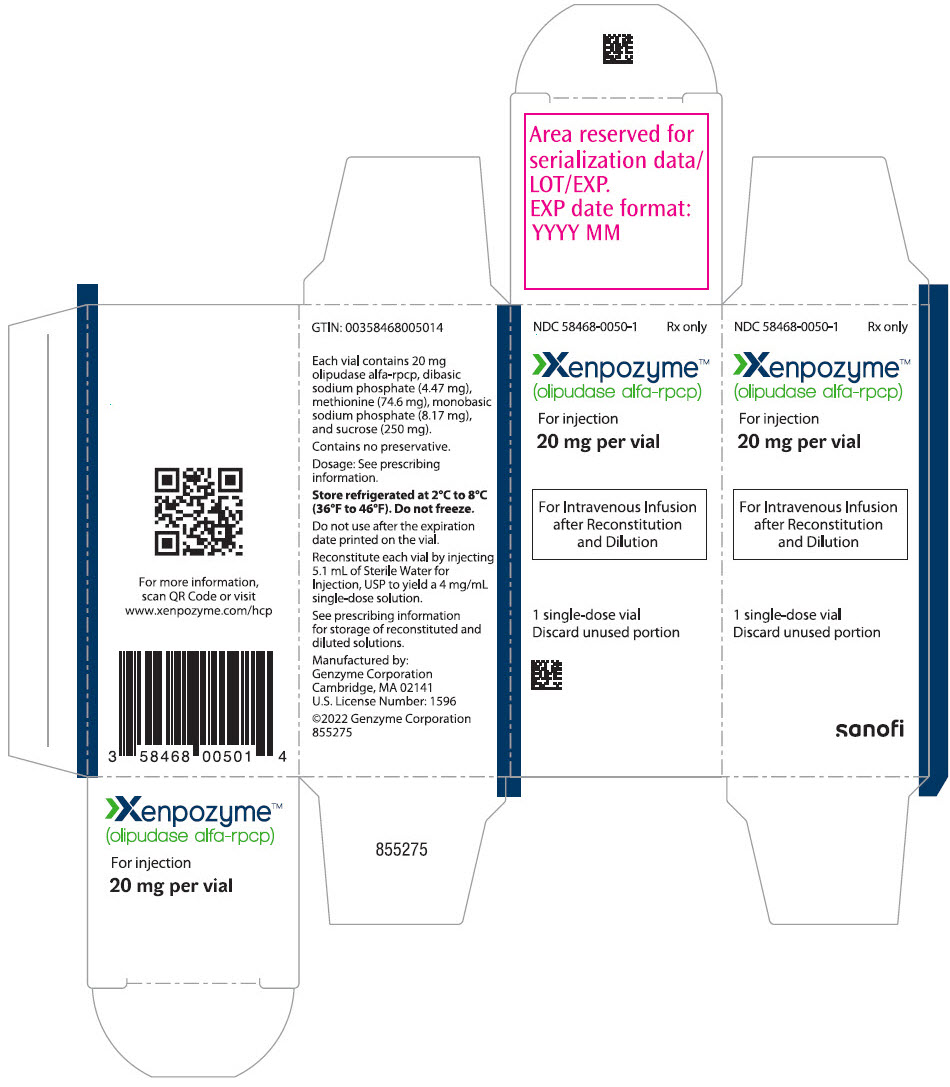
XENPOZYME olipudase alfa-rpcp 20 mg/5.1mL Injection, Powder, Lyophilized, For Solution, 1 vial — NDC 58468-0050-1 (Billing 58468-0050-01)
This is a package of 1 vial of XENPOZYME olipudase alfa-rpcp 20 mg/5.1mL Injection, Powder, Lyophilized, For Solution from Genzyme Corporation, marketed since Aug 2022 and currently FDA-listed. It is this product's only package size.
NDC database record
One package, one record: these facts belong to NDC 58468-0050-1 alone.
- Record
- FDA NDC Directory package listing · Human prescription drug
- Code segments
- 58468 labeler · 0050 product · 1 package
- Package marketed since
- Aug 29, 2022
- Sample package
- No — commercial package
- Listing certified through
- Dec 31, 2026
- Billing quantity
- 1 EA per package
- Barcode (UPC-A, from the NDC)
- 3 5846800501 4
- Medicaid fills, this package
- 34 prescriptions in the last four reported quarters
- FDA record last changed
- Jul 24, 2026
Identity & classification
Regulatory identifiers FDA, NLM and CMS codes for this package
Drug-database identifiers Medi-Span GPI and First Databank GCN / HICL / AHFS classification
- GSN (GCN sequence number): 083789
- GCN: 52847
- GPI-14 (Medi-Span): 30901560302120
- HICL (First Databank): 048267
- AHFS class code: 44:00.00.00
- RxCUI (RxNorm): 2610411
Where does this data come from?
- FDA openFDA NDC Directory · synced Oct 8, 2026
- FDA label on DailyMed · label index refreshed Oct 6, 2026
- RxNorm (NLM RxNav) · catalog refreshed Oct 1, 2026
- Medi-Span GPI (licensed)
- First Databank (licensed) · refreshed Oct 8, 2026
RxNorm drug class
This medicine belongs to the Enzymes class.
Where does this data come from?
- RxClass (NLM) · catalog refreshed Oct 1, 2026
Clinical
Patient education
Supplement & herbal interactions
Some supplements/herbs that may interact with Olipudase Alfa-rpcp — tap one for details:
Where does this data come from?
- MedlinePlus (NLM) · refreshed Oct 1, 2026
- FDA label on DailyMed · label index refreshed Oct 6, 2026
Ask a licensed pharmacist directly — free, answered by our team.
Pricing
A drug doesn't have one price. Each row is a different public payment system, and none is what you'd pay at the counter — that depends on your insurance. The ⓘ on each row explains what it measures.
| Price system | Per mL | Per package |
|---|---|---|
| Retail pharmacies payNADAC · weekly | Not in the retail survey — common for institutional, discontinued, or low-volume packs. | |
| Medicaid paysCMS SDUD · 12 mo | $10,960.07 | $55,896.38 / 5.1 ml |
| Medicare drug plans payPart D · quarterly | No Part D plan price is available for this NDC in our data. | |
| Medicare Part B allowsASP · J0218 | $404.947 / J0218 unit | — |
Where does this data come from?
- CMS NADAC weekly file
- CMS ASP pricing files · refreshed Sep 20, 2026
- CMS Medicaid State Drug Utilization Data · through Q4 2025
- CMS Part D plan pricing files · refreshed Sep 24, 2026
- VA National Acquisition Center price file
Billing & reimbursement
Where does this data come from?
- CMS ASP NDC-HCPCS crosswalk · refreshed Sep 22, 2026
- DMEPDAC NDC-HCPCS crosswalk
- openFDA NSDE billing units · refreshed Oct 7, 2026
Packaging — all sizes for this product
| Package NDC | Description | Marketing start | Marketing end | Status |
|---|---|---|---|---|
| 58468-0050-01 You're viewing this Main listing | 1 VIAL in 1 CARTON / 5.1 mL in 1 VIAL | 2022-08-29 | — | Active |
Therapeutic equivalents
| Product | Labeler | Pack | NADAC/unit | TE | Status | Price vs. this |
|---|---|---|---|---|---|---|
| Xenpozyme 20 mg/5.1mLthis 58468-0050-01 | Genzyme | 1 vial | — | — | FDA listed | — |
Where does this data come from?
- FDA openFDA NDC Directory · synced Oct 8, 2026
- FDA Purple Book · refreshed Oct 5, 2026
- CMS NADAC weekly file
Availability & biosimilar status
Biologics have no small-molecule generics; biosimilar competition is tracked in the FDA Purple Book.
Why the date isn’t exact: Biosimilar timing can change because patents may be challenged, settled, licensed, added or removed, and litigation can move the real date earlier or later.
🛈 What do these terms mean?
- Biologic patent
- A patent the reference product’s maker has publicly listed. A biosimilar generally can’t launch until these expire — unless they’re invalidated or resolved in a settlement.
- Reference-product exclusivity
- A flat 12 years of FDA market protection from the biologic’s first licensure (the BPCIA). No biosimilar can be licensed before it ends, regardless of patents.
- Interchangeable exclusivity
- The first interchangeable biosimilar can earn a period as the only interchangeable version (pharmacists can substitute it without the prescriber).
- Earliest biosimilar (LOE)
- The latest of all the dates above — the soonest a biosimilar can realistically reach the market. Litigation and settlements can move it earlier.
Biologics have no small-molecule “generics” — competition comes from FDA-licensed biosimilars, tracked in the FDA Purple Book.
| Code | What it grants | Expires |
|---|---|---|
| RefProduct | Reference-product exclusivity (12-year, BPCIA) — no biosimilar can be licensed before this date | Aug 31, 2034 |
Is there a biosimilar for XENPOZYME 20 MG VIAL?
Why do different websites show different biosimilar dates?
Can a biosimilar launch before the last patent expires?
What does “current Purple Book estimate” mean?
What does “FDA listed” mean?
What does a patent or protection date mean here?
Where does this data come from?
- FDA Purple Book · refreshed Oct 5, 2026
Inactive Ingredients / Excipients
Inactive ingredients, also called excipients, are components of the drug product other than the active ingredient. They may include fillers, dyes, coatings, preservatives, flavors, or other formulation ingredients.
Where does this data come from?
IACT rows and label-wide narrative are kept separate; availability and product-level specificity depend on the submitted label.- FDA label on DailyMed · label index refreshed Oct 6, 2026
- FDA openFDA NDC Directory · synced Oct 8, 2026
Inactive ingredient FAQ
Are inactive ingredients the same for every manufacturer?
Why might an inactive ingredient be missing?
Can inactive ingredients matter?
Manufacturer & labeler
More NDCs from Genzyme Corporation labeler code 58468
- Thyrogen THYROTROPIN ALFA .9 mg/mL Injection, Powder, Lyophilized, For Solution NDC 58468-0030-2
- Fabrazyme AGALSIDASE BETA 5 mg/mL Injection, Powder, Lyophilized, For Solution NDC 58468-0040-1
- Fabrazyme AGALSIDASE BETA 5 mg/mL Injection, Powder, Lyophilized, For Solution NDC 58468-0041-1
- XENPOZYME olipudase alfa-rpcp 4 mg/1.1mL Injection, Powder, Lyophilized, For Solution NDC 58468-0051-1
- ALDURAZYME laronidase 2.9 mg/5mL Injection, Solution, Concentrate NDC 58468-0070-1
- Thymoglobulin Anti-thymocyte Globulin (Rabbit) 5 mg/mL Injection, Powder, Lyophilized, For Solution NDC 58468-0080-1
- Renvela SEVELAMER CARBONATE 2400 mg Powder, For Suspension NDC 58468-0131-2
- Renvela SEVELAMER CARBONATE 800 mg Powder, For Suspension NDC 58468-0132-2
- Renvela SEVELAMER CARBONATE 800 mg Tablet, Film Coated NDC 58468-0133-1
Where does this data come from?
- FDA openFDA NDC Directory · synced Oct 8, 2026
- Drugs@FDA
Full prescribing information FDA SPL
🚨 Boxed Warning ▾
WARNING: HYPERSENSITIVITY REACTIONS INCLUDING ANAPHYLAXIS Patients treated with XENPOZYME have experienced life-threatening hypersensitivity reactions, including anaphylaxis. Appropriate medical monitoring and support measures, including cardiopulmonary resuscitation equipment, should be readily available during XENPOZYME administration. If a severe hypersensitivity reaction (e.g., anaphylaxis) occurs, discontinue XENPOZYME immediately and initiate appropriate medical treatment.
In patients with severe hypersensitivity reactions, a desensitization procedure to XENPOZYME may be considered [see Warnings and Precautions (5.1) ] . WARNING: HYPERSENSITIVITY REACTIONS INCLUDING ANAPHYLAXIS See full prescribing information for complete boxed warning. Appropriate medical monitoring and support measures, including cardiopulmonary resuscitation equipment, should be readily available.
If a severe hypersensitivity reaction occurs, discontinue XENPOZYME immediately and initiate appropriate medical treatment. ( 5.1 )
🎯 Indications and Usage ▾
1 INDICATIONS AND USAGE XENPOZYME is indicated for treatment of non–central nervous system manifestations of acid sphingomyelinase deficiency (ASMD) in adult and pediatric patients. XENPOZYME is a hydrolytic lysosomal sphingomyelin-specific enzyme indicated for treatment of non–central nervous system manifestations of acid sphingomyelinase deficiency (ASMD) in adult and pediatric patients. ( 1 )
⏱️ Dosage and Administration ▾
2 DOSAGE AND ADMINISTRATION See Full Prescribing Information for important recommendations prior to XENPOZYME treatment initiation. ( 2.1 ) Adults: Recommended starting dose is 0.1 mg/kg administered as an intravenous infusion. ( 2.2 ) Pediatrics: Recommended starting dose is 0.03 mg/kg administered as an intravenous infusion.
( 2.3 ) See Full Prescribing Information for the recommended dose escalation and maintenance dosage, dosage modifications to reduce the risk of adverse reactions, and preparation and administration instructions. ( 2.2 , 2.3 , 2.5 , 2.6 , 2.7 )
2.1Important Recommendations Prior to XENPOZYME Treatment Initiation Therapy with XENPOZYME should be directed in consultation with physicians knowledgeable in the management of ASMD. In order to avoid dosing errors including overdosage [see Overdosage (10) ] , follow all instructions for dosage and administration. Laboratory Testing Before initiating XENPOZYME: Obtain baseline transaminase (alanine aminotransferase [ALT] and aspartate aminotransferase [AST]) levels in all patients within 1 month prior to treatment initiation [see Warnings and Precautions (5.3) ] .
Verify pregnancy status in females of reproductive potential [see Use in Specific Populations (8.1 , 8.3) ] . Premedication Prior to XENPOZYME administration, consider premedicating with antihistamines, antipyretics, and/or corticosteroids [see Warnings and Precautions (5.1 , 5.2) ] . Medical Support Appropriate medical support measures including cardiopulmonary resuscitation equipment should be readily available during XENPOZYME administration [see Warnings and Precautions (5.1) ] .
Weight-Based Dosing Information The recommended adult and pediatric dosages of XENPOZYME for the dose escalation and maintenance phases [see Dosage and Administration (2.2 , 2.3) ] are based on body weight as follows for patients with a body mass index (BMI): Less than or equal to 30, the dosage is based on actual body weight (kg) Greater than 30, the dosage is based on adjusted body weight (kg). Calculate an adjusted body weight (kg) based on height in meters as described below: Adjusted body weight (kg) = (actual height in m) 2 × 30
2.2Recommended Dosage in Adult Patients Dose Escalation Phase The recommended starting dose of XENPOZYME in adults is 0.1 mg/kg. In order to reduce the risk of infusion-associated reactions or elevated transaminase levels, follow the dose escalation regimen in Table 1 [see Warnings and Precautions (5.1 , 5.2 , 5.3) ] . Administer XENPOZYME via intravenous infusion every 2 weeks.
Table 1: XENPOZYME Dose Escalation Regimen for Adult Patients Use actual body weight for patients with a BMI less than or equal to 30. For patients with a BMI greater than 30, calculate adjusted body weight (kg) = (actual height in m) 2 × 30 [see Dosage and Administration (2.1) ] . Adult Patients (18 years and older) First dose (Day 1/Week 0) 0.1 mg/kg Second dose (Week 2) 0.3 mg/kg Third dose (Week 4) 0.3 mg/kg Fourth dose (Week 6) 0.6 mg/kg Fifth dose (Week 8) 0.6 mg/kg Sixth dose (Week 10) 1 mg/kg Seventh dose (Week 12) 2 mg/kg Eighth dose (Week 14) The dose escalation phase includes the first 3 mg/kg dose.
3 mg/kg (recommended maintenance dose) Maintenance Phase The recommended maintenance dosage of XENPOZYME in adults is 3 mg/kg via intravenous infusion every 2 weeks.
2.3Recommended Dosage in Pediatric Patients Dose Escalation Phase The recommended starting dose of XENPOZYME in pediatric patients is 0.03 mg/kg. In order to reduce the risk of hypersensitivity and infusion-associated reactions or elevated liver enzyme elevations, follow the dose escalation regimen in Table 2 [see Warnings and Precautions (5.1 , 5.2 , 5.3) ] . Administer XENPOZYME via intravenous infusion every 2 weeks.
Table 2: XENPOZYME Dose Escalation Regimen for Pediatric Patients Use actual body weight for patients with a BMI less than or equal to 30. For patients with a BMI greater than 30, calculate adjusted body weight (kg) = (actual height… [Excerpted — this section continues on DailyMed.]
💊 Dosage Forms and Strengths ▾
3 DOSAGE FORMS AND STRENGTHS For injection: 4 mg or 20 mg of olipudase alfa-rpcp as a sterile, white to off white lyophilized powder in a single-dose vial for reconstitution. For injection: 4 mg or 20 mg of olipudase alfa-rpcp as a lyophilized powder in a single-dose vial for reconstitution. ( 3 )
⛔ Contraindications ▾
4 CONTRAINDICATIONS None. None. ( 4 )
⚠️ Warnings and Cautions ▾
5 WARNINGS AND PRECAUTIONS Infusion-Associated Reactions (IARs): If severe IARs occur, discontinue XENPOZYME and initiate appropriate medical treatment. ( 5.2 ) Elevated Transaminases: Assess ALT and AST within one month prior to initiation of XENPOZYME, within 72 hours prior to any infusion during dose escalation, or prior to the next scheduled XENPOZYME infusion upon resuming treatment following a missed dose. ( 5.3 ) Risk of Fetal Malformations During Dosage Initiation or Escalation in Pregnancy: XENPOZYME dosage initiation or escalation, at any time during pregnancy, is not recommended as it may lead to elevated sphingomyelin metabolite levels that may increase the risk of fetal malformations.
Advise females of reproductive potential to use effective contraception during treatment and for 14 days after the last dose if XENPOZYME is discontinued. ( 5.4 , 8.1 , 8.3 )
5.1Hypersensitivity Reactions Including Anaphylaxis Life-threatening hypersensitivity reactions, including anaphylaxis, have been reported in olipudase alfa-treated patients. One 18-month-old XENPOZYME-treated patient experienced an anaphylactic reaction during the sixth infusion in the dose escalation period in Trial 2 [see Adverse Reactions (6.1) ] . Additionally, a 16-month-old patient with ASMD type A, treated with a version of olipudase alfa manufactured from a different process, experienced two anaphylactic reactions during the fifth and sixth infusions in the dose escalation period; the patient received an immune tolerance induction therapy prior to treatment.
In both of these pediatric patients with anaphylaxis, anti-olipudase alfa-rpcp IgE (IgE ADA) and IgG (IgG ADA) antibodies were detected [see Adverse Reactions (6.1) and Clinical Pharmacology (12.6) ] . Hypersensitivity reactions that were mild to moderate in severity occurred in 10 (33%) XENPOZYME-treated adult patients and 4 (50%) XENPOZYME-treated pediatric patients in clinical trials. Hypersensitivity reactions in adults included urticaria, pruritus, erythema, rash, rash erythematous, eczema, angioedema, and erythema nodosum.
Hypersensitivity reactions in pediatric patients included urticaria, pruritus, rash, erythema, and localized edema [see Adverse Reactions (6) ] . Prior to XENPOZYME administration, consider premedicating with antihistamines, antipyretics, and/or corticosteroids. Appropriate medical monitoring and support measures, including cardiopulmonary resuscitation equipment, should be readily available during XENPOZYME administration.
If a severe hypersensitivity reaction (e.g., anaphylaxis) occurs, discontinue XENPOZYME immediately and initiate appropriate medical treatment. Consider the risks and benefits of re-administering XENPOZYME following a severe hypersensitivity reaction (including anaphylaxis). One patient has been rechallenged using slower infusion rates at a dosage lower than the recommended dosage.
In patients with a severe hypersensitivity reaction, a tailored desensitization procedure to XENPOZYME may be considered. If the decision is made to readminister XENPOZYME, ensure the patient tolerates the infusion. If the patient tolerates the infusion, the dosage (dose and/or the rate) may be increased to reach the recommended dosage.
Consider testing for IgE ADA in XENPOZYME-treated patients who experienced severe hypersensitivity reactions, including anaphylaxis [ see Adverse Reactions (6.1) ]. Testing for antibodies against olipudase alfa-rpcp are available through Genzyme Corporation (at 1-800-745-4447). Consider other clinical laboratory testing such as serum tryptase and complement activation in patients who experience anaphylaxis.
If a mild or moderate hypersensitivity reaction occurs, consider temporarily holding the infusion, slowing the infusion rate, and/or reducing the XENPOZYME dose [see Dosage and Administration (2.5) ] .
5.2Infusion-Associated Reactions IARs occurred in approximately 75% of pediatric and 50% of adult XENPOZYME-treated patients in the clinical… [Excerpted — this section continues on DailyMed.]
🤒 Adverse Reactions ▾
6 ADVERSE REACTIONS The following clinically significant adverse reactions are described elsewhere in the labeling: Hypersensitivity Reactions Including Anaphylaxis [see Warnings and Precautions (5.1) ] Infusion-Associated Reactions (IARs) [see Warnings and Precautions (5.2) ] Elevated Transaminase Levels [see Warnings and Precautions (5.3) ] Most common adverse reactions in adult patients (incidence ≥10%) are headache, cough, diarrhea, hypotension, and ocular hyperemia. ( 6.1 ) Most common adverse reactions in pediatric patients (incidence ≥20%) are pyrexia, cough, diarrhea, rhinitis, abdominal pain, vomiting, headache, urticaria, nausea, rash, arthralgia, pruritus, fatigue, and pharyngitis.
( 6.1 ) To report SUSPECTED ADVERSE REACTIONS, contact Genzyme Corporation at 1-800-745-4447 or FDA at 1-800-FDA-1088 or www.fda.gov/medwatch.
6.1Clinical Trials Experience Because clinical trials are conducted under widely varying conditions, adverse reaction rates observed in the clinical trials of a drug cannot be directly compared to rates in the clinical trials of another drug and may not reflect the rates observed in practice. The pooled safety analysis from 3 clinical trials included a total of 38 XENPOZYME-treated patients (30 adult and 8 pediatric patients) with age range from 1.5 to 59 years old receiving intravenous doses up to 3 mg/kg every 2 weeks [see Clinical Studies (14) ] .
The median exposure duration was 2.5 years (range: 0.4 to 3.7 years) in adult patients and 2.7 years (range: 2.5 to 3.2 years) in pediatric patients. Serious adverse reactions of anaphylactic reaction were reported in 2 (25%) XENPOZYME-treated pediatric patients. Most frequently reported adverse drug reactions in adults (incidence ≥10%) were headache, cough, diarrhea, hypotension, and ocular hyperemia.
Most frequently reported adverse drug reactions in pediatric patients (incidence ≥20%) were pyrexia, cough, diarrhea, rhinitis, abdominal pain, vomiting, headache, urticaria, nausea, rash, arthralgia, pruritus, fatigue, and pharyngitis. Adult patients with ASMD type B and type A/B (Trial 1) In Trial 1, 13 adult patients received XENPOZYME once every 2 weeks for 52 weeks (primary analysis period (PAP)) at dosages escalating from 0.1 mg/kg to a target dose of 3 mg/kg [see Clinical Studies (14.2) ] . Adverse reactions that occurred in at least 7% of XENPOZYME-treated adult patients during the PAP are described in Table 7.
Table 7: Adverse Reactions Occurring at >7% in Adult Patients with ASMD During the 52-Week Primary Analysis Period in Trial 1 Adverse Reaction XENPOZYME N=13 Placebo N=18 Headache 7 (54%) 8 (44%) Cough 4 (31%) 2 (11%) Diarrhea 2 (15%) 2 (11%) Hypotension 2 (15%) 2 (11%) Ocular hyperemia 2 (15%) 1 (6%) Erythema 1 (8%) 1 (6%) Asthenia 1 (8%) 1 (6%) Pharyngitis 1 (8%) 1 (6%) Dyspnea 1 (8%) 0 Urticaria 1 (8%) 0 Papule 1 (8%) 0 Myalgia 1 (8%) 0 Throat irritation 1 (8%) 0 C-reactive protein abnormal 1 (8%) 0 Pediatric Patients with ASMD type B and type A/B (Trial 2 and Trial 3) In Trial 2, 8 pediatric patients less than or equal to 17 years of age received XENPOZYME intravenously once every 2 weeks for 64 weeks [see Clinical Studies (14.3) ] .
After 64 weeks, all pediatric patients entered into Trial 3. Adverse reactions that occurred in at least 13% of pediatric patients are described in Table 8. Table 8: Adverse Reactions Occurring at ≥13% in XENPOZYME-Treated Pediatric Patients with ASMD in Trial 2 Duration of treatment in Trial 2 was 64 weeks.
All patients continued into Trial 3. and Trial 3 for an Overall Observation Period of 2.5 to
3.2Years Adverse Reactions XENPOZYME N=8 Abdominal pain includes abdominal pain and abdominal pain upper Fatigue includes fatigue and asthenia Rash includes rash and erythema Pyrexia 8 (100%) Cough 6 (75%) Diarrhea 6 (75%) Rhinitis 6 (75%) Abdominal pain 5 (63%) Vomiting 4 (50%) Headache 4 (50%) Urticaria 4 (50%) Nausea 3 (38%) Rash 3 (38%) Arthralgia 3 (38%) Pruritus 2 (25%) Fatigue 2 (25%) Pharyngitis 2 (25… [Excerpted — this section continues on DailyMed.]
👥 Use in Specific Populations ▾
8 USE IN SPECIFIC POPULATIONS
8.1Pregnancy Risk Summary Based on findings from animal reproduction studies, XENPOZYME may cause embryo-fetal harm when administered to a pregnant female. XENPOZYME dosage initiation or escalation, at any time during pregnancy, is not recommended as it may lead to elevated sphingomyelin metabolite levels that may increase the risk of fetal malformations (see Data ) , [see Clinical Pharmacology (12.2) ] . However, the decision to continue or discontinue XENPOZYME maintenance dosing in pregnancy should consider the female's need for XENPOZYME, the potential drug-related risks to the fetus, and the potential adverse outcomes from untreated maternal ASMD disease.
In an embryo-fetal toxicity study in pregnant mice, a rare malformation (exencephaly) was observed in offspring at an exposure less than the exposure at the maximum recommended human dose (MRHD) of olipudase alfa-rpcp (see Data ) . There are no available data on XENPOZYME use in pregnant females to evaluate for a drug associated risk of major birth defects, miscarriage, or other adverse maternal or fetal outcomes. Advise the pregnant female of the potential risk to the fetus.
The background risk of major birth defects and miscarriage for the indicated population is unknown. All pregnancies have a background risk of birth defect, miscarriage, or other adverse outcomes. In the U.S. general population, the estimated background risk of major birth defects and miscarriage in clinically recognized pregnancies is 2% to 4% and 15% to 20%, respectively.
Data Animal Data In an embryo-fetal development study in pregnant mice, olipudase alfa-rpcp was administered intravenously at doses of 3, 10, or 30 mg/kg daily from gestation day (GD) 6 through GD 15. Exencephaly was observed in 1 litter at each of the 10 and 30 mg/kg dose groups (2 and 3 fetuses, respectively). These data are consistent with published literature reports that brief embryonic exposures to sphingomyelin metabolites or a sphingosine-1-phosphate (S1P) receptor modulator produced neural tube defects, including exencephaly, in chicks and mice.
The developmental No Observed Adverse Effect Level (NOAEL) is 3 mg/kg. The AUC associated with this dose is 0.14-fold the clinical exposure at the MRHD. The developmental Lowest-Observed-Adverse-Effect Level (LOAEL), 10 mg/kg, is also associated with an exposure that is less than the clinical exposure at the MRHD.
In an embryo-fetal development study in pregnant rabbits, olipudase alfa-rpcp was administered intravenously at doses of 3, 10, or 30 mg/kg daily from GD 6 through GD 19. There was no maternal or developmental toxicity. The developmental NOAEL was 30 mg/kg; the AUC 0–24 at this dose is approximately 10.5-fold the exposure at the MRHD.
In a study of pre- and postnatal development in mice, olipudase alfa-rpcp was administered intravenously every other day from GD 6 through GD 18; then resumed every other day after parturition, from Lactation Day (LD) 1 through LD 19. Olipudase alfa-rpcp did not induce any effect on maternal reproductive function or on developmental and reproductive parameters of male and female offspring. Therefore, the maternal and developmental NOAELs are 30 mg/kg.
Exposures at this dose, based on the embryo-fetal development study, were estimated to be approximately 1.5-fold the MRHD of olipudase alfa-rpcp.
8.2Lactation Risk Summary There are no data on the presence of olipudase alfa-rpcp in human milk, the effects on the breastfed infant, or the effects on milk production. Olipudase alfa-rpcp is present in animal milk. (see Data ) .
When a drug is present in animal milk, it is likely that the drug will be present in human milk. The developmental and health benefits of breastfeeding should be considered along with the mother's clinical need for XENPOZYME and any potential adverse effects on the breastfed infant from XENPOZYME or from the underlying maternal condition. Data Olipudase alfa-rpcp was administered as a single… [Excerpted — this section continues on DailyMed.]
🤰 Pregnancy ▾
8.1Pregnancy Risk Summary Based on findings from animal reproduction studies, XENPOZYME may cause embryo-fetal harm when administered to a pregnant female. XENPOZYME dosage initiation or escalation, at any time during pregnancy, is not recommended as it may lead to elevated sphingomyelin metabolite levels that may increase the risk of fetal malformations (see Data ) , [see Clinical Pharmacology (12.2) ] . However, the decision to continue or discontinue XENPOZYME maintenance dosing in pregnancy should consider the female's need for XENPOZYME, the potential drug-related risks to the fetus, and the potential adverse outcomes from untreated maternal ASMD disease.
In an embryo-fetal toxicity study in pregnant mice, a rare malformation (exencephaly) was observed in offspring at an exposure less than the exposure at the maximum recommended human dose (MRHD) of olipudase alfa-rpcp (see Data ) . There are no available data on XENPOZYME use in pregnant females to evaluate for a drug associated risk of major birth defects, miscarriage, or other adverse maternal or fetal outcomes. Advise the pregnant female of the potential risk to the fetus.
The background risk of major birth defects and miscarriage for the indicated population is unknown. All pregnancies have a background risk of birth defect, miscarriage, or other adverse outcomes. In the U.S. general population, the estimated background risk of major birth defects and miscarriage in clinically recognized pregnancies is 2% to 4% and 15% to 20%, respectively.
Data Animal Data In an embryo-fetal development study in pregnant mice, olipudase alfa-rpcp was administered intravenously at doses of 3, 10, or 30 mg/kg daily from gestation day (GD) 6 through GD 15. Exencephaly was observed in 1 litter at each of the 10 and 30 mg/kg dose groups (2 and 3 fetuses, respectively). These data are consistent with published literature reports that brief embryonic exposures to sphingomyelin metabolites or a sphingosine-1-phosphate (S1P) receptor modulator produced neural tube defects, including exencephaly, in chicks and mice.
The developmental No Observed Adverse Effect Level (NOAEL) is 3 mg/kg. The AUC associated with this dose is 0.14-fold the clinical exposure at the MRHD. The developmental Lowest-Observed-Adverse-Effect Level (LOAEL), 10 mg/kg, is also associated with an exposure that is less than the clinical exposure at the MRHD.
In an embryo-fetal development study in pregnant rabbits, olipudase alfa-rpcp was administered intravenously at doses of 3, 10, or 30 mg/kg daily from GD 6 through GD 19. There was no maternal or developmental toxicity. The developmental NOAEL was 30 mg/kg; the AUC 0–24 at this dose is approximately 10.5-fold the exposure at the MRHD.
In a study of pre- and postnatal development in mice, olipudase alfa-rpcp was administered intravenously every other day from GD 6 through GD 18; then resumed every other day after parturition, from Lactation Day (LD) 1 through LD 19. Olipudase alfa-rpcp did not induce any effect on maternal reproductive function or on developmental and reproductive parameters of male and female offspring. Therefore, the maternal and developmental NOAELs are 30 mg/kg.
Exposures at this dose, based on the embryo-fetal development study, were estimated to be approximately 1.5-fold the MRHD of olipudase alfa-rpcp.
🧒 Pediatric Use ▾
8.4Pediatric Use The safety and effectiveness of XENPOZYME for the treatment of non-central nervous system manifestations of acid sphingomyelinase deficiency (ASMD) have been established in pediatric patients down to birth. Use of XENPOZYME for this indication is supported by evidence from an adequate, and well-controlled trial (Trial 1) in adults with supportive efficacy, safety, and tolerability data in pediatric patients (Trial 2 and Trial 3) [see Adverse Reactions (6.1) and Clinical Studies (14.2 , 14.3 , 14.4) ] .
Compared to adults, a higher percentage of pediatric patients experienced treatment related serious adverse reactions, anaphylaxis, hypersensitivity reactions, and IARs that occurred within 24 hours of infusion [see Adverse Reactions (6.1) ] . Two pediatric patients, an 18 month old receiving XENPOZYME and a 16 month old with ASMD type A that received a version of olipudase alfa manufactured from a different process developed anaphylaxis [see Warnings and Precautions (5.1) ] .
🧓 Geriatric Use ▾
8.5Geriatric Use Of the total number of XENPOZYME-treated adult patients in these trials, 1 (3%) was 65 to 74 years of age, and none were 75 years of age and older [see Clinical Studies (14) ] . Clinical trials of XENPOZYME did not include sufficient numbers of patients 65 years of age and older to determine whether they respond differently from younger adult patients.
🆘 Overdosage ▾
10 OVERDOSAGE Cases of overdosage with XENPOZYME have been reported in pediatric patients during dose escalation. Some patients experienced serious adverse reactions including death within 24 hours of initial dose [see Warnings and Precautions (5.2) ] . The clinical findings included fever, hypotension, gastrointestinal bleeding, marked elevation in liver tests, metabolic acidosis, respiratory failure, and vomiting.
There is no known specific antidote for XENPOZYME overdosage. In the event of overdosage, immediately stop the infusion, and monitor the patient closely in a hospital setting for the development of hypersensitivity reactions and IARs including acute phase reactions. For the management of adverse reactions, see Warnings and Precautions (5.1 , 5.2 , 5.3) and Adverse Reactions (6.1) .
🧬 Clinical Pharmacology ▾
12 CLINICAL PHARMACOLOGY
12.1Mechanism of Action ASMD is a lysosomal storage disease that results from reduced activity of the enzyme acid sphingomyelinase (ASM), caused by pathogenic variants in the sphingomyelin phosphodiesterase 1 gene. ASM degrades sphingomyelin to ceramide and phosphocholine. The deficiency of ASM causes an intra-lysosomal accumulation of sphingomyelin (as well as cholesterol and other cell membrane lipids) in various tissues.
XENPOZYME provides an exogenous source of ASM. XENPOZYME is not expected to cross the blood-brain barrier or modulate the CNS manifestations of ASMD.
12.2Pharmacodynamics Plasma Ceramide Levels Ceramide is elevated in plasma of adult and pediatric patients with ASMD. Plasma ceramide levels showed a transient increase after each administration (post infusion) of XENPOZYME. In the dose escalation phase, plasma ceramide levels were substantially increased compared to the baseline level.
Plasma ceramide levels gradually decreased following repeated administration of XENPOZYME and the pre-infusion levels were generally lower than the baseline level during the maintenance phase of treatment. In adult patients with ASMD in Trial 1 [see Clinical Studies (14.2) ] , the mean (standard deviation, SD) pre-infusion plasma ceramide concentration was 3.7 (1.4) mg/L at baseline and decreased to 2.2 (0.6) mg/L at Week 52 following treatment with XENPOZYME. In pediatric patients with ASMD in Trial 2 [see Clinical Studies (14.3) ] , the mean (SD) pre-infusion plasma ceramide concentration was 4.7 (0.9) mg/L at baseline and decreased to 1.8 (0.3) mg/L at Week 52 following treatment with XENPOZYME.
Plasma Lysosphingomyelin Levels Lysosphingomyelin is substantially elevated in plasma of adult and pediatric patients with ASMD. Plasma lysosphingomyelin levels decreased after repeated administration of XENPOZYME. In adult patients with ASMD in Trial 1 [see Clinical Studies (14.2) ] , the mean (SD) pre-infusion plasma lysosphingomyelin concentration was 379 (204) mcg/L at baseline and decreased to 99 (118) mcg/L at Week 52 following treatment with XENPOZYME.
In pediatric patients with ASMD in Trial 2 [see Clinical Studies (14.3) ] , the mean (SD) pre-infusion plasma lysosphingomyelin concentration was 625 (339) mcg/L at baseline and decreased to 80 (47) mcg/L at Week 52 following treatment with XENPOZYME. Liver Sphingomyelin Content In adult patients, the liver sphingomyelin content, as assessed by histopathology, decreased from baseline to Week 52 in the XENPOZYME treatment group compared to an increase in the placebo group.
12.3Pharmacokinetics In adult patients with ASMD, the mean (SD) maximum plasma olipudase alfa-rpcp concentration (C max ) and area under the concentration-time curve (AUC) at steady state were 30 (5) mcg/mL and 607 (120) mcg∙h/mL, respectively, at the recommended maintenance dose of 3 mg/kg administered once every 2 weeks. Olipudase alfa-rpcp C max and AUC increase proportionally over a dose range of 0.1 to 3 mg/kg (0.03 to 1 times the approved recommended maintenance dose). Distribution The mean (SD) volume of distribution of olipudase alfa-rpcp was 13 (2) L in adult patients with ASMD.
Elimination The mean (SD) clearance of olipudase alfa-rpcp was 0.33 (0.07) L/h and the mean half-life (t 1/2 ) ranged from 32 to 38 hours in adult patients with ASMD. Metabolism The metabolic pathway of olipudase alfa-rpcp has not been characterized. Olipudase alfa-rpcp is expected to be metabolized into small peptides and amino acids via catabolic pathways.
Specific Populations Pediatric Patients In pediatric patients (1.5 to 17.5 years of age) with ASMD, the mean (SD) C max was 24.3 (2.8) mcg/mL and the mean (SD) AUC was 449 (70) mcg∙h/mL at the recommended maintenance dose of 3 mg/kg administered once every 2 weeks.
12.6Immunogenicity The observed incidence of anti-drug antibodies is highly dependent on the sensitivity and specificity of the assay. Differences in assay methods preclude meaningful… [Excerpted — this section continues on DailyMed.]
🧬 Mechanism of Action ▾
12.1Mechanism of Action ASMD is a lysosomal storage disease that results from reduced activity of the enzyme acid sphingomyelinase (ASM), caused by pathogenic variants in the sphingomyelin phosphodiesterase 1 gene. ASM degrades sphingomyelin to ceramide and phosphocholine. The deficiency of ASM causes an intra-lysosomal accumulation of sphingomyelin (as well as cholesterol and other cell membrane lipids) in various tissues.
XENPOZYME provides an exogenous source of ASM. XENPOZYME is not expected to cross the blood-brain barrier or modulate the CNS manifestations of ASMD.
📦 How Supplied / Storage and Handling ▾
16 HOW SUPPLIED/STORAGE AND HANDLING How Supplied XENPOZYME (olipudase alfa-rpcp) for injection is supplied as a sterile white to off-white lyophilized powder for reconstitution in a single-dose vial. XENPOZYME does not contain any preservatives. XENPOZYME is available supplied as: Carton containing one 20 mg single-dose vial (NDC 58468-0050-1) Carton containing one 4 mg single-dose vial (NDC 58468-0051-1) Storage and Handling Store refrigerated at 2°C to 8°C (36°F to 46°F).
Do not freeze. For storage of reconstituted and diluted solution [see Dosage and Administration (2.6) ] .
📦 Storage and Handling ▾
Storage and Handling Store refrigerated at 2°C to 8°C (36°F to 46°F). Do not freeze. For storage of reconstituted and diluted solution [see Dosage and Administration (2.6) ] .
📋 Description ▾
11 DESCRIPTION Olipudase alfa-rpcp is a hydrolytic lysosomal sphingomyelin-specific enzyme consisting of 570 amino acids produced in a Chinese hamster ovary cell line by recombinant DNA technology. The molecular weight of olipudase alfa-rpcp is approximately 76 kDa. XENPOZYME (olipudase alfa-rpcp) for injection is supplied as a sterile, preservative-free, white to off-white lyophilized powder for reconstitution and dilution to be administered via intravenous infusion.
XENPOZYME is supplied in single-dose vials. Each 4 mg vial contains 4 mg olipudase alfa-rpcp, dibasic sodium phosphate (0.89 mg), methionine (14.92 mg), monobasic sodium phosphate (1.63 mg), and sucrose (50 mg). After reconstitution with 1.1 mL of Sterile Water for Injection, USP, the final concentration is 4 mg/mL [see Dosage and Administration (2.6) ] .
Each 20 mg vial contains 20 mg olipudase alfa-rpcp, dibasic sodium phosphate (4.47 mg), methionine (74.6 mg), monobasic sodium phosphate (8.17 mg), and sucrose (250 mg). After reconstitution with 5.1 mL of Sterile Water for Injection, USP, the final concentration is 4 mg/mL [see Dosage and Administration (2.6) ] . The pH is 6.5 after reconstitution.
💬 Information for Patients ▾
17 PATIENT COUNSELING INFORMATION Hypersensitivity Reactions (Including Anaphylaxis) and Infusion-Associated Reactions (IARs) Advise the patient and caregiver that reactions related to the infusion may occur during and after XENPOZYME treatment, including life-threatening hypersensitivity reactions, anaphylaxis, and IARs. Inform the patient and/or caregiver of the signs and symptoms of hypersensitivity reactions and IARs and to seek immediate medical care should signs and symptoms occur [see Warnings and Precautions (5.1 , 5.2) ] .
Embryo-Fetal Toxicity XENPOZYME may cause embryo-fetal harm. Advise the pregnant female and females of reproductive potential of the potential risk to the fetus. Advise a female patient and caregiver to inform their healthcare provider of a known or suspected pregnancy [see Use in Specific Populations (8.1) ] .
Advise a female of reproductive potential to use effective contraception during treatment and for 14 days after the last dose if XENPOZYME is discontinued [see Use in Specific Populations (8.1 , 8.3) ].
🧬 Pharmacokinetics ▾
12.3Pharmacokinetics In adult patients with ASMD, the mean (SD) maximum plasma olipudase alfa-rpcp concentration (C max ) and area under the concentration-time curve (AUC) at steady state were 30 (5) mcg/mL and 607 (120) mcg∙h/mL, respectively, at the recommended maintenance dose of 3 mg/kg administered once every 2 weeks. Olipudase alfa-rpcp C max and AUC increase proportionally over a dose range of 0.1 to 3 mg/kg (0.03 to 1 times the approved recommended maintenance dose). Distribution The mean (SD) volume of distribution of olipudase alfa-rpcp was 13 (2) L in adult patients with ASMD.
Elimination The mean (SD) clearance of olipudase alfa-rpcp was 0.33 (0.07) L/h and the mean half-life (t 1/2 ) ranged from 32 to 38 hours in adult patients with ASMD. Metabolism The metabolic pathway of olipudase alfa-rpcp has not been characterized. Olipudase alfa-rpcp is expected to be metabolized into small peptides and amino acids via catabolic pathways.
Specific Populations Pediatric Patients In pediatric patients (1.5 to 17.5 years of age) with ASMD, the mean (SD) C max was 24.3 (2.8) mcg/mL and the mean (SD) AUC was 449 (70) mcg∙h/mL at the recommended maintenance dose of 3 mg/kg administered once every 2 weeks.
🧬 Pharmacodynamics ▾
12.2Pharmacodynamics Plasma Ceramide Levels Ceramide is elevated in plasma of adult and pediatric patients with ASMD. Plasma ceramide levels showed a transient increase after each administration (post infusion) of XENPOZYME. In the dose escalation phase, plasma ceramide levels were substantially increased compared to the baseline level.
Plasma ceramide levels gradually decreased following repeated administration of XENPOZYME and the pre-infusion levels were generally lower than the baseline level during the maintenance phase of treatment. In adult patients with ASMD in Trial 1 [see Clinical Studies (14.2) ] , the mean (standard deviation, SD) pre-infusion plasma ceramide concentration was 3.7 (1.4) mg/L at baseline and decreased to 2.2 (0.6) mg/L at Week 52 following treatment with XENPOZYME. In pediatric patients with ASMD in Trial 2 [see Clinical Studies (14.3) ] , the mean (SD) pre-infusion plasma ceramide concentration was 4.7 (0.9) mg/L at baseline and decreased to 1.8 (0.3) mg/L at Week 52 following treatment with XENPOZYME.
Plasma Lysosphingomyelin Levels Lysosphingomyelin is substantially elevated in plasma of adult and pediatric patients with ASMD. Plasma lysosphingomyelin levels decreased after repeated administration of XENPOZYME. In adult patients with ASMD in Trial 1 [see Clinical Studies (14.2) ] , the mean (SD) pre-infusion plasma lysosphingomyelin concentration was 379 (204) mcg/L at baseline and decreased to 99 (118) mcg/L at Week 52 following treatment with XENPOZYME.
In pediatric patients with ASMD in Trial 2 [see Clinical Studies (14.3) ] , the mean (SD) pre-infusion plasma lysosphingomyelin concentration was 625 (339) mcg/L at baseline and decreased to 80 (47) mcg/L at Week 52 following treatment with XENPOZYME. Liver Sphingomyelin Content In adult patients, the liver sphingomyelin content, as assessed by histopathology, decreased from baseline to Week 52 in the XENPOZYME treatment group compared to an increase in the placebo group.
🔬 Clinical Studies ▾
14 CLINICAL STUDIES
14.1Overview of Clinical Trials The efficacy of XENPOZYME for the treatment of non–central nervous system manifestations of acid sphingomyelinase deficiency (ASMD) has been evaluated in 3 clinical trials involving a total of 61 patients with ASMD: Trial 1 in adult patients (NCT02004691), Trial 2 in pediatric patients (NCT02292654), and Trial 3 a long-term trial in pediatric patients (NCT02004704).
14.2Clinical Trial in Adult Patients with ASMD Trial 1 was a multicenter, randomized, double-blinded, placebo-controlled, repeat-dose phase II/III trial in adult patients with ASMD (clinical diagnosis consistent with ASMD type B and A/B). In this trial, patients received either XENPOZYME or placebo. Treatment was administered in both groups as an intravenous infusion once every 2 weeks.
XENPOZYME was dosed as follows: 0.1 mg/kg (Day 1, Week 0), 0.3 mg/kg (Weeks 2 and 4), 0.6 mg/kg (Weeks 6 and 8), 1 mg/kg (Week 10), 2 mg/kg (Week 12), and then a maintenance dose of 3 mg/kg (Week 14 onwards). The trial was divided into 2 consecutive periods: a randomized placebo-controlled, double-blinded primary analysis period (PAP) which lasted to Week 52, followed by an extension treatment period (ETP) for up to 4 years. Patients randomized to the placebo arm in the PAP crossed over to receive XENPOZYME treatment in the ETP to reach the targeted dose of 3 mg/kg, while patients in the original XENPOZYME arm continued treatment.
Patients enrolled in the trial had a diffusion capacity of the lungs for carbon monoxide (DLco) ≤70% of the predicted normal value and a spleen volume ≥6 multiples of normal (MN) measured by magnetic resonance imaging (MRI). The trial population included 87% White, 7% Asian, and 7% other; for ethnicity, 32% identified as Hispanic/Latino, 65% as non-Hispanic/Latino, and 3% were not reported. Five males and 13 females with a median age of 34 years (range: 18 to 66) were included in the placebo arm and 8 males and 5 females with a median age of 34 years (range: 20 to 59) were included in the XENPOZYME arm.
The XENPOZYME and placebo groups included 1 patient (8%) and 2 patients (11%) with mild renal impairment (60 mL/minute ≤ creatinine clearance <90 mL/minute), respectively. There were no patients with moderate or severe renal impairment. Key efficacy endpoints included assessment of % predicted DLco, spleen volume, liver volume, and platelet count.
At Week 52 during the PAP, an increase of 21% in the mean percent change in % predicted DLco was observed in the XENPOZYME-treated patients compared to the placebo-treated patients (Table 9). A reduction in spleen volume of 39% was observed in the XENPOZYME-treated patients compared to the placebo-treated patients. The changes in % predicted DLco and spleen volume were noted at Week 26 of treatment, the first post-dose endpoint assessment (Figures 1 and 2).
A decrease in mean liver volume and an increase in mean platelet count were noted in the XENPOZYME-treated patients compared to the placebo-treated patients at Week 52 (Table 9). Table 9: Observed Value and Percentage Change from Baseline to Week 52 in Key Endpoints in Adult Patients with ASMD Type B, A/B on XENPOZYME or Placebo (Trial 1) Placebo XENPOZYME Difference [95% CI] Nominal p value: DLco n 18 13 Mean % predicted DLco at baseline (SD) 48.5 (10.8) 49.1 (9.7) NA n 17 12 Mean % predicted DLco at Week 52 (SD) 49.9 (11.1) 59.4 (9.6) NA n 17 12 LS Mean Percent change in % predicted DLco at Week 52 (SE) 3.0 (3.3) 23.9 (3.8) 20.9 (5.0) p value = 0.0003; [10.6, 31.2] Spleen volume n 18 13 Mean Spleen Volume (MN) at baseline (SD) 11.2 (3.8) 11.5 (4.7) NA n 17 13 Mean Spleen Volume (MN) at Week 52 (SD) 11.2 (4.2) 7.2 (3.9) NA n 17 13 LS Mean Percent change in Spleen Volume (in MN) at Week 52 (SE) 0.5 (2.62) -38.9 (3.0) -39.4 (4.0) p value <0.0001; [-47.6, -31.2] Liver volume n 18 13 Mean Liver Volume (MN) at baseline (SD) 1.6 (0.5) 1.4 (0.3) NA n 17 12 Mean Liver Volume (MN) at Week 52 (SD) 1.6 (0.5) 1.0 (0.2)… [Excerpted — this section continues on DailyMed.]
🧪 Nonclinical Toxicology ▾
13 NONCLINICAL TOXICOLOGY
13.1Carcinogenesis, Mutagenesis, Impairment of Fertility Carcinogenesis Studies to evaluate the carcinogenic potential of olipudase alfa-rpcp have not been conducted. Mutagenesis Studies to evaluate the mutagenic potential of olipudase alfa-rpcp have not been conducted. Impairment of Fertility Intravenous administration of olipudase alfa-rpcp every other day at doses up to 30 mg/kg had no adverse effects in a combined study of fertility in male and female mice.
Exposures at this dose, based on the embryo-fetal development study, were estimated to be approximately 1.5-fold those of the MRHD of olipudase alfa-rpcp.
13.2Animal Toxicology and/or Pharmacology In acid sphingomyelinase knockout (ASMKO) mice (a disease model of ASMD), mortality was observed after a single dose ≥10 mg/kg administered as an IV bolus injection. Observations (lethargy, coolness to touch, and unwillingness to move), combined with the adrenal hemorrhage, suggested that hypotensive shock may be the cause of death. These findings were accompanied by necrosis and apoptosis in the liver and adrenal gland, elevations of ceramide, sphingosine and sphingosine 1-phosphate in the serum, catabolites of accumulated sphingomyelin as well as elevations in the serum concentrations of inflammatory mediators, such as cytokines and acute phase proteins.
In ASMKO mice, a dose-dependent reduction in heart rate accompanied by a decrease in motor activity and followed by a slow decline in blood pressure was noted after a single IV administration at 3, 10, and 20 mg/kg. After 2 doses of olipudase alfa-rpcp at 3 and 10 mg/kg to ASMKO mice, a slight decline in heart rate was noted following the second administration. Repeated dose studies in adult ASMKO mice show that administration of olipudase alfa-rpcp via a dose escalation regimen, (3 mg/kg administered IV every other day, followed by a single IV dose of 20 mg/kg 3 days later) did not result in toxicity.
The lack of adverse findings in BALB/c, C57BL/6 mice, rats, dogs, and monkeys at comparable olipudase alfa-rpcp doses suggested that the dose-related toxicity observed in ASMKO mice may be due to the rate and amount of substrate degradation.
📄 Carcinogenesis, Mutagenesis, Impairment of Fertility ▾
13.1Carcinogenesis, Mutagenesis, Impairment of Fertility Carcinogenesis Studies to evaluate the carcinogenic potential of olipudase alfa-rpcp have not been conducted. Mutagenesis Studies to evaluate the mutagenic potential of olipudase alfa-rpcp have not been conducted. Impairment of Fertility Intravenous administration of olipudase alfa-rpcp every other day at doses up to 30 mg/kg had no adverse effects in a combined study of fertility in male and female mice.
Exposures at this dose, based on the embryo-fetal development study, were estimated to be approximately 1.5-fold those of the MRHD of olipudase alfa-rpcp.
📄 Recent Major Changes ▾
Dosage and Administration, Missed Doses ( 2.4 ) 12/2024 Dosage and Administration, Administration Instructions ( 2.7 ) 12/2024
📄 Package Label / Principal Display Panel ▾
PRINCIPAL DISPLAY PANEL - 20 mg Vial Carton NDC 58468-0050-1 Rx only Xenpozyme™ (olipudase alfa-rpcp) For injection 20 mg per vial For Intravenous Infusion after Reconstitution and Dilution 1 single-dose vial Discard unused portion PRINCIPAL DISPLAY PANEL - 20 mg Vial Carton
PRINCIPAL DISPLAY PANEL - 4 mg Vial Carton NDC 58468-0051-1 Rx only Xenpozyme™ (olipudase alfa-rpcp) For injection 4 mg per vial For Intravenous Infusion after Reconstitution and Dilution 1 single-dose vial Discard unused portion PRINCIPAL DISPLAY PANEL - 4 mg Vial Carton
Medicaid utilization & spend
Medicare Part D spend CMS · PART D · 2026 (Q1)
About this NDC listing & data coverage
What data is (and isn’t) available for this NDC — tap to expand
| NDC identity (package / product / labeler codes) | ✓ Available |
| Labeler | ✓ Available |
| Product & package description | ✓ Available |
| Marketing category & status | ✓ Available |
| Active ingredient / dosage form / route | ✓ Available |
| FDA label (SPL via DailyMed) | ✓ Available |
| Package photos | ✓ Available |
| Inactive ingredients (structured) | — Not published for this NDC The labeler did not submit a structured excipient list, or no SPL is available. |
| NADAC pharmacy acquisition price (CMS) | — Not published for this NDC CMS publishes NADAC only for NDCs reported in its retail-pharmacy survey. |
| Orange Book / therapeutic-equivalence data | ✓ Available |
| HCPCS J-code billing crosswalk | ✓ Available |
| Medicaid utilization (CMS SDUD) | ✓ Available |