
Fabrazyme AGALSIDASE BETA 5 mg/mL Injection, Powder, Lyophilized, For Solution, 1 vial — NDC 58468-0041-1 (Billing 58468-0041-01)
This is a package of 1 vial of Fabrazyme AGALSIDASE BETA 5 mg/mL Injection, Powder, Lyophilized, For Solution from Genzyme Corporation, marketed since Dec 2008 and currently FDA-listed. It is this product's only package size.
NDC database record
One package, one record: these facts belong to NDC 58468-0041-1 alone.
- Record
- FDA NDC Directory package listing · Human prescription drug
- Code segments
- 58468 labeler · 0041 product · 1 package
- Package marketed since
- Dec 17, 2008
- Sample package
- No — commercial package
- Listing certified through
- Dec 31, 2026
- Billing quantity
- 1 EA per package
- Barcode (UPC-A, from the NDC)
- 3 5846800411 6
- Medicaid fills, this package
- 1,261 prescriptions in the last four reported quarters
- FDA record last changed
- Jul 24, 2026
Identity & classification
Regulatory identifiers FDA, NLM and CMS codes for this package
Drug-database identifiers Medi-Span GPI and First Databank GCN / HICL / AHFS classification
- GSN (GCN sequence number): 054431
- GCN: 22348
- GPI-14 (Medi-Span): 30903610102110
- HICL (First Databank): 024861
- AHFS class code: 44:00.00.00
- RxCUI (RxNorm): 1804755
Where does this data come from?
- FDA openFDA NDC Directory · synced Oct 8, 2026
- FDA label on DailyMed · label index refreshed Oct 6, 2026
- RxNorm (NLM RxNav) · catalog refreshed Oct 1, 2026
- Medi-Span GPI (licensed)
- First Databank (licensed) · refreshed Oct 8, 2026
RxNorm drug class
This medicine belongs to the Hydrolytic Lysosomal Neutral Glycosphingolipid-specific Enzyme class.
Where does this data come from?
- RxClass (NLM) · catalog refreshed Oct 1, 2026
Clinical
Agalsidase beta injection is used to treat Fabry disease (an inherited condition in which a type of fatty substance builds up in the body, resulting in nerve and organ damage) in adults and children 2 years of age and older. Agalsidase beta injection is in a class of medications called enzymes. It works by replacing an enzyme normally produced by the body that helps prevent the build up of the fatty substance in the body.
Read the full MedlinePlus article ↗Patient education
Supplement & herbal interactions
Where does this data come from?
- MedlinePlus (NLM) · refreshed Oct 1, 2026
- FDA label on DailyMed · label index refreshed Oct 6, 2026
Ask a licensed pharmacist directly — free, answered by our team.
Pricing
A drug doesn't have one price. Each row is a different public payment system, and none is what you'd pay at the counter — that depends on your insurance. The ⓘ on each row explains what it measures.
| Price system | Per mL | Per package |
|---|---|---|
| Retail pharmacies payNADAC · weekly | Not in the retail survey — common for institutional, discontinued, or low-volume packs. | |
| Medicaid paysCMS SDUD · 12 mo | $1,365.44 | $1,365.44 / 1 ml |
| Medicare drug plans payPart D · quarterly | No Part D plan price is available for this NDC in our data. | |
| Medicare Part B allowsASP · J0180 | $232.720 / J0180 unit | — |
Where does this data come from?
- CMS NADAC weekly file
- CMS ASP pricing files · refreshed Sep 20, 2026
- CMS Medicaid State Drug Utilization Data · through Q4 2025
- CMS Part D plan pricing files · refreshed Sep 24, 2026
- VA National Acquisition Center price file
Billing & reimbursement
Where does this data come from?
- CMS ASP NDC-HCPCS crosswalk · refreshed Sep 22, 2026
- DMEPDAC NDC-HCPCS crosswalk
- openFDA NSDE billing units · refreshed Oct 7, 2026
Packaging — all sizes for this product
| Package NDC | Description | Marketing start | Marketing end | Status |
|---|---|---|---|---|
| 58468-0041-01 You're viewing this Main listing | 1 VIAL, GLASS in 1 CARTON / 1 mL in 1 VIAL, GLASS | 2008-12-17 | — | Active |
Therapeutic equivalents
| Product | Labeler | Pack | NADAC/unit | TE | Status | Price vs. this |
|---|---|---|---|---|---|---|
| Fabrazyme 5 mg/mLthis 58468-0041-01 | Genzyme | 1 vial | — | — | FDA listed | — |
| Fabrazyme 5 mg/mL 58468-0040-01 | Genzyme | 1 vial | — | — | FDA listed | — |
Where does this data come from?
- FDA openFDA NDC Directory · synced Oct 8, 2026
- FDA Purple Book · refreshed Oct 5, 2026
- CMS NADAC weekly file
Availability & biosimilar status
Biologics have no small-molecule generics; biosimilar competition is tracked in the FDA Purple Book.
Where does this data come from?
- FDA Purple Book · refreshed Oct 5, 2026
Inactive Ingredients / Excipients
Inactive ingredients, also called excipients, are components of the drug product other than the active ingredient. They may include fillers, dyes, coatings, preservatives, flavors, or other formulation ingredients.
💡 Tap an ingredient (hover on desktop) to see what it is and why it’s used.
-
33 mg / 1 mL
UNII 3OWL53L36A
A natural sugar alcohol derived from seaweed or synthesized in the lab. It's used as a filler to add bulk, a sweetener in sugar-free formulas, and a disintegrant to help tablets break apart in the stomach.
-
8.8 mg / 1 mL
UNII 70WT22SF4B
A mineral salt that acts as a buffer to maintain the pH balance of the medication. It helps stabilize the drug's potency and prevents unwanted chemical changes during storage.
-
3 mg / 1 mL
UNII 593YOG76RN
A salt made from sodium and phosphate that helps regulate acidity and maintain proper pH balance in the medicine. It also acts as a buffer to keep the product stable.
3 inactive ingredients listed in the exact product block matched to this NDC.
Where does this data come from?
ingredient classCode="IACT" elements from the exact product block matched by this NDC. Label-section narrative from DailyMed / the openFDA label index is shown separately when available.- FDA label on DailyMed · label index refreshed Oct 6, 2026
- FDA openFDA NDC Directory · synced Oct 8, 2026
Inactive ingredient FAQ
Are inactive ingredients the same for every manufacturer?
Why might an inactive ingredient be missing?
Can inactive ingredients matter?
Manufacturer & labeler
More NDCs from Genzyme Corporation labeler code 58468
- Thyrogen THYROTROPIN ALFA .9 mg/mL Injection, Powder, Lyophilized, For Solution NDC 58468-0030-2
- Fabrazyme AGALSIDASE BETA 5 mg/mL Injection, Powder, Lyophilized, For Solution NDC 58468-0040-1
- XENPOZYME olipudase alfa-rpcp 20 mg/5.1mL Injection, Powder, Lyophilized, For Solution NDC 58468-0050-1
- XENPOZYME olipudase alfa-rpcp 4 mg/1.1mL Injection, Powder, Lyophilized, For Solution NDC 58468-0051-1
- ALDURAZYME laronidase 2.9 mg/5mL Injection, Solution, Concentrate NDC 58468-0070-1
- Thymoglobulin Anti-thymocyte Globulin (Rabbit) 5 mg/mL Injection, Powder, Lyophilized, For Solution NDC 58468-0080-1
- Renvela SEVELAMER CARBONATE 2400 mg Powder, For Suspension NDC 58468-0131-2
- Renvela SEVELAMER CARBONATE 800 mg Powder, For Suspension NDC 58468-0132-2
Where does this data come from?
- FDA openFDA NDC Directory · synced Oct 8, 2026
- Drugs@FDA
Full prescribing information FDA SPL
🚨 Boxed Warning ▾
WARNING: HYPERSENSITIVITY REACTIONS INCLUDING ANAPHYLAXIS Patients treated with enzyme replacement therapies have experienced life-threatening hypersensitivity reactions, including anaphylaxis. Anaphylaxis has occurred during the early course of enzyme replacement therapy and after extended duration of therapy. Initiate FABRAZYME in a healthcare setting with appropriate medical monitoring and support measures, including access to cardiopulmonary resuscitation equipment.
If a severe hypersensitivity reaction (e.g., anaphylaxis) occurs, discontinue FABRAZYME and immediately initiate appropriate medical treatment, including use of epinephrine. Inform patients of the symptoms of life-threatening hypersensitivity reactions, including anaphylaxis and to seek immediate medical care should symptoms occur. [see Warnings and Precautions (5.1) ] . WARNING: HYPERSENSITIVITY REACTIONS INCLUDING ANAPHYLAXIS See full prescribing information for complete boxed warning Anaphylaxis has occurred during the early course of enzyme replacement therapy and after extended duration of therapy.
Initiate FABRAZYME in a healthcare setting with appropriate medical monitoring and support measures, including access to cardiopulmonary resuscitation equipment. If a severe hypersensitivity reaction (e.g., anaphylaxis) occurs, discontinue FABRAZYME and immediately initiate appropriate medical treatment, including use of epinephrine. ( 5.1 )
🎯 Indications and Usage ▾
1 INDICATIONS AND USAGE FABRAZYME ® is indicated for the treatment of adult and pediatric patients 2 years of age and older with confirmed Fabry disease. FABRAZYME is a hydrolytic lysosomal neutral glycosphingolipid-specific enzyme indicated for the treatment of adult and pediatric patients 2 years of age and older with confirmed Fabry disease. ( 1 )
⏱️ Dosage and Administration ▾
2 DOSAGE AND ADMINISTRATION Administration of FABRAZYME should be supervised by a healthcare provider knowledgeable in the management of hypersensitivity reactions including anaphylaxis. ( 2.1 ) The recommended dosage is 1 mg/kg body weight given every two weeks as an intravenous infusion. ( 2.2 ) See the full prescribing information for rechallenge, preparation, storage, and administration instructions. ( 2.3 , 2.4 , 2.5 , 2.6 )
2.1Recommendations Prior to FABRAZYME Treatment Administration of FABRAZYME should be supervised by a healthcare provider knowledgeable in the management of hypersensitivity reactions including anaphylaxis [see Warnings and Precautions (5.1) ]. Initiate FABRAZYME in a healthcare setting with appropriate medical monitoring and support measures, including access to cardiopulmonary resuscitation equipment [see Warnings and Precautions (5.1) ]. Prior to FABRAZYME administration, consider pretreating with antihistamines, antipyretics, and/or corticosteroids [see Warnings and Precautions (5.1 , 5.2) ] .
FABRAZYME must be reconstituted and diluted prior to use [see Dosage and Administration (2.4) ]
2.2Recommended Dosage and Administration The recommended dosage of FABRAZYME is 1 mg/kg body weight infused every two weeks as an intravenous infusion. The initial recommended infusion rate is 0.25 mg/min (15 mg/hour) [see Dosage and Administration (2.6) ] .
2.3Rechallenge Instructions Patients who have had a positive skin test to FABRAZYME or who have tested positive for anti-FABRAZYME IgE may be successfully rechallenged with FABRAZYME. The initial rechallenge administration should be a low dose at a lower infusion rate, e.g., one-half the therapeutic dose (0.5 mg/kg) at 1/25 th of the initial standard recommended rate (0.01 mg/min or 0.6 mg/hr). Once a patient tolerates the infusion, the dose may be increased to reach the approved dose of 1 mg/kg and the infusion rate may be increased by slowly titrating upwards (doubled every 30 minutes up to a maximum rate of 0.25 mg/minute), as tolerated [see Adverse Reactions (6.2) ] .
2.4Preparation Instructions Use aseptic technique during preparation. Reconstitute and dilute FABRAZYME in the following manner: Reconstitution Instructions 1. Determine the number of 35 mg and 5 mg FABRAZYME vials to be reconstituted based on actual body weight (kg) and the recommended dose [see Dosage and Administration (2.2) ] .
2. Remove the required number of 35 mg and 5 mg FABRAZYME vials from the refrigerator and allow the vials to sit for approximately 30 minutes at room temperature 20°C to 25°C (68°F to 77°F) before use. 3.
Reconstitute each vial by directing the diluent down the inside wall of each vial then gently tilt and roll each vial. Use the following volumes for reconstitution: 7.2 mL of FABRAZYME Sterile Water for Injection into the 35 mg vial. Total extractable amount per vial is 35 mg, 7 mL.
1.1mL of Sterile Water for Injection into the 5 mg vial. Total extractable amount per vial is 5 mg, 1 mL. 4.
Each reconstituted vial will yield a concentration of 5 mg/mL of agalsidase beta. 5. Do not shake or agitate the product.
6. Visually inspect the reconstituted solution in the vials for particulate matter and discoloration. The reconstituted solution should be clear and colorless.
Discard if visible particulate matter is present or the solution is discolored. Dilution Instructions 7. Select an appropriate size 0.9% Sodium Chloride Injection infusion bag and prepare by removing a volume equal to the required FABRAZYME volume to achieve a total volume per Table 1.
8. Slowly withdraw the required volume of reconstituted solution from the FABRAZYME vial(s). Discard any unused reconstituted solution remaining in the vial.
Table 1: Total Infusion Volume Based on Patient Weight Patient Weight (kg) Total Volume (mL) ≤35 50 35.1 to 70 100 70.1 to 100 250 >100 500 9. Gently inject the FABRAZYME reconstituted solution into the port of the 0.9% Sodium Chloride Injection infusion bag. D… [Excerpted — this section continues on DailyMed.]
💊 Dosage Forms and Strengths ▾
3 DOSAGE FORMS AND STRENGTHS For injection: 5 mg or 35 mg of agalsidase beta as a white to off-white, lyophilized cake or powder in a single-dose vial for reconstitution. For injection: 5 mg or 35 mg of agalsidase beta as a lyophilized cake or powder in a single-dose vial for reconstitution. ( 3 )
⛔ Contraindications ▾
4 CONTRAINDICATIONS None. None. ( 4 )
⚠️ Warnings and Cautions ▾
5 WARNINGS AND PRECAUTIONS Infusion-Associated Reactions : If a severe infusion-associated reaction occurs, discontinue FABRAZYME immediately and initiate appropriate medical treatment. ( 5.2 )
5.1Hypersensitivity Reactions Including Anaphylaxis Life-threatening hypersensitivity reactions, including anaphylaxis, have been reported in FABRAZYME-treated patients. In clinical trials and postmarketing safety experience with FABRAZYME, approximately 1% of patients developed anaphylaxis or severe hypersensitivity reactions. Reactions have included localized angioedema (including swelling of the face, mouth, and throat), bronchospasm, hypotension, generalized urticaria, dysphagia, rash, dyspnea, flushing, chest discomfort, pruritus, and nasal congestion.
In clinical trials with FABRAZYME, 10 of 238 patients developed IgE antibodies or skin test reactivity specific to FABRAZYME. Two of six patients in the rechallenge study discontinued treatment with FABRAZYME prematurely due to recurrent infusion-associated reactions. Four serious infusion-associated reactions occurred in three patients during FABRAZYME infusions, including bronchospasm, urticaria, hypotension, and development of FABRAZYME-specific antibodies.
Other infusion-associated reactions occurring in more than one patient during the study included rigors, hypertension, nausea, vomiting, and pruritus. Higher incidences of hypersensitivity reactions were observed in adult patients with persistent anti-FABRAZYME antibodies and in adult patients with high antibody titer compared to that in antibody-negative adult patients [see Adverse Reactions (6.2) ] . Prior to FABRAZYME administration, consider pretreating with antihistamines, antipyretics, and/or corticosteroids.
Administration of FABRAZYME should be supervised by a healthcare provider knowledgeable in the management of hypersensitivity reactions including anaphylaxis. Anaphylaxis has occurred during the early course of enzyme replacement therapy and after extended duration of therapy. Initiate FABRAZYME in a healthcare setting with appropriate medical monitoring and support measures, including access to cardiopulmonary resuscitation equipment.
If a severe hypersensitivity reaction (e.g., anaphylaxis) occurs, discontinue FABRAZYME and immediately initiate appropriate medical treatment, including use of epinephrine. Consider the risks and benefits of re-administering FABRAZYME following severe hypersensitivity reactions (including anaphylaxis). Inform patients of the symptoms of life-threatening hypersensitivity reactions, including anaphylaxis and to seek immediate medical care should symptoms occur.
Consider testing for IgE antibodies in FABRAZYME-treated patients who experienced severe hypersensitivity reactions, including anaphylaxis and consider the risks and benefits of continued treatment in patients with anti-FABRAZYME IgE antibodies. There are no marketed tests for antibodies against FABRAZYME. If testing is warranted, contact Genzyme Corporation at 1-800-745-4447 [see Adverse Reactions (6.2) ] .
Patients who have had a positive skin test to FABRAZYME or who have tested positive for FABRAZYME-specific IgE antibodies have been rechallenged with FABRAZYME using a rechallenge protocol. Rechallenge of these patients should only occur under the direct supervision of qualified personnel with appropriate medical monitoring and support measures readily available [see Dosage and Administration (2.3) and Adverse Reactions (6.2) ] .
5.2Infusion-Associated Reactions In clinical trials of FABRAZYME, 59% of patients experienced infusion-associated reactions (IARs) during FABRAZYME administration, some of which were severe. Infusion-associated reactions are defined as adverse reactions occurring on the same day as the infusion. The incidence of infusion-associated reactions was higher in patients who were positive for anti-FABRAZYME antibodies than in patients who were negative for anti-FABRAZYME antibodies [see Adverse Reactions… [Excerpted — this section continues on DailyMed.]
🤒 Adverse Reactions ▾
6 ADVERSE REACTIONS The following clinically significant adverse reactions are described elsewhere in labeling: Hypersensitivity Reactions Including Anaphylaxis [see Warnings and Precautions (5.1) ] Infusion-Associated Reactions [see Warnings and Precautions (5.2) ] Most common adverse reactions (≥20%) are: upper respiratory tract infection, chills, pyrexia, headache, cough, paresthesia, fatigue, peripheral edema, dizziness, and rash. ( 6.1 ) To report SUSPECTED ADVERSE REACTIONS, contact Genzyme at 1-800-633-1610 or FDA at 1-800-FDA-1088 or www.fda.gov/medwatch.
6.1Clinical Trials Experience Because clinical trials are conducted under widely varying conditions, adverse reaction rates observed in clinical trials of a drug cannot be directly compared to rates in the clinical trial of another drug and may not reflect the rates observed in patients in clinical practice. The data described below reflect exposure of 80 patients, ages 16 to 61 years, to 1 mg/kg FABRAZYME every two weeks in two separate double-blind, placebo-controlled clinical trials, for periods ranging from 1 to 35 months (mean 15.5 months).
All 58 patients enrolled in one of the two studies continued into an open-label extension study of FABRAZYME treatment for up to 54 additional months. Patients were treated with antipyretics and antihistamines prior to the infusions. Most Common Adverse Reactions Table 2 enumerates adverse reactions that occurred during the double-blind treatment periods of the two placebo-controlled trials (Study 1 and Study 2) [see Clinical Studies (14) ] .
The most common adverse reactions reported with FABRAZYME were infusion-associated reactions, (FABRAZYME 59% vs placebo 27%) some of which were severe (FABRAZYME 5.0% vs placebo 1.7%). Infusion-associated reactions are defined as adverse reactions occurring on the same day as the infusion. Common adverse reactions which occurred in ≥20% of patients treated with FABRAZYME and >2.5% compared to placebo are: upper respiratory tract infection, chills, pyrexia, headache, cough, paresthesia, fatigue, peripheral edema, dizziness and rash.
Table 2: Summary of Common Adverse Reactions Reported at rate of at least 5% in FABRAZYME-treated patients and greater than 2.5% compared to placebo-treated patients. in Clinical Trials (Study 1 and 2) of Patients with Fabry Disease Adverse Reaction FABRAZYME (n=80) % Placebo (n=60) % Upper respiratory tract infection Includes reports of upper respiratory infection, nasal congestion, sinusitis, respiratory tract congestion, and pharyngitis. 53 42 Chills Includes reports of chills and feeling cold. 49 13 Pyrexia 39 22 Headache 39 28 Cough 33 25 Paresthesia 31 18 Fatigue 24 17 Peripheral edema 21 7 Dizziness 21 8 Rash 20 10 Pain in extremity 19 8 Myalgia Includes reports of myalgia and muscle spasms.
18 7 Lower respiratory tract infection 18 7 Pain 16 13 Back pain 16 10 Hypertension 14 5 Pruritus 10 3 Tachycardia 9 3 Excoriation 9 2 Increased blood creatinine 9 5 Tinnitus 8 3 Dyspnea 8 2 Fall 6 3 Burning sensation 6 0 Anxiety 6 3 Depression 6 2 Wheezing 6 0 Hypoacusis 5 0 Chest discomfort 5 2 Fungal infection 5 0 Viral infection 5 0 Hot flush 5 0 Most infusion-associated reactions requiring intervention were ameliorated with slowing of the infusion rate, temporarily stopping the infusion, and/or administration of antipyretics, antihistamines, or steroids.
Adverse Reactions in Pediatric Patients In Study 3, the safety profile of FABRAZYME in pediatric Fabry disease patients, ages 8 to 16 years, was similar to that seen in adults. The most common adverse reactions (>20%) were headache, abdominal pain, pharyngitis, fever, nausea, vomiting, rhinitis, diarrhea, arthralgia, and dizziness [see Use in Specific Populations (8.4) and Clinical Studies (14) ] .
6.2Immunogenicity As with all therapeutic proteins, there is potential for immunogenicity. The detection of antibody formation is highly dependent on the sensitivity and specificity of the assay. Additionally, the o… [Excerpted — this section continues on DailyMed.]
👥 Use in Specific Populations ▾
8 USE IN SPECIFIC POPULATIONS
8.1Pregnancy Risk Summary Available data from a pregnancy sub-study within the Fabry Disease registry, post-marketing case reports, and case series with FABRAZYME use during pregnancy have not identified a drug-associated risk of major birth defects, miscarriage or other adverse maternal or fetal outcomes (see Data ). Reproduction studies performed in rats at doses up to 68 times the human dose have revealed no evidence of effects on embryo-fetal development (see Data ) . The background risk of major birth defects and miscarriage for the indicated population is unknown.
All pregnancies have a background risk of birth defect, loss or other adverse outcomes. In the U.S. general population, the estimated background risk of major birth defects and miscarriage in clinically recognized pregnancies is 2% to 4% and 15% to 20%, respectively. Data Human Data Available data from a pregnancy sub-study within the Fabry Disease registry, post-marketing case reports, and case series with FABRAZYME use during pregnancy have not identified a drug-associated risk of major birth defects, miscarriage or other adverse maternal or fetal outcomes.
In the Fabry Disease registry pregnancy sub-study, 33 pregnancies exposed to FABRAZYME prior to or during pregnancy had a known outcome; 5 were reported as exposed in the first trimester. Animal Data The effects of agalsidase beta on embryo-fetal development in rats were evaluated at doses of 3, 10, and 30 mg/kg/day (up to 68 times the human dose of 1 mg/kg every 2 weeks on a body surface area basis) during gestation days 7 to 17. Hepatocellular necrosis consistent with accumulation of test article was evident in maternal livers in the 10 and 30 mg/kg/day groups (23 and 68 times the human dose on a body surface area basis).
There were no adverse effects of agalsidase beta on embryo-fetal development in rats.
8.2Lactation Risk Summary The available human data detected small amounts of agalsidase beta in human milk. Available data from the clinical study, global pharmacovigilance database, and published scientific literature are insufficient to determine the effects of FABRAZYME on the breastfed infant or on milk production. The developmental and health benefits of breastfeeding should be considered along with the mother's clinical need for FABRAZYME and any potential adverse effects on the breastfed child from FABRAZYME or from the underlying maternal condition.
8.4Pediatric Use The safety and effectiveness of FABRAZYME have been established in pediatric patients based on adequate and well-controlled studies in adults, a single-arm, open-label study in 16 pediatric patients with Fabry disease aged 8 to 16 years, and additional data in 24 patients with Fabry disease aged 2 to 7 years [see Clinical Pharmacology (12.2) and Clinical Studies (14) ] . The overall safety profile of FABRAZYME was similar between the pediatric and the adult population [see Adverse Reactions (6.1) and Clinical Studies (14) ] .
8.5Geriatric Use Clinical studies of FABRAZYME did not include sufficient numbers of subjects aged 65 years and older to determine whether they respond differently from younger subjects.
🤰 Pregnancy ▾
8.1Pregnancy Risk Summary Available data from a pregnancy sub-study within the Fabry Disease registry, post-marketing case reports, and case series with FABRAZYME use during pregnancy have not identified a drug-associated risk of major birth defects, miscarriage or other adverse maternal or fetal outcomes (see Data ). Reproduction studies performed in rats at doses up to 68 times the human dose have revealed no evidence of effects on embryo-fetal development (see Data ) . The background risk of major birth defects and miscarriage for the indicated population is unknown.
All pregnancies have a background risk of birth defect, loss or other adverse outcomes. In the U.S. general population, the estimated background risk of major birth defects and miscarriage in clinically recognized pregnancies is 2% to 4% and 15% to 20%, respectively. Data Human Data Available data from a pregnancy sub-study within the Fabry Disease registry, post-marketing case reports, and case series with FABRAZYME use during pregnancy have not identified a drug-associated risk of major birth defects, miscarriage or other adverse maternal or fetal outcomes.
In the Fabry Disease registry pregnancy sub-study, 33 pregnancies exposed to FABRAZYME prior to or during pregnancy had a known outcome; 5 were reported as exposed in the first trimester. Animal Data The effects of agalsidase beta on embryo-fetal development in rats were evaluated at doses of 3, 10, and 30 mg/kg/day (up to 68 times the human dose of 1 mg/kg every 2 weeks on a body surface area basis) during gestation days 7 to 17. Hepatocellular necrosis consistent with accumulation of test article was evident in maternal livers in the 10 and 30 mg/kg/day groups (23 and 68 times the human dose on a body surface area basis).
There were no adverse effects of agalsidase beta on embryo-fetal development in rats.
🧒 Pediatric Use ▾
8.4Pediatric Use The safety and effectiveness of FABRAZYME have been established in pediatric patients based on adequate and well-controlled studies in adults, a single-arm, open-label study in 16 pediatric patients with Fabry disease aged 8 to 16 years, and additional data in 24 patients with Fabry disease aged 2 to 7 years [see Clinical Pharmacology (12.2) and Clinical Studies (14) ] . The overall safety profile of FABRAZYME was similar between the pediatric and the adult population [see Adverse Reactions (6.1) and Clinical Studies (14) ] .
🧓 Geriatric Use ▾
8.5Geriatric Use Clinical studies of FABRAZYME did not include sufficient numbers of subjects aged 65 years and older to determine whether they respond differently from younger subjects.
🧬 Clinical Pharmacology ▾
12 CLINICAL PHARMACOLOGY
12.1Mechanism of Action FABRAZYME (agalsidase beta) provides an exogenous source of α-galactosidase A in Fabry disease patients. Agalsidase beta is internalized and transported into lysosomes where it exerts enzymatic activity and reduces accumulated GL-3.
12.2Pharmacodynamics In Study 1, baseline mean values for plasma GL-3 were similar in the FABRAZYME (14.4 µg/mL) and the placebo (14.7 µg/mL) treatment groups. In the FABRAZYME treatment group, all 29 patients experienced normalization of plasma GL-3 levels (≤7.03 µg/mL) and they maintained normal plasma GL-3 levels for up to 60 months of treatment. Follow-up heart and kidney biopsies were assessed at month 54 in only 8 of the 44 patients, which showed sustained GL-3 clearance in the capillary endothelium of the kidney in 8 patients, and sustained GL-3 clearance in the capillary endothelium of the heart in 6 patients.
The reduction in tissue GL-3 is summarized in the clinical studies section (Table 4) [see Clinical Studies (14) ] . In Study 2, patients in the FABRAZYME treatment group had mean plasma GL-3 levels that decreased from 9.0 µg/mL at baseline (N=49) to 4.8 µg/mL at one year (N=37) and 4.8 µg/mL at two years (N=18). In the placebo group, the mean plasma GL-3 was 9.1 µg/mL at baseline (N=31), 8.8 µg/mL at one year (N=21), and 9.4 µg/mL at two years (N=7).
In Study 3, at baseline, all 14 males had elevated plasma GL-3 levels (i.e., >7.03 µg/mL), whereas the two female patients had normal plasma GL-3 levels. At weeks 24 and 48 of treatment, all 14 males had plasma GL-3 within the normal range. The two female patients' plasma GL-3 levels remained normal through study week 48.
Histological evaluation of the capillary endothelium (vasculature), deep vessel endothelium, deep vessel smooth muscle cells, and perineurium of biopsied skin was conducted using histochemistry with light microscopy. Scoring was on a scale of 0 to 3 (0 defined as none; 1 as mild, 2 as moderate, and 3 as severe). At baseline, 12 of the 14 males had GL-3 inclusions present on skin biopsy (scores 1, 2, or 3) and all 12 achieved GL-3 inclusion scores of 0 at weeks 24 and 48 of treatment.
The two females had no GL-3 inclusions in skin at baseline. In Study 5, in an analysis of 24 FABRAZYME-treated pediatric patients with Fabry disease aged 2 to <8 years at FABRAZYME initiation and with elevated plasma GL-3 levels (i.e., >7.03 μg/mL) at baseline, plasma GL-3 levels fell within the normal range (i.e., ≤7.03 μg/mL) in 91% (20/22), 95% (18/19), and 92% (12/13) of patients at 6, 12, and 24 months, respectively.
12.3Pharmacokinetics The pharmacokinetics of FABRAZYME in clinical studies with adult and pediatric patients with Fabry disease is summarized in Table 3. FABRAZYME exhibited nonlinear pharmacokinetics following intravenous infusions at 0.3 (30% of the approved recommended dosage), 1 mg/kg, and 3 mg/kg (3 times the approved recommended dosage) in adult patients. The area under the plasma concentration-time curve (AUC inf ) and the maximum plasma concentration (C max ) increased greater than dose proportional with increasing doses.
The AUC inf and C max following multiple dose administrations were comparable to their values at the first dose. In pediatric patients 8 to 16 years of age with body weight ranging from 27 to 65 kg, the AUC inf and C max following multiple dose administrations were higher compared to their values at the first dose. The increased plasma concentrations following multiple dose administration in pediatric patients could be due to formation of antidrug antibodies; however, such impact was not observed in adult patients [see Adverse Reactions (6.2) and Use in Specific Populations (8.4) ] .
Table 3: FABRAZYME Pharmacokinetic Summary Dose Regimen Mean Infusion Length (min) Infusion number (n=patients) AUC inf µg min/mL C max µg/mL Half-life min CL mL/min/kg Vss Vss = volume of distribution at steady state. mL/kg All data reported as the mean ± standard de… [Excerpted — this section continues on DailyMed.]
🧬 Mechanism of Action ▾
12.1Mechanism of Action FABRAZYME (agalsidase beta) provides an exogenous source of α-galactosidase A in Fabry disease patients. Agalsidase beta is internalized and transported into lysosomes where it exerts enzymatic activity and reduces accumulated GL-3.
📦 How Supplied / Storage and Handling ▾
16 HOW SUPPLIED/STORAGE AND HANDLING FABRAZYME (agalsidase beta) for injection is supplied as a sterile, nonpyrogenic, white to off-white lyophilized cake or powder in single-dose vials. 35 mg vial: NDC 58468-0040-1 5 mg vial: NDC 58468-0041-1 Refrigerate vials of FABRAZYME at 2°C to 8°C (36°F to 46°F). Do not use FABRAZYME after the expiration date on the vial.
This product contains no preservatives. Reconstituted and diluted solutions of FABRAZYME should be used immediately. If immediate use is not possible, the reconstituted and diluted solution may be stored for up to 24 hours at 2°C to 8°C (36°F to 46°F) [see Dosage and Administration (2.2) ] .
📦 Storage and Handling ▾
Refrigerate vials of FABRAZYME at 2°C to 8°C (36°F to 46°F). Do not use FABRAZYME after the expiration date on the vial. This product contains no preservatives. Reconstituted and diluted solutions of FABRAZYME should be used immediately. If immediate use is not possible, the reconstituted and diluted solution may be stored for up to 24 hours at 2°C to 8°C (36°F to 46°F) [see Dosage and Administration (2.2) ] .
📋 Description ▾
11 DESCRIPTION Agalsidase beta is a recombinant human α-galactosidase A enzyme with the same amino acid sequence as the native enzyme. Purified agalsidase beta is a homodimeric glycoprotein with a molecular weight of approximately 100 kD. The mature protein is comprised of two subunits of 398 amino acids (approximately 51 kD), each of which contains three N-linked glycosylation sites.
The enzyme α-galactosidase A catalyzes the hydrolysis of GL-3 and other α-galactyl-terminated neutral glycosphingolipids, such as galabiosylceramide and blood group B substances to ceramide dihexoside and galactose. The specific activity of agalsidase beta is approximately 70 U/mg (one unit is defined as the amount of activity that results in the hydrolysis of 1 µmole of a synthetic substrate, p-nitrophenyl-α-D-galactopyranoside, per minute under the assay conditions). Agalsidase beta is produced by recombinant DNA technology in a Chinese hamster ovary mammalian cell expression system.
FABRAZYME (agalsidase beta) for injection is intended for intravenous infusion. It is supplied as a sterile, nonpyrogenic, preservative-free, white to off-white, lyophilized cake or powder for reconstitution with Sterile Water for Injection, USP. Each 35 mg vial contains 37 mg of agalsidase beta, as well as 222 mg mannitol, 20.4 mg sodium phosphate monobasic monohydrate, and 59.2 mg sodium phosphate dibasic heptahydrate.
Following reconstitution as directed, 35 mg of agalsidase beta (7 mL) may be extracted from each 35 mg vial. Each 5 mg vial contains 5.5 mg of agalsidase beta, as well as 33.0 mg mannitol, 3.0 mg sodium phosphate monobasic monohydrate, and 8.8 mg sodium phosphate dibasic heptahydrate. Following reconstitution as directed, 5 mg of agalsidase beta (1 mL) may be extracted from each 5 mg vial.
💬 Information for Patients ▾
17 PATIENT COUNSELING INFORMATION Hypersensitivity Reactions Including Anaphylaxis and Infusion-Associated Reactions (IARs) Advise the patient and caregiver that life-threatening hypersensitivity reactions, including anaphylaxis, and IARs may occur with FABRAZYME treatment. Advise the patient or caregiver that anaphylaxis has occurred during the early course of enzyme replacement therapy and after extended duration therapy. Inform the patient and caregiver of the symptoms of life-threatening hypersensitivity reactions, including anaphylaxis, and IARs and to seek immediate medical care should symptoms occur [see Warnings and Precautions (5.1 , 5.2) ].
FABRAZYME Exposure During Pregnancy or Lactation Advise a pregnant or lactating woman exposed to FABRAZYME to report FABRAZYME exposure to her healthcare provider and by calling 1-800-633-1610, option 1 [see Use in Specific Populations (8.1 ., 8.2) ] . Patient Registry Inform the patient and/or caregiver that a registry has been established for Fabry patients in order to better understand the variability and progression of Fabry disease in the population as a whole, and in women along with monitoring and evaluating long-term treatment effects of FABRAZYME.
Additionally, the registry also monitors the effect of FABRAZYME on pregnant women and their offspring. Encourage the patient and/or caregiver to contact the registry program by visiting www. registrynxt.com or by calling 1-800-745-4447, extension 15500.
🧬 Pharmacokinetics ▾
12.3Pharmacokinetics The pharmacokinetics of FABRAZYME in clinical studies with adult and pediatric patients with Fabry disease is summarized in Table 3. FABRAZYME exhibited nonlinear pharmacokinetics following intravenous infusions at 0.3 (30% of the approved recommended dosage), 1 mg/kg, and 3 mg/kg (3 times the approved recommended dosage) in adult patients. The area under the plasma concentration-time curve (AUC inf ) and the maximum plasma concentration (C max ) increased greater than dose proportional with increasing doses.
The AUC inf and C max following multiple dose administrations were comparable to their values at the first dose. In pediatric patients 8 to 16 years of age with body weight ranging from 27 to 65 kg, the AUC inf and C max following multiple dose administrations were higher compared to their values at the first dose. The increased plasma concentrations following multiple dose administration in pediatric patients could be due to formation of antidrug antibodies; however, such impact was not observed in adult patients [see Adverse Reactions (6.2) and Use in Specific Populations (8.4) ] .
Table 3: FABRAZYME Pharmacokinetic Summary Dose Regimen Mean Infusion Length (min) Infusion number (n=patients) AUC inf µg min/mL C max µg/mL Half-life min CL mL/min/kg Vss Vss = volume of distribution at steady state. mL/kg All data reported as the mean ± standard deviation. Study FB9702-01: Phase 1/2 Study in Adult Patients with Fabry Disease 0.3 mg/kg q14 days × 5 132 1 (n=3) 79 ± 24 0.6 ± 0.2 92 ± 27 4.1 ± 1.2 225 ± 62 128 5 (n=3) 74 ± 30 0.6 ± 0.2 78 ± 67 4.6 ± 2.2 330 ± 231 1 mg/kg q14 days × 5 115 1 (n=3) 496 ± 137 5.0 ± 1.1 67 ± 12 2.1 ± 0.7 112 ± 13 120 5 (n=2) 466 ± 382 4.74 ± 4.3 45 ± 3 3.2 ± 2.6 243 ± 236 3 mg/kg q14 days × 5 129 1 (n=2) 4168 ± 1401 29.7 ± 14.6 102 ± 4 0.8 ± 0.3 81 ± 45 300 5 (n=2) 4327 ± 2074 19.8 ± 5.8 87 ± 21 0.8 ± 0.4 165 ± 80 Study 1: Phase 3 Study in Adult Patients with Fabry Disease 1 mg/kg q14 days × 11 280 1–3 (n=11) 649 ± 226 3.5 ± 1.6 89 ± 20 1.8 ± 0.8 120 ± 80 280 7 (n=11) 372 ± 223 2.1 ± 1.14 82 ± 25 4.9 ± 5.6 570 ± 710 300 11 (n=11) 784 ± 521 3.5 ± 2.2 119 ± 49 2.3 ± 2.2 280 ± 230 Study 3: Phase 2 Study in Pediatric Patients with Fabry Disease 1 mg/kg q14 days × 24 208 1 (n=8–9) 344 ± 307 2.2 ± 1.9 86 ± 27 5.8 ± 4.6 1097 ± 912 111 12 (n=15) 1007 ± 688 4.9 ± 2.4 130 ± 41 1.6 ± 1.2 292 ± 185 108 24 (n=9–10) 1238 ± 547 7.1 ± 4.4 151 ± 59 1.1 ± 0.8 247 ± 146
🧬 Pharmacodynamics ▾
12.2Pharmacodynamics In Study 1, baseline mean values for plasma GL-3 were similar in the FABRAZYME (14.4 µg/mL) and the placebo (14.7 µg/mL) treatment groups. In the FABRAZYME treatment group, all 29 patients experienced normalization of plasma GL-3 levels (≤7.03 µg/mL) and they maintained normal plasma GL-3 levels for up to 60 months of treatment. Follow-up heart and kidney biopsies were assessed at month 54 in only 8 of the 44 patients, which showed sustained GL-3 clearance in the capillary endothelium of the kidney in 8 patients, and sustained GL-3 clearance in the capillary endothelium of the heart in 6 patients.
The reduction in tissue GL-3 is summarized in the clinical studies section (Table 4) [see Clinical Studies (14) ] . In Study 2, patients in the FABRAZYME treatment group had mean plasma GL-3 levels that decreased from 9.0 µg/mL at baseline (N=49) to 4.8 µg/mL at one year (N=37) and 4.8 µg/mL at two years (N=18). In the placebo group, the mean plasma GL-3 was 9.1 µg/mL at baseline (N=31), 8.8 µg/mL at one year (N=21), and 9.4 µg/mL at two years (N=7).
In Study 3, at baseline, all 14 males had elevated plasma GL-3 levels (i.e., >7.03 µg/mL), whereas the two female patients had normal plasma GL-3 levels. At weeks 24 and 48 of treatment, all 14 males had plasma GL-3 within the normal range. The two female patients' plasma GL-3 levels remained normal through study week 48.
Histological evaluation of the capillary endothelium (vasculature), deep vessel endothelium, deep vessel smooth muscle cells, and perineurium of biopsied skin was conducted using histochemistry with light microscopy. Scoring was on a scale of 0 to 3 (0 defined as none; 1 as mild, 2 as moderate, and 3 as severe). At baseline, 12 of the 14 males had GL-3 inclusions present on skin biopsy (scores 1, 2, or 3) and all 12 achieved GL-3 inclusion scores of 0 at weeks 24 and 48 of treatment.
The two females had no GL-3 inclusions in skin at baseline. In Study 5, in an analysis of 24 FABRAZYME-treated pediatric patients with Fabry disease aged 2 to <8 years at FABRAZYME initiation and with elevated plasma GL-3 levels (i.e., >7.03 μg/mL) at baseline, plasma GL-3 levels fell within the normal range (i.e., ≤7.03 μg/mL) in 91% (20/22), 95% (18/19), and 92% (12/13) of patients at 6, 12, and 24 months, respectively.
🔬 Clinical Studies ▾
14 CLINICAL STUDIES The safety and efficacy of FABRAZYME were assessed in four clinical studies in patients with Fabry disease and one matched analysis based on data from observational studies. Study 1 was a randomized, double-blind, placebo-controlled, multinational, multicenter study of 58 patients with Fabry disease (56 males and 2 females), ages 16 to 61 years, all naive to enzyme replacement therapy [see Clinical Pharmacology (12.2) ] . Patients were randomized 1:1 to receive either FABRAZYME 1 mg/kg every 2 weeks or placebo for 20 weeks.
Patients had a median age of 24 years in the placebo group and 33 years in the FABRAZYME group at baseline. At baseline, all patients had plasma αGAL activity below the detection limit and 79% had leukocyte αGAL activity below the detection limit. The median plasma GL-3 at baseline was 14.4 ng/uL in the placebo group and 14.7 ng/uL in the FABRAZYME group with the overall range of <1.2 to 36 ng/uL.
The median eGFR at baseline was 98.5 mL/hr in the placebo group and 83.0 mL/hr in the FABRAZYME group (overall range 24 to 153 mL/hr). All patients were pretreated with acetaminophen and an antihistamine. Oral steroids were an additional option to the pretreatment regimen for patients who exhibited severe or recurrent infusion-associated reactions.
Tissue biopsy specimens (kidney, heart, skin) were evaluated at baseline and at week 20 by light microscopy for the presence and number of GL-3 inclusions using a semi-quantitative methodology. Renal interstitial capillaries were scored based on the number of GL-3 inclusions on a scale of 0 to 3 (0 defined as "nearly none" or "trace," 1 defined as "mild," 2 defined as "moderate," and 3 defined as "severe"). The primary endpoint was the proportion of patients in either group with a renal capillary GL-3 inclusion score of zero at week 20.
In the FABRAZYME group, 20 of 29 (69%) patients achieved a score of zero while 0 of 29 placebo-treated patients achieved a score of zero (p<0.001). Similar reductions in GL-3 inclusions were observed in the capillary endothelium of the heart and skin (Table 4). All 58 patients who completed Study 1 were subsequently treated with FABRAZYME 1 mg/kg every two weeks in an open-label extension study.
After six months of open-label treatment, most patients with available biopsy data achieved a GL-3 inclusion score of 0 in capillary endothelium (Table 4). Table 4: Proportion of Patients with Tissue GL-3 Inclusion Score of Zero (Study 1 and open-label treatment) 20 weeks of randomized treatment in Study 1 6 months of FABRAZYME open-label treatment Placebo (n=29) FABRAZYME (n=29) Placebo/FABRAZYME (n=29) Results reported where biopsies were available. FABRAZYME/FABRAZYME (n=29) Kidney 0/29 20/29 24/24 23/25 Heart 1/29 21/29 13/18 19/22 Skin 1/29 29/29 25/26 26/27 Study 2 was a randomized (2:1 FABRAZYME to placebo), double-blind, placebo-controlled, multinational, multicenter study of 82 patients (72 males and 10 females) with Fabry disease, all naive to enzyme replacement therapy [see Clinical Pharmacology (12.2) ] .
Of the 82 enrolled patients, 51 and 31 patients were randomized to the FABRAZYME and placebo groups, respectively. Patients were 20 to 72 years of age with a median age of 45 years at baseline, a median age of 36 years at Fabry disease diagnosis, and at a median of 10 years at symptom onset. The median plasma GL-3 at baseline was 9.3 ug/mL in the placebo group and 8.9 ug/mL in the FABRAZYME group with the overall range of 2.8 to 18.9 ug/mL.
At baseline, patients had median plasma αGAL activity 1.5 nmol/hour/mL (range: 0 to 1.5), leukocyte αGAL activity 1.8 nmol/hour/mL (range: 0 to 4.0), eGFR 52 mL/min/1.73 m 2 (range: 25 to 113), and protein to creatinine ratio 0.9 mg/mg (range: 0 to 7.3). Patients received either 1 mg/kg FABRAZYME IV or placebo every two weeks for up to 35 months (median follow-up 18.5 months). The primary efficacy endpoint was the time to first occurrence of a clinically significant event (rena… [Excerpted — this section continues on DailyMed.]
🧪 Nonclinical Toxicology ▾
13 NONCLINICAL TOXICOLOGY
13.1Carcinogenesis, Mutagenesis, Impairment of Fertility There are no animal or human studies to assess the carcinogenic or mutagenic potential of FABRAZYME. A study to evaluate the effects of agalsidase beta on fertility and general reproduction was performed in male and female rats at doses up to 10 mg/kg/day (23 times the human dose, on a body surface area basis). There were no adverse effects of agalsidase beta on fertility and early embryonic development in rats.
📄 Carcinogenesis, Mutagenesis, Impairment of Fertility ▾
13.1Carcinogenesis, Mutagenesis, Impairment of Fertility There are no animal or human studies to assess the carcinogenic or mutagenic potential of FABRAZYME. A study to evaluate the effects of agalsidase beta on fertility and general reproduction was performed in male and female rats at doses up to 10 mg/kg/day (23 times the human dose, on a body surface area basis). There were no adverse effects of agalsidase beta on fertility and early embryonic development in rats.
📄 Recent Major Changes ▾
Boxed Warning XX/2024 Dosage and Administration ( 2.1 ) XX/2024 Warnings and Precautions ( 5.1 ) 2/2024
📄 Package Label / Principal Display Panel ▾
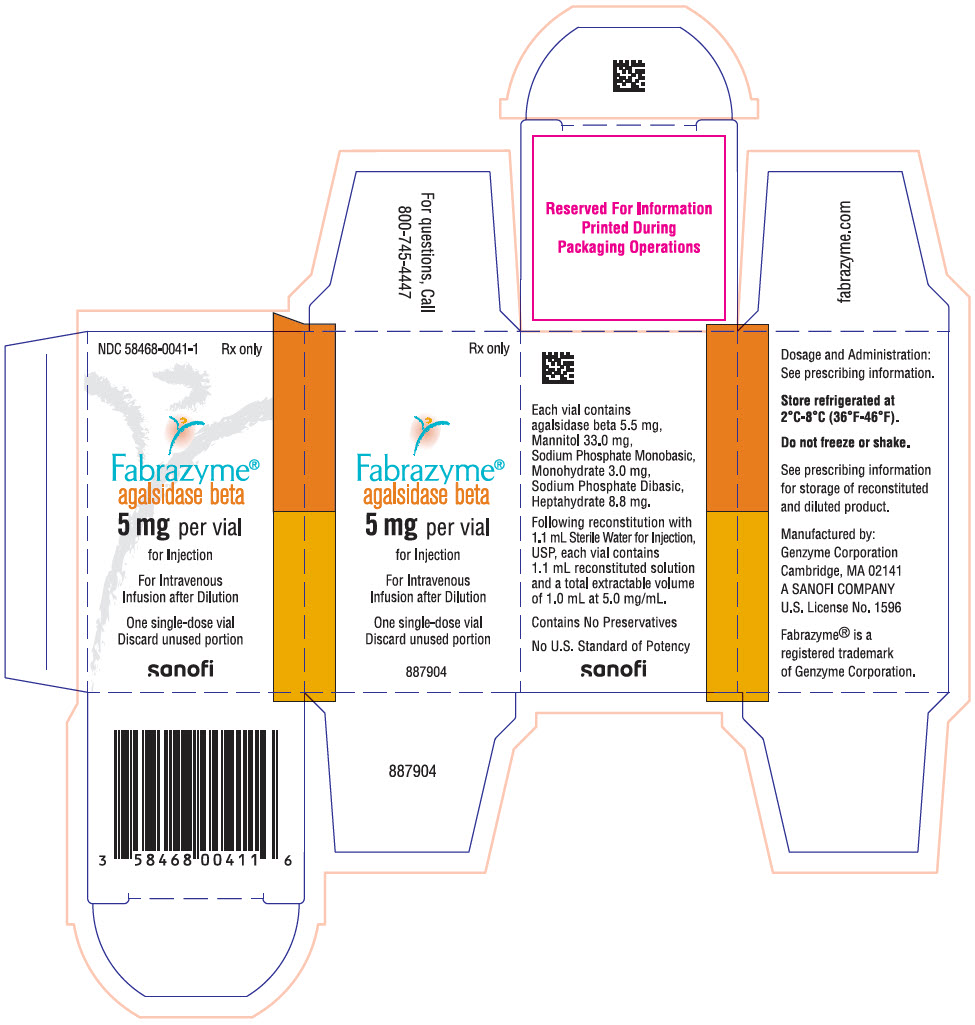
PRINCIPAL DISPLAY PANEL - 5 mg Vial Carton NDC 58468-0041-1 Rx only Fabrazyme ® agalsidase beta 5 mg per vial for Injection For Intravenous Infusion after Dilution One single-dose vial Discard unused portion sanofi PRINCIPAL DISPLAY PANEL - 5 mg Vial Carton
PRINCIPAL DISPLAY PANEL - 35 mg Vial Carton NDC 58468-0040-1 Rx only Fabrazyme ® agalsidase beta 35 mg per vial for Injection For Intravenous Infusion after Dilution One single-dose vial Discard unused portion sanofi PRINCIPAL DISPLAY PANEL - 35 mg Vial Carton
Medicaid utilization & spend
Medicare Part D spend CMS · PART D · 2026 (Q1)
Reported adverse events (FAERS)
Top reported reactions
Age at onset
Reporter sex
Serious outcomes
Where does this data come from?
About this NDC listing & data coverage
What data is (and isn’t) available for this NDC — tap to expand
| NDC identity (package / product / labeler codes) | ✓ Available |
| Labeler | ✓ Available |
| Product & package description | ✓ Available |
| Marketing category & status | ✓ Available |
| Active ingredient / dosage form / route | ✓ Available |
| FDA label (SPL via DailyMed) | ✓ Available |
| Package photos | ✓ Available |
| Inactive ingredients (structured) | ✓ Available |
| NADAC pharmacy acquisition price (CMS) | — Not published for this NDC CMS publishes NADAC only for NDCs reported in its retail-pharmacy survey. |
| Orange Book / therapeutic-equivalence data | — Not published for this NDC Applies only to products approved under an NDA/ANDA; many listings are out of scope. |
| HCPCS J-code billing crosswalk | ✓ Available |
| Medicaid utilization (CMS SDUD) | ✓ Available |