
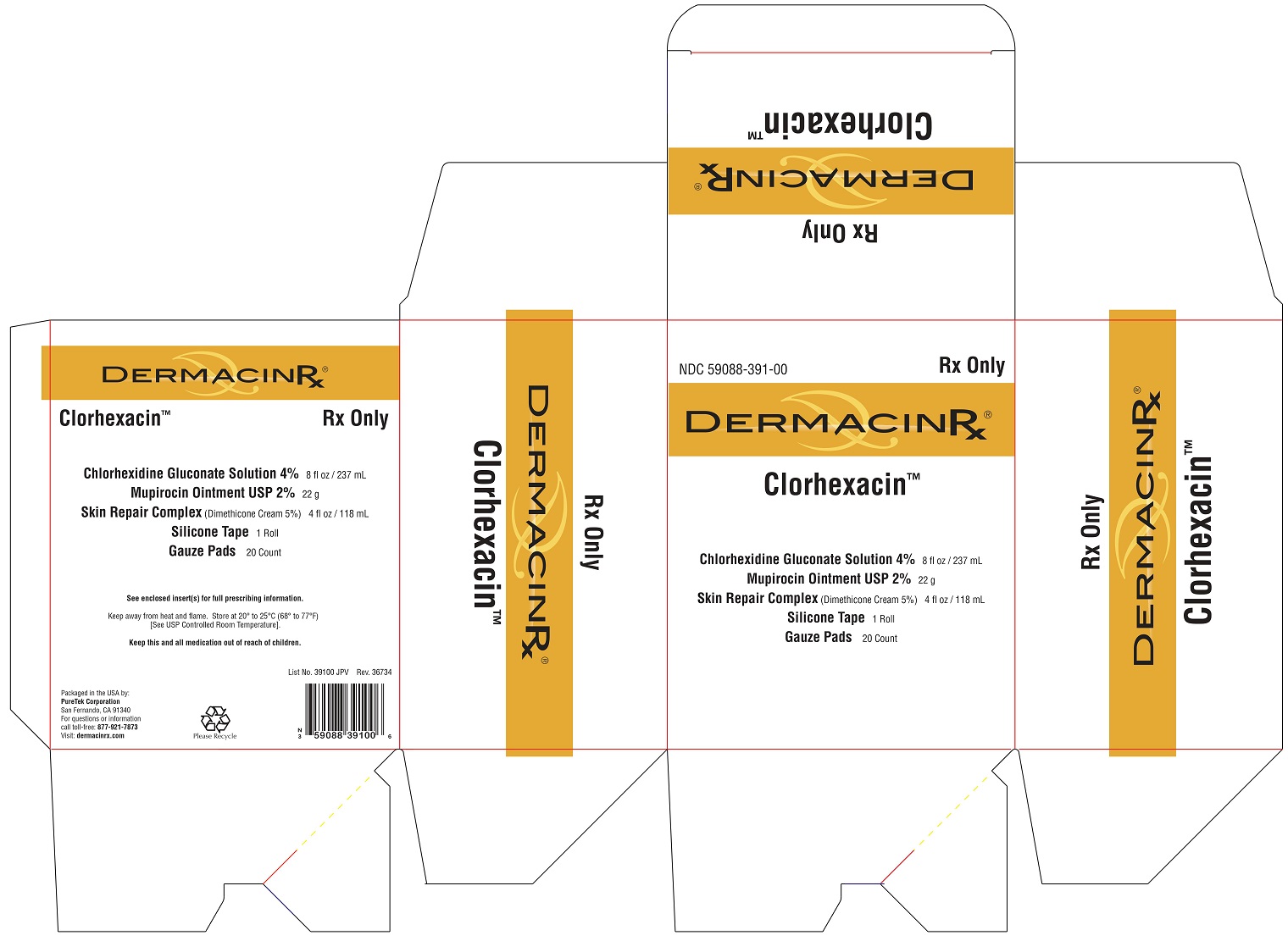
DermacinRx Clorhexacin Mupirocin Ointment Kit
🆔 Identity & classification
Where does this data come from?
🏷️ RxNorm drug class
This medicine belongs to the RNA Synthetase Inhibitor Antibacterial class.
Where does this data come from?
🏭 Manufacturer & labeler
Where does this data come from?
🩺 Clinical
DermacinRx Clorhexacin Mupirocin Ointment KIT is an unapproved prescription product supplied as a kit containing two topical ointments. Chlorhexidine is an antiseptic commonly used to reduce bacteria on skin, while mupirocin is an antibiotic typically applied to skin to help prevent or treat bacterial infections. This product is marketed without an FDA-approved application.
Patient education
Supplement & herbal interactions
Where does this data come from?
Ask a licensed pharmacist directly — free, answered by our team.
🧪 Inactive Ingredients / Excipients
Inactive ingredients, also called excipients, are components of the drug product other than the active ingredient. They may include fillers, dyes, coatings, preservatives, flavors, or other formulation ingredients.
This is label-wide narrative text, not a normalized exact-product ingredient list. A label can cover multiple strengths or packages.
Where does this data come from?
IACT rows and label-wide narrative are kept separate; availability and product-level specificity depend on the submitted label.Inactive ingredient FAQ
Are inactive ingredients the same for every manufacturer?
Why might an inactive ingredient be missing?
Can inactive ingredients matter?
💲 Pricing
A drug doesn't have one price. Each row is a different public payment system, and none is what you'd pay at the counter — that depends on your insurance. The ⓘ on each row explains what it measures.
| Price system | Per each | Per package |
|---|---|---|
| Retail pharmacies payNADAC · weekly | Not in the retail survey — common for institutional, discontinued, or low-volume packs. | |
| Medicaid paysCMS SDUD · 12 mo | No recent Medicaid claims on file for this NDC — rare and low-volume NDCs are suppressed in the public data. | |
| Medicare drug plans payPart D · quarterly | No Part D plan price is available for this NDC in our data. | |
Where does this data come from?
🔁 Therapeutic equivalents
| Product | Labeler | Pack | NADAC/unit | TE | Status | Price vs. this |
|---|---|---|---|---|---|---|
| DermacinRx Clorhexacinthis 59088-0391-00 | PureTek | 1 kit | — | — | FDA listed | — |
Where does this data come from?
⏳ Availability & generic status
We did not find an FDA-approved generic match for this exact strength, form and route.
Where does this data come from?
📦 Packaging — all sizes for this product
| Package NDC | Description | Marketing start | Status |
|---|---|---|---|
| 59088-0391-00 You're viewing this | 1 KIT in 1 CARTON (59088-391-00) * 237 mL in 1 BOTTLE, PLASTIC (0116-1061-08) * 118 mL in 1 TUBE (59088-333-08) * 1 TUBE in 1 CARTON (45802-112-22) / 22 g in 1 TUBE | 2016-06-02 | Active |
🧭 About this NDC listing & data coverage
Listed without an FDA application
This product's marketing category indicates it is marketed without an approved FDA application (no NDA, ANDA, or BLA on file). Having an NDC does not by itself establish FDA approval — the NDC Directory is a listing system, not an approval decision. Approval-linked data such as Orange Book therapeutic-equivalence ratings therefore does not apply.
Kit / multi-component package
This NDC identifies a kit — a package containing more than one component. Structured data (pricing, ingredients, equivalents) is often reported per component rather than for the kit NDC itself, which can make this page look thinner than the components' own pages.
What data is (and isn’t) available for this NDC — tap to expand
| NDC identity (package / product / labeler codes) | ✓ Available |
| Labeler | ✓ Available |
| Product & package description | ✓ Available |
| Marketing category & status | ✓ Available |
| Active ingredient / dosage form / route | ✓ Available |
| FDA label (SPL via DailyMed) | ✓ Available |
| Package photos | ✓ Available |
| Inactive ingredients (structured) | ✓ Available |
| NADAC pharmacy acquisition price (CMS) | — Not published for this NDC CMS publishes NADAC only for NDCs reported in its retail-pharmacy survey. |
| Orange Book / therapeutic-equivalence data | — Not published for this NDC Applies only to products approved under an NDA/ANDA; many listings are out of scope. |
| HCPCS J-code billing crosswalk | — Not published for this NDC Most self-administered / retail products have no J-code — that is normal. |
| Medicaid utilization (CMS SDUD) | — Not published for this NDC CMS reports utilization only for NDCs with Medicaid claims above its privacy threshold. |
Questions about this listing
Is this NDC FDA-approved?
Why is there no price listed?
Is the NDC printed on the package the same as the 11-digit billing NDC?
What do the three segments of this NDC mean?
Is this package still being marketed?
Who lists this product with the FDA?
Do I need a prescription for this product?
Where does this data come from?
📄 Full prescribing information FDA SPL
🎯 Indications and Usage ▾
INDICATIONS AND USAGE Mupirocin Ointment USP, 2% is indicated for the topical treatment of impetigo due to: S. aureus and S. pyogenes .
Uses surgical hand scrub: significantly reduces the number of microorganisms on the hands and forearms prior to surgery or patient care healthcare personnel handwash: helps reduce bacteria that potentially can cause disease patient preoperative skin preparation: for the preparation of the patient's skin prior to surgeryskin wound and general skin cleansing skin wound and general skin cleansing
Uses for the treatment and/or prevention of diaper rash temporarily protects and helps relieve chapped or cracked skin
⏱️ Dosage and Administration ▾
DOSAGE AND ADMINISTRATION A small amount of Mupirocin Ointment USP, 2% should be applied to the affected area 3 times daily. The area treated may be covered with a gauze dressing if desired. Patients not showing a clinical response within 3 to 5 days should be re-evaluated.
Directions use with care in premature infants and infants under 2 months of age. These products may cause irritation or chemical burns. Surgical hand scrub: wet hands and forearms with water scrub for 3 minutes with about 5 ml of product and a wet brush paying close attention to the nails, cuticles and interdigital spaces a separate nail cleaner may be used rinse thoroughly wash for an additional 3 minutes with 5 ml of product and rinse under running water dry thoroughly Healthcare personnel handwash: wet hands with water dispense about 5 ml of product into cupped hands and wash in a vigorous manner for 15 seconds rinse and dry thoroughly Patient preoperative skin preparation: apply product liberally to surgical site and swab for at least 2 minutes and dry with a sterile towel repeat procedure for an additional 2 minutes and dry with a sterile towel Skin wound and general skin cleaning: thoroughly rinse the area to be cleaned with water apply the minimum amount of product necessary to cover the skin or wound area and wash gently rinse again thoroughly
Directions apply cream liberally as needed
⛔ Contraindications ▾
CONTRAINDICATIONS This drug is contraindicated in individuals with a history of sensitivity reactions to any of its components.
⚠️ Warnings ▾
WARNINGS Mupirocin Ointment USP, 2% is not for ophthalmic use.
Warnings For external use only. Do not use if you are allergic to chlorhexidine gluconate or any other ingredients in contact with meninges in the genital area as a preoperative skin preparation of the head or face When using this product keep out of eyes, ears, and mouth. May cause serious and permanent eye injury if placed or kept in the eye during surgical procedures or may cause deafness when instilled in the middle ear through perforated eardrums. if solution should contact these areas, rinse out promptly and thoroughly with water wounds which involve more than the superficial layers of the skin should not be routinely treated repeated general skin cleansing of large body areas should not be done except when the underlying condition makes it necessary to reduce the bacterial population of skin Stop use and ask a doctor if irritation, sensitization or allergic reaction occurs.
These may be signs of a serious condition. Keep out of reach of children if swallowed, get medical help or contact a Poison Control Center right away.
Warnings For external use only Do not use on deep or puncture wounds animal bites serious burns When using this product do not get into eyes Stop use and ask a doctor if condition worsens symptoms last more than 7 days or clear up and occur again within a few days Keep out of reach of children. If swallowed, get medical help or contact a Poison Control Center right away.
🤒 Adverse Reactions ▾
ADVERSE REACTIONS The following local adverse reactions have been reported in connection with the use of mupirocin ointment USP, 2%: Burning, stinging, or pain in 1.5% of patients; itching in 1% of patients; rash, nausea, erythema, dry skin, tenderness, swelling, contact dermatitis, and increased exudate in less than 1% of patients. Systemic reactions to mupirocin ointment USP, 2% have occurred rarely.
🧬 Clinical Pharmacology ▾
CLINICAL PHARMACOLOGY Application of 14 C-labeled mupirocin ointment to the lower arm of normal male subjects followed by occlusion for 24 hours showed no measurable systemic absorption (<1.1 nanogram mupirocin per milliliter of whole blood). Measurable radioactivity was present in the stratum corneum of these subjects 72 hours after application. Following intravenous or oral administration, mupirocin is rapidly metabolized.
The principal metabolite, monic acid, is eliminated by renal excretion, and demonstrates no antibacterial activity. In a study conducted in 7 healthy adult male subjects, the elimination half-life after intravenous administration of mupirocin was 20 to 40 minutes for mupirocin and 30 to 80 minutes for monic acid. The pharmacokinetics of mupirocin has not been studied in individuals with renal insufficiency.
Microbiology - Mupirocin is an antibacterial agent produced by fermentation using the organism Pseudomonas fluorescens . It is active against a wide range of gram-positive bacteria including methicillin-resistant Staphylococcus aureus (MRSA). It is also active against certain gram-negative bacteria.
Mupirocin inhibits bacterial protein synthesis by reversibly and specifically binding to bacterial isoleucyl transfer-RNA synthetase. Due to this unique mode of action, mupirocin demonstrates no in vitro cross-resistance with other classes of antimicrobial agents. Resistance occurs rarely.
However, when mupirocin resistance does occur, it appears to result from the production of a modified isoleucyl-tRNA synthetase. High-level plasmid-mediated resistance (MIC > 1024 mcg/mL) has been reported in some strains of S. aureus and coagulase-negative staphylococci. Mupirocin is bactericidal at concentrations achieved by topical administration.
However, the minimum bactericidal concentration (MBC) against relevant pathogens is generally 8-fold to 30-fold higher than the minimum inhibitory concentration (MIC). In addition, mupirocin is highly protein bound (>97%), and the effect of wound secretions on the MICs of mupirocin has not been determined. Mupirocin has been shown to be active against most strains of S. aureus and Streptococcus pyogenes , both in vitro and in clinical studies (see INDICATIONS AND USAGE ).
The following in vitro data are available, BUT THEIR CLINICAL SIGNIFICANCE IS UNKNOWN. Mupirocin is active against most strains of Staphylococcus epidermidis and Staphylococcus saprophyticus .
📦 How Supplied / Storage and Handling ▾
HOW SUPPLIED Mupirocin Ointment USP, 2% is available as follows: 22 gram tube (NDC 45802-112-22) Store at 20-25°C (68-77°F) [see USP Controlled Room Temperature]. *Bactroban Nasal ® is a registered trademark of GlaxoSmithKline.
📦 Storage and Handling ▾
Other information store at 20-25ºC (68-77ºF) avoid excessive heat above 40ºC (104ºF)
Other information protect from freezing avoid excessive heat
🧪 Active Ingredient ▾
Active ingredient Chlorhexidine Gluconate 4% solution
Active ingredient Dimethicone 5.0%
🧪 Inactive Ingredients ▾
Inactive ingredients cocamide DEA, fragrance, glucono-delta-lactone, hydroxyethylcellulose, isopropyl alcohol, lauramine oxide, PEG-75 lanolin, purified water, tridecyl alcohol.
Inactive ingredients Aleurites moluccana seed oil, Aloe barbadensis ( Aloe vera ) leaf juice, butylene glycol, caprylyl glycol, Carthamus tinctorius (safflower) seed oil, cetyl alcohol, chlorphenesin, dimethicone crosspolymer, disodium EDTA, fragrance, glycerin, glyceryl stearate, DermacinRx Complex ® [consisting of: bisabolol, calcium pantothenate (vitamin B 5 ), Carthamus tinctorius (safflower) oleosomes, maltodextrin, niacinamide (vitamin B 3 ), pyridoxine HCl (vitamin B 6 ), silica, sodium ascorbyl phosphate (vitamin C), sodium starch octenylsuccinate, tocopheryl acetate (vitamin E), Zingiber officinale (ginger) root extract], PEG-100 stearate, pentaerythrityl tetra-di-t-butyl hydroxyhydrocinnamate, phenoxyethanol, purified water, sodium hyaluronate, stearic acid, triethanolamine.
🎯 Purpose ▾
Purpose Antiseptic
Purpose Skin Protectant
📋 Description ▾
DESCRIPTION Each gram of Mupirocin Ointment USP, 2% contains 20 mg mupirocin in a bland water miscible ointment base (polyethylene glycol ointment, NF) consisting of polyethylene glycol 400 and polyethylene glycol 3350. Mupirocin is a naturally occurring antibiotic. The chemical name is ( E )-(2 S ,3 R ,4 R ,5 S )-5-[(2 S ,3 S ,4 S ,5 S )-2,3-Epoxy-5-hydroxy-4-methylhexyl]tetrahydro-3,4-dihydroxy-β-methyl-2H-pyran-2-crotonic acid, ester with 9-hydroxynonanoic acid.
The molecular formula of mupirocin is C 26 H 44 O 9 and the molecular weight is 500.62. The chemical structure is: image description