
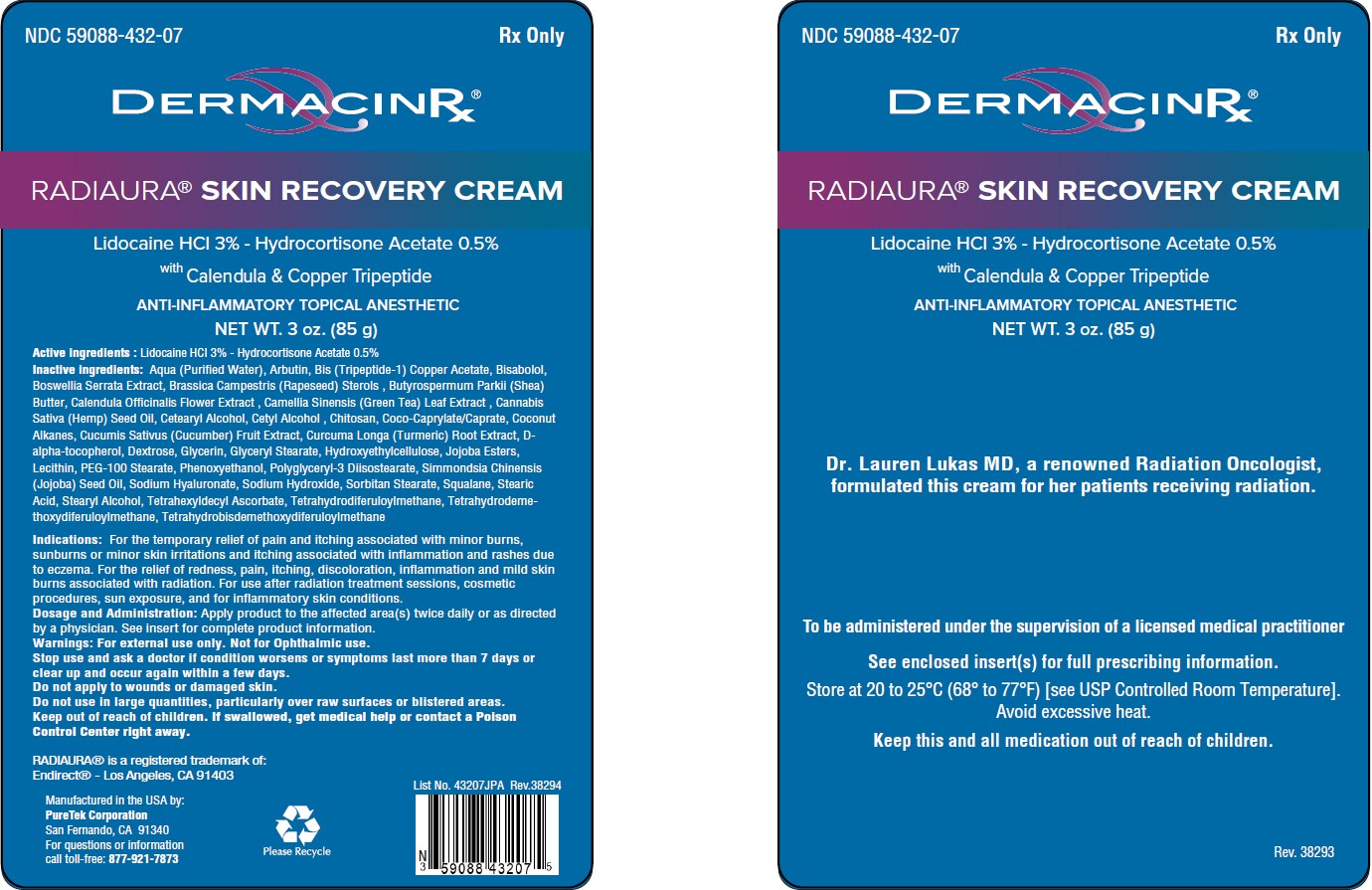
Radiaura Skin Recovery Lidocaine HCl - Hydrocortisone Acetate 30 mg/g; 10 mg/g Cream, 85 g — NDC 59088-432-07 (Billing 59088-0432-07)
This is a package of 85 g of Radiaura Skin Recovery Lidocaine HCl - Hydrocortisone Acetate 30 mg/g; 10 mg/g Cream from PureTek Corporation, marketed since Sep 2021 and currently FDA-listed. It is this product's only package size.
NDC database record
One package, one record: these facts belong to NDC 59088-432-07 alone.
- Record
- FDA NDC Directory package listing · Human prescription drug
- Code segments
- 59088 labeler · 432 product · 07 package
- Package marketed since
- Sep 2, 2021
- Sample package
- No — commercial package
- Listing certified through
- Dec 31, 2026
- Billing quantity
- 85 g per package
- Barcode (UPC-A, from the NDC)
- 3 5908843207 5
- FDA record last changed
- Aug 27, 2026
Identity & classification
Regulatory identifiers FDA, NLM and CMS codes for this package
Drug-database identifiers Medi-Span GPI and First Databank GCN / HICL / AHFS classification
- GPI-14 (Medi-Span): 90559802303710
Where does this data come from?
- FDA openFDA NDC Directory · synced Oct 1, 2026
- FDA label on DailyMed · label index refreshed Oct 5, 2026
- RxNorm (NLM RxNav) · catalog refreshed Oct 1, 2026
- Medi-Span GPI (licensed)
- First Databank (licensed) · refreshed Oct 1, 2026
Clinical
Radiaura Skin Recovery is a topical cream containing lidocaine hydrochloride and hydrocortisone acetate. Lidocaine is a local anesthetic typically used to numb or reduce discomfort in the skin, while hydrocortisone acetate is a mild corticosteroid commonly used to reduce inflammation and itching. This product is marketed without an approved FDA application.
Patient education
Supplement & herbal interactions
Where does this data come from?
- MedlinePlus (NLM) · refreshed Oct 1, 2026
- FDA label on DailyMed · label index refreshed Oct 5, 2026
Ask a licensed pharmacist directly — free, answered by our team.
Pricing
A drug doesn't have one price. Each row is a different public payment system, and none is what you'd pay at the counter — that depends on your insurance. The ⓘ on each row explains what it measures.
| Price system | Per g | Per package |
|---|---|---|
| Retail pharmacies payNADAC · weekly | Not in the retail survey — common for institutional, discontinued, or low-volume packs. | |
| Medicaid paysCMS SDUD · 12 mo | No recent Medicaid claims on file for this NDC — rare and low-volume NDCs are suppressed in the public data. | |
| Medicare drug plans payPart D · quarterly | No Part D plan price is available for this NDC in our data. | |
Where does this data come from?
- CMS NADAC weekly file
- CMS ASP pricing files · refreshed Sep 20, 2026
- CMS Medicaid State Drug Utilization Data · refreshed Oct 5, 2026
- CMS Part D plan pricing files · refreshed Sep 24, 2026
- VA National Acquisition Center price file
Packaging — all sizes for this product
| Package NDC | Description | Marketing start | Marketing end | Status |
|---|---|---|---|---|
| 59088-0432-07 You're viewing this Main listing | 85 g in 1 TUBE | 2021-09-02 | — | Active |
Therapeutic equivalents
| Product | Labeler | Pack | NADAC/unit | TE | Status | Price vs. this |
|---|---|---|---|---|---|---|
| Radiaura Skin Recovery 30 mg/g; 10 mg/gthis 59088-0432-07 | PureTek | 85 g | — | — | FDA listed | — |
Where does this data come from?
- FDA openFDA NDC Directory · synced Oct 1, 2026
- FDA Orange Book · refreshed Oct 3, 2026
- CMS NADAC weekly file
Availability & generic status
We did not find an FDA-approved generic match for this exact strength, form and route.
Where does this data come from?
- FDA Orange Book · refreshed Oct 3, 2026
Inactive Ingredients / Excipients
Inactive ingredients, also called excipients, are components of the drug product other than the active ingredient. They may include fillers, dyes, coatings, preservatives, flavors, or other formulation ingredients.
💡 Tap an ingredient (hover on desktop) to see what it is and why it’s used.
-
UNII N9PR3490H9
A naturally derived form of vitamin E that acts as an antioxidant in medicines. It prevents oils and fats in the product from breaking down or becoming rancid during storage.
-
UNII C5INA23HXF
Arbutin is a natural compound found in plants that acts as a preservative in medicines. It helps prevent bacterial and fungal growth to keep the product stable and safe during storage.
-
UNII P0M7O4Y7YD
A plant extract from calendula flowers, traditionally used in formulations. It typically serves as a botanical ingredient that may provide color, fragrance, or skin-conditioning properties to topical products.
-
UNII 69VJ1LPN1S
Cannabis sativa seed oil is a plant-based oil derived from hemp seeds. It's used in medicines as a carrier or emollient to help deliver active ingredients and improve product texture and absorption.
-
UNII 2DMT128M1S
A waxy solid derived from plant or animal sources. It acts as an emulsifier to blend oil and water components, and also thickens the medicine to give it the right texture and consistency.
-
UNII 936JST6JCN
Cetyl alcohol is a waxy, fatty substance derived from plant or animal sources. It acts as an emulsifier and thickener in medicines, helping blend oil and water components and giving products a smooth, creamy texture.
-
UNII 82LKS4QV2Y
Poliglusam is a synthetic polymer made from glucose units linked together. It works as a binder and thickening agent to help hold the medicine's ingredients together and control how quickly the drug dissolves.
-
UNII 8D9H4QU99H
A synthetic fatty acid ester derived from coconut oil, used as an emulsifier and solubilizer to help mix oil and water-based ingredients and improve how the body absorbs certain drugs.
-
UNII 1E5KJY107T
A liquid mixture derived from coconut oil, coconut alkanes serve as a solvent and lubricant in medicines. They help dissolve active ingredients and reduce friction during manufacturing and tablet compression.
-
UNII YY7C30VXJT
A natural plant extract from cucumber that adds flavor and freshness to medicines. It may also serve as a moisturizing agent or mild preservative in topical or oral formulations.
-
UNII IY9XDZ35W2
Dextrose is a simple sugar derived from corn or other sources. It serves as a filler and sweetener in medicines to add bulk, improve taste, and help stabilize the medication's form.
-
UNII PDC6A3C0OX
Glycerin is a clear, thick liquid derived from plant oils or fats. It acts as a humectant to retain moisture, a sweetener, and a solvent in medications.
-
UNII 230OU9XXE4
A waxy substance made from glycerin and stearic acid that acts as an emulsifier to blend oily and watery ingredients together. It also helps thicken and stabilize the medicine's texture.
-
UNII W2ZU1RY8B0
A plant extract from green tea leaves. It's used as an antioxidant ingredient to help preserve the medicine and maintain its stability during storage.
-
UNII YSE9PPT4TH
Hyaluronate sodium is a natural carbohydrate that holds moisture. It's used in medicines as a lubricant, thickener, and moisture-retaining agent to improve texture and delivery of the active ingredient.
-
UNII Q47ST02F58
A waxy, solid oil derived from jojoba plant seeds. It acts as a binder and emollient to help hold ingredients together and improve texture in topical or oral formulations.
-
UNII T4V6TWG28D
A plant-derived thickening agent made from cellulose. It increases viscosity and helps form a gel or paste consistency in medications, and may serve as a binder or coating material in various formulations.
-
UNII 4PW41QCO2M
Indian frankincense is a natural resin extracted from trees native to India. It is used in medicines as a binder and thickening agent to help hold ingredients together and improve texture.
-
UNII 724GKU717M
Jojoba oil is a natural liquid wax extracted from jojoba plant seeds. It's used in medicines as an emollient and lubricant to soften and smooth the product, and sometimes as a carrier or penetration enhancer.
-
UNII 1DI56QDM62
A natural fatty substance from soybeans that helps mix oil and water-based ingredients together. It acts as an emulsifier and lubricant in medicines to improve texture and help the product break down properly in your body.
-
UNII 24WE03BX2T
Levomenol is a naturally derived alcohol compound used as a skin-conditioning and anti-inflammatory agent in topical formulations. It helps soothe and protect the skin while improving product texture and absorption.
-
UNII YD01N1999R
A waxy substance made from polyethylene glycol and stearic acid. It helps mix oil and water-based ingredients together and serves as an emulsifier and solubilizer in liquid and semi-solid medicines.
-
UNII HIE492ZZ3T
Phenoxyethanol is a synthetic preservative and antimicrobial agent used to prevent bacterial and fungal growth in medicines and cosmetic products, extending shelf life and maintaining product safety.
-
UNII 46P231IQV8
A synthetic emulsifier derived from glycerin and fatty acids. It helps blend oil and water-based ingredients together in cosmetic and pharmaceutical formulations to create stable, uniform products.
-
UNII A3LEI4P1NB
Prezatide copper acetate is a copper-containing compound used in some medications. In formulations, it may serve as an active pharmaceutical ingredient support or stabilizing agent, though it appears in limited modern drug products.
-
UNII B46B6DD20U
Rapeseed sterol is a plant-derived fat obtained from rapeseed oil. It's used in medicines as an emulsifier and thickening agent to help blend oil and water-based ingredients and improve product texture.
-
UNII K49155WL9Y
Shea butter is a fat extracted from shea tree nuts. It's used in medicines as an emollient and lubricant to soften the product, improve texture, and help ingredients blend smoothly together.
-
UNII 55X04QC32I
A strong alkaline chemical used to adjust and maintain the pH balance of liquid medicines. It helps keep the medicine stable and ensures it stays effective during storage.
-
UNII NVZ4I0H58X
A waxy substance made from sorbitol and stearic acid. It acts as an emulsifier and stabilizer, helping keep oil and water mixed together and preventing separation in the medicine.
-
UNII GW89575KF9
Squalane is a lightweight oil derived from plant sources or synthesized. It acts as an emollient and lubricant in formulations, helping ingredients blend smoothly and improving product texture and spreadability.
-
UNII 4ELV7Z65AP
Stearic acid is a fatty acid derived from plant or animal sources. It acts as a binder and lubricant in tablets and capsules, helping them hold together and flow smoothly during manufacturing.
-
UNII 2KR89I4H1Y
Stearyl alcohol is a waxy, fatty substance derived from natural oils or made synthetically. It acts as an emulsifier and thickener in medicines, helping mix ingredients together and give the product the right texture.
-
UNII 9LBV3F07AZ
A synthetic, oil-soluble form of vitamin C used as an antioxidant to prevent degradation of the medicine and maintain its stability during storage.
-
UNII 973IBV8W7I
A plant-derived compound used as a colorant and antioxidant in formulations. It helps maintain product stability and appearance during storage.
-
UNII 44D8X9U00T
A natural compound derived from turmeric root, used as a colorant and antioxidant to help preserve the medicine's stability and give it a yellow or golden hue.
-
UNII 00U0645U03
A yellow pigment derived from turmeric root. It acts as a colorant to give the medicine its distinctive appearance and help with product identification.
-
UNII 856YO1Z64F
Turmeric is a natural spice derived from the turmeric plant root. It serves as a colorant in medicines, giving products a yellow or golden appearance, and may also provide mild flavoring.
-
UNII 059QF0KO0R
Water is a liquid solvent that dissolves and mixes ingredients together in liquid medicines, syrups, and injections. It helps distribute the active drug evenly throughout the product.
38 inactive ingredients listed in the exact product block matched to this NDC.
Label-section wording can be broader than the structured product block and may mention additional formulation ingredients.
Where does this data come from?
ingredient classCode="IACT" elements from the exact product block matched by this NDC. Label-section narrative from DailyMed / the openFDA label index is shown separately when available.- FDA label on DailyMed · label index refreshed Oct 5, 2026
- FDA openFDA NDC Directory · synced Oct 1, 2026
Inactive ingredient FAQ
Are inactive ingredients the same for every manufacturer?
Why might an inactive ingredient be missing?
Can inactive ingredients matter?
Manufacturer & labeler
More NDCs from PureTek Corporation labeler code 59088
- DermacinRx Lidotral Lidocaine Hydrochloride 38.8 mg/g Cream NDC 59088-371-07
- DermacinRx Clorhexacin Mupirocin Ointment Kit NDC 59088-391-00
- Lidocaine 50 mg/g Patch NDC 59088-396-54
- Hand Sanitizing with Lavender Oil Alcohol 62 mL/100mL Gel NDC 59088-413-06
- Lydexa 4.12% Lidocaine Hydrochloride 41.2 mg/g Cream NDC 59088-429-03
- Lidocort LIDOCAINE HCL - HYDROCORTISONE ACETATE 30 mg/g; 5 mg/g Cream NDC 59088-430-05
- Circata Capsaicin .05 g/100g Cream NDC 59088-433-05
- Capasil Pain Relieving Menthol, Methyl Salicylate 100 mg/mL; 20 mg/mL Cream NDC 59088-434-05
- Mycozyl AC Clotrimazole 10 mg/g Cream NDC 59088-441-07
- Mycozyl AP Miconazole Nitrate 2 g/85g Powder NDC 59088-442-07
- Mycozyl AL Tolnaftate .1 g/10mL Liquid NDC 59088-443-01
- Atrix Clarifying Toner Salicylic Acid 20 mg/mL Liquid NDC 59088-444-08
Where does this data come from?
- FDA openFDA NDC Directory · synced Oct 1, 2026
- Drugs@FDA
Full prescribing information FDA SPL
🎯 Indications and Usage ▾
INDICATIONS: The product is used for the anti-inflammatory and anesthetic relief of redness, pain, itching, and discoloration due to inflammation and skin burns. For the relief of redness, pain, itching, discoloration, inflammation and mild skin burns associated with radiation. For use after radiation treatment, cosmetic procedures, sun exposure, and for inflammatory skin conditions.
⏱️ Dosage and Administration ▾
DOSAGE AND ADMINISTRATION: Apply product to the affected area(s) twice daily or as directed by a physician. If the condition does not respond to repeated courses of product or should worsen, discontinue use and seek the advice of your physician. Wash hands before and after application.
⛔ Contraindications ▾
CONTRAINDICATIONS: Product should not be used in patients with a history of sensitivity to any of its ingredients or adverse reactions to lidocaine or amide anesthetics, which usually do not cross-react with “caine” ester type anesthetics. If excessive irritation and significant worsening occur, discontinue use and seek the advice of your physician. Product and topical lidocaine should be used cautiously in those with impaired liver function, as well as the very ill or very elderly and those with significant liver disease.
Product should be used with caution in patients receiving antiarrhythmic drugs of Class I since the adverse effects are additive and generally synergistic. Product is contraindicated for tuberculous or fungal lesions or skin vaccinia, varicella and acute herpes simplex. Topical corticosteroids are contraindicated in those patients with a history of hypersensitivity to any of the components of the preparation.
⚠️ Warnings ▾
WARNINGS: CONCERNS RELATED TO ADVERSE EFFECTS: Methemoglobinemia: Has been reported with local anesthetics; clinically significant methemoglobinemia requires immediate treatment along with discontinuation of the anesthetic and other oxidizing agents. Onset may be immediate or delayed (hours) after anesthetic exposure. Patients with G6PD deficiency, congenital or idiopathic methemoglobinemia, cardiac or pulmonary compromise, exposure to oxidizing agents or their metabolites, or infants <6 months of age are more susceptible and should be closely monitored for signs and symptoms of methemoglobinemia (including pale, gray, or blue-colored skin (cyanosis), headache, rapid pulse, shortness of breath, lightheadedness, fatigue).
WARNINGS: For external use only. Not for ophthalmic use. Keep out of reach of children.
Topical formulations of lidocaine may be absorbed to a greater extent through mucous membranes and abraded, fissured or irritated skin than through intact skin. Product should not be ingested or applied into the mouth, inside of the nose or in the eyes. Product should not be used in the ears.
Any situation where lidocaine penetrates beyond the tympanic membrane into the middle ear is contraindicated because of ototoxicity associated with lidocaine observed in animals when instilled in the middle ear. Product should not come into contact with the eye or be applied into the eye because of the risk of severe eye irritation and the loss of eye surface sensation, which reduces protective reflexes and can lead to corneal irritation and possibly abrasion. If eye contact occurs, rinse out the eye immediately with saline or water and protect the eye surface until sensation is restored.
🤒 Adverse Reactions ▾
ADVERSE REACTIONS: During or immediately following application of product, there may be transient stinging or burning from open areas of skin, or transient blanching (lightening), or erythema (redness) of the skin.
🤰 Pregnancy ▾
USE IN PREGNANCY: Teratogenic Effects: Pregnancy Category C. Reproduction studies have been performed for lidocaine in rats at doses up to 6.6 times the human dose and have revealed no evidence of harm to the fetus caused by lidocaine. There are, however, no adequate and well-controlled studies in pregnant women.
Animal reproduction studies are not always predictive of human response. General consideration should be given to this fact before administering lidocaine to women of childbearing potential, especially during early pregnancy when maximum organogenesis takes place. Corticosteroids are generally teratogenic in laboratory animals when administered systemically at relatively low dosage levels.
The more potent corticosteroids have been shown to be teratogenic after dermal application in laboratory animals. There are no adequate and well controlled studies in pregnant women on teratogenic effects from topically applied corticosteroids. Therefore, topical corticosteroids should be used during pregnancy only if the potential benefit justifies the potential risk to the fetus.
Drugs of this class should not be used extensively on pregnant patients, in large amounts, or for prolonged periods of time.
🧒 Pediatric Use ▾
PEDIATRIC USE: Safety and efficacy in children have not been established.
🧬 Clinical Pharmacology ▾
CLINICAL PHARMACOLOGY: MECHANISM OF ACTION: Product releases lidocaine to stabilize the neuronal membrane by inhibiting the ionic fluxes required for initiation and conduction of impulses, thereby effecting local anesthetic action. Hydrocortisone acetate provides relief of inflammatory and pruritic manifestations of corticosteroid responsive dermatoses. PHARMACOKINETICS: Lidocaine may be absorbed following topical administration to mucous membranes, its rate and extent of absorption depending upon the specific site of application, duration of exposure, concentration, and total dosage.
In general, the rate of absorption of local anesthetic agents following topical application occurs most rapidly after intratracheal administration. Lidocaine is also well-absorbed from the gastrointestinal tract, but little intact drug appears in the circulation because of biotransformation of the liver. Lidocaine is metabolized rapidly by the liver, and metabolites and unchanged drug are excreted by the kidneys.
Biotransformation includes oxidative N-dealkylation, ring hydroxylation, cleavage of the amide linkage, and conjungation. N-dealkylation, a major pathway of biotransformation, yields the metabolites monoethylglycinexylidide and glycinexylidide. The pharmacological/toxicological actions of these metabolites are similar to, but less potent than, those of lidocaine.
Approximately 90% of lidocaine administered is excreted in the form of various metabolites, and less than 10% is excreted unchanged. The primary metabolite in urine is a conjugate of 4-hydroxy-2, 6-dimethylaniline. The plasma binding of lidocaine is dependent of drug concentration, and the fraction bound decreases with increasing concentration.
At concentrations of 1 to 4 g of free base per mL, 60 to 80 percent of lidocaine is protein bound. Binding is also dependent on the plasma concentration of the alpha-1-acid-glycoprotein. Lidocaine crosses the blood-brain and placental barriers, presumably by passive diffusion.
Studies of lidocaine metabolism following intravenous bolus injections have shown that the elimination half-life of this agent is typically 1.5 to 2 hours. Because of the rapid rate at which lidocaine is metabolized, any condition that affects liver function may alter lidocaine kinetics. The half-life may be prolonged two-fold or more in patients with liver dysfunction.
Renal dysfunction does not affect lidocaine kinetics but may increase the accumulation of metabolites. Factors such as acidosis and the use of CNS stimulants and depressants affect the CNS levels of lidocaine required to produce overt systemic effects. Objective adverse manifestations become increasingly apparent with increasing venous plasma levels above 6 g free base per mL.
In the rhesus monkey arterial blood levels of 18-21 g/mL have been shown to be the threshold for convulsive activity. The extent of percutaneous absorption of topical corticosteroids is determined by many factors including the vehicle, the integrity of the epidermal barrier, and the use of occlusive dressings. Topical corticosteroids can be absorbed from normal intact skin.
Inflammation and/or other disease processes in the skin increase percutaneous absorption. Occlusive dressings substantially increase the percutaneous absorption of topical corticosteroids. Thus, occlusive dressings may be a valuable therapeutic adjunct for treatment of resistant dermatoses.
Once absorbed through the skin, topical corticosteroids are handled through pharmacokinetic pathways similar to systemically administered corticosteroids. Corticosteroids are bound to plasma protein in varying degrees. Corticosteroids are metabolized primarily in the liver and are then excreted by the kidneys.
Some of the topical corticosteroids and their metabolites are also excreted into the bile.
🧬 Mechanism of Action ▾
MECHANISM OF ACTION: Product releases lidocaine to stabilize the neuronal membrane by inhibiting the ionic fluxes required for initiation and conduction of impulses, thereby effecting local anesthetic action. Hydrocortisone acetate provides relief of inflammatory and pruritic manifestations of corticosteroid responsive dermatoses.
📦 How Supplied / Storage and Handling ▾
HOW SUPPLIED: Radiaura Skin Recovery Cream (Lidocaine HCl 3% - Hydrocortisone Acetate 0.5%) is supplied as a beige cream 3 oz. (85 g) tube - NDC 59088-432-07
📦 Storage and Handling ▾
KEEP THIS AND ALL MEDICATIONS OUT OF REACH OF CHILDREN. Store at 20º-25ºC (68º-77ºF) [see USP Controlled Room Temperature]. Protect from freezing. RADIAURA ® is a registered trademark of: Endirect ® - Los Angeles, CA 91403 (818) 293-7221
🧪 Inactive Ingredients ▾
INACTIVE INGREDIENTS: Aqua (Purified Water), Arbutin, Bis(Tripeptide-1) Copper Acetate, Bisabolol, Boswellia Serrata Extract, Brassica Campestris (Rapeseed) Sterols , Butyrospermum Parkii (Shea) Butter, Calendula Officinalis Flower Extract , Camellia Sinensis (Green Tea) Leaf Extract , Cannabis Sativa (Hemp) Seed Oil, Cetearyl Alcohol , Cetyl Alcohol , Chitosan, Coco-Caprylate/Caprate, Coconut Alkanes, Cucumis Sativus (Cucumber) Fruit Extract, Curcuma Longa (Turmeric) Root Extract, D- alpha-tocopherol, Dextrose, Glycerin, Glyceryl Stearate, Hydroxyethylcellulose, Jojoba Esters, Lecithin, PEG-100 Stearate, Phenoxyethanol, Polyglyceryl-3 Diisostearate, Simmondsia Chinensis (Jojoba) Seed Oil, Sodium Hyaluronate, Sodium Hydroxide, Sorbitan Stearate, Squalane, Stearic Acid, Stearyl Alcohol, Tetrahydrodiferuloylmethane, Tetrahydrodemethoxydiferuloylmethane, Tetrahydrobisdemethoxydiferuloylmethane
📋 Description ▾
DESCRIPTION: Lidocaine is chemically designated as acetamide, 2-(diethylamino)-N-(2,6-dimethylphenyl), and has the following structure: Hydrocortisone acetate has a chemical name pregn-4-ene-3, 20-dione, 21-(acetyloxy)-11, 17-dihydroxy-(11β)-, It has the following structural formula: Radiaura Skin Recovery Cream Lidocaine HCl 3%- Hydrocortisone Acetate 0.5% Each gram contains Lidocaine HCl 30 mg, Hydrocortisone Acetate 5 mg. ACTIVE INGREDIENTS: Lidocaine HCl 3% (30 mg) Hydrocortisone Acetate 0.5% (5 mg). image description image description
⚠️ Precautions ▾
PRECAUTIONS: If irritation or sensitivity occurs or infection appears, discontinue use and institute appropriate therapy. If extensive areas are treated, the possibility of systemic absorption exists. Systemic absorption of topical steroids has produced reversible hypothalamic-pituitary-adrenal (HPA) axis suppression, manifestation of Cushing’s syndrome, hyperglycemia, and glycosuria in some patients.
Conditions which augment systemic absorption include the application of the more potent steroids, use over large surface areas, prolonged use, and the addition of occlusive dressings. Therefore, patients receiving a large dose of potent topical steroids applied to a large surface area, or under an occlusive dressing, should be evaluated periodically for evidence of HPA axis suppression. If noted, an attempt should be made to withdraw the drug, to reduce the frequency of application, or to substitute a less potent steroid.
Recovery of the HPA axis function is generally prompt and complete upon discontinuation of the drug. Infrequently, signs and symptoms of steroid withdrawal may occur, requiring supplemental systemic corticosteroids. Children may absorb proportionately larger amounts of topical corticosteroids and thus be more susceptible to systemic toxicity.
If irritation develops, topical steroids should be discontinued and appropriate therapy instituted. In the presence of dermatological infections, the use of an appropriate antifungal or antibacterial agent should be instituted. If a favorable response does not occur promptly, the corticosteroid should be discontinued until the infection has been adequately controlled.
🍼 Nursing Mothers ▾
NURSING MOTHERS: It is not known whether this drug is excreted in human milk. Because many drugs are excreted in human milk, caution should be exercised when this drug is administered to a nursing mother.
🧬 Pharmacokinetics ▾
PHARMACOKINETICS: Lidocaine may be absorbed following topical administration to mucous membranes, its rate and extent of absorption depending upon the specific site of application, duration of exposure, concentration, and total dosage. In general, the rate of absorption of local anesthetic agents following topical application occurs most rapidly after intratracheal administration. Lidocaine is also well-absorbed from the gastrointestinal tract, but little intact drug appears in the circulation because of biotransformation of the liver.
Lidocaine is metabolized rapidly by the liver, and metabolites and unchanged drug are excreted by the kidneys. Biotransformation includes oxidative N-dealkylation, ring hydroxylation, cleavage of the amide linkage, and conjungation. N-dealkylation, a major pathway of biotransformation, yields the metabolites monoethylglycinexylidide and glycinexylidide.
The pharmacological/toxicological actions of these metabolites are similar to, but less potent than, those of lidocaine. Approximately 90% of lidocaine administered is excreted in the form of various metabolites, and less than 10% is excreted unchanged. The primary metabolite in urine is a conjugate of 4-hydroxy-2, 6-dimethylaniline.
The plasma binding of lidocaine is dependent of drug concentration, and the fraction bound decreases with increasing concentration. At concentrations of 1 to 4 g of free base per mL, 60 to 80 percent of lidocaine is protein bound. Binding is also dependent on the plasma concentration of the alpha-1-acid-glycoprotein.
Lidocaine crosses the blood-brain and placental barriers, presumably by passive diffusion. Studies of lidocaine metabolism following intravenous bolus injections have shown that the elimination half-life of this agent is typically 1.5 to 2 hours. Because of the rapid rate at which lidocaine is metabolized, any condition that affects liver function may alter lidocaine kinetics.
The half-life may be prolonged two-fold or more in patients with liver dysfunction. Renal dysfunction does not affect lidocaine kinetics but may increase the accumulation of metabolites. Factors such as acidosis and the use of CNS stimulants and depressants affect the CNS levels of lidocaine required to produce overt systemic effects.
Objective adverse manifestations become increasingly apparent with increasing venous plasma levels above 6 g free base per mL. In the rhesus monkey arterial blood levels of 18-21 g/mL have been shown to be the threshold for convulsive activity. The extent of percutaneous absorption of topical corticosteroids is determined by many factors including the vehicle, the integrity of the epidermal barrier, and the use of occlusive dressings.
Topical corticosteroids can be absorbed from normal intact skin. Inflammation and/or other disease processes in the skin increase percutaneous absorption. Occlusive dressings substantially increase the percutaneous absorption of topical corticosteroids.
Thus, occlusive dressings may be a valuable therapeutic adjunct for treatment of resistant dermatoses. Once absorbed through the skin, topical corticosteroids are handled through pharmacokinetic pathways similar to systemically administered corticosteroids. Corticosteroids are bound to plasma protein in varying degrees.
Corticosteroids are metabolized primarily in the liver and are then excreted by the kidneys. Some of the topical corticosteroids and their metabolites are also excreted into the bile.
📄 Carcinogenesis, Mutagenesis, Impairment of Fertility ▾
CARCINOGENESIS, MUTAGENESIS, AND IMPAIRMENT OF FERTILITY: Long-term animal studies have not been performed to evaluate the carcinogenic potential or the effect on fertility of topical corticosteroids. Studies to determine mutagenicity with prednisolone and hydrocortisone have revealed negative results. Studies of lidocaine in animals to evaluate the carcinogenic and mutagenic potential of the effect on fertility have not been conducted.
📄 Package Label / Principal Display Panel ▾
RADIAURA® SKIN RECOVERY CREAM Manufactured in the USA by: PureTek Corporation San Fernando, CA 91340 For questions or information call toll-free: 877-921-7873 label
About this NDC listing & data coverage
Listed without an FDA application
This product's marketing category indicates it is marketed without an approved FDA application (no NDA, ANDA, or BLA on file). Having an NDC does not by itself establish FDA approval — the NDC Directory is a listing system, not an approval decision. Approval-linked data such as Orange Book therapeutic-equivalence ratings therefore does not apply.
What data is (and isn’t) available for this NDC — tap to expand
| NDC identity (package / product / labeler codes) | ✓ Available |
| Labeler | ✓ Available |
| Product & package description | ✓ Available |
| Marketing category & status | ✓ Available |
| Active ingredient / dosage form / route | ✓ Available |
| FDA label (SPL via DailyMed) | ✓ Available |
| Package photos | ✓ Available |
| Inactive ingredients (structured) | ✓ Available |
| NADAC pharmacy acquisition price (CMS) | — Not published for this NDC CMS publishes NADAC only for NDCs reported in its retail-pharmacy survey. |
| Orange Book / therapeutic-equivalence data | — Not published for this NDC Applies only to products approved under an NDA/ANDA; many listings are out of scope. |
| HCPCS J-code billing crosswalk | — Not published for this NDC Most self-administered / retail products have no J-code — that is normal. |
| Medicaid utilization (CMS SDUD) | — Not published for this NDC CMS reports utilization only for NDCs with Medicaid claims above its privacy threshold. |