
DermacinRx Zinc Oxide Skin Healing 200 mg/g Paste, 4 g — NDC 59088-563-01 (Billing 59088-0563-01)
This is a package of 4 g of DermacinRx Zinc Oxide Skin Healing 200 mg/g Paste from PureTek Corporation, marketed since Aug 2016 and currently FDA-listed. It is this product's only package size.
NDC database record
One package, one record: these facts belong to NDC 59088-563-01 alone.
- Record
- FDA NDC Directory package listing · Human OTC drug
- Code segments
- 59088 labeler · 563 product · 01 package
- Package marketed since
- Aug 3, 2016
- Sample package
- No — commercial package
- Listing certified through
- Dec 31, 2026
- Barcode (UPC)
- 0359088563014
- FDA record last changed
- Oct 8, 2026
Other active recalls for Zinc Oxide (different manufacturers) — 6 · tap to view
Identity & classification
Regulatory identifiers FDA, NLM and CMS codes for this package
- RxCUI (RxNorm): 416684
Where does this data come from?
- FDA openFDA NDC Directory · synced Oct 8, 2026
- FDA label on DailyMed · label index refreshed Oct 8, 2026
- RxNorm (NLM RxNav) · catalog refreshed Oct 1, 2026
- Medi-Span GPI (licensed)
- First Databank (licensed) · refreshed Oct 8, 2026
Clinical
This is an over-the-counter topical paste containing zinc oxide at a concentration of 200 mg per gram. Zinc oxide is commonly used in skin care products to form a protective barrier on the skin surface and is typically applied to areas needing soothing or protective effects. As an OTC monograph drug, this product is marketed under FDA's established rules for its category rather than through individual product approval.
Patient education
Supplement & herbal interactions
Some supplements/herbs that may interact with Zinc oxide (OTC drug) — tap one for details:
Where does this data come from?
- MedlinePlus (NLM) · refreshed Oct 8, 2026
- FDA label on DailyMed · label index refreshed Oct 8, 2026
Ask a licensed pharmacist directly — free, answered by our team.
Pricing
A drug doesn't have one price. Each row is a different public payment system, and none is what you'd pay at the counter — that depends on your insurance. The ⓘ on each row explains what it measures.
| Price system | Per g | Per package |
|---|---|---|
| Retail pharmacies payNADAC · weekly | Not in the retail survey — common for institutional, discontinued, or low-volume packs. | |
| Medicaid paysCMS SDUD · 12 mo | No recent Medicaid claims on file for this NDC — rare and low-volume NDCs are suppressed in the public data. | |
| Medicare drug plans payPart D · quarterly | No Part D plan price is available for this NDC in our data. | |
Where does this data come from?
- CMS NADAC weekly file
- CMS ASP pricing files · refreshed Sep 20, 2026
- CMS Medicaid State Drug Utilization Data · refreshed Oct 8, 2026
- CMS Part D plan pricing files · refreshed Sep 24, 2026
- VA National Acquisition Center price file
Packaging — all sizes for this product
| Package NDC | Description | Marketing start | Marketing end | Status |
|---|---|---|---|---|
| 59088-0563-01 You're viewing this Main listing | 4 g in 1 PACKET | 2016-08-03 | — | Active |
Therapeutic equivalents
| Product | Labeler | Pack | NADAC/unit | TE | Status | Price vs. this |
|---|---|---|---|---|---|---|
| Leader Zinc Oxide 200 mg/g 70000-0334-01 | Cardinal | 454 g | $0.015 | — | Availability likely | — |
| Nivagen Zinc Oxide 200 mg/g 75834-0170-01 | Nivagen | 28.4 g | $0.105 | — | Availability likely | — |
| Critic Aid Skin 200 mg/g 11701-0050-32 | Coloplast | 170 g | — | — | FDA listed | — |
| Medline 200 mg/g 53329-0255-05 | Medline | 170 g | — | — | FDA listed | — |
| DermacinRx Zinc Oxide Skin Healing 200 mg/gthis 59088-0563-01 | PureTek | 4 g | — | — | FDA listed | — |
| Zinctral 20 g/100g 59088-0627-05 | PureTek | 57 g | — | — | FDA listed | — |
| Sheffield Zinc Oxide 200 mg/g 11527-0065-34 | Sheffield | 1 tube | — | — | FDA listed | — |
| Mineral Body Sunscreen Unscented 200 mg/g 69949-0111-01 | Synchronicity | 85 g | — | — | FDA listed | — |
| Shunly Zn20 Light Moisturizer 200 mg/g 81381-0205-04 | Shunly | 113 g | — | — | FDA listed | — |
| Zinc Oxide Pharma 200 mg/g 84387-0001-01 | ALLIED | 56.6 g | — | — | FDA listed | — |
| Skin Tone Defender 20% Zinc Oxide 200 mg/g 85298-0205-04 | Cali | 115 g | — | — | FDA listed | — |
| Protect 20 Zinc Oxide Mineral Sunscreen Tinted 200 mg/g 85314-0204-60 | Melinda | 60 g | — | — | FDA listed | — |
| Protect 20 Zinc Oxide Mineral Sunscreen Non-Tinted 200 mg/g 85314-0205-04 | Melinda | 113 g | — | — | FDA listed | — |
| Sol Purpose Mineral Sunscreen Tinted 200 mg/g 85317-0204-60 | TRU | 60 g | — | — | FDA listed | — |
| Sheer Mineral Sunscreen Satin Dewy Finish 200 mg/g 85317-0205-04 | TRU | 113 g | — | — | FDA listed | — |
| Covered 200 mg/g 85319-0205-15 | Potency | 1.5 g | — | — | FDA listed | — |
| SPF 40 Broad Spectrum Non-Tinted 200 mg/g 85339-0205-04 | Teton | 113 g | — | — | FDA listed | — |
| Hydrating Mineral Zinc Oxide SPF 40 200 mg/g 85360-0205-04 | Spalina | 113 g | — | — | FDA listed | — |
| Glass Skin Sunscreen Tinted 200 mg/g 85428-0204-15 | Fleur | 1.5 g | — | — | FDA listed | — |
| Hiya Kids SPF 40 Mineral Sunscren 200 mg/g 85447-0001-01 | Hiya | 65 g | — | — | FDA listed | — |
| Non Tinted Mineral Sunscreen 200 mg/g 85460-0205-04 | Micro | 113 g | — | — | FDA listed | — |
| ProtectME Tinted Mineral SPF 40 20% 200 mg/g 85470-0204-60 | PUREFECTION | 60 g | — | — | FDA listed | — |
| Skin Filter Glow SPF 200 mg/g 85496-0204-60 | MALORIE | 60 g | — | — | FDA listed | — |
| Chem-Free Sunscreen Non-Tinted Formula 200 mg/g 85507-0205-04 | IT | 113 g | — | — | FDA listed | — |
| Simply Zinc Mineral Sunscreen Tinted 200 mg/g 85519-0204-60 | SKIN | 60 g | — | — | FDA listed | — |
| Gentle Defense Sunscreen 200 mg/g 85533-0205-15 | Mint | 1.5 g | — | — | FDA listed | — |
| Moisturizing Mineral Sunscreen Tinted 200 mg/g 85558-0204-60 | LOTUS | 60 g | — | — | FDA listed | — |
| Sacred Aura 200 mg/g 85583-0205-04 | IRIA | 113 g | — | — | FDA listed | — |
| Mineral Sunscreen 200 mg/g 85645-0205-15 | LEILANI | 1.5 g | — | — | FDA listed | — |
| Non Tinted Mineral Sunscreen 20Percent Zinc Oxide 200 mg/g 85672-0205-04 | JKH | 113 g | — | — | FDA listed | — |
| Mineral Sunscreen Tinted Zinc Oxide 200 mg/g 85727-0204-60 | KS | 60 g | — | — | FDA listed | — |
| Stay Shady Non-Tinted Mineral Sunscreen 200 mg/g 85969-0205-15 | AMOIE | 1.5 g | — | — | FDA listed | — |
| CoTZ Kids 200 mg/g 58892-0619-05 | Fallien | 5 g | — | — | FDA listed | — |
| THERA Calazinc Body Shield 200 mg/g 68599-0205-01 | McKesson | 144 packets | — | — | FDA listed | — |
| NATURAL MOISTURIZING FACE SUNSCREEN and PRIMER 200 mg/g 69949-0010-01 | Synchronicity | 50 g | — | — | FDA listed | — |
| 5-In-1 Tinted Face Sunscreen - Golden Light 200 mg/g 69949-0053-01 | Synchronicity | 56.7 g | — | — | FDA listed | — |
| SPF 50 Sunscreen Stick 200 mg/g 79747-0004-01 | ELEEO | 14 g | — | — | FDA listed | — |
| Daily Moisturizing Glow Sunscreen Cream 200 mg/g 85326-0205-04 | Shelley | 113 g | — | — | FDA listed | — |
| Tinted Mineral Sunscreen 200 mg/g 85366-0204-60 | Gentlehomme | 60 g | — | — | FDA listed | — |
| non-tinted face and body mineral sunscreen SPF40 200 mg/g 85370-0205-04 | Lisa | 113 g | — | — | FDA listed | — |
| The Block 200 mg/g 85444-0204-60 | ELITE | 60 g | — | — | FDA listed | — |
| Tinted Mineral Sunscreen 200 mg/g 85469-0204-60 | JMSE | 60 g | — | — | FDA listed | — |
| Tinted Mineral Sunscreen Cream 200 mg/g 85554-0204-60 | ESTILO | 60 g | — | — | FDA listed | — |
| Sheer Mineral Face And Body Sunscreen Tinted 200 mg/g 85596-0204-60 | LAURA | 60 g | — | — | FDA listed | — |
| 20 Zinc Oxide Tinted Mineral Sunscreen 200 mg/g 85621-0204-60 | AGELESS | 60 g | — | — | FDA listed | — |
| Tinted Ultra Zinc Face and Body 200 mg/g 85698-0204-60 | LIV | 60 g | — | — | FDA listed | — |
| Non Tinted Ultra Zinc Face and Body 200 mg/g 85698-0205-04 | LIV | 113 g | — | — | FDA listed | — |
| Daily Shade Sheer Matte 200 mg/g 85712-0205-04 | BLISS | 113 g | — | — | FDA listed | — |
| Not YO 80s Zinc Sunscreen 200 mg/g 85752-0205-15 | CLEAN | 15 g | — | — | FDA listed | — |
| Hint of Tint 200 mg/g 85768-0204-15 | L.S. | 1.5 g | — | — | FDA listed | — |
| Total Body Block Sunscreen 200 mg/g 85861-0205-15 | ADR | 1.5 g | — | — | FDA listed | — |
| Solar Shield Face and Body SPF 40 200 mg/g 85944-0205-04 | BRIGHT | 113 g | — | — | FDA listed | — |
| Tinted Mineral Sunscreen 200 mg/g 87122-0204-60 | MADRE | 60 g | — | — | FDA listed | — |
| Sun Defense Mineral Sunscreen SPF 30 Face 200 mg/g 54108-0420-01 | derma | 1 tube | — | — | FDA listed | — |
| CoTZ Flawless Complexion 200 mg/g 58892-0170-50 | Fallien | 1 tube | — | — | FDA listed | — |
| Proceuticals Private Label by TiZO tinted mineral sunscreen 20% zinc oxide 200 mg/g 58892-0204-50 | Fallien | 60 g | — | — | FDA listed | — |
| CVS Zinc Oxide 200 mg/g 69842-0065-34 | CVS | 1 tube | — | — | FDA listed | — |
| Natural Mineral Body Sunscreen 200 mg/g 69949-0100-01 | Synchronicity | 85 g | — | — | FDA listed | — |
| Healthy Mineral Sunscreen Brightening plus Tint 200 mg/g 85338-0204-60 | ZEN | 60 g | — | — | FDA listed | — |
| Sun Therapy Sunscreen 200 mg/g 85357-0204-60 | Skin | 60 g | — | — | FDA listed | — |
| Z Bloc 200 mg/g 85394-0205-04 | The | 113 g | — | — | FDA listed | — |
| Daily Skin Protection Sunscreen NT 200 mg/g 85479-0205-04 | SKINPLUSBYOROYO | 113 g | — | — | FDA listed | — |
| Deflectin Tinted Mineral Sunscreen 200 mg/g 85497-0204-60 | AEON | 60 g | — | — | FDA listed | — |
| Ultra Zinc Physical Defense 200 mg/g 85499-0205-04 | ATLANTA | 113 g | — | — | FDA listed | — |
| Color Smart Tinted Mineral 200 mg/g 85560-0204-60 | MEGAN | 60 g | — | — | FDA listed | — |
| Tinted Moisturizing Mineral Sunscreen 200 mg/g 85642-0204-60 | EDIT | 60 g | — | — | FDA listed | — |
| Mineral Sunscreen Face plus Body 200 mg/g 85727-0205-04 | KS | 113 g | — | — | FDA listed | — |
| Non-Tinted Mineral Sunscreen Broad Spectrum SPF 40 200 mg/g 85747-0205-04 | WECARE | 113 g | — | — | FDA listed | — |
| Daily Protect Tinted Mineral Sunscreen 200 mg/g 87199-0204-15 | SARAH'S | 1.5 g | — | — | FDA listed | — |
| Baby Mineral Sunscreen SPF55 200 mg/g 73418-0100-03 | Hello | 85.05 g | — | — | FDA listed | — |
| Zinc Oxide SPF 40 Non-Tinted 200 mg/g 85296-0205-04 | Skin | 113 g | — | — | FDA listed | — |
| Mineral Sunscreen For Face and Body 200 mg/g 85330-0205-04 | Skin | 113 g | — | — | FDA listed | — |
| Ultra Zinc Mineral Non Tinted 200 mg/g 85357-0205-04 | Skin | 113 g | — | — | FDA listed | — |
| Mineral Sunscreen Non-Tinted 200 mg/g 85372-0205-04 | Glow | 113 g | — | — | FDA listed | — |
| face Plus body sunscreen non-tinted 200 mg/g 85425-0205-04 | Skin | 113 g | — | — | FDA listed | — |
| Tinted Mineral Sunscreen 200 mg/g 85460-0204-60 | Micro | 60 g | — | — | FDA listed | — |
| Body-Screen 200 mg/g 85496-0205-04 | MALORIE | 113 g | — | — | FDA listed | — |
| Daytime Moisture SPF40 200 mg/g 85504-0204-60 | COLETTE | 60 g | — | — | FDA listed | — |
| Chem Free Sunscreen Tinted Formula 200 mg/g 85507-0204-60 | IT | 60 g | — | — | FDA listed | — |
| Non Tinted Mineral Sunscreen 20Percent Zinc Oxide 200 mg/g 85554-0205-04 | ESTILO | 113 g | — | — | FDA listed | — |
| Non - Tinted Mineral Sunscreen 200 mg/g 85575-0205-04 | NEXTEX | 113 g | — | — | FDA listed | — |
| Nourish And Defend 200 mg/g 85584-0204-60 | ANASTASIA | 60 g | — | — | FDA listed | — |
| 20Percent Zinc Oxide Non Tinted 200 mg/g 85585-0205-15 | JEFFREY | 1.5 g | — | — | FDA listed | — |
| Royal Screen 200 mg/g 85616-0205-15 | QUEENIES | 15 g | — | — | FDA listed | — |
| Calming Protection SPF40 200 mg/g 85630-0205-04 | FRESH | 113 g | — | — | FDA listed | — |
| Tinted Sheer Mineral Zinc Sunscreen 200 mg/g 85887-0204-60 | SKIN | 60 g | — | — | FDA listed | — |
| Daily Protect Mineral Sunscreen 200 mg/g 87199-0205-04 | SARAH'S | 113 g | — | — | FDA listed | — |
| HEB SPF 50 Kids Purple Mineral Sunscreen Stick Grape Scented 200 mg/g 37808-0039-01 | H.E.B. | 13.3 g | — | — | FDA listed | — |
| TiZO Ultra Zinc SPF 40 (Tinted) 200 mg/g 58892-0319-01 | Fallien | 1 tube | — | — | FDA listed | — |
| TiZO ULTRA ZINC Non-Tinted SPF 40 MINERAL SUNSCREEN FOR BODY and FACE With Antioxidants C and E 200 mg/g 58892-0322-30 | Fallien | 30 g | — | — | FDA listed | — |
| CoTZ Baby 200 mg/g 58892-0618-01 | Fallien | 1 tube | — | — | FDA listed | — |
| Safeguard SPF 40 200 mg/g 83578-0205-35 | Skinsalvation | 100 g | — | — | FDA listed | — |
| Glow Shield Spf 200 mg/g 85291-0205-04 | ACNE | 113 g | — | — | FDA listed | — |
| Zinc Oxide SPF 40 Tinted 200 mg/g 85296-0204-60 | Skin | 60 g | — | — | FDA listed | — |
| Tinted Zinc Protection 200 mg/g 85339-0204-60 | Teton | 60 g | — | — | FDA listed | — |
| Prime And Protect Dewy 200 mg/g 85363-0204-60 | Kalon | 60 g | — | — | FDA listed | — |
| Non Tinted Mineral Sunscreen 200 mg/g 85395-0205-15 | SPECKTRA6 | 1.5 g | — | — | FDA listed | — |
| Canopy Untinted 200 mg/g 85399-0205-04 | BORREGO | 113 g | — | — | FDA listed | — |
| Ultimate Physical Sunscreen Tinted 200 mg/g 85413-0204-60 | HALEM | 60 g | — | — | FDA listed | — |
| Solar Eclipse Extreme Sunscreen 200 mg/g 85491-0205-04 | ULTRAVIOLET | 113 g | — | — | FDA listed | — |
| Non-Tinted Zinc Body And Face SPF40 200 mg/g 85508-0205-15 | RSL89 | 1.5 g | — | — | FDA listed | — |
| Moisturizing Face and Body SPF 200 mg/g 85552-0205-04 | SKIN | 113 g | — | — | FDA listed | — |
| Non Tinted Mineral Sunscreen 200 mg/g 85589-0205-04 | Natur | 113 g | — | — | FDA listed | — |
| Sheer Mineral Face And Body Sunscreen Non Tinted 200 mg/g 85596-0205-04 | LAURA | 113 g | — | — | FDA listed | — |
| Mermaid Glow And Go Non Tinted Mineral Sunscreen 200 mg/g 85647-0205-15 | Mermaid | 1.5 g | — | — | FDA listed | — |
| Simply Protected Tinted Mineral Sunscreen 200 mg/g 85726-0204-60 | Healthy | 60 g | — | — | FDA listed | — |
| Non-Tinted 20% Zinc Mineral Sunscreen 200 mg/g 85758-0205-04 | BELLA | 113 g | — | — | FDA listed | — |
| Eclipse Body Non Tinted 200 mg/g 85890-0205-04 | DENISE | 113 g | — | — | FDA listed | — |
| Kind Restore Tinted Mineral Sunscreen 200 mg/g 85895-0204-60 | POLISH | 60 g | — | — | FDA listed | — |
| Premier Zinc 200 mg/g 85971-0205-04 | ENSO | 113 g | — | — | FDA listed | — |
| TiZO Ultra Zinc SPF 40 (Non-Tinted) 200 mg/g 58892-0317-01 | Fallien | 1 tube | — | — | FDA listed | — |
| Thinkbaby Sunscreen SPF 30 200 mg/g 60781-2003-01 | thinkOperations,LLC | 18.4 g | — | — | FDA listed | — |
| Tinted Mineral Sunscreen 20% Zinc Oxide 200 mg/g 85306-0204-21 | INTEGRATIVE | 60 g | — | — | FDA listed | — |
| Florida Babe Active Non-Tinted 20percent Zinc Oxide Mineral Sunscreen 200 mg/g 85337-0205-04 | Tichy | 113 g | — | — | FDA listed | — |
| Healthy Mineral Sunscreen Face and Body 200 mg/g 85338-0205-04 | Zen | 113 g | — | — | FDA listed | — |
| MATTE Non Tinted Mineral Sunscreen 200 mg/g 85386-0205-04 | Allure | 113 g | — | — | FDA listed | — |
| Mineral Sunscreen Zinc Oxide 200 mg/g 85414-0205-04 | Hirschman, | 113 g | — | — | FDA listed | — |
| Glass Skin Sunscreen Non-Tinted 200 mg/g 85428-0205-04 | Fleur | 113 g | — | — | FDA listed | — |
| Ultra Sheer Sunscreen 200 mg/g 85462-0205-04 | SKINBAR | 113 g | — | — | FDA listed | — |
| Gentle Mineral SPF 40 Tinted 200 mg/g 85555-0204-60 | ELIZA | 60 g | — | — | FDA listed | — |
| Tinted Mineral Sunscreen 200 mg/g 85589-0204-60 | Natur | 60 g | — | — | FDA listed | — |
| Instant Glow 200 mg/g 85599-0205-15 | CLEAN | 1.5 g | — | — | FDA listed | — |
| Non Tinted Moisturizing Mineral Sunscreen 200 mg/g 85642-0205-04 | EDIT | 113 g | — | — | FDA listed | — |
| Face and Body Sunscreen 200 mg/g 85696-0205-04 | SCIENCE | 113 g | — | — | FDA listed | — |
| Non Tinted Sheer Mineral Zinc Sunscreen 200 mg/g 85887-0205-04 | SKIN | 113 g | — | — | FDA listed | — |
| Eclipse Face Tinted 200 mg/g 85890-0204-60 | DENISE | 60 g | — | — | FDA listed | — |
| Mineral Sunscreen 20percent Zinc Oxide 200 mg/g 85987-0205-04 | ESTHETICS | 113 g | — | — | FDA listed | — |
| Bella Blue Skin Care Tinted Sunscreen 200 mg/g 87099-0204-60 | BELLA | 60 g | — | — | FDA listed | — |
| Dermatone SPF 50 Sunscreen Stick 200 mg/g 54414-0108-01 | Dermatone | 14 g | — | — | FDA listed | — |
| Daily Mineral Sunscreen 20% Zinc Oxide 200 mg/g 85306-0205-40 | INTEGRATIVE | 113 g | — | — | FDA listed | — |
| 3-in-1 Daily Vanishing Tinted Sunscreen Cream 200 mg/g 85326-0204-60 | Shelley | 60 g | — | — | FDA listed | — |
| 20Percent Zinc Oxide Sunscreen 200 mg/g 85364-0205-04 | Minder | 113 g | — | — | FDA listed | — |
| Zinc 20 mineral sunscreen face Plus body 200 mg/g 85367-0205-15 | PURE | 1.5 g | — | — | FDA listed | — |
| Tinted Mineral Sunscreen 200 mg/g 85375-0204-60 | KLOE | 60 g | — | — | FDA listed | — |
| Mineral Sunscreen 20percent Zinc Oxide 200 mg/g 85377-0205-04 | Mantra | 113 g | — | — | FDA listed | — |
| GLOW Tinted Mineral Sunscreen 200 mg/g 85386-0204-60 | Allure | 60 g | — | — | FDA listed | — |
| The Tinted Mineral Sunscreen 200 mg/g 85412-0204-60 | The | 60 g | — | — | FDA listed | — |
| Protect ME Non Tinted Mineral SPF 40 200 mg/g 85470-0205-04 | PUREFECTION | 113 g | — | — | FDA listed | — |
| Non Tinted Mineral Moisturizing Sunscreen 200 mg/g 85490-0205-04 | ABOUT | 113 g | — | — | FDA listed | — |
| Zinc 20Percent SPF 40 200 mg/g 85531-0205-04 | JOHANNA'S | 113 g | — | — | FDA listed | — |
| Cotz Sensitive SPF 40 Sunscreen 200 mg/g 58892-0418-01 | Fallien | 1 tube | — | — | FDA listed | — |
| Thinksport SPF 30 200 mg/g 60781-4487-01 | thinkOperations,LLC | 1 applicator | — | — | FDA listed | — |
| 5-In-1 Tinted Face Sunscreen - Light 200 mg/g 69949-0052-01 | Synchronicity | 56.7 g | — | — | FDA listed | — |
| SPF 50 Sunscreen Stick 200 mg/g 84061-0129-01 | Australian | 14 g | — | — | FDA listed | — |
| Florida Babe Active Tinted 20percent Zinc Oxide Mineral Sunscreen 200 mg/g 85337-0204-60 | Tichy | 60 g | — | — | FDA listed | — |
| tinted face and body mineral sunscreen SPF40 200 mg/g 85370-0204-60 | Lisa | 60 g | — | — | FDA listed | — |
| Extreme Protection Non Tinted 200 mg/g 85403-0205-15 | BIOHEALTH | 1.5 g | — | — | FDA listed | — |
| Prevention Body 200 mg/g 85404-0205-15 | NY | 1.5 g | — | — | FDA listed | — |
| Ultimate Physical Sunscreen 200 mg/g 85413-0205-04 | HALEM | 113 g | — | — | FDA listed | — |
| Oil Free Anti-Aging 200 mg/g 85466-0204-60 | DERMOPERFECTION | 60 g | — | — | FDA listed | — |
| 20 Zinc Oxide Non-Tinted Mineral Sunscreen 200 mg/g 85621-0205-04 | AGELESS | 113 g | — | — | FDA listed | — |
| Ultra UV Shade tinted moisturizing mineral SPF 40 200 mg/g 85632-0204-60 | Joyce | 60 g | — | — | FDA listed | — |
| Ultra Solar Shield non-tinted moisturizing mineral SPF 40 200 mg/g 85632-0205-04 | Joyce | 113 g | — | — | FDA listed | — |
| Sunshade Mineral Sunscreen 200 mg/g 85730-0205-04 | BELLAGENA | 113 g | — | — | FDA listed | — |
| Non-Tinted Mineral Sunscreen 200 mg/g 85805-0205-04 | OLGA | 113 g | — | — | FDA listed | — |
| Bella Blu Skin Care Non Tinted Sunscreen 200 mg/g 87099-0205-15 | BELLA | 1.5 g | — | — | FDA listed | — |
| Dew Mineral 200 mg/g 87197-0204-60 | ADVANCED | 60 g | — | — | FDA listed | — |
| HEB SPF 50 Kids Blue Mineral Sunscreen Stick Berry Scented 200 mg/g 37808-0000-01 | H.E.B. | 13.3 g | — | — | FDA listed | — |
| SPF 50 Sunscreen Stick 200 mg/g 63645-0178-05 | OraLabs | 14 g | — | — | FDA listed | — |
| Mineral Based Facial Sunscreen 200 mg/g 81679-0205-04 | KATHLEEN | 113 g | — | — | FDA listed | — |
| Clove Hill acne safe mineral sunscreen SPF 40 200 mg/g 82746-0205-04 | Clove | 115 g | — | — | FDA listed | — |
| Skin Apeel Pure Protect SPF 40 Broad Spectrum 200 mg/g 83628-0205-40 | Skin | 113 g | — | — | FDA listed | — |
| Signature Tint SPF 40 200 mg/g 85325-0204-60 | ADVANCED | 60 g | — | — | FDA listed | — |
| Tinted Mineral Sunscreen Zinc Oxide 200 mg/g 85414-0204-60 | Hirschman, | 60 g | — | — | FDA listed | — |
| face Plus body sunscreen tinted 200 mg/g 85425-0204-60 | Skin | 60 g | — | — | FDA listed | — |
| Advanced Mineral Sunscreen 200 mg/g 85452-0205-04 | Charisma | 113 g | — | — | FDA listed | — |
| Glow Shield 200 mg/g 85516-0204-60 | Kristina | 60 g | — | — | FDA listed | — |
| 20Percent Zinc Total Protection 200 mg/g 85563-0205-04 | CLEAR | 113 g | — | — | FDA listed | — |
| Ultimate Mineral Protection 200 mg/g 85715-0205-04 | MARK | 113 g | — | — | FDA listed | — |
| Ageless All Fitz 200 mg/g 85736-0204-60 | A.Wall | 60 g | — | — | FDA listed | — |
| Yoali SPF 40 200 mg/g 85773-0204-60 | YOALI | 60 g | — | — | FDA listed | — |
| Aura Defense 200 mg/g 87271-0204-60 | Grace | 60 g | — | — | FDA listed | — |
| Endit zinc oxide skin protection 200 mg/g 64068-0500-01 | EndIt | 56.7 g | — | — | FDA listed | — |
| 5-In-1 Tinted Face Sunscreen - Fair 200 mg/g 69949-0051-01 | Synchronicity | 56.7 g | — | — | FDA listed | — |
| 5-In-1 Tinted Face Sunscreen - Medium 200 mg/g 69949-0054-01 | Synchronicity | 56.7 g | — | — | FDA listed | — |
| Tinted Mineral Sunscreen Broad Spectrum SPF 25 200 mg/g 72812-0152-01 | Earth | 84 g | — | — | FDA listed | — |
| Shunly Zn20 Tinted Light Moisturizer 200 mg/g 81381-0204-60 | Shunly | 60 g | — | — | FDA listed | — |
| True Tone Non Tinted 200 mg/g 85393-0205-04 | That | 113 g | — | — | FDA listed | — |
| Body Protect 200 mg/g 85463-0205-04 | Noble | 113 g | — | — | FDA listed | — |
| Luminous Tinted Moisturizing 200 mg/g 85503-0204-60 | SKIN | 60 g | — | — | FDA listed | — |
| Proceuticals Private Label by TiZO non-tinted mineral sunscreen 20% zinc oxide 200 mg/g 58892-0205-04 | Fallien | 113 g | — | — | FDA listed | — |
| Baby Mineral Sunscreen Probiotics SPF55 200 mg/g 73418-0101-03 | Hello | 85.05 g | — | — | FDA listed | — |
| Mineral Sunscreen SPF 50 200 mg/g 73418-0102-05 | Hello | 141.75 g | — | — | FDA listed | — |
Where does this data come from?
- FDA openFDA NDC Directory · synced Oct 8, 2026
- FDA Orange Book · refreshed Oct 3, 2026
- CMS NADAC weekly file
Availability & generic status
We did not find an FDA-approved generic match for this exact strength, form and route.
Where does this data come from?
- FDA Orange Book · refreshed Oct 3, 2026
Inactive Ingredients / Excipients
Inactive ingredients, also called excipients, are components of the drug product other than the active ingredient. They may include fillers, dyes, coatings, preservatives, flavors, or other formulation ingredients.
This is label-wide narrative text, not a normalized exact-product ingredient list. A label can cover multiple strengths or packages.
Where does this data come from?
IACT rows and label-wide narrative are kept separate; availability and product-level specificity depend on the submitted label.- FDA label on DailyMed · label index refreshed Oct 8, 2026
- FDA openFDA NDC Directory · synced Oct 8, 2026
Inactive ingredient FAQ
Are inactive ingredients the same for every manufacturer?
Why might an inactive ingredient be missing?
Can inactive ingredients matter?
Manufacturer & labeler
More NDCs from PureTek Corporation labeler code 59088
- Foliflex Ferrous Fumarate, Folic Acid 1500 ug; 250 mg; 13.75 ug; 45 mg; 3.25 mg; 3.35 mg; 22.5 mg; 6 mg; 500 ug Tablet NDC 59088-480-58
- Lidotran Lidocaine Hydrochloride 38.8 mg/g Cream NDC 59088-483-07
- Camphotrol camphor, menthol 4 g/100g; 10 g/100g Gel NDC 59088-488-07
- Urea 41% 410 mg/g Cream NDC 59088-489-16
- Dotremin Folic Acid, Vitamin D3 1 mg; 250 ug Tablet NDC 59088-524-54
- Multitam Folic Acid 30 mg; 200 mg; 35 ug; 20 mg; 45 ug; 55 ug; 20 ug; 3.4 mg; 20 mg; 120 mg Tablet NDC 59088-525-54
- DermacinRx Skin Moisturizing Ultra SPF 50 Sunscreen avobenzone, octinoxate, octisalate, titanium dioxide 25 mg/mL; 30 mg/mL; 30 mg/mL; 12.5 mg/mL Lotion NDC 59088-568-05
- PharmapureRx Lidocaine HCl 4.12% Lidocaine Hydrochloride 41.2 mg/g Cream NDC 59088-594-03
- DiaSinc Benzalkonium Chloride 1.3 mg/mL Spray NDC 59088-596-16
- Dimopair Dimethicone 50 mg/mL Cream NDC 59088-623-08
- Zinctral Zinc Oxide 20 g/100g Paste NDC 59088-627-05
- Naprotin Naproxen , Capsaicin Kit NDC 59088-630-00
Where does this data come from?
- FDA openFDA NDC Directory · synced Oct 8, 2026
- Drugs@FDA
FDA label — Drug Facts FDA SPL
🎯 Indications and Usage ▾
1 INDICATIONS AND USAGE Clotrimazole and betamethasone dipropionate cream is a combination of an azole antifungal and corticosteroid and is indicated for the topical treatment of symptomatic inflammatory tinea pedis, tinea cruris, and tinea corporis due to Epidermophyton floccosum, Trichophyton mentagrophytes, and Trichophyton rubrum in patients 17 years and older. Clotrimazole and betamethasone dipropionate cream contains a combination of clotrimazole, an azole antifungal, and betamethasone dipropionate, a corticosteroid, and is indicated for the topical treatment of symptomatic inflammatory tinea pedis, tinea cruris, and tinea corporis due to Epidermophyton floccosum, Trichophyton mentagrophytes, and Trichophyton rubrum in patients 17 years and older.
( 1 )
Uses for the treatment and/or prevention of diaper rash temporarily protects and helps relieve minor skin irritation and itching due to rashes
⏱️ Dosage and Administration ▾
2 DOSAGE AND ADMINISTRATION Treatment of tinea corporis or tinea cruris: Apply a thin film of clotrimazole and betamethasone dipropionate cream into the affected skin areas twice a day for one week. Do not use more than 45 grams per week. Do not use with occlusive dressings.
If a patient shows no clinical improvement after 1 week of treatment with clotrimazole and betamethasone dipropionate cream, the diagnosis should be reviewed. Do not use longer than 2 weeks. Treatment of tinea pedis: Gently massage a sufficient amount of clotrimazole and betamethasone dipropionate cream into the affected skin areas twice a day for two weeks.
Do not use more than 45 grams per week. Do not use with occlusive dressings. If a patient shows no clinical improvement after 2 week of treatment with clotrimazole and betamethasone dipropionate cream, the diagnosis should be reviewed.
Do not use longer than 4 weeks. Clotrimazole and betamethasone dipropionate cream is for topical use only. It is not for oral, ophthalmic, or intravaginal use.
Tinea pedis: Apply a thin film to the affected skin areas twice a day for 2 weeks. ( 2 ) Tinea cruris and tinea corporis: Apply a thin film to the affected skin area twice a day for 1 week. ( 2 ) Clotrimazole and betamethasone dipropionate cream should not be used longer than 2 weeks in the treatment of tinea corporis or tinea cruris, and longer than 4 weeks in the treatment of tinea pedis.
( 2 ) Do not use with occlusive dressings unless directed by a physician. ( 2 ) Not for ophthalmic, oral or intravaginal use. ( 2 )
Directions cleanse skin with warm water and soap apply paste to area as needed for G-tubes, cleanse as above, apply thin layer and secure with drain sponge or product as directed
💊 Dosage Forms and Strengths ▾
3 DOSAGE FORMS AND STRENGTHS Cream, 1%/0.05% (base). Each gram of clotrimazole and betamethasone dipropionate cream, USP contains 10 mg of clotrimazole, USP and 0.64 mg of betamethasone dipropionate USP, (equivalent to 0.5 mg of betamethasone) in a white to off-white hydrophilic cream. Cream, 1%/0.05% (base) ( 3 ) Each gram of clotrimazole and betamethasone dipropionate cream, contains 10 mg of clotrimazole and 0.64 mg of betamethasone dipropionate, (equivalent to 0.5 mg of betamethasone) ( 3 )
⛔ Contraindications ▾
4 CONTRAINDICATIONS None. None. ( 4 )
⚠️ Warnings and Cautions ▾
5 WARNINGS AND PRECAUTIONS Clotrimazole and betamethasone dipropionate cream can cause reversible HPA axis suppression with the potential for glucocorticosteroid insufficiency during and after withdrawal of the treatment. Risk factor(s) are: use of high-potency topical corticosteroid, use over a large surface area or to areas under occlusion, prolonged use, altered skin barrier, liver failure, and young age. Modify use should HPA axis suppression develop.
( 5.1 , 8.4 ) Pediatric patients may be more susceptible to systemic toxicity. ( 5.1 , 8.4 ) The use of clotrimazole and betamethasone dipropionate cream in the treatment of diaper dermatitis is not recommended. ( 5.2 )
5.1Effects on Endocrine System Clotrimazole and betamethasone dipropionate cream can cause reversible hypothalamic-pituitary-adrenal (HPA) axis suppression with the potential for glucocorticosteroid insufficiency. This may occur during treatment or after withdrawal of treatment. Cushing’s syndrome and hyperglycemia may also occur due to the systemic effect of corticosteroids while on treatment.
Factors that predispose a patient to HPA axis suppression include the use of high-potency steroids, large treatment surface areas, prolonged use, use of occlusive dressing, altered skin barrier, liver failure, and young age. Because of the potential for systemic corticosteroid effects, patients may need to be periodically evaluated for HPA axis suppression. This may be done by using the adrenocorticotropic hormone (ACTH) stimulation test.
In a small trial, clotrimazole and betamethasone dipropionate cream was applied using large dosages, 7 g daily for 14 days (twice a day) to the crural area of normal adult subjects. Three of the 8 normal subjects on whom clotrimazole and betamethasone dipropionate cream was applied exhibited low morning plasma cortisol levels during treatment. One of these subjects had an abnormal cosyntropin test.
The effect on morning plasma cortisol was transient and subjects recovered 1 week after discontinuing dosing. In addition, 2 separate trials in pediatric subjects demonstrated adrenal suppression as determined by cosyntropin testing [see Use in Specific Populations (8.4) ]. If HPA axis suppression is documented, gradually withdraw the drug, reduce the frequency of application, or substitute with a less potent corticosteroid.
Pediatric patients may be more susceptible to systemic toxicity due to their larger skin-surface-to-body mass ratios [see Use in Specific Populations (8.4) ].
5.2Diaper Dermatitis The use of clotrimazole and betamethasone dipropionate cream in the treatment of diaper dermatitis is not recommended.
⚠️ Warnings ▾
Warnings For external use only Do not use on deep or puncture wounds animal bites serious burns When using this product do not get into eyes Stop use and ask a doctor if condition worsens symptoms last more than 7 days or clear up and occur again within a few days Keep out of reach of childern. If swallowed, get medical help or contact a Poison Control Center right away.
🤒 Adverse Reactions ▾
6 ADVERSE REACTIONS Most common adverse reactions reported for clotrimazole and betamethasone dipropionate cream were paraesthesia in 1.9% of patients and rash, edema, and secondary infections each in less than 1% of patients. ( 6.1 ) To report SUSPECTED ADVERSE REACTIONS, contact Actavis at 1-800-432-8534 or FDA at 1-800-FDA-1088 or www.fda.gov/medwatch.
6.1Clinical Trial Experience Because clinical trials are conducted under widely varying conditions, adverse reaction rates observed in the clinical trials of a drug cannot be directly compared to rates in the clinical trials of another drug and may not reflect the rates observed in practice. In clinical trials common adverse reaction reported for clotrimazole and betamethasone dipropionate cream was paresthesia in 1.9% of patients. Adverse reactions reported at a frequency less than 1% included rash, edema, and secondary infection.
6.2Postmarketing Experience Because adverse reactions are reported voluntarily from a population of uncertain size, it is not always possible to reliably estimate their frequency or establish a causal relationship to drug exposure. The following local adverse reactions have been reported with topical corticosteroids: itching, irritation, dryness, folliculitis, hypertrichosis, acneiform eruptions, hypopigmentation, perioral dermatitis, allergic contact dermatitis, maceration of the skin, skin atrophy, striae, miliaria, capillary fragility (ecchymoses), telangiectasia, and sensitization (local reactions upon repeated application of product).
Adverse reactions reported with the use of clotrimazole are: erythema, stinging, blistering, peeling, edema, pruritus, urticaria, and general irritation of the skin.
👥 Use in Specific Populations ▾
8 USE IN SPECIFIC POPULATIONS
8.1Pregnancy Teratogenic Effects Pregnancy Category C There are no adequate and well-controlled studies with clotrimazole and betamethasone dipropionate cream in pregnant women. Therefore, clotrimazole and betamethasone dipropionate cream should be used during pregnancy only if the potential benefit justifies the potential risk to the fetus. There have been no teratogenic studies performed in animals or humans with the combination of clotrimazole and betamethasone dipropionate.
Corticosteroids are generally teratogenic in laboratory animals when administered at relatively low dosage levels. Studies in pregnant rats with intravaginal doses up to 100 mg/kg (15 times the maximum human dose) revealed no evidence of fetotoxicity due to clotrimazole exposure. No increase in fetal malformations was noted in pregnant rats receiving oral (gastric tube) clotrimazole doses up to 100 mg/kg/day during gestation Days 6 to 15.
However, clotrimazole dosed at 100 mg/kg/day was embryotoxic (increased resorptions), fetotoxic (reduced fetal weights), and maternally toxic (reduced body weight gain) to rats. Clotrimazole dosed at 200 mg/kg/day (30 times the maximum human dose) was maternally lethal, and therefore, fetuses were not evaluated in this group. Also in this study, doses up to 50 mg/kg/day (8 times the maximum human dose) had no adverse effects on dams or fetuses.
However, in the combined fertility, teratogenicity, and postnatal development study described above, 50 mg/kg clotrimazole was associated with reduced maternal weight gain and reduced numbers of offspring reared to 4 weeks. Oral clotrimazole doses of 25, 50, 100, and 200 mg/kg/day (2 to 15 times the maximum human dose) were not teratogenic in mice. No evidence of maternal toxicity or embryotoxicity was seen in pregnant rabbits dosed orally with 60, 120, or 180 mg/kg/day (18 to 55 times the maximum human dose).
Betamethasone dipropionate has been shown to be teratogenic in rabbits when given by the intramuscular route at doses of 0.05 mg/kg. This dose is approximately one-fifth the maximum human dose. The abnormalities observed included umbilical hernias, cephalocele, and cleft palates.
Betamethasone dipropionate has not been tested for teratogenic potential by the dermal route of administration. Some corticosteroids have been shown to be teratogenic after dermal application to laboratory animals.
8.3Nursing Mothers Systemically administered corticosteroids appear in human milk and can suppress growth, interfere with endogenous corticosteroid production, or cause other untoward effects. It is not known whether topical administration of corticosteroids can result in sufficient systemic absorption to produce detectable quantities in human milk. Because many drugs are excreted in human milk, caution should be exercised when clotrimazole and betamethasone dipropionate cream is administered to a nursing woman.
8.4Pediatric Use The use of clotrimazole and betamethasone dipropionate cream in patients under 17 years of age is not recommended. Adverse events consistent with corticosteroid use have been observed in pediatric patients treated with clotrimazole and betamethasone dipropionate cream. In open-label trials, 17 of 43 (39.5%) evaluable pediatric subjects (aged 12 to 16 years old) using clotrimazole and betamethasone dipropionate cream for treatment of tinea pedis demonstrated adrenal suppression as determined by cosyntropin testing.
In another open-label trial, 8 of 17 (47.1%) evaluable pediatric subjects (aged 12 to 16 years old) using clotrimazole and betamethasone dipropionate cream for treatment of tinea cruris demonstrated adrenal suppression as determined by cosyntropin testing. Because of a higher ratio of skin surface area to body mass, pediatric patients are at a greater risk than adults of HPA axis suppression when they are treated with topical corticosteroids. They are, therefore also at greater risk of adrenal insufficiency during and/o… [Excerpted — this section continues on DailyMed.]
🤰 Pregnancy ▾
8.1Pregnancy Teratogenic Effects Pregnancy Category C There are no adequate and well-controlled studies with clotrimazole and betamethasone dipropionate cream in pregnant women. Therefore, clotrimazole and betamethasone dipropionate cream should be used during pregnancy only if the potential benefit justifies the potential risk to the fetus. There have been no teratogenic studies performed in animals or humans with the combination of clotrimazole and betamethasone dipropionate.
Corticosteroids are generally teratogenic in laboratory animals when administered at relatively low dosage levels. Studies in pregnant rats with intravaginal doses up to 100 mg/kg (15 times the maximum human dose) revealed no evidence of fetotoxicity due to clotrimazole exposure. No increase in fetal malformations was noted in pregnant rats receiving oral (gastric tube) clotrimazole doses up to 100 mg/kg/day during gestation Days 6 to 15.
However, clotrimazole dosed at 100 mg/kg/day was embryotoxic (increased resorptions), fetotoxic (reduced fetal weights), and maternally toxic (reduced body weight gain) to rats. Clotrimazole dosed at 200 mg/kg/day (30 times the maximum human dose) was maternally lethal, and therefore, fetuses were not evaluated in this group. Also in this study, doses up to 50 mg/kg/day (8 times the maximum human dose) had no adverse effects on dams or fetuses.
However, in the combined fertility, teratogenicity, and postnatal development study described above, 50 mg/kg clotrimazole was associated with reduced maternal weight gain and reduced numbers of offspring reared to 4 weeks. Oral clotrimazole doses of 25, 50, 100, and 200 mg/kg/day (2 to 15 times the maximum human dose) were not teratogenic in mice. No evidence of maternal toxicity or embryotoxicity was seen in pregnant rabbits dosed orally with 60, 120, or 180 mg/kg/day (18 to 55 times the maximum human dose).
Betamethasone dipropionate has been shown to be teratogenic in rabbits when given by the intramuscular route at doses of 0.05 mg/kg. This dose is approximately one-fifth the maximum human dose. The abnormalities observed included umbilical hernias, cephalocele, and cleft palates.
Betamethasone dipropionate has not been tested for teratogenic potential by the dermal route of administration. Some corticosteroids have been shown to be teratogenic after dermal application to laboratory animals.
🧒 Pediatric Use ▾
8.4Pediatric Use The use of clotrimazole and betamethasone dipropionate cream in patients under 17 years of age is not recommended. Adverse events consistent with corticosteroid use have been observed in pediatric patients treated with clotrimazole and betamethasone dipropionate cream. In open-label trials, 17 of 43 (39.5%) evaluable pediatric subjects (aged 12 to 16 years old) using clotrimazole and betamethasone dipropionate cream for treatment of tinea pedis demonstrated adrenal suppression as determined by cosyntropin testing.
In another open-label trial, 8 of 17 (47.1%) evaluable pediatric subjects (aged 12 to 16 years old) using clotrimazole and betamethasone dipropionate cream for treatment of tinea cruris demonstrated adrenal suppression as determined by cosyntropin testing. Because of a higher ratio of skin surface area to body mass, pediatric patients are at a greater risk than adults of HPA axis suppression when they are treated with topical corticosteroids. They are, therefore also at greater risk of adrenal insufficiency during and/or after withdrawal of treatment.
Pediatric patients may be more susceptible than adults to skin atrophy, including striae, when they are treated with topical corticosteroids. HPA axis suppression, Cushing’s syndrome, linear growth retardation, delayed weight gain, and intracranial hypertension have been reported in pediatric patients receiving topical corticosteroids [see Warnings and Precautions (5.1) ]. Avoid use of clotrimazole and betamethasone dipropionate cream in the treatment of diaper dermatitis.
🧓 Geriatric Use ▾
8.5Geriatric Use Clinical studies of clotrimazole and betamethasone dipropionate cream did not include sufficient numbers of subjects aged 65 and over to determine whether they respond differently from younger subjects. However, greater sensitivity of some older individuals cannot be ruled out. The use of clotrimazole and betamethasone dipropionate cream under occlusion, such as in diaper dermatitis, is not recommended.
Postmarket adverse event reporting for clotrimazole and betamethasone dipropionate cream in patients aged 65 and above includes reports of skin atrophy and rare reports of skin ulceration. Caution should be exercised with the use of these corticosteroid-containing topical products on thinning skin.
🧬 Clinical Pharmacology ▾
12 CLINICAL PHARMACOLOGY
12.1Mechanism of Action Clotrimazole is an azole antifungal [see Clinical Pharmacology (12.4) ]. Betamethasone dipropionate is a corticosteroid. Corticosteroids play a role in cellular signaling, immune function, inflammation, and protein regulation; however, the precise mechanism of action for the treatment of tinea pedis, tinea cruris and tinea corporis is unknown.
12.2Pharmacodynamics Vasoconstrictor Assay Studies performed with clotrimazole and betamethasone dipropionate cream indicate that these topical combination antifungal/corticosteroids may have vasoconstrictor potencies in a range that is comparable to high-potency topical corticosteroids. However, similar blanching scores do not necessarily imply therapeutic equivalence.
12.3Pharmacokinetics Skin penetration and systemic absorption of clotrimazole and betamethasone dipropionate following topical application of clotrimazole and betamethasone dipropionate cream has not been studied. The extent of percutaneous absorption of topical corticosteroids is determined by many factors, including the vehicle, the integrity of the epidermal barrier, and the use of occlusive dressings. Topical corticosteroids can be absorbed from normal intact skin.
Inflammation and/or other disease processes in the skin may increase percutaneous absorption of topical corticosteroids. Occlusive dressings substantially increase the percutaneous absorption of topical corticosteroids [see Dosage and Administration (2) ] . Once absorbed through the skin, the pharmacokinetics of topical corticosteroids are similar to systemically administered corticosteroids.
Corticosteroids are bound to plasma proteins in varying degrees. Corticosteroids are metabolized primarily in the liver and are then excreted by the kidneys. Some of the topical corticosteroids and their metabolites are also excreted into the bile.
12.4Microbiology Mechanism of Action Clotrimazole, an azole antifungal agent, inhibits 14-α-demethylation of lanosterol in fungi by binding to one of the cytochrome P-450 enzymes. This leads to the accumulation of 14-α-methylsterols and reduced concentrations of ergosterol, a sterol essential for a normal fungal cytoplasmic membrane. The methylsterols may affect the electron transport system, thereby inhibiting growth of fungi.
Activity In Vitro and In Vivo Clotrimazole has been shown to be active against most strains of the following dermatophytes, both in vitro and in clinical infections, Epidermophyton floccosum, Trichophyton mentagrophytes, and Trichophyton rubrum [see Indications and Usage (1) ]. Drug Resistance Strains of dermatophytes having a natural resistance to clotrimazole have not been reported. Resistance to azoles, including clotrimazole, has been reported in some Candida species.
No single-step or multiple-step resistance to clotrimazole has developed during successive passages of Trichophyton mentagrophytes.
🧬 Mechanism of Action ▾
12.1Mechanism of Action Clotrimazole is an azole antifungal [see Clinical Pharmacology (12.4) ]. Betamethasone dipropionate is a corticosteroid. Corticosteroids play a role in cellular signaling, immune function, inflammation, and protein regulation; however, the precise mechanism of action for the treatment of tinea pedis, tinea cruris and tinea corporis is unknown.
📦 How Supplied / Storage and Handling ▾
16 HOW SUPPLIED/STORAGE AND HANDLING Clotrimazole and betamethasone dipropionate cream, USP is available as follows: 15 gram tube in a carton (NDC 0472-0379-15) 45 gram tube in a carton (NDC 0472-0379-45) Store at 20° to 25°C (68° to 77°F); excursions permitted to 15° to 30°C (59° to 86°F) [See USP Controlled Room Temperature].
📦 Storage and Handling ▾
Other information protect from freezing avoid excessive heat
🧪 Active Ingredient ▾
Active ingredient Zinc Oxide 20.0% (3.0% as Calamine) Purpose Skin Protectant
🧪 Inactive Ingredients ▾
Inactive ingredients: Aleurites Moluccana Seed Oil, Aloe Barbadensis (Aloe Vera) Leaf Juice, Bisabolol, Calcium Pantothenate (Vitamin B5), Carthamus Tinctorius (Safflower) Oleosomes, Carthamus Tinctorius (Safflower) Seed Oil, Fragrance, Maltodextrin, Modified Corn Starch, Niacinamide (Vitamin B3), Pentaerythrityl Tetra-di-t-butyl Hydroxyhydrocinnamate, Petrolatum, Phenoxyethanol, Pyridoxine HCl (Vitamin B6), Silica, Sodium Ascorbyl Phosphate (Vitamin C), Sodium Hyaluronate, Sodium Starch Octenylsuccinate, Tocopheryl Acetate (Vitamin E), Zingiber Officinale (Ginger) Root Extract.
🎯 Purpose ▾
Purpose Skin Protectant
📋 Description ▾
11 DESCRIPTION Clotrimazole and betamethasone dipropionate cream USP, 1%/0.05% (base), contains combinations of clotrimazole USP, an azole antifungal, and betamethasone dipropionate USP, a corticosteroid, for topical use. Chemically, clotrimazole, USP is 1-( o -Chloro-α,α-diphenylbenzyl)imidazole, with the molecular formula C 22 H 17 ClN 2 , a molecular weight of 344.84, and the following structural formula: Clotrimazole, USP is an odorless, white crystalline powder, insoluble in water and soluble in ethanol. Betamethasone dipropionate, USP has 9-Fluoro-11β,17,21-trihydroxy-16β-methylpregna-1,4-diene-3,20-dione 17,21-dipropionate, with the molecular formula C 28 H 37 FO 7 , a molecular weight of 504.59, and the following structural formula: Betamethasone dipropionate, USP is a white to creamy-white, odorless crystalline powder, insoluble in water.
Each gram of clotrimazole and betamethasone dipropionate cream, USP contains 10 mg clotrimazole, USP and 0.64 mg betamethasone dipropionate, USP (equivalent to 0.5 mg betamethasone), in a white to off-white hydrophilic cream. Inactive ingredients: Ceteareth-30, cetyl alcohol, mineral oil, propylene glycol, purified water, sodium phosphate monobasic monohydrate, stearyl alcohol and white petrolatum; benzyl alcohol as preservative. image description image description
💬 Information for Patients ▾
17 PATIENT COUNSELING INFORMATION See FDA-Approved Patient Labeling ( Patient Information ) Inform the patient of the following: Use clotrimazole and betamethasone dipropionate cream as directed by the physician. It is for external use only. Avoid contact with the eyes, the mouth, or intravaginally.
Do not use clotrimazole and betamethasone dipropionate cream on the face or underarms. Do not use more than 45 grams of clotrimazole and betamethasone dipropionate cream per week. When using clotrimazole and betamethasone dipropionate cream in the groin area, patients should use the medication for 2 weeks only, and apply the cream sparingly.
Patients should wear loose-fitting clothing. Notify the physician if the condition persists after 2 weeks. Do not use clotrimazole and betamethasone dipropionate cream for any disorder other than that for which it was prescribed.
Do not bandage, cover or wrap the treatment area unless directed by the physician. Avoid use of clotrimazole and betamethasone dipropionate cream in the diaper area, as diapers or plastic pants may constitute occlusive dressing. Report any signs of local adverse reactions to the physician.
Advise patients that local reactions and skin atrophy are more likely to occur with occlusive use or prolonged use. This medication is to be used for the full prescribed treatment time, even though the symptoms may have improved. Notify the physician if there is no improvement after 1 week of treatment for tinea cruris or tinea corporis, or after 2 weeks for tinea pedis.
Manufactured by: G&W Laboratories, Inc. 111 Coolidge Street South Plainfield, NJ 07080 USA Distributed by: Actavis Pharma, Inc. Parsippany, NJ 07054 USA I600-5511/14A GW7100 Revised – July 2016
📄 Do Not Use ▾
Do not use on deep or puncture wounds animal bites serious burns
📄 When Using This Product ▾
When using this product do not get into eyes
📄 Stop Use and Ask a Doctor If ▾
Stop use and ask a doctor if condition worsens symptoms last more than 7 days or clear up and occur again within a few days
📄 Keep Out of Reach of Children ▾
Keep out of reach of childern. If swallowed, get medical help or contact a Poison Control Center right away.
🍼 Nursing Mothers ▾
8.3Nursing Mothers Systemically administered corticosteroids appear in human milk and can suppress growth, interfere with endogenous corticosteroid production, or cause other untoward effects. It is not known whether topical administration of corticosteroids can result in sufficient systemic absorption to produce detectable quantities in human milk. Because many drugs are excreted in human milk, caution should be exercised when clotrimazole and betamethasone dipropionate cream is administered to a nursing woman.
🧬 Pharmacokinetics ▾
12.3Pharmacokinetics Skin penetration and systemic absorption of clotrimazole and betamethasone dipropionate following topical application of clotrimazole and betamethasone dipropionate cream has not been studied. The extent of percutaneous absorption of topical corticosteroids is determined by many factors, including the vehicle, the integrity of the epidermal barrier, and the use of occlusive dressings. Topical corticosteroids can be absorbed from normal intact skin.
Inflammation and/or other disease processes in the skin may increase percutaneous absorption of topical corticosteroids. Occlusive dressings substantially increase the percutaneous absorption of topical corticosteroids [see Dosage and Administration (2) ] . Once absorbed through the skin, the pharmacokinetics of topical corticosteroids are similar to systemically administered corticosteroids.
Corticosteroids are bound to plasma proteins in varying degrees. Corticosteroids are metabolized primarily in the liver and are then excreted by the kidneys. Some of the topical corticosteroids and their metabolites are also excreted into the bile.
🧬 Pharmacodynamics ▾
12.2Pharmacodynamics Vasoconstrictor Assay Studies performed with clotrimazole and betamethasone dipropionate cream indicate that these topical combination antifungal/corticosteroids may have vasoconstrictor potencies in a range that is comparable to high-potency topical corticosteroids. However, similar blanching scores do not necessarily imply therapeutic equivalence.
🔬 Clinical Studies ▾
14 CLINICAL STUDIES In clinical trials of tinea corporis, tinea cruris, and tinea pedis, subjects treated with clotrimazole and betamethasone dipropionate cream showed a better clinical response at the first return visit than subjects treated with clotrimazole cream. In tinea corporis and tinea cruris, the subject returned 3 to 5 days after starting treatment, and in tinea pedis, after 1 week. Mycological cure rates observed in subjects treated with clotrimazole and betamethasone dipropionate cream were as good as, or better than, in those subjects treated with clotrimazole cream.
In these same clinical studies, patients treated with clotrimazole and betamethasone dipropionate cream showed better clinical responses and mycological cure rates when compared with subjects treated with betamethasone dipropionate cream.
🧪 Nonclinical Toxicology ▾
13 NONCLINICAL TOXICOLOGY
13.1Carcinogenesis, Mutagenesis, Impairment of Fertility There are no adequate laboratory animal studies with either the combination of clotrimazole and betamethasone dipropionate or with either component individually to evaluate carcinogenesis. Betamethasone was negative in the bacterial mutagenicity assay ( Salmonella typhimurium and Escherichia coli ) and in the mammalian cell mutagenicity assay (CHO/HGPRT). It was positive in the in vitro human lymphocyte chromosome aberration assay, and equivocal in the in vivo mouse bone marrow micronucleus assay.
Reproductive studies with betamethasone dipropionate carried out in rabbits at doses of 1 mg/kg by the intramuscular route and in mice up to 33 mg/kg by the intramuscular route indicated no impairment of fertility except for dose-related increases in fetal resorption rates in both species. These doses are approximately 5- and 38-fold the maximum human dose based on body surface areas, respectively. In a combined study of the effects of clotrimazole on fertility, teratogenicity, and postnatal development, male and female rats were dosed orally (diet admixture) with levels of 5, 10, 25, or 50 mg/kg/day (approximately 1 to 8 times the maximum dose in a 60-kg adult based on body surface area) from 10 weeks prior to mating until 4 weeks postpartum.
No adverse effects on the duration of estrous cycle, fertility, or duration of pregnancy were noted.
📄 Carcinogenesis, Mutagenesis, Impairment of Fertility ▾
13.1Carcinogenesis, Mutagenesis, Impairment of Fertility There are no adequate laboratory animal studies with either the combination of clotrimazole and betamethasone dipropionate or with either component individually to evaluate carcinogenesis. Betamethasone was negative in the bacterial mutagenicity assay ( Salmonella typhimurium and Escherichia coli ) and in the mammalian cell mutagenicity assay (CHO/HGPRT). It was positive in the in vitro human lymphocyte chromosome aberration assay, and equivocal in the in vivo mouse bone marrow micronucleus assay.
Reproductive studies with betamethasone dipropionate carried out in rabbits at doses of 1 mg/kg by the intramuscular route and in mice up to 33 mg/kg by the intramuscular route indicated no impairment of fertility except for dose-related increases in fetal resorption rates in both species. These doses are approximately 5- and 38-fold the maximum human dose based on body surface areas, respectively. In a combined study of the effects of clotrimazole on fertility, teratogenicity, and postnatal development, male and female rats were dosed orally (diet admixture) with levels of 5, 10, 25, or 50 mg/kg/day (approximately 1 to 8 times the maximum dose in a 60-kg adult based on body surface area) from 10 weeks prior to mating until 4 weeks postpartum.
No adverse effects on the duration of estrous cycle, fertility, or duration of pregnancy were noted.
📄 Patient Package Insert ▾
PATIENT INFORMATION Clotrimazole (kloe trim' a zole) and Betamethasone Dipropionate (bay" ta meth' a sone dye proe' pee oh nate) Cream USP, 1%/0.05% (base) Important information: Clotrimazole and betamethasone dipropionate cream is for use on skin only. Do not use clotrimazole and betamethasone dipropionate cream in your eyes, mouth, or vagina. What is clotrimazole and betamethasone dipropionate cream?
Clotrimazole and betamethasone dipropionate cream is a prescription medication used on the skin (topical) to treat fungal infections of the feet, groin, and body in people 17 years of age and older. Clotrimazole and betamethasone dipropionate cream is used for fungal infections that are inflamed and have symptoms of redness or itching. Clotrimazole and betamethasone dipropionate cream should not be used in children under 17 years of age.
Before using clotrimazole and betamethasone dipropionate cream, tell your healthcare provider about all your medical conditions, including if you: are pregnant or plan to become pregnant. It is not known if clotrimazole and betamethasone dipropionate cream will harm your unborn baby. are breastfeeding or plan to breastfeed. It is not known if clotrimazole and betamethasone dipropionate passes into your breast milk.
Tell your healthcare provider about all the medicines you take, including prescription and over-the-counter medicines, vitamins, and herbal supplements. Especially tell your healthcare provider if you take other corticosteroid medicines by mouth or use other products on your skin or scalp that contain corticosteroids. What should I avoid while using clotrimazole and betamethasone dipropionate cream?
Clotrimazole and betamethasone dipropionate cream should not be used to treat diaper rash or redness. You should avoid applying clotrimazole and betamethasone dipropionate cream in the diaper area. How should I use clotrimazole and betamethasone dipropionate cream?
Use clotrimazole and betamethasone dipropionate cream exactly as your healthcare provider tells you to use it. Use clotrimazole and betamethasone dipropionate cream for the prescribed treatment time, even if your symptoms get better. Do not use more than 45 grams of clotrimazole and betamethasone dipropionate cream in 1 week.
Do not bandage, cover, or wrap the treated area unless your healthcare provider tells you to. Wear loose-fitting clothing if you use clotrimazole and betamethasone dipropionate cream in the groin area. Do not use clotrimazole and betamethasone dipropionate cream on your face or underarms (armpits).
For treatment of fungal infections of the groin and body: Apply a thin layer of clotrimazole and betamethasone dipropionate cream to the affected skin area 2 times a day for 1 week. Tell your healthcare provider if the treated skin area does not improve after 1 week of treatment. Do not use clotrimazole and betamethasone dipropionate cream for longer than 2 weeks.
For treatment of fungal infections of the feet: Apply a thin layer of clotrimazole and betamethasone dipropionate cream to the affected skin area 2 times a day for 2 weeks. Tell your healthcare provider if the treated skin area does not improve after 2 weeks of treatment. Do not use clotrimazole and betamethasone dipropionate cream longer than 4 weeks.
Wash your hands after applying clotrimazole and betamethasone dipropionate cream. What are the possible side effects of clotrimazole and betamethasone dipropionate cream? Clotrimazole and betamethasone dipropionate cream may cause serious side effects, including: Clotrimazole and betamethasone dipropionate cream can pass through your skin.
Too much clotrimazole and betamethasone dipropionate cream passing through your skin can cause your adrenal glands to stop working. Your healthcare provider may do blood tests to check for adrenal gland problems. The most common side effects of clotrimazole and betamethasone dipropionate cream include burning, tingling, rash, swelling, and infections.
These are not all… [Excerpted — this section continues on DailyMed.]
📄 Package Label / Principal Display Panel ▾
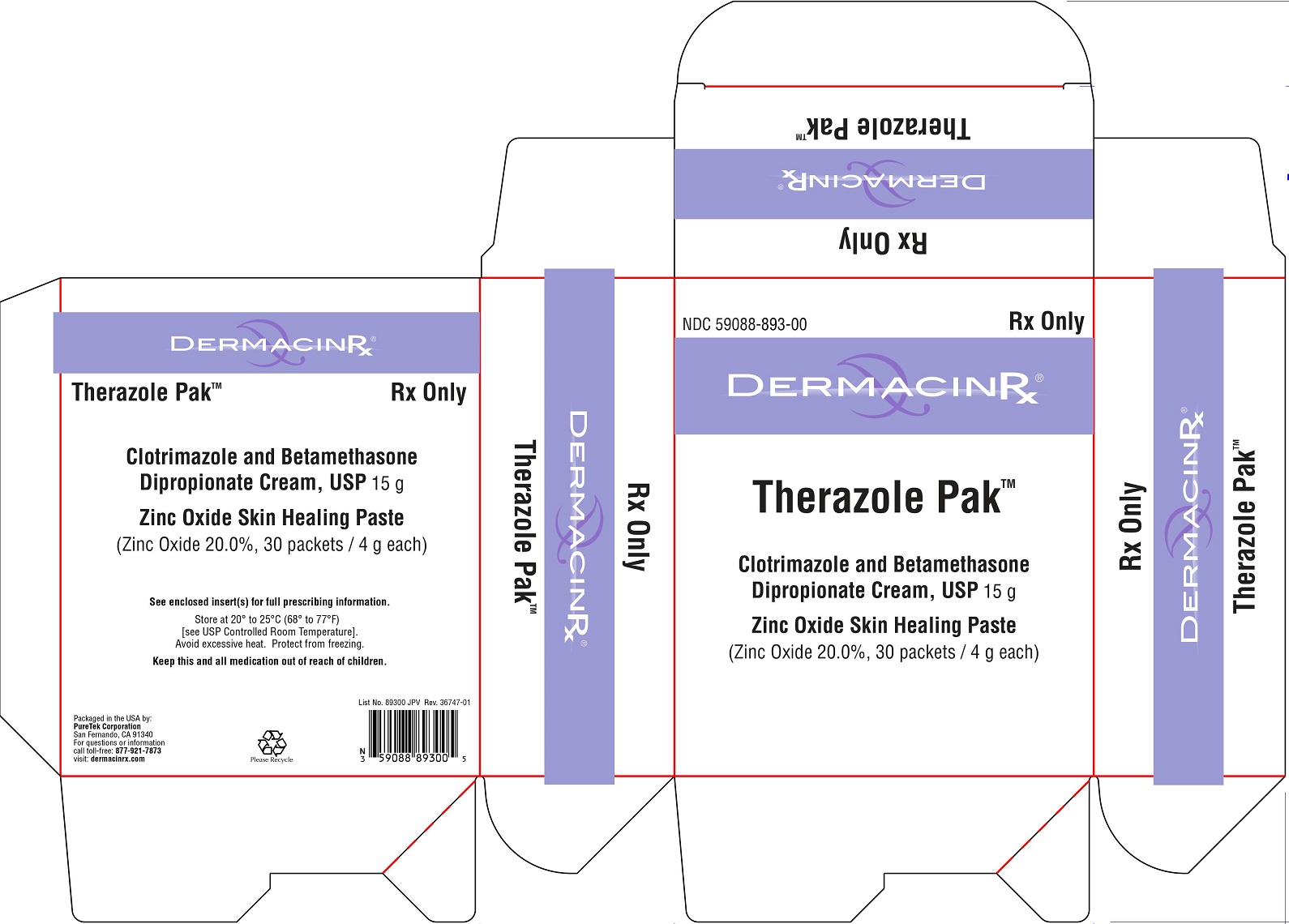
DermacinRx ® Therazole Pak (kit carton) image description
Reported adverse events (FAERS)
Top reported reactions
Reporter sex
Serious outcomes
Where does this data come from?
About this NDC listing & data coverage
What data is (and isn’t) available for this NDC — tap to expand
| NDC identity (package / product / labeler codes) | ✓ Available |
| Labeler | ✓ Available |
| Product & package description | ✓ Available |
| Marketing category & status | ✓ Available |
| Active ingredient / dosage form / route | ✓ Available |
| FDA label (SPL via DailyMed) | ✓ Available |
| Package photos | ✓ Available |
| Inactive ingredients (structured) | ✓ Available |
| NADAC pharmacy acquisition price (CMS) | — Not published for this NDC CMS publishes NADAC only for NDCs reported in its retail-pharmacy survey. |
| Orange Book / therapeutic-equivalence data | — Not published for this NDC Applies only to products approved under an NDA/ANDA; many listings are out of scope. |
| HCPCS J-code billing crosswalk | — Not published for this NDC Most self-administered / retail products have no J-code — that is normal. |
| Medicaid utilization (CMS SDUD) | — Not published for this NDC CMS reports utilization only for NDCs with Medicaid claims above its privacy threshold. |