
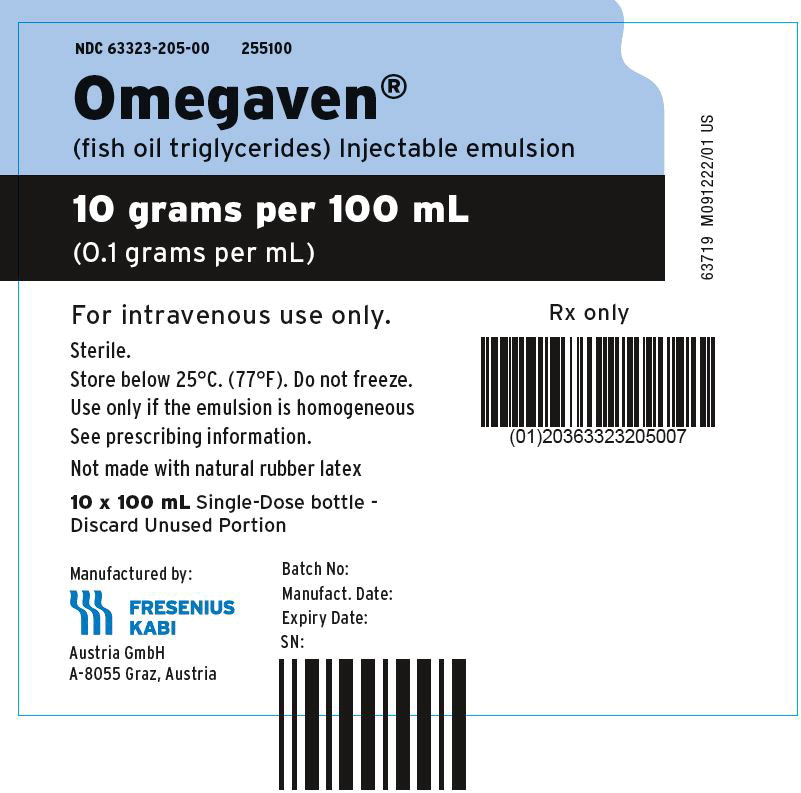
Omegaven Fish oil .1 g/mL Injection, Emulsion — NDC 63323-205-00 (Billing 63323-0205-00)
This is a package of Omegaven Fish oil .1 g/mL Injection, Emulsion from Fresenius Kabi USA, LLC, marketed since Jul 2018 and currently FDA-listed. It is the main listing for this product, which comes in 2 package sizes.
NDC database record
One package, one record: these facts belong to NDC 63323-205-00 alone.
- Record
- FDA NDC Directory package listing · Human prescription drug
- Code segments
- 63323 labeler · 205 product · 00 package
- Package marketed since
- Jul 27, 2018
- Sample package
- No — commercial package
- Listing certified through
- Dec 31, 2026
- Barcode (UPC-A, from the NDC)
- 3 6332320500 3
- Medicaid fills, this package
- 2,819 prescriptions in the last four reported quarters
- FDA record last changed
- Jul 24, 2026
Identity & classification
Regulatory identifiers FDA, NLM and CMS codes for this package
Drug-database identifiers Medi-Span GPI and First Databank GCN / HICL / AHFS classification
- GSN (GCN sequence number): 062134
- GCN: 97919
- GPI-14 (Medi-Span): 80200010051630
- HICL (First Databank): 034407
- AHFS class code: 40:20.00.00
- RxCUI (RxNorm): 2053499
Where does this data come from?
- FDA openFDA NDC Directory · synced Oct 1, 2026
- FDA label on DailyMed · label index refreshed Oct 5, 2026
- RxNorm (NLM RxNav) · catalog refreshed Oct 1, 2026
- Medi-Span GPI (licensed)
- First Databank (licensed) · refreshed Oct 1, 2026
Clinical
Patient education
Supplement & herbal interactions
Some supplements/herbs that may interact with Fish Oil Triglycerides — tap one for details:
Fish Oil Triglycerides may be associated with lower levels of 1 nutrient — worth a chat with your pharmacist, not a cause for alarm.
Where does this data come from?
- MedlinePlus (NLM) · refreshed Oct 1, 2026
- FDA label on DailyMed · label index refreshed Oct 5, 2026
Ask a licensed pharmacist directly — free, answered by our team.
Pricing
A drug doesn't have one price. Each row is a different public payment system, and none is what you'd pay at the counter — that depends on your insurance. The ⓘ on each row explains what it measures.
| Price system | Per mL | Per package |
|---|---|---|
| Retail pharmacies payNADAC · weekly | Not in the retail survey — common for institutional, discontinued, or low-volume packs. | |
| Medicaid paysCMS SDUD · 12 mo | $1.01 | $1,008.80 / 1000 ml |
| Medicare drug plans payPart D · quarterly | No Part D plan price is available for this NDC in our data. | |
Where does this data come from?
- CMS NADAC weekly file
- CMS ASP pricing files · refreshed Sep 20, 2026
- CMS Medicaid State Drug Utilization Data · through Q1 2026
- CMS Part D plan pricing files · refreshed Sep 24, 2026
- VA National Acquisition Center price file
Packaging — all sizes for this product
| Package NDC | Description | Marketing start | Marketing end | Status |
|---|---|---|---|---|
| 63323-0205-00 You're viewing this Main listing | 10 VIAL, SINGLE-DOSE in 1 CARTON / 100 mL in 1 VIAL, SINGLE-DOSE | 2018-07-27 | — | Active |
| 63323-0205-50 63323-205-50 | 10 VIAL, SINGLE-DOSE in 1 CARTON / 50 mL in 1 VIAL, SINGLE-DOSE | 2018-07-27 | — | Active |
In Medicaid, this is the most-dispensed pack of this product — about 93% of fills over the last four reported quarters. See all packs ↓
Pack size FAQ
What quantity is in this package?
What NDC number is used to bill for this package of Omegaven Fish oil .1 g/mL Injection, Emulsion?
Therapeutic equivalents
| Product | Labeler | Pack | NADAC/unit | TE | Status | Price vs. this |
|---|---|---|---|---|---|---|
| Omegaven .1 g/mLthis 63323-0205-00 | Fresenius | 10 vials | — | — | FDA listed | — |
Where does this data come from?
- FDA openFDA NDC Directory · synced Oct 1, 2026
- FDA Orange Book · refreshed Oct 3, 2026
- CMS NADAC weekly file
Availability & generic status
We did not find an FDA-approved generic match for this exact strength, form and route. Patent/protection dates below may affect future generic timing.
Why the date isn’t exact: Generic timing can change because patents may be challenged, settled, licensed, added, removed, or worked around with a narrower label — and FDA approval does not always mean a pharmacy can get the generic today.
🛈 What do these terms mean?
- Patent
- Legal protection listed in the Orange Book that may delay generic approval or launch. Issued by the U.S. Patent & Trademark Office.
- Substance patent
- Covers the active drug molecule itself — the hardest to design around. A generic generally can’t launch until it expires.
- Formulation (product) patent
- Covers a specific formulation or dosage form. A generic can sometimes work around it with a different formulation.
- Method-of-use patent
- A patent covering one specific approved use of the drug — not necessarily the whole molecule. A generic can sometimes launch with a “skinny label” that carves out the protected use and keeps the others.
- Skinny label
- A generic label that omits a still-patented use when the FDA allows it — letting a generic reach the market for the unprotected uses.
- Exclusivity
- FDA-granted marketing protection, separate from patents — e.g. 5-yr new chemical entity, 7-yr orphan drug, or a +6-month pediatric extension.
- Paragraph IV
- A generic applicant’s formal challenge to a listed patent. It can potentially lead to earlier generic entry, but often involves litigation or a settlement.
- RLD / RS
- Reference Listed Drug — the brand product the FDA uses as the reference for generic applications. Reference Standard — the product the FDA expects generics to compare against in bioequivalence testing.
- TE / AB rating
- FDA therapeutic-equivalence rating. An AB rating generally means the FDA considers a generic therapeutically equivalent to — and substitutable for — the brand.
- LOE (loss of exclusivity)
- The latest patent or exclusivity currently listed — the loss-of-exclusivity / latest-listed-protection date shown on this page. Paragraph-IV challenges and settlements can move the real date earlier; FDA approval and a manufacturer’s decision to market can move it later.
Built from the FDA Orange Book. The bars above are scaled to each protection’s expiry; the red LOE marker is the last one to lapse.
| Patent | Type | Use code | Expires |
|---|---|---|---|
| US 9566260 ↗ | Method of use | U-2366 | Jul 30, 2026 |
| US 9566260 ↗ | Method of use | U-2366 | Jul 30, 2026 |
Is there a generic version of OMEGAVEN 10 GM/100 ML EMULSION?
The FDA approved a generic — why can’t I get it at my pharmacy yet?
Why do different websites show different generic release dates?
What does “FDA listed” mean?
What does a patent or protection date mean here?
What does “current Orange Book estimate” mean?
Can a generic come out before the last patent expires?
Can a generic come out after the listed dates?
What is the difference between patents and exclusivity?
Why are there multiple patent dates?
Where does this data come from?
- FDA Orange Book · refreshed Oct 3, 2026
Inactive Ingredients / Excipients
Inactive ingredients, also called excipients, are components of the drug product other than the active ingredient. They may include fillers, dyes, coatings, preservatives, flavors, or other formulation ingredients.
💡 Tap an ingredient (hover on desktop) to see what it is and why it’s used.
-
UNII 7QWA1RIO01
A synthetic form of vitamin E used as an antioxidant in medicines. It prevents oils and fats in the formulation from breaking down, helping the drug remain stable and effective during storage.
-
UNII 1Z74184RGV
Egg phospholipids are naturally derived fats from eggs that help mix oil and water-based ingredients together. They work as emulsifiers in medicines, keeping the formula stable and uniform.
-
UNII PDC6A3C0OX
Glycerin is a clear, thick liquid derived from plant oils or fats. It acts as a humectant to retain moisture, a sweetener, and a solvent in medications.
-
UNII 55X04QC32I
A strong alkaline chemical used to adjust and maintain the pH balance of liquid medicines. It helps keep the medicine stable and ensures it stays effective during storage.
-
UNII 399SL044HN
Sodium oleate is a salt derived from oleic acid, a natural fatty acid. In medicines, it acts as an emulsifier and surfactant, helping mix oil and water ingredients together and improving how the drug dissolves and spreads in the body.
-
UNII 059QF0KO0R
Water is a liquid solvent that dissolves and mixes ingredients together in liquid medicines, syrups, and injections. It helps distribute the active drug evenly throughout the product.
6 inactive ingredients listed in the exact product block matched to this NDC.
Where does this data come from?
ingredient classCode="IACT" elements from the exact product block matched by this NDC. Label-section narrative from DailyMed / the openFDA label index is shown separately when available.- FDA label on DailyMed · label index refreshed Oct 5, 2026
- FDA openFDA NDC Directory · synced Oct 1, 2026
Inactive ingredient FAQ
Are inactive ingredients the same for every manufacturer?
Why might an inactive ingredient be missing?
Can inactive ingredients matter?
Manufacturer & labeler
More NDCs from Fresenius Kabi USA, LLC labeler code 63323
- Sodium Chloride 9 mg/mL Injection NDC 63323-186-00
- Fludarabine 25 mg/mL Injection, Solution NDC 63323-192-02
- Irinotecan Hydrochloride 20 mg/mL Injection, Solution NDC 63323-193-52
- Lidocaine 10 mg/mL Injection, Solution NDC 63323-201-02
- Lidocaine 20 mg/mL Injection, Solution NDC 63323-202-02
- Vancomycin Hydrochloride 750 mg/15mL Injection, Powder, Lyophilized, For Solution NDC 63323-203-20
- Lidocaine 20 mg/mL Injection, Solution NDC 63323-208-05
- Vancomycin Hydrochloride 500 mg/10mL Injection, Powder, Lyophilized, For Solution NDC 63323-221-10
- Protamine Sulfate 10 mg/mL Injection, Solution NDC 63323-229-05
- CEFAZOLIN 500 mg/2.2mL Powder, For Solution NDC 63323-236-10
- CEFAZOLIN 1 g/3mL Powder, For Solution NDC 63323-237-10
- Cefazolin 10 g Powder, For Solution NDC 63323-238-61
Where does this data come from?
- FDA openFDA NDC Directory · synced Oct 1, 2026
- Drugs@FDA
Full prescribing information FDA SPL
🎯 Indications and Usage ▾
1 INDICATIONS AND USAGE Omegaven is indicated as a source of calories and fatty acids in pediatric patients with parenteral nutrition-associated cholestasis (PNAC). Limitations of Use: • Omegaven is not indicated for the prevention of PNAC. It has not been demonstrated that Omegaven prevents PNAC in parenteral nutrition (PN)-dependent patients [see Clinical Studies ( 14 )]. • It has not been demonstrated that the clinical outcomes observed in patients treated with Omegaven are a result of the omega-6: omega-3 fatty acid ratio of the product [see Clinical Studies ( 14 )].
Omegaven is indicated as a source of calories and fatty acids in pediatric patients with parenteral nutrition-associated cholestasis (PNAC). ( 1 ) Limitations of Use: • Omegaven is not indicated for the prevention of PNAC. It has not been demonstrated that Omegaven prevents PNAC in parenteral nutrition (PN)-dependent patients.
( 1 ) • It has not been demonstrated that the clinical outcomes observed in patients treated with Omegaven are a result of the omega-6:omega-3 fatty acid ratio of the product. ( 1 )
⏱️ Dosage and Administration ▾
2 DOSAGE AND ADMINISTRATION • For infusion into a central or peripheral vein. ( 2.1 ) • See full prescribing information for administration and admixing instructions. ( 2.1 , 2.2 ) • Protect the admixed PN solution from light.
( 2.2 ) • Recommended dosage depends on age, energy expenditure, clinical status, body weight, tolerance, ability to metabolize, and consideration of additional energy sources given to the patient. The recommended daily dose (and the maximum dose) in pediatric patients is 1 g/kg/day. ( 2.3 ) • For information on infusion rate when initiating dosing and in patients with elevated triglyceride levels, see the full prescribing information.
( 2.3 , 5.1 , 5.6 ) • The recommended duration for infusion is between 8 and 24 hours, depending on the clinical situation. ( 2.3 )
2.1Administration Instructions • Omegaven can be administered alone or as part of a PN admixture. • Omegaven is for central or peripheral intravenous infusion. When administered with dextrose and amino acids, the choice of a central or peripheral venous route should depend on the osmolarity of the final infusate. Solutions with osmolarity of 900 mOsm/L or greater must be infused through a central vein. • Do not exceed the recommended maximum infusion rate in Table 1 [see Dosage and Administration ( 2.3 ) and Warnings and Precautions ( 5.1 )] . • Use a 1.2 micron in-line filter during administration. • Use a dedicated line for PN.
Omegaven should be infused concurrently into the same vein as dextrose-amino acid solutions (as part of PN) by a Y-connector located closest to the infusion site; flow rates of each solution should be controlled separately by infusion pumps. Avoid multiple connections; do not connect multiple medications in series. Turn off the pump before the bottle runs dry. • Use a vented infusion set when Omegaven is infused from the bottle. • Do not use infusion sets and lines that contain di-2-ethylhexyl phthalate (DEHP).
Infusion sets that contain polyvinyl chloride (PVC) components have DEHP as a plasticizer. • Prior to infusion, visually inspect Omegaven for particulate matter and discoloration. Discard the bottle if any particulates or discoloration are observed. • Gently invert the bottle before use. Use Omegaven only if the emulsion is homogeneous and the container is undamaged. • Strict aseptic techniques must be followed. • Hang the bottle using the attached hanger and start infusion. • After connecting the infusion set, start infusion of Omegaven immediately.
Complete the infusion within 12 hours when using a Y-connector and within 24 hours when used as part of an admixture. • For single use only. Discard unused portion.
2.2Admixing Instructions If Omegaven is administered as part of a PN admixture, follow the instructions below. • Prepare the admixture in PN containers using strict aseptic techniques to avoid microbial contamination. • Do not add Omegaven directly to the empty PN container; destabilization of the lipid emulsion may occur. • When Omegaven is administered with other infusion solutions (e.g., amino acids, dextrose), the compatibility of the solutions used must be ensured. Questions related to compatibility may be directed to Fresenius Kabi USA, LLC, at 1-800-551-7176. • The following proper mixing sequence must be followed to minimize pH-related problems by ensuring that typically acidic dextrose solutions are not mixed with lipid emulsions alone: 1.
Transfer dextrose solution to the PN container. 2. Transfer amino acid solution to the PN container.
3. Transfer Omegaven to the PN container. Simultaneous transfer of amino acid solution, dextrose solution, and Omegaven using an automated compounding device is also permitted; follow automated compounding device instructions as indicated.
Use gentle agitation during admixing to minimize localized concentration effects; shake container gently after each addition. • The prime destabilizers of emulsions are excessive acidity (such as a pH less than 5) and inap… [Excerpted — this section continues on DailyMed.]
💊 Dosage Forms and Strengths ▾
3 DOSAGE FORMS AND STRENGTHS Injectable Emulsion: 5 g/50 mL and 10 g/100 mL (0.1 g/mL) sterile, white, homogenous emulsion in a 50-mL and 100-mL single-dose bottle. Injectable Emulsion: 5 g/50 mL and 10 g/100 mL (0.1 g/mL) in a single-dose bottle ( 3 )
⛔ Contraindications ▾
4 CONTRAINDICATIONS Use of Omegaven is contraindicated in patients with: • Known hypersensitivity to fish or egg protein or to any of the active ingredients or excipients [see Warnings and Precautions ( 5.2 )]. • Severe hemorrhagic disorders due to a potential effect on platelet aggregation. • Severe disorders of lipid metabolism characterized by hypertriglyceridemia (serum triglyceride concentrations greater than 1,000 mg/dL) [see Warnings and Precautions ( 5.6 )]. • Known hypersensitivity to fish or egg protein or to any of the active ingredients or excipients.
( 4 ) • Severe hemorrhagic disorders. ( 4 ) • Severe disorders of lipid metabolism characterized by hypertriglyceridemia (with serum triglycerides greater than 1,000 mg/dL). ( 4 , 5.6 )
⚠️ Warnings and Cautions ▾
5 WARNINGS AND PRECAUTIONS • Clinical Decompensation with Rapid Infusion of Intravenous Lipid Emulsion in Neonates and Infants: Acute respiratory distress, metabolic acidosis, and death after rapid infusion of intravenous lipid emulsions have been reported. ( 5.1 ) • Hypersensitivity Reactions: Monitor for signs or symptoms. Discontinue infusion if reaction occurs.
( 5.2 ) • Risk of Infections, Fat Overload Syndrome, Refeeding Syndrome, and Hypertriglyceridemia : Monitor for signs and symptoms; monitor laboratory parameters. ( 5.3 , 5.4 , 5.5 , 5.6 ) • Aluminum Toxicity : Increased risk in patients with renal impairment, including preterm infants. ( 5.7 ) • Monitoring and Laboratory Tests : Routine laboratory monitoring is recommended, including monitoring for essential fatty acid deficiency.
( 5.8 )
5.1Clinical Decompensation with Rapid Infusion of Intravenous Lipid Emulsion in Neonates and Infants In the postmarket setting, serious adverse reactions including acute respiratory distress, metabolic acidosis, and death have been reported in neonates and infants after rapid infusion of intravenous lipid emulsions. Hypertriglyceridemia was commonly reported. Strictly adhere to the recommended total daily dosage; the hourly infusion rate should not exceed 1.5 mL/kg/hour [see Dosage and Administration ( 2.3 )].
Preterm and small for gestational age infants have poor clearance of intravenous lipid emulsion and increased free fatty acid plasma levels following lipid emulsion infusion. Carefully monitor the infant's ability to eliminate the infused lipids from the circulation (e.g., measure serum triglycerides and/or plasma free fatty acid levels). If signs of poor clearance of lipids from the circulation occur, stop the infusion and initiate a medical evaluation [see Warnings and Precautions ( 5.4 , 5.6 ) and Overdosage ( 10 )].
5.2Hypersensitivity Reactions Omegaven contains fish oil and egg phospholipids, which may cause hypersensitivity reactions. In postmarketing experience, anaphylaxis has been reported following Omegaven administration [see Adverse Reactions ( 6.2 )] . Omegaven is contraindicated in patients with known hypersensitivity to fish or egg protein or to any of the active or inactive ingredients in Omegaven [see Contraindications ( 4 )] .
If a hypersensitivity reaction occurs, stop infusion of Omegaven immediately and initiate appropriate treatment and supportive measures.
5.3Infections Lipid emulsions, such as Omegaven, can support microbial growth and are an independent risk factor for the development of bloodstream infections. The risk of infection is increased in patients with malnutrition-associated immunosuppression, long-term use and poor maintenance of intravenous catheters, or immunosuppressive effects of other conditions or concomitant drugs. To decrease the risk of infectious complications, ensure aseptic technique in catheter placement and maintenance, as well as in the preparation and administration of Omegaven.
Monitor for signs and symptoms of early infections including fever and chills, laboratory test results that might indicate infection (including leukocytosis and hyperglycemia), and frequently inspect the intravenous catheter insertion site for edema, redness, and discharge.
5.4Fat Overload Syndrome Fat overload syndrome is a rare condition that has been reported with intravenous lipid emulsions. A reduced or limited ability to metabolize lipids accompanied by prolonged plasma clearance may result in this syndrome, which is characterized by a sudden deterioration in the patient's condition including fever, anemia, leukopenia, thrombocytopenia, coagulation disorders, hyperlipidemia, hepatomegaly, deteriorating liver function, and central nervous system manifestations (e.g., coma). The cause of fat overload syndrome is unclear.
Although it has been most frequently observed when the recommended lipid dose was exceeded, cases have also been described where the formulation was administered according… [Excerpted — this section continues on DailyMed.]
🤒 Adverse Reactions ▾
6 ADVERSE REACTIONS The following clinically significant adverse reactions are described elsewhere in the labeling: • Clinical Decompensation with Rapid Infusion of Intravenous Lipid Emulsion in Neonates and Infants [see Warnings and Precautions ( 5.1 )] • Hypersensitivity reactions [see Warnings and Precautions ( 5.2 )] • Infections [see Warnings and Precautions ( 5.3 )] • Fat overload syndrome [see Warnings and Precautions ( 5.4 )] • Refeeding syndrome [see Warnings and Precautions ( 5.5 )] • Hypertriglyceridemia [see Warnings and Precautions ( 5.6 )] • Aluminum toxicity [see Warnings and Precautions ( 5.7 )] Most common adverse drug reactions (>15%) are: vomiting, agitation, bradycardia, apnea and viral infection.
( 6.1 ) To report SUSPECTED ADVERSE REACTIONS, contact Fresenius Kabi USA, LLC at 1-800-551-7176 or FDA at 1-800-FDA-1088 or www.fda.gov/medwatch.
6.1Clinical Trials Experience Because clinical trials are conducted under widely varying conditions, adverse reaction rates observed in the clinical trials of a drug cannot be directly compared to rates in the clinical trials of another drug and may not reflect the rates observed in practice. The safety database for Omegaven reflects exposure in 189 pediatric patients (19 days to 15 years of age) treated for a median of 14 weeks (3 days to 8 years) in two clinical trials. Omegaven was administered at a maximum dose of 1 g/kg/day as the lipid component of a PN regimen which also included dextrose, amino acids, vitamins, and trace elements; 158 (84%) of these patients received concurrent lipids from enteral nutrition [see Clinical Studies ( 14 )] .
Adverse reactions that occurred in more than 5% of patients who received Omegaven and with a higher incidence than the comparator group are shown in Table 2 . Patients had a complicated medical and surgical history prior to receiving Omegaven treatment and the mortality was 13%. Underlying clinical conditions prior to the initiation of Omegaven therapy included prematurity, low birth weight, necrotizing enterocolitis, short bowel syndrome, ventilator dependence, coagulopathy, intraventricular hemorrhage, and sepsis.
Table 2: Adverse Reactions in Greater Than 5% of Omegaven-Treated Pediatric Patients with PNAC Adverse Reaction Omegaven (N=189) n (%) Vomiting 87 (46) Agitation 67 (35) Bradycardia 66 (35) Apnea 38 (20) Viral Infection 30 (16) Erythema 23 (12) Rash 15 (8) Abscess 14 (7) Neutropenia 13 (7) Hypertonia 11 (6) Incision site erythema 11 (6) Twelve (6%) Omegaven-treated patients were listed for liver transplantation (1 patient was listed 18 days before treatment, and 11 patients after a median of 42 days [range: 2 days to 8 months] of treatment); 9 (5%) received a transplant after a median of 121 days (range: 25 days to 6 months) of treatment, and 3 (2%) were taken off the waiting list because cholestasis resolved.
One hundred thirteen (60%) Omegaven-treated patients reached DBil levels less than 2 mg/dL and AST or ALT levels less than 3 times the upper limit of normal, with median AST and ALT levels for Omegaven-treated patients at 89 and 65 U/L, respectively, by the end of the study. Median hemoglobin levels and platelet counts for Omegaven-treated patients at baseline were 10.2 g/dL and 173 × 10 9 /L, and by the end of the study these levels were 10.5 g/dL and 217 × 10 9 /L, respectively. Adverse reactions associated with bleeding were experienced by 74 (39%) of Omegaven-treated patients.
Median glucose levels at baseline and the end of the study were 86 and 87 mg/dL for Omegaven-treated patients, respectively. Hyperglycemia was experienced by 13 (7%) Omegaven-treated patients. Median triglyceride levels at baseline and the end of the study were 121 mg/dL and 72 mg/dL for Omegaven-treated patients respectively.
Hypertriglyceridemia was experienced by 5 (3%) Omegaven-treated patients. The triene:tetraene (Mead acid:arachidonic acid) ratio was used to monitor essential fatty acid status in Omegaven-treated patients onl… [Excerpted — this section continues on DailyMed.]
🔄 Drug Interactions ▾
7 DRUG INTERACTIONS Antiplatelet Agents and Anticoagulants : Prolonged bleeding time has been reported in patients taking antiplatelet agents or anticoagulants and oral omega-3 fatty acids. Periodically monitor bleeding time in patients receiving Omegaven and concomitant antiplatelet agents or anticoagulants. ( 7.1 )
7.1Antiplatelet Agents and Anticoagulants Some published studies have demonstrated prolongation of bleeding time in patients taking antiplatelet agents or anticoagulants and oral omega-3 fatty acids. The prolongation of bleeding times reported in those studies did not exceed normal limits and there were no clinically significant bleeding episodes. Nonetheless, it is recommended to periodically monitor bleeding time in patients receiving Omegaven and concomitant antiplatelet agents or anticoagulants.
👥 Use in Specific Populations ▾
8 USE IN SPECIFIC POPULATIONS
8.1Pregnancy Risk Summary There are no available data on Omegaven use in pregnant women to establish a drug- associated risk of major birth defects, miscarriage, or adverse maternal or fetal outcomes. Animal reproduction studies have not been conducted with fish oil triglycerides. The estimated background risk of major birth defects and miscarriage in the indicated population is unknown.
All pregnancies have a background risk of birth defect, loss, or other adverse outcomes. In the US general population, the estimated background risk of major birth defects and miscarriage in clinically recognized pregnancies is 2% to 4% and 15% to 20%, respectively.
8.2Lactation Risk Summary No data are available regarding the presence of fish oil triglycerides from Omegaven in human milk, the effects on the breastfed infant, or the effects on milk production. Lactating women receiving oral omega-3 fatty acids have been shown to have higher levels of omega-3 fatty acids in their milk. The developmental and health benefits of breastfeeding should be considered along with the mother's clinical need for Omegaven, and any potential adverse effects of Omegaven on the breastfed infant.
8.4Pediatric Use The effectiveness of Omegaven was established in two open-label clinical trials of 82 pediatric patients, 3 to 42 weeks of age, including preterm neonates with estimated gestational age of greater than 24 weeks at birth. Patients administered Omegaven attained and maintained growth through at least 108 weeks of treatment [see Clinical Studies ( 14 )]. The safety of Omegaven was established in 189 pediatric patients (19 days to 15 years of age).
The most common adverse reactions in Omegaven-treated patients were vomiting, agitation, and bradycardia [see Adverse Reactions ( 6.1 )]. In the postmarketing setting, clinical decompensation with rapid infusion of intravenous lipid emulsion in neonates and infants, sometimes fatal has been reported [see Warnings and Precautions ( 5.1 )]. Preterm neonates and infants who receive treatment with Omegaven may be at risk of aluminum toxicity and other metabolic abnormalities [see Warnings and Precautions ( 5.7 , 5.8 )] .
8.5Geriatric Use Clinical trials of Omegaven did not include patients 65 years of age and older.
🤰 Pregnancy ▾
8.1Pregnancy Risk Summary There are no available data on Omegaven use in pregnant women to establish a drug- associated risk of major birth defects, miscarriage, or adverse maternal or fetal outcomes. Animal reproduction studies have not been conducted with fish oil triglycerides. The estimated background risk of major birth defects and miscarriage in the indicated population is unknown.
All pregnancies have a background risk of birth defect, loss, or other adverse outcomes. In the US general population, the estimated background risk of major birth defects and miscarriage in clinically recognized pregnancies is 2% to 4% and 15% to 20%, respectively.
🧒 Pediatric Use ▾
8.4Pediatric Use The effectiveness of Omegaven was established in two open-label clinical trials of 82 pediatric patients, 3 to 42 weeks of age, including preterm neonates with estimated gestational age of greater than 24 weeks at birth. Patients administered Omegaven attained and maintained growth through at least 108 weeks of treatment [see Clinical Studies ( 14 )]. The safety of Omegaven was established in 189 pediatric patients (19 days to 15 years of age).
The most common adverse reactions in Omegaven-treated patients were vomiting, agitation, and bradycardia [see Adverse Reactions ( 6.1 )]. In the postmarketing setting, clinical decompensation with rapid infusion of intravenous lipid emulsion in neonates and infants, sometimes fatal has been reported [see Warnings and Precautions ( 5.1 )]. Preterm neonates and infants who receive treatment with Omegaven may be at risk of aluminum toxicity and other metabolic abnormalities [see Warnings and Precautions ( 5.7 , 5.8 )] .
🧓 Geriatric Use ▾
8.5Geriatric Use Clinical trials of Omegaven did not include patients 65 years of age and older.
🆘 Overdosage ▾
10 OVERDOSAGE In the event of an overdose, serious adverse reactions may occur [see Warnings and Precautions ( 5.1 , 5.4 )] . Stop the infusion of Omegaven until triglyceride levels have normalized and any symptoms have abated. The effects are usually reversible by stopping the lipid infusion. If medically appropriate, further intervention may be indicated. Lipids are not dialyzable from serum.
🧬 Clinical Pharmacology ▾
12 CLINICAL PHARMACOLOGY
12.1Mechanism of Action Omegaven provides a biologically utilizable source of calories and essential fatty acids. Fatty acids serve as an important substrate for energy production. The most common mechanism of action for energy production derived from fatty acid metabolism is beta oxidation.
Fatty acids are also important for membrane structure and function, as precursors for bioactive molecules (such as prostaglandins), and as regulators of gene expression.
12.3Pharmacokinetics The plasma concentrations of EPA and DHA, the major fatty acids in Omegaven, as well as linoleic acid and alpha-linolenic acid (essential fatty acids) were measured along with the markers of essential fatty acid status in 58 pediatric patients with PNAC after an intravenous infusion of 1 mg/kg/day of Omegaven over 10 weeks. Five patients received Omegaven as the exclusive lipid source, and all others received concurrent enteral or oral nutrition. Figure 1: Mean Plasma Concentrations of Fatty Acids Over 10 Weeks of Omegaven Infusion in Pediatric Patients with PNAC Error bars represent ± 1 standard deviation (SD).
Numbers at the top of plots represent the number of patients at each time point If more than one value was available for a patient at any given time point, the average was used. Figure 1
🧬 Mechanism of Action ▾
12.1Mechanism of Action Omegaven provides a biologically utilizable source of calories and essential fatty acids. Fatty acids serve as an important substrate for energy production. The most common mechanism of action for energy production derived from fatty acid metabolism is beta oxidation.
Fatty acids are also important for membrane structure and function, as precursors for bioactive molecules (such as prostaglandins), and as regulators of gene expression.
📦 How Supplied / Storage and Handling ▾
16 HOW SUPPLIED/STORAGE AND HANDLING Omegaven (fish oil triglycerides) injectable emulsion, 5 g/50 mL and 10 g/100 mL (0.1 g/mL) is a white, homogenous, sterile emulsion supplied as follows: 50 mL single-dose glass bottle NDC 63323-205-21 Carton of 10 x 50 mL NDC 63323-205-50 100 mL single-dose glass bottle NDC 63323-205-31 Carton of 10 x 100 mL NDC 63323-205-00 The stopper used as the bottle closure is not made with natural rubber latex, PVC, or DEHP. Storage and Handling Store below 25°C (77°F). Avoid excessive heat.
Do not freeze. If accidentally frozen, discard product. Once the bottle is connected to the infusion set, use Omegaven immediately.
Complete infusion within 12 hours when using a Y-connector [see Dosage and Administration ( 2.1 )] . Infuse admixtures containing Omegaven immediately. If not used immediately, admixtures can be stored for up to 6 hours at room temperature or up to 24 hours under refrigeration.
Complete the infusion within 24 hours after removal from storage [see Dosage and Administration ( 2.2 )] .
📦 Storage and Handling ▾
Storage and Handling Store below 25°C (77°F). Avoid excessive heat. Do not freeze.
If accidentally frozen, discard product. Once the bottle is connected to the infusion set, use Omegaven immediately. Complete infusion within 12 hours when using a Y-connector [see Dosage and Administration ( 2.1 )] .
Infuse admixtures containing Omegaven immediately. If not used immediately, admixtures can be stored for up to 6 hours at room temperature or up to 24 hours under refrigeration. Complete the infusion within 24 hours after removal from storage [see Dosage and Administration ( 2.2 )] .
📋 Description ▾
11 DESCRIPTION Omegaven (fish oil triglycerides) is a sterile, nonpyrogenic, white, homogenous emulsion for intravenous infusion as a supply of calories in patients with PNAC. Each mL of Omegaven contains 0.1 g of fish oil, 0.012 g egg phospholipids, 0.025 g glycerin, 0.15 to 0.3 mg dl-alpha-tocopherol, 0.3 mg sodium oleate, water for injection, and sodium hydroxide for pH adjustment (pH 6 to 9). The phosphate content is 0.015 mmol/mL.
The fish oil included in Omegaven is a triglyceride mixture consisting of esters of long-chain saturated fatty acids and unsaturated fatty acids with the following structure: where , , and are long chain acyl groups. Because triglycerides often contain different long chain fatty acids at each position, possible structures can have molecular weights ranging from 700 to 1000 g/mol. The main fatty acid components of the fish oil in Omegaven are EPA (13% to 26%) and DHA (14% to 27%).
The fish oil also contains palmitic acid (4% to 12%), oleic acid (4% to 11%), palmitoleic acid (4% to 10%), myristic acid (2% to 7%), and arachidonic acid (0.2% to 2.0%). Additionally, the mean contents of linoleic acid and alpha-linolenic acid are 1.5% and 1.1%, respectively. The fish oil component has a total omega-3 fatty acid content of 40% to 54%.
The empirical formula, molecular weight, and chemical structure of the main fatty acid components are: EPA C 20 H 30 O 2 302.45 DHA C 22 H 32 O 2 328.49 Palmitic acid C 16 H 32 O 2 256.43 Oleic acid C 18 H 34 O 2 282.47 Palmitoleic acid C 16 H 30 O 2 254.41 Linoleic acid C 18 H 32 O 2 280.45 Myristic acid C 14 H 28 O 2 228.38 Arachidonic acid C 20 H 32 O 2 304.47 Alpha-linolenic acid C 18 H 30 O 2 278.44 Omegaven 5 g/50 mL contains 5 grams of fish oil and 0.6 g egg phospholipids, 1.25 g glycerin, 7.5 to 15 mg dl-alpha-tocopherol, 0.015 g sodium oleate, water for injection, and sodium hydroxide for pH adjustment (pH 6 to 9) packaged in a single-dose 50-mL glass bottle enclosed with a rubber stopper.
The phosphate content of the drug product is 0.75 mmol. The mean content of the two major fatty acid components in 50 mL are 1.0 g EPA (range: 0.6 to 1.5 g) and 0.96 g DHA (range: 0.7 to 1.7 g). Additionally, the mean content of linoleic acid, alphalinolenic acid, and arachidonic acid per 50 mL are 0.16 g, 0.07 g, and 0.13 g, respectively.
Omegaven 10 g/100 mL contains 10 grams of fish oil and 1.2 g egg phospholipids, 2.5 g glycerin, 15 to 30 mg dl-alpha-tocopherol, 0.03 g sodium oleate, water for injection, and sodium hydroxide for pH adjustment (pH 6 to 9) packaged in a single-dose 100-mL glass bottle enclosed with rubber stopper. The phosphate content of the drug product is 1.5 mmol. The mean content of the two major fatty acid components in 100 mL are 2.0 g EPA (range: 1.2 to 3.0 g) and 1.9 g DHA (range: 1.3 to 3.3 g).
Additionally, the mean content of linoleic acid, alpha-linolenic acid, and arachidonic acid per 100 mL are 0.31g, 0.13 g, and 0.25 g; respectively. The total energy content of Omegaven is 112 kcal/100 mL (1.12 kcal/mL), including lipids, phospholipids, and glycerol. Omegaven has an osmolality of approximately 342 mOsm/kg water (which represents an osmolarity of 273 mOsm/L).
Omegaven contains no more than 25 mcg/L of aluminum. Structural Formula Figure Figure Figure Figure Figure Figure Figure Figure Figure Figure Figure Figure
💬 Information for Patients ▾
17 PATIENT COUNSELING INFORMATION When initiating Omegaven administration, discuss the following information: Clinical Decompensation with Rapid Infusion of Intravenous Lipid Emulsion in Neonates and Infants Inform caregivers that acute respiratory distress and death may occur in neonates and infants after rapid infusion of intravenous lipid emulsions. If Omegaven is infused at home, instruct caregivers not to exceed the maximum infusion rate [see Warnings and Precautions ( 5.1 )]. Hypersensitivity reactions Inform caregivers that Omegaven may cause hypersensitivity reactions, including anaphylaxis.
If Omegaven is infused at home, instruct caregivers to stop the infusion of Omegaven immediately and seek medical attention if they experience signs or symptoms of a hypersensitivity reaction, such as rapid or weak heartbeat, feeling faint, difficulty in breathing or swallowing, vomiting, nausea, headache, sweating, dizziness, hives, rash, itching, flushing, dizziness, fever, or chills [see Warnings and Precautions ( 5.2 )]. Infections Inform caregivers that patients who receive Omegaven are at risk of infection. If Omegaven is infused at home, instruct caregivers to ensure aseptic techniques are used for the preparation and administration of Omegaven and to monitor for signs and symptoms of infection [see Warnings and Precautions ( 5.3 )].
Fat overload syndrome Inform caregivers that fat overload syndrome has been reported with the use of intravenous lipid emulsions. If Omegaven is infused at home, instruct caregivers to stop Omegaven if signs or symptoms of fat overload syndrome occur [see Warnings and Precautions ( 5.4 )]. Refeeding syndrome If the patient is severely malnourished, inform caregivers that administering parenteral nutrition including Omegaven may result in refeeding syndrome [see Warnings and Precautions ( 5.5 )].
Hypertriglyceridemia Inform caregivers about the risk of hypertriglyceridemia with Omegaven use [see Warnings and Precautions ( 5.6 )]. Aluminum toxicity Inform caregivers that prolonged PN administration in patients with renal impairment, including preterm neonates, may result in aluminum reaching toxic levels associated with central nervous system and bone toxicity [see Warnings and Precautions ( 5.7 )]. Fresenius Kabi and Omegaven are registered trademarks of Fresenius Kabi.
Manufactured by: Graz, Austria www.fresenius-kabi.com/us 451555C Fresenius Kabi Logo
🧬 Pharmacokinetics ▾
12.3Pharmacokinetics The plasma concentrations of EPA and DHA, the major fatty acids in Omegaven, as well as linoleic acid and alpha-linolenic acid (essential fatty acids) were measured along with the markers of essential fatty acid status in 58 pediatric patients with PNAC after an intravenous infusion of 1 mg/kg/day of Omegaven over 10 weeks. Five patients received Omegaven as the exclusive lipid source, and all others received concurrent enteral or oral nutrition. Figure 1: Mean Plasma Concentrations of Fatty Acids Over 10 Weeks of Omegaven Infusion in Pediatric Patients with PNAC Error bars represent ± 1 standard deviation (SD).
Numbers at the top of plots represent the number of patients at each time point If more than one value was available for a patient at any given time point, the average was used. Figure 1
🔬 Clinical Studies ▾
14 CLINICAL STUDIES The efficacy of Omegaven was evaluated in two open-label single-center clinical trials (Study 1, NCT00910104, and Study 2, NCT00738101) in pediatric patients with PNAC (defined as direct or conjugated bilirubin [DBil] equal to or greater than 2 mg/dL) who required PN for at least 14 days. Although Study 1 and Study 2 were not adequately designed to demonstrate noninferiority or superiority of Omegaven to the soybean oil-based lipid emulsion comparator, the data from these studies support Omegaven as a source of calories in pediatric patients with PNAC.
Nutritional efficacy was assessed by biomarkers of lipid metabolism, growth indices (body weight, length/height and head circumference), and/or mean changes in fatty acid parameters. Both trials prospectively enrolled Omegaven-treated patients (maximum dose of 1 g/kg/day) and used historical control patients who received a soybean oil-based lipid emulsion (maximum dose of 3 g/kg/day) as a comparator. Patients were expected to require PN, which also included dextrose, amino acids, vitamins and trace elements, for at least 30 days (Study 1) or 14 days (Study 2), had PNAC, and had received standard therapies to prevent progression of liver disease.
Study 1 enrolled patients less than 2 years of age and Study 2 enrolled patients less than 5 years of age. Patients with another cause of chronic liver disease (in the absence of intestinal failure) were excluded. Patients with an international normalized ratio (INR) greater than 2 and patients with portal vein thrombosis or reversal of portal flow by abdominal ultrasound were also excluded.
For the efficacy analyses of Studies 1 and 2, Omegaven-treated patients were pair-matched in a 2:1 manner to historical control patients primarily based on DBil levels and postmenstrual age at baseline. There were 123 patients (82 Omegaven; 41 historical control) in this population, 78 (52; 26) were from Study 1, and 45 (30; 15) were from Study 2. A summary of concurrent enteral/oral nutrition intake for each study is provided in Table 3 .
Table 3: Summary of Median Enteral or Oral Intakes in Pediatric Patients with PNAC in Study 1 and Study 2 a. Two Omegaven-treated patients in Study 1 did not have data regarding enteral or oral intakes. Parameter Study 1 Study 2 Omegaven (n=50) a Historical Control (n=26) Omegaven (n=30) Historical Control (n=15) Number of patients who received concurrent enteral or oral nutrition 44 (88%) 26 (100%) 24 (80%) 14 (93%) Percentage of total calories provided enterally or orally, median (Min - Max) 24% (1% – 53%) 25% (0.4% – 68%) 21% (1% – 75%) 12% (3% – 40%) In the combined efficacy analysis population from Study 1 and Study 2, median chronological age was 9 weeks (range: 3 to 42 weeks) in the Omegaven group and 7 weeks (range: 0 to 41 weeks) in the historical control group.
The majority of these patients were preterm infants at birth (90% Omegaven; 83% historical control), with gestational age categories as follows: extremely preterm (31%; 20%); very preterm (20%; 24%); moderate or late preterm (40%; 39%). A majority of patients were also considered to have low, very-low, or extremely-low birth weights (76%; 82%), with birth weight categories as follows: extremely-low birth weight (34%; 24%); very-low birth weight (17%; 21%); low birth weight (25%; 37%). The efficacy analysis population had more males (51%; 59%) than females, and the majority of patients were White (60%; 66%).
At baseline, the median age-adjusted body weight (Z-score) was -1.3 for the Omegaven group and -1.1 for the historical control group; 27% and 28% were low-for-age in body weight, 43% and 40% were low-for-age in body height/length, and 25% and 15% were low-for-age in head circumference for the Omegaven and historical control groups, respectively (low-for-age corresponded to Z-scores less than or equal to -1.9 for each growth parameter). In the efficacy analysis population, baseline median DBil, AST, and ALT levels were 3.8 mg/… [Excerpted — this section continues on DailyMed.]
🧪 Nonclinical Toxicology ▾
13 NONCLINICAL TOXICOLOGY
13.1Carcinogenesis, Mutagenesis, Impairment of Fertility No studies have been performed with fish oil triglycerides to evaluate the carcinogenic potential or its effect on fertility. Fish oil triglycerides was negative in the bacterial mutagenicity test with Salmonella typhimurium and the hypoxanthine phosphoribosyl transferase (HPRT) gene mutation assay in Chinese hamster V79 cells. Fish oil triglycerides was not clastogenic in cultured human peripheral lymphocytes or in a rat bone marrow cytogenetic study.
📄 Carcinogenesis, Mutagenesis, Impairment of Fertility ▾
13.1Carcinogenesis, Mutagenesis, Impairment of Fertility No studies have been performed with fish oil triglycerides to evaluate the carcinogenic potential or its effect on fertility. Fish oil triglycerides was negative in the bacterial mutagenicity test with Salmonella typhimurium and the hypoxanthine phosphoribosyl transferase (HPRT) gene mutation assay in Chinese hamster V79 cells. Fish oil triglycerides was not clastogenic in cultured human peripheral lymphocytes or in a rat bone marrow cytogenetic study.
📄 Recent Major Changes ▾
Warnings and Precautions ( 5.2 ) 7/2025
📄 Package Label / Principal Display Panel ▾
PACKAGE LABEL- PRINCIPAL DISPLAY – Omegaven 50 mL Vial Label NDC 63323-205-21 255050 Omegaven ® (fish oil triglycerides) Injectable emulsion 5 grams per 50 mL (0.1 grams per mL) Energy: 56 kcal per 50 mL For intravenous use only. Rx only 50 mL Single-Dose bottle - Discard Unused Portion PACKAGE LABEL- PRINCIPAL DISPLAY – Omegaven 50 mL Vial Label
PACKAGE LABEL- PRINCIPAL DISPLAY – Omegaven 50 mL Vial Carton Label NDC 63323-205-50 255050 Omegaven ® (fish oil triglycerides) Injectable emulsion 5 grams per 50 mL (0.1 grams per mL) For intravenous use only. Rx only Sterile. Store below 25°C.
(77°F). Do not freeze. Use only if the emulsion is homogeneous.
See prescribing information. Not made with natural rubber latex 10 x 50 mL Single-Dose bottle- Discard Unused Portion PACKAGE LABEL- PRINCIPAL DISPLAY – Omegaven 50 mL Vial Carton Label
PACKAGE LABEL- PRINCIPAL DISPLAY – Omegaven 100 mL Vial Label NDC 63323-205-31 255100 Omegaven ® (fish oil triglycerides) Injectable emulsion 10 grams per 100 mL (0.1 grams per mL) Energy: 112 kcal per 100 mL For intravenous use only. Rx only 100 mL Single-Dose bottle - Discard Unused Portion PACKAGE LABEL- PRINCIPAL DISPLAY – Omegaven 100 mL Vial Label
PACKAGE LABEL- PRINCIPAL DISPLAY – Omegaven 100 mL Vial Carton Label NDC 63323-205-00 255100 Omegaven ® (fish oil triglycerides) Injectable emulsion 10 grams per 100 mL (0.1 grams per mL) For intravenous use only. Rx only Sterile. Store below 25°C.
(77°F). Do not freeze. Use only if the emulsion is homogeneous.
See prescribing information. Not made with natural rubber latex 10 x 100 mL Single-Dose bottle- Discard Unused Portion PACKAGE LABEL- PRINCIPAL DISPLAY – Omegaven 100 mL Vial Carton Label
Medicaid utilization & spend
Medicaid utilization by pack size
About this NDC listing & data coverage
What data is (and isn’t) available for this NDC — tap to expand
| NDC identity (package / product / labeler codes) | ✓ Available |
| Labeler | ✓ Available |
| Product & package description | ✓ Available |
| Marketing category & status | ✓ Available |
| Active ingredient / dosage form / route | ✓ Available |
| FDA label (SPL via DailyMed) | ✓ Available |
| Package photos | ✓ Available |
| Inactive ingredients (structured) | ✓ Available |
| NADAC pharmacy acquisition price (CMS) | — Not published for this NDC CMS publishes NADAC only for NDCs reported in its retail-pharmacy survey. |
| Orange Book / therapeutic-equivalence data | ✓ Available |
| HCPCS J-code billing crosswalk | — Not published for this NDC Most self-administered / retail products have no J-code — that is normal. |
| Medicaid utilization (CMS SDUD) | ✓ Available |