
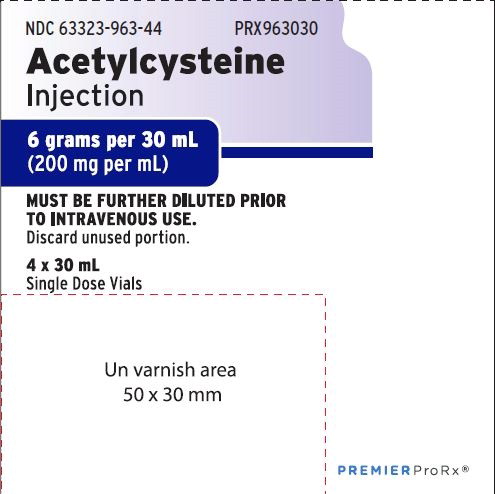
Acetylcysteine 200 mg/mL Injection, Solution — NDC 63323-963-44 (Billing 63323-0963-44)
This is a package of Acetylcysteine 200 mg/mL Injection, Solution from Fresenius Kabi USA, LLC, marketed since Nov 2012 and currently FDA-listed.
NDC database record
One package, one record: these facts belong to NDC 63323-963-44 alone.
- Record
- FDA NDC Directory package listing · Human prescription drug
- Code segments
- 63323 labeler · 963 product · 44 package
- Listing certified through
- Dec 31, 2026
- Barcode (UPC-A, from the NDC)
- 3 6332396344 6
- FDA record last changed
- Oct 8, 2026
Other active recalls for Acetylcysteine (different manufacturers) — 2 · tap to view
Identity & classification
Regulatory identifiers FDA, NLM and CMS codes for this package
Drug-database identifiers Medi-Span GPI and First Databank GCN / HICL / AHFS classification
- GSN (GCN sequence number): 024398
- GCN: 04391
- GPI-14 (Medi-Span): 93000007002020
- HICL (First Databank): 000189
- AHFS class code: 48:24.00.00
- RxCUI (RxNorm): 465377
Where does this data come from?
- FDA openFDA NDC Directory · synced Oct 8, 2026
- FDA label on DailyMed · label index refreshed Oct 8, 2026
- RxNorm (NLM RxNav) · catalog refreshed Oct 8, 2026
- Medi-Span GPI (licensed)
- First Databank (licensed) · refreshed Oct 8, 2026
RxNorm drug class
This medicine belongs to the Antidote class.
Where does this data come from?
- RxClass (NLM) · catalog refreshed Oct 8, 2026
Clinical
- It has two main uses. It is an antidote that helps protect the liver after an acetaminophen overdose. In inhaled form, it also helps loosen thick, sticky mucus in many lung conditi...
- The injection is given into a vein by healthcare staff, usually starting with a loading dose. The inhaled solution is breathed in as a mist, often a few times a day. Your prescribe...
- The most common ones are rash, hives, facial flushing and itching. Some people have nausea, vomiting or a fast heartbeat. Mild flushing often fades even while the infusion continue...
- Get help for wheezing, shortness of breath, throat tightness, swelling or feeling faint. These can be signs of a serious allergic reaction. If you have asthma, tell your care team...
Patient education
Supplement & herbal interactions
Some supplements/herbs that may interact with Acetylcysteine (prescription drug) — tap one for details:
Where does this data come from?
- MedlinePlus (NLM) · refreshed Oct 8, 2026
- FDA label on DailyMed · label index refreshed Oct 8, 2026
Ask a licensed pharmacist directly — free, answered by our team.
Pricing
A drug doesn't have one price. Each row is a different public payment system, and none is what you'd pay at the counter — that depends on your insurance. The ⓘ on each row explains what it measures.
| Price system | Per mL | Per package |
|---|---|---|
| Retail pharmacies payNADAC · weekly | Not in the retail survey — common for institutional, discontinued, or low-volume packs. | |
| Medicaid paysCMS SDUD · 12 mo | No recent Medicaid claims on file for this NDC — rare and low-volume NDCs are suppressed in the public data. | |
| Medicare drug plans payPart D · quarterly | No Part D plan price is available for this NDC in our data. | |
| Medicare Part B allowsASP · J0132 | $0.389 / J0132 unit | — |
Where does this data come from?
- CMS NADAC weekly file
- CMS ASP pricing files · refreshed Sep 20, 2026
- CMS Medicaid State Drug Utilization Data · refreshed Oct 9, 2026
- CMS Part D plan pricing files · refreshed Sep 24, 2026
- VA National Acquisition Center price file
Billing & reimbursement
Where does this data come from?
- CMS ASP NDC-HCPCS crosswalk · refreshed Sep 22, 2026
- DMEPDAC NDC-HCPCS crosswalk
- openFDA NSDE billing units · refreshed Oct 7, 2026
Packaging — all sizes for this product
| Package NDC | Description | Marketing start | Marketing end | Status |
|---|---|---|---|---|
| 63323-0963-44 You're viewing this | 4 VIAL, SINGLE-DOSE in 1 CARTON / 30 mL in 1 VIAL, SINGLE-DOSE | 2012-11-09 | — | Active |
| 63323-0963-30 63323-963-30 Main listing | 4 VIAL, SINGLE-DOSE in 1 CARTON / 30 mL in 1 VIAL, SINGLE-DOSE | 2012-11-09 | — | Active |
Pack size FAQ
What quantity is in this package?
What NDC number is used to bill for this package of Acetylcysteine 200 mg/mL Injection, Solution?
Therapeutic equivalents
| Product | Labeler | Pack | NADAC/unit | TE | Status | Price vs. this |
|---|---|---|---|---|---|---|
| Acetylcysteine 200 mg/mL 00143-9433-04 | Hikma | 4 vials | — | AP | FDA listed | — |
| acetylcysteine 200 mg/mL 00574-0805-30 | Padagis | 4 vials | — | AP | FDA listed | — |
| Acetylcysteine 200 mg/mL 14445-0412-04 | Indoco | 4 vials | — | AP | FDA listed | — |
| Acetylcysteine 200 mg/mL 25021-0812-30 | Sagent | 4 vials | — | AP | FDA listed | — |
| Acetylcysteine 6 g/30mL 55150-0259-30 | Eugia | 4 vials | — | AP | FDA listed | — |
| Acetylcysteine 200 mg/mLthis 63323-0963-44 | Fresenius | 4 vials | — | AP | FDA listed | — |
| Acetadote 200 mg/mL 66220-0207-30 | Cumberland | 4 vials | — | AP | FDA listed | — |
| Acetylcysteine 200 mg/mL 68462-0946-12 | Glenmark | 4 vials | — | AP | FDA listed | — |
| Acetylcysteine 200 mg/mL 70069-0788-04 | Somerset | 4 vials | — | AP | FDA listed | — |
| Acetylcysteine 200 mg/mL 70594-0111-02 | Xellia | 4 vials | — | AP | FDA listed | — |
| Acetylcysteine 200 mg/mL 83270-0001-04 | ONESOURCE | 4 vials | — | AP | FDA listed | — |
Where does this data come from?
- FDA openFDA NDC Directory · synced Oct 8, 2026
- FDA Orange Book · refreshed Oct 3, 2026
- CMS NADAC weekly file
Availability & generic status
This product is an FDA-approved generic. Other versions of the same drug are listed under Therapeutic equivalents, least expensive first.
Where does this data come from?
- FDA Orange Book · refreshed Oct 3, 2026
Inactive Ingredients / Excipients
Inactive ingredients, also called excipients, are components of the drug product other than the active ingredient. They may include fillers, dyes, coatings, preservatives, flavors, or other formulation ingredients.
🧪 Avoiding an ingredient? See Acetylcysteine inactive ingredients by manufacturer: every current product's list side by side, so you can ask your pharmacy for the version that does not list it.
💡 Tap an ingredient (hover on desktop) to see what it is and why it’s used.
-
0.5 mg / 1 mL
UNII 7FLD91C86K
Edetate disodium is a chemical compound that binds and removes certain metal ions. In medicines, it acts as a preservative and stabilizer by preventing metals like calcium from interfering with the product's shelf life and consistency.
-
UNII 55X04QC32I
A strong alkaline chemical used to adjust and maintain the pH balance of liquid medicines. It helps keep the medicine stable and ensures it stays effective during storage.
-
UNII 059QF0KO0R
Water is a liquid solvent that dissolves and mixes ingredients together in liquid medicines, syrups, and injections. It helps distribute the active drug evenly throughout the product.
3 inactive ingredients listed in the exact product block matched to this NDC.
Where does this data come from?
ingredient classCode="IACT" elements from the exact product block matched by this NDC. Label-section narrative from DailyMed / the openFDA label index is shown separately when available.- FDA label on DailyMed · label index refreshed Oct 8, 2026
- FDA openFDA NDC Directory · synced Oct 8, 2026
Inactive ingredient FAQ
Are inactive ingredients the same for every manufacturer?
Why might an inactive ingredient be missing?
Can inactive ingredients matter?
Manufacturer & labeler
More NDCs from Fresenius Kabi USA, LLC labeler code 63323
- Bacteriostatic Sodium Chloride 9 mg/mL Injection NDC 63323-924-10
- Romidepsin Kit NDC 63323-926-88
- VASOPRESSIN 20 [USP'U]/mL Injection, Solution NDC 63323-930-01
- Norepinephrine Bitartrate 1 mg/mL Solution NDC 63323-940-04
- SUCCINYLCHOLINE CHLORIDE 20 mg/mL Injection, Solution NDC 63323-943-10
- Zoledronic Acid 4 mg/5mL Injection NDC 63323-961-98
- Potassium Chloride 2 meq/mL Injection, Solution, Concentrate NDC 63323-965-05
- Zoledronic Acid 5 mg/100mL Injection, Solution NDC 63323-966-00
- Potassium Chloride 2 meq/mL Injection, Solution, Concentrate NDC 63323-967-30
- BENZTROPINE MESYLATE 1 mg/mL Injection, Solution NDC 63323-970-02
- Fosaprepitant 150 mg/5mL Injection, Powder, Lyophilized, For Solution NDC 63323-972-10
- Piperacillin and Tazobactam 2 g/10mL; .25 g/10mL Injection, Powder, Lyophilized, For Solution NDC 63323-981-21
Where does this data come from?
- FDA openFDA NDC Directory · synced Oct 8, 2026
- Drugs@FDA
Full prescribing information FDA SPL
🎯 Indications and Usage ▾
1 INDICATIONS AND USAGE Acetylcysteine Injection is an antidote for acetaminophen overdose indicated to prevent or lessen hepatic injury after ingestion of a potentially hepatotoxic quantity of acetaminophen. Overdose incidences are divided into two types; Acute Ingestion or Repeated Supratherapeutic Ingestion (RSI). [see Dosage and Administration ( 2 ) and Acetaminophen Assays – Interpretation and Methodology -(Acute or Repeated Supratherapeutic Ingestion) ( 1.1 , 1.2 )] . On admission for suspected acetaminophen overdose, a serum blood sample should be drawn at least 4 hours after ingestion to determine the acetaminophen level and will serve as a basis for determining the need for treatment with acetylcysteine.
If the patient presents after 4 hours post-ingestion, the serum acetaminophen sample should be determined immediately. Acetylcysteine Injection should be administered within 8 hours from acetaminophen ingestion for maximal protection against hepatic injury for patients whose serum acetaminophen levels fall above the "possible" toxicity line on the Rumack-Matthew nomogram (line connecting 150 mcg/mL at 4 hours with 37.5 mcg/mL at 12 hours); [see Acetaminophen Assays – Interpretation and Methodology (1.1, 1.2 )] . If the time of ingestion is unknown, or the serum acetaminophen level is not available, cannot be interpreted, or is not available within the 8 hour time interval from acetaminophen ingestion, Acetylcysteine Injection should be administered immediately if 24 hours or less have elapsed from the reported time of ingestion of an overdose of acetaminophen, regardless of the quantity reported to have been ingested.
The aspartate aminotransferase (AST, SGOT), alanine aminotranferase (ALT, SGPT), bilirubin, prothrombin time, creatinine, blood urea nitrogen (BUN), blood glucose, and electrolytes also should be determined in order to monitor hepatic and renal function and electrolyte and fluid balance. NOTE: The critical ingestion-treatment interval for maximal protection against severe hepatic injury is between 0 to 8 hours. Efficacy diminishes progressively after 8 hours and treatment initiation between 15 and 24 hours post-ingestion of acetaminophen yields limited efficacy.
However, it does not appear to worsen the condition of patients and it should not be withheld, since the reported time of ingestion may not be correct. Acetylcysteine Injection is an antidote for acetaminophen overdose indicated to prevent or lessen hepatic injury after ingestion of a potentially hepatotoxic quantity of acetaminophen (1)
1.1Acetaminophen Assays Interpretation and Methodology – Acute Ingestion The acute ingestion of acetaminophen in quantities of 150 mg/kg or greater may result in hepatic toxicity. However, the reported history of the quantity of a drug ingested as an overdose is often inaccurate and is not a reliable guide to therapy of the overdose. Therefore, plasma or serum acetaminophen concentrations, determined as early as possible, but no sooner than four hours following an acute overdose, are essential in assessing the potential risk of hepatotoxicity.
If an assay for acetaminophen cannot be obtained, it is necessary to assume that the overdose is potentially toxic. Interpretation of Acetaminophen Assays When results of the plasma acetaminophen assay are available, refer to the nomogram in Figure 1 to determine if plasma concentration is in the potentially toxic range. Values above the line connecting 200 mcg/mL at 4 hours with 50 mcg/mL at 12 hours (probable line) are associated with a probability of hepatic toxicity if an antidote is not administered.
If the predetoxification plasma level is above the line connecting 150 mcg/mL at 4 hours with 37.5 mcg/mL at 12 hours (possible line), continue with maintenance doses of acetylcysteine. It is better to err on the safe side and thus this line, defining possible toxicity, is plotted 25% below the line defining probable toxicity. If the predetoxification plasma level is belo… [Excerpted — this section continues on DailyMed.]
⏱️ Dosage and Administration ▾
2 DOSAGE AND ADMINISTRATION The total dose of Acetylcysteine Injection is 300 mg/kg given as 3 separate doses and administered over a total of 21 hours. Please refer to the guidelines below for dose preparation based upon patient weight. The total volume administered should be adjusted for patients less than 40 kg and for those requiring fluid restriction (see Tables 1 and 2).
The total dose of Acetylcysteine Injection is 300 mg/kg given as 3 separate doses and administered over a total of 21 hrs. Please refer to the guidelines below for dose preparation based upon patient weight. Dosing for patients who weigh 5 kg to 20 kg ( 2.1 ): Loading Dose : 150 mg/kg diluted in 3 mL/kg of diluent* administered over 1 hr Second Dose : 50 mg/kg diluted in 7 mL/kg of diluent* administered over 4 hrs Third Dose : 100 mg/kg diluted in 14 mL/kg of diluent* administered over 16 hrs Dosing for patients who weigh 21 kg to 40 kg ( 2.1 ): Loading Dose : 150 mg/kg diluted in 100 mL of diluent* administered over 1 hr Second Dose : 50 mg/kg diluted in 250 mL of diluent* administered over 4 hrs Third Dose : 100 mg/kg diluted in 500 mL of diluent* administered over 16 hrs Dosing for patients who weigh 41 kg to 100 kg ( 2.1 ): Loading Dose : 150 mg/kg diluted in 200 mL of diluent* administered over 1 hr Second Dose : 50 mg/kg diluted in 500mL of diluent* administered over 4 hrs Third Dose : 100 mg/kg diluted in 1,000 mL of diluent* administered over 16 hrs * Acetylcysteine Injection is compatible with the following diluents; 5% Dextrose in Water, 0.45% Sodium Chloride Injection, and Sterile Water for Injection Dosing for patients who weigh more than 100 kg ( 2.1 ): No specific studies have been conducted to evaluate the use of or necessity of dosing adjustments in patients weighing over 100 kg.
Limited information is available regarding the dosing requirements of patients that weigh more than 100 kg. The dose of Acetylcysteine Injection recommended in these patients should be a loading dose of 15,000 mg infused over one hour followed by a first maintenance dose of 5,000 mg over 4 hrs and a second maintenance dose of 10,000 mg over 16 hrs.
2.1Administration Instructions (Three-Bag Method: Loading, Second and Third Dose) Dosing for Patients who weigh 5 kg to 20 kg ( Table 1 ): Loading Dose: 150 mg/kg diluted in 3 mL/kg of diluent* administered over 1 hr Second Dose: 50 mg/kg diluted in 7 mL/kg of diluent* administered over 4 hrs Third Dose: 100 mg/kg diluted in 14 mL/kg of diluent* administered over 16 hrs Table 1. Three Bag Method Dosage Guide by Weight in Patients 5 kg to 20 kg Body Weight (kg) Bag 1 (loading dose): 150 mg/kg in 3 mL/kg of diluent Acetylcysteine Injection is compatible with the following diluents; 5% Dextrose in Water, 0.45% Sodium Chloride Injection, and Sterile Water for Injection. infused over 1 hour Bag 2 (second dose): 50 mg/kg in 7mL/kg of diluent infused over 4 hours Bag 3 (third dose): 100 mg/kg diluted in 14 mL/kg of diluent infused over 16 hours Acetylcysteine Injection Total Dose Diluent volume Acetylcysteine Injection Total Dose Diluent volume Acetylcysteine Injection Total Dose Diluent volume 5 kg 750 mg 15 mL 250 mg 35 mL 500 mg 70 mL 10 kg 1,500 mg 30 mL 500 mg 70 mL 1,000 mg 140 mL 15 kg 2,250 mg 45 mL 750 mg 105 mL 1,500 mg 210 mL 20 kg 3,000 mg 60 mL 1,000 mg 140 mL 2,000 mg 280 mL See also Section
2.2Volume Adjustment: Patients less than 40 kg and Requiring Fluid Restriction Dosing for patients who weigh 21 kg to 40 kg ( Table 2 ): Loading Dose: 150 mg/kg diluted in 100 mL of diluent* administered over 1 hr Second Dose: 50 mg/kg diluted in 250 mL of diluent* administered over 4 hrs Third Dose: : 100 mg/kg diluted in 500 mL of diluent* administered over 16 hrs Table 2. Three Bag Method Dosage Guide by Weight in Patients 21 kg to 40 kg Body Weight (kg) Bag 1 (loading dose): 150 mg/kg in 100 mL of diluent Acetylcysteine Injection is compatible with the following diluents; 5% Dextrose in Water 0.45% Sodium Chloride Inje… [Excerpted — this section continues on DailyMed.]
💊 Dosage Forms and Strengths ▾
3 DOSAGE FORMS AND STRENGTHS Each single dose vial contains 6g/30mL (200 mg/mL) of Acetylcysteine. Acetylcysteine Injection is sterile and can be used for intravenous administration. Each single dose vial contains 6 g/30 mL (200 mg/mL), Acetylcysteine Injection ( 3 )
⛔ Contraindications ▾
4 CONTRAINDICATIONS Acetylcysteine Injection is contraindicated in patients with previous anaphylactoid reactions to acetylcysteine. Patients with previous anaphylactoid reaction to acetylcysteine ( 4 )
⚠️ Warnings and Cautions ▾
5 WARNINGS AND PRECAUTIONS Monitor as acute flushing and erythema of the skin may occur; usually associated with the loading dose; often resolves spontaneously despite continued infusion ( 5.1 ) Monitor for serious anaphylactoid reactions; infusion may be interrupted until treatment of anaphylactoid symptoms has been initiated ( 5.1 ) Should be used with caution in patients with asthma, or where there is a history of bronchospasm ( 5.2 ) Total volume administered should be adjusted for patients less than 40 kg and for those requiring fluid restriction ( 5.3 )
5.1Anaphylactoid Reactions Serious anaphylactoid reactions, including death in a patient with asthma, have been reported in patients administered acetylcysteine intravenously. Acute flushing and erythema of the skin may occur in patients receiving acetylcysteine intravenously. These reactions usually occur 30 to 60 minutes after initiating the infusion and often resolve spontaneously despite continued infusion of acetylcysteine.
Anaphylactoid reactions (defined as the occurrence of an acute hypersensitivity reaction during acetylcysteine administration including rash, hypotension, wheezing, and/or shortness of breath) have been observed in patients receiving intravenous acetylcysteine for acetaminophen overdose and occurred soon after initiation of the infusion [see Adverse Reactions ( 6.1 )]. If a reaction to acetylcysteine involves more than simply flushing and erythema of the skin, it should be treated as an anaphylactoid reaction. This usually entails administering antihistaminic drugs and in severe cases may require administration of epinephrine.
In addition, the acetylcysteine infusion may be interrupted until treatment of the anaphylactoid symptoms has been initiated and then carefully restarted. If the anaphylactoid reaction returns upon reinitiation of treatment or increases in severity, intravenous acetylcysteine should be discontinued and alternative patient management should be considered.
5.2Monitoring Patients with Asthma Acetylcysteine Injection should be used with caution in patients with asthma, or where there is a history of bronchospasm.
5.3Volume Adjustment: Patients less than 40 kg and Requiring Fluid Restriction The total volume administered should be adjusted for patients less than 40 kg and for those requiring fluid restriction. To avoid fluid overload, the volume of diluent should be reduced as needed [see Dosage and Administration ( 2 )]. If volume is not adjusted fluid overload can occur, potentially resulting in hyponatremia, seizure and death.
For specific treatment information regarding the clinical management of acetaminophen overdose, please contact your regional poison center at 1-800-222-1222, or alternatively, a special health professional assistance line for acetaminophen overdose at 1-800-525-6115.
🤒 Adverse Reactions ▾
6 ADVERSE REACTIONS Most common adverse reactions (incidence >2%) are rash, urticaria/facial flushing and pruritus 6.1 ) To report SUSPECTED ADVERSE REACTIONS, contact Fresenius Kabi USA, LLC at 1-800-551-7176 or FDA at 1-800-FDA-1088 or www.fda.gov/medwatch .
6.1Clinical Studies Experience Because clinical trials are conducted under widely varying conditions, adverse reaction rates observed in the clinical trials of a drug cannot be directly compared to rates in the clinical trials of another drug and may not reflect the rates observed in practice. In the literature the most frequently reported adverse reactions attributed to intravenous acetylcysteine administration were rash, urticaria and pruritus. The frequency of adverse reactions has been reported to be between 0.2% and 20.8%, and they most commonly occur during the initial loading dose of acetylcysteine.
Loading Dose/Infusion Rate Study The incidence of drug-related adverse reactions occurring within the first 2 hours following acetylcysteine administration reported in a randomized study in patients with acetaminophen poisoning is presented in Table 5 by preferred term. In this study patients were randomized to a 15-minute or a 60-minute loading dose regimen. Within the first 2 hours following intravenous acetylcysteine administration, 17% developed an anaphylactoid reaction (18% in the 15-minute treatment group; 14% in the 60-minute treatment group) in this randomized, open-label, multi-center clinical study conducted in Australia to compare the rates of anaphylactoid reactions between two rates of infusion for the intravenous acetylcysteine loading dose [ see Warnings (Section 5 ) and Clinical Studies - Loading Dose/Infusion Rate Study (Section 14 ) ] .
Table 5. Incidence of Drug-Related Adverse Reactions Occurring Within the First 2 Hours Following Study Drug Administration by Preferred Term: Loading Dose/Infusion Rate Study Treatment Group 15-min 60-min Number of Patients n=109 n=71 Cardiac disorders 5 (5%) 2 (3%) Severity: Tachycardia NOS Unkn Mild Moderate Severe Unkn Mild Moderate Severe 4 (4%) 1 (1%) 2 (3%) Gastrointestinal disorders 16 (15%) 7 (10%) Severity: Nausea Vomiting NOS Unkn Mild Moderate Severe Unkn Mild Moderate Severe 1(1%) 6 (6%) 1 (1%) 1 (1%) 2 (2%) 11 (10%) 2 (3%) 4 (6%) Immune System Disorders 20 (18%) 10 (14%) Severity: Anaphylactoid reaction Unkn Mild Moderate Severe Unkn Mild Moderate Severe 2(2%) 6 (6%) 11 (10%) 1 (1%) 4 (6%) 5 (7%) 1 (1%) Respiratory, thoracic and mediastinal disorders 2 (2%) 2 (3%) Severity: Pharyngitis Rhinorrhoea Rhonchi Throat tightness Unkn Mild Moderate Severe Unkn Mild Moderate Severe 1 (1%) 1 (1%) 1 (1%) 1 (1%) Skin & subcutaneous tissue disorders 6 (6%) 5 (7%) Severity: Pruritus Rash NOS Unkn Mild Moderate Severe Unkn Mild Moderate Severe 1 (1%) 2 (3%) 3 (3%) 2 (2%) 3 (4%) Vascular disorders 2 (2%) 3 (4%) Severity: Flushing Unkn Mild Moderate Severe Unkn Mild Moderate Severe 1 (1%) 1 (1%) 2 (3%) 1 (1%) Unkn=Unknown Postmarketing Safety Study A large multi-center study was performed in Canada where data were collected from patients who were treated with intravenous acetylcysteine for acetaminophen overdose between 1980 and 2005.
This study evaluated 4709 adult cases and 1905 pediatric cases. The incidence of anaphylactoid reactions in adult (overall incidence 7.9%) and pediatric (overall incidence 9.5%) patients is presented in Tables 6 and 7 . Table 6.Distribution of reported reactions in adult patients receiving intravenous acetylcysteine Incidence (%) Reaction % of Patients (n=4709) Urticaria/Facial Flushing 6.1% Pruritus 4.3% Respiratory Symptoms Respiratory symptoms are defined as presence of any of the following: cough, wheezing, stridor, shortness of breath, chest tightness, respiratory distress, or bronchospasm.
1.9% Edema 1.6% Hypotension 0.1% Anaphylaxis 0.1% Table 7 Distribution of reported reactions in pediatric patients receiving intravenous acetylcysteine Incidence (%) Reaction % of Patients (n=1905)… [Excerpted — this section continues on DailyMed.]
🔄 Drug Interactions ▾
7 DRUG INTERACTIONS No drug-drug interaction studies have been conducted. No drug-drug interaction studies have been conducted ( 7 )
👥 Use in Specific Populations ▾
8 USE IN SPECIFIC POPULATIONS Pregnancy: This drug should be used during pregnancy only if clearly needed ( 8.1 ) Nursing Mothers: Unknown if drug is excreted in human milk ( 8.3 ) Pediatric Use: See dose adjustment for patients < 40 kg ( 2 )
8.1Pregnancy Pregnancy Category B There are no adequate and well-controlled studies of Acetylcysteine Injection in pregnant women. However, limited case reports of pregnant women exposed to acetylcysteine during various trimesters did not report any adverse maternal, fetal or neonatal outcomes. There are published reports on four pregnant women with acetaminophen toxicity, who were treated with oral or intravenous acetylcysteine at the time of delivery.
Acetylcysteine crossed the placenta and was measurable following delivery in serum and cord blood of three viable infants and in cardiac blood of a fourth infant at autopsy (22 weeks gestational age who died 3 hours after birth). No adverse sequelae developed in the three viable infants. All mothers recovered and none of the infants had evidence of acetaminophen poisoning.
Reproduction studies were performed in rats at oral doses up to 2,000 mg/kg/day (1.1 times the recommended total human intravenous dose of 300 mg/kg based on body surface area comparison) and in rabbits at oral doses up to 1,000 mg/kg/day (1.1 times the recommended total human intravenous dose of 300 mg/kg based on body surface area comparison). No effects on fertility or harm to the fetus due to acetylcysteine were observed.
8.3Nursing Mothers It is not known whether Acetylcysteine Injection is present in human milk. Because many drugs are excreted in human milk, caution should be exercised when acetylcysteine is administered to a nursing woman. Based on the pharmacokinetics of acetylcysteine, it should be nearly completely cleared 30 hours after administration. Nursing women may consider resuming nursing 30 hours after administration.
8.4Pediatric Use No adverse effects were noted during intravenous infusion with acetylcysteine at a mean rate of 4.2 mg/kg/h for 24 hours to 10 preterm newborns ranging in gestational age from 25 to 31 weeks and in weight from 500 to 1380 grams in one study or in 6 newborns ranging in gestational age from 26 to 30 weeks and in weight from 520 to 1335 grams infused with acetylcysteine at 0.1 to 1.3 mg/kg/h for 6 days. Elimination of acetylcysteine was slower in these infants than in adults; mean elimination half-life was 11 hours.
There are no adequate and well-controlled studies in pediatric patients.
8.5Geriatric Use The clinical studies do not provide a sufficient number of geriatric subjects to determine whether the elderly respond differently.
🤰 Pregnancy ▾
8.1Pregnancy Pregnancy Category B There are no adequate and well-controlled studies of Acetylcysteine Injection in pregnant women. However, limited case reports of pregnant women exposed to acetylcysteine during various trimesters did not report any adverse maternal, fetal or neonatal outcomes. There are published reports on four pregnant women with acetaminophen toxicity, who were treated with oral or intravenous acetylcysteine at the time of delivery.
Acetylcysteine crossed the placenta and was measurable following delivery in serum and cord blood of three viable infants and in cardiac blood of a fourth infant at autopsy (22 weeks gestational age who died 3 hours after birth). No adverse sequelae developed in the three viable infants. All mothers recovered and none of the infants had evidence of acetaminophen poisoning.
Reproduction studies were performed in rats at oral doses up to 2,000 mg/kg/day (1.1 times the recommended total human intravenous dose of 300 mg/kg based on body surface area comparison) and in rabbits at oral doses up to 1,000 mg/kg/day (1.1 times the recommended total human intravenous dose of 300 mg/kg based on body surface area comparison). No effects on fertility or harm to the fetus due to acetylcysteine were observed.
🧒 Pediatric Use ▾
8.4Pediatric Use No adverse effects were noted during intravenous infusion with acetylcysteine at a mean rate of 4.2 mg/kg/h for 24 hours to 10 preterm newborns ranging in gestational age from 25 to 31 weeks and in weight from 500 to 1380 grams in one study or in 6 newborns ranging in gestational age from 26 to 30 weeks and in weight from 520 to 1335 grams infused with acetylcysteine at 0.1 to 1.3 mg/kg/h for 6 days. Elimination of acetylcysteine was slower in these infants than in adults; mean elimination half-life was 11 hours.
There are no adequate and well-controlled studies in pediatric patients.
🧓 Geriatric Use ▾
8.5Geriatric Use The clinical studies do not provide a sufficient number of geriatric subjects to determine whether the elderly respond differently.
🆘 Overdosage ▾
10 OVERDOSAGE Single intravenous doses of acetylcysteine at 1000 mg/kg in mice, 2445 mg/kg in rats, 1500 mg/kg in guinea pigs, 1200 mg/kg in rabbits and 500 mg/kg in dogs were lethal. Symptoms of acute toxicity were ataxia, hypoactivity, labored respiration, cyanosis, loss of righting reflex and convulsions.
🧬 Clinical Pharmacology ▾
12 CLINICAL PHARMACOLOGY
12.1Mechanism of Action Acetaminophen Overdose: Acetaminophen is absorbed from the upper gastrointestinal tract with peak plasma levels occurring between 30 and 60 minutes after therapeutic doses and usually within 4 hours following an overdose. It is extensively metabolized in the liver to form principally the sulfate and glucoronide conjugates which are excreted in the urine. A small fraction of an ingested dose is metabolized in the liver by isozyme CYP2E1 of the cytochrome P-450 mixed function oxidase enzyme system to form a reactive, potentially toxic, intermediate metabolite.
The toxic metabolite preferentially conjugates with hepatic glutathione to form nontoxic cysteine and mercapturic acid derivatives, which are then excreted by the kidney. Recommended therapeutic doses of acetaminophen are not believed to saturate the glucuronide and sulfate conjugation pathways and therefore are not expected to result in the formation of sufficient reactive metabolite to deplete glutathione stores. However, following ingestion of a large overdose, the glucuronide and sulfate conjugation pathways are saturated resulting in a larger fraction of the drug being metabolized via the cytochrome P-450 pathway and therefore, the amount of acetaminophen metabolized to the reactive intermediate increases.
The increased formation of the reactive metabolite may deplete the hepatic stores of glutathione with subsequent binding of the metabolite to protein molecules within the hepatocyte resulting in cellular necrosis. Acetylcysteine Intravenous Treatment: Acetylcysteine has been shown to reduce the extent of liver injury following acetaminophen overdose. It is most effective when given early, with benefit seen principally in patients treated within 8-10 hours of the overdose.
Acetylcysteine likely protects the liver by maintaining or restoring the glutathione levels, or by acting as an alternate substrate for conjugation with, and thus detoxification of, the reactive metabolite.
12.3Pharmacokinetics Distribution: The steady-state volume of distribution (Vd ss ) and the protein binding for acetylcysteine were reported to be 0.47 liter/kg and 83%, respectively. Metabolism: Acetylcysteine may form cysteine, disulfides and conjugates in vivo (N, N'-diacetylcysteine, N-acetylcysteine-cysteine, N-acetylcysteine- glutathione, N-acetylcysteine-protein, etc). Based on published data, it was reported that after an oral dose of 35 S-acetylcysteine, about 22% of total radioactivity was excreted in urine after 24 hours.
No metabolites were identified. Elimination: After a single intravenous dose of acetylcysteine, the plasma concentration of total acetylcysteine declined in a poly-exponential decay manner with a mean terminal half-life (T 1/2 ) of 5.6 hours. The mean clearance (CL) for acetylcysteine was reported to be 0.11 liter/hr/kg and renal CL constituted about 30% of total CL.
Special Populations: Gender: Adequate information is not available to assess if there are differences in pharmacokinetics (PK) between males and females. Pediatric: The mean elimination T 1/2 of acetylcysteine is longer in newborns (11 hours) than in adults (5.6 hours). Pharmacokinetic information is not available in other age groups.
Pregnant Women: In four pregnant women with acetaminophen toxicity, oral or I.V. acetylcysteine was administered at the time of delivery. Acetylcysteine was detected in the cord blood of 3 viable infants and in cardiac blood of a fourth infant sampled at autopsy [see Pregnancy (8.1) ] . Hepatic Impairment: In subjects with severe liver damage, i.e., cirrhosis due to alcohol (with Child-Pugh score of 7 to 13), or primary and/or secondary biliary cirrhosis (with Child-Pugh score of 5 to 7), mean T 1/2 increased by 80% while mean CL decreased by 30% compared to the control group.
Renal Impairment: Pharmacokinetic information is not available in patients with renal impairment. Geriatric Patients: Adequate information on acetylc… [Excerpted — this section continues on DailyMed.]
🧬 Mechanism of Action ▾
12.1Mechanism of Action Acetaminophen Overdose: Acetaminophen is absorbed from the upper gastrointestinal tract with peak plasma levels occurring between 30 and 60 minutes after therapeutic doses and usually within 4 hours following an overdose. It is extensively metabolized in the liver to form principally the sulfate and glucoronide conjugates which are excreted in the urine. A small fraction of an ingested dose is metabolized in the liver by isozyme CYP2E1 of the cytochrome P-450 mixed function oxidase enzyme system to form a reactive, potentially toxic, intermediate metabolite.
The toxic metabolite preferentially conjugates with hepatic glutathione to form nontoxic cysteine and mercapturic acid derivatives, which are then excreted by the kidney. Recommended therapeutic doses of acetaminophen are not believed to saturate the glucuronide and sulfate conjugation pathways and therefore are not expected to result in the formation of sufficient reactive metabolite to deplete glutathione stores. However, following ingestion of a large overdose, the glucuronide and sulfate conjugation pathways are saturated resulting in a larger fraction of the drug being metabolized via the cytochrome P-450 pathway and therefore, the amount of acetaminophen metabolized to the reactive intermediate increases.
The increased formation of the reactive metabolite may deplete the hepatic stores of glutathione with subsequent binding of the metabolite to protein molecules within the hepatocyte resulting in cellular necrosis. Acetylcysteine Intravenous Treatment: Acetylcysteine has been shown to reduce the extent of liver injury following acetaminophen overdose. It is most effective when given early, with benefit seen principally in patients treated within 8-10 hours of the overdose.
Acetylcysteine likely protects the liver by maintaining or restoring the glutathione levels, or by acting as an alternate substrate for conjugation with, and thus detoxification of, the reactive metabolite.
📦 How Supplied / Storage and Handling ▾
16 HOW SUPPLIED/STORAGE AND HANDLING Acetylcysteine Injection is available as a 20% solution (200 mg/mL) in 30 mL single dose glass vials. Each single dose vial contains 6 g/30 mL (200 mg/mL) of Acetylcysteine. Acetylcysteine Injection is sterile and can be used for intravenous administration.
Acetylcysteine Injection is available as: Product Code Unit of Sale Strength Each PRX963030 NDC 63323-963-44 Unit of 4 20% (6 grams per 30 mL) (200 mg per mL) NDC 63323-963-41 30 mL Single Dose glass vial Do not use previously opened vials for intravenous administration. Note: The color of Acetylcysteine Injection may turn from essentially colorless to a slight pink or purple once the stopper is punctured. The color change does not affect the quality of the product.
The stopper in the Acetylcysteine Injection vial is formulated with a synthetic base-polymer and does not contain Natural Rubber Latex, Dry Natural Rubber, or blends of Natural Rubber. Storage Store unopened vials at controlled room temperature, 20° to 25°C (68° to 77°F) [see USP Controlled Room Temperature].
📋 Description ▾
11 DESCRIPTION Acetylcysteine injection is an intravenous antidote for the treatment of acetaminophen overdose. Acetylcysteine is the nonproprietary name for the N-acetyl derivative of the naturally occurring amino acid, L-cysteine (N-acetyl-L-cysteine, NAC). The compound is a white crystalline powder, which melts in the range of 104° to 110°C and has a very slight odor.
The molecular formula of the compound is C 5 H 9 NO 3 S, and its molecular weight is 163.2. Acetylcysteine has the following structural formula: Acetylcysteine Injection is supplied as a sterile solution in vials containing 20% w/v (200 mg/mL) acetylcysteine. The pH of the solution ranges from 6.0 to 7.5.
Acetylcysteine Injection contains the following inactive ingredients: 0.5 mg/mL disodium edetate, sodium hydroxide (used for pH adjustment), and water for injection, USP. Figure 3
💬 Information for Patients ▾
17 PATIENT COUNSELING INFORMATION Sensitivity to acetylcysteine: Patients should be advised to report to their physician any history of sensitivity to acetylcysteine [see Contraindications ( 4 )] Asthma: Patients should be advised to report to their physician any history of asthma [see Warnings and Precautions ( 5 )] For all questions concerning adverse reactions associated with the use of this product or for Inquiries concerning our products, please contact us at 1-800-551-7176. For specific treatment information regarding the clinical management of acetaminophen overdose, please contact your regional poison center at 1-800-222-1222, or alternatively, a special health professional assistance line for acetaminophen overdose at 1-800-525-6115.
PREMIERProRx® is a registered trademark of Premier Healthcare Alliance, L.P., used under license. Manufactured for: Fresenius Kabi Lake Zurich, IL 60047 Made in India www.fresenius-kabi.com/us 451618/Issued: February 2019 prxlogo
🍼 Nursing Mothers ▾
8.3Nursing Mothers It is not known whether Acetylcysteine Injection is present in human milk. Because many drugs are excreted in human milk, caution should be exercised when acetylcysteine is administered to a nursing woman. Based on the pharmacokinetics of acetylcysteine, it should be nearly completely cleared 30 hours after administration. Nursing women may consider resuming nursing 30 hours after administration.
🧬 Pharmacokinetics ▾
12.3Pharmacokinetics Distribution: The steady-state volume of distribution (Vd ss ) and the protein binding for acetylcysteine were reported to be 0.47 liter/kg and 83%, respectively. Metabolism: Acetylcysteine may form cysteine, disulfides and conjugates in vivo (N, N'-diacetylcysteine, N-acetylcysteine-cysteine, N-acetylcysteine- glutathione, N-acetylcysteine-protein, etc). Based on published data, it was reported that after an oral dose of 35 S-acetylcysteine, about 22% of total radioactivity was excreted in urine after 24 hours.
No metabolites were identified. Elimination: After a single intravenous dose of acetylcysteine, the plasma concentration of total acetylcysteine declined in a poly-exponential decay manner with a mean terminal half-life (T 1/2 ) of 5.6 hours. The mean clearance (CL) for acetylcysteine was reported to be 0.11 liter/hr/kg and renal CL constituted about 30% of total CL.
Special Populations: Gender: Adequate information is not available to assess if there are differences in pharmacokinetics (PK) between males and females. Pediatric: The mean elimination T 1/2 of acetylcysteine is longer in newborns (11 hours) than in adults (5.6 hours). Pharmacokinetic information is not available in other age groups.
Pregnant Women: In four pregnant women with acetaminophen toxicity, oral or I.V. acetylcysteine was administered at the time of delivery. Acetylcysteine was detected in the cord blood of 3 viable infants and in cardiac blood of a fourth infant sampled at autopsy [see Pregnancy (8.1) ] . Hepatic Impairment: In subjects with severe liver damage, i.e., cirrhosis due to alcohol (with Child-Pugh score of 7 to 13), or primary and/or secondary biliary cirrhosis (with Child-Pugh score of 5 to 7), mean T 1/2 increased by 80% while mean CL decreased by 30% compared to the control group.
Renal Impairment: Pharmacokinetic information is not available in patients with renal impairment. Geriatric Patients: Adequate information on acetylcysteine PK in geriatric patients is not available.
🔬 Clinical Studies ▾
14 CLINICAL STUDIES Loading Dose/Infusion Rate Study A randomized, open-label, multi-center clinical study was conducted in Australia to compare the rates of anaphylactoid reactions between two rates of infusion for the intravenous acetylcysteine loading dose. One hundred nine subjects were randomized to a 15 minute infusion rate and seventy-one subjects were randomized to a 60 minute infusion rate. The loading dose was 150 mg/kg followed by a maintenance dose of 50 mg/kg over 4 hours and then 100 mg/kg over 16 hours.
Of the 180 patients, 27% were male and 73% were female. Ages ranged from 15 to 83 years, with the mean age being 29.9 years (±13.0). A subgroup of 58 subjects (33 in the 15-minute treatment group; 25 in the 60-minute treatment group) was treated within 8 hours of acetaminophen ingestion.
No hepatotoxicity occurred within this subgroup; however with 95% confidence, the true hepatotoxicity rates could range from 0% to 9% for the 15-minute treatment group and from 0% to 12% for the 60-minute treatment group. Observational Study An open-label, observational database contained information on 1,749 patients who sought treatment for acetaminophen overdose over a 16-year period. Of the 1,749 patients, 65% were female, 34% were male and less than 1% was transgender.
Ages ranged from 2 months to 96 years, with 71.4% of the patients falling in the 16 to 40 year old age bracket. A total of 399 patients received acetylcysteine treatment. A post-hoc analysis identified 56 patients who (1) were at high or probable risk for hepatotoxicity (APAP greater than 150 mg/L at the four hours line according to the Australian nomogram) and (2) had a liver function test.
Of the 53 patients who were treated with intravenous acetylcysteine (300 mg/kg intravenous acetylcysteine administered over 20 to 21 hours) within 8 hours, two (4%) developed hepatotoxicity (AST or ALT greater than 1,000 U/L). Twenty-one of 48 (44%) patients treated with acetylcysteine after 15 hours developed hepatotoxicity. The actual number of hepatotoxicity outcomes may be higher than what is reported here.
For patients with multiple admissions for acetaminophen overdose, only the first overdose treated with intravenous acetylcysteine was examined. Hepatotoxicity may have occurred in subsequent admissions. Evaluable data were available from a total of 148 pediatric patients (less than 16 years of age) who were admitted for poisoning following ingestion of acetaminophen, of whom 23 were treated with intravenous acetylcysteine.
Of the 23 patients who received intravenous acetylcysteine treatment, 3 patients (13%) had an adverse reaction (anaphylactoid reaction, rash and flushing, transient erythema). There were no deaths of pediatric patients. None of the pediatric patients receiving intravenous acetylcysteine developed hepatotoxicity while two patients not receiving intravenous acetylcysteine developed hepatotoxicity.
The number of pediatric patients is too small to provide a statistically significant finding of efficacy, however the results appear to be consistent to those observed for adults. Postmarketing Safety Study [ see
6.1 Clinical Studies Experience ]
🧪 Nonclinical Toxicology ▾
13 NONCLINICAL TOXICOLOGY
13.1Carcinogenesis, Mutagenesis, Impairment of Fertility Long-term studies in animals have not been performed to evaluate the carcinogenic potential of acetylcysteine. Acetylcysteine was not genotoxic in the Ames test or the in vivo mouse micronucleus test. It was, however, positive in the in vitro mouse lymphoma cell (L5178Y/TK+/-) forward mutation test.
Treatment of male rats with acetylcysteine at an oral dose of 250 mg/kg/day for 15 weeks (0.1 times the recommended human dose of 300 mg/kg based on body surface comparison) did not affect the fertility or general reproductive performance.
📄 Carcinogenesis, Mutagenesis, Impairment of Fertility ▾
13.1Carcinogenesis, Mutagenesis, Impairment of Fertility Long-term studies in animals have not been performed to evaluate the carcinogenic potential of acetylcysteine. Acetylcysteine was not genotoxic in the Ames test or the in vivo mouse micronucleus test. It was, however, positive in the in vitro mouse lymphoma cell (L5178Y/TK+/-) forward mutation test.
Treatment of male rats with acetylcysteine at an oral dose of 250 mg/kg/day for 15 weeks (0.1 times the recommended human dose of 300 mg/kg based on body surface comparison) did not affect the fertility or general reproductive performance.
📄 Package Label / Principal Display Panel ▾
PACKAGE LABEL - PRINCIPAL DISPLAY - Acetylcysteine 30 mL Single Dose Vial Label NDC 63323-963-41 PRX963030 Acetylcysteine Injection 6 grams per 30 mL (200 mg per mL) MUST BE FURTHER DILUTED PRIOR TO INTRAVENOUS USE. Discard unused portion. 30 mL Single Dose Vial Rx only prxvialPDP
PACKAGE LABEL - PRINCIPAL DISPLAY - Acetylcysteine 30 mL Single Dose Vial Carton Panel NDC 63323-963-44 PRX963030 Acetylcysteine Injection 6 grams per 30 mL (200 mg per mL) MUST BE FURTHER DILUTED PRIOR TO INTRAVENOUS USE. Discard unused portion. 4 x 30 mL Single Dose Vials PREMIERProRx® PRX ctnPDP
Medicaid utilization by pack size
Medicare Part D spend CMS · PART D · 2026 (Q1)
About this NDC listing & data coverage
What data is (and isn’t) available for this NDC — tap to expand
| NDC identity (package / product / labeler codes) | ✓ Available |
| Labeler | ✓ Available |
| Product & package description | ✓ Available |
| Marketing category & status | ✓ Available |
| Active ingredient / dosage form / route | ✓ Available |
| FDA label (SPL via DailyMed) | ✓ Available |
| Package photos | ✓ Available |
| Inactive ingredients (structured) | ✓ Available |
| NADAC pharmacy acquisition price (CMS) | — Not published for this NDC CMS publishes NADAC only for NDCs reported in its retail-pharmacy survey. |
| Orange Book / therapeutic-equivalence data | ✓ Available |
| HCPCS J-code billing crosswalk | ✓ Available |
| Medicaid utilization (CMS SDUD) | — Not published for this NDC CMS reports utilization only for NDCs with Medicaid claims above its privacy threshold. |