
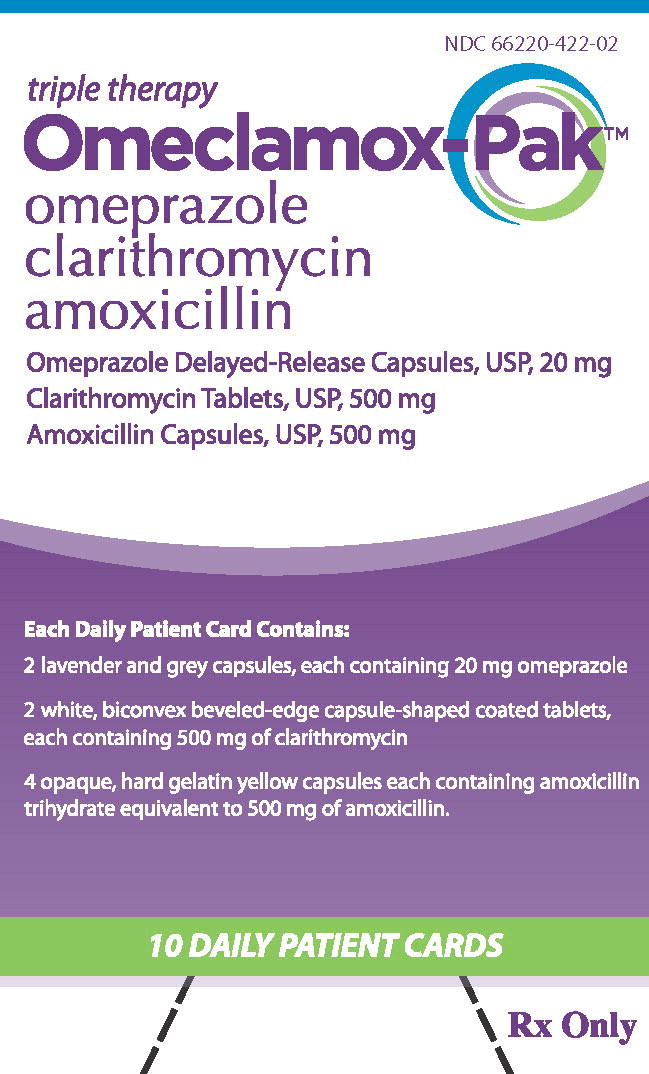
Omeclamox-Pak omeprazole, clarithromycin, amoxicillin Kit, 1 kit — NDC 66220-422-01 (Billing 66220-0422-01)
This is a package of 1 kit of Omeclamox-Pak omeprazole, clarithromycin, amoxicillin Kit from Cumberland Pharmaceuticals Inc., no longer marketed, no longer in the FDA NDC Directory. It is the main listing for this product, which comes in 2 package sizes.
NDC database record
One package, one record: these facts belong to NDC 66220-422-01 alone.
- Record
- FDA NDC Directory package listing · Human prescription drug
- Code segments
- 66220 labeler · 422 product · 01 package
- Billing quantity
- 1 EA per package
- Barcode (UPC-A, from the NDC)
- 3 6622042201 6
- FDA record last changed
- Aug 2, 2026
Identity & classification
Regulatory identifiers FDA, NLM and CMS codes for this package
Drug-database identifiers Medi-Span GPI and First Databank GCN / HICL / AHFS classification
- GSN (GCN sequence number): 069169
- GCN: 32137
- HICL (First Databank): 019017
- AHFS class code: 08:12.12.08
Where does this data come from?
- FDA openFDA NDC Directory · synced Oct 8, 2026
- FDA label on DailyMed · label index refreshed Oct 8, 2026
- RxNorm (NLM RxNav) · catalog refreshed Oct 8, 2026
- Medi-Span GPI (licensed)
- First Databank (licensed) · refreshed Oct 8, 2026
Clinical
Patient education
Supplement & herbal interactions
Where does this data come from?
- MedlinePlus (NLM) · refreshed Oct 8, 2026
- FDA label on DailyMed · label index refreshed Oct 8, 2026
Ask a licensed pharmacist directly — free, answered by our team.
Pricing
A drug doesn't have one price. Each row is a different public payment system, and none is what you'd pay at the counter — that depends on your insurance. The ⓘ on each row explains what it measures.
| Price system | Per each | Per package |
|---|---|---|
| Retail pharmacies payNADAC · weekly | Not in the retail survey — common for institutional, discontinued, or low-volume packs. | |
| Medicaid paysCMS SDUD · 12 mo | No recent Medicaid claims on file for this NDC — rare and low-volume NDCs are suppressed in the public data. | |
| Medicare drug plans payPart D · quarterly | No Part D plan price is available for this NDC in our data. | |
Where does this data come from?
- CMS NADAC weekly file
- CMS ASP pricing files · refreshed Sep 20, 2026
- CMS Medicaid State Drug Utilization Data · refreshed Oct 9, 2026
- CMS Part D plan pricing files · refreshed Sep 24, 2026
- VA National Acquisition Center price file
Packaging — all sizes for this product
| Package NDC | Description | Marketing start | Marketing end | Status |
|---|---|---|---|---|
| 66220-0422-01 You're viewing this Main listing | 1 KIT in 1 BLISTER PACK | 2012-04-27 | — | Inactivated by FDA |
| 66220-0422-02 66220-422-02 | 10 BLISTER PACK in 1 CARTON / 1 KIT in 1 BLISTER PACK | 2012-04-27 | — | Inactivated by FDA |
Pack size FAQ
What quantity is in this package?
What NDC number is used to bill for this package of Omeclamox-Pak omeprazole, clarithromycin, amoxicillin Kit?
Therapeutic equivalents
| Product | Labeler | Pack | NADAC/unit | TE | Status | Price vs. this |
|---|---|---|---|---|---|---|
| Omeclamox-Pakthis 66220-0422-01 | Cumberland | 1 kit | — | — | Discontinued | — |
Where does this data come from?
- FDA openFDA NDC Directory · synced Oct 8, 2026
- FDA Orange Book · refreshed Oct 9, 2026
- CMS NADAC weekly file
Availability & generic status
We did not find an FDA-approved generic match for this exact strength, form and route.
Where does this data come from?
- FDA Orange Book · refreshed Oct 9, 2026
Inactive Ingredients / Excipients
Inactive ingredients, also called excipients, are components of the drug product other than the active ingredient. They may include fillers, dyes, coatings, preservatives, flavors, or other formulation ingredients.
Where does this data come from?
IACT rows and label-wide narrative are kept separate; availability and product-level specificity depend on the submitted label.- FDA label on DailyMed · label index refreshed Oct 8, 2026
- FDA openFDA NDC Directory · synced Oct 8, 2026
Inactive ingredient FAQ
Are inactive ingredients the same for every manufacturer?
Why might an inactive ingredient be missing?
Can inactive ingredients matter?
Manufacturer & labeler
More NDCs from Cumberland Pharmaceuticals Inc. labeler code 66220
- ACETADOTE Acetylcysteine 200 mg/mL Injection, Solution NDC 66220-207-30
- Caldolor ibuprofen 800 mg/200mL Injection NDC 66220-284-22
- Caldolor ibuprofen 800 mg/8mL Injection NDC 66220-287-08
- VIBATIV telavancin hydrochloride 15 mg/mL Injection, Powder, Lyophilized, For Solution NDC 66220-315-11
- Sancuso granisetron 3.1 mg/24h Patch NDC 66220-637-31
- Kristalose lactulose 10 g/10g Powder, For Solution NDC 66220-719-30
- Kristalose lactulose 20 g/20g Powder, For Solution NDC 66220-729-30
Where does this data come from?
- FDA openFDA NDC Directory · synced Oct 8, 2026
- Drugs@FDA
Full prescribing information FDA SPL
🎯 Indications and Usage ▾
1 INDICATIONS AND USAGE OMECLAMOX-PAK, a co-packaged product containing omeprazole, a proton pump inhibitor, clarithromycin, a macrolide antimicrobial, and amoxicillin, a penicillin class antibacterial, is indicated for the treatment of patients with Helicobacter pylori infection and duodenal ulcer disease (active or up to one-year history) to eradicate H. pylori . ( 1 ) To reduce the development of drug-resistant bacteria and maintain the effectiveness of OMECLAMOX-PAK and other antibacterial drugs, OMECLAMOX-PAK should be used only to treat or prevent infections that are proven or strongly suspected to be caused by bacteria.
( 1.2 )
1.1Eradication of Helicobacter pylori in Patients with Active Duodenal Ulcer or History of Duodenal Ulcer Disease OMECLAMOX-PAK (Omeprazole delayed-release capsules, clarithromycin tablets, and amoxicillin capsules taken together) are indicated for the treatment of patients with Helicobacter pylori infection and duodenal ulcer disease (active or one-year history) to eradicate H. pylori in adults. Eradication of H. pylori has been shown to reduce the risk of duodenal ulcer recurrence [ see Clinical Studies ( 14.1 ) ].
1.2Usage To reduce the development of drug-resistant bacteria and maintain the effectiveness of OMECLAMOX-PAK and other antibacterial drugs OMECLAMOX-PAK should be used only to treat or prevent infections that are proven or strongly suspected to be caused by susceptible bacteria. When culture and susceptibility information are available, they should be considered in selecting or modifying antibacterial therapy. In the absence of such data, local epidemiology and susceptibility patterns may contribute to the empiric selection of therapy.
⏱️ Dosage and Administration ▾
2 DOSAGE AND ADMINISTRATION The recommended adult oral dose and regimen is omeprazole delayed-release capsules 20 mg plus clarithromycin 500 mg plus amoxicillin 1000 mg, each given twice daily, for 10 days, in the morning and evening before eating a meal. Inform patients that omeprazole, clarithromycin, and amoxicillin should not be crushed or chewed, and should be swallowed whole. In patients with an ulcer present at the time of initiation of therapy, an additional 18 days of omeprazole 20 mg once daily is recommended for ulcer healing and symptom relief.
Adult regimen: omeprazole 20 mg plus clarithromycin 500 mg plus amoxicillin 1000 mg, each given twice daily for 10 days in the morning and evening before eating a meal. ( 2 ) Advise patients to swallow all tablets and capsules whole. ( 2 ) In patients with an ulcer present at initiation of therapy, an additional 18 days of omeprazole 20 mg once daily is recommended.
( 2 )
💊 Dosage Forms and Strengths ▾
3 DOSAGE FORMS AND STRENGTHS OMECLAMOX-PAK is supplied in a carton containing ten individual daily administration cards. Each card contains: Omeprazole Delayed-Release Capsules, USP, 20 mg Two opaque, hard gelatin lavender and grey capsules, with ‘R 158’ and ‘OMEPRAZOLE 20 mg’ imprinted on the capsules in black ink, containing off-white to pale-yellow, elliptical spherical pellets. Clarithromycin Tablets, USP, 500 mg Two white, biconvex beveled-edge capsule-shaped coated tablets debossed with ‘54 312’ on one side and plain on the other side.
Amoxicillin Capsules, USP, 500 mg Four opaque hard gelatin yellow capsules, marked ‘GG849’. Pack of 10 daily administration cards for morning and evening dosing, each containing ( 3 ): Two omeprazole delayed-release capsules, USP, 20 mg. Two clarithromycin tablets, USP, 500 mg.
Four amoxicillin capsules, USP, 500 mg.
⛔ Contraindications ▾
4 CONTRAINDICATIONS Known hypersensitivity to omeprazole, any macrolide antibiotic, any penicillin, or any component of the formulations. ( 4.1 ) Coadministration with pimozide, lurasidone, ergotamine or dihydroergotamine. ( 4.2 , 7.2 , 7.3 )
4.1Hypersensitivity OMECLAMOX-PAK is contraindicated in the following patients: Known history of hypersensitivity to omeprazole or benzimidazoles, any macrolide antibacterial drug, or any penicillin. Hypersensitivity reactions to omeprazole may include anaphylaxis, anaphylactic shock, angioedema, bronchospasm, acute tubulointerstitial nephritis, and urticaria. Hypersensitivity reactions to clarithromycin may include anaphylaxis, Stevens-Johnson syndrome, and toxic epidermal necrolysis.
Hypersensitivity reactions to amoxicillin may include serum sickness like reactions, erythematous maculopapular rashes, erythema multiforme, Stevens-Johnson syndrome, exfoliative dermatitis, toxic epidermal necrolysis, acute generalized exanthematous pustulosis, hypersensitivity vasculitis and urticaria [ see Warnings and Precautions ( 5.7 ), Adverse Reactions ( 6.3 ) ]. Serious and occasionally fatal hypersensitivity (anaphylactic) reactions have been reported in patients on penicillin therapy. Although anaphylaxis is more frequent following parenteral therapy, it has occurred in patients on oral penicillins.
These reactions are more likely to occur in individuals with a history of penicillin hypersensitivity and/or a history of sensitivity to multiple allergens. Before initiating therapy with amoxicillin, careful inquiry should be made concerning previous hypersensitivity reactions to penicillins, cephalosporins or other allergens.
4.2Serious Drug Interactions OMECLAMOX-PAK is contraindicated in patients taking ergotamine or dihydroergotamine and pimozide. Cardiac arrhythmias, some fatal, have been reported with the use of clarithromycin and/or erythromycin and pimozide. Arrhythmias have included QT prolongation, ventricular tachycardia, ventricular fibrillation, and torsades de pointes, and are most likely due to inhibition of metabolism of these drugs by clarithromycin and/or erythromycin [ see Drug Interactions ( 7.2 , 7.3 ) ].
Coadministration of OMECLAMOX-PAK with lurasidone is contraindicated since it may result in an increase in lurasidone expose and the potential for serious adverse reactions [see Drug Interactions ( 7 )] .
⚠️ Warnings and Cautions ▾
5 WARNINGS AND PRECAUTIONS Embryo-Fetal Toxicity: Based on animal findings for omeprazole and clarithromycin, OMECLAMOX-PAK may cause fetal harm. OMECLAMOX-PAK is not recommended for use in pregnant women except in clinical circumstances when there is no appropriate alternative therapy. ( 5.1 ) Severe Cutaneous Adverse Reactions: Discontinue at the first signs or symptoms of severe cutaneous adverse reactions or other signs of hypersensitivity and consider further evaluation.
( 5.2 ) Colchicine interaction: Concomitant use of clarithromycin and colchicine has resulted in deaths, especially in the elderly with renal insufficiency. Monitor patients for clinical symptoms of colchicine toxicity. ( 5.3 , 7.1 ) Myasthenia gravis: Exacerbation of symptoms and new onset of symptoms reported with clarithromycin.
Monitor patients for symptoms. ( 5.4 ) Clostridioides difficile -associated diarrhea: Reported with use of clarithromycin and amoxicillin; evaluate if diarrhea occurs. ( 5.5 ) Risk of gastric malignancy: Symptomatic response does not preclude concomitant underlying malignancy.
( 5.6 ) Acute Tubulointerstitial Nephritis: has been observed in patients taking proton pump inhibitors (PPIs), including omeprazole. Discontinue OMECLAMOX-PAK and evaluate patients ( 5.7 ) Cutaneous and Systemic Lupus Erythematosus: Mostly cutaneous; new onset or exacerbation of existing disease; discontinue OMECLAMOX- PAK and evaluate ( 5.8 )
5.1Embryo-Fetal Toxicity Clarithromycin, a component of OMECLAMOX-PAK, has demonstrated adverse effects on pregnancy outcomes and/or embryo-fetal development in monkeys, rats, mice, and rabbits at doses that produced plasma concentrations 2 to 17 times the serum concentrations achieved in humans at the maximum recommended human dose. Based on findings in animal studies, OMECLAMOX-PAK is not recommended for use in pregnant women except in clinical circumstances where no alternative therapy is appropriate. If OMECLAMOX-PAK is used during pregnancy, or if pregnancy occurs while the patient is taking this drug, the patient should be apprised of the potential hazard to the fetus [ see Use in Specific Populations ( 8.1 ) ].
5.2Severe Cutaneous Adverse Reactions Severe cutaneous adverse reactions (SCAR), including Stevens-Johnson syndrome (SJS), toxic epidermal necrolysis (TEN), drug reaction with eosinophilia and systemic symptoms (DRESS), and acute generalized exanthematous pustulosis (AGEP) have been reported with the components of OMECLAMOX-PAK: omeprazole, clarithromycin, and amoxicillin [see Adverse Reactions ( 6.3 )] . Discontinue OMECLAMOX-PAK at the first signs or symptoms of SCAR or other signs of hypersensitivity and consider further evaluation.
5.3Colchicine Toxicity with Clarithromycin There have been postmarketing reports of colchicine toxicity, some fatal, with concomitant use of clarithromycin and colchicine, especially in the elderly, some of which occurred in patients with renal insufficiency. Monitor patients for clinical symptoms of colchicine toxicity [ see Drug Interactions ( 7.1 ) ].
5.4Myasthenia Gravis Exacerbation of symptoms of myasthenia gravis and new onset of symptoms of myasthenic syndrome have been reported in patients receiving clarithromycin therapy. Monitor patients for symptoms.
5.5Clostridioides difficile-associated diarrhea Clostridioides difficile -associated diarrhea (CDAD) has been reported with use of clarithromycin and amoxicillin, and may range in severity from mild diarrhea to fatal colitis [ see Adverse Reactions ( 6.3 ) ]. Treatment with antibacterial agents alters the normal flora of the colon leading to overgrowth of C. difficile . C. difficile produces toxins A and B which contribute to the development of CDAD.
Hypertoxin-producing strains of C. difficile cause increased morbidity and mortality, as these infections can be refractory to antimicrobial therapy and may require colectomy. CDAD must be considered in all patients who present with diarrhea following antibioti… [Excerpted — this section continues on DailyMed.]
🤒 Adverse Reactions ▾
6 ADVERSE REACTIONS The following serious adverse reactions are described elsewhere in the labeling: Hypersensitivity [ see Contraindications ( 4.1 ) ] Myasthenia Gravis [ see Warnings and Precautions ( 5.4 ) ] Clostridioides difficile -associated diarrhea [ see Warnings and Precautions ( 5.5 ) ] Acute Tubulointerstitial Nephritis [ see Warnings and Precautions ( 5.7 ) ] Most frequent adverse reactions (> 7%) with triple therapy were diarrhea, taste perversion, and headache. ( 6.1 ) To report SUSPECTED ADVERSE REACTIONS, contact Cumberland Pharmaceuticals Inc. at 1-877-484-2700 or FDA at 1-800-FDA-1088 or www.fda.gov/medwatch.
6.1Clinical Trials Experience Because clinical trials are conducted under widely varying conditions, adverse reaction rates observed in the clinical trials of a drug cannot be directly compared to rates in the clinical trials of another drug and may not reflect the rates observed in practice. In clinical trials using triple therapy with omeprazole, clarithromycin, and amoxicillin, no adverse reactions unique to triple therapy were observed. Adverse reactions observed were limited to those previously reported with omeprazole, clarithromycin, or amoxicillin alone.
The most frequent adverse reactions observed in clinical trials using combination therapy with omeprazole, clarithromycin, and amoxicillin (n = 274) were diarrhea (14%), taste perversion (10%), and headache (7%). None of these occurred at a higher frequency than that reported by patients taking antimicrobial agents alone.
6.2Adverse Reactions from Labeling for the Individual Components of OMECLAMOX-PAK The safety data below reflect exposure to omeprazole delayed-release capsules and clarithromycin worldwide in clinical trials for various indications using doses and durations of therapy that may differ from how they are used as a component of OMECLAMOX-PAK. For complete information on these reactions, see the full prescribing information for omeprazole delayed-release capsules and clarithromycin. Omeprazole : The most common adverse reactions reported (i.e., with an incidence rate ≥ 2%) in 3096 patients from omeprazole delayed-release capsules-treated patients enrolled in clinical trials included headache (6.9%), abdominal pain (5.2%), nausea (4.0%), diarrhea (3.7%), vomiting (3.2%), and flatulence (2.7%).
Additional adverse reactions that were reported with an incidence rate ≥ 1% included acid regurgitation (1.9%), upper respiratory infection (1.9%), constipation (1.5%), dizziness (1.5%), rash (1.5%), asthenia (1.3%), back pain (1.1%), and cough (1.1%). The clinical trial safety profile in patients greater than 65 years of age was similar to that in patients 65 years of age or less. Clarithromycin : The most frequently reported events in adults were diarrhea (3%), nausea (3%), abnormal taste (3%), dyspepsia (2%), abdominal pain/discomfort (2%), and headache (2%).
Most of these events were described as mild or moderate in severity. Of the reported adverse events, only 1% were described as severe. Fewer than 3% of adult patients without mycobacterial infections discontinued therapy because of drug-related side effects.
6.3Post-Marketing Experience with the Individual Components of OMECLAMOX-PAK Because these reactions are voluntarily reported from a population of uncertain size, it is not always possible to reliably estimate their actual frequency or establish a causal relationship to drug exposure. Omeprazole : Body As a Whole: Hypersensitivity reactions including anaphylaxis, anaphylactic shock, angioedema, bronchospasm, interstitial nephritis, urticaria, (see also Skin below); fever; pain; fatigue; malaise. Cardiovascular: Chest pain or angina, tachycardia, bradycardia, palpitations, elevated blood pressure, peripheral edema.
Endocrine: Gynecomastia. Gastrointestinal: Pancreatitis (some fatal), anorexia, irritable colon, fecal discoloration, esophageal candidiasis, mucosal atrophy of the tongue, stomatitis, abdominal swelling, dry mouth. Duri… [Excerpted — this section continues on DailyMed.]
🔄 Drug Interactions ▾
7 DRUG INTERACTIONS Antiarrhythmics: Risk of torsades de pointes and other arrhythmias with concurrent use of clarithromycin and quinidine, disopyramide, and digoxin. Monitor ECGs and serum digoxin concentrations. ( 7.4 ) Oral anticoagulants: Concomitant administration of omeprazole or clarithromycin may potentiate the anticoagulant effects of warfarin and other oral anticoagulants.
Monitor prothrombin times and INR. ( 7.5 ) Atazanavir and nelfinavir: Omeprazole reduces plasma concentrations of atazanavir and nelfinavir. Concomitant use is not recommended.
( 7.6 ) Saquinavir: Omeprazole increases plasma concentrations of saquinavir. Monitor for toxicity and consider dose reduction of saquinavir. ( 7.6 ) Cilostazol: Omeprazole increases systemic exposure of cilostazol and one of its active metabolites.
Consider dose reduction of cilostazol. ( 7.7 ) Tacrolimus: Omeprazole may increase serum concentrations of tacrolimus. Frequently monitor whole blood trough concentrations of tacrolimus.
( 7.8 ) Theophylline: Clarithromycin may increase serum concentrations of theophylline. Monitor serum theophylline concentrations. ( 7.9 ) Carbamazepine: Clarithromycin may increase plasma concentrations of carbamazepine.
Monitor blood concentrations of carbamazepine. ( 7.10 ) Sildenafil: Clarithromycin may increase systemic exposure of sildenafil. Consider dose reduction of sildenafil.
( 7.11 ) HMG-CoA reductase inhibitors (statins): Clarithromycin may alter the effect of HMG-CoA reductase inhibitors (statins). ( 7.12 ) Drugs metabolized by cytochrome P450 (e.g., diazepam, warfarin, phenytoin, cyclosporine, disulfiram, benzodiazepines): Omeprazole can prolong their elimination. Monitor and determine need for dose adjustments.
( 7 , 7.13 ) Probenecid: Probenecid may increase blood concentrations of the amoxicillin. ( 7.14 ) Omeprazole may interfere with drugs for which gastric pH affects bioavailability (e.g., ketoconazole, iron salts, ampicillin esters, digoxin, and mycophenolate mofetil). ( 7.15 ) Effect of Omeprazole Omeprazole is a substrate and an inhibitor of CYP2C19 in vivo, a substrate of CYP3A4 in vivo, and an inhibitor of CYP2C19 in vitro.
Therefore, omeprazole may affect the metabolism and plasma concentrations of drugs that are metabolized by these CYP enzymes. Although in healthy subjects no interaction with theophylline or propranolol was reported, there have been reports of an interaction with other drugs metabolized via the CYP enzyme system (e.g., cyclosporine, disulfiram, benzodiazepines). Carefully monitor patients taking these drugs to determine if dosage adjustments of these drugs are necessary when taken concomitantly with omeprazole.
Effect of Clarithromycin Clarithromycin is a substrate and inhibitor of CYP3A enzymes. Coadministration of clarithromycin with drugs metabolized by CYP3A may be associated with elevations in drug concentrations that could increase the therapeutic and adverse effects of the concomitant drug. There have been reports of CYP3A-based interactions of erythromycin and/or clarithromycin with cyclosporine, tacrolimus, alfentanil, rifabutin, methylprednisolone, cilostazol, bromocriptine and lurasidone.
OMECLAMOX_PAK is contraindicated in patients receiving lurasidone [see Contraindications ( 4.2 )] . In addition, there have been reports of interactions of erythromycin or clarithromycin with drugs not thought to be metabolized by CYP3A, including: hexobarbital, phenytoin, and valproate.
7.1Colchicine Concurrent use of colchicine and OMECLAMOX-PAK may increase plasma colchicine concentrations. Colchicine is a substrate for both CYP3A and the efflux transporter, P-glycoprotein (Pgp). The clarithromycin component of OMECLAMOX-PAK is known to inhibit CYP3A and Pgp.
When clarithromycin and colchicine are administered together, inhibition of Pgp and/or CYP3A by clarithromycin may lead to increased plasma exposure to colchicine. Monitor patients for clinical symptoms of colchicine toxicity [ see Warnings and Pr… [Excerpted — this section continues on DailyMed.]
🔄 Drug / Laboratory Test Interactions ▾
7.16Drug-Laboratory Test Interactions High urine concentrations of ampicillin may result in false-positive reactions when testing for the presence of glucose in urine using glucose tests based on the Benedict's copper reduction reaction that determines the amount of reducing substances like glucose in urine. Since this effect may also occur with amoxicillin, it is recommended that glucose tests based on enzymatic glucose oxidase reactions be used. Following administration of ampicillin to pregnant women, a transient decrease in plasma concentration of total conjugated estradiol, estriol-glucuronide, conjugated estrone, and estradiol has been noted.
This effect may also occur with amoxicillin.
👥 Use in Specific Populations ▾
8 USE IN SPECIFIC POPULATIONS Hepatic Impairment: Avoid use ( 8.7 ) Asian Patients: Avoid use unless it is deemed that the benefits outweigh the risks. ( 8.8 )
8.1Pregnancy Risk Summary Based on findings in animal studies for omeprazole and clarithromycin (components of OMECLAMOX-PAK), use of OMECLAMOX-PAK during pregnancy may cause fetal harm. OMECLAMOX-PAK is not recommended for use in pregnant women except in clinical circumstances where no alternative therapy is appropriate. If OMECLAMOX-PAK is used during pregnancy, or if pregnancy occurs while taking OMECLAMOX-PAK, the patient should be apprised of the potential hazard to the fetus [ see Warnings and Precautions ( 5.1 ) ].
There are no adequate and well controlled studies of omeprazole, clarithromycin, or amoxicillin (used separately or together) in pregnant women. Clarithromycin demonstrated adverse developmental effects in four animal species at clinically relevant doses. Omeprazole increased embryo-fetal loss in rabbits, but animal studies and multiple human studies do not show an increased risk for major malformations.
There was no evidence of harm to the fetus in mice and rats due to amoxicillin. Omeprazole There are no adequate and well-controlled studies with omeprazole in pregnant women. Available epidemiologic data fail to demonstrate an increased risk of major congenital malformations or other adverse pregnancy outcomes with first trimester omeprazole use.
Reproduction studies in rats and rabbits resulted in dose-dependent embryo-lethality at omeprazole doses that were approximately 3.4 to 34 times an oral human dose of 40 mg. No fetal malformations were observed in animal reproduction studies with administration of oral esomeprazole (an enantiomer of omeprazole) magnesium in rats and rabbits during organogenesis with doses about 68 times and 42 times, respectively, an oral human dose of 40 mg esomeprazole or 40 mg omeprazole. Changes in bone morphology were observed in offspring of rats dosed through most of pregnancy and lactation at doses equal to or greater than approximately 34 times the clinical dose of omeprazole.
When maternal administration was confined to gestation only, there were no effects on bone physeal morphology in the offspring at any age [see Data ]. Clarithromycin Limited data from a small number of published human studies with clarithromycin use during pregnancy are insufficient to inform drug-associated risks of major birth defects, miscarriage, or adverse maternal or fetal outcomes. In animal reproduction studies, administration of oral clarithromycin to pregnant mice, rats, rabbits, and monkeys during the period of organogenesis produced malformations in rats (cardio-vascular anomalies) and mice (cleft palate) at clinically relevant doses based on body surface area comparison.
Fetal effects in mice, rats, and monkeys (e.g., reduced fetal survival, body weight, body weight gain) and implantation losses in rabbits were generally considered to be secondary to maternal toxicity (see Animal Data ). Amoxicillin Available data from published epidemiologic studies and pharmacovigilance case reports over several decades with amoxicillin use have not established drug-associated risks of major birth defects, miscarriage, or adverse maternal or fetal outcomes (see Data ). No adverse developmental effects were observed in animal reproduction studies with administration of amoxicillin to pregnant mice and rats at doses up to 3 and 6 times the recommended human dose (see Data ).
The estimated background risk of major birth defects and miscarriage for the indicated population is unknown. All pregnancies have a background risk of birth defect, loss, or other adverse outcomes. In the U.S. general population, the estimated background risk of major birth defects and miscarriage in clinically recognized pregnancies is 2 to 4% and 15 to 20%, respectively.
Data Animal Data Omeprazole Reproductive studies conducted with omeprazole in rats at oral doses up to 1… [Excerpted — this section continues on DailyMed.]
🤰 Pregnancy ▾
8.1Pregnancy Risk Summary Based on findings in animal studies for omeprazole and clarithromycin (components of OMECLAMOX-PAK), use of OMECLAMOX-PAK during pregnancy may cause fetal harm. OMECLAMOX-PAK is not recommended for use in pregnant women except in clinical circumstances where no alternative therapy is appropriate. If OMECLAMOX-PAK is used during pregnancy, or if pregnancy occurs while taking OMECLAMOX-PAK, the patient should be apprised of the potential hazard to the fetus [ see Warnings and Precautions ( 5.1 ) ].
There are no adequate and well controlled studies of omeprazole, clarithromycin, or amoxicillin (used separately or together) in pregnant women. Clarithromycin demonstrated adverse developmental effects in four animal species at clinically relevant doses. Omeprazole increased embryo-fetal loss in rabbits, but animal studies and multiple human studies do not show an increased risk for major malformations.
There was no evidence of harm to the fetus in mice and rats due to amoxicillin. Omeprazole There are no adequate and well-controlled studies with omeprazole in pregnant women. Available epidemiologic data fail to demonstrate an increased risk of major congenital malformations or other adverse pregnancy outcomes with first trimester omeprazole use.
Reproduction studies in rats and rabbits resulted in dose-dependent embryo-lethality at omeprazole doses that were approximately 3.4 to 34 times an oral human dose of 40 mg. No fetal malformations were observed in animal reproduction studies with administration of oral esomeprazole (an enantiomer of omeprazole) magnesium in rats and rabbits during organogenesis with doses about 68 times and 42 times, respectively, an oral human dose of 40 mg esomeprazole or 40 mg omeprazole. Changes in bone morphology were observed in offspring of rats dosed through most of pregnancy and lactation at doses equal to or greater than approximately 34 times the clinical dose of omeprazole.
When maternal administration was confined to gestation only, there were no effects on bone physeal morphology in the offspring at any age [see Data ]. Clarithromycin Limited data from a small number of published human studies with clarithromycin use during pregnancy are insufficient to inform drug-associated risks of major birth defects, miscarriage, or adverse maternal or fetal outcomes. In animal reproduction studies, administration of oral clarithromycin to pregnant mice, rats, rabbits, and monkeys during the period of organogenesis produced malformations in rats (cardio-vascular anomalies) and mice (cleft palate) at clinically relevant doses based on body surface area comparison.
Fetal effects in mice, rats, and monkeys (e.g., reduced fetal survival, body weight, body weight gain) and implantation losses in rabbits were generally considered to be secondary to maternal toxicity (see Animal Data ). Amoxicillin Available data from published epidemiologic studies and pharmacovigilance case reports over several decades with amoxicillin use have not established drug-associated risks of major birth defects, miscarriage, or adverse maternal or fetal outcomes (see Data ). No adverse developmental effects were observed in animal reproduction studies with administration of amoxicillin to pregnant mice and rats at doses up to 3 and 6 times the recommended human dose (see Data ).
The estimated background risk of major birth defects and miscarriage for the indicated population is unknown. All pregnancies have a background risk of birth defect, loss, or other adverse outcomes. In the U.S. general population, the estimated background risk of major birth defects and miscarriage in clinically recognized pregnancies is 2 to 4% and 15 to 20%, respectively.
Data Animal Data Omeprazole Reproductive studies conducted with omeprazole in rats at oral doses up to 138 mg/kg/day (about 34 times an oral human dose of 40 mg based on body surface area comparison) and in rabbits at doses up to 69.1 mg/kg/day (about 34 times an… [Excerpted — this section continues on DailyMed.]
🧒 Pediatric Use ▾
8.4Pediatric Use The safety and effectiveness of OMECLAMOX-PAK for pediatric patients with H. pylori have not been established.
🧓 Geriatric Use ▾
8.5Geriatric Use Omeprazole Omeprazole was administered to over 2000 elderly individuals (≥ 65 years of age) in clinical trials in the U.S. and Europe. There were no differences in safety and effectiveness between the elderly and younger subjects. Other reported clinical experience has not identified differences in response between the elderly and younger subjects, but greater sensitivity of some older individuals cannot be ruled out.
Pharmacokinetic studies have shown the elimination rate was somewhat decreased in the elderly and bioavailability was increased. The plasma clearance of omeprazole was 250 mL/min (about half that of young volunteers) and its plasma half-life averaged one hour, about twice that of young healthy volunteers. However, no dosage adjustment is necessary in the elderly [ see Clinical Pharmacology ( 12.3 ) ].
Clarithromycin In a steady-state study in which healthy elderly subjects (age 65 to 81 years old) were given 500 mg every 12 hours, the maximum serum concentrations and area under the curves of clarithromycin and 14-OH clarithromycin were increased compared to those achieved in healthy young adults. These changes in pharmacokinetics parallel known age-related decreases in renal function. In clinical trials, elderly patients did not have an increased incidence of adverse events when compared to younger patients.
Amoxicillin An analysis of clinical studies of amoxicillin was conducted to determine whether subjects aged 65 and over respond differently from younger subjects. Of the 1811 subjects treated with amoxicillin, 85% were < 60 years old, 15% were ≥ 61 years old and 7% were ≥ 71 years old. This analysis and other reported clinical experience have not identified differences in responses between the elderly and younger patients, but a greater sensitivity of some older individuals cannot be ruled out.
This drug is known to be substantially excreted by the kidney, and the risk of toxic reactions to this drug may be greater in patients with impaired renal function. Because elderly patients are more likely to have decreased renal function, care should be taken in dose selection, and it may be useful to monitor renal function.
🆘 Overdosage ▾
10 OVERDOSAGE In case of an overdose, patients should contact a physician, poison control center, or emergency room. There is neither a pharmacologic basis nor data suggesting an increased toxicity of the combination compared to individual components. As with the management of any overdose, the possibility of multiple drug ingestion should be considered.
For current information on treatment of any drug overdose, contact your local Poison Control Center at 1-800-222-1222. Omeprazole : Reports have been received of overdosage with omeprazole in humans. Doses ranged up to 2400 mg (120 times the usual recommended clinical dose).
Manifestations were variable, but included confusion, drowsiness, blurred vision, tachycardia, nausea, vomiting, diaphoresis, flushing, headache, dry mouth, and other adverse reactions similar to those seen in normal clinical experience [ see Adverse Reactions ( 6.3 ) ]. Symptoms were transient, and no serious clinical outcome has been reported when omeprazole was taken alone. No specific antidote for omeprazole overdosage is known.
Omeprazole is extensively protein bound and is, therefore, not readily dialyzable. In the event of overdosage, treatment should be symptomatic and supportive. Single oral doses of omeprazole at 1350, 1339, and 1200 mg/kg were lethal to mice, rats, and dogs, respectively.
Animals given these doses showed sedation, ptosis, tremors, convulsions, and decreased activity, body temperature, and respiratory rate and increased depth of respiration. Clarithromycin : Overdosage of clarithromycin can cause gastrointestinal symptoms such as abdominal pain, vomiting, nausea, and diarrhea. Adverse reactions accompanying overdosage should be treated by the prompt elimination of unabsorbed drug and supportive measures.
As with other macrolides, clarithromycin serum concentrations are not expected to be appreciably affected by hemodialysis or peritoneal dialysis. Amoxicillin : In case of overdosage, discontinue medication, treat symptomatically, and institute supportive measures as required. If the overdosage is very recent and there is no contraindication, an attempt at emesis or other means of removal of drug from the stomach may be performed.
A prospective study of 51 pediatric patients at a poison-control center suggested that overdosages of less than 250 mg/kg of amoxicillin are not associated with significant clinical symptoms and do not require gastric emptying 1 . Interstitial nephritis resulting in oliguric renal failure has been reported in a small number of patients after overdosage with amoxicillin. Crystalluria, in some cases leading to renal failure, has also been reported after amoxicillin overdosage in adult and pediatric patients.
In case of overdosage, adequate fluid intake and diuresis should be maintained to reduce the risk of amoxicillin crystalluria. Renal impairment appears to be reversible with cessation of drug administration. High blood concentrations may occur more readily in patients with impaired renal function because of decreased renal clearance of amoxicillin.
Amoxicillin can be removed from circulation by hemodialysis.
🧬 Clinical Pharmacology ▾
12 CLINICAL PHARMACOLOGY
12.1Mechanism of Action Omeprazole is an antisecretory drug whereas clarithromycin and amoxicillin are antibacterial drugs [ see Clinical Pharmacology ( 12.4 ) ].
12.3Pharmacokinetics Pharmacokinetics when all three of the OMECLAMOX-PAK components were coadministered has not been studied. Studies have shown the low risk of clinically significant interactions of omeprazole and amoxicillin or omeprazole and clarithromycin when administered together. There is no information about the gastric mucosal concentrations of omeprazole, clarithromycin and amoxicillin after administration of these drugs concomitantly.
The systemic pharmacokinetic information presented below is based on studies in which each product was administered alone, or in combination of two components. Omeprazole Delayed-Release Capsules, USP Absorption and Distribution Omeprazole delayed-release capsules contain an enteric-coated granule formulation of omeprazole (because omeprazole is acid- labile), so that absorption of omeprazole begins only after the granules leave the stomach. Absorption is rapid, with peak plasma concentrations of omeprazole occurring within 0.5 to 3.5 hours.
Peak plasma concentrations of omeprazole and AUC are approximately proportional to doses up to 40 mg, but because of a saturable first-pass effect, a greater than linear response in peak plasma concentration and AUC occurs with doses greater than 40 mg. Absolute bioavailability (compared with intravenous administration) is about 30-40% at doses of 20-40 mg, due in large part to presystemic metabolism. In healthy subjects the plasma half-life is 0.5 to 1 hour, and the total body clearance is 500-600 mL/min.
The bioavailability of omeprazole increases slightly upon repeated administration of omeprazole delayed-release capsules. Omeprazole delayed-release capsules 40 mg was bioequivalent when administered with and without applesauce. However, omeprazole delayed-release capsules 20 mg was not bioequivalent when administered with and without applesauce.
When administered with applesauce, a mean 25% reduction in Cmax was observed without a significant change in AUC for omeprazole delayed-release capsules 20 mg. The clinical relevance of this finding is unknown. Protein binding is approximately 95%.
Metabolism and Excretion Among those females aged 18 to 44 years of age, 22.4% were diagnosed with skin infections and 7.6% had pneumonia. Geriatric Patients The elimination rate of omeprazole was somewhat decreased in the elderly, and bioavailability was increased. Omeprazole was 76% bioavailable when a single 40 mg oral dose of omeprazole (buffered solution) was administered to healthy elderly volunteers, versus 58% in young volunteers given the same dose.
Nearly 70% of the dose was recovered in urine as metabolites of omeprazole and no unchanged drug was detected. The plasma clearance of omeprazole was 250 mL/min (about half that of young volunteers) and its plasma half-life averaged one hour, about twice that of young healthy volunteers. Hepatic Impairment In patients with chronic hepatic disease, the bioavailability of omeprazole increased to approximately 100% compared with an IV dose, reflecting decreased first-pass effect, and the plasma half-life of the drug increased to nearly 3 hours compared with the half-life in normals of 0.5-1 hour.
Plasma clearance averaged 70 mL/min, compared with a value of 500-600 mL/min in normal subjects. It is recommended to avoid the use of OMECLAMOX-PAK in patients with hepatic impairment. Renal Impairment In patients with chronic renal impairment, whose creatinine clearance ranged between 10 and 62 mL/min/1.73m 2 , the disposition of omeprazole was very similar to that in healthy volunteers, although there was a slight increase in bioavailability.
Because urinary excretion is a primary route of excretion of omeprazole metabolites, their elimination slowed in proportion to the decreased creatinine clearance. No dose reduction is nec… [Excerpted — this section continues on DailyMed.]
🧬 Mechanism of Action ▾
12.1Mechanism of Action Omeprazole is an antisecretory drug whereas clarithromycin and amoxicillin are antibacterial drugs [ see Clinical Pharmacology ( 12.4 ) ].
📦 How Supplied / Storage and Handling ▾
16 HOW SUPPLIED/STORAGE AND HANDLING OMECLAMOX-PAK is supplied in a carton containing ten individual daily administration cards. Each card contains the morning dose and the evening dose of the following three drugs: Omeprazole Delayed-Release Capsules, USP, 20 mg Two opaque hard gelatin lavender and grey capsules, with ‘R 158’ and ‘OMEPRAZOLE 20 mg’ imprinted on the capsules in black ink, containing off-white to pale-yellow, elliptical spherical pellets. Clarithromycin Tablets, USP, 500 mg Two white, biconvex beveled-edge capsule-shaped coated tablets debossed with ‘54 312’ on one side and plain on the other side.
Amoxicillin Capsules, USP, 500 mg Four opaque hard gelatin yellow capsules, marked ’GG849’. Each capsule contains amoxicillin trihydrate equivalent to 500 mg amoxicillin. NDC 66220-422-02 Carton containing 10 daily administration cards NDC 66220-422-01 Daily administration card Store at controlled room temperature between 20°C and 25°C (68°F and 77°F).
Protect from light and moisture.
📋 Description ▾
11 DESCRIPTION OMECLAMOX-PAK consists of a pack of ten individual daily administration cards, each card containing two omeprazole delayed-release 20 mg capsules, USP, two clarithromycin 500 mg tablets, USP, and four amoxicillin 500 mg capsules, USP, for oral administration. Omeprazole Delayed-Release Capsules, USP The active ingredient in omeprazole delayed-release capsules is a substituted benzimidazole, 5-methoxy-2-[[(4-methoxy-3,5-dimethyl- 2-pyridinyl) methyl] sulfinyl]1H-benzimidazole, a proton pump inhibitor that inhibits gastric acid secretion.
Its empirical formula is C17H19N3O3S, with a molecular weight of 345.42. The structural formula is: Omeprazole is a white to off-white crystalline powder that melts with decomposition at about 155°C. It is a weak base, freely soluble in ethanol and methanol, and slightly soluble in acetone and isopropanol, and very slightly soluble in water.
The stability of omeprazole is a function of pH; it is rapidly degraded in acid media, but has acceptable stability under alkaline conditions. Each omeprazole delayed-release capsule contains 20 mg of omeprazole in the form of enteric-coated granules with the following inactive ingredients: crospovidone, hypromellose, lactose, magnesium stearate, mannitol, meglumine, methacrylic acid copolymer, poloxamer, povidone and triethyl acetate. The capsule shells contain: D&C Red #28, FD&C Blue No.
1, FD&C Red No. 40, FD&C Yellow No. 6, yellow iron oxide, gelatin, silicon dioxide, sodium lauryl sulfate and titanium dioxide.
Imprinting ink contains: D&C Yellow No. 10 aluminum lake, FD&C Blue No. 1 aluminum lake, FD&C Blue No.
2 aluminum lake, FD&C Red No. 40 aluminum lake, n-butyl alcohol, pharmaceutical glaze, propylene glycol, SDA-3A alcohol and synthetic black iron oxide. Structural Formula Clarithromycin Tablets, USP Clarithromycin is a semi-synthetic macrolide antimicrobial.
Chemically, it is 6- 0 -methylerythromycin. The molecular formula is C 38 H 69 NO 13 , and the molecular weight is 747.96. Clarithromycin has the following structural formula: Clarithromycin is a white to off-white crystalline powder.
It is soluble in acetone, slightly soluble in methanol, ethanol, and acetonitrile, and practically insoluble in water. Each tablet for oral administration contains 500 mg of clarithromycin and the following inactive ingredients: croscarmellose sodium, lactose monohydrate, magnesium stearate, microcrystalline cellulose, Opadry II (White), povidone, stearic acid, and talc. Opadry II (White) contains hypromellose, polyethylene glycol, polydextrose, titanium dioxide and triacetin.
Structural Formula Amoxicillin Capsules, USP : Amoxicillin, a semisynthetic penicillin class antibacterial, is an analogue of ampicillin, with a broad spectrum of bactericidal activity against many gram-positive and gram-negative microorganisms. Chemically it is (2S, 5R, 6R)-6-[(R)-(-)-2-amino-2-(p-hydroxyphenyl)acetamido]- 3,3-dimethyl-7-oxo-4-thia-1-aza-bicyclo[3.2.0] heptane-2-carboxylic acid trihydrate. Its empirical formula is C16H19N3O5S •3H2O with a molecular weight of 419.45.
Amoxicillin has the following structural formula: Amoxicillin capsules contain amoxicillin trihydrate equivalent to 500 mg of amoxicillin. Amoxicillin capsules USP also contain magnesium stearate and sodium lauryl sulfate. The capsule shell contains D&C Red No.
33, FD&C Blue No. 1, FD&C Red No. 40, FD&C Yellow No.
6, gelatin, sodium lauryl sulfate and titanium dioxide. Each 500 mg capsule contains up to 0.0052 mEq (0.119 mg) of sodium. Structural Formula
💬 Information for Patients ▾
17 PATIENT COUNSELING INFORMATION Administration Inform patients that each dose of OMECLAMOX-PAK contains four pills: one opaque lavender/grey capsule (omeprazole), one white tablet (clarithromycin) and two opaque yellow capsules (amoxicillin). Take each dose of four pills in the morning and four pills in the evening before eating a meal, for 10 days. Capsules and tablets should not be crushed or chewed, and should be swallowed whole [ see Dosage and Administration ( 2 ) ].
Embryo-Fetal Toxicity Advise females of reproductive potential that that if pregnancy occurs while taking this OMECLAMOX-PAK, there is a potential hazard to the fetus [ see Warnings and Precautions ( 5.1 ) and Use in Specific Populations ( 8.1 ) ]. Drug Interactions Patients should be advised to report to their doctor the use of any other medications while taking OMECLAMOX-PAK [ see Drug Interactions ( 7 ) ]. The simultaneous administration of any of the following drugs with OMECLAMOX-PAK may result in clinically significant adverse reactions or even death: Colchicine Ergotamine/dihydroergotamine Pimozide Lurasidone Antiarrhythmic drugs (e.g., quinidine, disopyramide) Digoxin Anticoagulants (e.g., warfarin) Atazanavir Nelfinavir Saquinavir Cilostazol Tacrolimus Theophylline Carbamazepine Sildenafil HMG-CoA reductase inhibitors (also known as statins) Triazolobenzodiazepines (e.g., triazolam and alprazolam) and related benzodiazepines (e.g., midazolam) Probenecid Drugs for which gastric pH can affect bioavailability Diarrhea Advise patients that diarrhea is a common problem caused by omeprazole and antibiotics that usually ends when the drug is discontinued.
Sometimes after starting treatment, patients can develop severe diarrhea with watery and bloody stools (with or without stomach cramps and fever) even as late as two or more months after having taken the last dose of the drug. If this occurs, patients should contact a physician as soon as possible [ see Warnings and Precautions ( 5.4 ) ]. Acute Tubulointerstitial Nephritis Advise the patient or caregiver to call the patient's healthcare provider immediately if they experience signs and/or symptoms associated with acute tubulointerstitial nephritis [ see Warnings and Precautions ( 5.7 ) ].
Cutaneous or Systemic Lupus Advise patients to report any symptoms associated with cutaneous or systemic lupus erythematosus [ see Warnings and Precautions ( 5.8 ) ]. Antibacterial Resistance Patients should be counseled that antibacterial drugs including OMECLAMOX-PAK should only be used to treat bacterial infections. They do not treat viral infections (e.g., the common cold).
When OMECLAMOX-PAK is prescribed to treat a bacterial infection, patients should be told that although it is common to feel better early in the course of therapy, the medication should be taken exactly as directed. Skipping doses or not completing the full course of therapy may (1) decrease the effectiveness of the immediate treatment and (2) increase the likelihood that bacteria will develop resistance and will not be treatable by OMECLAMOX-PAK or other antibacterial drugs in the future. Severe Cutaneous Adverse Reactions Advise patients about the signs and symptoms of serious skin manifestations.
Instruct patients to stop taking OMECLAMOX-PAK immediately and promptly report the first signs or symptoms of skin rash, mucosal lesions, or any other sign of hypersensitivity [see WARNINGS AND PRECAUTIONS ( 5.2 )] . OMECLAMOX-PAK is manufactured for CUMBERLAND PHARMACEUTICALS INC., Nashville, TN 37203.
🧬 Pharmacokinetics ▾
12.3Pharmacokinetics Pharmacokinetics when all three of the OMECLAMOX-PAK components were coadministered has not been studied. Studies have shown the low risk of clinically significant interactions of omeprazole and amoxicillin or omeprazole and clarithromycin when administered together. There is no information about the gastric mucosal concentrations of omeprazole, clarithromycin and amoxicillin after administration of these drugs concomitantly.
The systemic pharmacokinetic information presented below is based on studies in which each product was administered alone, or in combination of two components. Omeprazole Delayed-Release Capsules, USP Absorption and Distribution Omeprazole delayed-release capsules contain an enteric-coated granule formulation of omeprazole (because omeprazole is acid- labile), so that absorption of omeprazole begins only after the granules leave the stomach. Absorption is rapid, with peak plasma concentrations of omeprazole occurring within 0.5 to 3.5 hours.
Peak plasma concentrations of omeprazole and AUC are approximately proportional to doses up to 40 mg, but because of a saturable first-pass effect, a greater than linear response in peak plasma concentration and AUC occurs with doses greater than 40 mg. Absolute bioavailability (compared with intravenous administration) is about 30-40% at doses of 20-40 mg, due in large part to presystemic metabolism. In healthy subjects the plasma half-life is 0.5 to 1 hour, and the total body clearance is 500-600 mL/min.
The bioavailability of omeprazole increases slightly upon repeated administration of omeprazole delayed-release capsules. Omeprazole delayed-release capsules 40 mg was bioequivalent when administered with and without applesauce. However, omeprazole delayed-release capsules 20 mg was not bioequivalent when administered with and without applesauce.
When administered with applesauce, a mean 25% reduction in Cmax was observed without a significant change in AUC for omeprazole delayed-release capsules 20 mg. The clinical relevance of this finding is unknown. Protein binding is approximately 95%.
Metabolism and Excretion Among those females aged 18 to 44 years of age, 22.4% were diagnosed with skin infections and 7.6% had pneumonia. Geriatric Patients The elimination rate of omeprazole was somewhat decreased in the elderly, and bioavailability was increased. Omeprazole was 76% bioavailable when a single 40 mg oral dose of omeprazole (buffered solution) was administered to healthy elderly volunteers, versus 58% in young volunteers given the same dose.
Nearly 70% of the dose was recovered in urine as metabolites of omeprazole and no unchanged drug was detected. The plasma clearance of omeprazole was 250 mL/min (about half that of young volunteers) and its plasma half-life averaged one hour, about twice that of young healthy volunteers. Hepatic Impairment In patients with chronic hepatic disease, the bioavailability of omeprazole increased to approximately 100% compared with an IV dose, reflecting decreased first-pass effect, and the plasma half-life of the drug increased to nearly 3 hours compared with the half-life in normals of 0.5-1 hour.
Plasma clearance averaged 70 mL/min, compared with a value of 500-600 mL/min in normal subjects. It is recommended to avoid the use of OMECLAMOX-PAK in patients with hepatic impairment. Renal Impairment In patients with chronic renal impairment, whose creatinine clearance ranged between 10 and 62 mL/min/1.73m 2 , the disposition of omeprazole was very similar to that in healthy volunteers, although there was a slight increase in bioavailability.
Because urinary excretion is a primary route of excretion of omeprazole metabolites, their elimination slowed in proportion to the decreased creatinine clearance. No dose reduction is necessary in patients with renal impairment. Asian Patients In pharmacokinetic studies of single 20 mg omeprazole doses, an increase in AUC of approximately four-fold was noted in Asian subjec… [Excerpted — this section continues on DailyMed.]
🔬 Clinical Studies ▾
14 CLINICAL STUDIES
14.1H. pylori associated Duodenal Ulcer Disease Three U.S., randomized, double-blind clinical studies in patients with H. pylori infection and duodenal ulcer disease (n = 558) compared omeprazole plus clarithromycin plus amoxicillin with clarithromycin plus amoxicillin. Two studies (1 and 2) were conducted in patients with an active duodenal ulcer, and the other study ( 3 ) was conducted in patients with a history of a duodenal ulcer in the past 5 years but without an ulcer present at the time of enrollment. The dose regimen in the studies was omeprazole 20 mg twice daily plus clarithromycin 500 mg twice daily plus amoxicillin 1 g twice daily for 10 days; or clarithromycin 500 mg twice daily plus amoxicillin 1 g twice daily for 10 days.
In studies 1 and 2, patients who took the omeprazole regimen also received an additional 18 days of omeprazole 20 mg once daily. Endpoints studied were eradication of H. pylori and duodenal ulcer healing (studies 1 and 2 only). H. pylori status was determined by CLOtest ® , histology and culture in all three studies.
For a given patient, H. pylori was considered eradicated if at least two of these tests were negative and none was positive. The combination of omeprazole plus clarithromycin plus amoxicillin, was effective in eradicating H. pylori. Table 2 Per-Protocol and Intent-to-Treat H. pylori Eradication Rates - % of Patients Cured [95% Confidence Interval] † Patients were included in the analysis if they had confirmed duodenal ulcer disease (active ulcer, studies 1 and 2; history of ulcer within 5 years, study 3) and H. pylori infection at baseline defined as at least two of three positive endoscopic tests from CLOtest ® , histology, and/or culture.
Patients were included in the analysis if they completed the study. Additionally, if patients dropped out of the study due to an adverse event related to the study drug, they were included in the analysis as failures of therapy. The impact of eradication on ulcer recurrence has not been assessed in patients with a past history of ulcer. ‡ Patients were included in the analysis if they had documented H. pylori infection at baseline and had confirmed duodenal ulcer disease.
All dropouts were included as failures of therapy. *(p < 0.05) versus clarithromycin plus amoxicillin. Per-Protocol and Intent-to-Treat H. pylon Eradication Rates % of Patients Cured [95% Confidence Interval] omeprazole + chlarithromycin + amoxicillin chlarithromycin + amoxicillin Per-Protocol † Intent-to-Treat ‡ Per-Protocol † Intent-to-Treat ‡ Study 1 *77 [64, 86] (n = 64) *69 [57, 79] (n = 80) 43 [31, 56] (n = 67) 37 [27, 38] (n = 84) Study 2 *78 [67, 88] (n = 65) *73 [61, 82] (n = 77) 41 [29, 54] (n = 68) 36 [26, 47] (n = 83) Study 3 *90 [80, 96] (n = 69) *83 [74, 91] (n = 84) 33 [24, 44] (n = 93) 32 [23, 42] (n = 99)
🧪 Nonclinical Toxicology ▾
13 NONCLINICAL TOXICOLOGY
13.1Carcinogenesis, Mutagenesis, Impairment of Fertility Omeprazole : Carcinogenicity In two 24-month carcinogenicity studies in rats, omeprazole at daily doses of 1.7, 3.4, 13.8, 44.0 and 140.8 mg/kg/day (about 0.7 to 57 times a human dose of 20 mg/day, as expressed on a body surface area basis) produced gastric ECL cell carcinoids in a dose-related manner in both males and females; the incidence of this effect was markedly higher in female rats, which had higher blood concentrations of omeprazole. Gastric carcinoids seldom occur in the untreated rat.
In addition, ECL cell hyperplasia was present in all treated groups of both sexes. In one of these studies, female rats were treated with 13.8 mg omeprazole/kg/day (about 6 times a human dose of 20 mg/day, based on body surface area) for one year, and then followed for an additional year without the drug. No carcinoids were seen in these rats.
An increased incidence of treatment-related ECL cell hyperplasia was observed at the end of one year (94% treated vs. 10% controls). By the second year the difference between treated and control rats was much smaller (46% vs.
26%) but still showed more hyperplasia in the treated group. Gastric adenocarcinoma was seen in one rat (2%). No similar tumor was seen in male or female rats treated for two years.
For this strain of rat no similar tumor has been noted historically, but a finding involving only one tumor is difficult to interpret. In a 52-week toxicity study in Sprague-Dawley rats, brain astrocytomas were found in a small number of males that received omeprazole at dose levels of 0.4, 2, and 16 mg/kg/day (about 0.2 to 6.5 times the human dose on a body surface area basis). No astrocytomas were observed in female rats in this study or in males or females from a 2-year carcinogenicity study in Sprague-Dawley rats at the high dose of 140.8 mg/kg/day (about 57 times the human dose on a body surface area basis).
A 78-week mouse carcinogenicity study of omeprazole did not show increased tumor occurrence, but the study was not conclusive. A 26-week p53 (+/–) transgenic mouse carcinogenicity study was not positive. Genotoxicity Omeprazole was positive for clastogenic effects in an in vitro human lymphocyte chromosomal aberration assay, in one of two in vivo mouse micronucleus tests, and in an in vivo bone marrow cell chromosomal aberration assay.
Omeprazole was negative in the in vitro Ames test, an in vitro mouse lymphoma cell forward mutation assay, and an in vivo rat liver DNA damage assay. Impairment of Fertility Omeprazole at oral doses up to 138 mg/kg/day in rats (about 56 times the human dose on a body surface area basis) was found to have no effect on fertility and reproductive performance. Clarithromycin: Carcinogenicity Carcinogencity studies have not been conducted with clarithromycin.
The following in vitro mutagenicity tests have been conducted with clarithromycin: Bacterial reverse-mutation test (Ames test) Salmonella /Mammalian Microsomes Test Bacterial Induced Mutation Frequency Test In Vitro Chromosome Aberration Test Rat Hepatocyte DNA Synthesis Assay Mouse Lymphoma Assay Mouse Dominant Lethal Study Mouse Micronucleus Test All tests had negative results except the in vitro chromosome aberration test which was positive in one test and negative in another. Impairment of Fertility Fertility and reproduction studies have shown that daily doses of clarithromycin up to 160 mg/kg/day to male and female rats caused no adverse effects on the estrous cycle, fertility, parturition, or number and viability of offspring.
Plasma level sin rats after 150 mg/kg/day were twice the human serum levels. Testicular atrophy occurred in rats at doses 7 times, in dogs at doses 3 times, and in monkeys at doses 8 times the maximum human daily dose (on a body surface area basis). Amoxicillin: Carcinogenicity Carcinogenicity studies have not been conducted with amoxicillin.
Genotoxicity The genotoxicity of amoxicillin has no… [Excerpted — this section continues on DailyMed.]
📄 Carcinogenesis, Mutagenesis, Impairment of Fertility ▾
13.1Carcinogenesis, Mutagenesis, Impairment of Fertility Omeprazole : Carcinogenicity In two 24-month carcinogenicity studies in rats, omeprazole at daily doses of 1.7, 3.4, 13.8, 44.0 and 140.8 mg/kg/day (about 0.7 to 57 times a human dose of 20 mg/day, as expressed on a body surface area basis) produced gastric ECL cell carcinoids in a dose-related manner in both males and females; the incidence of this effect was markedly higher in female rats, which had higher blood concentrations of omeprazole. Gastric carcinoids seldom occur in the untreated rat.
In addition, ECL cell hyperplasia was present in all treated groups of both sexes. In one of these studies, female rats were treated with 13.8 mg omeprazole/kg/day (about 6 times a human dose of 20 mg/day, based on body surface area) for one year, and then followed for an additional year without the drug. No carcinoids were seen in these rats.
An increased incidence of treatment-related ECL cell hyperplasia was observed at the end of one year (94% treated vs. 10% controls). By the second year the difference between treated and control rats was much smaller (46% vs.
26%) but still showed more hyperplasia in the treated group. Gastric adenocarcinoma was seen in one rat (2%). No similar tumor was seen in male or female rats treated for two years.
For this strain of rat no similar tumor has been noted historically, but a finding involving only one tumor is difficult to interpret. In a 52-week toxicity study in Sprague-Dawley rats, brain astrocytomas were found in a small number of males that received omeprazole at dose levels of 0.4, 2, and 16 mg/kg/day (about 0.2 to 6.5 times the human dose on a body surface area basis). No astrocytomas were observed in female rats in this study or in males or females from a 2-year carcinogenicity study in Sprague-Dawley rats at the high dose of 140.8 mg/kg/day (about 57 times the human dose on a body surface area basis).
A 78-week mouse carcinogenicity study of omeprazole did not show increased tumor occurrence, but the study was not conclusive. A 26-week p53 (+/–) transgenic mouse carcinogenicity study was not positive. Genotoxicity Omeprazole was positive for clastogenic effects in an in vitro human lymphocyte chromosomal aberration assay, in one of two in vivo mouse micronucleus tests, and in an in vivo bone marrow cell chromosomal aberration assay.
Omeprazole was negative in the in vitro Ames test, an in vitro mouse lymphoma cell forward mutation assay, and an in vivo rat liver DNA damage assay. Impairment of Fertility Omeprazole at oral doses up to 138 mg/kg/day in rats (about 56 times the human dose on a body surface area basis) was found to have no effect on fertility and reproductive performance. Clarithromycin: Carcinogenicity Carcinogencity studies have not been conducted with clarithromycin.
The following in vitro mutagenicity tests have been conducted with clarithromycin: Bacterial reverse-mutation test (Ames test) Salmonella /Mammalian Microsomes Test Bacterial Induced Mutation Frequency Test In Vitro Chromosome Aberration Test Rat Hepatocyte DNA Synthesis Assay Mouse Lymphoma Assay Mouse Dominant Lethal Study Mouse Micronucleus Test All tests had negative results except the in vitro chromosome aberration test which was positive in one test and negative in another. Impairment of Fertility Fertility and reproduction studies have shown that daily doses of clarithromycin up to 160 mg/kg/day to male and female rats caused no adverse effects on the estrous cycle, fertility, parturition, or number and viability of offspring.
Plasma level sin rats after 150 mg/kg/day were twice the human serum levels. Testicular atrophy occurred in rats at doses 7 times, in dogs at doses 3 times, and in monkeys at doses 8 times the maximum human daily dose (on a body surface area basis). Amoxicillin: Carcinogenicity Carcinogenicity studies have not been conducted with amoxicillin.
Genotoxicity The genotoxicity of amoxicillin has not been assessed. Impairmen… [Excerpted — this section continues on DailyMed.]
📚 References ▾
15 REFERENCES Swanson-Biearman B, Dean BS, Lopez G, Krenzelok EP. The effects of penicillin and cephalosporin ingestions in children less than six years of age. Vet Hum Toxicol. 1988;30:66-67.
📄 Recent Major Changes ▾
Contraindications ( 4.2 ) 08/2023
📄 Package Label / Principal Display Panel ▾
Principal Display Panel Principal Display Panel
About this NDC listing & data coverage
Kit / multi-component package
This NDC identifies a kit — a package containing more than one component. Structured data (pricing, ingredients, equivalents) is often reported per component rather than for the kit NDC itself, which can make this page look thinner than the components' own pages.
What data is (and isn’t) available for this NDC — tap to expand
| NDC identity (package / product / labeler codes) | ✓ Available |
| Labeler | ✓ Available |
| Product & package description | ✓ Available |
| Marketing category & status | ✓ Available |
| Active ingredient / dosage form / route | ✓ Available |
| FDA label (SPL via DailyMed) | ✓ Available |
| Package photos | ✓ Available |
| Inactive ingredients (structured) | — Not published for this NDC The labeler did not submit a structured excipient list, or no SPL is available. |
| NADAC pharmacy acquisition price (CMS) | — Not published for this NDC CMS publishes NADAC only for NDCs reported in its retail-pharmacy survey. |
| Orange Book / therapeutic-equivalence data | — Not published for this NDC Applies only to products approved under an NDA/ANDA; many listings are out of scope. |
| HCPCS J-code billing crosswalk | — Not published for this NDC Most self-administered / retail products have no J-code — that is normal. |
| Medicaid utilization (CMS SDUD) | — Not published for this NDC CMS reports utilization only for NDCs with Medicaid claims above its privacy threshold. |