
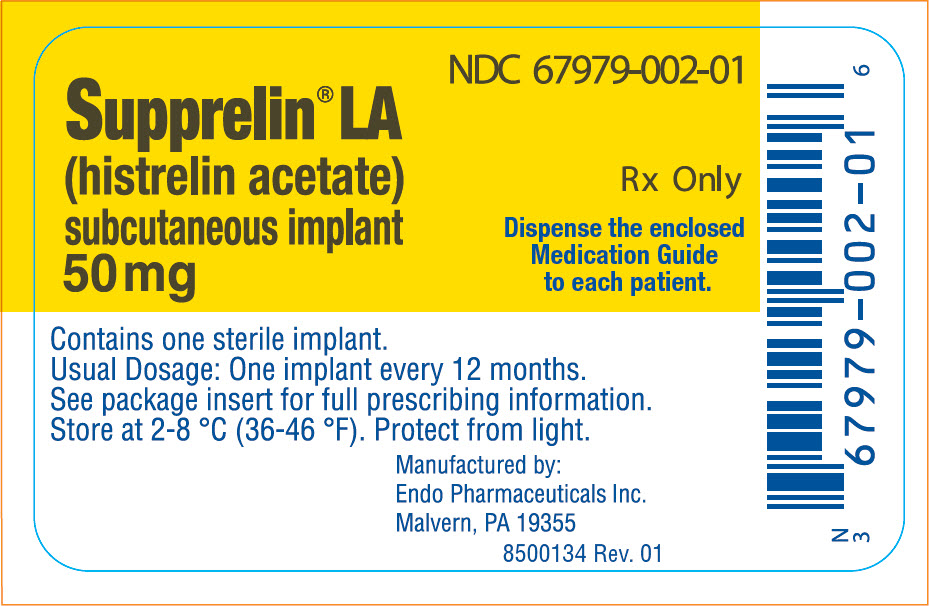
Supprelin LA histrelin acetate 50 mg Implant, 1 implant — NDC 67979-002-01 (Billing 67979-0002-01)
This is a package of 1 implant of Supprelin LA histrelin acetate 50 mg Implant from Endo USA, Inc., marketed since May 2007 and currently FDA-listed. It is this product's only package size.
NDC database record
One package, one record: these facts belong to NDC 67979-002-01 alone.
- Record
- FDA NDC Directory package listing · Human prescription drug
- Code segments
- 67979 labeler · 002 product · 01 package
- Package marketed since
- May 31, 2007
- Sample package
- No — commercial package
- Listing certified through
- Dec 31, 2026
- Billing quantity
- 1 EA per package
- Barcode (UPC)
- 0367979002016
- Medicaid fills, this package
- 54 prescriptions in the last four reported quarters
- FDA record last changed
- Jul 24, 2026
Identity & classification
Regulatory identifiers FDA, NLM and CMS codes for this package
Drug-database identifiers Medi-Span GPI and First Databank GCN / HICL / AHFS classification
- GSN (GCN sequence number): 072331
- GCN: 36494
- GPI-14 (Medi-Span): 30080045106450
- HICL (First Databank): 021104
- AHFS class code: 10:00.00.00
- RxCUI (RxNorm): 1294641
Where does this data come from?
- FDA openFDA NDC Directory · synced Oct 1, 2026
- FDA label on DailyMed · label index refreshed Oct 3, 2026
- RxNorm (NLM RxNav) · catalog refreshed Oct 1, 2026
- Medi-Span GPI (licensed)
- First Databank (licensed) · refreshed Oct 1, 2026
RxNorm drug class
This medicine belongs to the Gonadotropin Releasing Hormone Receptor Agonist class.
Where does this data come from?
- RxClass (NLM) · catalog refreshed Oct 1, 2026
Clinical
Histrelin implant is used to treat children with central precocious puberty (CPP; a condition causing children to enter puberty too soon, resulting in faster than normal bone growth and development of sexual characteristics). Histrelin implant is in a class of medications called gonadotropin-releasing hormone (GnRH) agonists. It works by decreasing the amount of certain hormones in the body.
Read the full MedlinePlus article ↗Patient education
Supplement & herbal interactions
Where does this data come from?
- MedlinePlus (NLM) · refreshed Oct 1, 2026
- FDA label on DailyMed · label index refreshed Oct 3, 2026
Ask a licensed pharmacist directly — free, answered by our team.
Pricing
A drug doesn't have one price. Each row is a different public payment system, and none is what you'd pay at the counter — that depends on your insurance. The ⓘ on each row explains what it measures.
| Price system | Per each | Per package |
|---|---|---|
| Retail pharmacies payNADAC · weekly | Not in the retail survey — common for institutional, discontinued, or low-volume packs. | |
| Medicaid paysCMS SDUD · 12 mo | $47,551.93 | $47,551.93 / 1 implant |
| Medicare drug plans payPart D · quarterly | No Part D plan price is available for this NDC in our data. | |
| Medicare Part B allowsASP · J9226 | $37,491.974 / J9226 unit | — |
Where does this data come from?
- CMS NADAC weekly file
- CMS ASP pricing files · refreshed Sep 20, 2026
- CMS Medicaid State Drug Utilization Data · through Q1 2026
- CMS Part D plan pricing files · refreshed Sep 24, 2026
- VA National Acquisition Center price file
Billing & reimbursement
Where does this data come from?
- CMS ASP NDC-HCPCS crosswalk · refreshed Sep 22, 2026
- DMEPDAC NDC-HCPCS crosswalk
- openFDA NSDE billing units · refreshed Sep 7, 2026
Packaging — all sizes for this product
| Package NDC | Description | Marketing start | Marketing end | Status |
|---|---|---|---|---|
| 67979-0002-01 You're viewing this Main listing | 1 VIAL, GLASS in 1 CARTON / 1 IMPLANT in 1 VIAL, GLASS | 2007-05-31 | — | Active |
Therapeutic equivalents
| Product | Labeler | Pack | NADAC/unit | TE | Status | Price vs. this |
|---|---|---|---|---|---|---|
| Supprelin La 50 mgthis 67979-0002-01 | Endo | 1 implant | — | — | FDA listed | — |
Where does this data come from?
- FDA openFDA NDC Directory · synced Oct 1, 2026
- FDA Orange Book · refreshed Oct 3, 2026
- CMS NADAC weekly file
Availability & generic status
We did not find an FDA-approved generic match for this exact strength, form and route. Patent/protection dates below may affect future generic timing.
Why the date isn’t exact: Generic timing can change because patents may be challenged, settled, licensed, added, removed, or worked around with a narrower label — and FDA approval does not always mean a pharmacy can get the generic today.
🛈 What do these terms mean?
- Patent
- Legal protection listed in the Orange Book that may delay generic approval or launch. Issued by the U.S. Patent & Trademark Office.
- Substance patent
- Covers the active drug molecule itself — the hardest to design around. A generic generally can’t launch until it expires.
- Formulation (product) patent
- Covers a specific formulation or dosage form. A generic can sometimes work around it with a different formulation.
- Method-of-use patent
- A patent covering one specific approved use of the drug — not necessarily the whole molecule. A generic can sometimes launch with a “skinny label” that carves out the protected use and keeps the others.
- Skinny label
- A generic label that omits a still-patented use when the FDA allows it — letting a generic reach the market for the unprotected uses.
- Exclusivity
- FDA-granted marketing protection, separate from patents — e.g. 5-yr new chemical entity, 7-yr orphan drug, or a +6-month pediatric extension.
- Paragraph IV
- A generic applicant’s formal challenge to a listed patent. It can potentially lead to earlier generic entry, but often involves litigation or a settlement.
- RLD / RS
- Reference Listed Drug — the brand product the FDA uses as the reference for generic applications. Reference Standard — the product the FDA expects generics to compare against in bioequivalence testing.
- TE / AB rating
- FDA therapeutic-equivalence rating. An AB rating generally means the FDA considers a generic therapeutically equivalent to — and substitutable for — the brand.
- LOE (loss of exclusivity)
- The latest patent or exclusivity currently listed — the loss-of-exclusivity / latest-listed-protection date shown on this page. Paragraph-IV challenges and settlements can move the real date earlier; FDA approval and a manufacturer’s decision to market can move it later.
Built from the FDA Orange Book. The bars above are scaled to each protection’s expiry; the red LOE marker is the last one to lapse.
| Patent | Type | Use code | Expires |
|---|---|---|---|
| US 8062652 ↗ | Method of use | U-1197 | Jun 16, 2026 |
Is there a generic version of SUPPRELIN LA 50 MG KIT?
The FDA approved a generic — why can’t I get it at my pharmacy yet?
Why do different websites show different generic release dates?
What does “FDA listed” mean?
What does a patent or protection date mean here?
What does “current Orange Book estimate” mean?
Can a generic come out before the last patent expires?
Can a generic come out after the listed dates?
What is the difference between patents and exclusivity?
Why are there multiple patent dates?
Where does this data come from?
- FDA Orange Book · refreshed Oct 3, 2026
Inactive Ingredients / Excipients
Inactive ingredients, also called excipients, are components of the drug product other than the active ingredient. They may include fillers, dyes, coatings, preservatives, flavors, or other formulation ingredients.
💡 Tap an ingredient (hover on desktop) to see what it is and why it’s used.
-
UNII 6E1I4IV47V
A synthetic polymer made from acrylic compounds. It's used as a film-former and binder to help hold the medicine together and control how quickly the active ingredient releases in your body.
-
UNII 076NU497LZ
This is a synthetic organic peroxide compound used as a polymerization initiator or cross-linking agent in some pharmaceutical manufacturing processes. It helps create or stabilize the matrix structure of certain drug formulations during production.
-
UNII XIF870BGWW
Methyl benzoin is a synthetic organic compound used as a preservative and antimicrobial agent in medicines. It helps prevent bacterial and fungal growth to maintain product stability and safety.
-
UNII 7JPC6Y25QS
A synthetic nonionic surfactant, a type of cleaning agent used in pharmaceutical formulations. It functions as an emulsifier and solubilizer, helping mix water and oil-based ingredients and improving how the medicine dissolves and spreads in the body.
-
UNII 4ELV7Z65AP
Stearic acid is a fatty acid derived from plant or animal sources. It acts as a binder and lubricant in tablets and capsules, helping them hold together and flow smoothly during manufacturing.
5 inactive ingredients listed in the exact product block matched to this NDC.
Where does this data come from?
ingredient classCode="IACT" elements from the exact product block matched by this NDC. Label-section narrative from DailyMed / the openFDA label index is shown separately when available.- FDA label on DailyMed · label index refreshed Oct 3, 2026
- FDA openFDA NDC Directory · synced Oct 1, 2026
Inactive ingredient FAQ
Are inactive ingredients the same for every manufacturer?
Why might an inactive ingredient be missing?
Can inactive ingredients matter?
Manufacturer & labeler
More NDCs from Endo USA, Inc. labeler code 67979
Where does this data come from?
- FDA openFDA NDC Directory · synced Oct 1, 2026
- Drugs@FDA
Full prescribing information FDA SPL
🎯 Indications and Usage ▾
1 INDICATIONS AND USAGE SUPPRELIN LA (histrelin acetate) subcutaneous implant is indicated for the treatment of children with central precocious puberty (CPP). Children with CPP (neurogenic or idiopathic) have an early onset of secondary sexual characteristics (earlier than 8 years of age in females and 9 years of age in males). They also show a significantly advanced bone age that can result in diminished adult height attainment.
Prior to initiation of treatment a clinical diagnosis of CPP should be confirmed by measurement of blood concentrations of total sex steroids, luteinizing hormone (LH) and follicle stimulating hormone (FSH) following stimulation with a GnRH analog, and assessment of bone age versus chronological age. Baseline evaluations should include height and weight measurements, diagnostic imaging of the brain (to rule out intracranial tumor), pelvic/testicular/adrenal ultrasound (to rule out steroid secreting tumors), human chorionic gonadotropin levels (to rule out a chorionic gonadotropin secreting tumor), and adrenal steroids to exclude congenital adrenal hyperplasia.
SUPPRELIN LA is a gonadotropin releasing hormone (GnRH) agonist indicated for the treatment of children with central precocious puberty (CPP) ( 1 ).
⏱️ Dosage and Administration ▾
2 DOSAGE AND ADMINISTRATION The recommended dose of SUPPRELIN LA is one implant every 12 months. The implant is inserted subcutaneously in the inner aspect of the upper arm and provides continuous release of histrelin for 12 months of hormonal therapy ( 2 ).
2.1Recommended Dose The recommended dose of SUPPRELIN LA is one implant every 12 months. Each implant contains 50 mg histrelin acetate. The implant is inserted subcutaneously in the inner aspect of the upper arm and provides continuous release of histrelin acetate (65 mcg/day) for 12 months of hormonal therapy.
SUPPRELIN LA should be removed after 12 months of therapy (the implant has been designed to allow for a few additional weeks of histrelin acetate release, in order to allow flexibility of medical appointments). At the time an implant is removed, another implant may be inserted to continue therapy. Discontinuation of SUPPRELIN LA should be considered at the discretion of the physician and at the appropriate time point for the onset of puberty (approximately 11 years for females and 12 years for males).
2.2Recommended Procedure for Implant Insertion and Removal This procedure section is intended to provide guidance for the insertion and removal of SUPPRELIN LA. The actual procedure used, however, is at the discretion of the qualified healthcare provider performing the procedure. Insertion of a new implant can proceed using the following Suggested Insertion Procedure .
If a previous SUPPRELIN LA implant must first be removed, please see the Suggested Removal Procedure instructions below. Suggested Insertion Procedure The supplies necessary to insert the implant, including the Insertion Tool and local anesthetic, are provided in a separate Implantation Kit that is shipped along with the implant. Please note that the implant should be kept refrigerated (2-8°C) in its sealed vial, pouch, and carton, until needed for the procedure.
Once removed from refrigeration, the vial containing the implant (still in its unopened pouch and carton) may remain at room temperature for up to 7 days, if necessary, before being used. If not used in that time, the packaged implant may again be properly refrigerated until the expiration date on the carton. NOTE: The Implantation Kit is to be stored at room temperature and should not be refrigerated.
Insertion of the SUPPRELIN LA implant is a surgical procedure. Sterile gloves and aseptic technique must be used to minimize any chance of infection. Setting up the Sterile Field Using proper aseptic technique, the sterilized components of the Implantation Kit needed for the insertion procedure, including the Insertion Tool, are to be carefully dispensed from their packaging onto the Sterile Field drape ( non -fenestrated) provided.
NOTE THAT THE KIT BOX AND ALL PACKAGING ARE NOT STERILE and should be kept off of the Sterile Field drape. DO NOT PLACE THE VIAL OF LOCAL ANESTHETIC OR THE VIAL CONTAINING THE IMPLANT ONTO THE DRAPE as the exterior surface of these vials is not sterile. The implant vial should not be opened until just before the time of insertion.
Open the vial by removing the metal band and carefully pour the sterile contents (implant and sterile saline) onto the Sterile Field drape. The implant can then be handled with sterile gloves or with the sterile mosquito clamp provided. AVOID bending or pinching the implant .
Preparing the Patient and the Insertion Site The patient should be on his/her back, ideally with the arm least used (e.g., left arm for a right-handed person) positioned, either bent or extended, so that the physician has ready access to the inner aspect of the upper arm. Propping the arm with pillows may help the patient more easily hold the position. The suggested optimum site for subcutaneous insertion is approximately half-way between the shoulder and the elbow, in line with the crease between the biceps and triceps muscles.
Antiseptic Swab the insertion area with topical antiseptic, then overlay with the fenestrat… [Excerpted — this section continues on DailyMed.]
💊 Dosage Forms and Strengths ▾
3 DOSAGE FORMS AND STRENGTHS SUPPRELIN LA is a sterile, nonbiodegradable, diffusion-controlled, hydrogel polymer reservoir drug delivery system designed to deliver histrelin acetate continuously for 12 months after subcutaneous implantation. The sterile implant contains 50 mg histrelin acetate and delivers approximately 65 mcg histrelin acetate per day over 12 months. SUPPRELIN LA is available as a 50 mg histrelin acetate subcutaneous implant which delivers approximately 65 mcg histrelin acetate per day over 12 months ( 3 ).
⛔ Contraindications ▾
4 CONTRAINDICATIONS SUPPRELIN LA is contraindicated in: Patients who are hypersensitive to gonadotropin releasing hormone (GnRH) or GnRH agonist analogs Pregnancy [see Use in Specific Populations ( 8.1 )] . History of hypersensitivity to gonadotropin releasing hormone (GnRH) or GnRH analogs ( 4 ). Pregnancy ( 4 ).
⚠️ Warnings and Cautions ▾
5 WARNINGS AND PRECAUTIONS Initial Agnostic Action: Initial transient increases of estradiol and/or testosterone may cause a temporary worsening of symptoms ( 5.1 ). Implant Breakage: Have been observed during implant removal. Monitor luteinizing hormone, follicle stimulating hormone or testosterone for suppression of CPP ( 5.2 , 5.6 ) Psychiatric Events: Have been reported in patients taking GnRH agonists.
Events include emotional lability, such as crying, irritability, impatience, anger, and aggression. Monitor for development or worsening of psychiatric symptoms. ( 5.3 ) Convulsions: Have been observed in patients receiving GnRH agonists with or without a history of seizures, epilepsy, cerebrovascular disorders, central nervous system anomalies or tumors, and in patients on concomitant medications that have been associated with convulsions.
( 5.4 ) Severe Cutaneous Adverse Reactions: Have been reported in patients receiving GnRH agonists. Interrupt SUPPRELIN LA if signs or symptoms of severe cutaneous adverse reactions develop. Permanently discontinue SUPPRELIN LA if a severe cutaneous adverse reaction is confirmed.
( 5.5 ) Pseudotumor Cerebri (Idiopathic Intracranial Hypertension): Have been reported in pediatric patients receiving GnRH agonists. Monitor patients for headache, papilledema, and blurred vision. ( 5.6 )
5.1Initial Agonistic Action SUPPRELIN LA, like other GnRH agonists, initially causes a transient increase in serum concentrations of estradiol in females and testosterone in both sexes during the first week of treatment. Patients may experience worsening of symptoms or onset of new symptoms during this period. However, within 4 weeks of histrelin therapy, suppression of gonadal steroids occurs and manifestations of puberty decrease.
5.2Implant Breakage Implant insertion is a surgical procedure and it is important that the insertion instructions are followed to avoid potential complications. The insertion and removal of the implant should be done aseptically. Proper surgical technique is critical in minimizing adverse events related to the insertion and the removal of the histrelin implant.
On occasion, localizing and/or removal of implant products have been difficult and imaging techniques were used, including ultrasound, CT, or MRI (note: the histrelin implant is not radiopaque). In some cases the implant broke during removal and multiple pieces were recovered. Confirm that the entire implant has been removed.
If the implant was not retrieved completely, the remaining pieces should be removed following the instructions in the Suggested Removal Procedure section [see Dosage and Administration ( 2.2 )]. Rare events of spontaneous extrusion of the implant have been observed in clinical trials. During SUPPRELIN LA treatment, patients should be evaluated for evidence of clinical and biochemical suppression of CPP manifestations (see Section 5.6 , Monitoring and Laboratory tests).
Detailed instructions on the insertion and removal procedures of the implant are provided above [see Dosage and Administration ( 2.2 )] .
5.3Psychiatric Events Psychiatric events have been reported in patients taking GnRH agonists, including SUPPRELIN LA. Postmarketing reports with this class of drugs include symptoms of emotional lability, such as crying, irritability, impatience, anger, and aggression. Monitor for development or worsening of psychiatric symptoms during treatment with SUPPRELIN LA [see Adverse Reactions ( 6 )] .
5.4Convulsions Postmarketing reports of convulsions have been observed in patients receiving GnRH agonists, including SUPPRELIN LA. Reports with GnRH agonists have included patients with a history of seizures, epilepsy, cerebrovascular disorders, central nervous system anomalies or tumors, and patients on concomitant medications that have been associated with convulsions such as bupropion and SSRIs. Convulsions have also been reported in patients in the absence of any of the conditions mentioned above.
5.5Se… [Excerpted — this section continues on DailyMed.]
🤒 Adverse Reactions ▾
6 ADVERSE REACTIONS The following serious adverse reactions are described here and elsewhere in the label: Initial Agonist Action [see Warnings and Precautions ( 5.1 )] Implant Breakage [see Warnings and Precautions ( 5.2 )] Psychiatric Events [see Warnings and Precautions ( 5.3 )] Convulsions [see Warnings and Precautions ( 5.4 )] Severe Cutaneous Adverse Reactions [see Warnings and Precautions ( 5.5 )] Pseudotumor Cerebri (Idiopathic Intracranial Hypertension) [see Warnings and Precautions ( 5.6 )] The most common adverse reaction is implant site reaction (51.1%), including complications related to the insertion or removal of the implant ( 6 ).
Adverse events related to suppression of endogenous sex steroid secretion may occur ( 6.1 ). To report SUSPECTED ADVERSE REACTIONS, contact Endo at 1-800-462-3636 or FDA at 1-800-FDA-1088 or www.fda.gov/medwatch.
6.1Overall Adverse Reaction Profile The most common adverse reactions with SUPPRELIN LA involved the implant site. Local reactions after implant insertion include bruising, pain, soreness, erythema and swelling. During the early phase of therapy, gonadotropins and sex steroids rise above baseline because of the natural stimulatory effect of the drug.
Therefore, an increase in clinical signs and symptoms may be observed [see Warnings and Precautions ( 5.1 )] .
6.2Adverse Reactions in Clinical Trials Because clinical trials are conducted under widely varying conditions, adverse reaction rates observed in the clinical trials of a drug cannot be directly compared to rates in the clinical trials of another drug and may not reflect the rates observed in practice. The safety of SUPPRELIN LA in children with CPP was evaluated in two single-arm clinical trials conducted in a total of 47 patients (44 females and 3 males) over a period of time ranging from 9 to 18 months. The most commonly reported adverse reaction was implant site reaction, which was reported by 24 of 47 (51.1%) patients.
Implant site reaction includes discomfort, bruising, soreness, pain, tingling, itching, implant area protrusion and swelling. Two subjects experienced a serious adverse reaction: 1 subject who coincidentally had Stargardt’s Disease experienced amblyopia and 1 subject had a benign pituitary tumor (pituitary adenoma). One subject discontinued the study due to an adverse reaction of infection at the implant site.
There were no clinically meaningful findings in standard clinical hematology and chemistry tests and/or in vital signs. The incidence of implantation adverse events reported by more than 2 patients are summarized in Table 1. Table 1: Incidence of implantation adverse reactions reported by ≥ 2 patients treated with SUPPRELIN LA in both clinical trials Adverse Reactions N=47 N (%) Implant site reaction 24 (51.1) Keloid scar 3 (6.4) Scar 3 (6.4) Suture related complication 3 (6.4) Application site pain 2 (4.3) Post procedural pain 2 (4.3) The following adverse reactions were reported as possibly related or related in 1 patient each: wound infection, breast tenderness, dysmenorrhea, epistaxis, erythema, feeling cold, gynecomastia, headache, menorrhagia, migraine, mood swings, pituitary tumor benign, pruritus, weight increased, disease progression and influenza-like illness.
The adverse reaction metrorrhagia was reported as possibly related or related in 2 patients.
6.3Post-marketing Experience The following adverse reactions have been identified during post approval use of SUPPRELIN LA or GnRH agonists. Because these reactions are reported voluntarily from a population of uncertain size, it is not always possible to reliably estimate their frequency or establish a causal relationship to drug exposure. General Disorders and Administration Site Conditions : implant breakage Psychiatric Disorders : Emotional lability, such as crying, irritability, impatience, anger, and aggression.
Depression, including rare reports of suicidal ideation and attempt. Many, but not all, of these patients had a history… [Excerpted — this section continues on DailyMed.]
🔄 Drug Interactions ▾
7 DRUG INTERACTIONS Overview: No formal drug-drug, drug-food, or drug-herb interaction studies were performed with SUPPRELIN LA. Drug-Laboratory Interactions: Therapy with SUPPRELIN LA results in suppression of the pituitary-gonadal system. Results of diagnostic tests of pituitary gonadotropic and gonadal functions conducted during and after SUPPRELIN LA therapy may be affected.
SUPPRELIN LA decreased mean serum insulin like growth factor 1 (IGF 1) levels by approximately 11% in one study (Study 1). SUPPRELIN LA increased the serum concentration of dehydroepiandrosterone (DHEA) in 8 of 36 patients in another study (Study 2).
👥 Use in Specific Populations ▾
8 USE IN SPECIFIC POPULATIONS Use of SUPPRELIN LA in children less than 2 years of age is not recommended ( 8.4 ).
8.1Pregnancy Risk Summary SUPPRELIN LA is contraindicated during pregnancy [see Contraindications ( 4 )] since expected hormonal changes that occur with SUPPRELIN LA treatment increase the risk for pregnancy loss. The limited data with histrelin use in pregnant women are insufficient to determine a drug-associated risk for major birth defects or adverse developmental outcomes. Consistent with mechanism of action for SUPPRELIN LA [see Clinical Pharmacology ( 12.1 )], animal reproduction studies showed an increase in fetal loss at clinically relevant exposures.
The estimated background risk of major birth defects and miscarriage for the indicated population is unknown. In the US general population, the estimated background risk of major birth defects and miscarriage in clinically recognized pregnancies is 2-4% and 15-20%, respectively. Data Animal Data Histrelin acetate administered to pregnant rats during the period of organogenesis increased fetal mortality and post-implantation loss at doses of 1, 3, 5 or 15 mcg/kg/day, approximating clinical exposure based on body surface area.
These dosages also reduced maternal body weight gain, stimulated ovarian follicular development, increased placental weight and caused abnormal morphology and an increase in fetal size. Histrelin acetate administered to pregnant rabbits during the period of organogenesis increased fetal mortality and abortion/early termination at the two highest doses and caused total litter loss at all doses of 20, 50 or 80 mcg/kg/day (approximately 3- to 12-times clinical exposures based on body surface area).
8.2Lactation Risk Summary There are no data on the presence of SUPPRELIN LA in human or animal milk, the effects on the breastfed infant, or the effects on milk production. Absorption and systemic activity are not expected from potential exposure to the peptide, histrelin, in the breast milk. The developmental and health benefits of breastfeeding should be considered along with the mother’s clinical need for SUPPRELIN LA and any potential adverse effects on the breastfed child from SUPPRELIN LA or from the underlying maternal condition.
8.4Pediatric Use Safety and effectiveness in pediatric patients below the age of 2 years have not been established. The use of SUPPRELIN LA in children under 2 years is not recommended.
🤰 Pregnancy ▾
8.1Pregnancy Risk Summary SUPPRELIN LA is contraindicated during pregnancy [see Contraindications ( 4 )] since expected hormonal changes that occur with SUPPRELIN LA treatment increase the risk for pregnancy loss. The limited data with histrelin use in pregnant women are insufficient to determine a drug-associated risk for major birth defects or adverse developmental outcomes. Consistent with mechanism of action for SUPPRELIN LA [see Clinical Pharmacology ( 12.1 )], animal reproduction studies showed an increase in fetal loss at clinically relevant exposures.
The estimated background risk of major birth defects and miscarriage for the indicated population is unknown. In the US general population, the estimated background risk of major birth defects and miscarriage in clinically recognized pregnancies is 2-4% and 15-20%, respectively. Data Animal Data Histrelin acetate administered to pregnant rats during the period of organogenesis increased fetal mortality and post-implantation loss at doses of 1, 3, 5 or 15 mcg/kg/day, approximating clinical exposure based on body surface area.
These dosages also reduced maternal body weight gain, stimulated ovarian follicular development, increased placental weight and caused abnormal morphology and an increase in fetal size. Histrelin acetate administered to pregnant rabbits during the period of organogenesis increased fetal mortality and abortion/early termination at the two highest doses and caused total litter loss at all doses of 20, 50 or 80 mcg/kg/day (approximately 3- to 12-times clinical exposures based on body surface area).
🧒 Pediatric Use ▾
8.4Pediatric Use Safety and effectiveness in pediatric patients below the age of 2 years have not been established. The use of SUPPRELIN LA in children under 2 years is not recommended.
🆘 Overdosage ▾
10 OVERDOSAGE There have been no reports of overdose in SUPPRELIN LA clinical trials. High doses of histrelin acetate injection in animal studies were generally associated only with effects attributed to the expected pharmacology. The method of drug delivery makes accidental or intentional overdosage unlikely.
🧬 Clinical Pharmacology ▾
12 CLINICAL PHARMACOLOGY
12.1Mechanism of Action SUPPRELIN LA is a GnRH agonist and an inhibitor of gonadotropin secretion when given continuously. It delivers approximately 65 mcg histrelin acetate per day. Both animal and human studies indicate that following an initial stimulatory phase, chronic, subcutaneous administration of histrelin acetate desensitizes responsiveness of the pituitary gonadotropin which, in turn causes a reduction in ovarian and testicular steroidogenesis.
In humans, administration of histrelin acetate results in an initial increase in circulating levels of LH and FSH, leading to a transient increase in concentration of gonadal steroids (testosterone and dihydrotestosterone in males, and estrone and estradiol in premenopausal females). However, continuous administration of histrelin acetate causes a reversible down-regulation of the GnRH receptors in the pituitary gland and desensitization of the pituitary gonadotropes. These inhibitory effects result in decreased levels of LH and FSH.
12.2Pharmacodynamics Long-term treatment with histrelin acetate suppresses the LH response to GnRH causing LH levels to decrease to prepubertal levels within 1 month of treatment. As a result, serum concentrations of sex steroids (estrogen or testosterone) also decrease. Consequently, secondary sexual development ceases to progress in most patients.
Additionally, linear growth velocity is slowed which improves the chance of attaining predicted adult height.
12.3Pharmacokinetics Pharmacokinetics of histrelin after implantation of SUPPRELIN LA was evaluated in a total of 47 children with CPP (11 subjects in Study 1 and 36 subjects in Study 2). Patients were examined at 4 weeks after implant insertion and a few times throughout the treatment period. Median serum histrelin concentrations remained above the limit of quantification for the treatment period.
Histrelin acetate levels were sustained throughout the study period for most subjects (Figure 3). The median of maximum serum histrelin concentrations over the study period was 0.43 ng/mL, which is expected to maintain gonadotropins at prepubertal levels. There was no apparent pharmacokinetic difference between naïve subjects to a LHRH agonist treatment and subjects who had previous treatment with a LHRH agonist (Figure 3).
Figure 3: Mean and Standard Deviation of Serum Histrelin Concentrations (ng/mL) Results at Each Visit Mean and Standard Deviation of Serum Histrelin Concentrations (ng/mL) Results at Each Visit
🧬 Mechanism of Action ▾
12.1Mechanism of Action SUPPRELIN LA is a GnRH agonist and an inhibitor of gonadotropin secretion when given continuously. It delivers approximately 65 mcg histrelin acetate per day. Both animal and human studies indicate that following an initial stimulatory phase, chronic, subcutaneous administration of histrelin acetate desensitizes responsiveness of the pituitary gonadotropin which, in turn causes a reduction in ovarian and testicular steroidogenesis.
In humans, administration of histrelin acetate results in an initial increase in circulating levels of LH and FSH, leading to a transient increase in concentration of gonadal steroids (testosterone and dihydrotestosterone in males, and estrone and estradiol in premenopausal females). However, continuous administration of histrelin acetate causes a reversible down-regulation of the GnRH receptors in the pituitary gland and desensitization of the pituitary gonadotropes. These inhibitory effects result in decreased levels of LH and FSH.
📦 How Supplied / Storage and Handling ▾
16 HOW SUPPLIED/STORAGE AND HANDLING SUPPRELIN LA (NDC 67979-002-01) is supplied in a corrugated shipping carton that contains 2 inner cartons: a small one for the vial containing the SUPPRELIN LA implant, which is shipped with a cold pack inside a polystyrene cooler that must be refrigerated upon arrival, and a larger one comprising the Implantation Kit, which must not be refrigerated, for use during insertion or removal of SUPPRELIN LA. The SUPPRELIN LA implant contains 50 mg of histrelin acetate. The SUPPRELIN LA implant carton contains a cold pack for refrigerated shipment and a small carton containing an amber plastic pouch.
Inside the pouch is a glass vial with a Teflon-coated stopper and an aluminum seal, containing the implant in 2 mL of sterile 1.8% sodium chloride solution. ( Note : The 3.5 mL vial is not completely filled with saline). Upon receipt, refrigerate the small carton containing the amber plastic pouch and glass vial (with the implant inside) until the day of insertion.
The implant vial should not be opened until just before the time of insertion. SUPPRELIN LA is stable when stored refrigerated, in its sealed vial, pouch, and carton, at 2-8°C (36-46°F) until the expiration date provided. Excursion permitted to 25°C (77°F) for 7 days.
Do not freeze. Protect from light.
📋 Description ▾
11 DESCRIPTION SUPPRELIN LA is a sterile, non-biodegradable, diffusion-controlled, hydrogel polymer reservoir containing histrelin acetate, a synthetic nonapeptide analog of the naturally occurring gonadotropin releasing hormone (GnRH) possessing a greater potency than the natural sequence hormone. SUPPRELIN LA is designed to deliver approximately 65 mcg histrelin acetate per day over 12 months. The SUPPRELIN LA implant looks like a small thin flexible tube and consists of a 50-mg histrelin acetate drug core inside a 3.5 cm by 3 mm, cylindrical, hydrogel polymer reservoir (Figure 1).
The implant may appear partially to completely full with variation in color from off-white to light brown. The color may be uneven within the core. Figure 1: SUPPRELIN LA Implant Diagram (not to scale) The chemical name of histrelin acetate is: L-Pyroglutamyl-L-histidyl-L-tryptophyl-L-seryl-L-tyrosyl-N-benzyl-D-histidyl-L-leucyl-L-arginyl-L-proline N-ethylamide, acetate salt.
The molecular formula for histrelin acetate is C 66 H 86 N 18 O 12 x 2 CH 3 COOH and its molecular weight is 1443.70 (or 1323.52 as free base). Histrelin is also chemically described as 5-oxo-L-prolyl-L-histidyl-L-tryptophyl-L-seryl-L-tyrosyl-Nt-benzyl-D-histidyl-L-leucyl-L-arginyl-N-ethyl-L-prolinamide diacetate. The chemical structure of the free base (histrelin) is represented below in Figure 2.
Figure 2: Structure of Histrelin The drug core also contains the inactive ingredient stearic acid NF. The hydrogel polymer reservoir is a hydrophilic cartridge composed of 2-hydroxyethyl methacrylate, 2-hydroxypropyl methacrylate, trimethylolpropane trimethacrylate, benzoin methyl ether, Perkadox-16, and Triton X-100. Each implant is packaged hydrated in a glass vial containing 2 mL of sterile 1.8% sodium chloride solution, so that it is primed for immediate release of the drug upon insertion.
A single use, sterile, Insertion Tool is provided along with the implant that can be used for the placement of the SUPPRELIN LA implant into the subcutaneous tissue of the inner aspect of the upper arm. The Insertion Tool is enclosed in a sterile bag and is provided separately from the implant in the Implantation Kit [ see Recommended Procedure for Implant Insertion and Removal ( 2.2 ) ]. hydrogel figure Chemical Structure
💬 Information for Patients ▾
17 PATIENT COUNSELING INFORMATION Advise the patient to read the FDA-Approved patient labeling ( Medication Guide ). Initial Agonistic Action Patients should be advised that a transient worsening of symptoms of puberty or onset of new symptoms may occur initially. However, within 4 weeks of histrelin therapy, complete suppression of gonadal steroids occurs and manifestations of puberty decrease [ see Warnings and Precautions ( 5.1 )].
Post-insertion Care Patients should be instructed to refrain from getting the inserted arm wet for 24 hours and from strenuous exertion of the inserted arm for 7 days after implant insertion to allow the incision to fully close. The adhesive elastic bandage can be removed at that time. The patient should not remove the surgical strips; rather, the strips should be allowed to fall off on their own after several days.
Psychiatric Adverse Events Inform caregivers that symptoms of emotional lability, such as crying, irritability, impatience, anger, and aggression, have been observed in patients receiving GnRH agonists, including SUPPRELIN LA. Alert caregivers to the possibility of development or worsening of psychiatric symptoms, including depression, during treatment with SUPPRELIN LA [ see Warnings and Precautions ( 5.3 ), Adverse Reactions ( 6.3 ) ]. Convulsions Inform caregivers that reports of convulsions have been observed in patients receiving GnRH agonists, including SUPPRELIN LA.
Patients with a history of seizures, epilepsy, cerebrovascular disorders, central nervous system anomalies or tumors, and patients on concomitant medications that have been associated with convulsions may be at risk [ see Warnings and Precautions ( 5.4 ) ]. Severe Cutaneous Adverse Reactions Inform patients and/or caregivers that severe cutaneous adverse reactions may occur during treatment with SUPPRELIN LA. Advise patients and/or caregivers to stop SUPPRELIN LA and immediately contact their healthcare provider if they experience signs or symptoms of severe cutaneous adverse reactions [see Warnings and Precautions ( 5.5 )] .
Pseudotumor Cerebri (Idiopathic Intracranial Hypertension) Inform patients and caregivers that reports of pseudotumor cerebri (idiopathic intracranial hypertension) have been observed in pediatric patients receiving GnRH agonists. Advise patients and caregivers to monitor for headache, and vision issues such as blurred vision, double vision, loss of vision, pain behind the eye or pain with eye movement, ringing in the ears, dizziness, and nausea. Advise patients and caregivers to contact their healthcare provider if the patient develops any of these symptoms. [ see Warnings and Precautions ( 5.6 ) ].
Common Adverse Reactions Patients should be advised to report to their physician any severe pain, redness, or swelling in and around the implant site. Infrequently, SUPPRELIN LA may be expelled from the body through the original incision site, rarely without the patient noticing. The patient should be instructed to monitor the incision site until it is healed.
The patient should also return for routine checks of their condition and to ensure that SUPPRELIN LA is present and functioning in his/her body [ see Adverse Reactions ( 6.1 ) ]. For more information, call 1-800-462-3636 or visit www.supprelinla.com . Manufactured for: Endo USA Malvern, PA 19355 © 2025 Endo, Inc. or one of its affiliates.
Revised: 09/2025
💬 Medication Guide ▾
Medication Guide SUPPRELIN ® LA [Suh-Preh-Lin El-Ay] (histrelin acetate) subcutaneous implant What is the most important information I should know about SUPPRELIN LA? In the first week of treatment, SUPPRELIN LA can cause an increase in some hormones. During this time you may notice more signs of puberty in your child, including light vaginal bleeding and breast enlargement in girls.
Within 4 weeks of treatment, you should see signs in your child that puberty is stopping. Some people who had SUPPRELIN LA placed in their arm have had the implant come through the skin (extrusion). Call your child’s doctor right away if the SUPPRELIN LA implant comes through the skin.
Some people taking GnRH agonists like SUPPRELIN LA have had new or worsening mental (psychiatric) problems. Mental (psychiatric) problems may include emotional symptoms such as: crying irritability restlessness (impatience) anger acting aggressive Call your child’s doctor right away if your child has any new or worsening mental symptoms or problems while taking SUPPRELIN LA . Some people taking GnRH agonists like SUPPRELIN LA have had seizures.
The risk of seizures may be higher in people who: have a history of seizures have a history of epilepsy have a history of brain or brain vessel (cerebrovascular) problems or tumors are taking a medicine that has been connected to seizures such as bupropion or selective serotonin reuptake inhibitors (SSRIs) Seizures have also happened in people who have not had any of these problems. Call your child’s doctor right away if your child has a seizure while taking SUPPRELIN LA . Severe cutaneous (skin) adverse reactions can happen during treatment with GnRH agonists like SUPPRELIN LA.
Stop SUPPRELIN LA and call your child's doctor right away if your child has any of the following signs or symptoms during treatment with SUPPRELIN LA: skin rash or acne blisters or sores in your mouth dry skin peeling of your skin itching fever blisters on your skin muscle or joint aches redness or swelling of your face, hands, or soles of your feet swollen glands Increased pressure in the fluid around the brain can happen in children taking GnRH agonist medicines including SUPPRELIN LA. Call your child’s doctor right away if your child has any of the following symptoms during treatment with SUPPRELIN LA: headache ringing in the ears eye problems, including blurred vision, double vision, and decreased eyesight dizziness nausea eye pain What is SUPPRELIN LA?
SUPPRELIN LA is an implanted gonadotropin releasing hormone (GnRH) medicine used for the treatment of children with central precocious puberty (CPP). It is not known if SUPPRELIN LA is safe and effective in children under 2 years of age. SUPPRELIN LA should not be taken if your child is: allergic to gonadotropin releasing hormone (GnRH), GnRH agonist medicines, or any ingredients in the SUPPRELIN LA implant.
See the end of this Medication Guide for a complete list of ingredients in SUPPRELIN LA. pregnant or becomes pregnant. SUPPRELIN LA can cause birth defects or loss of the baby. If your child becomes pregnant call your doctor.
Before your child receives SUPPRELIN LA, tell the doctor about all of your child’s medical conditions, including if they: have a history of mental (psychiatric) problems. have a history of seizures. have a history of epilepsy. have a history of brain or brain vessel (cerebrovascular) problems or tumors. are taking a medicine that has been connected to seizures such as bupropion or selective serotonin reuptake inhibitors (SSRIs). Tell your doctor about all the medicines your child takes , including prescription and over-the-counter medicines, vitamins, and herbal supplements.
How will your child receive SUPPRELIN LA? Your child’s doctor should do tests to make sure your child has CPP before treating with SUPPRELIN LA. SUPPRELIN LA lasts for 12 months.
One implant will give the medicine for 12 months. After 12 months, the SUPPRELIN LA implant must be removed. The doctor may… [Excerpted — this section continues on DailyMed.]
🧬 Pharmacokinetics ▾
12.3Pharmacokinetics Pharmacokinetics of histrelin after implantation of SUPPRELIN LA was evaluated in a total of 47 children with CPP (11 subjects in Study 1 and 36 subjects in Study 2). Patients were examined at 4 weeks after implant insertion and a few times throughout the treatment period. Median serum histrelin concentrations remained above the limit of quantification for the treatment period.
Histrelin acetate levels were sustained throughout the study period for most subjects (Figure 3). The median of maximum serum histrelin concentrations over the study period was 0.43 ng/mL, which is expected to maintain gonadotropins at prepubertal levels. There was no apparent pharmacokinetic difference between naïve subjects to a LHRH agonist treatment and subjects who had previous treatment with a LHRH agonist (Figure 3).
Figure 3: Mean and Standard Deviation of Serum Histrelin Concentrations (ng/mL) Results at Each Visit Mean and Standard Deviation of Serum Histrelin Concentrations (ng/mL) Results at Each Visit
🧬 Pharmacodynamics ▾
12.2Pharmacodynamics Long-term treatment with histrelin acetate suppresses the LH response to GnRH causing LH levels to decrease to prepubertal levels within 1 month of treatment. As a result, serum concentrations of sex steroids (estrogen or testosterone) also decrease. Consequently, secondary sexual development ceases to progress in most patients.
Additionally, linear growth velocity is slowed which improves the chance of attaining predicted adult height.
🔬 Clinical Studies ▾
14 CLINICAL STUDIES The efficacy of SUPPRELIN LA in children with CPP has been evaluated in two single-arm, open label studies. Study 1 was conducted in 11 pretreated female patients, 3.7 to 11.0 years of age. Study 2 was conducted in 36 patients (33 females and 3 males), 4.5 to 11.6 years of age.
Sixteen pretreated and 20 treatment-naïve patients were enrolled in Study 2. Baseline patient characteristics were typical of patients with CPP. Efficacy assessments were similar in both studies and included endpoints that measured the suppression of gonadotropins (luteinizing hormone and follicle stimulating hormone) and gonadal sex steroids (estrogen in girls and testosterone in boys, respectively) on treatment.
Other assessments were clinical (evidence of stabilization or regression of signs of puberty) or gonadal steroid-dependent (bone age, linear growth). In Study 2, the primary measure of efficacy was LH suppression. In Study 2, suppression of LH was induced in all treatment naïve subjects and maintained in all pretreated subjects at Month 1 after implantation and continued through Month 12 (suppression was defined as a peak LH < 4 mIU/mL following stimulation with the GnRH analog leuprolide acetate).
Secondary efficacy hormone assessments (FSH, estradiol and testosterone) and additional efficacy assessments (bone age advancement, linear growth, clinical progression of puberty) indicated stabilization of disease. Estradiol suppression was present in all 33 girls (100%) through Month 9 and 97% at Month 12. Testosterone suppression was maintained in the three pre-treated males participating in Study 2.
The SUPPRELIN LA effect on efficacy endpoints in the Study 1 was consistent with that observed in Study 2.
🧪 Nonclinical Toxicology ▾
13 NONCLINICAL TOXICOLOGY
13.1Carcinogenesis, Mutagenesis, Impairment of Fertility Carcinogenicity studies were conducted in rats for 2 years at doses of 5, 25 or 150 mcg/kg/day (up to 11 times human exposures using body surface area comparisons, based on a 65 mcg/day dose in humans) and in mice for 18 months at doses of 20, 200, or 2000 mcg/kg/day (at less than therapeutic exposure to 70 times human exposure using body surface area comparisons, based on a 65 mcg/day dose in humans). As seen with other GnRH agonists, histrelin injection administration was associated with an increase in tumors of hormonally responsive tissues.
There was a significant increase in pituitary adenomas in rats at mid and high doses (2-11 times human exposure based on body surface area comparisons with a 65 mcg/day human dose). There was an increase in pancreatic islet-cell adenomas in treated female rats and a non-dose-related increase in testicular Leydig-cell tumors (highest incidence in the low-dose group). In mice, there was significant increase in mammary-gland adenocarcinomas in all treated females.
In addition, there were increases in stomach papillomas in male rats given high doses, and an increase in histiocytic sarcomas in female mice at the highest dose. Mutagenicity studies have not been performed with histrelin acetate. Saline extracts of implants with and without histrelin acetate were negative in a battery of genotoxicity studies.
Fertility studies have been conducted in rats and monkeys given subcutaneous daily doses of histrelin acetate up to 180 mcg/kg/day (up to 13 and 30 times human exposure, respectively using body surface area comparisons, based on a 65 mcg/day human dose) for 6 months and full reversibility of fertility suppression was demonstrated. The development and reproductive performance of offspring from parents treated with histrelin acetate has not been investigated.
📄 Carcinogenesis, Mutagenesis, Impairment of Fertility ▾
13.1Carcinogenesis, Mutagenesis, Impairment of Fertility Carcinogenicity studies were conducted in rats for 2 years at doses of 5, 25 or 150 mcg/kg/day (up to 11 times human exposures using body surface area comparisons, based on a 65 mcg/day dose in humans) and in mice for 18 months at doses of 20, 200, or 2000 mcg/kg/day (at less than therapeutic exposure to 70 times human exposure using body surface area comparisons, based on a 65 mcg/day dose in humans). As seen with other GnRH agonists, histrelin injection administration was associated with an increase in tumors of hormonally responsive tissues.
There was a significant increase in pituitary adenomas in rats at mid and high doses (2-11 times human exposure based on body surface area comparisons with a 65 mcg/day human dose). There was an increase in pancreatic islet-cell adenomas in treated female rats and a non-dose-related increase in testicular Leydig-cell tumors (highest incidence in the low-dose group). In mice, there was significant increase in mammary-gland adenocarcinomas in all treated females.
In addition, there were increases in stomach papillomas in male rats given high doses, and an increase in histiocytic sarcomas in female mice at the highest dose. Mutagenicity studies have not been performed with histrelin acetate. Saline extracts of implants with and without histrelin acetate were negative in a battery of genotoxicity studies.
Fertility studies have been conducted in rats and monkeys given subcutaneous daily doses of histrelin acetate up to 180 mcg/kg/day (up to 13 and 30 times human exposure, respectively using body surface area comparisons, based on a 65 mcg/day human dose) for 6 months and full reversibility of fertility suppression was demonstrated. The development and reproductive performance of offspring from parents treated with histrelin acetate has not been investigated.
📄 Recent Major Changes ▾
Warnings and Precautions, Severe Cutaneous Adverse Reactions ( 5.5 ) 09/2025
📄 Package Label / Principal Display Panel ▾
Package Label – Principle Display Panel – Vial Label Vial Label
Package Label – Principle Display Panel – Carton Label carton image
Medicaid utilization & spend
About this NDC listing & data coverage
What data is (and isn’t) available for this NDC — tap to expand
| NDC identity (package / product / labeler codes) | ✓ Available |
| Labeler | ✓ Available |
| Product & package description | ✓ Available |
| Marketing category & status | ✓ Available |
| Active ingredient / dosage form / route | ✓ Available |
| FDA label (SPL via DailyMed) | ✓ Available |
| Package photos | ✓ Available |
| Inactive ingredients (structured) | ✓ Available |
| NADAC pharmacy acquisition price (CMS) | — Not published for this NDC CMS publishes NADAC only for NDCs reported in its retail-pharmacy survey. |
| Orange Book / therapeutic-equivalence data | ✓ Available |
| HCPCS J-code billing crosswalk | ✓ Available |
| Medicaid utilization (CMS SDUD) | ✓ Available |