
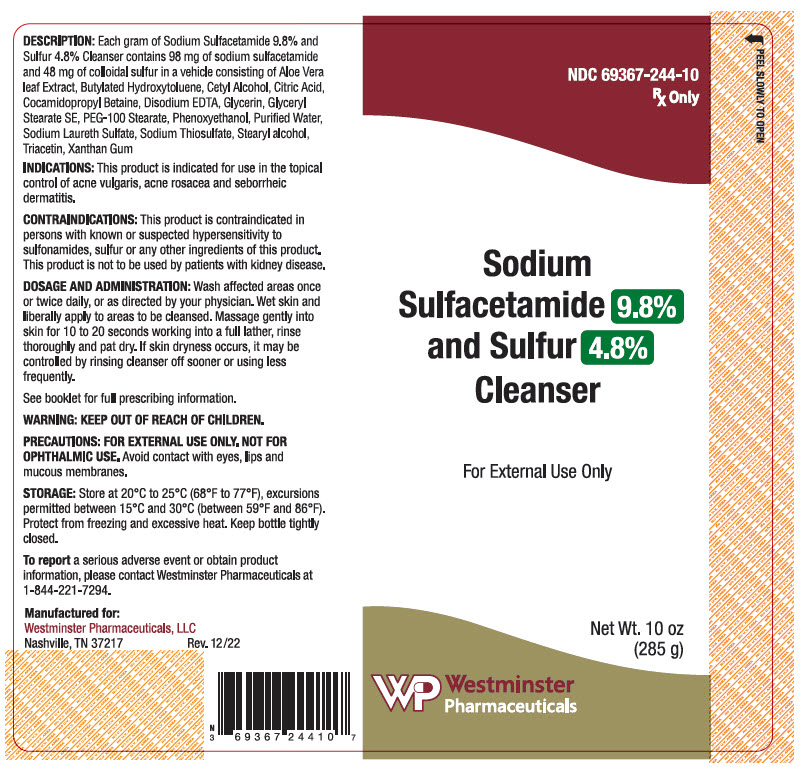
SODIUM SULFACETAMIDE, SULFUR 98 mg/g; 48 mg/g Liquid, 285 g
🆔 Identity & classification
Where does this data come from?
🏷️ RxNorm drug class
This medicine belongs to the Sulfonamide Antibacterial class.
Where does this data come from?
🏭 Manufacturer & labeler
Where does this data come from?
🩺 Clinical
This is a topical liquid containing sodium sulfacetamide and sulfur. Sulfacetamide is an antibiotic commonly used in skincare products for acne and bacterial skin conditions, while sulfur is typically used to treat acne, seborrheic dermatitis, and other skin disorders. The combination is applied directly to affected skin areas. This product is marketed without an approved FDA application.
Patient education
Supplement & herbal interactions
Where does this data come from?
Ask a licensed pharmacist directly — free, answered by our team.
🧪 Inactive Ingredients / Excipients
Inactive ingredients, also called excipients, are components of the drug product other than the active ingredient. They may include fillers, dyes, coatings, preservatives, flavors, or other formulation ingredients.
💡 Tap an ingredient (hover on desktop) to see what it is and why it’s used.
-
UNII 1P9D0Z171K
BHT is a synthetic antioxidant that prevents fats and oils in medicines from breaking down and becoming rancid. It helps keep the product stable and effective during storage.
-
UNII 936JST6JCN
Cetyl alcohol is a waxy, fatty substance derived from plant or animal sources. It acts as an emulsifier and thickener in medicines, helping blend oil and water components and giving products a smooth, creamy texture.
-
UNII 2968PHW8QP
A weak organic acid derived from citrus fruits or made through fermentation. It works as a buffer to control pH, a preservative to extend shelf life, and a flavoring agent in medications.
-
UNII 5OCF3O11KX
A plant-derived surfactant made from coconut oil. It helps mix oil and water ingredients together in the formulation and can improve how the medicine spreads or feels on the skin.
-
UNII 8NLQ36F6MM
Edetate disodium anhydrous is a chemical compound that binds to metal ions in a medicine. It's used as a stabilizer to prevent unwanted chemical reactions and help keep the drug product effective during storage.
-
UNII PDC6A3C0OX
Glycerin is a clear, thick liquid derived from plant oils or fats. It acts as a humectant to retain moisture, a sweetener, and a solvent in medications.
-
UNII FCZ5MH785I
A waxy substance made from glycerin and stearic acid. It works as an emulsifier to help mix oil and water ingredients together, and as a thickener to give the medicine its proper texture and consistency.
-
UNII YD01N1999R
A waxy substance made from polyethylene glycol and stearic acid. It helps mix oil and water-based ingredients together and serves as an emulsifier and solubilizer in liquid and semi-solid medicines.
-
UNII HIE492ZZ3T
Phenoxyethanol is a synthetic preservative and antimicrobial agent used to prevent bacterial and fungal growth in medicines and cosmetic products, extending shelf life and maintaining product safety.
-
UNII BPV390UAP0
Sodium laureth sulfate is a mild detergent and surfactant derived from coconut oil or petroleum. It helps mix oil and water in formulations and is often used as a cleaning or foaming agent in topical products like shampoos and cleansers.
-
UNII HX1032V43M
Sodium thiosulfate is a salt compound used in medicines as a buffer and pH regulator. It helps stabilize the medication and may also serve as a preservative or antioxidant to maintain product quality.
-
UNII 2KR89I4H1Y
Stearyl alcohol is a waxy, fatty substance derived from natural oils or made synthetically. It acts as an emulsifier and thickener in medicines, helping mix ingredients together and give the product the right texture.
-
UNII XHX3C3X673
Triacetin is a clear, oily liquid made from glycerin and acetic acid. It works as a plasticizer and solvent in medicines, helping soften coatings and improve how liquids mix together in formulations.
-
UNII 059QF0KO0R
Water is a liquid solvent that dissolves and mixes ingredients together in liquid medicines, syrups, and injections. It helps distribute the active drug evenly throughout the product.
-
UNII TTV12P4NEE
Xanthan gum is a thickening and stabilizing ingredient made from fermented corn or other sugars. It's added to medicines to improve texture, prevent separation of liquids and solids, and help the product stay consistent.
15 inactive ingredients listed in the exact product block matched to this NDC.
Where does this data come from?
ingredient classCode="IACT" elements from the exact product block matched by this NDC. Label-section narrative from DailyMed / the openFDA label index is shown separately when available.Inactive ingredient FAQ
Are inactive ingredients the same for every manufacturer?
Why might an inactive ingredient be missing?
Can inactive ingredients matter?
💲 Pricing
A drug doesn't have one price. Each row is a different public payment system, and none is what you'd pay at the counter — that depends on your insurance. The ⓘ on each row explains what it measures.
| Price system | Per g | Per package |
|---|---|---|
| Retail pharmacies payNADAC · weekly | $0.131 | $37.22 / 285 g |
| Medicaid paysCMS SDUD · 12 mo | $0.3518 | $100.26 / 285 g |
| Medicare drug plans payPart D · quarterly | No Part D plan price is available for this NDC in our data. | |
Where does this data come from?
🔁 Therapeutic equivalents
Where does this data come from?
⏳ Availability & generic status
We did not find an FDA-approved generic match for this exact strength, form and route.
Where does this data come from?
🗺️ Medicaid utilization & spend
📊 Medicare Part D spend CMS · PART D · 2026 (Q1)
📦 Packaging — all sizes for this product
| Package NDC | Description | Marketing start | Status |
|---|---|---|---|
| 69367-0244-10 You're viewing this | 285 g in 1 BOTTLE (69367-244-10) | 2020-05-05 | Active |
🧭 About this NDC listing & data coverage
Listed without an FDA application
This product's marketing category indicates it is marketed without an approved FDA application (no NDA, ANDA, or BLA on file). Having an NDC does not by itself establish FDA approval — the NDC Directory is a listing system, not an approval decision. Approval-linked data such as Orange Book therapeutic-equivalence ratings therefore does not apply.
What data is (and isn’t) available for this NDC — tap to expand
| NDC identity (package / product / labeler codes) | ✓ Available |
| Labeler | ✓ Available |
| Product & package description | ✓ Available |
| Marketing category & status | ✓ Available |
| Active ingredient / dosage form / route | ✓ Available |
| FDA label (SPL via DailyMed) | ✓ Available |
| Package photos | ✓ Available |
| Inactive ingredients (structured) | ✓ Available |
| NADAC pharmacy acquisition price (CMS) | ✓ Available |
| Orange Book / therapeutic-equivalence data | — Not published for this NDC Applies only to products approved under an NDA/ANDA; many listings are out of scope. |
| HCPCS J-code billing crosswalk | — Not published for this NDC Most self-administered / retail products have no J-code — that is normal. |
| Medicaid utilization (CMS SDUD) | ✓ Available |
Questions about this listing
Is this NDC FDA-approved?
Is the NDC printed on the package the same as the 11-digit billing NDC?
What do the three segments of this NDC mean?
Is this package still being marketed?
Who lists this product with the FDA?
Do I need a prescription for this product?
Where does this data come from?
📄 Full prescribing information FDA SPL
🎯 Indications and Usage ▾
INDICATIONS This product is indicated for use in the topical control of acne vulgaris, acne rosacea and seborrheic dermatitis.
⏱️ Dosage and Administration ▾
DOSAGE AND ADMINISTRATION Wash affected areas once or twice daily, or as directed by your physician. Wet skin and liberally apply to areas to be cleansed. Massage gently into skin for 10 to 20 seconds working into a full lather, rinse thoroughly and pat dry. If skin dryness occurs, it may be controlled by rinsing cleanser off sooner or using less frequently. See booklet for full prescribing information.
⛔ Contraindications ▾
CONTRAINDICATIONS This product is contraindicated in persons with known or suspected hypersensitivity to sulfonamides, sulfur or any other ingredients of this product. This product is not to be used by patients with kidney disease.
⚠️ Warnings ▾
WARNINGS Sulfonamides are known to cause Stevens-Johnson syndrome in hypersensitive individuals. Stevens-Johnson syndrome also has been reported following the use of sodium sulfacetamide topically. Cases of drug-induced systemic lupus erythematosus from topical sulfacetamide also have been reported. In one of these cases, there was a fatal outcome. KEEP OUT OF REACH OF CHILDREN.
🔄 Drug Interactions ▾
Drug Interactions This product is incompatible with silver preparations.
🤰 Pregnancy ▾
Pregnancy Category C Animal reproduction studies have not been conducted with this product. It is also not known whether this product can affect reproduction capacity or cause fetal harm when administered to a pregnant woman. This product should be used by a pregnant woman only if clearly needed or when potential benefits outweigh potential hazards to the fetus.
🧒 Pediatric Use ▾
Pediatric Use Safety and effectiveness in children under the age of 12 have not been established.
🧬 Clinical Pharmacology ▾
CLINICAL PHARMACOLOGY Sodium sulfacetamide exerts a bacteriostatic effect against sulfonamide sensitive Gram-positive and Gram-negative microorganisms commonly isolated from secondary cutaneous pyogenic infections. It acts by restricting the synthesis of folic acid required by bacteria for growth, by its competition with para-aminobenzoic acid. There is no clinical data available on the degree and rate of systemic absorption of this product when applied to the skin or scalp.
However, significant absorption of sodium sulfacetamide through the skin has been reported. The following in vitro data is available but the clinical significance is unknown. Organisms that show susceptibility to sodium sulfacetamide are: Streptococci, Staphylococci, E. coli, Klebsiella pneumoniae, Pseudomonas pyocyanea, Salmonella species, Proteus vulgaris, Nocardia and Actinomyces.
The exact mode of action of sulfur in the treatment of acne is unknown, but it has been reported that it inhibits the growth of Propionibacterium acnes and the formation of free fatty acids.
📦 Storage and Handling ▾
STORAGE Store at 20°C to 25°C (68°F to 77°F), excursions permitted between 15°C and 30°C (between 59°F and 86°F). Protect from freezing and excessive heat. Keep bottle tightly closed.
📋 Description ▾
DESCRIPTION Each gram of Sodium Sulfacetamide 9.8% and Sulfur 4.8% Cleanser contains 98 mg of sodium sulfacetamide and 48 mg of colloidal sulfur in a vehicle consisting of Aloe Vera leaf Extract, Butylated Hydroxytoluene, Cetyl Alcohol, Citric Acid, Cocamidopropyl Betaine, Disodium EDTA, Glycerin, Glyceryl Stearate SE, PEG-100 Stearate, Phenoxyethanol, Purified Water, Sodium Laureth Sulfate, Sodium Thiosulfate, Stearyl alcohol, Triacetin, Xanthan Gum Sodium sulfacetamide is a sulfonamide with antibacterial activity while sulfur acts as a keratolytic agent.
Sodium sulfacetamide is C 8 H 9 N 2 NaO 3 S∙H 2 O with molecular weight of 254.24. Chemically sodium sulfacetamide is N-[(4-aminophenyl) sulfonyl]-acetamide, monosodium salt, monohydrate. The structural formula is: Sodium sulfacetamide is an odorless, white, crystalline powder with a bitter taste.
It is freely soluble in water, sparingly soluble in alcohol, while practically insoluble in benzene, in chloroform and in ether. Chemical Structure
💬 Information for Patients ▾
Information for Patients Patients should discontinue the use of this product if the condition becomes worse or if a rash develops in the area being treated or elsewhere. The use of this product also should be discontinued promptly and the physician notified if any arthritis, fever or sores in the mouth develop. Avoid contact with eyes, eyelids, lips and mucous membranes.