
AKYNZEO Fosnetupitant and Palonosetron 260 mg; .28 mg Injection, 1 vial — NDC 69639-102-01 (Billing 69639-0102-01)
This is a package of 1 vial of AKYNZEO Fosnetupitant and Palonosetron 260 mg; .28 mg Injection from Helsinn Therapeutics (U.S.), Inc., no longer marketed (first marketed Apr 2018), no longer in the FDA NDC Directory. It is this product's only package size.
NDC database record
One package, one record: these facts belong to NDC 69639-102-01 alone.
- Record
- FDA NDC Directory package listing · Human prescription drug
- Code segments
- 69639 labeler · 102 product · 01 package
- Package marketed since
- Apr 20, 2018
- Sample package
- No — commercial package
- Listing certified through
- Dec 31, 2027
- Billing quantity
- 1 EA per package
- Barcode (UPC)
- 0369639101046
- Medicaid fills, this package
- 45 prescriptions in the last four reported quarters
- FDA record last changed
- Jun 25, 2026
Identity & classification
Regulatory identifiers FDA, NLM and CMS codes for this package
Drug-database identifiers Medi-Span GPI and First Databank GCN / HICL / AHFS classification
- GSN (GCN sequence number): 078376
- GCN: 44696
- GPI-14 (Medi-Span): 50309902222120
- HICL (First Databank): 044890
- AHFS class code: 56:22.20.00
- RxCUI (RxNorm): 1552343
Where does this data come from?
- FDA openFDA NDC Directory · synced Oct 8, 2026
- FDA label on DailyMed · label index refreshed Oct 6, 2026
- RxNorm (NLM RxNav) · catalog refreshed Oct 1, 2026
- Medi-Span GPI (licensed)
- First Databank (licensed) · refreshed Oct 8, 2026
RxNorm drug class
This medicine belongs to the Substance P/Neurokinin-1 Receptor Antagonist class.
Where does this data come from?
- RxClass (NLM) · catalog refreshed Oct 1, 2026
Clinical
- It helps prevent nausea and vomiting caused by cancer chemotherapy. You take it together with dexamethasone. It works on both the first day and the days afterward.
- Take one Akynzeo capsule by mouth about 1 hour before chemotherapy starts. You can take it with or without food. Follow your prescriber's directions on the dexamethasone too.
- The most common are headache, tiredness or weakness, indigestion, constipation and skin redness. These were generally manageable in studies. Tell your care team if they bother you.
- Get emergency help for signs of a serious allergic reaction. Call your doctor right away for agitation, hallucinations, fast heartbeat, heavy sweating, fever, tremor, muscle stiffn...
Patient education
Supplement & herbal interactions
Where does this data come from?
- MedlinePlus (NLM) · refreshed Oct 1, 2026
- FDA label on DailyMed · label index refreshed Oct 6, 2026
Ask a licensed pharmacist directly — free, answered by our team.
Pricing
A drug doesn't have one price. Each row is a different public payment system, and none is what you'd pay at the counter — that depends on your insurance. The ⓘ on each row explains what it measures.
| Price system | Per each | Per package |
|---|---|---|
| Retail pharmacies payNADAC · weekly | Not in the retail survey — common for institutional, discontinued, or low-volume packs. | |
| Medicaid paysCMS SDUD · 12 mo | $1,229.87 | $1,229.87 / 1 injection |
| Medicare drug plans payPart D · quarterly | No Part D plan price is available for this NDC in our data. | |
| Medicare Part B allowsASP · J1454 | $503.848 / J1454 unit | — |
Where does this data come from?
- CMS NADAC weekly file
- CMS ASP pricing files · refreshed Sep 20, 2026
- CMS Medicaid State Drug Utilization Data · through Q1 2026
- CMS Part D plan pricing files · refreshed Sep 24, 2026
- VA National Acquisition Center price file
Billing & reimbursement
Where does this data come from?
- CMS ASP NDC-HCPCS crosswalk · refreshed Sep 22, 2026
- DMEPDAC NDC-HCPCS crosswalk
- openFDA NSDE billing units · refreshed Oct 7, 2026
Packaging — all sizes for this product
| Package NDC | Description | Marketing start | Marketing end | Status |
|---|---|---|---|---|
| 69639-0102-01 You're viewing this Main listing | 1 VIAL in 1 CARTON / 1 INJECTION in 1 VIAL | 2018-04-20 | — | Discontinued by firm |
Therapeutic equivalents
| Product | Labeler | Pack | NADAC/unit | TE | Status | Price vs. this |
|---|---|---|---|---|---|---|
| Akynzeo 260 mg/1; .28 mgthis 69639-0102-01 | Helsinn | 1 vial | — | — | Discontinued | — |
Where does this data come from?
- FDA openFDA NDC Directory · synced Oct 8, 2026
- FDA Orange Book · refreshed Oct 3, 2026
- CMS NADAC weekly file
Availability & generic status
We did not find an FDA-approved generic match for this exact strength, form and route. Patent/protection dates below may affect future generic timing.
Why the date isn’t exact: Generic timing can change because patents may be challenged, settled, licensed, added, removed, or worked around with a narrower label — and FDA approval does not always mean a pharmacy can get the generic today.
🛈 What do these terms mean?
- Patent
- Legal protection listed in the Orange Book that may delay generic approval or launch. Issued by the U.S. Patent & Trademark Office.
- Substance patent
- Covers the active drug molecule itself — the hardest to design around. A generic generally can’t launch until it expires.
- Formulation (product) patent
- Covers a specific formulation or dosage form. A generic can sometimes work around it with a different formulation.
- Method-of-use patent
- A patent covering one specific approved use of the drug — not necessarily the whole molecule. A generic can sometimes launch with a “skinny label” that carves out the protected use and keeps the others.
- Skinny label
- A generic label that omits a still-patented use when the FDA allows it — letting a generic reach the market for the unprotected uses.
- Exclusivity
- FDA-granted marketing protection, separate from patents — e.g. 5-yr new chemical entity, 7-yr orphan drug, or a +6-month pediatric extension.
- Paragraph IV
- A generic applicant’s formal challenge to a listed patent. It can potentially lead to earlier generic entry, but often involves litigation or a settlement.
- RLD / RS
- Reference Listed Drug — the brand product the FDA uses as the reference for generic applications. Reference Standard — the product the FDA expects generics to compare against in bioequivalence testing.
- TE / AB rating
- FDA therapeutic-equivalence rating. An AB rating generally means the FDA considers a generic therapeutically equivalent to — and substitutable for — the brand.
- LOE (loss of exclusivity)
- The latest patent or exclusivity currently listed — the loss-of-exclusivity / latest-listed-protection date shown on this page. Paragraph-IV challenges and settlements can move the real date earlier; FDA approval and a manufacturer’s decision to market can move it later.
Built from the FDA Orange Book. The bars above are scaled to each protection’s expiry; the red LOE marker is the last one to lapse.
| Patent | Type | Use code | Expires |
|---|---|---|---|
| US 10208073 ↗ | Method of use | U-2301 | May 23, 2032 |
| US 8895586 ↗ | Method of use | U-2301 | May 23, 2032 |
| US 9403772 ↗ | Drug substance | U-2301 | May 23, 2032 |
| US 9186357 ↗ | Method of use | U-2301 | Nov 18, 2030 |
| US 8895586 ↗ | Method of use | U-2301 | May 23, 2032 |
| US 9403772 ↗ | Drug substance | U-2301 | May 23, 2032 |
| US 9186357 ↗ | Method of use | U-2301 | Nov 18, 2030 |
| US 10208073 ↗ | Method of use | U-2301 | May 23, 2032 |
| US 10828297 ↗ | Method of use | U-2301 | Dec 17, 2030 |
| US 10828297 ↗ | Method of use | U-2301 | Dec 17, 2030 |
| US 11312698 ↗ | Drug substance | — | May 23, 2032 |
| US 11529362 ↗ | Drug product | — | Jun 2, 2037 |
| US 11312698 ↗ | Drug substance | — | May 23, 2032 |
| US 9908907 ↗ | Drug substance | — | May 23, 2032 |
| US 8426450 ↗ | Drug substance | — | May 23, 2032 |
| US 8426450 ↗ | Drug substance | — | May 23, 2032 |
| US 12208109 ↗ | Drug product | — | Jun 2, 2037 |
| US 10624911 ↗ | Drug product | — | Jun 2, 2037 |
| US 11529362 ↗ | Drug product | — | Jun 2, 2037 |
| US 10624911 ↗ | Drug product | — | Jun 2, 2037 |
| US 9908907 ↗ | Drug substance | — | May 23, 2032 |
| US 12208109 ↗ | Drug product | — | Jun 2, 2037 |
| US 10717721 ↗ | Drug substance | — | May 23, 2032 |
| US 10717721 ↗ | Drug substance | — | May 23, 2032 |
Is there a generic version of AKYNZEO 235-0.25 MG VIAL?
The FDA approved a generic — why can’t I get it at my pharmacy yet?
Why do different websites show different generic release dates?
What does “FDA listed” mean?
What does a patent or protection date mean here?
What does “current Orange Book estimate” mean?
Can a generic come out before the last patent expires?
Can a generic come out after the listed dates?
What is the difference between patents and exclusivity?
Why are there multiple patent dates?
Where does this data come from?
- FDA Orange Book · refreshed Oct 3, 2026
What it looks like
Where does this data come from?
- FDA label on DailyMed · label index refreshed Oct 6, 2026
Inactive Ingredients / Excipients
Inactive ingredients, also called excipients, are components of the drug product other than the active ingredient. They may include fillers, dyes, coatings, preservatives, flavors, or other formulation ingredients.
🧪 Avoiding an ingredient? See Netupitant and Palonosetron inactive ingredients by manufacturer: every current product's list side by side, so you can ask your pharmacy for the version that does not list it.
Where does this data come from?
IACT rows and label-wide narrative are kept separate; availability and product-level specificity depend on the submitted label.- FDA label on DailyMed · label index refreshed Oct 6, 2026
- FDA openFDA NDC Directory · synced Oct 8, 2026
Inactive ingredient FAQ
Are inactive ingredients the same for every manufacturer?
Why might an inactive ingredient be missing?
Can inactive ingredients matter?
Manufacturer & labeler
More NDCs from Helsinn Therapeutics (U.S.), Inc. labeler code 69639
- AKYNZEO Netupitant and Palonosetron 300 mg; .5 mg Capsule NDC 69639-101-01
- AKYNZEO Fosnetupitant and Palonosetron 260 mg/20mL; .28 mg/20mL Injection NDC 69639-105-01
- AKYNZEO Fosnetupitant and Palonosetron 260 mg/20mL; .28 mg/20mL Injection NDC 69639-106-01
- VALCHLOR mechlorethamine hydrochloride .012 g/60g Gel NDC 69639-120-01
Where does this data come from?
- FDA openFDA NDC Directory · synced Oct 8, 2026
- Drugs@FDA
Full prescribing information FDA SPL
🎯 Indications and Usage ▾
1 INDICATIONS AND USAGE AKYNZEO capsules is indicated in combination with dexamethasone in adults for the prevention of acute and delayed nausea and vomiting associated with initial and repeat courses of cancer chemotherapy, including, but not limited to, highly emetogenic chemotherapy. AKYNZEO capsules is a combination of palonosetron and netupitant: palonosetron prevents nausea and vomiting during the acute phase and netupitant prevents nausea and vomiting during both the acute and delayed phase after cancer chemotherapy.
AKYNZEO for injection and AKYNZEO injection are indicated in combination with dexamethasone in adults for the prevention of acute and delayed nausea and vomiting associated with initial and repeat courses of highly emetogenic cancer chemotherapy. AKYNZEO for injection is a combination of palonosetron and fosnetupitant, a prodrug of netupitant: palonosetron prevents nausea and vomiting during the acute phase and fosnetupitant prevents nausea and vomiting during both the acute and delayed phase after cancer chemotherapy.
Limitations of Use AKYNZEO for injection and AKYNZEO injection have not been studied for the prevention of nausea and vomiting associated with anthracycline plus cyclophosphamide chemotherapy. AKYNZEO capsules is indicated in combination with dexamethasone in adults for the prevention of acute and delayed nausea and vomiting associated with initial and repeat courses of cancer chemotherapy, including, but not limited to, highly emetogenic chemotherapy. AKYNZEO for injection and AKYNZEO injection are indicated in combination with dexamethasone in adults for the prevention of acute and delayed nausea and vomiting associated with initial and repeat courses of highly emetogenic cancer chemotherapy.
Limitations of Use AKYNZEO for injection and AKYNZEO injection have not been studied for the prevention of nausea and vomiting associated with anthracycline plus cyclophosphamide chemotherapy. AKYNZEO is a combination of palonosetron, a serotonin-3 (5-HT3) receptor antagonist, and netupitant or fosnetupitant, substance P/neurokinin-1 (NK-1) receptor antagonists: palonosetron prevents nausea and vomiting during the acute phase and netupitant/fosnetupitant prevents nausea and vomiting during both the acute and delayed phase after cancer chemotherapy.
( 1 )
⏱️ Dosage and Administration ▾
2 DOSAGE AND ADMINISTRATION Recommended Dosage AKYNZEO capsules: The recommended dosage is one AKYNZEO capsule administered 1 hour prior to the start of chemotherapy, with or without food. ( 2.1 ) Preparation and Administration AKYNZEO injection is supplied either as a Ready-to-Use (with hanger) vial or a To-be-Diluted vial. (2.2) AKYNZEO for injection requires dilution prior to administration.
( 2.3 ) See full prescribing information for information on preparation, administration, and incompatibilities for each product. (2.2, 2.3, 2.4 )
2.1Recommended Dosage The recommended dosages of AKYNZEO and dexamethasone in adults for the prevention of nausea and vomiting associated with administration of emetogenic chemotherapy are shown in Table 1. AKYNZEO capsules can be taken with or without food. Table 1: Antiemetic Treatment Regimen Treatment Regimen Day 1 Days 2 to 4 Highly Emetogenic Chemotherapy, including Cisplatin-Based Chemotherapy AKYNZEO capsules 1 capsule of AKYNZEO 1 hour before chemotherapy Dexamethasone 8 mg once a day Dexamethasone 12 mg 30 minutes before chemotherapy AKYNZEO for injection and AKYNZEO injection 1 vial of AKYNZEO Infuse over 30 minutes starting 30 minutes before chemotherapy [see Dosage and Administration (2.2)] Dexamethasone 8 mg once a day Dexamethasone 12 mg 30 minutes before chemotherapy Anthracyclines and Cyclophosphamide-Based Chemotherapy and Chemotherapy Not Considered Highly Emetogenic AKYNZEO capsules 1 capsule of AKYNZEO 1 hour before chemotherapy None Dexamethasone 12 mg 30 minutes before chemotherapy
2.2Preparation and Administration of AKYNZEO Injection (Ready-to-Use and To-be-Diluted) AKYNZEO injection is supplied as either a Ready-to-Use (with hanger) vial or a To-be-Diluted vial. AKYNZEO injection (Ready-to-Use; with hanger) See Table 2 for preparation instructions of AKYNZEO injection (Ready-to-Use) for intravenous infusion. AKYNZEO injection (Ready-to-Use) does not require dilution prior to administration.
Table 2: Preparation and Administration of AKYNZEO Injection (Ready-to-Use) for Intravenous Infusion Step 1 Before administration, inspect the solution for particulate matter and discoloration. Discard the vial if particulates and/or discoloration are observed. Step 2 Using aseptic technique, insert a vented intravenous set through the septum of the vial.
Once the stopper is punctured, use immediately. Step 3 To administer, invert and hang the vial utilizing the strap affixed to the bottom of the vial. Step 4 Administer over 30 minutes as an intravenous infusion.
At the end of the infusion, flush the infusion line with 0.9% Sodium Chloride Injection, USP or with 5% Dextrose injection, USP to ensure complete drug administration. AKYNZEO injection (Ready-to-Use) contains no antimicrobial preservatives and is intended for single use only. Compatibility AKYNZEO injection (Ready-to-Use) is compatible with intravenous dexamethasone sodium phosphate which can be infused simultaneously.
Do not add dexamethasone sodium phosphate to the AKYNZEO injection (Ready-to-Use) vial. Stability and Storage Use immediately once the stopper is punctured. AKYNZEO Injection (To-be-Diluted) See Table 3 for preparation instructions of AKYNZEO injection (To-be-Diluted) for intravenous infusion with dilution.
Table 3: Preparation and Administration of AKYNZEO Injection (To-be-Diluted) for Intravenous Infusion Step 1 Before administration, inspect the solution for particulate matter and discoloration. Discard the vial if particulates and/or discoloration are observed. Step 2 Aseptically prepare an infusion vial or bag filled with 30 mL of 5% Dextrose injection, USP or 0.9% Sodium Chloride injection, USP.
Step 3 Aseptically withdraw the entire volume of solution from the AKYNZEO vial (20 mL) and transfer it into the infusion vial or bag containing 30 mL of 5% Dextrose injection, USP or 0.9% Sodium Chloride injection, USP to yield a total volume of 50 mL. Step 4 Gently invert the vial or bag until complete dis… [Excerpted — this section continues on DailyMed.]
💊 Dosage Forms and Strengths ▾
3 DOSAGE FORMS AND STRENGTHS Capsules: 300 mg netupitant/0.5 mg palonosetron in a hard gelatin capsule with white body and caramel cap with “HE1” printed on the body. For Injection: 235 mg fosnetupitant/0.25 mg palonosetron white to off-white lyophilized powder in single-dose vial for reconstitution. Injection: 235 mg fosnetupitant/0.25 mg palonosetron per 20 mL (11.75 mg/0.0125 mg per mL) as a clear solution in single-dose vial.
Ready-to-Use (with hanger) To-be-Diluted Capsules : 300 mg netupitant/0.5 mg palonosetron. (3) For Injection : 235 mg fosnetupitant/0.25 mg palonosetron as a lyophilized powder in single-dose vial for reconstitution. (3) Injection : 235 mg fosnetupitant/0.25 mg palonosetron (235 mg/0.25 mg per 20 mL (11.75 mg/0.0125 mg per mL) solution in single-dose vial.
(3) Ready-to-Use (with hanger) To-be-Diluted
⛔ Contraindications ▾
4 CONTRAINDICATIONS None. None ( 4 )
⚠️ Warnings and Cautions ▾
5 WARNINGS AND PRECAUTIONS Hypersensitivity reactions, including anaphylaxis, have been reported in patients receiving palonosetron, one of the components of AKYNZEO, with or without known hypersensitivity to other 5-HT 3 receptor antagonists. ( 5.1 ) Serotonin syndrome has been reported with 5-HT 3 receptor antagonists alone but particularly with concomitant use of serotonergic drugs. If such symptoms occur, discontinue AKYNZEO and initiate supportive treatment.
If concomitant use of AKYNZEO with other serotonergic drugs is clinically warranted, patients should be made aware of a potential increased risk for serotonin syndrome. ( 5.2, 7.3 )
5.1Hypersensitivity Hypersensitivity reactions, including anaphylaxis, have been reported in patients treated with palonosetron, one of the components of AKYNZEO, with or without known hypersensitivity to other 5-HT 3 receptor antagonists.
5.2Serotonin Syndrome The development of serotonin syndrome has been reported with 5-HT 3 receptor antagonists. Most reports have been associated with concomitant use of serotonergic drugs (e.g., selective serotonin reuptake inhibitors (SSRIs), serotonin and norepinephrine reuptake inhibitors (SNRIs), monoamine oxidase inhibitors, mirtazapine, fentanyl, lithium, tramadol, and intravenous methylene blue). Some of the reported cases were fatal.
Serotonin syndrome occurring with overdose of another 5-HT 3 receptor antagonist alone has also been reported. The majority of reports of serotonin syndrome related to 5-HT 3 receptor antagonist use occurred in a post-anesthesia care unit or an infusion center. Symptoms associated with serotonin syndrome may include the following combination of signs and symptoms: mental status changes (e.g., agitation, hallucinations, delirium, and coma), autonomic instability (e.g., tachycardia, labile blood pressure, dizziness, diaphoresis, flushing, and hyperthermia), neuromuscular symptoms (e.g., tremor, rigidity, myoclonus, hyperreflexia, and incoordination), seizures, with or without gastrointestinal symptoms (e.g., nausea, vomiting, diarrhea).
Patients should be monitored for the emergence of serotonin syndrome, especially with concomitant use of AKYNZEO and other serotonergic drugs. If symptoms of serotonin syndrome occur, discontinue AKYNZEO and initiate supportive treatment. Patients should be informed of the increased risk of serotonin syndrome, especially if AKYNZEO is used concomitantly with other serotonergic drugs [see Drug Interactions ( 7.3 )] .
🤒 Adverse Reactions ▾
6 ADVERSE REACTIONS The following clinically significant adverse reactions are found elsewhere in the labeling: Hypersensitivity Reactions [see Warnings and Precautions ( 5.1 )] Serotonin Syndrome [see Warnings and Precautions ( 5.2 )] Most common adverse reactions (≥3%) for AKYNZEO capsules are headache, asthenia, dyspepsia, fatigue, constipation and erythema ( 6.1 ) The safety profile of AKYNZEO for injection was generally similar to that seen with AKYNZEO capsules. ( 6.1 ) To report SUSPECTED ADVERSE REACTIONS, contact HELSINN at 1-844-357-4668 or FDA at 1-800-FDA-1088 or www.fda.gov/medwatch .
6.1Clinical Trials Experience Because clinical trials are conducted under widely varying conditions, adverse reaction rates observed in the clinical trials of a drug cannot be directly compared to rates in the clinical trials of another drug and may not reflect the rates observed in practice. AKYNZEO Capsules The overall safety of AKYNZEO capsules was evaluated in 1538 cancer patients and healthy subjects in clinical trials. The data described below reflect exposure to AKYNZEO in 1169 cancer patients, receiving at least one cycle of cancer chemotherapy in 3 active-controlled trials [see Clinical Studies ( 14 .1 )] , including 782 exposed to AKYNZEO for at least 4 cycles and 321 exposed for at least 6 cycles, up to a maximum of 12 cycles of chemotherapy.
The median age was 55, 79% were female, 83% were White, 13% were Asian, and 4% were Hispanic. All patients received a single oral dose of AKYNZEO 1 hour prior to the start of each chemotherapy cycle. In all studies, dexamethasone was co-administered with AKYNZEO [see Clinical Studies ( 14.1 ), Table 16 and Table 18 ].
Cisplatin Based Highly Emetogenic Chemotherapy In a single-cycle study of patients receiving cisplatin based highly emetogenic chemotherapy, 136 patients were treated with AKYNZEO. Table 5 shows adverse reactions reported at an incidence of at least 3% and for which the AKYNZEO rate exceeded palonosetron alone. Table 5: Adverse Reactions Occurring in ≥3% of Cancer Patients Receiving AKYNZEO capsules and Cisplatin Based Highly Emetogenic Chemotherapy (Cycle 1) Adverse Reactions AKYNZEO netupitant 300 mg/ palonosetron 0.5 mg (N=136) Palonosetron 0.5 mg (N=136) Dyspepsia 4% 2% Fatigue 4% 2% Constipation 3% 1% Erythema 3% 2% Anthracyclines and Cyclophosphamide Based Chemotherapy In a study of patients receiving anthracycline and cyclophosphamide based chemotherapy, 725 patients were treated with AKYNZEO capsules during Cycle 1, and 635 of these patients continued for up to 8 cycles in a multiple-cycle extension.
Table 6 shows adverse reactions reported at an incidence of at least 3% and for which the AKYNZEO capsules rate exceeded palonosetron alone during Cycle 1. The adverse reaction profile in subsequent cycles was similar to that observed in Cycle 1. Table 6: Adverse Reactions Occurring in ≥3% of Cancer Patients Receiving AKYNZEO capsules and Anthracyclines and Cyclophosphamide Based Chemotherapy (Cycle 1) Adverse Reactions AKYNZEO netupitant 300 mg/ palonosetron 0.5 mg (N=725) Palonosetron 0.5 mg (N=725) Headache 9% 7% Asthenia 8% 7% Fatigue 7% 5% In addition to the adverse reactions shown above, there were reports of concomitant elevations of transaminases greater than 3 times the upper limit of normal and total bilirubin in both arms of the two trials that compared AKYNZEO capsules to oral palonosetron, and the frequency of these elevations was comparable between treatment groups.
See Table 7. Table 7: Liver Function Laboratory Abnormalities ULN = upper limit of normal Laboratory Changes AKYNZEO netupitant 300 mg/ palonosetron 0.5 mg N=861 Palonosetron 0.5 mg N=861 AST > 3 x ULN and/or ALT > 3 x ULN with Total Bilirubin > ULN 3 (0.3%) 5 (0.6%) AST > 10 x ULN and/or ALT > 10 x ULN with Total Bilirubin > ULN - 2 (0.2%) AST > 3 x ULN and/or ALT > 3 x ULN with Total Bilirubin ≥ 2 x ULN 1 (0.1%) 1 (0.1%) In a multi-cycle safety study of 412 patients, the safety profile of… [Excerpted — this section continues on DailyMed.]
🔄 Drug Interactions ▾
7 DRUG INTERACTIONS CYP3A4 Substrates: inhibition of CYP3A4 by netupitant can result in increased plasma concentrations of the concomitant drug for 6 days after single dosage administration of AKYNZEO; avoid concomitant CYP3A4 substrates for one week, if feasible. If not avoidable, consider dose reduction of the CYP3A4 substrate ( 7.1 ) CYP3A4 Inducers (e.g., rifampin): decreased plasma concentrations of netupitant; avoid use ( 7.2 )
7.1Effects of AKYNZEO on Other Drugs Interaction with CYP3A4 Substrates Netupitant is a moderate inhibitor of CYP3A4. AKYNZEO should be used with caution in patients receiving concomitant medications that are primarily metabolized through CYP3A4. A single oral dose of netupitant 300 mg significantly inhibits CYP3A4 for 6 days.
Avoid concomitant use of drugs that are CYP3A4 substrates for one week, if feasible. If not avoidable, consider dose reduction of CYP3A4 substrates. Dexamethasone A single oral dose of netupitant 300 mg or a single fosnetupitant infusion of 235 mg increased the systemic exposure of concomitant dexamethasone more than 2-fold on Days 2 and 4.
Administer a reduced dose of dexamethasone with AKYNZEO [see Dosage and Administration ( 2.1 ), Clinical Pharmacology ( 12.3 )] . Midazolam When administered with netupitant, the systemic exposure to midazolam was significantly increased. Consider the potential effects of increased plasma concentrations of midazolam or other benzodiazepines metabolized via CYP3A4 (alprazolam, triazolam) when administering these drugs with AKYNZEO [see Clinical Pharmacology ( 12.3 )] .
Chemotherapeutic Agents The systemic exposure of chemotherapy agents metabolized by CYP3A4 can increase when administered with AKYNZEO. Chemotherapy agents that are known to be metabolized by CYP3A4 include docetaxel, paclitaxel, etoposide, irinotecan, cyclophosphamide, ifosfamide, imatinib, vinorelbine, vinblastine, and vincristine [see Clinical Pharmacology ( 12.3 )] . Caution and monitoring for chemotherapeutic related adverse reactions are advised in patients receiving chemotherapy agents metabolized primarily by CYP3A4.
Oral Contraceptives There is no clinically significant effect of AKYNZEO on the efficacy of oral contraceptives containing levonorgestrel and ethinyl estradiol [see Clinical Pharmacology ( 12.3 )] . Warfarin Although it was predicted that co-administration of intravenous AKYNZEO with warfarin would not substantially increase the systemic exposure to S-warfarin (CYP2C9 substrate), the active enantiomer, the effects of AKYNZEO for injection and AKYNZEO capsules on INR and prothrombin time have not been studied. Monitor INR and adjust the dosage of warfarin, as needed with concomitant use of AKYNZEO, to maintain the target INR range.
7.2Effects of Other Drugs on AKYNZEO Netupitant is mainly metabolized by CYP3A4. Palonosetron is mainly metabolized by CYP2D6 and to a lesser extent by CYP3A4 and CYP1A2. CYP3A4 Inducers Avoid concomitant use of AKYNZEO in patients who are chronically using a strong CYP3A4 inducer such as rifampin.
A strong CYP3A inducer can decrease the efficacy of AKYNZEO by substantially reducing plasma concentrations of the netupitant component [see Clinical Pharmacology ( 12.3 )] . CYP3A4 Inhibitors Concomitant use of AKYNZEO with a strong CYP3A4 inhibitor (e.g., ketoconazole) can increase the systemic exposure to the netupitant component of AKYNZEO. However, no dosage adjustment is necessary for single dose administration of AKYNZEO [see Clinical Pharmacology ( 12.3 )] .
7.3Serotonergic Drugs Serotonin syndrome (including altered mental status, autonomic instability, and neuromuscular symptoms) has been described following the concomitant use of 5-HT 3 receptor antagonists and other serotonergic drugs, including selective serotonin reuptake inhibitors (SSRIs) and serotonin and noradrenaline reuptake inhibitors (SNRIs). If symptoms occur, discontinue AKYNZEO and initiate supportive treatment [see Warnings and Precautions ( 5.2 )].
👥 Use in Specific Populations ▾
8 USE IN SPECIFIC POPULATIONS Pregnancy: May cause fetal harm ( 8.1 ). Hepatic Impairment: Avoid use in patients with severe hepatic impairment ( 8.6 ) Renal Impairment: Avoid use in patients with severe renal impairment or end-stage renal disease ( 8.7 )
8.1Pregnancy Risk Summary Limited available data with AKYNZEO use in pregnant women are insufficient to inform a drug- associated risk of adverse developmental outcomes. In animal reproduction studies with netupitant, no effects on embryo-fetal development were observed following daily oral administration in pregnant rats during the period of organogenesis at doses up to 3.7 times the human AUC (area under the plasma concentration-time curve) at the recommended single dose to be given with each cycle of chemotherapy.
However, a dose-dependent increase in adverse effects on embryo-fetal development was observed following daily oral administration of netupitant in pregnant rabbits during the period of organogenesis with doses at least 0.2 times the human AUC at the recommended single dose to be given with each cycle of chemotherapy. Daily oral administration of netupitant in rats up to 3.7 times the human AUC at the recommended dose during organogenesis through lactation produced no adverse effects in the offspring (see Data). In animal reproduction studies with fosnetupitant, delayed ossification of pubis occurred after intravenous administration in rats during the period of organogenesis at a dose 3 times the human AUC for netupitant at the recommended single dose to be given with each cycle of chemotherapy.
In pregnant rabbits, an increase in resorptions was observed with daily intravenous administration of fosnetupitant during the period of organogenesis at doses up to 9 times the human AUC for fosnetupitant and 0.4 times the human AUC for netupitant at the recommended single dose to be given with each cycle of chemotherapy. Daily intravenous administration of fosnetupitant (3 times the human AUC for netupitant at the recommended single dose to be given with each cycle of chemotherapy) in rats during organogenesis through lactation produced lower bodyweight in offspring at birth through maturation, and delayed physical development (see Data).
In animal reproduction studies with palonosetron, no effects on embryo-fetal development were observed following oral administration during the period of organogenesis at doses up to 921 and 1841 times the recommended oral dose in rats and rabbits, respectively (see Data). Based on animal data from netupitant studies, advise pregnant women of the potential risk to a fetus. The estimated background risk of major birth defects and miscarriage for the indicated populations are unknown.
All pregnancies have a background risk of birth defect, loss, or other adverse outcomes. In the U.S. general population, the estimated background risk of major birth defects and miscarriage in clinically recognized pregnancies is 2 to 4% and 15 to 20%, respectively. Data Animal Data Netupitant Daily oral administration of up to 30 mg/kg netupitant in rats (3.7 times the human AUC at the recommended single dose to be given with each cycle of chemotherapy) during the period of organogenesis produced no effects on embryo-fetal development.
However, an increased incidence of external and skeletal abnormalities in rabbit fetuses was observed following daily oral administration of netupitant in rabbits at 10 mg/kg/day and higher (0.2 times the human AUC at the recommended single dose to be given with each cycle of chemotherapy) during the period of organogenesis. These abnormalities included positional abnormalities in the limbs and paws, and fused sternebrae. Reduction in fetal rabbit weight occurred at 30 mg/kg/day.
Maternal toxicity in rabbits (i.e., loss of bodyweight during the treatment period) was also observed at 30 mg/kg/day. Daily oral administration of up to 30 mg/kg netupitant (3.7 times the human AUC at the recommended dose) in rats during organogen… [Excerpted — this section continues on DailyMed.]
🤰 Pregnancy ▾
8.1Pregnancy Risk Summary Limited available data with AKYNZEO use in pregnant women are insufficient to inform a drug- associated risk of adverse developmental outcomes. In animal reproduction studies with netupitant, no effects on embryo-fetal development were observed following daily oral administration in pregnant rats during the period of organogenesis at doses up to 3.7 times the human AUC (area under the plasma concentration-time curve) at the recommended single dose to be given with each cycle of chemotherapy.
However, a dose-dependent increase in adverse effects on embryo-fetal development was observed following daily oral administration of netupitant in pregnant rabbits during the period of organogenesis with doses at least 0.2 times the human AUC at the recommended single dose to be given with each cycle of chemotherapy. Daily oral administration of netupitant in rats up to 3.7 times the human AUC at the recommended dose during organogenesis through lactation produced no adverse effects in the offspring (see Data). In animal reproduction studies with fosnetupitant, delayed ossification of pubis occurred after intravenous administration in rats during the period of organogenesis at a dose 3 times the human AUC for netupitant at the recommended single dose to be given with each cycle of chemotherapy.
In pregnant rabbits, an increase in resorptions was observed with daily intravenous administration of fosnetupitant during the period of organogenesis at doses up to 9 times the human AUC for fosnetupitant and 0.4 times the human AUC for netupitant at the recommended single dose to be given with each cycle of chemotherapy. Daily intravenous administration of fosnetupitant (3 times the human AUC for netupitant at the recommended single dose to be given with each cycle of chemotherapy) in rats during organogenesis through lactation produced lower bodyweight in offspring at birth through maturation, and delayed physical development (see Data).
In animal reproduction studies with palonosetron, no effects on embryo-fetal development were observed following oral administration during the period of organogenesis at doses up to 921 and 1841 times the recommended oral dose in rats and rabbits, respectively (see Data). Based on animal data from netupitant studies, advise pregnant women of the potential risk to a fetus. The estimated background risk of major birth defects and miscarriage for the indicated populations are unknown.
All pregnancies have a background risk of birth defect, loss, or other adverse outcomes. In the U.S. general population, the estimated background risk of major birth defects and miscarriage in clinically recognized pregnancies is 2 to 4% and 15 to 20%, respectively. Data Animal Data Netupitant Daily oral administration of up to 30 mg/kg netupitant in rats (3.7 times the human AUC at the recommended single dose to be given with each cycle of chemotherapy) during the period of organogenesis produced no effects on embryo-fetal development.
However, an increased incidence of external and skeletal abnormalities in rabbit fetuses was observed following daily oral administration of netupitant in rabbits at 10 mg/kg/day and higher (0.2 times the human AUC at the recommended single dose to be given with each cycle of chemotherapy) during the period of organogenesis. These abnormalities included positional abnormalities in the limbs and paws, and fused sternebrae. Reduction in fetal rabbit weight occurred at 30 mg/kg/day.
Maternal toxicity in rabbits (i.e., loss of bodyweight during the treatment period) was also observed at 30 mg/kg/day. Daily oral administration of up to 30 mg/kg netupitant (3.7 times the human AUC at the recommended dose) in rats during organogenesis through lactation produced no adverse effects in the offspring. Fosnetupitant Daily intravenous administration of 39 mg/kg/day fosnetupitant in rats (3 times the human AUC for netupitant at the recommended single dose to be given with each cycle of ch… [Excerpted — this section continues on DailyMed.]
🧒 Pediatric Use ▾
8.4Pediatric Use The safety and effectiveness of AKYNZEO in patients below the age of 18 years have not been established.
🧓 Geriatric Use ▾
8.5Geriatric Use Of the 1169 adult cancer patients treated with AKYNZEO capsules in clinical studies, 18% were aged 65 and over, while 2% were aged 75 years and over. The nature and frequency of adverse reactions were similar in elderly and younger patients. Exploratory analyses of the impact of age on efficacy were performed in the two trials that compared AKYNZEO to palonosetron [see Clinical Studies ( 14 )].
In Study 1 in patients treated with cisplatin chemotherapy, among the patients less than age 65 years, 115 were treated with AKYNZEO and 116 were treated with palonosetron alone. Among the patients 65 years or older, 20 were treated with AKYNZEO and 20 were treated with palonosetron alone. The difference in Complete Response (CR) rates between AKYNZEO and palonosetron alone was similar between the two age groups in both the acute and delayed phases.
In Study 2 in patients treated with anthracyclines plus cyclophosphamide chemotherapy, among the patients less than age 65 years, 608 were treated with AKYNZEO and 602 were treated with palonosetron alone. Among the patients 65 years or older, 116 were treated with AKYNZEO and 123 were treated with palonosetron alone. The difference in CR rates between AKYNZEO and palonosetron alone (4% in <65 years and 2% in > 65 years) was similar between the two age groups in the acute phase.
In the delayed phase, the difference in CR rates between AKYNZEO and palonosetron alone (9% in <65 years and 1% in ≥ 65 years) was numerically higher in patients <65 years. This difference between age groups in the delayed phase of Study 2 may be explained, in part, by higher CR in the delayed phase associated with palonosetron alone in the older age group (81%) relative to the younger patients treated with palonosetron alone (67%). Of the 239 adult cancer patients treated with AKYNZEO for injection in clinical studies, 36% were aged 65 and over, while 4% were aged 75 years and over.
The nature and frequency of adverse reactions were similar in elderly and younger patients. In general, use caution when dosing elderly patients as they have a greater frequency of decreased hepatic, renal or cardiac function and concomitant disease or other drug therapy.
🆘 Overdosage ▾
10 OVERDOSAGE In the event of overdose, AKYNZEO should be discontinued and general supportive treatment and monitoring should be provided. Because of the antiemetic activity of AKYNZEO, drug- induced emesis may not be effective. Dialysis studies have not been performed; due to the large volume of distribution, dialysis is unlikely to be an effective treatment for AKYNZEO overdose.
A total of 33 adult cancer patients were administered oral palonosetron at a dose of 90 mcg/kg (approximately 12 times the recommended dose in AKYNZEO capsules), as part of a dose ranging study and had a similar incidence of adverse reactions compared to lower doses. A single dose of 600 mg (2 times the recommended dose in AKYNZEO capsules) of oral netupitant was administered to 49 healthy subjects and a similar incidence of adverse reactions was observed when compared to lower doses of netupitant in cancer patients and healthy subjects.
🧬 Clinical Pharmacology ▾
12 CLINICAL PHARMACOLOGY
12.1Mechanism of Action Netupitant is a selective antagonist of human substance P/neurokinin 1 (NK-1) receptors. Palonosetron is a 5-HT 3 receptor antagonist with a strong binding affinity for this receptor and little or no affinity for other receptors. Cancer chemotherapy may be associated with a high incidence of nausea and vomiting, particularly when certain agents, such as cisplatin, are used.
5-HT 3 receptors are located on the nerve terminals of the vagus in the periphery and centrally in the chemoreceptor trigger zone of the area postrema. Chemotherapeutic agents produce nausea and vomiting by stimulating the release of serotonin from the enterochromaffin cells of the small intestine. Serotonin then activates 5-HT 3 receptors located on vagal afferents to initiate the vomiting reflex.
The development of acute emesis is known to depend on serotonin and its 5-HT 3 receptors have been demonstrated to selectively stimulate the emetic response. Delayed emesis has been largely associated with the activation of tachykinin family neurokinin 1 (NK-1) receptors (broadly distributed in the central and peripheral nervous systems) by substance P. As shown in in vitro and in vivo studies, netupitant inhibits substance P mediated responses.
12.2Pharmacodynamics NK-1 Receptor Occupancy The receptor occupancy of netupitant was measured in a human Positron Emission Tomography (PET) study. Netupitant was shown to cross the blood brain barrier with a NK-1 receptor occupancy of 92.5%, 86.5%, 85.0%, 78.0%, and 76.0% in striatum at 6, 24, 48, 72, and 96 hours, respectively, after oral administration of 300 mg netupitant. Cardiac Electrophysiology An AKYNZEO oral dose of 600 mg netupitant (2 times the recommended dose) and 1.5 mg palonosetron (3 times the recommended dose) did not prolong the QT interval to any clinically relevant extent.
The recommended dose of AKYNZEO for injection (235 mg fosnetupitant and 0.25 mg palonosetron) did not prolong the QT interval to any clinically relevant extent.
12.3Pharmacokinetics Netupitant and Palonosetron Absorption Upon single oral administration of AKYNZEO capsules to healthy subjects and patients, netupitant and palonosetron were measurable within 1 hour after administration and reached the maximum concentration (Cmax) in approximately 4 to 5 hours (Table 8). Table 8: Systemic Exposure (AUCinf and Cmax) of Netupitant and Palonosetron After a Single Oral Dose of AKYNZEO in Healthy Subjects and Cancer Patients Parameter Population Mean (CV% 2 1 median (min-max); 2 CV: coefficient of variation; AUC inf : area under the plasma concentration-time curve from time 0 to infinity; tmax: time to maximum concentration. ) Netupitant Palonosetron AUC inf (ng×h/mL) Healthy Subjects 14,402 (51) 56.7 (33) Patients 17,365 (39) 58.3 (50) C max (ng/mL) Healthy Subjects 434 (56) 1.53 (25) Patients 496 (49) 0.95 (35) t max (h) Healthy Subjects 5 (2 to 12) 5 (1 to 12) Patients 4 (2 to 8) 5 (1 to 12) Following oral administration, the absolute bioavailability of palonosetron was approximately 97%.
When AKYNZEO capsules were administered under fed conditions, the systemic exposure to netupitant and palonosetron was similar to the exposure under fasting conditions. In cancer patients who received a single dose of AKYNZEO capsules 1 hour prior to chemotherapy (docetaxel, etoposide, or cyclophosphamide), the C max and the area under the concentration-time curve from time zero to infinity (AUC inf ) of netupitant and its metabolites were similar to those in healthy subjects. The mean C max and AUC inf of palonosetron in cancer patients were similar to those in healthy subjects.
No changes in pharmacokinetics of netupitant and palonosetron were observed when 450 mg oral netupitant and 0.75 mg oral palonosetron were given alone or co-administered (1.5 times the recommended dose of AKYNZEO capsules). Dose Proportionality Netupitant There was a greater than dose-proportional increase in the systemic expos… [Excerpted — this section continues on DailyMed.]
🧬 Mechanism of Action ▾
12.1Mechanism of Action Netupitant is a selective antagonist of human substance P/neurokinin 1 (NK-1) receptors. Palonosetron is a 5-HT 3 receptor antagonist with a strong binding affinity for this receptor and little or no affinity for other receptors. Cancer chemotherapy may be associated with a high incidence of nausea and vomiting, particularly when certain agents, such as cisplatin, are used.
5-HT 3 receptors are located on the nerve terminals of the vagus in the periphery and centrally in the chemoreceptor trigger zone of the area postrema. Chemotherapeutic agents produce nausea and vomiting by stimulating the release of serotonin from the enterochromaffin cells of the small intestine. Serotonin then activates 5-HT 3 receptors located on vagal afferents to initiate the vomiting reflex.
The development of acute emesis is known to depend on serotonin and its 5-HT 3 receptors have been demonstrated to selectively stimulate the emetic response. Delayed emesis has been largely associated with the activation of tachykinin family neurokinin 1 (NK-1) receptors (broadly distributed in the central and peripheral nervous systems) by substance P. As shown in in vitro and in vivo studies, netupitant inhibits substance P mediated responses.
📦 How Supplied / Storage and Handling ▾
16 HOW SUPPLIED/STORAGE AND HANDLING Capsules AKYNZEO (300 mg netupitant/0.5 mg palonosetron) capsules: hard gelatin capsules with white body and caramel cap with “HE1” printed on the body. They are supplied as follows: NDC # 69639-101-01: pack of one capsule in one blister NDC # 69639-101-04: pack of four capsules (two capsules per blister strip). Storage AKYNZEO capsules should be stored at 20 °C to 25 °C (68 °F to 77 °F); excursions permitted from 15 °C to 30 °C (59 °F to 86 °F) [see USP Controlled Room Temperature].
For Injection AKYNZEO (235 mg fosnetupitant/0.25 mg palonosetron) for injection: sterile, white to off-white lyophilized powder in single-dose vial for reconstitution. NDC # 69639-102-01: pack of one vial of lyophilized powder Storage Store AKYNZEO for injection in carton, protected from light at 2° to 8°C (35.6 F to 46.4°F). Injection (Ready-to-Use and To-be-Diluted) AKYNZEO 235 mg fosnetupitant/0.25 mg palonosetron per 20 mL (11.75 mg/0.0125 mg per mL) injection: sterile, clear solution in a single-dose vial.
NDC # 69639-106-01: pack of one vial of solution with hanger (Ready-to-Use) NDC # 69639-105-01: pack of one vial of solution (To-be-Diluted) Storage Store AKYNZEO injection in carton, protected from light at 20°C to 25°C (68°F to 77°F).
📋 Description ▾
11 DESCRIPTION AKYNZEO (300 mg netupitant/0.5 mg palonosetron) capsules are an oral combination product of netupitant, a substance P/neurokinin 1 (NK-1) receptor antagonist, and palonosetron hydrochloride, a serotonin-3 (5-HT 3 ) receptor antagonist. Both netupitant and palonosetron hydrochloride are anti-nausea and anti-emetic agents. Netupitant is chemically described: 2-[3,5-bis(trifluoromethyl)phenyl]-N, 2 dimethyl-N-[4-(2-methylphenyl)-6-(4-methylpiperazin-1-yl)pyridin-3-yl] propanamide.
The empirical formula is C 30 H 32 F 6 N 4 O, with a molecular weight of 578.61. Netupitant exists as a single isomer and has the following structural formula: Palonosetron hydrochloride is chemically described: (3aS)-2-[(S)-1-Azabicyclo [2.2.2]oct-3-yl]-2,3,3a,4,5,6-hexahydro-1-oxo-1H-benz[de]isoquinoline hydrochloride. The empirical formula is C 19 H 24 N 2 O.HCl, with a molecular weight of 332.87.
Palonosetron hydrochloride exists as a single isomer and has the following structural formula: Netupitant is white to off-white crystalline powder. It is freely soluble in toluene and acetone, soluble in isopropanol and ethanol, and very slightly soluble in water. Palonosetron hydrochloride is a white to off-white crystalline powder.
It is freely soluble in water, soluble in propylene glycol, and slightly soluble in ethanol and 2-propanol. Each AKYNZEO capsule is composed of one white-caramel hard gelatin capsule which contains three tablets each containing 100 mg netupitant and one gelatin capsule containing 0.5 mg palonosetron (equivalent to 0.56 mg palonosetron hydrochloride). The inactive ingredients are butylated hydroxyanisole (BHA), croscarmellose sodium, gelatin, glycerin, magnesium stearate, microcrystalline cellulose, mono- and di-glycerides of capryl/capric acid, polyglyceryl dioleate, povidone K-30, purified water, red iron oxide, silicon dioxide, sodium stearyl fumarate, sorbitol, sucrose fatty acid esters, titanium dioxide and yellow iron oxide.
It may contain traces of medium-chain triglycerides, lecithin, and denatured ethanol. AKYNZEO (235 mg fosnetupitant/0.25 mg palonosetron) for injection is a combination product of fosnetupitant, a prodrug of netupitant, which is a substance P/neurokinin 1 (NK-1) receptor antagonist, and palonosetron hydrochloride, a serotonin-3 (5-HT 3 ) receptor antagonist. Fosnetupitant chloride hydrochloride is chemically described as 2-(3,5-bis-trifluoromethylphenyl)-N-methyl-N-[6-(4-methyl-4-O-methylene-phosphatepiperazinium-1-yl)-4-o-tolyl-pyridin-3-yl]-isobutyramide chloride hydrochloride.
The empirical formula is C 31 H 36 F 6 N 4 O 5 P•Cl•HCl, with a molecular weight of 761.53. Fosnetupitant chloride hydrochloride exists as a single isomer and has the following structural formula: Fosnetupitant chloride hydrochloride is white to off-white to yellowish solid or powder. Its solubility is pH dependent: at acidic pH (pH 2), its solubility is 1.4 mg/mL; at basic pH (pH 10), its solubility is 11.5 mg/mL.
Palonosetron hydrochloride is described above in this section. AKYNZEO for injection is available for intravenous infusion supplied as a sterile lyophilized powder. Each vial of AKYNZEO for injection contains 235 mg of fosnetupitant (equivalent to 260 mg fosnetupitant chloride hydrochloride) and 0.25 mg of palonosetron (equivalent to 0.28 mg of palonosetron hydrochloride).
The inactive ingredients are edetate disodium (6.4 mg), mannitol (760 mg), sodium hydroxide and/or hydrochloric acid (for pH adjustment). AKYNZEO injection is available for intravenous infusion supplied as a sterile solution in a single-dose vial. Each vial of AKYNZEO injection contains 235 mg of fosnetupitant (equivalent to 260 mg fosnetupitant chloride hydrochloride) and 0.25 mg of palonosetron (equivalent to 0.28 mg of palonosetron hydrochloride).
The inactive ingredients are edetate disodium (3.2 mg), mannitol (760 mg), water for injection, sodium hydroxide and/or hydrochloric acid (for pH adjustment). Netupitant chemical struct… [Excerpted — this section continues on DailyMed.]
💬 Information for Patients ▾
17 PATIENT COUNSELING INFORMATION Advise patients to read the FDA-approved patient labeling (Patient Information). Administration Advise patients to take AKYNZEO capsules with or without food approximately 1 hour prior to the start of chemotherapy [see Dosage and Administration ( 2.1 )] . Hypersensitivity Reactions Advise patients that hypersensitivity reactions, including anaphylaxis, may occur in patients receiving AKYNZEO.
Advise patients to seek immediate medical attention if any signs or symptoms of a hypersensitivity reaction occur while taking AKYNZEO [See Warnings and Precautions ( 5.1 )] . Serotonin Syndrome Advise patients of the possibility of serotonin syndrome especially with concomitant use of AKYNZEO and another serotonergic agent such as medications to treat depression and migraines. Advise patients to seek immediate medical attention if the following symptoms occur: changes in mental status, autonomic instability, neuromuscular symptoms, with or without gastrointestinal symptoms [see Warnings and Precautions ( 5.2 )].
Pregnancy Inform female patients of reproductive potential that AKYNZEO may cause fetal harm and to inform their prescriber of a known or suspected pregnancy [see Use in Specific Populations ( 8.1 )]. Manufactured by Helsinn Birex Pharmaceuticals, Dublin, Ireland for Helsinn Healthcare SA, Switzerland Distributed by Helsinn Therapeutics (U.S.), Inc., Iselin, NJ 08830, under license of Helsinn Healthcare SA, Switzerland AKYNZEO is a registered trademark of Helsinn Healthcare SA, Lugano, Switzerland
🧬 Pharmacokinetics ▾
12.3Pharmacokinetics Netupitant and Palonosetron Absorption Upon single oral administration of AKYNZEO capsules to healthy subjects and patients, netupitant and palonosetron were measurable within 1 hour after administration and reached the maximum concentration (Cmax) in approximately 4 to 5 hours (Table 8). Table 8: Systemic Exposure (AUCinf and Cmax) of Netupitant and Palonosetron After a Single Oral Dose of AKYNZEO in Healthy Subjects and Cancer Patients Parameter Population Mean (CV% 2 1 median (min-max); 2 CV: coefficient of variation; AUC inf : area under the plasma concentration-time curve from time 0 to infinity; tmax: time to maximum concentration. ) Netupitant Palonosetron AUC inf (ng×h/mL) Healthy Subjects 14,402 (51) 56.7 (33) Patients 17,365 (39) 58.3 (50) C max (ng/mL) Healthy Subjects 434 (56) 1.53 (25) Patients 496 (49) 0.95 (35) t max (h) Healthy Subjects 5 (2 to 12) 5 (1 to 12) Patients 4 (2 to 8) 5 (1 to 12) Following oral administration, the absolute bioavailability of palonosetron was approximately 97%.
When AKYNZEO capsules were administered under fed conditions, the systemic exposure to netupitant and palonosetron was similar to the exposure under fasting conditions. In cancer patients who received a single dose of AKYNZEO capsules 1 hour prior to chemotherapy (docetaxel, etoposide, or cyclophosphamide), the C max and the area under the concentration-time curve from time zero to infinity (AUC inf ) of netupitant and its metabolites were similar to those in healthy subjects. The mean C max and AUC inf of palonosetron in cancer patients were similar to those in healthy subjects.
No changes in pharmacokinetics of netupitant and palonosetron were observed when 450 mg oral netupitant and 0.75 mg oral palonosetron were given alone or co-administered (1.5 times the recommended dose of AKYNZEO capsules). Dose Proportionality Netupitant There was a greater than dose-proportional increase in the systemic exposure (108-fold AUC inf increase for a 30-fold dose increase) when the oral netupitant dose was increased from 10 mg (approximately 3% the recommended dose in AKYNZEO capsules) to 300 mg of netupitant and a dose-proportional increase in the systemic exposure when the netupitant dose was increased from 300 mg to 450 mg of netupitant (1.5 times the recommended dose in AKYNZEO capsules).
Palonosetron After single oral doses of palonosetron ranging from 0.25 to 6.8 mg (0.5 to 13.6 times the recommended dose in AKYNZEO capsules) using a buffered solution, the mean C max and AUC inf were dose proportional in healthy subjects. Following single intravenous doses of AKYNZEO for injection in patients or fosnetupitant in healthy subjects, C max of netupitant and palonosetron were achieved at the end of the 30-minute infusion (Table 9). Table 9: Systemic Exposure (AUC 0-120 and C max ) of Netupitant and Palonosetron After a Single Intravenous Dose of AKYNZEO for Injection in Cancer Patients or a Single Intravenous Dose of Fosnetupitant in Healthy Subjects Parameter Population Mean (CV% 2 1 median (min-max); 2 CV: coefficient of variation; AUC inf : area under the plasma concentration-time curve from time 0 to infinity; tmax: time to maximum concentration. ) Netupitant Palonosetron AUC 0-120 (ng×h/mL) Healthy Subjects 12,012 (19) -- Patients 8,922 (22) 28 (28) C max (ng/mL) Healthy Subjects 841 (21) -- Patients 590 (28) 0.8 (35) t max (h) Healthy Subjects 0.5 (0.5 to 0.4) -- Patients 0.6 (0.5 to 4) 0.6 (0.5 to 6) Distribution After single oral administration of AKYNZEO capsules, netupitant and palonosetron were widely distributed throughout the body (Table 10).
Table 10: Volume of Distribution (Vz/F) in Healthy Subjects and Cancer Patients After a Single Oral Dose of AKYNZEO and In Vitro Protein Binding Parameter Population Mean (CV% c a Concentration range: 10 to 1300 ng/mL; b Concentration range: 100 to 200 ng/mL; c CV: coefficient of variation ) Netupitant Palonosetron Vz/F (L) Healthy Subjects 3314 (53) 586 (33) Patie… [Excerpted — this section continues on DailyMed.]
🧬 Pharmacodynamics ▾
12.2Pharmacodynamics NK-1 Receptor Occupancy The receptor occupancy of netupitant was measured in a human Positron Emission Tomography (PET) study. Netupitant was shown to cross the blood brain barrier with a NK-1 receptor occupancy of 92.5%, 86.5%, 85.0%, 78.0%, and 76.0% in striatum at 6, 24, 48, 72, and 96 hours, respectively, after oral administration of 300 mg netupitant. Cardiac Electrophysiology An AKYNZEO oral dose of 600 mg netupitant (2 times the recommended dose) and 1.5 mg palonosetron (3 times the recommended dose) did not prolong the QT interval to any clinically relevant extent.
The recommended dose of AKYNZEO for injection (235 mg fosnetupitant and 0.25 mg palonosetron) did not prolong the QT interval to any clinically relevant extent.
🔬 Clinical Studies ▾
14 CLINICAL STUDIES Study 1 In a multicenter, randomized, parallel, double-blind, controlled clinical trial of 694 patients, the efficacy and safety of a single dose of oral netupitant in combination with oral palonosetron was compared with a single oral dose of palonosetron in cancer patients receiving a chemotherapy regimen that included cisplatin (median dose of 75 mg/m 2 ). The efficacy of AKYNZEO was assessed in 135 patients who received AKYNZEO capsules (300 mg netupitant and 0.5 mg palonosetron) and 136 patients who received oral palonosetron 0.5 mg.
Treatment regimens for the AKYNZEO and palonosetron arms are summarized in Table 16. Table 16: Oral Antiemetic Treatment Regimen in Study 1 Treatment Regimen Day 1 Days 2 to 4 AKYNZEO AKYNZEO capsules: 300 mg neupitant/ 0.5 mg palonosetron Dexamethasone 12 mg Dexamethasone 8 mg once a day Palonosetron Palonosetron 0.5 mg Dexamethasone 20 mg Dexamethasone 8 mg twice a day Of the 135 patients who received AKYNZEO, 43% were women, and all patients were White. The age ranged from 19 to 77 years, with a median age of 53 years.
During the study, 86% of the 135 treated patients in the AKYNZEO arm received a concomitant chemotherapeutic agent in addition to protocol-mandated cisplatin. The most common chemotherapeutic agents and the proportion of patients exposed were cyclophosphamide (34%), fluorouracil (24%), etoposide (21%), and doxorubicin (16%). The key efficacy endpoints were complete response (CR) (defined as no emetic episode and no use of rescue medication) for the 25 to 120 hour interval (delayed phase), CR for the 0 to 24 hour interval (acute phase), and CR within 120 hours (overall phase) after the start of the chemotherapy administration.
A summary of the key results from this study is shown in Table 17. Table 17: Proportion of Patients Responding by Treatment Group and Phase in Study 1 AKYNZEO Capsules 300 mg netupitant/ 0.5 mg palonosetron (N=135) Palonosetron 0.5 mg (N=136) p-value Adjusted p-values for multiple comparisons using Cochran Mantel Haenszel test, stratified by gender. COMPLETE RESPONSE Delayed Phase Delayed phase: 25 to 120 hours post-cisplatin treatment.
90.480.1 0.032 Acute Phase Acute phase: 0 to 24 hours post-cisplatin treatment. 98.5 89.7 0.002 Overall Phase Overall: 0 to 120 hours post-cisplatin treatment. 89.6 76.5 0.003 Study 2 ( NCT01339260 ) In a multicenter, randomized, parallel, double-blind, active controlled, superiority trial, the efficacy and safety of a single oral dose of AKYNZEO was compared with a single oral dose of palonosetron 0.5 mg in cancer patients scheduled to receive the first cycle of an anthracycline and cyclophosphamide (AC) regimen for the treatment of a solid malignant tumor (Study 2).
All patients received a single oral dose of dexamethasone. Treatment regimens for the AKYNZEO and palonosetron arms are summarized in Table 18. Table 18: Oral Antiemetic Treatment Regimen in Study 2 Treatment Regimen Day 1 Days 2 to 3 AKYNZEO AKYNZEO capsules: 300 mg netupitant/ 0.5 mg palonosetron Dexamethasone 12 mg No antiemetic treatment Palonosetron Palonosetron 0.5 mg Dexamethasone 20 mg No antiemetic treatment After completion of cycle 1, patients had the option to participate in a multiple-cycle extension, receiving the same treatment as assigned in cycle 1.
There was no pre-specified limit of the number of repeat consecutive cycles for any patient. A total of 1455 patients were randomized to the AKYNZEO arm or palonosetron arm. A total of 1450 patients (AKYNZEO n=725; palonosetron n=725) received study medication: of these, 1438 patients (99%) completed cycle 1 and 1286 patients (88%) continued treatment in the multiple‑cycle extension.
A total of 907 patients (62%) completed the multiple‑cycle extension up to a maximum of eight treatment cycles. Of the 725 patients who received AKYNZEO, 711 (98%) were women; 79% were White, 14% Asian, 6% Hispanic, and <1% were Black or Other. Age ranged from 22 to 79 years, with a median age of… [Excerpted — this section continues on DailyMed.]
🧪 Nonclinical Toxicology ▾
13 NONCLINICAL TOXICOLOGY
13.1Carcinogenesis, Mutagenesis, Impairment of Fertility Netupitant Long-term studies in animals to evaluate carcinogenic potential have not been performed with netupitant. Netupitant was not genotoxic in the Ames test, the mouse lymphoma cell mutation test, or the in vivo rat micronucleus test. Daily oral administration of netupitant in rats at doses up to 30 mg/kg (1.9 times the human AUC in male rats and 3.7 times the human AUC in female rats at the recommended dose) had no effects on fertility or reproductive performance.
Fosnetupitant Long-term studies in animals to evaluate carcinogenic potential have not been performed with fosnetupitant. Fosnetupitant was not genotoxic in the Ames test and in vivo rat micronucleus test. In human lymphocytes, fosnetupitant did not induce structural chromosomal aberrations.
Daily intravenous administration of fosnetupitant in rats at doses up to 39 mg/kg (1.3 times the human AUC for fosnetupitant and 4.3 times the human AUC for netupitant at the recommended single dose to be given with each cycle of chemotherapy) had no effects on fertility or reproductive performance. Palonosetron In a 104-week carcinogenicity study in CD-1 mice, animals were treated with oral doses of palonosetron at 10, 30, and 60 mg/kg/day. Treatment with palonosetron was not tumorigenic.
The highest tested dose produced a systemic exposure to palonosetron (plasma AUC) of about 90 to 173 times the human exposure (AUC=49.7 ng•h/mL) at the recommended oral dose of 0.5 mg. In a 104-week carcinogenicity study in Sprague-Dawley rats, male and female rats were treated with oral doses of 15, 30, and 60 mg/kg/day and 15, 45, and 90 mg/kg/day, respectively. The highest doses produced a systemic exposure to palonosetron (plasma AUC) of 82 and 185 times the human exposure at the recommended dose.
Treatment with palonosetron produced increased incidences of adrenal benign pheochromocytoma and combined benign and malignant pheochromocytoma, increased incidences of pancreatic Islet cell adenoma and combined adenoma and carcinoma and pituitary adenoma in male rats. In female rats, it produced hepatocellular adenoma and carcinoma and increased the incidences of thyroid C-cell adenoma and combined adenoma and carcinoma. Palonosetron was not genotoxic in the Ames test, the Chinese hamster ovarian cell (CHO/HGPRT) forward mutation test, the ex vivo hepatocyte unscheduled DNA synthesis (UDS) test, or the mouse micronucleus test.
It was, however, positive for clastogenic effects in the Chinese hamster ovarian (CHO) cell chromosomal aberration test. Palonosetron at oral doses up to 60 mg/kg/day (about 921 times the recommended oral dose based on body surface area) was found to have no effect on fertility and reproductive performance of male and female rats.
📄 Carcinogenesis, Mutagenesis, Impairment of Fertility ▾
13.1Carcinogenesis, Mutagenesis, Impairment of Fertility Netupitant Long-term studies in animals to evaluate carcinogenic potential have not been performed with netupitant. Netupitant was not genotoxic in the Ames test, the mouse lymphoma cell mutation test, or the in vivo rat micronucleus test. Daily oral administration of netupitant in rats at doses up to 30 mg/kg (1.9 times the human AUC in male rats and 3.7 times the human AUC in female rats at the recommended dose) had no effects on fertility or reproductive performance.
Fosnetupitant Long-term studies in animals to evaluate carcinogenic potential have not been performed with fosnetupitant. Fosnetupitant was not genotoxic in the Ames test and in vivo rat micronucleus test. In human lymphocytes, fosnetupitant did not induce structural chromosomal aberrations.
Daily intravenous administration of fosnetupitant in rats at doses up to 39 mg/kg (1.3 times the human AUC for fosnetupitant and 4.3 times the human AUC for netupitant at the recommended single dose to be given with each cycle of chemotherapy) had no effects on fertility or reproductive performance. Palonosetron In a 104-week carcinogenicity study in CD-1 mice, animals were treated with oral doses of palonosetron at 10, 30, and 60 mg/kg/day. Treatment with palonosetron was not tumorigenic.
The highest tested dose produced a systemic exposure to palonosetron (plasma AUC) of about 90 to 173 times the human exposure (AUC=49.7 ng•h/mL) at the recommended oral dose of 0.5 mg. In a 104-week carcinogenicity study in Sprague-Dawley rats, male and female rats were treated with oral doses of 15, 30, and 60 mg/kg/day and 15, 45, and 90 mg/kg/day, respectively. The highest doses produced a systemic exposure to palonosetron (plasma AUC) of 82 and 185 times the human exposure at the recommended dose.
Treatment with palonosetron produced increased incidences of adrenal benign pheochromocytoma and combined benign and malignant pheochromocytoma, increased incidences of pancreatic Islet cell adenoma and combined adenoma and carcinoma and pituitary adenoma in male rats. In female rats, it produced hepatocellular adenoma and carcinoma and increased the incidences of thyroid C-cell adenoma and combined adenoma and carcinoma. Palonosetron was not genotoxic in the Ames test, the Chinese hamster ovarian cell (CHO/HGPRT) forward mutation test, the ex vivo hepatocyte unscheduled DNA synthesis (UDS) test, or the mouse micronucleus test.
It was, however, positive for clastogenic effects in the Chinese hamster ovarian (CHO) cell chromosomal aberration test. Palonosetron at oral doses up to 60 mg/kg/day (about 921 times the recommended oral dose based on body surface area) was found to have no effect on fertility and reproductive performance of male and female rats.
📄 Patient Package Insert ▾
Patient Information AKYNZEO ® (a kin zee oh) (netupitant and palonosetron) capsules, for oral use (fosnetupitant and palonosetron) for injection, for intravenous use (fosnetupitant and palonosetron) injection, for intravenous use Read this Patient Information before you start receiving AKYNZEO and each time you are scheduled to receive AKYNZEO. There may be new information. This information does not take the place of talking with your doctor about your medical condition or your treatment.
What is AKYNZEO? AKYNZEO is a prescription medicine called an antiemetic. AKYNZEO is used in combination with the medicine dexamethasone in people to help prevent the nausea and vomiting that happens right away or later with certain anti-cancer medicines (chemotherapy).
It is not known if AKYNZEO is safe and effective in children under 18 years of age. Before you take or receive AKYNZEO, tell your doctor about all of your medical conditions, including if you : have had an allergic reaction to palonosetron or another medicine for nausea or vomiting. have liver problems. have kidney problems. are pregnant or plan to become pregnant. AKYNZEO may harm your unborn baby. are breastfeeding or plan to breastfeed.
It is not known if AKYNZEO passes into your breast milk. You and your doctor should decide if you will take AKYNZEO or breastfeed. You should not do both.
Tell your doctor about all of the medicines you take, including prescription and over-the-counter medicines, vitamins, and herbal supplements. AKYNZEO and certain other medicines can affect each other, causing serious side effects. How will I take or receive AKYNZEO?
Take AKYNZEO exactly as your doctor tells you to take it. Take 1 AKYNZEO capsule by mouth, about 1 hour before you get your anti-cancer medicine (chemotherapy). AKYNZEO for injection will be given to you in your vein by I.V.
(intravenous) infusion about 30 minutes before you start your chemotherapy treatment. Take AKYNZEO capsule with or without food. If you take too much AKYNZEO, call your doctor or go to the nearest hospital emergency room right away.
What are the possible side effects of AKYNZEO? AKYNZEO may cause serious side effects, including: allergic reactions , such as anaphylaxis. Get emergency medical help right away if you get any of the following symptoms of a serious allergic reaction with AKYNZEO: hives, swollen face, trouble breathing, or chest pain. serotonin syndrome which can happen with AKYNZEO particularly with certain other medicines such as anti-depressants and anti-migraine medicines and can lead to death.
Stop taking AKYNZEO capsules and go to the nearest hospital emergency room right away if you get any of the following symptoms of serotonin syndrome : agitation, hallucinations or other changes in mental status, dizziness, fast heartbeat, sweating, high body temperature, shaking (tremors), unsteady movements, muscle twitching (overactive reflexes), or seizures with or without nausea, vomiting, and diarrhea. The most common side effects of AKYNZEO capsules and injection include: headache, weakness, fatigue, upset stomach, constipation, and skin redness.
These are not all the possible side effects of AKYNZEO. Call your doctor for medical advice about side effects. You may report side effects to FDA at 1-800-FDA-1088.
How should I store AKYNZEO capsules? Store AKYNZEO at room temperature between 68°F to 77°F (20°C to 25°C). General information about the safe and effective use of AKYNZEO Medicines are sometimes prescribed for purposes other than those listed in a Patient Information leaflet.
Do not use AKYNZEO for a condition for which it was not prescribed. Do not give AKYNZEO to other people, even if they have the same symptoms that you have. It may harm them.
You can ask your doctor or pharmacist for information about AKYNZEO that is written for health professionals. What are the ingredients in AKYNZEO capsules? Active ingredients: netupitant and palonosetron hydrochloride Inactive ingredients : butyla… [Excerpted — this section continues on DailyMed.]
📄 Package Label / Principal Display Panel ▾
Principal Display Panel NDC 69639-101-01 Akynzeo (netupitant and palonosetron) capsules, 300mg/0.5mg NDC 62856-796-01 Akynzeo (netupitant and palonosetron) capsules, 300mg/0.5mg
Principal Display Panel NDC 69639-101-01 Akynzeo (netupitant and palonosetron) capsules, 300mg/0.5mg NDC 62856-796-01 Akynzeo (netupitant and palonosetron) capsules, 300mg/0.5mg
Principal Display Panel NDC 69639-101-04 Akynzeo (netupitant and palonosetron) capsules, 300mg/0.5mg For Hospital Use Only NDC 62856-796-04 Akynzeo (netupitant and palonosetron) capsules, 300mg/0.5mg
Principal Display Panel NDC 69639-101-04 Akynzeo (netupitant and palonosetron) capsules, 300mg/0.5mg For Hospital Use Only NDC 62856-796-04 Akynzeo (netupitant and palonosetron) capsules, 300mg/0.5mg
Principal Display Panel NDC 69639-102 Akynzeo (fosnetupitant and palonosetron) for injection 235mg/0.25mg per vial Akynzeo vial carton
Principal Display Panel NDC 69639-102 Akynzeo (fosnetupitant and palonosetron) for injection 235mg/0.25mg per vial Akynzeo vial label
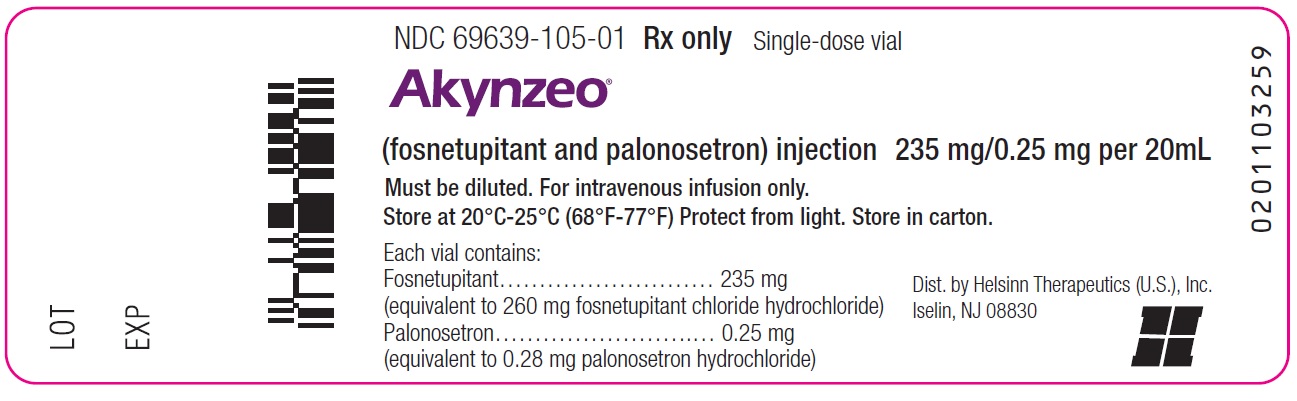
Principal Display Panel NDC 69639-105 Akynzeo (fosnetupitant and palonosetron) injection 235mg/0.25mg per vial Must be diluted. For intravenous infusion only Akynzeo vial label
Principal Display Panel NDC 69639-105 Akynzeo (fosnetupitant and palonosetron) injection 235mg/0.25mg per vial Must be diluted. For intravenous infusion only Must be diluted. For intravenous infusion only Akynzeo vial label
Principal Display Panel Label NDC 69639-106 Akynzeo (fosnetupitant and palonosetron) injection 235mg/0.25mg per 20mL For intravenous infusion only. Ready-to-Use Formulation and does NOT require further dilution Principal Display Panel Carton NDC 69639-106 Akynzeo (fosnetupitant and palonosetron) injection 235mg/0.25mg per 20mL For intravenous infusion only. Ready-to-Use Formulation and does NOT require further dilution label carton
Medicaid utilization & spend
Medicare Part D spend CMS · PART D · 2026 (Q1)
Reported adverse events (FAERS)
Top reported reactions
Reporter sex
Serious outcomes
Where does this data come from?
About this NDC listing & data coverage
What data is (and isn’t) available for this NDC — tap to expand
| NDC identity (package / product / labeler codes) | ✓ Available |
| Labeler | ✓ Available |
| Product & package description | ✓ Available |
| Marketing category & status | ✓ Available |
| Active ingredient / dosage form / route | ✓ Available |
| FDA label (SPL via DailyMed) | ✓ Available |
| Package photos | ✓ Available |
| Inactive ingredients (structured) | — Not published for this NDC The labeler did not submit a structured excipient list, or no SPL is available. |
| NADAC pharmacy acquisition price (CMS) | — Not published for this NDC CMS publishes NADAC only for NDCs reported in its retail-pharmacy survey. |
| Orange Book / therapeutic-equivalence data | ✓ Available |
| HCPCS J-code billing crosswalk | ✓ Available |
| Medicaid utilization (CMS SDUD) | ✓ Available |