
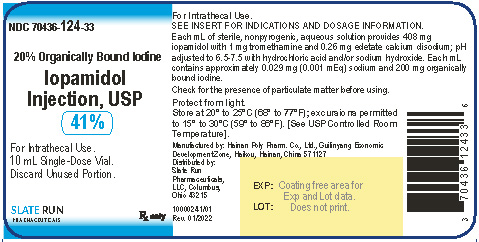
iopamidol 408 mg/mL Injection, Solution, 100 mL — NDC 70436-124-82 (Billing 70436-0124-82)
This is a package of 100 mL of iopamidol 408 mg/mL Injection, Solution from Slate Run Pharmaceuticals, LLC, marketed since Jul 2023 and currently FDA-listed.
NDC database record
One package, one record: these facts belong to NDC 70436-124-82 alone.
- Record
- FDA NDC Directory package listing · Human prescription drug
- Code segments
- 70436 labeler · 124 product · 82 package
- Package marketed since
- Jul 20, 2023
- Sample package
- No — commercial package
- Listing certified through
- Dec 31, 2027
- Billing quantity
- 100 mL per package
- Barcode (UPC)
- 0370436126828, 0370436124824, 0370436124527
- Medicaid fills, this package
- 25 prescriptions in the last four reported quarters
- FDA record last changed
- Aug 6, 2026
Identity & classification
Regulatory identifiers FDA, NLM and CMS codes for this package
Drug-database identifiers Medi-Span GPI and First Databank GCN / HICL / AHFS classification
- GSN (GCN sequence number): 060197
- GCN: 26261
- HICL (First Databank): 000150
- AHFS class code: 36:68.00.00
Where does this data come from?
- FDA openFDA NDC Directory · synced Oct 1, 2026
- FDA label on DailyMed · label index refreshed Oct 6, 2026
- RxNorm (NLM RxNav) · catalog refreshed Oct 1, 2026
- Medi-Span GPI (licensed)
- First Databank (licensed) · refreshed Oct 1, 2026
Clinical
- Iopamidol is a contrast dye — it contains iodine, which shows up brightly on X-rays and CT scans. Your doctor ordered it because it makes blood vessels, organs, or spinal structure...
- What exactly is iopamidol and why do I need it before my scan?
- Yes, a warm or flushing sensation is one of the most commonly reported feelings during a contrast injection, and some people also feel nauseous. After intrathecal (spinal) procedur...
- Is it normal to feel warm or nauseous after the injection?
Patient education
Supplement & herbal interactions
Some supplements/herbs that may interact with Iopamidol — tap one for details:
Where does this data come from?
- MedlinePlus (NLM) · refreshed Oct 1, 2026
- FDA label on DailyMed · label index refreshed Oct 6, 2026
Ask a licensed pharmacist directly — free, answered by our team.
Pricing
A drug doesn't have one price. Each row is a different public payment system, and none is what you'd pay at the counter — that depends on your insurance. The ⓘ on each row explains what it measures.
| Price system | Per mL | Per package |
|---|---|---|
| Retail pharmacies payNADAC · weekly | Not in the retail survey — common for institutional, discontinued, or low-volume packs. | |
| Medicaid paysCMS SDUD · 12 mo | $0.1946 | $19.46 / 100 ml |
| Medicare drug plans payPart D · quarterly | No Part D plan price is available for this NDC in our data. | |
| Medicare Part B allowsASP · Q9966 | $0.435 / Q9966 unit | — |
Where does this data come from?
- CMS NADAC weekly file
- CMS ASP pricing files · refreshed Sep 20, 2026
- CMS Medicaid State Drug Utilization Data · through Q1 2026
- CMS Part D plan pricing files · refreshed Sep 24, 2026
- VA National Acquisition Center price file
Billing & reimbursement
Where does this data come from?
- CMS ASP NDC-HCPCS crosswalk · refreshed Sep 22, 2026
- DMEPDAC NDC-HCPCS crosswalk
- openFDA NSDE billing units · refreshed Oct 7, 2026
Packaging — all sizes for this product
| Package NDC | Description | Marketing start | Marketing end | Status |
|---|---|---|---|---|
| 70436-0124-33 70436-124-33 Main listing | 10 mL in 1 VIAL, SINGLE-DOSE | 2023-07-20 | — | Active |
| 70436-0124-35 70436-124-35 | 20 mL in 1 VIAL, SINGLE-DOSE | 2023-07-20 | — | Active |
| 70436-0124-52 70436-124-52 | 200 mL in 1 CARTON | 2023-07-20 | — | Active |
| 70436-0124-82 You're viewing this | 100 mL in 1 CARTON | 2023-07-20 | — | Active |
You're viewing one of 4 pack sizes for this product.
This pack accounts for about 23% of this product's recent Medicaid fills; the largest share goes to the 10 ml pack. See all packs ↓
Pack size FAQ
What quantity is in this package?
How does this package differ from NDC 70436-0124-33?
What NDC number is used to bill for this package of iopamidol 408 mg/mL Injection, Solution?
Therapeutic equivalents
| Product | Labeler | Pack | NADAC/unit | TE | Status | Price vs. this |
|---|---|---|---|---|---|---|
| iopamidol 408 mg/mLthis 70436-0124-82 | Slate | 100 ml | — | AP1 | FDA listed | — |
| Isovue-M 408 mg/mL 00270-1411-11 | Bracco | 10 vials | — | AP | FDA listed | — |
Where does this data come from?
- FDA openFDA NDC Directory · synced Oct 1, 2026
- FDA Orange Book · refreshed Oct 3, 2026
- CMS NADAC weekly file
Availability & generic status
This product is an FDA-approved generic. Other versions of the same drug are listed under Therapeutic equivalents, least expensive first.
Where does this data come from?
- FDA Orange Book · refreshed Oct 3, 2026
Inactive Ingredients / Excipients
Inactive ingredients, also called excipients, are components of the drug product other than the active ingredient. They may include fillers, dyes, coatings, preservatives, flavors, or other formulation ingredients.
🧪 Avoiding an ingredient? See Iopamidol inactive ingredients by manufacturer: every current product's list side by side, so you can ask your pharmacy for the version that does not list it.
💡 Tap an ingredient (hover on desktop) to see what it is and why it’s used.
-
0.26 mg / 1 mL
UNII 25IH6R4SGF
Edetate calcium disodium is a chelating agent, a chemical that binds to metal ions. It's used in some medications to prevent unwanted metals from interfering with the drug's stability and effectiveness.
-
UNII QTT17582CB
A strong acid used to adjust and maintain the proper pH level in liquid medicines, ensuring stability and preventing breakdown of active ingredients.
-
1 mg / 1 mL
UNII 023C2WHX2V
Tromethamine is a chemical buffer that helps maintain the proper acidity level in liquid medicines. It neutralizes acids and stabilizes the solution so the medication remains effective and safe throughout its shelf life.
3 inactive ingredients listed in the exact product block matched to this NDC.
Where does this data come from?
ingredient classCode="IACT" elements from the exact product block matched by this NDC. Label-section narrative from DailyMed / the openFDA label index is shown separately when available.- FDA label on DailyMed · label index refreshed Oct 6, 2026
- FDA openFDA NDC Directory · synced Oct 1, 2026
Inactive ingredient FAQ
Are inactive ingredients the same for every manufacturer?
Why might an inactive ingredient be missing?
Can inactive ingredients matter?
Manufacturer & labeler
More NDCs from Slate Run Pharmaceuticals, LLC labeler code 70436
- Leucovorin Calcium 100 mg Injection, Powder, Lyophilized, For Solution NDC 70436-117-80
- Leucovorin Calcium 200 mg Injection, Powder, Lyophilized, For Solution NDC 70436-118-80
- Leucovorin Calcium 350 mg Injection, Powder, Lyophilized, For Solution NDC 70436-119-80
- Leucovorin Calcium 500 mg Injection, Powder, Lyophilized, For Solution NDC 70436-120-80
- GADOTERIDOL 279.3 mg/mL Injection NDC 70436-121-31
- gadoterate meglumine 376.9 mg/mL Injection NDC 70436-123-31
- iopamidol 510 mg/mL Injection, Solution NDC 70436-125-82
- iopamidol 612 mg/mL Injection, Solution NDC 70436-126-34
- iopamidol 755 mg/mL Injection, Solution NDC 70436-127-52
- droxidopa 100 mg Capsule NDC 70436-140-06
- droxidopa 200 mg Capsule NDC 70436-141-06
- droxidopa 300 mg Capsule NDC 70436-142-06
Where does this data come from?
- FDA openFDA NDC Directory · synced Oct 1, 2026
- Drugs@FDA
Full prescribing information FDA SPL
🎯 Indications and Usage ▾
1 INDICATIONS AND USAGE Iopamidol injection for intrathecal administration is indicated for: Lumbar and thoracic myelography, and computed tomography (CT) myelography in adults and pediatric patients aged 2 years and older Cervical and total columnar myelography and CT myelography in adults CT cisternography in adults Specific concentrations of iopamidol injection are recommended for each type of imaging procedure [see Dosage and Administration ( 2.2 , 2.3 )]. Iopamidol injection is a radiographic contrast agent indicated for: Lumbar and thoracic myelography and computed tomography (CT) myelography in adults and pediatric patients aged 2 years and older Cervical and total columnar myelography in adults CT cisternography in adults ( 1 ) Specific concentrations of iopamidol injection are recommended for each type of imaging procedure.
( 2.2 , 2.3 )
⏱️ Dosage and Administration ▾
2 DOSAGE AND ADMINISTRATION Individualize the volume and concentration of iopamidol injection according to the specific dosing tables based on patient age, body weight, and study to be performed. ( 2.2 , 2.3 ) See full prescribing information for important dosage and administration information. ( 2.1 )
2.1Important Dosage and Administration Information Iopamidol injection is for intrathecal use only. Specific concentrations of iopamidol injection are recommended for each type of imaging procedure [see Dosage and Administration ( 2.2 , 2.3 )]. Individualize the volume, concentration, and injection rate of iopamidol injection according to the dosing tables [see Dosage and Administration ( 2.2 , 2.3 )].
Consider factors such as age, body weight, anticipated pathology and degree and extent of opacification required, structure(s) or area to be examined, concomitant medical conditions, and imaging equipment and technique to be employed. Hydrate patients prior to and following iopamidol injection administration [see Warnings and Precautions ( 5.2) ] . Use aseptic technique for all handling and administration of iopamidol injection.
Iopamidol injection may be administered at either body temperature (37°C, 98.6°F) or room temperature (20°C to 25°C, 68°F to 77°F). Visually inspect iopamidol injection for particulate matter and discoloration prior to administration whenever the solution and container permit. Do not administer iopamidol injection if particulate matter or discoloration are observed.
Do not mix iopamidol injection with other drugs. Iopamidol injection is packaged in a single-dose vial and intended for one procedure only. Discard any unused portion.
2.2Recommended Dosage for Intrathecal Procedures in Adults The recommended doses in adults are shown in Table 1 . Administer over 1 minute to 2 minutes. Allow at least 48 hours before repeat administration to avoid overdose; however, whenever possible, 5 days to 7 days is recommended.
If CT myelography is performed, delay imaging by at least 4 hours to reduce the degree of contrast. Table 1: Recommended Concentrations and Volumes of Iopamidol Injection for Intrathecal Procedures in Adults Imaging Procedure Concentration (mg Iodine/mL) Volume to Administer Injection Type Lumbar and thoracic myelography 200 10 mL to 15 mL Lumbar Cervical myelography 200 10 mL to 15 mL Lumbar 10 mL Lateral cervical 300 10 mL Lumbar Total columnar myelography 300 10 mL Lumbar CT cisternography 200 4 mL to 6 mL Lumbar
2.3Recommended Dosage for Intrathecal Procedures in Pediatric Patients Aged 2 Years and Older The recommended doses based on age for pediatric patients aged 2 years and older are shown in Table 2. Administer over 1 minute to 2 minutes. Allow at least 48 hours before repeat administration to avoid overdose; however, whenever possible, 5 days to 7 days is recommended.
If CT myelography is performed, delay imaging by at least 4 hours to reduce the degree of contrast. Table 2: Recommended Concentrations and Volumes of Iopamidol Injection Based on Age for Intrathecal Procedures in Pediatric Patients Aged 2 Years and Older Imaging Procedure Age Concentration (mg Iodine/mL) Volume to Administer Injection Type Lumbar and thoracic myelography 2 years to 7 years 200 7 mL to 9 mL Lumbar 8 years to 12 years 8 mL to 11 mL Lumbar 13 years and older 10 mL to 12 mL Lumbar
💊 Dosage Forms and Strengths ▾
3 DOSAGE FORMS AND STRENGTHS Injection: clear, colorless to pale yellow solution available in two concentrations of iodine: Concentration (mg of Iodine/mL) Package Size Package Type 200 10 mL Single-Dose Vial 300 15 mL Single-Dose Vial Injection: 200 mg Iodine/mL and 300 mg Iodine/mL in single-dose vials ( 3 )
⛔ Contraindications ▾
4 CONTRAINDICATIONS None. None ( 4 )
⚠️ Warnings and Cautions ▾
5 WARNINGS AND PRECAUTIONS Hypersensitivity Reactions: Life-threatening or fatal reactions can occur. Always have emergency resuscitation equipment and trained personnel available. ( 5.1 ) Acute Kidney Injury: Acute injury including renal failure can occur.
Use the lowest dose and maintain adequate hydration to minimize risk. ( 5.2 ) Cardiovascular Adverse Reactions: Hemodynamic disturbances including shock and cardiac arrest may occur during or after iopamidol injection administration. ( 5.4 ) Thyroid Dysfunction in Pediatric Patients 0 Years to 3 Years of Age: Individualize thyroid function monitoring based on risk factors such as prematurity.
( 5.6 )
5.1Hypersensitivity Reactions Iopamidol injection can cause life-threatening or fatal hypersensitivity reactions including anaphylaxis. Manifestations include respiratory arrest, laryngospasm, bronchospasm, angioedema, and shock [see Adverse Reactions ( 6.2 )] . Most severe reactions develop shortly after the start of injection (e.g., within 1 to 3 minutes), but delayed reactions can also occur.
There is increased risk of hypersensitivity reactions in patients with a history of previous reactions to contrast agents, and known allergic disorders (i.e., bronchial asthma, allergic rhinitis, and food allergies) or other hypersensitivities. Premedication with antihistamines or corticosteroids does not prevent serious life-threatening reactions, but may reduce their incidence and severity. Obtain a history of allergy or hypersensitivity reactions to iodinated contrast agents and always have emergency resuscitation equipment and trained personnel available prior to iopamidol injection administration.
Monitor all patients for hypersensitivity reactions.
5.2Acute Kidney Injury Acute kidney injury, including renal failure, may occur after administration of iodinated contrast agents. Risk factors include pre-existing renal insufficiency, dehydration, diabetes mellitus, congestive heart failure, advanced vascular disease, elderly age, concomitant use of nephrotoxic or diuretic medications, multiple myeloma or other paraproteinemias, and repetitive or large doses of iodinated contrast agents. Use the lowest dose of iopamidol injection, especially in patients with risk factors for acute kidney injury.
Adequately hydrate patients prior to and following iopamidol injection administration .
5.3Increased Risk of Seizures Focal and generalized motor seizures have been reported after intrathecal use of iodinated contrast agents including iopamidol injection. In several of the cases, higher than recommended doses were administered. Use of medications that may lower the seizure threshold (phenothiazine derivatives, including those used for their antihistaminic properties; tricyclic antidepressants; MAO inhibitors; CNS stimulants; analeptics; antipsychotic agents) should be carefully evaluated.
Consider discontinuing these agents at least 48 hours before and for at least 24 hours following intrathecal administration of iopamidol injection.
5.4Cardiovascular Adverse Reactions Iodinated contrast agents increase the circulatory osmotic load and may induce acute or delayed hemodynamic disturbances in patients with congestive heart failure, severely impaired renal function, combined renal and hepatic disease, and combined renal and cardiac disease, particularly when repetitive or large doses are administered. Fatal cardiovascular reactions have occurred mostly within 10 minutes of injection of iodinated contrast agent by an intravascular route; the main feature was cardiac arrest with cardiovascular disease as the main underlying factor.
Hypotensive collapse and shock have occurred. The administration of iodinated contrast agent may cause pulmonary edema in patients with heart failure. Based upon published reports, deaths associated with the administration of iodinated contrast agents range from 6.6 per 1 million (0.00066 percent) to 1 in 10,000 patients (0.01 percent).
Use the lowest necessary dose o… [Excerpted — this section continues on DailyMed.]
🤒 Adverse Reactions ▾
6 ADVERSE REACTIONS The following adverse reactions are described in greater detail in other sections: Hypersensitivity Reactions [see Warnings and Precautions ( 5.1 )] Acute Kidney Injury [see Warnings and Precautions ( 5.2 )] Increased Risk of Seizures [see Warnings and Precautions ( 5.3 )] Cardiovascular Adverse Reactions [see Warnings and Precautions ( 5.4 )] Thyroid Dysfunction in Pediatric Patients 0 to 3 Years of Age [see Warnings and Precautions ( 5.6 )] Severe Cutaneous Adverse Reactions [see Warnings and Precautions ( 5.9 )] Most common adverse reactions (incidence > 1%) are headache, nausea, vomiting, back pain, leg pain, neck pain, and hypotension.
( 6.1 ) To report SUSPECTED ADVERSE REACTIONS, contact Slate Run Pharmaceuticals, Inc. at 1-888-341-9214 or FDA at 1-800-FDA-1088 or www.fda.gov/medwatch .
6.1Clinical Trials Experience Because clinical trials are conducted under widely varying conditions, adverse reaction rates observed in the clinical trials of a drug cannot be directly compared to rates in the clinical trials of another drug and may not reflect the rates observed in practice. The safety of iopamidol injection was evaluated in 686 adult patients receiving iopamidol injection intrathecally in clinical studies. Table 3 shows the common adverse reactions (>1%).
These reactions usually occur 1 to 10 hours after injection, almost all occurring within 24 hours. Table 3: Adverse Reactions Reported in >1% of Patients Receiving Intrathecal Injection of Iopamidol Injection in Clinical Studies Adverse Reaction Iopamidol Injection (N=686) % Headache
16.4 Nausea
7.3 Vomiting
3.6 Back pain
2.2 Leg Pain
1.4 Neck Pain
1.1 Hypotension
1.1The following additional adverse reactions occurred in ≤ 1% of patients receiving intrathecal injection of iopamidol injection: Cardiovascular disorder: tachycardia, hypertension, chest pain Gastrointestinal: diarrhea, heartburn General disorders and administration site conditions: pyrexia, muscle weakness, hot flashes, malaise, fatigue, weakness, injection site pain Musculoskeletal: leg cramps, sciatica, cervicobrachial irritation, meningeal irritation, radicular irritation lumbosacral, other musculoskeletal pain, involuntary movement, burning sensation Nervous system: dizziness, paresthesia, confusion, hallucinations, lightheadedness, syncope, numbness, cold extremities, ataxia, irritability Urogenital: urinary retention Respiratory: dyspnea Skin and subcutaneous tissues : rash
6.2Postmarketing Experience The following adverse reactions have been identified during postapproval use of iopamidol injection and other iopamidol products. Because the reactions are reported voluntarily from a population of uncertain size, it is not always possible to reliably estimate their frequency or to establish a causal relationship to drug exposure. Blood and lymphatic system disorders: thrombocytopenia Cardiovascular disorders: cardiopulmonary arrest, cardiac decompensation, arrhythmias, myocardial infarction, shock, electrocardiographic changes (e.g., increased QTc, increased R-R, increased T-wave amplitude), decreased systolic pressure, deep vein thrombosis, arterial spasms, transient ischemic attack, flushing, vasodilation, chest pain, pallor Endocrine disorders: hyperthyroidism, hypothyroidism Eye disorders: lacrimation increased, conjunctivitis, eye pruritus, transient blindness, visual disturbance, photophobia Gastrointestinal disorders: retching, abdominal pain, salivary hypersecretion, salivary gland enlargement General disorders and administration site conditions: chills, malaise Immune system disorders: anaphylaxis characterized by cardiovascular, respiratory, and cutaneous manifestations (e.g., chest tightness, laryngeal edema, periorbital edema, facial edema); delayed hypersensitivity reactions including generalized maculopapular rash, erythema, pruritus, localized blistering, skin peeling Infections and infestations: meningitis aseptic, meningitis bacterial as consequence of the proce… [Excerpted — this section continues on DailyMed.]
👥 Use in Specific Populations ▾
8 USE IN SPECIFIC POPULATIONS Lactation: A lactating woman may pump and discard breast milk for 10 hours after iopamidol injection administration. ( 8.2 )
8.1Pregnancy Risk Summary Available data from published literature and postmarketing cases from decades of use with iopamidol during pregnancy have not identified a drug-associated risk of major birth defects, miscarriage, or other adverse maternal or fetal outcomes. Iopamidol crosses the placenta and reaches fetal tissues in small amounts ( see Data ). In animal reproduction studies, no adverse developmental outcomes were observed with intravenous administration of iopamidol to pregnant rats and rabbits during organogenesis at doses up to 2.7 and 1.4 times, respectively, the maximum recommended human dose ( see Data ).
The background risk of major birth defects and miscarriage for the indicated population is unknown. All pregnancies have a background risk of birth defect, loss, or other adverse outcomes. In the U.S. general population, the estimated background risk of major birth defects and miscarriage in clinically recognized pregnancies is 2 to 4% and 15 to 20%, respectively.
Data Human Data Literature reports show that intravenously administered iopamidol crosses the placenta and is visualized in the digestive tract of exposed infants after birth. Animal Data Iopamidol did not affect fetal development and did not induce teratogenic changes in the offspring in either rats or rabbits at the following dose levels tested: 600 mg, 1,500 mg, or 4,000 mg iodine/kg in rats, administered intravenously once a day during days 6 through 15 of pregnancy; 300 mg, 800 mg, or 2,000 mg iodine/kg in rabbits, administered intravenously once a day during days 6 through 18 of pregnancy.
8.2Lactation Risk Summary There are no data on the presence of iopamidol in human milk, the effects on the breastfed infant, or the effects on milk production. Iodinated contrast agents are present unchanged in human milk in very low amounts, with poor absorption from the gastrointestinal tract of a breastfed infant. The developmental and health benefits of breastfeeding should be considered along with the mother's clinical need for iopamidol injection and any potential adverse effects on the breastfed infant from iopamidol injection or from the underlying maternal condition.
Clinical Considerations Interruption of breastfeeding after exposure to iodinated contrast agents is not necessary because the potential exposure of the breastfed infant to iodine is small. However, a lactating woman may consider interrupting breastfeeding and pumping and discarding breast milk for 10 hours (approximately 5 half- lives) after iopamidol injection administration in order to minimize drug exposure to a breastfed infant.
8.4Pediatric Use The safety and effectiveness of iopamidol injection for lumbar and thoracic myelography and CT myelography have been established in pediatric patients aged 2 years and older. Pediatric patients at higher risk of experiencing adverse reactions during and after any iodinated contrast agent administration may include those having asthma, sensitivity to medication or allergens, cyanotic heart disease, congestive heart failure, or serum creatinine greater than 1.5 mg/dL. Thyroid function tests indicative of thyroid dysfunction, characterized by hypothyroidism or transient thyroid suppression have been reported following iodinated contrast agent administration in pediatric patients, including term and preterm neonates; Some patients were treated for hypothyroidism.
After exposure to iodinated contrast agent, individualize thyroid function monitoring in pediatric patients 0 to 3 years of age based on underlying risk factors, especially in term and preterm neonates [see Warnings and Precautions ( 5.6 ) and Adverse Reactions ( 6.2 )] . The safety and effectiveness of iopamidol injection for lumbar and thoracic myelography and CT myelography have not been established in pediatric patients younger… [Excerpted — this section continues on DailyMed.]
🆘 Overdosage ▾
10 OVERDOSAGE Doses above 3,000 mg iodine in adults and 2,400 mg iodine in pediatric patients aged 2 years and older may result in an increased frequency and severity of adverse reactions including seizures. Treatment of an overdose is directed toward the support of all vital functions and prompt institution of symptomatic therapy. Iopamidol can be removed by dialysis.
🧬 Clinical Pharmacology ▾
12 CLINICAL PHARMACOLOGY
12.1Mechanism of Action Intrathecal administration of iopamidol opacifies the body structures where the contrast agent is present, permitting their radiographic visualization through attenuation of photons.
12.2Pharmacodynamics Following intrathecal injection, iopamidol provides diagnostic contrast for at least 30 minutes for conventional myelography. At about 1 hour, contrast will no longer be sufficient for conventional myelography. However, diagnostic contrast for CT myelography remains at least 6 hours after administration. The exposure-response relationships and time course of pharmacodynamic response of iopamidol have not been fully characterized.
12.3Pharmacokinetics Absorption Iopamidol is absorbed into the bloodstream from cerebrospinal fluid (CSF); following intrathecal administration, iopamidol appears in plasma within 1 hour and virtually all of the drug reaches the systemic circulation within 24 hours. Distribution Iopamidol did not bind to serum or plasma proteins at 1 hour after administration. Elimination The plasma half-life is approximately 2 hours; the half-life is not dose dependent .
Metabolism Iopamidol does not undergo significant metabolism, deiodination, or biotransformation. Excretion Iopamidol is excreted mainly through the kidneys following intrathecal administration, and the drug is essentially undetectable in the plasma 48 hours later. In patients with normal renal function, the cumulative urinary excretion for iopamidol, expressed as a percentage of administered intravenous dose is approximately 35% to 40% at 60 minutes, 80% to 90% at 8 hours, and 90% or more in the 72- to 96-hour period after administration.
In patients with normal renal function, approximately 1% or less of the administered dose appears in cumulative 72- to 96-hour fecal specimens.
📦 How Supplied / Storage and Handling ▾
16 HOW SUPPLIED/STORAGE AND HANDLING How Supplied Iopamidol injection is a clear, colorless to pale yellow solution available in the following presentations: Concentration (mg Iodine/mL) Package Size Package Type Sale Unit NDC 200 10 mL Single-Dose Vial Box of 10 vials 70436-124-82 200 20 mL Single-Dose Vial Box of 10 vials 70436-124-52 300 15 mL Single-Dose Vial Box of 10 vials 70436-126-82 Storage and Handling Store at 20°C to 25°C (68°F to 77°F) [See USP controlled room temperature]. Protect from light.
📋 Description ▾
11 DESCRIPTION Iopamidol injection is a radiographic contrast agent for intrathecal use. Iopamidol is designated chemically as (S)-N,N’-bis[2-hydroxy-1-(hydroxymethyl)-ethyl]-2,4,6- triiodo-5-lactamidoisophthalamide with a molecular weight of 777.09, an empirical formula of C 17 H 22 I 3 N 3 O 8, and the following structural formula: Iopamidol injection is a sterile, clear, colorless to pale yellow solution available in two concentrations of iodine: Iopamidol injection 200 mg iodine/mL: Each mL contains 408 mg iopamidol (providing 200 mg organically bound iodine) and the following inactive ingredients: 0.26 mg edetate calcium disodium (providing 0.029 mg sodium) and 1 mg tromethamine.
Iopamidol injection 300 mg iodine/mL: Each mL contains 612 mg iopamidol (providing 300 mg organically bound iodine) and the following inactive ingredients: 0.39 mg edetate calcium disodium (providing 0.043 mg sodium) and 1 mg tromethamine. The pH of iopamidol injection has been adjusted to 6.5 to 7.5 with hydrochloric acid and/or sodium hydroxide. Physicochemical characteristics are shown in Table 4 .
Iopamidol injection is hypertonic as compared to plasma and cerebrospinal fluid (approximately 285 and 301 mOsm/kg water, respectively). Table 4: Physicochemical Characteristics of Iopamidol Injection Concentration (mg Iodine/mL) 200 300 Osmolality @ 37°C (mOsm/kg water) 413 616 Viscosity (cP) @ 37°C 2.0
4.7Viscosity (cP) @ 20°C 3.3
8.8Specific Gravity @ 37°C 1.227 1.339 isovue-m-struct
💬 Information for Patients ▾
17 PATIENT COUNSELING INFORMATION Hypersensitivity Reactions Advise the patient concerning the risk of hypersensitivity reactions that can occur both during and after iopamidol injection administration. Advise the patient to report any signs or symptoms of hypersensitivity reactions during the procedure and to seek immediate medical attention for any signs or symptoms experienced after discharge [see Warnings and Precautions ( 5.1 )]. Advise patients to inform their physician if they develop a rash after receiving iopamidol injection [see Warnings and Precautions ( 5.9 )].
Acute Kidney Injury Advise the patient concerning appropriate hydration to decrease the risk of contrast induced kidney injury [see Warnings and Precautions ( 5.2 )]. Thyroid Dysfunction Advise parents/caregivers about the risk of developing thyroid dysfunction after iopamidol injection administration. Advise parents/caregivers about when to seek medical care for their child to monitor for thyroid function [see Warnings and Precautions ( 5.6 )].
Lactation Advise lactating women that interruption of breast feeding is not necessary, however, to avoid any exposure a lactating woman may consider pumping and discarding breast milk for 10 hours after iopamidol injection administration to minimize drug exposure to a breastfed infant [see Use in Specific Populations ( 8.2 )]. Manufactured by : Hainan Poly Pharm. Co., Ltd., Guilinyang Economic Development Zone, Haikou, Hainan, China 571127 Distributed by : Slate Run Pharmaceuticals, LLC Columbus, Ohio 43215 10000243/04 Revised 06/2026
🔒 Drug Abuse and Dependence ▾
7 DRUG INTERACTIONS
7.1Drug-Drug Interactions Metformin In patients with renal impairment, metformin can cause lactic acidosis. Iodinated contrast agents appear to increase the risk of metformin-induced lactic acidosis, possibly as a result of worsening renal function. Stop metformin at the time of, or prior to, iopamidol injection administration in patients with an eGFR between 30 and 60 mL/min/1.73 m 2 and in patients with a history of hepatic impairment, alcoholism, or heart failure.
Re-evaluate eGFR 48 hours after administration of iopamidol injection and resume metformin only after renal function is stable. Radioactive Iodine Administration of iodinated contrast agents may interfere with thyroid uptake of radioactive iodine (I-131 and I-123) and decrease therapeutic and diagnostic efficacy. Avoid thyroid therapy or testing for up to 6 weeks post iopamidol injection.
7.2Drug-Laboratory Test Interactions Protein-Bound Iodine Test Iodinated contrast agents will temporarily increase protein-bound iodine in blood. Avoid protein-bound iodine test for at least 16 days following administration of iopamidol injection. However, thyroid function tests that do not depend on iodine estimations, e.g., triiodothyronine (T 3 ) resin uptake and total or free thyroxine (T 4 ) assays, are not affected.
🧪 Nonclinical Toxicology ▾
13 NONCLINICAL TOXICOLOGY
13.1Carcinogenesis, Mutagenesis, Impairment of Fertility Long-term studies in animals have not been performed with iopamidol to evaluate carcinogenic potential. No evidence of genetic toxicity was obtained in in vitro tests. In animal reproduction studies performed on rats, intravenously administered iopamidol did not induce adverse effects on fertility or general reproductive performance.
📄 Recent Major Changes ▾
Recent Major Changes Indications and Usage, CT cerebral ventriculography ( 1 )-Removed 1/2026
📄 Package Label / Principal Display Panel ▾
70436-124-82 70436-124-82
70436-124-52 70436-124-52
NDC 70436-126-82 70436-126-82
Medicaid utilization & spend
Medicaid utilization by pack size
About this NDC listing & data coverage
What data is (and isn’t) available for this NDC — tap to expand
| NDC identity (package / product / labeler codes) | ✓ Available |
| Labeler | ✓ Available |
| Product & package description | ✓ Available |
| Marketing category & status | ✓ Available |
| Active ingredient / dosage form / route | ✓ Available |
| FDA label (SPL via DailyMed) | ✓ Available |
| Package photos | ✓ Available |
| Inactive ingredients (structured) | ✓ Available |
| NADAC pharmacy acquisition price (CMS) | — Not published for this NDC CMS publishes NADAC only for NDCs reported in its retail-pharmacy survey. |
| Orange Book / therapeutic-equivalence data | ✓ Available |
| HCPCS J-code billing crosswalk | ✓ Available |
| Medicaid utilization (CMS SDUD) | ✓ Available |