
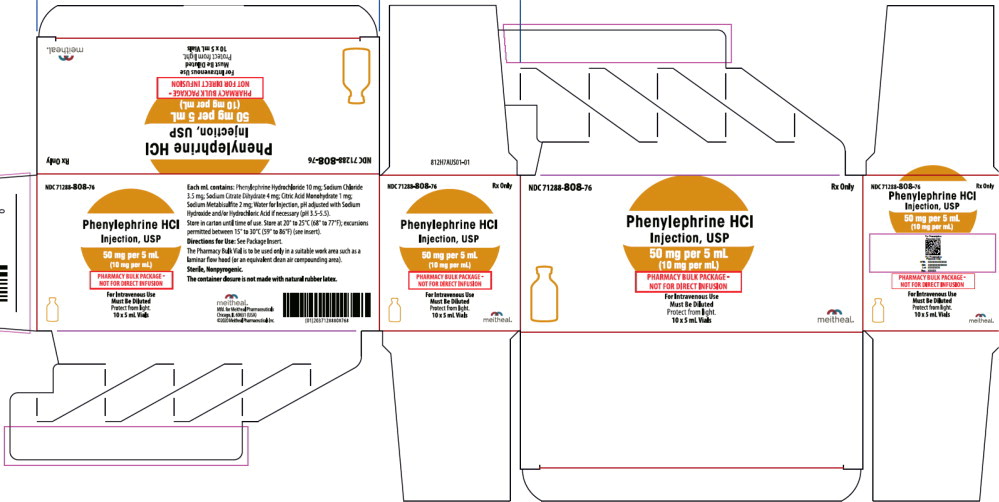
PHENYLEPHRINE HYDROCHLORIDE 10 mg/mL Injection — NDC 71288-808-76 (Billing 71288-0808-76)
This is a package of PHENYLEPHRINE HYDROCHLORIDE 10 mg/mL Injection from Meitheal Pharmaceuticals Inc., marketed since Apr 2018 and currently FDA-listed. It is the main listing for this product, which comes in 2 package sizes.
NDC database record
One package, one record: these facts belong to NDC 71288-808-76 alone.
- Record
- FDA NDC Directory package listing · Human prescription drug
- Code segments
- 71288 labeler · 808 product · 76 package
- Package marketed since
- Apr 27, 2018
- Sample package
- No — commercial package
- Listing certified through
- Dec 31, 2026
- Barcode (UPC-A, from the NDC)
- 3 7128880876 4
- Medicaid fills, this package
- 11 prescriptions in the last four reported quarters
- FDA record last changed
- Jul 24, 2026
Identity & classification
Regulatory identifiers FDA, NLM and CMS codes for this package
Drug-database identifiers Medi-Span GPI and First Databank GCN / HICL / AHFS classification
- GSN (GCN sequence number): 005068
- GCN: 20310
- GPI-14 (Medi-Span): 38000095102020
- HICL (First Databank): 002087
- AHFS class code: 12:12.04.00
- RxCUI (RxNorm): 1232651
Where does this data come from?
- FDA openFDA NDC Directory · synced Oct 8, 2026
- FDA label on DailyMed · label index refreshed Oct 6, 2026
- RxNorm (NLM RxNav) · catalog refreshed Oct 1, 2026
- Medi-Span GPI (licensed)
- First Databank (licensed) · refreshed Oct 8, 2026
RxNorm drug class
This medicine belongs to the alpha-1 Adrenergic Agonist class.
Where does this data come from?
- RxClass (NLM) · catalog refreshed Oct 1, 2026
Clinical
- It depends on the product. The injection raises low blood pressure during anesthesia and, for some products, septic shock. Eye drops dilate the pupil, nasal products relieve conges...
- Be careful. Over-the-counter phenylephrine should not be used with a prescription MAOI or within 2 weeks of stopping one. If you aren't sure whether your medicine is an MAOI, ask m...
- With the injection, the most common are nausea, vomiting and headache. Call for help right away if you have chest pain, a very slow heartbeat, or pain or skin changes around the IV...
- Stop and talk to a doctor if you get nervousness, dizziness or sleeplessness. Also stop if symptoms last more than 7 days or come with a fever. Don't use more than the label recomm...
Patient education
Supplement & herbal interactions
Some supplements/herbs that may interact with Phenylephrine Hydrochloride — tap one for details:
Where does this data come from?
- MedlinePlus (NLM) · refreshed Oct 1, 2026
- FDA label on DailyMed · label index refreshed Oct 6, 2026
Ask a licensed pharmacist directly — free, answered by our team.
Pricing
A drug doesn't have one price. Each row is a different public payment system, and none is what you'd pay at the counter — that depends on your insurance. The ⓘ on each row explains what it measures.
| Price system | Per each | Per package |
|---|---|---|
| Retail pharmacies payNADAC · weekly | Not in the retail survey — common for institutional, discontinued, or low-volume packs. | |
| Medicaid paysCMS SDUD · 12 mo | $1.70 | $16.97 / 10 vials |
| Medicare drug plans payPart D · quarterly | No Part D plan price is available for this NDC in our data. | |
| Medicare Part B allowsASP · J2371 | $0.002 / J2371 unit | — |
Where does this data come from?
- CMS NADAC weekly file
- CMS ASP pricing files · refreshed Sep 20, 2026
- CMS Medicaid State Drug Utilization Data · through Q1 2026
- CMS Part D plan pricing files · refreshed Sep 24, 2026
- VA National Acquisition Center price file
Billing & reimbursement
Where does this data come from?
- CMS ASP NDC-HCPCS crosswalk · refreshed Sep 22, 2026
- DMEPDAC NDC-HCPCS crosswalk
- openFDA NSDE billing units · refreshed Oct 7, 2026
Packaging — all sizes for this product
| Package NDC | Description | Marketing start | Marketing end | Status |
|---|---|---|---|---|
| 71288-0808-76 You're viewing this Main listing | 10 VIAL, PHARMACY BULK PACKAGE in 1 CARTON / 5 mL in 1 VIAL, PHARMACY BULK PACKAGE | 2018-04-27 | — | Active |
| 71288-0808-77 71288-808-77 | 1 VIAL, PHARMACY BULK PACKAGE in 1 CARTON / 10 mL in 1 VIAL, PHARMACY BULK PACKAGE | 2018-04-27 | — | Active |
Pack size FAQ
What quantity is in this package?
What NDC number is used to bill for this package of PHENYLEPHRINE HYDROCHLORIDE 10 mg/mL Injection?
Therapeutic equivalents
| Product | Labeler | Pack | NADAC/unit | TE | Status | Price vs. this |
|---|---|---|---|---|---|---|
| Phenylephrine Hydrochloride 10 mg/mL 00641-6188-10 | Hikma | 10 vials | — | AP2 | FDA listed | — |
| Phenylephrine Hydrochloride 10 mg/mL 00641-6189-10 | Hikma | 10 vials | — | AP2 | FDA listed | — |
| Phenylephrine Hydrochloride 10 mg/mL 00781-3458-95 | Sandoz | 10 vials | — | AP1 | FDA listed | — |
| Phenylephrine Hydrochloride 10 mg/mL 00781-3466-70 | Sandoz | 1 vial | — | AP1 | FDA listed | — |
| Phenylephrine Hydrochloride 10 mg/mL 00781-9227-95 | Sandoz | 10 vials | — | AP1 | FDA listed | — |
| Phenylephrine Hydrochloride 10 mg/mL 00781-9228-70 | Sandoz | 1 vial | — | AP1 | FDA listed | — |
| Phenylephrine Hydrochloride 10 mg/mL 14335-0441-01 | Hainan | 10 vials | — | AP1 | FDA listed | — |
| Phenylephrine Hydrochloride 10 mg/mL 14335-0442-01 | Hainan | 1 vial | — | AP1 | FDA listed | — |
| Phenylephrine Hydrochloride 10 mg/mL 25021-0315-01 | Sagent | 25 vials | — | AP1 | FDA listed | — |
| Phenylephrine Hydrochloride 10 mg/mL 31722-0344-31 | Camber | 10 vials | — | AP1 | FDA listed | — |
| Phenylephrine Hydrochloride 10 mg/mL 31722-0345-10 | Camber | 1 vial | — | AP1 | FDA listed | — |
| phenylephrine hydrochloride 10 mg/mL 36000-0360-10 | Baxter | 10 vials | — | AP1 | FDA listed | — |
| phenylephrine hydrochloride 10 mg/mL 36000-0362-05 | Baxter | 5 vials | — | AP1 | FDA listed | — |
| Phenylephrine hydrochloride 10 mg/mL 42023-0214-10 | Par | 10 vials | — | — | FDA listed | — |
| Phenylephrine hydrochloride 10 mg/mL 42023-0215-01 | Par | 1 vial | — | — | FDA listed | — |
| Phenylephrine Hydrochloride 10 mg/mL 55150-0301-10 | Eugia | 10 vials | — | AP1 | FDA listed | — |
| Phenylephrine Hydrochloride 10 mg/mL 55150-0302-01 | Eugia | 1 vial | — | AP1 | FDA listed | — |
| Phenylephrine Hydrochloride 10 mg/mL 58657-0852-11 | Method | 10 vials | — | AP1 | FDA listed | — |
| Phenylephrine Hydrochloride 10 mg/mL 58657-0853-01 | Method | 10 ml | — | AP1 | FDA listed | — |
| Phenylephrine Hydrochloride 50 mg/5mL 65145-0116-01 | Caplin | 1 vial | — | AP1 | FDA listed | — |
| Phenylephrine Hydrochloride 100 mg/10mL 65145-0117-01 | Caplin | 1 vial | — | AP1 | FDA listed | — |
| phenylephrine hydrochloride 10 mg/mL 68083-0338-10 | Gland | 10 vials | — | AP1 | FDA listed | — |
| phenylephrine hydrochloride 10 mg/mL 68083-0339-01 | Gland | 1 vial | — | AP1 | FDA listed | — |
| Phenylephrine Hydrochloride 50 mg/5mL 70069-0802-10 | Somerset | 10 vials | — | AP1 | FDA listed | — |
| Phenylephrine Hydrochloride 100 mg/10mL 70069-0803-01 | Somerset | 1 vial | — | AP1 | FDA listed | — |
| Phenylephrine Hydrochloride 50 mg/5mL 70069-0812-10 | Somerset | 10 vials | — | AP1 | FDA listed | — |
| Phenylephrine Hydrochloride 100 mg/10mL 70069-0813-01 | Somerset | 1 vial | — | AP1 | FDA listed | — |
| Phenylephrine hydrochloride 10 mg/mL 70121-1578-07 | Amneal | 10 vials | — | AP1 | FDA listed | — |
| Phenylephrine hydrochloride 10 mg/mL 70121-1579-01 | Amneal | 1 vial | — | AP1 | FDA listed | — |
| Phenylephrine Hydrochloride 50 mg/5mL 70594-0064-02 | Xellia | 10 vials | — | AP1 | FDA listed | — |
| Phenylephrine Hydrochloride 100 mg/10mL 70594-0065-01 | Xellia | 1 vial | — | AP1 | FDA listed | — |
| Phenylephrine hydrochloride 50 mg/5mL 70756-0622-10 | Lifestar | 10 vials | — | AP1 | FDA listed | — |
| Phenylephrine hydrochloride 100 mg/10mL 70756-0623-86 | Lifestar | 1 vial | — | AP1 | FDA listed | — |
| Phenylephrine Hydrochloride 10 mg/mLthis 71288-0808-76 | Meitheal | 10 vials | — | AP1 | FDA listed | — |
| Phenylephrine Hydrochloride 10 mg/mL 71839-0128-10 | BE | 10 vials | — | AP2 | FDA listed | — |
| Phenylephrine Hydrochloride 10 mg/mL 71839-0129-10 | BE | 10 vials | — | AP2 | FDA listed | — |
| Phenylephrine Hydrochloride 10 mg/mL 72205-0265-07 | Novadoz | 10 vials | — | AP2 | FDA listed | — |
| Phenylephrine Hydrochloride 10 mg/mL 72205-0266-07 | Novadoz | 10 vials | — | AP2 | FDA listed | — |
| Phenylephrine Hydrochloride 50 mg/5mL 72485-0505-10 | Armas | 10 vials | — | AP1 | FDA listed | — |
| Phenylephrine Hydrochloride 100 mg/10mL 72485-0506-01 | Armas | 1 vial | — | AP1 | FDA listed | — |
| Phenylephrine Hydrochloride 10 mg/mL 72572-0570-10 | Civica, | 10 vials | — | AP2 | FDA listed | — |
| Phenylephrine hydrochloride 10 mg/mL 81284-0212-10 | Provepharm | 10 vials | — | AP1 | FDA listed | — |
| Phenylephrine hydrochloride 10 mg/mL 81284-0213-01 | Provepharm | 1 vial | — | AP1 | FDA listed | — |
| Phenylephrine Hydrochloride 10 mg/mL 00781-9226-92 | Sandoz | 10 vials | — | AP1 | FDA listed | — |
| Phenylephrine Hydrochloride Phenylephrine Hydrochloride 10 mg/mL 68083-0465-25 | Gland | 25 vials | — | AP1 | FDA listed | — |
| Phenylephrine Hydrochloride 10 mg/mL 70069-0801-25 | Somerset | 25 vials | — | AP1 | FDA listed | — |
| Phenylephrine Hydrochloride 10 mg/mL 70594-0063-02 | Xellia | 25 vials | — | AP1 | FDA listed | — |
| Phenylephrine Hydrochloride 10 mg/mL 63323-0751-13 | Fresenius | 25 vials | — | AP1 | FDA listed | — |
| Phenylephrine Hydrochloride 10 mg/mL 70069-0811-25 | Somerset | 25 vials | — | AP1 | FDA listed | — |
| Phenylephrine hydrochloride 10 mg/mL 70756-0621-25 | Lifestar | 25 vials | — | AP1 | FDA listed | — |
| Phenylephrine Hydrochloride 10 mg/mL 71288-0807-02 | Meitheal | 25 vials | — | AP2 | FDA listed | — |
| Phenylephrine Hydrochloride 10 mg/mL 71839-0127-25 | BE | 25 vials | — | AP2 | FDA listed | — |
| Phenylephrine Hydrochloride 10 mg/mL 71872-7043-01 | Medical | 1 vial | — | AP2 | FDA listed | — |
| Phenylephrine hydrochloride 10 mg/mL 71872-7159-01 | Medical | 1 vial | — | AP1 | FDA listed | — |
| Phenylephrine Hydrochloride 10 mg/mL 71872-7267-01 | Medical | 1 vial | — | AP2 | FDA listed | — |
| Phenylephrine Hydrochloride 10 mg/mL 71872-7273-01 | Medical | 1 vial | — | AP1 | FDA listed | — |
| Phenylephrine hydrochloride 10 mg/mL 71872-7303-01 | Medical | 1 vial | — | AP1 | FDA listed | — |
| Phenylephrine Hydrochloride 10 mg/mL 72485-0504-25 | Armas | 25 vials | — | AP1 | FDA listed | — |
| Phenylephrine hydrochloride 10 mg/mL 70121-1577-05 | Amneal | 25 vials | — | AP1 | FDA listed | — |
| Phenylephrine Hydrochloride 10 mg/mL 72205-0264-25 | Novadoz | 25 vials | — | AP2 | FDA listed | — |
| Phenylephrine Hydrochloride 10 mg/mL 00781-3422-92 | Sandoz | 10 vials | — | AP1 | FDA listed | — |
| Biorphen 10 mg/mL 43598-0199-10 | Dr. | 10 ampules | — | — | FDA listed | — |
| Phenylephrine hydrochloride 10 mg/mL 84549-0621-25 | ProPharma | 1 ml | — | AP1 | FDA listed | — |
| phenylephrine hydrochloride 10 mg/mL 23155-0620-41 | Heritage | 25 vials | — | AP2 | FDA listed | — |
| Phenylephrine Hydrochloride 10 mg/mL 51662-1576-01 | HF | 1 ml | — | AP2 | FDA listed | — |
| Phenylephrine Hydrochloride 10 mg/mL 00404-9931-99 | Henry | 1 vial | — | AP1 | FDA listed | — |
| Phenylephrine Hydrochloride 10 mg/mL 55150-0300-25 | Eugia | 25 vials | — | AP2 | FDA listed | — |
| Phenylephrine Hydrochloride 10 mg/mL 65219-0388-01 | Fresenius | 25 vials | — | AP2 | FDA listed | — |
| Phenylephrine Hydrochloride 10 mg/mL 71872-7343-01 | Medical | 1 vial | — | AP2 | FDA listed | — |
| Phenylephrine Hydrochloride 10 mg/mL 14335-0440-01 | Hainan | 25 vials | — | AP1 | FDA listed | — |
| Phenylephrine hydrochloride 10 mg/mL 55154-8226-05 | Cardinal | 5 vials | — | AP1 | FDA listed | — |
| Phenylephrine Hydrochloride 10 mg/mL 00641-6142-25 | Hikma | 25 vials | — | AP2 | FDA listed | — |
| Phenylephrine Hydrochloride 10 mg/mL 65145-0115-25 | Caplin | 25 vials | — | AP1 | FDA listed | — |
| Phenylephrine Hydrochloride 10 mg/mL 72572-0571-25 | Civica, | 25 vials | — | AP2 | FDA listed | — |
| Phenylephrine hydrochloride 10 mg/mL 81284-0211-25 | Provepharm | 25 vials | — | AP1 | FDA listed | — |
| phenylephrine hydrochloride 10 mg/mL 36000-0358-25 | Baxter | 25 vials | — | AP1 | FDA listed | — |
| Phenylephrine Hydrochloride 10 mg/mL 58657-0851-26 | Method | 25 vials | — | AP1 | FDA listed | — |
| Phenylephrine Hydrochloride 10 mg/mL 00641-6229-25 | Hikma | 25 vials | — | AP2 | FDA listed | — |
| Phenylephrine Hydrochloride 10 mg/mL 31722-0343-32 | Camber | 10 vials | — | AP1 | FDA listed | — |
| Phenylephrine Hydrochloride 10 mg/mL 71872-7348-01 | Medical | 1 vial | — | AP1 | FDA listed | — |
Where does this data come from?
- FDA openFDA NDC Directory · synced Oct 8, 2026
- FDA Orange Book · refreshed Oct 3, 2026
- CMS NADAC weekly file
Availability & generic status
This product is an FDA-approved generic. Other versions of the same drug are listed under Therapeutic equivalents, least expensive first.
Where does this data come from?
- FDA Orange Book · refreshed Oct 3, 2026
Inactive Ingredients / Excipients
Inactive ingredients, also called excipients, are components of the drug product other than the active ingredient. They may include fillers, dyes, coatings, preservatives, flavors, or other formulation ingredients.
🧪 Avoiding an ingredient? See Phenylephrine inactive ingredients by manufacturer: every current product's list side by side, so you can ask your pharmacy for the version that does not list it.
💡 Tap an ingredient (hover on desktop) to see what it is and why it’s used.
-
UNII 2968PHW8QP
A weak organic acid derived from citrus fruits or made through fermentation. It works as a buffer to control pH, a preservative to extend shelf life, and a flavoring agent in medications.
-
UNII QTT17582CB
A strong acid used to adjust and maintain the proper pH level in liquid medicines, ensuring stability and preventing breakdown of active ingredients.
-
UNII 451W47IQ8X
Sodium chloride is common table salt. It's used in medicines as a buffer to maintain proper pH, as a filler to add bulk, or to adjust the osmotic balance in liquid formulations.
-
UNII 55X04QC32I
A strong alkaline chemical used to adjust and maintain the pH balance of liquid medicines. It helps keep the medicine stable and ensures it stays effective during storage.
-
UNII 4VON5FNS3C
Sodium metabisulfite is a preservative derived from sulfur compounds. It prevents microbial growth and oxidation in medicines, helping extend shelf life and maintain product stability.
-
UNII B22547B95K
A salt derived from citric acid that helps maintain the proper acid-base balance in the medicine. It's used as a buffer to keep the product stable and at the right pH level.
-
UNII 059QF0KO0R
Water is a liquid solvent that dissolves and mixes ingredients together in liquid medicines, syrups, and injections. It helps distribute the active drug evenly throughout the product.
7 inactive ingredients listed in the exact product block matched to this NDC.
Where does this data come from?
ingredient classCode="IACT" elements from the exact product block matched by this NDC. Label-section narrative from DailyMed / the openFDA label index is shown separately when available.- FDA label on DailyMed · label index refreshed Oct 6, 2026
- FDA openFDA NDC Directory · synced Oct 8, 2026
Inactive ingredient FAQ
Are inactive ingredients the same for every manufacturer?
Why might an inactive ingredient be missing?
Can inactive ingredients matter?
Manufacturer & labeler
More NDCs from Meitheal Pharmaceuticals Inc. labeler code 71288
- Vecuronium Bromide 20 mg/20mL Injection, Powder, Lyophilized, For Solution NDC 71288-745-21
- Doxercalciferol 4 ug/2mL Injection, Solution NDC 71288-802-03
- Mycophenolate Mofetil 500 mg/20mL Injection, Powder, Lyophilized, For Solution NDC 71288-803-21
- Isosulfan Blue 10 mg/mL Injection, Solution NDC 71288-805-06
- Zoledronic Acid 5 mg/100mL Injection, Solution NDC 71288-806-51
- PHENYLEPHRINE HYDROCHLORIDE 10 mg/mL Injection NDC 71288-807-02
- Methylene Blue 5 mg/mL Injection NDC 71288-811-11
- YUSIMRY adalimumab-aqvh 40 mg/.8mL Injection, Solution NDC 71288-815-81
- YUSIMRY adalimumab-aqvh 40 mg/.8mL Injection, Solution NDC 71288-816-81
- Garzulys insulin aspart-fsan 100 [iU]/mL Injection, Solution NDC 71288-903-81
- Garzulys insulin aspart-fsan 100 [iU]/mL Injection, Solution NDC 71288-904-10
- Insulin Diluting Medium for Garzulys water injection 1 mL/mL Injection, Solution NDC 71288-909-10
Where does this data come from?
- FDA openFDA NDC Directory · synced Oct 8, 2026
- Drugs@FDA
Full prescribing information FDA SPL
🎯 Indications and Usage ▾
1 INDICATIONS AND USAGE Phenylephrine Hydrochloride Injection is indicated for the treatment of clinically important hypotension resulting primarily from vasodilation in the setting of anesthesia. Phenylephrine Hydrochloride Injection is an alpha-1 adrenergic receptor agonist indicated for the treatment of clinically important hypotension resulting primarily from vasodilation in the setting of anesthesia. ( 1 )
⏱️ Dosage and Administration ▾
2 DOSAGE AND ADMINISTRATION Phenylephrine hydrochloride injection, 10 mg per mL, is injected intravenously either as a bolus or in a dilute solution as a continuous infusion. Dilute before administration. ( 2 ) Dosing for treatment of hypotension during anesthesia Bolus intravenous injection: 40 mcg to 100 mcg every 1-2 minutes as needed, not to exceed 200 mcg.
( 2 ) Intravenous infusion: 10 mcg/min to 35 mcg/min, titrating to effect, not to exceed 200 mcg/min. ( 2 ) Adjust the dose according to the pressor response (i.e., titrate to effect). ( 2 )
2.1General Dosage and Administration Instructions Phenylephrine hydrochloride injection must be diluted before administration as an intravenous bolus or continuous intravenous infusion to achieve the desired concentration: Bolus : Dilute with normal saline or 5% dextrose in water. Continuous infusion : Dilute with normal saline or 5% dextrose in water. Parenteral drug products should be inspected visually for particulate matter and discoloration prior to administration.
Do not use if the solution is colored or cloudy, or if it contains particulate matter. The diluted solution should not be held for more than 4 hours at room temperature or for more than 24 hours under refrigerated conditions. Discard any unused portion.
During phenylephrine hydrochloride injection administration: Correct intravascular volume depletion. Correct acidosis. Acidosis may reduce the effectiveness of phenylephrine.
2.2Dosing for Treatment of Hypotension during Anesthesia The following are the recommended dosages for the treatment of hypotension during anesthesia. The recommended initial dose is 40 to 100 mcg administered by intravenous bolus. Additional boluses may be administered every 1-2 minutes as needed; not to exceed a total dosage of 200 mcg.
If blood pressure is below the target goal, start a continuous intravenous infusion with an infusion rate of 10 to 35 mcg/minute; not to exceed 200 mcg/minute. Adjust dosage according to the blood pressure goal.
2.3Prepare a 100 mcg per mL Solution for Bolus Intravenous Administration For bolus intravenous administration, prepare a solution containing a final concentration of 100 mcg per mL of phenylephrine hydrochloride injection: Withdraw 10 mg (1 mL of 10 mg per mL) of phenylephrine hydrochloride injection and dilute with 99 mL of 5% Dextrose Injection, USP or 0.9% Sodium Chloride Injection, USP. Withdraw an appropriate dose from the 100 mcg per mL solution prior to bolus intravenous administration.
2.4Prepare a Solution for Continuous Intravenous Administration For continuous intravenous infusion, prepare a solution containing a final concentration of 20 mcg per mL of phenylephrine hydrochloride injection in 5% Dextrose Injection, USP or 0.9% Sodium Chloride Injection, USP: Withdraw 10 mg (1 mL of 10 mg per mL) of phenylephrine hydrochloride injection and dilute with 500 mL of 5% Dextrose Injection, USP or 0.9% Sodium Chloride Injection, USP.
2.5Directions for Dispensing from Pharmacy Bulk Vial The Pharmacy Bulk Vial is intended for dispensing of single doses to multiple patients in a pharmacy admixture program and is restricted to the preparation of admixtures for infusion. Each closure shall be penetrated only one time with a suitable sterile transfer device or dispensing set that allows measured dispensing of the contents. The Pharmacy Bulk Vial is to be used only in a suitable work area such as a laminar flow hood (or an equivalent clean air compounding area).
Dispensing from a pharmacy bulk vial should be completed within 4 hours after the vial is penetrated.
💊 Dosage Forms and Strengths ▾
3 DOSAGE FORMS AND STRENGTHS Phenylephrine Hydrochloride Injection, USP 10 mg per mL, for intravenous use, is available in two vial sizes: Injection: 10 mg per mL as a clear, colorless solution in Pharmacy Bulk Package 5 mL vial (50 mg of phenylephrine hydrochloride per vial) that will provide five 1 mL single doses Injection: 10 mg per mL as a clear, colorless solution in Pharmacy Bulk Package 10 mL vial (100 mg of phenylephrine hydrochloride per vial) that will provide ten 1 mL single doses Injection ( 3 ) 5 mL pharmacy bulk package vials containing 50 mg phenylephrine hydrochloride (10 mg per mL) ( 3 ) 10 mL pharmacy bulk package vials containing 100 mg phenylephrine hydrochloride (10 mg per mL) ( 3 )
⛔ Contraindications ▾
4 CONTRAINDICATIONS None None ( 4 )
⚠️ Warnings and Cautions ▾
5 WARNINGS AND PRECAUTIONS Exacerbation of Angina, Heart Failure, or Pulmonary Arterial Hypertension: Phenylephrine hydrochloride can precipitate angina in patients with severe arteriosclerosis or history of angina, exacerbate underlying heart failure, and increase pulmonary arterial pressure. ( 5.1 ) Peripheral and Visceral Ischemia: Phenylephrine hydrochloride can cause excessive peripheral and visceral vasoconstriction and ischemia to vital organs. ( 5.2 ) Skin and Subcutaneous Necrosis: Extravasation during intravenous administration may cause necrosis or sloughing of tissue.
( 5.3 ) Bradycardia: Phenylephrine hydrochloride can cause severe bradycardia and decreased cardiac output. ( 5.4 )
5.1Exacerbation of Angina, Heart Failure, or Pulmonary Arterial Hypertension Because of its increasing blood pressure effects, phenylephrine hydrochloride can precipitate angina in patients with severe arteriosclerosis or history of angina, exacerbate underlying heart failure, and increase pulmonary arterial pressure.
5.2Peripheral and Visceral Ischemia Phenylephrine hydrochloride can cause excessive peripheral and visceral vasoconstriction and ischemia to vital organs, particularly in patients with extensive peripheral vascular disease.
5.3Skin and Subcutaneous Necrosis Extravasation of phenylephrine hydrochloride can cause necrosis or sloughing of tissue. The infusion site should be checked for free flow. Care should be taken to avoid extravasation of phenylephrine hydrochloride injection.
5.4Bradycardia Phenylephrine hydrochloride can cause severe bradycardia and decreased cardiac output.
5.5Allergic Reactions Phenylephrine hydrochloride injection contains sodium metabisulfite, a sulfite that may cause allergic-type reactions, including anaphylactic symptoms and life-threatening or less severe asthmatic episodes in certain susceptible people. The overall prevalence of sulfite sensitivity in the general population is unknown and probably low. Sulfite sensitivity is seen more frequently in asthmatic than in nonasthmatic people.
5.6Renal Toxicity Phenylephrine hydrochloride can increase the need for renal replacement therapy in patients with septic shock. Monitor renal function.
5.7Risk of Augmented Pressor Affect in Patients with Autonomic Dysfunction The increasing blood pressure response to adrenergic drugs, including phenylephrine hydrochloride, can be increased in patients with autonomic dysfunction, as may occur with spinal cord injuries.
5.8Pressor Effect with Concomitant Oxytocic Drugs Oxytocic drugs potentiate the increasing blood pressure effect of sympathomimetic pressor amines including phenylephrine hydrochloride [see Drug Interactions ( 7.1 )] , with the potential for hemorrhagic stroke.
🤒 Adverse Reactions ▾
6 ADVERSE REACTIONS Adverse reactions to phenylephrine hydrochloride are primarily attributable to excessive pharmacologic activity. Adverse reactions reported in published clinical studies, observational trials, and case reports of phenylephrine hydrochloride are listed below by body system. Because these reactions are reported voluntarily from a population of uncertain size, it is not always possible to estimate their frequency reliably or to establish a causal relationship to drug exposure.
Cardiac disorders: Reflex bradycardia, lowered cardiac output, ischemia, hypertension, arrhythmias Gastrointestinal disorders: Epigastric pain, vomiting, nausea Nervous system disorders: Headache, blurred vision, neck pain, tremors Vascular disorders: Hypertensive crisis Respiratory, Thoracic and Mediastinal Disorders: Dyspnea Skin and subcutaneous tissue disorders: Pruritis Most common adverse reactions during treatment: nausea, vomiting, and headache. ( 6 ) To report SUSPECTED ADVERSE REACTIONS, contact Meitheal Pharmaceuticals Inc. at 1-844-824-8426 or FDA at 1-800-FDA-1088 or www.fda.gov/medwatch .
🔄 Drug Interactions ▾
7 DRUG INTERACTIONS Agonistic effects (increase in phenylephrine hydrochloride blood pressure effect) can occur with monoamine oxidase inhibitors (MAOI), oxytocin and oxytocic drugs, tricyclic antidepressants, angiotensin and aldosterone, atropine, steroids, norepinephrine transporter inhibitors, ergot alkaloids. ( 7.1 ) Antagonistic effects (decrease in phenylephrine hydrochloride blood pressure effect) can occur with α-adrenergic antagonists, phosphodiesterase Type 5 inhibitors, mixed α- and β-receptor antagonists, calcium channel blockers, benzodiazepines and ACE inhibitors, centrally acting sympatholytic agents.
( 7.2 )
7.1Interactions that Augment Pressor Effect The increasing blood pressure effect of phenylephrine hydrochloride is increased in patients receiving: Monoamine oxidase inhibitors (MAOI) Oxytocin and oxytocic drugs Tricyclic antidepressants Angiotensin, aldosterone Atropine Steroids, such as hydrocortisone Norepinephrine transporter inhibitors, such as atomoxetine Ergot alkaloids, such as methylergonovine maleate
7.2Interactions that Antagonize the Pressor Effect The increasing blood pressure effect of phenylephrine hydrochloride is decreased in patients receiving: α-adrenergic antagonists Phosphodiesterase Type 5 inhibitors Mixed α- and β-receptor antagonists Calcium channel blockers, such as nifedipine Benzodiazepines ACE inhibitors Centrally acting sympatholytic agents, such as reserpine, guanfacine
👥 Use in Specific Populations ▾
8 USE IN SPECIFIC POPULATIONS
8.1Pregnancy Risk Summary Data from randomized controlled trials and meta-analyses with phenylephrine hydrochloride injection use in pregnant women during Cesarean section have not established a drug-associated risk of major birth defects and miscarriage. These studies have not identified an adverse effect on maternal outcomes or infant Apgar scores [see Data ] . There are no data on the use of phenylephrine hydrochloride during the first or second trimester.
In animal reproduction and development studies in normotensive animals, evidence of fetal malformations was noted when phenylephrine hydrochloride was administered during organogenesis via a 1-hour infusion at 1.2 times the human daily dose (HDD) of 10 mg/60 kg/day. Decreased pup weights were noted in offspring of pregnant rats treated with 2.9 times the HDD [See Data ]. The estimated background risk of major birth defects and miscarriage for the indicated population are unknown.
All pregnancies have a background risk of birth defect, loss, or other adverse outcomes. In the U.S. general population, the estimated background risk of major birth defects and miscarriage in clinically recognized pregnancies is 2-4% and 15-20%, respectively. Clinical Considerations Disease-Associated Maternal and/or Embryofetal Risk Untreated hypotension associated with spinal anesthesia for Cesarean section is associated with an increase in maternal nausea and vomiting.
A sustained decrease in uterine blood flow due to maternal hypotension may result in fetal bradycardia and acidosis. Data Human Data Published randomized controlled trials over several decades, which compared the use of phenylephrine hydrochloride injection to other similar agents in pregnant women during Cesarean section, have not identified adverse maternal or infant outcomes. At recommended doses, phenylephrine hydrochloride does not appear to affect fetal heart rate or fetal heart rate variability to a significant degree.
There are no studies on the safety of phenylephrine hydrochloride injection exposure during the period of organogenesis, and therefore, it is not possible to draw any conclusions on the risk of birth defects following exposure to phenylephrine hydrochloride injection during pregnancy. In addition, there are no data on the risk of miscarriage following fetal exposure to phenylephrine hydrochloride injection. Animal Data No clear malformations or fetal toxicity were reported when normotensive pregnant rabbits were treated with phenylephrine hydrochloride via continuous intravenous infusion over 1 hour (0.5 mg/kg/day; approximately equivalent to a HDD based on body surface area) from Gestation Day 7 to 19.
At this dose, which demonstrated no maternal toxicity, there was evidence of developmental delay (altered ossification of sternebra). In a non-GLP dose range-finding study in normotensive pregnant rabbits, fetal lethality and cranial, paw, and limb malformations were noted following treatment with 1.2 mg/kg/day of phenylephrine hydrochloride via continuous intravenous infusion over 1 hour (2.3-times the HDD). This dose was clearly maternally toxic (increased mortality and significant body weight loss).
An increase in the incidence of limb malformation (hyperextension of the forepaw) coincident with high fetal mortality was noted in a single litter at 0.6 mg/kg/day (1.2-times the HDD) in the absence of maternal toxicity. No malformations or embryo-fetal toxicity were reported when normotensive pregnant rats were treated with up to 3 mg/kg/day phenylephrine hydrochloride via continuous intravenous infusion over 1 hour (2.9-times the HDD) from Gestation Day 6 to 17. This dose was associated with some maternal toxicity (decreased food consumption and body weights).
Decreased pup weights were reported in a pre- and postnatal development toxicity study in which normotensive pregnant rats were administered phenylephrine hydrochloride via continuous intravenous infusion over 1 hour (0… [Excerpted — this section continues on DailyMed.]
🤰 Pregnancy ▾
8.1Pregnancy Risk Summary Data from randomized controlled trials and meta-analyses with phenylephrine hydrochloride injection use in pregnant women during Cesarean section have not established a drug-associated risk of major birth defects and miscarriage. These studies have not identified an adverse effect on maternal outcomes or infant Apgar scores [see Data ] . There are no data on the use of phenylephrine hydrochloride during the first or second trimester.
In animal reproduction and development studies in normotensive animals, evidence of fetal malformations was noted when phenylephrine hydrochloride was administered during organogenesis via a 1-hour infusion at 1.2 times the human daily dose (HDD) of 10 mg/60 kg/day. Decreased pup weights were noted in offspring of pregnant rats treated with 2.9 times the HDD [See Data ]. The estimated background risk of major birth defects and miscarriage for the indicated population are unknown.
All pregnancies have a background risk of birth defect, loss, or other adverse outcomes. In the U.S. general population, the estimated background risk of major birth defects and miscarriage in clinically recognized pregnancies is 2-4% and 15-20%, respectively. Clinical Considerations Disease-Associated Maternal and/or Embryofetal Risk Untreated hypotension associated with spinal anesthesia for Cesarean section is associated with an increase in maternal nausea and vomiting.
A sustained decrease in uterine blood flow due to maternal hypotension may result in fetal bradycardia and acidosis. Data Human Data Published randomized controlled trials over several decades, which compared the use of phenylephrine hydrochloride injection to other similar agents in pregnant women during Cesarean section, have not identified adverse maternal or infant outcomes. At recommended doses, phenylephrine hydrochloride does not appear to affect fetal heart rate or fetal heart rate variability to a significant degree.
There are no studies on the safety of phenylephrine hydrochloride injection exposure during the period of organogenesis, and therefore, it is not possible to draw any conclusions on the risk of birth defects following exposure to phenylephrine hydrochloride injection during pregnancy. In addition, there are no data on the risk of miscarriage following fetal exposure to phenylephrine hydrochloride injection. Animal Data No clear malformations or fetal toxicity were reported when normotensive pregnant rabbits were treated with phenylephrine hydrochloride via continuous intravenous infusion over 1 hour (0.5 mg/kg/day; approximately equivalent to a HDD based on body surface area) from Gestation Day 7 to 19.
At this dose, which demonstrated no maternal toxicity, there was evidence of developmental delay (altered ossification of sternebra). In a non-GLP dose range-finding study in normotensive pregnant rabbits, fetal lethality and cranial, paw, and limb malformations were noted following treatment with 1.2 mg/kg/day of phenylephrine hydrochloride via continuous intravenous infusion over 1 hour (2.3-times the HDD). This dose was clearly maternally toxic (increased mortality and significant body weight loss).
An increase in the incidence of limb malformation (hyperextension of the forepaw) coincident with high fetal mortality was noted in a single litter at 0.6 mg/kg/day (1.2-times the HDD) in the absence of maternal toxicity. No malformations or embryo-fetal toxicity were reported when normotensive pregnant rats were treated with up to 3 mg/kg/day phenylephrine hydrochloride via continuous intravenous infusion over 1 hour (2.9-times the HDD) from Gestation Day 6 to 17. This dose was associated with some maternal toxicity (decreased food consumption and body weights).
Decreased pup weights were reported in a pre- and postnatal development toxicity study in which normotensive pregnant rats were administered phenylephrine hydrochloride via continuous intravenous infusion over 1 hour (0.3, 1.0, or 3.0 mg/kg/day; 0.2… [Excerpted — this section continues on DailyMed.]
🧒 Pediatric Use ▾
8.4Pediatric Use Safety and effectiveness in pediatric patients have not been established.
🧓 Geriatric Use ▾
8.5Geriatric Use Clinical studies of phenylephrine hydrochloride did not include sufficient numbers of subjects aged 65 and over to determine whether they respond differently from younger subjects. Other reported clinical experience has not identified differences in responses between the elderly and younger patients. In general, dose selection for an elderly patient should be cautious, usually starting at the low end of the dosing range, reflecting the greater frequency of decreased hepatic, renal, or cardiac function, and of concomitant disease or other drug therapy.
🆘 Overdosage ▾
10 OVERDOSAGE Overdose of phenylephrine hydrochloride can cause a rapid rise in blood pressure. Symptoms of overdose include headache, vomiting, hypertension, reflex bradycardia, a sensation of fullness in the head, tingling of the extremities, and cardiac arrhythmias including ventricular extrasystoles and ventricular tachycardia.
🧬 Clinical Pharmacology ▾
12 CLINICAL PHARMACOLOGY
12.1Mechanism of Action Phenylephrine hydrochloride is an α-1 adrenergic receptor agonist.
12.2Pharmacodynamics Interaction of phenylephrine hydrochloride with α-1 adrenergic receptors on vascular smooth muscle cells causes activation of the cells and results in vasoconstriction. Following phenylephrine hydrochloride intravenous administration, increases in systolic and diastolic blood pressures, mean arterial blood pressure, and total peripheral vascular resistance are observed. The onset of blood pressure increase following an intravenous bolus phenylephrine hydrochloride administration is rapid, typically within minutes.
As blood pressure increases following intravenous administration, vagal activity also increases, resulting in reflex bradycardia. Phenylephrine hydrochloride has activity on most vascular beds, including renal, pulmonary, and splanchnic arteries.
12.3Pharmacokinetics Following an intravenous infusion of phenylephrine hydrochloride, the observed effective half-life was approximately 5 minutes. The steady-state volume of distribution of approximately 340 L suggests a high distribution into organs and peripheral tissues. The average total serum clearance is approximately 2100 mL/min.
The observed phenylephrine hydrochloride plasma terminal elimination half-life was 2.5 hours. Phenylephrine hydrochloride is metabolized primarily by monoamine oxidase and sulfotransferase. After intravenous administration of radiolabeled phenylephrine hydrochloride, approximately 80% of the total dose was eliminated within first 12 h; and approximately 86% of the total dose was recovered in the urine within 48 h.
The excreted unchanged parent drug was 16% of the total dose in the urine at 48 h post intravenous administration. There are two major metabolites, with approximately 57 and 8% of the total dose excreted as m -hydroxymandelic acid and sulfate conjugates, respectively. The metabolites are considered not pharmacologically active.
🧬 Mechanism of Action ▾
12.1Mechanism of Action Phenylephrine hydrochloride is an α-1 adrenergic receptor agonist.
📦 How Supplied / Storage and Handling ▾
16 HOW SUPPLIED/STORAGE AND HANDLING Phenylephrine Hydrochloride Injection, USP, 10 mg per mL, is a clear, colorless solution supplied as follows: NDC Phenylephrine Hydrochloride Injection, USP (10 mg per mL) Package Factor 71288- 808 -76 50 mg per 5 mL Pharmacy Bulk Package 10 vials per carton 71288- 808 -77 100 mg per 10 mL Pharmacy Bulk Package 1 vial per carton Store at 20° to 25°C (68° to 77°F); excursions permitted between 15° to 30°C (59° to 86°F). [see USP Controlled Room Temperature]. Protect from light. Store in carton until time of use.
The diluted solution should not be held for more than 4 hours at room temperature or for more than 24 hours under refrigerated conditions. Discard any unused portion. Sterile, Nonpyrogenic.
The container closure is not made with natural rubber latex.
📋 Description ▾
11 DESCRIPTION Phenylephrine is an alpha-1 adrenergic receptor agonist. Phenylephrine Hydrochloride Injection, USP 10 mg per mL, is a sterile, nonpyrogenic solution for intravenous use. It must be diluted before administration as an intravenous bolus or continuous intravenous infusion.
The chemical name of phenylephrine hydrochloride is (-)- m -hydroxy- α - [(methylamino)methyl]benzyl alcohol hydrochloride and is chemically designated as C 9 H 14 ClNO 2 with a molecular weight of 203.66 g/mol. Its structural formula is depicted below: Phenylephrine hydrochloride is soluble in water and ethanol, and insoluble in chloroform and ethyl ether. Phenylephrine Hydrochloride Injection, USP, 10 mg per mL, is a clear, colorless solution and is sensitive to light.
Each mL contains: phenylephrine hydrochloride 10 mg, sodium chloride 3.5 mg, sodium citrate dihydrate 4 mg, citric acid monohydrate 1 mg, and sodium metabisulfite 2 mg in water for injection. The pH is adjusted with sodium hydroxide and/or hydrochloric acid if necessary. The pH range is 3.5-5.5.
Structural Formula
💬 Information for Patients ▾
17 PATIENT COUNSELING INFORMATION If applicable, inform patient, family member, or caregiver that certain medical conditions and medications might influence how phenylephrine hydrochloride works. meitheal ® Mfd. for Meitheal Pharmaceuticals Chicago, IL 60631 (USA) ©2020 Meitheal Pharmaceuticals Inc. November 2020 810044-01
🧬 Pharmacokinetics ▾
12.3Pharmacokinetics Following an intravenous infusion of phenylephrine hydrochloride, the observed effective half-life was approximately 5 minutes. The steady-state volume of distribution of approximately 340 L suggests a high distribution into organs and peripheral tissues. The average total serum clearance is approximately 2100 mL/min.
The observed phenylephrine hydrochloride plasma terminal elimination half-life was 2.5 hours. Phenylephrine hydrochloride is metabolized primarily by monoamine oxidase and sulfotransferase. After intravenous administration of radiolabeled phenylephrine hydrochloride, approximately 80% of the total dose was eliminated within first 12 h; and approximately 86% of the total dose was recovered in the urine within 48 h.
The excreted unchanged parent drug was 16% of the total dose in the urine at 48 h post intravenous administration. There are two major metabolites, with approximately 57 and 8% of the total dose excreted as m -hydroxymandelic acid and sulfate conjugates, respectively. The metabolites are considered not pharmacologically active.
🧬 Pharmacodynamics ▾
12.2Pharmacodynamics Interaction of phenylephrine hydrochloride with α-1 adrenergic receptors on vascular smooth muscle cells causes activation of the cells and results in vasoconstriction. Following phenylephrine hydrochloride intravenous administration, increases in systolic and diastolic blood pressures, mean arterial blood pressure, and total peripheral vascular resistance are observed. The onset of blood pressure increase following an intravenous bolus phenylephrine hydrochloride administration is rapid, typically within minutes.
As blood pressure increases following intravenous administration, vagal activity also increases, resulting in reflex bradycardia. Phenylephrine hydrochloride has activity on most vascular beds, including renal, pulmonary, and splanchnic arteries.
🔬 Clinical Studies ▾
14 CLINICAL STUDIES The evidence for the efficacy of phenylephrine hydrochloride is derived from studies of phenylephrine hydrochloride in the published literature. The literature support includes 16 studies evaluating the use of intravenous phenylephrine to treat hypotension during anesthesia. The 16 studies include 9 studies where phenylephrine hydrochloride was used in low-risk (ASA 1 and 2) pregnant women undergoing neuraxial anesthesia during Cesarean delivery, 6 studies in non-obstetric surgery under general anesthesia, and 1 study in non-obstetric surgery under combined general and neuraxial anesthesia.
Phenylephrine hydrochloride has been shown to raise systolic and mean blood pressure when administered either as a bolus dose or by continuous infusion following the development of hypotension during anesthesia.
🧪 Nonclinical Toxicology ▾
13 NONCLINICAL TOXICOLOGY
13.1Carcinogenesis, Mutagenesis, Impairment of Fertility Carcinogenesis Long-term animal studies that evaluated the carcinogenic potential of orally administered phenylephrine hydrochloride in F344/N rats and B6C3F 1 mice were completed by the National Toxicology Program using the dietary route of administration. There was no evidence of carcinogenicity in mice administered approximately 270 mg/kg/day (131 times the human daily dose (HDD) of 10 mg/60 kg/day based on body surface area) or rats administered approximately 50 mg/kg/day (48 times HDD) based on body surface area comparisons.
Mutagenesis Phenylephrine hydrochloride tested negative in the in vitro bacterial reverse mutation assay ( S. typhimurium strains TA98, TA100, TA1535 and TA1537), the in vitro chromosomal aberrations assay, the in vitro sister chromatid exchange assay, and the in vivo rat micronucleus assay. Positive results were reported in only one of two replicates of the in vitro mouse lymphoma assay. Impairment of Fertility Phenylephrine hydrochloride did not impair mating, fertility, or reproductive outcome in normotensive male rats treated with 3 mg/kg/day phenylephrine hydrochloride via continuous intravenous infusion over 1 hour (2.9 times the HDD) for 28 days prior to mating and for a minimum of 63 days prior to sacrifice and female rats treated with the same dosing regimen for 14 days prior to mating and through Gestation Day 6.
This dose was associated with increased mortality in both male and female rats and decreased body weight gain in treated males. There were decreased caudal sperm density and increased abnormal sperm reported in males treated with 3 mg/kg/day phenylephrine hydrochloride (2.9 times the HDD).
📄 Carcinogenesis, Mutagenesis, Impairment of Fertility ▾
13.1Carcinogenesis, Mutagenesis, Impairment of Fertility Carcinogenesis Long-term animal studies that evaluated the carcinogenic potential of orally administered phenylephrine hydrochloride in F344/N rats and B6C3F 1 mice were completed by the National Toxicology Program using the dietary route of administration. There was no evidence of carcinogenicity in mice administered approximately 270 mg/kg/day (131 times the human daily dose (HDD) of 10 mg/60 kg/day based on body surface area) or rats administered approximately 50 mg/kg/day (48 times HDD) based on body surface area comparisons.
Mutagenesis Phenylephrine hydrochloride tested negative in the in vitro bacterial reverse mutation assay ( S. typhimurium strains TA98, TA100, TA1535 and TA1537), the in vitro chromosomal aberrations assay, the in vitro sister chromatid exchange assay, and the in vivo rat micronucleus assay. Positive results were reported in only one of two replicates of the in vitro mouse lymphoma assay. Impairment of Fertility Phenylephrine hydrochloride did not impair mating, fertility, or reproductive outcome in normotensive male rats treated with 3 mg/kg/day phenylephrine hydrochloride via continuous intravenous infusion over 1 hour (2.9 times the HDD) for 28 days prior to mating and for a minimum of 63 days prior to sacrifice and female rats treated with the same dosing regimen for 14 days prior to mating and through Gestation Day 6.
This dose was associated with increased mortality in both male and female rats and decreased body weight gain in treated males. There were decreased caudal sperm density and increased abnormal sperm reported in males treated with 3 mg/kg/day phenylephrine hydrochloride (2.9 times the HDD).
📄 Package Label / Principal Display Panel ▾
Principal Display Panel – Phenylephrine HCl Injection, USP 100 mg per 10 mL Vial Label NDC 71288- 808 -77 Rx Only Phenylephrine HCl Injection, USP 100 mg per 10 mL (10 mg per mL) PHARMACY BULK PACKAGE – NOT FOR DIRECT INFUSION For Intravenous Use Must Be Diluted Protect from light. 10 mL Vial Principal Display Panel – Phenylephrine HCl Injection, USP 100 mg per 10 mL Vial Label
Principal Display Panel – Phenylephrine HCl Injection, USP 100 mg per 10 mL Carton NDC 71288- 808 -77 Rx Only Phenylephrine HCl Injection, USP 100 mg per 10 mL (10 mg per mL) PHARMACY BULK PACKAGE – NOT FOR DIRECT INFUSION For Intravenous Use Must Be Diluted Protect from light. Store in carton until time of use. 10 mL Vial Principal Display Panel – Phenylephrine HCl Injection, USP 100 mg per 10 mL Carton
Principal Display Panel – Phenylephrine HCl Injection, USP 50 mg per 5 mL Vial Label NDC 71288- 808 -75 Rx Only Phenylephrine HCl Injection, USP 50 mg per 5 mL (10 mg per mL) PHARMACY BULK PACKAGE – NOT FOR DIRECT INFUSION For Intravenous Use Must Be Diluted Protect from light. 5 mL Vial Principal Display Panel – Phenylephrine HCl Injection, USP 50 mg per 5 mL Vial Label
Principal Display Panel – Phenylephrine HCl Injection, USP 50 mg per 5 mL Carton NDC 71288- 808 -76 Rx Only Phenylephrine HCl Injection, USP 50 mg per 5 mL (10 mg per mL) PHARMACY BULK PACKAGE – NOT FOR DIRECT INFUSION For Intravenous Use Must Be Diluted Protect from light. 10 x 5 mL Vials Principal Display Panel – Phenylephrine HCl Injection, USP 50 mg per 5 mL Carton
Medicaid utilization & spend
Medicaid utilization by pack size
Reported adverse events (FAERS)
Top reported reactions
Age at onset
Reporter sex
Serious outcomes
Where does this data come from?
About this NDC listing & data coverage
What data is (and isn’t) available for this NDC — tap to expand
| NDC identity (package / product / labeler codes) | ✓ Available |
| Labeler | ✓ Available |
| Product & package description | ✓ Available |
| Marketing category & status | ✓ Available |
| Active ingredient / dosage form / route | ✓ Available |
| FDA label (SPL via DailyMed) | ✓ Available |
| Package photos | ✓ Available |
| Inactive ingredients (structured) | ✓ Available |
| NADAC pharmacy acquisition price (CMS) | — Not published for this NDC CMS publishes NADAC only for NDCs reported in its retail-pharmacy survey. |
| Orange Book / therapeutic-equivalence data | ✓ Available |
| HCPCS J-code billing crosswalk | ✓ Available |
| Medicaid utilization (CMS SDUD) | ✓ Available |