
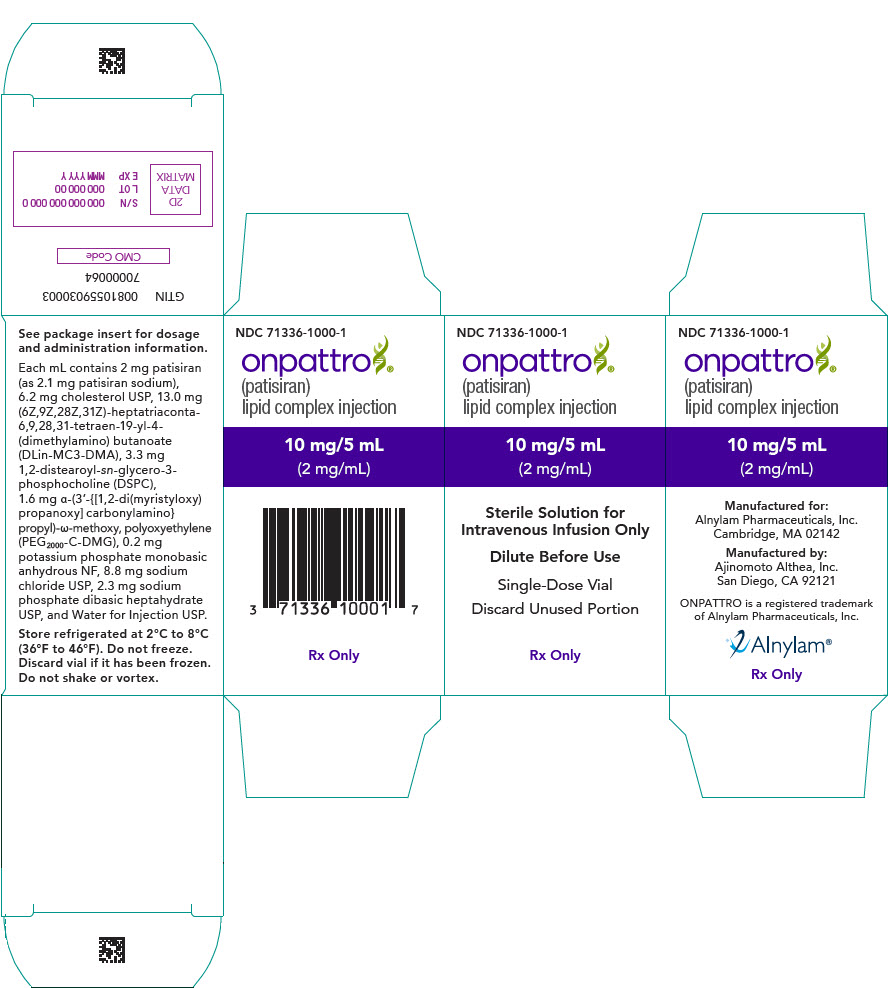
Onpattro patisiran 2 mg/mL Injection, Lipid Complex
🆔 Identity & classification
Where does this data come from?
🏷️ RxNorm drug class
This medicine belongs to the Small Interfering RNA class.
Where does this data come from?
🏭 Manufacturer & labeler
Where does this data come from?
🩺 Clinical
Patient education
Supplement & herbal interactions
Where does this data come from?
Ask a licensed pharmacist directly — free, answered by our team.
💊 What it looks like
Where does this data come from?
🧪 Inactive Ingredients / Excipients
Inactive ingredients, also called excipients, are components of the drug product other than the active ingredient. They may include fillers, dyes, coatings, preservatives, flavors, or other formulation ingredients.
💡 Tap an ingredient (hover on desktop) to see what it is and why it’s used.
-
1.6 mg / 1 mL
UNII G739VUB5KO
A synthetic lipid (fat-like compound) made by combining fatty acid chains with polyethylene glycol. It acts as an emulsifier to help blend oil and water components together in formulations, and may improve how the medicine is absorbed or delivered in the body.
-
3.3 mg / 1 mL
UNII 043IPI2M0K
A phospholipid derived from natural sources, commonly used as an emulsifier and surfactant in medicines. It helps mix oil and water-based ingredients together and is often used in injectable formulations and lipid-based drug delivery systems.
-
6.2 mg / 1 mL
UNII 97C5T2UQ7J
Cholesterol is a fatty substance found naturally in animal tissues. In medications, it's used as an ingredient in liposomal formulations and lipid-based drug delivery systems to help encapsulate and stabilize active drugs for better absorption.
-
13 mg / 1 mL
UNII Q0J6FQ6FKP
Methylcellulose (MC-3) is a plant-based thickener made from processed wood pulp. It acts as a binder and bulking agent in tablets and capsules, helping hold ingredients together and add volume to the dose form.
-
0.2 mg / 1 mL
UNII 4J9FJ0HL51
Potassium phosphate, monobasic is a salt compound used in medicines as a pH buffer and electrolyte source. It helps stabilize the acidity level of liquid and powdered formulations.
-
8.8 mg / 1 mL
UNII 451W47IQ8X
Sodium chloride is common table salt. It's used in medicines as a buffer to maintain proper pH, as a filler to add bulk, or to adjust the osmotic balance in liquid formulations.
-
2.3 mg / 1 mL
UNII 70WT22SF4B
A mineral salt that acts as a buffer to maintain the pH balance of the medication. It helps stabilize the drug's potency and prevents unwanted chemical changes during storage.
-
UNII 059QF0KO0R
Water is a liquid solvent that dissolves and mixes ingredients together in liquid medicines, syrups, and injections. It helps distribute the active drug evenly throughout the product.
8 inactive ingredients listed in the exact product block matched to this NDC.
Where does this data come from?
ingredient classCode="IACT" elements from the exact product block matched by this NDC. Label-section narrative from DailyMed / the openFDA label index is shown separately when available.Inactive ingredient FAQ
Are inactive ingredients the same for every manufacturer?
Why might an inactive ingredient be missing?
Can inactive ingredients matter?
💲 Pricing
A drug doesn't have one price. Each row is a different public payment system, and none is what you'd pay at the counter — that depends on your insurance. The ⓘ on each row explains what it measures.
| Price system | Per each | Per package |
|---|---|---|
| Retail pharmacies payNADAC · weekly | Not in the retail survey — common for institutional, discontinued, or low-volume packs. | |
| Medicaid paysCMS SDUD · 12 mo | No recent Medicaid claims on file for this NDC — rare and low-volume NDCs are suppressed in the public data. | |
| Medicare drug plans payPart D · quarterly | No Part D plan price is available for this NDC in our data. | |
| Medicare Part B allowsASP · J0222 | $101.026 / J0222 unit | — |
Where does this data come from?
🧾 Billing & reimbursement
Where does this data come from?
🔁 Therapeutic equivalents
| Product | Labeler | Pack | NADAC/unit | TE | Status | Price vs. this |
|---|---|---|---|---|---|---|
| Onpattro 2 mg/mLthis 71336-1000-01 | Alnylam | 1 vial | — | — | FDA listed | — |
Where does this data come from?
⏳ Availability & generic status
We did not find an FDA-approved generic match for this exact strength, form and route. Patent/protection dates below may affect future generic timing.
Why the date isn’t exact: Generic timing can change because patents may be challenged, settled, licensed, added, removed, or worked around with a narrower label — and FDA approval does not always mean a pharmacy can get the generic today.
🛈 What do these terms mean?
- Patent
- Legal protection listed in the Orange Book that may delay generic approval or launch. Issued by the U.S. Patent & Trademark Office.
- Substance patent
- Covers the active drug molecule itself — the hardest to design around. A generic generally can’t launch until it expires.
- Formulation (product) patent
- Covers a specific formulation or dosage form. A generic can sometimes work around it with a different formulation.
- Method-of-use patent
- A patent covering one specific approved use of the drug — not necessarily the whole molecule. A generic can sometimes launch with a “skinny label” that carves out the protected use and keeps the others.
- Skinny label
- A generic label that omits a still-patented use when the FDA allows it — letting a generic reach the market for the unprotected uses.
- Exclusivity
- FDA-granted marketing protection, separate from patents — e.g. 5-yr new chemical entity, 7-yr orphan drug, or a +6-month pediatric extension.
- Paragraph IV
- A generic applicant’s formal challenge to a listed patent. It can potentially lead to earlier generic entry, but often involves litigation or a settlement.
- RLD / RS
- Reference Listed Drug — the brand product the FDA uses as the reference for generic applications. Reference Standard — the product the FDA expects generics to compare against in bioequivalence testing.
- TE / AB rating
- FDA therapeutic-equivalence rating. An AB rating generally means the FDA considers a generic therapeutically equivalent to — and substitutable for — the brand.
- LOE (loss of exclusivity)
- The latest patent or exclusivity currently listed — the loss-of-exclusivity / latest-listed-protection date shown on this page. Paragraph-IV challenges and settlements can move the real date earlier; FDA approval and a manufacturer’s decision to market can move it later.
Built from the FDA Orange Book. The bars above are scaled to each protection’s expiry; the red LOE marker is the last one to lapse.
| Patent | Type | Use code | Expires |
|---|---|---|---|
| US 8802644 ↗ | Method of use | U-2378 | Oct 21, 2030 |
| US 8822668 ↗ | Method of use | U-2378 | Apr 15, 2029 |
| US 8158601 ↗ | Method of use | U-2378 | Nov 10, 2030 |
| US 8168775 ↗ | Drug substance | U-2378 | Aug 10, 2032 |
| US 9364435 ↗ | Method of use | U-2378 | Apr 15, 2029 |
| US 9234196 ↗ | Method of use | U-2378 | Oct 20, 2029 |
| US 8741866 ↗ | Method of use | U-2378 | Oct 20, 2029 |
| US 11079379 ↗ | Drug substance | U-2378 | Aug 27, 2035 |
| US 10240152 ↗ | Drug substance | U-2378 | Oct 20, 2029 |
| US 11141378 ↗ | Drug product | — | Apr 15, 2029 |
| US 8642076 ↗ | Drug product | — | Oct 3, 2027 |
| US 8492359 ↗ | Drug product | — | Apr 15, 2029 |
| US 8058069 ↗ | Drug product | — | Apr 15, 2029 |
| Code | What it grants | Expires |
|---|---|---|
| M-270 | New indication / labeling change (3-year) | Jan 13, 2026 |
Is there a generic version of ONPATTRO 10 MG/5 ML VIAL?
The FDA approved a generic — why can’t I get it at my pharmacy yet?
Why do different websites show different generic release dates?
What does “FDA listed” mean?
What does a patent or protection date mean here?
What does “current Orange Book estimate” mean?
Can a generic come out before the last patent expires?
Can a generic come out after the listed dates?
What is the difference between patents and exclusivity?
Why are there multiple patent dates?
Where does this data come from?
📊 Medicare Part D spend CMS · PART D · 2026 (Q1)
📦 Packaging — all sizes for this product
| Package NDC | Description | Marketing start | Status |
|---|---|---|---|
| 71336-1000-01 You're viewing this | 1 VIAL, SINGLE-DOSE in 1 CARTON (71336-1000-1) / 5 mL in 1 VIAL, SINGLE-DOSE | 2018-08-13 | Active |
🧭 About this NDC listing & data coverage
What data is (and isn’t) available for this NDC — tap to expand
| NDC identity (package / product / labeler codes) | ✓ Available |
| Labeler | ✓ Available |
| Product & package description | ✓ Available |
| Marketing category & status | ✓ Available |
| Active ingredient / dosage form / route | ✓ Available |
| FDA label (SPL via DailyMed) | ✓ Available |
| Package photos | ✓ Available |
| Inactive ingredients (structured) | ✓ Available |
| NADAC pharmacy acquisition price (CMS) | — Not published for this NDC CMS publishes NADAC only for NDCs reported in its retail-pharmacy survey. |
| Orange Book / therapeutic-equivalence data | ✓ Available |
| HCPCS J-code billing crosswalk | ✓ Available |
| Medicaid utilization (CMS SDUD) | — Not published for this NDC CMS reports utilization only for NDCs with Medicaid claims above its privacy threshold. |
Questions about this listing
Why is there no price listed?
Is the NDC printed on the package the same as the 11-digit billing NDC?
What do the three segments of this NDC mean?
Is this package still being marketed?
Who lists this product with the FDA?
Do I need a prescription for this product?
Does this product have a billing J-code?
Where does this data come from?
📄 Full prescribing information FDA SPL
🎯 Indications and Usage ▾
1 INDICATIONS AND USAGE ONPATTRO is indicated for the treatment of the polyneuropathy of hereditary transthyretin-mediated amyloidosis in adults. ONPATTRO contains a transthyretin-directed small interfering RNA and is indicated for the treatment of the polyneuropathy of hereditary transthyretin-mediated amyloidosis in adults.
⏱️ Dosage and Administration ▾
2 DOSAGE AND ADMINISTRATION For patients weighing less than 100 kg, the recommended dosage is 0.3 mg/kg every 3 weeks by intravenous infusion. For patients weighing 100 kg or more, the recommended dosage is 30 mg ( 2.1 ) Premedicate with a corticosteroid, acetaminophen, and antihistamines ( 2.2 ) Filter and dilute prior to administration ( 2.3 ) Infuse over approximately 80 minutes ( 2.4 )
2.1Dosing Information ONPATTRO should be administered by a healthcare professional. ONPATTRO is administered via intravenous (IV) infusion. Dosing is based on actual body weight.
For patients weighing less than 100 kg, the recommended dosage is 0.3 mg/kg once every 3 weeks. For patients weighing 100 kg or more, the recommended dosage is 30 mg once every 3 weeks. Missed Dose If a dose is missed, administer ONPATTRO as soon as possible.
If ONPATTRO is administered within 3 days of the missed dose, continue dosing according to the patient's original schedule. If ONPATTRO is administered more than 3 days after the missed dose, continue dosing every 3 weeks thereafter.
2.2Required Premedication All patients should receive premedication prior to ONPATTRO administration to reduce the risk of infusion-related reactions (IRRs) [see Warnings and Precautions (5.1) ] . Each of the following premedications should be given on the day of ONPATTRO infusion at least 60 minutes prior to the start of infusion: Intravenous corticosteroid (e.g., dexamethasone 10 mg, or equivalent) Oral acetaminophen (500 mg) Intravenous H1 blocker (e.g., diphenhydramine 50 mg, or equivalent) Intravenous H2 blocker (e.g., famotidine 20 mg, or equivalent) For premedications not available or not tolerated intravenously, equivalents may be administered orally.
For patients who are tolerating their ONPATTRO infusions but experiencing adverse reactions related to the corticosteroid premedication, the corticosteroid may be reduced by 2.5 mg increments to a minimum dose of 5 mg of dexamethasone (intravenous), or equivalent. Some patients may require additional or higher doses of one or more of the premedications to reduce the risk of IRRs [see Warnings and Precautions (5.1) ] .
2.3Preparation Instructions ONPATTRO must be filtered and diluted prior to intravenous infusion. The diluted solution for infusion should be prepared by a healthcare professional using aseptic technique as follows: Remove ONPATTRO from the refrigerator and allow to warm to room temperature. Do not shake or vortex.
Inspect visually for particulate matter and discoloration. Do not use if discoloration or foreign particles are present. ONPATTRO is a white to off-white, opalescent, homogeneous solution.
A white to off-white coating may be observed on the inner surface of the vial, typically at the liquid-headspace interface. Product quality is not impacted by presence of the white to off-white coating. Calculate the required dose of ONPATTRO based on the recommended weight-based dosage [see Dosage and Administration (2.1) ].
Withdraw the entire contents of one or more vials into a single sterile syringe. Filter ONPATTRO through a sterile 0.45 micron polyethersulfone (PES) syringe filter into a sterile container. Withdraw the required volume of filtered ONPATTRO from the sterile container using a sterile syringe.
Dilute the required volume of filtered ONPATTRO into an infusion bag containing 0.9% Sodium Chloride Injection, USP for a total volume of 200 mL. Use infusion bags that are di(2-ethylhexyl)phthalate-free (DEHP-free). Gently invert the bag to mix the solution.
Do not shake. Do not mix or dilute with other drugs. Discard any unused portion of ONPATTRO.
ONPATTRO does not contain preservatives. The diluted solution should be administered immediately after preparation. If not used immediately, store in the infusion bag at room temperature (up to 30°C [86°F]) for up to 16 hours (including infusion time).
Do not freeze.
2.4Infusion Instructions Use a dedicated line with an infusion set containing a 1.2 micron po…
💊 Dosage Forms and Strengths ▾
3 DOSAGE FORMS AND STRENGTHS Lipid Complex Injection: 10 mg/5 mL (2 mg/mL) white to off-white, opalescent, homogeneous solution in a single-dose vial. Lipid Complex Injection: 10 mg/5 mL (2 mg/mL) in a single-dose vial
⛔ Contraindications ▾
4 CONTRAINDICATIONS None. None
⚠️ Warnings and Cautions ▾
5 WARNINGS AND PRECAUTIONS Infusion-related reactions: Monitor for signs and symptoms during infusion. Slow or interrupt the infusion if clinically indicated. Discontinue the infusion if a serious or life-threatening infusion-related reaction occurs ( 5.1 ) Reduced serum vitamin A levels and recommended supplementation: Supplement with the recommended daily allowance of vitamin A.
Refer to an ophthalmologist if ocular symptoms suggestive of vitamin A deficiency occur ( 5.2 )
5.1Infusion-Related Reactions Infusion-related reactions (IRRs) have been observed in patients treated with ONPATTRO. In clinical studies, all patients received premedication with a corticosteroid, acetaminophen, and antihistamines (H1 and H2 blockers) to reduce the risk of IRRs. In a controlled clinical study, 19% of ONPATTRO-treated patients experienced IRRs, compared to 9% of placebo-treated patients.
Among ONPATTRO-treated patients who experienced an IRR, 79% experienced the first IRR within the first 2 infusions. The frequency of IRRs decreased over time. IRRs led to infusion interruption in 5% of patients.
IRRs resulted in permanent discontinuation of ONPATTRO in less than 1% of patients in clinical studies. Across clinical studies, the most common symptoms (reported in greater than 2% of patients) of IRRs with ONPATTRO were flushing, back pain, nausea, abdominal pain, dyspnea, and headache [see Adverse Reactions (6.1) ] . Severe hypotension and syncope have been reported as symptoms of IRRs in the expanded access program and postmarketing setting.
Patients should receive premedications on the day of ONPATTRO infusion, at least 60 minutes prior to the start of infusion [see Dosage and Administration (2.2) ] . Monitor patients during the infusion for signs and symptoms of IRRs. If an IRR occurs, consider slowing or interrupting the ONPATTRO infusion and instituting medical management (e.g., corticosteroids or other symptomatic treatment), as clinically indicated.
If the infusion is interrupted, consider resuming at a slower infusion rate only if symptoms have resolved. In the case of a serious or life-threatening IRR, the infusion should be discontinued and not resumed. Some patients who experience IRRs may benefit from a slower infusion rate or additional or higher doses of one or more of the premedications with subsequent infusions to reduce the risk of IRRs [see Dosage and Administration (2.2) ] .
5.2Reduced Serum Vitamin A Levels and Recommended Supplementation ONPATTRO treatment leads to a decrease in serum vitamin A levels. Supplementation at the recommended daily allowance of vitamin A is advised for patients taking ONPATTRO. Higher doses than the recommended daily allowance of vitamin A should not be given to try to achieve normal serum vitamin A levels during treatment with ONPATTRO, as serum vitamin A levels do not reflect the total vitamin A in the body.
Patients should be referred to an ophthalmologist if they develop ocular symptoms suggestive of vitamin A deficiency (e.g., night blindness).
🤒 Adverse Reactions ▾
6 ADVERSE REACTIONS The following clinically significant adverse reactions are described elsewhere in the labeling: Infusion-Related Reactions [see Warnings and Precautions (5.1) ] The most frequently reported adverse reactions (that occurred in at least 10% of ONPATTRO-treated patients and at least 3% more frequently than on placebo) were upper respiratory tract infections and infusion-related reactions ( 6.1 ) To report SUSPECTED ADVERSE REACTIONS, contact Alnylam Pharmaceuticals at 1-877-256-9526 or FDA at 1-800-FDA-1088 or www.fda.gov/medwatch .
6.1Clinical Trials Experience Because clinical studies are conducted under widely varying conditions, adverse reaction rates observed in the clinical studies of ONPATTRO cannot be directly compared to rates in the clinical studies of another drug and may not reflect the rates observed in practice. A total of 224 patients with polyneuropathy caused by hereditary transthyretin-mediated amyloidosis (hATTR amyloidosis) received ONPATTRO in the placebo-controlled and open-label clinical studies, including 186 patients exposed for at least 1 year, 137 patients exposed for at least 2 years, and 52 patients exposed for at least 3 years.
In the placebo-controlled study, 148 patients received ONPATTRO for up to 18 months (mean exposure 17.7 months). Baseline demographic and disease characteristics were generally similar between treatment groups. The median age of study patients was 62 years and 74% were male.
Seventy-two percent of study patients were Caucasian, 23% were Asian, 2% were Black, and 2% were reported as other. At baseline, 46% of patients were in Stage 1 of the disease and 53% were in Stage 2. Forty-three percent of patients had Val30Met mutations in the transthyretin gene; the remaining patients had 38 other point mutations.
Sixty-two percent of ONPATTRO-treated patients had non-Val30Met mutations, compared to 48% of the placebo-treated patients. Upper respiratory tract infections and infusion-related reactions were the most common adverse reactions. One patient (0.7%) discontinued ONPATTRO because of an infusion-related reaction.
Patients were instructed to take the recommended daily allowance of vitamin A [see Warnings and Precautions (5.2) ] . Sixty-four percent of patients treated with ONPATTRO had normal vitamin A levels at baseline, and 99% of those with a normal baseline developed low vitamin A levels. In one case, the decreased vitamin A level was reported as an adverse reaction.
Table 1 lists the adverse reactions that occurred in at least 5% of patients in the ONPATTRO-treated group and that occurred at least 3% more frequently than in the placebo-treated group in the randomized controlled clinical trial. Table 1: Adverse Reactions from the Placebo-Controlled Trial that Occurred in at Least 5% of ONPATTRO-treated Patients and at Least 3% More Frequently than in Placebo-treated Patients Adverse Reaction ONPATTRO N=148 % Placebo N=77 % Upper respiratory tract infections Includes nasopharyngitis, upper respiratory tract infection, respiratory tract infection, pharyngitis, rhinitis, sinusitis, viral upper respiratory tract infection, upper respiratory tract congestion.
29 21 Infusion-related reaction Infusion-related reaction symptoms include, but are not limited to: arthralgia or pain (including back, neck, or musculoskeletal pain), flushing (including erythema of face or skin warm), nausea, abdominal pain, dyspnea or cough, chest discomfort or chest pain, headache, rash, chills, dizziness, fatigue, increased heart rate or palpitations, hypotension, hypertension, facial edema. 19 9 Dyspepsia 8 4 Dyspnea Not part of an infusion-related reaction. , Includes dyspnea and exertional dyspnea.
8 0 Muscle spasms 8 1 Arthralgia 7 0 Erythema 7 3 Bronchitis Includes bronchitis, bronchiolitis, bronchitis viral, lower respiratory tract infection, lung infection. 7 3 Vertigo 5 1 Four serious adverse reactions of atrioventricular (AV) heart block (2.7%) occurred in ONPATTRO-treated pa…
👥 Use in Specific Populations ▾
8 USE IN SPECIFIC POPULATIONS
8.1Pregnancy Pregnancy Exposure Registry There is a pregnancy exposure registry that monitors pregnancy outcomes in women exposed to ONPATTRO during pregnancy. Physicians are encouraged to enroll pregnant patients, or pregnant women may register themselves in the program by calling 1-877-256-9526 or by contacting [email protected]. Risk Summary There are no available data on ONPATTRO use in pregnant women to inform a drug-associated risk of adverse developmental outcomes.
ONPATTRO treatment leads to a decrease in serum vitamin A levels, and vitamin A supplementation is advised for patients taking ONPATTRO. Vitamin A is essential for normal embryofetal development; however, excessive levels of vitamin A are associated with adverse developmental effects. The effects on the fetus of a reduction in maternal serum TTR caused by ONPATTRO and of vitamin A supplementation are unknown [see Clinical Pharmacology (12.2) , Warnings and Precautions (5.2) ] .
In animal studies, intravenous administration of patisiran lipid complex (patisiran-LC) to pregnant rabbits resulted in developmental toxicity (embryofetal mortality and reduced fetal body weight) at doses that were also associated with maternal toxicity. No adverse developmental effects were observed when patisiran-LC or a rodent-specific (pharmacologically active) surrogate were administered to pregnant rats (see Data ). In the U.S. general population, the estimated background risk of major birth defects and miscarriage in clinically recognized pregnancies is 2 to 4% and 15 to 20%, respectively.
The background risk of major birth defects and miscarriage for the indicated population is unknown. Data Animal Data Intravenous administration of patisiran-LC (0, 0.15, 0.50, or 1.5 mg/kg) or a rodent-specific (pharmacologically active) surrogate (1.5 mg/kg) to female rats every week for two weeks prior to mating and continuing throughout organogenesis resulted in no adverse effects on fertility or embryofetal development. Intravenous administration of patisiran-LC (0, 0.1, 0.3, or 0.6 mg/kg) to pregnant rabbits every week during the period of organogenesis produced no adverse effects on embryofetal development.
In a separate study, patisiran-LC (0, 0.3, 1, or 2 mg/kg), administered to pregnant rabbits every week during the period of organogenesis, resulted in embryofetal mortality and reduced fetal body weight at the mid and high doses, which were associated with maternal toxicity. Intravenous administration of patisiran-LC (0, 0.15, 0.50, or 1.5 mg/kg) or a rodent-specific surrogate (1.5 mg/kg) to pregnant rats every week throughout pregnancy and lactation resulted in no adverse developmental effects on the offspring.
8.2Lactation Risk Summary There is no information regarding the presence of ONPATTRO in human milk, the effects on the breastfed infant, or the effects on milk production. The developmental and health benefits of breastfeeding should be considered along with the mother's clinical need for ONPATTRO and any potential adverse effects on the breastfed infant from ONPATTRO or from the underlying maternal condition. In lactating rats, patisiran was not detected in milk; however, the lipid components (DLin-MC3-DMA and PEG 2000 -C-DMG) were present in milk.
8.4Pediatric Use Safety and effectiveness in pediatric patients have not been established.
8.5Geriatric Use No dose adjustment is required in patients ≥65 years old [see Clinical Pharmacology (12.3) ] . A total of 62 patients ≥65 years of age, including 9 patients ≥75 years of age, received ONPATTRO in the placebo-controlled study. No overall differences in safety or effectiveness were observed between these patients and younger patients, but greater sensitivity of some older individuals cannot be ruled out.
8.6Hepatic Impairment No dose adjustment is necessary in patients with mild hepatic impairment (bilirubin ≤1 × ULN and AST >1 × ULN, or bilirubin >1.0 to 1.5 × ULN) [see Clini…
🤰 Pregnancy ▾
8.1Pregnancy Pregnancy Exposure Registry There is a pregnancy exposure registry that monitors pregnancy outcomes in women exposed to ONPATTRO during pregnancy. Physicians are encouraged to enroll pregnant patients, or pregnant women may register themselves in the program by calling 1-877-256-9526 or by contacting [email protected]. Risk Summary There are no available data on ONPATTRO use in pregnant women to inform a drug-associated risk of adverse developmental outcomes.
ONPATTRO treatment leads to a decrease in serum vitamin A levels, and vitamin A supplementation is advised for patients taking ONPATTRO. Vitamin A is essential for normal embryofetal development; however, excessive levels of vitamin A are associated with adverse developmental effects. The effects on the fetus of a reduction in maternal serum TTR caused by ONPATTRO and of vitamin A supplementation are unknown [see Clinical Pharmacology (12.2) , Warnings and Precautions (5.2) ] .
In animal studies, intravenous administration of patisiran lipid complex (patisiran-LC) to pregnant rabbits resulted in developmental toxicity (embryofetal mortality and reduced fetal body weight) at doses that were also associated with maternal toxicity. No adverse developmental effects were observed when patisiran-LC or a rodent-specific (pharmacologically active) surrogate were administered to pregnant rats (see Data ). In the U.S. general population, the estimated background risk of major birth defects and miscarriage in clinically recognized pregnancies is 2 to 4% and 15 to 20%, respectively.
The background risk of major birth defects and miscarriage for the indicated population is unknown. Data Animal Data Intravenous administration of patisiran-LC (0, 0.15, 0.50, or 1.5 mg/kg) or a rodent-specific (pharmacologically active) surrogate (1.5 mg/kg) to female rats every week for two weeks prior to mating and continuing throughout organogenesis resulted in no adverse effects on fertility or embryofetal development. Intravenous administration of patisiran-LC (0, 0.1, 0.3, or 0.6 mg/kg) to pregnant rabbits every week during the period of organogenesis produced no adverse effects on embryofetal development.
In a separate study, patisiran-LC (0, 0.3, 1, or 2 mg/kg), administered to pregnant rabbits every week during the period of organogenesis, resulted in embryofetal mortality and reduced fetal body weight at the mid and high doses, which were associated with maternal toxicity. Intravenous administration of patisiran-LC (0, 0.15, 0.50, or 1.5 mg/kg) or a rodent-specific surrogate (1.5 mg/kg) to pregnant rats every week throughout pregnancy and lactation resulted in no adverse developmental effects on the offspring.
🧒 Pediatric Use ▾
8.4Pediatric Use Safety and effectiveness in pediatric patients have not been established.
🧓 Geriatric Use ▾
8.5Geriatric Use No dose adjustment is required in patients ≥65 years old [see Clinical Pharmacology (12.3) ] . A total of 62 patients ≥65 years of age, including 9 patients ≥75 years of age, received ONPATTRO in the placebo-controlled study. No overall differences in safety or effectiveness were observed between these patients and younger patients, but greater sensitivity of some older individuals cannot be ruled out.
🧬 Clinical Pharmacology ▾
12 CLINICAL PHARMACOLOGY
12.1Mechanism of Action Patisiran is a double-stranded siRNA that causes degradation of mutant and wild-type TTR mRNA through RNA interference, which results in a reduction of serum TTR protein and TTR protein deposits in tissues.
12.2Pharmacodynamics The pharmacodynamic effects of ONPATTRO were evaluated in hATTR amyloidosis patients treated with 0.3 mg/kg ONPATTRO via intravenous infusion once every 3 weeks. Mean serum TTR was reduced by approximately 80% within 10 to 14 days after a single dose. With repeat dosing every 3 weeks, mean reductions of serum TTR after 9 and 18 months of treatment were 83% and 84%, respectively.
The mean maximum reduction of serum TTR over 18 months was 88%. Similar TTR reductions were observed regardless of TTR mutation, sex, age, race, or prior liver transplantation. In a dose-ranging study, greater TTR reduction was maintained over the dosing interval with the recommended dosing regimen of 0.3 mg/kg every 3 weeks compared to 0.3 mg/kg every 4 weeks.
Serum TTR is a carrier of retinol binding protein, which is involved in the transport of vitamin A in the blood. Mean reductions in serum retinol binding protein of 45% and serum vitamin A of 62% were observed over 18 months [see Warnings and Precautions (5.2) ] .
12.3Pharmacokinetics Following a single intravenous administration, systemic exposure to patisiran increases in a linear and dose-proportional manner over the range of 0.01 to 0.5 mg/kg. Greater than 95% of patisiran in the circulation is associated with the lipid complex. At the recommended dosing regimen of 0.3 mg/kg every 3 weeks, steady state is reached by 24 weeks of treatment.
The estimated mean ± SD steady state peak concentrations (C max ), trough concentrations (C trough ), and area under the curve (AUC τ ) were 7.15 ± 2.14 µg/mL, 0.021 ± 0.044 µg/mL, and 184 ± 159 µg∙h/mL, respectively. The accumulation of AUC τ was 3.2-fold at steady state, compared to the first dose. In the placebo-controlled study, inter-patient variability in patisiran exposure did not result in differences in clinical efficacy (mNIS+7 change from baseline) or safety (adverse events, serious adverse events).
Distribution Plasma protein binding of ONPATTRO is low, with ≤2.1% binding observed in vitro with human serum albumin and human α1-acid glycoprotein. ONPATTRO distributes primarily to the liver. At the recommended dosing regimen of 0.3 mg/kg every 3 weeks, the mean ± SD steady state volume of distribution of patisiran (V ss ) was 0.26 ±
0.20L/kg. Elimination The terminal elimination half-life (mean ± SD) of patisiran is 3.2 ± 1.8 days. Patisiran is mainly cleared through metabolism, and the total body clearance (mean ± SD) at steady state (CL ss ) is 3.0 ± 2.5 mL/h/kg.
Metabolism Patisiran is metabolized by nucleases to nucleotides of various lengths. Excretion Less than 1% of the administered dose of patisiran is excreted unchanged into urine. Specific Populations Age, race (non-Caucasian vs.
Caucasian), sex, and prior liver transplantation had no impact on the steady state pharmacokinetics of patisiran or TTR reduction. Population pharmacokinetic and pharmacodynamic analyses indicated no impact of mild or moderate renal impairment (eGFR ≥30 to <90 mL/min/1.73m 2 ) or mild hepatic impairment (bilirubin ≤1 × ULN and AST >1 × ULN, or bilirubin >1.0 to 1.5 × ULN) on patisiran exposure or TTR reduction. ONPATTRO has not been studied in patients with severe renal impairment, end-stage renal disease, or moderate or severe hepatic impairment.
Drug Interaction Studies No formal clinical drug interaction studies have been performed. The components of ONPATTRO are not inhibitors or inducers of cytochrome P450 enzymes or transporters at clinically relevant plasma concentrations. Patisiran is not a substrate of cytochrome P450 enzymes.
In a population pharmacokinetic analysis, concomitant use of strong or moderate CYP3A inducers and inhibitors did not impact the pharmacokinetic paramete…
🧬 Mechanism of Action ▾
12.1Mechanism of Action Patisiran is a double-stranded siRNA that causes degradation of mutant and wild-type TTR mRNA through RNA interference, which results in a reduction of serum TTR protein and TTR protein deposits in tissues.
📦 How Supplied / Storage and Handling ▾
16 HOW SUPPLIED/STORAGE AND HANDLING
16.1How Supplied ONPATTRO is a sterile, preservative-free, white to off-white, opalescent, homogeneous solution for intravenous infusion supplied as a 10 mg/5 mL (2 mg/mL) solution in a single-dose glass vial. The vial stopper is not made with natural rubber latex. ONPATTRO is available in cartons containing one single-dose vial each. The NDC is: 71336-1000-1.
16.2Storage and Handling Store at 2°C to 8°C (36°F to 46°F). Do not freeze. Discard vial if it has been frozen. If refrigeration is not available, ONPATTRO can be stored at room temperature up to 25°C (up to 77°F) for up to 14 days. For storage conditions of ONPATTRO after dilution in the infusion bag, see Dosage and Administration (2.3) .
📦 Storage and Handling ▾
16.2Storage and Handling Store at 2°C to 8°C (36°F to 46°F). Do not freeze. Discard vial if it has been frozen. If refrigeration is not available, ONPATTRO can be stored at room temperature up to 25°C (up to 77°F) for up to 14 days. For storage conditions of ONPATTRO after dilution in the infusion bag, see Dosage and Administration (2.3) .
📋 Description ▾
11 DESCRIPTION ONPATTRO contains patisiran, a double-stranded small interfering ribonucleic acid (siRNA), formulated as a lipid complex for delivery to hepatocytes. Patisiran specifically binds to a genetically conserved sequence in the 3' untranslated region (3'UTR) of mutant and wild-type transthyretin (TTR) messenger RNA (mRNA). The structural formula is: A, adenosine; C, cytidine; G, guanosine; U, uridine; Cm, 2'- O- methylcytidine; Um, 2'- O- methyluridine; dT, thymidine ONPATTRO is supplied as a sterile, preservative-free, white to off-white, opalescent, homogeneous solution for intravenous infusion in a single-dose glass vial.
Each 1 mL of solution contains 2 mg of patisiran (equivalent to 2.1 mg of patisiran sodium). Each 1 mL also contains 6.2 mg cholesterol USP, 13.0 mg (6Z,9Z,28Z,31Z)-heptatriaconta-6,9,28,31-tetraen-19-yl-4-(dimethylamino) butanoate (DLin-MC3-DMA), 3.3 mg 1,2-distearoyl- sn -glycero-3-phosphocholine (DSPC), 1.6 mg α-(3'-{[1,2-di(myristyloxy)propanoxy] carbonylamino}propyl)-ω-methoxy, polyoxyethylene (PEG 2000 -C-DMG), 0.2 mg potassium phosphate monobasic anhydrous NF, 8.8 mg sodium chloride USP, 2.3 mg sodium phosphate dibasic heptahydrate USP, and Water for Injection USP.
The pH is ~7.0. The molecular formula of patisiran sodium is C 412 H 480 N 148 Na 40 O 290 P 40 and the molecular weight is 14304 Da. Chemical Structure
💬 Information for Patients ▾
17 PATIENT COUNSELING INFORMATION Infusion-Related Reactions Inform patients about the signs and symptoms of infusion-related reactions (e.g., flushing, dyspnea, chest pain, syncope, rash, increased heart rate, facial edema). Advise patients to contact their healthcare provider immediately if they experience signs and symptoms of infusion-related reactions [see Warnings and Precautions (5.1) ] . Recommended Vitamin A Supplementation Inform patients that ONPATTRO treatment leads to a decrease in vitamin A levels measured in the serum.
Instruct patients to take the recommended daily allowance of vitamin A. Advise patients to contact their healthcare provider if they experience ocular symptoms suggestive of vitamin A deficiency (e.g., night blindness) and refer them to an ophthalmologist if they develop these symptoms [see Warnings and Precautions (5.2) ] . Pregnancy Instruct patients that if they are pregnant or plan to become pregnant while taking ONPATTRO they should inform their healthcare provider.
Advise female patients of childbearing potential of the potential risk to the fetus. Encourage patients to enroll in the ONPATTRO pregnancy exposure registry if they become pregnant while taking ONPATTRO [see Use in Specific Populations (8.1) ] .